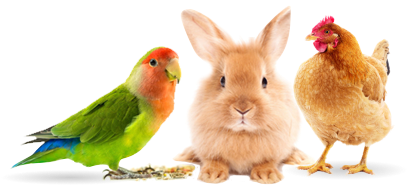


Which came first, the parrots or the chickens? It really doesn’t matter. If you have parrots and decide to expand your family to include a backyard chicken flock or vice versa, the main concern is that all your feathered friends be healthy. Why would health be an issue? Because backyard chickens and parrots can spread disease (Avian influenza, Marek’s, Newcastle, etc.) or parasites to each other, even if the chickens stay outside and the parrots are in your home. The lives of your parrots can also be at risk from authorities if you also own chickens and there is an outbreak of Newcastle disease in your area.
A Checkered History
Chickens and parrots are incredible birds with many amazing attributes. The fact that they can suffer from some of the same ailments and parasites, though, raises serious questions about whether they should be part of the same household. And the risk extends far beyond a single household.
In the early 1970s, an outbreak of Exotic Newcastle disease in Southern California caused nearly 12 million chickens to be destroyed. It was a huge blow to the poultry industry and those in the area with backyard flocks. According to the American Federation of Aviculture, thousands of healthy, exotic birds owned by individuals were also destroyed by the USDA as part of the effort to contain the outbreak. Legislation was later introduced in California proposing to limit or ban ownership of exotic birds. The effort to oppose the legislation brought together many Southern California bird owners and clubs, which led to the formation of the American Federation of Aviculture.
The ban on ownership in California was blocked. However, the risk that chickens and parrots can spread Newcastle disease to each other remains. The California Department of Food and Agriculture states in its fact sheet on Virulent Newcastle disease that: “In poultry, chickens are very susceptible to the disease, while ducks and geese tend to be resistant. Mortality rates in psittacine birds have ranged from zero up to 75% prior to depopulation. Certain psittacine birds, especially Amazon parrots, have been demonstrated to shed VND virus intermittently in excess of one year.”
Newcastle disease is a reportable disease under emergency conditions. The reason an outbreak can put parrots in the area at risk is because some parrots can show no symptoms yet shed it chronically, which keeps the outbreak going. The USDA’s Virulent Newcastle Disease Virus case definition notes the following regarding parrots and Newcastle disease: “Psittacine species exhibit variable susceptibility to vNDV and have the potential to chronically shed virus.”
Does the risk of disease or perhaps even government involvement mean chickens and parrots can’t live on the same property? That’s a decision you must make after researching the risks, and the local, state, and federal laws that apply in your area. Your parrots’ veterinarian and a poultry veterinarian in the area might offer some guidance. Being located near a poultry farm or farms might be a concern. As of 2022 according to Statista, the top 10 U.S. states with poultry farms were Iowa, Ohio, Indiana, Texas, Pennsylvania, Georgia, Arkansas, North Carolina, Michigan, and California. The three major outbreaks of Newcastle disease that occurred in the United States since the 1970s all happened in Southern California.
Go Big On Biosecurity
If you decide keeping parrots and chickens is a must, you can do a lot to minimize any risk to either birds by maintaining vigilant biosecurity. This means following procedures the protect against spreading disease.
1. Good health. Keep your birds healthy with the best food and shelter. Feed quality food like Lafeber’s Nutri-Berries, pellets, or Avi-Cakes to your parrots and a quality, balanced feed to your chickens. If your chickens have feather issues, are laying, or are senior, Lafeber’s Booster Berries can enhance their daily diet.
Parrots require a cage large enough for their species and larger if it houses more than one of the same species. Chickens need a cozy, uncrowded coop that protects from predators and the elements. Both need the proper accessories in their homes (food dishes/feeders, water dishes/fountain, litter/bedding, perches/roosts, etc.) Where parrots need playgyms or time outside the cage, chickens need a run that’s safe.
Critical to all health is veterinary visits and veterinary consults. Find a good, bird-savvy veterinarian for your entire flock. Ask them about any vaccinations your parrots or chickens might need.
2. Always follow quarantine procedures and always get your parrots or chickens from a reputable source. Whenever you add birds to your chicken or parrot flock, always keep the newcomer(s) separate from your main flock for at least four to six weeks (consult your vet) to monitor for any signs of hidden illness. Being separate means completely different rooms (at the least) for parrots and a different coop for chickens. Tend to your original flock first, and don’t go back and forth between original and newcomers without thoroughly washing your hands. If you go from newcomers back to originals, change clothes first.
3. Deter or minimize visitors. Visitors include people, other pets, insects, rodents, and wildlife. The goal here is to keep your birds’ living spaces free from inadvertent contamination. People who visit might unknowingly spread disease on the bottom of their shoes or elsewhere if they have been to a pet store, walked in a park and stepped in bird poop, or some other scenario. Use of foot baths minimizes this risk. You, too, can accidentally spread disease on your shoes or clothes. Be aware of where you have been and if you need to take extra steps to keep your parrots or chickens safe.
If you let your indoor dog outside in or near the chicken coop or run, it’s possible your buddy might inadvertently spread disease via fleas, other pests, parrot dander, etc. Insects like mosquitoes, fleas, etc. can spread disease, as can rodents. While a parrots’ risk indoors is lessened, it still exists.
Wildlife is likely only a threat to chickens. To minimize this, provide a secure coop, a run with a roof to prevent poop from wild birds dropping in, using feeders and securely storing food so that wildlife isn’t attracted to a free meal, etc. You don’t want any wildlife or their droppings near your chickens.
4. Keep it clean. The importance of a clean environment can’t be stressed enough. When it comes to parrot cages and chicken coops, cleanliness promotes good health. A dirty cage or coop increases ammonia levels, bacteria, and other nasty things, which can quickly lead to illness. Develop a regular routine for cleaning cages and the coop and run. Litter and cage liners must change out at least daily. The needs of your backyard chickens or parrots might require more frequent spot cleaning. Food and water dishes/dispensers need daily cleaning. Other accessories need a routine cleaning schedule, too. If a chicken passes, dispose of the body quickly and properly. In addition to your regular routine, establish at least a biannual deep cleaning that uses bird-safe disinfectant. Be mindful if you borrow bird equipment from friends or neighbors. Something as simple as a shovel used in their coop that you borrow and use in yours without disinfecting could spread disease. And be aware that a shovel or any item must first be clean before it can be disinfected. Using disinfectant on a dirty item won’t do anything to kill germs.
Monitor Flock and Parrots
Both chickens and parrots are prey species, which means they tend to hide illness as long as possible so they don’t appear weak to a predator. Take note of how all your birds typically act. A change in behavior is often the first sign of a possible health issue. If you notice something off, contact your veterinarian.