

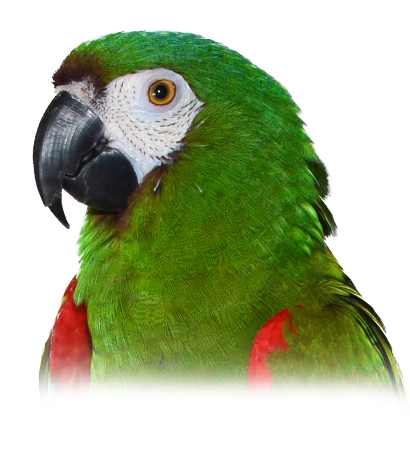


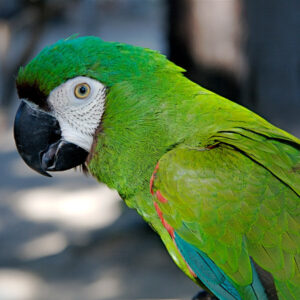
Severe macaws are among the larger of the “mini macaw” species. They are similar to the larger macaws in personality and vocal ability, but, at around 18–20 inches long with a wingspan of about 30 inches, they are noticeably smaller. They have a predominantly green body, chestnut-colored patches on their forehead, and blue flight feathers.
Photo by Benjamin Graves, CC BY 2.0, via Wikimedia Commons

- Color
Green - Size
medium - Lifespan
30 + years - Sounds
Vocal communicator - Interaction
Highly social



- The severe macaw gets their name from the Latin word severus, which means “stern” and appears to be based on the sound of their call.
- Severe macaws (Ara severus) are sometimes mistaken for Hahn’s Macaws (Diopsittaca nobilis), and Illiger’s Macaws (Primolius maracana) because they are all mini macaws with similar green plumage and body shape. However, Severe macaws are slightly larger and might also be slightly louder.


Want to stay up-to-date on Severe Macaws?

What Is A Severe Macaw?
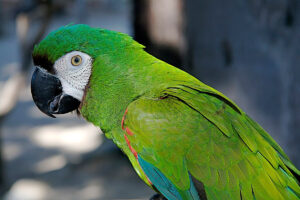
The Severe macaw, (Ara severus) also known as the chestnut-fronted macaw, is the largest of the “mini macaws.” Mini macaw references a loosely defined group of small macaw species that also includes the red-bellied macaw, Hahn’s macaw, Illiger’s macaw, golden-collared macaw, and the blue-headed macaw.
Native Region / Natural Habitat
Severe macaws are native to Central and South America. Their range extends from Panama to parts of Brazil and Bolivia, where they live in small flocks. The Severa macaw’s natural habitat encompasses tropical rainforests, wooded savannas, and lowland forests. Their natural diet includes a variety of nuts, seeds, fruits and vegetation.
Care & Feeding
They might be among the smaller macaw species but Severe macaws need a spacious cage wide enough for exercise opportunities and tall enough to accommodate their long tail feathers.
Providing a spacious cage with plenty of toys, perches, and enrichment activities is crucial for their mental and physical well-being. These active birds require ample time outside the cage to exercise, explore, and socialize with their pet stewards.
Like all parrot companions, Severe macaws need a balanced diet of high-quality pellets, fresh fruits, and vegetables, and proper husbandry are essential for their health.
Personality & Behavior
Severe macaws are highly intelligent, curious, and social birds. They can form strong bonds with their favored people and thrive on interaction. A well-socialized Severe macaw will enjoy learning tricks, playing with toys, and engaging in problem-solving activities. They do best with consistent training and socialization to prevent behavioral issues.
With proper care and attention, a Severe macaw can be an affectionate companion, but they need the people in their lives to dedicate their time to social interaction and other enrichment opportunities for their well-being.
Severe macaws are intelligent, curious, and capable of learning tricks if properly and respectfully interacted with. They especially excel at problem-solving tasks, which can include learning how to open their cages. As with all companion birds, they respond well to positive reinforcement training.
Severe macaws need plenty of enrichment opportunities. Toys to chew/destroy and puzzle toys should always be available. Their curious nature makes them active explorers who enjoy interacting with their environment and generous head scratches from their favored people. They also need an outlet for their playful, on-the-go nature, so ropes and perches to climb and swings to move on to prevent to prevent boredom-related behaviors.
Speech & Sound
Severe macaws aren’t the most prolific talkers among macaw species, especially compared to larger macaws, but they can certainly develop a modest vocabulary. Their voice is often described as raspy, and they can be quite vocal with squawks and screeches. Similarly, Severe macaws can be loud for their size, but less so than large macaw species. Overall, Severes, like all macaws, are capable of producing ear-piercing vocalizations.
According to the World Parrot Trust, the Severe macaw’s calls include harsh screeches reminicent of braying donkey. When at rest, their calls resemble that of a blue-and-gold macaw (Ara ararauna). In the wild, Severe macaws’ can reach high-pitched notes while in flight.
Health & Common Conditions
Like all parrots, Severe Macaws are prone to certain health issues, including:
- Psittacine Beak and Feather Disease (PBFD) is a viral disease that affects feathers and beak health.
- Respiratory infections due to poor air quality or bacterial infections.
- Vitamin-A deficiency, which can be the result of an imbalanced diet lacking healthy vegetables and fruits, or if the bird is fed a seed-based diet.
- Feather-damaging behavior, such as plucking can be due to stress, boredom, or underlying medical conditions.
Regular veterinarian check-ups, a balanced diet, and an enriching environment are essential to your Severe macaw’s overall health and well-being.
Severe Macaw Populations In The Wild
According to BirdLife International, as of 2018, Severe macaws are listed as Least Concern on the International Union for Conservation of Nature (IUCN) Red List of Threatened Species. However, their populations are declining due to habitat loss from logging and agriculture and the illegal pet trade.
Have Questions? Contact Us!
Lafeber is a family company dedicated to its customers and the health of all animals. We really value feedback, and if you have any questions or concerns, please do not hesitate to contact us.
Please email: [email protected] Or call us and a real person will pick up the phone: (815) 888-4040
_-Free_Flight_Aviary_-San_Diego.jpg)