
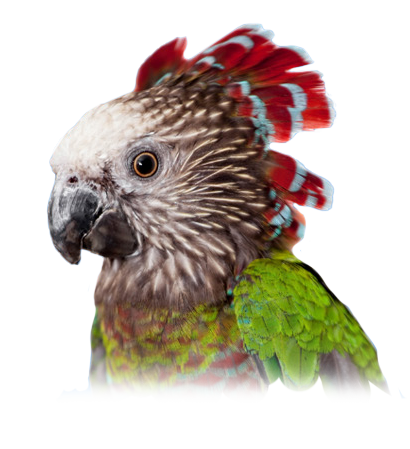


Hawk-headed parrots are truly one-of-a-kind, combining beauty, intelligence, and a bold personality. Their dramatic crest, expressive behaviors, and playful demeanor make them a standout species among parrots, but they require experienced care to thrive as pets.
Garden Veggie Nutri-Berries
Shop Now- Color
Multi Colored - Size
medium - Lifespan
30 + years - Sounds
Vocal communicator - Interaction
Somewhat social
- Hawk-headed parrots are also known as red-fan parrots.
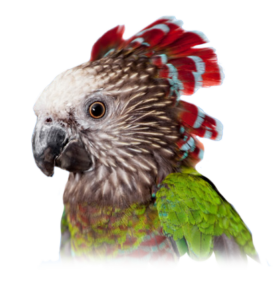
- Hawk-headed parrots get their name from their unique ability to raise a fan of red and blue feathers around their head and neck. This dramatic display resembles the ruff or hood seen in some hawks, giving them a “hawk-like” appearance.
- Hawk heads use their crest to give social signals such as excitement and curiosity. The also raise their crests to make them appear larger and more intimidating to potential threats, so a raised crest can also be a sign of aggression.
Want to stay up-to-date on Hawk-Headed Parrots?
What Is A Hawk-Headed Parrot?
Hawk-headed parrots are fascinating companions for experienced bird stewards who can meet their need for attention, stimulation, and care.
Hawk-headed parrots are less common as pet companions than similar-sized species like Amazon parrots or African greys. This rarity, combined with their unique looks and personality, makes them especially notable among bird enthusiasts.
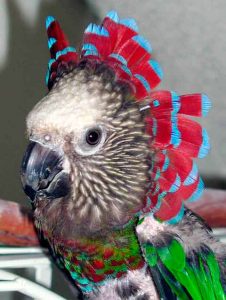
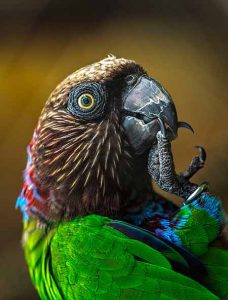 A hawk-headed parrot’s crest display is truly dazzling. When excited or if they feel threatened, they raise their fan-shaped crest of red and blue feathers around their head and neck. This striking display resembles the appearance of a hawk, earning them their name.
Native Region / Natural Habitat
Hawk-headed parrots are native to the rainforests of South America and their range includes Brazil, Venezuela, Colombia, Ecuador, Peru, Guyana, Suriname, and French Guiana.
Hawk heads typically inhabit lowland rainforests and prefer areas with dense canopy cover.
Care & Feeding
Hawk heads are medium-sized parrots with high energy levels, so they need ample space to move, climb, and spread their wings. A minimum cage size would be 30″ wide by 24″ deep and 36″ high with appropriate bar spacing (3/4″ to 1″). When outfitting the cage, provide multiple perches of differing diameters and textures to promote foot health. Natural wood perches such as those made of manzanita or dragonwood are good options, and rope perches also add variety and a softer place to perch.
Hawk-headed parrots should be afforded plenty of climbing and swinging opportunities via ladders, climbing ropes, and swings to keep them entertained. Other must-have enrichment accessories include foraging toys, including puzzle-type toys, to challenge their natural problem-solving skills. These parrots love to tear and shred, and destroy toys made from bird-safe wood, palm leaves, and cardboard should be provided and replenished as needed.
A balanced diet of high-quality pellets, fresh fruits, and vegetables, and proper husbandry are essential for their health.
Personality & Behavior
Hawk-headed parrots are known for their strong, independent personalities. Wild hawk-headed parrots are observed to live in pairs or small groups, which can explain their tendency to form a strong bond with one person in the household. While they can form strong bonds with their caregivers, hawk-head parrots have a reputation for being headstrong and demand respect for their boundaries. They might be shy around strangers but devoted to their favored people.
Some suggest that hawk-headed parrots are typically not the best pairing for first-time bird parents due to their complex behavior and need for experienced handling. As with any individual, there are exceptions.
These parrots tend to be highly inquisitive and love investigating their surroundings, often displaying energetic and playful behaviors. They have a reputation for being opinionated and confident. They enjoy exploring, solving puzzles, and interacting with their environment.
Speech & Sound
Hawk-headed parrots have a range of vocalizations, including whistles, squawks, and chattering. Some compare their vocal pitch as being on a similar level as that of a caique. When excited, threatened, or showing off their fanned neck feathers, they might emit loud, sharp calls. While they can learn to mimic some words or phrases, they are not as proficient as species like African greys or Amazon parrots.
Health & Common Conditions
Like all parrots, hawk-headed parrots are prone to certain health issues, including
- Psittacosis: A bacterial infection caused by Chlamydia psittaci that affects parrots.
- Aspergillosis: A fungal infection that can occur if they are exposed to moldy or damp environments.
- Nutritional Deficiencies: Without a balanced diet, hawk-heads may develop vitamin deficiencies, particularly vitamin A, leading to respiratory or immune system problems.
- Feather Plucking: This can result from stress, boredom, or medical conditions if their social and environmental needs are not met.
- Beak & Feather Disease (PBFD): Like other parrots, they are susceptible to this viral condition, which affects their immune system and feather health.
Regular vet visits, a balanced diet of high-quality pellets, fresh fruits, and vegetables, and proper husbandry are essential for their health.
Hawk-Headed Parrot Populations In The Wild
According to the World Parrot Trust, hawk-headed parrots are IUCN Red List Status: Least Concern. However, like many wild parrot populations, they are in decline due to widespread deforestation, with some sources citing a 25-30% loss of suitable habitat within their distribution over the next two decades based on the current rates of deforestation.
Hawk-headed parrots are relatively rare as pet companions compared to other parrot species of similar size like African greys, Amazons, and conures. Their striking appearance, independent nature, and playful personalities make them appealing to experienced bird stewards, but they are not as commonly bred or available as companion parrots.
Have Questions? Contact Us!
Lafeber is a family company dedicated to its customers and the health of all animals. We really value feedback, and if you have any questions or concerns, please do not hesitate to contact us.
Please email: [email protected] Or call us and a real person will pick up the phone: (815) 888-4040