



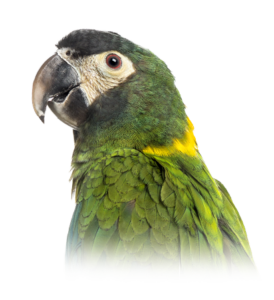
The yellow-collared macaw is often designated as a “mini macaw” due to its smaller size compared to the larger macaw species, like the blue-and-gold or scarlet macaw. Mini macaws share many of the same characteristics and behaviors as their larger counterparts, but they are more compact, making them more manageable for many pet owners.
- Color
Green, Yellow - Size
medium - Lifespan
30 + years - Sounds
Vocal communicator - Interaction
Highly social


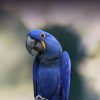
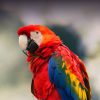
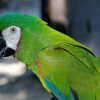
- The yellow-collared macaw is considered a mini macaw, which is part of a loosely defined group of small-to-medium-sized macaw species.
- Social Birds: These macaws are highly social and often form strong pair bonds with their mates. They can be found in small groups in the wild, and when kept as pets, they thrive on social interaction.
- Seed Dispersers: In their natural habitat, these macaws play an important ecological role by dispersing seeds. They help in the growth and spread of many tree species, contributing to the health of their ecosystems.
Want to stay up-to-date on Yellow-Collared Macaws?
What Is A Yellow-Collared Macaw?
The yellow-collared macaw is often designated as a “mini macaw” due to its smaller size compared to the larger macaw species, like the blue-and-gold or scarlet macaw. Mini macaws share many of the same characteristics and behaviors as their larger counterparts, but they are more compact, making them more manageable for many pet owners. Other mini macaw species include the Hahn’s macaw, severe macaw, noble macaw, Illiger’s macaw, and red-bellied macaw.
Yellow-collared macaws typically reach about 15 inches (38 cm) in length, which is considerably smaller than the larger macaws that can grow to be more than 30 inches (76 cm) long. Despite their smaller stature, yellow-collared macaws possess a vibrant and robust personality similar to larger macaws. They are intelligent, social, and can be quite vocal. They form strong bonds with their owners and can be very affectionate.
Native Region / Natural Habitat
Yellow-collared macaws are found in the wooded and savannah regions of central South America, particularly in Brazil, Bolivia, and Paraguay. In their natural habitat, these birds are often seen in small flocks or pairs, especially during the breeding season when they nest in tree cavities. Like most parrots, they are diurnal, active mainly during the day, foraging for a diet primarily composed of seeds, fruits, and nuts.
Care & Feeding
Yellow-collared macaws require a varied diet consisting of a high-quality commercial pellet base main diet, supplemented with an assortment of fresh fruits and vegetables to prevent vitamin and mineral deficiencies. Almonds, walnuts, and sunflower seeds can be offered as well but in moderation, as they can contribute to obesity. A lack of proper nutrition can lead to issues like vitamin-A deficiency, which can cause skin and feather problems, and a weakened immune system.
The care requirements for yellow-collared macaws are similar to those of larger macaws, including a spacious cage that also accommodates their long tail feathers. Along with good nutrition, spray baths and safe access to natural light will help maintain their feather health. They also require plenty of mental and physical stimulation through toys, puzzles, and interaction with their human companions to stay healthy and happy.
Personality & Behavior
Yellow-collared macaws are recognized for their intelligence, affection, and playful antics. They are often described as resourceful, opportunistic, curious, and lively. These engaging birds generally enjoy positive interactions, have a fondness for chewing, and require plenty of attention from their owners. They also have a reputation for being mischievous.
These macaws are highly social and often form strong pair bonds with their mates. They can be found in small groups in the wild, and when kept as pets, they thrive on social interaction.
Speech & Sound
Although yellow-collared macaws aren’t considered as noisy as some of the larger macaw species, their vocalizations can still be quite loud, with a shriek-like call. According to the World Parrot Trust, their in-flight contact calls are loud and gull-like, and they emit notes resembling those of Aratinga sp. conures. Some pet bird enthusiasts describe yellow-collared macaws as being capable talkers that can learn to mimic human words and phrases.
Health & Common Conditions
Yellow-collared macaws, like many parrot species, can be prone to certain health issues if their care needs are not adequately met. Nutritional deficiencies due to an inadequate diet are common among many species of parrots kept as pets, including yellow-collared macaws. Liver disease and obesity can be the result of a diet high in fat and low in nutrients, such as a seed-only diet. Other potential health issues include Psittacosis, a bacterial infection that can affect both birds and humans, feather picking/plucking problems, and respiratory issues due to airborne toxins like cigarette smoke, strong perfumes, and certain types of cookware fumes.
Regular veterinary check-ups, a balanced diet, a clean and enriching environment, and proper social interaction can help manage and prevent many health issues and ensure a healthier life for your yellow-collared macaw.
Yellow-Collared Macaw Populations In The Wild
Yellow-collared macaws, also known as golden-collared macaws, are not currently classified as endangered. They are listed as “Least Concern” by the International Union for Conservation of Nature (IUCN). This classification indicates that they are considered relatively stable in the wild at the moment.
However, like many parrot species, yellow-collared macaws face threats that could impact their populations if not managed properly. Habitat loss due to deforestation and the illegal pet trade are significant concerns. These activities can lead to localized declines in populations, making conservation efforts important to ensure their long-term survival.
Have Questions? Contact Us!
Lafeber is a family company dedicated to its customers and the health of all animals. We really value feedback, and if you have any questions or concerns, please do not hesitate to contact us.
Please email: [email protected] Or call us and a real person will pick up the phone: (815) 888-4040