




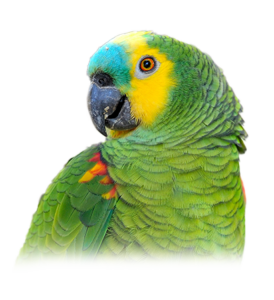
Blue-fronted Amazon parrots can make wonderful pets for those who can provide the time, attention, and care they require. With their engaging personalities and vocal talents, they are a joy to have in the right environment.
- Color
Blue, Green - Size
medium - Lifespan
30 + years - Sounds
Vocal communicator - Interaction
Highly social





- The blue-fronted Amazon’s scientific name, Amazona aestiva, is interpreted as “Amazon parrot of summer,” which reflects its origins in tropical climates.
- The blue-fronted Amazon is also called the blue-fronted parrot, the turquoise-fronted Amazon, and the turquoise-fronted parrot
- Blue-fronted Amazons have mostly black beaks, which is different from other Amazon species, which have horn-colored/gray beaks.


Want to stay up-to-date on Blue-Fronted Amazons?

What Is A Blue-Fronted Amazon?
The blue-fronted Amazon parrot (Amazona aestiva) is one of the more popular Amazon parrot companions. Native to South America, blue-fronted Amazon parrots are often described as playful, social, and intelligent birds. As pets, they are known for their vocal abilities and can develop a large vocabulary, and they can also be quite loud. Like most Amazon parrots, blue fronts tend to be outgoing and enjoy interaction. They require mental stimulation to prevent boredom and behavioral issues. Overall, blue-fronted Amazons make lively companions for those dedicated to providing them with an enriched environment.
Native Region / Natural Habitat
Blue-fronted Amazon parrots are native to the tropical and subtropical regions of South America, particularly in Brazil, Paraguay, and Argentina. They inhabit various environments, including forests, savannas, and semi-arid areas. Like most parrot species, blue-fronted Amazons build their nests in tree cavities, and blue-fronted Amazon chicks typically leave the nest around 60 days after hatching.
Care & Feeding
Blue-fronted Amazons, like most Amazon parrots, have hearty appetites. Some Amazon parrots develop an appetite for whatever their people are eating, regardless of whether that food is healthy or not. Resist offering your Amazon parrot high-fat foods from your menu. Instead, stick to high-quality commercial diets/pellets, a range of vegetables like carrots, broccoli, apples, and leafy greens and fruits. Nuts and seeds should be offered in moderation and/or as treats due to their high fat content.
Offer a mix of chewable toys, foraging toys, and interactive puzzles to keep them engaged. Wood, rope, and cardboard toys are great options. Climbing structures will help keep a blue-fronted Amazon in shape. Provide branches, ropes, or play gyms to satisfy their need to climb and explore. Regular playtime outside the cage (with supervision) and positive interactions with family members are essential for their mental well-being.
Blue-fronts need a spacious cage to climb about; ideally, at least 24x24x36 inches or larger. Include perches of varying widths and materials to promote foot health. Accommodate your Amazon parrot’s social nature by placing the cage where they can interact with the family.
Personality & Behavior
Blue-fronted Amazons are known for their friendly and affectionate nature. They thrive on social interaction and can form strong bonds with their owners. Like other Amazon parrots, they are intelligent and require mental stimulation. Blue fronts are naturally playful and social. Positive interactions will go a long way in bringing out your blue-fronted Amazon’s social personality. Positive reinforcement (rewarding good behavior and ignoring unwanted behavior) is also important in setting your Amazon parrot up for success.
Amazon parrots, including blue-fronted Amazons, can become noticeably hormonal during certain times of the year. They might seek out dark, enclosed spaces, and males can become uncharacteristically aggressive and territorial. Limit triggers by controlling light exposure and overstimulation, reducing physical affection, providing plenty of enrichment and toys, maintaining a consistent daily routine, and adjusting their diet, especially limiting foods high in fat or food served warm.
Speech & Sound
While talking ability can vary greatly from individual to individual, blue-fronted Amazon parrots are known to be one of the more talkative species of parrots, along with double-yellowheaded Amazon parrots and yellow-naped Amazon parrots. Typical of Amazon parrots, blue-fronted Amazons also have a penchant for singing. Overall, blue-fronted Amazon parrots can be quite loud, sometimes with an incessant shrill, as well as a repertoire of whistles and shrieks.
Health & Common Conditions
Some health concerns to be aware of in blue-fronted Amazons include obesity, feather plucking, and respiratory issues. Amazon parrots are particularly more susceptible to Atherosclerosis. Regular vet check-ups and a well-balanced diet can help mitigate these risks.
Blue-Fronted Amazon Populations In The Wild
Blue-fronted Amazon parrots are not currently classified as endangered. They are listed as “Least Concern” by the IUCN, meaning they have a stable population in the wild. However, they face threats from habitat loss and the illegal pet trade, which can impact local populations. Conservation efforts are important to ensure their continued survival in their natural habitats.
Blue-fronted Amazon parrots are commonly found in avian stores, bird breeders, and rescues. Potential owners should ensure they source from reputable stores/breeders/rescues that prioritize the birds’ health and well-being. Before welcoming a parrot into your home, it is essential to consider the bird’s needs and typical behaviors—including their vocalizations/loudness—and commit to providing a suitable environment, diet, and social interaction.
Have Questions? Contact Us!
Lafeber is a family company dedicated to its customers and the health of all animals. We really value feedback, and if you have any questions or concerns, please do not hesitate to contact us.
Please email: [email protected] Or call us and a real person will pick up the phone: (815) 888-4040