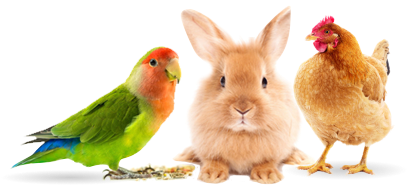


You and your veterinarian just saved your rabbit or other pet from a traumatic injury or debilitating illness, and your furry friend is ready to go home with you. Or maybe your pal has a chronic ailment that flairs up occasionally causing loss of appetite or weight loss. How do you tempt your pet into eating again when there’s no interest in the hay or other food usually offered? With EmerAid Sustain HDN Herbivore. This food helps provide easy-to-digest, tasty, high-energy nutrition to your precious family member.
What happens when your rabbit, guinea pig, chinchilla, or other small mammal herbivore stops eating? What causes it? What is EmerAid Sustain HDN Herbivore, and how does it help?
Missed Meals Are Bad
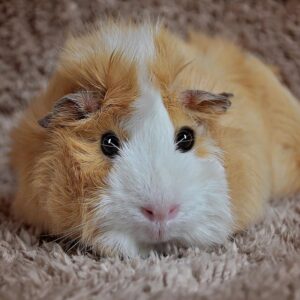
Although people have been known to survive days or possibly a few weeks without food, small mammals are very different. When a small mammal stops eating, health issues sometimes worsen within hours. How long can you “wait and see” before contacting a veterinarian?
The answer is: Not long. Within 24 to 48 hours a bad situation can get a whole lot worse. When food stops moving through the intestinal tract, this can be caused by gut stasis or develop gut stasis from something else. No matter the reason, it is a medical emergency if the intestines don’t have food to move or the intestines stop moving food.
Contact your veterinarian as soon as you suspect a health issue with your pet. Yes, this means if you notice a problem on a Friday night, contacting an emergency vet knowledgeable about treating rabbits or other small mammals that night or Saturday gives your little buddy a better chance to fight through and recover.
Dangers That Arise Without Food
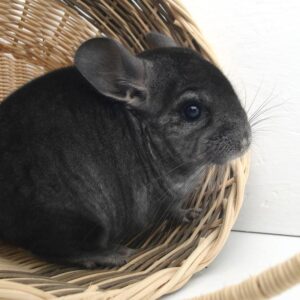
If a rabbit, guinea pig, chinchilla, or other small mammal stops eating, this might become a life-threatening situation. Gut stasis (a medical emergency), dehydration, liver disease, and other serious conditions can quickly develop and complicate any possible recovery. Note: When animals stop eating, they often decrease or stop drinking, too. A decrease in water intake severely and negatively affects the digestive system.
This article does not take the place of diagnosis by a veterinarian. For educational purposes, it offers some ideas on why small mammal pets might stop eating, signs of inappetence, etc. The article cannot cover all possible reasons. Always consult your veterinarian for any health concerns regarding your rabbit, guinea pig, chinchilla, or other pet family member.
Some Signs Of Trouble You Might Notice
- Food isn’t eaten
- Decreased water intake
- Change in droppings (smaller and/or fewer, diarrhea, consistency, etc.)
- Weight loss
- Lethargy
- Grinding teeth (a sign of pain)
- Sitting in a hunched position (a sign of pain)
- Wet chin
- Wet or dirty bottom
- Fur looks unkempt or different
Some Common Reasons Why Some Small Mammals Stop Eating
- Dental issues (overgrown teeth, misaligned teeth, abscesses, etc.)
- Infections (respiratory, urinary, etc.)
- Gut Stasis (this is an emergency)
- Stress (changes in environment: people, other animals, noises, odors, heat — heat exceeding 80 degrees Fahrenheit is especially dangerous for chinchillas, high humidity, etc.)
- Pain (sore feet, injury, etc.)
- Changes In Diet
- Inappropriate Diet (just because your pet eats a food doesn’t mean that food is good for them)
- Trauma/Injury
- Coccidia (an intestinal parasite)
- Metabolic Disorder
- Old Age
What To Do
Contact your veterinarian when you notice a problem with your rabbit, guinea pig, chinchilla, or other small mammal pet. Treatment varies depending on the cause. The sooner treatment begins, the better.
Once your veterinarian stabilizes your pet and sends you home with a treatment plan, supportive care if often needed.
Good nutrition is critical to recovery, but sometimes pets lack interest in food or have trouble eating their regular diet. This is when you can turn to EmerAid Sustain HDN Herbivore for help.
What Is EmerAid Sustain HDN Herbivore?
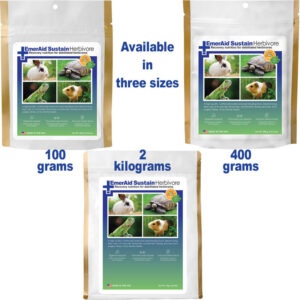
It is a tasty, high-energy, nutritionally balanced food that is highly digestible. It comes in powder form.
The good taste tempts many pets who ignore other food to happily eat EmerAid Sustain. Many success stories speak to this.
Eating can be a chore for a rabbit, guinea pig, chinchilla, or other small mammal that is dealing with a health issue. The high energy in EmerAid Sustain means pets can eat less but still get the same calories (energy) as more food that contains lower energy.
EmerAid Sustain HDN Herbivore is formulated for herbivores, including rabbits, guinea pigs, chinchillas, etc. It contains eight sources of dietary fiber for healthy gastrointestinal motility and the vital nutrients needed for overall good health.
The HDN in the name stands for highly digestible nutrition. Being highly digestible is important, because it requires less energy to digest. This means that animals recovering from illness or dealing with a chronic medical issue or aging can use more of their energy to live their life.
Options For Feeding
Hay is hay, a pellet is a pellet, and eating either requires chewing. EmerAid Sustain HDN Herbivore is different. You control the way it’s fed, so you can adjust to what works best for your pet. Your veterinarian can advise you.
Perhaps your rabbit had surgery and came home with a feeding tube. As recovery progressed, your pal graduated to being syringe-fed. When eating is almost back to normal, your friend moves on to hand-feeding or eating from a bowl again.
At each stage, EmerAid Sustain is there for your pet. It can be mixed with water to a consistency that goes through a feeding tube or syringe, or mixed to the consistency of dough for hand-feeding as small bites, or made into a gravy or sprinkled as a powder on top of pellets. It’s easy to use and adaptable.
Keep It On Hand
If you share your life with a picky eater, one that suffers flare-ups or has an ongoing medical issue, consider keeping a bag of EmerAid Sustain HDN Herbivore on hand so your friend won’t miss out on valuable nutrients if he or she suddenly stops eating their usual food. It has an 18-month shelf life when unopened and 6 months after opening and kept refrigerated.
The Answer For Vital Nutrition
It’s heartbreaking when a furry family member suffers any illness, and even worse when they can’t or won’t eat. You know they can’t recover if their body doesn’t get the fuel it needs. EmerAid Sustain HDN Herbivore often gets pets in distress the nutrition they need when no other food does.
Shop now for EmerAid Sustain HDN Herbivore in our EmerAid store.