



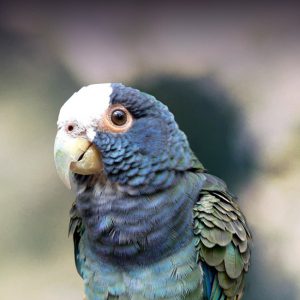
Don’t overlook the white-capped Pionus parrot as an companion. While it might not demand your attention as other parrots do, a well-socialized white-capped Pionus can certainly be an outgoing and social family pet.
Photo by nakashi, CC BY-SA 2.0, via Wikimedia Commons
Pionus Food
Shop Now- Color
Blue, Green - Size
medium - Lifespan
30 + years - Sounds
Vocal communicator - Interaction
Social

- White-capped Pionus parrots are the second most popular Pionus species, behind the blue-headed Pionus
- White-capped Pionus are sometimes mistaken for white-fronted Amazon parrots because of their similar size and coloration
- Diet & Nutrition: Parrot food
Want to stay up-to-date on White-Capped Pionuses?

What Is A White-Capped Pionus?
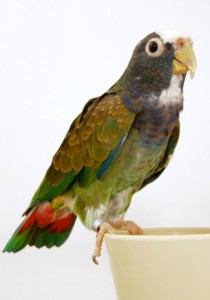 White-capped Pionus parrots are known for the easy-going ways and their relatively quiet nature, which might do them a disservice because potential bird owners might overlook them. A well-socialized white-capped Pionus, however, can be an outgoing and social family pet. Some describe the white-cap as the feistiest of the Pionus species, although that is feisty on a Pionus behavioral scale — they are still laid back compared to other parrots, like Amazons, macaws or cockatoos. It is the smallest of the eight Pionus species.
Native Region / Natural Habitat
White-capped Pionus parrots are native to Mexico and Central America.
Care & Feeding
A Pionus housed in too small a cage might become sedentary and overweight. House your Pionus in a spacious cage and setup toys to encourage your Pionus to move about. Pionus are typically good eaters. They should be offered a formulated main diet, such as Lafeber’s Premium Daily Pellets or Nutri-Berries, as well as fresh fruit and vegetables.
Personality & Behavior
Compared to other parrots commonly kept as pets, Pionus parrots are quiet, easy-going and they can be slightly standoffish. As with all parrots, the way a white-capped Pionus is raised by its human guardians makes the difference between a shy bird and a great companion. A Pionus guardian should be ready to spend a great deal of time with their bird. In a home with other louder, more demanding birds, the Pionus might not get the attention it requires.
Pionus parrots, including white-capped Pionus, might make a wheezing sound when frightened or excited, which an owner might mistake for a medical condition. Pionus also give off a musky or sweet odor that some caretakers find unpleasant, but others enjoy.
Speech & Sound
Pionus aren’t known as the best talkers, but some individuals can garner quite an impressive vocabulary. Their “speaking voice” isn’t always crystal clear and is often a little raspy, but a guardian can generally make out what his or her bird is saying.
Because the Pionus parrot is quiet in comparison to many other parrot species, it makes a great apartment bird. One caveat, however: the louder the household, the louder the bird. This goes for all species of parrots, Pionus included. A houseful of screaming children, barking dogs and blaring televisions can easily teach the sedate Pionus to be noisy.
Health & Common Conditions
Pionus parrots are susceptible to fungal infections and aspergillosis, as well as visceral gout. Pionus parrots can be prone to Vitamin-A deficiency, so consult with your avian veterinarian for ways to ensure that your Pionus parrot’s dietary needs are met.
White-Capped Pionus Populations In The Wild
The white-capped Pionus is the second most popular Pionus species, behind the blue-headed Pionus. It is most often confused with the white-fronted Amazon, because they are similarly colored and similar in size. White-capped Pionus are typically available from bird breeders and from some avian-specialty stores. They are occasionally available from avian-rescue organizations.
Have Questions? Contact Us!
Lafeber is a family company dedicated to its customers and the health of all animals. We really value feedback, and if you have any questions or concerns, please do not hesitate to contact us.
Please email: [email protected] Or call us and a real person will pick up the phone: (815) 888-4040