



One of the things I often stress to rat owners is a proper cage environment. Pet rats spend so much time in one and actually view them as their home, so the size and setup of a cage plays a role in their well-being. But it’s not just their home that has an impact on them, ours does as well.
The dwellings and lifestyle choices we create for ourselves can pose dangers, discomfort, and even illnesses in our rats. I’m talking about things like cleaners, fragrances, temperature settings, noise, lighting, and smoking. All of these can create unwanted consequences for our precious rodent children.
This month I want to concentrate on how you might be inadvertently lowering the air quality in your home and the impact it has on your rats. But don’t fret, because I’m also going to provide tips on how to fix it, how to avoid it in the future, and ways to protect your rats when it’s unavoidable.
Fragrances
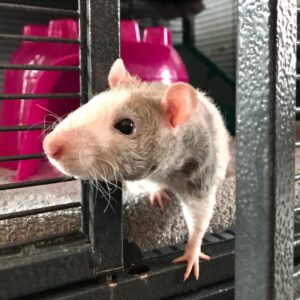
Every pet brings their own distinct smell into our space. A lot of us try to combat this with scented candles, plug-ins, room sprays, heavily scented cleaners, oil diffusers, incense, or a combo of these items. Unfortunately, they are all problematic for rats. The same goes for perfumes and scented lotions.
Due to the structure of their upper respiratory system, rats are obligate nasal breathers, which means they breathe only through their noses. Their olfactory epithelium, which is the tissue that traps odors passing across the cilia before sending the information to the brain, covers 50 percent of their nasal cavity. This makes it highly functional, but also very sensitive to smell and respiratory infection. It also makes them susceptible to allergic rhinosinusitis when exposed to irritants.
This doesn’t mean all fragrances are off-limits; they just need to be used thoughtfully.
The most important thing is to NEVER use the things listed above near your rats’ cage, in areas they free-range, or where they spend time with you. Also make sure to wash your hands thoroughly before touching your rats, their food, or any of their bedding if you’ve been handling any of these items.
Second, it is my opinion that you should avoid using any plug-ins, room fresheners, or oils for diffusers that contain volatile organic compounds (VOCs) such as formaldehyde, benzene, and phthalates. These chemicals are actually harmful when breathed in by humans and animals alike, and can cause headaches, breathing difficulties, sinus pain, and dizziness. When exposed to them for long periods, they can even cause serious health problems. They can also travel through air vents to the area where your rats reside, so it’s not enough to restrict them to a different room. [Note: Indoor environments may also contain these same chemicals from other sources, too. — Eds.]
In my own personal pursuit for a healthier plug-in alternative, I have found only one company so far that makes non-toxic products that are all phthalate-free. The company is called Scent Fill. They have three tiers of product refills, one of which is completely 100% natural, plant-based ingredients. They are also cruelty-free (no testing on rats!), unlike some name brand ones sold in stores. Be aware though, that even though a product is natural or plant-based, caution must still be exercised when used.
Regarding personal fragrances, avoid holding your rats after putting on perfume or using scented lotions. Give it time to dissipate or wash your hands well so you’re not transferring it to their fur. And of course, don’t spray perfumes around your rats or their cage.
Cleaning Products
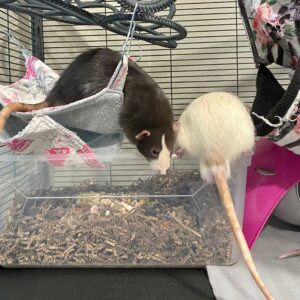
Cleaning products used on a cage aren’t the only ones you need to think about, you need to be careful with the household ones used in the vicinity of it as well. Opt for brands that use natural ingredients and are safe for the environment.
When using something that promises to disinfect or is heavily scented, move your rats and their cage to a different location until all of the mist and/or fumes are gone. Never spray cleaning agents directly on the cage itself unless it’s specified as pet-safe. But even then, it should be used after your rats have been removed first and should be rinsed off thoroughly and dry.
If possible, avoid using cleaners with strong fragrances, bleach, or other powerful chemicals in any room your rats frequent. Especially anything that contains phenols, which are the chemicals found in many wood shavings that are toxic to rats.
Open a window or keep the door to the room open if it isn’t well-ventilated. And please be advised that using a fan to air out a room only works if there’s an open window or a door to move the air through.
Fumes
There is a plethora of other fume-producing products in every home, some of which may never have occurred to you. Things like nail polish or remover, glues, some craft and art supplies, fresh paint, paint thinner, throw rugs, and new carpet — just to name a few. All of these items can create gases that are either dangerous for rats or, at the very least, irritating for them. Fortunately, most of these items are safe to use in a different room. If the room is large and very well-ventilated, some items might be safe enough when used far away from your rats or their cage. But please use it in moderation and use a fan to direct the air away from your rats, if necessary.
When it comes to freshly painted walls, new carpeting, and some area rugs, however, I strongly advise you to house your rats somewhere else completely until the outgassing/fumes from these has stopped. Shutting the rats into another room may be enough in some cases, but if you can personally smell these vapors making their way into that room, I suggest asking a friend to pet sit until the odor is gone. That’s because paint, carpet, and most large area rugs are notorious for containing harmful VOCs. It can take some rugs years to stop outgassing, even after being cleaned numerous times. I finally had to throw away a large rug we had in our living room, because it would not stop reeking of harsh chemicals. It was giving me migraines and severe sinus pain, so I can only imagine how it would make a rat feel.
If you’re not sure whether the VOCs have dissipated from something in your home and your sense of smell is weak, ask someone who is sensitive to odors to do a sniff test for you. I have the misfortune of being overly sensitive to odors and chemicals in the air and can detect odors many other people can’t. The only benefit to this is being aware of enduring irritants and knowing when extra steps are needed to get rid of them. You can also look into VOC sensors that test your home for outgassing.
Smoke
Another toxin owners may not think about is smoke. I’ve already written about the lingering effects and the dangers of secondhand and thirdhand smoke in my article “Pet Rat Care Do’s and Don’ts,” but did you know fireplaces can be problematic as well?
The American Lung Association (ALA) explains that the emissions from wood-burning fires releases a list of pollutants, VOCs included, into the air that can wreak havoc on our health. This will affect your rats, too, especially considering their respiratory sensitivities. Thankfully, the ALA’s website also offers alternatives and solutions.
Air Quality
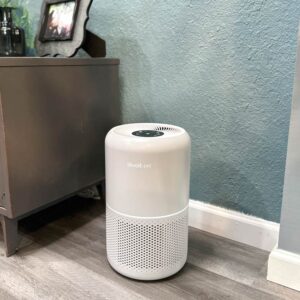
One way to ensure that you and your rats are breathing clean air, plus help your house smell better, is to invest in a HEPA air purifier that gets rid of allergens. Choose either a large enough one that will cover your entire house, or multiple smaller ones for each room. Make sure it does not emit or generate ozone, as that is a known lung irritant.
I have several of the Levoit Core® P350 Pet Care Air Purifiers around my house. It was designed specifically to capture fur, dander, and airborne particles. Regardless of the machine you choose, be sure to replace the filter according to the directions. Also do this for the filter in your air conditioner/furnace. If you don’t change the filters when needed, you might as well just turn them off, because they are no longer filtering anything.
I also recommend having a carbon monoxide monitor. Carbon monoxide has no color or odor, and a leak in your home can go undetected. Even if the leak isn’t bad enough to kill you, it can still make you and your pets sick.
Take a moment to think about your own living space and anything you are using that I haven’t mentioned. How might they be affecting your rattie kids? If you’re ever in doubt, research your items and then take the appropriate steps to provide your rats with a safe and comfortable environment.

thankyou for this fantastic rattie information.
I’m so glad you found it helpful! I’ll have even more home tips for December’s article.