


Contents
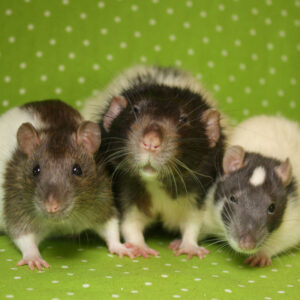
Imagine that you have just brought home two adorable rats. They are both fuzzy balls of energy, popcorning around their cage. Scratch that, they’re wide-eyed and startle at the slightest noise or movement and carefully watch you while hiding in their igloo. Or … maybe one is super friendly and has already made you their best friend, while the other one is hoping to have a long-distance relationship with you — where you keep your distance.
It doesn’t actually matter what your rats’ personalities are like at the moment, because who they are today isn’t necessarily who they will be tomorrow. That’s because rat personalities can and do change over time.
Reasons For Personality Changes
In my experience, age, health issues, hormones, and life experiences probably have the largest impact on humans and animals alike when it comes to our moods and how we act. I think it’s impossible to go through life without experiencing a shift in who we are, and rats are no different.
It doesn’t mean that every rat will go through a complete metamorphosis, or that specific personality traits aren’t ingrained in your rat — never to change. But it’s completely natural to observe small or significant changes over their lifetime. Only time will reveal the level of those changes.
Age And Rat Personality Changes
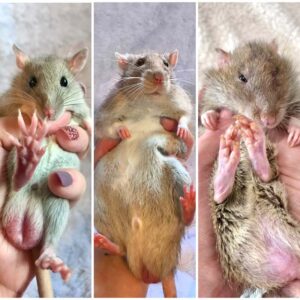
I think it’s unavoidable for a rat’s personality to change as they age. Young, hyper rats — which are always on the go, go, go — undoubtedly slow down and become lazy lumps (especially males) at some point.
To quote myself from my past article Rat Life Lessons From Older Rats:
“I’ve observed that rats have very distinct stages they go through during their short two to three years of life. What your rats are like when you first bring them home inevitably evolves over time due to physical and/or personality changes that are a part of aging.”
It’s been a year since I wrote that article, which was about my senior boys giving life “advice” to my then-teenager boys. All three of those seniors have now sadly moved on to the Rainbow Bridge. Unsurprisingly, the “teenagers” are currently slowing down as they enter a new phase of their life. They aren’t in the senior stage just yet. In the last couple of months, I’ve noticed how much more these boys like to sleep now, even when I bring them out of their cage.
When rats are young it feels like they will always have endless energy and curiosity, but every rat eventually finds the love of napping … all … day … long.
Health Issues And Rat Personality Changes
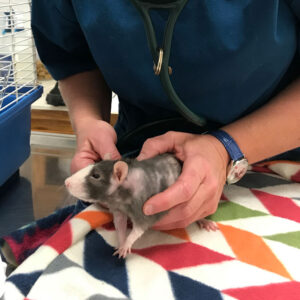
Health issues often go hand in hand with aging, but not always. Either way, illness, pain and injury, and incurable diseases can alter a rat’s personality. The difference between these things and regular aging is that they can lead to abrupt changes in personality rather than a normal progression over time.
If you notice an immediate change in your rat’s temperament or they are acting “off,” then it’s a good time to see a veterinarian. It’s important to rule out pain or illness as the cause, or neurological conditions, such as a pituitary tumor or a stroke.
Chronic illnesses like hind leg degeneration or respiratory diseases can permanently alter your rat’s personality, but not necessarily for the worse. It just makes them different.
For instance, I recently wrote about my girl Tru, who had zero use for me throughout most of her life. Then she developed hind leg paralysis and realized not only that she needed me, but maybe I wasn’t so bad after all. While she continued to stay standoffish, it was still shocking to find that she was actually willing to hang out with me on the couch. Under her own set of rules of course, but this was a new Tru!
In sadder situations though, I’ve had rats who were once trusting and playful become skittish and depressed because of illness. This is especially difficult when you need to hold them to give medication, provide specific care, or even just comfort them. In 2020, I watched my affectionate rat Paddington become anxious and refuse to be held as he battled pneumonia.
Hormones And Rat Personality Changes

This next topic technically exists within the health category, but I felt it was specific enough that it deserved its own section.
I think we all know that hormones can affect the emotions of humans and animals, and they can also alter a rat’s personality, especially male rats.
To quote myself from another article I wrote Do Pet Rats Bite?:
“Male rats hit social maturity between 5 to 6 months old. This results in hormonal changes that can show up as late as 9 months old. These changes can cause some rats to act aggressively, especially toward their cagemates. Sometimes it also results in biting the owner. I’ve had numerous males go through this transformation, but only one actually started biting me. Castration calmed him down, and he never bit me again.”
This might count as a temporary personality change, but I think it’s important to discuss. Especially because it’s not always short lived. When I first started out with rats (long before you could Google such things), I was totally unaware of what age a rat went through puberty, much less that it could create problems. So, when I first encountered this abrupt personality transformation, I didn’t know to have my rat Opus neutered. Instead, to protect his cagemate Trespassers William, I bought a second cage and separated them. And because I didn’t have Opus neutered, he stayed aggressive toward Tres until they were seniors. Near the very end of their lives, they were finally able to share a cage again. Age significantly lessens testosterone levels in male rats, and that’s why Opus finally calmed back down. Live and learn I guess.
Another thing I’ve learned is that neutering doesn’t automatically turn a hormonally aggressive or anxious rat back into the same rat they were before. I had one male, Sterling, that refused to get along with his brother Draper even after castration. Until they were seniors anyway, when they finally got along.
On the other hand, other males of mine that required a neuter became even more docile than they were before puberty. But all of my neutered boys became much, much lazier after surgery.
Females can be affected by hormones as well. Some, not all but some, can be rather combative while they are pregnant and nursing, only calming down after the babies have weaned.
Life Experiences And Rat Personality Changes
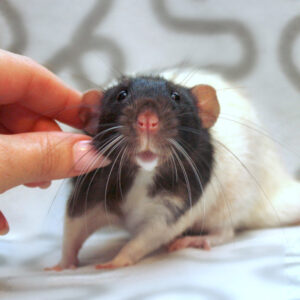
Life events, big or small, can also cause personality changes — for the good and the bad.
Moments that seem less significant to us can affect rats differently and bring out or change their personality in unexpected ways. Moments can include a change in routine or environment, like moving to a new home, or bringing in new rat friends or other pets.
Trauma can obviously lead to personality change as well. Carefree, happy rats that experience moments of terror, or worse, a lifetime of it, can become fearful and sometimes even aggressive toward humans.
Thankfully, though, the opposite can also be said. Some traumatized rats can change through positive, reaffirming experiences. And watching the personality of one of these rats evolve over time, as they learn to trust, is a truly rewarding experience.
When I wrote about Tru, I also wrote about another rat named Topher who had been extremely afraid of humans. I adopted him from the humane society once I learned he’d likely be put down for supposedly biting. I don’t know what they were talking about though, because while Topher was truly frightened at first, he was never aggressive with me. But wow, was he like night and day once he learned to trust me! He became all about the love and snuggles.
When it comes to Topher, however, I speculate that it wasn’t entirely a personality change per se. Instead, I think it was more that Topher had finally been given a chance to unearth the personality that had been hiding inside him all along. But I’ll never know for sure.
Reviewing The Past
An unintentional but happy benefit of writing about rats for more than two decades is that I ultimately ended up creating a journal of sorts on my own rats. And any time I reread something I’ve written in the past I can see all the ways they’ve changed throughout their lives.
Old memories of my rats as babies or teenagers come rushing back, and I realize just how much I have forgotten about them. It was my time with them at the end of their life that I remember the most. But what’s most fascinating is seeing how much they changed, while staying the same in many very special ways.
The best, most loyal friend I’ve ever had has been rats!
Great article !!!