


Contents
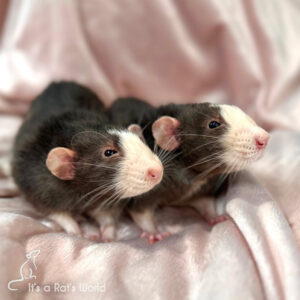
When I first started writing for Lafeber Company my current rats, Brinley and Moffett, had yet to be born. But as I write this article, the brothers are 2 years and 7 months old. I swear it was only yesterday that I was writing about them as babies. Now I am writing about them as seniors. A rat’s extraordinarily short life span (2.5 to 3 years) goes by in a blink!
I adopted the boys and their cagemate Kelton (now deceased) in August 2021 when they were roughly 5 to 7 weeks old. They were just tiny cuties, full of boundless energy with their entire lives before them. But now that they are seniors, they essentially spend their days doing nothing more than lazily sleeping and eating. We should all be so lucky!
While the boys are much less active now, it doesn’t mean that my duties as their caregiver have lessened. Taking care of senior rats actually requires more work. Illness, decreasing mobility, and even younger cagemates affect everyone’s daily routines.
Since the health issues my boys are currently dealing with are at the forefront of my mind, I feel like this is a good time to write about the many things an owner should expect with elderly rats and to share my tips for their care.
Watch For Illness
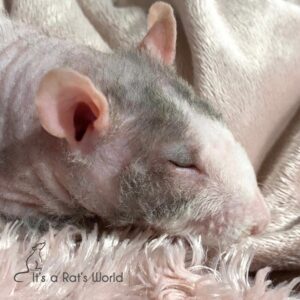
Illness can happen at any age, but elderly rats are the most vulnerable. Be vigilant with your rats and pay attention to subtle changes in their behavior, movements, and temperament. Rats are notorious for hiding illness and pain. By the time you actually notice something is wrong, you may have to act quickly.
Whether your rat needs antibiotics, pain meds, or both, talk to your veterinarian as soon as any symptoms or odd behaviors arise. Early intervention can provide your rats with a better quality of life and sometimes a longer life.
Fur Changes
Watch for changes in the fur, such as thinning and texture change. It’s normal for rats with the Rex gene to have thinning fur as they age, but rats with a standard coat don’t usually have thinning fur unless there’s an underlying reason. They also shouldn’t have brittle or dull fur.
If you notice bald spots on their forearms, caused by self-barbering, it might be a sign your rat is in pain.
Teeth Issues
As rats age, their appetites can lessen. But it’s essential to keep track of their eating and whether something specific is preventing it.
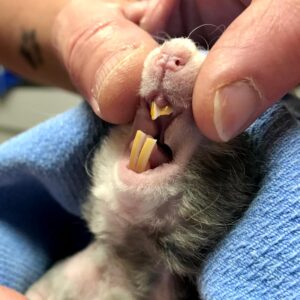
Regularly check your rat’s mouth throughout their lives. Additionally, if your rat suddenly stops eating or refuses hard foods he or she normally likes, take a look at their mouth. Malocclusion, or misalignment of the teeth, can be hereditary or caused by environmental issues, such as injury. And elderly rats are more susceptible to injury. Malocclusion leads to overgrown teeth that, if left untreated, can puncture the roof of their mouths, cause oral abscesses, and make it difficult to eat. A vet can help with teeth trimming and you may need to switch your rat to a soft diet.
Keep in mind that rat teeth are supposed to be a dark orangey-yellow color. If the teeth seem to be turning white, this is usually a sign of illness. Consult your veterinarian about this.
Mobility Problems
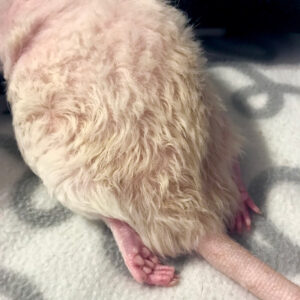
Watch for weakening of limbs or stiffening of the joints. It’s common for older rats to develop hind leg degeneration (HLD) of some kind. Some causes are being overweight; degenerative osteoarthritis, which is a progressive deterioration of cartilage in the joints; injury; or neurological illnesses, sometimes caused by a pituitary tumor. The worst part is that some rats can lose all function in their back legs and get hind leg paralysis.
Take note of your rat’s gait for clues. For instance, you might notice that one or both of your rat’s back feet are getting caught on blankets or things around the cage. This happens when it becomes more difficult for them to lift their legs as quickly over objects, which causes stumbling. They may also favor one leg over another or limp.
You may also witness your rat scooting instead of using their back legs, or dragging their stomach as they walk.
Signs of mobility issues to look for while they eat:
• Holding food with one paw while the other one is braced on the floor for balance
• Standing over food while using both paws to hold them up
• Lying flat on their belly to hold food
Another significant sign of hind leg problems is sleeping with their back legs straight out behind them with the bottom of their feet facing up. This is not usually a natural position for rats.
If you see curling of the toes and/or their toenails are getting much thicker and longer, then they likely have arthritis.
Talk to your vet about anti-inflammatory medications or supplements for joint care and pain reduction, along with other conditions that might transpire because of HLD.
Accommodations
Health issues don’t always mean an immediate loss of your rat. Intervention and medications can often provide your rats many more months of life. And you can do your part by making changes to aid in their quality of life.
Cage Changes
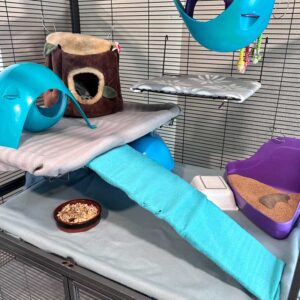
Most elderly rats need some modifications done to their cage. These modifications depend on the severity of their mobility struggles. If your rat’s mobility is only slightly hindered, my first suggestion is to put cloth covers on all your ramps. The floor surfaces of the cage should always be covered if they are wire, regardless of your rat’s age. This can prevent injury or bumblefoot, and create a more comfortable environment. But even cages that come with solid floors usually have exposed wire ramps. These can become very difficult for older rats to climb, and they increase your rat’s chance of getting a leg caught between the bars. You can make your own or buy cloth covers for added safety.
Consider whether it’s time to lower some of the levels in the cage or remove them altogether. If a rat is still walking but shows signs of leg weakness, lower all the upper levels (if your cage allows for this) so that the ramps are less steep. Also, lower hammocks and other hanging beds to make them easier to access.
You also may need to add some sort of step next to the litter boxes for easier access.
As your rat’s mobility declines, remove the extra levels completely. It’s truly amazing how much willpower our rats possess, because even those with hind leg paralysis usually pull themselves around with their upper body. But these rats can be very unstable and may fall off a level or lose their balance on a ramp.
Cage Changes For Multiple Rats
The tricky thing is many of us have rats of all ages caged together. Young and active rats should still have access to the entire cage. If this is your situation, consider the following options.
If your cage is similar to a Double Critter Nation (DCN), then latch the center ramp closed and turn one half of the cage into the “senior wing.” If you do this, pair your seniors together or at the very least pair them with a younger rat that’s less active. But find other ways for the younger rat to still get exercise.
Another option is to only remove the ramps, which limits seniors to one level. In a DCN, place the seniors on the very bottom level of the cage if you want to keep the upper half still open. Then leave igloos or other larger items on the floor for the younger rats. They can use those to jump and climb to the other levels. Just don’t isolate a senior by themselves. They should be with their friends.
More Cage Tips For Seniors
Once a rat can no longer climb or is unable to sit back on their haunches, it’s vital that you drop all the water bottles to their level and provide shallow food dishes that can sit on the floor, rather than being attached to the side of the cage. Then pay attention to their food intake. If it looks like they aren’t eating much, is that because they can’t reach it or hold it? Or is it because they are having problems chewing? More on food in a moment.
Now provide your mobility-challenged cuties with plenty of covered sleeping spots like igloos or huts and extra blankets (large scraps of fleece) on the floor for their achy joints. Blankets also provide added warmth, because elderly rats have a difficult time regulating their body temperature.
Food Changes
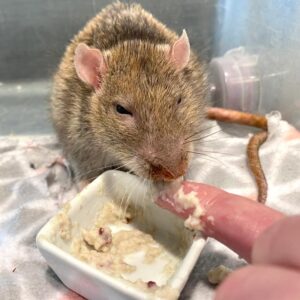
One of the most important lesson my rats have taught me is that just because a rat isn’t eating, doesn’t mean they aren’t hungry.
Besides malocclusion, other ailments that can prevent eating include limb weakness/poor balance, neurological issues from a stroke, or a pituitary tumor. Plus, sick and geriatric rats can become extraordinarily picky about food and how it’s consumed. These challenges mean extra effort on our part, and you may need to switch your rat to soft foods several times a day. For ideas on what to feed them, check out the diet article I co-wrote on the Rat Guide. You may also want to separate them from their cagemates during meals to keep other rats from eating your senior’s food.
When it comes to sick rats that are on a soft food or a liquid diet like baby food and formula or EmerAid, or a supplemental meal like Ensure, I find that’s when they become truly persnickety! Especially if you’re hiding medication in the food. Rats that happily eat baby formula mush for several weeks in a row out of a tiny bowl, may suddenly refuse it, only to lap it off of a small spoon instead. And when that is suddenly no longer acceptable to them, try switching to syringe-feedings or letting them lick it off your fingers. It’s possible you will need to try all these options throughout the day to meet their continually changing demands. Just don’t give up!
Grooming
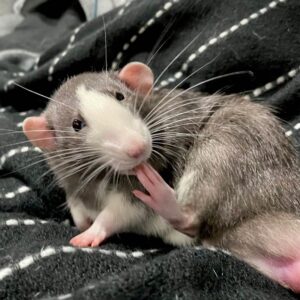
As owners we take for granted all the ways that rats keep themselves looking sharp. As they age, especially if their back legs are weak or paralyzed, it gets difficult if not impossible for them to properly groom themselves.
Ears: Have you ever noticed that your rats use their back feet to clean out their ears? They use those long, thin toes to get deep inside and remove ear wax and debris. But when their legs aren’t working properly, their ears go untouched. You can tell they want to clean them too, because they tilt their head to the side and a slight wiggle from their back end indicates they are trying to lift their foot. I watched poor Moffett do this last night, but he only managed to tap his toes slightly on the floor.
Use a tissue to lightly wipe out the inside of the ear. If needed you can dampen it, but make sure it’s not wet enough to drip water down into the ear. Be gentle. Note: Never stick cotton swabs down into the ear canal; doing so could cause damage or pack down ear wax.
Baths: Rats usually do not require baths, but sickly rats may have diarrhea or sit in urine. If your rat has messed themselves, use warm water and baby shampoo to clean them. Test the water temperature before putting your rat under it, and have a towel on hand. Support your rat’s body in one hand and then carefully place their back end under the running faucet as you use your other hand to clean them. Do not get their heads wet!
This is also a good time to clean their tail if it’s been getting dragged through urine. Once they are cleaned and thoroughly rinsed, dry off your rat. I like to wrap mine in a blanket afterward too, to keep them warm until they are fully dry.
For food messes, wipe down your rat’s fur with a damp paper towel/washcloth or unscented pet wipes. I like to do this to keep porphyrin buildup off their nose and from around their eyes.
Nails: Senior rats can get some gnarly nails on their back feet, thanks to arthritis. If you see nails that are starting to curl or snag on things, clip them. Just keep in mind that at this age, your rat is much more sensitive and achier. Clipping the thick nails can at times be painful for them, even above the quick. If your rat squeals or shows signs of distress, then try filing them instead. Or talk to your vet.
Males: Male rats that are having difficulty grooming themselves are likely to get what is known as a vesical proteinaceous plug, i.e., a penis plug. These are caused by a buildup of secretions, oils, and moisture that the rat can no longer remove for themself. This buildup then forms a thick, almost hard, creamy-colored substance. It doesn’t smell good. If left, these plugs can actually block the urethra and prevent urine from coming out. This can cause infection and serious discomfort for your rat. While this is probably the least enjoyable part of caring for a male, it’s absolutely necessary to check for these plugs and remove them. Consult your veterinarian or visit the Rat Guide’s article on this topic for details on how to safely accomplish this.
Extra Care
Elderly rats are likely to develop cataracts, which make their already poor vision worse. They may also lose their hearing. In such cases, announce your presence by tapping their hammock or the floor of their cage so as not to startle them. And then speak to them quietly so they know it’s you.
It’s also best to keep an eye out for aggressive cagemates. Younger rats aren’t always above bullying their elderly friends or stealing their food. I’ve witnessed many a healthy rat taking food straight out of the mouth of a defenseless senior! If needed, feed the seniors separately to assure they aren’t going hungry. And change your rat groups if your seniors are getting picked on or are being harmed.
The Enjoyment
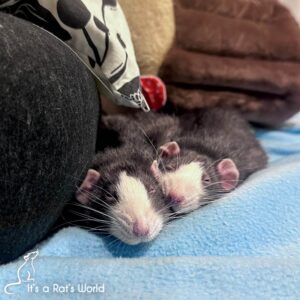
Elderly rats definitely take more effort. My days currently start and end with food prep and a medication regime for both my boys that I cannot miss. But the benefits to these sweet oldies are numerous. Rats of mine that were too hyper to sit still when they were young, finally chilled and hung out with me in their later months. And rats that hated being held or were too skittish, found they depended on me as seniors. Moffett and Brinley have little desire to explore now and can happily nap next to me for hours. It’s during this phase of life that I have been able to form some truly strong bonds with many of my rats.
I don’t think I have much longer with Moffett and Brinley, but I spend every night cuddling with them on the couch and enjoying every second I have left with them. And it’s the memories during these last months that will likely stick with me the longest.
Thank you for the wonderfully informative article on our sweet elders. Their heartbreakingly short lives… well, we just have to get used to it.🥲 And yeah, the first adjustment I made for my boyos was covering those ramps. l just discovered your site, thanks for helping Rats and their hyoomans.♥️🐀✨