


Contents

As much as you wish your rats to always get along with one another, harmony is not a given. Some rats just don’t like each other. And even ones that do might squabble every now and then. So, what do you do when you find your rats fighting?
First, you need to understand why rats fight in the first place. This helps you determine what actions to take. Of course, if your rats are about to kill each other, it doesn’t matter what is causing it — they need to be separated immediately. But more on this later.
Let’s go over some of the most typical provocations for a fight and tips on how to handle them.
Rat Newcomers

One of the most common times a rat fight occurs is when introducing two rats or a newbie to an already established mischief (a group of rats). This is especially true if introductions are not done thoughtfully.
Rats are social creatures that function within a hierarchy system. When there is a dominate rat and a few subordinates, a new friend is not always accepted readily. Putting a new rat into the cage without a proper introduction phase absolutely asks for trouble. Doing so could even prevent your rats from ever getting along.
Providing a positive introduction experience is one of the best preventions to fighting. But even when done correctly, it doesn’t guarantee the rats become besties or that a fight won’t happen. However, an altercation doesn’t mean that they’ll never be friends. I’ve had plenty of rats who disliked each other at first, yet got along later.
The many details on the ins and outs of introductions are too numerous for this article. My best advice on this? Do your research on it, take your time, keep to a neutral open area where you can easily intervene — and be very, very patient.
Hormonal Changes In Rats

Males: Hormones can play a big part of aggressive/fighting behavior, especially in males. If rats who normally get along, suddenly start fighting with one another, assess their age. When owners ask me for help because their rats suddenly started attacking one another, I can almost always guess how old the rats in question are. That’s because rats come into social puberty around the age of 6 months, which can sometimes cause a male (not all males, just some) to have an imbalance of hormones. If this happens, the hormonal rat might become overly aggressive toward cagemates, siblings, and sometimes even their people, although that’s rarer.
Based on my observations and experience, when this type of imbalance occurs, aggression usually intensifies between 7 and 9 months, but it can be excessive as early as 6 months. I’ve also found that these types of combative rats usually stay this way until they are seniors, if they calm down at all. Sadly, this behavior often escalates and becomes too dangerous for the rat to be left caged with their cagemates. The problem is, you don’t want your grouchy rat to be housed alone for the rest of their life either.
A solution, which I highly recommend, is neutering the hormonal rat. In most cases, this corrects the problem and provides a more relaxed life for all involved. Just keep them living separated (supervised playtime together out of cage might be possible) until several weeks after the surgery. It can sometimes take up to six weeks for the aggression to resolve.
Females: Hormones don’t usually cause this same type of aggressive behavior change in females unless a rat is pregnant or is lactating. And even then, it doesn’t affect all females. Things should revert back to normal once the mother is done lactating, or she’s away from her litter for a period of time.
Rat Hierarchy And Play

Due to the hierarchy system of rats, it’s perfectly common to witness agonistic behavior, which is a social behavior among same species that consists of nuanced aggressive and submissive actions that can look like fighting. This is most common among male rats but is not unheard of in females. Agonistic behavior is not necessarily bad, at least not in the sense that your rats hate each other and need to be separated; they are just doing their natural rat thing.
You may also witness your rats play fighting, which can look similar to puppies wrestling and tumbling. This is particularly prevalent among young rats and is totally normal and expected.
Both types of “fighting” can elicit squeaking and squawking, which make it seem like someone is getting hurt, but they aren’t. If I feel like things are getting too tense between my rats, I clap my hands really loud to grab their attention and exclaim, “BOYS!” This often snaps them out of the situation, and they move on.
Overall, it’s best to let your rats be rats, but keep an eye on their body language to make sure it doesn’t escalate into something more serious.
The Effects Of Age And Illness

Sudden fighting from an adult rat might be a sign that the aggressor has an underlying illness or is in pain. If you notice one of your rats is regularly picking fights with cagemates for no good reason, it’s time to get that rat to the veterinarian for a checkup.
On the other hand, sometimes healthy rats pick on cagemates that are elderly or ill. This isn’t so much fighting as it is bullying of one rat. It breaks my heart to see this happen, but it’s a sad part of animal nature. If this behavior becomes a repeated pattern, get another cage for your elderly rat.
To avoid anyone becoming a singleton, consider splitting your mischief into two groups, if possible. Put the elderly rat with one or two bonded cagemates who don’t hurt or steal food from the elderly rat, and then cage the “bully” rat with the remaining cagemates. You can bring everyone together during supervised playtimes.
Pay Attention To Stress
Rats are capable of feeling anxiety, stress, and depression, all of which could cause aggressive behavior that may lead to fights. Not every rat acts on these emotions, but if one or more of your rats becomes aggressive and age and health aren’t a factor, pay attention to your rat’s environment and relationship with their cagemates. Is the cage too small? Is your rat bored or lonely? Is another pet in the house upsetting them? Is it too hot or humid? Is there a chemical/strong odor or sound near their cage that’s aggravating them? Do what you can to lessen any stress your rat is experiencing.
Possible Bad Moods
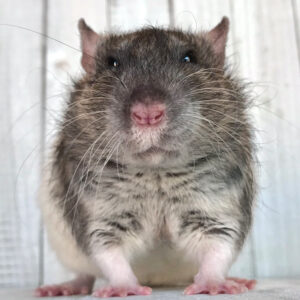
I have no scientific data to back this up, but I personally think some fights are caused by a “bad mood.” Numerous times over the years I’ve heard some sort of random altercation coming from the cage, only to find two rats (it’s almost always been my boys) in some sort of skirmish. Some of them were bad enough that the rats had to be separated for a period of time until they cooled off.
In these situations, they were isolated incidents and didn’t really fit into any other type of fight category that I’ve mentioned above. And since it never became a repeated pattern, it leaves me to assume that one or both rats were in a mood and someone’s buttons were pushed just a little too far.
Stopping A Rat Fight Safely
So, what do you do when your rats are seriously fighting?
If their behavior has moved into sheer aggression and one of your rats is actually being attacked, then you must intervene immediately. But — and I can’t stress this enough — NEVER EVER stick your bare hands in between two feuding rats! You will get hurt.
During a true fight, your sweeties are in a different mental state. They may not even recognize that you’re there. And considering how bad their eyesight is, they could mindlessly lunge and bite whatever is close to them.
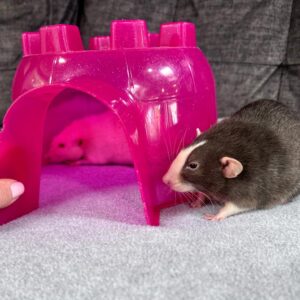
To stop the fight, quickly grab some sort of rat blanket, towel, an unused hammock, clothing … really any type of thick cloth that’s close by. Next, look for something to use as a “shield.” For instance, you could use a throw pillow if the rats are on your couch. Personally, I prefer a pet igloo. I always make sure to have one handy in a situation that might involve a fight (like introductions).
If you want, you can use the igloo or whatever you have to make a loud sound or bang the cage floor or bars first to see if the noise startles the rats enough to stop. Then use your “shield” to carefully push one of the rats out of the way and then slide it in between them. The reason I suggest an igloo is because once you’re able to separate the rats with it, placing it over one of them creates a barrier around them long enough for you to then use a towel or whatever material you have to grab the other rat. If you don’t have an igloo then use whatever you can (again, not your own hand) to create a large enough space between the rats to really block their access to one another.
Once the rats are separated, quickly place the towel over the rat closest to you and scoop them up with it. This protects your hands and arms until your rats are calmer. Find a safe place to put them, like a rat play area, an empty cage, a carrier, etc.
Give the rats a minute to calm themselves separately and then do a body exam on each of them to inspect for bite wounds, cuts, and scratches. If one of your rats is really hurt or profusely bleeding, contact your vet right away. If there’s only minor scratches, clean the area with antibacterial soap and water. For more information on wounds, check out the Rat Guide’s info on wounds.
After a good amount of time away from one another, and only if there was no bloodshed, bring the two rats together in a neutral territory where you can supervise the interaction. If they are acting normal, like nothing happened, evaluate them in the cage together for a bit. Continue to observe their behavior over the next several days to determine the cause and whether there could be a recurrence.
If, however, one of your rats was seriously hurt during the fight, cage them separately until you know for sure the rats can be housed together safely. As mentioned above, a neuter for one or both of the rats might be the only way they can be safely brought back together.
How To Do Supervised Visits
The only way to determine if feuding rats can be rehoused together is through supervised visits in a neutral area. Make sure any blankets or towels used during a supervised visit are clean and don’t smell like any one rat. I also suggest removing anything the rats can hide in or behind, like a hut, igloo (although keep one near you in case the rats need to be separated), or throw pillows, to prevent them from getting territorial over the hiding space. Yes, rats are known to do that.
Pay close attention to their body language during this time. If one is puffing up, or hairs are standing on end, or if one is baring teeth, posturing, or making any kind of hissing noise, it’s probably best to call it quits for the day and separate them again before a fight breaks out. You can try again the following day.
Not all rats can be rehoused together however. There have been many times where I’ve had to permanently separate my mischief into different groups. Some of them could be brought together during a play time and be fine, but the minute they were back in a cage together the fighting started again. And others could never be together again, even for play.
If a rat gets injured during a supervised visit, and you’ve exhausted remedies and probable causes, then it’s best to accept that these rats just don’t get along.
Rat fights are extremely stressful to experience, but hopefully you now feel a little more prepared should one ever happen.