


Contents

Oh, the joys of a big, squishy, rat with a pudgy tummy just asking to be tickled and kissed! As much as I love these chunk-a-munks though, added weight is obviously not healthy for our rats. We don’t set out to let our rats get fat, but I’m sure many of you reading this have had a portly rat at some time.
How did our once-svelte rat friends become so rotund? Is it avoidable, and what health implications does it have?
Let me clarify that this article will NOT be a scientific look at overweight rats. Instead, it includes my own observations and experiences throughout the years coupled with common sense.
Signs Of Weight Gain

A typical, healthy weight is approximated 350 to 450 grams (about 12.3 ounces to 1 pound) for a female rat and 450 to 650 grams (about 1 pound to 1.3 pounds) for a male. Obviously, the size of the individual rat can alter this.
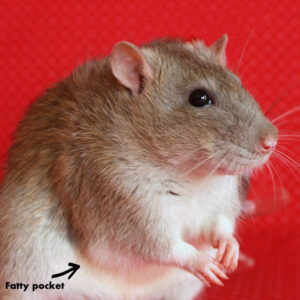
Weight gain is usually noticed if a rat’s body widens or the tummy and thigh area feel extra squishy. Some rats might develop hanging, fattylike pockets on the underside behind the legs. These almost look like baggy skin.
As the weight gain progresses, a rat becomes rounder, and the body structure is less defined. The stomach gets thicker, and the rat becomes more pear-shaped. The neck may become less noticeable, as if the head is connected directly to the shoulders.
If a rat’s stomach drags along the ground while walking or the sides hang over the legs, then your rat is obese.
So, what causes this weight gain?
Feeding Rats
Many factors cause weight gain, but the most common culprit is food. I mean, you saw that coming right? As with humans and all other pets, what we eat and how much we eat affects our waistlines.
But you feed your rat a commercial, staple diet made just for rats. Shouldn’t that prevent them from becoming overweight? Well, that really depends on which brand you buy, which formula, how much you give your rats, and what else you’re feeding them.
Brands: First off, not all brands are equal. It’s very important to research the staple diet (the rat’s main diet) you choose. Does it have fillers, unneeded calories, extra carbs, or fat? Is it also marketed to other types of rodents? Avoid any staple diets that are formulated for hamsters, gerbils, guinea pigs, squirrels, or chinchillas. These pets have different nutritional needs and should not be eating the same staple diet as a rat.
Some brands also offer different formulas based on the life stage or needs of the rat. For instance, a lactating or pregnant female requires more calories and protein. They also need to eat more often. A diet formulated for this life stage could easily cause some rats to pack on the pounds, so to speak.

One diet I highly recommend for adult (non-pregnant) rats is Lafeber’s Rascally Rat Nutri-Berries! This may sound like a shameless plug, but I wouldn’t write for a company I didn’t believe in. To learn why I think so highly of this food, check out the article about Rascally Rat Nutri-Berries that I co-wrote for the Rat Guide.
Overfeeding: I think many rats are overfed. Some owners may be unaware that every rat diet comes with an advised portion based on the rat’s age and weight. This can either be found on the bag or the brand’s website. Another way to overfeed is by not checking the cage for leftovers before giving them the next meal, or purposefully keeping the bowls filled at all times. I, too, was once mistakenly under the impression that rats should have access to a continually full food dish due to their fast metabolism. In reality it is better to split the daily portion of their staple diet into breakfast and dinner and then offer snacks of fresh fruits and vegetables and/or other healthy, low-calorie items throughout the day.
Too Much Fruits And Veggies: Twenty percent of a rat’s diet should be fresh fruits and veggies, but keep in mind that many of them are high in natural sugars and calories. To help avoid weight gain, keep the portions rat-sized (this also has an example of a daily menu).
Sharing Your Food: I believe all owners at some point are guilty of indulging their rats with pizza, french fries, chips, and many other glorious-tasting junk foods. I totally get the desire to share with your ratties, especially if they greedily and adorably steal right off your plate. Or when they stare into the very depths of your soul with their giant, begging eyes. But try to resist the temptation! There are far healthier choices you can share instead. And always keep the portions TINY!
Snacks: Store-bought snacks made for rats also need to be given in moderation. Just because these items are technically made for rats, doesn’t mean they are a healthy choice or should be given in abundance. Too many high-calorie-treats could easily pad those rattie tummies.
I’m sure you’ve noticed a pattern here — moderation is key!!
For more in-depth information on staple diets and proper feeding, check out the article I helped co-write for the Rat Guide.
Rat Genetics

I truly believe that some rats are just genetically predisposed to gaining weight. Again, I’m not citing any specific scientific data, but I’ve had enough rats (59 to be exact) over the years to observe patterns. I’ve noticed that within different groups of my rats, some continually stayed lean and fit their entire lives, while others plumped out. All of them were given the same staple diet, the same snacks, the same amount of access to exercise, and yet their bodies were not the same.
I think genetics may lead to some rats becoming overeaters or developing specific eating habits. How many of you have observed a greedy rat snatching food from cagemates? They are probably the first in line for snacks, too. And have you ever watched a rat dig through a bowl of mixed items looking for their favorites? Want to bet the favorites have the highest amount of carbs and calories?
Sure, all rats enjoy high-calorie foods, but some fill up only on those and ignore the rest. It’s sort of like me and my best friend. I regularly have to fight off cravings for chocolate, desserts, and soda, while she could go her entire life without ever being tempted by sugary wonders. It’s so unfair!
An Old Age Link?
As rats age their metabolism and energy level slows down. I’ve noticed that most of my heavier rats gained the bulk of their weight when they were seniors.
Health Issues
Obesity in rats can lead to numerous health issues. For one, overweight rats have a greater chance of hind-leg degeneration as they age. They are also more prone to arthritis, breathing problems, and heart issues, among other things. In rare situations a rat may even become diabetic.
Fighting Against Weight Gain

This is where dieting tips for obese rats would be handy. I can offer two: cut back on portions and be mindful of what you feed them. That being said, I find it very difficult to isolate meals for only one rat when they share a cage.
My vet never had any specific advice on rat weight loss. If you want to get super technical and have the mindset for it, check out the very detailed and comprehensive diet plan devised by longtime rat owner Gwen Lindsey of JoinRats.
And I also highly advise you talk to your own veterinarian if your rat needs to lose weight.
Minimizing Weight Gain

Fat rats are adorbs, obviously. But we absolutely shouldn’t strive for this for them. The best advice I can offer is to try to keep your rats from becoming overweight in the first place, not that it’s always easy. Pay attention to the foods you feed them. Research brands, offer reasonable portions, avoid feeding high-calorie and sugary snacks, and provide them with regular exercise. This means giving them ways to stay active while in their cage and getting them out every day for supervised play.
Ultimately, rats aren’t really that different than humans when it comes to weight and weight loss; the same general rules apply. I do wish the extra padding on my waistline made me as cute as it does on my rats, however.