



For better or for worse, one of my main personality traits is perfectionism. This does not mean I’m perfect at everything — I’m definitely not. It just means that I will drive myself crazy trying to be perfect at anything I’m passionate about. This, of course, includes rats. Which is why it felt like sheer torture when I discovered that I had unknowingly been doing everything wrong when I first became a rat owner.
Having singletons rather than two or more rats was one of those mistakes. Oops, rats are social and really need friends!
Then there was the 10-gallon aquarium I used as a cage. UGH!!! But if that weren’t bad enough, I filled it with pine and cedar shavings, which are, um… toxic for small pocket pets! Double UGH!
I literally shudder every time I have flashbacks of my early days as a rat owner.
These egregious mistakes aren’t entirely my fault though. This was back in the ’90s and rat care information was limited to say the least, and often wrong. Plus, some pet stores provided terrible examples and showcased questionable products for rats. But the minute I got access to accurate rat care information, my perfectionism went into overdrive with research, as I set out to course correct. And this ultimately led me to the realization that I had a real passion for sharing this newfound knowledge with other owners.
I’d like to say that I eventually developed into the perfect rat owner, but who are we kidding? Some mistakes are unavoidable, but it’s important that we recognize when we’re making them so that we can fix the problem.
So, from one perfectionist to hopefully another, here’s a list of 10 avoidable mistakes and what you should be doing instead.
1. Relying On The Wrong Resources

Education should be a never-ending part of rat ownership. But as great as the internet is, it is also the breeding ground of disinformation. Don’t assume that every website, blog, or rat influencer online knows what they are talking about; they may be repeating outdated information. Instead, you need to become savvy at deciphering whether you’re getting regurgitated misinformation, this includes from some pet store employees.
How long has the source been a rat owner and how do they manage their own rats’ care and illnesses? Pay attention to whether they give sources or provide information from a rat-knowledgeable vet. Do they continue working on their own education of rats and are they willing to learn from others? Is their information backed up by well-known rat sources? (My favorite for health advice is the Rat Guide.)
For contrast, I have over 30 years of experience with rats and more than 20 years researching and writing about them. I have also consulted with numerous vets and longtime owners in rescue and in different medical and health fields.
Do not turn to AI for answers either. It commonly pulls from incorrect information or misunderstands and changes the nuance of details. Unless you’re proficient at the subject you’re looking up, it is very difficult to determine which facts are correct.
2. Not Providing Adequate Housing And Supplies
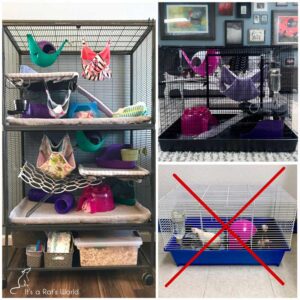
I see so many rat owners online making the worst cage choices. A cage should have good ventilation, multiple levels, and be sized to comfortably fit the number of rats being housed. A cage calculator can help with this. The wire bar spacing and latches should be escape proof and wire floors should be covered. Exposed wire can lead to injury, bumblefoot, and a filthy living space. Seriously, don’t make your rats walk and sleep on wire bars.
Mistakes don’t stop at cage choice either. You also need to make thoughtful choices on cage placement, cage accessories, and bedding. It doesn’t help that some pet companies market products that are actually unhealthy for rats or are better suited for a different type of pocket pet. Plus, even beddings that are considered safe may cause some rats to sneeze or become congested. My bedding of choice is fleece. For the litter boxes, my choice is crushed walnut shells. Note that walnut shells must be frozen for 24–48 hours to kill off parasites before putting them in the cage. I forgot one time, and all my rats got mites.
Articles of mine that can help you set up a fun, safe habitat for your rats include:
Accessories: Cage Makeover With Rat Cage Ideas and My Favorite Tips For Rat Care
Placement: Home Environment: Rats And The Air and Home Environment: Rats And Home Ambience
3. Not Cleaning The Cage Often Enough
A perfect cage setup stops being perfect once it stinks. Plus, it’s unhealthy for your rats. Breathing in large amounts of ammonia can aggravate their already sensitive respiratory tracts and lead to illnesses. It can also burn their eyes, make their fur smell, and it isn’t hygienic for rats to live in their own waste.
If you need to step up your cleaning routine, please read my article Resolve To Keep Your Rat’s Habitat Cleaner.
4. Poor Feeding Habits

Food leads to some of the worst mistakes owners can make.
For one, not all commercial rat mixes or lab blocks are equal. Just because it says it’s for rats doesn’t mean that it’s healthy or meets their nutritional needs.
Second, overfeeding and giving rats junk food is too commonly done. But too much staple diet (a rat’s main food) and snacks, even healthy snacks, can lead to weight gain. And do you really think your rats should be regularly splitting your fries, pizza, chips, and other fatty, salty, greasy, sugary guilty pleasures? Of course not.
I’m guilty of offering a bite of fry or a lick of ice cream, too, but it should be a rare splurge given in very tiny portions. Even healthy fruits and veggies, which rats need daily, must be fed in appropriate proportions. I understand the temptation to spoil your sweeties, but too much of a good thing is still too much.
To learn more about rat staple diets and portion-controlled snacks, please check out the diet articles I helped co-write for the Rat Guide. There’s even one about Lafeber’s rat food.
Diet
Daily Menu
Lafeber
5. Not Enough Exercise Or Mental Stimulation
It’s hard not to love a lazy rat who wants nothing more than to sleep their day away in your lap, but it would be a major mistake to let them spend their entire day sedentary. Lack of exercise and mental stimulation can lead to obesity, health issues, and behavioral problems.
But no worries, I have lots of suggestions in my article Daily Exercise For Rats to help get those lazy bones moving, while also keeping them entertained.
6. Grabbing Your Rat By Their Tail
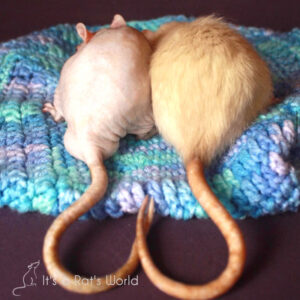
You may be tempted at times to grab that long pink tail if your rat is, say, refusing to come out of hiding, is about to run off, or you’re afraid to pick them up — but DON’T!
Why? Because this appendage is far more than just an ordinary tail, it’s a multifunctional tool that provides thermoregulation, helps with balance, communication, and sensory input, and is technically an extension of their spine. It’s almost as if their tail is a source of superpowers!
Want to know more? Then head on over to my article Why Rat Tails Are So Important.
7. Not Being Financially Prepared
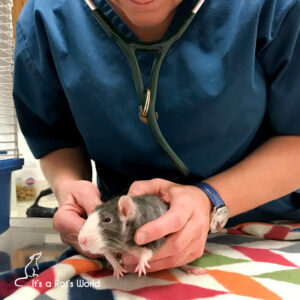
Rats may be small, but the financial responsibility for their care isn’t. This is especially true as the cost for veterinarian care has risen a whopping 60% since 2014.
Between respiratory issues, tumors, aging concerns, and the random ailments that pop up, it’s almost a guarantee that your rat will need to see a vet at least once. Sadly, this is one of the main reasons why I had to take a break from my most favorite pet and prioritize my own health instead.
There’s also expenses for the cage, food, cage supplies, replacement supplies (things do break), and toys you plan to spoil your rat kids with.
So, not only do I suggest mentally preparing yourself for unexpected expenses, but I also encourage you to start a savings account for your rats’ care immediately. And don’t forget to have a vet picked out BEFORE you need one.
8. Rushing Into Free Ranging
There are a lot of things to enjoy about free-ranging rats, but new owners may not fully grasp all the dangers that lurk around their home for their rattie kids, and just how much damage they can inflict on it, or how unhygienic it can be. I never once got my pet deposit back when I allowed my rats free-ranged in apartments.
Before making the decision to release your rats on the floor, get prepared and read my article Free-Ranging Pet Rats: What Every Owner Needs To Know.
9. Not Making Adjustments For Senior Rats

Sometimes we miss the changes that happen as our rats age and then don’t adjust accordingly. But recognizing that older rats have different needs is absolutely vital to providing them with the best care and minimizing any suffering.
If you miss signs of mobility issues and don’t make modifications to their cage ramps, food dishes, water bottles, and hammocks, then there’s a serious risk for injury or starvation. Starvation can also happen if you miss a change in their appetite and they’ve stopped feeding themselves.
Ultimately, you need to be on a symptom watch to get ahead of any illnesses your seniors will inevitably develop. Antibiotics and pain meds from a vet can go a long way in extending their life and improving the quality of it.
There’s a lot to know so, please check out my article Senior Rats: What To Expect And How To Care For Them to prepare you for this stage of assisted living.
10. Not Being Fully Committed

Are you spending enough quality time with your rats every day? Not once a month, not once a week, but every day? Or are your rats just existing in your home without actually being a part of your family?
The act of bringing home pet rats means you’ve made a commitment to them, one that should not be taken lightly. Whether you got them for yourself or for your kids, it is now your (unpaid) job to stay on top of their physical and mental well-being.
Make daily routines for meals, playtime, and quality time with you, and then stick to them the best you can. Rats are great at learning the routines you set up and will notice when they are changed. I swear my rats had an inner clock and knew exactly when breakfast and dinner were to arrive, because they were always already eagerly waiting for me at the cage door with their little noses smashed through the bars. They also made more commotion to get my attention whenever I was taking too long to come bring them out to the couch with me for our nightly snuggles.
Being a good rat owner means consciously prioritizing your rats’ needs every single day. But your reward will be the deep bonds that are formed through those efforts.
Quick note: I have also written two other articles with similar themes: How To Be The Best Rat Mom Or Rat Dad and Pet Rat Care Do’s And Don’ts. Each one has extra bits of information that the others don’t have, so they are all worth a read.