




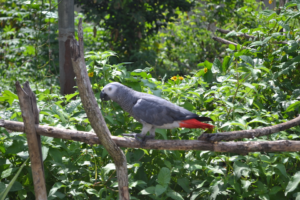
Of all the parrot species, African greys are one of the most heavily trafficked for export. In Nigeria, the greys are further threatened because of strong competition for habitat with palm oil farmers and corporations. With ever more people in the world, there is more demand for palm oil, which inevitably leads to less space for grey parrots. Sometimes it takes a special person to look out passionately for a particular species. Enter Ifeanyi Ezenwa, a Nigerian conservationist who started out with a love for nature at a very early age, but it was a volunteer conservation project exploring the African grey population, threats, and trafficking which sparked his desire to do more for this most special species.
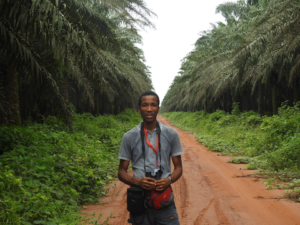
In 2022, Ezenwa applied for and was awarded a $15K grant from the Conservation Leadership Program to study possible ways of reconciling the development of palm oil plantations with habitat needs for endangered greys. Since Nigeria’s Trade and Investment Ministry has plans to create an additional three million hectares of palm oil estates by 2027, this will pose an even greater threat to the remaining habitat for greys and other large frugivorous birds, and a conservation plan is imperative.
Saving Land To Save African Greys
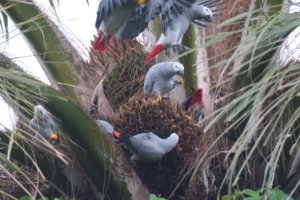
Ezenwa has his work cut out for him — navigating the needs of government, community, and business stakeholders. He hopes to develop strategies for sparing land areas with high conservation value from farming exploitation. In addition, he will strategize possible ways that farmers and African greys can share land by keeping key resources for parrots within palm oil commercial areas. The goal — sustainability for both purposes, no small task. As Ezenwa rightly says “the expansion without due consideration of the welfare of biodiversity will lead to the destruction of remaining ecosystems that support wildlife.”
African greys are considered a flagship species. If they can’t survive the expansion of palm oil production, what will this mean for other animal species in Nigeria? We wish Ezenwa much success with this planning project essential to the survival of the African greys in Nigeria!
Lafeber’s Global Parrot Conservation Grant this month goes to support Ezenwa’s Nigerian planning project, via the World Parrot Trust. This donation will directly help the African greys of Nigeria. You can learn more about Ifeanyi Ezenwa’s work here (link below). If you would also like to help, go to https://www.parrots.org/donate and designate your donation for this purpose.

Bless this dedicated man and I hope his work will be helpful and successful. Palm oil has a LOT of ecological and ethical problems and to displace a flagship species would be shameful. We already have seen what the palm oil business has done to orangutans in Borneo – it has literally virtually destroyed their entire habitat and their species.
I hope people who care and who have a little extra money will donate to Ifeanyi’s work. Words and wishes alone will not save the wildlife on this planet.
Loved seeing where our parent’s native areas. The picture of them in the palm looked similar to our grey on her “condo” doing her daily activities.