




Parrots have a knack for keeping their humans on their toes. From faking at mealtime to startling us with unexpected behaviors, our feathered companions can be true masters of deception. Some even trick us into believing they’re perfectly healthy when they’re not. Understanding these clever antics can help you better care for your parrot and stay one step ahead.
Mealtime Mischief
Our birds can turn us into fools when it comes to mealtime. One common tactic is selective eating, where the bird picks out their favorite high-fat seeds, like sunflower or safflower seed, while ignoring the healthier options. This often leads pet stewards to believe their bird isn’t eating, so they give in and offer more seeds, reinforcing the bad diet.
Another trick is food tossing, where birds throw pellets, fruits, or veggies out of their bowl while only eating the seeds. This makes their people assume their bird doesn’t like the healthier food, and so they stop offering it, further encouraging picky eating. Some birds even hold out until they get what they want, refusing to eat pellets or fresh food in hopes that their human will panic and give them seeds or nuts instead. Others pretend not to recognize healthy food, making their person feel guilty enough to switch back to their favorites.
To outsmart these clever birds and improve their diet and health, bird parents can gradually transition their birds to healthier foods by mixing them in slowly rather than making an abrupt change. Don’t let your bird fool you into thinking they won’t eat a healthier diet. Try these parrot diet conversion tricks from Dr. Stephanie Lamb.
Don’t Be Fooled: How Parrots Hide Illness & What to Watch For
Parrots might just be the ultimate pranksters—not with silly antics, but with their incredible ability to fool us about their health. As prey animals, they are instinctively wired to hide any signs of illness to avoid attracting predators. This means your feathered friend could be feeling under the weather while still eating, vocalizing, and acting “normal,” keeping up the perfect illusion until they can no longer maintain the act.
This built-in deception can easily trick even the most attentive caregivers. A parrot that keeps its feathers fluffed all day may not just be cozy—it could be trying to stay warm due to illness. But since we’re used to seeing our birds fluff up from time to time, it’s easy to overlook. Even weight loss can be masked under a layer of puffed-out feathers, making it seem like everything is fine when, in reality, it’s not.
Since our birds are such skilled little tricksters, it’s up to us to be extra observant. Subtle changes—like drinking more than usual, perching differently, or having watery or fewer droppings—can be clues that something is wrong. So, while your parrot might not be pulling April Fool’s pranks on purpose, don’t let them fool you when it comes to their health! Be on the lookout for subtle changes in your bird’s behavior, appetite, droppings, etc., and don’t forget to schedule your bird’s annual health checkup.
Parrot Pranks: When Body Language Tricks You
Parrots might be the ultimate pranksters—not with jokes, but with behaviors that leave their caregivers completely fooled. In the spirit of April Fool’s Day, it’s only fitting to highlight one of their most surprising tricks: playing dead!
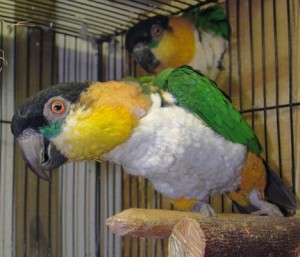
Some pet birds, particularly conures, have a habit of lying flat on their backs while sleeping—a sight that can be heart-stopping for unsuspecting passersby. To the uninitiated, it may look like something is terribly wrong, but for these birds, it’s just another way to get comfortable. Similarly, parrots can also incorporate lying on their backs into playtime. Caiques, in particular, are known for their playful antics, often rolling onto their backs or even scooting around while in play mode.
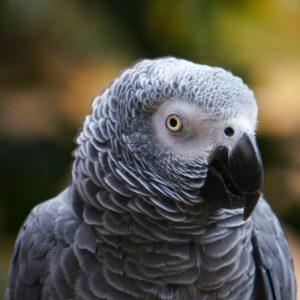
The parrot most likely to pull off an epic April Fool’s prank? A frontrunner would have to be an African grey parrot. In her monthly Lafeber blog, Dr. Irene Pepperberg often shares her African grey parrots’ clever tricks to fool staff in her cognitive behavior research lab. Dr. Pepperberg describes how her greys have figured out how to “game the system” by purposely withholding answers until they receive larger treat rewards. Alex, the famous African grey, was a master manipulator, and now his successors, Griffin and Athena, have caught on to the power of noncompliance. They refuse to respond until they are satisfied with the rewards for their efforts, showcasing just how strategic and calculated parrots can be when it comes to getting what they want. Dr. Pepperberg and her team have observed firsthand how these parrots enjoy fooling their human counterparts, further proving that parrots are not just intelligent—they are expert tricksters.
Cuckoo Birds & April Fool’s Day
Did you know birds have a connection to April Fool’s Day? In Scotland, April Fool’s Day was once referred to as “Huntigowk Day,” which comes from the Celtic saying, “Hunt the Gowk”; aka “hunt for the cuckoo,” with “cuckoo” referring to a “foolish person.” Imagine April 1st, in Scotland, a long, long time ago, people would send someone on a fool’s errand, instructing them to deliver a fake message to another person, who would continue the prank.

Thank you soooo much for this information. I’ve always said my CAG holds out for the junk food but thought, nah that can’t be true, I’m just imagining it. But now I see I hit the nail on the head. Its literally a game he plays with me. He LOVES sweet things like fruit and parrot cookies. I want him to eat more of the veggies i provide him and the nutriberries and senior nutriberries, but he literally holds out to see what sweet things i provide in his dish first. By the end of the day he will eat his pellets, but geez he worries me sick. He constantly throws his pellets to the bottom of the cage and they fall where he can’t reach them. The covered food bowls don’t work in my kind of bird cage (Kings cage) because there is no where to mount them and the bars run horizontal instead of vertical on the side of the cage. I am afraid he won’t have any food and worry about him. I try to put toys near his bowl to block him from putting his foot in the bowl . Its driving me crazy!