




The world continues to develop new technologies designed to make our rapidly changing lives easier and more productive. But with each advancement, concern grows about their impact on wildlife. In particular, the rapid expansion of wind farms has raised serious questions about their effect on bird populations. How can we reduce avian deaths caused by collisions with these massive structures, both on land and at sea? As technology progresses, so must our fight to protect our birds from these structures.
For offshore wind structures, consistent bird surveys are essential to better understand how birds interact with these installations. Traditionally, this monitoring has relied on cameras mounted on ships and planes—methods that require long-term effort and can become costly or unsustainable over time. Recently, Norwegian energy company Equinor has taken further steps to study the impact of offshore wind on birds and bats. By bringing in biologists, geologists, and other experts, they aim to improve efforts to protect not only the birds above but also the marine life below.
In the North Seas, where weather can be a horrifying complication, the company started to monitor birds by using cameras on horizon-stabilized buoys to collect important and usable data. After data accumulation, they run the information through AI programs to extrapolate precise knowledge that can be useful in creating proper solutions. The initial program began in 2023.
Smart Buoys, Safe Birds
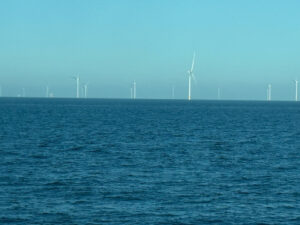
Equinor partnered with a software company to analyze the collected data and help them build more bird- and marine-friendly wind structures. With the addition of buoy-mounted cameras, they’ve gathered vast amounts of valuable data, terabytes collected over 12-month periods. This has allowed the company to better understand how various bird species interact with the structures, how close they fly, and the heights that they maintain.
As an example, since it can be difficult to grasp how we can protect birds from the sweeping blades of wind turbines, one such measure is the ability to shut down turbine blades during peak bird migration periods. Additionally, the blades’ rotation speeds can be modified to reduce risks to bats, which are known to fly near these structures at certain times.
Another result of the accumulated data may be the realization that a particular location is unsuitable for turbine placement.
The buoys are outfitted with marine-grade cameras that can assess image quality, adjust their field of view to reduce poor captures, and use powerful zoom capabilities to better identify birds. There are two cameras on the buoy that operate properly depending on where the sun is (to avoid blackouts). Every photo is time-stamped, and each buoy is self-powered to keep the cameras functioning. In addition to capturing bird and marine data, the buoys also feature wind speed monitors, radar, and other technologies to make these high-tech buoys effective research tools.
Tools like these buoys aren’t perfect and do not always provide what is being sought. But it is the advancement that we need to help protect our legions of flyers in the airways and marine life beneath the sea from our growing need for energy and the means used to produce that energy.