




It’s that time of the year again! Birds are beginning to test their migratory skills and fly to their winter homes. And many have already taken flight. Some cities in major migratory pathways are shutting off lights to accommodate nighttime flights for these feathered adventurers. It is likewise important for those at home to reduce or eliminate lighting between the hours of 11 p.m. and 6 a.m. from August 15th through November 30th.
Against this backdrop, our attention shifts to a closely connected topic: the challenges migratory birds face. In a recent study posted on Science , an alarming consequence of light pollution’s effect on birds has come to light. As the world becomes more technologically updated, light pollution continues to grow, and so does its impact on birds. The study, which was undertaken by two advanced studies professors at Southern Illinois University (Carbondale, IL), and Oklahoma State University (Stillwater, OK), with a grant from The National Institute of Food and Agriculture, reveals that urbanized birds are awake much longer than those birds found in rural areas by as much as 50 additional minutes.
The study was supported by recordings submitted to Birdweather, a community of citizen scientists who upload bird vocalizations for scientists to study. With PUCs (Portable Universe Codec), a dual-microphone innovation equipped with Wi-Fi, GPS, sensors, and protected by a weatherproof casing, scientists can capture sounds from all directions and turn them into valuable data for environmental research. The recordings showed that birds in urban areas were vocal for longer than their rural counterparts.
The Bigger The Eye, The Bigger The Sleep Loss
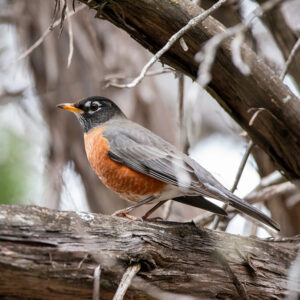
Interestingly, the recordings revealed that large-eyed birds like the American Robin, Northern Mockingbird, European Goldfinch, and birds with open nests experienced longer days due to the constant availability of light within urban settings. This results in sleep loss for the birds and requires adaptive responses to compensate. Small-eyed birds such as sparrows and those with hidden nests were less impacted by light pollution.
The scientists involved in the study recognized that sleep deprivation for humans is not ideal and must now watch the birds to see if longer waking periods pose health hazards for them as well. The study investigated the influence of light on more than 500 species of birds on a global scale. In total, the researchers analyzed over 60 million recordings from 583 bird species to understand which ones are most active at dawn.
Light and dark cues play a crucial role in the daily rhythms of birds and many other animals. When these cues are disrupted, it can lead to harmful effects. Some birds appear to adapt by extending their foraging periods or delaying mating. Migratory species can be particularly affected by the growing intensity of light pollution around the globe. As we learn more about these impacts, we are finding ways to reduce the strain on bird populations.