




If you love birds, there’s a whole lot of avian-related words waiting to be discovered. Learning bird-specific terms can transform the way we care for and think about our feathered friends. Each new term opens a window into the bird world to give us a deeper appreciation and a little bit of bird-nerd word superpower along the way. Here are some bird words to get us started.
Rhamphotheca
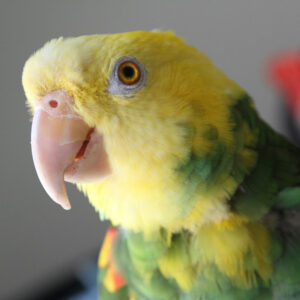
We all know “beak,” but a deeper dive reveals that the hard outer sheath of a bird’s beak is called the rhamphotheca. It’s made of keratin, the same stuff as our fingernails. According to Merriam-Webster, the term rhamphotheca originates from New Latin, combining the Greek word ῥάμφος (rhamphos), meaning “beak,” with the Latin suffix -theca, meaning “case” or “cover.” This term specifically refers to the horny sheath of keratin that covers a bird’s beak.
Gular Flutter
Gular flutter is a cooling mechanism some birds employ to regulate body temperature during extreme heat. Birds like crows, pigeons, herons, and some raptors gular flutter by rapidly vibrating the thin floor of their throat (fluttering their neck muscles) to increase evaporation and regulate body temperature. So next time you spot a wild bird with their bill open on a hot day, you might be witnessing gular flutter. Check out this video of a great blue heron gular fluttering. Be aware, however, that our parrots should not be open-mouth breathing/panting. This can be a sign of respiratory illness, a reaction to extreme stress, or a sign of overheating. If it’s heat-related, immediately move your bird to a shaded/ventilated area or mist them with cool (not frigid) water. A panting parrot warrants a call to your veterinarian.
Zygodactyl Vs. Anisodactyl Feet

Parrots have zygodactyl feet, with two toes facing forward and two toes facing back. This configuration is perfect for climbing and grasping objects with dexterity. Anisodactyl feet, on the other hand, have three toes facing forward, and one facing back, which is typical of most song birds.
Pterylae And Apterium
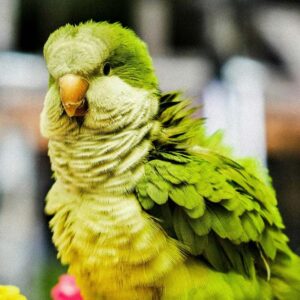
Feathers don’t cover every inch of a bird’s body. Instead, they grow in tidy rows called pterylae, with little bare gaps of skin in between called apteria. This well-designed pattern keeps birds insulated while allowing them to move freely, and it makes preening easier. (It also gives your veterinarian easier access to your bird’s skin if needed.)
Eclipse Plumage
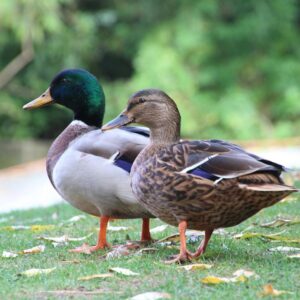
Most of us are familiar with the term molting, when birds shed and regrow feathers, but did you know that some bird species also undergo eclipse plumage? Eclipse plumage is a temporary duller feathering phase. Ducks are known for this, where the male duck takes on female-like plumage for a month or so during summer, shortly after breeding. But why? This is also the time when male ducks molt their colorful feathers, including their flight feathers — making them, as the saying goes, “sitting ducks.” Thus, taking on the female’s drabber feathering affords male mallards camouflage from predators until they’re ready to fly again. (When you stop to think about it, female birds’ less colorful plumage helps them blend into the environment better than the males’ flashy colors.) Parrots don’t have eclipse plumage, but just imagine if their colors changed from vibrant to muted to blend in with your décor during a molt!
Duetting
Parrots are celebrated vocal learners, but not all bird calls are solo acts. Duetting is when two birds (often mated pairs) sing precisely timed, alternating phrases that sound like one continuous song. According to CornellLab, duetting is one of the most complex vocal performances among all animals, and it can be so seamless you’d have a hard time telling the two birds’ vocals apart. Check out this in-sync dark-backed weaver pair duetting.
Sources:
www.britannica.com/science/apterium
https://en.wikipedia.org/wiki/Songbird
https://www.britannica.com/science/eclipse-plumage
https://www.allaboutbirds.org/news/it-takes-two-bird-duets/
https://www.audubon.org/news/how-birds-keep-their-cool
https://www.aav.org/blogpost/1778905/489478/Summer-Fun-for-Parrots
interesting! thank you.
Most interesting! Thank you.
Thank you for sharing these terms. We need more education of the terminology in the bird world. The more people know, the better bird owners they will be.
So good that you offer info on some of the terminology that is presented in your webinars.