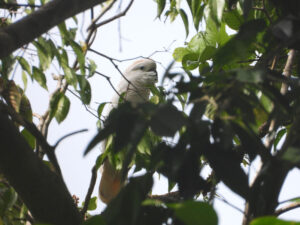
When a forest goes up in smoke, the tragedy extends far beyond the ash and charred timber. For iconic species like the Moluccan Cockatoo and the Red Lory, a burning canopy strips away everything that makes survival possible. While these birds might manage to take flight as flames approach, the safe havens they return to are often gone, replaced by fragmented landscapes devoid of food, shelter, and ancient nesting hollows. Across Maluku in eastern Indonesia, increasingly frequent forest and land fires are threatening these critical habitats, leaving long-lasting scars on the region’s unique wildlife.
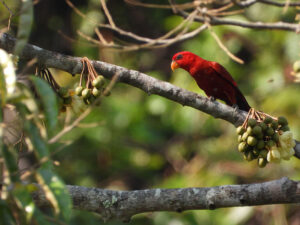
Image courtesy of Dwi Agustina, KKI
The true toll of these fires is deeply felt in the daily struggle for survival that follows. Forests operate as intricate, living networks where parrots and cockatoos rely heavily on mature trees for food and breeding. When a fire destroys these resources, they cannot be replaced overnight, and large nesting cavities can take decades to form. Furthermore, slower-moving animals, reptiles, and amphibians face immediate peril from the intense heat and heavy smoke. The sheer scale of this crisis is becoming impossible to ignore.
Local authorities in Ambon documented 34 separate fire incidents in just a three-week window between late September and mid-October 2026, underscoring an urgent need for widespread prevention measures. Meanwhile, data from the Forest Management Unit (KPH) indicates that roughly 10,258 hectares of land and forest have been scorched in East Seram Regency alone (RRI, 2026). These staggering losses have sparked intense alarm for surrounding ecosystems, including the vulnerable wildlife habitats protected within Manusela National Park.
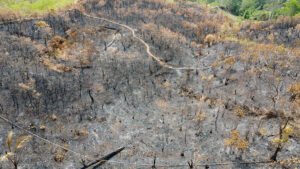
Image courtesy of Ali, KKI
Combating this growing environmental threat requires far more than passive concern; it demands active, collaborative action on the ground. Local communities are often the first to notice changes in the landscape, making their observations invaluable for early reporting and habitat monitoring. Organizations like the Perkumpulan Konservasi Kakatua Indonesia (KKI) work tirelessly to bridge scientific research with community participation, aiming to protect parrots and their homes. By supporting these conservation efforts, KKI helps to equip teams for field assessments and strengthen fire-prevention initiatives, turning shared concern into meaningful protection for Maluku’s irreplaceable forests.

Image courtesty of Ansar, KKI
According to Dwi Agustina of KKI , she says “regarding the recent fires, we still do not have reliable data on how many parrots have been affected. However, the burned areas include habitats for 11 parrot species within Manusela National Park: the Salmon-crested Cockatoo, Moluccan Eclectus Parrot, Moluccan King Parrot, Red Lory, Purple-naped Lory, Coconut Lorikeet, Blue-eared Lory, Red-cheeked Parrot, Red-flanked Lorikeet, Red-breasted Pygmy Parrot, and Great-billed Parrot.
Although we cannot yet confirm the direct impact on these species, the potential consequences are a serious concern. Collecting field data is essential to determine the extent of the damage and guide appropriate conservation responses. We need to understand not only whether parrots have been directly affected by the fires, but also how the fires may have damaged their nesting trees and food trees, as well as affected their flocking behaviour and habitat use.”
This month’s Lafeber donation goes to help KKI protect the beautiful parrots of Indonesia from future devastating fires, especially across Maluku in eastern Indonesia. If you would also like to help, contact Perkumpulan Konservasi Kakatua Indonesia (KKI):
[email protected].