




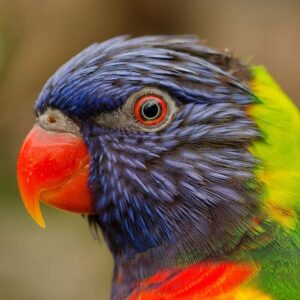
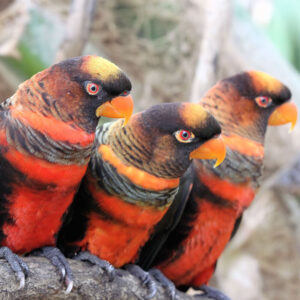
Parrots can be colorful, both in physical appearance and personality. One particular family of parrots that can be described as ultra-vibrant are lories and lorikeets. Their feather coloration is quite stunning. If you were to print out a photocopy of a lory or lorikeet, you might use up a good portion of your printer’s color ink! In fact, one species boasts such an array of colors that it is referred to as the rainbow lorikeet. Other lories and lorikeets include the black-capped lory, dusky lory, red lory, chattering lory, and Goldie’s lorikeet.
Uniquely Lory
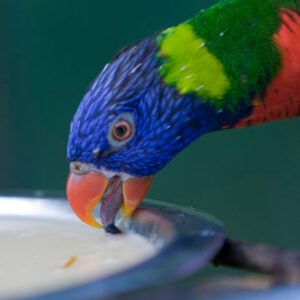
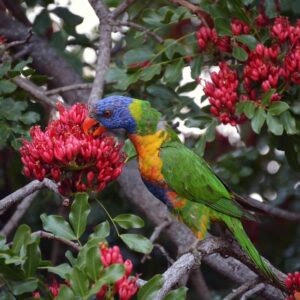
Lories and lorikeets are a mesmerizing group of parrots. In addition to their bright and vibrant feathers, these birds from the family Loriinae are characterized by their brush-tipped tongue, which you won’t find in other parrots. This specialized tongue serves an important function, as it allows them to remove pollen and nectar from flower blossoms.
Lories and lorikeets require a different diet than that of other parrots because their gizzard is unable to crush seeds.
A lory or lorikeet companion requires a diet comprised of nectar made from juice with specially formulated lory-diet powder mixed into it.

Their main diet of nectar/lory powder can be supplemented with fruit, such as bananas, oranges, melon, and apples.
Lories and lorikeets also might enjoy nibbling on hibiscus and other bird-safe flowers.
Their liquid diet means that their droppings are quite different than that of other parrots. These birds have watery droppings that tend to be sprayed, both in and outside the cage.
Some zoos and aviaries have walk-through lory/lorikeet exhibits, where visitors can feed the birds nectar from cups.
Visitors are sometimes caught off guard when they receive a “squirt” from a lory/lorikeet!
In the home, a lory/lorikeet enthusiast might want to opt for cages with acrylic features or add acrylic panels to the cage as a way of creating a splash barrier.
High Energy
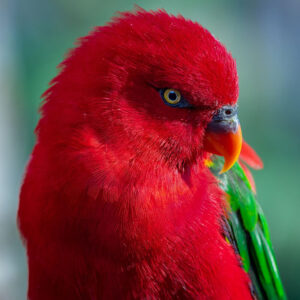
Since lories and lorikeets are fueled by a high-energy, nectar-based diet, they tend to be at the top of the scale in terms of energetic feathered companions.
Their people often describe them as always on the go — hanging upside-down, swinging, climbing, jumping in the water bowl, beating up their toys, and even rolling around.
What’s In A Name?
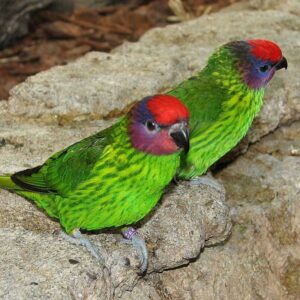
Lory or lorikeet — what’s the difference? The variation between the two names is similar to the distinction between parrot and parakeet — the latter of which describes a small parrot with long tail feathers.
Lory and lorikeet both refer to birds of the same subfamily, Loriinae. Lorikeet describes a bird with a longer, more slender tail and are smaller compared to the short, blunt tail of the larger lories.
Fun Lory Fact
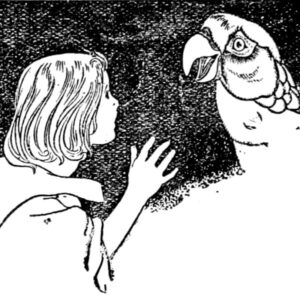
The classic children’s book “Alice’s Adventures in Wonderland” includes a chapter (Chapter III, A Caucus-Race and a Long Tale) in which Alice has an argument with a lory:
They were indeed a queer-looking party that assembled on the bank — the birds with draggled feathers, the animals with their fur clinging close to them, and all dripping wet, cross, and uncomfortable.
The first question of course was, how to get dry again: they had a consultation about this, and after a few minutes it seemed quite natural to Alice to find herself talking familiarly with them, as if she had known them all her life. Indeed, she had quite a long argument with the Lory, who at last turned sulky, and would only say, `I am older than you, and must know better’; and this Alice would not allow without knowing how old it was, and, as the Lory positively refused to tell its age, there was no more to be said.
_-drinking.jpg)

.jpg)
.png)
The colors of the lory Parrot are just breathtaking! And I didn’t know that these parrots were very into the nectar from flowers. Thanks, for teaching me another parrot bit of information.