



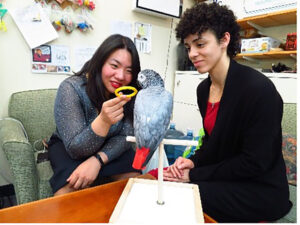
I’m often asked why we have to engage in so much fundraising to support our lab…why is it so expensive when we have so few experimental subjects? The answer is that it really does take “a village.” Specifically, we try (though it is not exactly possible) to give our birds an environment as close as can be to that of a toddler.
So, think of that environment…the toddler is never left alone during the day! Yes, a caretaker will put a toddler down for a nap, or maybe put the child in a playpen (the equivalent of a cage, if one is being honest) for some parts of the day, but for the most part, the child has constant companionship. A good caretaker will be talking to the child pretty constantly, too—talking about what is being fed for meals, about the colors, shapes, and number of toys. And, although the toddler will have many other experiences that a companion bird lacks (e.g., only a few birds get to go out on walks or have playdates; see Pepperberg, 2024 for others), you get the picture.
So, for those reasons, our parrots have human companionship all of their waking hours…and, given that African greys originate in equatorial Africa, that is basically 12 hours each day. [For various reasons, our birds’ days are technically 11 hours, but, like many toddlers, they often resist going to “bed” (back in their cages), so often our research assistants (RAs) stay late and the days are closer to 12.]
Lab Runs on Teamwork
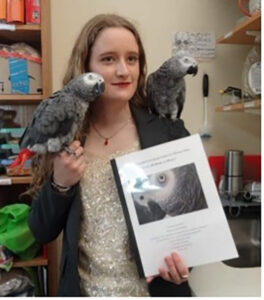
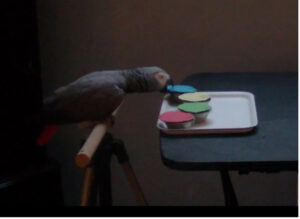
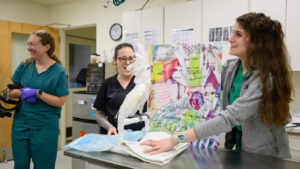
Almost all of our RAs are students with heavy class schedules, so they work in shifts. During their shifts, they clean cages, make meals, and give Griffin physical therapy for his arthritis, as well as engage in our various studies. And one person per shift is just a minimum. If we are doing any training, that means a minimum of two RAs—one as the model/rival and one as the trainer. Usually, we have a third RA to take notes. The same situation is true whenever we do testing. One person is doing the questioning, another is making sure all the stimuli and other equipment are working properly, and a third is note-taking and/or carefully watching the birds to ensure that they are paying full attention. If they aren’t, we have to declare a mistrial, and because of the way the experiments are designed, that third observer is often critical.
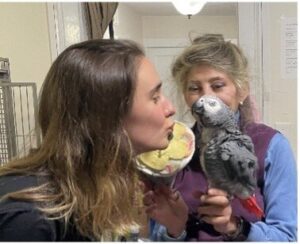
And even if we aren’t doing any scheduled training or testing, parrots need attention. They ask for “tickles”—for us to preen areas on their head that they can’t fully reach, or tell us they “wanna go back” to their cage where they can nap or snack. Alex would ask for a “showah” (a Bostonian shower), and Griffin tells us he wants additional training by saying “wanna nut!”, or asks to “go sink” (to the kitchen area, where he gets to play with spoons). Oftentimes, several RAs and I use avian nap time to discuss how we would design a new experiment or analyze the data from a current one, or to troubleshoot a design that isn’t working properly. These mini-meetings are critical to the smooth operation of the lab.
Although no one is in the lab overnight, we have monitors that alert the RA on call if anything unusual happens. A video camera is in place to identify the cause of an unexpected sound, and monitors send an alarm if the temperature goes too high or too low. (And, yes, we have had such emergencies. One time, the building’s power blacked out overnight, and the heat went off. The RA on call rushed in to find—unbelievably!—that the ONLY room in the entire huge building that still had electricity was the birds’ room, so we could plug in our emergency space heaters until the issue was resolved. And for that, of course, the RA got overtime pay.) When we were in basement labs at various universities, we also had a flood sensor, and we always have possible evacuation plans.
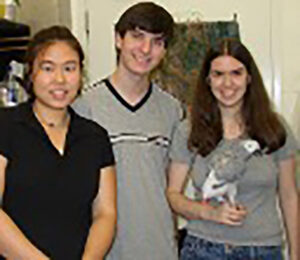
The RAs have various levels of expertise and are paid accordingly. The positions range from a post-doctoral fellow who spends half her time in lab working on new studies and half of her time at home, analyzing data and writing up papers based on completed experiments; to lab managers who are responsible for things like scheduling all the other RAs, ordering supplies and buying groceries as well as helping with bird care and experiments; to students who can work only a limited number of hours a week but who want experience in lab work and animal care. (Just FYI—I get no reimbursement for my time in lab or for running The Alex Foundation…And we get no federal or university financial support—we rent the apartment that maintains the lab, pay for utilities, food, veterinary care, supplies for experiments, etc. It all adds up…)
So, when you see our requests for assistance, understand that absolutely every penny goes to support the welfare of our parrots! For now, that is just Griffin, but other than veterinary bills, nothing really changes in terms of expenses and the number of our subjects.
Be Part of the “Village”
You can help Dr. Pepperberg continue the groundbreaking parrot research she began 40 years ago with Alex, the African grey parrot who won admirers from around the world with his cognitive abilities. If you shop online through sites such as Amazon.com, you can designate the Alex Foundation to receive a percentage of your final sales, or register with the Alex Foundation at iGive.com and a percentage of sales from companies associated with iGive will go to the foundation. The Alex Foundation also has a “Donate” button linked to PayPal. Visit the Alex Foundation’s “Support Us” link for more information.

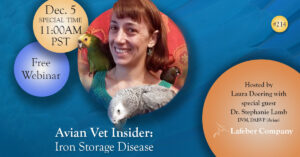 Join us for a FREE, live, interactive webinar hosted by Laura Doering, former editor of Bird Talk magazine and Birds USA magazine. Our special guest, Dr. Stephanie Lamb, DVM, DABVP (Avian Practice), will discuss Iron storage disease. Iron is an important element in the body, but too much is not a good thing. Iron storage disease, iron overload, or hemochromatosis is all the same disease, and this webinar will help viewers become familiar with it. From exploring if your bird could be at risk for this and what diagnosis of this entails, to treatment and follow-up, we will discuss the ins and outs of this infrequent but important disease to be familiar with. Get ready for another deep dive, in this insider’s view of the daily happenings at your Avian Vet’s clinic.
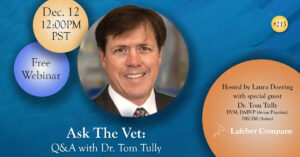 Join us for a FREE, live, interactive webinar hosted by Laura Doering, former editor of Bird Talk magazine and Birds USA magazine. Our special guest Tom Tully, DVM, DABVP (Avian Practice), DECZM (Avian), will answer your questions about pet bird health, nutrition, and care. Dr. Tully, a decorated Professor & practicing Vet at Louisiana State University School of Veterinary Medicine, is an internationally known veterinarian who has earned specialties in Avian Medicine in the United States and Europe. Having this type of access to a Veterinarian of his status is rare, but Dr. Tully believes the educated bird owner is the best bird steward. Dr. Tully answers each question in detail and shares his vast knowledge of birds, particularly parrots. Is your bird’s problem health-related or behavioral? Are you offering the right foods to your pet bird? Ask the Vet!
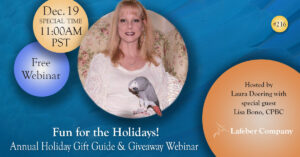 Join us for a FREE, live, interactive webinar hosted by Laura Doering, former editor of Bird Talk magazine and Birds USA magazine. Our special guest, Lisa Bono, CPBC, owner and operator of The Platinum Parrot and a certified parrot behavior consultant specializing in African grey parrots, has once again secured many wonderful donations for us to give away to some lucky viewers! In this fun holiday episode, Lisa will discuss each prize, an assortment of toys and supplies that are safe for our feathered companions as well as some parrot-themed items for bird lovers. We encourage you to shop with our generous donors when doing your holiday shopping for yourself or your own flock or for your bird friends or their flocks. This very special Holiday Webinar is generously sponsored by Lafeber Company, The Platinum Parrot & Lisa Bono Consulting & the following generous companies.
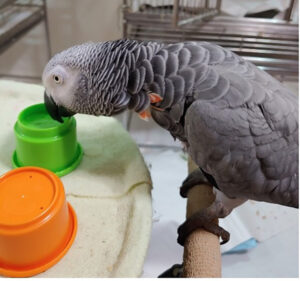

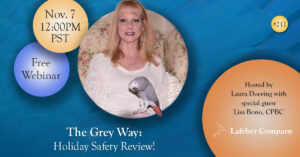 Join us for a FREE, live, interactive webinar hosted by Laura Doering, former editor of Bird Talk magazine and Birds USA magazine. Our special guest, Lisa Bono, CPBC, will review holiday safety tips to keep your birds happy & healthy during the busy season. Visitors often come with a risk – whether it’s open doors, their own pets they bring, children, new foods, and more – all of these things can bring down your holidays while you rush to the emergency vet! Learn how to avoid common hazards and dangers you haven’t thought of! While Lisa will discuss some Grey-centric points, her advice can be applied to all of the birds in your home.
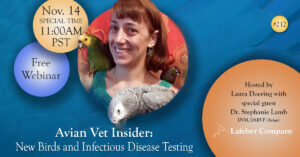 Join us for a FREE, live, interactive webinar hosted by Laura Doering, former editor of Bird Talk magazine and Birds USA magazine. Our special guest, Stephanie Lamb, DVM, DABVP (Avian Practice), will discuss which tests are the most important when adding a bird to your home or flock. While bringing a new bird into a home is a fun time, bringing home new diseases is not! It’s important to check birds for infectious diseases when they come into a new home so that they don’t inadvertently bring something in. Birds are good at hiding signs of illness and sometimes mask things completely. Checking them out for infectious disease at the start of your new relationship with them can help to calm fears and make sure that you have a new friend who won’t get your existing flock or you sick. Also, testing can let you know if there is something you can do early on to prevent problems. Learn all about the important tests your vet may want to do, including the details of why sample collection and processing methods are so important, in this insider’s view of the daily happenings at your Avian Vet’s clinic.
 Join us for a FREE, live, interactive webinar hosted by Laura Doering, former editor of Bird Talk magazine and Birds USA magazine. Our special guest, Tom Tully, DVM, DABVP (Avian Practice), DECZM (Avian), will answer your questions about pet bird health, nutrition, and care. Dr. Tully, a decorated professor and practicing veterinarian at Louisiana State University School of Veterinary Medicine, is an internationally known veterinarian who has earned specialties in avian medicine in the United States as well as in Europe. Having this type of access to a veterinarian of his status is rare, but Dr. Tully believes in the educated bird owner as being the best bird steward. Dr. Tully answers each question in detail and shares his vast knowledge of birds, particularly parrots. Is your bird’s problem health-related or behavioral? Are you offering the right foods to your pet bird? Ask the Vet!
 Join us for a FREE, live, interactive webinar hosted by Laura Doering, former editor of Bird Talk magazine and Birds USA magazine. Our special guest Tom Tully, DVM, DABVP (Avian Practice), DECZM (Avian), will answer your questions about pet bird health, nutrition, and care. Dr. Tully, a decorated professor and practicing vet at Louisiana State University School of Veterinary Medicine, is an internationally renowned veterinarian who has earned specialties in Avian medicine in the United States as well as in Europe. Having this type of access to a veterinarian of his status is rare, but Dr. Tully believes in the educated bird owner as being the best bird steward. Dr. Tully answers each question in detail and shares his vast knowledge of birds, particularly parrots. Is your bird’s problem health-related or behavioral? Are you offering the right foods to your pet bird? Ask the Vet! And on this Halloween date, will Dr. Tully wear a Halloween mask?
 Join us for a FREE, live, interactive webinar hosted by Laura Doering, former editor of Bird Talk magazine and Birds USA magazine. Our special guest, Pamela Clark, is a well-known author, speaker, IAABC Certified Parrot Behavior Consultant & retired CVT. Pamela will present Episode 14 of Translating Parrot, a Lafeber Pet Birds Webinar Series focusing on Parrot Behavior & Wellness, based on Pamela’s years of experience with a wide range of parrot species. In this episode, Pamela will discuss the principles of force-free handling and cooperative care for parrots. Trips to the veterinarian do not have to be traumatic. Traditional restraint methods may get the job done, but they often leave parrots fearful and resistant to future care. Fortunately, there is a better way. Pamela’s advice will teach you how to reduce stress, build trust, and encourage parrots to willingly participate in their own care. Designed for both caregivers and veterinary professionals, this presentation will provide practical strategies to improve veterinary visits, strengthen relationships, and ensure compassionate, considerate treatment for every parrot. Pamela’s advice will help you translate what your parrot wants & needs in the latest installment of this informative series!
 Join us for a FREE, live, interactive webinar hosted by Laura Doering, former editor of Bird Talk magazine and Birds USA magazine. Our special guest, Dr. Anthony Pilny, discusses the limited research into pet bird attachment and personal well-being. Research does show, and may lead to positive social change, by demonstrating that strong attachment to pet birds is not necessary for birds to provide companionship and for owners to connect with other bird owners. Pet birds do provide a soothing environment and social engagement, and are linked to lowering stress and anxiety, and providing companionship to help with feelings of loneliness. Birds can provide these benefits by fostering a supportive, non-judgmental relationship that enhances emotional regulation and connection. With Dr. Pilny’s guidance, we will examine our relationships with pet birds and what that means for us as caretakers and our personal well-being.
 Join us for a FREE, live, interactive webinar hosted by Laura Doering, former editor of Bird Talk magazine and Birds USA magazine. Our special guest, Dr. Stephanie Lamb, DVM, DABVP (Avian Practice), will discuss the recent conference of the Association of Avian Veterinarians. Educational conferences are so important for Veterinarians to attend. The AAV conference allows Avian Vets to meet one another and share ideas and medical advancements. The conference offers hands-on workshops, master classes, and general sessions, which can include case studies and the latest research in Avian Medicine. And they will also earn the continuing education credits required, not only for their Veterinary license, but for their board specialty certification. A veterinarian’s education and commitment to the latest in veterinary medicine does not stop when they earn their degree. Dr. Lamb will present all of the goings on in her insider’s view of the 46th AAV Annual Conference & Expo.
 Join us for a FREE, live, interactive webinar hosted by Laura Doering, former editor of Bird Talk magazine and Birds USA magazine. Our special guest, Lisa Bono, CPBC, owner and operator of The Platinum Parrot and a certified parrot behavior consultant specializing in African grey parrots, presents the latest episode of her new series. We have learned a lot about pet bird care over the decades, and there is still so much more to learn! But there are some “do’s & don’ts” that have been established over time. Lisa will discuss some of the right and wrong decisions that pet bird owners can make. From care to behavior, Lisa will discuss why some choices are the best for your pet birds, while other choices can be very wrong. Learn to be a great bird steward, and Do attend this webinar, but Don’t forget!

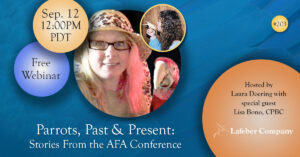 Join us for a FREE, live, interactive webinar hosted by Laura Doering, former editor of Bird Talk magazine and Birds USA magazine. Our special guest, Lisa Bono, CPBC, owner and operator of The Platinum Parrot and a certified parrot behavior consultant specializing in African grey parrots, presents the latest episode of her new series. She was recently Lafeber’s roving reporter at the American Federation of Aviculture’s 51st Annual Conference that was held in Raleigh, NC. Lisa will talk about the AFA and what goes on at the annual conference. Lisa is known for her detailed & very fun reports from bird meetings. “Flying into the Future” is the theme this year. Join us to see what interviews and pictures she has for us this time!
 Join us for a FREE, live, interactive webinar hosted by Laura Doering, former editor of Bird Talk magazine and Birds USA magazine. Our special guest, Tom Tully, DVM, DABVP (Avian Practice), DECZM (Avian), will answer your questions about pet bird health, nutrition, and care. Dr. Tully, a decorated professor and practicing veterinarian at Louisiana State University School of Veterinary Medicine, is an internationally known Veterinarian who has earned specialties in Avian medicine in the United States as well as in Europe. Having this type of access to a Veterinarian of his status is rare, but Dr. Tully believes in the educated bird owner as being the best bird steward. Dr. Tully answers each question in detail and shares his vast knowledge of birds, particularly parrots. Is your bird’s problem health-related or behavioral? Are you offering the right foods to your pet bird? Ask the Vet!

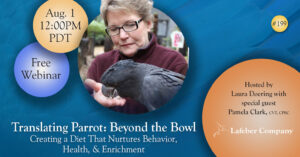 Join us for a FREE, live, interactive webinar hosted by Laura Doering, former editor of Bird Talk magazine and Birds USA magazine. Our special guest,
 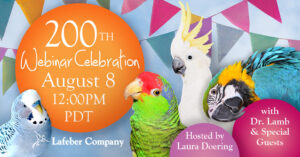 Join us for a FREE, live, interactive webinar hosted by Laura Doering, former editor of Bird Talk magazine and Birds USA magazine. Our special guest, Stephanie Lamb, DVM, DABVP (Avian Practice), will talk about being the first presenter of the Lafeber Pet Birds Webinars. We will welcome other special guests live and by video message. And, of course, there will be giveaways!
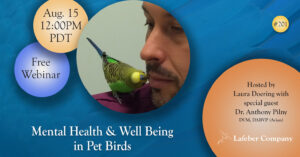 Join us for a FREE, live, interactive webinar hosted by Laura Doering, former editor of Bird Talk magazine and Birds USA magazine. Our special guest, Dr. Anthony Pilny, will discuss mental health in pet birds. Mental health is a key component of overall health and is closely linked to physical health; thus, it is vitally important to address and nurture in our pet birds. Achieving states of well-being leads to emotional stability and may reduce undesirable behavioral issues as well as prevent chronic diseases. Parrots are highly intelligent and need stimulation and social interaction, much like is known in people. An understanding of essential components of a bird’s life and the ways we often obstruct health, as well as ways to improve well-being, is key to keeping healthy and happy birds.
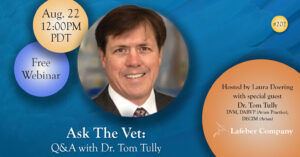 Join us for a FREE, live, interactive webinar hosted by Laura Doering, former editor of Bird Talk magazine and Birds USA magazine. Our special guest Tom Tully, DVM, DABVP (Avian Practice), DECZM (Avian), will answer your questions about pet bird health, nutrition, & care. Dr. Tully, a decorated Professor & practicing Vet at Louisiana State University School of Veterinary Medicine, is an internationally known Veterinarian who has earned specialties in Avian medicine in the United States as well as in Europe. Having this type of access to a Veterinarian of his status is rare, but Dr. Tully believes in the educated bird owner as being the best bird steward. Dr. Tully answers each question in detail and shares his vast knowledge of birds, particularly parrots. Is your bird’s problem health-related or behavioral? Are you offering the right foods to your pet bird? Ask the Vet!
 at the top of the camera screen.

 Join us for a FREE, live, interactive webinar hosted by Laura Doering, former editor of Bird Talk magazine and Birds USA magazine. Our special guest, Pamela Clark, is a well-known author, speaker, IAABC CPBC & retired CVT. Pamela will present Episode 13 of Translating Parrot, a Lafeber Pet Birds Webinar Series focusing on Parrot Behavior & Wellness, based on Pamela’s years of experience with a wide range of parrot species. In this episode, Pamela will answer questions from viewers about baffling behavior issues! This is your chance to ask her about something your parrot does that has you stumped. Pamela’s advice will help you translate what your parrot wants & needs in the newest installment of this informative series!
 Join us for a FREE, live, interactive webinar hosted by Laura Doering, former editor of Bird Talk magazine and Birds USA magazine. Our special guest, Dr. Stephanie Lamb, DVM, DABVP (Avian Practice), will continue her Avian disease deep dives with a discussion on an all-too-common disease. Psittacosis, ornithosis, chlamydiosis, parrot fever – a disease with many names and nothing good about it! Dr. Lamb will explore this complex, zoonotic disease and how it affects our parrots and those who live with them. She will cover this disease from diagnosis, managing a case, and trying to prevent it, in this insider’s view of the daily happenings at your Avian Vet’s clinic.
 Join us for a FREE, live, interactive webinar hosted by Laura Doering, former editor of Bird Talk magazine and Birds USA magazine. Our special guest Tom Tully, DVM, DABVP (Avian Practice), DECZM (Avian), will answer your questions about pet bird health, nutrition, & care. Dr. Tully, a decorated Professor & practicing Vet at Louisiana State University School of Veterinary Medicine, is an internationally known Veterinarian who has earned specialties in Avian medicine in the United States as well as in Europe. Having this type of access to a Veterinarian of his status is rare, but Dr. Tully believes that the educated bird owner is the best bird steward. Dr. Tully answers each question in detail and shares his vast knowledge of birds, particularly parrots. Is your bird’s problem health-related or behavioral? Are you offering the right foods to your pet bird? Ask the Vet!
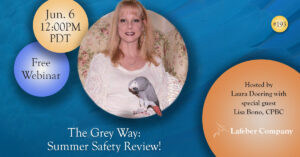 Join us for a FREE, live, interactive webinar hosted by Laura Doering, former editor of Bird Talk magazine and Birds USA magazine. Our special guest, Lisa Bono, CPBC, owner and operator of The Platinum Parrot and a certified parrot behavior consultant specializing in African grey parrots, presents Episode 31 of The Grey Way, a Lafeber Pet Birds Webinar Series focusing on Congo & Timneh African grey parrots as pets. In this episode, Lisa will discuss summer safety. Summer brings the challenges of hot and extreme weather, travel, and visitors. Learn about the dangers that your bird might face and be prepared to have a safe summer! While Lisa will discuss some Grey-centric issues, her advice can be applied to all species.
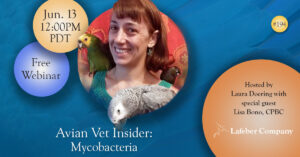 Join us for a FREE, live, interactive webinar hosted by Laura Doering, former editor of Bird Talk magazine and Birds USA magazine. Our special guest, Dr. Stephanie Lamb, DVM, DABVP (Avian Practice), will continue her Avian Medicine deep dives with a discussion about Mycobacteria. Mycobacteria is a rare disease in birds but it does occasionally appear. This bacteria is the causative agent of tuberculosis in humans but it tends to have a different effect in birds. Learn about this rare disease and what veterinarians have to do when they are treating it. Be sure to register to learn about Mycobacteria in depth in this insider’s view of the daily happenings at your Avian Vet’s clinic.