Webinar: Inside Phoenix Landing Retreat with Lisa Bono
Date: Friday, June 5, 2026
Time: 12:00 p.m. PST (double-check your local time with this time zone converter)
Join us for a FREE live, interactive webinar hosted by Laura Doering, former editor of Bird Talk magazine and Birds USA magazine. Our special guest, Lisa Bono, CPBC, owner and operator of The Platinum Parrot and a certified parrot behavior consultant specializing in African grey parrots, reports on the most recent Phoenix Landing Wellness Retreat held on May 30-31, 2026 in Asheville, NC. This unique meeting for pet bird owners offers lectures on many aspects of pet bird care. Lisa will discuss the speakers and topics and what goes on at a meeting like this, as well as why it is important for bird owners and professionals to continue learning through different avenues.
Tina Piña Trachtenburg, NYC artist and advocate for the city’s often-overlooked pigeons. Image courtesy of Mother Pigeon/JasonTrachtenburg
The world of art takes on so many forms that we are often appreciative, if not completely mesmerized by the availability. We can get bored with certain seemingly repetitive styles (like similar portraits, unless they introduce a novel way of representation). But as humanity in all of us is filled with many means of observation and interpretation, our art can take on vast new meanings and therefore, newer ways of display. New York City is a place where we find an incredible source of personalities predisposed to showcasing artistic differences in impressive ways. Meet one of NYC’s recognized artistic talents, the persona of Mother Pigeon.
Standing Up for the City’s Pigeons
The power behind Mother Pigeon is Tina Piña Trachtenburg, who lives in New York City. She is a street performer and an animal rights activist who is currently in protest of the capture of the city’s pigeon population for the sole purpose of resale and shipping to Pennsylvania. There, the pigeons are used in a live pigeon shoot. She offers a $300 reward for anyone who can supply photos and video with strong identification capability of anyone who is capturing pigeons in Maria Hernandez Park, located in Brooklyn. But she has much more going on in her busy life as Mother Pigeon.
[As a side note, the New York City Bar Association’s Animal Law Committee also opposes practices that involve the release of feral and domesticated pigeons from mechanical traps to be shot at by participants, and the group’s H.B. 1097 (2025–2026) legislation would prohibit the use of live pigeons as targets in trap and block shooting events in Pennsylvania.]
Trachtenburg launched a YouTube channel called Mother Pigeon’s Impeckable Musical Puppet Show. Over the course of a year, she produced 10 videos featuring hand puppets Frankie the Pigeon and Max the Rat. The project also led to the release of nine original songs, along with a bonus reading of her published book which are available on Bandcamp.
She maintains an Instagram account with more than 38,000 followers, as well as a Facebook page. She is most active on Instagram, where she has over a thousand posts documenting her work and advocacy for the city’s pigeons. You can also watch a short YouTube video where she shares, in her own words, what inspires and motivates her work.
Webinar: Zookeeper Notes: Enriching the Whole Parrot
Date: Friday, May 29, 2026
Time: 12:00 p.m. PST (double-check your local time with this time zone converter)
Michiko Berceau brings 18+ years of experience in wildlife, zoo, and exotic animal care. She is a Certified Veterinary Technician and Certified Wildlife Rehabilitator specializing in native wildlife rehabilitation, with a BAS in Veterinary Technology and 400+ hours of continuing education. She is also permitted to rehabilitate Migratory Bird Treaty Act–protected species.Photo by jaanasaksman/Pixabay
Join us this Friday as Michiko Berceau, CVT, BS, CWR, takes us on a journey through a parrot’s mind, beak, feet, eyes, and ears. We’ll explore enrichment and activities that engage every part of your bird, focusing on cognitive, sensory, manipulative, and social needs to support a more meaningful, positive state of avian wellbeing for your family.
Macaws in Caparja village. Image courtesy of Christina Chinchilla
In 2018, a flash of brilliant scarlet, yellow, and blue cut through the sky above Esquipulas, a Guatemalan town near the Honduran border. It was a scarlet macaw (Ara macao) and likely a traveler from the famed reintroduction programs in Copán Ruinas, Honduras. For the family watching below, it was a moment of awe. But for the village it was a novelty, and the local residents quickly tried to capture the wild bird to keep it as a pet. Fortunately, the macaw escaped and never came back.
That single encounter sparked a realization: Conservation doesn’t care about human borders, but survival does. Today, a passionate, volunteer-led effort is underway in Guatemala to ensure that when these magnificent birds cross the border, they are met with protective communities rather than cages and slingshots.
The Copán Success Story—And the Border Risk
Macaw Mountain in Honduras. Image courtesy of LoraKim Joyner.
Just 15 minutes from the Guatemalan border lies Copán Ruinas, Honduras, home to Macaw Mountain and its partner NGO, PRO ALAS, an organization for the protection of birds. Together, they have run a massively successful reproduction, rehabilitation, and release program – reintroducing over 150 wild macaws to the skies.
But as the macaw population grows, more and more birds are crossing into Guatemala. However, on this side of the border they face immediate dangers. Stories are common of children throwing rocks at them or adults attempting to poach them for the illegal pet trade. To save the macaws, the success of Copán’s environmental education program needs to be replicated in Guatemala.
Apples, Coloring Books, and Local Pride
Driven by this urgency, a young Guatemalan biologist, Christian Chinchilla, has joined forces with the Parrot Conservation Corps of One Earth Conservation (OEC). Armed with specialized training from OEC’s course and a tiny spark of seed funding, a grassroots initiative has been born. Operating entirely on volunteer hours, Christian and his girlfriend have set out to change mindsets in the border village of Caparjá, Guatemala.
Before speaking to a single child, the team laid a foundation of deep community respect. Partnering with Plan Trifinio (the tri-national government development agency) and the Municipality of Camotán, they organized a critical field trip: they brought local village leaders and primary school teachers directly to Macaw Mountain so they could see the beauty and ecological importance of the macaws firsthand.
With the community’s blessing, they took the project directly to the classrooms:
The Impact: 3 intensive environmental talks across 2 schools, directly reaching 143 children.
The Tools: Interactive presentations answering What is a Macaw? and explaining why they are endangered.
The Fun: Custom bird coloring books, interactive quizzes with prizes, and a healthy snack of fresh apples.
The response was electric. The children weren’t just learning abstract biology; they were learning about the very birds they had seen flying over their own roofs. They were being transformed from potential threats into future guardians of the macaws.
Reclaiming a Mayan Legacy
This conservation work is deeply tied to the cultural identity of the region. The border area is home to the indigenous Chorti Maya population, who have lived on both sides of this geographical line for generations. Just across the border at the Copán Ruins archaeological site—built by the ancestors of the Chorti—ancient stone glyphs, statues, and sculptures are covered in images of macaws. For centuries, these birds were revered symbols of the sun, sky, and spirit. By educating Chorti children in Guatemala about the macaws, this project isn’t just teaching science; it’s helping a community reconnect with a living, breathing piece of their own history.
Running on Fumes—But Hope is on the Horizon
Visit of the Vice President of Guatemala. Image courtesy of Christian Chinchilla.
Despite the success of the initial school visits, the project hit a familiar, frustrating wall: the initial course funding ran out. Right now, the entire campaign is being kept alive purely by the sheer dedication of Christian and his girlfriend, volunteering their time to maintain community momentum. But their hard work has caught the attention of the highest levels of government.
Through the advocacy of Plan Trifinio, the Vice President of Guatemala, Dr. Karin Herrera, personally visited Macaw Mountain. Delighted by the project’s border-bridging vision, she promised government support, which the team hopes will materialize in the coming months.
How You Can Help Build the Safe Haven
While long-term government aid is on the horizon, the macaws are crossing the border today. Immediate bridge funding is urgently needed right now to restart the school visits and finish the primary education campaign across the rest of the border villages. Once the promised government funding lands, the team plans to pivot those larger institutional resources toward habitat protection, nesting monitoring, and community-led reforestation efforts alongside the villagers.
Let’s help to ensure that when a scarlet macaw crosses the sky from Honduras into Guatemala, it finds a safe haven, a welcoming community, and a generation of children ready to protect it.
Things are not perfect in Honduras either, but this month’s Lafeber donation goes to support further educational programs in Guatemala. The people there are aiming for similar conservation results achieved by the scarlet macaw project just over the border in Honduras. Thanks to One Earth Conservation for getting this project going and continuing their support.
Social learning behaviors seen in the PLOS Biology study, where wild cockatoos adopted new foods by watching and following others in their flock, highlights how information and behaviors can spread through bird communities. Photo by harisnurtanio/Pixabay
Researchers are busier than ever in trying to understand the way our feathered friends’ minds work. The reality that is often discovered is just how complicated birds are in their everyday lives. And how they behave toward many seemingly mundane tasks reveal the levels of intelligence and influence they possess. We are cautious in how we receive information and how we perform and/or appear amongst our peers. We follow trends in clothing, mannerisms, sayings, and every form of involvement that might define who we are to others. Nevertheless, we tend to watch how such trends play out before jumping in, even though we know that it will be “the popular thing” to do. A recent study reveals that birds living in cities often behave in much the same way.
In a study published in PLOS Biology, a group of five researchers from several universities, including the University of Konstanz (Germany), The Australian National University, the University of California Davis, and The University of Sydney (Australia), set out to examine social learning in groups of wild parrots. Specifically, the researchers were interested in understanding how wild parrots develop interest in trying foods they had never eaten before.
This study involved 705 marked Sulphur-crested cockatoos from five bird roosting communities, all within close inner city locations. Using four previously trained cockatoos (in newly accepted food choices), the researchers were able to witness that 349 cockatoos across the five roosts learned to eat new foods within 10 days of exposure to the new food choice presented by the four cockatoos. Many of the birds accepted influence in minutes.
Birds Watching Birds
What this study largely showed is that these birds watched other birds before accepting the new foods. In this study, coloration was used on almonds in the shell (blue/red), presenting varied options for the birds. After a short time, the cockatoos observing the selections by the four previously trained birds accepted those almond choices without much hesitation. In a roost further away, the birds didn’t accept the colored almonds until a bird from another roost arrived and immediately accepted the almonds. Within minutes, the other birds began to share in that same selection.
After the 20-day experiment, the previously mentioned 349 cockatoos from all five marked roosts were actively eating and enjoying the colored almonds. They learned to do so by watching and evaluating others. Interestingly, just like humans, it was the young birds that adapted to new behaviors more quickly than their older flock members. This set the tone for the younger birds, while the older birds chose to watch what their older pals would do before engaging in the same behavior. This pointed out that the younger group of birds indirectly influenced the older group of birds.
The reality of this study shows that it is ongoing societal behavioral changes of a group that can lead to a wider acceptance of like behavior by others. The closer the roost community was to another, the faster the subsequent roost communities adapted to change. Just like us.
Webinar: Ask the Vet with Tom Tully, DVM, DABVP (Avian Practice), DECZM (Avian)
Date: Friday, May 15th, 2026
Time: 12:00 p.m. PST (double-check your local time with this time zone converter)
Join us for a FREE, live, interactive webinar hosted by Laura Doering, former editor of Bird Talk magazine and Birds USA magazine. Our special guest, Tom Tully, DVM, DABVP (Avian Practice), DECZM (Avian), will answer your questions about pet bird health, nutrition, & care. Dr. Tully, a decorated Professor & practicing vet at Louisiana State University School of Veterinary Medicine, is an internationally known Veterinarian who has earned specialties in Avian medicine in the United States and Europe. Having this type of access to a veterinarian of his status is rare, but Dr. Tully believes that the educated bird owner is the best bird steward. Dr. Tully answers each question in detail and shares his vast knowledge of birds, particularly parrots. Is your bird’s problem health-related or behavioral? Are you offering your pet bird the right foods? Ask the Vet!
Grey Parrot Consciousness (Summarized from Pepperberg, 2026)
Griffin involved in delayed gratification: (a) being shown the two different sets of rewards; (b) one being taken away and the other being briefly covered while he is told to “wait”; (c) Griffin sitting with the first, less appealing—although still desired—reward during the delay. (From Koepke et al., 2015). Image courtesy of Dr. Irene Pepperberg.
It has been 50 years since Donald Griffin (1976) wrote his seminal book proposing that nonhumans were conscious, that they had levels of self-awareness that could be compared to that of humans. At the time, the argument was completely revolutionary. Back then, the general consensus was that nonhumans were mostly instinctual beings or, at most, creatures that learned to respond to stimuli based on whether their actions were rewarded or punished (see review in Pepperberg, 1999). However, even now, the question of nonhuman consciousness — the extent to which it exists and how to evaluate its possible existence, particularly with respect to nonprimates such as birds— remains unsettled, although recently hundreds of scientists signed a declaration (Andrews et al., 2024), arguing that “strong scientific support” exists for nonhuman consciousness in mammals, birds, and possibly even all other vertebrates. However, actual proof of such consciousness is difficult to uncover in both humans and nonhumans.
Many studies focus on using sentience, the ability to experience emotions and sensations, as an indicator of consciousness. Of course, focusing on sentience as a marker for consciousness leads to further questions: How do we evaluate emotions and sensations in nonhumans? Given that humans often find it difficult to evaluate their own emotions (e.g., for a basic review, see Plutchik, 2001), it would seem that understanding nonhuman emotions would be exceptionally problematic.
A simple metric, then, might be deciding to examine only one sensation — sensitivity to pain, as that is somewhat more easily determined — but that would really be quite basic. It might be a necessary aspect, but is it a sufficient one to argue for human-like consciousness? The quest is ongoing.
Several researchers such as Birch et al. (2020) and Bayne et al. (2024) have developed complicated metrics that are extremely interesting but often too strongly biased toward human capacities. Several decades ago, a then-graduate student and I (Pepperberg & Lynn, 2000) argued that levels of consciousness existed and that these levels might be related to the levels of cognitive abilities that could be quantified in a given species. We also argued that levels of cognitive processing were likely a consequence of homologous or convergent brain evolution, perceptual structures, and learning mechanisms. Of course, we were then faced with issues of whether parallels existed between cognitive processes in nonhumans and nonhumans and whether there might be some kind of “neural correlate of consciousness (NCC)” in both humans and nonhumans. Interestingly, the search for an NCC in humans is still in process (Cognitive Consortium, 2025), so finding parallels in nonhumans is even more complicated!
Plus, the issue is confounded even further by the impressive levels of cognitive processing currently demonstrated by current AI systems … if only processing power were important, then AI systems would be likely candidates for consciousness, and — at least at present — we know that such systems lack self-awareness. So, does that pull us back to examining sentience rather than higher-order cognitive processing (note Block, 2025)?
The Scientific Debate Around Animal Consciousness
Griffin’s delayed gratification test involves showing him two types of treat rewards so he knows what’s at stake treat-wise. Image courtesy of Dr. Irene Pepperberg
Well, not exactly. Full consciousness encompasses not only monitoring of sensory inputs and mental states but also executive control of decision making and voluntary action, and awareness of one’s own thoughts; specifically, being aware that one is aware. And it is this last bit, self-awareness, that is particularly tricky to examine in nonhumans, because even those nonhumans that have some level of referential communication do not have the kind of symbolic labels to discuss and report to us instances of self-awareness.
So, where does all this leave us? Another possibility is that we can examine various behavior patterns or successful task completion in nonhumans that, when observed in humans, provide evidence of such self-awareness. I give several examples in Pepperberg (2026). [It is an open-access paper, free for anyone to read.] Specifically, what is important in these tasks is that, in order to succeed, the subject must exhibit abilities that require self-awareness.
For example, in tasks of delayed gratification (discussed in a previous blog; forgoing a current treat so that one can obtain a better or much larger treat by waiting), the subject must recognize, understand, and suppress their immediate impulses, needs, and desires; must understand the potential conflict between immediate gratification and long-term goals; must keep the long-term goal active in memory; and, finally, devise a strategy that actively engages their thoughts in order to achieve that goal. Grey parrots are particularly adept at succeeding at this task (Koepke et al., 2015; Pepperberg & Hartsfield, 2023; Pepperberg & Rosenberger, 2022)! (However, I also note some general, potentially problematic issues with delayed gratification tasks in Peppeberg, 2026.)
Of course, the illustrative examples I provide in Pepperberg (2026) donotprove the existence of avian consciousness (or even Grey parrot consciousness) but do provide possible insights: evidence that must be evaluated in addition to that which would be collected in the kinds of consciousness tests proposed in the references cited above when trying to determine the levels and qualities of avian conscious behavior.
Whatever the difficulties, I do believe that we must collect the best possible evidence with respect to nonhuman consciousness, whether the evidence is positive, negative, or even contradictory, as well as appreciate the existence of alternative explanations to that of conscious behavior in what is observed. However, when deciding how best to coexist with nonhumans, prudence might dictate that the high levels of certainty that are considered necessary for scientific evidence of consciousness be lowered somewhat. In the spirit of “Do no harm” (as per Andrews et al., 2024), material that is merely indicative of consciousness should be considered integral to the design of protocols on welfare, humane treatment, and conservation.
Griffin involved in delayed gratification: (a) being shown the two different sets of rewards; (b) one being taken away and the other being briefly covered while he is told to “wait”; (c) Griffin sitting with the first, less appealing—although still desired—reward during the delay. (From Koepke et al., 2015).
References
Andrews, K., Birch, J., Sebo, J., & Sims, T. (2024, April 19). Background to the New York Declaration on Animal Consciousness. nydeclaration.com
Bayne, T., Seth, A. K., Massimini, M., Shepherd, J., et al. (2024). Tests for consciousness in humans and beyond. Trends in Cognitive Science, 28(5), 454–466.
Birch, J., Schnell, A. K., & Clayton, N. S. (2020). Dimensions of animal consciousness. Trends in Cognitive Science, 24(10), 789–801.
Block, N. (2025). Can only meat machines be conscious?. Trends in Cognitive Sciences, 30(4), 298–308.
Cogitate Consortium. (2025). Adversarial testing of global neuronal workspace and integrated information theories of consciousness. Nature, 6422(8066), 133–142
Griffin, D.R. (1976). The question of animal awareness. Rockefeller University Press.
Koepke, A. E., Gray, S. L., & Pepperberg, I. M. (2015). Delayed gratification: A Grey parrot (Psittacus erithacus) will wait for a better reward. Journal of Comparative Psychology, 129(4), 339–346
Pepperberg, I.M. (1999) The Alex studies. Harvard University Press.Pepperberg, I.M. (2026). Comments on consciousness in Grey parrots. Comparative Cognition and Behavior Reviews. DOI:10.3819/CCBR.2026.210011
Pepperberg, I. M., & Hartsfield, L-A. (2023). A study of executive function in Grey parrots: Experience can affect delay of gratification. Journal of Comparative Psychology, 138(1), 8–19.
Pepperberg, I. M., & Lynn, S. K. (2000). Possible levels of animal consciousness with reference to Grey parrots (Psittacus erithacus). American Zoologist, 40(6), 893–901.
Pepperberg, I. M., & Rosenberger, V. A. (2022) Delayed gratification: A Grey parrot (Psittacus erithacus) will wait for more tokens. Journal of Comparative Psychology, 136(1), 79–89.
Plutchik, R. (2001). The nature of emotions: Human emotions have deep evolutionary roots, a fact that may explain their complexity and provide tools for clinical practice. American Scientist, 89(4), 344–350.
Webinar: Avian Vet Insider — Avian Neoplasia, Part 2
Date: Friday, May 8th, 2026
Time: 12:00 p.m. PST (double-check your local time with this time zone converter)
Join us Friday, May 8th, 2026, for Part 2 of Dr. Stephanie Lamb discussion of common types of cancer that our birds can present and some of the rarer avian cancers.
In the second part of this two-part webinar from Dr. Stephanie Lamb, we will complete our coverage of the variety of neoplastic disorders that can be seen in birds. In the first part of the series we learned about certain skin cancers and reproductive tract tumors. This months webinar cover other systems in the body such as the gastrointestinal tract. While this can be a difficult disorder to have occur in our pets, being aware of it and understanding what can be done is helpful to allow us to manage these situations better. Join us for the conclusion on this important webinar on avian neoplasia.
The Los Angeles Zoo celebrates a milestone: 60 years of Topa Topa, a California condor who became a vital part of California Condor Recovery Program. Photo courtesy of L.A. Zoo.
As a society focused on preservation and lasting legacies, we take time to honor our heroes. They come in many forms: those who shape the world, and those closer to home: parents, grandparents, siblings, friends, and even the quiet, everyday heroes who give strength to our hopes for a kinder future. At the L.A. Zoo, that spirit of recognition lives on through their work to protect species from extinction. Among their heroes is Topa Topa.
Topa Topa is a California condor. Sixty years ago, he was rescued as a 1-year-old fledgling in a weakened, malnourished state, weighing just 17 pounds. After 10 days of rehabilitation, Topa Topa was released back into the wild with the hope of thriving among other condors. However, after release and continued monitoring, it was determined that there was little hope for the young condor to survive as there were no adult condors to adopt the bird. Topa Topa displayed weak foraging skills; a trait normally taught to the young by adults. As a result of this inadequate situation, the young condor was recovered and became a permanent resident of the LA Zoo
A Condor’s 60-Year Legacy
Topa Topa circa-1967. Photo courtesy of L.A. Zoo
Bringing the young condor into the zoo marked the first time a California condor had ever lived under the protective world of any zoo in the world. At the time, the California condor’s population was in steep decline, and by 1982 it was clear the California condor was critically endangered. In 1987, a recovery plan was launched to recover all remaining condors and place them in protected settings, including the L.A. Zoo and the San Diego Zoo. At that point, there were only 27 birds.
With a strong breeding program at the two zoos, and eventual reintroduction into the wild for many of the birds, the current population has risen to 607. Despite this extraordinary rise in numbers, the California condor is still considered one of the rarest birds in the world and is still listed by the IUCN as Critically Endangered.
Topa Topa became an educational ambassador for the California condor, giving a face to both the bird’s plight and beauty. In 1993, he helped raise his first two chicks and eventually became part of the effort that added more than 300 birds to the recovery program. A key goal of the program was to keep the chicks as wild as possible, avoiding dependence on human care. It took years for the zoo to prepare Topa Topa for the kind of bird needed to lead the program, but he ultimately became central to the effort and a cornerstone of the program’s success.
Topa Topa is celebrating his 60th year with the Zoo. In much of that time, he was its chief ambassador for the important Condor program, as well as becoming a vital part of the breeding program, which currently has 100 of his birds in the program, and 94 still flying free in the wild.
Topa Topa has become a remarkable force for his species, earning deep admiration for his impact. He can be seen as an essential element to the rise in the California condor population. He’s helped stave off the species threat of extinction. It’s hard to imagine that a weakened, 17-pound fledgling recovered from the wild would grow into such a force for his kind. Thank you, Topa Topa!
Since 2020, more than 46,000 African grey parrots have been exported from South Africa as “captive-bred,” a claim genomics can now help investigators verify—or challenge. Image courtesy of World Parrot Trust.
Groundbreaking research and investigative tools are now being powered by genomics. The development of sophisticated sequencing machines has enabled scientists to map entire genomes – the complete set of DNA within an organism. This has opened the door to the development of new tools which can help to identify species, individuals, and even map the genomes of entire communities of organisms – metagenomics.
Protecting Endangered Species
Grey parrots being trafficked in Democratic Republic of Congo. Image courtesy of World Parrot Trust.
For conservationists, this technology is a potential game-changer in the fight against the illegal wildlife trade. Forensic scientists are developing tools which use profiling of gut microbiomes to distinguish between wild-sourced and captive-bred parrots. This is critical because unscrupulous wildlife traffickers exploit legal supply chains by falsely labeling wild-caught birds as captive-bred.
Each year huge numbers of parrots, are bred and traded between countries, creating opportunities for laundering wild birds into legal supply chains. This legal trade provides major challenges for regulators tasked with protecting wild populations of threatened parrots from illegal capture. Meta-genomics enables the monitoring of legal supply chains for wildlife to prevent them being exploited and provides investigators with tools to uncover trafficking networks.
A Future Laboratory in Your Pocket
Image courtesy of World Parrot Trust.
Traditional DNA sequencers are often the size of a refrigerator, but in the future, portable devices roughly the size of a USB flash drive— may change the investigative field. These advantages will be transformative:
On-Site Testing: Investigators will be able to conduct DNA tests during a seizure rather than shipping samples to expensive overseas labs.
Long-Read Sequencing: Unlike traditional machines that break DNA into tiny fragments, future sequencers will be able to sequences long strands, making it easier to map complex genomes.
Real-Time Data: Scientists will be able to view data as it is being sequenced, potentially solving crimes and stopping traffickers in their tracks in real time.
This month’s Lafeber donation supports the World Parrot Trust’s mission to use microbiome profiling as a forensic tool. Image courtesy of World Parrot Trust.
This month’s Lafeber donation supports the World Parrot Trust’s mission to use microbiome profiling as a forensic tool. By identifying the origin of these birds through non-invasive sampling, we can slow the laundering of wild parrots through legal supply chains and protect high-risk species.
Time: 12:00 p.m. PST (double-check your local time with this time zone converter)
Michiko Berceau brings 18+ years of experience in wildlife, zoo, and exotic animal care. She is a Certified Veterinary Technician and Certified Wildlife Rehabilitator specializing in native wildlife rehabilitation, with a BAS in Veterinary Technology and 400+ hours of continuing education. She is also permitted to rehabilitate Migratory Bird Treaty Act–protected species.
Join Michiko Berceau, CVT, BS, CWR, for an overview of what to do when you find a wild baby bird (or when someone calls you about one). We will discuss identification, situation evaluation, capture, overnight care, and how and when to call a wildlife rehabilitator for next steps!
Every April 22 since 1970, people across every continent come together to honor an essential part of our shared lives — planet Earth. Fortunately, we’re not alone here; countless fascinating and beautiful animals play vital roles in keeping the planet healthy. In honor of Earth Day, here are a few engaging reads that spotlight some unsung environmental heroes — birds that do remarkable things for the world around us.
Hummingbirds may be tiny, but their ecological impact is mighty. These specialized nectar feeders play a critical role in pollination. When flitter from flower to flower to feed on nectar, they transfer pollen between flowers, which helps plants reproduce. This is especially so in environments where other pollinators like bees and butterflies struggle to survive. Their close, co-evolved relationships with specific plants promote biodiversity and support entire ecosystems. Because they are so sensitive to environmental change, hummingbirds also act as early indicators of climate disruption. This One Earth blog takes you on a deep dive into the mighty impact these little birds have on the environment.
Vultures: Nature’s Cleanup Crew
Vultures have bald heads for a reason; the lack of feathers prevents blood and bacteria from sticking to feathers while feeding inside carcasses. Photo by Greg Seymour/Pixabay
Another planet superhero is a purposely bald and big bird you might see swirling circles in the sky; the vulture. Vultures do the work most of us humans would turn our noses up to; dealing with messes we’d rather not have to deal with, They take care of carcasses before they sit long enough to spread disease. Vultures are blessed with highly acidic digestive systems, which allow them to neutralize dangerous pathogens that we literally, and frankly, couldn’t stomach. Get a close-up look at the ways vultures function as Earth’s sanitation crew and help maintain balance in their environments with this informative article from the World Wildlife Fund (WWE) that touts vultures as Earth’s true “environmental influencers.”
Seabirds: Connecting Land & Sea
Birds, with their gift of flight, also connect ecosystems. Research shows that seabirds transport nutrients from the ocean to land through their droppings, thereby enriching soil and boosting plant growth on islands. This nutrient transfer supports healthier vegetation, which, in turn, stabilizes habitats and benefits other wildlife. By bridging marine and terrestrial systems, birds help maintain the productivity and resilience of entire island ecosystems. Check out this blog to see how birds link land and sea.
Let’s not leave parrot out of the helping the planet conversation. Research shows that parrots act as “multilinkers” in ecosystems. They disperse seeds, pollinate plants, and they even help control plant pests by feeding on insects. (Yes, parrots in the wild do eat insects!) Their movement across landscapes helps transfer energy and nutrients between different parts of an ecosystem, supporting plant life cycles and biodiversity. In some instances, parrots even aid in forest regeneration by spreading viable seeds over longer distances. Learn all about parrots’ impact on their ecosystems with this very in-depth study on how parrots help power healthy ecosystems.
Stan the turkey vulture (left) and Hunter the red-tailed hawk share an unexpected bond, often seen side by side in their shared aviary. Image courtesy of Janet Miner/Elmwood Park Zoo.
The magic of close friendship is a wonderful thing. It brings two, or sometimes more, personalities together, to create a kind of shared harmony of ideals, preferences, and simple enjoyment of one another. Within that safe space, friends can be fully themselves, open and accepting. Humans do this often when given the chance. It’s just as remarkable to see animals form close bonds and find ways to keep connections strong.
This is the story of Stan and Hunter, two avian friends who defy the usual pairing conventions seen in the animal world. Stan is a 20-year-old female Turkey Vulture, and Hunter is a 22-year-old female Red-tailed Hawk. Both birds live in an aviary at the Elmwood Park Zoo in Norristown, Pennsylvania, after being brought in from the wild with injuries that required care. Since their introduction, these unlikely companions have become the best of friends.
For at least 10 years, the pair, who are considered “bonded” by the staff at Elmwood Park Zoo, have shared the same aviary enclosure. Hunter first arrived at the zoo as a juvenile in July 2005, after being transferred from a rehabilitation center that sadly no longer exists. She came with a serious injury: an air-rifle pellet lodged in her right wing, which fractured her humerus. Due to the severity of the damage, the bone never healed properly.
Stan & Hunter’s Shared Trauma
Stan arrived in August of that same year from Tri-State Bird Rescue & Research, a well-established avian center in Newark. She was brought there by the Newark Police Department after being found with a pellet lodged in her right wing. The injury likely caused a fracture to her radius and ulna that required immediate care. Like Hunter, the fracture did not heal properly, leaving her with limited ability to fly.
Because of their wing injuries, both birds were left with permanently limited flight. This shared limitation appears to have created a simple point of connection that developed into a strong and unusual friendship, along with a consistent ability to coexist and interact in mutually supportive ways.
After forming a bond, they became inseparable and often engage in shared behaviors. When food is brought into the enclosure, Hunter typically gathers it and shares it with Stan. They have also been observed preening each other, a behavior known as allopreening. At times when Hunter lays eggs, Stan comes to sit on them.
Because they are housed together without other birds in the enclosure, this may have contributed to them forming a bond and becoming the companions they are today. Nevertheless, each bird has found solace and comfort in the other, resulting in a long-lasting and enduring friendship.
Webinar: Avian Vet Insider – Avian Neoplasia, Part 1
Date: Friday, April 10, 2026
Time: 12:00 p.m. PST (double-check your local time with this time zone converter)
Join us Friday, April 10, 2026, when Dr. Stephanie Lamb covers common types of cancer that our birds can present and some of the rarer avian cancers.
In the next Avian Vet Insider webinar, Dr. Stephanie Lamb will walk us through a sensitive topic: Avian Neoplasia. This is a very broad disorder and encompasses a variety of different types of issues that can occur. From simple skin masses that are benign, to debilitating disease that can be incurable, we will learn about some of the more common types of cancer that our birds can present along with some of the more rare. This will be a two-part webinar to help us cover this heavy topic. If you are a pet bird owner who has dealt with something similar in one of your birds, or someone who wants to learn more about neoplasia and how it effects birds, join us for this important webinar.
Webinar: Ask the Vet with Tom Tully, DVM, DABVP (Avian Practice), DECZM (Avian)
Date: Friday, April 17, 2026
Time: 12:00 p.m. PDT (double-check your local time with this time zone converter)
Join us Friday, April 17, 2026, for our next webinar episode of Ask The Vet.
Join us for a FREE, live, interactive webinar hosted by Laura Doering, former editor of Bird Talk magazine and Birds USA magazine. Our special guest, Tom Tully, DVM, DABVP (Avian Practice), DECZM (Avian), will answer your questions about pet bird health, nutrition, & care. Dr. Tully, a decorated Professor & practicing vet at Louisiana State University School of Veterinary Medicine, is an internationally known Veterinarian who has earned specialties in Avian medicine in the United States and Europe. Having this type of access to a veterinarian of his status is rare, but Dr. Tully believes that the educated bird owner is the best bird steward. Dr. Tully answers each question in detail and shares his vast knowledge of birds, particularly parrots. Is your bird’s problem health-related or behavioral? Are you offering your pet bird the right foods? Ask the Vet!
Time: 12 pm PST (double-check your local time with this time zone converter)
Lisa Bono, CPBC, is back for a special Ask Lisa Anything (Almost!) live webinar! She’s stepping in for Dr. Tully this week, and we’re thrilled to welcome her expertise. From picky eaters to persistent screamers, now’s your chance to ask Lisa your parrot-care questions: behavior, diet, housing, enrichment, you name it! Her decades of experience and deep parrot knowledge make this an event you don’t want to miss. Whether you’re new or seasoned, bring your curiosity!
While stranded in Dubai, Dr. Pepperberg video-called the lab so Griffin would know she hadn’t abandoned him.
So, this will be another somewhat personal blog, but I figured that everyone who read my previous blog about being stuck in Dubai should find out more about what happened. Spoiler alert…I did arrive home safely on March 9th, and am slowly getting my life back to normal. And although it was my work that got me into this less-than-optimal situation, it was also—as readers will see—my work that got me out.
To pick up where I left off…as I mentioned last time, the airlines kept rescheduling my flights on a daily basis, but each flight was then cancelled. The folks at the State Department were extremely friendly during my almost daily calls but were totally unhelpful: The night that I sent off the previous blog, I received a call from State about 5pm, saying there was a flight out to Dulles and did I want it?—YES! I have friends who live near Dulles and there are almost hourly flights from DC to Boston, so…I was told to pack up and wait by my computer for an email telling me from which terminal and when the flight would leave.
Four and a half hours later, with no email, I dialed the number that had called me, and there were several options for help with my passport but absolutely no way to reach a person. I called the number I had been previously using for the State Department and talked with another very nice person who explained that he was on the “input” desk, used for obtaining information about folks like myself who needed help, that the people who had called me were on the “processing” desk, and that no connection existed between the two desks. Hmmm…I never received any email, ever…
So, I extended my hotel stay yet again and learned that the UAE’s offer to cover all hotel and food for those stranded covered ONLY people who were flying on Emirates Airlines. Thankfully, I had not been eating meals at the hotel restaurant, but had been buying food (much more inexpensively) at the mini-mall supermarket next to the hotel. And, although by this time, a few Emirates flights were leaving Dubai, they were all chartered, with no commercial access. My airline, Qatar, was still totally grounded with respect to flights from Dubai to Doha, which was their connection to the U.S.
My Dubai colleagues and I kept in touch with one another, making sure we were all ok, despite the nightly alerts coming in on our phones to “Shelter in place” (which made no sense, as there were no shelters anywhere). Friends in the U.S. tried to figure out if there was anything they could do, but all that happened was that they also talked with the same friendly but totally unable-to-help folks at State. I made a video call to the lab so that Griffin would know that I hadn’t abandoned him. I would try to do a bit of work each day (I still had papers to review and edit, the falcon data to transcribe, journal articles to read), while keeping an ear to the BBC on the television (the only reliable news) and constantly checking in with the airlines. (My overall phone bill came to over $1,200!)
The Long Road Home From Dubai
Right about this time, one of the donors to The Alex Foundation reached me via email to ask for some paperwork for their tax forms. When I mentioned where I was and my predicament, their response was amazing… “Do whatever you have to do to get out and we’ll cover the expense!” Well, at the time, there wasn’t much possible. Although the donors had heard about companies that were shepherding people to Oman (a 10.5 hr drive, and a very expensive one at that), that option was feasible only if one was a British citizen, because the U.K. was chartering flights out of Oman. As a U.S. citizen, I wouldn’t be doing myself any good.
Again, the U.S. was doing nothing, despite what was being said in U.S. news reports…the U.S. had evacuated all the Embassy and Consulate staffers in the area, as well as their families, but not private citizens. But my donors and I kept in touch, and the next day one of my airline alerts paid off; learned that Emirates would soon be starting direct commercial flights to a few U.S. cities. I got on their website immediately and found that the only seat available was on a business class flight to NYC on Sunday, the 9th. Seeing the price, I hesitated, but, remembering my donors’ words, hit the “reserve flight” button. Well, despite the news of the war not being very good at all, for me there was now a light at the end of the tunnel. If it weren’t for those donors, I might still be in Dubai! SUCH amazing people…
It is Friday, 7 a.m., and I’m just about ready to get out of bed when there is the sound of a huge explosion. Now, the hotel is extremely well sound-proofed, because the only thing that separates it from the airport is a 6-lane highway, so hearing this kaboom is not a good sign. I immediately turn on the news, but it takes awhile for information to get through. Eventually I learn that something on the periphery of the airport was hit, either by a drone or some shrapnel from an interception, and that the airport was closed. ACKKK! Fortunately, it was closed only for a few hours.
So, my flight is scheduled for 1am on Sunday morning. Although Emirates usually allows check-in 48 hours in advance of a flight, I’m not allowed to do a partial check-in until 12 hrs beforehand, which isn’t exactly reassuring. I learn that I won’t be able to get my boarding pass until I arrive at the airport, and it isn’t clear when I’m supposed to get to the airport. I decide early is best, and spend about an hour wandering around, dragging my suitcase, trying to find someone who knows where I’m supposed to go. Finally, I find a wonderfully helpful woman looks at me and asks what I need and my age and gets someone to personally assist me. They even provided a wheelchair, and by that time, I was so stressed I was not going to refuse. After several hours at a rather elegant lounge (business class has definite perks), I board the plane and, because the flight had WiFi, I start sending emails (“I’m in the air”) to those who knew of my plight.
I don’t think I was ever so happy to reach U.S. soil. I still had to go through Customs, another TSA security check (I was extremely lucky to hit a period when the lines were NOT insane despite the government shut-down), a long layover in NYC, a flight to Boston, and then the trip from the airport to my house, but none of that mattered…I was no longer in a war zone.
I’ve spent the past month rescheduling many appointments and meetings, and dealing with a lot of crazy things that would have been a lot less crazy had I not been delayed. I’m still a wee bit PTSD-y, and now that I’ve seen just a very small bit of what it is to live in a war zone, I cannot imagine how people who live in such places for weeks and months and years can possibly be coping, and, as I write this, things do not seem to be getting any better. My Dubai colleagues and I are still in touch, and they are still safe, if stressed. We are trying to figure out if there is some way to wrap up the studies without my having to go back next year.
So…the plan is to resume blogging about the lab and science next month, but I did want everyone to know that I’m home safe and, again, to thank my donors who made my return possible!
Every spring, we all go along with one very silly idea; that rabbits lay colorful eggs, and they hide those colorful eggs in gardens for children to find. Of course, they don’t. (Nice try, Easter Bunny!) Meanwhile, birds, the actual egg-laying experts, have been naturally producing beautiful-colored eggs for millions of years, probably wondering how rabbits ever stole their spotlight.
Let’s give credit where credit is due. Birds are the true artists of the egg world. Consider the impressive number of birds that lay blue eggs. Birdfly.com features 26 bird species that lay blue eggs, and it’s interesting to note that only a handful of the birds who lay blue eggs are themselves blue. And the Beauty and Biology of Egg Color blog, found on CornellLab All About Birds page, shows a dazzling variety of birds’ eggs, from deep blues to ones that look like they were drizzled with chocolate. In case you’re wondering, parrot eggs are almost exclusively matte white.
Bird eggs aren’t just beautiful; they’re functional masterpieces. Their colors serve multiple purposes, such as camouflage to hide from predators or to blend into the surrounding nesting material, and egg color can signal health and vitality. Egg shapes and patterns are as diverse as birds themselves. Unlike our holiday eggs, which we dye for fun, birds’ creations are biologically brilliant, crafted for survival and protection.
If you want to go past color and do a deep dive into bird eggs, check out this study on how eggs get their shapes covered by Harvard Magazine, which suggests bird egg shapes are influenced largely by flight: strong fliers tend to lay more elliptical eggs, while weaker fliers lay rounder ones. Moreover, a biophysical model shows eggshell membrane and pressure can create a full range of natural egg shapes. There’s also fascinating research highlighted in Science News that indicates that birds in colder regions produce eggs with darker pigmentation, a potential evolutionary strategy to increase thermal absorption and improve survival rates of embryos in low-temperature conditions.
We Have Germany to Thank for Egg-Laying Rabbits
The Easter Bunny originated from German Lutheran traditions as the “Osterhase” (Easter Hare), a folkloric judge who brought colored eggs to well-behaved children. This hare evolved from a symbol of fertility and spring (often linked to the goddess Eostre). Photo by Dorothe Wouters/Pixabay
So where did this egg-laying rabbit lore come from? It traces back to old pagan springtime traditions celebrating fertility, something rabbits are famously good at because of their remarkable reproductive capabilities. In parts of Europe, especially Germany, stories popped up about a hare called Osterhase who would “lay” eggs for children to find in gardens. The tall tale dates all the way back to the 1600s, proof that this storied folklore has been spun for a long time.
There is one thing rabbits and birds do have in common; they both build nests. Rabbit nests aren’t tucked into trees, however, and rabbits don’t sit on their nests. Instead, rabbit nests are simple, shallow dips in the ground. A mother rabbit lines the space with soft fur she pulls from her own body, then covers it with dried grass or leaves to keep it hidden. It’s cozy and warm for her kits (the official name for baby rabbits), but she doesn’t hang around. To avoid attracting predators, she quietly returns just once or twice a day, usually at dawn and dusk, for quick feeding visits.
Toucan Sam, safe at last after his remarkable Las Vegas adventure, begins his journey back to health under care of SWEAR Parrot Rescue. Image courtesy of SWEAR Parrot Rescue.
Toucans are strikingly beautiful exotic birds. However, their large beaks and specialized diets can make them challenging to keep as pets. They also require careful attention, as the list of things they shouldn’t have is quite long. On top of that, they can be more aggressive than many families expect. But it’s not completely unheard of for a toucan to be an active part of a caring family. Now, let’s look at the story of Sam, a toucan in the Las Vegas area who escaped his cage in November 2025.
Toucan Sam has been on the loose since he got out, flying around the Las Vegas area for months. Several organizations, including the SWEAR (Southwest Exotic Avian Rescue) group, kept a close watch as he moved from place to place. Many photos were taken of his adventures, but actually catching him proved to be a difficult challenge. Harsh winters can be a bad thing for a toucan, who are used to warm climates with humidity. The Las Vegas desert region can get especially chilly at night. Fears that Toucan Sam would succumb to the cold were the foremost concern. Fortunately, this past winter in Las Vegas and its surrounding locations were unusually mild, which contributed heavily to keeping Toucan Sam. safe
What’s Next for Vegas’ Wayward Toucan
On February 26, 2026, Toucan Sam’s time in the Las Vegas airways came to an end. Likely searching for food in a homeowner’s garage, he flew in and was spotted by the alert homeowners. Having been aware of his existence, the couple closed the garage to keep the toucan inside. SWEAR was called, and the group quickly arrived to safely capture the toucan and end his dangerous (for him) roaming about the Las Vegas landscape. He was taken to the SWEAR facility where he was given care, and necessary blood samples were drawn.
Currently, Toucan Sam is under a required quarantine of 30 to 45 days. He will remain in close observation to determine if he might have fallen prey to any type of disease, including the dreaded bird flu. His time in the wild—especially what he may have eaten or drunk—is the rescue team’s biggest concern, but he will be closely cared for as he recovers and regains his health.
During his extended journey outdoors, Toucan Sam endured a chip off the tip of his long beak. He also lost a small patch of feathers. Regardless, the folks at SWEAR are doing everything they can for Toucan Sam to be able to live his best life. The original owners have yet to come forward to reclaim the bird, but there is hope that will soon happen. For now, Toucan Sam will wait out his quarantine before being placed with the other birds in the facility. We hope the best for Toucan Sam as he moves forward into whatever direction he will eventually take.
A released Molucaan cockatoo withe ring band. Image courtesy of Perkumpulan Konservasi Kakatua Indonesia.
The salmon-crested cockatoo, commonly known as a Moluccan cockatoo (Cacatua moluccensis), is endemic to Seram, the largest and main island of the Maluku province in eastern Indonesia. If you have ever been around a Moluccan, you have seen their soulful dark eyes and glorious peachy crest feathers. They are also one of the loudest in the parrot world, sounding up to 135 decibels.
Moluccan cockatoos are endangered, and have been listed on Appendix I of CITIES since 1989, which means all international trade of wild caught birds is prohibited. They are also listed as endangered on the IUCN Red List. Their distribution previously covered some satellite islands of Seram, but they have since been declared extinct from the islands of Haruku, Saparua, and Nusa Laut. As with so many conservation challenges, their numbers have dwindled dramatically due to trapping and habitat loss.
Trapped Moluccan cockatoos. Image courtesy of Perkumpulan Konservasi Kakatua Indonesia.
Moluccans have the capacity for a long life span. In one 2012 study looking at lifespan data, the oldest known parrot was a 92-year-old salmon-crested cockatoo! However, we know how challenging it can be for them in captivity since they can be very loud and require substantial space, enrichment, and a nutritious diet. This amplifies our need to ensure this vibrant, intelligent, and majestic bird is able to survive and thrive in its native Indonesian habitat.
Huaulu-tribe-members pose with a cockatoo. Image courtesy of Perkumpulan Konservasi Kakatua Indonesia.
In Maluku on North Seram, the salmon-crested cockatoo (lakam is their local name) is a sacred and important species to the Huaulu tribe. Young men, between the ages of 12 and 17, are expected to carry out a ritual to prove their passage to adulthood. This involves hunting the Moluccan cockatoo for their prized salmon-colored feathers for a head-dress called a puheliam as part of a ritual ceremony called Cidaku.
The Cidaku ceremony is carried out in a very systematic way, following the birth order of the boys in a family. It cannot be performed twice in one year in one family. The pink crest feather is a vital part of the ceremony and cannot be replaced by anything else. It symbolizes the existence of a sacred life and a sense of great strength and courage like the cockatoo’s stance when its head crest is erect. The crest also symbolizes an adult male defending his holiness, self-respect, and alertness to threats.
Feather Collection Agreement
Moluccan cockatoo feathers are ollected and preserved for the Huaulu tribe’s Cidaku ritual. Image courtesy of Perkumpulan Konservasi Kakatua Indonesia.
In 2019, Perkumpulan Konservasi Kakatua Indonesia (KKI), an Indonesian NGO, initiated an offer to use salmon-crested cockatoo molted feathers from its Rehabilitation Center. The Huaulu indigenous community and related stakeholders agreed. In October 2019 the agreement was signed by the Head of Huaulu village, and witnessed by several local officials, It was even acknowledged and approved by the Ministry of Forestry. This was a huge step forward towards preserving wild Moluccan cockatoos!
A young Huaulu tribe member wears cockatoo feathers as a head accessories as part of the Cidaku ritual. Image courtesy of Perkumpulan Konservasi Kakatua Indonesia.
However, monitoring Cidaku traditional ceremonies to ensure they do not still utilize crest feathers from wild cockatoos is not an easy matter, even though an offical agreement was made seven years ago. Not all parties support the feather collection program. However, KKI continues to honor the agreement by providing crest feathers from its rehab facility. They also maintain intensive communication with the Huaulu tribe, including workshops with the community which have been well attended by tribe members.
The KKI NGO hopes to create additional conservation programs which involve active participation with the Huaulu community, to include forming a parrot patrol called the Parrot Squad. KKI is also working with the tribe to find alternative income options for the community, such as ecotours, so they will understand how important it is to preserve their native Moluccan cockatoo and improve their conservation status.
This month’s Lafeber donation goes to support KKI’s continued conservation efforts for the magnificent salmon-crested cockatoo.
Ravens are highly intelligent members of the Corvidae family, which includes crows, magpies, and jackdaws. They are fascinating birds, typically forming monogamous bonds for life, though some remain unattached, and are the largest members of the crow family. Their remarkable behavior continues to amaze us, and the story of Loki the Raven is a testament to the species as a whole.
In 2014, Loki arrived at Coda Falconry, a bird of prey center in West London. The center’s primary mission is to provide exceptional care for animals in need while offering educational opportunities for the public. Loki came to the center as a rehoming case. Born in captivity, Loki had been sold to someone with little understanding of how to care for a raven. Loki was aggressive with his owner, thus prompting the owner to relinquish the bird. The center recognized that Loki was ill-treated and in need of rehabilitation. This task was given to Elliott Manarin.
During Loki’s rehabilitation, Manarin was hospitalized more than a dozen times due to the bird’s aggression. Despite this, his determination — and a deepening bond with Loki — kept him committed to working through the raven’s difficult behavior in hopes that Loki would begin to come around. Over time, Loki developed a strong trust in Elliott, allowing both to work together to achieve a high quality of life for the raven.
The Raven With 300,000 Fans
A decade later, Loki is a celebrity on social media. There are plenty of ways for fans to enjoy the raven’s antics. To date, Loki’s Instagram account has over 304k followers, his YouTube account has over 132k subscribers, and his TikTok account has over 302k followers. Loki even has his own website.
Loki was recently in a music video by a UK-based metal band that goes by the moniker of The Raven Age. Their mascot is an anthropomorphic 8-foot raven, and Loki had to shoot a greenscreen segment with the machine. Loki aced this shoot with the skill of a professional; watch that here.
Loki the Raven is also the subject of a book by Elliott Manarin titled Raising Loki. Readers have given the book rave reviews, enjoying the story of Loki’s journey from a neglected one-year-old raven to a happy and delightfully mischievous bird who seemingly loves to entertain with his trickery. The book is available here and offers a deeper look into Loki’s life and personality.
Elliott Manarin has a highly educated and scientific background to validate his time with Loki. He is an avian educator who is a raptor specialist. His help in setting up Coda Falconry is a bedrock in the organization. You can learn more about Coda Falconry at this link.
My career as a scientist has been incredibly rewarding. Mostly because of the chance to discover new information and to share it with anyone and everyone interested. And this last part means that I travel a lot to give colloquia and attend conferences all over the U.S. and the world. Although it sounds rather glamorous, most times all I see of some exotic place is the airport, the hotel, the conference center, and, maybe if I’m lucky, a local restaurant for dinner one night; I have to be back in the lab without time for sightseeing.
Then there’s the sleep deprivation and almost constant jet lag. And I’ve had my share of negative experiences: having to travel to Sweden just days after 9/11; being stranded in Heathrow en route to Berlin after a bomb scare and another time due to awful weather; being in New Orleans during a horrific hurricane (though not Katrina-level, still one that caused widespread flooding for ~24 hrs). There was an extra week in the Netherlands after the Icelandic volcano stopped all air traffic, and, of course, the usual craziness caused by missed connections (like arriving at a conference just in time for my talk, with almost no sleep and in the clothes I wore to the banquet the night before, after a very delayed red-eye). But, I have to say, being in a war zone was never on my bucket list…and that’s where I find myself now thanks to the new Gulf War.
So, to dispel any remaining glamour associated with business travel: I arrived in Dubai on February 21st to do a study on falcons, a continuation of the work from last year. We got some terrific data from some of the birds and were very excited! We made some tentative plans for me to return next year, and were thinking of how the study would proceed (yes, that is the good part!)…And then my colleague took me to the airport on February 28th…
Let me start by saying that I’m currently safe, and that is the most important thing, but the past few days have not been easy. The first day, I stayed with my colleague, and the blowback from several missile interceptions rocked his house and rattled the windows! Another colleague found a website that said that the UAE would cover all hotel and food for those stranded, so we figured I should move to a safer area. (Turns out that the offer seems to be only for those flying Emirates, which I’m not, but that’s another story.) Anyway, I’m now in a hotel near the airport, so that when flights do take off, I’ll be ready to go!
From Dubai, With Uncertainty
Photo taken from the area in front of my hotel, overlooking the airport. The gray plume in the middle of the picture is smoke from a drone hit; the damage was limited to a small part of one terminal and was minor. It happened before I arrived…but still scary. Image courtesy of Dr. Irene Pepperberg.
But for now, I’m stuck. This past Tuesday and again on Friday (tomorrow, as I write this on March 5th), I’ll continue the falcon work for which I came here, so that is good. But basically, I am sitting in my hotel room, trying to do a bit of work. Unfortunately, I am too distracted to think clearly to do anything really useful (I’ve tried to read some journal articles, and keep re-reading the same paragraph!). There is a mini-mall next door, so I can get food and fill my prescriptions (thankfully, the UAE is pretty good about selling stuff like allergy and blood-pressure pills without a prescription). I have the BBC running in the background to get the news.
I’ve tried contacting the State Department, and they will do nothing. (I was on hold for 20 mins; between calls like that and those to American Airlines for almost daily rebookings as flight after flight gets cancelled, I’ve been told my cell phone bill is now over $500). I filled out all sorts of forms in case they ever figure anything out. The airport in Dubai is now open, but with limited flights, and these are pretty much only by Emirates and FlyDubai (I’m on Qatar Airlines, which is part of British Air/American Airlines, who have cancelled all flights from Dubai).
Emirates is totally booked for weeks, and I have no “clout” there. I have the highest rank on American Airlines, so that gives me priority on Qatar, but they have to be allowed to fly, and Doha airspace is still closed…and I just saw that they are evacuating residents near the U.S. Embassy in Doha, so who knows if they will re-open air space anytime soon? Now, the earliest I will be able to leave is March 8th (fingersX’D). They have already cancelled the morning flight out on the 7th, not yet cancelled the evening one, but it doesn’t look good. I feel a bit like Dorothy in The Wizard of Oz… “There’s no place like home…”
A recent study of yellow-naped Amazon parrots found that mated pairs perform intricate “warble” duets composed of 36 distinct call types. Photo by Josh Hallett, CC BY 2.0, via Wikimedia Commons
Parrots have long amazed us with their ability to mimic human words and accents, and new research suggests their own vocal exchanges are just as impressive. A recent study of yellow-naped Amazon parrots found that mated pairs perform intricate “warble” duets composed of 36 distinct call types. These calls are arranged in patterned, rule-governed sequences, which adds to growing evidence that parrots use highly structured communication systems.
Dr. Christine R. Dahlin, professor of biology at the University of Pittsburgh, along with five colleagues, recently published a study suggesting that yellow-naped Amazon parrots communicate using their own learned system of vocalizations, one that may function much like language.
How do they come to this belief? Dr. Dahlin and her fellow scientists found that the parrots’ duets contain clear structural patterns that follow recognizable “rules,” similar to those seen in complex human speech. They also discovered that many calls are sex-biased, with 75–99% used primarily by either males or females. Even more striking, some calls are entirely sex-specific, produced exclusively by one sex.
Distinct Calls, Distinct Meaning
Animals with highly social behavior, such as yellow-naped Amazon parrots, often display more complex call sets. These parrots are recognized to have regional dialects that span the entirety of their calls. The calls are divided into two groups: primary and warble. The primary calls are the most prevalent, while the warble call is seemingly used by pairs to alert and warn. They are distinct in that the warble call is expressed faster and in a more diverse range of notes. In all, 36 call types were identified, with another 11 calls that were heard only once.
This study is complex and revealing. Over the years, research shows that many of the planet’s animals may follow linguistic patterns remarkably similar to those humans learn and use. The study also aims to support the preservation of yellow-naped Amazons, which are considered critically endangered in the wild.
As Dr. Dahlin and her colleagues note, “If we hope to eventually break the code of their vocal communication system, it will likely take a sustained mix of conservation efforts, field observations, and playback experimentation. Ultimately, our work demonstrates the value of research into vocal complexity and syntactic organization in wild animal populations, as natural pressures shape communication in ways that cannot be replicated in captivity.”
For more, read the published February 12, 2026, study, Decoding Parrot Duets (here).
Scarlet macaws at their nest site. Image courtesy of One Earth Conservation.
Since 2010, One Earth Conservation has been collaborating with the indigenous people of La Moskitia, Honduras in an effort to protect their native macaws and their nesting sites. The good news is over 1,000 nests have been protected from poaching, and hundreds of birds have been returned to the wild. The not-so-good news, about 20% of the nests continue to be poached even as the community improves its ability to protect the birds by constant patrolling and vigilance.
La Moskitia is the second-largest forest in Mesoamerica. It is the forest shared between Honduras and Nicaragua. There is significant biological diversity in La Moskitia, including parrots like the scarlet macaw (Ara macao) and the great green macaw (Ara ambiguus). Several indigenous groups inhabit this remote area. But La Moskitia faces the usual conservation challenges such as cattle ranching, illegal trafficking of flora and fauna, and illegal land grabs.
Every Nest Counts
Parrot Rangers in La Moskitia, Honduras. Image courtesy of One Earth Conservation.
Dr. LoraKim Joyner from One Earth Conservation has worked with the La Moskitia villagers for over 15 years. In March and April, she plans to stand in solidarity with them by camping under the trees to keep vigilance over the birds and their nests. But there is never enough help, not only through public awareness, but also for additional people to help patrol during a time when the birds are most vulnerable.
From March through August this year, there are plans for a major campaign to bring awareness to the plight of this area and its threatened parrots. This will include public demonstrations, a report to provide updates on nest activity and bird sightings, online Facebook and Zoom meetings where you can talk with indigenous conservationists, and more exploration of the themes of Unconditional Solidarity and Transformative Conservation.
Image courtesy of One Earth Conservation.
One Earth Conservation and the villagers cannot do this alone. But we can help by spreading the word through social media about Unconditional Solidarity, making a donation, or even joining the team in Honduras. For more information about how to help either online or in person, simply fill out this Interest Form.
This month’s Lafeber donation goes to pay for some additional patrollers to help protect the parrots and their nests during this year’s breeding season. As Dr. Joyner says: “Consider taking risks as these people have, because everything is at risk.”
Time: 12:00 p.m. PST (double-check your local time with this time zone converter)
Trips to the veterinarian don’t have to be traumatic. Traditional restraint methods may get the job done, but they often leave parrots fearful and resistant to future care. Fortunately, there’s a better way. In this webinar, Pamela Clark, CPBC, will introduce the principles of force-free handling and cooperative care for parrots. You’ll learn how to reduce stress, build trust, and encourage parrots to willingly participate in their own care. Designed for both caregivers and veterinary professionals, this presentation will provide practical strategies to improve veterinary visits, strengthen relationships, and ensure compassionate, considerate treatment for every parrot.
Time: 12:00 p.m. PDT (double-check your local time with this time zone converter)
Join us for a FREE, live, interactive webinar hosted by Laura Doering, former editor of Bird Talk magazine and Birds USA magazine. Our special guest, Lisa Bono, CPBC, owner and operator of The Platinum Parrot and a certified parrot behavior consultant specializing in African grey parrots, presents her topic, In Case of Emergency. Ever have that last-minute emergency with your pet bird? What about storm preparedness? What happens if your bird gets out? Lisa will cover some of the emergencies you might have to deal with in this webinar. While Lisa will discuss some Grey-centric points, her advice can be applied to all of the birds in your home.
Time: 12:00 p.m. PDT (double-check your local time with this time zone converter)
Join us for a FREE, live, interactive webinar hosted by Laura Doering, former editor of Bird Talk magazine and Birds USA magazine. Our special guest, Dr. Stephanie Lamb, DVM, DABVP (Avian Practice), will cover a topic that touched her personally. Hormones are something that all parrot owners experience at least once in their lives. For some, it is a seasonal thing, and for others, it can come & go. Dr. Lamb will cover the things that you may go through with your pet bird, because she has gone through it herself. Come learn about the troubles with a hormonal parrot in this insider’s view of the daily happenings at your Avian Vet’s clinic.
Webinar: Ask the Vet with Tom Tully, DVM, DABVP (Avian Practice), DECZM (Avian)
Date: Friday, March 27, 2026
Time: 12:00 p.m. PDT (double-check your local time with this time zone converter)
Join us for a FREE, live, interactive webinar hosted by Laura Doering, former editor of Bird Talk magazine and Birds USA magazine. Our special guest, Tom Tully, DVM, DABVP (Avian Practice), DECZM (Avian), will answer your questions about pet bird health, nutrition, & care. Dr. Tully, a decorated Professor & practicing vet at Louisiana State University School of Veterinary Medicine, is an internationally known Veterinarian who has earned specialties in Avian medicine in the United States and Europe. Having this type of access to a veterinarian of his status is rare, but Dr. Tully believes that the educated bird owner is the best bird steward. Dr. Tully answers each question in detail and shares his vast knowledge of birds, particularly parrots. Is your bird’s problem health-related or behavioral? Are you offering your pet bird the right foods? Ask the Vet!
Griffin, snug and cozy in his backpack, seems to be handling the cold weather remarkably well. Image courtesy of Dr. Irene Peppeberg
The past few winters in the Boston area have not been especially awful. Yes, we’ve had a few really cold days and a few nasty storms, but compared to some other years (like 2014-2015, when we had 109” of snow!…or one brutally cold night in 2023 when it hit -10° F, not counting wind chill), winters have been “typical”: some snow, some cold weather, but nothing really terrible. And in 2015, we were on the Harvard campus, which was generator-protected, and paths between buildings were always shoveled so students could get into the lab to care for the birds.
We are now in an apartment, and this year has been dreadful. We’ve had blizzards combined with long stretches of days and nights with wind chills way below zero, so there is no snow melt or chance for roads to get cleared, with drafts in our apartment lowering the temperature, making life in the lab quite difficult for us all!
When Winter Tests Science & Stamina
The issues were, and still are, as I write this…keeping the temperature warm enough for Griffin (whose arthritis flares up if he spends any length of time at less than 68° F), and making sure that our RAs (Research Assistants) can get to lab to feed him, care for him in general, and give him his meds on time (his need for a course of antibiotics for an intestinal issue has overlapped with these horrid weather conditions)! Pictures of the outdoor scenes really don’t show the true mess. We had plans in place, but….
Safety first: the senior lab manager in Dr. Pepperberg’s research lab set up a blow-up bed in the experiment room so she could stay overnight and oversee the space heaters. Image courtesy of Dr. Pepperberg.
Our first step was to block out drafts. Our building has old windows, which leak. We were too late to get the fancy plastic sheeting most folks use to put over them, so we bought batting used for quilting to cover all our windows. The batting lets in a bit of light, but not all that much. We do have full-spectrum lighting, which helps. And the batting works pretty well, especially when, overnight, we add our light-shielding window curtains (which, thankfully, also block some of the remaining drafts). We also taped up the emergency exit for now with gaffer’s tape, which can quickly and easily be removed, but that eliminated more drafts.
Still, the worst of the craziness began with the first bad snowstorm. Our assistant lab manager closed up the lab the night of the storm, leaving at her normal 8 pm, and had to dig out her car with a shovel borrowed from a stranger because it was already buried. Earlier in the afternoon, our senior lab manager had brought in a blow-up bed to set up in the experiment room (see figure), so she could stay overnight and oversee the space heaters that we knew we’d have to run to keep the temperature up; she left her car in my reserved parking space before the storm hit, thinking she could walk back later on…uh, no, she had to use an Uber. By 10 pm, she was already running those heaters and was up a few times in the night as well.
A Chilly Nightwatch
The RA who opened in the morning was able to get in via public transport, and while she tended to Griffin, my lab manager and post-doc worked on digging the lab manager’s car out. By then, the streets were barely passable; any cars parked on the street were completely covered. My post doc (whose car has an All-Wheel-Drive option!) and who lives in a nearby town, then drove about an hour to pick up the RA who had the afternoon/evening shift, as that was the only way she could get in, and then had to drive her home afterward because there was a second 4”-6” round of snow on top of the almost 2’ that had been previously dumped, and my senior lab manager, again, slept over in lab to run the space heaters on and off to deal with the bitter cold. In between all that, Grif had to be fed, given his antibiotics, supplements, physical therapy, and kept happy…Of course, I was totally useless, having left for a conference in NYC the night before the storm! (And I barely got back, but that’s another story! Thank you, Executive Platinum status on American Airlines.)
The streets in Somerville still weren’t plowed when we got the next storm…which we were told would be only 1”-3” and instead turned out to be 8”…along with another round of temps hitting -16° F thanks to wind chill overnight…and yes, we are coping but the humans are all exhausted and badly stressed, hoping that the next storm this weekend is as ‘trivial’ as predicted ….And we all are very eager for spring! Although, as you can see from the picture, Griffin (snuggled in his overnight sleeping backpack, before we close him in) seems to be taking it all in stride, thankfully!
Though lesser known than their predecessor, Alex, grey parrots Kyo and Alo (shown with Dr. Irene Pepperberg) also helped advance the study of parrot intelligence in Dr. Pepperberg’s cognitive behavior research lab. Image courtesy of Dr. Irene Pepperberg.
At the very end of December, I learned that I had won the 2025 Division 3 Experimental Psychology Lifetime Achievement Award from the American Psychological Association. It was a bit of a surprise, as it generally is not given to a comparative psychologist like myself… comparative psychologists have our own separate division. But it meant a lot to be acknowledged in this way, mainly because such an award acknowledges not just the principal investigator, but also everyone who has been involved in the research since its inception. So, this blog is to say thank you to all those involved!
First, a huge thank you to all the students and volunteers who have worked with me throughout the years. A big shout-out to those very first students at Purdue, who were willing to work with a nobody—I didn’t have any title at that point—on a project for which no one other than myself had any hopes of success. But we eventually did collect data and get a small National Science Foundation grant! None of it would have happened without your dedication in working endlessly as models in our Model/Rival procedure…A thank you to all the students at Northwestern, the University of Arizona, the MIT Media Lab, Brandeis University, Harvard, and those from Northeastern, Tufts, Boston University and Boston College…all your hard work throughout the years was crucial: Whether you cared for the parrots or became the first author on a paper, everything you did contributed to our success.
Grey parrot Alex’s intelligence showed the world that the term “bird brain” was a compliment. Image courtesy of Dr. Irene Pepperberg
Second is an acknowledgement of my colleagues. Some of you have collaborated with me over the years, co-authoring papers, sharing ideas, and brainstorming experimental designs. Some of you defended my grants; others made space for me in your departments when the formal establishment would not, maintaining my place in academia, making sure I had access to students, library privileges, and the ability to attend seminars and colloquia.
Even those who criticized my work were important, because you forced me to think and write more clearly, to sharpen my ideas and hone the ability to act as my own critic. Others invited me to present our data at conferences and department seminars, to contribute to special journal issues and to write book chapters and encyclopedia entries, giving me the chance to explain what we were doing and why it was significant.
Fueling The Research
Next is another HUGE thank you to all our donors who had and still have faith in the research. You are the lifeblood that keeps us going, literally. Everything ALWAYS helps…even what some folks think is a “drop in the bucket.” Well, all those drops add up! I say it when I write every thank-you note, and I absolutely mean it; we could not keep going without the help of folks like yourselves. Even when we did have federal funding, it was never enough to cover all our expenses, and now you are our only means of support.
I absolutely cannot forget friends and family (and, yes, there is a lot of overlap with the previous groups, but not always)—those of you who have provided unquestionable emotional support through a career that often resembles “The Perils of Pauline”…sometimes providing a quiet refuge, sometimes including me in large celebrations; sometimes initiating a lunch or dinner or a long walk where you lent a sympathetic ear, sage advice, or helped mark a success. Sometimes it was being kind enough to understand why I missed birthdays, weddings, graduations, funerals, holidays, or other important milestones because I had an unforgiving deadline or I had to be halfway around the world to give a talk.
Grey parrot Arthur (aka Wart) was one of a handful of parrots who played an important part of Dr. Pepperberg’s research. Image courtesy of Dr. Irene Pepperberg.Grey parrot Athena worked along side her lab flockmate Griffin. Image courtesy of Dr. Pepperberg.Grey parrot, Griffin, has taken up the mantle left by Alex. Image courtesy of Dr. Irene Pepperberg
And, of course, last but certainly not least, the Grey parrots…my nonhuman colleagues for almost 50 years. Alex, the first, who convinced the world that being called a “bird brain” was a compliment, whose obituary was the final page of The Economist, in the New YorkTimes, and other newspapers and magazines across the world. Kyaaro, Alo, Arthur, and Athena, whose contributions were less heralded but nonetheless extremely important. Griffin, who has (even if at first unwillingly) taken up the mantle left by Alex, and who continues to surprise the scientific community with abilities comparable to those of 6 to 7-year-old children. And Pepper and Franco, who have worked with their owner and my lab for over a decade to demonstrate that a parrot needs not live in the rarified atmosphere of a laboratory to exhibit the same level of intelligence and provide the same quality of data as our lab birds.
So, yes, I might be the one receiving this award, but it couldn’t have happened without all of you, human and nonhuman, who have accompanied me on this journey.
You can help Dr. Pepperberg continue the groundbreaking parrot research she began 40 years ago with Alex, the grey parrot who won admirers from around the world with his cognitive abilities. If you shop online through sites such as Amazon.com, you can designate the Alex Foundation to receive a percentage of your final sales, or register with the Alex Foundation at iGive.com and a percentage of sales from companies associated with iGive will go to the foundation. The Alex Foundation also has a “Donate” button linked to PayPal. Visit the Alex Foundation’s “Support Us” link for more information.
The Burrowing parrot or the Patagonian Conure (Cyanoliseuspatagonus) is native to Argentina and Chile and lives in diverse habitats, from the arid deserts in the north to the frigid steppes of southern Patagonia. It is the only member of the genus Cyanoliseus. Patagonian conures are unique, with white eye rings and unusual olive-green, golden-yellow, and red feathering. They are the largest New World parakeet, which we commonly refer to as conures. Burrowing parrots are also slightly dimorphic to an expert eye, with the males being a bit weightier than females, and with larger and redder abdominal patches.
Life on the Cliffs of El Cóndor
Patagonian conures flock from all over northeastern Patagonia to 11 miles of cliffs near the village of El Cóndor during Argentina’s springtime, which is October. Image courtesy of Mauricio Failla.
Patagonian conures are referred to as the burrowing parrot because they excavate nests high in sandstone and limestone cliffs. When spring arrives, which is October in Argentina, they flock from all over northeastern Patagonia to 11 miles of cliffs near the village of El Cóndor. This group is thought to be the largest parrot colony in the world! The cliffs provide predation protection. As the birds burrow into the cliffs, they create tunnels that end in a nesting chamber, and they often return to the same nest during the next breeding season. DNA studies have shown that mates are currently strictly monogamous. Patagonians usually lay 2 to 5 eggs, in the hope that 3 will ultimately fledge about 8-9 weeks after hatching; and juveniles typically stay with their parents for about 4 months.
Their natural diet is mostly fruit and berry-based in the summer. In other months, their diet shifts toward seeds, like thistles. A growing number of burrowing parrots are migrating to cities in winter due to loss of habitat or for other food sources, which has been a recent concern. Not only do some urban residents resist the intrusion, but many city food sources are ornamental plants and potentially harmful to their health and reproductive capacity.
From Cliffs to Classrooms
Patagonian conures are referred to as the burrowing parrot because they excavate nests high in sandstone and limestone cliffs. Image courtesy of Mauricio Failla.
When it comes to conservation, lasting protection relies on local communities caring about and safeguarding their native species and habitats. For the Patagonian conures, that work is being led by biologist Mauricio Failla and his wife, Vero, both teachers in Viedma, near the cliffs of El Cóndor, where burrowing parrots gather to breed. Along with a dedicated and concerned team, Mauricio created Pirucha, a human-sized parrot suit comprised of 1,400 fabric feathers with cute eyelashes and a funny beak. Mauricio and Pirucha now visit schools and talk with the children about the parrots who live on the cliffs. Pirucha has visited with more than 3,000 students and teachers from 30 schools!
Mauricio created Pirucha, a human-sized parrot suit comprised of 1,400 fabric feathers with cute eyelashes and a funny beak. Image courtesy of Mauricio Failla.
Pirucha now visits with her pichones, meaning “chicks.” These are small finger puppets made of plastic and leather that children hold and play with to spark their interest in parrots. Mauricio also wrote a children’s book to help children develop a love of nature in their earliest years.
Juan Masello, a research biologist at the University of Bielefeld (Germany) and the University of Venda (South Africa), has studied the El Cóndor colony during the breeding season for many years now. He says it has an average of 37,000 nests, representing 74,000 adults, extending over 18km of coastal cliffs. Unfortunately, in the 1970s, the largest colony of 45,000 nests near Bahía Blanca in the province of Buenos Aires was sprayed with pesticides and lost up to 90% of its population. In 1963, the burrowing parrot was unfortunately designated as a crop pest by the government of Argentina. However, thanks to the work of Juan, Mauricio, Vero, and others, the pest status was withdrawn in 2017, and the colony in El Cóndor received full legal protection in 2024.
Image courtesy of Mauricio Failla
Following two decades of research and outreach work, Juan and Mauricio have collaborated on over 20 documentary series produced by major international television networks, including the BBC, NatGeo, ZDF, TVE, and CNN. As a result, the world’s largest parrot colony has become known to millions of television viewers globally, raising awareness of its environmental uniqueness and tourism potential.
This month’s Lafeber donation goes to support conservation and education efforts for the exquisite burrowing parrots of Argentina.
With a little help from his humans, 30-year-old Paco the cockatiel is flying again despite arthritis. Image courtesy of Holly Conrad.
Growing older brings wisdom, but it also brings changes in our bodies that remind us we are aging. Just as our thinking evolves, our bodies change, too. One of the unfortunate effects that can beleaguer a person is arthritis. Most of us are familiar with arthritis, even if we haven’t experienced its discomfort firsthand. However, we must also acknowledge that what typically affects humans can also afflict our fellow animals, and arthritis is one of them.
Paco, a 30-year-old cockatiel, has arthritis in his legs and wings, which makes flying much more difficult and often painful. An activity he once took for granted now requires extra care. With help from his caretaker, Holly Conrad, Paco is discovering that the joy of flying doesn’t have to be lost to his medical condition. Each day, Holly’s boyfriend takes Paco on a “flight” by holding him and gently moving him through the air. A video shared on Holly’s TikTok shows Paco enjoying the experience as he flaps his wings without the strain of staying airborne.
Carried, Not Grounded
Each day, Holly’s boyfriend carries Paco on a gentle “flight,” moving him softly through the air. Image courtesy of Holly Conrad.
Paco perches and spreads his wings as he follows a daily flight path around the home. It’s a touching reminder that Paco and his caretakers are deeply connected parts of each other’s lives. He has also struggled with primary feathers that grew in improperly, causing discomfort and leading him to pull them out. Even so, with the steady care, patience, and affection of those around him, Paco is well supported as he continues to age gracefully.
Arthritis can be life-changing for birds. When it affects the legs, birds may limp or move more slowly to ease discomfort. If the wings are involved, you may notice difficulty perching or your bird falling off perches. Behavior can also change, including feather plucking in response to painful feather growth. Arthritic birds might also curl their toes, favor one foot over the other, or show swelling in the affected areas.
Holly’s TikTok video captures the tender moment Paco happily flies with assistance from her boyfriend. Image courtesy of Holly Conrad.
Regular health checkups are important for spotting these issues before they become painful. Simple adjustments can also help, such as providing softer, lower perches to reduce the risk of high falls. Gentle heat, much like in people, may help ease discomfort as well. Veterinarians can prescribe medications and therapies to help manage pain, and offering anti-inflammatory foods can also help alleviate pain. Paco’s diet includes Senior Bird Nutri-Berries, which have ingredients known for their anti-inflammatory and joint-supporting properties, such as milk thistle, ginger, glucosamine, and chondroitin.
The very best is wished for Paco and for other birds living with this age-related challenge.
Webinar: Parrots, Flight & the Need to Soar with Dr. Anthony Pilny
Date: Friday, February 6, 2026
Time: 12:00 p.m. PST (double-check your local time with this time zone converter)
Join us for a FREE, live, interactive webinar hosted by Laura Doering, former editor of Bird Talk magazine and Birds USA magazine. Our special guest, Dr. Anthony Pilny, will discuss the importance of flight for pet birds. From a welfare perspective, we have accepted wing-feather trimming and de-flighting birds as acceptable and routine for far too long. Birds need to fly as a form of mental and psychological well-being, exercise, and bonding/training. Dr. Pilny will review basic principles and how flight should be essential for pet birds.
Webinar: Avian Vet Insider: Saying Goodbye — What to Expect at the Vet – Special Time 11AM PST
Date: Friday, February 13, 2026
Time: 11:00 a.m. PST (double-check your local time with this time zone converter)
Join us for a FREE, live, interactive webinar hosted by Laura Doering, former editor of Bird Talk magazine and Birds USA magazine. Our special guest, Dr. Stephanie Lamb, DVM, DABVP (Avian Practice), will discuss a difficult topic – euthanasia and knowing when it’s time to say goodbye. Dr. Lamb will discuss the process and what to expect when the time comes. It’s good to have this discussion, even when your bird is healthy, because birds can decline rapidly once they become ill. Learn how important it is to have a compassionate Veterinarian who can help you through this final goodbye, in this insider’s view of the daily happenings at your Avian Vet’s clinic.
Webinar: Ask the Vet with Tom Tully, DVM, DABVP (Avian Practice), DECZM (Avian)
Date: Friday, February 20, 2026
Time: 12:00 p.m. PST (double-check your local time with this time zone converter)
Join us for a FREE, live, interactive webinar hosted by Laura Doering, former editor of Bird Talk magazine and Birds USA magazine. Our special guest, Tom Tully, DVM, DABVP (Avian Practice), DECZM (Avian), will answer your questions about pet bird health, nutrition, & care. Dr. Tully, a decorated Professor & practicing vet at Louisiana State University School of Veterinary Medicine, is an internationally known Veterinarian who has earned specialties in Avian medicine in the United States as well as in Europe. Having this type of access to a veterinarian of his status is rare, but Dr. Tully believes that the educated bird owner is the best bird steward. Dr. Tully answers each question in detail and shares his vast knowledge of birds, particularly parrots. Is your bird’s problem health-related or behavioral? Are you offering the right foods to your pet bird? Ask the Vet!
Webinar: Parrots, Past & Present: Best in Show — A Look at Bird Shows
Date: Friday, February 27, 2026
Time: 12:00 p.m. PST (double-check your local time with this time zone converter)
Join us for a FREE, live, interactive webinar hosted by Laura Doering, former editor of Bird Talk magazine and Birds USA magazine. Our special guest, Lisa Bono, CPBC, owner and operator of The Platinum Parrot and a certified parrot behavior consultant specializing in African grey parrots, presents the latest episode of her new series. Lisa recently represented Lafeber’s at the National Bird Show in Knoxville. This is the largest bird show in the United States. Many bird clubs, all over the country, have smaller bird shows with their club members. But what is a Bird Show? Why would you want to show your pet bird? You might be surprised at the significance of bird shows and why they represent the best in bird care & housing. Bird shows also encourage responsible breeding. Lisa will share pictures from the showfloor and explain what the birds are judged on and how getting your birds show-ready can benefit your flock.
Note that the humans arranged the shredded wheat in a pattern, and that Griffin placed the banerry carefully next to it in another separate space. Image courtesy of Dr. Irene Pepperberg.
The ability to plan for the future involves complex levels of intelligence, particularly if such spontaneous planning involves future motivational states. Even in children, it is a behavior that develops over time. For example, if young children are told they will be given a salty snack and then asked about how much they think they would like water or pretzels the next day, they rarely respond appropriately even up to seven years old; they may respond correctly at somewhat earlier ages for less complicated tasks, but still rarely before 3-4 years old (Mahy et al., 2013; see also Suddendorf & Busby, 2005).
Studies with most nonhumans show that this behavior seems mostly limited to the primate line (Cleveland et al., 2004); outside of primates, some nonhumans exhibit planning for the future, but only when the future is not very far away and not with respect to motivational states (e.g., pigeons and rats, Cook et al., 1985; Zentall et al., 1990). The one exception is an elegant study on scrub jays (Aphelocoma californica; Raby et al., 2007), which shows that, in the evening, they selectively cache food that will not be available to them the next morning in a particular room. The interesting point is that the jays are natural cachers, whereas the other nonhumans studied are not. So, we never thought about the possibility of studying something even remotely like this behavior in African grey parrots; as far as we know, they have never been observed caching either in the wild or in captivity.
One Saved Snack Offers Hint To Future Planning
Thus, we were extremely intrigued to see evidence of what seemed to be a simple form of future planning by Griffin. First of all, you have to understand his feeding situation. We keep a small paper towel on top of his cage with his pellets, shredded wheat, and raw pasta so that some food is always available. His water dish is also always there, along with his food bowl. However, the contents of the food bowl varies over the course of the day. He gets fed breakfast (cooked veggies with supplements) in the kitchen and then goes back to the cage for a bit. He is also taken off the cage for various physical therapies and maybe some data collection until lunchtime.
At lunch, he gets fed on top of his cage: a warmed mash made of ground pellets and water (slightly heated because he likes warm food) and fruit—a quartered grape, some diced apple (which we call “banerry,” in memory of Alex), and a few thin banana slices. What fruit he doesn’t eat is removed and refrigerated, to be saved for a mid-afternoon snack. In mid-afternoon, he gets some bird bread in the kitchen and then returns to his cage for the rest of his fruit.
Griffin generally eats every last bit of grape, usually leaving some banerry and banana. We then do several rounds of training and/or testing before dinner. The fruit is completely removed when he is fed dinner (~5pm), which is, again, some warmed mash. We’ve noticed that on some days, Griffin carefully moves several pieces of banerry from his bowl to his pellets/pasta towel (see photo below) in the afternoon, before a research assistant (RA) can take them away; he then eats them not too long before bedtime…which is a few hours after he’s moved them.
Now, we aren’t anywhere near arguing that Griffin is seriously or consistently planning for his future banerry consumption. Again, he doesn’t do this every day, and we’ve only begun to think about keeping track of which days this happens, to see if there is any interesting correlation with something in his environment. Is it on days when a particular RA is present, one who is very conscientious about removing the fruit before making dinner? Is it related to how much banerry he has already eaten? We can imagine several scenarios, and only after examining them all might we try to figure out what kind of experiments might be possible to test our assumptions. Nevertheless, we were pretty surprised to see Griffin exhibit this behavior several times and thought it was interesting to document. It will be even more interesting to see what happens!
References
Cook, R.C., Brown, M.F. & Riley, D.A. (1985). Flexible memory processing by rats: use of prospective and retrospective information in the radial maze. Journal of Experimental Psycholology: Animal Behavior Processes, 11, 453–469.
Cleveland, A., Rocca, A.M., Wendt, E.L., & Westergaard, G.C. (2004). Transport of tools to food sitesin tufted capuchin monkeys (Cebus apella). Animal Cognition, 7,193–198.
Mahy, C.E.V., Grass, J., Wagner, S;, & Kliegel, M. (2013). These pretzels are going to make me thirsty tomorrow: Differential development of hot and cool episodic foresight in early childhood? British Journal of Developmental Psychology, 32, 65-77.
Raby, C.R., Alexis, D.M., Dickinson, A., & Clayton, N.S. (2007). Planning for the future by western scrub-jays. Nature, 445, 919-921.
Suddendorf, T. & Busby, J.(2005). Making decisions with the future in mind: developmental and comparative identification of mental time travel. Learning & Motivation, 36, 110–125.
Zentall, T.R., Steirn, J.N. & Jackson-Smith, P. (1990). Memory strategies in pigeons’performance of a radial-arm-maze analog task. Journal of Experimental Psycholology: Animal Behavior Processes, 16, 358–371.
Your goals and resolutions aren’t just your own; your choices can also shape your bird’s world! Here are some small changes with big benefits for you and your flock.
Well-Rested Humans, Happier Birds
Your resolutions and goals can make life healthier and happier for both you and your bird. Photo by IQSPhotography/Pixabay
Stop the bedtime doom-strolling. When you prioritize good sleep — going to bed at a reasonable hour and waking earlier — you’re better aligned with your parrot’s natural sleep schedule. You wake up feeling refreshed and more at ease, and your bird picks up on that. A well-rested you is more likely to be patient and more relaxed, which helps your parrot feel safe and comfortable in their day.
Did you know that your natural sleep cycle is based on your chronotype? Your chronotype is your body’s natural preference for when you feel most awake as well as when you’re ready to sleep; essentially, your “internal clock.” Here’s a closer look at chronotypes from the science-based website LiveScience and how they affect our sleep patterns. If you trend late owl, check out this blogger’s 30-day experiment to transform into an early bird.
Stage Your Fridge for Better Eating
Your refrigerator can play a big role in what you and your bird eat each day. Birds love fresh fruits and vegetables, and, honestly, we could all use a little more produce in our diet! Keeping your fridge stocked with colorful produce makes healthy choices easier for both of you, whether it’s leafy greens for your smoothies or crunchy veggies and apple slices you and your feathered friend can share.
When’s the last time you gave your fridge a makeover? Start with a clean slate by getting into every nook and cranny. Here are some tips on tackling the important yet often overlooked chore of cleaning the fridge. Where you store your food can be a game-changer in terms of helping you focus on healthier choices. Similarly, how you store your food not only keeps it fresher longer and makes it safer to eat. Follow these tips for a healthy fridge!
Clean Smarter, Breathe Easier
Open your storage closet or under-sink shelf, and take a closer look at the cleaning products you’ve got tucked away. If you have industrial-strength cleaners with safety warnings slapped on the labels, consider swapping them out with more natural cleaning options, such as those made with vinegar, baking soda, or other gentle, non-toxic ingredients, to make your home more bird-friendly. If you prefer ready-made cleaners, look for bird-safe brands that skip the harsh chemicals. Birds’ respiratory systems are super sensitive, so many of the products you pass by when strolling down the grocery aisles can irritate or be downright risky in your bird’s space. Here are 15 homemade cleaning recipes to try.
Your Energy Shapes Their Day
Our birds are like tiny little energy detectives, always watching and feeling our moods. When we’re tired or frazzled, they pick up on it. (That “surprise” nip didn’t come out of nowhere!) Taking a little time each day for self-care, like stretching, meditation, yoga, or a walk or run, helps us shake off tension and lift our mood. The better we feel, the more our bird feels it too. Need motivation? Give these tips a workout, or try a stress-reducing breathing exercise. A happier you often makes for a happier bird!
A Timneh grey parrot perches on a tree. Image courtesy of Rowan Martin/WPT.
The Republic of Sierra Leone, located on the west coast of Africa, encompasses a diverse range of habitats and wildlife. It is home to several parrot species, including Senegal parrots, Red-headed lovebirds, and Timneh parrots. The Timneh parrot (Psittacus timneh) was formerly classified as a subspecies of the grey parrot but is now considered its own distinct species. There is no natural habitat overlap with the Congo African grey (Psittacus erithacus). The Timneh ranges from Guinea-Bissau in the north to the Ivory Coast in the south. Timneh habitat includes dense forest, savanna woodlands, and mangroves.
A Timneh grey parrot sits near a tree nest cavity. Image courtesy of Rowan Martin/WPT.
According to Rowan Martin and Abu Bakarr Konneh, a researcher working with the World Parrot Trust (WPT), Timneh African grey parrot populations have undergone dramatic declines and are threatened by habitat loss and exploitation for the wildlife trade, leading to their classification as Endangered on the IUCN Red List. Recent research conducted by a multi-organizational team indicates that the coastal mangroves of Sierra Leone, and especially the Sherbro River Estuary, support globally important populations of Timneh parrots. This includes nesting areas and a communal roost site used by several hundred Timneh parrots. However, these populations and, in particular, key breeding, roosting, and feeding sites, lack adequate protection.
Building A Community of Parrot Champions
A recent graduate from the AP Leventis Ornithological Institute, Abu Bakarr Konneh’s research uncovered the importance of the coastal region of Sierra Leone for Timneh parrots. Image courtesy of Rowan Martin/WPT.
The Sherbro Timneh Parrot Project, funded by a grant from BirdLife
International, builds on research and community-engagement initiatives conducted to date by the WPT and its project partner, West Africa Blue. They are training a network of 20 community “parrot champions” to establish a long-term monitoring program for Timneh parrots. This team will identify key parrot sites, including roosting and nesting areas, and secure the protection of these sites through interventions focused on raising awareness and improving livelihoods. Critically, this project supports the establishment of a “blue carbon” initiative to conserve and restore coastal ecosystems, as these are robustly linked to Timneh parrots and their mangrove habitats. This will enable sustainable long-term conservation funding for the protection of mangrove forests, which are essential to the survival of the Timneh parrot in this area of Sierra Leone.
This month’s Lafeber donation goes to support monthly workshops to train twenty Sherbro “community champions”, equip them to gather data, and provide education in neighboring communities.
Winter can make even the most resilient birdwatchers stop and wonder: how do birds perch on snow or ice without their feet freezing? Birds have incredible natural adaptations that allow them to survive in cold weather, from heat-conserving circulatory systems to specialized foot structures. Understanding these features not only explains some of their quirky behaviors but can also help pet bird stewards keep their companions cozy indoors.
Nature’s Heat Recycling System
Birds have a remarkable circulatory adaptation called counter-current heat exchange. Warm blood traveling down the leg runs adjacent to cooler blood returning from the foot. As the two bloodstreams pass each other, heat is exchanged, thus warming the returning blood and cooling the blood moving toward the toes. This helps birds conserve energy, while keeping their core warm and their feet from freezing.
This fascinating study shows how birds regulate heat by adjusting leg temperatures, making them cooler than their feathers in winter to conserve warmth, and warmer than their feathers in summer to expel excess heat.
Bird’s Feet Have Better Cold Tolerance
Kea parrots, native to the South Island of New Zealand, live in alpine and forested areas. They’re one of the very few parrot species that thrive in cold, mountainous environments, even above the snowline. Photo by Makalu/Pixabay
A bird’s foot, parrots included, is made mostly of bone, tendons, keratin scales, and very little soft tissue. Compared to human feet, there’s less fluid to freeze. Birds’ feet also have tough skin, which helps make their feet more cold-resistant. Cold-tolerant parrot species like the kea of New Zealand famously thrive in alpine conditions thanks to this same foot structure.
Smart Foot-Warming Behaviors
Cozy toes, happy bird: Tucking feet into feathers is one way parrots stay comfy in cooler temps. Photo by hbeiser/Pixabay
Birds also rely on instinctive behaviors to conserve heat. You’ve probably noticed your feathered companion standing on one foot, tucking their feet into their feathers, especially when they’re relaxed or sleepy—a parrot’s way of being snuggly. These behaviors are natural ways birds preserve warmth, and they demonstrate just how well-designed avian bodies are for seasonal changes, even if your parrot lives in a cozy home year-round.
Climate Adaptations
Birds’ feet are remarkably adapted to their environments, with toe length, thickness, and vascular structure playing a key role in thermoregulation. Birds living in cold climates typically have shorter, thicker toes to minimize heat loss. The lesser the surface area exposed to frigid air or snow, the more body heat conserved. Species like penguins also combine short toes with insulating scales or feathers, which help maintain warmth in extreme cold. Conversely, birds in hot climates tend to have longer, thinner toes, which increases the surface area relative to volume, allowing excess heat to dissipate more efficiently.
Cozy Corners For Feathered Feet
When it’s cold inside, we might reach for a cozy pair of slippers. But our feathered friends need their own version of comfort. Providing cozy roosting spots, like natural wood perches, helps birds retain body heat far better than plastic or stainless steel perches. Textured or branch-like perches give birds a secure grip, while rope perches offer gentle insulation and are soft on their feet. Offering a variety of perching options helps keep your bird’s feet warm and comfortable, giving them true “happy feet.”
Tiko is the feathered star behind millions of smiles. Image courtesy of Frank Maglio.
When a musician and a vocalist get together — with the right flow of a dynamic relationship and energy — the songs that emanate from that connection can be magical. This is the case for Frank Maglio and his parrot friend, Tico. But the merging of talents was not always an easy transition. In fact, Tico hadn’t taken well to Frank to begin with. If a bite was in the mix of cards, Frank was the one to get the hand…bitten.
Tico, a male double yellow-headed parrot around 25 years old, was adopted by Frank and his wife more than 20 years ago. Tico was once in the care of a British woman and had an English accent that has since disappeared. During the Covid period, Frank began to pay more attention to his guitar than usual and noted that Tico would scream.
Frank Strums And Tico Soars
Frank with Tito’s jam sessions launched them into global fame. Image courtesy of Frank Maglio.
As Frank paid closer attention to Tico, he realized that Tico was interested in the guitar and wanted to be involved with the music. One day, Frank played “Stairway To Heaven” sitting next to Tico. Tico took over and surprised the family to the point that a video was recorded. From that point forward, the pair bonded, and Tico and the Man was born. From there, it has become something of a musical tour de force. If the guitar is playing, Tico is in full form as the vocalist. He chooses his tones, his style, and whether he whistles or vocalizes. Today, Tico and The Man are notable YouTube stars on the channel, Tico & The Man Frank Maglio, which has more than half a million subscribers. The page has a wealth of familiar songs that Tico was all too happy to accompany Frank on.
Frank alternates between 6- and 12-string acoustic guitars and sometimes goes electric with a Fender guitar and a 3-inch speaker setup. From where we are, it looks like there isn’t a song that Tico doesn’t like. His biggest video yet features his The Beatles’ “Here Comes The Sun” cover. This 46-second video has over 9.5 million views worldwide and has over 7,000 comments.
Tico and Frank in their happy place: mid-song. Image courtesy of Frank Maglio.
The YouTube channel features over 1,000 videos and shorts. Pick any video, and you will be immersed not only in brilliant renditions of songs but also in hundreds of comments from all around the world. With Frank being an accomplished guitarist, it is no problem for Tico to join in and make any number of songs his own. But even a run in the car, with the radio going, or a commercial on the TV with music, Tico finds moments to add vocals and whistles to the mix.
With a well-trafficked channel, fame is not far behind. To date, Tico and The Man have been featured in various magazines, including Rolling Stone. Tico has been invited to several shows, especially the Got Talent brand. But with the travel and live audience distraction, Frank has declined those shows due to participation issues. However, Sweden’s Got Talent offered to allow a remote performance. Tico and the Man did not advance, but the audience loved it nonetheless. You can watch that here. We look forward to more music by Tico and The Man Frank Maglio.
Two students do M/R modeling with Athena. Image courtesy of Dr. Irene Pepperberg.
I’m often asked why we have to engage in so much fundraising to support our lab…why is it so expensive when we have so few experimental subjects? The answer is that it really does take “a village.” Specifically, we try (though it is not exactly possible) to give our birds an environment as close as can be to that of a toddler.
So, think of that environment…the toddler is never left alone during the day! Yes, a caretaker will put a toddler down for a nap, or maybe put the child in a playpen (the equivalent of a cage, if one is being honest) for some parts of the day, but for the most part, the child has constant companionship. A good caretaker will be talking to the child pretty constantly, too—talking about what is being fed for meals, about the colors, shapes, and number of toys. And, although the toddler will have many other experiences that a companion bird lacks (e.g., only a few birds get to go out on walks or have playdates; see Pepperberg, 2024 for others), you get the picture.
So, for those reasons, our parrots have human companionship all of their waking hours…and, given that African greys originate in equatorial Africa, that is basically 12 hours each day. [For various reasons, our birds’ days are technically 11 hours, but, like many toddlers, they often resist going to “bed” (back in their cages), so often our research assistants (RAs) stay late and the days are closer to 12.]
Lab Runs on Teamwork
A Harvard student with her senior thesis and parrots. Image courtesy of Dr. Irene Pepperberg.
Almost all of our RAs are students with heavy class schedules, so they work in shifts. During their shifts, they clean cages, make meals, and give Griffin physical therapy for his arthritis, as well as engage in our various studies. And one person per shift is just a minimum. If we are doing any training, that means a minimum of two RAs—one as the model/rival and one as the trainer. Usually, we have a third RA to take notes. The same situation is true whenever we do testing. One person is doing the questioning, another is making sure all the stimuli and other equipment are working properly, and a third is note-taking and/or carefully watching the birds to ensure that they are paying full attention. If they aren’t, we have to declare a mistrial, and because of the way the experiments are designed, that third observer is often critical.
And even if we aren’t doing any scheduled training or testing, parrots need attention. They ask for “tickles”—for us to preen areas on their head that they can’t fully reach, or tell us they “wanna go back” to their cage where they can nap or snack. Alex would ask for a “showah” (a Bostonian shower), and Griffin tells us he wants additional training by saying “wanna nut!”, or asks to “go sink” (to the kitchen area, where he gets to play with spoons). Oftentimes, several RAs and I use avian nap time to discuss how we would design a new experiment or analyze the data from a current one, or to troubleshoot a design that isn’t working properly. These mini-meetings are critical to the smooth operation of the lab.
Although no one is in the lab overnight, we have monitors that alert the RA on call if anything unusual happens. A video camera is in place to identify the cause of an unexpected sound, and monitors send an alarm if the temperature goes too high or too low. (And, yes, we have had such emergencies. One time, the building’s power blacked out overnight, and the heat went off. The RA on call rushed in to find—unbelievably!—that the ONLY room in the entire huge building that still had electricity was the birds’ room, so we could plug in our emergency space heaters until the issue was resolved. And for that, of course, the RA got overtime pay.) When we were in basement labs at various universities, we also had a flood sensor, and we always have possible evacuation plans.
Students at Brandeis pose with a moulting Griffin. Image courtesy of Dr. Irene Pepperberg.
The RAs have various levels of expertise and are paid accordingly. The positions range from a post-doctoral fellow who spends half her time in lab working on new studies and half of her time at home, analyzing data and writing up papers based on completed experiments; to lab managers who are responsible for things like scheduling all the other RAs, ordering supplies and buying groceries as well as helping with bird care and experiments; to students who can work only a limited number of hours a week but who want experience in lab work and animal care. (Just FYI—I get no reimbursement for my time in lab or for running The Alex Foundation…And we get no federal or university financial support—we rent the apartment that maintains the lab, pay for utilities, food, veterinary care, supplies for experiments, etc. It all adds up…)
So, when you see our requests for assistance, understand that absolutely every penny goes to support the welfare of our parrots! For now, that is just Griffin, but other than veterinary bills, nothing really changes in terms of expenses and the number of our subjects.
Be Part of the “Village”
You can help Dr. Pepperberg continue the groundbreaking parrot research she began 40 years ago with Alex, the African grey parrot who won admirers from around the world with his cognitive abilities. If you shop online through sites such as Amazon.com, you can designate the Alex Foundation to receive a percentage of your final sales, or register with the Alex Foundation at iGive.com and a percentage of sales from companies associated with iGive will go to the foundation. The Alex Foundation also has a “Donate” button linked to PayPal. Visit the Alex Foundation’s “Support Us” link for more information.
A scarlet macaw in the care of Taricaya EcoReserve. Image courtesy of Taricaya.
The Taricaya EcoReserve was founded in 2001 and is located in the Tambopata province of Peru. It is comprised of a group of people dedicated to the conservation of the Amazon rainforest as a place to live in harmony with nature. Located on 476 hectares (about 1,180 acres), Taricaya is comprised largely of primary forest, making it one of the most biodiverse and ecologically significant forests on Earth.
In 2008, Taricaya opened the first Rescue Center in Peru. Its mission is to rescue and rehabilitate a wide variety of animals, from turtles, snakes, and ocelots to caimans, tapirs, and scarlet macaws. Over 500 animals have been helped so far.
Parrots Heal at Taricaya
When the government confiscates parrots due to illegal trafficking, they go to the Rescue Center for rehabilitation and assessment. It is also illegal in Peru to keep native wild animals as pets. If found, the birds often have clipped wing feathers and cannot fly. It often takes two years for a bird’s flight muscles to build up again, and for its feathers to molt and regrow sufficiently for flight in the wild. In other sadder cases, wings may have been broken, and the bird must stay permanently at the Rescue Center.
The Rescue Center is staffed largely by volunteers who assess and take care of the birds while they are monitored for health and evaluated for future release back into the wild. The veterinarians also conduct a variety of lab tests to ensure the parrots will not introduce any illness back into the forest upon their release.
Here are some of the parrots recently surrendered to Taricaya for help. Their team will do what they can to get them ready to be wild again, if possible! Since the government provides no financial assistance for the animals turned over to Taricaya, unfortunately, there is a limit to how many animals the center can help within a very tight budget. This month’s Lafeber donation goes to support the Taricaya Rescue Center and its worthy efforts!
A severe macaw (also called the chestnut macaw) in the care of Taricaya EcoReserve. Image courtesy of Taricaya.
A disabled blue-and-gold macaw gets loving care at Peru’s Taricaya EcoReserve. Image courtesy of Taricaya.
When you observe birds in their natural environments, their adaptability to changing conditions is truly remarkable. Birds rely heavily on natural forces to make their lives easier, one of the most important being wind. Wind flow can create favorable conditions that make flying less energy-intensive. Birds use wind to ease their own energy consumption with a lot of flexibility. However, when Hurricane Melissa formed recently, concerns arose for the birds, since hurricane-force winds are far too powerful for them to navigate.
Once the devastating hurricane achieved Category 5 designation, it was a storm to be feared. These hurricanes have a calm center called the eye of the storm. Birds that were flying when the hurricane began to form became helpless, drawn into the storm by powerful inflow winds. These inflow winds carry warm, moist air that helps a hurricane form. The air moves inward at low levels and then rises in what is called the eyewall. By that point, it is already creating the intense, counterclockwise spiraling of air that makes hurricanes so dangerous.
Caught In The Eye Of The Storm
Birds are often pulled into hurricanes and may reach the calm eye at the center. However, once inside, they cannot escape because of the violent, un-navigable wind wall surrounding them. Trapped within the storm, they are forced to travel with it as it moves. The danger is that birds eventually need to land and rest, and they cannot do so. When a hurricane is moving over the ocean, there’s nowhere safe to go. The sad result is that many birds perish under these conditions.
This happened during the recent disruptive and ultra-violent Hurricane Melissa. Many migratory birds were drawn into this hurricane and could find no way out. NOAA (National Oceanic and Atmospheric Administration) maintains a National Hurricane Center division. “Hurricane Hunters” use specially equipped aircraft to fly into storms and collect vital data for research. In their flight into Hurricane Melissa, they discovered thousands of birds within the 10-mile-wide calm center. While some of these birds manage to survive the exhausting effort of staying aloft as the storm moves, they often suffer from severe disorientation and fatigue once the hurricane weakens enough for them to escape.
The thousands of birds observed by NOAA’s Hurricane Hunters will likely see their numbers greatly reduced due to the extreme exhaustion many experience. Even for the Hurricane Hunters themselves, this storm posed a major challenge, as the intense turbulence forced their aircraft to end their exploration earlier than planned.
We can only hope that we eventually find ways to help prevent migratory birds from being drawn into dangerous hurricanes as they form.
Webinar: Avian Vet Insider: Iron Storage Disease – 11AM PST
Date: Friday, December 5, 2025
Time: 11:00 a.m. PST (double-check your local time with this time zone converter)
Join us for a FREE, live, interactive webinar hosted by Laura Doering, former editor of Bird Talk magazine and Birds USA magazine. Our special guest, Dr. Stephanie Lamb, DVM, DABVP (Avian Practice), will discuss Iron storage disease. Iron is an important element in the body, but too much is not a good thing. Iron storage disease, iron overload, or hemochromatosis is all the same disease, and this webinar will help viewers become familiar with it. From exploring if your bird could be at risk for this and what diagnosis of this entails, to treatment and follow-up, we will discuss the ins and outs of this infrequent but important disease to be familiar with. Get ready for another deep dive, in this insider’s view of the daily happenings at your Avian Vet’s clinic.
Missed our webinar? No problem! You can access the webinar in its entirety here:
Webinar: Ask the Vet with Tom Tully, DVM, DABVP (Avian Practice), DECZM (Avian)
Date: Friday, December 12, 2025
Time: 12:00 p.m. PST (double-check your local time with this time zone converter)
Join us for a FREE, live, interactive webinar hosted by Laura Doering, former editor of Bird Talk magazine and Birds USA magazine. Our special guest Tom Tully, DVM, DABVP (Avian Practice), DECZM (Avian), will answer your questions about pet bird health, nutrition, and care. Dr. Tully, a decorated Professor & practicing Vet at Louisiana State University School of Veterinary Medicine, is an internationally known veterinarian who has earned specialties in Avian Medicine in the United States and Europe. Having this type of access to a Veterinarian of his status is rare, but Dr. Tully believes the educated bird owner is the best bird steward. Dr. Tully answers each question in detail and shares his vast knowledge of birds, particularly parrots. Is your bird’s problem health-related or behavioral? Are you offering the right foods to your pet bird? Ask the Vet!
Missed our webinar? No problem! You can access the webinar in its entirety here:
Webinar: Fun for the Holidays! Annual Pet Bird Holiday Gift Guide & Giveaway – Special Time 11AM PST
Date: Friday, December 19, 2025
Time: 11:00 a.m. PST (double-check your local time with this time zone converter)
Join us for a FREE, live, interactive webinar hosted by Laura Doering, former editor of Bird Talk magazine and Birds USA magazine. Our special guest, Lisa Bono, CPBC, owner and operator of The Platinum Parrot and a certified parrot behavior consultant specializing in African grey parrots, has once again secured many wonderful donations for us to give away to some lucky viewers! In this fun holiday episode, Lisa will discuss each prize, an assortment of toys and supplies that are safe for our feathered companions as well as some parrot-themed items for bird lovers. We encourage you to shop with our generous donors when doing your holiday shopping for yourself or your own flock or for your bird friends or their flocks. This very special Holiday Webinar is generously sponsored by Lafeber Company, The Platinum Parrot & Lisa Bono Consulting & the following generous companies.
For those of you who do not follow us on Facebook, this is likely the first news you may have of Athena’s passing. She left us on September 11th while undergoing a procedure at her veterinarian’s practice. She was only 12 years old, and her passing was quite a shock. A necropsy showed that her death was caused by a congenital problem—hypercholesterolemia—which, unfortunately, is not all that rare in African grey parrots.
Hypercholesterolemia is an inability to appropriately process lipids in the diet and is hereditary. Like humans with the condition, her arteries were badly blocked (~90% in some cases), and she could not have lived very much longer. We took some comfort that her death did happen while under a veterinarian’s care—she received “birdie CPR” and other life-saving treatments—so that we knew that everything possible had been done to save her. It would have been even more traumatic had she passed away while in the laboratory.
With respect to the medical issue: Not too long after Athena passed, I attended the annual AAV (Association of Avian Veterinarians) meeting, where they had a long session solely on this problem in pet parrots. It seems to be more prevalent in African grey parrots, but it does occur in many other species. It turns out that, if the disease is suspected, it is not too difficult to diagnose from a CT scan. The problem, however, is that not all that much can be done after a diagnosis. The drugs used in humans have very little effect on parrots, and some veterinarians told me that they are losing Greys at extremely young ages…like 4 years old.
The researchers did find a correlation between the life spans of the affected birds and their diets. So (interestingly!), just like humans, those whose diets had a healthier balance of omega-3 to omega-6 fats seemed to survive the longest. If you are wondering, that means far fewer sunflower seeds and more flaxseeds. I was told that the reason Athena lived so long was because of the excellent care she had received.
Smart, Sassy, and So Very Loved
Athena liked to do things on her own terms. When she decided to participate in experiments, she showed just how smart she really was. Image courtesy of Dr. Irene Pepperberg.
But knowing all of this does not fill the hole in our hearts that Athena has left. She was a very big presence in all the lives of those with whom she interacted. She always made it clear that she wanted to be the center of attention, much to Griffin’s chagrin. She would make us laugh with her antics; her water bowl picture (below) was classic. She didn’t always want to engage in experiments, and we would joke that her theme song should be “Girls Just Wanna Have Fun.” But when she did work, she would focus intently. She was incredibly smart and often used her intelligence to undermine us.
I’ll never forget how she hoodwinked us one day when she wanted to chew the buttons on a research assistant’s (RA) shirt. Athena asked to go “Shoulder,” where she started to preen, and then surreptitiously approached the collar button. We scolded her, removed her from the shoulder, and gave her a brief time-out. She then requested “Shoulder” again, and the same scenario played out several times in a row. Finally, after being put on the RA’s shoulder, she asked for “Ring”—a favored plastic chew toy, with which she began interacting. We were so pleased…until we looked up to find that she had carefully placed the ring around the button and had started chewing on the object of her desire.
Image courtesy of Dr. Irene Pepperberg.
She was very popular with visitors to the lab and had no fear of strangers, probably because once she climbed onto the hand of someone new, she became the focus of their attention and could probably con them into playing one of her favorite games by saying “Up”, she would ask them to lift her high enough so she could tap her beak to the ceiling. (Why that entranced her so, we never knew…but it was definitely something she clearly enjoyed.)
Life in the lab goes on, and eventually the ragged edges of that Athena-sized hole in our hearts will smooth over; memories of her will bring smiles rather than tears. Griffin definitely does his part, keeping us focused with his constant demands of ‘tickle’ or requests to engage in experiments so he can obtain his daily ratio of rewards….But we will never forget Athena and how much she enriched our lives.
Indonesia’s Abbotti Cockatoo, a subspecies of the sulphur-crested (Cacatua sulphurea abbotti), is one of the rarest cockatoos in the world. Image courtesy of Dwi Agustina.
Lesser sulphur-crested cockatoos or yellow-crested cockatoos (Cacatua sulphurea) are among the most endangered parrots of Indonesia. They were once very common across central Indonesia, but in the past 45 years, their decline has been dramatic, with the loss of over 80% of the population. They are now threatened throughout their entire range in Indonesia. Due to the illegal bird trade and loss of their mangrove habitat, sulphur-crested cockatoos in Indonesia are considered critically endangered and, since 2005, they have been listed as Appendix I on CITES.
The Abbotti cockatoo, a subspecies of the sulphur-crested (Cacatua sulphurea abbotti), is one of the rarest cockatoos in the world. It was on the road to extinction, with only five known individuals in 1997. A small but slowly growing population is limited to Masakambing, a tiny and very remote island in the Java Sea.
From Five to 25
Image courtesy of Dwi Agustina.
Since 2007, Perkumpulan Konservasi Kakatua Indonesia (KKI), an Indonesian NGO working with the Indonesian Parrot Project (IPP), began studying the Abbotti cockatoo population and initiating conservation efforts in Masakambing. Due to their good works, there has been zero trapping since 2009. A law was also passed to prohibit trapping, sale, or disturbance of this special species and their habitat. The population of cockatoos is increasing, but very slowly. The Natural Resource Conservation Authority in East Java recently reported that the population in Masakambing is now more than 25 individuals. Progress!
To protect the few remaining individuals, collaboration with the local community has been essential. Conservation education has also built community awareness and empowerment. KKI actively participates in campaigns to build community pride, encourage relevant stakeholders to enforce the law, and to initiate ecotourism programs.
The Masakambing Community welcomes visitors. Image courtesy of Dudi Nandika.
Local Hands, Global Impact
The Masakambing community now welcomes ecotourism visitors, which helps to provide sustainable income for this community. They built this beautiful concrete statue in 2023 to exhibit their pride for the Abbotti cockatoos on their island. They also host a cockatoo dance and music presentation for visitors around this giant cockatoo made with natural palm fronds from the Lontar tree (Borassus sundaicus). The Abbotti cockatoos also eat the flowers from this tree.
A welcoming statue built by the Masakambing community reflects pride for their Abbotti cockatoos. Image courtesy of Dwi Agustina.
In November 2023, Masakambing won the Heart of the Archipelago Tourism Village award from East Java’s Governor. The Masakambing community wishes for people of the world to visit them and witness the harmony they have created between the cockatoos and humans on this tiny, remote island in the Java Sea!
This month’s Lafeber donation goes to support the continued protection of the Abbotti sulphur-crested cockatoo and the good works of KKI, IPP, and the villagers of Masakambing.
Offshore wind turbines pose a collision risk to birds flying at blade height, such as terns. Photo by Jorge Coromina/Unsplash
We live in a time when technology advances faster than we can even say the word. There always seems to be something new to explore, something with the potential to make a greater impact on the animals that share our world. As new technologies emerge, they often open the door to new fields of study aimed at making our planet a safer place for all living things. One such emerging field is called aeroecology, which focuses on observing birds from the ground as they move and interact within the atmosphere above.
A New Way To See The Skies
Aeroecology began at Boston University, where researcher Thomas Kunz helped jump-start and shape the concept. He encouraged the continuous observation of night skies to gather valuable data that could advance new and beneficial studies. With the help of modern technologies, such as weather radar (NEXRAD) and other radar systems, along with high-tech thermal cameras capable of detecting infrared radiation, researchers can now generate and analyze imagery more effectively. Recently, you may have seen reports referencing bird migration using weather radar. This is a form of “aeroecology” that is in greater use these days.
In 2012, a workshop was held at the University of Oklahoma in Norman, OK, with a group of scientists that included meteorologists, biologists, engineers, and others from four countries and 22 institutions. The goal was to enhance a scientific approach that more effectively monitors the airspace where birds travel. The lower atmosphere is filled with countless birds moving from place to place, each driven by a variety of motivations for their journeys. Until aeroecology, a useful study of the nighttime skies was minimal.
Today, advancements in technology allow researchers to capture almost anything of interest, supporting scientific communities in exploring new areas of study. The airspace is now recognized as a habitat in its own right, one that can be examined more deeply than ever before. With more than 11,000 species of birds and bats, there is still much to discover in this evolving field. Because most birds migrate under the cover of night, researchers can now conduct more targeted studies using these advanced tools.
Coupling all that we already know about the natural forces of the aerosphere, we are now becoming better equipped to combine that rich data with more effective imagery that improved radar equipment can supply.
A sad reality is that roughly 30 birds die in the air every second, with some fatalities caused by collisions with turbine blades. An example of the usefulness of aeroecology is its potential to help energy producers develop solutions to reduce these deaths. Turbine blades generate wind patterns that birds often seek out to conserve energy during flight. Unfortunately, unaware of the danger, many birds are struck by the fast-turning blades. Advancements in aeroecology may provide ways to deter birds from these dangerous collisions.
Aeroecology is a rapidly growing field of study that promises to become an invaluable tool in protecting wildlife in the years to come.
Nothing says “bird” more than their marvelous feathers! Here are some fascinating finds about feathers that might give you an extra dose of “Awe!” next time you see your bird preening their feathers, flying, or basking in natural sunlight.
A feather is anything but simple, which makes sense when you consider that feathers enable flight. Fur is a bit more straightforward; it is a uniform filament that grows from a follicle and is made of alpha-keratin, which is the same as our hair and nails. Feathers are made of super-strong beta-keratin, which makes feathers stiffer, an essential component for flying. Here are a few ways feathers showcase nature’s remarkable engineering.
Different Feathers For Different Jobs
Birds don’t just have one feather type; they have multiple types, and each serves a purpose. There are wing feathers, tail feathers, contour feathers, semiplume feathers, and down feathers. (“Flight feathers” refers to the wing feathers and tail feathers that give a bird both thrust and lift to enable flight.) Feathers, compared to hair, can do more specialized jobs. Check out this fun and immensely informative interactive webpage, “All About Feathers,” from TheCornellLab, which allows you to zoom in to see how each feather type is put together and the function it serves.
Some feathers even produce specialized sounds, such as the whistling sound of a mourning dove’s wings when it takes off, or the hum of a hummingbird. One study using 2,176 microphones and high-speed cameras proved that flapping wings, not vocal cords, produce the hummingbird’s hum!
The Feather’s Complex Engineering
Take a close look at one of your bird’s molted flight feathers, and you’ll notice the central shaft, rows of barbs, and tiny interlocking barbules that act like Velcro® to keep the feather smooth and aerodynamic. When you run your finger up against the feather’s natural direction, you’ll undo the barbs. Run your finger down the length of the feather, and the barbs zip together again. This intricate design helps feathers “keep it together” during flight. It also aids in waterproofing; run the feather under the faucet, and watch the water bead off like it does down an umbrella.
Built-In Feather Care
We use conditioner to keep our hair from becoming brittle; many parrot species use oil from their uropygial gland, also called the preen gland, to serve a similar function. They coat their beaks with this oil, and then preen with it to condition their feathers. (Check out this article about how bird use their uropygial gland for healthy feathers and waterproofing.) Parrots’ feathers also produce “powder down,” with some species (namely, Old World parrot species) producing more powder down than others. These “dustier” parrots include cockatoos, cockatiels, and African grey parrots. Powder down also helps keep feathers healthy. Birds without a uropygial gland, such as Amazon parrots and some macaw species (hyacinth, Spix, and Lear’s macaws) use the powder down from their feathers, paired with bathing and grooming/preening to keep their feathers healthy and water-resistant.
[*Please note that an earlier version of this article erroneously stated that cockatoos, cockatiels, and African grey parrots lack a uropygial gland. They all do have this preen gland.]
Most fur owes its color to pigments like melanin. It can be beautiful, but it doesn’t shimmer. Feathers, however, play with light in ways fur cannot. Some birds display iridescent blues and greens not from pigment but from microscopic structures that scatter light. That’s why hummingbirds and some parrots, like Pionus parrots, show metallic blue and bronze under natural sunlight. While your dog’s fur is lovely and fluffy, it won’t flash neon green in the sun. (As with most things, there are exceptions, though. Check out these iridescent mammals!)
An interesting sidenote regarding parrot colors: according to this article, birds with bright yellow or red coloring, such as finches and cardinals, get their vivid reds and yellows from dietary carotenoids found in the egg yolk during development. But this isn’t the case with parrots that have yellow or red coloring. They produce their own pigments, called psittacofulvins. Studying dusky lories and rosy-faced lovebirds, scientists discovered that a single enzyme, ALDH3A2, converts red pigments to yellow, revealing how parrots fine-tune their dazzling colors.
So go ahead and tell your bird that you appreciate their feathers as the engineering masterpieces that they are! From the smallest down feather to the longest flight feather, they reveal unparalleled natural design.
Over the years, Central Park, located in the heart of Manhattan, has been a newsworthy home to a variety of birds that made the 843 acres their home. The story of Flaco is one of the more celebrated stories to arise from the famous park, but Flaco is not the only interesting and remarkable bird that has lived within the expanse of the city landmark. For some, it’s a “walk in the park”. But for others, the park can be a dangerous place. As the seasons change and the predatory possibilities expand, some birds need attention before nature takes its course.
Wayward pet parakeet, Mei Mei, has found camaraderie and safety with a flock of sparrows in NYC’s Central Park. Photo courtesy of Sean Mintz
Meet Mei Mei, a wayward pet parakeet, who, for now, has found camaraderie and safety with a flock of sparrows within the park. However, the cold of the NYC environment is inhospitable for Mei Mei. This has encouraged birders who roam the park for sightings and are fully aware of her existence to attempt to capture her for her protection from the upcoming brutal winter. Mei Mei, on the other hand, isn’t interested in capture. She has adapted to the wilds of the park and her newfound freedom.
Mei Mei has become a focal point of birders and is monitored frequently. There are Instagram and X posts that reveal her paths as she is heard or sighted. The reports are that she is flying and avoiding danger well. She has been spotted foraging spectacularly and appears to be in the best of health. In fact, she has been noted as being the dominant member of the sparrow flock she hangs with. She has been reported to be afflicted with bumblefoot, which is a bacterial infection on her feet. It hasn’t seemed to bother her much as she can still perch and walk without effort.
For now, she is predominantly in the Seneca Village area of Central Park, which is near the upper west side of the city. It isn’t certain how she came to be a resident of the park. She may have escaped from a home environment or may even have been let loose deliberately. Her first sighting was in the latter part of August, when she attempted to fit in with a group of cowbirds before her adoption by the flock of sparrows she currently nests with.
Mei Mei is easily spotted in the flock as they take to the air. Her bright green feathers mixed in with a blend of brown feathers reveals her easily enough. The avid birders of the park recognize Mei Mei as female from her brown cere coloring.
What makes winters dangerous for Mei Mei or other parakeets is the fact that all parakeets do not have enough body fat to insulate them properly. This makes it important that she be captured before the full onset of winter. Typically, parakeets require 70 degrees to be comfortable. But as birders attempt to woo her to their fingers, she flees with the flock.
For now, the birding community is divided on her existence. Some like her freedom and do not want her captured, while others want her safe from the onset of cold weather. Temperatures below 50 will be detrimental to her ongoing livelihood. You can follow this birder, who is interested in her capture, on their Instagram page. You can also follow Bagels & Walks (Sean Mintz) on his X page, where they provide constant sightings and commentary on Mei Mei.
Time: 12:00 pm PST (double-check your local time with this time zone converter)
Join us for a FREE, live, interactive webinar hosted by Laura Doering, former editor of Bird Talk magazine and Birds USA magazine. Our special guest, Lisa Bono, CPBC, will review holiday safety tips to keep your birds happy & healthy during the busy season. Visitors often come with a risk – whether it’s open doors, their own pets they bring, children, new foods, and more – all of these things can bring down your holidays while you rush to the emergency vet! Learn how to avoid common hazards and dangers you haven’t thought of! While Lisa will discuss some Grey-centric points, her advice can be applied to all of the birds in your home.
Missed our webinar? No problem! You can access the webinar in its entirety here:
Webinar: New Birds & Infectious Disease Testing *SPECIAL TIME 11AM PST
Date: Friday, November 14, 2025 (SPECIAL TIME 11AM PST)
Time: 11:00 am PDT (double-check your local time with this time zone converter)
Join us for a FREE, live, interactive webinar hosted by Laura Doering, former editor of Bird Talk magazine and Birds USA magazine. Our special guest, Stephanie Lamb, DVM, DABVP (Avian Practice), will discuss which tests are the most important when adding a bird to your home or flock. While bringing a new bird into a home is a fun time, bringing home new diseases is not! It’s important to check birds for infectious diseases when they come into a new home so that they don’t inadvertently bring something in. Birds are good at hiding signs of illness and sometimes mask things completely. Checking them out for infectious disease at the start of your new relationship with them can help to calm fears and make sure that you have a new friend who won’t get your existing flock or you sick. Also, testing can let you know if there is something you can do early on to prevent problems. Learn all about the important tests your vet may want to do, including the details of why sample collection and processing methods are so important, in this insider’s view of the daily happenings at your Avian Vet’s clinic.
Missed our webinar? No problem! You can access the webinar in its entirety here:
Webinar: Ask the Vet with Tom Tully, DVM, DABVP (Avian Practice), DECZM (Avian)
Date: Friday, November 21, 2025
Time: 12:00 pm PST (double-check your local time with this time zone converter)
Join us for a FREE, live, interactive webinar hosted by Laura Doering, former editor of Bird Talk magazine and Birds USA magazine. Our special guest, Tom Tully, DVM, DABVP (Avian Practice), DECZM (Avian), will answer your questions about pet bird health, nutrition, and care. Dr. Tully, a decorated professor and practicing veterinarian at Louisiana State University School of Veterinary Medicine, is an internationally known veterinarian who has earned specialties in avian medicine in the United States as well as in Europe. Having this type of access to a veterinarian of his status is rare, but Dr. Tully believes in the educated bird owner as being the best bird steward. Dr. Tully answers each question in detail and shares his vast knowledge of birds, particularly parrots. Is your bird’s problem health-related or behavioral? Are you offering the right foods to your pet bird? Ask the Vet!
Missed our webinar? No problem! You can access the webinar in its entirety here:
For many pigeons, walking city streets comes with the risk of stringfoot. Photo by Sanjiv Nayak/Unsplash
People throughout history have gone to great lengths to find purpose in their lives. Some move through obstacles to create better worlds for themselves. Others find a purpose in helping those around them, as well as the many life forms that exist in our world. This is a story about the Pigeon Rescue Crew in London.
The London Pigeon Rescue is a non-profit volunteer service headed by Jennie Brennan and Jacob Peter. Their goal is to rescue injured pigeons found in the city of London and to rehabilitate them to give the birds a fresh start. Throughout the city of London, there are estimated to be 3 million pigeons. With plenty of food sources to feed them, and as many places to seek shelter with an ability to nest, the birds are happy to populate urbanized areas.
With London’s large pigeon population, problems are inevitable. Pigeons often face a range of challenges that they readily find themselves in the thick of. This is why two volunteers, known as the Pigeon Rescue Crew, founded the London Pigeon Rescue. Their primary mission is to help the city’s feral pigeons, with a special focus on a condition known as stringfoot.
From Tangled Toes to Happy Pigeons
Stringfoot is a condition caused by the accumulation of human hair, string, and other materials become wrapped around pigeons’ feet. Once entangled, the slowly collecting mass of foreign material can cut off circulation in their feet and can bite into the bird’s skin. This is painful for the bird and can sometimes lead to irreversible limps, or worse, severed toes.
The volunteers roam the city looking for pigeons with stringfoot. The dedicated mission is to capture the bird and attempt to disentangle the mess and, hopefully, do so without significant issues.
The volunteers note that a pigeon’s transformation is dramatic once it’s freed from the entanglement. When they find a pigeon with stringfoot, they woo it with seeds and cover it with a towel. They then disentangle the mess as cleanly as possible with scissors and pliers, if necessary.
The organization’s website and Facebook page ask citizens to report the exact location of afflicted pigeons. In addition, the website asks citizens to further help by picking up found clumps of hair, string, and other material that could wrap up around a pigeon’s foot as they walk the city.
The crew teaches that the pigeons are not wild, nor are they disease carriers. Rather, they are the descendants of once domesticated pigeons. Some of the original pigeons of old were used in the world wars as messengers, but were abandoned after the wars ended.
London Pigeon Rescue is not government-funded and therefore depends on the donations of caring people who share the goal. The links for donations are on the website.
Phoenix Landing sponsors ecotours to support conservation, and I have just returned from another amazing trip to Brazil. Green-winged macaws, or red and greens as they are referred to in South America, are my favorite species. So, one of my most treasured places on the planet is Buraco das Araras.
Buracos das Araras is a circular sandstone crater that was created by a collapse of boulders. It is in the municipality of Jardim, in the State of Mato Grosso do Sul, just south of the Pantanal. Roughly 127 meters deep and 500 meters wide, it is one of the largest sinkholes in the world.
Throughout the twentieth century, this once-beautiful gathering place of macaws was turned into a dumping ground for garbage, and the birds became a target for vandals with guns.Sampaio Modestopurchased the property as a cattle ranch in 1986 and saw the potential in what was then a hole in the ground full of trash. He decided to bring the macaws back.
Dumpsite Transforms Back Into A Macaw Paradise
Two green-winged macaws fly through the sandstone crater in Brazil’s Buracos das Araras. Image courtesy of Phoenix. Landing.
In 1997, he released a pair of green-winged macaws near the hole, and the birds survived. In that same year, the Sampaio family, along with the army, the State University of Mato Grosso do Sul, and the fire brigade of Jardim, removed truckloads of garbage from the sinkhole. The sinkhole is a testimony to the fact that one person can make a big difference. Modesto, and his sons, Bergson and Rooswelt, continue to manage and preserve this spectacular property.
As the population of macaws has grown over the years, so have the number of visitors. In 2007, it was officially declared a Private Reserve of the Natural Patrimony, ensuring permanent protection for the 29 hectares (71.6 acres) surrounding the sinkhole.
169 species of birds have been recorded at Buraco das Araras, including peach-fronted conures and aracari toucans; but the red and greens rule. When I was first there in 2012, there were about 30 pairs. That number has grown exponentially; this year there are an estimated 60 pairs. One blue-and-gold macaw has been accepted into the group because she pair-bonded with a green-winged macaw, but all other macaw species have been made unwelcome, including a pair of blue-and-gold macaws we saw last year. Here is a photo of hyacinth macaws trying to relocate in 2018, and the green-winged macaws said NO! It was an unsuccessful attempt at “invasion.”
A flock of green-winged macaws takes flight in Brazil’s State of Mato Grosso do Sul, just south of the Pantanal. Image courtesy of Phoenix Landing.
Buracos das Araras has a nursery where trees are propagated for additional food and nesting sources, and this year they are adding a new tree to the mix, the Pindó palm tree. In addition, a neighboring cattle ranch has given Buraco das Araras the rights to plant trees on their property, about 10 meters wide. This provides additional food and nesting sites, and also provides some protection from cattle ranching activities.
There are double-decker platforms along 2 sides of the sinkhole’s edge, which look down on the cliff walls. Several bird species, including the macaws, nest in holes in the arid cliff walls. To look down upon these stunning birds in flight is an amazing (and tearful!) experience.
A pair of green-winged macaws show affection toward one another. Image courtesy of Phoenix Landing
To learn more about the Buraco das Araras go to www.buracodasararas.org. This month’s Lafeber donation goes to support the continued planting of new vegetation and trees needed to sustain the growing population of the magnificent green-winged macaw.
Natural groovers: cockatoos’ love of music may offer a key to enhancing their mental stimulation and well-being. Photo by Ivan Tang/Unsplash
Throughout history, the art of dance has been expressed in its purest evolutionary form, driven by generational daring. One decade has a certain style, while another decade brings more abandon to the skill as presented by its youthful practitioners. Dance, of course, is not the unique enjoyment of younger age groups; it’s enjoyed by all ages. But, as we all know, humans aren’t the only species that can innovate a slick dance move, cockatoos have been known to do a few moves themselves.
In a recent peer-reviewed study published at PLOS (here), three researchers from Charles Sturt University (New South Wales, Australia), along with a researcher from Bristol University (North Somerset, UK), looked at cockatoos in captivity responding to music with dancing behavior and what may spur a cockatoo to dance as they do. The interest recognizes the reality that cockatoos in the wild can tap and bob in what are likely internalized beats. These are there for courtship purposes and are self-explanatory. The cockatoo is trying to “wow” his potential mate. However, in captivity, cockatoos often exhibit expressive dance moves without courting, and quite often in solitary situations.
These behaviors raise an intriguing question: why do cockatoos show such a strong interest in music? Known for their long lifespans and high intelligence, wild cockatoos typically form lifelong pair bonds. Captive birds, however, often lack a mate, leading researchers to ask whether dancing provides them with self-satisfaction or pleasure. A dancing cockatoo may also reflect a positive welfare state, engaging in playful behavior as a way to entertain themself. You know, the classic “Of you’re happy and you know it…” moment.
17 Fresh Cockatoo Dance Moves Discovered
The researchers analyzed over a hundred online videos of cockatoos responding to music. After applying specific criteria, 45 videos were deemed usable. Earlier studies had identified 14 standard dance moves (such as head bobbing and bouncing), but this review revealed 17 additional moves, with one bird alone inventing 17 “rare” combinations of existing dance moves. The study included five cockatoo species, supplemented by live observations of cockatoos at the Wagga Wagga Zoo in New South Wales, Australia.
The goal of the study is to determine whether music truly triggers dancing in cockatoos and, if so, whether it could be used to improve their well-being in captivity as a form of enrichment or therapy. If music is confirmed as the trigger, could it be developed into a standardized tool for positive enrichment?
Science still does not know why birds respond to music with dancing, especially if there are no potential mates around. The implications are complex, and further, more precise research is needed. But if music truly holds the power to spark dance, it could become more than entertainment, perhaps even a key to unlocking joy and well-being for birds in captivity.
African grey parrot Pepper correctly choosing on the 4-cup task. Image courtesy of Dr. Irene Pepperberg
One of the big issues in psychology these days is “replication”… being able to reproduce the results of a given experiment at a later date. Most experiments replicate quite well, but a few do not, and, of course, those are the ones that attract lots of attention. Sometimes my work has been criticized because it involves only a single parrot (first Alex, now often Griffin), with the argument that these are very special avian “Einsteins” and thus that the research is not replicable.
Well, Alex was chosen at random from a group of eight parrots in a pet store; what was the chance that he was particularly gifted? And Griffin chose me. The breeder sat me on the floor with a bunch of baby African greys, and one toddled up to me; well, maybe that did show something special, but…? In any case, the replication issue still arises, and thus, we try to address it when possible.
Replicate To Substantiate
The important issue here is that, to be scientifically sound, replication requires that all the experimental conditions be the same the second time around. And that just isn’t always possible. For example, Alex was a single bird for the first 15 years of his life, interacting only with humans. He adopted us as his flock. Such was not the case for Griffin, and Alex dominated him mercilessly, yelling at him to “Talk clearly!” or “Say better!”; or if I asked about colors, Alex would shout, “Tell me what shape?” Griffin became very timid, and his attitude was “just clearly show me what to do, and I’ll do it…but don’t make me try to figure out something new on my own!” Most of the time, this has, indeed, been a very successful strategy for him.
My point is that we are often challenged to replicate what Alex and Griffin have done with other birds. And, again, replicating all the experimental conditions is almost impossible. But sometimes we can come close; not by replicating the conditions exactly, but in very similar ways. Such has been the case with some of our work on inference by exclusion; seeing if our parrots can find treats after being given information that tells them where the treats cannot be. The ability is extremely interesting because multiple sequential studies must be conducted to demonstrate this capacity, each one building on the prior task.
The first task is quite simple, and includes only two choices (i.e., involves 2 cups, A or B; originally developed by Premack & Premack, 1994); that is, we fill two covered cups in front of the subject, place a barrier in front of the cups, remove one treat, remove the barrier and show that one cup, either A or B, is empty. The inference is, for example, “A or B; not A, therefore B,” where A and B are evaluated as a pair. An equally plausible description of this task, however, is “Maybe A, maybe B; not A, maybe B,” where B is another likely, independent alternative (maybe the experimenter cheated and removed the other treat surreptitiously, too!); the inference is not fully based on being certain of where the treat is, only of where is it likely (Mody & Carey, 2016)…and a simple strategy is just to avoid the empty cup, which doesn’t require any inference.
Nevertheless, the task is a crucial step to show that the subjects are motivated and can at least track the hidings. We gave this task to four African grey parrots (Griffin and Arthur in my lab, plus Pepper and Franco who are companion animals but are often tested in the same way as our birds), and they all succeeded (Pepperberg et al., 2013).
To provide a better experiment to determine if subjects really could solve an inferential problem, Mody and Carey (2016) created two additional tasks…one, a 3-cup task, that acted as a pre-test and then a 4-cup task that got closer to demonstrating inferential reasoning. In the 3-cup task, one cup (A) is on one side, and two cups (B,C), are on the other. A barrier is placed in front of the cups, and a treat is hidden in each of the two sides (one in A, one in either B or C), the barrier is removed, and the subject is asked to choose among all three cups.
Clearly, the best chance of reward is to go for A, as only one treat is hidden on that side, and it must be there. Success demonstrates that a subject is able to follow two hiding events, is motivated to get a reward on the first choice, and has the ability to distinguish certainty from probability. The researchers showed that 2½ year old children, who all succeed on the 2-cup task, also succeed here. The 4-cup task, however, is a totally different story!
Can They All Pass The 4-Cup Challenge?
There, the subjects see 4 cups, two on one side and two on the other. A barrier is placed between the cups and the subject, and a reward is hidden in one cup of each pair—e.g., B,C; then the barrier is removed and one cup, e.g., A, is shown to be empty. If subjects are indeed reasoning by a form of exclusion, they should conclude that the reward is 100% likely in B, only 50% likely in C or D, and will choose B. If they are avoiding the empty cup and using the “maybe” alternative, however, they are likely to choose equally among B, C, and D. Children 2½ years of age that pass the 2- and 3-cup task fail this 4-cup task. But when we gave the two tasks to Griffin, he not only succeeded on Mody and Carey’s 3- and 4-cup task but also outperformed even 5-year-old children (Pepperberg et al., 2019).
So, was Griffin some kind of “Einstein” bird? Or might the other birds that passed the 2-cup study do as well as he did, outperforming the children as well? Unfortunately, Arthur, who had passed the 2-cup task, had passed away, but our Athena succeeded on that task. So we now had three birds we could test. Their overall backgrounds weren’t exactly the same (e.g., Pepper and Franco had been given several tests that Griffin had been given, but Athena had not experienced), but they all had done well on the 2-cup task. As it turns out, they all successfully completed the 3- and 4-cup tasks as well if not better than 5-year-old children, and Pepper did even a bit better than Griffin on the 3-cup task (Pepperberg & Hartsfield, 2025). So, we were able to replicate the study and show that these birds are just as smart as Griffin!
References
Mody, S., & Carey, S. (2016). The emergence of reasoning by the disjunctive syllogism in early childhood. Cognition, 154, 40-48.
Pepperberg, I.M., Gray, S.L., Cornero, F.M., Mody, S., & Carey, S. (2019). Logical reasoning by a Grey parrot (Psittacus erithacus)? A case study of the disjunctive syllogism. Behaviour, 156(5/8), 409-445.
Pepperberg, I. M., & Hartsfield, L. A. (2025). A test of inference by exclusion in Grey parrots (Psittacus erithacus): Replication of a parrot–child comparative study using additional avian subjects. Journal of Comparative Psychology. Advance online publication. https://dx.doi.org/10.1037/com0000427
Pepperberg, I.M., Koepke, A., Livingston, P., Girard, M., & Hartsfield, L.A. (2013). Reasoning by inference: Further studies on exclusion in Grey parrots (Psittacus erithacus). Journal of Comparative Psychology, 127(3), 272-281.
Premack, D., & Premack, A.J. (1994). Levels of causal understanding in chimpanzees and children. Cognition, 50, 347–362.
Webinar: Ask the Vet with Tom Tully, DVM, DABVP (Avian Practice), DECZM (Avian)
Date: Friday, October 31, 2025
Time: 12:00 pm PDT (double-check your local time with this time zone converter)
Join us for a FREE, live, interactive webinar hosted by Laura Doering, former editor of Bird Talk magazine and Birds USA magazine. Our special guest Tom Tully, DVM, DABVP (Avian Practice), DECZM (Avian), will answer your questions about pet bird health, nutrition, and care. Dr. Tully, a decorated professor and practicing vet at Louisiana State University School of Veterinary Medicine, is an internationally renowned veterinarian who has earned specialties in Avian medicine in the United States as well as in Europe. Having this type of access to a veterinarian of his status is rare, but Dr. Tully believes in the educated bird owner as being the best bird steward. Dr. Tully answers each question in detail and shares his vast knowledge of birds, particularly parrots. Is your bird’s problem health-related or behavioral? Are you offering the right foods to your pet bird? Ask the Vet! And on this Halloween date, will Dr. Tully wear a Halloween mask?
Missed our webinar? No problem! You can access the webinar in its entirety here:





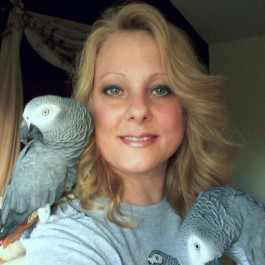 Join us for a FREE live, interactive webinar hosted by Laura Doering, former editor of Bird Talk magazine and Birds USA magazine. Our special guest, Lisa Bono, CPBC, owner and operator of The Platinum Parrot and a certified parrot behavior consultant specializing in African grey parrots, reports on the most recent Phoenix Landing Wellness Retreat held on May 30-31, 2026 in Asheville, NC. This unique meeting for pet bird owners offers lectures on many aspects of pet bird care. Lisa will discuss the speakers and topics and what goes on at a meeting like this, as well as why it is important for bird owners and professionals to continue learning through different avenues.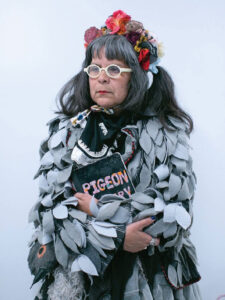

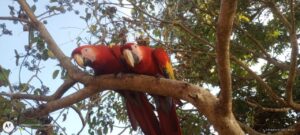
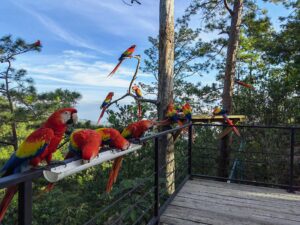
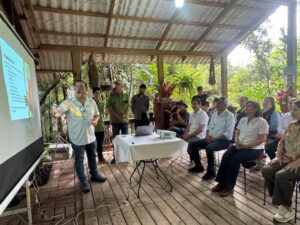
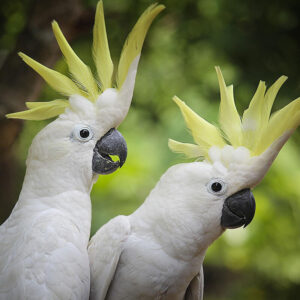
 Join us for a FREE, live, interactive webinar hosted by Laura Doering, former editor of Bird Talk magazine and Birds USA magazine. Our special guest, Tom Tully, DVM, DABVP (Avian Practice), DECZM (Avian), will answer your questions about pet bird health, nutrition, & care. Dr. Tully, a decorated Professor & practicing vet at Louisiana State University School of Veterinary Medicine, is an internationally known Veterinarian who has earned specialties in Avian medicine in the United States and Europe. Having this type of access to a veterinarian of his status is rare, but Dr. Tully believes that the educated bird owner is the best bird steward. Dr. Tully answers each question in detail and shares his vast knowledge of birds, particularly parrots. Is your bird’s problem health-related or behavioral? Are you offering your pet bird the right foods? Ask the Vet!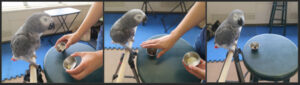
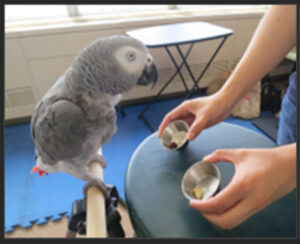
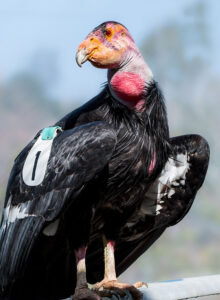
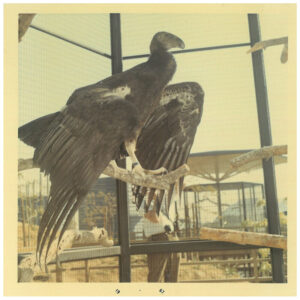
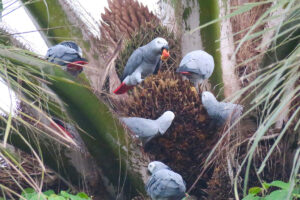
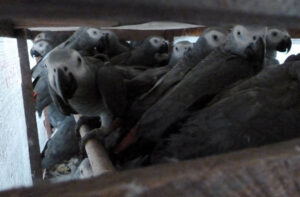
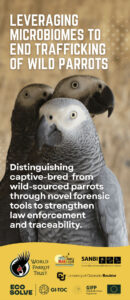
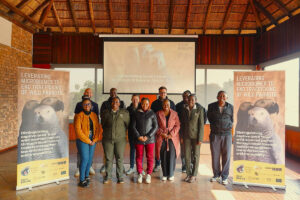
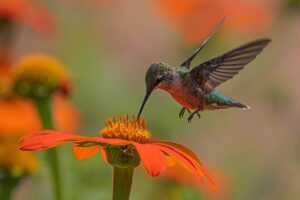
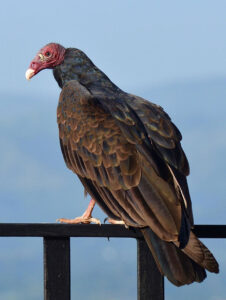
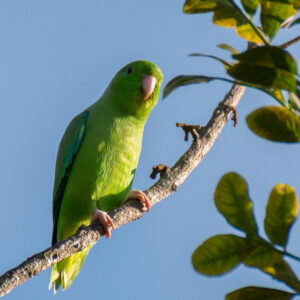
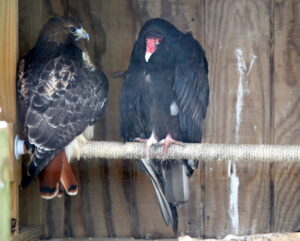
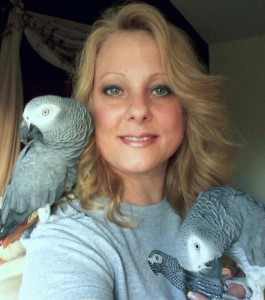 Lisa Bono, CPBC, is back for a special Ask Lisa Anything (Almost!) live webinar! She’s stepping in for Dr. Tully this week, and we’re thrilled to welcome her expertise. From picky eaters to persistent screamers, now’s your chance to ask Lisa your parrot-care questions: behavior, diet, housing, enrichment, you name it! Her decades of experience and deep parrot knowledge make this an event you don’t want to miss. Whether you’re new or seasoned, bring your curiosity!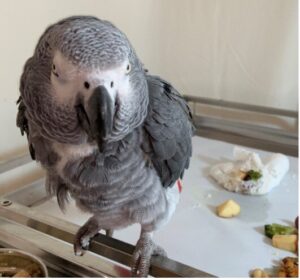
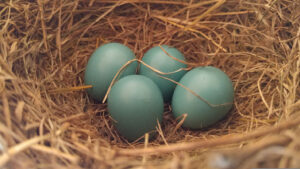
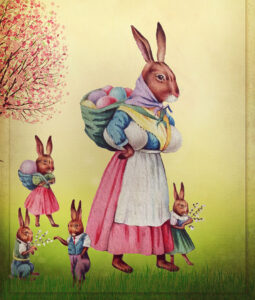
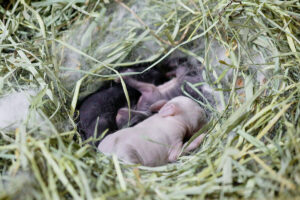
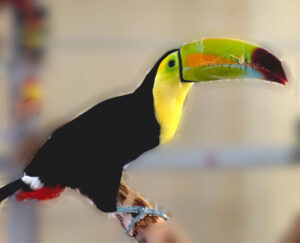
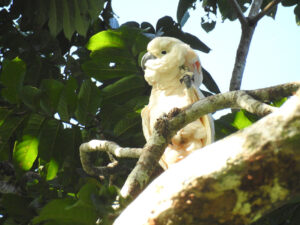
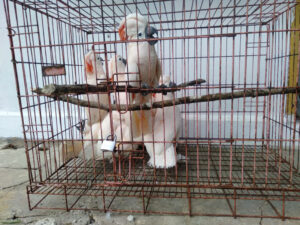
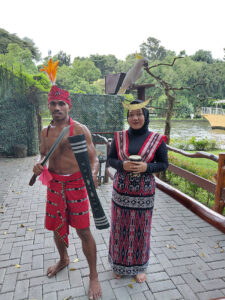


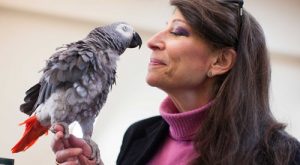 My career as a scientist has been incredibly rewarding. Mostly because of the chance to discover new information and to share it with anyone and everyone interested. And this last part means that I travel a lot to give colloquia and attend conferences all over the U.S. and the world. Although it sounds rather glamorous, most times all I see of some exotic place is the airport, the hotel, the conference center, and, maybe if I’m lucky, a local restaurant for dinner one night; I have to be back in the lab without time for sightseeing.
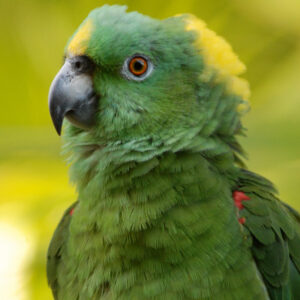
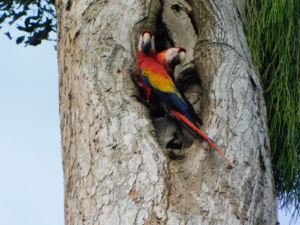
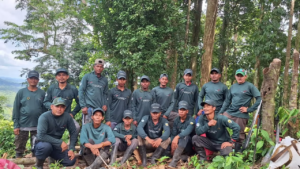
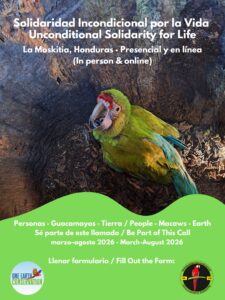
 Trips to the veterinarian don’t have to be traumatic. Traditional restraint methods may get the job done, but they often leave parrots fearful and resistant to future care. Fortunately, there’s a better way. In this webinar, Pamela Clark, CPBC, will introduce the principles of force-free handling and cooperative care for parrots. You’ll learn how to reduce stress, build trust, and encourage parrots to willingly participate in their own care. Designed for both caregivers and veterinary professionals, this presentation will provide practical strategies to improve veterinary visits, strengthen relationships, and ensure compassionate, considerate treatment for every parrot.
 Join us for a FREE, live, interactive webinar hosted by Laura Doering, former editor of Bird Talk magazine and Birds USA magazine. Our special guest, Lisa Bono, CPBC, owner and operator of The Platinum Parrot and a certified parrot behavior consultant specializing in African grey parrots, presents her topic, In Case of Emergency. Ever have that last-minute emergency with your pet bird? What about storm preparedness? What happens if your bird gets out? Lisa will cover some of the emergencies you might have to deal with in this webinar. While Lisa will discuss some Grey-centric points, her advice can be applied to all of the birds in your home.
 Join us for a FREE, live, interactive webinar hosted by Laura Doering, former editor of Bird Talk magazine and Birds USA magazine. Our special guest, Dr. Stephanie Lamb, DVM, DABVP (Avian Practice), will cover a topic that touched her personally. Hormones are something that all parrot owners experience at least once in their lives. For some, it is a seasonal thing, and for others, it can come & go. Dr. Lamb will cover the things that you may go through with your pet bird, because she has gone through it herself. Come learn about the troubles with a hormonal parrot in this insider’s view of the daily happenings at your Avian Vet’s clinic.
 Join us for a FREE, live, interactive webinar hosted by Laura Doering, former editor of Bird Talk magazine and Birds USA magazine. Our special guest, Tom Tully, DVM, DABVP (Avian Practice), DECZM (Avian), will answer your questions about pet bird health, nutrition, & care. Dr. Tully, a decorated Professor & practicing vet at Louisiana State University School of Veterinary Medicine, is an internationally known Veterinarian who has earned specialties in Avian medicine in the United States and Europe. Having this type of access to a veterinarian of his status is rare, but Dr. Tully believes that the educated bird owner is the best bird steward. Dr. Tully answers each question in detail and shares his vast knowledge of birds, particularly parrots. Is your bird’s problem health-related or behavioral? Are you offering your pet bird the right foods? Ask the Vet!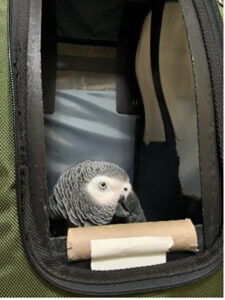

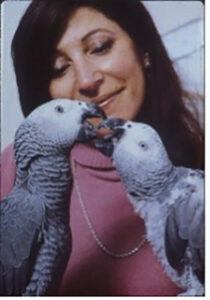
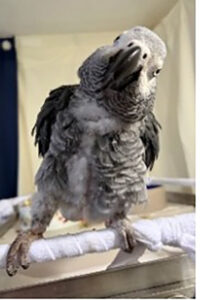
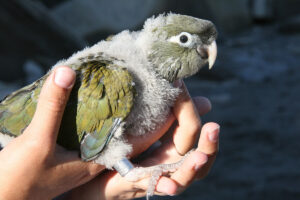
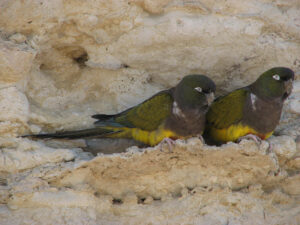
 Join us for a FREE, live, interactive webinar hosted by Laura Doering, former editor of Bird Talk magazine and Birds USA magazine. Our special guest, Dr. Anthony Pilny, will discuss the importance of flight for pet birds. From a welfare perspective, we have accepted wing-feather trimming and de-flighting birds as acceptable and routine for far too long. Birds need to fly as a form of mental and psychological well-being, exercise, and bonding/training. Dr. Pilny will review basic principles and how flight should be essential for pet birds.
 Join us for a FREE, live, interactive webinar hosted by Laura Doering, former editor of Bird Talk magazine and Birds USA magazine. Our special guest, Dr. Stephanie Lamb, DVM, DABVP (Avian Practice), will discuss a difficult topic – euthanasia and knowing when it’s time to say goodbye. Dr. Lamb will discuss the process and what to expect when the time comes. It’s good to have this discussion, even when your bird is healthy, because birds can decline rapidly once they become ill. Learn how important it is to have a compassionate Veterinarian who can help you through this final goodbye, in this insider’s view of the daily happenings at your Avian Vet’s clinic.
 Join us for a FREE, live, interactive webinar hosted by Laura Doering, former editor of Bird Talk magazine and Birds USA magazine. Our special guest, Tom Tully, DVM, DABVP (Avian Practice), DECZM (Avian), will answer your questions about pet bird health, nutrition, & care. Dr. Tully, a decorated Professor & practicing vet at Louisiana State University School of Veterinary Medicine, is an internationally known Veterinarian who has earned specialties in Avian medicine in the United States as well as in Europe. Having this type of access to a veterinarian of his status is rare, but Dr. Tully believes that the educated bird owner is the best bird steward. Dr. Tully answers each question in detail and shares his vast knowledge of birds, particularly parrots. Is your bird’s problem health-related or behavioral? Are you offering the right foods to your pet bird? Ask the Vet!
 Join us for a FREE, live, interactive webinar hosted by Laura Doering, former editor of Bird Talk magazine and Birds USA magazine. Our special guest, Lisa Bono, CPBC, owner and operator of The Platinum Parrot and a certified parrot behavior consultant specializing in African grey parrots, presents the latest episode of her new series. Lisa recently represented Lafeber’s at the National Bird Show in Knoxville. This is the largest bird show in the United States. Many bird clubs, all over the country, have smaller bird shows with their club members. But what is a Bird Show? Why would you want to show your pet bird? You might be surprised at the significance of bird shows and why they represent the best in bird care & housing. Bird shows also encourage responsible breeding. Lisa will share pictures from the showfloor and explain what the birds are judged on and how getting your birds show-ready can benefit your flock.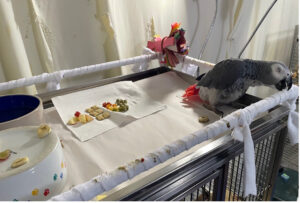
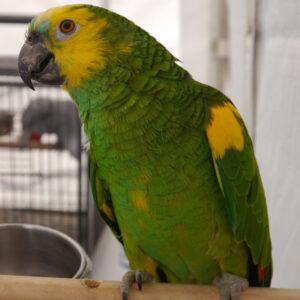
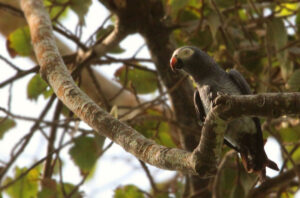

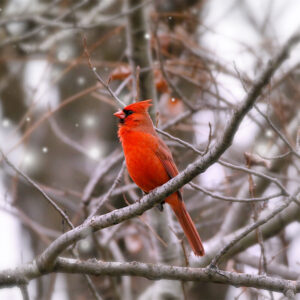
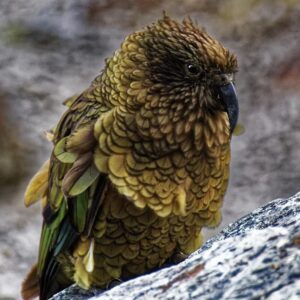
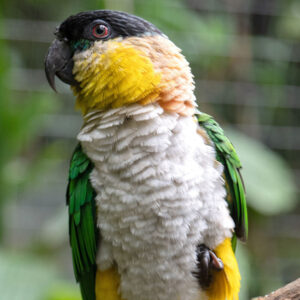
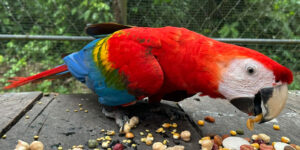
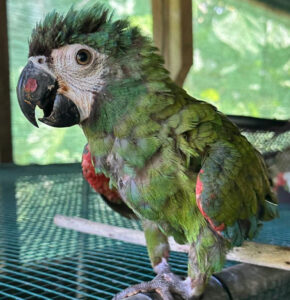
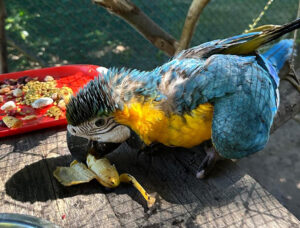
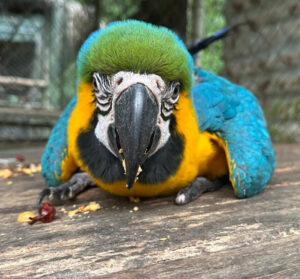

 Join us for a FREE, live, interactive webinar hosted by Laura Doering, former editor of Bird Talk magazine and Birds USA magazine. Our special guest, Dr. Stephanie Lamb, DVM, DABVP (Avian Practice), will discuss Iron storage disease. Iron is an important element in the body, but too much is not a good thing. Iron storage disease, iron overload, or hemochromatosis is all the same disease, and this webinar will help viewers become familiar with it. From exploring if your bird could be at risk for this and what diagnosis of this entails, to treatment and follow-up, we will discuss the ins and outs of this infrequent but important disease to be familiar with. Get ready for another deep dive, in this insider’s view of the daily happenings at your Avian Vet’s clinic.
 Join us for a FREE, live, interactive webinar hosted by Laura Doering, former editor of Bird Talk magazine and Birds USA magazine. Our special guest Tom Tully, DVM, DABVP (Avian Practice), DECZM (Avian), will answer your questions about pet bird health, nutrition, and care. Dr. Tully, a decorated Professor & practicing Vet at Louisiana State University School of Veterinary Medicine, is an internationally known veterinarian who has earned specialties in Avian Medicine in the United States and Europe. Having this type of access to a Veterinarian of his status is rare, but Dr. Tully believes the educated bird owner is the best bird steward. Dr. Tully answers each question in detail and shares his vast knowledge of birds, particularly parrots. Is your bird’s problem health-related or behavioral? Are you offering the right foods to your pet bird? Ask the Vet!
 Join us for a FREE, live, interactive webinar hosted by Laura Doering, former editor of Bird Talk magazine and Birds USA magazine. Our special guest, Lisa Bono, CPBC, owner and operator of The Platinum Parrot and a certified parrot behavior consultant specializing in African grey parrots, has once again secured many wonderful donations for us to give away to some lucky viewers! In this fun holiday episode, Lisa will discuss each prize, an assortment of toys and supplies that are safe for our feathered companions as well as some parrot-themed items for bird lovers. We encourage you to shop with our generous donors when doing your holiday shopping for yourself or your own flock or for your bird friends or their flocks. This very special Holiday Webinar is generously sponsored by Lafeber Company, The Platinum Parrot & Lisa Bono Consulting & the following generous companies.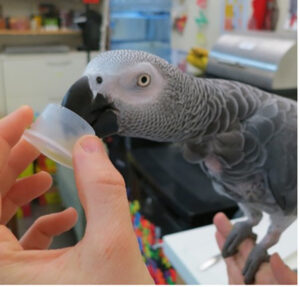
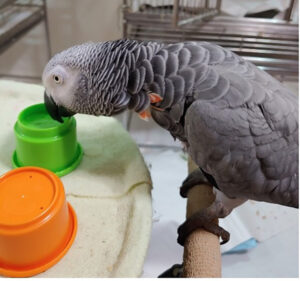
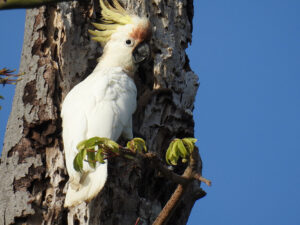
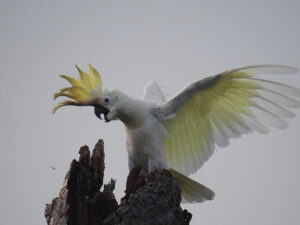
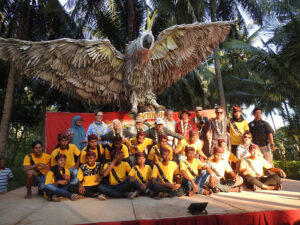
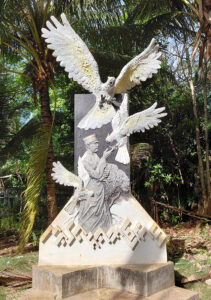
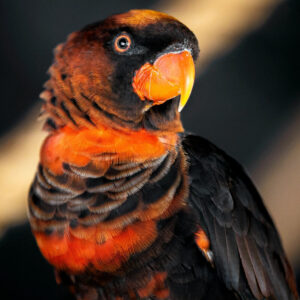
 Join us for a FREE, live, interactive webinar hosted by Laura Doering, former editor of Bird Talk magazine and Birds USA magazine. Our special guest, Lisa Bono, CPBC, will review holiday safety tips to keep your birds happy & healthy during the busy season. Visitors often come with a risk – whether it’s open doors, their own pets they bring, children, new foods, and more – all of these things can bring down your holidays while you rush to the emergency vet! Learn how to avoid common hazards and dangers you haven’t thought of! While Lisa will discuss some Grey-centric points, her advice can be applied to all of the birds in your home.
 Join us for a FREE, live, interactive webinar hosted by Laura Doering, former editor of Bird Talk magazine and Birds USA magazine. Our special guest, Stephanie Lamb, DVM, DABVP (Avian Practice), will discuss which tests are the most important when adding a bird to your home or flock. While bringing a new bird into a home is a fun time, bringing home new diseases is not! It’s important to check birds for infectious diseases when they come into a new home so that they don’t inadvertently bring something in. Birds are good at hiding signs of illness and sometimes mask things completely. Checking them out for infectious disease at the start of your new relationship with them can help to calm fears and make sure that you have a new friend who won’t get your existing flock or you sick. Also, testing can let you know if there is something you can do early on to prevent problems. Learn all about the important tests your vet may want to do, including the details of why sample collection and processing methods are so important, in this insider’s view of the daily happenings at your Avian Vet’s clinic.
 Join us for a FREE, live, interactive webinar hosted by Laura Doering, former editor of Bird Talk magazine and Birds USA magazine. Our special guest, Tom Tully, DVM, DABVP (Avian Practice), DECZM (Avian), will answer your questions about pet bird health, nutrition, and care. Dr. Tully, a decorated professor and practicing veterinarian at Louisiana State University School of Veterinary Medicine, is an internationally known veterinarian who has earned specialties in avian medicine in the United States as well as in Europe. Having this type of access to a veterinarian of his status is rare, but Dr. Tully believes in the educated bird owner as being the best bird steward. Dr. Tully answers each question in detail and shares his vast knowledge of birds, particularly parrots. Is your bird’s problem health-related or behavioral? Are you offering the right foods to your pet bird? Ask the Vet!
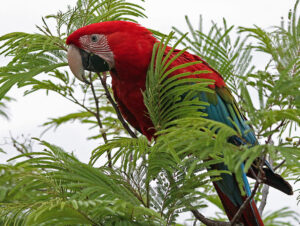
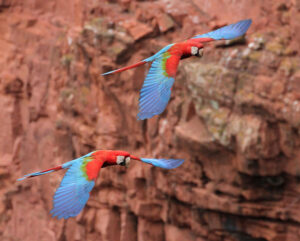
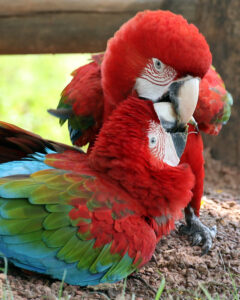
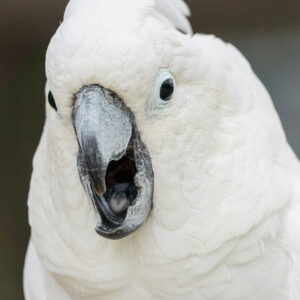
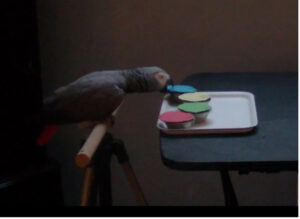
 Join us for a FREE, live, interactive webinar hosted by Laura Doering, former editor of Bird Talk magazine and Birds USA magazine. Our special guest Tom Tully, DVM, DABVP (Avian Practice), DECZM (Avian), will answer your questions about pet bird health, nutrition, and care. Dr. Tully, a decorated professor and practicing vet at Louisiana State University School of Veterinary Medicine, is an internationally renowned veterinarian who has earned specialties in Avian medicine in the United States as well as in Europe. Having this type of access to a veterinarian of his status is rare, but Dr. Tully believes in the educated bird owner as being the best bird steward. Dr. Tully answers each question in detail and shares his vast knowledge of birds, particularly parrots. Is your bird’s problem health-related or behavioral? Are you offering the right foods to your pet bird? Ask the Vet! And on this Halloween date, will Dr. Tully wear a Halloween mask?