A sad sight of drowned parrots recovered from the ocean. Photo is from the indictment of United States v. Frankluis Carela De Jesús, et al., No. 3:24-CR-00174 in U.S. District Court for the District of Puerto Rico.
In a harrowing case that sent shockwaves through the wildlife conservation community, four men from the Dominican Republic were recently sentenced after attempting to smuggle parrots from Puerto Rico in May 2024. As they were being intercepted by the U.S. Coast Guard, the smugglers tossed the wooden cages containing the live birds overboard. Tragically, by the time officials retrieved the cages, none of the 113 parrots had survived—all drowned. This devastating outcome highlights the brutal reality of illegal wildlife trafficking, a global issue that continues to threaten countless species.
Among the birds lost were white-crowned Pionus (Pionus senilis), golden-capped conures (Aratinga auricapillus), green-cheeked conures (Pyrrhura molinae), and critically endangered red-crowned Amazons (Amazona viridigenalis). According to the U.S. Department of Justice’s Office of Public Affairs, two of the smugglers received 12-month-and-1-day sentences, while a third individual was handed the same sentence in a subsequent ruling. The fourth offender was sentenced to eight months.
Call To Action
Crates where birds were transported. Photo is from the indictment of United States v. Frankluis Carela De Jesús, et al., No. 3:24-CR-00174 in U.S. District Court for the District of Puerto Rico.
This tragedy serves as a stark reminder of the many threats faced by parrots and other animals in the wild. Illegally trafficked parrots are often kept in cramped, unsanitary conditions during transit, leading to high mortality rates. In the worst cases, such as this one, smugglers resort to desperate measures when they fear detection — resulting in the unnecessary loss of life.
Beyond the heartbreaking details of this one incident, the broader context of illegal parrot smuggling underscores the need for global awareness and action. Parrots are already struggling in the wild due to habitat destruction and climate change. Illegal poaching adds yet another layer of pressure on these vulnerable parrot populations. When we lose 113 birds in one smuggling operation, we are also losing part of the genetic diversity that helps keep these species resilient in the face of environmental challenges.
Critically endangered red-crowned Amazon parrots were among the parrots thrown into the ocean and subsequently drowned. luiscorrea, CC BY 4.0, via Wikimedia Commons
An impactful way to combat illegal trafficking and protect wild parrot populations is to support parrot conservation groups. These organizations work on multiple fronts: they rescue and rehabilitate birds caught in illegal trade, advocate for stronger wildlife protection laws, and conduct research to understand the ecological needs of parrot populations. By addressing the root causes of poaching — such as poverty, lack of education, and high global demand — conservation groups help dismantle the networks that profit from cruelty and exploitation.
One way to stay informed about the challenges facing wild parrots — and to learn how to help — is by following Ann Brooks’ “Lafeber’s Global Parrot Conservation Spotlight” blog. This monthly blog features a conservation organization dedicated to saving parrots from habitat loss, illegal trade, and other threats to their wild populations, and Lafeber donates $500 to the organization spotlighted.
Ultimately, the drowning of 113 parrots is far more than a grim headline — it’s a call to action. These birds deserved better, and their loss can serve as a catalyst for meaningful change. By supporting parrot conservation groups, advocating for stronger wildlife protection laws, and making responsible choices as parrot stewards, we can honor their memory and lessen the chances of other birds facing such a tragic fate. Each of us can play a role in protecting these beautiful, intelligent birds.
Scarlett the scarlet macaw was renamed Phat Chicken after a blind woman remarked that’s what the parrot felt like on her arm. The name stuck with a slight modification in spelling – the more stylized, “Phat.” Image courtesy of Durby St. George
Every parrot has a unique personality that will set it apart from all the others. Many reading these words already know this fact quite well. From time to time, there are interesting bird owners and their feathered friends that seem to form an extraordinary team. These teams effectively draw people toward them in areas that they move about in. One such duo is Durby St. George and Phat Chicken. Phat Chicken is a scarlet macaw with a back story to how he became the celebrated parrot in Bangor, Maine that he has been.
Phat Chicken was once a mascot in a pet store in Brewer, Maine. Originally named Scarlett, the parrot greeted everyone who came into the store. However, in 2010, the owners became too tired with age to continue running the store. They called upon a friend to come and take Scarlett under his care. Enter Durby, who was all too happy to take on the job of caregiver. Scarlett climbed upon his shoulder that day and had become a permanent fixture there as the pair moved about the city of Bangor.
A Macaw About Town
Scarlett was renamed Phat Chicken because a blind woman once asked that he be placed upon her arm. When the parrot moved onto her arm, she replied that he was a “fat chicken.” The name stuck and now, the name is known with a slight modification in spelling – a more modern styled “phat.”
For years, the pair made frequent appearances in Bangor – restaurants, parks, walks. Durby rode about town on a motorcycle and Phat Chicken was always there. At home, Phat Chicken loves to carry on “conversations” with the crows that gather outside the window as he sits on the inside watching out. They’ll screech and he screeches back completing a sequence of conversational efforts.
In 2024, local television stations and newspapers ran features on the pair, and they gained even more notoriety. But, as life will have it, it was time to move on. Durby and Phat Chicken relocated to Kentucky to the small town of Horse Cave. The town boasts a small adventure zoo known as Kentucky Down Under Adventure Zoo affiliated with the Onyx Mammoth Cave in the area. Durby hopes to soon acquire a position with the zoo to present the parrot to the public.
After moving to Kentucky, Durby heard someone remark, “OMG! Is that Phat Chicken?” while at a local mall. Phat Chicken loves having his photo taken with others. When the cameras come out, Phat Chicken goes on high alert and begins to show off. But Phat Chicken has a radar of sorts. If he’s uncomfortable with someone, Durby understands his cues and photos do not happen. But Phat Chicken is mostly agreeable for most of them.
Phat Chicken will be 30 years old on July 8, 2025. You can follow his exploits on Facebook.
In 1977, Dr. Irene Pepperberg and Alex, her first grey parrot research subject, began seminal research into the cognitive abilities of parrots, providing a new view of nonhuman intelligence. Image courtesy Dr. Pepperberg
Recently, there has been a resurgence in interest in animal-human communication. After a considerable hiatus, I’ve been getting a lot of calls and emails for interviews. The focus of interest has changed a bit (more on that below), but humans’ desire to communicate with other species is long-standing. It is part of many stories (think of the Doctor Dolittle books) as well as legends in many cultures…even as far (if not further) than King Solomon, who purportedly had a ring that allowed him to communicate with all the birds and beasts in his realm.
However, the scientific history of successful research goes back only about 55 or so years. (I’m not going to give references for all this work, or this blog will become a scientific review paper. Dear reader, you can Google all the info for summaries!)
The first real breakthrough was when Trixie and Allen Gardner taught some aspects of American Sign Language (ASL) to a chimpanzee, Washoe. They were quickly followed by ASL studies by Penny Patterson and the gorilla, Koko, and Lyn Miles’ work with the orangutan, Chantek. And soon after, Ann and David Premack worked with the chimpanzee, Sarah, using plastic chips as words, and Duane Rumbaugh and colleagues set up a computer-based system using “lexigrams” for the chimpanzee, Lana.
Louis Herman began working on hand signals with dolphins; Diana Reiss had a keyboard for dolphins, and Ron Schusterman used various symbols with sea lions. What all these studies had in common, however, was they worked with animals that had either a close evolutionary history with humans —I .e., the great apes — or large brains — the marine mammals.
So it wasn’t all that surprising that when I suggested doing the same work with an African grey parrot — an animal separated from humans by over 300 million years of evolution and with a brain the size of a shelled walnut — my first grant proposal came back asking me what I was smoking! As you all know, however, I persisted, and my subject, Alex, became quite famous. Unlike the other subjects, he could literally talk with humans and did so meaningfully.
Despite all the excitement it initially engendered, the field of animal-human communication did not last very long. In 1980, at a conference at the New York Academy of Sciences, many researchers argued that we had made grave errors in our work and that our studies were flawed, if not outright fraudulent. Such claims were even made by some of the scientists doing these studies, basically trashing their colleagues’ work.
I was at that conference — not as a speaker, but as an observer — and was horrified (Pepperberg, 2017). None of us were deliberately faking our data; the issues were that we were all pioneers, trying to figure out the best way to forge ahead in a brand new area…but the amount of research funding was small, and the competition fierce. So, yes, our protocols were not perfect, but instead of using the conference to work together and figure out the best ways to proceed, the conference proceeding were used as a reason to stop funding for the studies and close them down. Those of us who managed to survive shifted the focus of our work: We no longer talked about “animal language,” but rather referred to a communication code that could be used as a tool to investigate the intelligence — the cognitive processes — of our subjects.
And that is the realm where most of us have remained to this day. Some exceptions exist. Some folks are claiming that dogs are using keyboards in sophisticated ways, but they are making the same errors as the early researchers who hadn’t yet figured out the appropriate controls to ensure that they weren’t overinterpreting their results. (And, FYI, I’m sure that dogs can use keyboards to let owners know about basic needs and wants, but I draw the line at their talking about sharing their dreams.)
From Alex to AI: The Shift in Animal Communication
However, now, some new players have entered the field, and their approach, in some ways, makes lots of sense. To whit…humans believe they are the apex creatures in terms of cognitive abilities but have expected the (presumably less intelligent) nonhumans to learn a human language; yet humans, for all our intelligence, have never been able to fully crack the codes of any nonhuman communication systems used in the wild. Now humans are trying again…but with the help of artificial intelligence (AI).
These researchers are using computers to try to analyze huge amounts of data in which they track what animals are doing in certain situations. Most of the work is on vocalizations in particular contexts, but some researchers are looking at body signals as well. The idea is that by making correlations between certain signals and certain contexts, the researchers might be able to infer the meanings of these signals.
The work is intriguing but may have some problems. Quine called it the “Gavagai problem.” Suppose you are an anthropologist trying to understand the language of a hunter-gatherer tribe you are studying. You and your guide are walking along, and a small furry creature briefly runs in front of you, and your guide says “gavagai.” You might decide that “gavagai” is the name of the species (e.g., like “rabbit”). However, it could just as well mean “lunch,” “vermin,” or “my child’s pet”…you get the picture.
Still, there are now some big prizes (e.g., the Jeremy Coller Foundation’s “Coller-Dolittle Prize”) in the offing for whoever makes significant progress in this realm. Which is why I’ve been doing a lot of interviews lately. We still are intrigued by the possibility of talking with nonhumans, whatever the code that is being used!
References
Pepperberg, I.M. (2017g). Animal language studies: what happened? Special issue, Psychological Bulletin & Review, 24, 181-185. W.T. Fitch (Ed.), DOI 10.3758/s13423-016-1101-y
“Parrot Kindergarten” documents the intensive training that Jennifer provided her cockatoo, Ellie. She trained Ellie with flashcards and a host of other teaching materials. Image courtesy of Jennifer Taylor O’Connor
For many, parrots have become a source of healing. With their ability to use speech and their seemingly empathetic behaviors, parrots have long proved to be an answer to someone needing a live and feeling pet companion to align with, someone to have as part of a small family. A parrot of many colors and speech often fits this bill.
For Jennifer Taylor O’Connor, an attorney, avian cognition researcher, and international speaker, it was her attentive caring for her parrots that helped lead her out of a long path of disillusionment and onto the path of brighter lights. After a series of personal tragedies that included a miscarriage and a childhood spent in a cult, her interaction with birds came with personal healing. Currently, Jennifer is an assistant professor at Texas A&M University.
“Parrot Kindergarten” Documentary
Recently, an Amy Herdy-directed documentary was completed that explored the story of Jennifer and her pet cockatoo named Ellie. The documentary premiered at the Santa Barbara International Film Festival and is called “Parrot Kindergarten.”
“Parrot Kindergarten” documents the intensive training that Jennifer provided Ellie. She trained Ellie with flashcards and a host of other teaching materials. This intense involvement brought Ellie to the point that, along with Jennifer’s other bird, Isabelle, she was able to pass specific university-created tests that check for cognitive skills. This gives Ellie a strong distinction of being one of the few animals who have learned to read and to respond appropriately.
The film also tells the tale of Jennifer, as she was raised in a cult. It explores the loving nature of the birds that helped her get past painful experiences and to move forward with momentum to help in the science of interspecies communications.
On the first day of screening at the festival, the 79-minute documentary was sold out. With interest in Ellie as a bird of unusual capability, the movie also wants to explore how we can communicate with animals. In essence, the need and the long trek to bridge that gap in communication can go a long way in helping us better understand the world around us.
When the opportunity arises to view the film, whether in theaters at the festival or through a streaming service, it offers a chance to gain deeper insight into Jennifer’s work and its potential impact.
Lafeber Company is proud to support “Parrot Kindergarten” in two meaningful ways — earning a Contributing Producer Credit and making a donation to its fiscal non-profit partner, Utah Film Center, to help cover essential filming equipment costs. We’re honored to contribute to this one-of-a-kind documentary.
Blue-and-gold macaws are one of 27 parrot species found in Suriname. Image courtesy of One Earth Conservation.
Suriname is the smallest and least populated country in South America. Being close to the equator and bordered on the north by the Atlantic Ocean, it is sometimes considered part of the Caribbean and West Indies. Most of the population lives along the northern lowland coast, but 80% or more of the land south of that is tropical rainforest and sparsely inhabited savanna. This area is considered an important area of biodiversity with numerous national reserves and parks.
There are 27 parrot species that call Suriname home, including sun conures, orange-winged Amazons, red-bellied macaws, red-shouldered macaws, scarlet macaws, and blue-and-gold macaws. Suriname is one of three countries in the Americas where it is still possible to hunt, trap, and export parrots. Two-thirds of the parrot species have declining populations.
One Earth Conservation (OEC), spearheaded by LoraKim Joyner, is working with the indigenous population to protect parrots and biodiversity in the region by improving livelihoods through tourism and conservation activities. Here’s more about what she has to say about this ongoing work.
Parrot Rangers in Suriname work to protect parrots, pushing for government action to stop trapping and export practices. Image courtesy of One Earth Conservation.
For the last two years, One Earth Conservation (OEC) has partnered with the Indigenous village of Kalebaskreek to help them protect their parrots and investigate the possibility of developing an ecotourism program there. After many training sessions and trips, and hours and hours in the field, the village now has a competent team of Parrot Rangers that can monitor the population and nests and protect the birds from trapping.
The Parrot Rangers face challenges with this because in Suriname it is legal to trap and export parrots. Their goal is to work with the government to not issue licenses to trappers to extract parrots from their community lands. They then try to extend this community-based conservation effort to neighboring communities so that an entire habitat can be protected.
Parrot Conference attendees pose with “No trapping” poster. Image courtesy of One Earth Conservation.
The villagers presented their project and petition to various stakeholders and government authorities at a Parrot Conference in October 2024. Galvanized perhaps by the apparent support and a steady presence in the village by One Earth Conservation and its NGO partner, Wildlife and People Suriname, the village then decided a few days after the conference to prohibit hunting and trapping — not just of parrots which they have done in the last 2 years, but of all birds in their territory — and to start an ecotourism project. This is a monumental step because the village historically and culturally has engaged in hunting for subsistence as well as for business.
Image courtesy of One Earth Conservation.
One village alone cannot protect the parrots in their region or in Suriname. They need their NGO partners, funders to OEC for Suriname (such as the US Embassy in Suriname, Lush, and donors to Global Giving), and government engagement. They also need international support…and you.
This month’s Lafeber donation goes to support OEC and their work in Suriname. Learn more about One Earth Conservation projects and how you can donate or assist at https://www.oneearthconservation.org
Time: 12:00 pm PST (double-check your local time with this time zone converter)
Join us for a FREE, live, interactive webinar hosted by Laura Doering, former editor of Bird Talk magazine and Birds USA magazine. Our special guest, Pamela Clark, is a well-known author, speaker, IAABC CPBC & retired CVT. Pamela will present Episode 12 of Translating Parrot, a Lafeber Pet Birds Webinar Series focusing on Parrot Behavior & Wellness, based on Pamela’s years of experience with a wide range of parrot species. In this episode, Pamela will start our annual March discussion of parrots and how they are influenced by reproductive hormones. There is no doubt that these hormones set the stage for the development of behavior problems. This webinar will present new information about the triggers for these hormones in companion parrots and how to minimize them in your flock. After a short presentation, she will take viewer questions on this topic. Pamela’s advice will help you translate what your parrot wants & needs in the newest installment of this informative series!
Missed our webinar? No problem! You can access the webinar in its entirety here:
Webinar: The Grey Way: Hormones — Behavior & Prevention
Date: Friday, March 21 , 2025
Time: 12:00 pm PDT (double-check your local time with this time zone converter)
Join us for a FREE, live, interactive webinar hosted by Laura Doering, former editor of Bird Talk magazine and Birds USA magazine. Our special guest, Lisa Bono, CPBC, owner and operator of The Platinum Parrot and a certified parrot behavior consultant specializing in African grey parrots, presents Episode 30 of The Grey Way, a Lafeber Pet Birds Webinar Series focusing on Congo & Timneh African grey parrots as pets. In this episode, Lisa will revisit our annual March topic – Hormones – with the focus on African Greys. Lisa will discuss hormone-related behavior problems and ways to try to prevent them.
Missed our webinar? No problem! You can access the webinar in its entirety here:
Webinar: Avian Vet Insider: Parrot Hormones — Case Studies & Medical Issues
Date: Friday, March 14, 2025
Time: 12:00 pm PDT (double-check your local time with this time zone converter)
Join us for a FREE, live, interactive webinar hosted by Laura Doering, former editor of Bird Talk magazine and Birds USA magazine. Our special guest, Stephanie Lamb, DVM, DABVP (Avian Practice), will revisit our annual March topic – hormones! Most behavior issues & many health issues for pet birds begin due to hormones. Dr. Lamb will discuss hormone-related case studies and the medical issues that reproductive hormones can cause. This is an excellent opportunity to learn from some real cases in this insider’s view of the daily happenings at your Avian Vet’s clinic.
Missed our webinar? No problem! You can access the webinar in its entirety here:
Webinar: Ask the Vet with Tom Tully, DVM, DABVP (Avian Practice), DECZM (Avian)
Date: Friday, March 28, 2025
Time: 12:00 pm PST (double-check your local time with this time zone converter)
Join us for a FREE, live, interactive webinar hosted by Laura Doering, former editor of Bird Talk magazine and Birds USA magazine. Our special guest Tom Tully, DVM, DABVP (Avian Practice), DECZM (Avian), will answer your questions about pet bird health, nutrition, & care. Dr. Tully, a decorated Professor & practicing Vet at Louisiana State University School of Veterinary Medicine, is an internationally known Veterinarian who has earned specialties in Avian medicine in the United States as well as in Europe. Having this type access to a Veterinarian of his status is rare, but Dr. Tully believes in the educated bird owner as being the best bird steward. Dr. Tully answers each question in detail and shares his vast knowledge of birds, particularly parrots. Is your bird’s problem health-related or behavioral? Are you offering the right foods to your pet bird? Ask the Vet!
From candlelit dinners and heartfelt love letters to awkward dance moves at weddings and over-the-top gestures (remember when flash-mob proposals were a thing?!), some people go all out to impress the apple of their eye. But we’re not the only ones pulling out all the stops for love. Some birds take courtship to the next level and beyond. Here’s a look at some of the more dazzling displays of bird bachelors doing all they can to stand out from the crowd.
Native to Papua New Guinea, Australia, and Indonesia, male Birds-of-Paradise take dancing quite seriously. There are more than 40 species of Birds-of-Paradise, and each variety has unique plumage to show off, and they seem to know exactly the right moves to showcase their vibrant, look-at-me feathers. They give themselves a stage by clearing twigs and leaves until they have an impeccable dance floor, or meticulously clean a branch to dance along. Their dance moves can include hopping, hanging upside down, or flaring out their feathered “skirts” or “capes.” The Superb Bird of Paradise is known for its unique optical illusion display in which it appears to be a floating black oval with entrancing blue eyes and a wide blue smile.
Bowerbird
Behold the elaborate, blue-color-themed structure of a male Vogelkop bowerbird. JJ Harrison, CC BY-SA 4.0, via Wikimedia Commons
The word “bower” means an attractive dwelling or retreat, so you can probably imagine what the Bowerbird’s love potion is. These birds look to impress with their architectural wonders and interior design. They don’t have flashy feathers or silly dances; instead, they use their flare for home design to send a signal to the ladybirds that this is the place to be. Male Bowerbirds build a twig structure and then furnish it with attractive items like berries, shells, flowers, and human items, such as bottle caps and bits of plastic. They also like to color-coordinate their interior design. The satin bowerbird, for example, will seek out all shades of blue, even going so far as to “paint” the walls with berries to perfect the look.
Bowerbirds strive to outdo their neighbors by creating fantastical arrangements. They are also not above stealing items from neighbors to incorporate into their design. Check out this video of a male Vogelkop Bowerbird adding a final touch of colorful flowers to his design to stand out from the crowd. Females know a good home when they see it; the more elaborate and meticulously curated the display, the more likely she is to say, “Honey, I’m home!” Ironically, after building such a cozy home, male bowerbirds don’t stick around to help raise the chicks.
Another bird with a dance card is the Manakin. Found in Central and South America, Manakins show off their amazing, high-speed dance skills—the faster, the better. Males grab females’ attention by zipping along branches and performing mid-air acrobatics. What makes their dance even more exciting is that it is performed as part of “lek” (imagine a Chippendales’ show, with multiple males vying for a single female!) Their lekking ritual allows a visiting female to survey which partner to choose to mate with.
Dance isn’t their only love potion. Male Manakins have evolved to create sounds with the rapid beating of their wings, with each species having its own unique sounds. Red-capped Manakins snap their wing feathers to make a zipping sound, while the Club-winged Manakin produces a high-pitched buzz by vibrating their wings an impressive 100 times per second. Other species are said to make a pop, pop, pop firecracker sound, still others take to air to make a whooshing sound all in the name of love. Check out these two male Lance-Tailed Manakins getting their groove on for a curious female.
Yet another aspiring Lord of the Dance is the Laysan Albatross, native to the Hawaiian Islands and the Pacific Ocean. Instead of the male busting his best dance moves, these birds assess their compatibility based on how they pair up as dance partners. The Albatross’s elaborate dance includes plenty of head bobbing, beak-to-beak movements, and a synchronicity reminiscent of experienced ballroom dancers. The better they dance together, the stronger their bond. Albatrosses know the importance of finding the right dance partner, as they mate for life. Perhaps that is why they often practice their dance in groups before taking to the main dance stage.
When we think of ballet, Swan Lake might come to mind, but the real bird ballet dancer is the Great-Crested Grebe, found in Europe, Asia, and Africa. These birds pair up and perform a “mirror dance,” matching each other’s movements with perfection. They also throw in synchronized swimming dancing, where they dive in unison underwater and come to the surface with aquatic plants as an offering to one another. Their ballet-like movements serve to strengthen pair bonding.
These displays highlight not just beauty and skill, but also intelligence and social bonding—proving that, in the bird world, love is truly an art form! If you were a female bird, which of these birds would you fall for?!
Science is awash in studies that look at behavioral patterns in animals, including parrots. Researchers attempt to match those behaviors to learned habits, or to dive deeper to discover if such behaviors are inherent and part of the animal’s complex makeup. Parrot owners everywhere are witnesses to incredible behaviors that oftentimes amaze them. And then there are copied behaviors that yield little-to-no usefulness and may even seem counterproductive. Humans often follow the crowd behavior. It seems parrots do it, too.
Parrots As Copycats
Researchers from the Max Planck Institute, along with two German Universities and a Spanish Foundation, have submitted a research paper on the reality that macaws often show automatic imitation of their kind even if the imitation yielded no specific reward or advancement. In short, they were influenced by their peers to do things even if they were encouraged to do otherwise.
The researchers set up a location and enlisted the training and study of seven macaws. They were trained to do two different actions with their legs and their wings when given specific hand signals. The birds were divided into two groupings – compatible and incompatible. The compatible group was rewarded when they performed the same actions as their other members, while the incompatible group was rewarded when the birds responded with a completely different action. The results yielded more errors in the incompatible group, as they all too often imitated the others.
Humans are known to reproduce behaviors in their chosen peer groups if it corresponds to what they have aligned themselves to. Such imitations lead to accepted cultural traditions and rituals, both of which change as we evolve. This action occurs by what we call “mirror neurons,” neurons that initiate when actions are seen and encourages replication for no apparent reason or value achievement. Such replication of casual actions indicates the bird’s strong social behavior. In studying to see if birds are just as susceptible to “following the crowd,” the discovery revealed that they are.
In the incompatible group, the birds took a long time to realize that a specific response was required of them. Instead, they typically watched what the others were doing and replicated that response. With the study discovery that birds may be operating under the socially driven “mirror neuron” recognized in humans, we are coming to an even greater understandings of the bird mind.
Allowing your parrot to fly around can be incredibly beneficial. It offers essential exercise that maintains cardiovascular health. Flying and navigating around a room can stimulate your bird’s mind, and teaching your bird to fly to you can strengthen your bond. However, ensuring your home is safe for a free-flying parrot involves careful planning and adjustments to prevent accidents and avoid unnecessary risks. Here are some essential tips to create a safe flight path for your feathered family member.
Secure Doors & Windows
A sad fact is that most companion parrots don’t stand much of a chance outdoors on their own. They are up against stealthy predators like hawks and cats, and they are unlikely to find food sources. An “escaped parrot” can be a misnomer; that wording can be interpreted as a pet parrot fleeing their home. A “lost parrot” is more likely the case — a parrot found their way outside through an open door or window, and now they are on high alert, and unfamiliar sights or sounds cause them to take off, not knowing where they’re going.
When your bird is out of their cage, windows should be shut or frequently monitored if they have screens. Parrots big and small can chew through a screen, so don’t let a windowscreen or door screen give you a false sense of security.
Birds-vs-glass-building collisions in the wild are more common than we like to think, especially for migrating birds, and they are often deadly. Pet birds inside a home can also fly into a window. Help your bird recognize window glass as the barrier it is by putting a decal or other visual on and around it so they don’t accidentally fly into it.
Doors are a bit trickier, as they are more frequently opened and closed, which presents two potential hazards: 1. Your bird gets outside through an opened door; 2. Your bird gets injured if caught in a door as it is being closed. Sadly, birds have died after being caught in a slammed door, either because their person didn’t see them coming or the person hastily shut a door as they saw their bird flying toward it and the timing was ill-fated.
Use Areas Suited For Flight
The safest area of your home for a fully flighted bird is one where a door can be more easily monitored and perhaps less frequently opened and closed, such as a dedicated bird room, office, or bedroom. Areas adjacent to your home’s front door or that lead to a backyard, like living rooms and dens, not only are “one door away” from the great outdoors but are more likely to be opened as people come and go.
Areas with easy access to the kitchen also require more diligence so your bird doesn’t fly onto a hot stove or boiling pot of water. Be diligent with bathrooms, too. Birds can drown if they fall into an open-lid toilet or a drawn bath.
See The Signs
Adding a sign to the door handle is an easy way to alert people to open the door with care whenever your bird is out of the cage. Image courtesy Laura Doering
If your feathered friend is fully flighted, grab your pens and markers to make things extra safe. Whenever your bird enjoys their free-flight time, put up a sign that says so. A do-not-disturb sign, like those put on hotel room doors, is perfect to hang on the door handle of your bird’s fly space. You can find blank wood do-not-disturb door handle signs at arts and crafts stores and online, or make one out of cardboard. If you’re crafty, make your next cross-stitch project a bird sign. The goal is to get the point across for anyone entering your bird’s free-flight area to activate their “birdie safety sense” before entering.
Even if you are home alone, a sign will remind you that your free-flying feathered friend is out in the room. For an extra line of defense, put one on your front doorknob or backdoor handle to prevent you from walking outside while forgetting that your bird is on your shoulder — it happens!
No matter how many cute videos exist online, a ceiling fan should not be used as a bird merry-go-round. A flighted bird can become seriously injured if they collide with a moving ceiling fan. This might be another sign (or sticker/label) to put up — one near the ceiling fan switch to remind you and others not to turn the fan on while your bird is out.
A beaded curtain hung in a doorway or in a hallway can add an extra layer of protection to prevent your bird from flying away or flying into areas of the home that aren’t bird-proofed. You can pass through them with ease, but beaded curtains are harder for your flying friend to navigate through. Photo by Deane Bayas/Pexels
Want another line of defense? Install bamboo or beaded curtains in a hallway or doorway to prevent your bird from flying into areas they shouldn’t be. At the very least, it will slow down their flight, turn their flight around, or cause them to pause if they land on the curtain beads, giving you time to redirect them back to a safer area. Unless you know for certain, assume that those curtain beads are not safe for your bird to chew on; this isn’t a hangout spot but rather a way to stop a bird’s wayward flight path.
No matter how many cute videos exist online, a ceiling fan should not be used as a bird merry-go-round. A flighted bird can become seriously injured if they collide with a moving ceiling fan. This might be another sign to put up — one near the ceiling fan switch to remind you and others not to turn the fan on while your bird is out.
Make sure your fully flighted feathered friend (try saying that 10 times in a row!) has safe landing spots, such as a tree gym or tabletop perch. If you are one of your bird’s landing spots, offer a steady arm for them to fly to. Some parrots like to return to the top of their cage. No matter how long your parrot will be in full flight mode, leave the cage door open so they can go back inside to eat, sip water, or chill out.
End free-flight time on a happy note, and offer your parrot a treat as you bring them back to their cage. Resist chasing after your bird or handling them aggressively if they have a different opinion about when to go back to the cage. Teach your feathered friend to fly to you, which is a form of target training. A simple way to get started is to offer a favorite treat from your hand while holding a perch or stick for them to step up on. Start close and increase the distance incrementally so your bird flitters over to you and ultimately flies to you from across the room. Use a cue word, such as an encouraging, “Come here,” and always be respectful and patient.
African grey parrots in the Democratic Republic of Congo. Image courtesy of Robert Ross
African grey parrots, both Timneh and Congo, continue to be some of the most threatened parrot species in the world. New approaches, additional laws, and increased enforcement mechanisms are urgently needed to stem the tide of trafficking of these iconic and exquisite African parrots. Here is one new approach to emergency response, training, and rehabilitation in the words of Steven Janssen, the new Wild Parrot Care Coordinator for the World Parrot Trust.
This past year, the World Parrot Trust (WPT) launched a Mobile Vet Unit in Africa to provide support where and when it is most needed.
The World Parrot Trust has screened for diseases in confiscated parrots in rehabilitation centers prior to their release. Pictured, a group of confiscated African grey parrots in the Democratic Republic of Congo. Image courtesy of Robert Ross
Because of the massive trade in African Grey and Timneh parrots, they are now recognized as Endangered on the IUCN Red List of Threatened species. Even though international trade in these species is forbidden, highly concerning numbers of these species are still trapped and trafficked.
Confiscated parrots are often found in life-threatening conditions requiring immediate veterinary attention. And due to the cruel trapping methods, an extended period of rehabilitation is usually needed before releasing them back into the wild.
A veterinarian works on an African grey parrot in the Democratic Republic of Congo. Image courtesy of Robert Ross hotos by Robert Ross
The World Parrot Trust Mobile Vet Unit provides emergency support to groups dealing with seized parrots, ranging from veterinary care, disease screening and technical advice, to logistical support and emergency funding for parrot care. Avian veterinary specialists are thinly spread in Africa. So many sanctuaries and government agencies seek help to manage seized birds, provide training for local vets and care staff, advise on operating procedures, and train first responders including law enforcement personnel.
Since its launch in May 2024, our Mobile Vet Unit has successfully trained almost 150 caretakers, vets, students, and government agents in a wide range of topics related to conservation and parrot care. These workshops have taken place in Liberia, Nigeria, and the Democratic Republic of Congo (DRC) in multiple languages.
A veterinarian helps train an assistant in Nigeria. Image courtesy of Steven Janssen
During those visits, the WPT has screened for diseases in confiscated parrots in rehabilitation centers prior to their release. This is to prevent diseases spreading from rehabilitated to wild animals. WPT has also screened for disease prevalence in wild parrots on known roosting spots to know which diseases might be endemic to the species (because this is poorly covered in scientific literature).
Right after returning from the training workshops in the DRC, WPT’s mobile vet unit had to go back to Kinshasa on an emergency mission (a good demonstration of the necessity of our unit). A big group of wild parrots from the DRC were confiscated in Turkey in September and were finally repatriated to the DRC at the end of November 2024. Without adequate staff, knowledge, infrastructure, and proper means, the WPT presence was essential for the survival of the parrots during the transfer from Kinshasa Zoo to the rehab centre in Dingi (Maniema Province).
A group poses in Nigeria after a parrot release. Since its launch in May 2024, the World Parrot Trust’s Mobile Vet Unit has successfully trained caretakers, vets, students, and government agents in a wide range of topics related to conservation and parrot care. Image courtesy of Steven Janssen.
Enforcement of wildlife trade laws is critical for effective regulation of trade and responsible management of wildlife populations. However, this is not possible without proper animal care facilities and the means and know-how to run them. The WPT mobile vet unit plays a crucial role in this process and offers the flexibility to bridge infrastructural and knowledge gaps where needed.
This month’s Lafeber Global Parrot Conservation donation goes to support the World Parrot Trust’s FlyFree Mobile Vet Unit, which is fulfilling many invaluable functions across several African regions to protect and care for African grey parrots. Learn more about the overall FlyFree campaign.
Dr. Pepperberg’s lab assistant, Becky, reads to African grey parrot, Griffin. Image courtesy of Dr. Pepperberg
This blog was inspired by one of my students, who read my previous blog and decided to see if my birds might like the same interaction with books as do young children. Now, maybe this subject is nothing new—a bit of research uncovered an article from about 10 years ago on this site about reading to one’s parrots…and at one point we actually sold a book of poems for birds, but the pictures weren’t always related to objects in the poem.
As it turns out, my students already occasionally read to my parrots on weekends, when there are no formal sessions scheduled. But the students aren’t actually doing it for the benefit of the birds! When this happens, they are reading their textbooks or a scientific article they need to analyze before class on Monday. They don’t want to completely ignore Griffin and Athena (and I’d be pretty annoyed if they did!), so the students figure that if they are reading out loud, the parrots might feel that they are getting some attention, even if all that they hear is totally meaningless to them. (Note that I’m not thrilled with this situation, but realize that accommodations sometimes have to be made.)
However, after reading my blog about the differences between the experiences of toddlers and companion parrots—one of which involves being exposed to books—one of my students decided to bring a children’s book into the lab and see what happened if she read it out loud. It was a book called “So Many Bunnies,” which involves numbers and rhymes. So, for example, bunny number 1 is named Abel and sleeps on a table…the student could say the numbers and point to some of the things mentioned in the book and also items in the lab as she read it, just as a mother would do for a toddler.
Athena & Griffin’s Differing “Book Reviews”
Athena didn’t seem very interested (i.e., only looked to see what was interesting to Griffin!), but Griffin was intrigued…he even said a very clear “THREE” right after the student, Becky, started the rhyme about bunny number 3. Maybe it was just an accident, repeating the number after her, but she said he was eyeing the book as she was going through it. Sadly, he didn’t say any of the other numbers (he can say “one” through “eight,” with the exception of “five”—the reason he refuses to say that number might be that /f/ and /v/ are difficult to produce without lips, though Alex had no trouble). Maybe next time?
This anecdote made me wonder if there are other good books out there, ones that involve common objects and colors, that might intrigue both our birds? Remember, Athena didn’t really connect with the activity at the time, and I don’t think Griffin was particularly interested in the bunnies; rather, he may have recognized the numerals and the labels. Thus, I’m not sure he’d want to hear us read about cows or pigs, or boats or fish…but maybe something involving colored blocks and balls, shapes, fruits, and other simple items? I can almost see an enterprising student “writing” a book specifically for Griffin, about “three purple grapes” and “two pieces of banana” that are in a big “bowl”, and how the character needs a “shower” after eating “sticky orange yam.”
My point here is that reading could be an activity that you might be able to share with your parrots, depending on their particular interests. Some birds might find it fun to listen to you read to them and point out objects as you label them; other birds might find this exercise totally boring, with their only interest in seeing if they can tear apart the paper pages! But you won’t know until, like my student, you give it a try….
For quite a while, the world was fascinated with the exploits of a wily Eurasian Eagle Owl named Flaco as witnessed by adoring NYC residents. As the story goes, his enclosure at Central Park Zoo was vandalized in February of 2023, creating a gap that allowed the resident owl to flee his home. Traps were set up, and he artfully defied capture until authorities decided to let him be. From that point forward, Flaco flew the skies, visited Manhattan, and hung out in the trees for an entire year.
During that year, Flaco honed his instinctual hunting skills and flight capability to become one with his surroundings. However, his story does end tragically as on February 23, 2024, Flaco was found dead, a casualty of having flown into a building. A necropsy showed his body to be severely exposed to four kinds of rat-control poisons. He also had a severe case of herpesvirus, likely acquired by an infected pigeon that was part of his diet.
After the arrival of Flaco, two wildlife photographers — Jacqueline Emery and David Lei — made it a goal to observe the comings and goings of the owl. With over 150 opportunities, the pair photographed Flaco under many surroundings and situations. They compiled a year-long journal filled with photos and writings to chronicle the movement of NYC’s beloved bird. By then, Flaco had been followed by hundreds of thousands of fans worldwide, including myself, via published accounts and photos.
An Owl’s Life In The City
Earlier in December, the two photographers joined to create a 224-page book detailing the life of Flaco from the time of his escape until the event of his untimely death. They do so with exclusive photos and journal entries accumulated during Flaco’s short but triumphant period of freedom. The new book, published in December of 2024, “Finding Flaco” goes a long way in documenting Flaco and his transformation from a fed zoo owl to a wild owl having to fend for itself. The book details events and offers intimate looks at Flaco life in the big city. It details observations of Flaco defending himself from other predator birds and acclimating to the wild in many forms, including seasonal changes.
“Finding Flaco” draws comparisons between the famous owl with that of other observed owls who had taken residence in the park from time to time. In addition, the book closely looks at why Flaco was a favorite in the world of bird observation. It borrows and showcases artwork and stories from others who had the pleasure of seeing Flaco in his adopted world.
“Finding Flaco” offers a look at the many mourners of his passing, their feelings and their efforts to create a safer park for owls and other birds. The book finishes with a close look at other Eurasian owls in their native lands augmented with details by conservationists in those areas.
Despite the impoverished input compared to the rich, concept-driven interaction children receive, parrots still achieve an impressive level of learning and communication. Photo courtesy of Dr. Irene Pepperberg
Our companion parrots are wonderful…but they are not “fids.” The topic was brought home to me several months ago when a paper was published (Roubalová et al., 2024) that compared the vocabularies of pet African grey parrots to those of young toddlers. The authors argued that the birds and children had the same types of linguistic input because the human owners treated their birds like “fids” (feathered kids) and that any of the numerous observed differences in output were a consequence of inherent differences in the two species. I strongly begged to differ, and wrote a commentary, critiquing the study (Pepperberg, 2024).
My point was that as much as we care for our companion parrots and try to provide the best possible environments for them, both physically and psychologically, we don’t—and very likely can’t and shouldn’t—treat them just as we treat children. Even my parrot Alex, who was raised in an environment as close to that of a toddler as possible within a laboratory situation, did not receive all the enrichments common to a child (Pepperberg, 1999). And although his repertoire and use of human speech was exceptional, it still was limited by the input he received, which was shaped by our scientific needs.
A toddler engages with a parent’s constant, targeted input—highlighting the rich and repetitive language exposure that differs significantly from what parrots typically experience. Photo by Jakub Kriz/Unsplash
So, let me start with the results of the study I am critiquing. I cite Roubalová et al., 2024, with my own underlining: “Children use significantly more object labels, activity and situation labels, and emotional expressions, while parrots produce significantly more conversational expressions, greetings, and multiword utterances in general. These differences could reflect a strong link between learning spoken words and understanding the underlying concepts, an ability seemingly unique to human children (and absent in parrots), but also different communicative goals of the two species.”
I argue, instead, that the differences occurred because of the impoverished input received by the parrots compared to that of the children, and—specifically—that the lack of concepts in the parrots was a consequence of the type of training they were given. What was, however, quite impressive to me was the incredible extent of learning achieved by the parrots despite the impoverished input they received!
What is “Impoverished Input ?”
So, what do I mean by “impoverished input”? Without going into all the details present in my commentary (which is freely available; see below), I’ll quickly summarize some of the points:
The owners claimed they communicated with their parrots on average ~2 hrs day, with another ~2 hrs of cuddling and play. For very young children, that level of interaction would be considered neglect.
The parrots were learning a heterspecific code—human speech, rather than their species-specific parrot communication system—which meant they needed specific instruction in the concepts underlying the speech, which they did not receive.
Children receive targeted, repetitive sentence frames—speech such as “Oooh, here’s your ball!”; “Look, it’s a bouncy ball”; “It’s a big, red ball”; “You dropped the little green ball!”—which introduce a label for an object along with various attributes in the presence of the physical item, making the object-label connection clear and introducing labels for attributes.
These sentence frames also involve joint attention, where the speaker and listener are carefully attending to that object so that there is no confusion about the subject of the speech.
Parents maintain a running commentary throughout the entire day with their children, talking about food being eaten, clothing being worn, the weather outside, etc.
Parents actively teach their children labels for body parts.
Children are given meaningful choices that introduce new labels (“Do you want an apple or an orange for dessert?”); the child learns the consequence of uttering one label versus another. Parrots, in contrast, are generally given a variety of toys and foods in their cages without any specific interaction.
Children are encouraged and taught to ask questions as a means to acquire new knowledge. [Note: Alex did learn to question us from being taught via the Model/Rival protocol, and learned new labels by asking us about novel objects, colors, etc. (Pepperberg, 1999).]
Parents recognize and label emotions in children far more than in their parrot companions.
Parents read books to children, pointing to, expanding upon, and labeling relevant information.
Parents often co-watch educational TV with their children (e.g., Sesame Street), again, emphasizing and labeling relevant information.
Parents (or other caretakers) are rarely very far from their toddlers, unlike their interactions with their parrots, thus farewell and greeting behaviors are less important for the children.
Parents expect children’s speech to become more complex and so alter their input as the children age; owners have little expectation for increasing complexity for parrots with age; thus parrots continue to hear only a simplified set of vocal phrases.
An additional way of looking at the differences between parrots and children is to view the parrots as though they were actually learning a second language (apropos of my point 2 above). We know that input needed for successful learning of a second language must be much clearer and relevant than for a first language, and that simply hearing a second language generally provides insufficient input for acquiring that language with full meaning. The learner might garner a general sense of a phrase and context in which to use it, but not truly understand the meaning of the words. [Think of a human learning to say “Comment allez-vous?” in greeting…they might think it is one long word, and have no idea that the literal translation is something like “How goes it?”]
Thus, I disagree that the differences the authors found necessarily reflected differences that were unique to the human species. Remember, we are not trying to understand the parrots’ vocal system at all, but asking them to learn ours! And please do not think that I am recommending that every owner who reads this blog should try to give their parrot the same kind of input as they would a young child! Although using our Model/Rival technique to teach parrots labels that enable them to have some control over their lives could be a form of enrichment, it isn’t a requirement. Rather, just be impressed with what your parrots actually can deduce and acquire from the input they do receive—appreciate them for what incredible individuals they are!
References
Pepperberg, I.M. (1999). The Alex studies. Cambridge, MA: Harvard University Press.
Pepperberg, I.M. (2024). Comments on “Comparing the productive vocabularies of Grey parrots (Psittacus erithacus) and young children”. Anim. Cogn.27 (79):online (open access) https://doi.org/10.1007/s10071-024-01917-y
Roubalová T, Jarůšková L, Chláková K, Lindová J (2024) Comparing the productive vocabularies of Grey parrots (Psittacus erithacus) and young children. Anim Cogn, 27(45):online (open access)
Webinar: The Grey Way: Saying Goodbye – Preparing & Bereavement
Date: Friday, February 7, 2025
Time: 12:00 pm PDT (double-check your local time with this time zone converter)
Join us for a FREE, live, interactive webinar hosted by Laura Doering, former editor of Bird Talk magazine and Birds USA magazine. Our special guest, Lisa Bono, CPBC, owner and operator of The Platinum Parrot and a certified parrot behavior consultant specializing in African grey parrots, presents Episode 29 of The Grey Way, a Lafeber Pet Birds Webinar Series focusing on Congo & Timneh African grey parrots as pets. In this episode, Lisa will discuss loss. Whether the owner loses a pet bird or the pet bird loses an owner, the grief can be overwhelming. Lisa will also talk about preparing to say goodbye – either for a terminal pet bird or an owner who wants to provide for their flock.
Missed our webinar? No problem! You can access the webinar in its entirety here:
Webinar: Avian Vet Insider: Enrichment for Parrots – Pets & Breeding Pairs – Special Time 11AM PST
Date: Friday, February 14, 2025
Time: 11:00 am PDT (double-check your local time with this time zone converter)
Join us for a FREE, live, interactive webinar hosted by Laura Doering, former editor of Bird Talk magazine and Birds USA magazine. Our special guest Stephanie Lamb, DVM, DABVP (Avian Practice), will discuss enrichment. Whether they are pet birds in the house, or breeding pairs that might be outdoors, enrichment is a vital need for parrots. Enrichment can come in the form of toys or foraging for food among other things. Dr. Lamb will cover types of enrichment and creative ways to provide it. Learn how enrichment is an important part of overall bird health in this insider’s view of the daily happenings at your Avian Vet’s clinic.
Webinar: Ask the Vet with Tom Tully, DVM, DABVP (Avian Practice), DECZM (Avian)
Date: Friday, February 21, 2025
Time: 12:00 pm PDT (double-check your local time with this time zone converter)
Join us for a FREE, live, interactive webinar hosted by Laura Doering, former editor of Bird Talk magazine and Birds USA magazine. Our special guest Tom Tully, DVM, DABVP (Avian Practice), DECZM (Avian), will answer your questions about pet bird health, nutrition, & care. Dr. Tully, a decorated Professor & practicing Vet at Louisiana State University School of Veterinary Medicine, is an internationally known Veterinarian who has earned specialties in Avian medicine in the United States and Europe. Having this type of access to a Veterinarian of his status is rare, but Dr. Tully believes in the educated bird owner as being the best bird steward. Dr. Tully answers each question in detail and shares his vast knowledge of birds, particularly parrots. Is your bird’s problem health-related or behavioral? Are you offering the right foods to your pet bird? Ask the Vet!
Missed our webinar? No problem! You can access the webinar in its entirety here:
Webinar: University Vet Insider: Apitherapy – How Honeybees Can Help Our Parrots & How We Can Help the Honeybees
Date: Friday, February 28, 2025
Time: 12:00 pm PDT (double-check your local time with this time zone converter)
Join us for a FREE, live, interactive webinar hosted by Laura Doering, former editor of Bird Talk magazine and Birds USA magazine. Our special guest Joerg Mayer DVM, MS, DABVP(ECM), DECZM, DACZM, joins us again from the University of Georgia College of Veterinary Medicine where he works in Small Animal Medicine & Surgery, Veterinary Teaching Hospital & Zoological Medicine Service. In this episode, Dr. Mayer will discuss Apitherapy – the use of products derived from bees as medicine, including venom, honey, and pollen. He has been invited to present this information worldwide at Veterinary Conferences and Universities. In this talk, he will discuss how we can help honeybees, as well as how they can help our pet birds. Bees are vital to our existence and Dr. Mayer will discuss this and what can be done to boost honeybee populations.
Left to right: Susan Brown, DVM, me, and Chris Davis at a veterinary conference.
As many of you might know, Chris Davis passed away in early October 2024, after a protracted battle with cancer. We will all miss her, and I thought it would be appropriate to end the year with a brief, though probably little-known remembrance of her professional life.
Chris and I first met soon after I arrived at Northwestern University in 1984. She was visiting from California, in Chicago for a conference, and “cold called” to set up a meeting. In those days, a cold call was not all that surprising; remember, almost no one had email at that time—people were just beginning to use personal computers, and she probably didn’t know her exact schedule until she arrived. She walked into the lab, and Alex, who was generally very hesitant to climb onto the hands of unfamiliar females (he had no issue with tall blond men, for reasons I could never figure out), immediately stepped up. Clearly, this woman knew what she was doing!
A Friendship Takes Root
We bonded as quickly as two people could who were separated by thousands of miles; we kept in touch with long phone calls, sharing details about both our professional and personal lives. And, a few years after that initial meeting, we were invited to give back-to-back, major talks at an annual meeting of the American Association of Avian Veterinarians.
This was a big deal for both of us. Although I had been giving public speeches for many years by that time, this was my very first veterinary conference, and I was pretty sure that no one had ever previously presented data on avian intelligence and communication to this audience. The participants would surely want to see detailed data but would be unlikely to understand the psychological jargon that I used in my usual lectures. Definitely a challenge!
However, being connected to Chris’ presentation made it much easier for me, a total outsider at the time, to be accepted. And although Chris had given talks at such conferences before, I believe this was her first major address. We spent a lot of time discussing our presentations beforehand!
The gist of both of our presentations was for veterinarians to think about treating birds the same way human medical doctors would treat pediatric patients—as intelligent beings who couldn’t talk much, who had far greater comprehension than production of human speech, and who were exquisitely sensitive to voice tone, body language, and their environment. Even if the birds didn’t necessarily understand all the words being used, they would respond to vocalizations and actions that could defuse what would otherwise be frightening interactions.
And Chris also broke “tradition”—everyone at the time always looked at a parrot with difficult issues as a problem to be “fixed,” through behavioral modification involving reward and punishment. Chris saw the bird as having a normal response to a bad situation and tried to diagnose and, if possible, fix the situation—whether it was a new grandfather clock chiming next to a cage or some form of spousal abuse that had recently begun in the household.
The expressions on the faces of many in the audience suggested that they were, to put it colloquially, “gob-smacked.” It wasn’t that they didn’t understand or appreciate our presentations; it was more a matter of coming to grips with something they hadn’t really fully thought about…and all of a sudden, realized might be important.
Needless to say, lots of questions ensued, and we spent most of the rest of the conference chatting with the attendees. We were both thrilled when these presentations led to a large number of subsequent invitations. What was truly exciting was that after a few years, the tone of the audience changed—maybe were weren’t yet quite “preaching to the choir,” but we saw a lot more faces nodding in agreement, and questions were much more specific. Chris was definitely one of the pioneers in changing not only how veterinarians but also the general public viewed and interacted with their parrot companions.
My hope is that her legacy will not be forgotten. An entire new generation of veterinary students needs to learn the same things…hopefully, their older mentors will remember those talks and disperse that knowledge.
One of the links to our distant past is the discovery of fossils. The more intact these fossils are, the more we come to discover the truths of the ancient lives of creatures we unearth.
Fossils are abundant in many scientific communities. But a singular problem is that many are not usually in one piece. Therefore, unraveling scientific information derived from fossils is a slow and laborious process dependent on careful handling with the realization that what is unearthed might be an important key.
In 2016, a bird fossil was found in Brazil by William Nava, a director of a nearby museum. Nava had earlier discovered the site in 2004 and was actively persuing its secrets. The fossil find was a rarity, unique in that it was a complete bird skeleton from some 80 million years ago. But it wasn’t until 2022 when Professor Daniel J. Field, a vertebrate paleontologist, realized that the skull was undamaged and completely intact. This has given the scientists a rare opportunity to study the complete brain and skull structure of the specimen.
The fossil is so important that it may give scientists a deeper understanding of how the brains of modern birds have evolved, using the discovery as a “Rosetta Stone.” The avian brain and its evolution of intelligence is a long-standing mystery waiting to be solved. With this unbroken skeleton and its intact skull, science will be making extraordinary headways into this field. Scientists say that this fossil fills in an extraordinary time frame.
A Historic Bird Brain
The brain of the fossilized bird was digitally reconstructed to allow for accurate 3D rendering using advanced micro-CT scanning. This technology has provided a complex and detailed rendering of the skull and brain that will give researchers more than enough material to work with for decades. From the original bird-like dinosaur, which lived some 150 million years ago, to the birds of today, this fossil helps bridge a gap that has long been a black hole of understanding. It will fill in some 70 million years of probabilities, all ready to be uncovered and processed.
The new species is now officially known as Navaornis hestiae. Its cerebrum was larger than that of the earlier bird-like dinosaurs. That means the bird likely had greater cognitive ability than dinosaurs had. However, most areas of the brain were less developed than that of today’s birds, giving rise to the belief that flight was not the best quality of the discovered bird. This doesn’t mean that flight was not possible. It suggests that today’s birds have evolved to highly complex flight mechanics, more suitable than those of the bird of the fossil. There is ongoing hope that more fossils like this will be discovered and studied.
You can dive in a bit further with this abstract from the science journal, Nature. A four-minute Cambridge University YouTube video encapsulates the findings.
The Macaw Society has been researching and advancing the conservation of the scarlet macaw (Ara macao macao) inside the Tambopata National Reserve, in southeast Perú, for over 20 years. Image courtesy Greta Hardy-Mittel
Macaws tend to lay three or more eggs on average. But why does the first chick survive while the younger ones often die? Is it food scarcity, sibling aggression, weather, predation, or parental preference? Researchers from the Macaw Society at Texas A&M University have been studying this issue and collecting data for over 10 years.
This is what they found. If the chicks hatch four or more days apart, they require a different kind of care which often leads to parental neglect – such as insufficient food or warming incubation. “Scientists have known for years that scarlet macaws hatch more chicks than they fledge,” said Dr. Donald Brightsmith, a professor in the Department of Veterinary Pathobiology at Texas A&M University. “We found that 26% of second chicks in scarlet macaw broods and nearly all third and fourth chicks die before fledging.”
“Scarlet macaws lay eggs over a period of several days instead of all at once, which means the chicks don’t hatch on the same day,” said Dr. Gabriela Vigo-Trauco, a post-doctoral researcher with Texas A&M’s Schubot Center for Avian Health, who led the project. “If the second chick hatches only a couple of days after the first, there is a good chance that the parents will feed it. However, if it hatches four, five, or more days after the first chick, the parents will probably neglect it and let it die.”
Researchers determined that scarlet macaw chicks were starving simply because the parents did not want to take care of birds with different levels of development. Image courtesy Roshan Tailor
Researchers installed cameras in the nests to better understand and document why some chicks survived while younger ones died. They found that some were overfed while others continued to beg for food and starve. They saw some other interesting behaviors as well. For example, the female might attempt to cover up a chick it no longer wanted to feed with nest substrate, and then the father would come back and unbury it. Parental disagreements!
Researchers also confirmed that in most cases there was no shortage of food resources, such as trees with fruit and flowers. So, they hypothesized that the chicks were not starving due to lack of food availability. They determined the chicks were starving simply because the parents did not want to take care of birds with different levels of development. It is the age difference, not predation, lack of food, or sibling rivalry that causes some chicks to die.
According to Dr. Gabriela Vigo-Trauco,“ If the second chick hatches only a couple of days after the first, there is a good chance that the parents will feed it. However, if it hatches four, five, or more days after the first chick, the parents will probably neglect it and let it die.” Image courtesy Macaw SocietyThe foster chick program has successfully re-homed 28 chicks over three breeding seasons. Image courtesy Liz Villanueva Paipay
A Unique Approach To Fostering
As part of her doctoral research, Dr. Vigo-Trauco developed a program for saving neglected chicks. She found that these same neglectful parents can make good foster parents. If a neglected chick is raised in captivity and then placed back in a nest with another chick at the same developmental age, the parents are then more willing to take care of both chicks. So, the key to survival is to make sure they are at the same developmental stage, making it easier for the parents to provide equal care.
The foster chick program has successfully re-homed 28 chicks over three breeding seasons. “Parrots are one of the most endangered groups of birds in the world,” Don Brightsmith said. “We hope that this program, and the understanding of brood reduction behind it, can assist with the conservation of a broad array of parrot species across the tropics.”
The Macaw Society has been researching and advancing the conservation of the scarlet macaw (Ara macao macao) inside the Tambopata National Reserve, in southeast Perú, for over 20 years. Scarlet macaws, though not classified as under threat of extinction, are iconic. Unfortunately, they are under continual threat from habitat loss due to agriculture, mining, and logging. Therefore, they warrant continued conservation efforts. Since parrots to help disperse seeds to facilitate forest regeneration, their conservation is essential and benefits the whole forest ecosystem.
This month’s Lafeber donation goes to support the good works of the Macaw Society, which is dedicated to conservation, protection, rehabilitation, and release of a wide variety of special and endangered parrot species. Read the study about brood reduction in wild scarlet macaws.
Murmurations are incredible activities of starlings who take to the skies. Unbeknownst to them, they are creating stunning displays of what can only be described as gorgeous sky art. There are natural science and laws of physics behind the practice of starlings as they fly and ably keep up with each other to deliver a cloud of birds moving in sync.
The pattern is a natural screen that allows starlings to watch out for birds of prey that would stalk them, and to keep eyes out for places to roost for the night. While this is a necessary practice for starlings, we on the viewer side, are often rewarded with the visual of typically hundreds of birds flying as what appears as a single entity.
Capturing Starlings’ Perfect Synchrony
Early in November 2024, photographer Brian Stone, who photographs homes and real estate as a vocation in Salem, Oregon, was delighted to witness a massive collection of starlings, literally thousands, in the sky performing the natural miracle of a murmuration. A quick look at Stone’s Facebook page, and it’s easy to see that he is a fan of birdwatching.
Stone caught sight of the formed mass of flocking birds as he drove near the Baskett Slough National Wildlife Refuge. Stopping to video the unusual grouping of many thousands of starlings as they began to close the night out with a ritual act of safety and search, he captured a delightful video, which was picked up by the local news organization The Oregonian for post.
This recent large murmuration is not unique to the photographer or the area. Other people near the Refuge have noted similar murmurations of starlings happening every evening during the fall, winter, and spring of each year.
Most of us have likely seen more than a few murmations in our lifetimes. Some are spectacular, while others are a small grouping of starlings. Nevertheless, any murmuration is marvelous to observe as you drive along roadways.
Murmurations underscore an impressive science of awareness as each bird must keep tabs on at least seven of their flying neighbors in the sky. This allows the birds to present a fearsome but effective display of a singular moving entity to deter preying raptors. There are other ideas in the science community as to why these murmurations occur: to become warmer by sharing body heat before settling for the night. Another thought is that starlings are inviting other starlings to join them as they begin to roost for the night. Regardless, the display is second to none with its beautiful appearance of concerted effort.
Murmurations generally occur an hour before sunset near where they roost for the night. They’ll perform this display for approximately 45 minutes before suddenly dropping into their selected place of rest.
Griffin popping the lid on an empty cup in preference to eating a free piece of pasta (a less favored treat, although he definitely likes it when it is in his food dish!). Courtesy of Dr. Irene Pepperberg
Almost exactly four years ago, I wrote a blog entitled “The Work Ethic,” which describes how many individuals, be they human or nonhuman, might—surprisingly—actually prefer to work for rewards rather than receive them for free. The formal term for this behavior is called “contrafreeloading,” and I described a study by some of my colleagues that was presented at a conference. They found that African grey parrots, in particular, would prefer to interact with an experimenter, trading a token for food rather than just taking the food itself.
The work has since been published (Krasheninnikova et al., 2018). It seemed that the parrots viewed the interaction with the experimenter not as “work” but as an added bonus. The study intrigued me because I noted that many Africna greys, my own Athena included, often engaged in a related behavior—that is, they seem to enjoy engaging with various foraging toys, figuring out how the gizmos worked even though they could often obtain the same foods in their dishes without doing anything extra. In the wild, of course, they have to “work” for all their food—crack nuts, eviscerate fruits, and juice bark (May 2004).
Designing The Experiment
These data from the Krasheninnikova et al. paper really intrigued one of my students, and she decided to investigate the behavior for her MA thesis. The student, Gabriella Smith, thought that the key to deciding whether to engage in contrafreeloading was if the activity involved would be considered work or play—that is, something onerous versus something fun to do en route to getting a treat.
After talking over how we would design the experiment, we decided to see if the quality of the treat might also affect the decision to go for free food or engage in the action leading to the food. We hypothesized that if the activity was considered “fun,” our birds would do it whatever the reward, but if it was “work,” they would do it only to get their most favored treats.
Moreover, we wanted to see if they found the activity itself rewarding enough that they would choose it by itself more than a free treat. And, finally, we wanted to test at least two different activities—one “artificial” (something like a foraging toy) and something more “ecological” (something more natural) to see if a difference existed in what they chose to do—i.e., might “work” be innately triggered in some way?
We also recruited a few companion African greys to see how generalizable the behavior might be. So we included Pepper and Franco, who have taken part in several experiments over the years, and Lucci, who belonged to one of my research assistants and who was naïve to any research activities.
Different Birds, Different Preferences
We first had to choose, and then test, for each parrot, a set of three different foods that could be ranked in order of preference. Each bird might have a different set or, within that set, a different order. Once we had the information on food rankings, we could then start the experiments.
The first experiment involved a small container that could have a loosely attached lid that the parrot could flip off to receive a reward. Treats would be placed in covered or uncovered cups; the latter were ‘”free.” The second experiment involved a choice between a nut still in its shell (i.e., one that required some work to obtain) and an already shelled, “free” nut.
In Experiment 1, each bird received 270 trials of container pairs holding more- or less-preferred free or enclosed food items, using each of the different food items. We also tested containers with and without covers to see if lid-flipping was a favored action. And we continued to test their food preferences, to ensure that no change had occurred over the course of the experiment. This last information was important, because we were looking at different degrees of contrafreeloading, which we classified as follows: calculated contrafreeloading (working to access preferred food over less-preferred, freely available food); classic contrafreeloading (working to access food equal in value to freely available food); and super contrafreeloading (working to access a less-preferred food over preferred, freely available food).
In Experiment 2, we put a shelled or unshelled nut in each uncovered container and let the bird choose. They could spend a significant amount of time cracking the shell with their beak, or they could just eat the shelled nut. All we did was mark down their choice.
The results were quite interesting, and although each bird kept their food preferences throughout Experiment 1, in every other way they were quite different (Smith et al., 2021). In Experiment 1, Griffin significantly preferred classic and calculated contrafreeloading and even did some super contrafreeloading; Athena, Pepper, and Franco significantly preferred calculated contrafreeloading; Lucci didn’t participate as he had no interest in the cups at all. In Experiment 2, Athena and Franco surprised us by significantly preferring to crack the shell to obtain the nut (contrafreeloading); Griffin and Lucci did not; Pepper chose at chance.
What was clear was that for Griffin, lid-popping was fun and cracking nutshells was work, but the opposite was true for Athena and Franco. Lucci also thought nutshell cracking was work. Griffin would even pop a lid on an empty container in preference to eating a less favored treat (see Figure)!
It was clear that all four birds in Experiment 1 were willing to work a bit if it meant getting a better reward than the one they could have for free (calculated contrafreeloading). Their behavior wasn’t a matter of age—Griffin, Lucci, and Pepper are about the same age; Franco isn’t very much younger. And Franco is significantly older than Athena. It isn’t a matter of gender, either—Pepper and Athena are both female, whereas Griffin, Franco, and Lucci are male.
The take-home message here is that the kind of task we give our companion animals for enrichment really matters! What one bird might enjoy, another may simply ignore. Each bird will have its own preferences. The point is to keep introducing various types of enrichment—we can’t give up just because our birds might not like what we think would be fun—it has to be fun for them!
References
Krasheninnikova, A., Höner, F., O’Neill, L., Penna, E., & von Bayern, A. M. P. (2018). Economic decision-making in parrots. Scientific Reports, 8(1), Article 12537. https://doi.org/10.1038/s41598-018-30933-5
May, D.L. (2004). The vocal repertoire of Grey Parrots (Psittacus erithacus) living in the Congo Basin (Central African Republic, Cameroon). PhD Thesis, University of Arizona, Tucson.
Smith, G.E., Greene, D., Hartsfield, L.A., & Pepperberg, I.M. (2021). Initial evidence for contrafreeloading in Grey parrots via the opportunity for playful foraging. J. Comp. Psychol. doi: 10.1037/com0000295.
Hundreds of thousands of birds with migratory habits fill the airways, all moving to warmer and more suitable climates and habitats to breed. When migration is complete, they will take to the skies and migrate back to their summer homes. It’s quite a sight to look overhead as many birds fly toward their intended destinations. But haven’t you ever wondered how long a bird can remain in the sky without stopping? I know I have. Let’s investigate.
For a long, long time, ornithologists believed that birds stopped frequently. It just seemed to make sense that birds would tire and come down for a breather. But back in 2009, a set of researchers tracked the movement of a bar-tailed godwit and found that it flew non-stop from Alaska to New Zealand. That flight covered an astounding 7,400 miles and was accomplished in just 11 days. To date, that’s the record for a continuous flight for a bird.
Endurance Flyers
Bar-tailed Godwits fly non-stop from Alaska to New Zealand. Wayne Butterworth, CC BY 4.0, via Wikimedia Commons
All species of birds fly at varying heights, speeds, and distances. Science has used technological availability to discover what birds do while in the air. Doppler radars and anemometers were employed to track birds and discovered that at maximum endurance, many birds – on average – can stay in the air for about six hours and measure about 90 miles during that time. Variable air speeds began as low as 10 mph and as high as 40 mph. Successful flight for long periods of time requires the use of mathematics to uncover what the birds do naturally in their adjustments of energy and metabolic rates.
The common swift, however, is one of the most effectual flyers, being able to spend 10 amazing months in the air without moving to the ground. This was discovered in 2016 during a Lund University (Sweden) study. In this study, it was believed that the bird could sleep in flight during a time of gliding. More interestingly, researchers discovered that birds that remained in the air molted their feathers, effectively renewing them. Birds that landed frequently typically did not molt.
The researchers hope that understanding these current patterns with birds that can fly for extended periods of time can help us achieve a better understanding of changing climates. Climate changes, and the problems that can be introduced to birds as a result, can be met with hopeful help.
Nature has gifted some birds like the small common swift with amazing endurance and skill. With greater knowledge, we might be able to help these birds quickly adapt to changes that might otherwise take decades to adapt to on their own. It’s already amazing that birds can fly and adjust their flight to compensate for weight and other things. But some are just already extraordinary in their migratory movement.
Founded in 2001 by Dr. Stewart Metz and Barbara Bailey, the Indonesian Parrot Project (IPP) has spent 23 years working in Indonesia to combat the illegal trade of endangered cockatoos, Eclectus parrots, lories, and other parrots. IPP has created successful programs for the rehabilitation, release, and final return of these birds into their endemic, wild habitats.
Here is their story, in Barbara Bailey’s own words:
Indonesia is a vast archipelago of over 18,000 islands and has a complicated geography. There are over 600 spoken languages and a diversity of people that range from the business class in Jakarta to small tribes and even headhunters. Yes … headhunters.
Headhunters with feathered crowns Image Indonesian Parrot Project
The Nuaulu and Huaulu tribes live in a remote part of Seram and have changed their ways thanks to IPP and their local partners, Konservasi Kakatua Indonesia (KKI). But it used to be that when a young boy came of age they would go out of their village and kill someone to take a head. On one of our first trips, Dr. Metz and I learned about this custom, but the local people protected us as because the headhunters were interested in Stewart’s head!
These tribes also believe that the Moluccan cockatoo is the symbol of a man because the crest rises and falls and is a bright red color (like a phallus). They believed that eating the bird would give them strength. Through careful discussions, our team was able to convince them that we could work together. In return for ceasing the deaths of cockatoos, we arranged for all molted cockatoo head feathers to be given to the tribe to use as crowns for the young men when they came of age.
a young boy of age feather crown Image by Indonesian Parrot Project
Anything is possible but here is a caveat … in countries such as Indonesia, poverty is prevalent and that was the original reason for trapping parrots to sell to the illegal trade. When IPP started working in these parrot-rich areas we recognized the problem … when people are starving and have no source of income, they will do whatever is necessary to feed their families. Trapping was an easy way to do that.
Importantly, IPP realized that it does not help to tell people what to do. Instead we need to ask them what they need. And when we asked, they listened … and they told us. They needed plants, farming implements, a source of clean water, and ways to put food on the table for their children. So, we answered. We developed a mutual agreement that if the tribe would stop trapping, we would provide them with the tools they needed to have better lives.
Moluccan Cockatoo Release Image by Indonesian Parrot Project
Since the first release in 2005, our rescue, rehabilitation, and release program has returned over 15,000 cockatoos, parrots, lories, and other endangered and rare Indonesian birds back to their endemic forest homes at several different locations. We have a rescue center and a local staff that monitor active nests. The villages now have organic farming, women’s cooperatives, and made major headway at schools and universities at all levels.
Much trapping has ceased over the years, however, there is a new challenge. Despots from other countries hire local people to trap larger quantities of these birds which are then smuggled out of the country hidden in boats, packed in suitcases, and routed through other private locations to supply the demand. These people are armed and dangerous.
Collected feathers Image Indonesian Parrot Project
Most recently a boat was confiscated on its way to Singapore that had over 300 cockatoos packed in boxes and hidden in the hold of the ship. When recovered, only about 30% of these cockatoos were still alive. We must continue the fight for our beloved parrots and keep the wild populations as they should be – wild.
This month’s Lafeber donation supports the good works of the Indonesian Parrot Project, which is dedicated to the conservation, protection, rescue, rehabilitation, and release of a wide variety of special and endangered parrot species. To learn more about IPP, go to indonesian-parrot-project.org
Color plays a vital role in birds’ lives, from backyard visitors to vibrant parrots. A recent study led by evolutionary biologist Roberto Arbore, PhD, has uncovered the genetic mechanism that produces parrots’ brilliant colors. Scientists discovered that a unique enzyme, ALDH3A2, influences parrots’ iconic red, yellow, and green hues by transforming pigments during feather development. Dive into this fascinating article to learn how this “color magic” works and its evolutionary significance.
Color plays an important role among birds in the wild. This includes the birds in our backyards and the most colorful of parrots. They’re helpful in identification amongst like birds, and in keeping birds safe in that same identification skill from predatory birds. But it is the parrot that displays the most complex of colors, all evolved from pigmentations that are synthesized by cells in the feathers.
Color Creation Mechanism
Parrots produce unique pigments called psittacofulvins, which are responsible for the brilliant red, green, and yellow colors found in the feathers. Green-winged macaw/Photo by Gamaliel Troubleson/Unsplash
A recent study undertaken by evolutionary biologist Roberto Arbore, PhD, and others to determine the genetics of coloration and to locate the mechanism that creates the coloration has found amazing things. What is known is that parrots produce unique pigments called psittacofulvins, which are responsible for the brilliant red, green, and yellow colors found in the feathers. What was not known is how the pigments are spurred to create the brilliant flash of feather colors they do.
The investigating scientists managed to isolate the process to the singular event that determined the creation of colors. In this study, which includes several species of parrots, the process boils down to the aldehyde dehydrogenase ALDH3A2, which does a bit of natural magic by changing psitticofulvins into something else and influencing color in the feather as it is developing. Essentially, a single enzyme is a mechanism that dictates red and yellow, and sometimes green pigment, leading to brilliant coloration.
All this work of nature is an evolutionary process and provides great insight into how nature achieves a simple part of its development processes. For the feathers, it is a chemical group of atoms that end with aldehyde making a red feather. If it ended with a gene-influenced carboxyl group, the feather would be yellow. The inherent gene encodes an enzyme to convert aldehyde to carboxyl to change red to yellow.
This complicated natural strategy to influence color in birds is also a clue into how evolutionary changes in bird coloring occur. As species evolve, their coloration sometimes switches to newer displays. Now, scientists are zeroed in on the process that encourages those changes and hope to dive even further into how colors become prevalent in feathers in the first place. It is not yet understood which cells are responsible but soon science will come to understand the evolutionary process much clearer than they do now.
To review this amazing discovery even further, check out the complex but fascinating write-up in Science.
Webinar: : Avian Vet Insider: Chickens & Parrots – Can I Have Both?
Date: Friday, December 6, 2024
Time: 12:00 pm PST (double-check your local time with this time zone converter)
Join us for a FREE, live, interactive webinar hosted by Laura Doering, former editor of Bird Talk magazine and Birds USA magazine. Our special guest, Dr. Stephanie Lamb, DVM, DABVP (Avian Practice), will discuss keeping backyard chickens as pets. She will talk about the common problems that Veterinarians see in chickens including neurological issues and reproductive diseases & disorders. Dr. Lamb will also talk about infections and diseases that could be shared between chickens and parrots. Learn how to safely keep chickens and parrots in this insider’s view of the daily happenings at your Avian Vet’s clinic.
Missed our webinar? No problem! You can access the webinar in its entirety here:
Webinar: Ask the Vet with Tom Tully, DVM, DABVP (Avian Practice), DECZM (Avian)
Date: Friday, December 13, 2024
Time: 12:00 pm PST (double-check your local time with this time zone converter)
Join us for a FREE, live, interactive webinar hosted by Laura Doering, former editor of Bird Talk magazine and Birds USA magazine. Our special guest Tom Tully, DVM, DABVP (Avian Practice), DECZM (Avian), will answer your questions about pet bird health, nutrition, & care. Dr. Tully, a decorated Professor & practicing Vet at Louisiana State University School of Veterinary Medicine, is an internationally known Veterinarian who has earned specialties in Avian medicine in the United States as well as in Europe. Having this type access to a Veterinarian of his status is rare, but Dr. Tully believes in the educated bird owner as being the best bird steward. Dr. Tully answers each question in detail and shares his vast knowledge of birds, particularly parrots. Is your bird’s problem health-related or behavioral? Are you offering the right foods to your pet bird? Ask the Vet!
Missed our webinar? No problem! You can access the webinar in its entirety here:
Webinar: Fun for the Holidays! Annual Pet Bird Holiday Gift Guide & Giveaway – Special Time 11AM PST
Date: Friday, December 20, 2024
Time: 11:00 a.m PST (double-check your local time with this time zone converter)
Join us for a FREE, live, interactive webinar hosted by Laura Doering, former editor of Bird Talk magazine and Birds USA magazine. Our special guest, Lisa Bono, CPBC, owner and operator of The Platinum Parrot and a certified parrot behavior consultant specializing in African grey parrots, has once again secured many wonderful donations for us to give away to some lucky viewers! In this fun holiday episode, Lisa will discuss each prize, an assortment of toys and supplies that are safe for our feathered companions as well as some parrot-themed items for bird lovers. We encourage you to shop with our generous donors when doing your holiday shopping for yourself or your own flock or for your bird friends or their flocks. This very special Holiday Webinar is generously sponsored by Lafeber Company, The Platinum Parrot & Grey Parrot Consulting.
It might be surprising to learn that, as of 2024, the Bald Eagle isn’t officially America’s national bird. A proposed congressional act being considered would finally give it that formal recognition. Image by JeaLeone, CC BY-SA 4.0, via Wikimedia Commons
The world over, we have become obsessed with visual representation, an image of something that says who we are. We designate specially designed flags to attest to our individuality as a nation. We assign many other symbols to specifically state – and act as – the identification that expresses our qualities as a nation or body of government.
Throughout the world, many countries have designated a bird as their National Bird. For the United States, the bald eagle has long stood for freedom, long life, and strong might by its splendor of size and ability to be where it wants to be when it wants to be there. Surprisingly, the U.S. has never officially adopted the bald eagle as the National Bird, although it appears on many U.S. documents and its currency.
The history of the bald eagle as a representation of the U.S. dates back to 1782. After the Declaration of Independence was accepted, Congress gave three important people the job of designing an official seal. Benjamin Franklin preferred the turkey. Initially, the white eagle was chosen, but the Secretary of Congress suggested that the more majestic bald eagle be used in the seal. The Roman Empire’s soldiers used the eagle as their symbol of strength, and so this felt appropriate for use in the young United States. Soon enough, the image of the bald eagle was everywhere in the U.S. Currently (in 2024) there is a bill circulating Congress to make the bald eagle official.
National Birds of Other Countries
The U.S. is not the only country with a bird assigned to represent it. Every country in the world, even those no longer in power, have national birds at their core. Strangely – like the U.S. – there are 34 countries that recognize a bird as their symbol but have not adopted them officially to cement their status as such.
Eighty seven countries do have official designations of national birds. Interestingly, most countries with an official national bird are small countries, while large countries like China (red-crowned crane, waiting to be accepted since 2007 after having been proposed), Canada (Canada jay), Australia (emu), and the United Kingdom (European robin) have yet to adopt their oft-used representative bird.
Many smaller countries have national birds, but do not have them as official. These include Germany (golden eagle), France (Gallic rooster), Czech Republic (common kingfisher), Ireland (Northern lapwing), Italy (Italian sparrow), New Zealand (North Island Brown Kiwi), Poland (White Stork), Scotland (Golden Eagle), and Wales (Red Kite). A few Scandinavian countries have a designation but also no official birds. These are: Finland (Whooper Swan), Sweden (Common blackbird), while Norway has adopted the White-throated Dipper, and Denmark officially accepted the Mute Swan in 1984 after a 24-year flirtation with the Eurasian Skylark.
Birds have long represented not only many governments and countries of the world, past and present. But counties, and even cities have gotten to the bird of representation. Yes, our birds are that beautiful. They have displays and qualities that speak to countries and other entities that says, “this is who we are.” You can look at that list further here.
National Parrots
According to the National Trust for the Cayman Islands, the Cayman Islands’ parrots are, in fact, two subspecies of the Cuban Parrot (Amazona leucocephala). Both subspecies are endemic to the Cayman Islands – which means they are found nowhere else in the world Charles J. Sharp, CC BY-SA 4.0, via Wikimedia CommonsSaint Vincent and the Grenadines celebrates the St. Vincent Parrot (Amazona guildingii) as its national bird. This large, multi-colored Amazon is the only type of parrot on the island. Image credit: Beralpo at ru.wikipedia, CC BY 2.5, via Wikimedia Commons
A few countries list parrots as their national bird! All three of these parrots are Amazon parrots, under the genus Amazona. Unfortunately, another thing they have in common is that all three are listed as vulnerable species. Saint Vincent and the Grenadines celebrates the St. Vincent Parrot (Amazona guildingii) as its national bird. This large, multi-colored Amazon is the only type of parrot on the island and is listed as a vulnerable species. According to the Cayman Islands’ Department of Environment (DoE), the Cayman Parrot is the common name for two parrot subspecies found only on Grand Cayman and Cayman Brac. Originally listed as a game bird, the Cayman Parrot was given full protection under the Animals (Protection) Regulations, 1989.
Dominica, a mountainous Caribbean island nation, proudly displays its National Bird, the Sisserou parrot (Amazona imperalis), also called the Imperial Amazon parrot. Referred to as the Pride of Dominica,” the parrot is prominently featured on the nation’s Coat of Arms, the National Flag, and its Public Seal. Alwin Bully, Public domain, via Wikimedia Commons
Dominica calls its Sisserou parrot (Amazona imperalis), the Pride of Dominica, This stunning Amazon parrot is also referred to as the Dominican parrot and Imperial Amazon, The parrot figures prominently on the Coat of Arms, the National Flag, The Public Seal, The Mace of the House of Assembly and Dominica’s Honours for Meritorious Service to the Country. It is among the oldest species of Amazon parrot in the world, and is found only in Dominica.
Let’s celebrate a life truly dedicated to birds and the people who love them. We look forward to coming together in Chris’ memory.
You are warmly invited to join us for a virtual Celebration of Life honoring Chris Davis. We’ll remember her remarkable legacy, dedication to elevating our understanding of parrot behavior, and the countless lives she touched with her passion for animals and genuine kindness. Please join us as we share stories, memories, and gratitude for Chris’ life and the joy she brought to so many.
Chris and Ted shared a deep, devoted bond, supporting each other’s vision to improve the lives of others, whether animal or human.
Chris was, in many ways, an essential part of the heart and soul of Lafeber Company. Alongside her husband, Dr. Ted Lafeber, Chris helped guide the development of Lafeber’s semi-elemental EmerAid—a pioneering line of emergency foods to help save critically ill birds, small mammals, reptiles, wildlife, cats, and dogs. Together, Chris and Ted lovingly supported one another’s vision and dedication to improving the lives of animals and those who care for them.
A Lifelong Bond With Animals
Chris relaxes with two of her dear feathered companions—BabyDoll, a blue-and-gold macaw, and, Legolas, a yellow-naped Amazon.
Chris Davis, a beloved pioneer in avian behavior, recently passed away, leaving an indelible mark on the bird community. Through her groundbreaking work in avian behavior and unwavering dedication, Chris transformed countless lives, touching the hearts of birds, caregivers, and animal lovers alike.
Chris grew up in the rural foothills of Southern California where, until she was 5, her only playmates were animals. From that young age on, Chris dedicated her life to the well-being and care of animals, and long into her adulthood, she still considered them her primary social group.
Her professional career in animal-behavior consulting and modification started when, at 12 years of age, she trained her first dog, a large adult boxer with behavior problems who had been given to her family. Despite the difficulties she had in training him, within a couple of months, she took the boxer through obedience trials and won first prize; the only child in a field of adult trainers. Although Chris lived in rural ranchland, her animal friends were numerous and varied, and she often went for walks on dusty country roads accompanied by a pet turkey, sheep, collie, and monkey. She also had rats, guinea pigs, and chickens as her most trusted and beloved friends and family.
Many years later, after life took her in many directions, including working in offices, Chris realized that she would never be happy if she wasn’t working with animals. In the mid-1970s, she began working in Orange County, California, at Lion Country Safari, where she performed in the bird show owned by Ray Berwick, who also owned the Animal Actors Studio at Universal Studios. He was also one of the top movie animal trainers of the time.
Transforming Our Understanding of Bird Behavior & Care
Chris worked at both Universal Studios and Lion Country Safari. People asked her questions about problem behaviors their birds were exhibiting. Until then, few people in the United States had pet birds and knew little about them.
In the late 1970s, bird importation and ownership began to skyrocket because of one of Ray’s most popular actors, Fred, the cockatoo on the popular “Baretta” television show. For a few years, Chris worked at both Universal Studios and Lion Country Safari. During that time, people asked her questions about problem behaviors their birds were exhibiting. Until then, few people in the United States had pet birds and knew little about them. In general, it was believed that birds could be trained, but were not intelligent enough to respond to behavior modification. Because of this, many pet birds that exhibited negative behaviors were badly treated or simply discarded.
Chris became the first person in the country to visit clients’ homes to assess their interactions with their avian companions and to devise methods for modifying their environments and behaviors so people could have better relationships with them. Initially, she also focused on educating the veterinary community so they could benefit from what she was learning about companion bird behavior modification. In time, she visited more than 2,500 homes before finally accepting mostly telephone consultations.
Chris and Irene’s friendship spanned decades.
Dr. Irene Pepperberg and Chris were lifelong friends, as both shared an interest and passion for companion avian behavior. Chris has spoken nationally and internationally at veterinary conferences, pet shows, and bird clubs. She contributed articles, papers, and chapters for numerous veterinary textbooks and, for more than 30 years, she wrote columns for several magazines continuously, including Bird Talk magazine’s “Heart to Heart,” one of Bird Talk’s most popular columns.
Chris loved all animals!
Chris loved all animals, from the majestic whales of Alaska to the wondrous birds that bring joy into so many homes. One of her greatest joys was helping animals and igniting the hearts and spirits of both long-term and neophyte animal lovers through sharing information and experiences that validate the profound importance of animals sharing their lives with humans. She deeply believed that animals are blessings, enriching the human soul in profound ways.
New Guinea is home to the most goth-like parrot, aptly nicknamed the Dracula parrot. Its common name is Pesquet’s parrot (Psittrichas fulgidus), but its predominantly black plumage with striking red chest and wing patches truly gives this parrot vampire-like vibes. The parrot’s bald, vulture-like head and long, hooked bill add to its spooky look.
Behind The Name
Compared to other parrots, Pesquet’s parrot—otherwise known as the Dracula parrot—appears unusually small-headed because of its bare black facial skin and long, hooked bill. “Pesquet’s Parrot” by Peter Tan, CC BY-SA 2.0
The Dracula parrot’s true name—Pesquet’s parrot— is a nod to French naturalist Étienne Pesquet, who first described the species. Pesquet is recognized for his contribution to the identification and classification of this remarkable parrot, which is the only member of the genus Psittrichas.
The Pesquet’s parrot is one of three parrots with bald heads. The other two are the Orange-Headed parrot (Pyrilia aurantiocephala) and the Vulturine parrot (Pyrilia vulturina). (A second nickname for Pesquet’s parrot is the vulturine parrot due to its head looking vulture-like, which can cause some confusion with the actual Vulturine parrot.)
What Does A Bird That Looks Like Dracula Eat?
They might have a dark and foreboding nickname, but Pesquet’s parrots are not bloodsuckers. (Nor do they hide from sunlight; they are not night parrots!) These birds feed primarily on figs, and their bald, vulture-like head prevents the fig’s sticky fruit pulp from getting matted up on their feathers.
This in-depth research paper, notes that “the jaws of the largest frugivorous parrots, e.g. Pesquet’s parrot (Psittrichas fulgidus), and the hawk-headed parrot (Deroptyus accipitrinus), are far less massive, and their proportions of head to body length are 1:4 whilst in the granivorous Anodorhynchus and Probosciger they are 1:3. The palatines in Psittrichas (Fig. 6E) and Deroptyus are also reduced, hence the ability of Psittrichas, for example, to swallow large chunks of fruit (Homberger 1981).”
A Look At Pesquet’s Parrots In The Wild
Size-wise, Pesquet’s parrots are relatively large at 18 inches in length. (In comparison, they are similar in size to an Umbrella cockatoo.) Males can be distinguished from females by a patch of red color on the head feathers behind their eyes, which females lack. According to CornellLab eBird, they have a raucous and rasping call (which you can check out with this link), similar to a cockatoo’s harsh call. They are known to be relatively shy in the wild, preferring the canopies of lowland forests in their native New Guinea.
You won’t find the Dracula parrot available as a pet. This species is protected due to its vulnerable conservation status. Unfortunately, their stunning feathers make them a target for hunters. In their native region, their feathers are used in ceremonial headdresses. In one study, out of 170 surveyed, 43% had headdresses containing Pesquet’s Parrot feathers. A focus of conservation efforts include dispersing protection kits (comprised of naphthalene mothballs, paper, and heavy-duty plastic sheets) to help preserve and prolong existing ceremonial headdresses to reduce hunting for replacement feathers. You might be lucky enough to see a Pesquet’s parrot in some zoos, such as this one at the Toledo Zoo.
For many animals, the life cycle begins with an egg. For birds, the egg is expelled and nurtured in nests until the life within it hatches and becomes world-aware. At one time, bird eggs were a thing to be collected by hobbyists who found the different sizes and colors to be of extreme interest. These collectors traveled the world to find and acquire some rare eggs. That practice, thankfully, never expanded into today’s obsessed world. But many of those eggs are still in existence, and many are housed in a museum in Camarillo, California.
The museum is known as the Western Foundation of Vertebrate Zoology (WFVZ for short). Within the walls of the museum are more than a million eggs, all well-preserved to maintain their viewability and beautiful display, free of dust and parasites. Many of these eggs are from previously held private collectors, who traveled far and wide to gather some of the most exquisite specimens from many birds.
Museum’s Beginnings
Of these million eggs, they are sorted into 250,000 sets that represent over 4,000 bird species. The museum is also home to 500 once-private collections of bird eggs. These days, it is not legal to collect bird eggs, but the WFVZ organization has a special license to do so and to continue what is now known as the largest collection of bird eggs anywhere.
The museum is watched over by a purist caretaker, René Corado. A biologist from Guatemala City, Corado’s childhood was steeped in poverty. He immigrated to the U.S. and worked as a gardener to wildlife photographer Ed Harrison. Harrison was an avid egg collector who took an interest in Corado, encouraging the young man to improve his English skills and to attend school to improve his opportunities.
Corado credits Harrison with his transformation to where and who he is now—caretaker of a vast set of studied eggs, nests, and skins. A large portion of the collection was originally held by Harrison, who moved his large collection to Camarillo, where the museum currently resides.
A Go-To-Source For Scholars & Scientific Communities
Eggs within the museum are often evaluated and studied by researchers, those within educational and scientific communities, and artists. The contents of the museum have contributed to more than 4,000 scientific studies. The eggs are all digitized, and information and images can be acquired with the right credentials. Many of the images are used in Cornell’s Birds of North America pages.
The museum also has more than 14,000 nests as part of its collection, making it a repository of nests more than any other place in the world. As if that weren’t stunning enough, the museum is home to more than 56,000 skin specimens and is one of the top collections of avian skin specimens in the U.S.
The museum offers one-hour tours by appointment only on a few selected days and specified hours. You can read up on all things pertaining to WFVZ at the Western Foundation of Vertebrate Zoology website, including how to become a member, special workshops, and more.
A yellow-naped Amazon parrot perches in a tree. Image courtesy of One Earth Conservation.
The Republic of Nicaragua is the third most populated and the geographically largest country in Central America. The largest freshwater lake in Central America is Lake Nicaragua, and in its center is Ometepe Island. This island is formed by two volcanoes and is home to the highly endangered yellow-naped Amazon.
One Earth Conservation (OEC) conducts parrot conservation work in the field in six countries in Central and South America. In Nicaragua, it works in partnership with two local non-governmental organizations (NGOs) – Biometepe and Fauna and Flora International, Ometepe.
Parrot Rangers in Action
Parrot Rangers from Biometepe with yellow-naped Amazon parrot chicks. Image courtesy One Earth Conservation
Parrot rangers from Biometepe, as well as staff from Fauna and Flora International, Ometepe, are now working with six communities on the island to protect yellow-naped Amazon parrots. Rangers patrol and protect the nests, and they also hold meetings and talk regularly with the community.
In addition, they hire members of the community to help with conservation work, and facilitate educational activities with schools and children to promote the value of protecting the parrots. These methods show some positive outcomes, although there are still significant pressures for poaching. Habitat disturbance and loss also seem to have increased in the last three years.
Yellow-naped Amazon chicks in nest in Nicaragua. Image courtesy One Earth Conservation.
In 2023, there were fewer nests than the year before, likely due to increased habitat loss and disturbances in nest areas. But climatic variations cannot be ruled out. One of OEC’s goals is to look at climate changes over the years to see if rainfall patterns correlate with nesting success. There is now enough data to begin this analysis soon.
It is normal for parrot reproductive output to vary year-by-year, but sometimes the change is due to fewer active nests or higher predation. While there were fewer nests in 2023 as compared to prior years, there was also lower poaching (only one nest was poached!) which allowed for a higher overall fledgling success rate.
One Earth Conservation has also increased the number of communities conducting an annual parrot population count. Originally four communities participated and now there are six. The count is conducted every July, and many volunteers, students, and community members participate. The annual count serves as much as an educational and awareness program as it does to assess the parrot population and conservation success.
Join the Parrot Pilgrimage
Participants from the 2023 Parrot Pilgrimage on Ometepe Island pose for a group photo. Image courtesy One Earth Conservation
Last, but far from least, One Earth Conservation and Biometepe host an annual Parrot Pilgrimage that consists of a walking tour on the road that goes around the Maderas Volcano. Participants learn about parrot conservation, grow awareness in the world about the beautiful people and parrots of the region and their often-dire status, and help support conservationists whose families have been severely impacted by economic pressures caused by the pandemic and civil disturbances. If you’d like a chance to soar on Ometepe Island, check out OEC’s website in the coming months for information about next year’s December 2025 Parrot Pilgrimage!
This information is courtesy of LoraKim Joyner, DVM and Gail Koelln from One Earth Conservation. Lafeber’a Global Conservation Spotlight donation this month goes to support the efforts to protect Ometepe Island, Nicaragua’s yellow-naped Amazon parrots. To learn more about OEC’s projects or donate, visit its website.
Let’s have a Spooktacular October by uncovering some of the world’s spookiest birds. First up, birds that are poisonous! Yes, we’re talking about birds that could make you sick if you encountered them.
Birds That Poison
Don’t let the cuteness fool you. The Hooded Pitohui’s skin and feathers have batrachotoxins, which can inflict numbness and cause burning sensations if they come into contact with skin wounds or if ingested. Image by Benjamin Freeman, CC BY 4.0, via Wikimedia Commons
You may have heard of the Colombian poison-dart frog, the skin of which has alkaloids called batrachotoxins, which are neurotoxins that have marked effects on heart muscles. But have you ever heard of the Hooded Pitohui(Pitohui dichrous), a bird primarily found in the rainforests of New Guinea? The Hooded Pitohui’s skin and feathers also have batrachotoxins, which can inflict numbness, cause burning sensations, or worse, if they come into contact with skin wounds or are ingested.
New Guinea is home to other poisonous birds with varying levels of toxins on their skin and feathers, including the Variable Pitohui (Pitohui kirhocephalus) and Blue-capped Ifrita (Ifrita kowaldi). These birds’ super toxicity is thought to deter predators and offer protection from parasites. But how are they toxic in the first place? One study shows that neither poisonous frogs nor poisonous birds generate the toxins themselves but likely from their diet, especially from eating Melyrid beetles (Choresine), which have high batrachotoxin levels.
Quail meat can be poisonous if quail have eaten seeds of the hemlock plant, their go-to meal during migration. Image by christoph_moning, CC BY 4.0, via Wikimedia Commons
What could be dangerous about the Common Quail, also called the European quail (Coturnix coturnix)? Nothing, unless you dine on one during certain times of the year. This study shows that quail meat can be poisonous if the quail have eaten seeds of the hemlock plant, with one in four who consumed poisonous flesh becoming ill with coturnism, characterized by muscle soreness, and even kidney failure. Coturnism is seen in rural Mediterranean areas during autumn, which is the European quails’ migration period and hemlock seeds help fuel their journey. Reports of poisonous quail date back to biblical times.
The now-extinct Carolina Parakeet was once plentiful in its native U.S. range. Image by Daderot, CC0, via Wikimedia Commons
Interestingly, the Carolina Parakeet,the only parrot within its range in the Eastern, Midwest, and Plains regions of the United States (and, sadly, declared extinct in 1918), was thought to be poisonous. As mentioned in this Forbes article, Carolina Parakeets liked to eat cocklebur, a plant especially poisonous to the liver. These parakeets could eat cocklebur with no ill effects, which made them a poisonous meal for predators.
Birds That Vomit
While not poisonous, some birds can cause stomachs to churn. That’s because of their strange defense mechanism when they feel threatened—they vomit. And the term to describe this is spot on; it’s called “defensive regurgitation.” Taking a cue from skunks, these birds’ quirk is an effective deterrent because no predator wants to be sprayed with a foul-smelling mess.
Northern Fulmar might spray you with a vile-smelling stomach liquid if you get too close for comfort. Image by Dawn Beattie from Morro Bay, CA, USA, CC BY 2.0, via Wikimedia Commons
First up is the Northern Fulmar (Fulmarus glacialis). According to Cornell Lab of Ornithology, it looks like a gull and is a heavyset, medium-sized seabird. Scare one of these birds or get too close to their nest, and you might be sprayed with a vile-smelling stomach liquid, which they can vomit-launch several yards. Northern Fulmars live most of their lives in the open ocean, but they come to shore to nest in colonies on cliffs scattered around the North Atlantic, North Pacific, and Arctic Oceans.
Turkey Vultures (Cathartes aura) can also vomit when threatened. They bring up their partially digested food and aim it at a predator. The powerful combo of stench and acidity makes for a strong warning to predators to keep away.
Nest invaders beware! Eurasian Roller chicks will vomit a bright-orange, foul-smelling liquid on predators entering their nest. Image by Bernard DUPONT from FRANCE, CC BY-SA 2.0, via Wikimedia Commons
Perhaps the most defenseless-looking vomiter is the Eurasian Roller (Coracias garrulus). If a predator tries to invade the nest, the chick will vomit what is described as a bright orange, foul-smelling liquid. Researchers in one study opened the nestbox of Eurasian Roller chicks and either spoke loudly to the nestlings, showed their faces to them, touched them, or picked them up and gently shook them. All 43 chicks they studied vomited when grasped or moved, yet they did not vomit with the other stimuli. It was also noted that most of the young nestlings were still blind when they vomited while being grabbed or moved. (Talk about hands-off parenting!)
It might seem like a gross tactic, but vomiting serves as a last-ditch effort to ward off attackers or distract them long enough for the bird to escape. This strategy is particularly useful for species lacking physical defenses such as claws or sharp beaks. Imagine how spooked an unsuspecting predator might be after thinking they have found an easy meal only to discover it’s “Trick” rather than “Treat!”
Dr. Pepperberg had the opportunity to collaborate with her Austrian colleagues, who have a large aviary of Goffin’s cockatoos (Cacatua goffiniana) similar to the one pictured, to test each bird on a series of tasks that varied in postural, spatial, and cognitive demands. Photo by RoyBuri/Pixabay
Lateralization has to do with using one side of the body (and/or brain) preferentially to do various activities. Evolutionarily, the advantage for the body would be to do different things simultaneously. For the brain, the rationale is that if the different sides were not identical then more “computing” power could be crammed into the same-sized skull.
Humans, although we appear completely symmetrical — at least with respect to the right and left sides of our bodies — are lateralized, in both body and brain. For some activities, such as speech, we clearly do not notice that the left side of our brain is doing almost all the work. We probably also don’t notice that almost all of us are right-eye dominant (until we are getting our eyes checked, for example…or look at a distant object that is partially obscured by a near object…focus on the nearer object, then cover one eye at a time…you’ll notice a difference). And most humans are right-footed — if asked to take a step, we start with our right foot.
When it comes to handedness, however, everyone is aware of favoring one hand for many activities (writing, painting, etc.)…and most humans are right-handed. Handedness in other species is trickier to establish. A study looking at a large number of different species found 51.26% showing evidence for population-level asymmetries, 16.81% showing evidence for individual-level asymmetries and 31.93% showing no evidence for asymmetry (Strӧckens et al., 2012).
Left Foot Or Right Foot?
One of the cockatoos, Zorro, working on the difficult reaching task. Adapted from Colbourne et al., 2024.
Birds are particularly, tricky. Although much research has demonstrated left-sided brain laterality for vocal behavior in birds that learn their vocalizations (Chirathivat et al., 2015), it is not clear how that relates to footedness. Most studies investigated tasks such as which foot was used to hold food; for parrots, most cockatoos were left-footed, most other parrots were right-footed, and lorikeets didn’t seem to have a preference (Strӧckens et al., 2012).
However, MacNeilage and colleagues (1987) hypothesize that the limb that is supporting the body is actually the dominant one, as it has to be both strong and fine-tuned for balance. Another possibility is that an individual chooses a limb with respect to a particular task that needs to be completed (Rogers, 2007, 2009). Not enough data yet exists to prefer one hypothesis over another.
In any case, all such studies need a fairly large sample size to differentiate individual preferences from species-wide preferences, and obviously my lab does not qualify. However, I was given the opportunity to collaborate with my Austrian colleagues, who have a large aviary of Goffin’s cockatoos (Cacatua goffiniana) — we could test each bird on a series of tasks that varied in postural, spatial, and cognitive demands (Colbourne et al., 2024).
The procedure was as follows. We first tested each bird as to what foot they used to hold food; three birds were right-footed and 12 were left-footed, but not all habituated to the experimental situation, so only nine birds were tested (seven left-footed and two right-footed). We then used three tasks, each with simple and difficult versions (see Colbourne et al., 2024 for the details). In each case, the simple task could be achieved by using a foot to grasp the reward fairly quickly, whereas the difficult task required a series of actions to release the reward.
Switching Foots
The results were fascinating. As expected, the difficult trials took a lot longer to solve. The main result was that the birds tended to use their food-handling dominant foot for only two of the three simple trials and only one of the difficult trials; however, they tended to do a lot of foot-switching during difficult trials. Some birds mostly used their nonfood-handling foot on the difficult trials whereas others mostly used their food-handling foot. In some cases, they seemed simply to use the most convenient foot.
So our data did not strongly support any of the common hypotheses — that the food-holding foot would be dominant for all other tasks, that the foot used for balance would be dominant (e.g., why would birds switch feet multiple times during a task if that were the case?), or that a particular task would be more likely to require use of either the food-holding foot or the foot used for balance/strength (e.g., it varied across individuals).
What our study could not address is anything about how the birds’ physical behavior correlates with their brain lateralization. Although Kaplan and Rogers (2021) found a correlation between the extent of left-footedness for feeding and a larger area that corresponds to the human cerebral cortex (implying more high-level processing), we did not find that the more lateralized birds were more successful; however, almost all birds were always successful, making any such measurements moot.
The real take-home message simply seems to be that lateralization is not always easily determined by use of simple tasks, and that far more research is needed to understand the phenomenon. By the way: It might be fun to keep note of how your own bird solves foraging puzzles — does it primarily use its beak, or does it involve its feet — and does it always use the same foot, and is it the food it uses to hold food?
Colbourne, J.A.D., Hanon, L., Pepperberg, I.M., & Auersperg, A.M.I. (2024). Putting the best foot forward: Limb lateralization in the Goffin’s cockatoo (Cacatua goffiniana). J. Comp. Psychol. Advance online publication.
Chris Davis—beloved member of the Lafeber family, pioneering parrot behaviorist, and longtime friend of Dr. Pepperberg—recently passed. Instead of flowers, Chris requested donations to her favorite charity, The Alex Foundation. Between now and January, any donations will be matched to double the gift amount. You can access the donation link on the support page.
Webinar: Species Spotlight: California Condor Care in the Wake of Avian Flu
Date: Friday, November 1, 2024
Time: 12:00 pm PDT (double-check your local time with this time zone converter)
Join us for a FREE, live, interactive webinar hosted by Laura Doering, former editor of Bird Talk magazine and Birds USA magazine. Our special guest, Stephanie Lamb, DVM, DABVP (Avian Practice), will continue the fun & informative series, Species Spotlight! The California Condor is a highly endangered avian species in North America and caring for them has been fraught with challenges throughout the years. However, the year 2023 brought the new challenge of Highly Pathogenic Avian Influenza (HPAI) to the Northern Arizona flock. Dr. Lamb will take us through the difficulties of this time but also tell us an uplifting story of one special bird.
Missed our webinar? No problem! You can access the webinar in its entirety here:
Webinar: Translating Parrot: Behavior Misconceptions — Do I Have a Problem Parrot? Part 2
Date: Friday, November 8, 2024
Time: 12:00 pm PST (double-check your local time with this time zone converter)
Join us for a FREE, live, interactive webinar hosted by Laura Doering, former editor of Bird Talk magazine and Birds USA magazine. Our special guest, Pamela Clark, is a well-known author, speaker, IAABC Certified Parrot Behavior Consultant & retired CVT. Pamela will present Episode 11 of Translating Parrot, a Lafeber Pet Birds Webinar Series focusing on Parrot Behavior & Wellness, based on Pamela’s years of experience with a wide range of parrot species. In this episode, Pamela will discuss some of the most common complaints from pet bird owners. Why does my bird hate me? Why is my bird so bad? Why does my bird bite me or scream for no reason? Are these behaviors bad or just undesirable? Pamela’s cutting-edge approach will help you translate why your pet bird does certain things that drive you crazy, and how you can resolve the “problem behavior” in this informative series!
Missed our webinar? No problem! You can access the webinar in its entirety here:
Webinar: Hurricane Helene – Before, During & After With Pet Birds to Protect
Date: Friday, November 15, 2024
Time: 12:00 pm PST (double-check your local time with this time zone converter)
Join us for a FREE, live, interactive webinar hosted by Laura Doering, former editor of Bird Talk magazine and Birds USA magazine. Our special guest, Lisa Bono, CPBC, will share her first-hand experiences with a devastating hurricane. When Lisa presented her webinar in September on preparing for Winter, she included information on preparing for a disaster. She had no way of knowing that days later, she would have to put all of her plans and expertise to the test during Hurricane Helene. Lisa will discuss what she did to prepare, what she did during the hurricane to protect her flock, and the days following the disaster, without power, with her family & flock to care for. Lisa will share her thoughts, pictures and videos of the disaster & aftermath in this compelling and important webinar.
Missed our webinar? No problem! You can access the webinar in its entirety here:
Ask the Vet with Tom Tully, DVM, DABVP (Avian Practice), DECZM (Avian)
Join us for a FREE, live, interactive webinar hosted by Laura Doering, former editor of Bird Talk magazine and Birds USA magazine. Our special guest Tom Tully, DVM, DABVP (Avian Practice), DECZM (Avian), will answer your questions about pet bird health, nutrition, & care. Dr. Tully, a decorated Professor & practicing Vet at Louisiana State University School of Veterinary Medicine, is an internationally known Veterinarian who has earned specialties in Avian medicine in the United States and Europe. Having this type of access to a Veterinarian of his status is rare, but Dr. Tully believes in the educated bird owner as being the best bird steward. Dr. Tully answers each question in detail and shares his vast knowledge of birds, particularly parrots. Is your bird’s problem health-related or behavioral? Are you offering the right foods to your pet bird? Ask the Vet!
Missed our webinar? No problem! You can access the webinar in its entirety here:
I recently returned from Brazil, an incredible country, and the largest and most populous in South America. It is widely diverse and multicultural, and home to an enormous number of parrot species.
Unfortunately, much of South America is experiencing high fire rates, especially Brazil. I personally saw fires along the road, and there was an omnipresent haze everywhere we traveled. NASA’s global fire information map shows the extent of the current fires. We know how sensitive our birds are to respiratory toxins, that’s why they used to use canaries in coal mines to detect poisonous gases.
The parrots of Brazil are now suffering the same fate when smokey air starts to overtax their breathing. Or worst case, they are caught in the fires without a chance to escape. This is the time of year when many parrot species are beginning to build their nests and lay eggs, making the fire and smoke problem exponentially more damaging to the important breeding season.
Rebuilding After Fires
A fallen tree with nest box attached due to fires. Image courtesy Instituto Araras AzulBurned acuri palms at Caiman 2024 Image courtesy of Instituto Araras Azul
A couple of years ago I wrote about the incredible work of Neiva Guedes and her team at Instituto Arara Azul, bringing the hyacinth macaw back from the brink of extinction. Every time we visit Brazil, I make sure to visit with Neiva and learn about the Institute’s continuing progress and good works. Her team has expanded its reach by placing more next boxes in a widening geographic area, thus giving the hyacinths an increased chance to thrive and repopulate.
However, the fires continue to return to some areas most populated by hyacinth macaws like Sāo Francisco do Perigara (home to 15% of the hyacinth population) and the Refugio Ecologico Caimen. These are places where the Institute has seen some of its greatest successes with breeding and repopulation. But, as the globe continues to warm, these exquisite blue macaws face new and unprecedented threats. Helping the Instituto Arara Azul replace nest boxes lost to the fires is the best thing we can all do to help.
An emergency food supply is set for hyacinth macaws due to fires in the area. Image courtesy Instituto Araras AzulImage courtesy Instituto Araras Azul
This month’s Lafeber donation goes to assisting the Instituto ofArara Azul with resources needed to recover from fires and assist in bringing parrots such as the hyacinth back to prosperity in the Pantanal. If you wish to help, visit the website to find out how.
Amy Tan is an American writer who began her writing journey in 1986 when her first story was published. By 1989, she published a world-famous novel known to millions as “The Joy Luck Club.” The story entails three connected stories that spent a solid 40 weeks on the New York Times bestseller list. By 1993, “The Joy Luck Club” became a successful film and has since been adapted into a play. Tan has written six novels in total, as well as three children’s books, and eight non-fiction books. One of those non-fiction books is “The Backyard Bird Chronicles.”
“The Backyard Bird Chronicles,” published in April 2024, is a journal of sorts that explores the surrounding beauty of the world of birds. The route to this book began in 2016 as the author became increasingly despairing of the world of social media that spawned open hatred, spread disinformation, and has contributed to foment discord and division among the people of the world. Tan directed her sights away from this growing noise and instead focussed on the beauty of nature surrounding us.
Tan paid closer attention to her backyard and began to write about the nature that calmed her. She drew sketches and incorporated them into a cohesive collection of entries. These entries detailed her transformation and astute observation of nature, especially birds. As she wrote and spent more quality time, she paid deeper attention to the many species of birds that she encountered. She wrote of her joy at feeding a hummingbird from her hand. She noted every bird that flew within her sight and wrote details of their behavior patterns.
A Backyard Story
Critics around the world speak warmly of the 320-page book. What began as a simple journal of the birds within the world of Amy Tan’s backyard, became a soulful book of intense beauty in prose and observation. Her ability to poetically transform her interactions into a book of astute viewpoints is the bedrock of “The Backyard Bird Chronicles.”
One such journal passage recounts a childhood hope of gaining the complete trust of an avian visitor. Having placed several hummingbird feeders out, she watched silently as a male hummingbird arrived, inspected the feeder and its offerings, left, and returned again and again until it began to trust what the feeder offered. Not long afterward, she returned to the table, took food out for birds and was surprised to hear the hummingbird nearby. She picked up a small hummingbird feeder, held it out in her hand, and soon the hummingbird was feeding from it. She had gained the trust of the wild bird.
In another entry, Tan, with her heavily penciled script and her colorful drawings, ends the entry with a heartfelt “I am in LOVE.” Her observation even extends to the sickness of a bird, and to that of birds not seen before.
“The Backyard Bird Chronicles” is a New York Times bestseller that delivers a vastly different view of birds, the excitement of them, the way they eat, and many other things. It also blends those observations uniquely into the human experience.
Exciting news in the bird world! One of the world’s most elusive and rare parrots—the Night Parrot, which is found only in Australia—just got a big boost in estimated population size. That’s because a colony of 50 Night Parrots was recently discovered in a remote area of Western Australia.
How rare are these parrots? From 1912 to 1979, there were no confirmed sightings, which led many to assume the bird was extinct. According to the Wikipedia page on the Night Parrot, sightings have been reported sporadically throughout the years—some confirmed, some redacted. A roadkill specimen was discovered in 1990, and another dead Night Parrot was found in 2005. In 2015, ornithologist Steve Murphy and partner Rachel Barr captured and radio tagged a live Night Parrot in southwestern Queensland, which you can watch here.
Their exact population number is unknown, with some reports estimating between 50 to 250 individuals, which, sadly, lands the night parrot on the list of The International Union of Conservation of Nature (IUCN) Red List of Threatened Species. Their small population numbers puts this discovery of 50 Night Parrots in perspective and offers new hope for the species.
Shedding a Spotlight on the Night Parrot
For comparison, Night Parrots are bigger than budgies but smaller than green-cheeked conures in length, but they are chunkier and have short tails. Their feather coloring, which is a yellowish-green, mottle with dark brown, black, and yellow spots, somewhat resembles another very rare parrot, the kākāpō. Kākāpōs, though, are much larger and are also the heaviest of all parrots.
The Night Parrots’ habits truly set them apart from other parrots. As their name suggests, they become active at night and hide in vegetation during the day. They also prefer to run around on the ground than flying. If they do fly, it is a short, low-to-the-ground flight as they dart back into vegetation. Their nighttime habits and penchant for hiding in the brush make them especially challenging to track.
One fascinating study suggests that Night Parrots, ironically, don’t have good night vision. In fact, their eyes are similar in size to other parrots, with smaller optic nerves and optic probes.
Researchers theorize that perhaps they developed other senses such as smell or hearing to make up for less-than-ideal night vision. A study by Flinders University team of paleontologists might explain why the species can survive with limited night vision in the dark outback. They did a CT scan on a Night Parrot’s skull and discovered that the parrot has an asymmetrical skull and ears (similar to owls), to locate where sound is coming from.
Why The Night?
A theory among conservationists and researchers about the Night Parrot’s nocturnal nature is centered on the thought that due to scarcity of water in their arid natural habitat, the parrots have adapted to staying out of the heat during the day and instead choosing to stay hidden while the sun’s out.
Also known as the porcupine parrot, nocturnal ground parakeet, midnight cockatoo, solitaire, spinifex parrot, and night parakeet.
Males and females look visually the same, with no noticeable differences
Interesting Fact: Scientists and local Ngururrpa rangers found that dingoes are common in Night Parrot habitat, regularly feeding on feral cats, which could be helping the survival of several endangered species, including the Night Parrot.
Dr. Pepperberg’s African greys were compared to kea parrots and cockatoos to see which were most inclined to contrafreeload. Courtesy of Dr. Irene Pepperberg
An ongoing topic of study in our lab has been contrafreeloading — working for food (or, in the case of humans, some other reward) that could simultaneously be obtained for free. Contrafreeloading is pretty much unexpected and any evidence of it is remarkable (Menzel, 1991): Why would anyone work for something if they didn’t need to do so? As it turns out, almost every species tested — except domestic cats! — contrafreeloads to some extent, depending on the task and the individual.
A few years ago, I wrote about our study comparing contrafreeloading in African greys and kea parrots. For those of who have not read that blog, I’ll summarize briefly. The main point is that the task is quite “conditional”: A particular individual may contrafreeload on one task but not another, and (as we’ll see shortly) the type of task may be species-related.
One of my students, Gabriella Smith, proposed that contrafreeloading in nonhumans would be more likely to occur if the task is fun so that the subjects get the double reward of doing something they enjoy and getting some food they would also like (Smith et al., 2021). We tested her theory with several African grey parrots and found that, as hypothesized, considerable individual variation existed both among birds and tasks — what some birds thought was fun, others viewed as work and avoided the effort.
Kea Parrots Added To The Mix
New Zealand’s kea parrots are known for their playfulness and curious nature. Does that make them more likely to contrafreeload? It depends on the task. Photo by Barni1/Pixabay
She then had the idea and the opportunity to work with colleagues from New Zealand to test whether an ostensibly more playful species, the kea parrot, would be more likely to contrafreeload. Again, our hypothesis was somewhat supported — the kea had considerable individual variation and contrafreeloaded a bit more than the African greys on one task (involving popping lids from small cups), but pretty much completely refused to contrafreeload on a task involving de-shelling a nut (Smith et al., 2022).
In the wild, kea parrots do not de-shell nuts, but we chose the task so that we would have a direct comparison with the African greys, and because we thought that, as a novel task, kea might find it interesting and fun. Unfortunately, such was not the case.
In Come The Cockatoos
Umbrella cockatoo Poly makes a choice during contrafreeloading. Image courtesy Dr. Irene Pepperberg.
But what if we could work with a playful species for whom nut-shelling was a common behavior? And where would we find enough subjects to do a meaningful study? Well, as it turned out, during COVID one of my other students, Alana Carroll, had taken a year’s leave of absence from Harvard and worked part-time at a parrot rescue — where they had four umbrella cockatoos!
No scientific studies had evaluated their playfulness, but she had worked with them for a year, reviewed lots of online videos that showed extensive playful behavior, and we found that they are closely related to other cockatoos who had been studied and whose playfulness was documented (Auersberg et al., 2014, 2015). Upon her return to school, we contacted the facility, and they agreed to let her test these birds during holiday and intersession breaks. How would these birds behave?
The data she collected only partially supported our hypothesis (Caroll & Pepperberg, 2024). We did see, as expected, great individual variation: One cockatoo, Poly, contrafreeloaded almost 71% of the time, whereas another, JJ, barely did so at all, at 4% of trials. Teddy Bear was at 25%, and Dudley was close to 58%. However, in terms of the overall relative amounts of contrafreeloading, no significant difference existed between the African greys and the cockatoos; nevertheless, more of the cockatoos contrafreeloaded at over 50% than occurred for the African greys.
Issues In Testing
Interestingly, some issues may have affected the cockatoos’ responses that were not present for the greys. The first involved housing conditions; the second involved possible boredom.
Unlike the African greys, who were all individually housed — though all could interact with other parrots — Dudley and JJ had arrived at the rescue co-housed and were kept in that situation. Dudley was clearly the dominant bird, and on occasion had stolen JJ’s reward (which was replaced). We surmise that JJ’s low level of contrfreeloading therefore might have been a consequence of his being the subordinate bird: Choosing the already de-shelled nut and eating it quickly made the most sense. If he took the nut with the shell and had to spend time de-shelling it, Dudley would have a chance to steal it! And even though Dudley was dominant, maybe he thought JJ might try to steal his nut, which could be a reason for his not contrafreeloading extensively. Of course, Teddy Bear, who was not co-housed, didn’t contrafreeload all that much. Maybe, unlike Poly, he and Dudley just weren’t all that interested in the task.
As for boredom: Well, Poly, the one bird that did contrafreeload extensively, decreased her behavior at a statistically significant rate after about two-thirds of the sessions had been completed. Maybe she became tired of the task? Moreover, at the same time, she started to want to interact with Alana a lot more, apparently losing interest in the food overall in favor of social interaction.
Nevertheless, given that contrafreeloading is a behavior that is not expected to exist at all, our findings are of considerable interest. We wonder if we could find a task that the cockatoos — or other birds — might enjoy more, and if that might affect the results?
A Foraging Lesson For Us
As for the take-home message for our companion animals — given that contrafreeloading and foraging behavior in captivity are related — don’t give up if your parrot doesn’t like the first foraging toy you provide; keep trying! You might simply have not found the one your bird finds enjoyable.
Like us, parrots experience pain; however, how they express discomfort can differ from how we might show pain. September is Animal Pain Awareness Month, which makes this the perfect time to reflect on how we can keep our feathered companions healthy and happy by being aware of what pain in parrots might look like.
Why Parrots Hide Pain
In the animal kingdom, parrots fall into the category of prey animals. A visibly injured or sick preyed-upon animal is more likely to be targeted by a predator. With this in mind, it’s easier to understand why our feathered friends might not show outward signs of pain or illness at the onset as we would. Parrots, and many other prey animals, are hard-wired to do their best to hide signs of weakness for as long as possible. Here’s what pain awareness means for parrots.
Pain in Parrots
Changes in Vocalizations: If your normally chatty parrot becomes unusually quiet this could be a sign that they are uncomfortable or in pain.
Appetite Loss: A sudden disinterest in food or water can indicate illness or pain. A bird that refrains from eating for more than a day should be checked by an avian veterinarian as soon as possible.
Changes in Posture: A parrot in pain might sit fluffed up for long periods, perch awkwardly, or avoid perching altogether. They may also hold one leg up for an extended time without switching positions.
Behavioral Changes: If your parrot is usually playful, curious, or likes to step up onto your hand but suddenly becomes withdrawn, doesn’t want to leave the cage, is aggressive or unusually quiet, it could be a sign that they are in pain/not feeling well.
If you have multiple birds, your bird might suddenly not fit into normal flock dynamics, such as choosing to perch alone instead.
Feather Plucking or Excessive Preening: Some parrots might pluck their feathers over the area on their body where they feel pain/discomfort.
Paying attention to your bird’s normal behavior, posture, and daily routine is crucial to spotting signs of pain or distress early on. Annual health check-ups are equally important, as these visits can catch problems before they have a chance to flare up and needlessly cause your bird pain. Your avian veterinarian can also help you create a pain management plan to ease discomfort, such as medications/supplements or making changes to your bird’s environment (for example, softer perches for an arthritic parrot).
Case In Point
Years ago, my cockatiel Gracie unexpectedly flew on top of my conure Ollie’s cage. When Gracie put his beak through the cage bars, Ollie lunged at him from within the cage. Gracie let out a quick, one-note squawk, which, at the time, I took to mean, “How dare you?!” But that was it, just that one squawk, and I put Gracie back in his cage.
It wasn’t until later in the day that I noticed Gracie, perched behind a toy dangling above his perch, was intermittently shaking his head. I picked him up and that’s when I saw a small puncture at the base of his beak. In the brief moment that Gracie was on top of Ollie’s cage, Ollie managed to pinch Gracie’s beak. Thankfully, my avian veterinarian was able to treat/repair the beak, and a follow-up vet visit later, Gracie was back to his curious self. My little cockatiel literally tried to “shake off” the pain and did his best to play it off as “everything’s fine.”
How Other Pets Express Pain
Dogs
Aggression. For example, you try to touch your dog’s paw, and your dog snaps at you.
Licking. Your dog might excessively lick an area of their body that hurts.
Panting. A dog in pain might pant excessively.
Shaking. Your dog might try to “shake away the pain.”
Vocalizing: A dog in pain might yelp out in pain or whimper.
Cats
Hiding/Avoidance. They might hide under the bed or behind furniture
Not grooming: It is normal for cats to self-groom throughout the day so a lack of grooming could indicate pain.
Hissing/Growling: A cat in pain might hiss or growl to keep you away as it might feel vulnerable.
Webinar: Translating Parrot: Behavior Misconceptions – Do I Have a Problem Parrot? Part 1
Date: Friday, October 11, 2024
Time: 12 p.m. PDT (double-check your local time with this time zone converter)
Join us for a FREE, live, interactive webinar hosted by Laura Doering, former editor of Bird Talk magazine and Birds USA magazine. Our special guest, Pamela Clark, is a well-known author, speaker, IAABC Certified Parrot Behavior Consultant & retired CVT. Pamela will present Episode 10 of Translating Parrot, a Lafeber Pet Birds Webinar Series focusing on Parrot Behavior & Wellness, based on Pamela’s years of experience with a wide range of parrot species. In this episode, Pamela will discuss some of the most common complaints from pet bird owners. Why does my bird hate me? Why is my bird so bad? Why does my bird bite me or scream for no reason? Are these behaviors bad or just undesirable? Pamela’s cutting-edge approach will help you translate why your pet bird does certain things that drive you crazy, and how you can resolve the “problem behavior” in this informative series!
Missed our webinar? No problem! You can access the webinar in its entirety here:
Webinar: Avian Vet Insider: A Look Back at the AFA Conference
Date: Friday, October 4, 2024
Time: 12 p.m. PDT (double-check your local time with this time zone converter)
Join us for a FREE, live, interactive webinar hosted by Laura Doering, former editor of Bird Talk magazine and Birds USA magazine. Our special guest, Stephanie Lamb, DVM, DABVP (Avian Practice), will discuss her recent experiences at the American Federation of Aviculture (AFA) conference as a Speaker & attendee. Educational conferences are so important to attend when you have the opportunity. You will learn from the speakers as well as share information with other bird owners. But there is so much more to attending a conference. Dr. Lamb will share her perspective from a Vet’s point of view along with input from our host, Laura, who was there for the entire conference.
Missed our webinar? No problem! You can access the webinar in its entirety here:
Time: 12:00 pm PDT (double-check your local time with this time zone converter)
Join us for a FREE, live, interactive webinar hosted by Laura Doering, former editor of Bird Talk magazine and Birds USA magazine. Our special guest, Natalie Antinoff, DVM, DABVP (Avian Practice), will discuss the “silent” or “hidden” killer that can affect pet birds, particularly seniors. Now that our pet birds are living longer, veterinarians are diagnosing atherosclerosis more frequently. What exactly is atherosclerosis? Are there any warning signs? Can it be treated? Can I do anything to prevent it? Get the answers to these questions, as Dr. Antinoff takes us on a deep dive into this disease.
Missed our webinar? No problem! You can access the webinar in its entirety here:
Webinar: Ask the Vet with Tom Tully, DVM, DABVP (Avian Practice), DECZM (Avian)
Date: Friday, October 25, 2024
Time: 12 p.m. PDT (double-check your local time with this time zone converter)
Join us for a FREE, live, interactive webinar hosted by Laura Doering, former editor of Bird Talk magazine and Birds USA magazine. Our special guest Tom Tully, DVM, DABVP (Avian Practice), DECZM (Avian), will answer your questions about pet bird health, nutrition, & care. Dr. Tully, a decorated Professor & practicing Vet at Louisiana State University School of Veterinary Medicine, is an internationally known Veterinarian who has earned specialties in Avian medicine in the United States and Europe. Having this type of access to a Veterinarian of his status is rare, but Dr. Tully believes in the educated bird owner as being the best bird steward. Dr. Tully answers each question in detail and shares his vast knowledge of birds, particularly parrots. Is your bird’s problem health-related or behavioral? Are you offering the right foods to your pet bird? Will Dr. Tully wear a Halloween mask? Ask the Vet!
Missed our webinar? No problem! You can access the webinar in its entirety here:
One of the primary animals in the Antarctic is the emperor penguin. These penguins are the biggest of all penguin species. They can be over 3 feet tall and weigh between 50 to 99 pounds. They are flightless animals given their weight. They don’t even have wings; instead, they have flappers, which allow them to become expert swimmers. With the frightening climate for the region and its potentially dire consequences, it is thought that the near extinction of the emperor penguin could come as early as 2100.
These emperor penguins were featured in a stunning French-produced film “March of The Penguins.” Released in 2005, this film showcased the hardship of penguins in their ritual of mating, care for the single egg produced, and feeding. Fast forward to 2024, and there are only 66 colonies left.
Recently, in preparation for a National Geographic special mini-series on the penguins, a photographer filmed an event that is so unusual, it has never been captured on video. The event spoken of here is around 700 fledglings jumping 50 feet off a cliff into the waters below to feed. The event was captured in the northern region of Antarctica at Atka Bay. Normally, the fledglings are born on sea ice platforms that require only a foot or two jump into seawater to feed. But 50 feet? That’s an amazing feat and one that sets new precedence.
An Incredible Dive
Once the fledglings lose their baby feathers (at around 5 months), they are prompted to jump into the sea to learn to feed on their own. This new jump from 50 feet is creating new theories as to why the penguins are that high up. It is thought that declining sea ice has forced the penguin to move to what are thought to be safer places. Now that they are on higher elevations, they must feed, requiring the fledglings to make an incredible jump to do so.
To not disturb the penguins, a camera-outfitted drone was used to film the amazing feats. The drop the penguins must undertake here is an unnerving jump. The footage shows hesitation but then a brave fledgling makes the jump. Upon entering the waters, the penguin emerges from the depth and swims happily around. That lone penguin set the tone for the rest and a mass jump was successfully undertaken. Watch that historic video footage on the National Geographic YouTube channel. With over 3.5 million views, it will be hard for you to NOT shed a tear at this need to survive pushed to the brink.
Lafeber brings the taste of fall to pet birds everywhere with its award-winning Pumpkin Spice Nutri-Berries.
Lafeber unveiled its newest flavor — Pumpkin Spice Nutri-Berries — at the 2024 SuperZoo tradeshow in Las Vegas and proudly took home the Runner-Up prize in the New Product Showcase Bird Category! SuperZoo is one of the largest pet retail trade shows in North America, which makes this award extra sweet! Read the full SuperZoo press release (PDF) for more details!
A sad fact is that many birds die from collisions with windows and buildings, A sobering 40% survive these collisions with the rest either dying on impact or shortly afterward, even if taken to avian care facilities. That’s an unfathomable 60% of birds that perish who strike buildings. A portion of these birds must be euthanized given the severity of their conditions when brought in by concerned and helpful individuals. The numbers, when crunched, now estimate that more than a billion birds die annually because of collision.
Recently, a paper was published on the PLOS ONE platform studying the reality of how many birds recover from a collision while being cared for and nursed back to health. It was assumed that most birds become stunned after a collision and then recover sufficiently to move on. These researchers, however, discovered that simply is not true.
The study (here) was undertaken by Ar Kornreich at New York’s Fordham University and assisted by Dustin Partridge, Mason Youngblood, and Kaitlyn Parkins. Together, they pored over 3,100 wildlife rehabilitation records of birds that collided with buildings and brought in for care. The study researched 152 avian species over several migration seasons to discover patterns that might help researchers in efforts to help reduce, if not completely eradicate building collisions. They evaluated patterns of survival and eventual release in hopes of finding a way to alleviate the issue more completely.
The Deadliest Season
One discovery was that migratory birds were far more likely to collide and die from contact with buildings during fall migration. The study also found that winter migration yielded the least number of collisions. Winter migration also had the most successful release aftercare probabilities. The why of these facts is being studied further.
Of the injuries sustained by the birds, the most prominent deaths were caused by head injuries as birds often flew straight into windows they could not see; the rest died from sustained head trauma. The efforts of the studies, which concentrated more heavily on surviving birds, are to discover the long-term effects of the building collisions and how they lead to mortality among birds.
It is hoped that better communication and effective collaborations will lead to a better understanding of how to deter birds from building collisions. More so, the hope is also directed at how to better respond to birds that have collided with buildings and brought in for immediate care that leads to survivability and release back into the wild. With the bird species populations in North America on the decline, it is important to reduce one of the major annual causes of bird fatalities by taking care to discover how to eliminate building collisions.
Currently, more than 20 cities and municipalities have legislated new laws that require safety elements in the construction of new buildings. But collisions also happen at the individual home level and apartment rises. Glass is the main culprit. Also, some cities along the migration paths have enacted laws that require buildings to turn off lights during migration to avoid luring birds downward and to their deaths.
It is good that we take this responsibility so deeply. With more effective studies, we can learn to create buildings and glass that help to greatly eliminate this threat to our feathered friends in the skies.
Migration paths for migratory birds are necessary for survival. For quite a long time — centuries — science has marveled at the pathways and how they’re so closely adhered to. The community questions how migratory birds locate their migration routes so easily, and studies have been undertaken to figure that out.
More than 70 years ago, biologist A.C. Perdeck took 14 thousand starlings off their usual path by plane, releasing them in Switzerland and Spain from their origin in the Netherlands. The birds were outfitted with leg rings for ID purposes, each with a unique code. It was discovered that older starlings adjusted their pathway to reach the normal areas they were accustomed to. Younger starlings, however, moved in a south-westerly direction but reached incorrect locations.
The younger starlings were thought to have befriended new flocks, as they are highly social and get along with others. Some hypothesize that the younger starlings merely assumed routes with their new friends. But new, more recent findings suggest that starlings do not learn their migratory pathways, they inherit them.
Guided By Instinct
By reviewing older datasets, the new study now shows conclusively that the starlings did not follow the pathways of any newfound friends but rather traveled independently and based on what they instinctively knew was correct. It is known that starlings migrate at night. With this new information merged with that of the 70-year-old Perdeck study, changes have been made to previous beliefs. Starlings (and other birds) have an inherited, direction-based inclination for migration. So, why did the younger starlings, although headed in the right direction, miss the mark when the older ones nailed it so efficiently?
It is assumed by way of the more recent study that the starlings did not so much miss the mark by means of aligning with other migratory birds, but that it was because it was their first migration. This study explores genetic and ecological differences that lead to a need to migrate and the direction of travel. The mass of data, all recorded on paper, has supplied a large amount of necessary and documented information to assist in this and other future studies.
What It Means
The importance of this study has a bleed-over effect for other things. For example, if it was determined that the young starlings were influenced by other species in migration pattern, then it indicates that birds could be influenced to adapt to different environments and habitats. This could have had a far-reaching impact on helping birds adapt. Now, we come to a better understanding that birds have built-in motivation based on season and direction that are not learned. They are naturally inherited.
The current debate continues, but science is getting smarter about birds all the time. You can explore this particular study yourself, which was published July 3, 2024.
Griffin had his 29th hatchday celebration in April. He is not really considered all that old for an African grey parrot, whose lifespan in captivity seems to be about 40-60 years—although my Dutch veterinarian colleague had one in his practice that lived to 99 (authenticated by the bird being passed down from one family member to another)!
Nevertheless, Griffin has been suffering from a “geriatric condition”—arthritis—for several years. The levels of pain seem to come and go, and we do whatever is possible to keep him happy and comfortable. We don’t know what worsens his condition; however, we suspect that sometimes when he feels particularly spry, he’ll overdo things—for example, climbing around his cage more than usual—which may trigger a painful episode.
Recently, Griffin had the worst flare-up ever since the condition was diagnosed. It was soon after his annual check-up, so the first thing we did was to call our vet to see if anything new had shown up on his standard tests. She suggested putting him on an anti-inflammatory drug and to call back if it didn’t provide some relief in 24 hrs. When that didn’t work, we took him in for X-rays and further tests, to ensure that it was arthritis and not something else.
“Birdie Bed Rest”
Figure 1. Griffin in his backpack. Image courtesy Dr. Irene. Pepperberg
The diagnosis was indeed arthritis, but there was also the possibility of some nerve issues, so he was put on a different medication. which causes him to take several naps each day! He was prescribed a busy regimen of treatments—including “birdie bed rest.” The latter basically means that he now has to sleep in his backpack carrier, so that there is no chance of him falling off a perch overnight and injuring himself. He actually looks pretty happy there! (See figure).
Griffin also gets two sessions a day with his Assisi Loop (a ring that produces a targeted pulsed electromagnetic field that helps speed healing for inflammatory and neurological conditions); laser therapy once a day, which also reduces inflammation and speeds healing; and ice pack therapy twice a day, again, to reduce inflammation and pain. We’ve also padded his perches with vet wrap or moleskin, and the railing around his cage with a bird-safe felt. In between treatments, he gets lots of tickles and attention!
Needless to say, Athena is not particularly thrilled with the state of the lab…we barely have time for her experimental trials and, although we try to give her as much attention and tickling as Griffin and lots of new toys, it is clear that Griffin is the center of interest these days. She can be quite vociferous!
Thankfully, Griffin is doing much better now, but he is clearly not yet back to normal. He has regained some use of the sore leg and foot, even scratching his head himself now. And he’ll put some pressure on the sore limb from time to time when on my hand, a perch, or a flat surface. One of the experiments we were doing with him before the flare-up requires that he shift his position on either a perch or the desk between choices in a single trial; we try to do one trial each day to track his ability to move. However, no luck on that so far…
We’ve been told that early detection of arthritis is important, because the condition is easier to treat before inflammation takes a strong hold. Birds, however, are so good about hiding pain that early detection of a flare-up is no simple matter. Nevertheless, keep an eye out and notice if your bird is consistently favoring one foot (e.g., fails to perch or grip tightly), if the feet are warmer than usual, or if the bird lists a bit to one side…all are symptoms, so get your bird checked out ASAP!
Webinar: Avian Vet Insider: A Bird’s Eye View of a Vet Visit
Date: Friday, September 13, 2024
Time: 12 p.m. PDT (double-check your local time with this time zone converter)
Join us for a FREE, live, interactive webinar hosted by Laura Doering, former editor of Bird Talk magazine and Birds USA magazine. Our special guest, Dr. Stephanie Lamb, DVM, DABVP (Avian Practice), will take a unique and informative look at how your pet bird might perceive a visit to the Vet. Presented from the bird’s point of view, this webinar will help owners understand what their bird may be experiencing. A bird’s experience will be much different for a wellness visit than for a health issue or emergency trip. While we can’t know exactly what our birds are thinking, Dr. Lamb will explain why your bird may have certain reactions or stress levels. This can help an owner understand what might help put their bird more at ease or how the owner’s behavior and reactions could influence how the bird handles being at the Vet. Let’s take a look through our bird’s eyes in this insider’s view of the daily happenings at your Avian Vet’s clinic.
Missed our webinar? No problem! You can access the webinar in its entirety here:
Webinar: The Grey Way: Preparing for Winter & the Holidays
Date: Friday, September 20, 2024
Time: 12:00 pm PDT (double-check your local time with this time zone converter)
Join us for a FREE, live, interactive webinar hosted by Laura Doering, former editor of Bird Talk magazine and Birds USA magazine. Our special guest, Lisa Bono, CPBC, owner and operator of The Platinum Parrot and a certified parrot behavior consultant specializing in African grey parrots, presents Episode 28 of The Grey Way, a Lafeber Pet Birds Webinar Series focusing on Congo & Timneh African grey parrots as pets. In this episode, Lisa will help you & your birds navigate the Holiday Season! Whether your holidays involve guests, parties, decorations & special foods or you prefer a quiet season with your birds and maybe a few loved ones, the holiday season has a different feel about it. Winter and the holidays can bring with it different weather, emotions, routines, & lifestyles. Even small changes can be felt by our pet birds. Lisa will discuss this special time of year and how you can make it special for your birds, keeping them feeling secure and happy. As always, Lisa may focus on some Grey-centric concerns, but her advice can be applied to any pet bird species.
Missed our webinar? No problem! You can access the webinar in its entirety here:
Webinar: Ask the Vet with Tom Tully, DVM, DABVP (Avian Practice), DECZM (Avian)
Date: Friday, September 27, 2024
Time: 12:00 pm PDT (double-check your local time with this time zone converter)
Join us for a FREE, live, interactive webinar hosted by Laura Doering, former editor of Bird Talk magazine and Birds USA magazine. Our special guest Tom Tully, DVM, DABVP (Avian Practice), DECZM (Avian), will answer your questions about pet bird health, nutrition, & care. Dr. Tully, a decorated Professor & practicing Vet at Louisiana State University School of Veterinary Medicine, is an internationally known Veterinarian who has earned specialties in Avian medicine in the United States and Europe. Having this type of access to a Veterinarian of his status is rare, but Dr. Tully believes in the educated bird owner as being the best bird steward. Dr. Tully answers each question in detail and shares his vast knowledge of birds, particularly parrots. Is your bird’s problem health-related or behavioral? Are you offering the right foods to your pet bird? Ask the Vet!
Missed our webinar? No problem! You can access the webinar in its entirety here:
Owls, a unique and unmistakable species that encompass over 200 species inside its two families, are adorable, nocturnal birds. One family is known as true (Strigidae); the other as barn-owl (Tytonidae). They are found in almost every corner of the world. We have covered stories about owls and their journeys, which include being in (and emerging from) Christmas trees. They are typically solitary birds with extraordinarily heightened senses. Some of us have never seen an owl despite their availability and commonality. They’re that secretive.
Patience Pays Off
In 2017, a couple from Arroyo Grande, a small town of around 18,000 inhabitants located in Central California, set up a bird box with the hope that a family of owls might soon set up a nest. The interest began when one of the two was gifted an owl box for Christmas. (Owl boxes can be found anywhere, including on Amazon, and are largish, often stylized, wooden constructions that allow for easy ingress by owls. They are designed to provide a safe nesting place.) This gifted box was placed on an 8-foot pole with a camera installed just in case an owl decided to make the box a cozy home for a bit. But owls were uninterested in the available space and for seven years the box stayed empty until one morning in late March 2024.
Bird enthusiasts heard two barn owls inspecting the box for approval. Inspection by the owls lasted for several days before deciding that the box was indeed suitable for a family move-in. By early April, the soon-to-be mother had laid six eggs. A live feed supplied by the couple’s installed black and white camera played 24/7 on their Owl Cam Gary See YouTube page. In May, five of the six eggs had hatched and soon the parents were busy hunting and supplying food for the babies.
The parent owls were lovingly nicknamed Barney Ruble and Betty White. After the hatchings, it was quite an event to watch as the young owls received food brought by both parents. The hatchlings continued to grow and after a period, the maturing birds could be seen outside the box on their own.
See Them Yourself!
A live outdoor color camera has since been installed that focuses on the entrance to the box. The other feeds on the YouTube channel are side-by-side adaptations that provide inside and outside views of when the owls were active in and out of the box. You will warm at the site of the beautiful creatures as they hang about the temporary homestead. As of the middle of July, three of the owls were taking regular flights and returning to the home base.





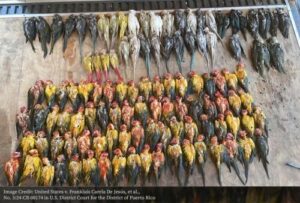
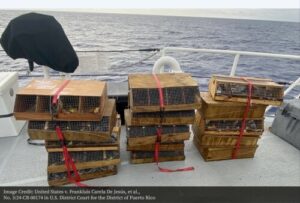
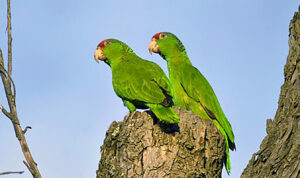
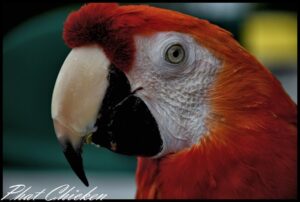
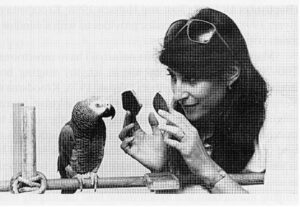
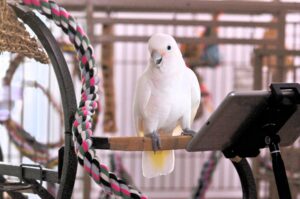

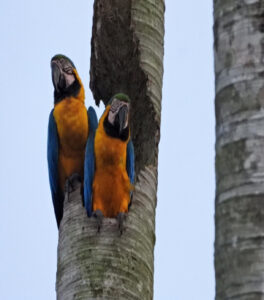
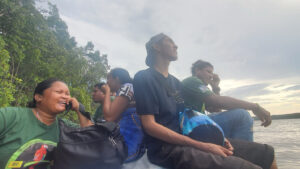
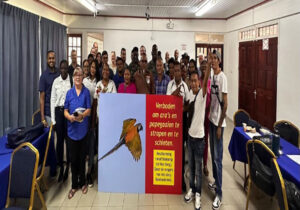

 Join us for a FREE, live, interactive webinar hosted by Laura Doering, former editor of Bird Talk magazine and Birds USA magazine. Our special guest, Pamela Clark, is a well-known author, speaker, IAABC CPBC & retired CVT. Pamela will present Episode 12 of Translating Parrot, a Lafeber Pet Birds Webinar Series focusing on Parrot Behavior & Wellness, based on Pamela’s years of experience with a wide range of parrot species. In this episode, Pamela will start our annual March discussion of parrots and how they are influenced by reproductive hormones. There is no doubt that these hormones set the stage for the development of behavior problems. This webinar will present new information about the triggers for these hormones in companion parrots and how to minimize them in your flock. After a short presentation, she will take viewer questions on this topic. Pamela’s advice will help you translate what your parrot wants & needs in the newest installment of this informative series!
 Join us for a FREE, live, interactive webinar hosted by Laura Doering, former editor of Bird Talk magazine and Birds USA magazine. Our special guest, Lisa Bono, CPBC, owner and operator of The Platinum Parrot and a certified parrot behavior consultant specializing in African grey parrots, presents Episode 30 of The Grey Way, a Lafeber Pet Birds Webinar Series focusing on Congo & Timneh African grey parrots as pets. In this episode, Lisa will revisit our annual March topic – Hormones – with the focus on African Greys. Lisa will discuss hormone-related behavior problems and ways to try to prevent them.
 Join us for a FREE, live, interactive webinar hosted by Laura Doering, former editor of Bird Talk magazine and Birds USA magazine. Our special guest, Stephanie Lamb, DVM, DABVP (Avian Practice), will revisit our annual March topic – hormones! Most behavior issues & many health issues for pet birds begin due to hormones. Dr. Lamb will discuss hormone-related case studies and the medical issues that reproductive hormones can cause. This is an excellent opportunity to learn from some real cases in this insider’s view of the daily happenings at your Avian Vet’s clinic.
 Join us for a FREE, live, interactive webinar hosted by Laura Doering, former editor of Bird Talk magazine and Birds USA magazine. Our special guest Tom Tully, DVM, DABVP (Avian Practice), DECZM (Avian), will answer your questions about pet bird health, nutrition, & care. Dr. Tully, a decorated Professor & practicing Vet at Louisiana State University School of Veterinary Medicine, is an internationally known Veterinarian who has earned specialties in Avian medicine in the United States as well as in Europe. Having this type access to a Veterinarian of his status is rare, but Dr. Tully believes in the educated bird owner as being the best bird steward. Dr. Tully answers each question in detail and shares his vast knowledge of birds, particularly parrots. Is your bird’s problem health-related or behavioral? Are you offering the right foods to your pet bird? Ask the Vet!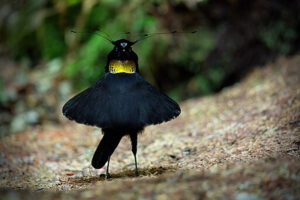
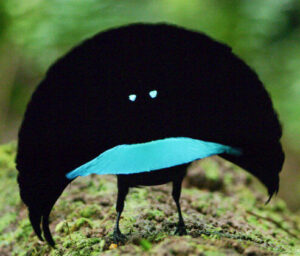

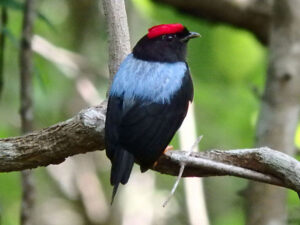
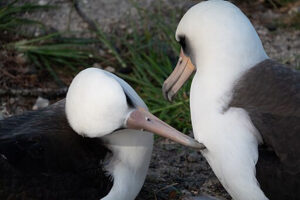
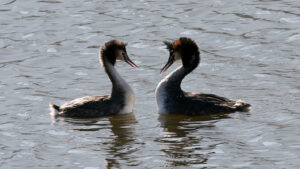
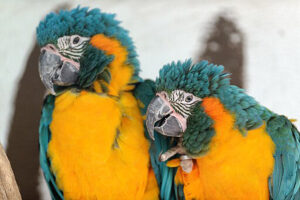
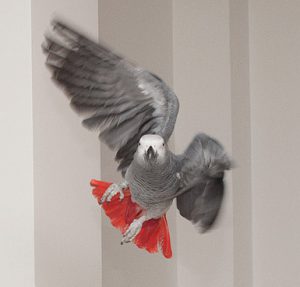
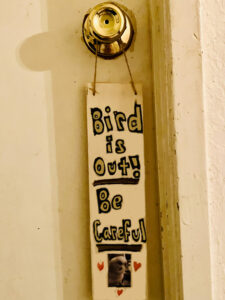


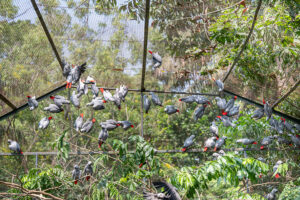
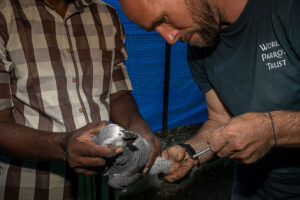
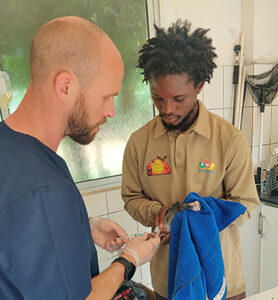
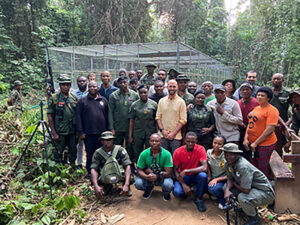
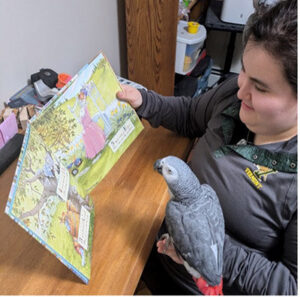
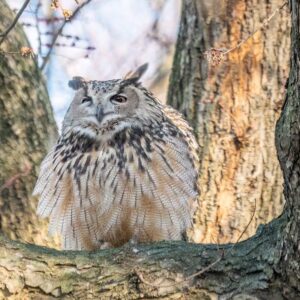

 Join us for a FREE, live, interactive webinar hosted by Laura Doering, former editor of Bird Talk magazine and Birds USA magazine. Our special guest, Lisa Bono, CPBC, owner and operator of The Platinum Parrot and a certified parrot behavior consultant specializing in African grey parrots, presents Episode 29 of The Grey Way, a Lafeber Pet Birds Webinar Series focusing on Congo & Timneh African grey parrots as pets. In this episode, Lisa will discuss loss. Whether the owner loses a pet bird or the pet bird loses an owner, the grief can be overwhelming. Lisa will also talk about preparing to say goodbye – either for a terminal pet bird or an owner who wants to provide for their flock.
 Join us for a FREE, live, interactive webinar hosted by Laura Doering, former editor of Bird Talk magazine and Birds USA magazine. Our special guest Stephanie Lamb, DVM, DABVP (Avian Practice), will discuss enrichment. Whether they are pet birds in the house, or breeding pairs that might be outdoors, enrichment is a vital need for parrots. Enrichment can come in the form of toys or foraging for food among other things. Dr. Lamb will cover types of enrichment and creative ways to provide it. Learn how enrichment is an important part of overall bird health in this insider’s view of the daily happenings at your Avian Vet’s clinic.
 Join us for a FREE, live, interactive webinar hosted by Laura Doering, former editor of Bird Talk magazine and Birds USA magazine. Our special guest Tom Tully, DVM, DABVP (Avian Practice), DECZM (Avian), will answer your questions about pet bird health, nutrition, & care. Dr. Tully, a decorated Professor & practicing Vet at Louisiana State University School of Veterinary Medicine, is an internationally known Veterinarian who has earned specialties in Avian medicine in the United States and Europe. Having this type of access to a Veterinarian of his status is rare, but Dr. Tully believes in the educated bird owner as being the best bird steward. Dr. Tully answers each question in detail and shares his vast knowledge of birds, particularly parrots. Is your bird’s problem health-related or behavioral? Are you offering the right foods to your pet bird? Ask the Vet!
 Join us for a FREE, live, interactive webinar hosted by Laura Doering, former editor of Bird Talk magazine and Birds USA magazine. Our special guest Joerg Mayer DVM, MS, DABVP(ECM), DECZM, DACZM, joins us again from the University of Georgia College of Veterinary Medicine where he works in Small Animal Medicine & Surgery, Veterinary Teaching Hospital & Zoological Medicine Service. In this episode, Dr. Mayer will discuss Apitherapy – the use of products derived from bees as medicine, including venom, honey, and pollen. He has been invited to present this information worldwide at Veterinary Conferences and Universities. In this talk, he will discuss how we can help honeybees, as well as how they can help our pet birds. Bees are vital to our existence and Dr. Mayer will discuss this and what can be done to boost honeybee populations.


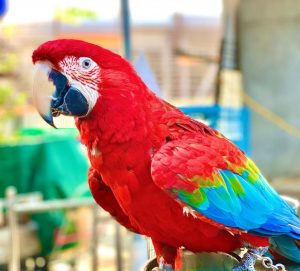
 Join us for a FREE, live, interactive webinar hosted by Laura Doering, former editor of Bird Talk magazine and Birds USA magazine. Our special guest, Dr. Stephanie Lamb, DVM, DABVP (Avian Practice), will discuss keeping backyard chickens as pets. She will talk about the common problems that Veterinarians see in chickens including neurological issues and reproductive diseases & disorders. Dr. Lamb will also talk about infections and diseases that could be shared between chickens and parrots. Learn how to safely keep chickens and parrots in this insider’s view of the daily happenings at your Avian Vet’s clinic.
 Join us for a FREE, live, interactive webinar hosted by Laura Doering, former editor of Bird Talk magazine and Birds USA magazine. Our special guest Tom Tully, DVM, DABVP (Avian Practice), DECZM (Avian), will answer your questions about pet bird health, nutrition, & care. Dr. Tully, a decorated Professor & practicing Vet at Louisiana State University School of Veterinary Medicine, is an internationally known Veterinarian who has earned specialties in Avian medicine in the United States as well as in Europe. Having this type access to a Veterinarian of his status is rare, but Dr. Tully believes in the educated bird owner as being the best bird steward. Dr. Tully answers each question in detail and shares his vast knowledge of birds, particularly parrots. Is your bird’s problem health-related or behavioral? Are you offering the right foods to your pet bird? Ask the Vet!
 Join us for a FREE, live, interactive webinar hosted by Laura Doering, former editor of Bird Talk magazine and Birds USA magazine. Our special guest, Lisa Bono, CPBC, owner and operator of The Platinum Parrot and a certified parrot behavior consultant specializing in African grey parrots, has once again secured many wonderful donations for us to give away to some lucky viewers! In this fun holiday episode, Lisa will discuss each prize, an assortment of toys and supplies that are safe for our feathered companions as well as some parrot-themed items for bird lovers. We encourage you to shop with our generous donors when doing your holiday shopping for yourself or your own flock or for your bird friends or their flocks. This very special Holiday Webinar is generously sponsored by Lafeber Company, The Platinum Parrot & Grey Parrot Consulting.



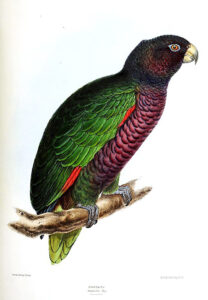




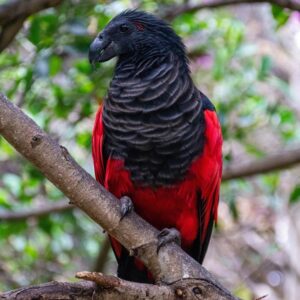
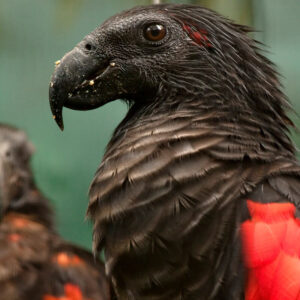


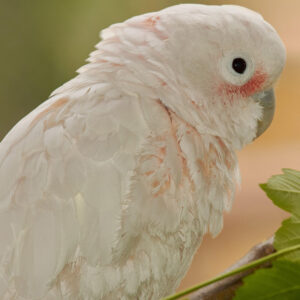

 Join us for a FREE, live, interactive webinar hosted by Laura Doering, former editor of Bird Talk magazine and Birds USA magazine. Our special guest, Stephanie Lamb, DVM, DABVP (Avian Practice), will continue the fun & informative series, Species Spotlight! The California Condor is a highly endangered avian species in North America and caring for them has been fraught with challenges throughout the years. However, the year 2023 brought the new challenge of Highly Pathogenic Avian Influenza (HPAI) to the Northern Arizona flock. Dr. Lamb will take us through the difficulties of this time but also tell us an uplifting story of one special bird.
 Join us for a FREE, live, interactive webinar hosted by Laura Doering, former editor of Bird Talk magazine and Birds USA magazine. Our special guest, Pamela Clark, is a well-known author, speaker, IAABC Certified Parrot Behavior Consultant & retired CVT. Pamela will present Episode 11 of Translating Parrot, a Lafeber Pet Birds Webinar Series focusing on Parrot Behavior & Wellness, based on Pamela’s years of experience with a wide range of parrot species. In this episode, Pamela will discuss some of the most common complaints from pet bird owners. Why does my bird hate me? Why is my bird so bad? Why does my bird bite me or scream for no reason? Are these behaviors bad or just undesirable? Pamela’s cutting-edge approach will help you translate why your pet bird does certain things that drive you crazy, and how you can resolve the “problem behavior” in this informative series!
 Join us for a FREE, live, interactive webinar hosted by Laura Doering, former editor of Bird Talk magazine and Birds USA magazine. Our special guest, Lisa Bono, CPBC, will share her first-hand experiences with a devastating hurricane. When Lisa presented her webinar in September on preparing for Winter, she included information on preparing for a disaster. She had no way of knowing that days later, she would have to put all of her plans and expertise to the test during Hurricane Helene. Lisa will discuss what she did to prepare, what she did during the hurricane to protect her flock, and the days following the disaster, without power, with her family & flock to care for. Lisa will share her thoughts, pictures and videos of the disaster & aftermath in this compelling and important webinar.
 Join us for a FREE, live, interactive webinar hosted by Laura Doering, former editor of Bird Talk magazine and Birds USA magazine. Our special guest Tom Tully, DVM, DABVP (Avian Practice), DECZM (Avian), will answer your questions about pet bird health, nutrition, & care. Dr. Tully, a decorated Professor & practicing Vet at Louisiana State University School of Veterinary Medicine, is an internationally known Veterinarian who has earned specialties in Avian medicine in the United States and Europe. Having this type of access to a Veterinarian of his status is rare, but Dr. Tully believes in the educated bird owner as being the best bird steward. Dr. Tully answers each question in detail and shares his vast knowledge of birds, particularly parrots. Is your bird’s problem health-related or behavioral? Are you offering the right foods to your pet bird? Ask the Vet!


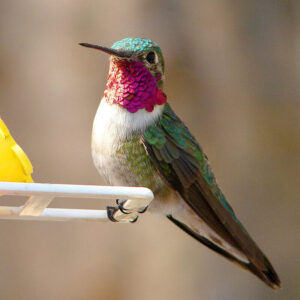
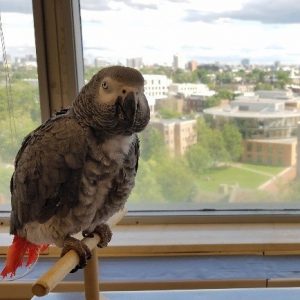
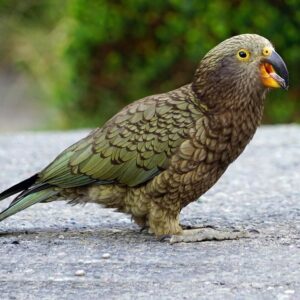

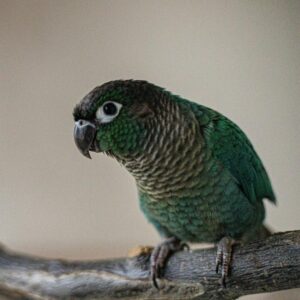
 Join us for a FREE, live, interactive webinar hosted by Laura Doering, former editor of Bird Talk magazine and Birds USA magazine. Our special guest, Pamela Clark, is a well-known author, speaker, IAABC Certified Parrot Behavior Consultant & retired CVT. Pamela will present Episode 10 of Translating Parrot, a Lafeber Pet Birds Webinar Series focusing on Parrot Behavior & Wellness, based on Pamela’s years of experience with a wide range of parrot species. In this episode, Pamela will discuss some of the most common complaints from pet bird owners. Why does my bird hate me? Why is my bird so bad? Why does my bird bite me or scream for no reason? Are these behaviors bad or just undesirable? Pamela’s cutting-edge approach will help you translate why your pet bird does certain things that drive you crazy, and how you can resolve the “problem behavior” in this informative series!
 Join us for a FREE, live, interactive webinar hosted by Laura Doering, former editor of Bird Talk magazine and Birds USA magazine. Our special guest, Stephanie Lamb, DVM, DABVP (Avian Practice), will discuss her recent experiences at the American Federation of Aviculture (AFA) conference as a Speaker & attendee. Educational conferences are so important to attend when you have the opportunity. You will learn from the speakers as well as share information with other bird owners. But there is so much more to attending a conference. Dr. Lamb will share her perspective from a Vet’s point of view along with input from our host, Laura, who was there for the entire conference.
 Join us for a FREE, live, interactive webinar hosted by Laura Doering, former editor of Bird Talk magazine and Birds USA magazine. Our special guest, Natalie Antinoff, DVM, DABVP (Avian Practice), will discuss the “silent” or “hidden” killer that can affect pet birds, particularly seniors. Now that our pet birds are living longer, veterinarians are diagnosing atherosclerosis more frequently. What exactly is atherosclerosis? Are there any warning signs? Can it be treated? Can I do anything to prevent it? Get the answers to these questions, as Dr. Antinoff takes us on a deep dive into this disease.
 Join us for a FREE, live, interactive webinar hosted by Laura Doering, former editor of Bird Talk magazine and Birds USA magazine. Our special guest Tom Tully, DVM, DABVP (Avian Practice), DECZM (Avian), will answer your questions about pet bird health, nutrition, & care. Dr. Tully, a decorated Professor & practicing Vet at Louisiana State University School of Veterinary Medicine, is an internationally known Veterinarian who has earned specialties in Avian medicine in the United States and Europe. Having this type of access to a Veterinarian of his status is rare, but Dr. Tully believes in the educated bird owner as being the best bird steward. Dr. Tully answers each question in detail and shares his vast knowledge of birds, particularly parrots. Is your bird’s problem health-related or behavioral? Are you offering the right foods to your pet bird? Will Dr. Tully wear a Halloween mask? Ask the Vet!


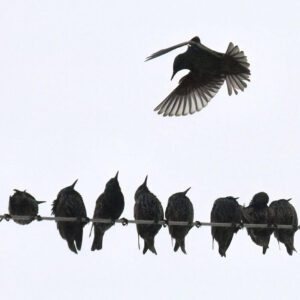

 Join us for a FREE, live, interactive webinar hosted by Laura Doering, former editor of Bird Talk magazine and Birds USA magazine. Our special guest, Dr. Stephanie Lamb, DVM, DABVP (Avian Practice), will take a unique and informative look at how your pet bird might perceive a visit to the Vet. Presented from the bird’s point of view, this webinar will help owners understand what their bird may be experiencing. A bird’s experience will be much different for a wellness visit than for a health issue or emergency trip. While we can’t know exactly what our birds are thinking, Dr. Lamb will explain why your bird may have certain reactions or stress levels. This can help an owner understand what might help put their bird more at ease or how the owner’s behavior and reactions could influence how the bird handles being at the Vet. Let’s take a look through our bird’s eyes in this insider’s view of the daily happenings at your Avian Vet’s clinic.
 Join us for a FREE, live, interactive webinar hosted by Laura Doering, former editor of Bird Talk magazine and Birds USA magazine. Our special guest, Lisa Bono, CPBC, owner and operator of The Platinum Parrot and a certified parrot behavior consultant specializing in African grey parrots, presents Episode 28 of The Grey Way, a Lafeber Pet Birds Webinar Series focusing on Congo & Timneh African grey parrots as pets. In this episode, Lisa will help you & your birds navigate the Holiday Season! Whether your holidays involve guests, parties, decorations & special foods or you prefer a quiet season with your birds and maybe a few loved ones, the holiday season has a different feel about it. Winter and the holidays can bring with it different weather, emotions, routines, & lifestyles. Even small changes can be felt by our pet birds. Lisa will discuss this special time of year and how you can make it special for your birds, keeping them feeling secure and happy. As always, Lisa may focus on some Grey-centric concerns, but her advice can be applied to any pet bird species.
 Join us for a FREE, live, interactive webinar hosted by Laura Doering, former editor of Bird Talk magazine and Birds USA magazine. Our special guest Tom Tully, DVM, DABVP (Avian Practice), DECZM (Avian), will answer your questions about pet bird health, nutrition, & care. Dr. Tully, a decorated Professor & practicing Vet at Louisiana State University School of Veterinary Medicine, is an internationally known Veterinarian who has earned specialties in Avian medicine in the United States and Europe. Having this type of access to a Veterinarian of his status is rare, but Dr. Tully believes in the educated bird owner as being the best bird steward. Dr. Tully answers each question in detail and shares his vast knowledge of birds, particularly parrots. Is your bird’s problem health-related or behavioral? Are you offering the right foods to your pet bird? Ask the Vet!


.jpg)
.jpg)
_(1).jpg)


.jpg)


.jpg)

.JPG)


_(12081488845).jpg)
_(16520049355)_(cropped).jpg)
