Webinar: Phoenix Landing 2024 Wellness Retreat – A “Can’t Miss” for Bird Owners!
Date: Friday, February 2, 2023
Time: 12:00 pm PST (double-check your local time with this time zone converter)
Join us for a FREE, live, interactive webinar hosted by Laura Doering, former editor of Bird Talk magazine and Birds USA magazine. Our special guests, Dr. Susan Orosz & Ann Brooks, will discuss the upcoming Phoenix Landing Wellness Retreat, which will take place April 6 – 7, 2024 in Asheville, NC. This unique meeting for pet bird owners offers lectures on many aspects of pet bird care. Ann will discuss the speakers and topics and what goes on at a meeting like this, as well as why it is important for bird owners and professionals to continue learning through different avenues. Dr. Susan Orosz will tell us how the idea for this special learning opportunity came about and how it became a place for learning from experts in the field as well as fellow bird owners. If you want to register to go to the retreat, please visit https://www.phoenixlanding.org/retreat.html
Missed our webinar? No problem! You can access the webinar in its entirety here:
Webinar: NEW SERIES! Species Spotlight: The Patagonian Conure – Special Time 11AM PST
Date: Friday, February 9, 2023
Special Time: 11:00 am PST (double-check your local time with this time zone converter)
Join us for a FREE, live, interactive webinar hosted by Laura Doering, former editor of Bird Talk magazine and Birds USA magazine. Our special guest, Dr. Stephanie Lamb, DVM, DABVP (Avian Practice), will launch a brand-new series, Species Spotlight! This recurring series will feature guest speakers talking about their experiences seeing parrots in the wild. Observations of wild parrots can give us clues to the behavior of our pet birds. In this first episode, Dr. Lamb will talk about her recent trip where she had the opportunity to see Patagonian Conures in the wild. She will talk about the wild conures and show pictures. She will also discuss this bird as a pet and touch on their checkered past when they were imported from the wild. This episode will feature a bonus species at the end – one that is very rare in captivity now. Be sure to join us to learn about the Patagonian Conure and the Mystery species in their natural habitat!
Missed our webinar? No problem! You can access the webinar in its entirety here:
Webinar: Translating Parrot: Finding a Reputable Bird Breeder
Date: Friday, February 16, 2024
Time: 12:00 pm PST (double-check your local time with this time zone converter)
Join us for a FREE, live, interactive webinar hosted by Laura Doering, former editor of Bird Talk magazine and Birds USA magazine. Our special guest, Pamela Clark, is a well-known author, speaker, IAABC Certified Parrot Behavior Consultant & retired CVT. Pamela will present Episode 7 of Translating Parrot, a Lafeber Pet Birds Webinar Series focusing on Parrot Behavior & Wellness, based on Pamela’s years of experience with a wide range of parrot species. In this episode, Pamela will discuss how to choose a responsible bird breeder. Adopting from a shelter is a great choice for many people, but it’s also important to support ethical parrot breeders. Pamela will explain what makes a good bird breeder and the steps you can take to find one. As a former breeder herself, Pamela will give us an inside look at the world of parrot breeding.
Webinar: Ask the Vet with Tom Tully, DVM, DABVP (Avian Practice), DECZM (Avian)
Date: Friday, February 23, 2024
Time: 12:00 pm PST (double-check your local time with this time zone converter)
Join us for a FREE, live, interactive webinar hosted by Laura Doering, former editor of Bird Talk magazine and Birds USA magazine. Our special guest Tom Tully, DVM, DABVP (Avian Practice), DECZM (Avian), will answer your questions about pet bird health, nutrition, and care. Dr. Tully, a decorated professor and practicing veterinarian at Louisiana State University School of Veterinary Medicine, is an internationally known veterinarian who has earned specialties in Avian medicine in the United States and Europe. Having this type of access to a veterinarian of his status is rare, but Dr. Tully believes in the educated bird owner as being the best bird steward. Dr. Tully answers each question in detail and shares his vast knowledge of birds, particularly parrots. Is your bird’s problem health-related or behavioral? Are you offering the right foods to your pet bird? Ask the Vet!
Missed our webinar? No problem! You can access the webinar in its entirety here:
As science grows smarter and more sophisticated, the study of many things becomes much more in-depth. We are now not only able to discover new and interesting reality traits, but science has further evolved to a point that allows for it to expand heavily on newfound pathways for our accumulated knowledge base. This will take us further into exciting new territory as we learn how we all link together, and how we can connect the unconnected. For parrots, we know well their immense vocal capabilities. We know that they can mimic many sounds.
In a recent new study, Zhilei Zhao, a Klarman Fellow in neurobiology and behavior in the Cornell University College of Arts and Sciences, knew that the rarity of ability for articulated words, phrases, and the retainment of them are limited to a few species – some whales, dolphins, birds, and humans. His interest was in the brain of the parrot and how it works to allow for such a magnificent feat. For this study, he used parakeets as the model for the brain’s involvement in vocal learning.
The mystery is in how certain regions of the brain work to create vocalizations and effectively use those to produce a communicative result. While the human species is still in ongoing studies, the pathways used by parrots and songbirds to create vocal patterns and use them are of interest. The study looks closely at Anterior Forebrain Pathways (AFP), and Posterior Forebrain Pathways (PFP) – essentially the front and rear of the forebrain itself and their essential roles in the production of usable vocalization (sound) and acoustic structure (how wave motion produces sound).
Differences Between Songbirds And Parrots
What has been discovered is that songbirds and parrots both have distinctly utilized vocal learning capabilities, they have two different pathways in that learning. We recognize that the songbird itself learns a song in its juvenile stage and doesn’t learn much afterward. They use both the PFP and the AFP regions of the forebrain to produce different results. By inactivating the AFP region, acoustic structure was degraded in both the parrot and the songbird. Parrots, along with humans, actively use both the AFP and PFP regions to learn a continuous stream of new vocalizations as they grow. However, isolation of the PFP in parrots degraded their acoustic structure whereas, in songbirds, it did not. This can help us understand more how parrot and human brains use certain unique pathways to learn and communicate more effectively.
Zhilei Zhao is also working on creating an AI that will help analyze parrot sounds and form pattern recognition and predictive capabilities. Soon enough, we may come to discover just what parrots are talking about among themselves and individually.
The study itself is a complexity to the layman trying to understand how parrots create the amazing vocals they do. But as science advances and more studies are undertaken, we will eventually come to a full realization of how we fully develop and communicate by way of the brain. The fact that humans, parrots, and many other living things can communicate at all is an amazing feature of nature. The more we know about this, the better we will be able to harness communication and enhance it for greater things.
In past work, Zhilei Zhao was heavily involved in discovering what triggered the mosquito to zero in on a human. His work translated into amazing breakthroughs in genetics and chemistry as well as the model of neuroscience. His work resulted in a vast understanding of the mosquito smell system that will produce better momentum in further studies.
A Green Jay perches on a branch on a cloudy summer day at the Laguna Atascosa National Wildlife Reserve in the Rio Grande Valley of Southern Texas. Photo by Mark Olsen/Unsplash
We’re fondly aware of our well-known and much-loved blue jay. They’re commonly found in the Eastern regions of North America. Its array of stained-glass-like blues and whites on its body along with the familiar blue crest makes it a bird of extra note in the wild. Its cousin, the Stellar’s jay found in the western regions of the U.S. is as distinctive and pleasant to look at as its cousin. Both birds are plentiful and not with concern for depletion. Of course, there are several birds included within the jay family, but they aren’t as vibrantly colored and remembered as readily. But there is one that we are typically unaware of simply because they live further south within Mexico and Central America. This is the green jay.
Green Jays On The Move
The green jay has only previously been spotted as far north as the deep south of Texas bordering Mexico. As the green jay is a non-migratory species, it is realized that it is perfectly satisfied with its resident locations where it thrives. These beautiful birds are highly recognizable for their yellow-white feathers, and the patch of dark blue on their heads. Their upper regions are a deep green color, with their belly regions colored lighter green. But something curious is occurring. They seem to be moving north a bit.
eBird, an online database that monitors and catalogs birds and tracks sightings of those birds has recently updated with the news that the green jay has been sighted in San Antonio and other more northern towns. It appears that they’re liking the developing softer winters that are now common inside southern Texas. It likely reminds them of the home they have typically lived in so…why not a new spot, a new home. Right? Humans do it all the time.
Even more fascinating is the recent sighting of a possible hybrid of a blue jay and a green Jjay. Sighted within the confines of San Antonio, the odd bird was at a feeder and captured by a graduate student from Austin for closer genetic study. It has been photographed and posted with interest. And so, it seems that the blue jay is checking out the southern regions of the U.S. more than they previously have. And with that, it is inevitable that the two birds would come into contact eventually.
Climate Driving Relocations?
As climate change occurs, many instances of relocation occur naturally as tantalizing discoveries for the birds. They begin to find suitable habitats in which to start fresh. With our exponentially growing interests in birdwatching, and the development and fast growth of technologies enabled to mark these occurrences, we’re finding rapid change within every facet of the natural world. Like humans, birds are learning to adapt within a broader stage that suits their needs. If it begins to get too hot in one place, and the climate has provided a suitable location elsewhere nearby, the birds will take advantage of it to survive.
Those green jays are beautiful and a new addition to my lexicon.
Christmas holidays bring a rush of traditional joys that many in the world love to undertake. Things like decorating the house, hanging lights, and placing larger, usually lit things in the yard that highlight the timespan, fill spaces until there’s nothing but a happy holiday feeling in the air. And then there’s the tree.
The Christmas tree is a symbol of the holiday that is celebrated in many places worldwide. These trees are usually pines or firs that give off a highly recognizable and much-loved aroma contributing to the time of year. Historically, the tree originated back in the 16th century in Europe. It is said to have been Martin Luther who lit the first tree.
A Kentucky family recently purchased their annual Christmas tree. Before Thanksgiving, the chosen tree was packed and sent to the family by a corner tree lot located close to home. Soon, it was set up in the Lexington family’s house, and decorated per their family tradition.
Check The Tree
Four days after the tree was delivered and decorated, a family friend was in the house to clean the carpets when he noticed movement inside the tree. Curious, he looked closer at the tree and saw a small owl sitting on a lower limb. As he reached for it, the owl moved up and disappeared into the interior of the tree. After a few minutes of search and discovery, the friend was able to eventually extract the baby owl, take photos of it, text those photos to the family, and then release the young owl outside in the backyard which opens up to a nice, wooded location with a creek running through it.
The family was in disbelief that the bird could have gone unnoticed for as long as it had. They have three dogs and not one of them noticed something communing within the tree, simply hanging out. The family was quite active in the room where the tree was placed during the four days the owl went undetected. A short TikTok video made by one of the family chronicles the moment.
According to the family friend who released the baby owl, it flew straight up into the trees in the wooded area. The area strengthens the belief that the owl could well make the new location its home. It was likely inside the tree when the tree was originally cut and transported to the tree lot.
Owls And Trees
This isn’t the first owl to find itself caught in a Christmas tree. In 2020, an owl was discovered tucked into the base of the massive spruce tree selected to be the Rockefeller Center Christmas Tree. The Northern Saw-whet Owl, nicknamed “Rocky” was presumably in the tree when it was cut down near Oneonta and transported to Manhattan.
Birds have had an exciting time of it at the movies. Over the years, birds and others have been featured in TV series (Fred the Cockatoo in “Baretta,” for one). More interesting is the array of animated films featuring birds. There have been a lot. These include bird-centric films like “Rio” (2011), and its successful follow-up, “Rio 2” (2014); two “Happy Feet” films about penguins (2006, 2011), “Yellowbird” (2014), and “Birds Like Us” (2016).
This only name-checks a couple of classics. These films all come with wonderful messages tucked inside of them about growth and discovery, are aimed at both kids and adults and are beautiful labors of love to watch on the big screen and at home. So, why not do it again?
A Tale Of Migrating Through Life
Illumination Studio has released a new animated film for the holidays called “Migration.” The movie follows a family of ducks as they migrate from New England to the warmer clime of Jamaica. The kids encourage the father to let go and create the vacation of a lifetime. Reluctant at first, Dad decides to go ahead and do it. But as these films will have it, dilemmas present themselves to be solved. The family of ducks introduced in “Migration” will find themselves off course, lost, and stopping over inside New York City. As they scurry to find themselves, they meet friends along the way and learn quickly to expand their own thinking for survival in a necessary process of maturing.
As the ducks advance within the movie, they develop enduring friendships in the craziest and unlikeliest places imaginable. They end up with a stronger set of tools, in which to (if you’ll forgive the pun) migrate through life.
“Migration” is voiced by an amazing ensemble of actors that includes Danny DeVito, Elizabeth Banks, Carole Kane, Keegan Michael-Keen, and Awkwafina. Along with the state-of-the-art production of the animated visual display, and the excellent life lessons within, “Migration” adds to a still-growing library of first-run movies that feature birds in the central plot.
Birds are resourceful and enigmatic creatures that can do amazing things. This is not lost on storytellers and animators looking to interest a world of kids to amazing sights within a storyline that instructs and encourages.
“Migration” is planned for the Christmas holiday of 2023 opening in theaters worldwide on December 22. Children are learners and the lessons in this film will percolate within their young minds.
Recently, I edited a special issue of the journal Interaction Studies on the subject of animal -computer interfaces. The papers centered on dogs and birds, only because two of the promised papers on, respectively, dolphins and apes failed to materialize. (Yes, editing a journal issue or a book is a bit like herding cats.)
The published papers range from discussing some of the history of animal-computer interfaces, to the importance of taking the various animals’ sensory and physical perspectives into account, to a study examining the use of a computer system to interact with dogs. I found the first set of issues particularly intriguing, especially as they might apply to parrots as our companions—are we always doing the best thing for them when we introduce some form of technology into their lives?
The Tech Effect
I want to begin with some of the history, starting with Skinner (1938) and his ‘boxes’ and work on what was labeled ‘operant conditioning’…a way to teach nonhumans to perform certain actions and refrain from others based on the concepts of reward and punishment.
A subject, somewhat food-deprived, would be placed in a box, devoid of anything but a few computer keys; if, for example, it saw a red light and then learned to press the red rather than the green key (i.e., learned “match-to-sample”), it got some pellets; if it pressed the green key, it could hear an unpleasant sound instead.
Notably, Skinner’s techniques and boxes weren’t truly ‘interfaces’ directly designed for the nonhuman subject—that is, something that was innovated for the sole sake of the user/subject, that improved the subject’s well-being, that situated the subject as an eager participant—but rather were mere advances in engineering that enabled humans to efficiently manipulate the subject’s actions to perform a given task and, most importantly, were all for the sake of the human (i.e., to get data).
I am not going to disabuse the importance of such techniques, because they have been adapted and are extremely efficient in training certain basic behavior patterns (e.g., something like getting your bird to ‘climb’ on command, or other simple label-object/action associations). But as I have written extensively elsewhere (Pepperberg, 2021), such training has limitations, as it cannot teach underlying cognitive concepts (e.g., that labels are symbols that can be manipulated and created and used in various non-trained ways for communication); observational learning is far more important for this latter type of instruction. Clearly, scientists—and pet owners—have come a long way since Skinner, based on our knowledge of the physical and psychological abilities and needs of our nonhuman subjects, but several articles in the special issue remind us that we still have a long way to go.
Creating “Soundscapes”
Studies show that birds who hear their mothers’ vocalizations pre-hatching can, post-hatching, distinguish their mothers’ vocalizations from those of other birds of the same species. Photo by Mariano Mollo/Unsplash
One specific article, by Kleinberger (2023), brings our attention to the sound environment—or the absence thereof—in which various nonhumans, particularly birds, live. She makes us realize that we are often oblivious to what is important for avian well-being. I provide a few examples, with my own comments, below. (BTW…no stranger to animal-computer interfaces, Kleinberger was also involved in designing the ZOOM-like communication system I discussed in an earlier blog.)
She describes a study in which she and colleagues arranged for maternal sounds to be piped into incubators so that birds still in the egg could hear the same sounds as they would if they were raised under their mother in a nest. Other studies have shown that birds who hear their mothers’ vocalizations pre-hatching can, post-hatching, distinguish their mothers’ vocalizations from those of other birds of the same species. These studies introduce a serious issue: When we raise parrot chicks in what are essentially soundproof incubators, are we preventing some important developmental stage (e.g., sound pattern recognition) from occurring? We have no idea, and Kleinberger presents the technology that may help us discover that information.
She also looks at the soundscape to which nonhumans are exposed in places like zoos, but that could have relevance for our companion parrots. Just think for a moment of a zoo you might have visited, where environmental designers decided that having various continuous (often blaring) ‘theme park’ sounds provide a cheery background for patrons, to enhance their mood and encourage them to remain longer, maybe to stay and eat a meal or purchase souvenirs.
A human visitor, however, spends a relatively short time in the zoo. Can you imagine having to listen to such sounds hour after hour, day after day, for your entire life? What if zookeepers decide to pipe in what they believe are natural sounds from the wild to make the experience seem more realistic…but what happens if sounds that are chosen inadvertently contain those of predators or alarm calls that provoke anxiety and fear?
Kleinberger discusses these situations, and I bring them up because I know that some people turn on a radio or TV when leaving their homes, so that the bird will not be ‘alone’…but might such a soundscape really be soothing? Might something come on that causes anxiety or fear? Might the bird spend much of the time calling for their human companions, thinking that they are present? Maybe a well-curated playlist that is constantly being updated—and over which the bird has some control over its presentation—would be more appropriate? Kleinberger discusses a form of this type of technology as well.
Clearly, humans know from their own interactions with technology that it can be a great assistant or present serious problems. We need to extend that knowledge to our use of technology for nonhumans as well!
References
Kleinberger, R. (2023). Sonic enrichment at the zoo. Interaction Studies, 24: 257-288.
Pepperberg, I.M. (2021). A review of the Model/Rival (M/R) technique for training interspecies communication and its use in behavioral research. Animals 11, 2479.
Pepperberg, I.M. (2023). An introduction to “Animal-computer interfaces: Novel approaches for studying animal behavior, cognition and communication” Interaction Studies, 24:193-200.
Skinner, B. F. (1938). The behavior of organisms: An experimental analysis. Appleton-Century.
We all know that parrots are ultra-smart. We’ve seen a lot of the researched data and have had a lot of personal interaction; enough to plant it firmly that these birds are much smarter than we have ever realized in the past. We have reports of one bird, Alex, while under the tutelage of Dr. Irene Pepperberg, asked a question about his color while looking into a mirror. This underscored the reality that they have questions with a desire to learn. Another parrot, by the name of Einstein, has a vocabulary of more than 200 words and can distinguish between colors and shapes. These are moments of extraordinary worth.
Ellie Reads And Writes
Courtesy of Jennifer Cunha
Here’s the story of another such bird. Ellie is an 11-year-old Goffin’s Cockatoo owned and studied by Jennifer Cunha, a property lawyer who focuses her time on animal cognition. She has also been creating practical training manuals to help others draw out the intelligence of their birds. She also collaborates on multiple animal cognition studies and often lectures on the subject worldwide. Even more fascinating is that her cockatoo, Ellie, can really read words and is considered one of two birds to be able to do so. (She owns both birds. The other is named Isabelle.)
Ellie can read basic words. Yes, you read that right. Ellie can read basic words. And even more exciting is that she can draw out (thus far) 14 letters on a touchpad using her beak as the “stylus.” With the ability to do this, Ellie can effectively communicate with Jennifer, revealing her feelings and wants. For example, if Ellie is interested in eating, she can use the tablet to request food and tell Jen what food she wants. If she loved it, she could indicate her happiness via the interactive tablet.
Cunha’s birds have passed university blind tests for their reading skills. The birds were presented with cards of words and pictures. The picture was placed on the top left and the word on the bottom right. They were prompted to “read” and understand the card with the picture. Then, they would be prompted to point with their beak to the picture after the word was presented. They would be given another card with a different word and picture. After familiarity, they would be asked which picture was which word, i.e., “which is the hamster; which is the otter?” The parrot would respond with 90% accuracy indicating reading proficiency.
These days, Cunha works with Northeastern University as a researcher. Along with other researchers, they hope to create a lab solely dedicated to studying animals, technology, and communication. In addition, they will work to produce a standard of acceptable treatment of animals that are brought in for such new research.
Cunha also runs Parrot Kindergarten, which is an online service that helps to teach new (and old) owners of parrots a series of proper helpful approaches to get the most out of the bonding between the bird and the human. Today, Cunha has over 200 customers who utilize her skill base to learn how to interact intellectually with their birds.
While there are unique birds that have set themselves apart with their learned abilities, the importance of continuance is that, in time, we may come to “converse” with not only parrots but other animals regularly. There is much more to the story, which you can check out here at Parrot Kindergarten.
A recently released Scarlet Macaw (Ara macao) perches on a tree branch in the Monts Azules Biosphere Reserve, Chajul, Mexico, by Natura Mexicana. Photo by Rodrigo León
Two organizations, The Macaw Society and The Mesoamerican Society for Biology and Conservation, have come together to focus specifically on how to increase knowledge about releasing confiscated parrots back into the wild. They held their first conference in November 2023.
Don Brightsmith, and Gabriela Vigo-Trauco, PhDs from Texas A&M University, were the lead organizers of this conference. Here is a description of the current problem and the goals of the newly established Parrot Release Network in their own words.
Two organizations, The Macaw Society and The Mesoamerican Society for Biology and Conservation, have come together to focus specifically on how to increase knowledge about releasing confiscated parrots back into the wild. They held their first conference in November 2023.
“As you likely know, parrots are one of the most globally endangered groups of birds due to a mixture of illegal trade and habitat loss. As a result, over 50 species have been identified as potentially benefitting from captive breed and release programs. Additionally, thousands of illegally held parrots are confiscated and sent to rehabilitation centers and many are likely releasable.
Two Puerto Rican Parrots (Amazona vittata) get ready for release in El Yunque National Forest, Puerto Rico Photo by Marisel López- USFWS
Fortunately, parrot release science is improving, but few scientists study the release process, and few practitioners publish their innovations. As a result, there is much we still need to learn and there is an urgent need to exchange information amongst the stakeholders.
Confiscated parrots can live for decades and quickly fill rescue centers requiring thousands of dollars for food and upkeep annually. This accumulation of birds can cause problems for conservation because many government officials do not confiscate birds and enforce wildlife laws if there is nowhere to put the confiscated birds, and enforcement failures often lead to increased poaching.
Global Mission Underway to Return Captive Parrots Home
Current IUCN guidelines add to the difficulties, as they communicate that all possible solutions of what to do with confiscated wildlife are undesirable, providing governments and other stakeholders little practical guidance on how to manage confiscated animals of non-threatened species. Unfortunately, releases are expensive and difficult, requiring long-term monitoring to gauge their effectiveness.
A yellow-naped Amazon parrot (Amazona auropalliata) released in the Bosque Escondido Reserve, Nicoya Peninsula by RESCATE Wildlife Rescue Center. Photo by Roshan Tailor
In addition, poorly executed release efforts can threaten animals and ecosystems through disease transmission, genetic pollution, and ecological disruption. As a result, these releases must be conducted appropriately. However, many release projects are either unaware of these new best practices or are unable to replicate them. As a result, there is a great need to improve both the theory and practice of parrot releases into the wild.
There is an urgent and immediate need to improve the methods of parrot release, document successes and failures, and make this information available to practitioners, governments, and academics alike. The objective of the November symposium was to bring together a diversity of actors in the field of psittacine release to present information on what works and what does not work, create a new network of parrot release experts and practitioners, facilitate discussion about how to create and disseminate information, and support new organizations interested in conducting responsible release projects.”
This month’s Lafeber grant goes to support this new conservation and information-sharing network with the hope that more parrots will once again live in the wild and not need to spend their days crowded into rescue centers or be subject to poaching due to the lack of adequate enforcement. You can learn more about the Macaw Society here (https://vetmed.tamu.edu/themacawsociety)
We often hear the tales of noncaring and willful teardown of important habitat locations for birds to construct things meant for the critical needs of expansive human needs. With those, we run strong, sometimes overpowering risks that – sadly – challenge the long-term survivability of species of birds and others. It would be an extraordinary reality if those who invade habitats took into consideration the needs of helpless creatures. While that remains a large and often improbable task, a Danish company is responding to a requirement to help give possibilities to a threatened species of seabird known as the kittiwake.
Ørsted is a renewable energy company located in Denmark. Its main goal is to help our world transition to and become fully dependent on “green” energy. They construct and operate wind and solar farms, energy storage facilities, renewable hydrogen facilities, and bioenergy plants. Birds are susceptible to large structures like wind turbines, resulting in a high mortality rate for some bird species. A Biological Conservation 2013 study has estimated that a total of around 235,000 birds die annually due to the mass of large monopole wind turbines around the world. By now, that number is likely to be even higher as more structures are erected to advance wind energy collection.
Ocean Nests
Ørsted, a renewable energy company based in Denmark, created a “bird nest” in the ocean to help the endangered kittiwake seabird, as well as provide conservationists an observational tower. Amanda Slater, CC BY-SA 2.0, via Wikimedia Commons
The kittiwake bird is a species of the Gull family. These small white-bodied, gray-backed, and gray-winged birds are separated by two species known as black-legged in the U.K. areas they live in. (There is a red-legged species found in North America). They form densely packed colonies in their nesting arenas and are exclusive cliff-nesters. They are found in northern climes connected by the Pacific Ocean, the Atlantic Ocean, and the Arctic Ocean. The gulls are dependent on marine life for their diet.
A massive offshore wind farm is being constructed by Ørsted off the east coast of England. To complete the project, the company was compelled to construct three large artificial kittiwake nest structures on the ocean not far from the shores to help ease the decline of the species, something that has been noted since 2000. With all this in mind, the development of the close-to-shore nests will aid further in keeping them safer from predators.
The nests were designed specifically to cater to the needs of the kittiwake bird. They were created with help from ecologists and engineers. A single pile was driven in with an octagonal structure affixed on top. Each structure can house 500 nests in a complex arrangement supported by ledges. To help science monitor the birds within the structures, space has been saved for researchers, who can then maintain completely obscure observations. There are chairs, tables, and a whiteboard within the spaces for the researchers to use along with panels that allow the researchers to look at the population of birds, but the birds cannot see them. In addition, cameras were installed for the constant monitoring of the birds as they acclimate to make these structures their new nesting areas.
The Cook Islands is a self-governing island country in the South Pacific Ocean in free association with New Zealand, which it relies upon for its defense. It is comprised of 15 islands split between two groups, with a total land area of 237 square km or 91 square miles.
Last year, Luis Ortiz-Catedral Ph.D, Director of the Oceania Region for the World Parrot Trust, had the opportunity to visit one of the most beautiful of the atoll-like islands, Aitutaki. It is home to the Kurāmo’o or Blue Lorikeet (Vini peruviana). His goal was to kickstart a partnership with local agencies to better understand the status of this species on Aitutaki. He decided to travel the island largely on foot to look for the Kurāmo’o and to assess their flying patterns, diet, numbers, and general behavior. It took Luis several days to traverse the areas most inhabited by the lorikeets, while thoroughly enjoying this island paradise and its friendly population.
Here is a bit of his experience in his own words.
Vulnerable in the Pacific
Image courtesy Luis Ortiz-Catedral
The Kurāmo’o is one of 10 or so lorikeet species in the Vini genus, a group of parrots that extends from the Solomon Islands to French Polynesia. Vini lorikeets are amongst the most vulnerable land birds in the South Pacific. Introduced rats eat their eggs and chicks, while cyclones can profoundly impact the availability of flowers and fruits, thus affecting the survival prospects of these sugar-loving parrots. They are also tricky to keep in captivity, thus limiting the potential for captive breeding to assist in their conservation.
The history of the Kurāmo’o is fascinating. The species was described by Philipp Ludwig Statius-Müller in 1776, the same year of his death. Statius-Müller originally named the bird “Psittacus peruvianus,” indicating that the species origin was Peru. Back in those days, European naturalists would describe species without ever seeing them in the wild and often from a single specimen. Statius-Müller never realized that the stuffed bird he used to describe a new species had been merely shipped to Europe via Peru but was most likely collected in French Polynesia.
Up until the early 1700s, the Kurāmo’o was one of the most widespread lorikeets in the South Pacific, inhabiting at least 20 islands and various islets across French Polynesia. Nowadays, it occurs only on Aitutaki and on less than 10 islands in French Polynesia. Aitutaki is my kind of place: white sandy beaches, coconut palms, and hot temperatures. With just under 2,000 inhabitants the pace of life is relaxed and friendly.
Monitoring a Species at Risk
Image courtesy Luis Ortiz-Catedral
By day four, having walked nearly 100 km and after opening many coconuts, I had registered 180 Kurāmo’o distributed across most of the island except the southernmost part where coconut palms are less abundant. I saw them feeding predominantly on nectar and pollen of coconut flowers, carefully nibbling at the petals and stamens of hibiscus buds, and banana tree buds. I also observed two juveniles with their almost even blue plumage, nibbling at coconut flowers. I also located several potential nesting hollows on dead trees. Kurāmo’o are fairly common on Aitutaki, however, they are highly susceptible to depredation by introduced rats already present on the island.
This year, the World Parrot Trust in partnership with two local agencies, the Cook Islands Natural Heritage Trust and Te Ipukarea Society, will begin a project funded by the Pacific Development and Conservation Trust aimed at enhancing the species’ breeding success by protecting nests. The same project aims to estimate Kurāmo’o numbers on the island.
This month’s Lafeber grant goes to support these three NGOs and their effort to estimate the Kurāmo’o population and begin nest protection efforts.
The age of dinosaurs was far more than just infamous species like the fearsome Tyrannosaurus Rex, the gentle Brontosaurus, the flying Pterodactyls, and the Jurassic Park staging of the reptile-like Velociraptor, which dominate pop culture. Emerging fossil discoveries continue unveiling prehistoric animals lost to the depths of deep time and unlike anything roaming our modern world. A team of paleontologists recently uncovered the “first of its kind” fossilized footprints of the Terror Bird in Argentina.
Back in 2007, a fossil of a 10-foot ostrich-like bird appropriately named Terror Bird, was discovered in Argentina. The fossil revealed a fairly intact skull that showed an eagle-like beak that indicated it was a carnivore predator. A 28-inch limb fossil was also uncovered at the same time. This flightless bird may have weighed around 1,000 pounds. It roamed the landscapes of South America. Interestingly, we now have studies that show that a 7-foot terror bird was found to have also roamed in North America. Fossils have been uncovered in Texas and Florida. But those are stories all by themselves.
Ancient Tracks Reveal The “Terror Birds” Of Prehistory
Recently, a team of paleontologists has uncovered the first-of-its-kind fossilized footprints of the terror bird in Argentina along the Atlantic Ocean coast. The research team, from the Universidad Nacional de La Pampa, was excited to have uncovered a consistent formation of a track by a terror bird. Their latest findings have been published in scientific reports and provide the science world with richer information about the wild dinosaur bird that once terrorized prey as it bore down on them.
This set of well-preserved prints that are fully formed provides a wealth of information for researchers to consider. They have been able to assume that the bird had a foot measuring 300m, which is nearly 12” in length. It had two large digits, with a smaller third digit. A curved claw was built in to allow the bird an easy means to disable their tracked prey.
All said, there was a total of 17 fossilized footprints, a yield that will keep the science world busy for some time. These footprints were figured to have been formed around eight million years ago.
Here is a link to the original journal paper found on Nature: Science Reports for you to do further research. In it, there are pictures, drawings, and much more information than recounted here.
The Terror Bird obviously, is no longer with us in any form, due to extinction.
Webinar: Translating Parrot: Behavior 101 – Why Does My Parrot Do That?
Date: Friday, December 1, 2023
Time: 12:00 pm PST (double-check your local time with this time zone converter)
Join us for a FREE, live, interactive webinar hosted by Laura Doering, former editor of Bird Talk magazine and Birds USA magazine. Our special guest, Pamela Clark, is a well-known author, speaker, IAABC Certified Parrot Behavior Consultant & retired CVT. Pamela will present Episode 5 of Translating Parrot, a Lafeber Pet Birds Webinar Series focusing on Parrot Behavior & Wellness, based on Pamela’s years of experience with a wide range of parrot species. In this episode, Pamela will discuss how behavior works and the many factors that impact it. How does a behavior problem evolve? Is it the environment? The diet? The routine? The owner, family, or visitors? Pamela’s cutting-edge approach will help you translate what your parrot reacts to and how to prevent a behavior problem or work with it from the start in this informative series!
Missed our webinar? No problem! You can access the webinar in its entirety here:
Webinar: Translating Parrot: The Challenges of the Green-cheeked Conure
Date: Friday, December 8, 2023
Time: 12:00 pm PST (double-check your local time with this time zone converter)
Join us for a FREE, live, interactive webinar hosted by Laura Doering, former editor of Bird Talk magazine and Birds USA magazine. Our special guest, Pamela Clark, is a well-known author, speaker, IAABC Certified Parrot Behavior Consultant & retired CVT. Pamela will present Episode 6 of Translating Parrot, a Lafeber Pet Birds Webinar Series focusing on Parrot Behavior & Wellness, based on Pamela’s years of experience with a wide range of parrot species. In this episode, Pamela will discuss this very popular pint-sized package that comes with a “big parrot” personality. These little jewels present as cute and cuddly but is this first impression misleading? Those who own one have used terms like The Joker Hurricane or warn you not to be lured in by the little savages. There’s some truth in all of it, because these are complicated parrots that need guidance, a thoughtfully arranged diet, the correct social climate, and a challenging enough environment if problems are to be prevented. Pamela’s cutting-edge approach will help you translate what it takes to be truly successful with these little birds in this informative series!
Missed our webinar? No problem! You can access the webinar in its entirety here:
Webinar: Ask the Vet with Tom Tully, DVM, DABVP (Avian Practice), DECZM (Avian)
Date: Friday, December 15, 2023
Time: 12:00 pm PST (double-check your local time with this time zone converter)
Join us for a FREE, live, interactive webinar hosted by Laura Doering, former editor of Bird Talk magazine and Birds USA magazine. Our special guest Tom Tully, DVM, DABVP (Avian Practice), DECZM (Avian), will answer your questions about pet bird health, nutrition, & care. Dr. Tully, a decorated Professor & practicing Vet at Louisiana State University School of Veterinary Medicine, is an internationally known Veterinarian who has earned specialties in Avian medicine in the United States as well as in Europe. Having this type of access to a Veterinarian of his status is rare, but Dr. Tully believes in the educated bird owner as being the best bird steward. Dr. Tully answers each question in detail and shares his vast knowledge of birds, particularly parrots. Is your bird’s problem health-related or behavioral? Are you offering the right foods to your pet bird? Ask the Vet!
Missed our webinar? No problem! You can access the webinar in its entirety here:
Webinar: Fun for the Holidays! Annual Pet Bird Holiday Gift Guide & Giveaway
SPECIAL DATE: Wednesday, December 20, 2023
SPECIAL TIME: 11:00 am PST (double-check your local time with this time zone converter)
Join us for a FREE, live, interactive webinar hosted by Laura Doering, former editor of Bird Talk magazine and Birds USA magazine. Our special guest, Lisa Bono, CPBC, owner and operator of The Platinum Parrot and a certified parrot behavior consultant specializing in African grey parrots, has once again secured many wonderful donations for us to give away to some lucky viewers! In this fun holiday episode, Lisa will discuss each prize, an assortment of toys and supplies that are safe for our feathered companions as well as some parrot-themed items for bird lovers, total value of over $3,000! We encourage you to shop with our generous donors when doing your holiday shopping for yourself or your own flock or for your bird friends or their flocks. This very special Holiday Webinar is generously sponsored by Lafeber Company, The Platinum Parrot & Grey Parrot Consulting, as well as the following companies that donated prizes:
Recently, I was asked to present a Plenary talk at an international bioacoustics conference. Given that I hadn’t studied bioacoustics in over twenty-five years, and that the research on which the published papers were based—on how parrots produce human speech—was primarily performed by undergraduate and graduate students in my laboratory, I was a bit concerned and asked the organizer if I could present at least some of my more recent work on parrot cognition. He agreed but made it clear that the reason he invited me was to remind colleagues of my earlier research so that it might inspire additional studies with more advanced equipment. That made me think that readers of this blog might also be interested….
A Complex Production
What is fascinating about how African grey parrots produce human speech is not only that they can do it at all, but also that they don’t do it the same way as do humans, and that different parrots (individuals and species) often do it in different ways as well. For starters, think about how humans need their lips for what are called “plosives”—consonants like /p/ and /b/.
Also think about the huge differences in how we configure the various parts of what is called our “vocal tract” (all the anatomical bits involved; more about that later) when we produce even simple vowels, like /a/ (as in “pasta”) or /i/ (as in “bee”). [Say the words aloud and you’ll see what I mean! Note that I am using the notation of the International Phonetic Alphabet, the standard way to transcribe human speech. It may be a bit confusing at first but is a system that allows all languages to be described.] Some parrots “cheat” a bit and use whistles that to our ears sound like speech, but actually is very different from speech, whereas others like Alex actually manage to produce speech that, when analyzed, looks very much like that of humans (see Pepperberg, 2007 and Fig 1 below).
The Human Vocal Tract
So, a very brief description of human speech, and then more about parrots who sound like humans. When humans speak, the initial sound is produced in the larynx, a hollow tube in the middle of the neck, just above the trachea (the windpipe, connecting the lungs and larynx) and behind the esophagus (the tube that leads from your mouth to your stomach). The larynx—the human sound source—contains what are called vocal cords, membranes that close together and vibrate as air that is expelled from the lungs passes between them.
The vibration of the larynx is mostly responsible for what is called the fundamental frequency or formant F0 in human speech (note that a structure called the glottis also has some effect on the production of the sound, but not as much as the vocal cords). The sound then is further shaped by parts of the mouth—predominantly the tongue (whether it moves toward the front or back of the mouth, or up towards or down from the palate), the opening or closing of the mouth, and the placement of the lips. (Other bits—such as the nasal cavities—are involved, but not as strongly). The mouth and tongue thus predominately affect the next two formant frequencies, F1 and F2. All vowels can be described by the set formed by the frequencies of these formants—i.e., each vowel has a unique combination. Consonants are also characterized by something called “voice onset time” (VOT), which is the time between air being release from the trachea and vocal cord vibration; so, for example, the consonants in /pa/ (“pah”) versus /ba/ (“bah”) are distinguished in part by their different VOTs.
Consonants are also affected by the sounds that follow, so the /k/ in “key” is a bit different from the /k/ in “corn” [Again, try saying the words and you’ll see what I mean.] The fancy term for that distinction is anticipatory co-articulation. It basically reflects our understanding that the vocal tract is able to change in myriad ways to produce all the sounds of human speech.
The Parrot Vocal Tract
Figure 1 (from Pepperberg, 2007): In order, Arthur’s whistled version of “spool”, Alex’s spoken version of “spool”, Irene’s spoken version of “spool”. The picture is what is known as a sonagram—a plot of sound frequency versus time that is used to describe vocalizations of all creatures.
Parrots have a very different system (see Patterson & Pepperberg, 1994, 1998). Their sound source is not their larynx, but rather their syrinx—a set of muscles at the base of their trachea, essentially connecting their lungs and trachea. When they produce true (rather than whistled) human speech, the vibration of these muscles produce the F0. The sound then travels up the trachea, which is only somewhat flexible, and the change in the trachea as each vowel is produced results in its characteristic F1. The sound then goes up through the avian glottis, which has a slit called the avian larynx; these organs affect the sound somewhat for each vowel, but (as in humans) not nearly as much as do the tongue and beak.
The African grey parrot tongue moves back and forth quite a bit depending on the vowel produced, but not as much up and down as does the human tongue. Beak opening in African grey parrots is just as important as is mouth opening in humans. The positions of the tongue and beak in combination produce the F2 values. So, just as for humans, the combination of formants are unique for each vowel produced by an African grey parrot (see Fig 2).
Notably, without lips, African greys have trouble with consonants such as /p/ and /b/—but all their consonants still have unique VOTs. They seem to use their esophagus to “burp” some of these consonants (see Pepperberg et al., 1997; Warren et al., 1996), just as humans who have had a laryngectomy. And birds like Alex also demonstrate anticipatory co-articulation, even though their vocal tracts are quite different from those of humans.
The actual production of speech—both in African grey parrots and humans—is quite a bit more complex than the brief description I’ve provided here; the referenced papers provide far more information. My goal was simply to provide an overview that gives at least some idea of what is involved, and to note some of what is both the same and different in human and Grey parrot productions.
So, the next time you listen to a parrot use human speech, think about all the effort that is involved—the bird has to learn to control all these different parts of its vocal tract in ways that are quite different from how it produces its normal squawks and whistles!
References:
Patterson, D.K. & Pepperberg, I.M. (1994). A comparative study of human and parrot phonation: Acoustic and articulatory correlates of vowels. JASA. 96, 634‑648.
Patterson, D.K. & Pepperberg, I.M. (1998). A comparative study of human and Grey parrot phonation: Acoustic and articulatory correlates of stop consonants. JASA, 103, 2197-2213.
Patterson, D.K., Pepperberg, I.M., Story, B.H. & Hoffman, E. (1997). How parrots talk: Insights based on CT scans, image processing, and mathematical models. In SPIE Proceedings, Vol. 3033; ed. E. Hoffman. International Society for Optical Engineering.
Pepperberg, I.M. (2007). Grey parrots do not always ‘parrot’: Phonological awareness and the creation of new labels from existing vocalizations. Language Sciences,29, 1-13.
Warren, D.K., Patterson, D.K., & Pepperberg, I.M. (1996). Mechanisms of American English vowel production in a Grey Parrot (Psittacus erithacus). Auk, 113, 41-58.
The McCown’s Longspur is now known as the Thick-billed Longspur. It is one of many bird species native to the U.S. and Canada to receive a new name, especially for species named after controversial historical figures. Andeansolitaire, CC BY-SA 4.0, via Wikimedia Commons
The naming convention for a few of the world’s many species of birds has sometimes been in reverence to the individuals who “discovered” them by research, other forms of supplied data, or simply by the assignation of honor. Many naturalists have acknowledged the existence of birds and have presented studied information on a bird.
In the U.S., several birds have appended names with a person of note own’s name. For example, there is the Anna’s Hummingbird, a common non-migrating Western Coast hummingbird that can be found from Canada down to Mexico. It acquired its common name from the French courtier, Anne DeBelle, who was gifted the name from the French naturalist, René Lesson. Lesson was responsible for the bird’s original description. Another is the McCown’s Longspur, recently changed to Thick-billed Longspur in 2020.
Motivated By Inclusivity
The American Ornithological Society (AOS) has recently come to a momentous decision to change the names of all birds that have an honored name attached (like those above) to simpler descriptive names. The changes come about because of concern over the history of some of the honored names. James P. McCown, for example, was a Confederate general who was honored by the naming of the longspur mentioned above. However, General McCown was also a slave owner, and the name of the bird is a consistent reminder that history was not always at its best.
The decision to rename birds that have been named after controversial historical figures has been reached to help alleviate reminders of racism and misogyny. Early in November of 2023, the AOS group released a bulletin to the media that all birds inside the U.S. and Canada with an assigned honorific name will have a replacement name beginning in 2024. This will initially impact around 70-80 birds in the first year. In addition to the newly assigned names, a new convention in naming will be instituted by AOS going forward. This new convention will eliminate the ability to assign honorary names to birds to avoid history-related complications in the future.
I provide an extract from the communique here from AOS President, Colleen Handel, PhD., a research wildlife biologist employed by the U.S. Geological Survey in the state of Alaska. Handel states: “There is power in a name, and some English bird names have associations with the past that continue to be exclusionary and harmful today. We need a much more inclusive and engaging scientific process that focuses attention on the unique features and beauty of the birds themselves. Everyone who loves and cares about birds should be able to enjoy and study them freely—and birds need our help now more than ever.” (You can read that AOS-issued release here.)
The simple purpose of the expected name changes is to remove old, implied biases that have a harmful impact on everyone. The naming convention being impacted began in the 1800s to give prominence to individuals regardless of their standing or commercial involvements. Whatever the prominence was back in those days, they no longer exist today. The world redefines itself as a grouping of diverse peoples and is steadily moving in that direction. These name changes help to reach that goal in a vital area.
Birds also have scientific names attached to them in addition to the common names applied. These scientific names will remain in place as they do not reference anything outside of genus affiliations.
The extinction of our many bird species is at an unprecedented threat level. Species already lost in the wild include Brazil’s magnificent Spix’s macaw, the Guam kingfisher, the Socorro dove, the Hawaiian crow, and many others. More than those are limited to tiny populations. Efforts to prevent the loss of the birds (and other things) in the wild continue, but as things go with the decimation of habitats, poaching, and invasive predation that wipes out levels of threatened birds, time is of the essence. In recent years, the threat of the loss of the Baudin’s black cockatoo found in Western Australia has increased exponentially.
Currently, their fragile status is that of Critically Endangered. These beautiful black cockatoos number around only 10,000. Unfortunately, those numbers are declining ever faster as their once reliable habitats turn into fields for pear and apple growers. What amplifies this reduction is farmers shooting the birds on sight as they attempt to eat the fruits being grown. The current estimation is a complete disappearance of the species in about 20 years if action is not taken.
An Impactful Documentary
Filmmaker Jane Hammond decided to take things into her own hands in a concerted effort to turn around the loss of the bird. She created a documentary entitled “Black Cockatoo Crisis.” With a run time of around 75 minutes, the film details the points that lead to the species’ losses and how residents of the country of Australia could help. Those depicted in the film are given platform recognition that will serve to bring more attention to the invaluable work that they do. In short, the film is meant to move the audience and encourage more grassroots activists to help combat the loss of the beloved parrot.
The funds needed to create the essential documentary were raised in a Kickstarter-like fashion. It generated the necessary monies required to produce the feature film. The impactful film has already won awards, including a Brian Beaton Award for Social Impact. Jane Hammond’s previous documentary helped to raise awareness of disappearing forests by the logging industry. As a result of the film, the logging of precious forestry will experience the cessation of the practice by the end of 2024, reinforced by federal legislation.
“Black Cockatoo Crisis” is being shown within Australia in schools and theaters for free, with donations requested to go toward helping activism to protect the disappearing black cockatoo. Hammond’s Twitter account helps bring even more awareness of destructive projects that threaten to lead the black cockatoo toward oblivion.
Check out the associated (and important) Facebook, Twitter, Instagram, and YouTube accounts for Jane Hammond and the “Black Cockatoo Crisis” film, as well as other activists.
A Santa Marta Conure perches in a tree in its native Colombia. William Stephens, CC BY 4.0, via Wikimedia Commons
The Sierra Nevada de Santa Marta (SNSM) in northern Colombia has a one-of-a-kind ecosystem, unique because it is the world’s most elevated coastal mountain formation. Independent of the Andes mountain range central to Colombia, SNSM includes mountain peaks with an elevation of over 18,700 feet and is just 26 miles from the Caribbean coast. In 1979, UNESCO declared it a special Biosphere Reserve.
The Santa Marta Parakeet (Pyrrhura viridicata), or the Santa Marta Conure in more common terms, can be found only on an isolated mountain range in SNSM, and it is one of the most threatened parrots in the Neotropics. It is now considered Endangered by the IUCN with an estimated population of 1,800 to 3,200. It is also listed on Appendix II of CITES. The pet trade is not the primary concern for this species — the main threat is loss of habitat due to plantations for non-native trees, such as pine and Eucalyptus, as well as agriculture, logging, and pasture for livestock.
Three organizations decided to work together to help the parrots of northern Colombia and specifically the Santa Marta Conure. These organizations are: The World Parrot Trust, ProCat Colombia (Proyecto de Conservación de Aguas y Tierras), and SELVA: Research for Conservation in the Neotropics. The goal of this organizational trifecta is to recruit interest among the rural indigenous people to help monitor and protect this endangered species.
This conure species nests in dead wax palms, and usually two times a year because there is growing competition for nests with larger parrot species. They inhabit primarily wetland forests on the northern side of the mountains and, with the continued expansions of farms, they are mostly found at elevations 6,000 to 10,000 feet.
An Assist from Local Communities
The Sierra Nevada de Santa Marta (SNSM) in northern Colombia has a one-of-a-kind ecosystem, unique because it is the world’s most elevated coastal mountain formation. Image courtesy of the World Parrot Trust
Because these birds are living at higher levels, it is increasingly difficult for scientists to conduct regular research. But the Santa Marta Conure can be easily spotted in the field, so it’s possible to engage more help from the local population, the key to any conservation effort. As the community takes more responsibility for monitoring and protecting the Santa Marta Conure, scientists will also benefit from increased information from the less habitable areas. So together, these three NGOs are seeking to locate and train local individuals who can identify and track the population, and assist in collecting data about their nesting, mating, and feeding habits. Another aim of the project is to empower women and show them that protecting the species can also help to protect their land and families.
This month’s Lafeber grant goes to support these three NGOs and their citizen scientist initiative, which is to recruit more participation from those living in the less habitable areas, with a particular emphasis on empowering women in the effort to save the beautiful Santa Marta Conure.
Athena is seen as getting as far away from her egg as possible right after laying it (white material around it is shredded paper). Photo courtesy Dr. Irene Pepperberg
So, let me start by saying this is not something we wanted or for which we were hoping. Rather, this was something that we would have liked to avoid. But, it just happened, though not without a bit of warning. More on that later. A veterinarian friend of mine said that we were lucky—that when a bird lays her first egg at 10 years old, complications could occur; the eggs are somewhat larger and the bird often becomes egg-bound (i.e., the egg gets stuck on its way out, and a trip to the vet is needed so that the egg doesn’t break inside the bird and cause all sorts of problems). My thoughts are that our experience might be of use to others….
A bit of background: When Athena first arrived in our lab, at 4 months old, Griffin was rather wary. He treated her like a teenage human boy whose mom had brought home a new baby—he was slightly interested, but his whole attitude was to keep his distance. And Athena acted like the little human sister who idolized her big brother—she constantly wanted to be near him and see what he was doing. Her behavior was actually quite normal, as young parrots learn many lessons from the older parrots in their flock—what to eat, what to fear, and what is appropriate social behavior. Griffin, having been bullied by Alex and occasionally (though totally unsuccessfully) by Arthur, had few clues about parrot social behavior, but clearly could introduce her to the protocols of the laboratory.
For awhile, we let them share food bowls. They seemed to favor different items to some degree, so they would each eat at their own bowl, then switch to graze at what the other had left. That worked for several months until, for some reason, Athena kept pushing Griffin from whatever bowl he was using! But they did learn from each other…Athena learned to eat fruits and fresh vegetables and Griffin learned to love yam. (Note: Despite Athena’s love for chard, Griffin still hates it—although he keeps trying….) At that point, it became clear that Athena was being a ‘pest’—sticking her beak into Griffin’s personal space and at one point even trying to chew Griffin’s toes. Thus, we instituted a rule to keep them “beak-striking distance” apart.
Athena’s Budding Hormones
Around the time Athena was 3 years old, her hormones really kicked in. Sexual maturity at that age would be early for a wild bird, but not entirely unusual for a pet bird that has good nutrition. Not only did she start getting defensive around her cage, but she started gaining weight and plucking her chest feathers. A trip to the vet confirmed that she was becoming ‘broody’. The recommendation was a course of Lupron, which toned everything down for several years. And, note, that until our COVID evacuation from Harvard in 2020, our birds lived in a basement lab, with full-spectrum fixtures on a strict 12hr light-12 hr dark cycle to reproduce what they would experience in equatorial Africa—so light issues were not a problem. After the evacuation, we used black-out curtains in the summer and full-spectrum lights that we manipulated in winter to maintain the 12-12 cycle. We keep the humidity and their diet constant year-round. Thus we tried to eliminate what are considered environmental cues for breeding in parrots.
As time went on, however, Athena seemed to get slightly more hormonal each year, and this year was no exception; it was even a bit worse than usual. For sanitation purposes, we couldn’t remove the cage liner on the shelf on top of her cage, and she would shred that as much as possible. Although the students knew not to pet her body, she would get into the droopy-wing solicitation pose as soon as anyone picked her up to do training or testing sessions (interestingly, with two exceptions…myself and the now post-doc who had been my senior lab manager at the time we acquired Athena—she seemed to treat us as “parents” instead of potential mates).
We were thinking about another trip to the vet when we had to move from one apartment to another—a huge stressor on birds and humans alike, and something that took up everyone’s time and energy. Add to that my travel schedule, the hiring of new research assistants to replace those who had left for full-time jobs, veterinary and graduate schools, and the upheaval to everyone’s schedule caused by the beginning of a new academic year—dealing with Athena’s hormonal behavior was something we had to put on the calendar for ‘later’. It wasn’t a medical emergency…all her basic bodily functions were normal.
Athena Surprises Everyone-Including Herself
Athena’s egg is next to a quarter for size size comparison. Photo courtesy of Dr. Irene Pepperberg
Then came a day when Athena just seemed to be in a total daze. She ate normally, but in between meal times just seemed to be in a trance. I and my lab manager started to wonder if her behavior indicated the arrival of an egg. My post-doc, who had had a lot of experience in her graduate school days dealing with egg-laying pigeons, examined Athena for a tell-tale bulge and couldn’t find anything. The next day, Athena acted perfectly normal…until late in the evening, about an hour before the lab would be shut down for the day…she popped an egg! According to the research assistants who were present, she acted as surprised as they were, and she actually ran away from it. They took it away and she seemed relieved. And thankfully that was the only one she laid.
She is acting a bit less hormonal now, and we are trying to decide what to do…She has nothing that could be used as a nest box and we haven’t changed much at all in her diet (though she might be choosing more of some foods over others); as I said, we don’t pet her body, and Griffin most definitely still keeps his distance (although we can’t stop pheromones). I’m sure lots of people will have lots of different suggestions, but so far we are trusting our veterinarian, who advised us to “wait and see.”
Webinar: Avian Vet Insider: The Truth About Toxins
Date: Friday, November 3, 2023
Time: 12:00 pm PDT (double-check your local time with this time zone converter)
Join us for a FREE, live, interactive webinar hosted by Laura Doering, former editor of Bird Talk magazine and Birds USA magazine. Our special guest, Dr. Stephanie Lamb, DVM, DABVP (Avian Practice), will discuss what can be toxic for a pet bird. If you ever ask yourself “It’s safe for me, or my dog or cat, how could it possibly be toxic for my bird?” then you need to watch this webinar! Dr. Lamb will also talk about how normally safe medicines, vitamins, and supplements can turn deadly for your bird if given the wrong amount. Learn about common toxins, and why you should never medicate your bird or offer extra supplements without consulting with your Vet first, in this insider’s view of the daily happenings at your Avian Vet’s clinic.
Missed our webinar? No problem! You can access the webinar in its entirety here:
Webinar: Ask the Vet with Tom Tully, DVM, DABVP (Avian Practice), DECZM (Avian)
Date: Friday, November 17, 2023
Time: 12:00 pm PST (double-check your local time with this time zone converter)
Join us for a FREE, live, interactive webinar hosted by Laura Doering, former editor of Bird Talk magazine and Birds USA magazine. Our special guest Tom Tully, DVM, DABVP (Avian Practice), DECZM (Avian), will answer your questions about pet bird health, nutrition, & care. Dr. Tully, a decorated Professor & practicing Vet at Louisiana State University School of Veterinary Medicine, is an internationally known Veterinarian who has earned specialties in Avian medicine in the United States as well as in Europe. Having this type of access to a Veterinarian of his status is rare, but Dr. Tully believes in the educated bird owner as being the best bird steward. Dr. Tully answers each question in detail and shares his vast knowledge of birds, particularly parrots. Is your bird’s problem health-related or behavioral? Are you offering the right foods to your pet bird? Ask the Vet!
Missed our webinar? No problem! You can access the webinar in its entirety here:
Everyone loves a good reunion story, especially after a significant amount of time has passed. There’s a sense of renewal, a sense of relief, and an overflow of unavoidable emotions that are part of love, happiness, and a brand-new lease on connection and greater responsibility.
There is an earlier story of a parrot lost in Los Angeles who was reunited with his original owner after a period of four years. The parrot’s name is Nigel and, on his return, spoke only Spanish instead of the British-accented English he had learned before. Fortunately, Nigel was micro-chipped, giving the return a happy ending. The owner discovered that the parrot was sold to a family in Torrance, CA, and opted to do quite an unselfish thing by “gifting” Nigel to the last owners that Nigel (now known as Morgan) had. The story, although bittersweet, was a beautiful one. There are others, no doubt. But this new story centers around a parrot named Jako.
Jako Says His Name
Jako is an African Grey parrot from France who was stolen from its original owner. The bird has been missing for a long period of three years, a point where the owner had likely given up hope for the return of the bird. There were the usual reports to authorities concerning the theft, the expected search period, and obviously the mournful period of grief over the loss of Jako. But then a wonderful thing happened by way of remembrance and habit. The remembrance was from a police official in Marseilles; the habit from the bird who would excitedly say its name. The police officer who owned Jako had previously told his co-police officers about this trait back in 2020, when the bird was stolen.
The Old Port of Marseilles is an end-of- street location, an ancient place of commerce that has a resource of vendors selling many things. In this case, one vendor was attempting to sell an African grey parrot, the sale of which is considered an illegal effort in France. Police closed in on the vendor, and as they took possession of the bird, it shouted its name, “Jako,” repeatedly. The officer remembered that his fellow officer had lost a bird in the past spurred on by the tale that the bird would say his name. And that name was Jako. (Jako is a noun that means simply – African grey.) This knowledge set into motion the return of the parrot who had been missing for those long, long three years.
After a brief time of contact efforts, Jako was reunited with his original owner. It’s reported that as soon as Jako saw his pal, he excitedly shouted his own name…as expected. And thus ends this tale of loss and return, one with an ending worth squawking about. As anyone will know, losing a cared-for pet, especially one that has brought extraordinary happiness and untold fulfillment to a family, is an incomparable sadness. Often, the grief is never lost but long remains as a hole. This story brings hope.
We’re glad to see Jako and his owner brought back together!
We have a long list of parrots that are threatened by several reasons, including illegal poaching for the pet trade, climate instability, habitat invasion by deadly predators, and catastrophic occurrences like the fires that decimated populations of wildlife and plants in Australia. While some of these are unavoidable, and others completely avoidable, the fact remains that many species are threatened, and some are near extinction. These are ongoing issues that need intervention in whatever ways that can be discovered. Researchers in colleges and universities team up to look for answers. However, sometimes we get pleasant surprises. In this case, the surprise comes from a species that was threatened with an estimated population of less than 2,000 individual parrots. But the red-crowned Amazon parrot had another idea, one that could be their saving grace.
A Move To The Texas Suburbs?
The red-crowned Amazon parrot is indigenous to Northeastern Mexico. The mostly green-feathered parrot sports a vibrant red coloring above the beak. The main reason for its declining numbers is primarily attributed to the illegal capture and trade of the beautiful bird. But the red-crowned Amazon’s natural habitat is being changed as well, as the forests that make up their home are being systematically reduced.
A recent research study by Texas A&M, headed by Dr. David J. Brightsmith, and assisted by Simon Kiacz, and Hsiao-Hsuan Wang, discovered that around 675 red-fronted Amazon parrots have relocated to Southern Texas, with two main counties of occupation. Those include Hildago County, and Cameron County. Within those counties are several cities that the birds have taken a liking to. This study comes on the heels of the realization that parrots are found to be thriving in urban cities, a location that seems odd but nonetheless conducive for birds and other forest-dwellers that have left their places of origin.
The study went on to recognize that urbanization of parrots could quite well be their saving grace. The birds seem to adapt to cities with a wide range of plants that contribute favorably to their continued well-being and sustenance. It is believed that the birds now in cities were brought in the ’80s, when such birds were legal to purchase. They are thought to be escaped pet parrots that have found each other to flock with.
Right Temperature, Right Habitat
The researchers are also aware of two other favorable urban habitats for red-crowned Amazon parrots. One is in Southern California, where an estimated number of birds that live there is around 3,700. Another adopted location is Florida, where there are an unknown number of these birds. The study took around 4 years to complete using adjustable models of habitat acceptance that were “high-quality habitats”, “medium-quality habitats”, and “low-quality habitats.” What was an important equilibrium element was temperature. The red-crowned Amazon parrot has a low tolerance for temperatures that are too low. As they are non-migratory, it is essential that temperatures remain at consistent levels for them to thrive. As temperatures rise in the southern states, it is believed that exotic birds will find suitable norms for them to establish new habitats.
It is further believed that “medium-quality habitats” with currently smaller spans will soon develop into “high-quality habitats” as the maturation of vegetation takes place in the rapid urbanization of many Texas locations. These models are in a constant state of flux as we predictably change in temperature and plant adaptability and growth.
There is a more in-depth look at this occurrence in a published study at the MDPI Science Journal For now, it’s a strong dose of hope as the birds relocate and find ways to thrive more than they were doing so in their original locations. And it seems that the growing urban centers are pleasant places for parrots. Who would have thought?!
Birds and their mating rituals! Some dance, others preen, and still others perform intricate movements to attract the eyes of a favored beauty. For wild palm cockatoos, it is a creative display of personalized drumsticks that gets the attention of their female counterparts. A recent study published by the prestigious U.K. science journal Proceedings of the Royal Society B set out to discover which birds in the wild fashion tools to enhance their lives. Most cases of tool creation as a means of enhancement typically occur in captivity. In this study, it was discovered that male palm cockatoos in the wild – and only wild palm cockatoos – create tools to make their courtship display more attractive to females rather than for foraging and other methods of survival help. This gives us all kinds of interesting and imaginative thoughts as we dive into the drumming styles of these parrots.
The palm cockatoo, also known as the Goliath cockatoo, is a large beautiful parrot with smokey gray and black feathering. It has a large, distinctive crest and an equally large bill. Found in the northern region of Australia, these parrots are plentiful, with a Least Concern rating by the IUCN (International Union for Conservation of Nature) agency. Add to their beautiful appearance a clever and intriguing play-out of allure for the female, the palm cockatoo is one amazing bird.
Dancing To His Own Beat
The study was undertaken by Dr. Robert Heinsoln from the Australian National University (Canberra, Australia). Heinsoln found that male palm cockatoos will gather and work with sticks and seed pods. But the male doesn’t create them prior to his show for female palm cockatoos. In fact, the male first does his best to produce an attention-grabbing selection of songs and whistles, all the while showcasing his worth by puffing out his chest and doing acrobatic turns on his branch stage—kind of like a parrot Mick Jagger. As he continues his unique dance, he will then pull a stick or seed pod off of the branch, and create his own drumstick to further attract the female audience. After the show, the male leaves it to the female to select.
Heinsohl hypothesizes that this “ drumming show” serves to reveal to the potential female mate that the male is a strong member of the species, worthy of her selection. The drumming style is unique to the individual male cockatoo, which demonstrates a display of intelligence (like the drumming skills of legendary drummers like Keith Moon, Buddy Rich, or John Bonham). Also interesting is the fact that the individual male parrot typically creates sticks completely unique to the moment. Some of male cockatoos were found to appreciate the sound of a larger and wider stick, while others preferred to work with thinner sticks.
This study is important, as researchers are continually honing newly acquired information that reveals the complex nature of birds in the wild. What makes this study more effective was that it was observed not in a controlled environment but was fully observed silently in natural habitats to achieve an undisturbed state of discovery.
Webinar: Avian Vet Insider: Geriatrics – Is My Parrot a Senior & What Should I Do?
Date: Friday, October 6, 2023
Time: 12:00 pm PDT (double-check your local time with this time zone converter)
Join us for a FREE, live, interactive webinar hosted by Laura Doering, former editor of Bird Talk magazine and Birds USA magazine. Our special guest, Dr. Stephanie Lamb, DVM, DABVP (Avian Practice) & President of the Association of Avian Veterinarians, will discuss what might define a bird as older or senior or geriatric. What should you as an owner watch for? Should you feed your senior or geriatric parrot a special diet? What are some common ailments that can affect senior parrots? Dr. Lamb will answer these questions & more in this insider’s view of the daily happenings at your Avian Vet’s clinic.
Missed our webinar? No problem! You can access the webinar in its entirety here:
Time: 12:00 pm PDT (double-check your local time with this time zone converter)
Join us for a FREE, live, interactive webinar hosted by Laura Doering, former editor of Bird Talk magazine and Birds USA magazine. Our special guest, Lisa Bono, CPBC, owner and operator of The Platinum Parrot and a certified parrot behavior consultant specializing in African grey parrots, presents Episode 23 of The Grey Way, a Lafeber Pet Birds Webinar Series focusing on Congo & Timneh African grey parrots as pets. In this episode, Lisa will continue this month’s discussion of older parrots by focusing on older African Greys. Greys can have a very long lifespan, but depending on genetics and care, some can live much longer than others. Is age just a number when it comes to older Greys? When is your Grey considered an older bird? Are there age-related issues that tend to affect Greys? What can you do to make your older bird more comfortable? Lisa’s information will be mainly Grey-centric this month, but some of it can be applied to other parrot species.
Missed our webinar? No problem! You can access the webinar in its entirety here:
Webinar: Translating Parrot: Choosing, Adopting & Bringing Home An Older Parrot
Date: Friday, October 20, 2023
Time: 12:00 pm PDT (double-check your local time with this time zone converter)
Join us for a FREE, live, interactive webinar hosted by Laura Doering, former editor of Bird Talk magazine and Birds USA magazine. Our special guest, Pamela Clark, is a well-known author, speaker, IAABC Certified Parrot Behavior Consultant & retired CVT. Pamela will present Episode 4 of Translating Parrot, a Lafeber Pet Birds Webinar Series focusing on Parrot Behavior & Wellness, based on Pamela’s years of experience with a wide range of parrot species. In this episode, Pamela will continue this month’s discussions of what might define an “older” parrot, as part of her talk on adopting an adult bird, particularly adding one to your existing flock. Are you ready to adopt but don’t know where to start? Do stories about adopted parrots with behavior issues have you concerned? Maybe you have heard that adopted parrots come with too much baggage? From age to background to species, Pamela will guide you through the process of choosing and adopting an “older” parrot. Pamela’s cutting-edge approach will help you translate what your newly adopted parrot will need in this informative series!
Missed our webinar? No problem! You can access the webinar in its entirety here:
Webinar: Ask the Vet with Tom Tully, DVM, DABVP (Avian Practice), DECZM (Avian)
Date: Friday, October 27, 2023
Time: 12:00 pm PDT (double-check your local time with this time zone converter)
Join us for a FREE, live, interactive webinar hosted by Laura Doering, former editor of Bird Talk magazine and Birds USA magazine. Our special guest Tom Tully, DVM, DABVP (Avian Practice), DECZM (Avian), will answer your questions about pet bird health, nutrition, & care. Dr. Tully, a decorated Professor & practicing Vet at Louisiana State University School of Veterinary Medicine, is an internationally known Veterinarian who has earned specialties in Avian medicine in the United States as well as in Europe. Having this type of access to a Veterinarian of his status is rare, but Dr. Tully believes in the educated bird owner as being the best bird steward. Dr. Tully answers each question in detail and shares his vast knowledge of birds, particularly parrots. Is your bird’s problem health-related or behavioral? Are you offering the right foods to your pet bird? Ask the Vet!
Missed our webinar? No problem! You can access the webinar in its entirety here:
Even James Audubon had his nemesis bird, the chestnut-sided warbler! Mdf, CC BY-SA 3.0, via Wikimedia Commons
Birdwatching is a dedicated passion for many people. They track, travel, and otherwise set their own stage when it comes to the pursuit of birds to view. These people are their own breed. They can determine the locality of birds by expert recognition of the array of calls and sounds that each bird makes. But like many collectors, there is an elusive bird out there that has – thus far – eluded the birder. That bird is referenced among birders as the “nemesis” bird. Twitchers (or birders who drop everything to watch for a known bird’s arrival), know this “nemesis bird” well.
Every Birder Has A “Nemesis” Bird
There are many definitions of the “nemesis” bird, but typically it is the one bird that no matter how often or hard you’ve tried; how patient you’ve been lying in wait for one to show itself, it just seems to never materialize for you. For you! Everyone else can have seen that same bird but not you. The elusive Nemesis bird is a curse of sorts for birders. Many resources have been liberally expended to simply manage to see this bird. Avid fans of watching will store up vacation days just to be able to afford the time to get out to where their “nemesis” bird is reported to be. And they do watch for reports.
If you follow any kind of birding in social media, there are birders who consistently reference their “nemesis” bird in mini journals lamenting their unlucky selves. They often recount stories about how close they came but that ornery bird just never materialized. Some have traveled many miles to catch sight of that one bird but…oh, well.
In Search Of An Elusive Bird
The New York Times published a recent article that detailed the efforts of Peter Kaestner in spotting 10,000 species of birds in the wild. Currently, there are (as listed by eBird) 10,340 species in the world, which means that he has spotted a considerable number of birds. If he accomplishes this, he will be the top birder in history, certainly the first to have seen that many. Kaestner maintains a personal eBird list on the Cornell Lab of Ornithology website (you can sign up for one too [here]). On his list, he is said to have nearly 9,800 sightings of specific birds. But not everyone has the drive of Kaestner. He is, after all, retired and can spend many hours waiting for just that one bird. There is an incredible story of how he once hiked up the largest volcano (Mt. Kerinci) in Sumatra and lay in wait for nine hours to catch sight of a Schneider’s Pitta. He got the view that he wanted to check the pitta off the list. But he is patiently persistent, not a trait that some of us have. You can read an excellent article on Mr. Kaestner from Outside magazine here.
Historically, even James Audubon had his nemesis bird, the chestnut-sided warbler. He was a master at identifying birds by their song alone. Of course, during Audubon’s time, it is thought that the Warbler was less plentiful than it is today, and therefore harder to find. Binoculars were not in plentiful supply and certainly not at the power of lenses available today.
Nature and catastrophic events often go hand in hand. We have heard tales of hurricanes and efforts to protect aviaries and bird centers that were in the middle of them. We’ve witnessed the tragic event of the Australian bushfires that decimated many species of creatures, including threatening exotic birds that lived within the region and heavily depended upon the habitats that were destroyed. In many cases, these events are unavoidable and depend upon the bravery of people to bring help and support in the face of the events. Recently, the Lahaina region of the Hawaiian island of Maui experienced tragic loss of human life, of properties, and many creatures trapped by the raging fires caused by a downed power line and worsened by the arrival of Hurricane Dora.
Flames Fan Around Conservation Center
The Maui Bird Conservation Center, which is located about 2 and a half miles northeast of Kufa, a village in Maui, faced the threat of the flames as they approached the important Bird Conservation Center. Inside the center are contained some of the world’s rarest birds. To have to face such an additional existential threat is beyond imaginable as the center strives to preserve birds near extinction. But face the threat they did, and they did it with bravery beyond words.
Jennifer Pribble, a conservationist placed at the center by the San Diego Zoo Wildlife Alliance, was awakened by a neighbor to the news of the approaching fire. To keep the center from being engulfed and destroyed, she and the neighbor managed hoses to prevent the flames from taking over. They also used fire extinguishers to help in the battle. Forty minutes later, fire personnel arrived to assist in the effort to prevent the spread of the fire that was only 150 feet from the doors.
Here’s why the Conservation Center is so important and the heroic actions of Jennifer Pribble, and the Center’s neighbor so laudable. The Center is home to threatened Hawaiian birds that are found nowhere else. In fact, the center houses the extinct in-the-wild alalā (Hawaiian Crow), and the rare ‘akikiki songbird (also called the Kauaʻi creeper songbird), whose population has been devastated by mosquitoes and malaria. There are around 80 of the rare birds kept here, with others housed in another facility on the island of Hawaii to prevent total devastation of the species.
After the fire was contained, the fear shifted to trees that had been engulfed by flames and that were in danger of falling onto the center. The birds were moved from the center to the barns to further ensure their safety. One of the aviaries and a building were damaged by falling trees, which prompted the removal of the birds until everything could be assessed for safety. After a week of firefighting, the blaze has been brought under control. The Conservation Center has been offered as a place of rest and shelter for rescue workers.
ALL the birds within the center are currently safe with much thanks to the critical thinking, prowess, and fast actions of the resident conservationist and the center’s neighbor. There are multiple ways of helping Maui in this time of need. There are links to Red Cross, the Maui Food Bank, the Maui Humane Society, and others that you may find with a quick search across the internet. We at Lafeber applaud the extraordinary bravery of all involved responders, including that of Jennifer Pribble and her neighbor.
Griffin (left) and Athena (right) arriving at the B&B; eating snacks at the B&B. Images courtesy of Dr. Irene Pepperberg
Not too long ago, the apartment in which the parrots were residing needed some repairs— repairs extensive enough that we really didn’t want the birds fully present for the duration. None of my research associates nor lab managers had living quarters where we could easily move the parrots, even temporarily, and I have too many physical limitations these days to be able to care for the birds properly myself for any length of time. However, one of my lab managers volunteered to take Griffin and Athena to an AirB&B for the long weekend—Thursday night so the repairs could start early Friday and Saturday and Sunday so that the apartment could air out before the birds returned.
What Could Go Wrong?
Sounded simple, right? I mean, I travel all over the world for weeks at a time with just a carry-on and a large personal bag … and these are two small parrots. And I have friends who take their birds with them on trips without much ado. Well, the first problem was finding a place that accepted birds. “Pets” seemed to mean dogs and/or cats exclusively. I’m not sure what damage the owners thought that a supervised bird could do to a relatively small area that would be worse than that which could be inflicted by a large, four-legged critter, but every option close to the lab immediately refused to accommodate us.
We eventually found a lovely bed-sitting room rental in the farmland that surrounds Concord—a good hour’s drive from the lab. Ah well… Next came figuring out what to pack. Their travel backpack, of course. And some T-stand perches and food bowls. And night-time travel cages. And floor mats, cage liners, all their fresh and dried foods, ice packs to keep things from spoiling during the trip, vitamins and minerals, a first aid kit; what about their breakfast perches and the wooden stools on which we sometimes place their food bowls? And of course their toys.
Packing for Parrots
I truly can’t remember what all we brought, but the gear filled most of two cars, plus a third car that brought them! It took quite some time to unload and set things up, all while keeping Griffin and Athena occupied and calm throughout. Not a simple task; Griffin kept telling us, “Wanna go back!” and we were sure he meant it!
It was really difficult for me to leave them there with my lab manager, even though they both have very strong bonds with her, and I knew I couldn’t really help and would be in the way if I stayed. I don’t think she or the birds got much sleep that entire weekend.
At one point, Griffin spooked and fell off his perch, which sent Athena flying around the entire space; she ended up crashing—thankfully, on the bed of all places! But they did eat, and preen, and everyone survived and returned without any major issues. However, it was only a short time later that we had to move out of that apartment for good, to a new place that we hope will be more conducive to research and easier to maintain.
Griffin has had a particularly difficult time adjusting to this last move—I wonder if the stint at the B&B makes him think this move is also temporary, even though this time we’ve set up their living cages as well as all the other familiar furniture, and we are maintaining their normal routine. All I can say is that it is very clear that my birds do not like change!
Clearly, those friends who travel with their parrots have acclimated their birds to accept that change is not an issue, and I supposed they began when their birds were young so that travel was just a normal and interesting part of life. And, although Griffin has moved many, many times, and even Athena has now moved several times, “short-term travel” appears to be a very different category; moreover, this latest move seems the most difficult. Fingers crossed that they will soon settle in!
Webinar: Translating Parrot: The Best Life – Tips & Essential Practices for Parrots of All Sizes
Date: Friday, September 22, 2023
Time: 12:00 pm PDT (double-check your local time with this time zone converter)
Join us for a FREE, live, interactive webinar hosted by Laura Doering, former editor of Bird Talk magazine and Birds USA magazine. Our special guest, Pamela Clark, is a well-known author, speaker, IAABC CPBC & retired CVT. Pamela will present Episode 3 of Translating Parrot, a Lafeber Pet Birds Webinar Series focusing on Parrot Behavior & Wellness, based on Pamela’s years of experience with a wide range of parrot species. In this episode, Pamela will discuss tips and tricks that make parrot care easier and more enjoyable for both parrot and owner so that you can provide your parrots with the best quality of life. She will include advice on their diet, forms of enrichment, training and more! Pamela’s advice will help you translate what your parrot wants & needs in the newest installment of this informative series!
Missed our webinar? No problem! You can access the webinar in its entirety here:
The threat of extinction looms large over many species. We’re all uncomfortably aware that there are more than a few species of parrots near the extinction threshold, a line that we would rather not cross. Causality outlooks for many species range from disturbed habitats, climate disruption, invasive predators, and poachers who have helped deplete the natural population of a community of highly prized exotic birds. Scientists, conservationists, universities, and governments have worked hand in hand to help secure perfect solutions to the declining numbers of our birds.
DNA Sequencing To Boosts Numbers
One method of protection that bypasses the work of actual hands-on difficult work with existing parrots is that of DNA sequencing. Teams of scientists that are invested in the protection of birds (and other life that are being threatened) have taken to the internal coding of genetics to produce a pattern of information that could lead to a better understanding of the “at risk of extinction’” parrots. With this information, conservationists can more accurately put a finger on disease susceptibility, discover resistance to environmental fluctuations, and even how eggs respond in relation to where they are located.
Recently, Dr. Peter Dearden, a biochemist operating from the University of Otago (Dunedin, New Zealand), sequenced the DNA of many of the Kākāpō parrots in existence. This represents 169 of the birds with both living and stored samples accessed for the project. His collected genomic dataset for the parrot species could become essential in the survival probability of the Kākāpō. As the datasets are built upon with more DNA sequences of new chicks and others located but not sequenced, the reality of improved survivability could become a catalyst for possible uninhibited growth.
This is like having a vast database of direct-line medical information that can be referenced for probabilities in the occurrence of diseases for the human body. With such information available for conservationists, the Kākāpō parrot community gained a new tool in the continued efforts to increase its low population. The tool will be used to scan traits that are encouraging in the decision process of breeding. With knowledge of what works and what doesn’t, we should more easily witness an upsurge in the population of the challenged Kākāpō parrot. And not only Kākāpōs, but so many other life forms that need better understanding.
After a period of involvement, scientists at work in the “programming” of careful but effective breeding traits could watch an evolutionary process taking place. This would be a miraculous occurrence that could have an impact on any other living thing that needs to be redirected toward better situational events encouraging ideal conditions for survival.
Today, it is the use of datasets to determine better traits for survival. In the future, we might find pathways that more directly encourage the survival instincts of threatened species of all kinds.
With the abundance of hydro flask choices flooding the store aisles and various types of filtered water pitchers to fill them, there’s no excuse for us humans not to drink our daily dose of clean, chilled-to-our-liking water. But, for our feathered friends, getting enough clean water takes more effort behind the scenes. Unlike dogs lapping up bowls of water, birds tend to sip water subtly throughout the day. Their intake is quiet and easily overlooked. Just because their water dish is full, don’t assume it’s fine to leave as-is. With food bits and droppings contaminating dishes, freshness declines quickly. Here’s why offering our birds water requires extra care and attention:
Birds Drink Water Every Day
Just because you don’t see your bird gulping down water from the bowl, doesn’t mean they don’t drink it. We are used to seeing dogs eagerly lap up water from the bowl to quench their thirst, especially after a long walk on a sunny day. Birds, on the other hand, can be quick sip-and-goers, or slow, methodical drinkers, as if savoring each droplet. Unlike that thirsty dog who might lick up an entire bowl of water at one sitting, a pet bird likely won’t drink up an entire dish of water. The water volume offered in a dish vs. the bird’s size is a much bigger differential.
Unfortunately, some people might mistake seeing a full water dish in the cage as not needing to replace it until they see the water level go down. When it comes to pet birds, you’re not refilling an empty water dish throughout the day as you would a dog. Rather you’re likely throwing out the fresh water you had to start the day with new rounds of fresh water.
Bird’s Water Can Get Dirty Fast
Water can be a breeding ground for bacteria if left too long in the cage. A lot of birds dunk their food in their water dishes, which can increase bacteria counts as the water becomes more muddled with food debris, which can include fallout from seed hulls and millet drifting into the water dish. Multiple water changes throughout the day are in order if your bird is a frequent food dunker or they have a tendency to poop in their water dish (see Dish Placement Matters below). If you ever dare to look into a sippy cup after a toddler with a mouth full of food drinks from it, you’ll probably see “food floaties” in it. You wouldn’t dare hand the kid the same sippy cup the next day to finish it off; the same goes for our feathered friends.
Dish Placement Matters
When it comes to pet birds and positioning their food and water bowls, “Look out below!” is an important phrase to keep in mind. While you can’t move the food and water cup receptacles in your bird’s cage design, you can relocate and place perches and swings around the cage to lessen the likelihood that your bird’s droppings will fall into its dishes. You can also use bowls designed to bolt on or to hang in other parts of the cage. The goal is to keep your bird from perching in areas that are directly over its food and water sources. That being said, don’t be surprised if your bird still manages to poop in dishes. If your bird’s droppings fall in the water dish, don’t wait until the day’s end to change it—the same goes for its food dish.
Having a Drink While Bathing
Two rosella parrots cool off in the water in their native Australia. Photo by Geoffrey Moore/Unsplash
A lot of birds take sips of water while bathing or showering, and their bathing preferences can be much more varied than ours. Some birds prefer a light misting from a water bottle, or a splash in a shallow dish of water set out for them, under a gentle stream of water from the faucet, rolling around on a wet piece of lettuce, and, of course, many birds bathe in their water dish inside the cage or on a playgym. Bathing helps maintain feather health, and there’s nothing more relaxing than watching a bird meticulously preen its feathers after a bath or shower! Bath time should not be the only time your bird has access to water to drink; a designated water bowl is always a must.
Clean The Dishes!
If your bird’s water/food bowls are ceramic, stainless steel, or made of thick plastic, there’s a high likelihood that they are dishwasher safe. (Check the manufacturer’s care instructions to be certain). You can also soak them in warm soapy water and scrub them down. Cleaning and scrubbing down your bird’s food and water dishes should be a part of your daily do; resist the shortcut of merely dumping the old water into the sink and refilling it day after day!
Mid-August through mid-September are the months that many hummingbirds begin to migrate south for their wintering season. It is essential for migrating hummingbirds to get early starts to arrive at their intended warmer locations within a reasonable period of warmth. Most hummingbird migrations are routed in the central to eastern regions of the U.S. southward, although there are some Western hummers that move south as well. The ruby-throated hummingbird gets started as early as July, a bit too early for the rest. It is the sensing of lessening light in the daylight hours of the waning year that triggers the hummingbird’s migratory response to pack up and head south.
The primary purpose of this article is to alert our bird lovers to this annual, twice-a-year process. The placement, refill, and maintenance of hummingbird feeders help all these migratory species fuel up for the long trip they undertake for their betterment. With that in mind, it becomes essential for those who supply hummingbirds with feeders and the proper mixtures to be prepared to double up on the supply. Hummingbird flight paths require a lot of energy. By having to stop and naturally look for necessary nectars, and the fast movement of their wings, it’s recognizable that they burn a lot of energy. Because of this, hummingbirds often consume three times their weight to maintain their vigorous actions.
These birds fly from many northern regions of Canada and the US. They head towards destinations in the south of the U.S., Mexico, and Central America. Those of you who are already aware of the migration of hummingbirds know that these birds depend heavily on the feeders that are out for them. Some devoted birders even plant nectar-rich flowers in their yards for a more natural acquisition of fuel. (We salute and love you all!)
Offer An Assist
Now that you’re sufficiently aware of this upcoming migration, and you’re interested in assisting hummingbirds along their way, you can help by placing a few (more) feeders. Not only will you be gifted with a large display of species of hummingbirds passing through, but you can also help in logging their arrivals and what they feast on. Typically, it is reported that the male hummingbirds are the first to begin their journey. They are then followed by the female and the juvenile hummers that the females have nurtured. It is hoped that you alert agencies that monitor the migratory habits of the hummingbird. There are multiple sites on the internet that are interested in your reports. Did the birds use your feeders? Did they feed on flowers? All information goes a long way to better understanding migration patterns.
It’s important that you do not use store-bought red syrups, as these contain a chemical red dye that is difficult for the hummers to process. Instead, Audubon suggests a 1:4 concoction of a nectar solution, which means a quarter cup of refined white sugar mixed in with a cup of tap water. Do not use brown sugar, honey, or molasses as they contain other ingredients that can be harmful to the bird.
Keep feeders clean, especially during this period to avoid disease transmission. Clean them at least twice a week. Throw out all nectar before cleaning. However, it is best to clean feeders after every depletion especially if the feeders are in heavy use. Use only hot water to cleanse them.
Get your hummingbird feeders ready to help their fall (and spring 2024) migrations!
Webinar: Avian Vet Insider: ExoticsCon – What’s New in Avian Medicine?
Date: Friday, September 15, 2023
Time: 12:00 pm PDT (double-check your local time with this time zone converter)
Join us for a FREE, live, interactive webinar hosted by Laura Doering, former editor of Bird Talk magazine and Birds USA magazine. Our special guest, Dr. Stephanie Lamb, DVM, DABVP (Avian Practice), will discuss important topics presented at the recent ExoticsCon 2023, a Veterinary conference focusing on Exotics Medicine. Top exotics-medicine veterinarians from all over the world presented new findings and treatments, as well as ongoing research. This type of conference is important for specialty vets to maintain their diplomat status and to continue to be on the cutting edge of exotics medicine. Dr. Lamb will walk us through her experiences at the conference as an exotics Vet, as well as the incoming President of the Association of Avian Veterinarians in this insider’s view of the professional life of an Avian Veterinarian.
Missed our webinar? No problem! You can access the webinar in its entirety here:
Webinar: The Grey Way: Ask Lisa Anything About Greys!
NEW Date: Friday, November 10, 2023
Time: 12:00 pm PST (double-check your local time with this time zone converter)
Join us for a FREE, live, interactive webinar hosted by Laura Doering, former editor of Bird Talk magazine and Birds USA magazine. Our special guest, Lisa Bono, CPBC, owner and operator of The Platinum Parrot and a certified parrot behavior consultant specializing in African grey parrots, presents Episode 24 of The Grey Way, a Lafeber Pet Birds Webinar Series focusing on Congo & Timneh African grey parrots as pets. In this episode, Lisa will field questions from the viewers, so if you have an African grey-related question on your mind, this is the place to be! If you are a newer viewer, check out some of Lisa’s past episodes to see if you have any questions about past topics. Our playlist of The Grey Way is available on our YouTube channel.
Missed our webinar? No problem! You can access the webinar in its entirety here:
Webinar: Ask the Vet with Tom Tully, DVM, DABVP (Avian Practice), DECZM (Avian)
Date: Friday, September 29, 2023
Time: 12:00 pm PDT (double-check your local time with this time zone converter)
Join us for a FREE, live, interactive webinar hosted by Laura Doering, former editor of Bird Talk magazine and Birds USA magazine. Our special guest Tom Tully, DVM, DABVP (Avian Practice), DECZM (Avian), will answer your questions about pet bird health, nutrition, & care. Dr. Tully, a decorated Professor & practicing Vet at Louisiana State University School of Veterinary Medicine, is an internationally known Veterinarian who has earned specialties in Avian medicine in the United States as well as in Europe. Having this type of access to a Veterinarian of his status is rare, but Dr. Tully believes in the educated bird owner as being the best bird steward. Dr. Tully answers each question in detail and shares his vast knowledge of birds, particularly parrots. Is your bird’s problem health-related or behavioral? Are you offering the right foods to your pet bird? Ask the Vet!
Missed our webinar? No problem! You can access the webinar in its entirety here:
Griffin preens to distract himself during a trial. Image courtesy of Dr. Irene Pepperberg
Simply stated, “executive function” means using the rational bit of your brain rather than the emotional bit to make a decision. Executive function generally involves three main aspects of behavior (Diamond, 2013)—inhibitory control (thinking about the results of one’s actions and resisting impulsive behavior), working memory (keeping track of the various possible outcomes of one’s actions), and cognitive flexibility (being able to switch between tasks so as to do what is needed when it is needed). Executive function thus refers to a suite of skills that, when used together, correlate with successful behavior in various aspects of life, as it allows an individual to choose the most beneficial plan of action. It is the inhibitory control aspect, however, that is the best-known, because of the famous “Marshmallow Test” performed by Mischel (1974).
Delayed Gratification Test
The Test was quite simple: Mischel studied a large number of 4-year-old children. He sat each child down in a room in front of a table that had a marshmallow on a plate. He told the child that he had to run an errand, and if the child could sit there and NOT eat the marshmallow until he returned, he would bring back a second marshmallow for the child to eat. He told the child that they could eat what was on the plate at any time, but if they did so, they forfeited the second marshmallow. He made them wait 15 minutes—an eternity to a 4-year-old! Nevertheless, a percentage of the children did wait. Those who did, usually distracted themselves in some way—by singing, dancing around, napping, etc. The most interesting part, however, was that when Mischel tracked these children many years later, he found that those who had waited had had greater success in every part of their lives (schooling, careers, relationships, etc.; Shoda et al., 1990).
For those of us who study animal behavior, the idea of a cross-species comparison was intriguing, especially for those of us who work with parrots! We tend to think of the social skills of parrots as equivalent to those of 2-year-old children…creatures who want what they want immediately, with little capacity to wait. But what if that wasn’t exactly true?
Can Parrots Show Patience?
As it turns out, parrots are pretty good at waiting for better rewards. Studies in cockatoos (Auersperg et al., 2013) and African grey parrots (Koepke et al., 2015) showed they will wait for a considerable amount of time for a superior treat—but not for more of a treat, even a really desirable one, and I’ve written about this before. Griffin, for example, would wait 15 mins for a better treat (and, like the children, distracted himself while waiting; see Figure and earlier blog) but not even a minute for more (Koepke et al., 2015; Pepperberg & Rosenberger, 2022). Ecologically, it makes sense: Avian foragers might fly over an acceptable food source en route to one of better quality to gain more calories per expended effort; however, stopping for a small quantity en route to a larger, equal quality source likely poses few risks, particularly if the larger source could attract more competition.
A Waiting Game Is Hatched
But what might help birds to learn to wait for more? If we found some procedure that worked for our parrots, might the birds then be a model for human children? Most importantly, however, we didn’t simply want to train the birds to wait, as one might train a dog. For dogs, “stay” is a command and they generally respond by simply remaining in place (as they are trained to do—by reinforcement and possible punishment) until they receive a specific release. Although one might argue that they have a choice to obey, they cannot disobey without serious consequences (e.g., no reward at all or possible punishment). The dog’s behavior thus really has nothing to do with choice—which is the entire point of executive function—a voluntary decision to do something that has positive future consequences. After reading a lot of literature on children and even apes, we came up with a plan…
We used something called “symbolic representation.” Now, Griffin already knew that different vocalizations symbolized different objects, attributes, and actions; we then trained Griffin to correlated symbols—little wooden hearts—with pieces of cashews. Thus, each heart represented a chunk of cashew, and if he chose the larger number of hearts compared to a smaller number, he got to eat the bigger number (Pepperberg & Rosenberger, 2022). The next step was to see if he would wait for more hearts; that is, he no longer had to sit in front of a yummy nut for some period of time in order to get several yummy nuts; now he just had to sit and wait for more hearts—which would result in getting him more nuts. But the “siren call” of the nut was no longer tempting him from moment to moment.
He succeeded very well (Pepperberg & Rosenberger, 2022), waiting for up to 15 minutes, and on almost all his trials. And he wasn’t simply trained to wait. When we showed him the larger number of hearts and asked him to wait for the smaller number (a control for training—if he were trained, he’d wait whatever the number), he looked at us as though we were crazy and immediately tapped the container holding the hearts. But would that transfer to actual nuts?
We thus tested him and also tested two other African grey parrots who are companion animals, Pepper and Franco, who have succeeded in several other experiments in our lab (e.g., Pepperberg & Hartsfield, 2014), but who hadn’t been part of the heart study. They do, however, live in a household where they are treated more like family members than pets—which means they often have to wait their turn to take part in various activities, so that they, like Griffin, understand the meaning of “wait”.
Showing Patience For Nuts
Griffin now was able to wait, again for 15 minutes, for more nuts; he also appropriately failed control trials, where we gave him more nuts and asked him to wait for a smaller amount. What was really interesting, however, were the results from Pepper and Franco! (Pepperberg & Hartsfield, 2023).
Neither Pepper nor Franco cared for the task—they really disliked being ignored by their human caretaker during the waiting period. We actually ended the study early for them so as not to stress them. But even with far fewer trials, we learned quite a bit. First, Pepper, who was initially succeeding in all her trials—including one for 15 mins!—realized that if she chose not to wait, she could reconnect with her human…something she wanted more than treats, so she stopped waiting! And Franco, who didn’t wait nearly as long as either Griffin or Pepper, still waited for up to 5 minutes. Remember, that without the experience with hearts, Griffin would barely wait a minute.
So, we learned several things. First, that experience with the hearts helped strengthen Griffin’s executive function; maybe such experience would help children who initially fail the Marshmallow Test. Second, Pepper was smart enough to figure out how to get what she really wanted; we know that some children also wouldn’t wait for reasons that made sense to them (e.g., they didn’t believe or trust that the researcher would return with the second treat). Third, even Franco, who was struggling somewhat with the task, could wait a decent amount of time. Fourth, although Pepper and Franco didn’t have Griffin’s experience, they DID have lots of practical experience in their home life with turn-taking and waiting—and one study has shown that children who have such experience can pass the Marshmallow Test even before they are four years old—a striking finding (Russell et al., 2013). So, the take-home lesson: Experiences of all sorts seem to have a significant effect on subjects’ behavior!
References
Auersperg, A. M. I., Laumer, I. B., & Bugnyar, T. (2013). Goffin cockatoos wait for qualitative and quantitative gains but prefer ‘better’ to ‘more’. The Royal Society: Biology Letters, 9, Article 20121092
Diamond, A. (2013). Executive functions. Annual Review of Psychology, 64(1), 135–168.
Koepke, A., Gray, S.L., & Pepperberg, I.M. (2015). Delayed gratification: A Grey parrot (Psittacus erithacus) will wait for a better reward. Journal of Comparative Psychology, 129, 339-346.
Mischel, W. (1974). Processes in delay of gratification. In L. Berkowitz (Ed.), Advances in experimental social psychology, Vol. 7 (pp. 249–292). New York, NY: Academic Press.
Pepperberg, I. M., & Hartsfield, L. A. (2014). Can Grey parrots (Psittacus erithacus) succeed on a complex foraging task failed by nonhuman primates (Pan troglodytes, Pongo abelii, Sapajus apella) but solved by wrasse fish (Labroides dimidiatus)? Journal of Comparative Psychology, 128, 298–306.
Pepperberg, I. M., & Hartsfield, L. A. (2023). A study of executive function in Grey parrots (Psittacus erithacus): Experience can affect delay of gratification. Journal of Comparative Psychology. Advance online publication.
Pepperberg, I. M., & Rosenberger, V. A. (2022). Delayed gratification: A Grey parrot (Psittacus erithacus) will wait for more tokens. Journal of Comparative Psychology, 136(1), 79–89.
Russell, B. S., Londhe, R., & Britner, P. A. (2013). Parental contributions to the delay of gratification in preschool-aged children. Journal of Child and Family Studies, 22(4), 471–478.
Shoda, Y., Mischel,W., & Peake, P. K. (1990). Predicting adolescent cognitive and self-regulatory competencies from preschool delay of gratification: Identifying diagnostic conditions. Developmental Psychology, 26, 978–986.
My March 2023 post was about the significant work being done in Costa Rica to save the critically endangered Great Green Macaw. While the largest population currently exists there, nearby Colombia is doing its part to sustain this species through the work of the Horizon Conservation Foundation. Mónica Franco, Co-founder, and Executive Director, describes their work best.
Current Situation
Two Great Green Macaws perch side-by-side in their native Columbia. Photo courtesy of Horizon Conservation Foundation.
Colombia is the second most biodiverse country in the world, and the first in diversity of birds. Data shows that the official number of birds registered in the country is up to 1,954 species (20% of the global total).
As well as Costa Rica, Colombia is also home to the magnificent Great Green Macaw (Ara ambiguus), the second largest parrot to the hyacinth macaw. However, the population Great Green Macaws in Colombia is estimated to be less than 100 mature individuals.
Threats
One reason for the Great Green Macaw’s decline is a reduction in almond trees in its native habitat. Photo courtesy Horizon Conservation Foundation.
The Great Green Macaw in Colombia is facing significant challenges that are causing its population to decline. The main reasons for this decline are habitat loss and poaching for the pet trade. Over the past few generations, Colombia’s population of Great Green Macaws has decreased by 50 to 79%. In Colombia and Costa Rica, one of the key factors contributing to the decline of the Great Green Macaw is the logging of almond trees. These trees are cut down for their wood, and this activity is closely linked to the reduction in the macaw population.
Another important issue affecting the Great Green Gacaw in Colombia is the lack of knowledge and conservation actions about the species. Most of the information available comes from studies conducted in Costa Rica. However, we still have much to learn about their behavioral and ecological traits and engage the community in species conservation.
Our Project
Photo courtesy of Paramillo from Horizon Conservation Foundation
Horizon Conservation has been developing the Great Green Macaw Conservation Project since 2022 in Colombia. The objective is to determine the number of macaws, their distribution, and the threats that face this critically endangered species in two areas in Colombia; Paramillo (Caribbean region) and Utria National Park (Pacific region).
Despite the grim scenario for the species, there is also good news! Last year, through the first international census, 12 individuals were found in an area of Paramillo National Park, where there was no official report from 2009. Also, we were able to locate a feeding area and two possible nesting sites for the species, which is extremely important to understand how the Great Green Macaw is using the available resources in the area to survive.
Regarding our social work with the local communities, we are identifying alternatives to engage them with the macaw’s conservation through 1) community-based sustainable Livelihoods, 2) education and awareness, 3) capacity building and 4) woman empowerment.
Community-based Sustainable Livelihoods: training the community in organic farming, artwork, and ecotourism. These initiatives can provide alternative sources of income while promoting the protection of macaw habitats.
Education and Awareness: Develop educational programs that target the specific needs of the local communities, providing environmental education tailored to their daily lives and the importance of macaw conservation.
Thanks to Lafeber’s grant, Horizon Conservation will carry out the community-based conservation initiative about Great Green Macaw in Paramillo; reaching out to kids and adults and building a strong and significant network of collaboration, with the community, by the community, and for the Great Green Macaw conservation. Learn more about the good works of Horizon Conservation and how you can help.
The glossy black cockatoo is a much-loved parrot that has an IUCN (International Union of the Conservation of Nature) designation of Vulnerable. Glossy black cockatoos are native to Australia and are threatened due to their reliance on trees for nesting. The trees are often cleared for development, and this puts the breeding capacity in danger. It’s no surprise that the spotlight often gets put on the black cockatoo. An author who has written two previous award-winning children’s books – Leonard The Lyrebird, and its follow-up, Lilah The Lyrebird – has a third book recently released named The Black Cockatoo With One Feather Blue. The author is Jodie McLeod.
Story Of A Special ‘Too
The Black Cockatoo With One Feather Blue tells the tale of a well-known black cockatoo who is best recognized for her one striking feature — one blue feather. One day, her blue feather comes up missing having been stolen. This leads the bird on a brief journey through the Australian Bush to locate it. Along the way, she encounters characters that change the search in the storyline. What starts as a lonely quest becomes a story of acquired friendships along the way and highlights the development and value of those friends as she looks for her one favorite thing. But as life will teach, she ends up learning that friendship and the kindness of others trump the value of materialism.
The book is illustrated by Eloise Short, a celebrated Australian Surface Pattern Designer and artist that draws inspiration from the environment making her contributions to the story a valued addition. The Black Cockatoo With One Feather Blue is now available for purchase and can be acquired from this link.
Leonard The Lyrebird has become a favorite in reading circles found at libraries. The book was adapted into a musical composition and has been widely represented on live television in Australia for the book’s positive message. It is expected that Jodie McLeod will replicate her previous successes with the arrival of her latest children’s book.
We’re enamored of the development of children by way of books, movies, and libraries, especially when that comes by way of the bird as a subject matter. When authors like Jodie McLeod create strong storylines like her three books have, we champion the effects they have on young lives and the smiles they put on older audiences’ faces. Occasionally, we like to bring such stories and events to your attention so that you can join us in our delight.
To explore more about Jodie McLeod, you can check out her Facebook page here. Or you can visit her established website here where you’ll find complete synopsis, reviews and praise, and extraordinary uses for her books.
Volunteerism is an important element of advancing conservationist efforts for many creatures, including our beloved parrots. When one donates a portion of life to helping animals live more efficiently and more easily, an immovable sense of contribution is implanted within us that lives long after the efforts have transpired.
This is especially true when said efforts resulted in better solutions. The Tasmanian government has been actively involved in many programs of conservation that extend not only to other areas but also to the plight of their birds in the wild. This includes caretaking in their various parks and locations that monitor animals that are under consistent observation. One of these is the orange-bellied parrot (Neophema chrysogaster).
The Orange-Bellied Parrots Declining Numbers
The Tasmanian government initiated the Monitoring Program for the Orange-bellied Parrot in 1990. The bird itself is under extreme concern as Critically Endangered by the IUCN (International Union of Conservation of Nature. At one point, the number of wild, Orange-bellied parrots numbered only 14 in 2017. Since, and with extreme measures of conservation, that number has risen to 192 at the end of their last breeding season. Orange-bellied parrots live in the southwestern region of Tasmania to breed before heading north in their migratory pattern. With express concern for these almost extinct birds, the government of Tasmania requests volunteers in their program yearly for the upcoming sessions.
Volunteers Wanted
The prolonged responsibility of monitoring takes place between September 2023 and April 2024. They place applications for monitoring duties and vet their applicants on reliability, interest, and enthusiasm. The application is located here and must be submitted by August 2 for evaluation. The link for the application can be downloaded here and submitted to this email address.
For the responsibilities required, the volunteer is asked to do two to four consecutive weeks at Melaleuca, where, for now, is the only breeding place for the parrots. There, they are asked to observe and record the Orange-bellied Parrots along with other birds as encountered. Volunteers are asked to provide supplementary feed, clean feed tables, and manage remote cameras that are so important to the monitoring process.
Within the scope of the program, the government maintains nesting boxes, and other necessary things that help to allow the Orange-bellied parrot to ably increase their numbers.
So, what makes this volunteer program so special? Well, not only will you be able to take in the beauty of the South-west of Tasmania, but you’re also able to become an important part of the saving of the ultra-rare and beautiful, Orange-bellied Parrot in the hopes that their standing can be readjusted to better numbers. Our hope is that if you apply to the program, you can be blessed with your efforts. Even better, you can take a friend.
Webinar: Translating Parrot: Cockatoos – Unraveling the Mysteries
Date: Friday, August 4, 2023
Time: 12:00 pm PDT (double-check your local time with this time zone converter)
Join us for a FREE, live, interactive webinar hosted by Laura Doering, former editor of Bird Talk magazine and Birds USA magazine. Our special guest, Pamela Clark, is a well-known author, speaker, IAABC CPBC & retired CVT. Pamela will present Episode 2 of Translating Parrot, a Lafeber Pet Birds Webinar Series focusing on Parrot Behavior & Wellness, based on Pamela’s years of experience with a wide range of parrot species. In this episode, Pamela will discuss the “inconvenient truth about Cockatoos” – why cockatoos can be such challenging companions. Cockatoos are cuddly, needy, dependent – truth or myth? Cockatoos are destined to be nuisance screamers and feather pluckers – truth or myth? Pamela will answer these questions & explain exactly why Cockatoos can be difficult to maintain as a companion parrot. She will discuss how to do so in a way that increases the Cockatoo’s quality of life and also ensures a peaceful household. Pamela’s advice will help you translate what your parrot wants & needs in this informative series!
Missed our webinar? No problem! You can access the webinar in its entirety here:
Webinar: Ask the Vet with Tom Tully, DVM, DABVP (Avian Practice), DECZM (Avian)
Date: Friday, August 11, 2023
Time: 12:00 pm PDT (double-check your local time with this time zone converter)
Join us for a FREE, live, interactive webinar hosted by Laura Doering, former editor of Bird Talk magazine and Birds USA magazine. Our special guest Tom Tully, DVM, DABVP (Avian Practice), DECZM (Avian), will answer your questions about pet bird health, nutrition, & care. Dr. Tully, a decorated Professor & practicing Vet at Louisiana State University School of Veterinary Medicine, is an internationally known Veterinarian who has earned specialties in Avian medicine in the United States as well as in Europe. Having this type of access to a Veterinarian of his status is rare, but Dr. Tully believes in the educated bird owner as being the best bird steward. Dr. Tully answers each question in detail and shares his vast knowledge of birds, particularly parrots. Is your bird’s problem health-related or behavioral? Are you offering the right foods to your pet bird? Ask the Vet!
Missed our webinar? No problem! You can access the webinar in its entirety here:
Webinar: The Grey Way — But I Read It on the Internet! Part 1
Date: Friday, August 18, 2023
Time: 12:00 pm PDT (double-check your local time with this time zone converter)
Join us for a FREE, live, interactive webinar hosted by Laura Doering, former editor of Bird Talk magazine and Birds USA magazine. Our special guest, Lisa Bono, CPBC, owner and operator of The Platinum Parrot and a certified parrot behavior consultant specializing in African grey parrots, presents Episode 21 of The Grey Way, a Lafeber Pet Birds Webinar Series focusing on Congo & Timneh African grey parrots as pets. In this episode, Lisa will discuss pet bird advice you might find on the Internet.
The earliest forms of social media were the first to spawn the “self-proclaimed” Internet Expert. While this new form of communication helped bird owners and breeders share information, it also brought out those who gave advice based solely on their experiences, as proven facts. It wasn’t long before guest speakers at bird club meetings and conferences, as well as experts in the field, including Veterinarians, found themselves fielding questions that began with “I read on the Internet…” At one International parrot conference, a world-renowned Veterinarian & researcher held up his hand when faced with that preface. He quietly stated, “We are less concerned with what is on the Internet and more concerned with what we know is true”. Of course, since then, the Internet has become a valuable resource, but there is still a lot of questionable and just plain wrong information out there. Lisa will discuss some of the more outrageous claims and harmful advice that has been found on the Internet in this 2 Part webinar. While Lisa will cover some Grey-centric concerns, her advice in these two webinars will cover all parrot species.
Missed our webinar? No problem! You can access the webinar in its entirety here:
Webinar: The Grey Way — But I Read It on the Internet! Part 2
Date: Friday, August 25, 2023
Time: 12:00 pm PDT (double-check your local time with this time zone converter)
Join us for a FREE, live, interactive webinar hosted by Laura Doering, former editor of Bird Talk magazine and Birds USA magazine. Our special guest, Lisa Bono, CPBC, owner and operator of The Platinum Parrot and a certified parrot behavior consultant specializing in African grey parrots, presents Episode 22 of The Grey Way, a Lafeber Pet Birds Webinar Series focusing on Congo & Timneh African grey parrots as pets. In this episode, Lisa will continue to discuss pet bird advice you might find on the Internet. The earliest forms of social media were the first to spawn the “self-proclaimed” Internet Expert. While this new form of communication helped bird owners and breeders share information, it also brought out those who gave advice based solely on their experiences, as proven facts.
It wasn’t long before guest speakers at bird club meetings and conferences, as well as experts in the field, including veterinarians, found themselves fielding questions that began with “I read on the Internet…” At one International parrot conference, a world-renowned veterinarian and researcher held up his hand when faced with that preface, and quietly stated “We are less concerned with what is on the Internet, and more concerned with what we know is true.” Of course, since then, the Internet has become a valuable resource, but there is still a lot of questionable and just plain wrong information out there. Lisa will discuss some of the more outrageous claims and harmful advice that has been found on the Internet in this 2 Part webinar. While Lisa will cover some Grey-centric concerns, her advice in these two webinars will cover all parrot species.
Missed our webinar? No problem! You can access the webinar in its entirety here:
I’ve long maintained that all creatures within the weave of this world are extraordinary and come under the same emotional umbrella that humans reside under. You cannot go too far on the internet without running into a story about a creature that has displayed a soul by helping or caring for things not directly related to it. I’m reminded of the female gorilla who protected a young human child that had fallen into the habitat at a zoo. She cared for the child until he could be rescued by zookeepers. I’ve no doubt that this kind of care could move over into the bird realm. I was recently surprised to discover that such a thing happened where a parrot in the wild found three kittens and provided care and alert. Here’s the story.
A Surprise Find In A Feral Parrot’s Favorite Perch Spot
A Brazilian farmer, Josemar Milli, and his family discovered two orphaned Amazon parrots back in 2008 and took them home for care. After a short growth period, the family let the birds fly back into the wild. One never came back, but the other parrot, now named Luoro, decided life was a bit better staying near the homestead. Luoro discovered a spot in a fence post with a hollow inside and used that as a place to stay. Luoro enjoys a closeness with the family and has the entirety of the outside space to live in without caging.
One day, Josemar Milli noticed a strange behavior with the bird as it began to spend more time at the fence post than it was used to doing. After a quick investigation, Josemar discovered three kittens inside the post where the bird typically stayed. He made a video showing his discovery. In actuality, there is no way to determine if a mother cat had found and used the space to birth the kittens, or if Luoro had transplanted the kittens to the post (the likely scenario is that the mother gave birth to the kittens and then abandoned them after realizing the “owner” of the post was a creature that might present a danger to it). Regardless, the kittens were found, removed, and are now being cared for by the Milli family.
The important thing here is that Luoro presented extraordinary care and protection to the three kittens, even staying with them as they mewed and crawled about the small space. This incident showcased a motherly side of creatures that is not usually on display whereby creatures care for another not of its own kind. For the sake of the kittens, who might have otherwise perished without the care provided for them by Luoro, they now thrive.
The Milli family has adopted the three kittens, nursed them, and they now roam the farm alive and healthy with all thanks to Luoro. As a side note, Luoro seems to still have a fondness for the cats and gets along with them nicely as the story is told (TikTok video here).
I recently received a message about a meeting—interestingly, from a friend in Hong Kong—about a first-ever conference in the UK called “Parrot Awareness Week.” The organizers state that their goal is to improve parrot health and welfare. Although it didn’t seem possible for folks outside of the UK to join in the program remotely, held 2-8 July 2023, it is likely that quite a bit of the information will be available online: According to the press release, the daily campaigns on topics such as nutrition, healthcare, and insurance, presented in partnership with UK Pet Food and Petcover Group, will be shared on their Facebook and TikTok accounts, as well as their website.
Now, it isn’t as though we lack numerous avian veterinary and public conferences in the U.S. (for example, there is the annual meeting of the Association of Avian Veterinarians, plus many related regional avian veterinarian conferences; groups like Phoenix Landing have annual wellness retreats; many local bird clubs invite speakers on various welfare topics to their meetings; companies sponsor blogs like this one to educate their clients. And I spend many days each year visiting veterinary schools around the world to educate their students on the cognitive capacities of parrots, a topic that is often barely covered in their standard curriculum).
A Week Of Learning
What makes this UK conference stand out in my mind is that it seems to be trying very hard to get significant national exposure, and its emphasis on the word “awareness”…that is, a strategy to engage with people who at the moment may have little or no idea about the complexities of parrots’ behavior and their needs.
Of course, the UK is a lot smaller than the U.S. and is in a single time zone, so the logistics are going to be quite a bit easier. Not too many folks would, for example, be required to fly long distances to attend, and somehow they’ve kept the registration fee for the final day’s events (a kind of summation) to only ₤8 (about $10 U.S.). So, yes, they have some advantages over folks in the U.S.
But, given the extensiveness of social media, maybe it wouldn’t be too difficult to design something that is advertised and held nationwide in the U.S. I know we are all tired of ZOOM, but it does have some advantages, particularly for a hybrid meeting. Maybe we could design something where veterinarians, behaviorists, and field and lab researchers explain things simply and clearly, not only for parrot owners but also to any of the general public that might be interested.
Parrot Education for the Masses
It is clear that knowledge and interest in parrots have waxed and waned with their presence in film and TV (think of how the cockatoo on the 1970’s TV show Baretta triggered a craze in parrot ownership, or the effects of movies like Paulie, Aladdin, or the Rio series). Even today there are (according to Google) over 20 million pet parrots in the U.S. (everything from budgerigars and small parrotlets to hyacinth macaws and everything in between). Still, when you ask the average person about pets, a typical response involves dogs and/or cats.
Now, I don’t want to be seen as mindlessly promoting parrot ownership (personally, I believe that people really need to take their lifestyles into consideration when deciding if and what type of parrot they should have), but rather as helping make the world aware of what these amazing creatures add to our world in general. Something that reminds not only parrot owners but also the average person of the intelligence and environmental needs of the parrot family.
Furthermore, given that so many parrot species are now endangered or threatened with becoming endangered—even ones that are fairly common in the pet trade such as African grey parrots (CITES I endangered: meaning close to extinction in the wild!)—wouldn’t more awareness about all things psittacine be useful for preserving them and their habitat? Maybe an appropriately designed conference on awareness might do just that! Something to think about…
Carrier Pigeons have played important roles in the history of the world. When message reception was not a reliable process in the past, the sought-after speed and distance covering of a bird carrying a message to important stops was initiated by training. War events have been won by a collection of fast-flying pigeons, birds that could ride the winds at super speeds of around 60 miles an hour, from ancient Greece and Egypt, where the birds were used to convey messages of events, on through to various wars where the reception of a message could alter the outcome of a battle. In Eastern India, there is the state of Odisha, where police still actively use carrier pigeons to travel messages between stations.
Modern-Day Winged Messengers
Odisha (once known as Orissa until 2011), one of 28 states in India, is the country’s eighth-largest state by area, and the country’s 11th-largest in population, making it a sizeable arena of citizenship. In 1946, the police units of Odisha opted to utilize reliable pigeons as a primary source of delivery. At the time, there were no phone lines or even telegraph systems in place.
The army of India provided the state with approximately 200 homing pigeons for it to try to establish useful communications between the stations. To date, the Odisha area still has the only method of message transport by carrier pigeon in use when compared with the world at large. And while this might seem an odd usage in today’s technological age, where cell phones are in use by so many, it was carrier pigeons that relayed valuable messaging as recently as 1980 and 1982, when the region was devastated by immense flooding events. In 1999, the pigeons proved just as reliable and essential when the region experienced the most destructive cyclone on record.
Fading Into History?
Today, the program currently in use by Odisha is being challenged. It is viewed as being a waste of money, with the convention of wireless messaging at an all-time high peak. But one must only look back at the not-too-distant events of flooding, a situation that Odisha is always under threat of, and the cyclone in 1999. Communications can be broken by weather and other extremes, thereby limiting valuable messaging. With the current staff of handlers and around 150 pigeons under their care, the usual governmental feud is with money. It is considered by government agencies as wasteful and is an often-targeted program for obsoletion. We hope the best not only for these heroic pigeons and their uncanny ability to find their way through the airways to deliver but also for their well-being.
Pigeons have strong instincts to zero in on a base. As such, they are in tune with the location where they recognize home to be. Being docile and easy to handle, makes the homing pigeon a perfect choice to carry messages, especially during periods of history where their use was of the utmost importance. And while the need is seemingly diminished in today’s world, their amazing abilities cannot be forgotten in a potential catastrophe of grid disengagement, a threat all too possible with terrorist/hacker attacks designed to disrupt forms of electronic transmissions.
Hats off to the Odisha collection of homing pigeons that are still in service.
In the world that we live in, there are day people and night people. Typically, certain personalities and inclinations exhibit better in one or the other of the two settings. The reasonings are widely varied when it pertains to humans. And it may very well be that same kind of partial inclination settings for the birds of the world as well.
The Darkest Black
Not only does the Greater Superb Bird of Paradise have some of the darkest black feathering, but the male’s mating dance (pictured) is also quite a display and is achieved by fluffing out its beautiful blue chest feathers and creating a crescent-shaped spread of feathers. (A) Edwin Scholes / (B) Tim Laman, CC BY 4.0, via Wikimedia Commons
Some years ago, a new kind of bird was discovered with an amazing display of jet-black feathers. The male bird is categorized as the Greater Superb Bird of Paradise and is only found in the western region of New Guinea known as Vogelkop, or more interestingly, Bird’s Head. The bird has plumage so black that it is almost considered to be the super dark color of Vanta Black. Vanta black coloring absorbs 99.96% of light, creating an interesting look. The plumage of the Greater Superb Bird of Paradise is discovered to absorb 99.95% of light. Close enough to refer to the feathers as that of a natural vanta black coloring. Fondly, nature is doing its thing.
What makes this bird even more stunning is its male mating dance that calls for a “smiley face” display. It is achieved by fluffing out its beautiful blue chest feathers and creating a crescent-shaped spread of feathers. It’s an eerie but gorgeous display that can only be appreciated fully by seeing it. Watch this Cornell Lab of Ornithology video to see how the bird does this dance, along with other bits of interesting information about this amazing bird.
The Brightest White
But what about the brightest bird in existence? Yes, we have one of those, too.
The American woodcock shown here is very similar to the Eurasian woodcock, and this image partially shows the white pintail feathers. Matt Schenck, CC BY 4.0, via Wikimedia Commons
The Brown Woodcock – also known as the Eurasian Woodcock – is found mostly in the regions of Russia. They are night birds and prefer the dark to avoid detection by predators. As such, they remain rested until night when they emerge to feed and communicate with each other. However, being brown, they can be nearly impossible to detect in the dark. This is solved by the underside of their tail feathers, which are bright white. How white, you may ask? Well, white enough to be considered the whitest feathers on any bird alive. In fact, it has been scientifically determined that the white tail feathers reflect 30% more light than any other known bird.
What the woodcock uses these feathers for is to communicate in the dark among their kind in the field. The undersides of the tail feathers are thick and flat to allow for the feathers to create an increase of area for the light to reflect and scatter thereby getting the attention of the right thing that moves about in the nighttime with them, namely their pals. Even more interesting is that the bird can adjust its tail feathers in such a spread to get the most effective use out of them, reflectively. Like the ultra-black Greater Superb Bird of Paradise, the Brown Woodcock knows what it has and uses it to its best advantage. That’s an interesting case of awareness and instinct use.
Nature supplies the needs of individual birds (and the rest of us, too) by providing those which are necessary to survive in the world that we all live in. You can learn more by reading the official studies: for the Eurasian Woodcock, read here; and for the Greater Superb Bird of Paradise, explore here.
How do we know when a bird species is in trouble? We depend on local communities, scientists, researchers, and international organizations to do this work for us and sound the alarm. Sometimes it is hard to know how to help or where to go for reliable information. We hear that a species is endangered, threatened, or vulnerable, but what do these categories mean and how are those decisions made? Two of the most important places for reliable information are the International Union for Conservation of Nature and Natural Resources (IUCN) and the Convention on International Trade in Endangered Species of Wild Fauna and Flora (CITES).
The International Union for Conservation of Nature & Natural Resources (IUCN)
Seram cockatoo (Moluccan) courtesy of the Indonesian Parrot Project
IUCN was created in 1948 and is headquartered in Switzerland. It is comprised of representatives from 160 countries and has 1,400 member organizations, which include governments, non-profit and non-governmental entities, partnerships with conservation groups, educational institutions, and local indigenous peoples.
In 1964, the IUCN created the Red List, which is the world’s most comprehensive list of the species at greatest risk. It is a critical indicator of the world’s biodiversity and is often referred to as the Barometer of Life. There are nine Red List Categories: 1) Extinct; 2) Extinct in the Wild; 3) Critically Endangered; 4) Endangered; 5) Vulnerable; 6) Near Threatened; 7) Least Concern; 8) Data Deficient; and 9) Not Evaluated.
Currently, there are more than 150,300 species on the IUCN Red List. More than 42,100 of these are threatened with extinction and are thus labeled as Vulnerable, Endangered, or Critically Endangered. These include 41% of amphibians, 37% of sharks and rays, 36% of reef-building corals, 34% of conifers, 27% of mammals, and 13% of birds.
When we do a search of the 400-plus parrot species on the Red List we find that:
20 are Critically Endangered (like the Blue-throated and Great Green Macaws)
26 are Endangered (like Congo and Timneh African Greys)
52 are Vulnerable (like the Military Macaw and Salmon-crested Cockatoo/Moluccan)
53 are Near Threatened (like the Goffins Cockatoo or Fischer’s Lovebird)
16 are Extinct (like the Carolina Parakeet)
1 is Extinct in the Wild (the Spix Macaw, however, there has been a recent small reintroduction in Brazil)
This is clear evidence that parrot conservation is important and essential if we want to prevent the loss of the parrot species we so appreciate! If you want to learn more about the work of the IUCN go to https://www.iucn.org/. Or if you want to check on the status of your favorite species, go to https://www.iucnredlist.org/search?query=Parrots&searchType=species and type PARROTS or COCKATOO in the search bar.
The Convention on International Trade in Endangered Species of Wild Fauna & Flora (CITES)
Blue-throated macaw, courtesy of José Antonio Díaz Luque
The Convention, known as CITES, covers fauna (animals) and flora (plants). CITES is an international agreement between governments to ensure that international trade does not threaten the survival of a plant or animal species. It was drafted at a 1963 meeting of the IUCN (known then as The World Conservation Union). It was finally approved by 80 countries in 1973 and began work in earnest in 1975.
Those who participate in CITES are known as the Parties (or nations, basically). There are 184 member Parties, click here to see the list. CITES does not replace national laws, but by joining the Convention a nation is committed to abiding by the CITES trade rules and agreements. Representatives meet every 2-3 years to review progress and update lists.
CITES has a working Secretariat hosted by the United Nations in Switzerland. It provides support in areas like compliance, enforcement, science, and capacity building. The Secretariat also serves as an information, coordination, and communication hub for the Parties.
CITES accords varying degrees of protection to more than 36,000 species of animals and plants by applying different trade provisions according to three Appendices, as follows:
APPENDIX I (3%) are species threatened with extinction. International commercial trade in wild-sourced animals or plants is completely banned, although international movements are permitted under certain rare circumstances. In Appendix I, 15% are animal species, 85% are plant. There are 52 parrot species on Appendix I, including the Congo African grey and the Moluccan cockatoo.
APPENDIX II (97%) are species not necessarily threatened with extinction but may become so unless trade is regulated. International commercial trade of wild-sourced animals or plants is allowed but controlled. In Appendix II, 65% are animal species, 35% are plant. Most parrot species are on Appendix II because the scale of trade has been so excessive.
APPENDIX III (>1%) are species subject to regulation within the jurisdiction of a specific country, or if that country needs help from another nation to prevent exploitation. In Appendix III, 95% are animal species, and 5% are plant. There are no parrots (Psittaciformes) listed on Appendix III anymore.
How is the protection provided? That is the important question! CITES can label the status of an animal or plant on the Appendices, but the nations committed to CITES and its trade rules are responsible for ensuring that:
1) any trade is legal and in accordance with all laws and regulations;
2) they make a science-based finding that any trade occurrence is sustainable and not detrimental to the survival of the species; and
3) Parties must ensure that trade can be traced through CITES permits.
If you want to see how trade permits have been approved, you can search here: https://trade.cites.org/ About 10 million permits have been issued in the last decade, 78% for animals and 22% for plants. For example, hundreds of thousands of African greys (Psittacus) were exported between 2012 and 2022. African greys went from Appendix II to Appendix I in 2017 which helped limit trade permits. Only 17 permits to import or export greys were granted in 2022. Although the number of greys trapped has decreased overall, we know that it still continues because of ongoing illegal trafficking confiscations. This shows us that serious conservation programs, combined with more rigorous enforcement of CITES permits by all committed nations, are critically essential to many species and their survivability!
Congo African grey parrots, courtesy of Rowan Martin, World Parrot Trust
CITES requires nations to trade only in the 36,000 species agreed upon and listed. CITES also requires the Parties to enforce Convention agreements, to prohibit and penalize any trade violations, and to confiscate illegally traded specimens. Illegal trade undermines conservation and has a negative impact on the overall sustainability of a species. We know that some CITES-listed species are high-value and targeted by organized crime groups, like African grey parrots. Trafficking of wildlife needs to be treated as a serious crime and be prioritized in law enforcement work, along with other illegal trafficking laws. No country, agency, or organization can tackle illegal trade in wildlife alone, and the very existence of some of our psittacine species depends on it! You can learn more about the work of CITES at https://cites.org/eng
Lafeber’s GLOBAL PARROT grant for June and July goes to support the work of the IUCN and CITES. These global organizations document the status of the species that provide our planet with biodiversity; and seek to manage trade in a responsible way. However, it will be up to each of us to support individual conservation projects and protect the unique parrot species that we so love and appreciate!
Last month I wrote a blog on how technology could be used to improve the lives of our companion parrots. I assessed the ability of birds to “ZOOM” with one another as a mostly positive achievement, although I did mention possible negative issues (e.g., overuse of the same behavioral patterns as happens with humans who become “addicted” to online games). Technology, however, has many faces, and this month I want to discuss another form of technology that is mostly being used for humans but that has implications for nonhumans as well, again pointing out the pros and cons.
What is Artificial Intelligence (AI)?
So…Most of you have already heard of the advent of GPT-4: a form of artificial intelligence (AI) that mimics human communication skills. It is “trained” on what are called Large Language Modules (LLMs). What that means is that it is exposed to huge data sets made of all sorts of human communication materials—anything that can be considered public access; it then learns the most common combinations of words that exist for a particular topic so that it can generate long strings of relevant text. An extremely simple example is what happens when you use some email programs and you start to write a phrase like, “I’ll get back to you…” and the machine suggests “shortly” as the next word.
Because GPT-4’s trainers use every imaginable data source, it can not only answer simple questions and complete simple phrases, but can also be asked to write poems, songs (e.g., output akin to Shakespearean sonnets or something that sounds like your favorite pop artist) and essays in a requested style, can take a complicated scientific abstract and ‘translate’ it into terms understandable by someone outside of the specific field, etc. It’s pretty obvious to see both the pros and the cons: Pros are things like the ease of obtaining answers to questions or playing with the system to entertain oneself; cons are things like students using it to write their papers for class instead of figuring out the assignment themselves. (And, no I am NOT using GPT-4 to write this blog entry!)
One can also see how it could be used to train “bots” to disseminate huge quantities of both true and false information. My colleagues who have been working on these projects even report how GPT-4 has invented fake references to support its not-always-entirely-accurate claims when it was asked to write a scientific report on a given project. (Remember, it is trained on huge data sets, meaning that it is exposed to whatever is public access, and the content may not always be factually correct.) Many of these colleagues are extremely concerned about how quickly systems like GPT-4 are developing and some have asked that a voluntary hold be placed on such development by its designers.
So, what does this have to do with animal-human communication? I recently took part in a fascinating ZOOM meeting, where members of a group called the Earth Species Project described their latest work: How they were beginning to use AI to develop ways to understand nonhuman communication systems by collecting tons of data on what types of actions individual subjects may perform and correlating such data with their various vocal productions—thus pairing actions with meaning.
The researchers record this information by placing very small tags on their animal subjects. The researchers discussed all sorts of extremely interesting ways in which this information could be used—not only to “crack” the code that the nonhuman was using (i.e., to get a handle on the symbolic representations of the animals’ vocalizations) but also possibly to use it as a way of directly communicating with the species in question.
How AI Can Help & How It Can Hurt Animals
Imagine really being able to understand what your parrot is saying with all its squawks and whistles, and to ‘talk’ back in that mode! Could we then directly ask our companion animals what they want or need? Or ask those in the wild how we could help them survive? Could we more effectively study their intelligence? I’d no longer have to spend years training my parrots to communicate in English but could converse with them in their own “language” to understand how they interpreted our world.
However, the downside of this research was also immediately apparent. Imagine a poacher, trying to trap an endangered species: All that person would have to do would be to broadcast information that could lure subjects to a given spot—for example, the vocalizations of a flock member calling out that a great food source was just a few kilometers away—but the poacher would be waiting with nets to entangle the birds. Poachers can already use playbacks of simple vocalizations—for example, the call of a stranger that was invading a mated pair’s territory so that the pair would want to investigate and defend their space—but this new technique would be a lot more complex, and thus potentially be a lot more attractive to a larger number of individuals. You can see my concerns.
When asked about such issues, the organizers were quick to state that they planned to put controls in place to prohibit “bad actors” from accessing their system. And I’m sure they will. However, we already know that dedicated hackers can break through such controls. Again, I’m sure you can appreciate my concerns.
I don’t have any answers and, despite my colleagues’ many suggestions of how controls could be put in place for the comparable system for human AI, none of those who are working on these issues have come up with any fail-proof method of safeguarding the results from agents who would use these systems for nefarious purposes. Sadly, I don’t see how those who are working with animals can come up with anything either.
So…although I do try to keep these blog entries upbeat and even sometimes funny, I also try to keep them informative. Thus, I felt that sharing my concerns on this topic was both worthwhile and necessary. If nothing else, I hope I’ve provided some food for thought…
Webinar: Avian Vet Insider: Enrichment & Building Trust Through “Trick” Training
Date: Friday, July 14, 2023
Time: 12:00 pm PDT (double-check your local time with this time zone converter)
Join us for a FREE, live, interactive webinar hosted by Laura Doering, former editor of Bird Talk magazine and Birds USA magazine. Our special guest, Dr. Stephanie Lamb, DVM, DABVP (Avian Practice), will discuss what behavior modification and trick training is and how they can offer enrichment for pet birds, as well as build trust between you and your parrot. Dr. Lamb will explain how teaching your bird simple behaviors or tricks can encourage exercise or serve as a distraction from unwanted & hormonal behavior. Find out the connection between trick training and trust in this insider’s view of a parrot’s life with an Avian Vet.
Missed our webinar? No problem! You can access the webinar in its entirety here:
Webinar: Ask the Vet with Tom Tully, DVM, DABVP (Avian Practice), DECZM (Avian)
Date: Friday, July 21, 2023
Time: 12:00 pm PDT (double-check your local time with this time zone converter)
Join us for a FREE, live, interactive webinar hosted by Laura Doering, former editor of Bird Talk magazine and Birds USA magazine. Our special guest Tom Tully, DVM, DABVP (Avian Practice), DECZM (Avian), will answer your questions about pet bird health, nutrition, & care. Dr. Tully, a decorated Professor & practicing Vet at Louisiana State University School of Veterinary Medicine, is an internationally known Veterinarian who has earned specialties in Avian medicine in the United States as well as in Europe. Having this type of access to a Veterinarian of his status is rare, but Dr. Tully believes in the educated bird owner as being the best bird steward. Dr. Tully answers each question in detail and shares his vast knowledge of birds, particularly parrots. Is your bird’s problem health-related or behavioral? Are you offering the right foods to your pet bird? Ask the Vet!
Missed our webinar? No problem! You can access the webinar in its entirety here:
Webinar: Translating Parrot: Travel – Is it Right for Your Bird?
Date: Friday, July 28, 2023
Time: 12:00 pm PDT (double-check your local time with this time zone converter)
Join us for a FREE, live, interactive webinar hosted by Laura Doering, former editor of Bird Talk magazine and Birds USA magazine. Our special guest, Pamela Clark, is a well-known author, speaker, IAABC Certified Parrot Behavior Consultant & retired CVT. Pamela will present the first episode of a brand new series – Translating Parrot, a Lafeber Pet Birds Webinar Series focusing on Parrot Behavior & Wellness, based on Pamela’s years of experience with a wide range of parrot species. Pamela will discuss the best strategies for traveling with parrots and explain that this is not only possible but can be a valuable experience for our companion parrots. Even fearful parrots can learn through positive reinforcement to first enter a carrier on cue and then ride in the car in comfort or travel in a plane. Have a summer trip planned and aren’t sure about bringing your parrot? Pamela’s advice will help you translate what your parrot wants in this informative new series!
Missed our webinar? No problem! You can access the webinar in its entirety here:
Where birds are concerned, fans just cannot seem to get enough coverage of the winged wonders that exist in our presence. Whether those are in-house pets of the many varieties of colorful and intelligent exotic birds, or the outside wonderworld of flying creatures, we all need to get our fill of birds. And we seek it out by joining birding clubs, creating backyard bird paradises, and the like. There are also the occasional series on television that chronicle different birds and our fascination with them. One of them is a new series from National Geographic called “Extraordinary Birder.”
“Extraordinary Birder”
“Extraordinary Birder” will focus primarily on “…the wild, wonderful, and unpredictable worlds of birds.” The new show, which is slated to premiere on Nat Geo Wild on June 17, and on Disney+ on June 21, will wander the world for exciting views of incredible birds. The new show is hosted by Christian Cooper and follows him to Alaska for puffins, explore the “wilds” of Manhattan (NYC) for peregrine falcons, and other beautiful creatures (perhaps even Flaco), and cross the grueling rainforests of Puerto Rico for the colorful parrots. His visits will give him opportunities to learn about all the amazing birds that he encounters, which in turn, will be passed on to the viewer.
The Back Story
Cooper has a unique back story. He is an avid birdwatcher who frequents areas of NYC’s famed Central Park (the subject of many recent and entertaining tales like Flaco, Pale Male, and others). In 2020, he was thrust into the national spotlight after an event in Central Park with a woman who claimed that he threatened her and her dog. Cooper asked the woman to leash her dog, and she threatened to call 911 to report an incident while Cooper filmed the encounter. The “threatening” incident was determined to be false, and the posted video of the encounter generated views into the millions. Retribution against the woman and her false accusation was swift and far-reaching. Cooper assumed that she had gone through enough and he opted to not press charges.
Fast forward to 2021, National Geographic contacted Cooper to see if he would be interested in a series. Cooper eagerly signed on and has high hopes for the series. He also has an autobiography, Better Living Through Birding, arriving on June 16 from Random House. The book tells the story of his life from childhood, his time with Marvel Comics, through his encounter in Central Park. But it will also serve as a “primer on the art of birding.” In it, Cooper is anxious to teach the reader how to enjoy the wonderous art of birding “and what they can teach us about life.”





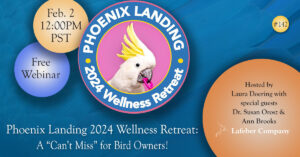 Join us for a FREE, live, interactive webinar hosted by Laura Doering, former editor of Bird Talk magazine and Birds USA magazine. Our special guests, Dr. Susan Orosz & Ann Brooks, will discuss the upcoming Phoenix Landing Wellness Retreat, which will take place April 6 – 7, 2024 in Asheville, NC. This unique meeting for pet bird owners offers lectures on many aspects of pet bird care. Ann will discuss the speakers and topics and what goes on at a meeting like this, as well as why it is important for bird owners and professionals to continue learning through different avenues. Dr. Susan Orosz will tell us how the idea for this special learning opportunity came about and how it became a place for learning from experts in the field as well as fellow bird owners. If you want to register to go to the retreat, please visit https://www.phoenixlanding.org/retreat.html
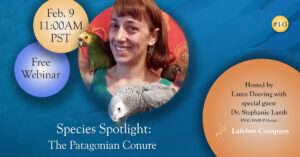 Join us for a FREE, live, interactive webinar hosted by Laura Doering, former editor of Bird Talk magazine and Birds USA magazine. Our special guest,
 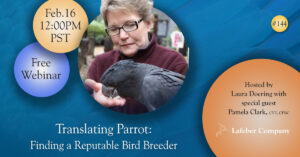 Join us for a FREE, live, interactive webinar hosted by Laura Doering, former editor of Bird Talk magazine and Birds USA magazine. Our special guest, Pamela Clark, is a well-known author, speaker, IAABC Certified Parrot Behavior Consultant & retired CVT. Pamela will present Episode 7 of Translating Parrot, a Lafeber Pet Birds Webinar Series focusing on Parrot Behavior & Wellness, based on Pamela’s years of experience with a wide range of parrot species. In this episode, Pamela will discuss how to choose a responsible bird breeder. Adopting from a shelter is a great choice for many people, but it’s also important to support ethical parrot breeders. Pamela will explain what makes a good bird breeder and the steps you can take to find one. As a former breeder herself, Pamela will give us an inside look at the world of parrot breeding.
 Join us for a FREE, live, interactive webinar hosted by Laura Doering, former editor of Bird Talk magazine and Birds USA magazine. Our special guest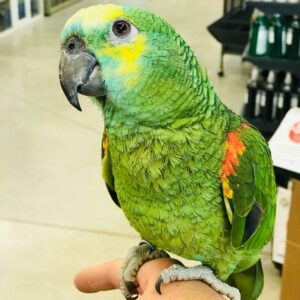
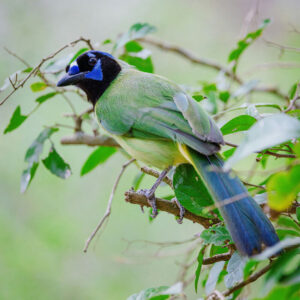
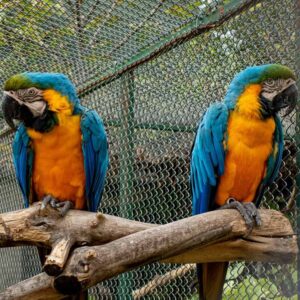
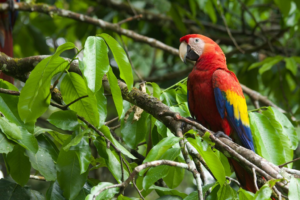

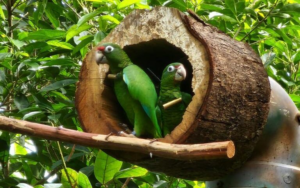
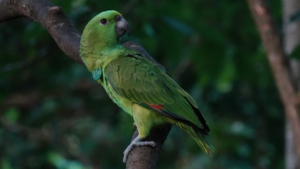
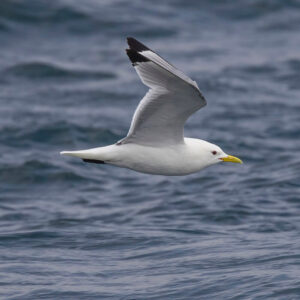

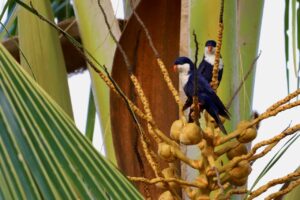
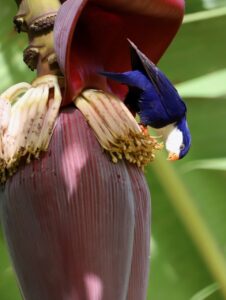
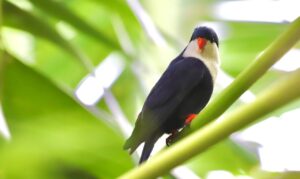
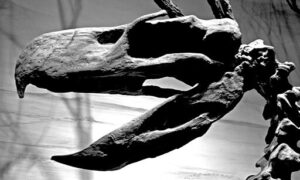
 Join us for a FREE, live, interactive webinar hosted by Laura Doering, former editor of Bird Talk magazine and Birds USA magazine. Our special guest, Pamela Clark, is a well-known author, speaker, IAABC Certified Parrot Behavior Consultant & retired CVT. Pamela will present Episode 5 of Translating Parrot, a Lafeber Pet Birds Webinar Series focusing on Parrot Behavior & Wellness, based on Pamela’s years of experience with a wide range of parrot species. In this episode, Pamela will discuss how behavior works and the many factors that impact it. How does a behavior problem evolve? Is it the environment? The diet? The routine? The owner, family, or visitors? Pamela’s cutting-edge approach will help you translate what your parrot reacts to and how to prevent a behavior problem or work with it from the start in this informative series!
 Join us for a FREE, live, interactive webinar hosted by Laura Doering, former editor of Bird Talk magazine and Birds USA magazine. Our special guest, Pamela Clark, is a well-known author, speaker, IAABC Certified Parrot Behavior Consultant & retired CVT. Pamela will present Episode 6 of Translating Parrot, a Lafeber Pet Birds Webinar Series focusing on Parrot Behavior & Wellness, based on Pamela’s years of experience with a wide range of parrot species. In this episode, Pamela will discuss this very popular pint-sized package that comes with a “big parrot” personality. These little jewels present as cute and cuddly but is this first impression misleading? Those who own one have used terms like The Joker Hurricane or warn you not to be lured in by the little savages. There’s some truth in all of it, because these are complicated parrots that need guidance, a thoughtfully arranged diet, the correct social climate, and a challenging enough environment if problems are to be prevented. Pamela’s cutting-edge approach will help you translate what it takes to be truly successful with these little birds in this informative series!
 Join us for a FREE, live, interactive webinar hosted by Laura Doering, former editor of Bird Talk magazine and Birds USA magazine. Our special guest Tom Tully, DVM, DABVP (Avian Practice), DECZM (Avian), will answer your questions about pet bird health, nutrition, & care. Dr. Tully, a decorated Professor & practicing Vet at Louisiana State University School of Veterinary Medicine, is an internationally known Veterinarian who has earned specialties in Avian medicine in the United States as well as in Europe. Having this type of access to a Veterinarian of his status is rare, but Dr. Tully believes in the educated bird owner as being the best bird steward. Dr. Tully answers each question in detail and shares his vast knowledge of birds, particularly parrots. Is your bird’s problem health-related or behavioral? Are you offering the right foods to your pet bird? Ask the Vet!
 Join us for a FREE, live, interactive webinar hosted by Laura Doering, former editor of Bird Talk magazine and Birds USA magazine. Our special guest, Lisa Bono, CPBC, owner and operator of The Platinum Parrot and a certified parrot behavior consultant specializing in African grey parrots, has once again secured many wonderful donations for us to give away to some lucky viewers! In this fun holiday episode, Lisa will discuss each prize, an assortment of toys and supplies that are safe for our feathered companions as well as some parrot-themed items for bird lovers, total value of over $3,000! We encourage you to shop with our generous donors when doing your holiday shopping for yourself or your own flock or for your bird friends or their flocks. This very special Holiday Webinar is generously sponsored by Lafeber Company,


 Parrots have a very different system (see Patterson & Pepperberg, 1994, 1998). Their sound source is not their larynx, but rather their syrinx—a set of muscles at the base of their trachea, essentially connecting their lungs and trachea. When they produce true (rather than whistled) human speech, the vibration of these muscles produce the F0. The sound then travels up the trachea, which is only somewhat flexible, and the change in the trachea as each vowel is produced results in its characteristic F1. The sound then goes up through the avian glottis, which has a slit called the avian larynx; these organs affect the sound somewhat for each vowel, but (as in humans) not nearly as much as do the tongue and beak.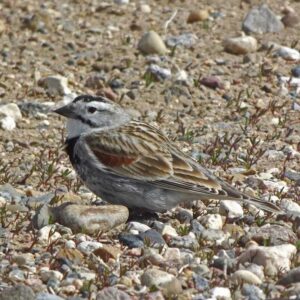
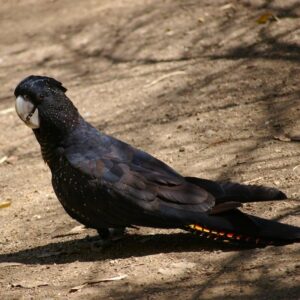
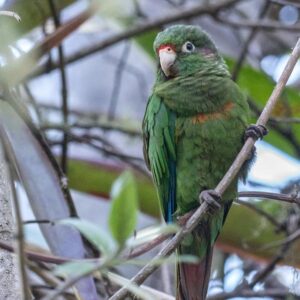
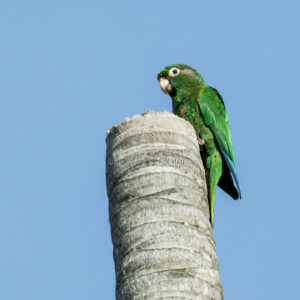

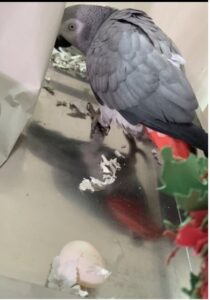
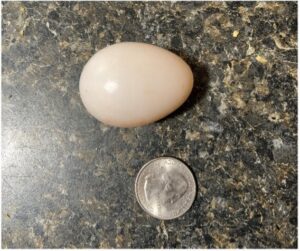
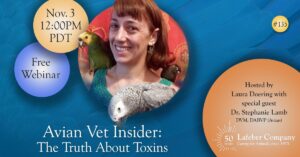 Join us for a FREE, live, interactive webinar hosted by Laura Doering, former editor of Bird Talk magazine and Birds USA magazine. Our special guest, Dr. Stephanie Lamb, DVM, DABVP (Avian Practice), will discuss what can be toxic for a pet bird. If you ever ask yourself “It’s safe for me, or my dog or cat, how could it possibly be toxic for my bird?” then you need to watch this webinar! Dr. Lamb will also talk about how normally safe medicines, vitamins, and supplements can turn deadly for your bird if given the wrong amount. Learn about common toxins, and why you should never medicate your bird or offer extra supplements without consulting with your Vet first, in this insider’s view of the daily happenings at your Avian Vet’s clinic.
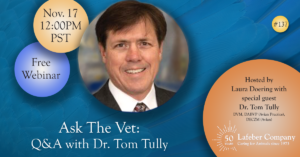 Join us for a FREE, live, interactive webinar hosted by Laura Doering, former editor of Bird Talk magazine and Birds USA magazine. Our special guest Tom Tully, DVM, DABVP (Avian Practice), DECZM (Avian), will answer your questions about pet bird health, nutrition, & care. Dr. Tully, a decorated Professor & practicing Vet at Louisiana State University School of Veterinary Medicine, is an internationally known Veterinarian who has earned specialties in Avian medicine in the United States as well as in Europe. Having this type of access to a Veterinarian of his status is rare, but Dr. Tully believes in the educated bird owner as being the best bird steward. Dr. Tully answers each question in detail and shares his vast knowledge of birds, particularly parrots. Is your bird’s problem health-related or behavioral? Are you offering the right foods to your pet bird? Ask the Vet!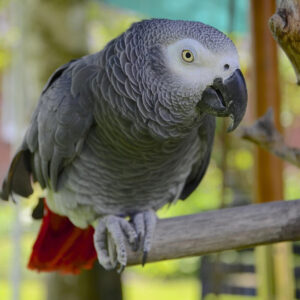
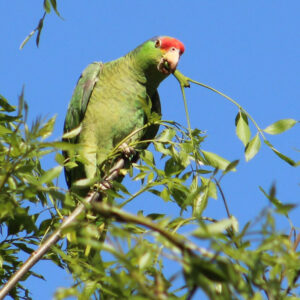
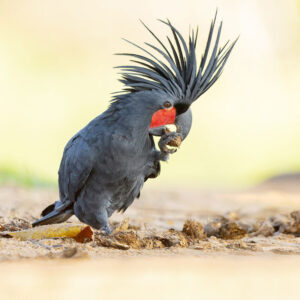
 Join us for a FREE, live, interactive webinar hosted by Laura Doering, former editor of Bird Talk magazine and Birds USA magazine. Our special guest, Dr. Stephanie Lamb, DVM, DABVP (Avian Practice) & President of the Association of Avian Veterinarians, will discuss what might define a bird as older or senior or geriatric. What should you as an owner watch for? Should you feed your senior or geriatric parrot a special diet? What are some common ailments that can affect senior parrots? Dr. Lamb will answer these questions & more in this insider’s view of the daily happenings at your Avian Vet’s clinic.
 Join us for a FREE, live, interactive webinar hosted by Laura Doering, former editor of Bird Talk magazine and Birds USA magazine. Our special guest, Lisa Bono, CPBC, owner and operator of The Platinum Parrot and a certified parrot behavior consultant specializing in African grey parrots, presents Episode 23 of The Grey Way, a Lafeber Pet Birds Webinar Series focusing on Congo & Timneh African grey parrots as pets. In this episode, Lisa will continue this month’s discussion of older parrots by focusing on older African Greys. Greys can have a very long lifespan, but depending on genetics and care, some can live much longer than others. Is age just a number when it comes to older Greys? When is your Grey considered an older bird? Are there age-related issues that tend to affect Greys? What can you do to make your older bird more comfortable? Lisa’s information will be mainly Grey-centric this month, but some of it can be applied to other parrot species.
 Join us for a FREE, live, interactive webinar hosted by Laura Doering, former editor of Bird Talk magazine and Birds USA magazine. Our special guest, Pamela Clark, is a well-known author, speaker, IAABC Certified Parrot Behavior Consultant & retired CVT. Pamela will present Episode 4 of Translating Parrot, a Lafeber Pet Birds Webinar Series focusing on Parrot Behavior & Wellness, based on Pamela’s years of experience with a wide range of parrot species. In this episode, Pamela will continue this month’s discussions of what might define an “older” parrot, as part of her talk on adopting an adult bird, particularly adding one to your existing flock. Are you ready to adopt but don’t know where to start? Do stories about adopted parrots with behavior issues have you concerned? Maybe you have heard that adopted parrots come with too much baggage? From age to background to species, Pamela will guide you through the process of choosing and adopting an “older” parrot. Pamela’s cutting-edge approach will help you translate what your newly adopted parrot will need in this informative series!
 Join us for a FREE, live, interactive webinar hosted by Laura Doering, former editor of Bird Talk magazine and Birds USA magazine. Our special guest Tom Tully, DVM, DABVP (Avian Practice), DECZM (Avian), will answer your questions about pet bird health, nutrition, & care. Dr. Tully, a decorated Professor & practicing Vet at Louisiana State University School of Veterinary Medicine, is an internationally known Veterinarian who has earned specialties in Avian medicine in the United States as well as in Europe. Having this type of access to a Veterinarian of his status is rare, but Dr. Tully believes in the educated bird owner as being the best bird steward. Dr. Tully answers each question in detail and shares his vast knowledge of birds, particularly parrots. Is your bird’s problem health-related or behavioral? Are you offering the right foods to your pet bird? Ask the Vet!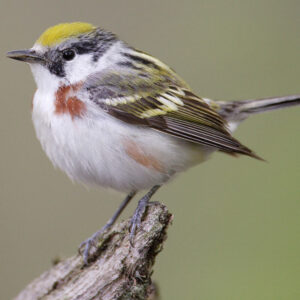
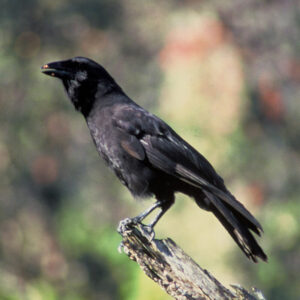
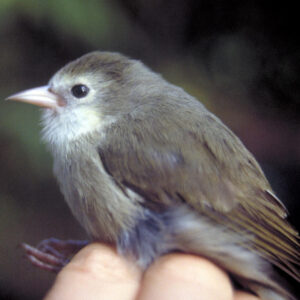
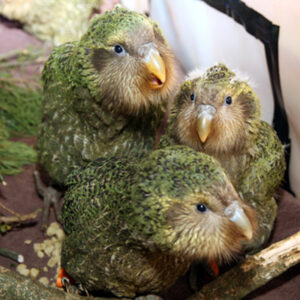
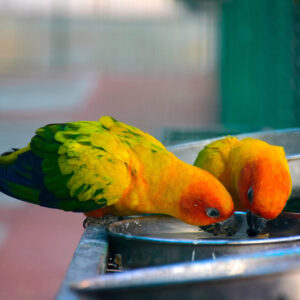
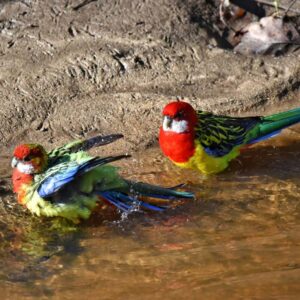
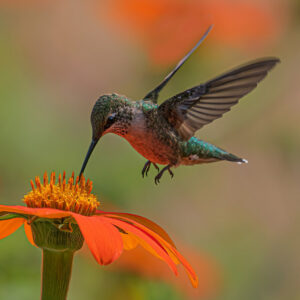
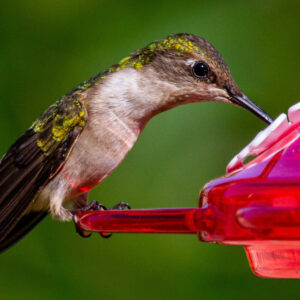
 Join us for a FREE, live, interactive webinar hosted by Laura Doering, former editor of Bird Talk magazine and Birds USA magazine. Our special guest, Dr. Stephanie Lamb, DVM, DABVP (Avian Practice), will discuss important topics presented at the recent ExoticsCon 2023, a Veterinary conference focusing on Exotics Medicine. Top exotics-medicine veterinarians from all over the world presented new findings and treatments, as well as ongoing research. This type of conference is important for specialty vets to maintain their diplomat status and to continue to be on the cutting edge of exotics medicine. Dr. Lamb will walk us through her experiences at the conference as an exotics Vet, as well as the incoming President of the Association of Avian Veterinarians in this insider’s view of the professional life of an Avian Veterinarian.
 Join us for a FREE, live, interactive webinar hosted by Laura Doering, former editor of Bird Talk magazine and Birds USA magazine. Our special guest, Lisa Bono, CPBC, owner and operator of The Platinum Parrot and a certified parrot behavior consultant specializing in African grey parrots, presents Episode 24 of The Grey Way, a Lafeber Pet Birds Webinar Series focusing on Congo & Timneh African grey parrots as pets. In this episode, Lisa will field questions from the viewers, so if you have an African grey-related question on your mind, this is the place to be! If you are a newer viewer, check out some of Lisa’s past episodes to see if you have any questions about past topics. Our playlist of The Grey Way is available on our
  Join us for a FREE, live, interactive webinar hosted by Laura Doering, former editor of Bird Talk magazine and Birds USA magazine. Our special guest Tom Tully, DVM, DABVP (Avian Practice), DECZM (Avian), will answer your questions about pet bird health, nutrition, & care. Dr. Tully, a decorated Professor & practicing Vet at Louisiana State University School of Veterinary Medicine, is an internationally known Veterinarian who has earned specialties in Avian medicine in the United States as well as in Europe. Having this type of access to a Veterinarian of his status is rare, but Dr. Tully believes in the educated bird owner as being the best bird steward. Dr. Tully answers each question in detail and shares his vast knowledge of birds, particularly parrots. Is your bird’s problem health-related or behavioral? Are you offering the right foods to your pet bird? Ask the Vet!


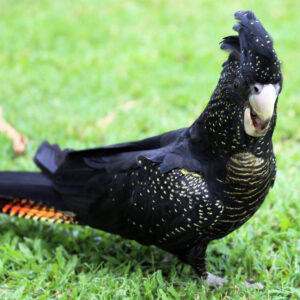
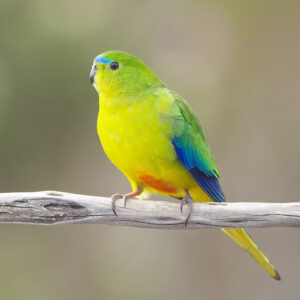
 Join us for a FREE, live, interactive webinar hosted by Laura Doering, former editor of Bird Talk magazine and Birds USA magazine. Our special guest, Pamela Clark, is a well-known author, speaker, IAABC CPBC & retired CVT. Pamela will present Episode 2 of Translating Parrot, a Lafeber Pet Birds Webinar Series focusing on Parrot Behavior & Wellness, based on Pamela’s years of experience with a wide range of parrot species. In this episode, Pamela will discuss the “inconvenient truth about Cockatoos” – why cockatoos can be such challenging companions. Cockatoos are cuddly, needy, dependent – truth or myth? Cockatoos are destined to be nuisance screamers and feather pluckers – truth or myth? Pamela will answer these questions & explain exactly why Cockatoos can be difficult to maintain as a companion parrot. She will discuss how to do so in a way that increases the Cockatoo’s quality of life and also ensures a peaceful household. Pamela’s advice will help you translate what your parrot wants & needs in this informative series!
 Join us for a FREE, live, interactive webinar hosted by Laura Doering, former editor of Bird Talk magazine and Birds USA magazine. Our special guest Tom Tully, DVM, DABVP (Avian Practice), DECZM (Avian), will answer your questions about pet bird health, nutrition, & care. Dr. Tully, a decorated Professor & practicing Vet at Louisiana State University School of Veterinary Medicine, is an internationally known Veterinarian who has earned specialties in Avian medicine in the United States as well as in Europe. Having this type of access to a Veterinarian of his status is rare, but Dr. Tully believes in the educated bird owner as being the best bird steward. Dr. Tully answers each question in detail and shares his vast knowledge of birds, particularly parrots. Is your bird’s problem health-related or behavioral? Are you offering the right foods to your pet bird? Ask the Vet!
 Join us for a FREE, live, interactive webinar hosted by Laura Doering, former editor of Bird Talk magazine and Birds USA magazine. Our special guest, Lisa Bono, CPBC, owner and operator of The Platinum Parrot and a certified parrot behavior consultant specializing in African grey parrots, presents Episode 21 of The Grey Way, a Lafeber Pet Birds Webinar Series focusing on Congo & Timneh African grey parrots as pets. In this episode, Lisa will discuss pet bird advice you might find on the Internet.
 Join us for a FREE, live, interactive webinar hosted by Laura Doering, former editor of Bird Talk magazine and Birds USA magazine. Our special guest, Lisa Bono, CPBC, owner and operator of The Platinum Parrot and a certified parrot behavior consultant specializing in African grey parrots, presents Episode 22 of The Grey Way, a Lafeber Pet Birds Webinar Series focusing on Congo & Timneh African grey parrots as pets. In this episode, Lisa will continue to discuss pet bird advice you might find on the Internet. The earliest forms of social media were the first to spawn the “self-proclaimed” Internet Expert. While this new form of communication helped bird owners and breeders share information, it also brought out those who gave advice based solely on their experiences, as proven facts.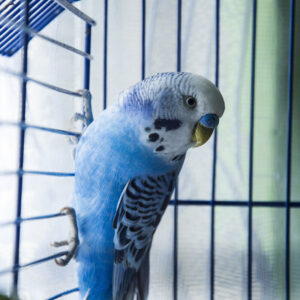



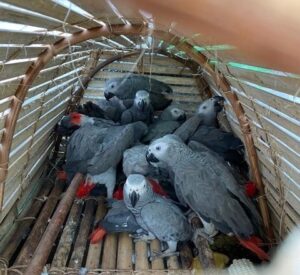
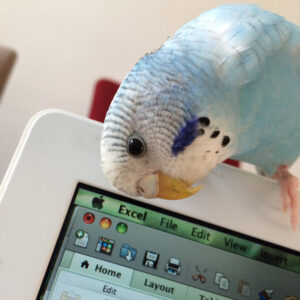
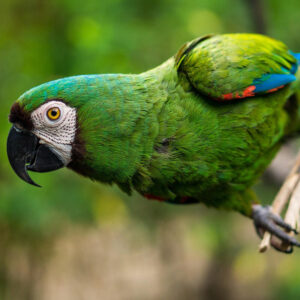
 Join us for a FREE, live, interactive webinar hosted by Laura Doering, former editor of Bird Talk magazine and Birds USA magazine. Our special guest, Dr. Stephanie Lamb, DVM, DABVP (Avian Practice), will discuss what behavior modification and trick training is and how they can offer enrichment for pet birds, as well as build trust between you and your parrot. Dr. Lamb will explain how teaching your bird simple behaviors or tricks can encourage exercise or serve as a distraction from unwanted & hormonal behavior. Find out the connection between trick training and trust in this insider’s view of a parrot’s life with an Avian Vet.
 Join us for a FREE, live, interactive webinar hosted by Laura Doering, former editor of Bird Talk magazine and Birds USA magazine. Our special guest Tom Tully, DVM, DABVP (Avian Practice), DECZM (Avian), will answer your questions about pet bird health, nutrition, & care. Dr. Tully, a decorated Professor & practicing Vet at Louisiana State University School of Veterinary Medicine, is an internationally known Veterinarian who has earned specialties in Avian medicine in the United States as well as in Europe. Having this type of access to a Veterinarian of his status is rare, but Dr. Tully believes in the educated bird owner as being the best bird steward. Dr. Tully answers each question in detail and shares his vast knowledge of birds, particularly parrots. Is your bird’s problem health-related or behavioral? Are you offering the right foods to your pet bird? Ask the Vet!
 Join us for a FREE, live, interactive webinar hosted by Laura Doering, former editor of Bird Talk magazine and Birds USA magazine. Our special guest, Pamela Clark, is a well-known author, speaker, IAABC Certified Parrot Behavior Consultant & retired CVT. Pamela will present the first episode of a brand new series – Translating Parrot, a Lafeber Pet Birds Webinar Series focusing on Parrot Behavior & Wellness, based on Pamela’s years of experience with a wide range of parrot species. Pamela will discuss the best strategies for traveling with parrots and explain that this is not only possible but can be a valuable experience for our companion parrots. Even fearful parrots can learn through positive reinforcement to first enter a carrier on cue and then ride in the car in comfort or travel in a plane. Have a summer trip planned and aren’t sure about bringing your parrot? Pamela’s advice will help you translate what your parrot wants in this informative new series!
_in_flight.jpg)


.jpg)


