




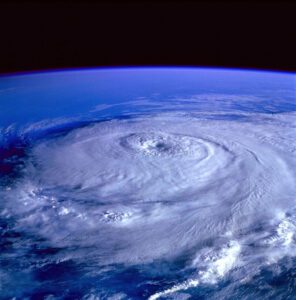
When you observe birds in their natural environments, their adaptability to changing conditions is truly remarkable. Birds rely heavily on natural forces to make their lives easier, one of the most important being wind. Wind flow can create favorable conditions that make flying less energy-intensive. Birds use wind to ease their own energy consumption with a lot of flexibility. However, when Hurricane Melissa formed recently, concerns arose for the birds, since hurricane-force winds are far too powerful for them to navigate.
Once the devastating hurricane achieved Category 5 designation, it was a storm to be feared. These hurricanes have a calm center called the eye of the storm. Birds that were flying when the hurricane began to form became helpless, drawn into the storm by powerful inflow winds. These inflow winds carry warm, moist air that helps a hurricane form. The air moves inward at low levels and then rises in what is called the eyewall. By that point, it is already creating the intense, counterclockwise spiraling of air that makes hurricanes so dangerous.
Caught In The Eye Of The Storm
Birds are often pulled into hurricanes and may reach the calm eye at the center. However, once inside, they cannot escape because of the violent, un-navigable wind wall surrounding them. Trapped within the storm, they are forced to travel with it as it moves. The danger is that birds eventually need to land and rest, and they cannot do so. When a hurricane is moving over the ocean, there’s nowhere safe to go. The sad result is that many birds perish under these conditions.
This happened during the recent disruptive and ultra-violent Hurricane Melissa. Many migratory birds were drawn into this hurricane and could find no way out. NOAA (National Oceanic and Atmospheric Administration) maintains a National Hurricane Center division. “Hurricane Hunters” use specially equipped aircraft to fly into storms and collect vital data for research. In their flight into Hurricane Melissa, they discovered thousands of birds within the 10-mile-wide calm center. While some of these birds manage to survive the exhausting effort of staying aloft as the storm moves, they often suffer from severe disorientation and fatigue once the hurricane weakens enough for them to escape.
The thousands of birds observed by NOAA’s Hurricane Hunters will likely see their numbers greatly reduced due to the extreme exhaustion many experience. Even for the Hurricane Hunters themselves, this storm posed a major challenge, as the intense turbulence forced their aircraft to end their exploration earlier than planned.
We can only hope that we eventually find ways to help prevent migratory birds from being drawn into dangerous hurricanes as they form.

I find this so incredibly sad. I do wish they could find a way to help these migratory birds but during a Cat4-5 Hurricane, everyone is concerned with the safety of the humans on the ground. And a big shout out to the Hurricane Hunters for the incredibly dangerous job they to to report hurricane conditions,