Is it OK to give young budgies “Senior Bird Nutri-berries”
Hello, I have several budgies, two java finches and a lovebird, and I live in Japan.
Recently, a shop in Japan began selling “senior bird nutri-berries”…





Hello, I have several budgies, two java finches and a lovebird, and I live in Japan.
Recently, a shop in Japan began selling “senior bird nutri-berries”…
Hello! So I actually just got my first Quaker parrot a little over a month ago. And we have bonded very quickly! He’s not entirely comfortable with being pet yet, but he’s very loving and chatty and whenever I leave the room he’ll call out for me to make sure I’m okay…
I’m going to be getting a pair of love birds soon and wanted to now what would be a good mix diet for them use your feeds . I’m looking for a main , snack . Thinking of using cakes but not sure witch one best…
With its wild population numbers critically low, the orange-bellied parrot, one of Australia’s rarest birds, stands on the brink of extinction. Fortunately, the Healsville Sanctuary, which spans over 74 acres of native Australian landscape, had one of its most successful breeding seasons. See what the sanctuary is doing to save this little parrot.
Recently, a few people with a passion for finding the rare Night Parrot of Australia have documented proof of its existence, ending rumors of its extinction.
Not too many parrots have royal titles, which is just one way the Princess of Wales Parakeet (Polyteles alexandrae) stands out. This medium-sized, pastel-colored parrot with a long tail is native to Australia and is named after a real princess. Find out what this positively pretty bird is all about.
The future of 3D printing is quite exciting — and it can even help our feathered friends. In fact, 3D printing might just be a lifesaver for this friendly toucan!
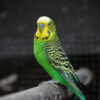
Bigger birds aren’t the only ones talking. In fact, some of the smaller parrots are capable of mimicking human speech and can even amass impressive vocabularies. Here’s a look at some of the tiny talkers of the pet bird world.
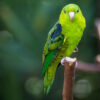
Perhaps it’s time to make room on the perch for another small parrot that can also be a great companion — the lineolated parakeet, or simply, the linnie. Never heard of a linnie? Read on!
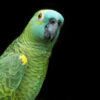
Parrots can be categorized according to Old World psittacines and New World psittacines. Are your parrots “Team Old World” or “Team New World”?
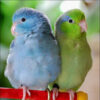
At a glance, parrotlets and lovebirds look a lot alike. What do these short-tailed, compact birds from entirely different continents have in common, and what makes them different?
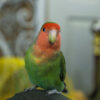
No other companion pet has a name quite as endearing as a lovebird. The lovebird’s genus, Agapornis, is the words “love” and “bird” joined together — agape is Greek for “love” and ornis is Greek for “bird.”
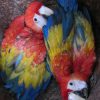
if we care for birds either near or far, we help birds everywhere, and we help our human kind as well.

Among companion parrots, vasa parrots are the most peculiar in looks, with their truncated bodies and long necks. Vasas are active birds that need spacious accommodations as well as playtime with their people and toys to keep their inquisitive minds engaged.
Photo by 4028mdk09, CC BY-SA 3.0, via Wikimedia Commons
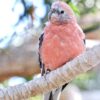
The Bourke’s parakeet (Neophema Bourkii) is a gem among the members of the popular Neophema family, a group of colorful grasskeets that originate in Australia.
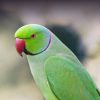
Psittacula are primarily green, with long tail feathers, and a ring of dark colored feathering around the neck. Psittacula are referred to as parakeets, but they are much larger than what many people think of with the word “parakeet.”
Photo by Dick Daniels of World Birds, CC BY-SA 3.0, via Wikimedia Commons
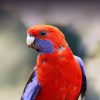
The crimson rosella’s colors are eye-catching, and its whistle sounds are equally enchanting.
Photo by Fir0002, CC BY-SA 3.0, via Wikimedia Commons
With their vibrant colors, rosellas are hard to overlook. A rosella will charm you with its whistles, too!
Photo by Fir0002, CC BY-SA 3.0, via Wikimedia Commons
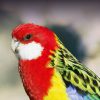
If you want a gorgeous bird for an aviary or habitat setting, or have the space in your home to give this bird the appropriate room, then the golden-mantled rosella might be the bird for you.
Photo by JJ Harrison of JJ Harrison Wildlife Photography, CC BY-SA 3.0, via Wikimedia Commons
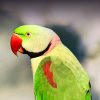
Loyal, playful and talkative are words used to describe the Alexandrine parakeet, which can also learn tricks and is inclined to show off its acrobat skills.

Eclectus parrots look like they are straight out of a Dr. Seuss book! Their feathers have a fur-like appearance and their colors are bright red for females, and bright green with a ‘candy corn’ colored beak for males. Aside from their mesmerizing appearance, these parrots can also be great companions.
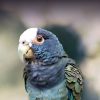
Don’t overlook the white-capped Pionus parrot as an companion. While it might not demand your attention as other parrots do, a well-socialized white-capped Pionus can certainly be an outgoing and social family pet.
Photo by nakashi, CC BY-SA 2.0, via Wikimedia Commons
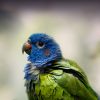
Blue-headed Pionus can be laid-back, relatively quiet parrots, which makes them ideal for those who live in apartments.
Photo by Paul B from London, London, CC BY 2.0, via Wikimedia Commons
The Pionus parrot is the best kept secret of the bird world. It’s got all of the good qualities of the popular companion species, with few of the negative aspects that often occur with parrots.
Photo by Paul B from London, London, CC BY 2.0, via Wikimedia Commons
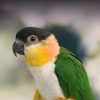
Caiques have been called clowns of the bird world for good reason — the clown is a truly appropriate metaphor for this high-energy, medium-sized mischief maker. You haven’t seen playful until you’ve seen a caique in action.
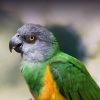
With its yellow irises and blocky head, the Senegal parrot can have an intense look. But don’t let its gaze fool you into thinking this bird is always uptight. Senegal parrots can be outgoing and playful and are the most popular of the Poicephalus species.
Photo by Arjan Haverkamp, CC BY 2.0, via Wikimedia Commons
Poicephalus might not want to cuddle, but they can be playful and outgoing, and many certainly love to be petted.
Photo by Arjan Haverkamp, CC BY 2.0, via Wikimedia Commons
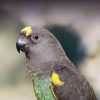
The Meyer’s parrot might prefer to watch things from afar instead of being the center of attention. This bird is happy sitting quietly on a perch, destroying a toy. Meyer’s can be social, too, and tend to bond with everyone in the family.
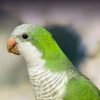
It’s a pity that quaker parakeets are outlawed in some cities and states because this social parrot’s talking ability and intelligence rivals the much more expensive African grey and Amazon parrot.
Photo by Juan Emilio from Las Palmas de Gran Canaria, España, CC BY-SA 2.0, via Wikimedia Commons
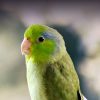
Pacific parrotlets are very spirited, and can become aggressive if left for too long without handling. Even though it is tiny, do not underestimate the strong beak – its bite is much stronger than a budgie. These pint-sized parrots don’t seem to realize that they are small because they have a large bird personality — outgoing, curious and, at times, downright feisty.
Photo by Susan C. Griffin, CC BY-SA 3.0, via Wikimedia Commons
The parrotlet parrot might be small in size but it is big in personality. These pint-size parrots are bold and assertive, and they can learn to talk, too.
Photo by Susan C. Griffin, CC BY-SA 3.0, via Wikimedia Commons
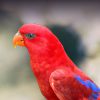
The red lory’s playful personality and beautiful appearance make this high-energy parrot a favorite among bird fanciers and the more advanced pet bird owners alike.
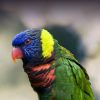
The lory personality is intense, in general. This is not a shy species. The rainbow lory is bubbly and enthusiastic, the “coach” of the bird world, encouraging play whenever its favorite human is around.
The rainbow lory is one of the most stunning and beautiful companion birds available today. Lories, in general, need more care and attention than your more common companion birds due to their highly specific dietary and housing requirements. However, they are well worth the extra time and expense.
The Indian ring-necked parakeet is not a shy bird, and does best with an owner who appreciates an outgoing companion that is not afraid to demand what it wants! Indian ring-necks can also be quite talkative.
Photo by Dick Daniels of World Birds, CC BY-SA 3.0, via Wikimedia Commons
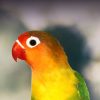
The Fischer’s lovebird has plenty of energy and can be a loyal friend if interacted with regularly. While energetic, Fischer’s tend to be gentler than other lovebird species, especially when in an aviary environment.
Photo by xpixel/Shutterstock
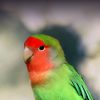
The popular peach-faced lovebird exudes a big personality in a small body. Peach faces love their playtime and positive interaction with their people. A peach-faced lovebird has a “busy beak” and might be inclined to tear up strips of paper and weave them in the cage bars.
Photo by Peter Békési, CC BY 2.0, via Wikimedia Commons
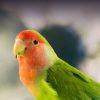
A lovebird might be one of the smaller parrot species available as a companion pet, but this bird is inquisitive and seemingly always on the go. As their name suggests, lovebirds are known for the loving, attentive bond they tend to form with their mates.
Almost all parrots are non-migratory birds, that is, they do not fly to a different climate during specific times of the year. There are two parrot species, however, that do migrate in the truest sense of the word — the swift parrot (Lathamus discolor) and the orange-bellied parrot (Neophema chrysogaster).

Can you imagine a parrot perched in the White House? It’s probably happened at some point during our country’s history; after all, some of our past presidents had parrot companions during their presidencies. Here is a list of presidents who really did have parrots during their White House days.