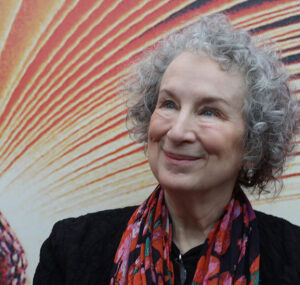
From time to time, we’re reminded that famous people, the ones we know and admire for all sorts of reasons, can be just like the rest of us. They have favorite colors and fashions, and they enjoy activities that help them relax. And yes, some of them love birds…just like us. They’re ordinary people but with a higher profile. One such person is the well-known novelist Margaret Atwood, best known for her novel The Handmaid’s Tale, which was also adapted into an award-winning television series that can be viewed on Hulu.
Margaret Atwood’s love of birds is nothing new. It’s a lifelong passion that dates back to her childhood. Her father, an entomologist (a scientist who studies insects), was also a dedicated conservationist. His appreciation for the natural world, especially birds, helped foster Margaret’s own love of birds. That passion became such a meaningful part of her life that she shared it with her late partner, novelist Graeme Gibson who wrote Communion and The Bedside Book of Birds. At one point Atwood and Gibson shared their home with a parrot named Harold Wilson that Gibson rescued in Mexico while writing his novel Five Legs. (Check out this interview with Atwood as she shares stories about life with their parrot, Harold Wilson.)
The Atwood-Gibson Bird Centre: A Dream Takes Flight
The Pelee Island Bird Observatory (PIBO) works to track North American migratory bird species and monitor changes in their populations over time. On September 12, 2026, the Atwood-Gibson Bird Centre opened its doors, bringing a shared conservation dream to life. Beyond her celebrated writing career, Margaret Atwood also publishes on Substack, a platform for independent writers. Through her Substack subscriptions and other contributions, Atwood donated C$1 million (approximately US$715,000 or £540,000) to help make the new center a reality. Her donation will help PIBO continue its important work monitoring around 200 bird species and deepening our understanding of these remarkable travelers.
Each year, the center hires two assistant field biologists to help band birds, which allows researchers to track their movements and learn more about their lives. PIBO also leads several important research and conservation projects that help us better understand and protect birds in their natural habitats. Atwood’s contribution reflects how a lifelong interest in birds can help advance conservation efforts.