




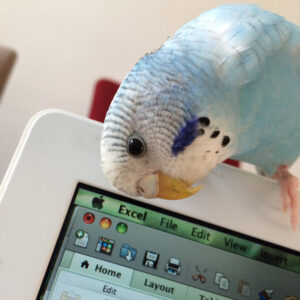
A recent study further explores tablet use in companion birds by creating a unique game that encouraged balloon-popping (displayed as a large single red dot) in a virtual setting. The parrot, intrigued by the appearing red dots on the screen, put their eyes close to the display, and used their tongue and beaks to “pop the dot.” The simplistic game was developed to test how parrots might accept interaction with technology as well as their tolerance for the same. The hope was to determine if that same technology could be further improved for the birds’ usage and benefit. If so, could better programming help birds improve their learning processes even further, much as human counterparts have over the years?
A Look At Screen Time
A presentation will be made to a large group known as the Association of Computing Machinery (ACM) in May of 2024. The peer-reviewed findings will give more insight to the overall animal studies that look to see how technologies can be beneficial to the lives of birds, dogs, and orcas.
The study involved caregivers for the birds, who assisted with cognitive stimulation for the birds by providing a tablet for 30 minutes a day. For three months, the caretakers monitored the birds’ activities while they were engaged with the tablet. The design of the study was to improve the bond that a bird has with their caregivers, and not whether they would simply engage with the games on their own.
During the study, it was discovered that some birds would be wholly devoted to the game, while others worked with their caregivers in a unified manner. One hoped-for benefit of tablet use and game playing is if it could potentially help distract some birds from feather-plucking or other self-destructive behaviors.
The study was headed by INTERACT Animal Lab investigator, Rebecca Kleinberger, who used 17 birds during the three months of activity. Two birds showed no interest in the tablet and so were removed from the study. One other bird showed bouts of anxiety during the study and was also relieved from activities. The remaining parrots were studied within homes by caregivers who followed a schedule of usage and provided praises of encouragement. The Northeastern University abstract from the study can be read here.
How can we get some of these games for our feathered friends
My 11 month male cockatiel loves to watch
all the cockatiels singing on YouTube & is trying
to learn a new song & my 8 year old male White
Faced cockatiel gets all excited to see a male green & yellow parakeet friend on YouTube that
looks like the one that died a few years ago & he will touch the screen with his beak & his eyes
will get excited & he thinks that his bird friend is
alive again
I showed a video of a rescued crow stacking cups by size to my CAG, and he was fascinated. He kept trying to bite my phone. It was almost like he was trying to figure out how the crow could be inside of my phone. As if trying to bite the phone open would release the crow!
I often give him children’s toys to play with and he loves the flashing lights, but most of all he likes to turn the toy over to figure out how to unscrew the back, or the door where the battery is stored. He is more interested in how the toy is put together, in order to take it apart.
Its fascinating to watch him, although I am a little concerned that he might swallow the tiny screws that hold the toy in place, or touch the battery with his tongue. I usually stop him the minute he starts beaking the toy. That’s the only drawback to letting him explore certain items.
Technology is no substitute for real interaction, dealing with stress or anxiety, and has shown to be detrimental to humans and other animals. Look at what it has done to our children. What will happen if power goes out or they don’t get there tech dope. Interesting study but the fruits of tech are not all they are cracked up to be. Our birds “just say no” to “drugs”. Thanks for the article. You always have informative and interesting articles and videos.