




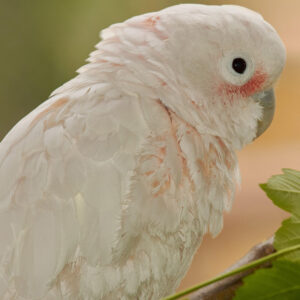
Lateralization has to do with using one side of the body (and/or brain) preferentially to do various activities. Evolutionarily, the advantage for the body would be to do different things simultaneously. For the brain, the rationale is that if the different sides were not identical then more “computing” power could be crammed into the same-sized skull.
Humans, although we appear completely symmetrical — at least with respect to the right and left sides of our bodies — are lateralized, in both body and brain. For some activities, such as speech, we clearly do not notice that the left side of our brain is doing almost all the work. We probably also don’t notice that almost all of us are right-eye dominant (until we are getting our eyes checked, for example…or look at a distant object that is partially obscured by a near object…focus on the nearer object, then cover one eye at a time…you’ll notice a difference). And most humans are right-footed — if asked to take a step, we start with our right foot.
When it comes to handedness, however, everyone is aware of favoring one hand for many activities (writing, painting, etc.)…and most humans are right-handed. Handedness in other species is trickier to establish. A study looking at a large number of different species found 51.26% showing evidence for population-level asymmetries, 16.81% showing evidence for individual-level asymmetries and 31.93% showing no evidence for asymmetry (Strӧckens et al., 2012).
Left Foot Or Right Foot?

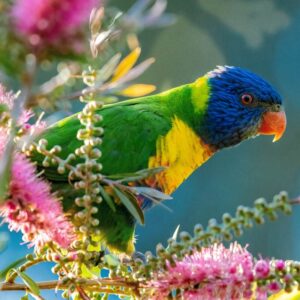
Birds are particularly, tricky. Although much research has demonstrated left-sided brain laterality for vocal behavior in birds that learn their vocalizations (Chirathivat et al., 2015), it is not clear how that relates to footedness. Most studies investigated tasks such as which foot was used to hold food; for parrots, most cockatoos were left-footed, most other parrots were right-footed, and lorikeets didn’t seem to have a preference (Strӧckens et al., 2012).
However, MacNeilage and colleagues (1987) hypothesize that the limb that is supporting the body is actually the dominant one, as it has to be both strong and fine-tuned for balance. Another possibility is that an individual chooses a limb with respect to a particular task that needs to be completed (Rogers, 2007, 2009). Not enough data yet exists to prefer one hypothesis over another.
In any case, all such studies need a fairly large sample size to differentiate individual preferences from species-wide preferences, and obviously my lab does not qualify. However, I was given the opportunity to collaborate with my Austrian colleagues, who have a large aviary of Goffin’s cockatoos (Cacatua goffiniana) — we could test each bird on a series of tasks that varied in postural, spatial, and cognitive demands (Colbourne et al., 2024).
The procedure was as follows. We first tested each bird as to what foot they used to hold food; three birds were right-footed and 12 were left-footed, but not all habituated to the experimental situation, so only nine birds were tested (seven left-footed and two right-footed). We then used three tasks, each with simple and difficult versions (see Colbourne et al., 2024 for the details). In each case, the simple task could be achieved by using a foot to grasp the reward fairly quickly, whereas the difficult task required a series of actions to release the reward.
Switching Foots
The results were fascinating. As expected, the difficult trials took a lot longer to solve. The main result was that the birds tended to use their food-handling dominant foot for only two of the three simple trials and only one of the difficult trials; however, they tended to do a lot of foot-switching during difficult trials. Some birds mostly used their nonfood-handling foot on the difficult trials whereas others mostly used their food-handling foot. In some cases, they seemed simply to use the most convenient foot.
So our data did not strongly support any of the common hypotheses — that the food-holding foot would be dominant for all other tasks, that the foot used for balance would be dominant (e.g., why would birds switch feet multiple times during a task if that were the case?), or that a particular task would be more likely to require use of either the food-holding foot or the foot used for balance/strength (e.g., it varied across individuals).
What our study could not address is anything about how the birds’ physical behavior correlates with their brain lateralization. Although Kaplan and Rogers (2021) found a correlation between the extent of left-footedness for feeding and a larger area that corresponds to the human cerebral cortex (implying more high-level processing), we did not find that the more lateralized birds were more successful; however, almost all birds were always successful, making any such measurements moot.
The real take-home message simply seems to be that lateralization is not always easily determined by use of simple tasks, and that far more research is needed to understand the phenomenon. By the way: It might be fun to keep note of how your own bird solves foraging puzzles — does it primarily use its beak, or does it involve its feet — and does it always use the same foot, and is it the food it uses to hold food?
References
- Chirathivat, N., Raja, & Gobes, S. (2015). Hemispheric dominance underlying the neural substrate for learned
vocalizations develops with experience. Sci Rep 5, 11359
- Colbourne, J.A.D., Hanon, L., Pepperberg, I.M., & Auersperg, A.M.I. (2024). Putting the best foot forward: Limb
lateralization in the Goffin’s cockatoo (Cacatua goffiniana). J. Comp. Psychol. Advance online publication. - Kaplan, G., & Rogers, L.J. (2021). Brain size associated with foot preferences in Australian parrots. Symmetry,
13(5), Article 867.
- MacNeilage, P.F., Studdert-Kennedy, M.G., & Lindblom, B. (1987). Primate handedness reconsidered. Behav. &
Brain Sci., 10(2), 247–263.
- Rogers, L.J. (2007). Lateralization in its many forms, and its evolution and development. Special Topics in
Primatology, 5, 22–56.
- Rogers, L.J. (2009). Hand and paw preferences in relation to the lateralized brain. Phil. Trans. Royal Soc. B: Bio.
Sci., 364(1519), 943–954.
- Ströckens, F., Güntürkün, O., & Ocklenburg, S. (2012). Limb preferences in non-human vertebrates. Laterality, 18(5), 536–575.
Chris Davis—beloved member of the Lafeber family, pioneering parrot behaviorist, and longtime friend of Dr. Pepperberg—recently passed. Instead of flowers, Chris requested donations to her favorite charity, The Alex Foundation. Between now and January, any donations will be matched to double the gift amount. You can access the donation link on the support page.
 Join us for a FREE, live, interactive webinar hosted by Laura Doering, former editor of Bird Talk magazine and Birds USA magazine. Our special guest, Stephanie Lamb, DVM, DABVP (Avian Practice), will continue the fun & informative series, Species Spotlight! The California Condor is a highly endangered avian species in North America and caring for them has been fraught with challenges throughout the years. However, the year 2023 brought the new challenge of Highly Pathogenic Avian Influenza (HPAI) to the Northern Arizona flock. Dr. Lamb will take us through the difficulties of this time but also tell us an uplifting story of one special bird.
 Join us for a FREE, live, interactive webinar hosted by Laura Doering, former editor of Bird Talk magazine and Birds USA magazine. Our special guest, Pamela Clark, is a well-known author, speaker, IAABC Certified Parrot Behavior Consultant & retired CVT. Pamela will present Episode 11 of Translating Parrot, a Lafeber Pet Birds Webinar Series focusing on Parrot Behavior & Wellness, based on Pamela’s years of experience with a wide range of parrot species. In this episode, Pamela will discuss some of the most common complaints from pet bird owners. Why does my bird hate me? Why is my bird so bad? Why does my bird bite me or scream for no reason? Are these behaviors bad or just undesirable? Pamela’s cutting-edge approach will help you translate why your pet bird does certain things that drive you crazy, and how you can resolve the “problem behavior” in this informative series!
 Join us for a FREE, live, interactive webinar hosted by Laura Doering, former editor of Bird Talk magazine and Birds USA magazine. Our special guest, Lisa Bono, CPBC, will share her first-hand experiences with a devastating hurricane. When Lisa presented her webinar in September on preparing for Winter, she included information on preparing for a disaster. She had no way of knowing that days later, she would have to put all of her plans and expertise to the test during Hurricane Helene. Lisa will discuss what she did to prepare, what she did during the hurricane to protect her flock, and the days following the disaster, without power, with her family & flock to care for. Lisa will share her thoughts, pictures and videos of the disaster & aftermath in this compelling and important webinar.
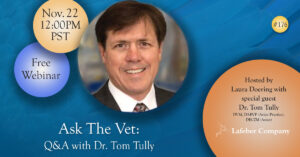 Join us for a FREE, live, interactive webinar hosted by Laura Doering, former editor of Bird Talk magazine and Birds USA magazine. Our special guest Tom Tully, DVM, DABVP (Avian Practice), DECZM (Avian), will answer your questions about pet bird health, nutrition, & care. Dr. Tully, a decorated Professor & practicing Vet at Louisiana State University School of Veterinary Medicine, is an internationally known Veterinarian who has earned specialties in Avian medicine in the United States and Europe. Having this type of access to a Veterinarian of his status is rare, but Dr. Tully believes in the educated bird owner as being the best bird steward. Dr. Tully answers each question in detail and shares his vast knowledge of birds, particularly parrots. Is your bird’s problem health-related or behavioral? Are you offering the right foods to your pet bird? Ask the Vet!



 Join us for a FREE, live, interactive webinar hosted by Laura Doering, former editor of Bird Talk magazine and Birds USA magazine. Our special guest, Pamela Clark, is a well-known author, speaker, IAABC Certified Parrot Behavior Consultant & retired CVT. Pamela will present Episode 10 of Translating Parrot, a Lafeber Pet Birds Webinar Series focusing on Parrot Behavior & Wellness, based on Pamela’s years of experience with a wide range of parrot species. In this episode, Pamela will discuss some of the most common complaints from pet bird owners. Why does my bird hate me? Why is my bird so bad? Why does my bird bite me or scream for no reason? Are these behaviors bad or just undesirable? Pamela’s cutting-edge approach will help you translate why your pet bird does certain things that drive you crazy, and how you can resolve the “problem behavior” in this informative series!
 Join us for a FREE, live, interactive webinar hosted by Laura Doering, former editor of Bird Talk magazine and Birds USA magazine. Our special guest, Stephanie Lamb, DVM, DABVP (Avian Practice), will discuss her recent experiences at the American Federation of Aviculture (AFA) conference as a Speaker & attendee. Educational conferences are so important to attend when you have the opportunity. You will learn from the speakers as well as share information with other bird owners. But there is so much more to attending a conference. Dr. Lamb will share her perspective from a Vet’s point of view along with input from our host, Laura, who was there for the entire conference.
 Join us for a FREE, live, interactive webinar hosted by Laura Doering, former editor of Bird Talk magazine and Birds USA magazine. Our special guest, Natalie Antinoff, DVM, DABVP (Avian Practice), will discuss the “silent” or “hidden” killer that can affect pet birds, particularly seniors. Now that our pet birds are living longer, veterinarians are diagnosing atherosclerosis more frequently. What exactly is atherosclerosis? Are there any warning signs? Can it be treated? Can I do anything to prevent it? Get the answers to these questions, as Dr. Antinoff takes us on a deep dive into this disease.
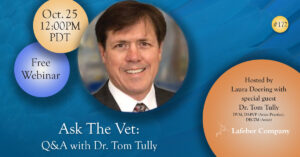 Join us for a FREE, live, interactive webinar hosted by Laura Doering, former editor of Bird Talk magazine and Birds USA magazine. Our special guest Tom Tully, DVM, DABVP (Avian Practice), DECZM (Avian), will answer your questions about pet bird health, nutrition, & care. Dr. Tully, a decorated Professor & practicing Vet at Louisiana State University School of Veterinary Medicine, is an internationally known Veterinarian who has earned specialties in Avian medicine in the United States and Europe. Having this type of access to a Veterinarian of his status is rare, but Dr. Tully believes in the educated bird owner as being the best bird steward. Dr. Tully answers each question in detail and shares his vast knowledge of birds, particularly parrots. Is your bird’s problem health-related or behavioral? Are you offering the right foods to your pet bird? Will Dr. Tully wear a Halloween mask? Ask the Vet!



 Join us for a FREE, live, interactive webinar hosted by Laura Doering, former editor of Bird Talk magazine and Birds USA magazine. Our special guest, Dr. Stephanie Lamb, DVM, DABVP (Avian Practice), will take a unique and informative look at how your pet bird might perceive a visit to the Vet. Presented from the bird’s point of view, this webinar will help owners understand what their bird may be experiencing. A bird’s experience will be much different for a wellness visit than for a health issue or emergency trip. While we can’t know exactly what our birds are thinking, Dr. Lamb will explain why your bird may have certain reactions or stress levels. This can help an owner understand what might help put their bird more at ease or how the owner’s behavior and reactions could influence how the bird handles being at the Vet. Let’s take a look through our bird’s eyes in this insider’s view of the daily happenings at your Avian Vet’s clinic.
 Join us for a FREE, live, interactive webinar hosted by Laura Doering, former editor of Bird Talk magazine and Birds USA magazine. Our special guest, Lisa Bono, CPBC, owner and operator of The Platinum Parrot and a certified parrot behavior consultant specializing in African grey parrots, presents Episode 28 of The Grey Way, a Lafeber Pet Birds Webinar Series focusing on Congo & Timneh African grey parrots as pets. In this episode, Lisa will help you & your birds navigate the Holiday Season! Whether your holidays involve guests, parties, decorations & special foods or you prefer a quiet season with your birds and maybe a few loved ones, the holiday season has a different feel about it. Winter and the holidays can bring with it different weather, emotions, routines, & lifestyles. Even small changes can be felt by our pet birds. Lisa will discuss this special time of year and how you can make it special for your birds, keeping them feeling secure and happy. As always, Lisa may focus on some Grey-centric concerns, but her advice can be applied to any pet bird species.
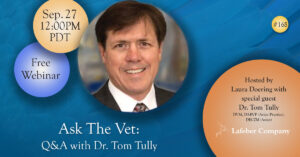 Join us for a FREE, live, interactive webinar hosted by Laura Doering, former editor of Bird Talk magazine and Birds USA magazine. Our special guest Tom Tully, DVM, DABVP (Avian Practice), DECZM (Avian), will answer your questions about pet bird health, nutrition, & care. Dr. Tully, a decorated Professor & practicing Vet at Louisiana State University School of Veterinary Medicine, is an internationally known Veterinarian who has earned specialties in Avian medicine in the United States and Europe. Having this type of access to a Veterinarian of his status is rare, but Dr. Tully believes in the educated bird owner as being the best bird steward. Dr. Tully answers each question in detail and shares his vast knowledge of birds, particularly parrots. Is your bird’s problem health-related or behavioral? Are you offering the right foods to your pet bird? Ask the Vet!






 Join us for a FREE, live, interactive webinar hosted by Laura Doering, former editor of Bird Talk magazine and Birds USA magazine. Our special guest, Jamie Whittaker, AFA Conference Chair & 2nd Vice President, will give us a sneak peek at the upcoming AFA Annual Conference, celebrating 50 years of the American Federation of Aviculture. This important conference will take place September 4-7 in Costa Mesa, California and will be 3 full days of “Everything Aviculture”! Featuring over 25 presentations by Avian Experts, including Veterinarians, breeders, authors & more! Attend sessions, shop with the vendors, participate in the raffles & auctions. Have fun with other bird enthusiasts at the social events including the Welcome Reception, a Blue’s Bash Party hosted by the Bird Endowment, and the annual AFA Banquet. There will also be a Free Family Fun Day sponsored by Lafeber Company, which will include a free-flight bird show! Come for the Conference, stay for the sights & sounds of Orange County, minutes away from Disneyland & California Adventure with easy access from the Orange County(SNA) Airport or the Los Angeles area airports.
 Join us for a FREE, live, interactive webinar hosted by Laura Doering, former editor of Bird Talk magazine and Birds USA magazine. Our special guest, Stephanie Lamb, DVM, DABVP (Avian Practice), will continue the fun & informative series, Species Spotlight! Dr. Lamb will show pictures & talk about the 14 parrot species she saw on a trip to Peru. Did you know that learning about species in their natural habitat is very relevant to providing the best life for your pet birds? Observations of wild parrots can give us clues to the behavior of our pet birds, what they would eat in the wild and how & when they would forage for food. Be sure to join us to learn about these 14 different species in their natural habitats!
 Join us for a FREE, live, interactive webinar hosted by Laura Doering, former editor of Bird Talk magazine and Birds USA magazine. Our special guest, Lisa Bono, CPBC, owner and operator of The Platinum Parrot and a certified parrot behavior consultant specializing in African grey parrots, presents Episode 27 of The Grey Way, a Lafeber Pet Birds Webinar Series focusing on Congo & Timneh African grey parrots as pets. In this episode, Lisa will discuss how to prepare your birds for a major move by applying behavior techniques. Lisa will draw on her own experience in moving to a new State with her own flock. This information will also be useful for short trips or travel in general. While Lisa will focus on Grey-centric concerns, her advice will apply to any parrot species.
 Join us for a FREE, live, interactive webinar hosted by Laura Doering, former editor of Bird Talk magazine and Birds USA magazine. Our special guest Tom Tully, DVM, DABVP (Avian Practice), DECZM (Avian), will answer your questions about pet bird health, nutrition, & care. Dr. Tully, a decorated Professor & practicing Vet at Louisiana State University School of Veterinary Medicine, is an internationally known Veterinarian who has earned specialties in Avian medicine in the United States and Europe. Having this type of access to a Veterinarian of his status is rare, but Dr. Tully believes in the educated bird owner as being the best bird steward. Dr. Tully answers each question in detail and shares his vast knowledge of birds, particularly parrots. Is your bird’s problem health-related or behavioral? Are you offering the right foods to your pet bird? Ask the Vet!


 Join us for a FREE, live, interactive webinar hosted by Laura Doering, former editor of Bird Talk magazine and Birds USA magazine. Our special guest, Dr. Stephanie Lamb, DVM, DABVP (Avian Practice), will discuss what your Avian Vet needs to know in order to provide the best veterinary care for your bird. When your pet bird is sick, it’s very stressful for the bird & the owner. The last thing you want to do is answer a lot of questions, and it can leave some owners feeling like they are being judged. But every little detail can give your vet clues to what might be going on. Some examples of things a vet might ask is cage size, room temperature, & diet. Be specific – “a big cage” is not as helpful as giving the general dimensions as well as the shape of the cage. Naming the brands of food you offer, and specifics about fresh foods & treats, can be valuable information for your Vet. Dr. Lamb will explain why certain information is needed and why it can help with a diagnosis in this insider’s view of the daily happenings at your Avian Vet’s clinic.
 Join us for a FREE, live, interactive webinar hosted by Laura Doering, former editor of Bird Talk magazine and Birds USA magazine. Our special guest, Anthony Pilny, DVM, DABVP (Avian), will discuss the illegal capturing of live wild birds for the pet trade, an escalating crisis of biodiversity loss and horrendous cruelty. This illegal trade deeply affects avian welfare and conservation and can cause serious repercussions in captive and pet bird populations. The fate of the confiscated birds after they are released as evidence, is rarely a topic of welfare discussion and is not well-known within the avian veterinary community or the general public. Dr. Pilny will talk about how avian veterinarians and the public can play a positive role in changing the outcomes for these birds.
 Join us for a FREE, live, interactive webinar hosted by Laura Doering, former editor of Bird Talk magazine and Birds USA magazine. Our special guest Tom Tully, DVM, DABVP (Avian Practice), DECZM (Avian), will answer your questions about pet bird health, nutrition, & care. Dr. Tully, a decorated Professor & practicing Vet at Louisiana State University School of Veterinary Medicine, is an internationally known Veterinarian who has earned specialties in Avian medicine in the United States as well as in Europe. Having this type access to a Veterinarian of his status is rare, but Dr. Tully believes in the educated bird owner as being the best bird steward. Dr. Tully answers each question in detail and shares his vast knowledge of birds, particularly parrots. Is your bird’s problem health related or behavioral? Are you offering the right foods to your pet bird? Ask the Vet!




 Join us for a FREE, live, interactive webinar hosted by Laura Doering, former editor of Bird Talk magazine and Birds USA magazine. Our special guest, Pamela Clark, is a well-known author, speaker, IAABC CPBC & retired CVT. Pamela will present Episode 9 of Translating Parrot, a Lafeber Pet Birds Webinar Series focusing on Parrot Behavior & Wellness, based on Pamela’s years of experience with a wide range of parrot species. In this episode, Pamela will answer questions from viewers about baffling behavior issues! You have heard the terms – antecedents, target training, positive reinforcement – but what does it all mean? This is your chance to ask her about something your parrot does that has you stumped. Pamela’s advice will help you translate what your parrot wants & needs in the newest installment of this informative series!
 Join us for a FREE, live, interactive webinar hosted by Laura Doering, former editor of Bird Talk magazine and Birds USA magazine. Our special guest, Lisa Bono, CPBC, owner and operator of The Platinum Parrot and a certified parrot behavior consultant specializing in African grey parrots, presents Episode 26 of The Grey Way, a Lafeber Pet Birds Webinar Series focusing on Congo & Timneh African grey parrots as pets. In this episode, Lisa will discuss how to design a bird room that will provide enrichment opportunities for your birds, and give them their own space where they can be a bird! A bird room should never be isolating, and Lisa will walk you through the steps of creating a space for your birds that is customized for their needs, from play stands to lighting and everything in between. While Lisa will focus on Grey-centric concerns, her advice will apply to any parrot species.

 Join us for a free, live, interactive webinar hosted by Laura Doering, the former editor of Bird Talk magazine and Birds USA magazine. Our special guest, Lisa Bono, CPBC, will report on the second day of the recent Phoenix Landing Wellness Retreat held on April 6-7, 2024, in Asheville, NC. This unique meeting is designed for pet bird owners and offers lectures on many aspects of pet bird care. Lisa will continue her coverage of the event, building on her previous webinar on April 26th, where she spoke about day one of the event.




.jpg)

