

Photo credit: Erica Mede, CVT (left); Resa McLellan (right)
Objectives
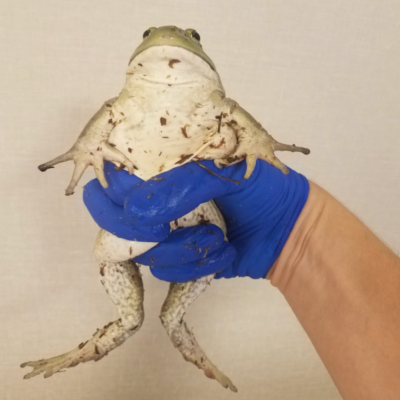
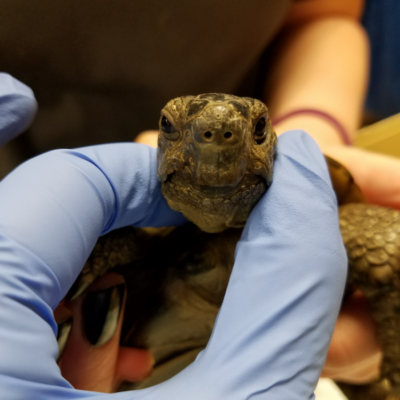
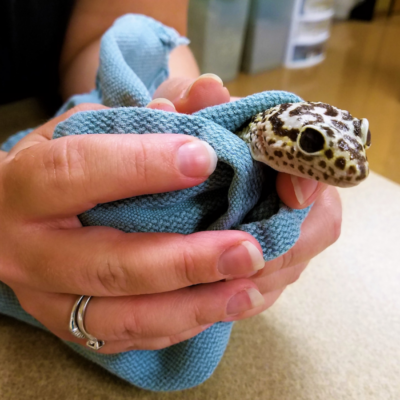
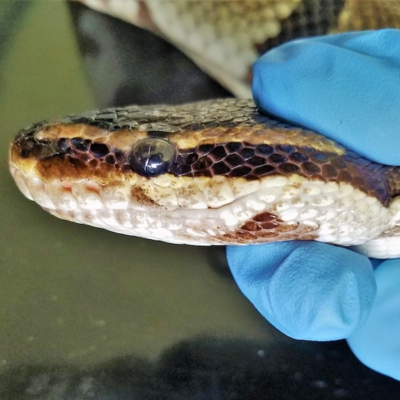
This teaching module addresses handling and restraint of amphibians, chelonians, lizards, and snakes in clinical practice. Transport, defense mechanisms that may prove hazardous to veterinary health professionals, potential dangers for the patient, and specific capture, handling, and restraint techniques are reviewed. Equipment needed, including personal protective equipment, is also discussed as well as measures to reduce the risk of zoonotic disease transmission.
Syllabus

Quiz
After completing all four components of the syllabus, take the brief quiz to earn 1/2 hour of continuing education credit in jurisdictions that recognize AAVSB RACE approval. With a passing grade of 70% or higher, you will receive a continuing education certificate download.
RACE approval
This teaching module is approved for 0.5 hour of continuing education credit for veterinarians and veterinary technicians by the American Association of Veterinary State Boards (AAVSB) Registry of Approved Continuing Education (RACE). This RACE approval is for Category: Medical Program using the delivery method of Non-Interactive-Distance. This approval is valid in jurisdictions that recognize AAVSB RACE.