
 Photo: I am 3D animator artist/Getty Images
Abstract
What is ultraviolet radiation?
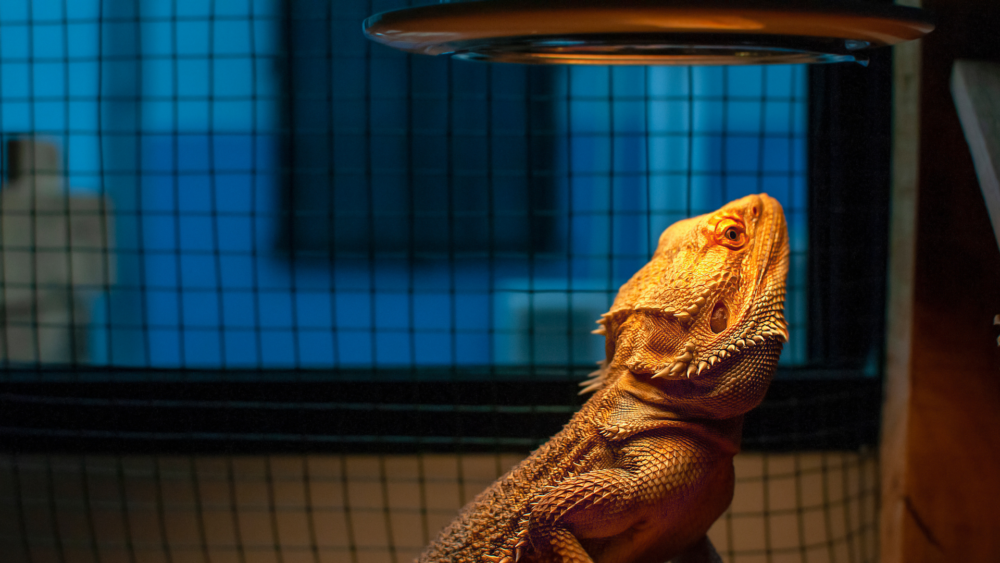
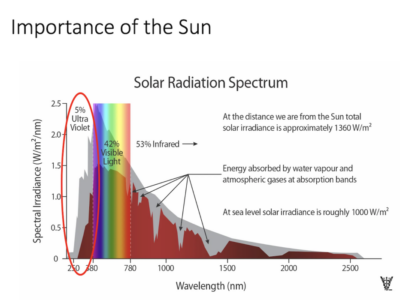
Lighting remains an important component of reptile husbandry and is a commonly discussed topic amongst veterinarians and exotic pet caretakers. Most of the discussions related to this topic are focused on “full spectrum” lighting. This is a term that has been used (and manipulated) in many ways; however, the basic premise behind this type of lighting system is that it provides the essential spectrums of ultraviolet, visible, and infrared light required by captive animals, mimicking natural exposure to the sun. The focus of this lecture will be on ultraviolet B radiation.
Ultraviolet light is produced by electromagnetic radiation. The wavelengths for ultraviolet radiation are shorter than those for visible and infrared light. Ultraviolet radiation is generally discussed in relation to those categories important to vertebrates: Ultraviolet A, B, and C. Ultraviolet C radiation represents the shortest wavelengths of the three classes (<280 nanometers). This range of ultraviolet radiation is germicidal and is commonly used to control pathogens in aquatic systems. Ultraviolet B radiation provides the medium range of ultraviolet radiation (280-315 nanometers). Ultraviolet A radiation represents the longest rays of the group and is characterized as “black light” (> 315-380 nanometers).
Vitamin D3
Ultraviolet B radiation represents the range considered important in the synthesis of vitamin D3. Vitamin D3 is an essential hormone that plays many different important physiologic roles. Its role in calcium metabolism is its most recognized function, where it helps to ensure the development and maintenance of healthy bones. In reptiles, maintaining appropriate levels of vitamin D3 has also been found to be associated with increased reproductive success. Ultraviolet C is not discussed at any great extent, although it is considered important in regulating behavior in vertebrates.
There are two primary methods for obtaining vitamin D3: synthesizing it from exposure to ultraviolet B radiation or consuming a food source that has synthesized the hormone through exposure to the sun. The production of vitamin D occurs because of the photosynthetic conversion of 7-dehydrocholesterol to pre-vitamin D3. Pre-vitamin D3 is converted to vitamin D3 via a temperature-dependent process. At this stage, the hormone is transported to the liver where it is hydroxylated to 25-hydroxyvitamin D3. The kidneys serve as the site for the final conversion of the hormone to 1, 25-hydroxyvitamin D3, which represents the active form.
Species-specific information
Vitamin D is considered important in vertebrates because it plays many different roles in the body. Because captive exotic species are routinely maintained indoors, the use of “full spectrum” lighting has become an important consideration for ensuring that captive, non-carnivorous species can obtain vitamin D3. Historically, this focus for UVB was for reptiles, and more specifically diurnal lizards. However, research has shown that carnivorous reptiles, such as snakes, and crepuscular reptiles, such as leopard geckos, also increase their circulating vitamin D concentrations for post-UVB exposure. Moreover, mammals not historically provided UVB have also been found to benefit from UVB exposure, including rabbits, guinea pigs, and chinchillas. These findings reinforce our need to pursue research to develop an understanding of how these changes benefit animals in captivity.
Commercial lighting
When making recommendations regarding lighting, it is important to recognize that not all bulbs are created equal. Although “full spectrum” lights may appear similar, they can produce vastly different quantities of ultraviolet B radiation. To confirm the quantity of ultraviolet B radiation being produced by a bulb, it is important to measure the intensity of the radiation using an appropriate radiometer/photometer. The distance the bulb is placed to a basking reptile can also influence the quantity and intensity of light reaching an animal. “Full-spectrum” lights should not be shown through glass because the glass can defract the ultraviolet B radiation. Historically, only fluorescent tube light bulbs produced any significant quantity of ultraviolet B radiation; however, compact fluorescent bulbs and mercury vapor bulbs can also produce appropriate to high levels of ultraviolet B radiation.
Adverse effects
While ultraviolet B radiation is considered important, it is not without its risks. Photokeratitis has been observed by the author and reported by others in reptiles exposed to certain types of artificial ultraviolet B radiation. Fortunately, removing the light source corrected the problem in the author’s experience. There is also concern that some species (e.g., bearded dragons) may develop skin cancer (e.g., squamous cell carcinoma) from exposure to ultraviolet B radiation. Additional research is needed to elucidate the risks associated with exposure to ultraviolet B radiation from artificial lights.
Clinical recommendations
Ultraviolet B radiation appears to be an important requirement for most species of animals that have been studied. To date, there is only one exception, the ball python (Python regius); however, that difference could have been impacted by study design. Based on our current understanding of UVB, the author believes it is important to provide these animals with UVB lighting but with restricted exposure times. Currently, the author recommends no more than 2 hours of UVB lighting a day. This is recommended to reduce the risk of side effects, while ensuring these animals can produce this important hormone. More research is needed, and the author hopes to continue to pursue this research in the future.
Outline
- Importance of lighting to animals
-
Panorama Images/Getty Images
Natural sun
- Ultraviolet
- Visible
- Infrared
- Methods for obtaining vitamin D
- Oral
- Ultraviolet B exposure
- Commercial lighting
-
- Experimental studies in captive animals
- Reptiles
- Photoperiod
- Diurnal
- Crepuscular/nocturnal
- Duration of exposure
- 12 hours
- <12 hours
- Photoperiod
- Lagomorphs and rodents
- Rabbits
- Short-term studies
- Long-term studies
- Guinea pigs
- Short-term studies
- Long-term studies
- Chinchillas
- Short-term studies
- Rabbits
- Birds
- Psittacine birds
- Budgerigars
- Cockatiels
- Psittacine birds
- Reptiles
- Adverse effects from UVB exposure
- Ocular lesions
- Photokeratitis
- Cataracts
- Neoplasia
- Ocular lesions
- Recommendations
- Types of bulbs
- Exposure distance
- Duration of exposure
About the presenter
Mark A. Mitchell is a Professor of Zoological Medicine and Director of the Wildlife Hospital of Louisiana at Louisiana State University (LSU) School of Veterinary Medicine. Dr. Mitchell first joined the LSU faculty in 1996. He has also served as the hospital director at LSU. His research interests include wildlife epidemiology, conservation medicine, and One Health, examining how diseases move among wildlife, people, and the environment… [MORE]
Webinar recording
Download the presentation
Download a PDF of Dr. Mitchell’s PowerPoint presentation.
Post-test
Take the brief post-test to earn 1 hour of continuing education credit. With a passing grade, you will receive a continuing education certificate in jurisdictions that recognize AAVSB RACE approval.
Expert Q&A
Although many questions were addressed during the live event, remaining questions were answered by Dr. Mitchell in a follow-up meeting with the moderator. Replies were sent by email to individual attendees and the entire collection of “leftover” questions and answers is posted below.
Dr. Mitchell emphasized evidence-based information in both his presentation and his answers to questions: I hope everyone’s noting that when you’re reading these, the things that I don’t have experience with, I’m not going to just give my opinion because I don’t want to misdirect people…
When people are adamant about something, it can be UVB lights, it can be about drug dosing, it can be anything you want. If you’re adamant about it, make sure you have evidence to back it up. I hope everyone can see from the presentation I gave, there is a wealth of evidence and a lot of it follows a very similar pattern. And those are the things that I really tried to stress during the lecture presentation.
BULB-SPECIFIC QUESTIONS
Can you please write down the UVB light you recommend?
I recommend Fluker’s 23-watt 5.0 bulb because that’s what I have tested.
Are there any cases you recommend an animal use a 10.0 UVB?
No, I do not.
For those housed indoors (birds and reptiles) how would you supplement the lighting as many branded bulbs are combined with UVB?
Dr. Mitchell emphasized evidence-based information in both his presentation and his follow-up answers, and he has only tested the Fluker’s light that he mentioned. (See above).
The one exception would really be the mercury vapor bulbs, which produce heat and UVB. And what I would do is switch over to an incandescent heat lamp and then basically only use the mercury vapor with the UVB under the conditions of time dosing. That’s what I would recommend.
If you’re using a full-spectrum light, should it not be on all the time for an 8-hour day?
What I recommend is to give the animal a photoperiod that mimics the natural light cycle for that species. So, if you are in a northern climate, but you have a species from South America, it’s not your schedule you should put the lizard on. It’s their schedule, you should put them on. If UVB is on the whole time the light is on…that increases the risk of [adverse] effects. Most of us are really after the UVB for the benefits on the synthesis of the vitamin D. If that’s the case, then that’s where I really think the dosing concept comes in.
For exotic pets from seasonal country, do we have to imitate the daylight hours exposure i.e. winter hours, autumn hours etc.. 4 months summer, 4 months autumn, winter , spring, etc.
Dr. Mitchell recommended the same answer as listed above: What I recommend is to give the animal a photoperiod that mimics the natural light cycle for that species. So, if you are in a northern climate, but you have a species from South America, it’s not your schedule you should put the lizard on. It’s their schedule, you should put them on.
How long are they getting exposed to UV in those studies?
Lighting was provided for 12 continuous hours each day in the corn snakes, red-eared sliders, Blanding’s turtles, guinea pigs, and chinchillas. Depending on the study, lighting was provided for 6 or 12 hours to rabbits. Depending on the study, lighting was provided for 2 or 12 hours to blue-tongued skinks. Lighting was provided for 2 hours to the leopard geckos.
The studies mentioned above are included in the References section below.
Still a bit unsure of the compact vs linear. There is very much a move away from compact UVB bulbs here in Europe due to the belief that the animal has to be under the bulb to get the full benefits, particularly with cryptic baskers. Do the reptiles seek out the UVB, even if the whole enclosure is under light (like an LED)? For example, in a long 4 ft enclosure where a leopard gecko is on the opposite end of the UVB but cryptic basking there
I know people are posting and making suggestions, even publishing, those types of suggestions, but I’ve not seen data from them…As an epidemiologist and a clinical scientist, it’s all about the evidence. In all of the studies…I am using the same 5.0, 23-watt bulb that is a compact fluorescent, and…[in] chelonians, multiple species of chelonians, snakes, multiple species of lizards, and multiple species of exotic small mammals it’s worked perfectly. And so, I truly believe it’s more about the UVB exposure versus what the bulb looks like.
As the feds banned fluorescents, are the Avian Sun LEDs as good or similar to their fluorescents?
The current administration has not banned the fluorescents. It’s going to be a political thing based on who’s in, but right now the bulbs are not banned.
What is your opinion of the Osram Ultra-Vitalux light?
What’s your thoughts on the recently developed LED UVB light for reptiles?
What are your thoughts on the tester strips for checking UVB output?
Does reducing to 2 hrs per day apply to the 7% ShadeDweller UVB bulbs specifically aimed at animals who require less UVB?
Dr. Mitchell emphasized evidence-based information in both his presentation and his answers and he has not tested these products.
…The things that I don’t have experience with, I’m not going to just give my opinion because I don’t want to misdirect people.
…My hope is that they’ll be getting tested under conditions beyond just looking at the light and looking at the animals themselves.
HUSBANDRY RELATED
If not glass or plexiglass – what are we using for enclosures?
Although many reptile enclosures sold in pet stores (etc.) have glass or plexiglass sides, the tops are almost invariably some sort of mesh. Additionally, use of a wire cage within a warm, humid reptile room is preferable for ventilation.
Dr. Mitchell added: There are plexiglasses that do allow UVB to penetrate, but I just recommend a mesh…while the mesh will diffract some of the UVB…from the [research] that I’ve done, I am no longer worried about delivering these whomping doses of 10,00 microwatts…
The reason most human beings aren’t dying from nutritional disorders is because our bodies are absorbing what little vitamin D we’re getting through ultra-processed foods or in poor diets to allow us to survive. These animals are doing the same thing with vitamin D.
Suggestions for reptiles/amphibians that are on exhibit 10 hours a day? Use non-UVB lightbulbs for the majority of the day?
Yes, that’s exactly what I would recommend.
How many days does it take for the levels to go back to baseline without UVB from your initial studies in this talk?
Dr. Mitchell has one study that evaluated the return to baseline. With 2 hours of daily exposure, blue-tongued skinks took 4 months to return to baseline. It took the skinks more than 7 months with 12 hours of daily exposure to return to baseline.
Godke A, Rhim H, Aguilar MG, Marrero-Acosta K, Mitchell MA. Measuring the rise and fall of plasma 25-hydroxyvitamin D concentrations in blue-tongued skinks (Tiliqua scincoides) following ultraviolet B exposure and withdrawal. Vet Sci. 2025;12(10):965.doi: 10.3390/vetsci12100965. PMID: 41150105; PMCID: PMC12568120.
Do you recommend UVB lighting attached to the inside of the enclosure versus through a mesh? Does the mesh interfere significantly?
Most UVB bulbs don’t produce a lot of heat. The mercury vapors are the exception. They can produce significant heat and lead to significant burns. [Regardless], I do not recommend keeping the bulbs [inside the enclosure] because…heat can be generated at the bulb surface…
So, I [recommend] outside through a mesh. And while the mesh will diffract some of the UVB…from the [research] that I’ve done, I am no longer worried about delivering these whomping doses of 10,00 microwatts…
The reason most human beings aren’t dying from nutritional disorders is because our bodies are absorbing what little vitamin D we’re getting through ultra-processed foods or in poor diets to allow us to survive. These animals are doing the same thing with vitamin D.
[Will] UVB…be adjusted based on the enclosure setup? Will you suggest longer photoperiod if they have shelter, and how much shelter? If the bulb is linear which goes over one-third of the tank versus three-quarters, or even the whole tank?
Yes, you could adjust UVB based on enclosure setup because enclosures of different sizes are going to put the animal closer or further from the UVB. And really, from my research, what I’m after is the amount of exposure that they’re getting, microwatts per centimeter squared. So that’s why I really like to measure these things.
A lot of times people are talking about using a much higher concentration… When people say, ”[Take] this bulb and put it 6 inches from the [patient, the animal] they may be getting more UVB exposure than they would get on a sunny day [at the] beach. So that would not be normal. And so, yes, it needs to be based on [enclosure setup].
…with regards to shelter, I’m not worried about whether they have shelter or not, because…the real take-home message is EXPOSURE. [The animal needs to] get enough exposure to be able to increase and synthesize vitamin D…Low exposure is likely sufficient across the species from at least all the research we’ve done…
As far as a bulb being linear versus compact fluorescent, again…to me it’s less about the size of the bulb or the size of the enclosure and more about what the dose is. And I really want us to start thinking about vitamin D dosing like we do for antibiotics or anti-inflammatories or anesthetics. And instead of saying we’re going to dose an animal with 2 mg/kg, I’m saying 5 to 30 microwatts. And again, this is still not completely refined, but from the studies we’ve done…those low doses…they’re literally based on the exposure. It’s efficient to do that.
Ultimately, what people need to do is measure vitamin D3, measure 25 hydroxyvitamin D, see where those values are. That’s really how you’re going to answer this.
VITAMIN D and NUTRITION
At what levels of 25-hydroxyvitamin D3 [25(OH)D3] would you recommend reducing UV exposure to limit side effects?
That is a great question because we still need to build reference ranges to ultimately make that determination. What I have found is that human level of ~50 nml/L is something that I see in reptiles consistently. I’m not seeing issues with vitamin D deficiency. And so that’s what I’m usually looking at, to be honest. But that’s highly variable because in the case of the blue-tongued skinks, their [values] went so much higher than that, but it still took them 9 months…to basically decay that vitamin D out.
Godke A, Rhim H, Aguilar MG, Marrero-Acosta K, Mitchell MA. Measuring the rise and fall of plasma 25-hydroxyvitamin D concentrations in blue-tongued skinks (Tiliqua scincoides) following ultraviolet B exposure and withdrawal. Vet Sci. 2025;12(10):965. doi: 10.3390/vetsci12100965. PMID: 41150105; PMCID: PMC12568120.
When asked in a follow-up question if there were numbers that he would consider “too high”:
No. I’m more worried about minimum levels. I’m more worried about vitamin D deficiency with UVB exposure… There’s no UVB exposure hypervitaminosis D associated with this system. There is associated with cataracts, ocular disease and skin cancer.
What vitamin D-rich foods do you recommend for reptiles?
I generally do not recommend relying heavily on vitamin D–rich foods. Instead, I recommend short-term UVB exposure appropriate for that species. Based on current understanding of its pathophysiology, this will support endogenous vitamin D synthesis while minimizing the risk of toxicity. Otherwise, I maintain normal diets, recognizing that gut-loading diets may contain vitamin D and can provide an additional, indirect source through routine feeding practices.
How do you prevent vitamin D toxicity when supplementing orally in bearded dragons for example?
I would minimize [the oral supplement] and [provide] UVB light because they are shown to be able to [utilize] that.
Can reptiles be overdosed with vitamin D3 powders easily?
I generally do not recommend extensive vitamin D supplementation. Instead, I rely on standard diets, with the understanding that gut-loading diets may contain vitamin D. So, we are providing an additional source of vitamin D through normal feeding practices.
What gut-loading diet do you recommend for insects?
The diets that I recommend are the Fluker’s Farm diets for Dubia roaches, for mealworms and superworms, and for crickets, because those are the diets that we have published on and can show that they work.
REPTILES
What is the ideal number of hours of UVB for leopard geckos?
Under natural conditions, it would be the length of the photoperiod. The issue is that we’re often exposing them to higher concentrations in captivity, not letting them regulate their UVB exposure and that’s why I recommend the shorter duration time based on what I’ve been studying…It’s still early because we’ve only done a few studies, but in the leopard geckos we’re finding 2 hours [of UVB provides adequate exposure].
Gould A, Molitor L, Rockwell K, Watson M, Mitchell MA. Evaluating the physiologic effects of short duration ultraviolet B radiation exposure in leopard geckos (Eublepharis macularius). J Herp Med Surg. 2018;28(1-2):34-39. doi: 10.5818/17-11-136.1. Available at https://www.reptifiles.com/wp-content/uploads/2019/05/Geckos-and-UVB-paper.pdf. Accessed April 1, 2026.
What are the UV duration recommendations for diurnal reptiles (i.e. bearded dragons, Uromastyx)?
Under natural conditions, it would be the length of the photoperiod. The issue is that we’re often exposing them to higher concentrations in captivity, not letting them regulate their UVB exposure. And that’s why I recommend the shorter duration time based on what I’ve been studying…It’s still early because we’ve only done a few studies, but in the blue-tongued skinks, we’re finding 2 hours [of UVB exposure], puts them in the same place 12 hours does.
Godke A, Rhim H, Aguilar MG, Marrero-Acosta K, Mitchell MA. Measuring the rise and fall of plasma 25-hydroxyvitamin D concentrations in blue-tongued skinks (Tiliqua scincoides) following ultraviolet B exposure and withdrawal. Vet Sci. 2025;12(10):965. doi: 10.3390/vetsci12100965. PMID: 41150105; PMCID: PMC12568120.
If you are measuring UVB for leopard geckos with a radiometer, what is the ideal range?
5-30 microwatts per square centimeter
Do you recommend keeping heat and UVB separate for tortoises?
Yes. Although heat and UVB could be on the whole time, this increases the risk of those adverse effects we discussed. Most of us are really after the UVB for the benefits of vitamin D synthesis. And if that’s the case, then that’s where I really think the dosing concept comes in.
By controlling UVB exposure can I help my chameleon minimize the times she becomes gravid? If yes, on what other reptiles does that apply?
Yes, I’d be controlling it probably more so through photoperiod. I would mimic the photoperiod for your species of chameleon to their non-breeding season. What people are doing in captivity is they’re exposing [these animals] to long duration light, so [the animal] always think it’s the breeding season.
Any chance you can comment on infrared wavelengths A, B, and C and their effect on thermoregulation in reptiles?
Dr. Mitchell has not studied the infrared spectrum enough to be able to comment.
There are a number of papers published on this topic, including:
Campbell AL, Naik RR, Sowards L, Stone MO. Biological infrared imaging and sensing. Micron. 2002;33(2):211-25. doi: 10.1016/s0968-4328(01)00010-5. PMID: 11567889.
Chen Q, Liu Y, Brauth SE, Fang G, Tang Y. The thermal background determines how the infrared and visual systems interact in pit vipers. J Exp Biol. 2017 Sep 1;220(Pt 17):3103-3109. doi: 10.1242/jeb.155382. PMID: 28855322.
Clark RW, Bakken GS, Reed EJ, Soni A. Pit viper thermography: the pit organ used by crotaline snakes to detect thermal contrast has poor spatial resolution. J Exp Biol. 2022 Dec 15;225(24):jeb244478. doi: 10.1242/jeb.244478. Epub 2022 Dec 23. PMID: 36453156.
Jones BS, Lynn WF, Stone MO. Thermal modeling of snake infrared reception: evidence for limited detection range. J Theor Biol. 2001 Mar 21;209(2):201-11. doi: 10.1006/jtbi.2000.2256. PMID: 11401462.
Kelber A. Infrared Imaging: A motion detection circuit for rattlesnake thermal vision. Curr Biol. 2019 Jun 3;29(11):R403-R405. doi: 10.1016/j.cub.2019.04.043. PMID: 31163140.
Panzano VC, Kang K, Garrity PA. Infrared snake eyes: TRPA1 and the thermal sensitivity of the snake pit organ. Sci Signal. 2010 Jun 22;3(127):pe22. doi: 10.1126/scisignal.3127pe22. PMID: 20571127.
Safer AB, Grace MS. Infrared imaging in vipers: differential responses of crotaline and viperine snakes to paired thermal targets. Behav Brain Res. 2004 Sep 23;154(1):55-61. doi: 10.1016/j.bbr.2004.01.020. PMID: 15302110.
Wang Q, Yan X, Xie W, Wang Y. Image fusion method based on snake visual imaging mechanism and PCNN. Sensors (Basel). 2024 May 12;24(10):3077. doi: 10.3390/s24103077. PMID: 38793931; PMCID: PMC11125101.
BIRDS AND MAMMALS
Until we get individualized data for each species, do you recommend adopting the Ferguson zones to other taxa (birds and mammals)?
Those [Ferguson] zones are really built for the reptiles, but they’re the same concept. They’re based on where animals come from. But the issue with that is that reptiles and birds and mammals have different functions in a day. And so, what they’re basing it on is how a reptile thermoregulates… A bird and a mammal are going to regulate differently as endotherms and they’re going to function differently. So, I don’t know that I see a need for [adopting Ferguson zones], but if people want to look at that and they find some good things, this is where getting everyone to share information is so important. Everyone can participate in this kind of research by collecting data and publishing it.
For guinea pigs with severe dental disease, would you recommend natural UVB or artificial? How long should they be exposed to this for? Can this also help with healing or preventing tooth root abscesses?
Certainly, severe dental disease could be because of vitamin D deficiency. Vitamin D is essential to the healing process as well as bone remodeling.
If you can give an animal natural UVB exposure, that would be best. You just have to protect them from the heat. If it’s a species that’s susceptible [to heat stress], like a guinea pig, you want to make sure they have plenty of shelters outside…I know a lot of people who have outdoor guinea pig colonies and the guinea pigs can thrive with plenty of shade and…of course, protect from predators.
Is there research on small primates, such as golden lion tamarins and UVB?
Dr. Mitchell does not have any direct experience with UVB in golden lion tamarins. The following papers may prove helpful. The manuscript by Killick et al does include information on tamarins.
Goodroe AE, Fitz C, Power ML, et al. Evaluation of vitamin D3 metabolites in Callithrix jacchus (common marmoset). Am J Primatol. 2020;82(6):e23131. doi: 10.1002/ajp.23131. Epub 2020 Apr 9. PMID: 32270886; PMCID: PMC7384697.
Killick R, Saunders R, Redrobe SP. Summer and winter vitamin D3 levels in seven platyrrhine species housed at a British Zoo, with reference to natural UVB levels. J Zoo Wildl Med. 2017 Sep;48(3):732-741. doi: 10.1638/2016-0071.1. PMID: 28920802.
Given the lack of research in birds. Do you still recommend UVB exposure? If so, how many hours per day?
If birds can get natural sunlight exposure, that’s really my preference. And based on the mixed [research] results, I don’t know that I’m recommending UVB bulbs at this point.
In wildlife rehabilitation settings, does anyone have any recommendations for herons in UVB, specifically black-crowned night herons (Nycticorax nycticorax) when raising the nestlings or fledglings that are not ready to go outside?
Dr. Mitchell is the Director of the Wildlife Hospital of Louisiana:
Natural sunlight would be the best, and what I would actually recommend if you have a nestling, what we do; we see black-crowned night herons. We will take them outside periodically. Making sure they are protected [from the sun] and heat, even in a container. Take the lid off and just let them get UVB exposure naturally, and that will take care of it. That UVB is hitting them at that point.
Can you comment on Stanford’s study on African greys and UV?
I cannot. I’ve not read the paper.
AMPHIBIANS
What about cane toads that are most active nocturnally?
I don’t have any experience with them, but just like the leopard geckos and some of the other crepuscular/nocturnal species, there were some studies…that talked about UVB reflecting off the moon and some geckos getting exposed that way. And then of course, even nocturnal species are crepuscular at some level, and so they may be active at crepuscular times because that’s when they’re getting their UVB exposure.
Nordberg EJ, Schwarzkopf L. Afraid of the dark? The influence of natural and artificial light at night on the behavioral activity of a nocturnal gecko. Frontiers in Ecology and Evolution. 2022;10. Sec. Behavioral and Evolutionary Ecology. doi: 10.3389/fevo.2022.821335.
Oonincx DGAB, Diehl JJE, Kik M, et al. The nocturnal leopard gecko (Eublepharis macularius) uses UVb radiation for vitamin D3 synthesis. Comp Biochem Physiol B Biochem Mol Biol. 2020 Dec;250:110506. doi: 10.1016/j.cbpb.2020.110506. Epub 2020 Sep 17. PMID: 32950659.
Prötzel D, Heß M, Schwager M, Glaw F, Scherz MD. Neon-green fluorescence in the desert gecko Pachydactylus rangei caused by iridophores. Sci Rep. 2021 Jan 11;11(1):297. doi: 10.1038/s41598-020-79706-z. PMID: 33432052; PMCID: PMC7801506.
FISH
Anything on fish?
Dr. Mitchell does not have any fish-related research experience.
It was long believed that fish only obtain vitamin D through the diet, however, research in Atlantic salmon and rainbow trout has shown that UVB exposure significantly increases vitamin D3 levels (as does exposure to blue light). A few papers (some open access) are listed below:
Fossen I, Backström T, Holte T, Klakegg Ø. UV-B light stimulates the production of vitamin D3 in Atlantic salmon. Aquaculture. 2026. 611:743058. doi: 10.1016/j.aquaculture.2025.743058.
Husebø CA, Berge K, Keitel-Gröner F, et al. Field evidence of endogenous vitamin D synthesis in Atlantic salmon induced by natural sunlight. Aquac Nutr. 2025;2025:3823472. doi: 10.1155/anu/3823472. PMID: 41424696; PMCID: PMC12717467.
Pierens SL, Fraser DR. The origin and metabolism of vitamin D in rainbow trout. J Steroid Biochem Mol Biol. 2015 Jan;145:58-64. doi: 10.1016/j.jsbmb.2014.10.005. Epub 2014 Oct 11. PMID: 25305412.
Sun Y, Alessandroni L, Angeloni S, Del Bianco E, Sagratini G. From 7-dehydrocholesterol to vitamin D3: Optimization of UV conversion procedures toward the valorization of fish waste matrices. Food Chem X. 2024;22:101373. doi: 10.1016/j.fochx.2024.101373. PMID: 38633740; PMCID: PMC11021362.
RACE approval
This program is approved by the American Association of Veterinary State Boards (AAVSB) Registry of Approved Continuing Education (RACE) for 1 hour of continuing education credit for veterinarians and veterinary technicians in jurisdictions that recognize AAVSB RACE approval.
References
References
Bernard JB, Oftedal OT, Ullrey DE. Vitamin D and ultraviolet radiation: Meeting lighting needs for captive animals. In: Nutrition Advisory Group Handbook. Fact Sheet 002. July 1997. Available at https://www.amphibianark.org/fileadmin/uploads/aark/Husbandry_Library/Bernard_etal_1997_Vitamin-D-and-UV-needs-for-captive-animals.pdf. Accessed March 21, 2026.
Boron WF, Boulpaep EL. Medical Physiology, 2nd ed. Philadelphia, PA: Elsevier Health Sciences; 2012. ISBN: 1437717535
Hazewinkel HAW. Nutrition in relation to skeletal growth deformities. Journal of Small Animal Practice. 1989;30(11):625-630. doi: 10.1111/j.1748-5827.1989.tb01493.x.
AMPHIBIANS
Michaels CJ, Antwis RE, Preziosi RF. Impacts of UVB provision and dietary calcium content on serum vitamin D3 , growth rates, skeletal structure and coloration in captive oriental fire-bellied toads (Bombina orientalis). J Anim Physiol Anim Nutr (Berl). 2015 Apr;99(2):391-403. doi: 10.1111/jpn.12203. Epub 2014 May 9. PMID: 24810567.
BIRDS
Lupu C, Robins S. Determination of a safe and effective ultraviolet B radiant dose in budgerigars (Melopsittacus undulatus): a pilot study. J Avian Med Surg. 2013;27(4):269-79. doi: 10.1647/2011-0291. PMID: 24640928.
Stanford M. Effects of UVB radiation on calcium metabolism in psittacine birds. Vet Rec. 2006 Aug 19;159(8):236-41. doi: 10.1136/vr.159.8.236. PMID: 16921012.
Thielen L, Hess L, Mitchell MA. Effect of the addition of an ultraviolet B light bulb for 6 months to the enclosure of client-owned cockatiels (Nymphicus hollandicus) on serum 25-hydroxyvitamin D concentrations. J Exotic Pet Med. 2024;51(1):14-19. doi: 10.1053/j.jepm.2024.08.003.
FISH
Fossen I, Backström T, Holte T, Klakegg Ø. UV-B light stimulates the production of vitamin D3 in Atlantic salmon. Aquaculture. 2026. 611:743058. doi: 10.1016/j.aquaculture.2025.743058.
Husebø CA, Berge K, Keitel-Gröner F, et al. Field evidence of endogenous vitamin D synthesis in Atlantic salmon induced by natural sunlight. Aquac Nutr. 2025;2025:3823472. doi: 10.1155/anu/3823472. PMID: 41424696; PMCID: PMC12717467.
Pierens SL, Fraser DR. The origin and metabolism of vitamin D in rainbow trout. J Steroid Biochem Mol Biol. 2015 Jan;145:58-64. doi: 10.1016/j.jsbmb.2014.10.005. Epub 2014 Oct 11. PMID: 25305412.
Sun Y, Alessandroni L, Angeloni S, Del Bianco E, Sagratini G. From 7-dehydrocholesterol to vitamin D3: Optimization of UV conversion procedures toward the valorization of fish waste matrices. Food Chem X. 2024;22:101373. doi: 10.1016/j.fochx.2024.101373. PMID: 38633740; PMCID: PMC11021362.
INSECTS
Oonincx DGAB, van Keulen P, Finke MD, et al. Evidence of vitamin D synthesis in insects exposed to UVb light. Sci Rep. 2018;8(1):10807. doi: 10.1038/s41598-018-29232-w. PMID: 30018318; PMCID: PMC6050303.
MAMMALS
Crawford GC, Puschner B, Dierenfeld ES, Dunker F. Survey of minerals and fat-soluble vitamins in captive black and white ruffed lemurs (Varecia variegata). J Zoo Wildl Med. 2009;40(4):632-8. doi: 10.1638/2008-0014.1. PMID: 20063808.
Emerson JA, Whittington JK, Allender MC, Mitchell MA. Effects of ultraviolet radiation produced from artificial lights on serum 25-hydroxyvitamin D concentration in captive domestic rabbits (Oryctolagus cuniculi). Am J Vet Res. 2014;75(4):380-4. doi: 10.2460/ajvr.75.4.380. PMID: 24669924.
Goodroe AE, Fitz C, Power ML, et al. Evaluation of vitamin D3 metabolites in Callithrix jacchus (common marmoset). Am J Primatol. 2020;82(6):e23131. doi: 10.1002/ajp.23131. Epub 2020 Apr 9. PMID: 32270886; PMCID: PMC7384697.
How KL, Hazewinkel HA, Mol JA. Dietary vitamin D dependence of cat and dog due to inadequate cutaneous synthesis of vitamin D. Gen Comp Endocrinol. 1994;96(1):12-8. doi: 10.1006/gcen.1994.1154. PMID: 7843559.
Killick R, Saunders R, Redrobe SP. Summer and winter vitamin D3 levels in seven platyrrhine species housed at a British zoo, with reference to natural UVB levels. J Zoo Wildl Med. 2017;48(3):732-741. doi: 10.1638/2016-0071.1. PMID: 28920802.
Molitor LE, Rockwell K, Gould A, Mitchell MA. Effects of short-duration artificial ultraviolet B exposure on 25-hydroxyvitamin D3 concentrations in domestic rabbits (Oryctolagus cuniculus). Animals (Basel). 2023;13(8):1307. doi: 10.3390/ani13081307. PMID: 37106870; PMCID: PMC10135136.
Morris JG, Earle KE, Anderson PA. Plasma 25-hydroxyvitamin D in growing kittens is related to dietary intake of cholecalciferol. J Nutr. 1999;129(4):909-12. doi: 10.1093/jn/129.4.909. PMID: 10203569.
Rivas AE, Mitchell MA, Flower J, Welle KR, Whittington JK. Effects of ultraviolet radiation on serum 25-hydroxyvitamin D concentrations in captive chinchillas (Chinchilla laniger). Journal of Exotic Pet Medicine. 2014;23(3):270-276. doi: 10.1053/j.jepm.2014.05.012.
Sander SJ, Mitchell MA, Whittington JK, Allender MC, Welle K. Effects of artificial ultraviolet radiation on serum 25-hydroxyvitamin D3 concentrations in captive guinea pigs (Cavia porcellus). Journal of Exotic Pet Medicine. 2015;24(4):464-469. doi: 10.1053/j.jepm.2015.08.014.
Watson MK, Flower J, Welle K, et al. Effects of natural ultraviolet radiation on 25-hydroxyvitamin D3 concentrations in female guinea pigs (Cavia porcellus). Journal of Exotic Pet Med. 2019;28:1-5. doi: 10.1053/j.jepm.2018.05.001.
Watson MK, Mitchell MA, Stern AW, et al. Evaluating the clinical and physiological effects of long-term ultraviolet B radiation on rabbits (Oryctolagus cuniculus). PLoS One. 2014;9(12):e114413. doi: 10.1371/journal.pone.0114413. PMID: 25517408; PMCID: PMC4269393.
Watson MK, Stern AW, Labelle AL, et al. Evaluating the clinical and physiological effects of long term ultraviolet B radiation on guinea pigs (Cavia porcellus). PLoS One. 2014;9(12):e114413. doi: 10.1371/journal.pone.0114413. PMID: 25517408; PMCID: PMC4269393.
REPTILES
Acierno MJ, Mitchell MA, Roundtree MK, Zachariah TT. Effects of ultraviolet radiation on 25-hydroxyvitamin D3 synthesis in red-eared slider turtles (Trachemys scripta elegans). Am J Vet Res. 2006;67(12):2046-9. doi: 10.2460/ajvr.67.12.2046. PMID: 17144809.
Acierno MJ, Mitchell MA, Zachariah TT, et al. Effects of ultraviolet radiation on plasma 25-hydroxyvitamin D3 concentrations in corn snakes (Elaphe guttata). Am J Vet Res. 2008;69(2):294-7. doi: 10.2460/ajvr.69.2.294. PMID: 18241029.
Bernard JB. 1995. Spectral irradiance of fluorescent lamps and their efficacy for promoting vitamin D synthesis in herbivorous reptiles. Doctoral Dissertation, Michigan State University, East Lansing, MI.
Bernard JB, Oftedal OT, Barboza P, et al. Response of vitamin D-deficient green iguanas (Iguana iguana) to artificial ultraviolet light. Proc Annu Conf Association of Avian Veterinarians. 1991.
Bitter A. Does short term UVB increase vitamin D concentrations in leopard geckos. Proc Annu Conf ExoticsCon. Boston MA, 2023.
Bitter A, Settle A, Tuminello J, Mitchell MA. Determining the effects of short term artificial UVB lighting on plasma 25-hydroxyvitamin D3 concentrations in leopard geckos. Proc Annu Conf Summer Scholars Symposium. Minneapolis, MN, August, 2022.
Bos JH, Klip FC, Oonincx DGAB. Artificial ultraviolet B radiation raises plasma 25-hydroxyvitamin D3 concentrations in Burmese pythons (Python bivittatus). J Zoo Wildl Med. 2018;49(3):810-812. doi: 10.1638/2017-0243.1. PMID: 30212358.
Diehl JJE, Baines FM, Heijboer AC, et al. A comparison of UVb compact lamps in enabling cutaneous vitamin D synthesis in growing bearded dragons. J Anim Physiol Anim Nutr (Berl). 2018;102(1):308-316. doi: 10.1111/jpn.12728. Epub 2017 Apr 27. PMID: 28452197.
Ferguson GW, Brinker AM, Gehrmann WH, et al. Voluntary exposure of some western-hemisphere snake and lizard species to ultraviolet-B radiation in the field: how much ultraviolet-B should a lizard or snake receive in captivity? Zoo Biol. 2010;29(3):317-34. doi: 10.1002/zoo.20255. PMID: 19484753.
Ferguson GW, Gehrmann WH, Bradley KA, et al. Summer and winter seasonal changes in vitamin D status of captive rhinoceros iguanas (Cyclura cornuta). J Herp Med Surg. 2015;25(3-4):128-136. doi: 10.5818/1529-9651-25.3.128.
Ferguson GW, Gehrmann WH, Peavy B, et al. Restoring vitamin D in monitor lizards: Exploring the efficacy of dietary and UVB sources. J Herp Med Surg. 2009;19(3):81-88. doi: 10.5818/1529-9651.19.3.81.
Ferguson GW, Gehrmann WH, Vaughan MS, et al. Is the natural UV zone important for successful captive propagation of the panther chameleon (Furcifer pardalis); are different UVB irradiance exposures that generate a similar dose equally successful? Zoo Biol. 2021;40(2):150-159. doi: 10.1002/zoo.21591. Epub 2021 Feb 9. PMID: 33559914.
Godke A, Rhim H, Aguilar MG, Marrero-Acosta K, Mitchell MA. Measuring the rise and fall of plasma 25-hydroxyvitamin D concentrations in blue-tongued skinks (Tiliqua scincoides) following ultraviolet B exposure and withdrawal. Vet Sci. 2025;12(10):965. doi: 10.3390/vetsci12100965. PMID: 41150105; PMCID: PMC12568120.
Gould A, Molitor L, Rockwell K, Watson M, Mitchell MA. Evaluating the physiologic effects of short duration ultraviolet B radiation exposure in leopard geckos (Eublepharis macularius). Journal of Herpetological Medicine and Surgery. 2018;28(1-2):34-39. doi: 10.5818/17-11-136.1.
Hannon DE, Garner MM, Reavill DR. Squamous cell carcinomas in inland bearded dragons (Pogona vitticeps). Journal of Herpetological Medicine and Surgery. 2011;21(4):101-106. doi: 10.5818/1529-9651-21.4.101.
Hedley J, Eatwell K. The effects of UV light on calcium metabolism in ball pythons (Python regius). Vet Rec. 2013;173(14):345. doi: 10.1136/vr.101555. Epub 2013 Sep 25. PMID: 24068697.
Hoskins A, Thompson D, Mitchell MA. Effects of artificial ultraviolet B radiation on plasma 25-hydroxyvitamin D3 concentrations in juvenile Blanding’s turtles (Emydoidea blandingii). Journal of Herpetological Medicine and Surgery. 2022;32(3):225-229. doi: 10.5818/JHMS-D-21-00039.
Nordberg EJ, Schwarzkopf L. Afraid of the dark? The influence of natural and artificial light at night on the behavioral activity of a nocturnal gecko. Frontiers in Ecology and Evolution. 2022;10. Sec. Behavioral and Evolutionary Ecology. doi: 10.3389/fevo.2022.821335.
Oonincx DGAB, Diehl JJE, Kik M, et al. The nocturnal leopard gecko (Eublepharis macularius) uses UVb radiation for vitamin D3 synthesis. Comp Biochem Physiol B Biochem Mol Biol. 2020;250:110506. doi: 10.1016/j.cbpb.2020.110506. Epub 2020 Sep 17. PMID: 32950659.
Oonincx DG, van de Wal MD, Bosch G, et al. Blood vitamin D(3) metabolite concentrations of adult female bearded dragons (Pogona vitticeps) remain stable after ceasing UVb exposure. Comp Biochem Physiol B Biochem Mol Biol. 2013;165(3):196-200. doi: 10.1016/j.cbpb.2013.04.006. Epub 2013 May 3. PMID: 23648288.
Prötzel D, Heß M, Schwager M, Glaw F, Scherz MD. Neon-green fluorescence in the desert gecko Pachydactylus rangei caused by iridophores. Sci Rep. 2021 Jan 11;11(1):297. doi: 10.1038/s41598-020-79706-z. PMID: 33432052; PMCID: PMC7801506.
Selleri P, Di Girolamo N. Plasma 25-hydroxyvitamin D(3) concentrations in Hermann’s tortoises (Testudo hermanni) exposed to natural sunlight and two artificial ultraviolet radiation sources. Am J Vet Res. 2012;73(11):1781-6. doi: 10.2460/ajvr.73.11.1781. PMID: 23106464.
Watson MK, Byrd J, Phillips CA, Allender MC. Characterizing the 25-hydroxyvitamin D status of two populations of free-ranging Eastern box turtles (Terrapene carolina carolina). J Zoo Wildl Med. 2017 Sep;48(3):742-747. doi: 10.1638/2016-0236.1. PMID: 28920808.
FURTHER READING
Crawford GC, Puschner B, Dierenfeld ES, Dunker F. Survey of minerals and fat-soluble vitamins in captive black and white ruffed lemurs (Varecia variegata). J Zoo Wildl Med. 2009;40(4):632-8. doi: 10.1638/2008-0014.1. PMID: 20063808.
Killick R, Saunders R, Redrobe SP. Summer and winter vitamin D3 levels in four lemur species housed at a British zoo, with reference to UVB levels. J Zoo Wildl Med. 2015;46(3):498-505. doi: 10.1638/2014-0143.1. PMID: 26352953.
Vergneau-Grosset C, Péron F. Effect of ultraviolet radiation on vertebrate animals: update from ethological and medical perspectives. Photochem Photobiol Sci. 2020;19(6):752-762. doi: 10.1039/c9pp00488b. Epub 2020 Oct 27. PMID: 33856678.
Mitchell M. Sunburned! An evidence-based update on UVB lighting for captive exotic species. January 30, 2026. LafeberVet web site. Available at https://lafeber.com/vet/sunburned/