
Full-spectrum lighting is essential for reptile health
Sunlight – whether natural or simulated in a vivarium – is a vital resource. For decades, the focus has been upon provision of the correct spectrum and intensity of ultraviolet-B (UVB), primarily to enable vitamin D3 synthesis in the skin. More recently, the importance of all wavelengths found in daylight – from full sunlight to dim light filtering through deep shade – is increasingly recognized (Fig 1). UVB, ultraviolet-A (UVA), visible light and short-wavelength infrared (IR-A) all play important roles.
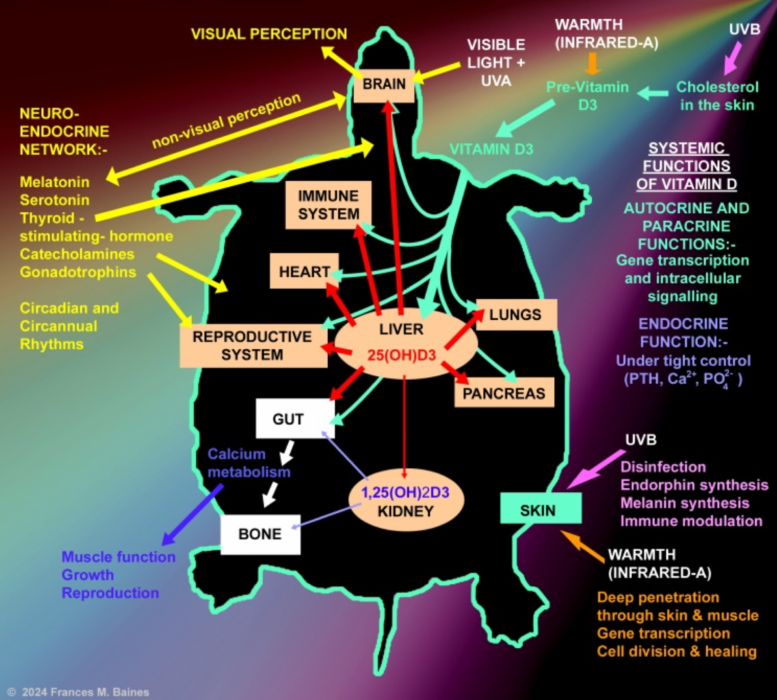
Figure 1. A summary of the primary effects of different parts of the sun’s spectrum on the reptile body. The light visible to reptiles includes ultraviolet-A (UVA), which enables full color vision in many species of reptiles. Both the spectrum and the intensity of light reaching the animal stimulate areas of the brain responsible for setting circadian rhythms and activity levels, and the pineal gland’s production of hormones regulating numerous bodily functions. Visible light and short-wavelength infrared from sunlight are responsible for its warming effect; infrared penetrates deeply and also upregulates genes controlling cell multiplication and healing processes including the immune system. Natural levels of ultraviolet-B (UVB) also have direct beneficial effects on skin, killing bacteria, fungi and viruses, modulating the skin’s immune response, stimulating endorphins (the “feel-good factor”) and increasing pigmentation. Image credit: Dr. Frances M. Baines. Click image to enlarge.
UVB and vitamin D3
The best known role of UVB from sunlight is in enabling Vitamin D3 synthesis. A cholesterol in the skin is converted to pre-D3 by UVB. Warmth converts pre-D3 to Vitamin D3. This is taken up into the bloodstream and carried to all parts of the body. In the liver, some is hydroxylated to 25–hydroxyvitamin D or 25(OH)D3, a stable “storage” form, measured in blood samples to assess vitamin D3 status. This then re-enters the bloodstream and is carried to all parts of the body.
A small amount of 25(OH)D3 is needed daily by the kidneys, which convert it to the active hormone 1,25-dihydroxyvitamin D or 1,25(OH)2 D3. This is carried in the bloodstream around the body, to maintain calcium homeostasis. It enables the cells in the gut to transfer calcium in the diet into the bloodstream, and along with parathyroid hormone (PTH), keeps blood calcium levels stable by adjusting its excretion via the kidneys and its storage in bone. This is the endocrine function of vitamin D3.
Vitamin D3 and some 25(OH)D3 are also taken up daily by the cells in other organs including the skin, brain, reproductive organs and the immune system (e.g. white blood cells). Inside the cells, Vitamin D3 and 25(OH)D3 are converted to 1,25(OH)2 D3 which, remaining within the cells, regulates over 2,000 genes and cell signalling. These are the autocrine and paracrine functions of vitamin D3. Vitamin D plays an important supportive role in most organs studied, perhaps the most vital being in the immune system, where it promotes anti-bacterial and anti-viral responses and reduces production of inflammatory cytokines and autoimmune reactions.
Although some reptiles, especially carnivorous species, obtain vitamin D3 from the bodies of their prey, most wild reptiles, like mammals and birds, are likely to obtain the majority of their vitamin D3 from cutaneous synthesis during their exposure to the natural UVB levels in daylight, a free resource.
Mild vitamin D3 deficiency causes loss of autocrine and paracrine function, but endocrine action is preserved. Severe deficiency, however, results in an inability to absorb calcium from the diet. This essential mineral is instead extracted from the bones under the influence of parathyroid hormone, in order to maintain blood calcium levels and thus normal bodily functions. If untreated, this causes overstimulation of the parathyroid gland and results in a condition known as nutritional secondary hyperparathyroidism, more commonly described as metabolic bone disease (MBD). The bones become weak from calcium loss and can easily break or become soft and bowed; limbs may become swollen, and the condition can be very painful. Young animals’ growth is stunted and bony deformities result. If serum calcium levels fall to critical levels despite the demineralization of the bones, weakness, lethargy, muscle tremors, seizures, and finally death will result.
Lighting requirements vary among reptile species
Animals are adapted to function best in the environment to which they evolved; thus when planning lighting for a species, it’s vital to know the microhabitat in which the animal lives, and its behavior within that microhabitat. Does it bask in full sun at certain times of the day, like a bearded dragon? Or “mosaic bask” by exposing small amounts of its body to sun through foliage, like some chameleons? Or does its nocturnal habit mean that its only exposure to daylight is from filtered light through the trees or rock crevices reaching its body as it sleeps, like many geckos and snakes?
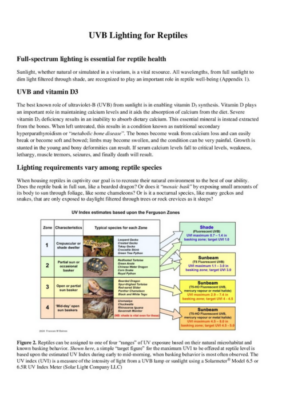
Pioneering research on the daily exposure to UVB across species from very different microhabitats (Ferguson et al. 2010) led to the development of the “Ferguson Zones” concept and a UV guide developed by, and for, UK zoos (Baines et al. 2016). Each species in this guide has been allocated to one of four “ranges” of UV exposure based on their natural microhabitat and known basking behavior. The UV Index is used as a measure of the irradiance; readings from a UV Index meter, the Solarmeter® 6.5 or 6.5R (Solar Light Company LLC) can be used from both sunlight and UVB lamps.
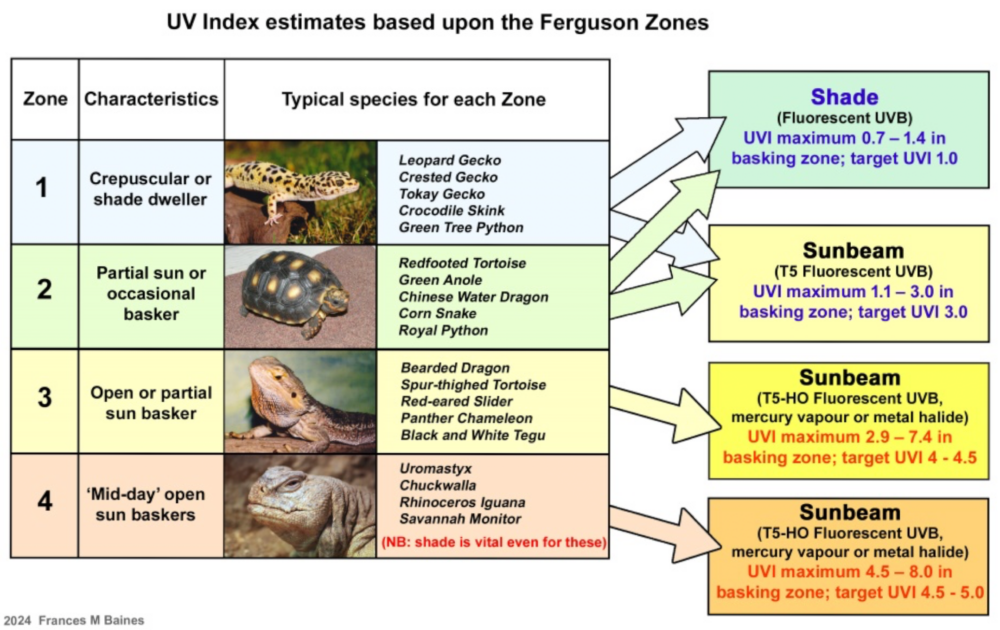
Figure 2. Reptiles can be assigned to one of four “ranges” of UV exposure based on their natural microhabitat and known basking behavior. Shown here, a simple “target figure” for the maximum UVI to be offered at reptile level is based upon the estimated UV Index during early to mid-morning, when basking behavior is most often observed. The UV index (UVI) is a measure of the intensity of light from a UVB lamp or sunlight using a Solarmeter® Model 6.5 or 6.5R UV Index Meter (Solar Light Company LLC). Image credit: Dr. Frances Baines. Click image to enlarge.
Full-spectrum lighting including species-appropriate levels of UVB is now widely recommended for all species, for health and welfare reasons. Species which consume whole prey and can utilize vitamin D3 from their diet do not appear to “need” UVB since many generations of apparently healthy animals have been reared without it, in the past. However, the amounts of vitamin D3 needed for adequate dietary supplementation are unknown, and whether animals maintained in this way have optimum vitamin D3 levels for all functions other than calcium metabolism is likewise unknown. In addition, without provision of full spectrum lighting, they are being deprived of the other benefits from natural levels of UVB and UVA.
Species-appropriate levels of visible light (including UVA) and short-wavelength infrared – the other major components of sunlight – are largely unknown. Research is urgently needed, as evidence emerges revealing the vital importance of adequate visible light for setting body clocks and activity levels, and the effects of IR-A on thermoregulation and basking behavior. In the absence of field data the most promising approach would be to match natural sunlight as closely as possible. The aim would be to replicate the spectrum, irradiance (intensity) and photoperiod appropriate to each species, within a suitably-sized “patch of sunlight” in the enclosure, giving the animals choice as to its use. Most vivarium lighting is inevitably dim when compared to direct sunlight, but “daylight” levels can be achieved. It is also vital to monitor temperatures, especially that of the basking zone surface and the ambient (air) temperature in the cool region of the enclosure. If the cool region provides a suitable retreat from the heat, and surface temperatures across the basking zone are safe, reptiles will thermoregulate effectively in a range of infrared irradiances. Preliminary studies using a power density meter to measure IR-A irradiance from lamps suggests a range between 250 – 350 W/m² IR-A may be appropriate, but further research is needed.
No single lamp can replicate the entire solar spectrum, but a combination of lamps placed close together, with overlapping beams aimed at a “basking zone” below, can create a “patch of sunlight” that reptiles will recognize as such and respond to, accordingly.
Generally this combination will consist of three types of lamp:
- UVB-emitting lamps sold for use with reptiles, such as a fluorescent UVB tube (for UVB and UVA, with some visible light);
- An incandescent lamp such as a tungsten filament reflector bulb or a halogen bulb (for “heat” – IR-A – and some visible light) and
- Either a “white” LED strip or flood bulb, or metal halide floodlight (for intense visible light). “Daylight” irradiance up to about 50,000 lux can be achieved in the basking zone in this way.
Non-light-emitting heaters such as ceramic heat emitters and “deep heat projectors” do not emit the wavelengths found in sunlight and are not suitable for use as basking lamps. This article covers only the first of the three components: UVB-emitting lamps sold for use with reptiles.
General guidelines
Lighting for captive reptiles is an ever-expanding area of research. The information provided below offers general guidelines, but we encourage every reptile owner to research their species of interest and to always ask your veterinarian if you have specific questions.
The “patch of sunlight” must be “just right”.
- The basking zone needs to be at least as big as the whole body of a lizard or chelonian, or snake loosely coiled. This ensures the heat, light and UV are spread evenly over the animal, all parts of the body irradiated simultaneously with no “hot spots” likely to cause thermal or UV burns.
- However, to ensure an adequate heat, light and UV gradient from “sun” into “shade” in a cool zone, the basking zone must not cover more than 50% of the enclosure.
The rays from the lamps must overlap and lamps must be above the reptile.
- To recreate “sunlight” the strongest UVB needs to be blending with the strongest visible light and infrared, underneath the lamps. UVB is strongest beneath the middle of a linear tube.
- To avoid glare, stress and possible eye damage, all lamps should be above the basking zone aimed downward, not angled such that they are in the reptile’s line of sight.
- Figure 3 shows three possible configurations for creating a “patch of sunlight” in a typical 1.2 m x 0.6 m x 0.6 m (4ft x 2ft x 2ft) vivarium.
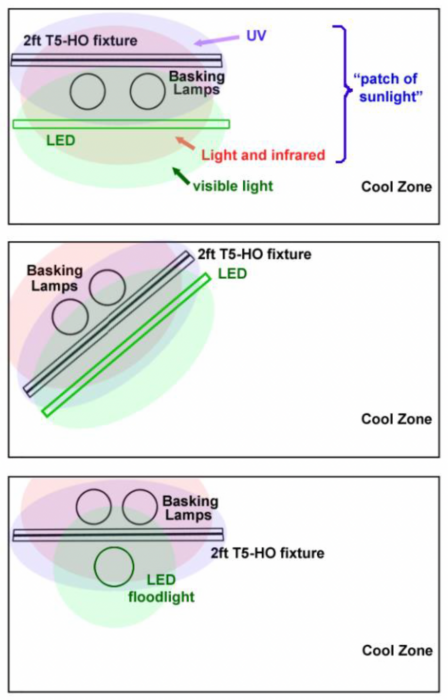
Figure 3. Three possible configurations for creating a “patch of sunlight” in a typical 1.2 m x 0.6 m x 0.6 m (4ft x 2ft x 2ft) vivarium. Image credit: Dr. Frances M. Baines. Click image to enlarge.
The strength of UVB rays decreases the further the animal is from the bulb.
- Just like any radiant source of light, UVB intensity diminishes with distance from the lamp. The irradiance at any given distance depends on the strength of the lamp and the shape of its beam.
- Just as they do for light, reflectors will gather up UV rays from all directions from a lamp and focus them into a forward-facing beam. Aluminum reflectors greatly extend the “reach” of UVB from fluorescent tubes.
- Always check manufacturer recommendations. Different types of bulbs must be placed at different distances in order for the UV Index level to be effective but not strong enough to be harmful.
- The basking area or the light may need to be raised or lowered depending on the distance needed for the bulb selected and the species kept.
UVB rays are blocked by glass or plastic.
- Normal glass used for windows and vivariums blocks all UVB. Most transparent plastics either block all UVB or a high percentage of it – and are also solarized by UV causing them to become brittle and discolored. UVB lamps should never be placed above glass or plastic sheets and cannot be used above a solid glass vivarium roof. Likewise, if a fluorescent lamp fixture or hood has a transparent plastic front cover or protective shield, remove it.
- Reptiles cannot benefit fully from sunlight reaching them through a glass window, since no UVB gets through, but light and infrared do. No glass vivarium should ever be placed where it can receive direct sunlight as the heat build-up inside can be rapidly lethal.
- UV-transmitting acrylic and glass do exist, for creation of skylights and outdoor shelters that allow some benefit from solar UV, but are expensive and hard to source. UV-transmitting acrylic (“sunbed acrylic”) is a specialist product that allows up to 80% transmission of solar UVB. Low-iron glass which allows up to 50% transmission is also available for special applications, under such brand names as Starphire® and Optiwhite®.
UVB light will be partially filtered out by passing through mesh.
- Mesh screen tops and mesh lamp guards block a percentage of the UV, light and infrared. How much is blocked is determined by the thickness of the wire (physically blocking the light) and the size of the gaps between the wires. Different brands of mesh vary in both wire thickness and gap dimensions. Current examples include:
- 0.64 cm (¼ in) wire mesh panels: 25% block
- Exo Terra® and ZooMed® screens and Arcadia LampGuardPro® tube guards: 35% block
- Dubia Reptile Enclosures® and Zen Habitats® screens: 45% block
- Owners of a UV Index Meter (Solarmeter® 6.5 or 6.5R) can simply use meter readings to adjust lamp placement above any screen. Alternatively, some charts are available showing lamp outputs at different distances for popular brands over mesh screens with varying transmission percentages, (visit the “Reptile Lighting” Facebook Group “Guides”).
UVB bulb output decreases over time.
- The UVB output from all lamps decays with use, owing to chemical changes in the phosphors and glass. After an initial drop over the first few weeks during the “settling-in” period, decay is very slow in good brands; many will provide good levels for well over a year.
- The best way to monitor output is with the UV Index Meter (Solarmeter® 6.5 or 6.5R), taking measurements at reptile level at least monthly. Although meters are expensive up front, they can save money in the long run as bulbs may last much longer than expected and may not need annual replacement!
- If you do not have a meter, replace bulbs at regular intervals even if the visible light seems unchanged. Check the manufacturers’ guidelines; annual replacement is recommended for all good well-known brands. Inexpensive products, often with unusual brand names or directly imported from China, are not recommended for use at all, owing to great variability in UVB output and lamp quality; but if they are used, they may well decay much more rapidly and might need replacing after only 3-6 months.
Lamps to AVOID
Every year many thousands of owners are sold lamps that are either totally useless or frankly dangerous for the species they keep. The following products merit a warning:
- Lamps –usually fluorescent tubes or LEDs – claiming to be “full spectrum” but with no indication that they have any UVB content. These are often sold as “plant grow lights”, “bird lamps” or for human use for seasonal affective disorder (SAD). They are only emitting a full VISIBLE spectrum, sometimes with a little UVA. All these are useless for vitamin D3 synthesis, but can be very useful in boosting ambient light!
- HAZARDOUS cheap, small halogen lamps, mainly sold direct from China, which have no protective front glass, just an unshielded halogen capsule. Many varieties are sold from Amazon and eBay, often described as “UVB+UVA 3.0” or “all-in-one”, or sold pre-installed in attractive-looking lamp holders. Unshielded halogen bulbs can emit UVC, and hazardous abnormally short-wavelength UVB, as well as focused, intense heat at close range. (Ordinary small halogen bulbs with glass front covers are perfectly fine, the glass blocks all UVB and UVC).
- POSSIBLY HAZARDOUS new products: UVB LEDs. The proposed future ban of all lamps containing mercury has led, understandably, to a rush to manufacture and sell LED lamps which emit UVB and UVA as well as visible light. It is essential that these are developed eventually, but to date, no UVB LED on sale has ever been tested as to its ability to enable vitamin D3 synthesis, or for its long-term safety. A wide range of companies, including well-known brands, are selling these at the time of writing. A theoretical analysis of their spectra (Wunderlich et al. 2023) has raised concerns that the spectrum of most, if not all of the lamps is so unlike that of sunlight that natural wavelength-sensitive processes preventing vitamin D3 overproduction in skin might be over-ridden. This could lead to vitamin D toxicity. The very strong UVB irradiance from some of the lamps tested was hazardous in itself, and some even emitted UVC. Until at least some trials measuring blood levels of vitamin D in reptiles under these lamps has been conducted, they cannot be recommended.
- Mercury vapor UVB lamps with clear glass faces, mainly sold by little-known Chinese companies, typically have extremely tightly focused UV beams. These fail to create adequate basking zones and may produce very small circles of extremely intense UVB, risking skin damage.
- Although not necessarily emitting unsuitable levels of UVB, there are many products being sold cheaply on the likes of eBay and Amazon, typically direct from China or Hong Kong, which are “copy-cat” versions of established high-quality products. Of low quality and largely untested by independent researchers, these can have a poor output and short lifespan. A typical current example is the Chinese ReptiZoo® brand’s product closely resembling the Arcadia ProT5 UVB Kits. When tested, the ReptiZoo® version had a poor quality fixture and a T5-HO tube which suffered rapid decay in its UVB output.
Choosing a UVB lamp
Some definitions and misconceptions
Manufacturers typically categorize lamps according to their output at “typical” distances (e.g. 30 cm or 12 in below the lamp) – naming them “Desert” (higher output) or “Forest” (lower output) which can give rise to a lot of confusion. Theoretically, even the most powerful UVB lamp could be used for low-level UVB if placed far enough away; and likewise a lamp with a low output at typical basking distances could provide high UVB at close range, if this was required.
Another confusing label is the “percentage of UVB” – for example, 6% UVB and 12% UVB, or 5.0 and 10.0 (representing 5% and 10% UVB). These figures don’t tell you anything about the intensity of the UVB you’ll measure at any given distance from the lamp; they tell you the percentage of the lamp’s output which is UVB; the rest being UVA and visible light. The higher the percentage, the more UVB you’ll get from a lamp of that brand, type and wattage; but that’s all. A 13 watt 12% UVB compact lamp will have a higher output than a 13 watt 6% UVB compact lamp, but a vastly lower output than a 54 watt 12% UVB T5-HO tube.
Linear UVB fluorescent tubes are the most versatile and widely-used UVB lamps sold for use with reptiles. The tubes are of two distinct types. T8 versus T5 designates the diameter of the bulb.
A T8 tube is an older style, diameter 1 inch. These produce low level, well diffused UVB in all directions. If a good aluminum reflector fixture is used, the output under the tube can be doubled; but even the 10%-12% UVB versions, in reflector fixtures, are best reserved for reptiles with low-UVB requirements unless the animal will be basking very close to the lamp, e.g. around 15 cm (6 in) distance for UVI 4.0.
T5 tubes are very slim (1.5 cm or 5/8 inch diameter) and are not compatible with T8 tubes. Two versions exist: T5-SO (Standard Output – also called T5-NO) and T5-HO (High Output). Good aluminum reflector fixtures can boost the output under T5 tubes to 3x that of a bare tube. The T5-SO tubes are low wattage, low output tubes, ideal for small terrariums and shade dwelling species. The T5-HO tubes require higher wattage fixtures and are among the most powerful UVB lamps currently available. A 14% UVB T5-HO from a good brand in a quality fixture will produce UVI 4.0 at around 18 inches distance. Multiple T5-HO tubes mounted side by side in horticultural reflector fixtures can be used to create enormous UVB coverage for large animals in zoo enclosures; for example, eight 54 watt 12% UVB tubes can produce UVI 4.0 in a basking zone 1.2 m (4 ft) wide when positioned up to 1.5 m (5 ft) above the animal’s back.
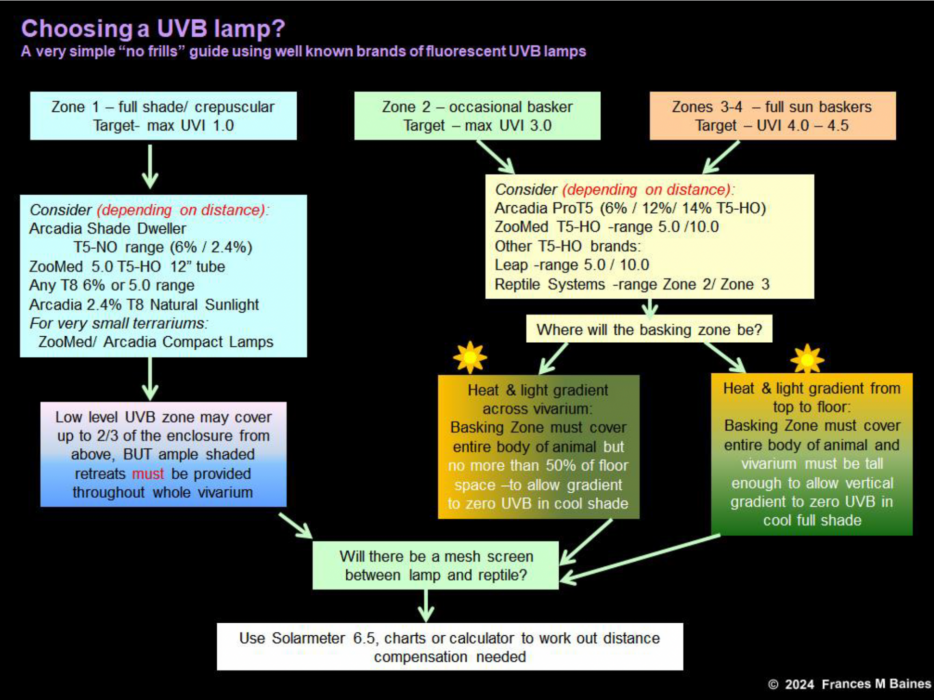
Figure 4. A simple flow chart to aid in selection of an appropriate linear fluorescent tube. Image source: Dr. Frances M. Baines. Click image to enlarge.
Compact fluorescent lamps produce UVB only in a limited zone around the lamp, with a very steep gradient and intense UV close to the bulb. They are often included in starter reptile kits but are not ideal for use with most commonly kept reptile species owing to their limited coverage. If mounted horizontally in a hood over a very small terrarium, they can provide UVB where larger bulbs cannot be accommodated; however their steep UV gradient requires access to the mesh directly under the lamp to be restricted as the UVI may be very high at such close range
Mercury vapor UVB lamps are high-intensity discharge (HID) lamps, which combine a mercury vapor arc tube with an incandescent filament to create a reflector bulb that produces a combination of UVA, UVB, visible light, and infrared. They are a very old technology, and although the concept of an “all-in-one” lamp is appealing, they have significant set-backs. The arc tube produces a spectrum very unlike sunlight, with visible light mainly in purple and greenish-yellow, resulting in very poor color rendering. They cannot be dimmed or put on a thermostat; if the lamp is turned off, the arc tube will need to cool down before it can be re-ignited. Heat output is high, so they are unsuitable for smaller vivariums or for mounting inside a vivarium.
Clear-faced versions often have narrow intense beams; those with frosted glass produce wider beams but a major concern is the extreme variability in UVB output, even between lamps of the same brand and wattage. It is rare for a lamp to produce the desired UVI and basking surface temperature at the same distance, making lamp placement difficult. Ideally, each lamp’s output should be monitored with a UV Index meter to ensure safe levels of radiation. Quality and longevity is a concern as incandescent filaments are fragile and have a limited lifespan.
Metal halide lamps are HID lamps with significant improvements over mercury vapor lamps. The arc tube contains a mixture of mercury and halides which, when vaporized by the arc, create an extremely brilliant white light with excellent color rendering, plus UVA and some UVB, although with some brands the UVB quickly decays, leaving a very high quality lamp providing exceptionally bright white light and UVA, which can last for several years. The main disadvantages are the requirement for an external ballast and good electrical wiring for a 4kV ignition pulse; lack of ability to dim or put on a thermostat, and difficulty in sourcing them. In the USA the only existing brand sold for reptiles at the time of writing is the ZooMed® Powersun HID, a PAR36 70watt lamp, and a matching ballast fixture. Commercially available non-UVB metal halides are still available and can make excellent sources of strong visible light, but like all HID lamps, they are being replaced everywhere by LEDs.
Client education handout
Visit the 4-page client education handout, available for download as both a PDF or a DOCX that can be modified to best meet the needs of your veterinary hospital.
For additional information visit:
“Reptile Lighting” Facebook Group: This online source provides a way to interact with other reptile owners and ask questions about any aspect of reptile lighting and heating. A section of the forum entitled “Guides” includes charts of the measured output of commonly-used T5 lamps, plus sets of articles covering issues such as the Ferguson Zones, UVB LEDs, and Infrared Basking Lamps, as well as links to relevant podcasts. The Admin team includes a small group of experienced reptile keepers and scientists involved in serious lighting research, as well as knowledgeable long-term keepers happy to discuss any topics that come up. With 45,000 members worldwide, questions are often about basic care, posed by newcomers to the reptile world – but challenging new ideas are also discussed in depth.
UV Guide UK: The original Reptile Lighting website with information about UV, lights, UV meters, etc. Although now 20 years old, much of the information is still applicable.
ReptiFiles website: A useful site for prospective reptile owners or new keepers, by American author Mariah Healey, who describes herself as a “reptile husbandry researcher and consultant”. Mariah has developed detailed “care guides” for some of the most popular reptile pets, which contain full descriptions of suitable lighting and heating equipment, and shorter “care sheets” for a wide range of other reptiles often kept as pets. Mariah includes “shopping lists” using affiliate links for USA readers.
Solarmeter 6.5R UV Index Meter: Solar Light Company has distributors worldwide, including online stores.
Further reading
Baines FM, Cusack LM. Environmental lighting. In: Divers SJ, Stahl SJ (eds). Mader’s Reptile and Amphibian Medicine and Surgery,, 3rd ed. 2019; St. Louis, MO: WB Saunders. Pp. 131-138.
Baines F, Chattell J, Dale J, et al. How much UV-B does my reptile need? The UV-Tool, a guide to the selection of UV lighting for reptiles and amphibians in captivity. Journal of Zoo and Aquarium Research. 2016; 4(1): 42-63. Available at https://www.jzar.org/jzar/article/download/150/89. Accessed Aug 20, 2024.
Barolet D, Christiaens F, Hamblin MR. Infrared and skin: Friend or foe. Journal of Photochemistry and Photobiology B: Biology. 2016;155:78-85. doi: doi: 10.1016/j.jphotobiol.2015.12.014.
Bertolucci C, Frigato E, Foà A. The reptilian clock system: Circadian clock, extraretinal photoreception, and clock-dependent celestial compass orientation mechanisms in reptiles. Biological Timekeeping: Clocks, Rhythms and Behaviour. 2017; 223-239. doi: 10.1007/978-81-322-3688-7_10.
Ferguson GW, Brinker AM, Gehrmann WH, et al. Voluntary exposure of some western‐hemisphere snake and lizard species to ultraviolet‐B radiation in the field: how much ultraviolet‐B should a lizard or snake receive in captivity? Zoo Biology. 2010;29(3):317-334. doi: 10.1002/zoo.20255.
Ferguson GW, Gehrmann WH, Vaughan MS, et al. (2021). Is the natural UV zone important for successful captive propagation of the Panther Chameleon (Furcifer pardalis); are different UVB irradiance exposures that generate a similar dose equally successful? Zoo Biology. 40(2):150-159. doi: 10.1002/zoo.21591.
Fleishman LJ, Loew ER, Meal M. Ultraviolet vision in lizards. Nature. 1993;365:397. doi: 10.1038/365397a0.
Hoby S, Wenker C, Robert N, et al. (2010). Nutritional metabolic bone disease in juvenile veiled chameleons (Chamaeleo calyptratus) and its prevention. The Journal of Nutrition. 2010;140(11), 1923-1931. doi: 10.3945/jn.110.120998.
Holick MF. (2016). Biological effects of sunlight, ultraviolet radiation, visible light, infrared radiation and vitamin D for health. Anticancer Research. 2016;36(3), pp.1345-1356. Available at https://ar.iiarjournals.org/content/anticanres/36/3/1345.full.pdf. Accessed Aug 20, 2024.
Karsten KB, Ferguson GW, Chen, TC, Holick MF. Panther chameleons, Furcifer pardalis, behaviorally regulate optimal exposure to UV depending on dietary vitamin D3 status. Physiol Biochem Zool. 2009;82:218–225. doi: 10.1086/597525.
Oonincx DGAB, Diehl JJE, Kik M, et al. 2020. The nocturnal leopard gecko (Eublepharis macularius) uses UVb radiation for vitamin D3 synthesis. Comparative Biochemistry and Physiology Part B: Biochemistry and Molecular Biology. 2020; 250:110506. doi: 10.1016/j.cbpb.2020.110506.
Sievert LM, Hutchison VH. Light versus heat: thermoregulatory behavior in a nocturnal lizard (Gekko gecko) Herpetologica. 1988;44(3): 266 -273 https://www.jstor.org/stable/3892340.
Tosini G. The pineal complex of reptiles: physiological and behavioral roles. Ethology Ecology & Evolution. 1997; 9(4):313-333. doi: 10.1080/08927014.1997.9522875.
Wacker M, Holick MF. Sunlight and Vitamin D: A global perspective for health. Dermato-endocrinology. 2013; 5(1):51-108. Available at https://www.tandfonline.com/doi/pdf/10.4161/derm.24494. Accessed Aug 20, 2024.
Watson, M. K., & Mitchell, M. A. (2014). Vitamin D and Ultraviolet B Radiation Considerations for Exotic Pets. Journal of Exotic Pet Medicine, 23(4), 369-379 https://www.sciencedirect.com/science/article/abs/pii/S1557506314001566
Wunderlich, S., Griffiths, T., & Baines, F. (2023). UVB-emitting LEDs for reptile lighting: Identifying the risks of nonsolar UV spectra. Zoo Biology. 2023; 43(1):61–74. doi: 10.1002/zoo.21806.
Baines FM. UVB lighting for reptiles. August 20, 2024. LafeberVet web site. Available at https://lafeber.com/vet/uvb-lighting-for-reptiles/