As we begin planning the photo shoot for our “Welcome Spring” entry on Facebook, it struck me that most readers probably do not realize how much effort such shoots take. One might think that, because my parrots can do complex cognitive tasks and comprehend and produce English, that they are perfectly trained in all respects. Such is absolutely not the case! Just because they will do things like wait 15 minutes for a better treat, or vocally identify some optical illusions, doesn’t mean that they will happily have their picture taken. In fact, taking their picture necessitates dealing with several different (often simultaneous) problems.
Using Parrot-Approved Backgrounds
The first issue is the background that we use for each picture. I am extremely fortunate to have had, both now and in the past, students who are superb artists, and who come up with terrific ideas for different types of props. You can see some of these gorgeous pieces of art on our Facebook page. The problem is that the parrots don’t always agree with our artistic taste. So, there was that Hallows’ Eve when the humans thought our “friendly ghost” was absolutely the cutest fellow ever…but Athena took one look and tried to get as far away as possible! And the paper candy corn that really did look good enough to eat…
Capturing The Perfect Parrot Pose
The second issue is getting the birds to pose. Athena is rarely a problem. As soon as she sees the camera, she gets into her “flirty” mode. I’m sure she was a runway model in a former life. Griffin, in contrast, despite being the subject of photo shoots for over 20 years, is of the “deer-in-the-headlights” mentality. He can be sitting in the same place, on the same perch, and look absolutely adorable…until he sees the camera. Sigh.
Working With Two Parrots
The third issue is coordinating the two birds’ behavior. I’m sure that anyone who has worked with either small children or any animals can commiserate. Just when the lighting is perfect, both birds are looking at the photographer, and the angles between them couldn’t be any better — one or the other decides it’s time to poop. Or that a feather needs adjusting. Or it seems like the right time to hop off the perch and mess with a prop. Or one or the other decides that it’s a good time for a nap. Or a sneeze. Or the phone rings and both birds startle. Or one of the other research associates in the lab inadvertently drops something and destroys everyone’s concentration. Most of the time it’s simply that when one parrot looks gorgeous, the other doesn’t…
Fortunately, my lab managers have always had endless patience. They will go through dozens of pictures, trying to find one or two that capture the mood that we want. Maybe someday we should put together a booklet of “outtakes” and sell it as a fundraiser item! You can see one of those pix — a “grumpy” Grif when we were trying to photograph him getting some ‘spoon tickles”… cute, but not exactly the pose for which we were hoping!
The first day of April is notable mostly because that is the time of the year where pranks and deception rule the day. With that theme in mind, there are plenty of instances in nature where animals have evolved to be deceptive as a survival tactic. Here’s a look at bird species that use trickery to get ahead.
The fork-tailed drongo, an African native, likes to hang out with flocks of other birds. This bird typically fills the role of lookout and gives off an alarm call when predators are in the area, which sends the flocks of birds around it scattering into the air to flee. But there is one trick the drongo likes to play to score some easy food, and that is to set off a false alarm call. When the birds around it take off, the drongo goes in and steals their food. If the other birds start to catch on, there’s another trick up the drongo’s sleeve. Researcher Tom Flower of the University of Cape Town and his colleagues determined that the drongo can also mimic the alarm calls of 45 other bird and animal species.
Never underestimate the heroics birds are capable of when it comes to protecting their young. For example, it’s not uncommon to see little birds fly after birds of prey to drive them away from a nest or chicks. Some ground-nesting birds, which are especially vulnerable to being preyed upon, rely on deception to lure predators away from their nests and young. Birds like the killdeer, native to the U.S., Canada and Mexico, protect their nests by feigning injury. The adult killdeer will drag one wing while frantically flapping the other and giving off a distress call. If this doesn’t stop the predator from heading toward the nest, the bird will wobble closer to the predator to get its attention and then flies off when it has distracted the predator. The Northern lapwing employs a similar tactic to protect its young.
Free Nanny
A reed warbler parent feeds a much larger cuckoo chick that hatched in its nest. Cuckoo hens are known to lay their eggs in other birds’ nests and their chicks are subsequently cared for by the tricked bird. Photo by Per Harald Olsen, CC BY-SA 3.0, via Wikimedia Commons
Some birds have taken the burden of raising chicks off their shoulders so to speak and instead put that burden on a non-related bird species. Reed warblers are just about the size of a sparrow but they sometimes get tricked into raising a bird four times its size. That larger bird is a cuckoo.
Cuckoo hens are known to fly into a reed warblers’ nest (as well as the nests of dunnocks and meadow pipits), when the parents are away so the cuckoo hen can lay an egg next to those of the reed warbler’s. When the eggs hatch, the unsuspecting reed warbler gets tricked into rearing the cuckoo’s chick. The cuckoo is a brood parasite, which describes an organism that relies on others to raise their young. This behavior is seen in birds, insects and some types of fish.
In a more extreme case of parasitic birds, the North American brown-headed cowbird has been observed “punishing” host birds by destroying their clutches if the host birds reject their eggs. According to Maria Abou Chakra, lead author of a study on the cowbird’s parasitic behavior, “They give the hosts no choice. If they wish to avoid retaliation, they need to keep the foreign egg.”
You can get an up close look at this “mafia-style” parasitic behavior in this Sciencearticle, which includes how the cowbird stakes out its target nest and has to get the timing just right to swoop in and leave its egg.
Although Spix macaws exist in several captive populations, the last known individual in the wild disappeared in 2000. Danny Ye / Shutterstock
With so many animals and birds recorded on a globally registered watch list, there are those that could be gone from us within the blink of an eye. Interestingly, emerging biological and preservation technologies currently being developed might be a way of saving endangered species.
The art of fiction gave us a realistic look at bringing back long-gone species by way of movies like “Jurassic Park.” Although bringing back creatures dead for longer than 10,000 years is considered impossible, the emerging science is certainly there for more recent extinct creatures. In this time, much of that previously unrealized concept is closer to becoming reality.
Back in 2003, a DNA sample retained from the now extinct Pyrenean Ibex (a type of goat extinct since 2000) was used to clone and bring back to life the goat in a lab setting. Unfortunately, the goat died shortly after its birth. But with that little bit of success, large hopes have been fueled by the concept of eradicating extinction in as complete a manner as is genetically possible. More recently, there is hope that a Wooly Mammoth can be resurrected within the span of two years. With well-preserved bodies of the creature extracted from the Siberian permafrost, the DNA samples are as fresh as can possibly be. Nevertheless, even with some remarkable samples available, the science is a young one. It will no doubt go though much trial and error before possibly becoming a routine procedure.
Hope In “Frozen Aviaries”
Currently, there are more than one hundred species of exotic birds on the endangered list. Many scientists have dedicated their lives to the preservation of these species. With habitat changes, predator relocations, and climate changes, our precious birds have proven to be a challenge to adaptation of new locations or procedures designed to take the place of their once natural habits. Some of those birds will die out, lost to us. But it doesn’t have to be like that at all.
The establishment of ‘frozen aviaries’ is a unique preservation concept that promises to maintain the stem cells from birds that can later be used to revive a rare breed. The Roslin Institute at the University of Edinburgh has started to collect stem cells from rare chicken breeds with the intent to use them if needed some decades down the road. With scientific manipulation, the ability to reduce bad genes that might otherwise jinx the attempts to strengthen the quality of the embryo is enhanced. Eventually, with the right science in place, the resurrection of extinct birds might become a commonplace event. Better, as birds are nearing endangerment, the proper procedures can be implemented to increase seriously waning populations.
With small genetic manipulations, the DNA of birds that are susceptible to their changing habitats, either by encroaching disease or evolving climate, could be made to resist such invaders and viral enemies. In time, the birds we have recently lost and/or those becoming increasingly rare might someday be revitalized.
In honor of St. Patrick’s Day, which falls on March 17 each year, here’s a look at one popular bird in Ireland — the Northern lapwing — as well as some parrots whose plumage will make us all green with envy.
While Ireland doesn’t have an official national bird (yet!), the northern lapwing (Vanellus vanellus) — also referred to as the green plover — seems to be garnering a good deal of votes among bird enthusiasts. This bird’s distinguishing features include rounded wings, a black crest, and its striking colors, which loosely resemble the colors in Ireland’s flag (green, white and orange) with its green-tinged and copper-colored back with a white belly and light orange-tinged undertail coverts.
The northern lapwing’s name is said to either come from the lapping sound of its wings in flight or the lapwing’s unique way of drawing predators away from the nest, which is to trail its wing behind it as if it has an injured wing. The lapwing also has a tenacious alarm call, which it will unleash at intruders near the nest. No traditional Irish foods like potatoes or corn beef and cabbage for this bird — the lapwing prefers to eat at night under the moonlight, and dines on insects and other small invertebrates.
Parrots Ready For St. Patrick’s Day
There will be no pinching these parrots on St. Patrick’s Day … they wear their green all year long!
In lay speak “green parrot” is a common name for an Amazon parrot, as green is their dominant color. Amazons are also known for their outgoing personalities, and many have a penchant for singing. Check out this radio interview featuring a double yellow-headed Amazon parrot from Ireland who cheers on his favorite Irish football team by singing the Irish ballad, “The Fields of Athenry.”
Male Eclectus parrots are so visually different than females that ornithologists once believed they were two separate species of parrot. With the female being predominantly red and the male a lush green, you might say that an Eclectus pair looks like Valentine’s Day and St. Patrick’s day paired together.
The white-bellied caique (Pionites leucogaster) just so happens to have all the colors of theIrish flag, green, white and orange. Words that describe caique parrots, which also include the black-headed caique, are spunky and bouncy. These energetic birds love to hop around! Here’s a fun clip of a caique doing the Irish “Riverdance.”
I recently presented an hour-long lecture to veterinary students on the cognitive and communicative abilities of African grey parrots. Given that I had only about 45 minutes to present the material (so as to leave time for questions) and lots to say, I organized the talk as I often do these days: I provided very little background and immediately went into the descriptions of the various current studies in my laboratory.
I wasn’t thinking about the fact that many of these young adults, although familiar with my work in general, had never read my journal articles nor had previously heard me speak. So when one of them asked about how I had actually trained Alex, Griffin, and now Athena, to use English speech meaningfully, I was momentarily surprised. Then I realized that it had actually been quite some time since I had described my techniques in talks, and even in professional papers, preferring just to refer to earlier publications. As a consequence I thought I would take this opportunity to provide this information, along with a bit of background.
Training Referential Communication
In the 1970s, after reviewing what was then known about vocal learning in parrots (actually, not very much at the time), language acquisition in children, and psychological constructs of social learning in humans, I formulated a type of instruction, termed the model/rival (M/R) system. The approach efficiently teaches a parrot both how to speak and how to use its speech appropriately. It is based on methods developed by Todt (1975) and Bandura (1971), and it uses three-way social interactions among two humans and a parrot, as a way to demonstrate the vocal behavior that is to be learned (Pepperberg, 1981; see photos).
The parrot observes two humans handling and speaking about one or more items and how these individuals interact with each other. As the parrot watches and listens, one trainer presents objects and queries the other trainer about these items, with such expressions as “What’s here?,” “What color?,” giving praise and transferring the named item to the human partner as a reward for correct answers. Incorrect responses are punished by scolding and by temporarily removing items from sight.
Thus the second human serves both as a model for the parrot’s responses and its rival for the trainer’s attention, and also illustrates the consequences of errors. The model must try again or talk more clearly if the response was deliberately made incorrectly or garbled; that is, the model is subject to what we call the “process of corrective feedback” and the bird observes this process in action. The parrot is also included in the interactions: it is queried and rewarded for successive approximations to correct responses, and training is adjusted how well it is performing. If a bird is inattentive or its accuracy regresses, trainers threaten to leave.
Unlike M/R procedures others have used (Todt, 1975; see discussion in Pepperberg & Sherman, 2000), we interchange roles of trainer and model, and include the parrot in interactions. This procedure shows that a questioner can also be a respondent, and demonstrates the specific effect of particular vocalizations. Role reversal also counteracts an earlier problem: birds whose trainers always maintained their respective roles responded only to the particular human questioner (Todt, 1975). With our technique, birds will respond to, interact with, and learn from any human.
M/R training uses only intrinsic reinforcers: to have the closest possible link between labels or concepts to be learned and the appropriate vocalization, the reward for uttering “X” is access to X, the object to which the label or concept refers. Earlier unsuccessful attempts to teach birds to communicate with humans used extrinsic rewards (Pepperberg, 1999): a single food was used that neither related to, nor varied with, the label or concept being taught. This procedure delayed label and concept acquisition by confusing the label of the targeted item or concept being trained with that of the food reward. We never used extrinsic rewards. Use of the label to request the item from the start also shows the bird that uttering labels is really useful.
Later, when we had to train more complex tasks but had to use the same objects (e.g., for studies on labeling the number of items in a set), and the birds were no longer terribly interested in these objects, we trained them to use the phrase “I want X” and “Wanna go Y” so that they could request whatever reward they wanted—be it a piece of cashew, a tickle, or to return to their cage and an end the session.
Although training a bird in this manner may seem to be something relevant only to scientific studies, it can be quite important in the daily life of a companion bird. One wouldn’t accede to all of a parrot’s requests (much like one wouldn’t do so for a young child—just so many cookies can be consumed in a given day!), but it seems only reasonable to give a parrot at least some control over its daily life. Think of how you would feel if absolutely every aspect of your day was decided by someone else.
One of my friends actually asks her bird to choose among the acceptable fruits and veggies that can be put in its bowl each morning. We don’t do that for our parrots, but we’ve thought about it, as she claims that it cuts down on a lot of waste. We do, however, let our birds choose where to spend their free time, and to decide which toys they want as rewards. We find that our birds really seem to like having some choice in their lives.
Bandura, A. (1971). Analysis of modeling processes. In A. Bandura (Ed.), Psychological modeling (pp. 1–62). Chicago: Aldine-Atherton.
Pepperberg, I.M. (1981). Functional vocalizations by an African Grey parrot (Psittacus erithacus). Zeitschrift für Tierpsychologie, 55,139–160.
Pepperberg, I.M. (1999). The Alex studies. Cambridge, MA: Harvard University Press.
Pepperberg, I. M., & Sherman, D. V. (2000). Proposed use of two-part interactive modeling as a means to increase functional skills in children with a variety of disabilities. Teaching and Learning in Medicine, 12, 213–220.
Todt, D. (1975). Social learning of vocal patterns and modes of their applications in Grey Parrots. Zeitschrift für Tierpsychologie,39, 178–188.
March 2 is National Read Across America Day (hey, why not read to your bird?!) and coincides with the birthday of children’s author and illustrator Theodor Seuss Geisel (aka Dr. Seuss), best known for his colorfully illustrated, rhyming children’s books like “Cat in the Hat” “The Grinch Who Stole Christmas” and “Green Eggs and Ham.” His books are filled with animal characters, including birds. For the most part, Dr. Seuss’s birds look familiar, but their feathers and shapes are best described as otherworldly. We’ve previously shared some real-life birds that look like they belong in a Dr. Seuss book, and here are some more fantastical Dr. Seuss-like birds to check out.
When describing birds that are breathtaking, a vulture probably doesn’t come to mind. But one look at the King Vulture (Sarcoramphus papa) and it’s hard not to take a deep breath and think “Wow!” This large bird from Central and South America has a mostly white body, but the skin on its head and neck is a kaleidoscope of colors, such as purple, orange yellow, blue and red. Some say it is so named because it shoos away other vultures when they’re found success in scavenging for a carcass. Perhaps other birds are so transfixed by the King Vulture’s appearance that they stand aside and let the King by to have first dibs.
Dr. Seuss had a way of drawing a parrot-like bird but with a twist. The hawk-headed parrot (Deroptyus accipitrinus) certainly is a parrot with a visual twist.
This parrot native to the Amazon Rainforest not only has a dizzying array of color — a dark brown face with white streaks, green wings, flanks and tail, and a red and blue barred breast — it has a colorful “headdress” of feathers that it raises, usually when excited.
With raised neck feathers, the hawk head’s look is transformed before your eyes. Hawk-headed parrots are kept as companion animals, although less commonly so than other companion parrot species.
TheAndean Cock-of-the-Rock (Rupicola peruvianus) has the honor of being the national bird of Peru. The male (pictured) has a large disk-like crest and bright orange plumage. The female, on the other hand, is noticeably different as she is darker and browner. The male’s courtship display is elaborate, as males are known to have confrontation displays with other males, where they face each other and bob, jump and flap while squawking and grunting and showing off their repertoire of sounds — all to impress females, a sort of bird dance-off if you will … in a Dr. Seuss world it would go something like, “The Rock goes hop, hop hop …”
The red-crested turaco (Tauraco erythrolophus) looks like a Dr. Seuss-styled bird crossed with a dinosaur. It is the national bird of its native Angola, and its call is said to sound like that of a monkey’s.
In the wild, turacos feasts on fruit, flowers, figs, leaves, termites, and even snails. Turacos are also referred to as the “go-away” bird, as that is what its call sounds like.
I often describe African grey parrots as having the cognitive abilities of a 5 to 6 year old human child, but having the social skills closer to that of a 2 year old. I can point to a number of scientific papers that provide the support for the first claim, but when I’m asked how I can justify the second, I have to fall back on anecdotal evidence comparing my birds with my friends’ toddlers. One particular behavioral setting does, indeed, provide lots of such anecdotes: that of the bedtime struggle.
A Bedtime Story…
Every human parent to whom I’ve talked seems to go through the same nighttime difficulties with their young child — generally, a preschooler, and most often a child somewhere between 2½-3½. The child gets into bed — and then wants another story read, a drink of water, another hug, or fears a monster in the closet. Interestingly, we see very similar behavior patterns in our parrots, who spend the day mostly outside of their cages, but have to be put inside when we leave for the day.
Parrots Like Routines
Just like human parents, we have certain set routines that signal the end of the day. We do a final cage cleaning, changing cage liners, making sure that there is fresh food and water, vacuuming the area around the cages, etc.; finally, the main lights in the lab go off while a night light stays on for a brief period to suggest dusk. The birds know these routines as well as we do. But, just like human toddlers, our birds don’t seem to want to accept that these actions indicate that it is time for us to leave.
Alex initially would go through a series of requests: “Want some water!” (even though there was a dish of fresh water a few inches from his beak). “Want tickle!” “Wanna nut”, “Wanna go gym”, “Come here, pay attention!” (This last usually accompanied by outspread wings and what one could only describe as a look of fear at being left alone.) In fact, trying to avoid all these behavior patterns was why we started the now famous good night routine — telling him to be good, that we were going to go eat dinner, that we loved him, that we’d see him tomorrow. He learned these phrases, and duetting them with us seemed to calm him down and reassure him that bedtime (or, to be more precise, cagetime) was a normal part of life.
So far, neither Griffin nor Athena seem to want to take part in much of any good night routine that I have devised. When I try to put Athena back on her cage, she literally tries to wrap herself around my hand like a pretzel. Sometimes she’s so flipped over that I have to place her, back down and feet in the air, on the top of her cage. She even stopped saying her early attempts at “I love you” (I wuv wu) when she realized it was associated with my departure.
And although Griffin was part of the same routine used with Alex when he was alive, Griffin’s gotten into a different one now. He still gives me a good night kiss (a gentle nibble on my nose), then goes back to his cage to eat the last bits of soft-food dinner before it is removed for the evening. He “floofs” and seems totally calm…until I approach the door to the laboratory. Then both he and Athena engage in a combination of parrot shrieks and “Come here”, “Wanna nut”, etc. while I try to slip out. Relenting and going back to them does about as much good as it does with a human toddler — it just encourages more of the same!
Despite the struggle, I take heart in two facts: First, child psychologists argue that these behavior patterns also demonstrate developing cognitive processes — ingenuity in figuring out how to get what is wanted by adapting existent behavior patterns, and maybe even the beginning of some negotiating skills (see, for example, http://drcraigcanapari.com/curtain-calls-limit-setting-and-bedtime-battles-behavioral-sleep-problems-in-kids-part-2/. Second, in the wild, Greys that have been foraging in small groups during the day come together at night in extremely large flocks, sometimes of several hundred birds, probably as protection against predators (Juniper & Parr, 1998) — so our birds are likely just protesting against what seems quite abnormal to them, that is, the departure of individuals whom they treat as flock-mates during the day. (Who knows: Maybe the desire of our human ancestors to group together at night for protection is also the source of toddlers’ behavior?)
Not to worry, however: Both birds do calm down fairly quickly after we depart. We have used an infrared video cam to make sure of that. After they realize that we really are not coming back, they both seem to find comfortable positions on their sleeping perches in their respective cages, and are fairly quiet until the dawn light comes on the next morning.
Juniper, T., & Parr, M. (1998). Parrots: A guide to parrots of the world. New Haven: Yale Unviersity Press.
Our world is changing in so many ways. One of the ways that’s alarming is the rapid endangerment of a number of our exotic birds in the wild. Due to many reasons that do not exclude illegal poaching, habitat changes that include ongoing depletion of environmental essentials, and natural elimination by predatory creature, our beautiful birds in the wild are finding it harder and harder to maintain an exclusive means of survival.
Fortunately, there are many helpful agencies that have formed with the intent of assisting birds of all kinds to survive and, hopefully, jumpstart an expansion of their species by satisfactory mating and hatching of eggs without the aforementioned threats eradicating any hope.
One of those agencies is the Healsville Sanctuary. Located in Australia, this sanctuary is within the Zoos Victoria collective, a zoo that deals only with native Australian creatures. They specialize in breeding animals in the express hopes that they can be returned to the wild and learn to thrive without fear of encroaching dangers, natural or illegal. One of those is the Orange-Bellied Parrot. Long known to be near extinction with approximately fourteen birds in protected wild habitats, it was feared that we may have lost that battle.
Successful Hatches
Late last year, something miraculous happened at Healeville Sanctuary. After many frustrating attempts to encourage the birds to adapt to a changing habitat, the sanctuary was able to create an encouraging — and hopeful — event. That event was the laying of more than a hundred eggs by the birds and the successful hatching of 42 of them. Using a variety of different measures in diet, and habitat tweaks, the Orange-Bellied Parrot began to successfully hatch their eggs. In December of 2016, the first chick was hatched starting what is now considered to be the most fruitful of breeding seasons since the captivity insurance program was initiated.
Dr. Dejan Stojanovic from the Australian National University has dedicated his services to helping the endangered species adapt and thrive. After hatching, there are certain things to be aware of including the birds’ period of readying for independence. That growing period is fast lasting approximately two months before they are ready. Because of the accumulated data acquired by close studies and experimentation, this most recent group contains 40 chicks within the program.
Sadly, in January, 16 of the adult parrots died as a result of a bacterial outbreak. This is being investigated and hopefully stabilized before it spreads further. The Orange-Bellied Parrot Tasmanian Program (followed here on their Facebook page) details events of the program as they unfurl hereby keeping an interested public in the thick of it all. They inform of all nest boxes and the successful amount of nestlings that are found and nurtured within them.
The Healeville Sanctuary itself is spread out over 74 acres of native Australian landscape, and is home to kangaroos, Tasmanian devils, reptiles, Kookaburras, bats, the orange-bellied parrot, and other native Australian animals. They are a hope to the life of creatures that might otherwise be depleted if no one was there to help. The umbrella zoo is a not-for-profit entity that is dedicated to fighting extinction.
Should you find yourself in Australia, and would like to visit the Healesville Sanctuary, you need only to visit the zoo during pre-set hours, usually the standard 9 A.M to 5 P.M. timeframes. The costs are $12 per person with occasional special pricing in effect. There you can see not only the Parrot exhibits, but all of the Australian creatures that are cared for by the zoo.
The most striking features of birds is their ability to perform very rigorous functions in harsh environments such as diving deeply in cold water, flying at high altitudes, and running in hot deserts. This requires that their cardiovascular system (CVS) must be able to meet the demands of providing adequate delivery of oxygen to vascular beds that are taxed by extreme metabolic demands. The CVS must also efficiently remove metabolic byproducts to maintain function and hence performance.
Avian Heart Function And Adaptations
The avian heart is four-chambered. The right heart receives blood from the systemic circulation and pressurizes the pulmonary circulation. Blood returns to the left heart, where the left ventricle then pressurizes the systemic circulation. Both the right and left ventricles receive blood at the central venous pressure before they enter their respective outflow tract. This resistance to blood flow (peripheral resistance) is less on the pulmonary side when compared to the systemic side. For this reason, the left ventricle has more muscle mass to overcome the increased resistance on the systemic side to produce the same flow rate as that on the pulmonary side.
The relative size of the heart in birds is inversely related to a species’ body mass — the larger species of birds have reduced heart mass in comparison to the smaller ones. This arrangement differs from mammals as their body mass is directly proportional to the size of their hearts. This difference between birds and mammals may result from the fact that the heart from larger birds, such as the barnacle goose, can grow much larger (hypertrophy) prior to migration such that their hearts are proportional to their weight. Hummingbirds have proportionally larger hearts for their size, most likely because of the high aerobic demands of hovering flight.
The 4 chambers of the heart are completely divided into 2 atria and 2 ventricles. The right atrium tends to be larger than the left in most birds. The atria contract to empty blood into the ventricles during ventricular diastole, the time when they are not contracting. The left ventricle is cone-shaped and extends to the apex of the heart, while the right ventricle is a crescent-shaped cavity that does not go to the apex. Its right wall forms the interventricular septum that separates the 2 chambers. This allows the left ventricle to generate systolic (contraction) pressures that are 4 to 5 times greater than those produced by the right ventricle. Additionally, this anatomy is important for interpreting ultrasound diagnostics of the heart. Birds also have coronary arteries and veins that provide oxygen to this rapidly beating heart. There are different dynamics of these vessels so that birds that fly at high altitudes can dilate these vessels to continue to provide the oxygen they need to keep flying.
The pulmonary and systemic circulations have 3 main components: arteries or distributing vessels, the capillaries or exchanges vessels with the tissues, and the veins which store blood prior to return to the heart. The arterioles and venules are muscular vessels on either side of the capillary beds and act to control blood flow, thereby indirectly controlling the exchange of materials across the capillary bed with the tissues. Pressure that is generated by cardiac contraction drives the blood flow through the systemic and pulmonary circuits. Vascular resistance results mainly from the diameter of the blood vessels. Vessel size is controlled in part by muscular tone derived from the autonomic nervous system. All of the vessels are controlled by innervation from the parasympathetic and sympathetic nervous systems except for capillary beds.
Companion Bird Cardiovascular Health
Cardiac disease is not uncommon in pet birds, particularly the longer-lived psittacines that have largely been on high fat diets, with little exercise. Signs of cardiac disease may be subtle as most of our companion birds do little flying. When they do fly, they may breathe hard after exertion and their recovery to normal respirations will be longer than 3-5 minutes. Instead, the owner may notice decreased activity, pickiness regarding food items, reduced appetite, weakness and general lack of interest in activities in the home, such as playing with toys. Owners will relate that their parrot will be sitting on the perch and suddenly has increased respiratory effort and may have short periods of open mouthed breathing or they may not vocalize like they had previously. While this may also be from respiratory disease, your veterinarian needs to rule out if these signs could be cardiovascular in nature. Your bird may have a period of disorientation or may fall off the perch but then often recover relatively quickly. These are just some signs to watch for particularly as your parrot ages. Sometimes there may be no signs and there is just sudden death.
Until recently, equipment was not available that could evaluate avian heart function as well as aid in the diagnosis of atherosclerosis. The physical examination by your avian veterinarian should include watching your bird for a while to look at their posture, their overall character and attitude, and mobility, along with the respiratory rate and quality of breathing. The next step is to do a hands-on exam where the heart is auscultated with a pediatric stethoscope on the ventral chest in multiple locations to listen for soft murmurs or detect any changes from normal. Unfortunately, a normal auscultation does not rule out heart disease so additional tests may be performed.
In addition to auscultation, radiographs provide basic information regarding overall health along with heart size and the presence or absence of calcification of the great vessels to the heart. At our practice, we have observed that birds that do limited flying are more susceptible to heart disease along with those that eat seeds high in fats (like sunflower seeds) and other fatty foods. Radiographs help to determine if there is metabolic bone disease from the lack of flight and changes in the large vessels of the body along with the kidney — an organ that has a large number of blood vessels. Those with atherosclerosis will have calcification of the large vessels along with an increased brightness of the kidney on the radiographs.
Additional tests include monitoring blood pressures, measuring the electrical conductivity of the heart with an ECG, and performing an ultrasound of the heart. Future tests including computed tomography are just around the corner for our bird patients.
The term geriatric relates to old age, but do we really know when a parrot is old? That is a very difficult question as the answer depends in part on the life expectancy of that species of parrot. Unfortunately, we have limited information on that.
It’s only been about 20 years that we have known the age of hand-reared parrots. We’ve had data on the life expectancy of parrots in the wild, and for many years, assumed that life with us would make them live longer. But that seems to have been very wrong. It appears that nutrition, exercise and genetics all play into the life span of our parrots. It is better to define geriatric birds as those for which medical conditions associated with aging begin. In other words, if they show physiological signs characteristic of aging, then then are geriatric.
Parrots Age “Slowly”
We know that birds as a group enjoy remarkably slow aging rates and long life spans for their size. Dr. Ottinger reported that, “The remarkably slow aging that characterizes many members of the class Aves relative to similar-sized, non-flying mammals appears, at least in part, to be correlated with an evolutionary history of low adult mortality rates. Even small (<100g) songbirds, like barn swallows (Hirundo rustica) often survive in the wild up to 5 years or more; captive zebra finches (15 to 20 g) routinely live over 8 years.” She also stated that, “The long life spans and slow aging rates of birds are even more remarkable when considered in light of their high gram-specific rates of energy expenditure.
The oxidative damage hypothesis, currently a central theory in biogerontology, posits that reactive oxygen species (ROS) generated during normal oxidative metabolism are responsible for many of the molecular changes underlying aging-related physiological declines.” So, despite their high-energy expenditure, they don’t age at the rate you might expect or show the anticipated physiological declines.
Interestingly, Dr. Ottinger provided research evidence that “Avian defenses against oxidative damage may include a complex array of mechanisms, including antioxidant enzymes and structural defenses, such as lower levels of saturated fatty acids in cell or mitochondrial membranes. Birds may also have superior forms of protection against — and repair of — damage to DNA and other cellular components by pro-oxidant molecules.
Even more intriguing, however, is the possibility that bird mitochondria employ specialized alterations of the mitochondria “machinery” itself, including adaptive proton leak that may result in the production of fewer ROS in the first place. That means that there would be less damage to internal membranes, thereby allowing birds to live longer than mammals of comparable size.
Age-Related Ailments in Birds
The maximum recorded longevities (MRLs) of wild birds average 1.7 times greater than MRLs of captive mammals, and captive birds on the whole outlive captive mammals by a factor of three. While birds in the wild live much longer than mammals of similar size, birds in the wild do die from diseases associated with old age. Avian diseases of aging are generally similar to those seen in mammals, and include atherosclerosis, neoplasms including cancers, senile ocular cataracts, biochemical alterations in collagen and other connective tissues, and reproductive changes, including neoplasms, malignancies, and endocrinological deficiencies.
According to Zoo/Exotic Pathology Service, which looked back over years of data on older birds, budgerigars and lovebirds were considered older at 6; cockatiels at 12; and larger parrots including Amazons, macaws and cockatoos at 30. In our practice at Bird and Exotic Pet Wellness Center, we are observing these changes at the age of 20!
Cardiac disease has been historically underdiagnosed in pet birds. Atherosclerosis is reported most often in Amazon parrots, particularly in blue-fronted Amazon parrots, African grey parrots, and macaws, according to Drs. Reavill and Dorrestein. Commonly these lesions cause increased arterial resistance that affects the heart. Early changes in the heart include hypertrophy of the left ventricle followed by left ventricular dilation, dilation of the left atria, right heart dilation, and right heart failure. Right heart failure can lead to congestion, atrophy, and, subsequently, cirrhosis of the liver.
Many birds die because of a decreased blood supply to the brain as a result of severe narrowing of the carotid arteries. There may be a history of the bird going through periods of a loss of awareness of their surroundings in the days or weeks before their death. We commonly see parrots that have fallen off their perches and appear dazed for a short period of time, have seizures or changes in mentation. When looking at changes in the skin, the most commonly reported problem is dermatitis followed by skin tumors. Cataracts are common in birds as they age as well.
The lesions of hepatic fibrosis, bile duct reduplication, and aggregates of granulocytic extramedullary hematopoiesis are the typical findings in chronic liver disease in birds. Amazon parrots, cockatiels, macaws, and budgerigars seem to be more commonly recognized with chronic liver disease. Grossly, the affected livers are variably shrunken, pale, and fibrotic. The capsule is often thickened and the edges of the liver are rounded.
Degenerative lesions of the joints are more common in older psittacine birds. Causes include previous trauma or infection, or metabolic conditions, such as gout. Degenerative changes of muscle wasting and joint stiffness were reported in a group of aging macaws and were most prominent in birds over 40 years of age. Joint stiffness was characterized by a limitation in the range of motion of the joints, particularly the hock (intertarsal) joints. There were also twisting deformities that developed at the carpi, causing the primary flight feathers to twist laterally. New studies show that the bone degenerates when birds do not fly.
Ovarian tumors are the most common problem with the reproductive tract in parrots and in males there can be senescence of testes. Concerning the respiratory system, chronic interstitial fibrosis is reported in geriatric parrots and results in exercise intolerance. Pathologic examination revealed loss of functional lung tissue, pulmonary interstitial fibrosis, and right heart failure. Hematology revealed an elevated packed cell volume as a result of an increase in erythrocyte size and an increased hemoglobin. These are tests that can be run by your avian veterinarian.
Captive birds are blessed with adaptations that in theory allow them to live up to 3 times their comparably sized mammalian counterparts, but eventually it seems old age can lead them to the same panoply of geriatric diseases, including atherosclerosis, neoplasms, cataracts, connective tissue problems, reproductive changes, kidney failure, and cardiac disease. Like mammals, they can suffer from reduced mentation, dermatitis, skin tumors, liver disease, degenerative joint disease, ovarian tumors, and breathing difficulties.
Different species have different life spans, but geriatric parrots are those that are showing physiological signs characteristic of aging. It is up to us to provide the best care in terms of nutrition, habitat, social interaction, and exercise to ward off the afflictions of advanced age.
Nonscientists think that research always goes according to plan, that nothing unexpected ever happens. Of course, anyone who lives with a parrot might know otherwise, and that person would be correct. It’s not a common occurrence, but every once in awhile, our birds surprise us, and although many times the surprise provides exciting insights into their intelligence, occasionally the surprise is a bit less pleasant.
On the exciting side, we found, for example, that Alex learned the label “carrot” by asking us what we were eating, and “orange” by asking us its color (Pepperberg, 1999). He was able to transfer his understanding of the concept of “absence” from the lack of either similarity or difference in the attributes of two objects (Pepperberg, 1987) to the total absence of a numerical set — a limited concept of zero (Pepperberg & Gordon, 2005).
Athena, our youngest, never having been trained on the label “water” (although she heard us talk about it as we refilled her dishes every morning), reminded us one day — by uttering a very close approximation — that we forgot to replace her water bowl after lunch. Griffin would often produce labels after listening to our training sessions with Alex, even if he had never been trained himself. He learned labels such as “seven” and “eight” that way.
On the less pleasant side, both Griffin and Alex (we think Griffin learned from Alex) sometimes show us that they are finished with sessions by giving us all the wrong answers and carefully avoiding the correct ones — something that they could not do just by chance — it’s just not statistically possible! So, for example, Griffin, who knows his colors quite well, might refuse to label a green cup, calling it “yellow”, “orange”, “rose”, and “blue”— and then repeating all the erroneous color labels. Interestingly, however, we were able to use those data to suggest a level of intentionality and possibly consciousness in Grey parrots (see Pepperberg, 2012).
IMG_2121Most recently, however, Griffin really outdid himself. We are doing a study on various forms of choice, and usually he gets to choose between things like a nut (clearly a treat) or a dried berry (something he likes, but not as much), or between things like the nut or a raw carrot (which he hates), between combinations like a nut or a nut and a carrot (does the carrot make the nut with which it is paired less appealing?) or sometimes between one or two nuts.
The choices are presented in small metal cups that are placed on a tray, and he really likes these sessions because he always ends up with some kind of treat. Unfortunately for him, however, we also had to put in some control choices one morning — so his choice was between one or two carrot pieces. He looked in one cup and then the other, grabbed a cup, banged it furiously on the tray — and then threw first one cup and then the other cup at the poor student presenting the choice. Fortunately, the student was able to duck. I’m guessing neither the student nor Griffin is looking forward to the rest of these control trials!
Pepperberg, I.M. (1987b). Acquisition of the same/different concept by an African Grey parrot (Psittacus erithacus): Learning with respect to categories of color, shape, and material. Animal Learning & Behavior, 15:423‑432.
Pepperberg, I.M. (1999). The Alex Studies. Cambridge, MA: Harvard University Press
Pepperberg, I.M. (2012a). Emotional birds—or advanced cognitive processing? In Emotions of Animals and Humans: Comparative Perspectives S. Watanabe & S. Kuczaj, Eds., Springer.com
Pepperberg, I.M. & Gordon, J.D. (2005). Numerical comprehension by a Grey Parrot (Psittacus erithacus), including a zero-like concept. J. Comp Psychol.119: 197-209.
The internet has become an embedded force for many things since its worldwide adoption. It has become a powerful economic base, as well as an unmatched forum for knowledge. There is little doubt as to the bad that has occurred since its acceptance. But there can be no denial of the extraordinary good that has come to fruition through its pathways. We can list many examples. We could, in fact, do it all day long. Your ability to gain a wealth of information that applies to your bird, even from Lafeber.com, is an amazing draw from the resources of the internet. Here’s one story for you.
Several years ago, the Tambopata Macaw Project, located in southeastern Peru, was formed as a long-term research forum to study the impacts of the changing ecology of the region and how such changes impacted the macaws and parrots found there. One employed individual was George Olah, whose main goal was to learn the history of the native macaws in the lowland Amazonian rainforests. During his time with the project, he was profoundly moved enough to change his path of study to that of Conservation Biology. His new goal was to achieve a PhD so that he might be able to make important strides in conservation management for the area. It was his realization that human interference was drastically changing the environment that the Macaw lived in.
Documentary Takes Flight
One thing that Mr Olah became interested in was the creation of a documentary that would spur public awareness of the issues the region faced where the macaw was concerned. He involved two filmmakers, a Hungarian zoologist by the name of Cintia Garai, and fellow Hungarian filmmaker, Attila Dávid Molnár. The three interested individuals took to the internet to initiate a crowdfunded effort to produce the documentary. The end results provided the documentary crew with well over 100% of the requested funds needed. That’s the power of the internet at work. With the acquired monies made available to them, the three set out to create The Macaw Project.
The Macaw Project is a first of its kind documentary in that it is filmed from the perspective of the researchers. The film is intended to be used as a platform to inform the public and bird-lovers interested in the preservation of these magnificent parrots and macaws. In it, new ideas and technologies are explored and explained, such as the use of drones to easily see birds from overhead that would be impossible to see from the ground of the dark rainforest. During the film, local communities dependent on ecotourism are visited, as well as a research center. Other locales include inaccessible locations (to tourists) that are explored in their full and undisturbed beauty. Of interest within the film are the spotlighted dangers posed to the environment by illegal gold mining, tree-logging, and other endangering and exploitative industries. Of course, the dangers of illegal poaching are seen as well.
The 26-minute Macaw Project documentary is finished and is being shown at the Australian National University (ANU). There is hope to air the film on Australian television to help increase awareness of the dangers to our macaws and parrots of the Amazonian region found within the scope of the film. The filmmakers are also hopeful to achieve a theater experience that could further increase the awareness of the endangered birds. This could go much further in that once viewers are made aware of the dangers, they may be moved to help in a myriad of assistive ways.
We’d like to encourage your further exploration of the preservation of our wild birds by use of the internet. You can start here. We hope that soon, The Macaw Project film will be available to be seen by everyone! We wish the filmmakers luck in the furtherance of their intent.
You can view the trailer of The Macaw Project here.
Science has made life a different experience for many in the world. That includes the many creatures within its helpful sphere that have benefited from advancements that have significantly improved their lives. From the physical aspects of those science-led advancements like 3D printing of beaks, feet, and shells, to the dedicated study of specialized areas like preservation improvement. It also assists in the developing understanding of species and how they experience their world, thus bettering the lives of our beautiful creatures.
Some areas that are gaining footholds are the study of how birds think, and how they do the physical things they do. One of those is the physics of flying. Currently, there are but a few theories on how birds fly. Essentially, we assume that birds fly with the same physics planes do. The prevailing forces involve abilities to lift and to sustain guided flight though the air.
Theoretically, it is assumed that birds create wingtip vortices, much like airplanes do. What this means is that a created circular spin of air that leaves the area of the wings create a ‘vortex drag’, thus making it difficult for birds to fly effortlessly, as it seems they do from our vantage point. However, ‘vortex drag’ is important when it is necessary to slow down and land without injury or incident. Nevertheless, with all of our assumptions of flight, it was time for a team of scientists at Stanford University to look into the world of bird flight and see just how close our understanding was to the reality of bird flight. What they discovered surprised them.
Parrotlet Obi Put To The Test
For these series of tests, the team trained a Pacific parrotlet, who was named Obi — as in Obi-Wan Kenobi — to fly through a small study field. To create this useable test platform, the team placed two perches approximately three feet apart from each other. Between those perches were the tools used to determine lift and thrust and to actually view the physics that create flight. The tools used were twelve strategically placed cameras, and a laser sheet to map the flight pattern and air disturbances created by the wings of Obi. In order to acquire the visual of the disturbed air, a mist of extremely fine water particles was sprayed between the two perches. Obi’s simple job was to fly between the two perches. The laser flashed brilliantly at the rate of 1,000 times per second while the cameras captured Obi’s flight between perches at the astonishing rate of 1,000 photo captures per second.
To protect Obi’s eyes from the fast flashing laser making up the scanning field through which he flew, a custom-designed, 3D-printed pair of goggles was fitted to the bird’s head. The lenses used in the goggles are the same used by the scientists in the study.
What the team soon discovered was that the vortices created by the bird’s flight rapidly dissipated almost as soon as they were created. The assumption was that the circling air patterns (lightly explained above) would sustain for a time. Because of this discovery, the usual assumptions of lift and sustained flight were greatly challenged. During the ongoing course of the study, different tests were implemented to check on the validity of the standard models of lift and flight. All of the tests showed different results that didn’t conform to the standard theories.
The recorded streams of data will help engineers in several areas of flight including our understanding of how birds attain flight and sustain it. Other beneficiaries of the study include the perfection of robotic wings in order to create better precision for flight. As a direct result of the surprising findings generated by Obi and his tests, further studies will be finely tuned to better understand bird flight and to narrow the safer and more effective realities of flight for our own use.
The complex and finely detailed results of the study were made public in the scientific journal, Bioinspiration and Biomimetics on December 6 of 2016. It can be perused at your leisure at this link that leads to the IOPSCIENCE website. From within the article, you can download a 16-page PDF of the complete writ.
As people were gearing up for the Holidays, I had the great fortune to drive with a dear friend and client to Chicago for The Avicultural Society of Chicagoland — The TASC 2-day learning event. There were a variety of great speakers for the event and I had the good fortune of meeting one of them who was new to me, Dr. Caroline Efstathion. In this column, I would like to share her wonderful and heartwarming work.
The Birds And The Bees
It seems that Caroline loves parrots and owns a number of them. She said to me over dinner that she tried, but was unsuccessful, at getting accepted to vet school no matter how hard she tried. But she thought that she would continue a life of science and was accepted into a master’s program in biology and, after that program, into a PhD program in entomology at the University of Florida. But she was most interested in … you guessed it … parrots. So how could she bring her two primary interests, entomology and parrots, together? Well, she learned from some of the parrot people that one of the leading problems with nesting cavities for parrots in South America and Africa is that those cavities are often taken over by — Africanized honey bees! Bingo!
She has been involved in dealing with this issue in several endangered parrots species, including the Cape Parrot of South Africa and the Lear’s macaw of Brazil.
Cape Parrot
Both species require nesting cavities. With the Cape Parrot, appropriate cavities must be available in specific trees, dead yellowwoods, but there is a shortage of these, in part because of habitat loss, and also because honey bees are looking for similar cavities in which to build their nests. Researchers looked at the problem and decided to provide artificial nest boxes that could be hung in the trees. To their dismay, the first nest boxes made of palm material only lasted two years in the moist climate, they were too low, and bees still moved in. Placing more durable boxes 30 to 60 meters high was step two. They even tried to discourage bees by placing a cleaning fluid on the outside of the box per a protocol, and to discourage bees by using used x-ray film on the underside of the top. Some bees moved in within 24 hours, and 100% of the boxes had bee hives as of 2014.
So what to do? Dr. Efstathion introduced a push-pull system to discourage bees from entering the nest while attracting them to traps nearby. A bee repellent could “push” bees away from the nest, and two bee traps with chemical “lure” would attract or “pull” bees. Trapped bees could then be removed and placed in managed hives by beekeepers, as the bees are important to pollination and to agriculture. In this way, nest site competition could be reduced between parrots and honey bees.
In 2015, some of Dr. Efstathion’s Avian Preservation and Education Conservancy members along with a team from Explore Trees installed 20 artificial Cape Parrot next boxes and 40 bee trap boxes at the property. To date, several bee trap boxes have been occupied by bees, which have then been transferred to a farm to managed bee hives. All parrot next boxes remain bee free.
In addition, an educational component was added, in which local school children were told about the Cape Parrots and how unique they were to that area. The children also learned about the issues parrots were having with bees and how honey bees were important for the environment and their community. Children had the opportunity to extract honey, make candles, and put on a bee suit. Many of the children got to taste honey for the first time. Local farm workers also received training on how to manage bees for pollination and honey production. The project is ongoing.
Lear’s Macaw
Only about 1,200 Lear’s macaws exist in the wild, and the species is threatened by habitat disturbance, poaching, and nest site limitations. This endangered macaw nests exclusively in sandstone cliffs and nest site limitations may be a major factor in limiting its reproductive success. Unfortunately, invasive Africanized bees have become more common, probably occupying some nest cavities that would otherwise be suitable for Lear’s macaws. In addition, researchers have trouble safely gaining access near active nests when bee colonies are also near. In March of this year, APEC members traveled to the Caatinga region of northeast Brazil, to assess how bees are affecting the recovery efforts of the macaws. They noted competition for some nest sites and safety hazards for monitoring and research efforts where bees are near macaw nests. They also noted possible opportunistic poaching of chicks by local honey harvesters working the cliff faces and habitat destruction (trees that could host additional bee hives have been cut down to get honey).
In October of this year, APEC planned to join with Brazilian biologists and a team from Explore Trees to begin an action plan to control Africanized bee colonies in the macaw nesting areas. Bee colonies were to be removed and a push-pull protocol implemented to prevent bees from reoccupying cliff cavities. Recognizing the need for local support, interested farmers will be provided with hive boxes, protective equipment, and instruction on how to obtain bee colonies for honey production. It is hoped that the Lear’s macaw will benefit from the absence of bees and the threat of poaching and local farmers will have an incentive not to cut down trees to obtain honey, have a new source of sustainable income, and help keep poachers out of the area.
The push-pull method of managing bee populations shows promise in providing a means to make nesting cavities more available for both the Cape Parrot and the Lear’s macaw. In addition, it can provide a source of income for local farmers by making use of the same bees that have, until now, posed a problem. It is fortunate that Dr. Efstathion found a way to blend her love of parrots and entomology!
In an age where miracles seem to be rare, it’s always great to witness one unfold and the steps taken to create a happy story about them. Until recently, it was thought that the Night Parrot, indigenous to Australia, was a long gone bird lost to the tragedy of extinction. Since that assumption (made because the bird had not been authentically sighted for many decades from the early 1900s until not long ago), official verified sightings of the bird have been incredibly rare leading to the idea that they may not exist in sufficient numbers to even count. In fact, the Night Parrot is considered the rarest of all birds listed as endangered.
The Night Parrot is approximately 9-10 inches in height with a yellow and green feather covering. Its habits are predominantly nocturnal, which gives the Night Parrot its distinctive name. It’s said that the main source of food is the seeds of the grasses that help shelter it.
The Night Parrot has been the subject of strong interest by wildlife photographer John Young, who has spent more than 15 years and an estimated 17,000 hours in an attempt to discover a living Night Parrot in the wild. Young was able to provide photos of the mysterious bird along with a short video, thereby giving validity to their continued existence. But he is far from the only interested parties in the elusive bird.
Capturing The Night
An ornithologist by the name of Steve Murphy, along with his partner, Rachel Barr, was able to capture and electronically tag one. It wasn’t long before the installed tracker sent back data showing that the bird flew long ranges in a short period of time. Using the received data, Murphy and Barr were able to locate a roost where they discovered the tagged bird well hidden from the outside world. After night fell, the parrot emerged to fly with others of its kind. The couple’s current plan is to catch two more and attach more sophisticated trackers for future evaluation of the shy and quiet species.
Recently, scientists Nick Leseberg and James Watson from the University of Queensland made news when they were able to photograph a young Night Parrot, thereby helping to further document the realization of the difficult to find bird.
Between them all, there are extraordinary hopes that not only will the once abundant Night Parrot thrive yet again, but that they can be visually enjoyed in the wild. Thus far, the actual locations of the Night Parrots discovered by both John Young, and the duo of Steve Murphy and Rachel Barr, have been kept a closely guarded secret in order to keep potential poachers from utilizing the locations to capitalize on the rarity of the bird. All of the previously mentioned interested parties have been respectful of the needs of the bird. When necessary, they have retreated to allow the bird its spacing.
Safe Zone
Fortunately, Queensland (in Australia) has established a safe zone for the Night Parrot. Its location is kept secret. In addition, strict fines are levied by the government to discourage illicit curiosity and ill-intended visitors. The landscape is covered with the sort of vegetation that helps to keep it hidden. In addition, because fire is considered one of the decimating factors in the declining numbers of the Night Parrot, there are plenty of natural land gaps that would naturally help to stop the advancement of fire. This would give the birds a short distance to safety within their comfortable and familiar safety zone.
As the limited investigations continue, it is hoped that we can become assured of the Night Parrot and its efforts to remain a viable part of our ecological system. For now, it’s a grand thing to know that a once thought extinct parrot is still with us. They’re just well hidden.
Donations to the effort to help save and give a fighting chance to the Night Parrot can be done at the site of Bush Heritage (here).
Mutations, despite their rare appearances in nature, are, nevertheless, strange things that happen with DNA being assaulted by many things. Oddly, the mutations when they occur (with few exceptions) are recurrent. One such super rare mutation is what is known as the Feather Duster budgie.
A budgie is an accepted term for what is known as a budgerigar, or, more commonly, a parakeet. The normal, colorful parakeet can be easily found and acquired at any pet store. They’re plentiful and far from being in danger of extinction. And they make wonderful pets for many, many lovers of birds. The parakeet is a small bird in comparison to their much larger cousins that seem to hog all of the attention. The budgie is found wild in the grasslands of Australia. They are naturally green and yellow with black in their wings. These seed-eating beauties are the most popular pet in households after dog and cats. They possess the ability to mimic speech and can become chatterboxes.
In captivity, parakeets have been bred in other colors including blue and white feathers. Some are even bred with crests on their heads. But there are some that absolutely catch the eye of bird-lovers. One of them is the ultra-rare previously mentioned Feather Duster budgie. Their unique mutation is an accidental one, a mutation in a recessive gene that does not spontaneously pass on to their offspring.
Curly Feathers
The Feather Duster budgie is even unrecognizable as such at its birth. In fact, it isn’t until the feathers begin to grow out that it is recognized for what it is becoming. Their feathers grow profusely and eventually begin to curl. The growth of the mutant’s feathers does not stop as a normal parakeet’s feathers would. Even as it molts, it will keep a rich overgrowth of curly feathers.
There are some sad downsides to this mutation, no matter how beautiful it may be. One is the shortened life span of the parakeet. Typically, this mutated parakeet will not live much past its first year of life if it even lives that long. They lose much of their mobility and perching capability as a result of the overgrowth. Thankfully, their ability to eat is not hampered in any way. However, it is noted that the mutated parakeet simply cannot eat enough to support their overgrowth of feathers. However, this thinking is being challenged by some stating that there are necessary components of the diet that need to be addressed, thus creating a unique food to sustain the bird. The noise a Feather Duster parakeet makes is contrasted against that of a normal parakeet.
Over time, there have been several Feather Duster budgies that have gained a level of notoriety. One was Whipper, who became famous not only for its unusual looks but also in the fact that it seemed to defy the odds that usually proved fatal to others of its genetic mutation. Whipper was owned by Julie Hayward in New Zealand. Whipper was believed to be blind. Nevertheless, Whipper was as healthy as any bird. It is not known if Whipper survived past his first year of life as his existence was reported back in 2011. Nor has it been discovered if any others have been born since that time.
I recently had the great opportunity to chat with Chris Shank of Cockatoo Downs, one of the founders in promoting the free flight of parrots. We started this phone discussion because of better recognition and increased concern for the health and welfare of our companion parrots. Research studies presented at ExoticsCon and other conferences point to the need for our parrots to fly or at least flap more and exercise more.
While feeding our birds a good and wholesome diet is important, that alone will not keep them healthy. Just like us, exercise is critically important. Exercise allows parrots to retain bone strength and keeps joints working properly, it may help to reduce fat deposits in blood vessels and it has shown to improve heart performance. Along with that, it promotes proper perfusion of organs, particularly the kidney and liver.
Wild cockatoos in flight.
Chris and I started this discussion many years ago when I had the opportunity to visit Cockatoo Downs in Dallas, Oregon, and experience the wonder of watching her free flying cockatoos! And with the ExoticsCon conference offering a lab, many vets, vet techs and others got to see a glimpse of her unique perspective on flying birds. Since I unfortunately could not attend, I thought that I would give her a call and we could chat about flight for the parrot owner and some things to get them started.
Chris noted that, “Many hand-raised companion parrots are typically not fledged by their breeders when the birds are weaned. The window of opportunity to learn how to fly for all parrots is just at weaning. If not given the chance to learn at that time, it can be difficult for the parrot to learn to fly later as an adult. Flying takes lots of mental and physical ability and this is where training by the caretaker comes into play to help the parrot learn how to use her wings.”
Create Opportunities
For birds that have missed that fledging opportunity, it appears harder to get larger birds to fly compared to smaller birds. While it can be very frustrating to get them to move, owners can get them to at least do some walking, flapping and movement, particularly in outside aviaries.
Chris indicated that at the heart of flying your bird is positive reinforcement training. She suggested that one could look at recall and positive reinforcement training information (available at: http://www.goodbirdinc.com) by Barbara Heidenreich, a professional animal trainer and co-presenter with Chris at the lab for ExoticsCon. Chris suggested that owners could start with recall training using that bird’s favorite treat! The idea it that you treat the bird when you ask it to walk toward you on a countertop: when the bird steps in your direction, give a small treat with a word of encouragement. Then you should ask for the same task several times to reinforce the behavior of “come.”
As these sessions continue and the distance lengthens between you and your bird, you will then want to have the bird repeat this from a perch. They need to step to your hand and both of you need to be comfortable with this. Still remember to treat the bird when you ask them to step or come. Then as you gradually move your hand away from the perch and they have to stretch, they may give up. Alternatively, that magical moment will happen where the bird flicks its wings in anticipation of flight to your hand. In that brief moment, they will collect air under the air foil of their wings before alighting to your hand. That action takes lots of reinforcement and time, and she said that owners will get discouraged, but they need to persevere! The bird will have to jump with uplifted wings and use the air to get to you. Once they get the idea, the owner should gradually increase the distance so that they will fly to your hand.
That process will vary with the species of parrot and the individual and its past experiences. Again, it seems easier for smaller, more aerodynamic birds that have longer tails and a more narrow shape to their body.
For those birds that can’t fly due to injuries or other medical conditions, there are other activities that can provide exercise for your bird. Playing on a “boing” (a large rope spiral) particularly when doing flapping upside down to get at a toy, is a great tool to get them flapping. With that we discussed enrichment to motivate activity. Foraging with a variety of toys that are appropriate for your species of bird is important. Cockatoos are masters at turning large wing nuts to, say, open a box, while Amazons just don’t figure that out — so that toy would not be appropriate for Amazons. Boxes with part of their daily food stuffed into them is one form of foraging and it may take a series of steps to get there. Then once they master that, position the foraging toys in the cage so that they have to approach them upside down. This will help your birds to learn balance and to use the muscles of their wings.
When doing foraging, Chris suggested that you might have to change how you feed your parrot. She might supply only the pellets for the morning feeding and they might be part of the foraging box or toy. To get them motivated, it might be the favorite foods or the treats that helps them learn how to forage to receive their daily food requirement. There are a number of good references on foraging but remember that you need to work and observe your bird to understand what is right for them.
Create Flight Space
Over the winter, as your bird is more able to fly in small spaces or distances, you might design a flight safe room for them. Hanging boings in key locations is a great idea, along with providing curved shower curtain rods in corners so that they have something to land on and not hit the wall. Those places that you want them to fly will be key foraging spots, and will allow them to fly from place to place with a safe landing spot. And those spots will also be where they can spend time chewing toys and taking advantage of foraging opportunities, not chewing furniture or woodwork!
Chris has given many workshops and had an advanced course this past summer but will let us know her upcoming schedule for next year. She is a great teacher and builds confidence for those that learn from her. And she is a very wonderful parrot lover … and I hope to get to watch her in action again soon.
I’m often asked about the daily routine in my lab. Many people wonder just how much time the parrots spend in training and testing, and how we balance their other needs — socialization, play, etc. The short answer is that the lab is run a lot like a children’s pre-school, with lots of time for recess, and with different schedules for weekdays and weekends. The long answer can be found below.
First, let’s discuss a bit about the environment. The lab is in the basement of a building on the Harvard campus. The reason for being in the basement is for the safety of the parrots. We can have much greater security without windows and being away from most of the “comings and goings” that are part of university campus life. (We did have space on an upper floor during a short period of basement renovation — although it was absolutely beautiful, Griffin and Athena were often distracted by the red-tail hawks that would fly by. We always wondered if the hawks were scouting out their potential dinner!) As a consequence of our basement habitat, the first thing happening every morning is that, at about 8:30 a.m, a small “dawn” light comes on. That way, the birds are not at all startled when the banks of overhead full-spectrum lights turn on at about 9 a.m. to provide the equivalent of daylight.
At 9 a.m., the first students appear. Their jobs are to open the cages so the parrots can come out, and to start breakfast. Breakfast means cleaning and refilling water bowls and dishes of dry food, and chopping the seasonal assortment of organic fresh fruits and vegetables that are provided in addition to their dry food. The parrots get to do what they want while breakfast is being prepared. Usually, they preen or watch the students pretty closely. Griffin and Athena each have a few specific food preferences, but they both really like the mashed organic yam that is warmed up and fed by hand.
Time To Get To Work
About 10:30 a.m., when breakfast is finished and they have had some time to digest their food, both Griffin and Athena have their first work session. An hour is blocked out for each session, but the birds rarely work the entire time. So, for example, in a session in which we are teaching Athena English labels to identify objects, success is rewarded by the object itself and that means that she can chew or play with it for as long as she likes, while she hears us repeat the label in various sentence frames (“Oh, you are chewing paper.” “You have a big piece of “paper”).
Sometimes more of the hour is spent in allowing her to play with these items than asking questions or modeling the answers, but that’s fine. She’s having fun and realizing that her vocalizations get her what she wants, which encourages her to use those sounds appropriately. Sometimes both birds are sequentially doing the same task, but are at different stages, so a student can alternate between birds. Sometimes one student distracts one of the parrots with toys so that the second student who is in the lab can test the other parrot on a particular type of task (see attached video of our visual search task).
At the end of the hour, both birds get what we call “physical therapy.” Although Athena likes to climb up and down her cage and play with her many toys, Griffin is more of a “perch potato,” and thus needs to be encouraged to be active. Our veterinarian and her assistants have come up with a number of different types of activities — things like climbing up and down a slanted surface — in which both parrots are engaged. Sometimes we have the birds hold on tightly to our hands as we run around the lab, encouraging them to use their wings to “fly” without actually taking off. Such exercises keep their flight muscles in tune, even though our space isn’t really big or safe enough for actual flight.
The birds then get lunch — some cooked organic grains with various supplements in addition to their dried food — and subsequently a shower. We then give them time to nap, “hang out” on a cage or with the students, and have us do some preening (see last month’s blog).
In the wild, this would be the hottest time of day, when they would be resting, so we try to recreate that type of situation. Each day during this two hour period, we also thoroughly scrub and disinfect one bird’s cage and do a quick clean-up of the other, alternating cages each day. I try to come into the lab at this time, preening Griffin first, then Athena, and I catch up on what has happened in the morning session.
After lunch, we schedule three hours of sessions, although, as in the morning, the birds aren’t actually working for anything like three full hours. Usually, one bird is being distracted with toys or preening for an hour while the other is being trained or tested, although sometimes they work on the same type of task. Interestingly, if Griffin isn’t in a session, he often says, “Wanna nut,” which is his signal to us that he really wants to do a task for which he might get a bit of raw cashew as a reward. Athena, who hasn’t yet learned that phrase, might use some very loud parrot squawks for the same purpose. Depending on what type of task is scheduled, I might stay in lab to run a session; afterwards, I’ll go back to my office to write, or leave to teach or attend a seminar.
By 5 p.m., the day has pretty much ended, with the birds now getting dinner … again, some more cooked organic grains along with their dried food. They spend as much time eating as they like, although it is usually Athena who is more interested in dinner than Griffin. They can play with toys, rest in their cages, or choose to be with the students.
I usually return to the lab about 6 p.m. for another round of preening and, again, to learn what has happened in sessions. At 7 p.m., I leave and the students begin the evening closing chores … cleaning and refilling bowls of water and dried food, removing all uneaten grains, vacuuming, etc. By about 8 p.m., birds are put inside their cages and it is “dusk”; the main banks of lights go off and they have a night light for about half an hour so they can get settled for the evening. By 8:30 p.m., the night light goes out so that they can have the same 12 hour period of darkness that they would have in equatorial Africa.
Weekends are different only in that we rarely schedule any training or testing sessions. Everyone needs a break from routine! However, if Griffin insists on requesting nuts, the students will do some reviews, and, of course, Athena can watch and learn. Students, however, do continue to talk to the birds about the activities in which they are engaging, play with them, and interact as much as the birds demand.
We think that our birds have a pretty good work-life balance!
ExoticsCon had a number of lectures that suggested or provided information regarding birds that fly compared with those that mainly sit or are caged as companions. From the studies of Scott Echols, DVM, DABVP (Avian Practice), described in my last column, we learned that metabolic bone disease resulting in the loss of bone in key areas of the skeleton is often seen in birds that have no or limited flying. It does not matter if they are chickens, birds in zoos with limited space to fly or those in our homes that do not fly much: all seem to have bone loss that contributes to a variety of problems.
As echoed by Kenneth Welle, DVM, DABVP (Avian Practice), “It’s very clear from seeing the aging population of pet birds, that exercise is something that most birds lack. While there are certainly other exercises that parrots can engage in, flight is the most natural and vigorous. Exercise allows and helps maintain cardiac, vascular, muscular, and mental health.” The use of flight for mental stimulation is very important — birds were designed to fly and the scenery rushing past them stimulates the optic cortex of their brain. The wind rushing over their feathers results in stimulation of their sensory cortex, another way that flight affects the brain.
Dr. Welle also pointed out that as we realize that we are keeping highly intelligent animals with us in our homes, parrots require enrichment to provide for their psychological needs. He suggests that with some parrots we should consider free flight. He states, “While there are many ways to [provide enrichment], expanding a bird’s environment to include nearly unlimited spaces, then a much higher degree of enrichment becomes possible. Exposure to fresh air and natural sunshine is an added benefit.”
The natural sunshine is also important for the brain as birds can see into the near ultraviolet spectrum and this enhances the breadth of what they can see. The visual picture that is changing as the bird flies is an important factor for enriching the brain. Dr. Welle explained: “Flight requires a fairly significant amount of mental activity as well as physical activity. Navigation, wind adjustments, and other fine motor skills are partly mental. Allowing these activities can promote mental development that may not be allowed to develop otherwise.”
He suggests that most active people who own birds, leaving them caged while they are doing their activities, could instead have a bird that is free flighted can allow them to be part of some of those activities. These birds may be able to go on hikes or walks, or hang out when the owner is working in the yard or picnicking.
Assess Risks Before Allowing Bird Flight
So now we think that we want to work with our birds to become free flighted — but there are a number of significant risks! One that most parrot owners are concerned about is escape. Dr. Welle explains that most parrot escapes are the result of the bird’s inability to navigate, turn, and land correctly. An unskilled bird can gain altitude but may have difficulty slowing, turning, landing accurately, and performing other fine motor skills. This often results in the bird flying straight away from the owner and landing only from exhaustion in a tree somewhere. Then they lack the ability to return.
One of the essential components of successful free flight is allowing a bird to learn these skills in an area where they will not get lost. Some of that is indoors, later it is outdoors in large open expanses with little to land on besides the familiar owner or a perch. The skills build from there. In fact, birds that are well trained to this behavior have far less risk of escape than an unskilled, untrained bird that accidentally gets out the door.”
Another significant risk is for the beloved bird to be killed by a raptor. Dr. Welle goes on to provide his take on what birds are most successful in training for free flight — those are the parrot species that are brightly colored, loud and large. The small green parrots can easily be killed by Cooper’s hawks and are very hard to find in a group of green trees! Finding a red or a blue macaw is much easier than an Amazon or green-cheeked conure in a tree or wood lot!
Who Should Fly?
So the birds that are good candidates are those that can already fly well indoors as “free flight will require the ability to turn, slow down, move up and down, and otherwise navigate in three dimensions. Full wings are a requirement.” These skills need to be taught to your bird indoors first. This suggests that flight is not inherent and that flight skills are learned in the wild as well. Those basics were discussed and taught by Chris Shank at Cockatoo Downs — a field trip for those who took the class while at ExoticsCon!
Both Chris and Dr. Welle discussed positive reinforcement and the need to train the trainer! Positive reinforcement training is a requirement to successful flight training. “Flight to the hand is the most basic and essential skill for a free flight bird. It is equivalent to the step-up behavior that every bird should learn. It is also one of the easiest to teach to the bird.
Using a target or a treat lure, the bird is encouraged to fly to the hand. Initial flights may really be a step. Then they increase in length. Ideally, the bird should also be taught to fly back to the perch. This is more difficult to teach. After flying to the hand, the bird is bridged and rewarded. They are returned to the perch to consume the reward. At first this is from just a step from the perch.
Once they learn the routine, they can be launched back to the perch. It becomes a game,” Dr. Welle said. One of the principles in these short hops to longer distances is the ability of the bird to learn to land. That is a very important step and even if you don’t fly your bird outside, the information presented above is an important goal for your bird flying in your home as well.
While Dr. Welle showed videos of him free-flying macaws in a large open field, Chris Shank shared with participants her free-flying cockatoos and the elements needed to do that. I had the great pleasure to spend several days with her at Cockatoo Downs learning those basic skills and I suggest that you consider her courses for free flight by bringing your bird with you or using some of hers! Free flight or at least flight indoors is an important activity for enriching the life of your bird. While the information here is just a beginning, it might help you get started.
Finches are found in a variety of colors and personalities — from colorful Gouldian finches to the sociable society finch. These little birds can make wonderful avian companions if given the right housing (a spacious flight cage or aviary, please!), the right food (did you know Lafeber makes food just for finches?!) and the same level of care afforded to other pets. But there’s one finch you might not want in the home, especially if you have other pets — the vampire finch.
The vampire finch (Geospiza difficilis septentrionalis) got its nickname from the way it has adapted to supplement its diet, which is to use its sharp bill to peck away at the backside of other animals (namely two types of sea birds, the Nazca booby and the blue-footed booby), and drink their blood. The theory goes that this “blood thirst” behavior first began as a pecking behavior that the finches used to clean parasites from the booby’s feathers, but they adapted to supplement their diet with the booby’s blood. A key word here is “supplement” … the vampire finch consumes other foods, such as seeds and invertebrates.
This rare finch is indigenous to the Galapagos Islands, which is home to 14 finch species collectively referred to as Darwin’s finches, and they are often cited as examples of natural selection related to adaptation. Ironically, another finch in the vampire finch’s habitat is the vegetarian finch (Platyspiza crassirostris), which is primarily a plant eater.
There have been a few ghost bird sightings throughout the years, and before the you pick up the phone to call the bird division of Ghostbusters, know that a “ghost bird” is a rare species that eludes discovery or re-discovery. A famous ghost bird that made the news rounds in the U.S. was the ivory-billed woodpecker (Campephilus principalis), one of the world’s largest woodpeckers and native to the southeastern United States.
Sadly, like many other bird species, habitat loss is credited to wiping out the ivory woodpecker’s population, to the degree that the International Union for Conservation of Nature(IUCN) lists it as critically endangered and possibly extinct, with the American Birding Association (ABA) going a step further and listing it lists as a Class 6 species, a category the ABA defines as “definitely or probably extinct.”
A reported sighting of the bird in 2004 in Arkansas sparked a multi-million dollar search, which, according to an Audubon online reporting, “led to several follow-up sightings, a blurry video, and a firestorm of media announcing that the Ivory-bill had been rediscovered. But when the team failed to find indisputable evidence, the throngs of searchers recoiled and the Ivory-bill was tucked back into the drawer with all the other museum specimens of bygone birds.” Audubon is currently hosting a blog titled, “The Quest for the Ivory-billed Woodpecker Heads to Cuba. Can two determined birders track down the most elusive—and possibly extinct—bird out there?” You can follow its daily blog to find out.
One ghost bird that was not only found but photographed, proving its existence, is the elusive moustached kingfisher. Chris Filardi, a bird expert at the American Museum of Natural History’s Center for Biodiversity and Conservation, and his team spent two decades searching for the elusive bird that was found in the remote forests in the Solomon Islands.
In his blog post, Filardi described a ghost bird such as the moustached kingfisher, “We search for them in earnest but they are seemingly beyond detection except by proxy and story. They are ghosts, until they reveal themselves in a thrilling moment of clarity and then they are gone again. Maybe for another day, maybe a year, maybe a century.”
For many bird enthusiasts, the story has a bittersweet ending. Filardi euthanized the bird to collect it, which has traditionally been the scientific standard for documenting a species existence. The act stirred a great deal of controversy. This article, published online at Independent.co.uk, offers an extensive look at the debate that ensued.
African grey parrot Griffin in Dr. Pepperberg’s lab at Harvard. Photo courtesy of Dr. Irene Pepperberg
In the wild, parrots often engage in what is termed “allopreening”— one bird will preen the head feathers of another, generally to remove feathers that are either ready to molt or to help crack the keratin sheath that envelops emerging feathers after the molt (we use the term “popping a quill” in the lab). The behavior is usually reciprocal. Most often, birds that allopreen each other are mated pairs, and the preening helps maintain their pair bond.
Some studies on flocks of captive budgerigars suggest that young, unmated parrots may have particular “buddies” that engage in such reciprocal behavior, but such behavior might have more to do with establishing social order (NB: see article by Abassi and Burley, 2012). But what happens in a situation where birds cannot form such bonds? Such can be the case for a single companion parrot and for birds that are (for many good reasons) kept in individual cages and apart from one another when outside the cage. Many birds figure out compensatory behavior patterns — rubbing their heads against cage bars or toys, and scratching vigorously with their feet. But these patterns do not provide much social interaction, something that is the “norm” for a flock animal like a parrot.
As a consequence, many companion birds have also figured out another compensatory pattern — getting their owners to do the job! Parrots often solicit humans by putting their heads down and rubbing against their humans’ fingers; some will even learn to request “Tickle,” “Scritch,” or “Scratch.” Despite being subjects of scientific study, the birds in my lab are no exception, and they have influenced their trainers’ behavior in some striking ways.
Photo courtesy of Dr. Irene Pepperberg
Griffin, for example, likes “spoon tickles” (see picture). When he was a chick, he would sometimes nip a student who tried to preen quills that weren’t quite ready to pop. One of the students in the laboratory figured out that she could use the tip of a spoon instead of her fingers to scratch his head, and thus avoid any unwanted responses from him. The system works particularly well for new students who have never interacted with parrots before, and even for experienced students who are still quite wary of Griffin’s beak. Nowadays, if Griffin is sitting on a laboratory counter and wants preening, he will often pick up a spoon and drop it over the edge to attract a student’s attention. At the very beginning, however, Griffin didn’t quite understand how the system worked. One day, as a chick, he picked up a spoon himself, held in against his head, and waited. When nothing happened, he shrieked and THREW the spoon — he hadn’t realized that he needed a human to make the spoon do the work!
Both Griffin and Athena have also made it very clear that they have preferences for students who have strong, longish fingernails — they choose to spend a lot more time with such students. As a consequence, in order to curry favor with the birds, many of the female students have been investing in special nail kits that strengthen and elongate their nails,! Silver and blue polishes both seem to be a bit hit (see picture above). Maybe because those colors make the nails look more “beak-like”?
Abassi, P., & Burley, N. T. (2012). Nice Guys Finish Last: Same-sex Sexual Behavior and Pairing Success in Male Budgerigars. Behavioral Ecology, 23, 775-782.
Our world is a vast place with its many living residents. Humans, animals, insects, and birds of all kinds share the resources available to each of us. This sharing of the world connects us all in some grand way. But, as will happen, by whatever reasons that include malicious intent, ecological mishaps, or a dying out of a species for various reasons, we find that we are a fragile thread of existence.
One of our magnificent birds, the Spix’s macaw, so-named for the German naturalist, Johann Baptist von Spix who acquired a specimen on his journey into Brazil back in the early 1800s, has been on the endangered species list for many decades. Even when von Spix collected his bird, the species was already in rapid decline due, in large part, to deforestation. Unfortunately, since the arrival of the New Millennium (2000), no Spix’s macaw birds are believed to be alive in the wild. There are an estimated 80 left in captivity, held mostly by officially sanctioned facilities so as to enhance their dire numbers, Of that number, there are a few estimated to be in private ownership. One of those was Presley.
Presley’s story goes way back to the late ’70s when he was illegally acquired by a household in Colorado after the original trafficker of the extremely rare bird was being investigated. When the new owner came into possession, Presley was loved by the family. After showing a love for rock music, Presley was named after the famed King of Rock and Roll, Elvis Presley. After twenty years in 2002, Presley became depressed when his African grey female companion died. The owner called a veterinarian and it was discovered that Presley was indeed an ultra-rare bird, one that was not to be privately owned. An amicable arrangement to turn over the bird to governing federal agencies was gained, and Presley was returned to Brazil in the hopes that he could become a vital part of the recovery program.
In 2014, Presley died but not without leaving a legacy. It’s said that the Dreamworks animated films “Rio,” and “Rio II,” had its central character, Blu, fashioned after Presley’s life story adding a dramatic twist. But Presley’s legacy can become a more legendary one in that after his death, his testicles were removed and frozen to preserve them for a future time when technologies have advanced enough to make full use of them. Use would include extraction of valuable cells that could be mined for even more valuable stem cells that would aid in the process of fertilization.
Science is at a remarkable pace of evolution at this time in our existence. Taking advantage of a great and dedicated collective hive mind which can help to increase our sadly low numbers of these magnificent blue creatures, our unstable community of Spix’s macaws might just proliferate and defeat the odds. If that happens, Presley will have played a top role in making that happen. In death, he is still alive as an icon and as a spirit of hope.
Dr. Scott Echols with Drs. Nico Schoemaker and Yvonne Van Zeeland at the Lafeber booth at ExoticsCon in Portland, Oregon.
ExoticsCon — Building Better Birds!
Veterinarians and vet techs who are deeply involved with birds, small mammals and reptiles flocked to Portland, Oregon, in the summer of 2016 for the ExoticsCon Veterinary Conference. There is an excitement to learn new things and new thinking that I would like to share. The first area that I think is important is that we vets are seeing a large increase in our pet birds with metabolic bone disease. Now you say: “But I feed my bird all kinds of great foods.” And that has certainly helped our companion birds lead longer lives and is very important. But one thing that is sitting out there quietly — and that is literal in this case as well — is metabolic bone disease. And what it is and why is that becoming a problem, you ask?
Metabolic bone disease is a general term for any noninfectious problem of the bone that causes a reduction in bone mass. Bone is composed of cells and an extracellular matrix that is firm, which produces the rigidity of bone. Extracellular material (ground substance) contains glycosaminoglycans (GAG), fibers and structural glycoproteins. But bone is under stressors and those stressors influence the cells and the matrix that they produce. Boneis a strong, flexible and semi-rigid supporting tissue. It can withstand compression forces, and yet it can bend. Bone is not static but ever changing due to these stressors and for our discussion — lack of stressors. And in addition to the cells and the matrix with fibers, bone has a very good supply of blood to bring calcium and other nutrients that can be stored — such as calcium for making egg shells in birds.
One form of metabolic bone disease is osteoporosis. Osteoporosis is a loss of structural bone that leads to bone fragility and susceptibility to fractures. Spinal degeneration and/or transient irregularities in intracellular calcium metabolism may lead to the abnormal muscle activity and paralysis seen with this disease. In chickens, this was described as cage layer paralysis due to chickens being cage-bound and not walking or flying to build bone strength. Common boney abnormalities of chickens with cage layer paralysis include an S-shaped keel, rib deformities (swollen vertebral-sternal junctions) and thin and easily broken bones. Vertebral fractures and damage directly to the spinal cord are likely what results in the paralysis that derives it term cage layer paralysis.
According to Dr. Scott Echols in his paper on Metabolic Bone Disease, he says that “Birds that tend to not fly much have generally poor bone density along the thoracic girdle (coracoid, furcula and proximal humerus) and distal neck/proximal notarium vertebrae. Birds that tend to not walk or climb much generally have poor bone density along the synsacrum, proximal femurs and sometimes extending down the legs. Birds that tend to not walk or fly much have the aforementioned deficits plus a more generalized radiolucency along the entire spine. That means the vertebral column and the bones of the wings and legs lose their mass and are very fragile.”
There are several factors that may help with this problem of osteoporosis. One factor is diet. Deficiencies of phosphorus, calcium and cholecalciferol have been shown to result in osteomalacia or softened bones. All-seed diets are deficient in calcium and cholecalciferol. But avoiding osteomalacia has not been shown in chickens at least to reduce the incidence of osteoporosis. Particulate forms of calcium in chickens appears to improve their bone density. It is thought that particulate calcium remains in the gut longer (than do powders) and is more consistently available through the day and/or night for egg shell production.
According to Scott Echols, DVM, Dipl. ABVP (Avian), seed-based diets “… are generally considered to be nutritionally inadequate for long-term health. How exactly seed-based, pellet-based, fruit- and vegetable-based, combination and more diets relate to bone development and, more interestingly, long-term bone maintenance for captive birds is not exactly clear. Unfortunately, the general recommendation of feeding an appropriate diet (often consisting of a species-formulated pellet-based diet plus added vegetables and some fruits) for captive parrots (and other species) is currently the most common advice avian veterinarians give concerning captive parrots. The appropriate diet must be considered not only for the species in question, but also that animal’s lifestyle, health status and more. There is no one magic diet.”
One recommendation that Dr. Echols made was to make sure that the diet has balanced omega fatty acids. He pointed out that most commercial bird foods are made from corn and soybean components, and these diets are typically high in omega-6 fatty acids (O-6 FA). On the other hand, balanced diets with the omega 3 fatty acids (O-3FA) are important for bone health. The O-3 FAs reduce the concentration of arachidonic acid and subsequent production of PGE2, which is pro-inflammatory for the body, including bone. However, the opposite is true with O-6 FA as that increases the PGE2s, resulting in a stimulation of bone resorption. That is not what we want to happen! The Lafeber foods, including Nutri-Berries, Avi-Cakes and Senior Nutri-Berries, are balanced nutritionally, and the O-3 and O-6 fatty acids are balanced as well.
Dr. Echols said that “for granivores, seed-based diets are typically high in phosphorus and/or low in calcium and are likely the most common dietary cause of low grade MBD. Additionally, research supports that diets either high in O-6 fatty acids and/or low in O-3 fatty acids may be another risk factor for osteoporosis and other forms of MBD.”
So it appears that we need to pay attention to not only the balance of various components of the diet including the minerals but also the balance of omega fatty acids. And according to Dr. Echols — another big factor is EXERCISE! His work using “radiographs and CT shows that in our companion birds inactivity does seem to play a role in avian bone density.” Dr. Echols pointed out that “The obvious remedy is to increase bone-loading activities such as flying, climbing and walking for pet birds. This can be accomplished by providing larger space, creating an environment that encourages movement (e.g., foraging, outside play time, flight training) and even forced exercise (e.g., moving the food and water bowls away from the bird, training the bird to flap or perform various activities). What is not clear is just how much activity (and for how long) is needed to improve structural bone formation.”
My next column will take a look at Dr. Ken Welle’s approach to flying his birds, as well as other information from the conference. Stay tuned!
Photo from [ Nimesh M], CC BY-SA 2.0, via Wikimedia CommonsThe world incurred a loss in August of 2016, as Cookie, the world’s oldest cockatoo, passed away at his Brookfield Zoo (IL) home. He was 83 years of age. As history recounts, Cookie arrived at the Brookfield Zoo in 1934, not long after its official opening. He arrived from an Australian Zoo located in Sydney at the young age of 1, and represented the species at the famed Illinois zoo for many years.
In 2009, Cookie was retired from public view when he acquired osteoarthritis and osteoporosis, conditions that plague the aging with risks of easily broken bones and swollen joints. After Cookie retired, his health and mood improved, which supported the action taken to ease his stress levels of public display. It was likely that Cookie gained years to his life by this thoughtful decision. Nevertheless, age won out when Cookie died on August 27, 2016.
The “Guinness Book of World Records” officially recognized Cookie as the world’s oldest known cockatoo in captivity in 2014. Typically, these cockatoos (known scientifically as Cacatua leadbeateri and also referred to as Leadbeater’s cockatoo, after the British naturalist, Benjamin Leadbeater) live 40 to 60 years. Cookie beat that average by more than 20 years, topping the high-end of expectation.
Cookie was a Major Mitchell’s Cockatoo, so-named because of the observations of Major Tom Mitchell, an explorer of Australia whose prose showered praise for the noted bird’s beauty during his days in the forestry of the country. This species of cockatoo is white with pink colorations found in the bird’s face, nape, forehead, and belly. For females, the upper chest is usually white, and their pink coloration is paler than the male. The cockatoo’s crests are especially colorful with bright red and yellow bands that are immediately noticed. These unique and beautiful birds are also known as Pink Cockatoo. The Major Mitchell Cockatoo species are found in the inland areas of Australia. Interestingly, the Major Mitchell Cockatoo is the ONLY cockatoo with a multi-colored crest providing the bird a part of its notable uniqueness.
Cookie was a source of pride for not only the Zoo, but also for many who followed his growth and passing years. When he reached age 60, the press was there to commemorate the milestone. When he retired, they were there to note the time. After Cookie retired, he did make public appearances on special occasions, such as his birthday. Cookie was so well known that he received his fair share of mail from all areas of the world.
Cookie was known to be somewhat cranky with a disposition to be “vocal” about things that displeased him. It was said that if he didn’t like a person, the disliked person was aware of it. Cookie had only one word in his vocabulary – “Cookie.” When he wanted attention or was happy, he would say his name repeatedly.
News of Cookie’s passing was recognized worldwide. The Chicago Zoological Society released a beautiful two and a half minute video that can be found on YouTube (here). It shows his fans and his caregivers at the Zoo enjoying his life as he lived it.
One marker of advanced intelligence, in humans and nonhumans, is the ability to transfer an acquired concept to a novel situation. African grey parrot Alex, for example, went from stating, “None” if nothing (color shape, material) was either same or different between two objects, to stating, “None” when asked about the complete absence of a set of objects in a number study — that is, showing a zero-like concept. He wasn’t as advanced with respect to labeling shapes: Trained to identify solid wooden objects of roughly the same size but varying form as “one-, two- three-, four-, five-, six-, eight-corner”, he transferred those labels to other shaped items of different materials, sizes and colors; however, he was limited to three-dimensional (3D) objects. Could our younger parrot, Griffin, similarly trained, now go further, transferring, for example, from 3D objects to 2D drawings? Furthermore, could he possibly identify the types of occluded objects and optical illusions shown in Figure 1 below? The formal terms for such abilities are, respectively, “amodal” and “modal” completion. (Note: objects involved in modal completion are also called “subjective contours” and Kanizsa figures, after the scientist who designed them.)
This study, co-authored with a Harvard colleague, was particularly interesting because demonstrating such abilities in nonhumans has been difficult. Although neither a human brain nor visual system seem needed for such capacities — many studies, on insects to nonhuman primates, find appropriate responses to 2D objects that are partially occluded or partly represented in outline form by subjective contours — the results are actually ambiguous. The tasks are designed so that subjects might be focusing on simple aspects of the object without understanding what they are really seeing (e.g., matching the angle in the ‘pacman’ of Figure 1 to a test angle without necessarily recognizing the imaginary triangle). However, given that Griffin understood symbolic representation — i.e., he could vocally identify various shapes as did Alex — we could test him just like humans, who are usually given a few stimuli and simply asked to label what they see.
We asked Griffin to label figures drawn on paper, something he had never before done. In the amodal task, we used variously colored figures for each shape he could label, of different sizes, occluded by black circles (e.g., asking ‘‘what shape blue?”). Griffin had not been trained to label either circles or the color black making it unlikely that he would attempt to label them. We also used other black shapes as occluders, to see if being able to label occluders would distract him from the task. To ensure that Griffin was responding appropriately to occluded figures, we also asked him to identify irregular shapes that were not occluded (“detached probes”) — e.g., figures that looked as though a bite had been removed, with an appropriately sized adjacent circle (Figure 2a). For the modal task, figures were constructed using black ‘pac-men’ to form imaginary figures, again for each shape he could label, of different sizes, on colored paper. Controls (‘‘probes”, one or two for each of the #-cornered shapes) involved placing additional circles or ‘pac-men’ near the figure so Griffin could not simply quantify black objects (e.g., Figure 2b). Each trial was unique with respect to color, size of polygon, or size of occluder/pacmen. He was given only 38 trials for each type of task.
Figure 2
Unlike most experiments that test nonhumans by repeatedly presenting identical probes during many (again) repeated training trials, and either reward the subject for all probes (potentially encouraging guessing) or, after decreasing rewards to a set percentage similar to the proportion of probe trials, for none of the probe/test trials (potentially discouraging possible correct attempts), we decided that the strongest test would be to observe Griffin’s response to single presentations of each probe—thus avoiding issues of familiarity, training, or encouraging either guessing or discouraging correct attempts.
Griffin identified all non-probe figures at statistically significant levels, and was 100% on all probes. Importantly, he was correct on his very first trials, showing that no training was occurring and that transfer from 3D to 2D figures was immediate. Interestingly, for the detached probes (e.g., Fig. 2a), where no occlusion occurred, he responded to figures never before seen (irregular shapes) with the number of visible corners. For modal test stimuli, in contrast to amodally completed stimuli, where there is nothing in common between his 3D training objects and test stimuli, his accuracy was identical to that for the amodal stimuli. He also was not counting pac-men or numbers of circles, because no errors correspond to their quantity.
Against Griffin’s remarkable success, much data exist showing that, as noted above, animals generally either do not show these completion phenomena at all or show some degree of success only after having undergone considerable training with very closely related stimuli. In other instances, actual tasks differed considerably among laboratories (with respect to, e.g., motion, 2D vs 3D stimuli, CRT vs LCD monitors [i.e., flicker fusion effects] and pre-exposure to stimuli) with the consequence that results also varied considerably.
What could account for Griffin’s success? Other creatures must solve problems involving at least some form of amodal completion in their daily lives. For example, processing information about a partially hidden predator and reacting is safer than not, even if some false alarms exist. Modal completion may rely on similar processing; imagine three black circles on a colored background that are occluded by a triangle of the same color. Griffin’s results may be a consequence of two capacities, although others may also be involved. First, he already understood symbolic representation: that a sound could stand for a physical object. Thus understanding that a 2D picture could represent 3D reality, including depth perception, would not be surprising. Interestingly, baboons failed when tested for amodal completion in a task involving only 2D figures but did succeed (although only after several hundred training trials) when stimuli provided cues indicating that the occluder was indeed in front of the targeted object (e.g., seeing the occluder actually move over the object that was being occluded). Second, Griffin was raised in an extremely rich environment for a laboratory subject, providing him with the same kind of experience that seems to enable young children to succeed on such tasks. Thus he saw and manipulated real-world 3D objects, of all forms, materials, and colors, both in full view and occluded, during a period of over 16 years before the study began. Such experience may be a prerequisite for carrying out these tasks. Whatever the reasons for his success, what is striking is that he did succeed without the training needed by other nonhumans, thus exhibiting the ability to transfer: an ability that shows advanced intelligence.
If you’re like most people and get your news fix online, try going a step beyond the top stories by searching specifically for bird news. You might be treated to some fascinating results. Check out these intriguing bird-centric stories, which range from parrots playing video games to zebra finches telling their eggs when to hatch to how the males of a bird species called the southern pied babble favor their own biological male chicks over their “stepchicks.”
Parrot Gamers?
Most informed bird people know that companion parrots thrive with enrichment, whether that is food enrichment, toy enrichment, social enrichment and everything in between that works a parrot’s senses. Researchers at Texas A&M College of Veterinary Medicine & Biomedical Sciences’ (CVM) Schubot Exotic Bird Health Center are taking parrot enrichment to the digital age by creating video games that appeal to very specific audience — parrots! The prototype game is akin to the classic “Whack-a-mole,” but instead of using a foam mallet to whack moles’ heads back down into their holes, the bird yells at the screen to make pop of images go away. As the project’s lead researcher, Dr. Donald Brightsmith said, ““It would be nice to come home and know that your animal had been exercising during the day,” Brightsmith said. “Video games such as this would allow pet owners to increase the bird’s activity and increase the bird’s mental stimulation, with an interest in improving the physical and mental health of the birds.” Read all about it.
Here’s an interesting fact: Scientists have known for awhile that birds capable of fending for themselves upon hatching (think of the impressionable duck who might imprint on someone, or something, other than its mother), can hear through their eggs. But they weren’t exactly sure what happened inside the eggs of birds that hatch dependent on their parents (parrots for one do!). Thanks to researchers at Deakin University in Australia, we now know that finches for one do communicate with their eggs. Learn — and hear for yourself! — how the finch’s incubation calls changed when nest temperatures rose, and how climate change might influence an egg’s embryonic stage.
In many ways the southern pied babbler, a black and white bird found in Botswana, Namibia, South Africa and Zimbabwe, follow the “It takes a village to raise a child” mindset. They live in groups ranging from three to 14 birds, and chicks are raised by both parents as well as other adult birds. But researchers have learned that there is a “favored chick” sentiment at play, as the male southern pied babbler appears to play favorites when it comes to the males of his own offspring verses his “stepchicks.” See how this form of birdie nepotism unfolded when researchers took a close look at their family dynamics.
While attention is turned to the athletes competing at the Olympics in Brazil, bird people turn to ask what about birding in Brazil? When consulting the bird guides for Brazil, one learns quickly that the guides are regional. That is because a national guide would be too large for portability in the field because, frankly, there are too many species! In fact, Brazil boasts over 1,825 species with others being discovered or named continually. Brazil is considered one of the planet’s richest centers of biodiversity and represents 60% of the species found on the South American continent! With that comes the flip side — Brazil has the largest number of endemic (234) and threatened (116) species of any nation in the New World — that means it represents over one fourth of all of the species that are in trouble.
When you look at a map, you learn that Brazil is impressively large — it is the fifth largest nation on our fragile planet. It is larger than Western Europe. In fact, it has about the same area as the continental U.S.! Just like in the United States, travel distances are vast and need planning. One of the areas that is most frequented for ecotourism is the Pantanal, which I was able to visit. Most of the ecotourism in Brazil frequents that region, home to many parrot species from hyacinth macaws to the rare yellow-faced parrot.
The Pantanal is a vast seasonally flooded wetland comprising about 80,000 square miles! The tropical rains begin in November and end around June. This results in the northern portion of the Pantanal flooding in January, while the southern portion receives the flood waters about two months later with flooding occurring about 2 times during the rainy season. The waters come from an even larger distinctively Brazilian tropical savanna habitat – the Cerrado. This one of the largest biomes of over 740,000 square miles. During the wet season, waters from the Cerrado pour into the large rivers of the Pantanal and there they temporarily flood the grasslands and gallery forests. This produces a large accumulation of water birds as well and contributes to the biodiversity of species. However, as the use of herbicides and fertilizers in the Cerrado increase, this produces a negative impact on the purity of the waters needed for plants and animals of the Pantanal.
When the waters flood the land, the over 450 species of birds disperse but as the land dries out, they congregate to feed. This is particularly true of the water birds. One of the stars of the show is the Jabiru stork. Standing up to 55 inches tall, it has an enormous bill with a bare black head and neck with a red collar. They can be found in large flocks but more commonly in pairs. I must say that they are very impressive to see and listen to with their bill clacking, particularly when they guard their enormous nests.
The Pantanal is made up of mostly privately owned cattle ranches or fazendas that have been increasingly involved in ecotourism. There are a number of conservation-minded ranchers who are very involved in recovery of a number of species of wildlife, most notably the hyacinth macaw. At one time, the Pantanal boasted a large number of hyacinths but, like many species, there was a huge decline from trapping and other problems. In the 1980s, only about 1,500 individuals were left.
Since the 1990s, the Hyacinth Macaw project or Projeto Arara Azul headed by Neiva Guedes has helped turn the corner for this magnificent macaw! In 15 years Neiva and her organization has tripled the numbers of Hyacinths in the Pantanal. The hyacinth eats the hard seeds in the center of the acuri and the bocaiuva palms. These are the only macaws with beaks massive enough to crack open the hard shells. In contrast, other species of parrots and macaws can only eat the outer husk. However, these palms need a certain type of grassland and those grasslands are dependent on cattle grazing on them to exist. Additionally, the cattle often eat these extremely hard fruits of the acuri and the bocaiuva palms while grazing, which then pass through the cattle’s’ digestive tracts. This takes off the hard outer casing, leaving the hard inner seeds available for the hyacinths to easily find and feed from the dung of the cattle! This is a great symbiotic relationship of coexistence. But one major problem has been that the cattle eat or trample the young palms along with the manduvi trees that hyacinth nest in.
Through the efforts of the Hyacinth macaw project, ranchers are now protecting these palms for eating and nesting while fencing off areas with these palms and trees to feed from and to provide nests for their offspring. About 70% of the hyacinths nest in manduvi trees that are more than 80 years old. They prefer flat-bottomed hollows in these trees, which are large enough to accommodate the macaws and their chicks. Ranchers that are involved in ecotourism are fencing off areas and planting smaller trees around these old valuable trees to protect them from the strong winds that can topple them. Man-made nest boxes are also being erected in strategic areas to enhance nest site availability. We were able to spend a day and a half with the Arara Azul staff as they checked nest boxes and performed their functions in the city of Campo Grande. They have translated their success working with the hyacinth macaws to the blue and gold macaws. They have used some of the same principles of creating or preserving habitat to the city. By bringing these beautiful blue and gold macaws right up front for viewing as they raise their young in a bustling city, more tourists and local citizens are able to appreciate the importance of habitat for all wild animals.
So as you root for our young athletes at the Olympics, you can think about — and maybe participate in — Brazil’s vast ecotourism to help parrots continue to live in its wilds. Ecotours are increasingly plentiful and an important source of revenue to locals for their sustenance and also for the maintenance of habitat for indigenous wildlife. I participated in one sponsored by Phoenix Landing, with proceeds helping to support their efforts to promote and protect the welfare of parrots. And on that trip, I saw so many wonderful birds from the Hyacinth macaws with young to the Quakers with their very social nesting arrangement. There were many sights to behold.
Compassion for creatures abandoned or lost is a beautiful thing when it is in full display. Many feel the pinch of sadness to learn of an animal with no home. But with limited resources, the ability to assist in extraordinary ways is usually not an available option. However, there are some who find it impossible to leave a creature to the uncertainty that they are often faced with. And then there are those who go the extra mile when such resources are available. One of these is Andy Cowell of Kent (UK), who has cared for as many as 200 stranded animals of all kinds at one time on his farm. Some of those creatures are majestic parrots and macaws.
But, even available space can be severely taxed when there are more animals than spots to adequately and comfortably house them. Several years ago, when Mr. Cowell learned of the intention of a local brewer to shut down its pub garden, he took immediate action by laying out a plan to them. The plan was to use the closed pub as a sanctuary for his rescued creatures. More so, it was a wish to open a zoo for the area to enjoy while providing the best care and homing for the animals. In time, a neighboring farmer had gotten word of the desire to create a safe home for these animals. The farmer donated 5,000 pounds ($6597 USD) to help build a macaw aviary.
Andy Cowell, his wife, Kelly, and their two children live at the pub along with the animals. Among the animals they provide sanctuary to, there are great grey owls, kunekune pigs, a collection of chickens and geese, marmoset and squirrel monkeys, a South American raccoon, and some macaws.
Since that momentous decision, the pub garden has been reopened boosted with the added attraction of the zoo creating a unique dining experience. In addition to the zoo, a miniature railway has been built to expand the allure of the spot. Currently, the Cowells have had all the necessary zoning approvals in order to showcase a full zoo. The only thing left is for the zoo to be fully licensed by the various agencies in place to prevent exploitation of animals. It is hoped that full licensure will be completed by late summer, and that the complete zoo itself can be opened in the Autumn of 2016.
The 17th century Fenn Bell Inn has a large, beautifully paved patio that provides a stunning view of the garden and pond. When the zoo is in full operation, the visitors to the pub will be able to view the exotic animals including the parrots and macaws in the newly constructed aviary. Eventually, there will also be an outside bar, the previously mentioned outdoor seating area, and a play area constructed for the children.
This establishment has come a long, long way from the overflowing farm sanctuary of Andy and Kelly Cowell. It’s amazing what vision, compassion, the generosity of like-minded neighbors, and good old-fashioned hard work will provide to those who have heart. With the conversion of an old closed pub into a profit-generating re-designed pub that boasts of extras like the macaw and parrot aviary, the creatures are guaranteed to be well cared for.
We often taunt others about being a “bird brain” with the connotation that they are stupid or scatter brained! Why have we thought that, and why might science now suggest that … well, a bird brain just might be … “brainy!”
It all started when we humans compared the smooth-surfaced brain of birds to that of mammals. Reptiles and birds have a smooth-surfaced brain termed a lissencephalic brain. As we look at the surface of the brains of mammals, we see that those brains contain convolutions. These convolutions are called gyri (the rounded parts) and the sulci are the fissures between. And when we look at the numbers of convolutions we find that they increase significantly with primates and humans.
This finding led scientists to suggest that those animals that do not have convolutions (i.e., reptiles and birds), must have a simpler brain capacity, operating more at a reflex level without the capacity to think like those species with convolutions. And the corollary would be that as the numbers of gyri and sulci increase, the cognitive abilities of that species would also increase. The thinking was that there was an evolutionary development so that reptiles came first, then birds arrived with added parts to the nervous system, which laid the foundation for the more complex brain of mammals — leading to the ultimate brain with its significantly increased convolutions — humans!
But there are cracks in that theory of “brain power,” so to speak, and I previously reported on the theory of sociality and intelligence. The conundrum was created by a series of studies beginning in the previous decade that directly compared the cognitive abilities of parrots and crows with those of primates. The studies found that the birds could manufacture and use tools, use insight to solve problems, make inferences about cause-and-effect relationships, recognize themselves in a mirror and plan for future needs, among other cognitive skills previously considered the exclusive domain of primates.
It was recognized that those bird species that are highly social like parrots and those that live in large flocks need greater intelligence to maintain that social structure, intelligence that also helps them solve those puzzles that scientists created for them. This created quite a problem for scientists to explain — how could they do that without those darn convolutions?
When comparing areas of the forebrain of birds and mammals, birds did not have more space but less space. The forebrain is the area of the brain that can think into the future. The forebrain is also called the prosencephalon, the region of the developing vertebrate brain. This forebrain includes the telencephalon, which contains the cerebral hemispheres and those are the convolutions. Under these, are the other regions – the diencephalon, which contains the thalamus, hypothalamus, epithalamus, and subthalamus. The forebrain plays a central role in the processing of information related to complex cognitive activities, sensory and associative functions, and voluntary motor activities. It represents one of the three major developmental divisions of the brain; the other two are the midbrain and hindbrain.
Well this past month, scientists who have been working on this conundrum have advanced the reason that birds have solved the problem of complex intelligence without gyri and sulci. The study was published in the National Academy of Sciences and here is the reference if you would like to read it in detail:
Proc Natl Acad Sci U S A. 2016 Jun 28;113(26):7255-60. doi: 10.1073/pnas.1517131113. Epub 2016 Jun 13. Birds have primate-like numbers of neurons in the forebrain. Olkowicz S1, Kocourek M1, Lučan RK1, Porteš M1, Fitch WT2, Herculano-Houzel S3, Němec P4.
It appears that the part of the brain that corresponds to the forebrain, the pallium in birds, has a much higher concentration of neurons or the brain cells packed in the same amount of space than many primates. These scientific colleagues studied the brains of 28 species, including the blue-and-gold macaw, African grey parrot, Goffin’s cockatoo, cockatiel and budgerigars, and all of them had more cells in that forebrain area per mass than mammals, including some of the primates. For example, the blue-and-gold macaw had more neurons than the macaque even though the macaque brain is larger and has those convolutions.
“We found that birds, especially songbirds and parrots, have surprisingly large numbers of neurons in their pallium: the part of the brain that corresponds to the cerebral cortex, which supports higher cognition functions such as planning for the future or finding patterns. That explains why they exhibit levels of cognition at least as complex as primates,” said Herculano-Houzel, who recently joined the Psychology Department at Vanderbilt University in Nashville, Tennessee.
That is possible because the neurons in avian brains are much smaller and more densely packed than those in mammalian brains, the study found. Parrot and songbird brains, for example, contain about twice as many neurons as primate brains of the same mass and two to four times as many neurons as equivalent rodent brains. This could potentially provide the basis for their cognition that rivals primates.
One of the important implications of the study, the neuroscientist said, is that it demonstrates that there is more than one way to build larger brains. Previously, neuroanatomists thought that as brains grew larger neurons had to grow bigger as well because they had to connect over longer distances. “But bird brains show that there are other ways to add neurons: keep most neurons small and locally connected and only allow a small percentage to grow large enough to make the longer connections. This keeps the average size of the neurons down,” she explained.
This study opens up many questions regarding the brains of birds. One is that with all of those brain cells, does it require more energy to run the brain in birds compared with mammals? Why would this system of small cells be better for birds that fly? Even the emu had more cells in the pallium compared with mammals of similar brain size. Why did the mammal brain diverge using a different system? These and other questions are very exciting. But it just verifies to bird owners what we already knew in part — bird brains are not that simple and we know now that is because they have a large number of small neurons packed in their forebrains!
The popular, Oscar-nominated, 3D computer-animated, full-length feature “Rio” told the story of Blu and Jewel, two rare blue macaws making their escape from unscrupulous animal smugglers. The two blue macaws in this story are representative of a real-life species referred to as Spix’s macaw.
The Spix’s macaw is a historically rare bird once found in a small region of forestry located in Brazil. The vibrantly colored bird is named Spix’s macaw after a German biologist by the name of Johann Spix, who first wrote up detailed descriptions of the rare bird back in the early 1800s.
Since, Spix’s macaw has only been sighted just a limited number of times in the wild. The last time was in 2000 after a visual sighting was confirmed. After that, the sightings went cold, and a growing fear of their extinction in the wild was enough to logically assume the worse. And so, a little over fifteen years ago, the International Union for Conservation of Nature (IUCN) had listed the probability of Spix’s macaw as being likely extinct in the wild.
Fortunately, all of that changed just a few weeks ago when a farmer spotted one flying in the air from where he was working. Upon return with appropriate video equipment, the farmer was able to capture the stunning bird on film with approximately 2 seconds of video as the macaw flew from tree to tree. After confirmation by SAVE Brazil (Society for the Conservation of Birds of Birds in Brazil) professionals, a feeling of elation followed the reality of actual Spix’s macaws in their natural habitat.
As with all of our exotic birds (and an increasing number of other animals), the concern is the unnecessary eradication and poaching of our natural living things. Over the years, a large number of creatures have been placed on critically endangered lists. Once on this frightening —and growing — list, a worldwide effort is undertaken to protect the remaining population in their habitat. As of now, there are approximately 130 of the Spix’s macaw being cared for in captivity in the hopes that once released the birds may be able to sustain themselves better in their naturally narrow habitat, thus possibly guaranteeing their population growth.
With the sighting of the rare bird, the hope is that it can be relocated, and therefore, studied more closely so as to be able to provide the tools for the captive Spix’s macaws to better survive once released. That’s a great thing and certainly one to rejoice in. Watch the rare footage of the Spix’s macaw as it flies in the air.
You can help in this research effort by electing to donate and support the work of BirdLife International and SAVE Brazil. Start by clicking this link to help you decide your place in the ongoing efforts to help our feathered friends in the wild.
If your bird startles at the sound of a slammed door, car alarm or other loud, unexpected noise, the Fourth of July might not be the easiest holiday for your feathered friend to handle. Here are some preemptive steps to take to help your bird remain stress-free around Independence Day.
Understand that Fourth of July festivities don’t just start at sundown on the July 4th — or end on the same day.
Some people set off fireworks the day(s) leading up to the big day, regardless of whether fireworks are illegal in their particular municipality. Anticipate random blasts the weekend leading into the Fourth, as well as the days following the holiday, when some are tempted to use up leftover fireworks.
Rethink bringing your bird outdoors.
With sunny weather, it’s tempting to want your bird to join in on the outdoor fun. But if you’re relying on your bird’s wing feather trim to keep them from flying away, be aware that many birds are capable of flight even after a recent wing-feather trim. If your bird is harness-trained and you choose to take them outside for some time in the sun, remind yourself not to get too close to the barbecue (the smoke of which can irritate your bird’s respiratory system), other pets or near items they could injure themselves on should they become startled and jump off of you. And realize, that most birds would not appreciate a first-row seat to a fireworks show, so if your street is host to fireworks displays, keep your bird in their cage indoors.
Opt out of offering Fourth of July leftovers.
Food that’s been baking in the sun a good part of the day, including fruits and vegetables, should be tossed into the trash (or compost!) and not tossed into your bird’s bowl. If you’re hosting a Fourth of July bash, stash some of the fresh produce and other healthy food you’re prepping for guests in the fridge for your bird to enjoy over the upcoming days.
Give your guests the bird-rules rundown.
Make sure every houseguest knows that offering your bird a taste of their food or opening the cage or poking fingers through the cage bars is a no-no. Better yet, post a rules list near your bird’s cage — you might want to point out that the sound of fireworks might put your bird on edge, and your normally docile parrot might uncharacteristically lash out to protect the area in and around the cage.
Turn the TV on or play a music CD for your bird to help lessen the sound of fireworks.
This doesn’t mean blasting music, which in and of itself can stress a bird. Go off of a listening level that would be comfortable for you. Some pet bird enthusiasts and behaviorists recommend creating a CD of calming music specifically for the feathered members of your household that you accustom your birds to. When potentially stressful events like the noise from July Fourth celebrations pop up, your bird will associate the music with calmness.
Cover your bird’s cage and/or move them to a sleep cage in a quiet room.
Let your bird enjoy a peaceful bedtime while you enjoy the light show.
Take a look at the birds outside your window, and you’ll see many of them on the ground. They’re hopping or walking around in search of edibles. Parrots in the wild are no different — many also spend good part of the day on foot looking for items to munch. And so it stands to reason that the parrots in our homes might also enjoy walking on their own two feet to see what they can find. Here are some tips for creating a bottom play and foraging area for your pet bird.
Clear Space
Remove the grate from the cage bottom, or roll out a thick layer of paper or a flat piece of cardboard or other hard surface on top so your bird doesn’t have to contend with the unevenness of the grate and to prevent treats or other chewable items from falling through the grate bars out of reach. Make sure the pull-out tray is pushed in all the way to prevent a gap, as some birds have ended up with a beak, toe or wing caught in between.
Cleanliness Matters
If your bird enjoys spending any amount of time on the floor of the cage, you might have to change the cage liner daily or twice daily to make sure it’s clean enough for your bird to play on. Of course the paper you lay down can in and of itself be a cheap and easy “destroy toy.” Some birds love to wad up paper into tightly formed balls (cockatiels any one?), or neatly tear paper into strips (hello lovebirds) or revel in leaving a path of paper destruction (Amazon?). Roll the paper debris up with the liner, replace and let your bird start fresh the next day.
A Fun Walk
Creating an edible path of healthy treats for your bird to explore can be as fun for your feathered friend as it is for you when you hit up all the samples at Costco. Crumble up some millet, place a blueberry, roll out a Nutri-berrie or make a little pile of shredded carrot strips for your bird to explore and taste. Some birds might even be enticed to try a new food offered in this manner. I get my cockatiel, Gracie, to eat her pellets by sprinkling them around the floor about for her to find.
Up the level of your bird’s foraging prowess by placing shredded paper over the treats and toys so your bird has to excavate through it to find a treat or foot toy. You can also turn the cage floor into a pool party by providing a shallow, broad dish of water, or lay out wet lettuce leaves — your bird might be among those bird types who like to roll around on wet “foliage.”
Have a hanging toy that your bird ignores? Offer it on the ground to see if that gets your bird’s attention. Ignored toys can become transformed into favorite toys when placed on a flat surface instead of hung. Foot toys become wrestle partners, and balls are rolled and chased instead of being dropped from the top of the cage or play gym for you to fetch over and over again. (If you notice your bird sitting on the toy and/or being overly protective of it, your bird might view the toy as an egg to incubate. If this is the case, remove the toy.)
Outside The Cage
You can also make a foraging ground outside the cage. Plenty of birds love to hang out on the bottom of their T-stand or table-top playgym. Keep it clean with frequent wipe-downs or a paper change after each use. Some birds can be territorial near their cage, so a table-top gym can be moved to a more neutral location, and it offers a defined area that the bird can be taught that staying within it earns it treats and interaction.
Create a floor play area by laying down a blanket or towel and placing some toys and treats on it. Direct your bird back onto the playground if he/she begins to wander off. Keeping a tangible on-the-ground boundary such a blanket will prevent you from becoming lax and allowing your bird to roam to wherever he/she wants to … which can lead to trouble. Of course, whenever your bird is outside the cage, whether on a gym or the ground, never assume that he will stay where you put him — supervision is a must.
It was a moment in time! That time was to spend time with Rosemary Low, an amazing British aviculturist, ornithologist and conservationist. She is one of the most knowledgeable in the world on parrots, and I got to spend several days with her! Her enthusiasm for all things parrots and birds in general is infectious. And her vast knowledge base is beyond description.
But let’s begin with some information on her life. Rosemary started as a writer for the magazine Cage and Aviary Birds as a result of her owning over 50 parrots and raising many as well. Her birdkeeping activities began with budgerigars (“parakeets”). Her first parrot was an African grey. Between the ages of 20 and 30, she started to keep neotropical parrots and lories and lorikeets and has continued to keep them in her home.
Rosemary was also curator at two of the most amazing parrot places: Loro Parque in Tenerife and then Palmitos Park in the Grand Canary Island for over 8 years. In 1989, she was a cofounder of the World Parrot Trust, editing its magazine, PsittaScene, until 2004 . Her interest in conservation, fund-raising for conservation projects and in the welfare of captive parrots has long overtaken that of breeding in captivity.
Through her writings and through a local parrot club that she founded in 2000, she continues to offer guidance to people on keeping their parrots happy and healthy. I have found that Rosemary has been a spearhead for a number of issues relating to parrots and her stated goals are:
• to widely publish information that will lead to a better standard of care for captive birds
• to reduce the demand for wild-caught parrots
• to promote and assist with parrot conservation
Rosemary has traveled widely, speaking at a number of venues on parrot conservation and parrot behaviors. She is a regular at parrot conferences in a large number of countries, including four Loro Parque Conventions. And that is how I was able to meet up with her, as we were both speakers at the Phoenix Landing Weekend Retreat for parrot owners, vets and vet students in Ashville, NC, in May of this year.
We had breakfast together several mornings in a grand old house that has been turned into a B&B. And Rosemary was way ahead of me — up at dawn to bird watch and to gather some plants she knew various parrots would eat. Those became her teaching tools regarding harvesting and gathering fresh foods that she wanted to pass on to all of us gathered in the lecture room. Out of her bag came a variety of plants: grass heads, dandelions, and a variety of fresh flowers to name a few.
She described how flowers play a large part of the diet of many parrots, from the parakeets of South America to African greys from Ghana. Flowers are used as a food source for many parrot species, and they tend to consume most of the flower parts. She suggested picking the blossoms of nasturtiums, hibiscus, roses, pansies, marigolds and the blossoms from unsprayed fruit trees as examples for our own parrots. She also related that she feeds fresh dock or Rumex crispus particularly for her pyrrhura conures but will feed dried in winter. Rosemary described the immense joy she gets watching her conures feed on the seed heads of the fresh dock, with the heads of the dock hanging downward.
She also is a big fan of feeding dried figs, which are briefly soaked and then put on fruit hangers in her aviary for the birds to eat. She indicated that when placed in the feed dishes, the birds did not eat them. But noticed that the birds would feed on the figs if there was a challenge to eating them. She suggested putting dried figs on top of the aviary wire so the birds have to work at getting to them to eat, and that worked well.
Rosemary also encouraged the use of fresh-cut branches for birds to forage in or use edible items presented in an interesting way as a great form of enrichment. She prefers in her country (UK) to cut willow and apple branches but says that hawthorn with blossoms are preferred. She did suggest that eucalyptus branches are favored in Australia, and I know that I often used them for my parrots when I lived in Southern California. They really liked them!
Another idea she suggested is to tie nuts to branches for them to forage. Additionally, small paper cups can be used to hold a few veggies for them to search and to eat. A friend of hers tied hunks of zucchini to branches and would push grapes or other fruits into the center for them to forage for.
One note of caution: For some birds, putting branches into the cage can be stressful if they are not used to frequent changing of items and/or the use of fresh items like branches in the cage. So it is important to introduce them slowly. You might need to put them into view outside of the cage and then gradually move them closer until your birds are no longer nervous. At that point you may place them in the cage and make sure that they are okay with them. Those were just a few wonderful ideas that she shared with us at the Retreat at Phoenix Landing as well as the lecture she gave in Toledo. I was able to get her to come to Toledo — to bird watch and share her knowledge!
While she has observed over 100 species of parrots in the wild in more than 30 countries, Rosemary will even sit and watch birds at my backyard feeder! She enjoys more than just parrots, as she came to Toledo where she spent a day in the marshes of Lake Erie watching the migrating species at the start of the Biggest Week of Birding.
Watching birds in their natural habitat is her greatest thrill — from the critically endangered Kakapo in New Zealand to tiny Pygmy Parrots in New Guinea, and the world’s largest Parrot colony in Argentina. Her most satisfying moment came in January 2007 with the permanent ban on the importation of wild-caught birds into EU countries. As a conservationist she has been a spearhead for change for the betterment of parrots. And it was a moment of learning with one of the greats for parrots!
While the injured bald eagle mentioned in this story may never look like this healthy bald eagle, 3D technology helped that bird and other animals regain functionality and quality of life. Photo from JeaLeone, CC BY-SA 4.0, via Wikimedia Commons
All around us, science is technologically advancing to create newer tools that will allow life to continue more productively. Where a bad accident would have decided a fate years ago, science is now ensuring that the quality of life is a continual positive experience. Not too long ago, two toucans were brutally handled. As a result, their long, majestic beaks were snapped off. Years ago, that would have meant a death sentence for both Grecia, and Tieta. Both toucans have been thriving with the miracle of 3D printed beaks, without which, both birds would have been unable to live their extraordinary lives.
Since those pioneering moments, much has happened in the world of 3D printing where our animals are concerned. Even humans have benefitted from the use of the technology to create useable parts that will bring a solution to impossible situations. In 2014, a baby was diagnosed with tracheobronchomalacia, a rare congenital condition that causes the airways to be weak and susceptible to collapse. This child was often in danger with collapses that caused it to live in a hospital for much of its first two years. The doctor turned to 3D printing to fashion a tracheal shell that would fit around the child’s existing windpipe. Once surgically applied, it would provide a wall of strength allowing the original pipe to improve without a need to suffer the demands of its intent. And while the issue is much more complicated, the splint has been successful in providing a fighting chance for the child to survive an immediate dangerous condition.
Just as exciting, 3D printing has become a world of hope to animals. A tortoise was caught in a raging bush fire in Brazil that caused his protective shell to be completely destroyed. Normally, this would result in the eventual death of the tortoise. But, after being saved from the fire, a San Paulo volunteer group known collectively as the Animal Avengers, reconstructed the shell of “Freddy” by the use of 3D computer images that were sent to a dental surgeon (of all people) to form using his 3D printer. The beautifully printed shell was reattached, and hand-painted to create a natural appearance. Today, you would be hard pressed to tell the difference. The results are amazing. And Freddy isn’t the only tortoise to get a 3D shell. There’s Cleopatra as well.
In another story, a loggerhead turtle had unfortunately come into contact with a rotating boat propeller while swimming. The sea turtle’s jaw was destroyed, which would have ruined the creature’s ability to exist in the wild. But with quick thinking, the animal was brought to a Sea Turtle Research, Rescue and Rehabilitation Centre. With assistance from a Turkish biotech company specializing in 3D medical prosthetics, a 3D titanium jaw was fashioned and attached by surgeons and veterinarians in a two and a half hour surgery. The turtle is still recovering but things are looking better and better, with the hope of soon returning the creature back to its natural habitat.
There is a story that involves an American Bald Eagle. The eagle was shot in the face by a hunter and abandoned. Her beak was completely destroyed. The eagle was found and turned into a facility to see what could be done. But by then, the bird was in a bad way, unable to clean or eat without its beak. The eagle was nursed back to a sustainable health but the caregiver was often told to euthanize the bird as a humane gesture. As luck would have it, the caregiver was giving a seminar. It was there that the doctor met with an engineer, who offered to create a 3D printed version of Beauty’s beak. After a 2-hour procedure, Beauty the Bald Eagle was the owner of a new beak. After the surgical application of the beak, she was able to resume functions natural to an eagle. Functions like eating, drinking water, and grooming herself, were all made possible, restored by the use of the miracle of continually emerging 3D technologies.
Our final story involves a duck. Named Buttercup, the duck was born with a defect that disabled it with a twisted left foot. The duck spent a portion of its life at a habitat to provide a quality of life that it would not be able to enjoy in the wild. At one time, amputation was a considered treatment. However, Buttercup’s caregiver stubbornly researched the possibility of a new 3D printed foot that would help the duck in many ways including the reduction of pronounced hobbling, and the ability to swim. After the creation of several feet and over a hundred hours of improvements, Buttercup is now experiencing the world as she may never have been able to prior to the restoration. But with the science of 3D printing, she is as new as she can be.
3D printing is a science of great hope. With it, technology is improving to allow for the creation of body parts, and transplantable internal parts that include veins, teeth, and organs. All of these things are being researched using stem cells and natural materials to avoid the threat of rejection. Already, there has been the creation of mini beating hearts and new livers. Soon, a new heart replacing a weakened or diseased heart, or even to immediately help a heart attack victim may be the commonplace cure that keeps a person alive for much longer. The future of the medical applications using 3D technology is miraculous indeed.
Everyone has heard about the use of highly trained dogs as “service animals” meant to assist people with disabilities. These dogs have a long history of intense training in order to provide a wealth of specialty services. Such services allow for a disabled individual to navigate the world in ways that their disability might not have naturally allowed them to do in the first place. With these animals, a sense of deserved autonomy affords the disabled person a feeling of belonging to a world that is heavily slanted toward the unrestrained use of all senses. Therefore, it goes without saying that benefits of these animals provide not only personal safety, but also tends to the emotional improvement of disabled individuals. For many years, one of the uses of service dogs has been to soothe people suffering from Post-Traumatic Stress Disorder (PTSD), calming them during periods of anxiety.
Over the last few years, Parrots are increasingly being used as such animals albeit with a different approach. With innate abilities to mimic human voice and acquiring phrases to use, the parrot is able to provide a calming influence over those suffering from various levels of anxieties. Such anxieties can be brought on by autism, bi-polar disorders, the previously mentioned PTSD problems that can cover a wide range of causes, and an even wider spectrum of various psychotic disorders.
Not long ago, an incident occurred in a Kennewick, WA, WinCo grocery store where a man with a parrot was asked to leave the store. In this case, the man used his pet parrot as a service animal to help him manage his anxieties. While the man had a doctor’s approval, the ADA (Americans with Disabilities Act) only has provisions set for the use of dogs and small horses. As a result, the man had to leave the store with his parrot on his shoulder.
The parrot had been successfully used to soothe the man’s anxieties enabling him to merge more seamlessly with society. The bird, Kai, has been with the man for over a year and has been credited with changing the disabled man considerably, making him feel more “normal.”
In the UK, an autistic boy has derived a calming benefit from a caique parrot used as an emotional support animal. When the boy discovered that there were depressed parrots that self-harm by plucking their feathers, he tapped into the love he has for his parrot, Petrie, and sheared his long locks in exchange for donations. At this writing, the boy has raised more than $750 dollars, a goal that has exceeded his original intent by over 400%.
There is a growing use of parrots (and other creatures) as Emotional Support Animals (ESA). In fact, many of them can be registered as such. And while the ADA only recognizes the use of dogs and miniature horses, there is hope that one day, the Justice Department agency can recognize the use of parrots as an effective and necessary calming influence on anxiety sufferers. As the realization that a disability is not always a visually seen one becomes more solidified, laws can change to properly accommodate all in need.
Parrots are known to be intuitively aware of the human emotion. They can sense when their owner becomes angry, when they become stressed and begin to grow tense as a result. By the trained use of certain phrases that can soothe an increasingly agitated individual, an ESA parrot can provide an emotional assistance that can be most helpful.
In Tulsa, OK, there is a therapy service owned by two dedicated bird lovers who have fully recognized the therapeutic potential of trainable exotic birds. The assistive service is called, interestingly, On A Wing And A Prayer. The program is a large part of the established Gifted Wings Ministry. While the benefit started more than eleven years ago with a pair of parakeets, the service now uses more than 65 birds to provide calming and restorative benefits to needy people with disabilities. With birds that range from cockatoos and cockatiels, a macaw, an assortment of parakeets, an African grey parrot, Amazon parrots, and other beautiful birds, the service can lay claim to many therapeutic values these creatures have already provided. There is a story recounted of a non-speaking patient suffering from dementia, who, after petting a cockatiel began to speak again.
There are increasingly more stories involving the uses of parrots as emotional support service animals. Soon, the service of parrots and other birds may gain the respect and value that it deserves.
Great Blue Herons are protected by the Federal Migratory Bird Treaty Act of 1918. It is illegal to capture, possess, or cause harm to a Great Blue Heron or its nest or eggs. Photo by terrysartifacts/Pixabay
If you are into spring warblers in particular, or just the amazing migration of birds across America, most likely you are driving around Northwestern Ohio with at least one pair of binoculars. Magee Marsh and the string of wildlife areas along the western Lake Erie shores was voted the best bird watching spot in America this past year. Over 65,000 people were expected to flock to this area and be a part of the Festival of Birding — all of this just east of Toledo and down the road from my wildlife-centered farm. It is great to meet with fellow enthusiasts and be a part of everything bird — if only for a week! Birders are a great group and are willing to share their expertise as you walk the trails searching for the next elusive warbler.
Conservation Efforts
It is also a time for celebrating the 100th anniversary of the Migratory Bird Treaty that was the centerpiece that put bird conservation in motion in the United States. This treaty changed how we treated our native birds — from the unregulated killing of herons and egrets for their feathers to many thousands of wild waterfowl that were served for dinner in many cities across the country.
A number of laws were enacted that put teeth into providing refuge for our native birds. The Lacey Act, in particular, limited market hunting of wild birds such that it was illegal to kill them in one state and transport them to another state for food. President Theodore Roosevelt established the first national wildlife refuge in Florida — Pelican Island Federal Bird Reserve. He also facilitated the hiring of wardens to protect the water bird breeding areas in several states as well. We here in northwest Ohio boast the Ottawa National Wildlife refuge, which is a great spot for birding. It is historically one of the most famous resting sites as the birds fly north, allowing them a chance to rest before flying across Lake Erie and parts north on the Mississippi flyway. Other regulations followed to help protect our native gamebirds and set hunting seasons.
I think that part of the conservation movement was fueled by the loss of the passenger pigeon. John James Audubon described in 1813 what seemed to be a never-ending flock of these wonderful birds flying at about 60 miles an hour and blocking the noon day sun. He also described that it took 3 days for them to pass his site of observation. But we are never to see this glorious site. In March 1900 the last wild specimen was shot and killed with a BB gun by a boy in Sargents, Ohio. And Martha, the single passenger pigeon left of her kind, died at the Cincinnati zoo in 1914 and is stuffed and put in a glass box at the Smithsonian. It also happened with the Carolina parakeet — our natural parrot that is also no more. That should jolt all of us who love birds — it sickens me actually. This Festival of the Birds should remind us of the fragile relationship between our ecosystem and our birds. These historical losses and the pressures on current populations remind us that we need to be actively involved in saving our world, which is really their world. They are the sentinels of our future.
And that would include our parrots! While the festival centers on native species, our parrots are native in their own lands and many are in serious jeopardy. While we enjoy watching them in our homes, there is nothing like watching them in the wild just like the birders this week along the western Lake Erie shoreline. Not only do we want to name the species that we see, we want to watch their behaviors in the wild. Those basic natural behaviors often are similar between species of birds. So those wild birds on their northern migratory paths this spring provide us with a glimpse of bird behavior that provide us a window of understanding to our parrots in our homes.
Parrots: Wild and Difficult To Study
Macaws, Amazon parrots, and mealy parrot share a clay lick at the Tambopata National Reserve, Peru. Photo from “DSC_8774.NEF” by Brian Ralphs, CC BY 2.0
And our parrots are still wild creatures! While we have captured them and put them in cages, and with some species bred them about one generation back from the wild, parrots have retained that sense of wildness. That seems to be part of the intrigue that people have for them along with their natural beauty. Just think about what our parrots experience in our homes compared with how they have to deal with their lives in their natural wild homes. In general, our homes are much more monotonous, smaller and climate-controlled artificial environments compared with those in the wild where they originated.
Parrots in the wild have been less studied than other wild bird species in their native habitats. It seems that their natural biology is shrouded in mystery — most likely due to a number of problems in observing them. Parrots are difficult to catch and they live in remote locations high up in trees so hard to see, compared to the warblers in Magee Marsh in Ohio. Often parrots range over large areas and have been until recently difficult to track. They nest in remote areas, often in tree cavities — yet another difficulty. They are often endangered now and have far fewer numbers in their flock, making it difficult to find them and observe them in the jungle. New techniques for tagging along with GPS help us to better understand and track their whereabouts.
We recently had the honor of hearing a talk by the English author and parrot expert Rosemary Low, who has a great interest in comparing and sharing the natural behaviors of wild parrots with those in our homes. She arrived just before the start of the Festival and the biggest week here near the marshes. She also came to observe these birds in the wild and compare their behaviors with her parrots and those that she has observed in over 27 countries since 1974. I would like to share some of her experiences in the next article and things that we discussed to help our parrots in captivity lead more fulfilling lives. We had a great time and learned more about natural behaviors of birds, whether they be parrots or the migrating warblers and other song birds resting before another flight north. And it just reminds us again that we are all in this together.
This is not Charlie’s caique, but it is the parrot species that he has. Photo by hbeiser/Pixabay
The world is a big place. In the course of its passing through time (and us with it), it’s filled — unfortunately — with shares of problems that we have to deal with on a daily basis. Among those issues are physical and mental disabilities that cross all spectrums of affliction. But we’re not the only ones who experience such disastrous occurrences. Our pets and animals in the wild also experience such disorders.
Meet Charlie Holliland. Charlie is an 11-year-old boy who lives in Plymouth, a city approximately 190 miles west-south-west of London, England. Charlie is an autistic youth, a bit of information that is important to know as this story unfolds. The reason is that, as an autistic child, changes and sensory issues are often difficult to undertake and to absorb. And yet, when one such as Charlie elects to absorb a change on his own in order to create a beneficial situation for others, then it becomes an extraordinary story that deserves to be shared.
Charlie is the owner of a caique parrot, a small but stocky bird endemic to the regions of South America. Caiques are generally bright in colors, and have a short, square tail. Charlie’s parrot was given to him to help provide emotional support, and it appears that his parrot has done just that.
Recently, Charlie has taken it upon himself to bring awareness and monetary benefit to the plight of depressed parrots. In order to do this, he has offered to shave his long hair in return for pledges of money that he wishes to have contributed to The Parrot Zoo in Lincolnshire, England. The Parrot Zoo is a registered charity that is part of a larger entity, The National Parrot Sanctuary. They provide a means of rescue and long-term care for needy parrots. Rather than passing them on from home to home, this charity believes in becoming a sanctuary for the unfortunate birds that find themselves under their care. Charlie’s strong feelings for the plight of the depressed parrot have led him to this wonderful facility — and to his extraordinary act of charity.
Charlie has started a funding page on Just Giving. In the page, he has asked that people donate to the cause of “depressed parrots that are self-harming because they’ve lost their owners, families, or homes.” He goes on to say that he would “like people to realize how emotional parrots really can be, and how much sadness they feel when they lose the things and people that they love.” At this point in time, the page has generated 425% of Charlie’s original goal of £100 (approximately $147 U.S.). At this writing, the page has generated £425.64 ($624.62) in charity revenue for The Parrot Zoo.
Charlie is one amazing boy! As one with autism, this endeavor was a challenge to his comfort. And yet, the love of unfortunate birds won out and the bird community is richer for it. As an extra act of kindness, Charlie has donated his hair to a local hospital so that it could be used to make wigs for cancer patients. You can check out Charlie’s charity page, which includes a video of Charlie shaving his head for charity.
This is not Lola, but the image shows what a sun conure looks like. Photo by rutpratheep0/Pixabay
Everybody knows the awful feeling of the loss of anything. But the loss of another living thing is horrifying. There is a sense of detachment and uncertainty blended with a heavy dose of dread. The fear of never seeing something that lives in your life again is…well, disabling. That’s what happened to Michelle Mills, an Australian resident. On March 29, Michelle’s pet bird, Lola, flew from her safe haven of home and explored the world at large, leaving her owner a nervous wreck.
Lola, who is a South American Sun Conure, left the nervous task of a hopeful reunion to Michelle as Lola enjoyed a small vacation. After Lola’s departure, Michelle peppered her neighborhood with printed “LOST” flyers, placing them directly into the mailboxes of approximately 100 nearby neighbors. Michelle also listed Lola as missing in an Australian Lost Pet Finders website offering a $200 reward for the bird’s safe return. This listing did not yield fruit; however, Lola was discovered — and returned — by a happy accident.
A day after Lola took flight, an Australian news reporter was readying for an off-site news report when a bird flew onto her shoulder. The reporter, Brittany Kleyn, was frantic when the bird latched onto her top and refused to be frightened away. The cameraman helped the reporter, who was not pleased, by easily removing the bird. What likely drew the bird to the reporter was the similar haircut and build that the reporter had in common to Lola’s owner.
The video of this interaction went wide on television. It wasn’t long before a friend of Lola’s owner, recognized the 18-month old conure and called Michelle to alert her to the finding. Michelle then took to the Facebook page of the Nine Gold Coast News channel and wrote as calmly as possible, “OMG THAT’S MY BIRD!!! SHE FLEW AWAY LAST NIGHT!! HER NAME IS LOLA PLEASE CALL ME”.
By March 31, Lola and her relieved owner were happily reunited. Lola is described as “very tame” and “hand-raised”. In fact, there are three posted videos of Lola dancing to The Kinks’ song, “Lola” found on her owner’s personal YouTube account. The short videos are the exact same, but are listed with three different headings. They are adorable and can be viewed here.
The story is a happy one. Unfortunately, this is not always the case when a bird escapes. In many cases, the bird will join a group of lost birds and survive. But the loss to the owner(s) and, I’m sure, to the bird as well, is devastating. Please take all proper precautions in keeping your bird temptation-free for a seemingly innocent flight. With years of built upon relationships, a loss can lead to distraught that is stressful to everyone, even a bird.
A video of the encounter with Lola and the reporter, and Lola’s eventual reunion with Michelle Mills can be viewed here. It will leave you with a smile, and maybe a tear or two. (It’s ok. We shed a few tears of happiness ourselves.) An extraordinary case of mistaken identity, the power of television and media, and prayers and hope brought Lola back to where she belonged — a happy accident.
You can read about the Sun Conure species at our own detailed web page here.
You don’t always find stories of an exotic bird paired with the name of a famous music artist or movie star. And so when we find such a love story, it’s nice to bring it to the attention of bird lovers. But first, a little history on the subject at hand, Iggy Pop.
Iggy Pop is an energetic Rock star who has been in the business almost from the beginning of Rock and Roll. His band, The Stooges, released several classics in the late ’60s and early ’70s that are still heralded today as being influential classics. Since his tenure with The Stooges ended — more or less — Iggy Pop has engaged in an equally influential solo career that exists to this day despite his 68 years of age. In fact, his newest album, Post Pop Depression, is considered one of the finest efforts of his career. He is currently engaged in an expansive tour to promote this album.
But when Iggy Pop is not involved in all of the usual things that rock stars have to do to maintain their careers, he likes to hang out at home with his exotic bird friend, Biggy Pop. Biggy Pop is a cockatoo, a Moluccan cockatoo, to be precise.
The Moluccan Cockatoo is endemic to the South Moluccas in eastern Indonesia. With its unique salmon-colored retractable crest, it is among the largest of the white cockatoo species. Its height can extend to almost two feet, and its weight to almost two pounds. As a mimic, it is quite a study. They can be easily trained. The bird is currently on the list of endangered species protection as they were quite a popular bird to acquire decades ago. Since their introduction to the list back in 1989, they can only be acquired by captivity breeding. In the wild, their preferred habitat is in lowland forests.
Biggy Pop recently became a media star when Iggy Pop created an Instagram account for the bird. Escalated by the popularity of his owner, the newly opened account has since gone on to acquire nearly 14,000 fans in just a month. Fans are treated to posted videos of Biggy enjoying the company of his owner. Often, there is music playing, and Biggy is seen bopping to either recorded songs or to Iggy playing an acoustic guitar. We’re certainly hoping for more photos and videos as times goes on.
There are other tender moments shared as well. Snuggles, strokes, nibbles, and other endearing reactions show what a loving relationship can be had with an exotic bird. For Iggy Pop, Biggy Pop is a companion that will be there after the exhausting thrills of a rock and roll show. And who better to share those moments with than a beautiful and well-loved bird…like Biggy Pop.
If you’re interested in keeping up with Iggy and Biggy, you can find their Instagram account. There are adorable videos waiting for you to enjoy. We can’t tell who adores the other more!
About 30 years ago, I gave a talk at the University of California Davis entitled, “Bird Brains Aren’t that Simple.” It was an interesting topic because, at the time, people — and mostly scientists who studied the brain — thought that birds operated at a very simplistic level, and they felt that they were operating on essentially their reflexes only. This was because birds had a smooth surfaced brain, or a lissencephalic brain. The surface of the brain of mammals, including humans, has folds of cortex that are gyri with the invaginations called sulci. This increases the surface area of the cortex and the theory goes that, as you guessed, the animal that had the most gyri would be the most intelligent — us humans! And as the number of gyri decreased, that animal species would be not as intelligent. So when you get to birds and reptiles, the thought was that they must operate on reflexes only, as they have smooth-surfaced brains.
But what if that was not right? What if Bird Brains were not that simple? It seemed that many of the tracts within the brain that takes information to various brain centers and others taking information down the spinal cord to the peripheral nerves were similar between mammals and birds. And the brainstem of birds was like mammals. There were also many corollaries except for that smooth outer surface of bird brains that seemed to get in the way of human thinking. Slowly there were other neuro scientists who were beginning to think that birds were — well, intelligent. How could they do this and why did some evolve to be more intelligent than we humans thought?
The Crow Knows
The intelligence of the corvid family — a group of birds that includes crows, ravens, magpies, rooks and jackdaws — rivals that of apes and dolphins. Parrots are also in this mix of intelligent birds. It is just that more studies have used crows as their model. Recent studies reveal impressive details about crows’ social reasoning, offering hints about how they developed interpersonal intelligence even as we humans evolved similar types of intelligence. While the brain structures may vary in form, crows developed the capacity to solve not just physical problems, but to process and use social information.
For example, if you are a food-storing corvid, the social context of caching stores of food is important, as caches are vulnerable to pilfering from other crows that are watching. The ability to observe conspecifics of their own kind and remember what, where, and even when the food was stored is valuable information in coming back and successfully pilfering that store.
A clever crow may use counterstrategies to lower the risk of cache pilfering, which may depend on cognitive processes. For example, it could hide food behind barriers to block the view, or make a cache of a non-food item. Perhaps a more clever crow would return to caches made while conspecifics looked on and then recache the food in a new place! This would correspond to “bait and switch” deception in the human world. The bird’s ability to recache these stores depended on an awareness of what the other birds were seeing and were likely to do, and then developing a strategy to deal with that threat.
Interestingly, it seems that corvids could distinguish that there was no need to recache if their actions had not been observed by conspecifics. This mix of prospection and retrospection in regard to what potential plundering conspecifics could have seen is remarkable. This mental feat rivals that of nonhuman primates. This suggests that many birds that cache food must remember the what, where and when of these specific caching events — that requires episodic memory for success.
Additionally, those species that store food must be sensitive to the social context of caching. This may also occur with parrots that need to find food in a vast tropical forest with the social context of a flock. The more social interaction within the flock, the greater the intelligence to deal with its flock mates. Comparative studies of caching in different species of birds suggest different levels of adaptive social learning.
Cognitive Tools Of Birds
Nathan NJ and Clayton NS proposed that cognition of crows is similar to the cognition of great apes. Their theory of evolution of similar cognitive abilities was based on the fact that these species face similar socioecological challenges that include locating perishable food distributed in time and space or understanding the relationships between different individuals within large social groups. This required that these problems were solved using 4 cognitive tools that have driven complex cognition from birds to primates. These 4 components of the cognitive tool kit are: causal reasoning, flexibility, imagination and prospection.
Causal reasoning
Bird owners have remarked and made videos of their birds as they take objects and manipulate them to cause another effect — like getting to the food inside the toy. This use of enrichment is a form of causal reasoning, and we see that our large flock parrots like cockatoos are better at figuring out these more complex tasks to get to the food.
Flexibility
The ability to act on information with flexibility is considered a cornerstone of intelligent behavior. Flexible learning strategies form the basis of creativity. Birds like crows that cache food at various temperatures and retrieve those items relating to decay rates of various food items have great flexibility. This also relates to those birds that are able to take a general rule and generalize them to solve a unique problem. Jays, for example, are very good at using concepts and then applying them to novel situations in the research lab as well as out in the wild.
Imagination
The ability to form representations of objects outside of perception or object permanence is considered a precursor to imagination. The work of Dr. Irene Pepperberg with Alex the African grey suggests that this occurs in birds as well. She describes how Alex understood the concept of zero, or nothing, just before he passed away.
Prospection
The ability to imagine future events is the concept of prospection. Caching is an act of future planning. Recaching only when conspecifics noticed the caching and its site is an act of prospection for pilfering of caches.
While there is convergent evolution of cognition, there is not convergent evolution of the structure of the brain. There are parts of the brain that is the same from a structural and functional point of view between birds and primates. But that old smooth surfaced cortex figured out the concept of zero in Alex without the use of gyri and sulci! And we humans should never think that certain bird species like our parrots can’t anymore.
Dog and cat owners have to deal with shed fur. For pet-bird owners, it’s the challenge of cage fallout — namely food, toys and shed feathers.
Fortunately, many cage accessories are designed with mess management in mind
The Sand Perch, from the JW Pet, for example encourages birds to perch more toward the middle of the cage rather than at the very edge as it is wider at the base and gets narrower as it extends into the cage. An added bonus to perches with varying diameters is that they promote foot and leg health as the bird isn’t in the same foot hold throughout the day.
You can also swap out traditional food bowls with those that have plastic shields or a hooded design, with the end goal of keeping food and food debris in the bowl and not on the floor.
Products That Stimulate
Pet-bird owners can also outfit their birds’ cages with accessories that are as fun and multifunctional as they are practical. Wild birds don’t just perch on trees … just about any relatively stable item is fair game. Create climbing opportunities for your bird with a climbing net, which can function as a perch when hung horizontally and it also encourages exercise and promotes foot health. Climbing nets can also be useful as foraging areas in the cage.
Perches Can Add To Cage Real Estate
Perches are an important yet often overlooked accessory for bird cages. Many avian cages come with a standard dowel perch that stretches across the length of the cage for access to food and water stations. Unfortunately, many pet retailers and new bird owners mistake this for the end-all, be-all of perching options. Perches can add more real estate within the cage by creating pathways in what would otherwise be empty space. Multiple perches, moreover, encourage movement within the cage and promote foot and leg health by offering varying levels to stand on.
Another key to a happy pet-bird home is creating a housing setup that incorporates a variety of natural wood perches with different diameters at multiple levels in the cage to encourage chewing and good, strong feet.
In many cases, perches constitute a product category many stores neglect to promote.
Perches of different diameters are good for bird’s feet, as is having a flat-style perch where birds can spread their feet, and it can also serve as a place to offer enrichment items, such as foot toys or dry treats.
Privacy please! People like privacy from time to time and so do birds. You can offer your bird some alone time by covering part of the cage or offering a perch cover or even a toy hanging near your bird’s roost spot to snuggle up to.
Perch Placement
When it comes to properly bolting a perch to a cage, simply placing it so it rests across the diameter of the cage is not the only option, and all too often, perches actually are placed in the wrong locations.
Birds naturally want to be up in the highest position available within the cage, but keep the bird’s height in mind so they should not have to hunch when on this perch. And always make sure that there is perch access to the food and water stations.
A grooming-style perch should be used as a stepping perch — from the food perch, and then to the grit perch on the way to the top roosting perch, for example — Brown added.
One Size Does Not Fit All
When shopping for accessories, bird owners also need to keep their birds’ individual needs in mind; not every cage setup is conducive for every bird. Giving an Amazon parrot that lives for chewing things up a puzzle toy that might be more suitable for a more mechanically inclined bird like an African grey can mean a toy that sits untouched. Customizing the cage to the species of bird it houses can be key to offering an enriching environment. Some parrot species, such as African greys, are primarily ground foragers and appreciate a clean surface on the cage bottom or on a ledge to forage on, while other parrot species, such as lories, are primarily arboreal foragers and prefer enrichment opportunities in the upper area of the cage.
With the right eye for accessories, pet-bird owners can not only maintain a cleaner cage, but also create play and foraging areas and comfy retreats within a cage.
From ancient times to the present, humans have seen the egg as a symbol of birth, fertility, and life. For example, our modern day Easter Rabbit brings chocolate eggs and painted eggs to children, a custom rooted in eggs’ symbolism for life and resurrection, both in pagan and Christian times. Simple in appearance yet rich in symbolism, eggs were used in different cultures either to divine the future, explain the creation of the world, or as a wedding gift that newlyweds would exchange with one another. The ability of the egg to bridge life from one generation to another has inspired myth and wonder. How can a seemingly modest package, elegant in design and yet fragile, achieve such mythic proportions?
From a scientific perspective, we can explain the formation of the egg. In this case, we start with the chicken.
The ovary contains the eggs, which are released throughout a hen’s reproductive life. A given egg traverses the oviduct in about 25 hours. The raw materials of the yolk (protein and lipids) are synthesized in the liver and travel in the blood plasma to the granulosa cells, which then pass them to the oocyte (vitellogenesis). The oocyte reorganizes them into yolk spheres and fluid. There is no biochemical synthesis of yolk in the oocyte itself.
The ovum is released by the ovary where it is captured by the opening into the oviduct, the infundibulum. The egg passes through the infundibulum in about 15 minutes, where tubular glands lay down the chalaziferous layer of the albumen. This thin layer of dense albumen surrounds the yolk. The tubular part of the infundibulum forms the chalaza at each end of the egg. The chalaza at the sharp end is a double strand, while that at the blunt end is a single strand. The chalazae appear to suspend the yolk between the two ends of the egg. They become twisted, probably from the rotation of the egg as it travels down the oviduct.
The egg takes about three hours to traverse the magnum, a large section of the reproductive tract. During this time it acquires albumen secreted by the tubular glands, with a contribution also from the unicellular glands. Sodium, magnesium and calcium are added mainly in the magnum.
Movement of the developing egg slows as it transits the isthmus, taking about 75 minutes in all. The inner and outer shell membranes that eventually line the shell are the main components that are formed here (from the tubular glands). Before these are laid down, however, a small amount of protein (about 10 per cent of the total) is added to the albumen. Calcification of the shell appears to be initiated in the isthmus.
The egg occupies the uterus for about 20 hours, during which time the shell (i.e., the testa, cuticle and pigment) is formed. Plumping occurs here. This consists of the rapid addition of watery solutions (probably from the glands of the relatively short and narrow cranial part of the uterus) into the egg, mainly during the first eight hours, doubling the weight of the albumen. During plumping, calcification of the shell is slow, but during the last 15 hours it is rapid.
Calcification is remarkable in that every 15 minutes the uterus withdraws from the blood a weight of calcium equaling the total amount circulating at any one moment. The extreme vascularity of the uterus presumably contributes to this surprising activity. Potassium is added mainly in the uterus. Usually, in the domestic fowl the egg lies in the uterus with its sharp end pointing caudally, and the egg is laid with this orientation. In some species, such as gulls and ducks, the egg in the uterus turns around just before oviposition, so that the blunt end comes out first. The biological significance of this rotation of the egg, and the way the muscles of the oviduct and its ligaments achieve it, are not known. The egg travels through the vagina in a matter of seconds.
Photo of a 1-day-old African grey parrot chick from Ruth Rogers, CC BY 2.0, via Wikimedia Commons
The vagina is a conduit for the egg to pass from the oviduct through the cloaca and out the vent. The process of expelling the egg is termed oviposition. The time required for oviposition varies among species. The vaginal sphincter separates the uterus and vagina. This sphincter relaxes at the onset of oviposition. It is the smooth muscles of the uterus that propel the egg through the vaginal sphincter and into the vagina. The presence of the egg produces neuronal stimulation. This causes a bearing down reflex of the cloaca, passing the egg out through the vent. Additionally, there are folds in the region of the sphincter, the spermatic fossulae or the sperm host glands. These glands represent the primary site for sperm storage, an important adaptation to allow for rapid fertilization immediately after ovulation. When these sperm are released from these glands they swim up the oviduct to the infundibulum to be ready to fertilize the egg when it is released at ovulation. Ovulation often occurs shortly after oviposition.
Obstruction of the oviduct is relatively common in both domestic and wild birds. The most common causes include the presence in the oviduct of necrotic material, a broken-shelled egg, a normal soft-shelled egg or localized infection. Amongst wild species a common factor associated with obstruction of the oviduct is senility.
So tucked away beneath the smooth surface of an egg is a remarkable process that allows life to start anew. Fragile, yet enduring, the egg allows life to span each generation to another, in an endless chain. No wonder the egg has become the enduring symbol of Spring.
Wondering why Dr. Seuss books and apparel sprout up in stores come February/March? That’s to celebrate children’s author Dr. Seuss, who was born March 2, 1904. His books are filled with an assortment of animal characters — including birds — drawn in a distinct Seuss style, which has been described as falling somewhere between the surrealist movement of the early 20th century and the inspired nonsense of a child’s classroom doodles.
In honor of Dr. Seuss’s birthday, here are some spectacular real-life bird species that look like they belong in a Dr. Seuss book!
The Victoria crown pigeon (Goura victoria) is spectacular not only because of its eye-catching white-tipped crest feathers, deep blue-gray color and red iris, but by its size.
This ground-dwelling pigeon, named after the British monarch Queen Victoria (1819-1901), is the largest pigeon species in the world, with an average length of 73 to 75 cm (29 to 30 in) and can weigh over 7 pounds.
Native to the New Guinea region, Victoria crown pigeons can be found in zoos and are indeed a sight to behold. Its call certainly seems like it belongs in a Dr. Seuss book, with its deep ummm or hmmm contact call, a hoota-hoota-hoota-hoota-hoota mating call and a defensive call described as a whup-up, whup-up, whup-up.
If Dr. Seuss created a chicken, there’s a good chance it would look and feel just like the Silkie chicken. Also referred to as the Silky, the name is apropos as this chicken’s plumage is soft and fluffy — some even say it is like touching silk.
Other unique attributes set the silkie apart, such as black skin and bones, five toes instead of the usual four and blue earlobes. Silkies are said to make good companions because of their friendly and docile nature.
The gang-gang cockatoo’s (Callocephalon fimbriatum) fluffy crest makes this parrot native to Australia almost cartoon like. Males are the red heads in this species, with females having a smaller gray head and crest. Both have scalloping on their body feathers.
The gang-gang cockatoos natural call is not your typical parrot call — it is described as a resembling a creeky gate or the sound of a wine bottle being uncorked!
Another cockatoo seemingly “straight out of Seuss” is the palm cockatoo (Probosciger aterrimus), also called the goliath cockatoo or great black cockatoo. This name makes sense, as it is among the largest of all cockatoo species.
This parrot has two prominent features that make it seem more like a caricature than a real-life parrot — its very large beak and its prominent red cheek patches. Its genus/species name, Probosciger aterrimus, is comprised of the Latin word proboscis, which means “long thin nose” and the Latin superlative adjective for ater, which indicates “black” — hence this parrot’s name translates to mean “black [bird] with a long thin nose (beak)”.
The shoebill (Balaeniceps rex) looks like Dr. Seuss’s attempt at drawing a stork. It’s features are so hard to pinpoint that the scientific community can’t seem to come to a consensus on which taxonomy it belongs to — storks, pelicans or herons.
One thing is for sure, this east Africa native has a bill that is hard to ignore. This bird has been described as statue-like because of its slow movements and tendency to stay still.
The shoebill eats mostly fish and will patiently stalk its prey … then it quickly strikes. They are relatively quiet birds but do have some peculiar sounds … adult birds might moo like a cow, and the “feed me” call of young shoebills is said to sound like a person with hiccups.
The traditional definition of a wingman is a pilot who flies just outside and behind the rightwing of the leading aircraft in a flight formation as a way of providing protective support. And, there is also the pop culture meaning of a friend or colleague who essentially “has your back.”
Have you ever stopped to think if you are your bird’s “wingman?” By that I mean, how good are you at providing support when your bird is around other people, be it visitors to the home or even among household members who might not have as strong a bond with your bird?
Here are five signs of a good wingman as it pertains to the feathered kind:
1. You set your bird up for success when hosting events in the home. You’re not afraid to tell guests what will and will not fly around your bird. You have an effective yet nice way of telling guests your house rules — no poking fingers in the cage, no feeding food without your permission, no handling your bird without your supervision, etc. Part of your party planning includes making sure everyone goes home happy and your bird ends his/her day on a happy note as well.
2. You bring your bird out of the cage to where the action is, especially if he/she loves to be the center of attention or being in the thick of things. Birds are social creatures and most appreciate seeing what’s going on rather than hearing what’s going on from another room. You suggest ways for other members of the household or visitors to have positive interactions with your feathered housemate by showing them how to read a bird’s body language or how to initiate a proper Step-Up or Step-Down command, and you are respectful of those who might not share your enthusiasm for birds by not forcing interaction upon them or the bird.
3. You take your bird to a vet clinic whose staff is comfortable and adept at handling birds, which is much more likely to be the case if you bring your bird to an avian veterinarian. Even if you have to drive out of town for vet visits, you are being your bird’s wingman by making sure he/she literally is in good hands when it comes to health care.
4. You make your best effort to keep neighbors OK with the fact that you share your residence with a feathered companion. This is especially important if your bird has a habit of expressing himself/herself vocally. This might mean locating your bird’s cage away from shared walls or windows that might broadcast your bird’s vocalizations to the neighborhood. You give your bird plenty of busy work in the form of enrichment (toys to chew up, foraging opportunities, etc.).
5. You strive to be a great bird ambassador to others by setting a good example. You keep a clean cage, feed a healthy diet and afford your bird quality interaction, whether that is ambient attention (e.g. sitting on a playgym in the same room as you while you watch TV or read) or direct one-on-one interaction (e.g. petting your bird, singing or talking to your bird, playing tug-a-war with a foot toy).
Many of us start the day with a bowl full of cereal. And if your bird is within earshot of the breakfast nook, he or she will certainly take notice, after all, what bird doesn’t like crunching? But before you hand over a frosted shredded wheat, take a look at the sugar content and then consider the fact that your bird’s body composition is measured in grams — that’s probably a lot of sugar for such a small body!
There are healthier ways for your bird to get his or her crunch on. If you want to go the cereal route, make it of the low-sugar, low-sodium variety, plain Cheerios vs. Honey Nut Cheerios, for example. And keep it to a couple of beak-sized pieces. Cereal, even the healthier variety, should not be your bird’s main meal.
Microwave Popcorn
This is another food with a big crunch appeal that your bird might be attracted to, especially if he/she catches you with a fistful. While popcorn can be a low-caloric snack, there is a difference between the microwaveable variety and popping your own kernels. Research has shown that a significant amount of ultra-fine particles are produced when people microwave popcorn. In fact, study results found that a bag of popcorn microwaved for three minutes resulted in ultra-fine particle emissions 560 greater than emissions from microwaving water.
A fun alternative to “people” popcorn is Lafeber’s Popcorn Nutri-Berrie Treats, which offer wholesome ingredients mixed with popcorn to make a delicious berry-shaped treat that is specifically designed to satisfy your bird’s natural desire to forage for food.
Granola
This seems like a healthy choice, after all, a traditional mix is infused with rolled oats, nuts and dried fruits — delicacies most parrots love. What you might not realize is that some granola mixes are packed with sugar and calories.
When shopping for granola, look for low-sugar, low calorie granola, which can also be found in bin-style in some avian retailers so your bird can have his/her own healthier version. If you do share yours with your bird, remember a beak-size taste is just that.
Dried Fruits
What can be wrong with dried fruits, aren’t they packed with vitamins, minerals and fiber? The answer is yes, but sulfur dioxide is a food preservative that finds its way into a variety of dried fruits like raisins, dried apricots and prunes to give it a longer shelf life and sugar is also sometimes added, especially for tart dried fruits like cranberries.
Opt for unsulfured and unsweetened varieties in health food stores. Parrot-friendly dried fruits are offered online and in avian specialty stores, and Lafeber offers naturally preserved dried fruits in its diets as well. Once beak pleaser is Fruit Delight Avi-Cakes.
“Wheat” Bread
Not all wheat bread is made the same. A common marketing strategy is to label products as “wheat,” which is especially common on bread and cracker packaging. “Wheat” can, in fact, also mean processed white bread with a smidge of wheat flour.
The words you want to see are “100-percent whole wheat,” and a minimum of 2 grams of fiber. Go ahead; break off a bit of unbuttered 100-percent whole wheat bread, toasted or fresh out of the bag, for your bird to enjoy!
Last week, I had the privilege of stepping back in time to the 1700s. A commanding presence of a man who said he was General George Washington told me it was 1781 — just before the invasion of Yorktown! And we were standing in the Wythe home in colonial Williamsburg after it was made headquarters for Washington and the Continental Army. George Wythe’s home, built in 1750, appeared much as it had back then, even down to some of the furniture being covered for protection during the building’s military use. George Wythe was a prominent attorney of the colonies and the mentor to Thomas Jefferson as he studied law for the bar. George Wythe was a signer of the Declaration of Independence and was considered the father of American jurisprudence.
When they could not agree, they enlisted the help of an artist who had knowledge of heraldry and designing seals, Pierre Eugène Du Simitière. He tried to incorporate all of their ideas into a design that went to Congress in August 1776. But, as you guessed, they tabled the matter until March 1780. This time they used another consultant, Francis Hopkinson. He was the designer of the American flag so he suggested that they use a design including a red and white stripe alternating pattern. Similarly, his seal design was tabled.
The third time, Congress appointed a committee that, in turn, appointed William Barton as the consultant. He was a lawyer and artist and suggested a small white eagle with spread wings. The eagle as he portrayed it, was to show with its stance the “symbol of supreme power and authority and signifies Congress.” At that point in history, the Continental Congress was both the executive and legislative branches of power–there was no president yet. As you would expect, the three formats of the proposed seals were further modified by Charles Thomson, the secretary of Congress.
Thomson borrowed from all three designs to make his own. From Du Simitière he took the shield and the motto- E pluribus unum (one out of many). From Hopkinson, he used the alternating red and white stripes but put them on a shield of the eagle. Additionally, he used an olive branch and bundle of arrows each now placed in the talons to symbolize the nation’s love of peace but the readiness for war. Using Barton’s design, he used the eagle but transformed it into the native American Bald eagle, with wings extended downward in flight. Finally, about 6 years after the desire to have a seal representing the Continental Congress, there was one, with the eagle in the central and prominent position.
But not everyone was excited about the eagle representing this new nation. One of the outspoken critics of the use of the Bald eagle was Benjamin Franklin. He wrote his daughter in 1784, “I wish the bald eagle had not been chosen as the representative of our country. He is a bird of bad moral character. He does not get his living honestly. You may have seen him perch’d on some dead tree near the river, where, too lazy to fish for himself, he watches the labor of the fishing hawk; and when the diligent bird has at length taken a fish, and is bearing it to his nest for the support of his mate and young ones, the bald eagle pursues him and takes it from him. With all this injustice, he is never in good case but like those among men who live by sharpening and robbing he is generally poor and often very lousy.“ He goes on to write…”the turkey is …a more respectable bird, and withal a true original native of America… He is besides, tho’a little vain and silly, a bird of courage, and would not hesitate to attack a grenadier of the British guards who should presume to invade his farm yard with a red coat on.” I for one know that this is entirely true with my turkeys!
And as I walked the streets of colonial Williamsburg, I wondered what the town would really look like back then? Would there be throngs of Carolina parakeets chattering in the trees? Passenger pigeons out in the fields? I did notice a simple wood carving of a parrot-like bird that I presumed was a Carolina parakeet in one of the stores selling wares from that period. The Carolina parakeet (Conuropsis carolinensis) was the only parrot species native to the eastern United States. It was found from southern New York and Wisconsin to the Gulf of Mexico, and lived in old forests along rivers. Williamsburg itself is bordered by the York and James Rivers. The former river led to Yorktown, which Colonel Washington sieged to capture Britain’s Cornwallis and his forces. This parrot was the only species classified in the genus Conuropsis. It was called puzzi la née (“head of yellow”) or pot pot chee by the Seminole and kelinky in Chickasaw. It was known for its flocking behavior and I would think these lovely old live oaks along the streets of Williamsburg would make a great home for these social parrots. If only we had not trapped them to extinction. Yet, birds made their mark on Williamsburg and the founding of our country!
This is the time of year to make New Year’s resolutions and many involve fitness and health. So what about your bird friend? What type of resolution for them? We want them to be fit and healthy as well, so what are the bullet points to achieve that goal?
Get a yearly check-up with an avian veterinarian
Liz Wilson wrote a great article, Why Your Bird Needs an Avian Veterinarian, How to Find One, and How to Tell If You REALLY Have One… While I refer you to that article, I do want to mention a few points. While most owners of a “new” dog or cat will take them for a health exam with a dog and cat vet, very few owners of a “new” pet bird will take them for a health check up with an avian vet. While many dog and cat vets will say that they “see” birds, rarely will a true bird vet “see” a dog or cat.
So how do you know that you have a true bird vet? Those are veterinarians who have done additional training- they at least attend meetings of the Association of Avian Veterinarians (AAV) and attend other exotic animal conferences. This past year the avian vet meeting has transformed into a new exotics-exclusive conference — ExoticsCon. When you are on the phone making the appointment, just ask if the vet that is seeing your bird is a member of AAV and if they attended the ExoticsCon conference this past year? That would be the minimum for an “avian vet.”
Then there are veterinarians who have gone beyond attending those conferences and have done in-depth studies or even residencies after vet school for three to four years, submitted materials for evaluation and took an intensive at least two-day exam to become board-certified in avian medicine through the American Board of Veterinary Practitioners: those hold the designation of Diplomate, ABVP(Avian). Those are the ones, as Liz would say, where you know that you really have an avian vet! You can find those online through AVBP.com.
If your bird is sick, get it to the vet, even if the weather is cold. All too often, I hear clients tell me that their bird was sick for days or weeks, but that they just didn’t want to bring it in because the weather was cold. Unfortunately, if birds are sick that long, their chances for recovery or even survival plummet. By the time they bring the bird in, it may be too late to help. Even birds with subtle signs of illness should be seen as birds are masters at hiding disease. They may be worse off than they look.
In cold weather, you can still transport your bird safely. A towel or blanket can be used to cover your carrier and block the wind as you get it to or from the car. You can always slip the carrier into one of those plastic zipped bags for sheets or quilts to block the wind as well. A warmed car will also help. However, make sure that the bird can still get air.
Provide wholesome nutrition for your foraging birds. This is the time to work with your avian veterinarian to assess your birds’ health and fitness to develop a plan. With gram stains along with visualization of the skin and feathers, these help to assess vitamin A balance for your bird. Birds also need balanced fat-soluble vitamins along with the omega fatty acids. This balanced nutrition is ready to go in the Lafeber products for your birds. They can be fed with some fresh greens, a small amount of chop and/or veggies daily with nuts like walnuts. Sweet potatoes can be on your list as well. Fruits just as mango for South American species and berries for all of our tropical companion parrots form a better source for the “one fruit serving a day” than fruits like banana as there is a large amount of simple sugar in them. Dried fruits just concentrate the sugar so try to avoid those dried fruit and nut combos. Cooked egg is a great source of the fat-soluble vitamins and when cooked in canola or coconut oil is a great balanced food including the omega fatty acids! They can be fed about 1-2 times per week.
Foraging for food is another component of wellness to stimulate the behavioral needs of our parrots. In the wild bird spent from 2-8 hours per day foraging for their foods and that keeps those busy beaks, bodies and brains active. Sitting on the couch or the perch all day does not satisfy those needs. There are a number of ideas regarding foraging for your bird that you can look at online. It is important to note that foraging activities will vary with the species. And birds that have not been foraging will need to start slowly and work up. Some like cockatoos are rapid learners so you are always working on upping the complexity of the foraging.
Remember, exercise is an important key to fitness. Studies using both wild and companion birds that have been out in the wild or kept in captivity have shown some interesting data. These studies, directed by Dr. Scott Echols at The University of Utah using CT micro scanners indicate that birds need to fly to retain their bone quality. That lack of bone and exercise impacts other organs as well including the heart and the kidneys. In birds, the kidneys sit in an area of the ventral side of a boney plate the synsacrum. So as your bird ages, your avian veterinarian will discuss a variety of tests to make sure the organs remain healthy. But one thing this study has found—we need to keep our birds at least flapping if not flying. So just like us, our birds need an exercise program!
In some ways, birds are like people: their health is enhanced is they get checkups, eat good food, keep their minds involved, and exercise. Get the new year started off right for both of you!
Did you get one of the top-selling tech holiday gifts this season? Big box retailer Best Buy did a consumer survey of the most sought-after tech gadgets heading into Black Friday and Cyber Monday for the 2015 holiday season, which range from iPads to GoPros.
Following is a sampling of top gadgets that might prove especially helpful to pet bird enthusiasts and why.
iPad
This top selling Apple product can certainly help entertain the flock. Download a music streaming app like Pandora Radio so you can create a play list of your bird’s favorite songs, or us the installed video player to record your bird singing his/her favorite songs. Want to know more about your bird? Ask Siri (iPad’s built-in “intelligent assistant”) bird-related questions like, “Where are cockatiels from?” Too tired to engage your bird in another conversational round consisting mostly of “How are you?” “Hi”, “Hello!” “Come here” conversation? Place your iPad within listening distance of your bird and have your bird talk to Siri. Siri will respond in whatever gender voice you selected, which can come in handy if your bird tends to favor the company of women to men, or vice versa.
Bose QuietComfort 25 Noise Cancelling Headphones
Need a break from the flocks’ chatter? Plug these into your audio player and get lost in a book-on-tape or online movie, or relax to your calming music playlist. According to the company’s product info, these headphones don’t just play audio better, the advanced noise-reduction technology reduces what you don’t want to hear, which some pet bird enthusiasts might appreciate from time to time.
Bose Soundlink Mini Blue Tooth Speaker II
With this Bluetooth compatible portable speaker you can clean your bird’s cage or prep your bird’s favorite meal without having to miss a call as its built-in speakerphone allows you to take calls out loud. Its wireless design will no doubt make it more relaxing to hold your bird while talking on the phone, and your bird might appreciate you having both hands free to pet or play with him/her. And if you’ve ever been nipped by your bird while holding a phone, conducting your phone conversations over a home speaker might be the solution.
Fitbit Charge HR Heart Rate and Activity Tracker
Want to test out your Fitbit? See how many steps you can log just catering to your pets, from running to the fridge for your bird’s fresh veggies to vacuuming in and around the cage, to walking over to your bird’s area for a visit throughout the day.
Dyson V6 Absolute Cordless Vacuum
What pet bird steward wouldn’t love this easy-to-grab vacuum? You can ditch the broom altogether and stop chasing after those flighty little down feathers that always seem to evade the dust pan … this cordless vac will suck it away for you, as well as get to those cage nooks and crannies where cage debris accumulates.
Apple Watch
Does your bird have a habit of competing with your phone conversations, e.g. “talk” while you try to take or make a phone call? With an Apple Watch you can send and receive messages, as well as make calls through your paired smartphone. Another cool feature you might appreciate is that you can silence an incoming call by covering the watch with your hand, a handy feature for when you are putting the flock to bed or otherwise trying to settle the flock. You can also use your Apple Watch to buy things through Apple instead of using a debit or credit card. Hopefully, your favorite avian retailer has, or will soon have, a reader installed to make it easier to shop for your bird. Many Smart Watches, including the FitBit, have built-in motivational tools, such as notifications for when you’ve been sitting too long — why not use these reminders to get up and interact with your feathered friend?
SONOS PLAY: 1 Wireless Speaker
This might just be a must-have for music lovers who share the home with a feathered companion that like to chew up wires and cords.
iRobot Roomba Vacuum Cleaning Robot
This round little vac is a bird person’s gadget dream come true … sit back, put your feet up and let this little round vac pick up the little seed hulls, tossed food debris, chewed-up toys pieces and wayward feathers for you. Just make sure your there to comfort your bird when you first try it out, so he/she knows that this little round, circling vacuum is harmless — and do make sure your bird is not on the floor when it is in use!
GoPro Action Camera
The GoPro camera was originally marketed for use in action sports like racing down ski slopes, surfing the waves or off-road riding, but you can also use this little video cube to do time-lapse photography by using the GoPro’s free studio editing software. Plant your GoPro near your bird’s cage, program it to take a sequence of photos over a specified period of time and stitch the photos together for fun time-lapse effects.
Many of us who share a home with a pet parrot know firsthand that “bird-brained” should mean the exact opposite of its dictionary definition … words like “ditzy,” “scatterbrained” or “stupid” certainly don’t describe most parrots. Studies on parrot intelligence say otherwise too.
Case in point, researchers from the University of York and University of St. Andrews spent months documenting the behavior of 10 captive greater vasa parrots (Coracopsis vasa) and found that the birds used makeshift tools to extract calcium from seashells. This is being touted as the first documentation of nonhuman use of tools for grinding. Not only that, the birds also demonstrated sharing tools with one another.
Half of the birds used a pebble or date pit to grind against inside the inside of a shell, or to break pieces off the shell. The birds seemed especially fond of crushing the shells in early spring, just prior to the start of breeding season, when the need for calcium supplementation would be at its highest. Researchers were scratching their heads when they noticed that the male vasa parrots were more likely to crush up the shells. However, they theorize that since male birds often regurgitate to females as part of their courtship behavior, they were potentially giving the females a calcium boost. Read more about the study and see a video of vasa parrots using tools.
Vasa parrots have some notable physical and behavior quirks that are unique among parrots. The vasa chicks’ incubation period is the shortest of parrots, and female vasas have been known to mate with different males, which is not the norm. Perhaps the strangest quirks occur during breeding season.The male vasa parrot’s cloaca prolapses (drops from its normal inside-the-body position) and becomes a hemipenis up to 2 inches in length. The female changes color, going from a smoky gray to a light brown. Then she loses her head feathers and has a bald, yellow head.
This holiday time of year is a busy time — gift gathering and giving and lots of things to choose from for us humans and our birds. While our “inside” birds are tucked into their warm cages, we might gaze out the window and wonder about our “outside“ birds! One important Christmas event with significant ramifications is the Christmas Bird Count of the Audubon Society.
The Christmas Bird Count was started as a way to replace a hunting tradition with one having important conservation ramifications. In the late 1800s, there was a Christmas tradition of a “Side Hunt” where “sides” where chosen and hunting of any feathered or furred creature was the sport of the day. The “side’ with the largest pile of animals and birds killed won the event. To counter this slaughter of animals, ornithologist and one of the organizers of the fledgling Audubon Society, Frank Chapman, organized the first Christmas day bird count December 25, 1900. This new tradition, the “Christmas Bird Census, would count birds during the holidays rather than hunt them. It all started with 27 birders who were willing to count these wild birds from Toronto, Canada to California. That first count included about 90 species of birds.
Each November, birders interesting in participating in the Christmas Bird Count or CBC can sign up and join in through the Audubon website. From December 14 through January 5 each year, tens of thousands of volunteers throughout the Americas brave snow, wind, or rain to take part in the effort to count our native wild birds. Audubon and other organizations use data collected in this long-running wildlife census to assess the health of bird populations — and to help guide conservation action.
The data collected by observers over the past century have allowed Audubon researchers, conservation biologists, wildlife agencies and other interested individuals to study the long-term health and status of bird populations across North America. When combined with other surveys, such as the Breeding Bird Survey, it provides a picture of how the continent’s bird populations have changed in time and space over the past hundred years.
The Audubon Society has been instrumental in understanding and assessing the impact of the climate and man on the wild bird populations. The data derived from the Christmas Bird Count have been shown to be an important conservation piece in the following ways:
Audubon’s 2014 Climate Change Report is a comprehensive, first-of-its kind study that predicts how climate change could affect the ranges of 588 North American birds. Of the 588 North American bird species Audubon studied, more than half are likely to be in trouble. Our models indicate that 314 species will lose more than 50 percent of their current climatic range by 2080.
The Environmental Protection Agency (EPA) has included Audubon’s climate change work from CBC data as one of 26 indicators of climate change in their 2012 report.
In 2009 CBC data were instrumental in the collaborative report by the North American Bird Conservation Initiative, U.S. Fish & Wildlife Service — State of the Birds 2009.
In 2007, CBC data were instrumental in the development of Audubon’s Common Birds in Decline Report, which revealed that some of America’s most beloved and familiar birds have taken a nosedive over the past forty years: http//birds.audubon.org/sites/default/files/documents/report_0.pdf
All Christmas Bird Counts are conducted between December 14 to January 5, inclusive dates, for each season. Even though we are indoor birders with our parrots, you might also want to participate and learn more about those outside birds. There is a specific methodology to the CBC, and all participants must make arrangements to participate in advance with the circle compiler within an established circle, but anyone can participate.
Each count takes place in an established 15-mile wide diameter circle, and is organized by a count compiler. Count volunteers follow specified routes through a designated 15-mile (24-km) diameter circle, counting every bird they see or hear all day. It’s not just a species tally — all birds are counted all day, giving an indication of the total number of birds in the circle that day.
If you are a beginning birder, you will be able to join a group that includes at least one experienced birdwatcher. I have participated and enjoy watching and learning more about those outside birds. I marvel at their ability to make it through the bad weather.
A Helping Hand
When the days grow short, the winds kick up and the temperatures plummet, the resident birds need more shelter from those winds as well as some energy-dense foods. These birds switch from a summer diet of insects to a winter diet of fruits and seeds. High-energy seeds are most important to give them the energy they need to stay alive. The type of seeds vary based on the species of birds.
The Cornell University Ornithology laboratory has investigated the preferences and needs of a number of the common species of wild birds. If you are only able to feed one type of seed, the one that will work the best for the common species is black oil sunflower seeds. Cornell suggests that you might want to try to mix your own blend to increase the number of species of birds. Their suggestion is a simple large barrel recipe: take one bag of 25 pounds of black oil sunflower seeds, add one bag of 10 pounds of white proso millet, and finally add one bag of 10 pounds of cracked corn. Mix together, then cover. Your container should be a tight fitting metal container to keep out unwanted critters! Make sure that you feed the birds daily. Because these feathered friends depend on your food source, you may need to give additional feedings if snow storms cover the food or the weather becomes extremely cold.
Another food source that is often used for woodpeckers, chickadees, and nuthatches is suet or beef fat that can be placed in onion skin bags from your local butcher. These bags can be hung from tree branches in a wind-free or protected area. Peanut butter can also be used and put on pine cones to hang. These high-fat foods are very important for these species.
So this Christmas, you can go out and help our wild birds — helping to count them and learn more about their behaviors and feed them throughout the winter. It’s for the birds, you know!
I love Thanksgiving for many reasons! One in particular is that it is the only “bird” holiday. Turkeys are fascinating birds and deserve a better rap than being called a “turkey.” How much do you know about these large birds that grace our tables on Thanksgiving? Here are some facts that you may or may not know!
In the early 1500s, European explorers brought back to their homes wild turkeys from Mexico, where native people had domesticated the birds centuries earlier. Turkeys quickly became popular on European menus thanks to their large size and rich taste from their diet of wild nuts. Later, when English colonists settled on the Atlantic Coast, they brought domesticated turkeys with them.
Wild turkeys from the Americas have had a difficult time through our country’s history. While native to the Americas, they were hunted there nearly to extinction. As their numbers dwindled through the early twentieth century, people began to look for ways to reintroduce this valuable game bird. Initially they tried releasing farm turkeys into the wild but those birds didn’t survive. In the 1940s, people began catching turkeys from the wild and transporting them to other areas for relocation. Such transplantations allowed wild turkeys to spread to all of the lower 48 states (plus Hawaii) and parts of southern Canada. This has allowed them to flourish where once they were scarce – a true American success story!
There are a number of subspecies of wild turkeys and some of these birds will have whiter feathers or lighter colored feathers on them. This trait was encouraged in domesticated turkeys, as the down feathers close to the skin were not so noticeable when the bird was prepared for cooking. Consumers preferred the lighter down to the usual dark down.
Here is some interesting information from The Ornithology lab at Cornell University concerning wild turkeys. For example, wild turkeys live year-round in open forests with interspersed clearings in 49 states (excluding Alaska), parts of Mexico, and parts of southern Alberta, Ontario, Manitoba, and Saskatchewan, Canada. Turkeys in northeastern North America use mature oak-hickory forests and humid forests of red oak, beech, cherry, and white ash. In the Southeast, turkeys live in forests containing pine, magnolia, beech, live oak, pecan, American elm, cedar elm, cottonwood, hickory, bald cypress, tupelo, sweetgum, or water ash, with understories of sourwood, huckleberry, blueberry, mountain laurel, greenbrier, rose, wisteria, buttonbush, or Carolina willow. Southwestern birds are often found in open grassy savannah with small oak species.
Wild turkeys eat plant matter that they forage for in flocks, mostly on the ground but sometimes climbing into shrubs or low trees for fruits. In fall, winter, and early spring they scratch the forest floor for acorns from red oak, white oak, chestnut oak, and black oak, along with American beech nuts, pecans, hickory nuts, wild black cherries, white ash seeds, and other seeds and berries. When deep snow covers the ground, they eat hemlock buds, evergreen ferns, spore-covered fronds of sensitive ferns, club mosses, and burdock. During the spring, they may dig up plant bulbs if nuts are scarce. In late spring and summer, Wild turkeys strip seeds from sedges and grasses, occasionally supplementing their plant diet with salamanders, snails, ground beetles, and other insects. Like most birds, they swallow grit to help digest their food.
But on my farm, these magnificent birds will come to my bird feeders and they like the cracked corn and wild birdseeds, particularly black oil sunflower seeds. Other folks that have bird feeders attest that they do the same thing. Those birds have adapted to being around humans, which can sometimes allow you to visualize them for periods of time. Most wild turkeys are secretive and appear to come from nowhere and then, as soon as you see them, they disappear into thin air. They tend to be in small groups but the size of the flock varies based on the time of year and the numbers of birds in the flock.
The hens nest on the ground making them vulnerable to a variety of predators and stay there with their young until the chicks are old enough to perch. That tends to be about 10 days of age. The young chicks are mottled in color as camouflage. It astounds me how the hen starts off and keeps on walking as soon as they all hatch. These family groups often merge with others making a larger flock of hens with their chicks as a form of protection. While turkeys tend to stay on the ground for most of the day, when frightened the hens and chicks tend to fly while the males tend to run away. At dusk, all turkeys will roost in trees. It is amazing to hear the rush of their wing beats as they take off into a steep ascent to the trees. It is like a whooshing sound with a heavy flapping. And since they often do this as a flock, you can see one take off and then another and another—somewhat awkwardly finding a branch that can hold their heavy bodies. You can see them bouncing around in the trees as they sort things out for their nightly roost.
If you have a large yard near woods, you can attract wild turkeys by planting nut-bearing or berry trees. Some people attract turkeys by scattering birdseed or corn on their lawns; just beware that this can also attract unwanted visitors such as rodents or raccoons. As indicated, they tend to like black oil sunflower seeds. These will need to be placed on the ground near your feeders, as they are ground feeders.
So when you sit down to your turkey dinner, lift your glass to this magnificent bird. This bird came back from the brink of extinction and now provides us with the white-feathered stock to grace our tables and fill our stomachs on this day for giving thanks.
Many people have heard of black mold. There are important health concerns for us with this mold that grows in our homes. The organism is Stachybotrys chartarum. This mold is extremely dangerous to humans due to its release of a mycotoxin. This organism appears as a greenish-black mold that has a slimy appearance when wet but, when dried, appears powdery. There are other organisms that have a similar appearance. The mycotoxins that are released from these black molds can cause a number of symptoms in humans, particularly neurologic. These include brain fog and confusion, inability to concentrate and other symptoms. Respiratory symptoms are associated with a burning sensation in the back of their throat and nasal passages leading to difficulty breathing. But what about our bird companions? While we have not documented that this mold produces disease in our feathered friends, we know that birds are very susceptible to fungal infections.
Birds have a unique respiratory tract — with a large infraorbital sinus in the head to lighten the load and air sacs that move air through a fixed lung with a much greater surface area, comparably, than mammals. They can get acute, overwhelming fungal infections or more chronic infections. More commonly, Aspergillus molds are reported to cause disease in our pet birds.
Fall tends to be the time of year when we see companion bird patients with overwhelming mold spores in the lungs and air sacs. This often occurs after an owner turns on the furnace after a cold snap and mold spores are circulated through the home. This devastating problem happens very quickly and it is very difficult to save them. So it is very important to change your filters regularly — particularly in the fall — before turning on the fan to your furnace!
Molds tend to grow during periods of rainy, humid weather and then, when followed by dry periods, spores are produced and they easily become airborne. These can get sucked into the respiratory tract where they take up residence. They then grow into something that looks like mold on bread on the surfaces of air sacs or the lung tissue. When this happens acutely, there may not be time for the body to respond, particularly when there is a huge number of them, in essence, plating themselves on the lining of the respiratory tract.
So why does this happen? We know from veterinary medicine that there can be predisposing factors that can cause fungal infections, particularly when the condition is more chronic. These predisposing factors often relate to sub-optimal husbandry conditions. This would include changes in environmental temperatures and temperatures that are not in the normal optimal temperature zone of that species of bird. Low ventilation also is a factor, in that turnover of air is insufficient. High dampness or excessive dryness are often considered triggers. Poor hygiene can be an important factor, including not cleaning the cages often enough so that some areas are wet and other areas of the cage are very dry.
Good nutrition is crucial in keeping our birds healthy and free from disease. That is particularly important in prevention of fungal infections. Hypovitaminosis A occurs with birds that eat seed-only diets or other unbalanced diets. Home-cooked foods may be unbalanced, if they do not provide green and orange veggies. Nutri-Berries and Avi-Cakes while containing seeds are whole foods that are balanced like a pellet. These balanced foods should be at least 50% of the diet. Giving fruits (particularly dry fruits as they concentrate sugars) provides large amounts of sugars, which provide fuel for fungal organisms! When vitamin A levels are either too high or too low for your bird, that causes the cells of the body to turn over faster and they cannot perform their normal functions. This makes them more susceptible to infection — with bacteria, viral or fungal organisms. The respiratory system is one organ where proper levels of vitamin A are critical. Invasion with fungal spores stops normal functions and then they start multiplying in the warm environment of the lining of the respiratory tract.
Other factors that are considered changes from normal husbandry include: immunosuppression; prolonged antibiotic treatment; infections from bacteria, viruses or parasites that compromise health; trauma; and stressors that affect the immune system. Immune suppression can result from a variety of causes — nutritional, stress from putting birds in high traffic areas of the home when they don’t like it, corticosteroids which should be given in rare situations, and infections from other diseases including cancer.
One thing that I think that we do not consider enough is this: All birds come from an environment that they were designed to live in — that would be considered their optimal temperature zone. This zone has other factors besides temperature that make that species successful, including the humidity that they would normally have and the foods that they would normally eat. All of this would be normal. So for blue-fronted Amazons from Brazil to live in the Midwest is nothing like what their bodies and their immune system was designed to live in. That is a big stressor, and I commonly see blue fronts with yeast infections. And it should be no surprise that they are considered a more susceptible species for getting Aspergillus mold infections. We should predict that from the fact that we took them out of an environment of higher heat (80-110oF) and higher humidity (near 100%) and placed them in an area that gets very cold with low humidity with furnaces blowing out mold spores.
We need to be more aware of environmental factors and try to provide the temperatures and humidity levels that mimic their environment. But when we do that we must also watch for creating more fungal spores — remember that mold likes high heat and humidity. Changing papers, putting some vinegar in the water to keep it more acidic and cleaning humidifiers are all important safeguards for our wonderful birds. Feeding them healthy foods and making sure mold spores do not grow in sprouts or other foods is also important. Let’s be diligent to avoid fungus among us!
For many species, the threat of extinction is a real one. And for many of us, we are usually unaware of the absolute disappearance of any creature when the last animal has taken its last breath. It is when such animals and other organisms are no longer able to adapt to a continually changing environment that once allowed for their unfettered proliferation. A natural extinction rate typically allowed for the loss of one to five species a year. But with the increase of illegal poaching, and other unavoidable changes, we now see an alarming rate of extinction occurring at an unnatural rate of approximately a dozen or more organisms a day.
One of the more visible wonders of our little world is the birds that fly in its beautiful skies. With a wide range of natural habitats that include exclusivity to certain environments, our birds are also at risk of extinction. In fact, there are plenty of birds currently on the endangered list.
Recently, there was attention drawn to the plight of the Kakapo parrot, a bird found in New Zealand. This particular parrot cannot fly, but has other fascinating traits that help to maintain its uniqueness over the other parrot species. Currently, there are around 125 Kakapo parrots in existence. That’s up from a one-time low of only 50 in 1995. Their protection is highly guarded, a factor that has contributed to their rise in number.
Another encouraging sign for an endangered species is the recent sighting of a batch of thirteen Orange-Bellied Parrots, which sadly represents almost 20% of the remaining known population (approximately 65 birds in existence). They are located in Melaleuca, a remote locality near Tasmania, Australia. With their early sighting, hope is brought that the birds are beginning to increase by their breeding with favorable environmental provisions.
More recently, two rare Macaw parrots have been listed as endangered. The Great Green Macaw, a native of Central and South America, is one of the larger of the Macaw species. They are distinguished not only by their size, but also by a reddish forehead with a blue-feathered lower back. Of course, they are mostly green in color throughout. Unfortunately, their present population is estimated at around 3,000.
The other newly listed macaw is the Military Macaw. This bird is smaller than the previously mentioned Great Green Macaw, but bears a visual resemblance to it. Military Macaws also sport a reddish forehead and are also predominately green in color. A distinguishing part of their appearance is the blue “flight” feathers. Interestingly, these birds have an adorable ability to “blush” red and pink when they get excited. These birds are native to Mexico and South America. Their present population is estimated at around 13,000.
The U.S. Fish and Wildlife Service has ruled that these two Macaw species be utterly protected to avoid the all-too-real possibility of their extinction. The protection order was announced on October 2, and will take effect on November 2. The listing by the Endangered Species Program adds them to an already full exotic bird listing that includes the White Cockatoo (2014, 8,000 to 48,000 remaining), the Blue-throated Macaw (2013, 500 remaining), the Hyacinth Macaw (2013, 1500 remaining), the Philippine Cockatoo (2014, 450 to 1,245 remaining), and the Yellow-crested Cockatoo (2014, 6,000 remaining). Of course, there are more. You can read a short ESA listing.
There are several creative ways to participate in the fight to preserve some of this world’s most beautiful assets including the Great Green Macaw, the Military Macaw, and the other exotic birds listed. Even better, with the unnecessarily elevated extinction rate so prevalent, there are many well-designed programs to allow animal and bird lovers like ourselves to provide assistance. A good place to start is this official web page from the U.S. Fish and Wildlife Service Endangered Species division.
We’ve all heard the stories of dogs that go into a depressive state due to the passing of an owner, and accounts of anxiety often seen in some animals when owners are gone for an extended time. In fact, there are extensive studies on such behavioral issues where an animal is concerned. A simple internet search of the phrase “depression in animals” turns up a wealth of informative studies and observations. Given the difficulties to determine even human depression, it is often suggested by psychiatrists involved in neurobiological studies that further models be created to better understand an animal’s possible depression. Since animals cannot talk to express themselves, it is more necessary to study and create models based on their behaviors.
Over decades, science has attempted to explore depression and other mental illness states in animals, particularly primates. Over time, it has become apparent that such mental illnesses have been “noticed” in many creatures including mice, monkeys, even birds.
Ways To Determine If A Bird Is Possibly Troubled
Where birds are concerned, there are several observable behaviors that can lead to a conclusion that something is bothering a pet bird. One of the more recognizable problems is that of feather plucking. Feather plucking can be a result of several things, including a disease that might be affecting your bird’s behavior. Of course, when you begin to notice this behavior, your first reaction should be to take your bird to an avian vet so that tests can be run. If physical tests return a negative result, then you can start to explore other scenarios. It may be that your bird needs more interaction from you. However, it may also be your bird is experiencing some sense of sadness, and plucking is a way to for birds to “deal” with problems they may be faced with.
Another way to notice possible depression is a loss of appetite. When your bird begins to eat less and less over an extended period of time, there’s a reason for it. Like plucking, a bird exhibiting this behavior should be immediately scheduled for a visit with your avian veterinarian.
If your bird has begun to change a normal pattern, such as the way it vocalizes, then it should be observed to determine if the behavior was to get your attention, or if something is genuinely bothering your bird.
Researching Animal Emotions
These observations are just a few, more readily noticed behaviors that should get your attention. With psychiatrists who study animals, it is becoming more and more recognized that animals may be capable of experiencing the same types of emotional and mental issues that humans experience. Interestingly, there are beginning to be thoughts that animals are more prone to OCD (Obsessive/Compulsive Disorder), and PTSD (Post Traumatic Stress Disorder) than we might think. And if these problems can arise in animals due to the predilection of their genetic makeup, then it can also be possible that other types of emotional and mental disorders could become a culprit in a bird’s strange exhibited behaviors.
We are easily convinced when a dog becomes affected by a traumatic event. But we tend to overlook these possibilities when it comes to other animals. For some reason, it just doesn’t seem possible. However, it stands to reason that a parrot could just as easily be impacted by depression as any other creature. There are no actual determinant tests to verify mental disorders in animals and birds. But, with the incredible inroads science is making in the genetic studies of all living things, in time, they may be able to create a solid test that can pinpoint the behavior of your pet to an established mental disorder. When that happens, we will become one step closer to easing the discomfort of our loved pets.
Most people recognize a budgie, cockatiel or lovebird when they see one (although a budgie is often referred to by its more generic name “parakeet”). What people might not realize is that these small birds are parrots, just like their bigger, sometimes flashier relatives like Amazons, African greys, cockatoos and macaws.
Following are some myths and facts as they pertain to the smaller species of parrot.
It’s true that many small birds typically do not amass large vocabularies compared to top talkers like Amazons and African grey parrots, but that doesn’t mean all small birds are non-talkers. Many of the smaller species of parrot, especially males, can, and often do, learn to mimic a few words like, “Hello.”
And budgies, in fact, can become great talkers. How great? A budgie was once listed in the “Guinness Book of World Records” for largest vocabulary. People might not recognize that a budgie is talking at first, because of the budgie’s tendency to “chatter talk”, that is, you have to listen for the words/phrases mixed in with the budgie’s chattering vocalizations.
Similarly, Quaker parrots, while more on the small/medium size of the parrot-sizing chart, can often hold their own when it comes to the talking/mimicking abilities of larger parrots, including that of the African grey parrot.
Myth 2: Small Birds Need Small Cages
Don’t even think about housing a small bird in a small cage devoid of toys and other enrichment opportunities. The fact is, small birds can be real busy bodies. They need room to roam and/or to flitter back and forth in the cage, which means a cage big enough to accommodate multiple perches.
A cage marketed for small birds might be better suited as a travel cage than a main cage. When cage shopping for a small bird, consider going a size or two up, but pay attention to the bar spacing to make sure the gaps aren’t too wide to allow the bird to stick his/her head through.
Myth 3: Small Birds Only Like Seeds To Eat
A small bird’s diet can be supplemented with good-quality seed, but that shouldn’t be the only item on the menu. Not only is a seed-only diet void of important nutrients and high in fat, it is also bland. Small birds like budgies, cockatiels, and lovebirds can have a love of food that matches those of large parrots. Healthy people foods like whole-wheat pasta (sans sauce), brown rice and steamed vegetables can all be downsized to fit a small bird’s portion size.
Small birds deserve daily out-of-cage time and one-on-one interaction as much as larger parrots do. If the concern is keeping a fully flighted small bird safe or more manageable (some can be a bit flighty), use a small, enclosed space, such as a bathroom (toilet lid down) for his/her out of cage time.
Moreover, small birds can learn to step up onto a finger or perch on request, and small birds can be among the cuddliest of feathered companions.
Why is it that the feathered friend who shares your home not only has his/her repertoire of instinctual screeches, chirps and whistles but can also mimic some of your words, phrases or even beeping appliances but the birds outside your window stick to their chirps? A recent study led by Duke University researchers and supported by an international team of scientists set out to find out why certain bird species are better at imitating sounds than other birds.
Until recently, the brain of the budgerigar had been looked at in regard to mechanisms of vocal learning. The new study examined the brains of eight additional parrot species: cockatiels, conures, lovebirds, two species of Amazon parrot, an African grey parrot, blue-and gold-macaw and a kea. Researchers set out to find specific gene markers that are associated with specialized activity in the brains of people as well as song-learning birds. Results showed that parrot brains have unique structural differences from those of songbirds and hummingbirds, which are also vocal learners.
Parrots have what researchers call “cores” (distinct centers in the brain that control vocal learning), and they have outer rings that are associated with vocal learning as well.
In their findings, which were published in the scientific journal PLOS ONE, researchers report that the parrot brain “uniquely contains a song system within a song system.” The parrot “core” song system is similar to the song systems of songbirds and hummingbirds, but the “shell” song system is unique to parrots. Moreover, researchers found that these shells are relatively bigger in species of parrots that are well known for their ability to imitate human speech.
The kea, which is native to New Zealand, was included in the study because it represents the most ancient parrot species. Researchers found that the kea has a rudimentary shell structure, which suggests that the populations of neurons in the shells likely arose some 29 million years ago.
“This finding opens up a huge avenue of research in parrots, in trying to understand how parrots are processing the information necessary to copy novel sounds and what are the mechanisms that underlie imitation of human speech sounds,” said Mukta Chakraborty, a post-doctoral researcher in the lab of Erich Jarvis, an associate professor of neurobiology at Duke and a Howard Hughes Medical Institute Investigator.
Click here to read the study published in Plos One.
Our technological advances help to shape our future world into a more hospitable place. One of those technologies is 3D printing. A few months back, there was an article about a Toucan horribly abused by a group of teens in a village in Costa Rica. The bird, a young Toucan known to the villagers as Grecia, had his beak snapped off. In the past, this would have been a death sentence for the Toucan as the beak is essential for food gathering and protection from other aggressors. But, with science and the availability of 3D printing, a science that allows for precision development of a solid and three-dimensional ‘part’ via a printer using essential materials as ‘ink’, the natural obstacles can be cleared. Grecia has yet to receive his prosthetic beak, however, with extended therapies, and continued healing, Grecia will soon be outfitted with a proper replacement. For now, Grecia is being pushed into the fast lane by the treatment of another Toucan, who also suffered a beak injury.
According to a recent BBC article, in the early part of 2015, a Toucan was rescued who was missing the upper part of her beak, much like Grecia. It is not known whether she lost it due to mishandling by smugglers in the illegal trade of exotic birds, or if it was broken in a fight with another toucan in a box she was contained in. The injured bird was given the name Tieta, a warm personalization that bonds the caregivers with the bird.
The Instituto Vida Livre organization in South America began a project to help Tieta become outfitted with a 3D-printed beak prosthetic using an American manufactured 3D printer by 3D Systems (Rock Hill, SC). In time, a small plastic upper beak was created. On July 27 of 2015, the newly created beak was attached to Tieta in a short surgical procedure. With specialized training, Tieta was able to regain her natural ability to eat.
According to the BBC, the director of Instituto Vida Livre explained that Tieta had redeveloped a natural trust in her beak, enough to start eating live creatures like maggots, and cockroaches soon after the attachment of the prosthetic. Also stated by the director, it would be unlikely that the new prosthetic would allow reintroduction into a wild environment. But it certainly will give Tieta the ability to be herself, once again.
It is hoped that the advancement of Tieta with her new prosthetic beak will also assist in the development of a beak for Grecia. As Grecia gets closer to being outfitted with one of his own, much will be understood to make the transition even smoother.
With two Toucans in the public eye getting new 3D-printed prosthetic beaks, the stage is being scientifically set for future Toucans who will, unfortunately, suffer the same abuses or mishaps. With a better understanding of the procedures, needs of the Toucans better understood, and the need to possibly retrain a bird after attachment, the future of our beautiful birds who become injured are becoming more and more assured.
It should be an eye-opening study of the miraculous effects of 3D-printed parts. Science has been able to “print” working vessels, bones, and many other useable things that include the building of a complete house in a short period of time. Tieta and Grecia are but two lucky recipients of this life-enhancing technology that is advancing every day. The future of humanity and medical science will enrich all of our lives.
It was an exciting time in San Antonio — this was a historic event for those in Exotic Animal Medicine in the United States! “Building Exotics Excellence: One City One Conference” was held at the Marriot River Center August 29 to Sept 2, 2015. “ExoticsCon,” as it has been called, brought together three of the veterinary organizations that provide care for exotics: the Association of Avian Veterinarians (AAV), Association of Exotic Mammal Veterinarians (AEMV) and the Association of Reptilian and Amphibian Veterinarians (ARAV). For years, many of us had tried to bring these three organizations together to have a conference where each was a player, and this was it!
ExoticsCon Makes History
Why was this important you ask? There are a number of reasons, but one is strength in numbers. Having more vets attending one conference allows for more vendors for a variety of things to purchase to enhance care at their practices. It also brings more vets — and hopefully better organization for possible needs in the future. One of these needs is political, since these were small groups and were just doing their own thing. At the same time, our U.S. government saw no need to bring them to the table, so to speak, with certain issues. I remember that clearly back in the ’90s, when there was concern about foreign animal diseases entering into the U.S. through exotic pets. The Secretary of Agriculture brought together a group of individuals representing the livestock interests but I, as president of AAV, was the only non-livestock person there! It was at this time that I realized the importance of bringing these groups together. That would help to bring the correct policy for exotic animals regarding laws but also it might stimulate research money for them.
Right now, there is little funding for research in our parrots and other exotics in the U.S. There are sometimes small grants that veterinarians get for a limited project at some of the veterinary schools. But that lack of funding translates to limited research to advance the care of our birds.
But now here we were at a conference that had three of the exotic animal groups together!
Pre-conference Activities
The weekend started with pre-conference sessions on Saturday and Labs and Table topics on Sunday. There were two tracks sponsored by AAV. The first was “Systems….Systematically.” The first session was designed for those entering avian medicine to learn practical information on basic avian medicine. This is very important as avian medicine is not taught or minimally taught at veterinary schools in the US.
The other factor is that avian medicine is currently evolving, and it is always good to learn how and what others are doing so that they can gain more information on how to do it better for the care of their patients. The other session was designed for those veterinarians who wanted to learn in more detail information that forms the basis of the testing for board certification through the American Board of Veterinary Practitioners. While those two sessions were going on all day, AEMV and ARAV also had sessions to attend.
On Sunday there were a number of roundtables, again sponsored by each of the three organizations and labs from basic to advanced for veterinarians or vet techs to attend and learn. These laboratories take a great deal of organization and are very helpful for those attending to get their feet wet in a “new” area for them- from learning abdominal surgery to new anesthesia techniques. The table topics were also very well attended and gave more time for discussion on the topic at hand.
Space “Vet”
Monday morning started with the keynote address and our location provided someone very special to give it: Dr. Rick Linnehan! His talk was titled “The Veterinary Profession: an Orbital Outlook from 300 Nautical Miles!” He is one of the first veterinarians in space and was one of the astronauts that fixed the Hubble telescope. Rick has gone on four space missions and remains an active US astronaut assigned to NASA’s Johnson Space Center in Houston. He showed some impressive video clips of what it is like for an astronaut to be sitting in the seat of the rocket being hurled into space, what they do while up there — from a day to day living experience and the return to earth. Dr. Linehan discussed problems that the human body experiences when in space and what weightlessness does to you. It was all very fascinating particularly looking back at our frail planet Earth!
New Findings
Other talks followed that were of general interest to all avian veterinarians. Dr. Nico Shoemaker, from the Netherlands, described how and where a fluorescein dye can be found by nebulization into the respiratory tract of birds. This has important ramifications for understanding drug delivery using nebulization for all of our birds and nebulized particles goes farther into the respiratory tree than expected. Dr. Pat Redig from the Raptor Center at the University of Minnesota discussed “Falcons, Falconry and Waterfowl: A Novel Pathway for Influenza Viruses.” There were some falcons that died following duck hunting, and it was confirmed that they died from avian influenza. It appears that many duck species can carry avian influenza but do not get sick from the disease like other species, including poultry. The next lecture, by Dr. Visser, was on the pharmacology of two new drugs for seizure control in African grey parrots. One of these, called keppra, was found to need to be dosed at 8-hour intervals. This will add to our understanding of seizure control.
The Lafeber Company was platinum sponsor of ExoticsCon 2015.
The Coveted Lafeber Award Bestowed
Following these morning talks, Dr. Ted Lafeber presented the Dr. TJ Lafeber Award in memory of his father for an avian veterinarian who has advanced the medicine and surgery of birds and has been an innovator in the field. There is a committee that reviews possible candidates and then a secret vote is taken. Dr. Tom Tully heads the committee and tallies the vote so only he knows the name in the envelope that is handed to Dr. Lafeber! This year’s recipient is Dr. Pat Redig and his over 30 years of contributions were roundly appreciated with a standing ovation.
I will discuss some of the talks that were in multiple sessions over the next three days in some of the articles this fall. All in all, it was a great meeting to learn from others at the conference.
One key factor in keeping your feathered friend healthy is offering healthy food. Joshua_Willson/Pixabay
Recent research out of the U.K. suggests that even small changes to our diets can have significant impact on our health. For example, little tweaks like eating less red meat and savory snacks like chips and eating more fruits, vegetables and whole grains, can reduce our odds of developing heart disease, stroke, type 2 diabetes and it can extend a person’s life expectancy by eight months while reducing diet-related greenhouse gas emission by 17 percent.
It goes without saying that our feathered family members also reap the benefits of a healthy lifestyle — one that we, as our birds’ stewards — are tasked with providing.
Here’s a look at three simple steps that can help your bird achieve a longer life.
What Are You Really Feeding?
Many people like to think that they eat healthy, but we might be surprised by how many not-so-good foods we manage to sneak into the day … coffee with lots of cream and sugar, vegetables smothered in butter … and have you ever taken notice of just how few potato chips constitute a single serving?! While it’s true that some people, and some birds, manage longevity even with a less-than-ideal diet, it’s not something to bank on. Moreover, while your primary care doctor touches upon the importance of a good diet (along with exercise, not smoking, alcohol in moderation, etc.), for most bird people, the No. 1 takeaway from the well-bird vet visit is that a healthy diet is the key to a long life for a pet bird. A well-balanced diet for companion birds simply cannot be stressed enough.
Going back to the “you’d be surprised by the number of bad foods we squeeze into our day,” the same goes in regard to our pet birds.
It might be more convenient to drop a scoop of seed into the bowl before rushing out the door, with the intent of offering fresh fruit/vegetables or a healthy birdie mash upon return home, only to be overwhelmed by other commitments, chores, etc. On the other hand, if you’re in the habit of sharing a bit of everything you eat with your bird, is that bit of something a chip, pizza, french fry, quesadilla, cookie, etc? Bits can add up to a full serving of high-fat, high-sugar or high-sodium not-so-goodness.
The easy tweak here is to create a basic menu and follow it. Post it on the fridge to remind yourself and, if you’re perpetually short on time, keep in mind that there are plenty of healthy foods to feed your bird that take little to no prep time. Sub-out that scoop of seed in the morning and sub-in some Nutri-Berries, which are just as easy to serve but offer balanced, non-GMO nutrition. Many parrots love carrots and you can grab a carrot weenie from the bag with no time wasted, or rinse off a leaf of romaine lettuce to wedge through the cage bars or place in your bird’s treat bowl. Create a “30 seconds or less to prep healthy food item list” and go off of that.
Give A Daily Dose Of Exercise
Birds, like us, need to get up and move each day. If you have a feathered flyer, let him or her have some flight time in a bird-proofed room. If you’ve got a walk-abouter (cockatoo anyone?!) allow for some supervised floor to explore time. Long ladders can function as your bird’s very own Stairmaster … start your bird at the bottom of the ladder and once he or she reaches the top start at the bottom again.
Wing flapping exercises also get your bird on a cardio routine: perch your bird on your hand or a hand-held perch and drop your hand down so he/she has to flap his/her wings to stay perched. (Wing flapping takes a delicate balance — don’t go so fast that your bird flies off or crashes to the ground, and don’t do so many wing-flap reps that your bird struggles to catch his/her breath!)
You can also give your bird exercise opportunities inside the cage via a swing perch, destroy toy, foot toy, etc. And some birds do like to hand wrestle, which can be a fun form of exercise … just be sure to watch out for “interaction overload,” where your bird gets so overly stimulated with play that he/she suddenly nips you.
Make Daily Social Interaction The Norm
Birds are social animals — chances are those whistles, screeches, jabberings, etc. are attempts at communication. We humans have kept pets for eons to keep us company. Never forget why you welcomed your bird into your home — for companionship!
And never forget that your feathered companion craves the same. Pausing to give your bird some head scratches when you walk by the cage or play gym, or having some out-of-cage time perched near you can go a long way to making your bird’s day.
As part of the 25th anniversary and celebration of Nutri-Berries, it is also a great time to reflect on where we have come in avian medicine. I have been part of that exciting transformation of avian medicine, and I owe that to the inspiration of one man who stood in front of a jam-packed room of veterinarians and veterinarian students at Ohio State about 32 years ago. That tall, slender, elegant gentleman with a suit and bow tie stood there describing a variety of cases and successful treatment of his pet-bird patients. This enthusiastic veterinarian was encouraging us that we, too, could do this by applying the information we were learning on the other species of animals to birds. That was quite novel at the time, as birds were really not part of the curriculum and were touched on only briefly, if at all, with some basic information on chickens. But there he stood, with a twinkle in his eye, with warmth as his style, and an encouraging way. He politely introduced himself as Dr. Lafeber from Nile, Illinois — from the Chicago suburbs. He will forever be described only as “Doc” to those who listened and were inspired in those early years of avian medicine.
Spreading The Word About Pet Bird Care
Dr. T.J. Lafeber was recognized as a pioneer in companion bird medicine and the human-companion bird bond. His concern for the health and welfare of his avian patients led him to develop medical treatments, diagnostic techniques, and nutritionally balanced foods.
“Doc” was the vet who provided the “budgies in a bag,” as my colleague Dr. Kevin Flammer described him. Yes, he often arrived at the lecture room to talk to students, veterinarians, and even deans of vet schools with his paper bags that contained a wide-eyed young budgie that we took out and handled as he deftly described how to hold, play, and care for these little birds. He wanted to elevate the status of budgies — if you fell in love with them, then you would want to care for them properly he reasoned. And he was very good at bonding you to your budgie while he lectured on. I had the privilege of watching him do his magic a number of times at the University of Tennessee College of Veterinary Medicine. This was because I was the avian veterinarian and faculty member in charge of the Avian and Exotic Animal Medicine Service for over 10 years. Doc would come yearly to do his “budgie in a bag” day, teaching basic care and principles of avian medicine to vet students from the southeast veterinarian schools. At the end of the day, you could keep your newly made feathered friend — and many did! The outcome was a bonded commitment by these budgie students that was reflected in heightened interest in learning during the course in avian medicine that I noticed over the years of teaching.
As Doc walked and talked in front of the classroom, he would unfold with pictures and cases a number of diseases that he was observing in pet birds and how he used the principles of medicine to solve these problems. These pet-bird patients were succumbing to diseases he surmised due to the poor-quality diets of only seeds. Under the microscope, he observed that the epithelial lining of the major immune organs- the GI and respiratory tracts were changed from normal. These changes altered the immune system, and that was the underlying cause of the devastating diseases affecting his feathered patients. Doc reasoned that if the diets were balanced like those of dogs and cats, then they could fend off many of these diseases and live more healthful lives.
He seemed to be leading a one-man band. He continued on and so enlisted the aid of poultry nutritionist Dr. Milton Sundae to help him design balanced diets for pet birds. They experimented with a number of options along with Doc’s veterinarian son, Ted, and developed the first balanced foods for our companion birds. These first products — Nutri-Berries, AviCakes, and pellets — were non-GMO, have stood the test of time and were designed because of this frustration to make the lives of birds better. While Nutri-Berries and Avi-Cakes were first thought to be a way to transfer seed-eating companion birds to pellets, we now know that they really represent a great innovation to whole-grain foods for our birds. And they have improved their lives.
Bringing Innovation To Pet Bird Care
And that was what Doc was about — innovation to make the lives of our pet birds better. While we celebrate Nutri-Berries, we celebrate Doc and his inspiration to avian medicine. He transformed the lives of birds but also students who would move avian medicine forward. When he passed, it was decided that as a fitting tribute we would honor those avian clinicians who were like Doc — innovative avian veterinarians who were working to make the lives of companion birds better. To that end, the Dr. TJ Lafeber Avian Practitioner Award is given annually at the Association of Avian Veterinarians (AAV) annual conference to an avian veterinarian whose career exemplifies those principles of Doc — from innovation to inspiration.
The T.J. Lafeber Avian Practitioner Award is presented to an outstanding practitioner dedicated to advancing the quality of health care for companion birds.
There are a number of great veterinarians who have received the Award, many of whom were inspired by Doc with his talk with a “budgie in a bag” when they were vet students. And as part of the Award, each recipient receives a bronze sculpture that is a replica of his hands gently holding a wide-eyed budgie! A fitting tribute for all of us in avian medicine — that humble budgie that we are beginning to realize is so complex, so unique. It represents the beginning of avian medicine but inspires us to look and understand more closely these wonderful little psittacines. The unfolding of Doc’s hands tor the budgie to emerge in the bronze sculpture and yet be part of the human experience … well it just is amazing — and a very personal and touching side to the celebration of Nutri-berries and Avian Medicine!





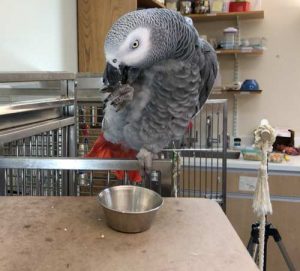
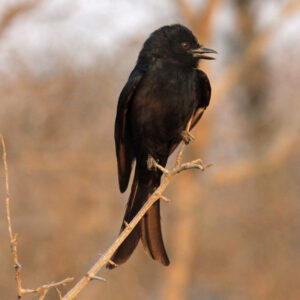
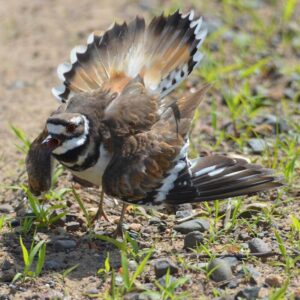
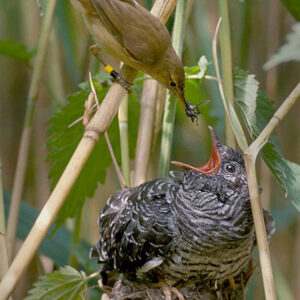
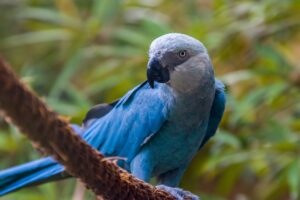
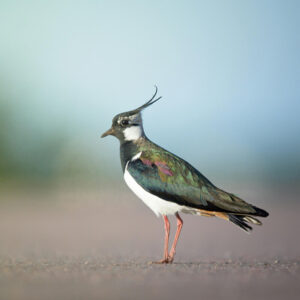
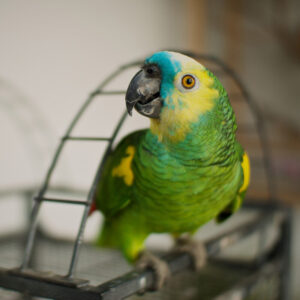
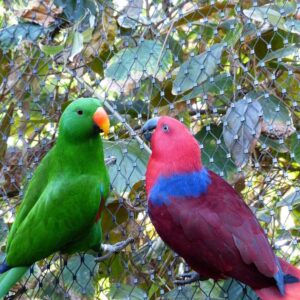
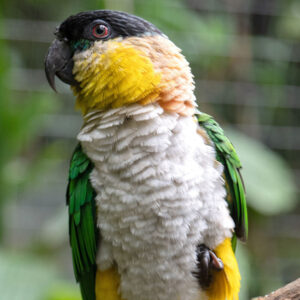
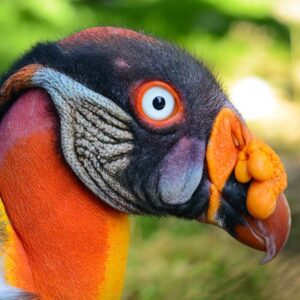
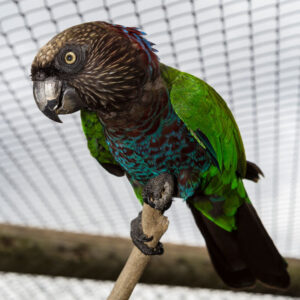
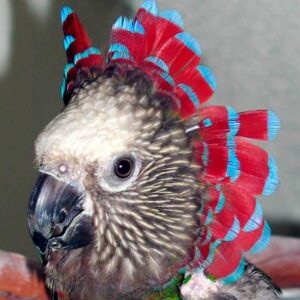
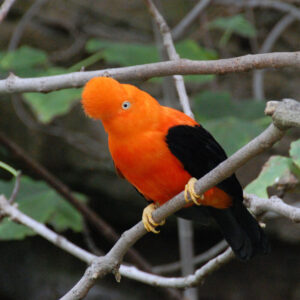
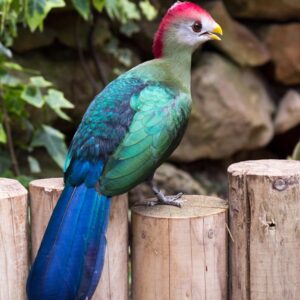
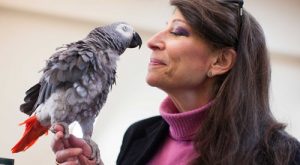
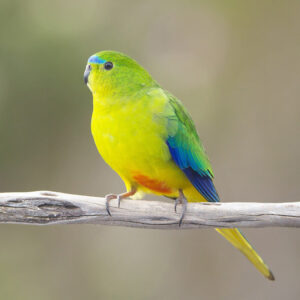
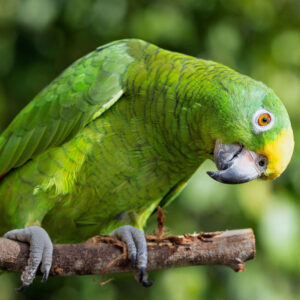
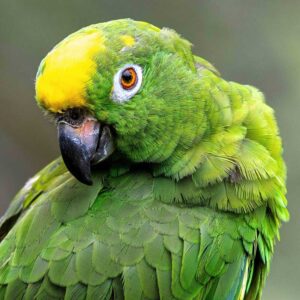
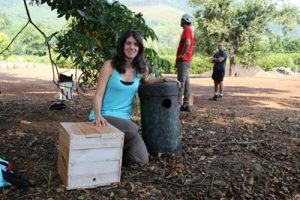 As people were gearing up for the Holidays, I had the great fortune to drive with a dear friend and client to Chicago for The Avicultural Society of Chicagoland — The TASC 2-day learning event. There were a variety of great speakers for the event and I had the good fortune of meeting one of them who was new to me, Dr. Caroline Efstathion. In this column, I would like to share her wonderful and heartwarming work.
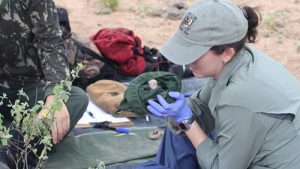 Cape Parrot
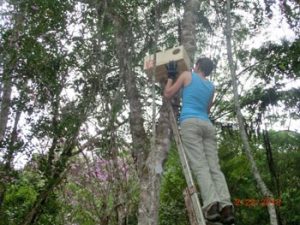 o what to do? Dr. Efstathion introduced a push-pull system to discourage bees from entering the nest while attracting them to traps nearby. A bee repellent could “push” bees away from the nest, and two bee traps with chemical “lure” would attract or “pull” bees. Trapped bees could then be removed and placed in managed hives by beekeepers, as the bees are important to pollination and to agriculture. In this way, nest site competition could be reduced between parrots and honey bees.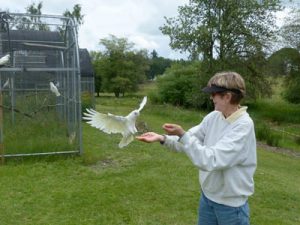
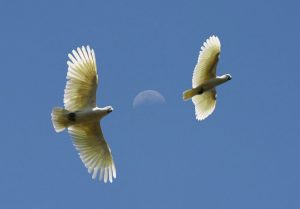
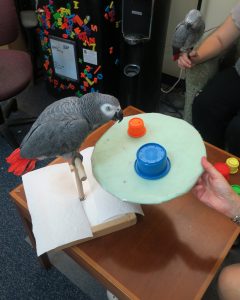
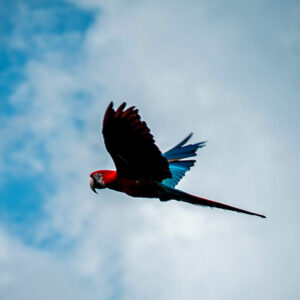
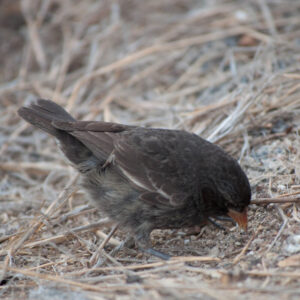
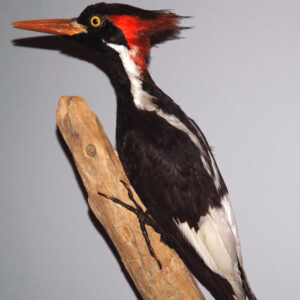
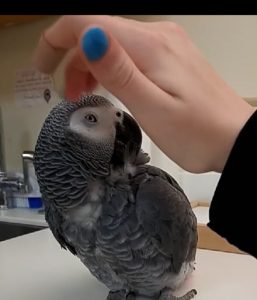
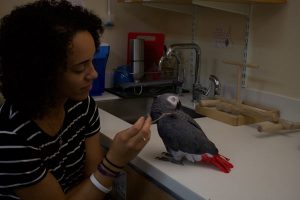
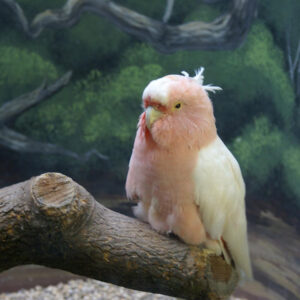
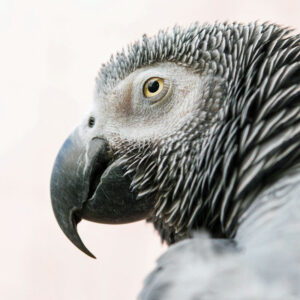
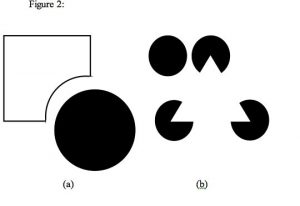
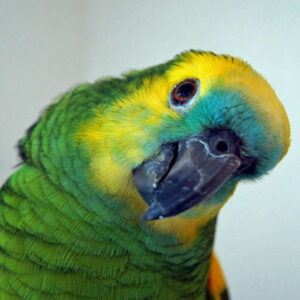
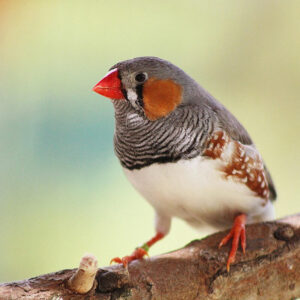
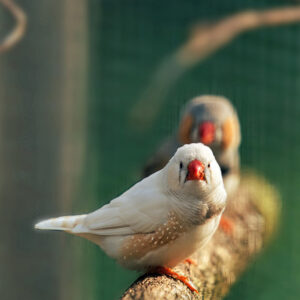
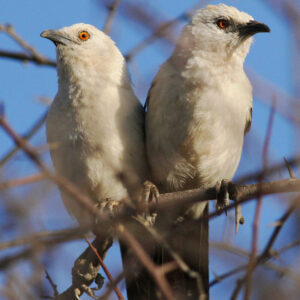
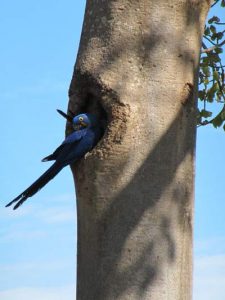 While attention is turned to the athletes competing at the Olympics in Brazil, bird people turn to ask what about birding in Brazil? When consulting the bird guides for Brazil, one learns quickly that the guides are regional. That is because a national guide would be too large for portability in the field because, frankly, there are too many species! In fact, Brazil boasts over 1,825 species with others being discovered or named continually. Brazil is considered one of the planet’s richest centers of biodiversity and represents 60% of the species found on the South American continent! With that comes the flip side — Brazil has the largest number of endemic (234) and threatened (116) species of any nation in the New World — that means it represents over one fourth of all of the species that are in trouble.
 The Pantanal is a vast seasonally flooded wetland comprising about 80,000 square miles! The tropical rains begin in November and end around June. This results in the northern portion of the Pantanal flooding in January, while the southern portion receives the flood waters about two months later with flooding occurring about 2 times during the rainy season. The waters come from an even larger distinctively Brazilian tropical savanna habitat – the Cerrado. This one of the largest biomes of over 740,000 square miles. During the wet season, waters from the Cerrado pour into the large rivers of the Pantanal and there they temporarily flood the grasslands and gallery forests. This produces a large accumulation of water birds as well and contributes to the biodiversity of species. However, as the use of herbicides and fertilizers in the Cerrado increase, this produces a negative impact on the purity of the waters needed for plants and animals of the Pantanal.
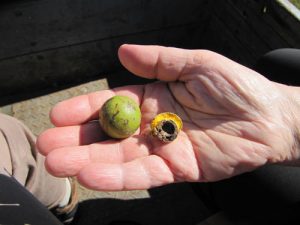 Since the 1990s, the Hyacinth Macaw project or Projeto Arara Azul headed by Neiva Guedes has helped turn the corner for this magnificent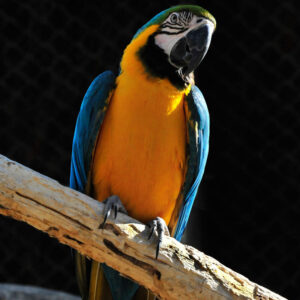

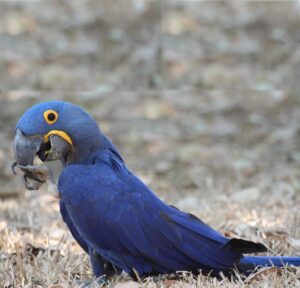

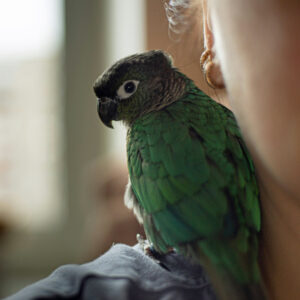
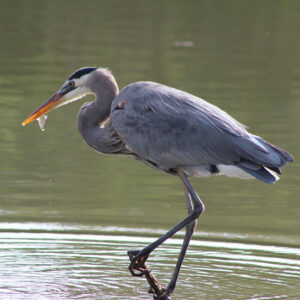
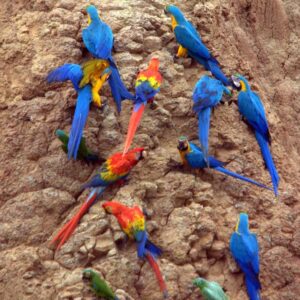
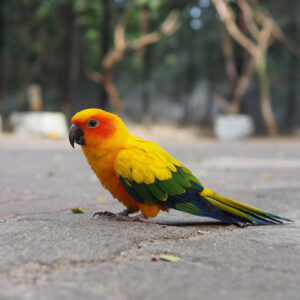
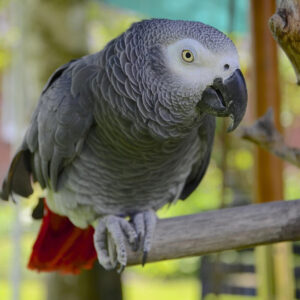
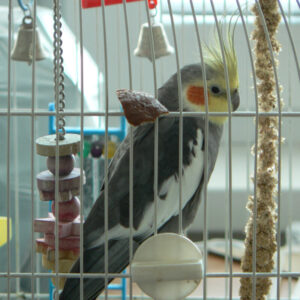
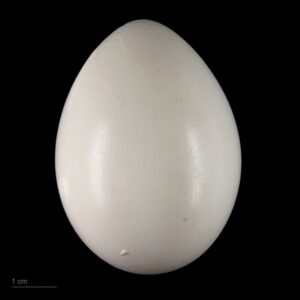
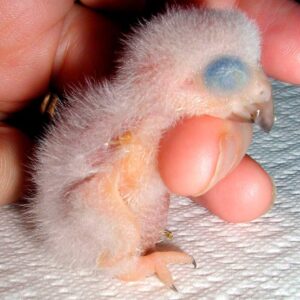
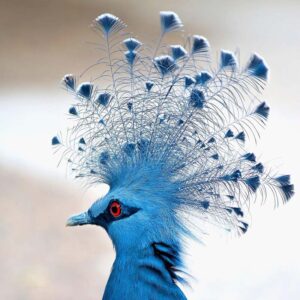
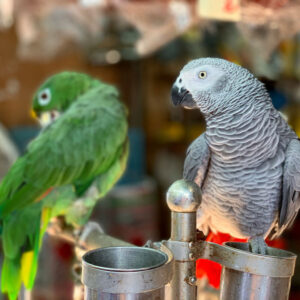
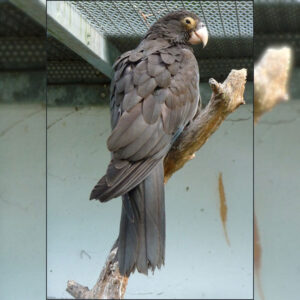

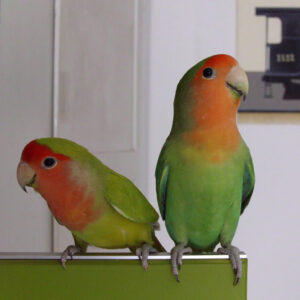
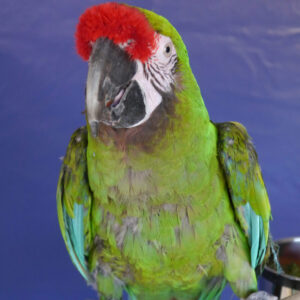
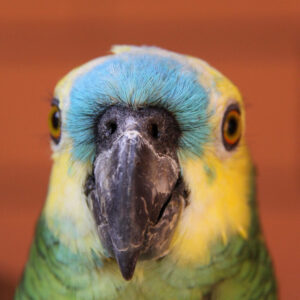
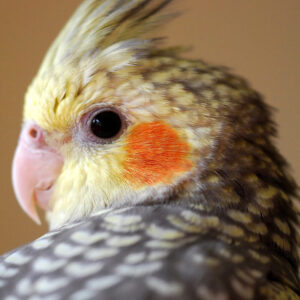
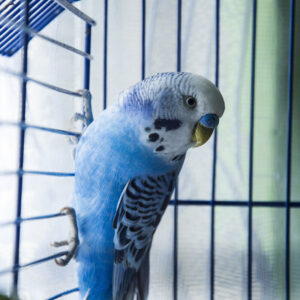
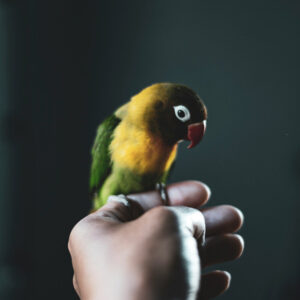
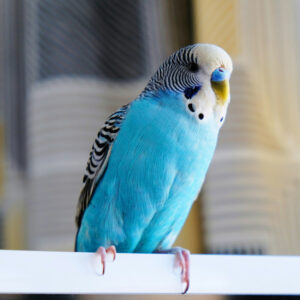


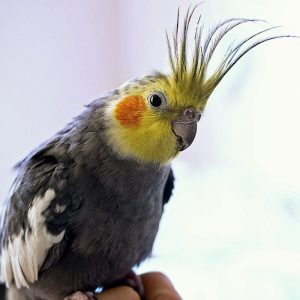


.jpg)

_-_Weltvogelpark_Walsrode_2013-01.jpg)


_male.jpg)
![[ Nimesh M]](https://commons.wikimedia.org/wiki/File:Lophocroa_leadbeateri_-Brookfield_Zoo-6.jpg)
.jpg)


