
Introduction
Pet fish are vulnerable and need our help to stay safe during a storm or evacuation.11 Fish owners must be prepared for power outages, particularly during natural disasters, as well as flooding, climatic extremes, and wildfires.1
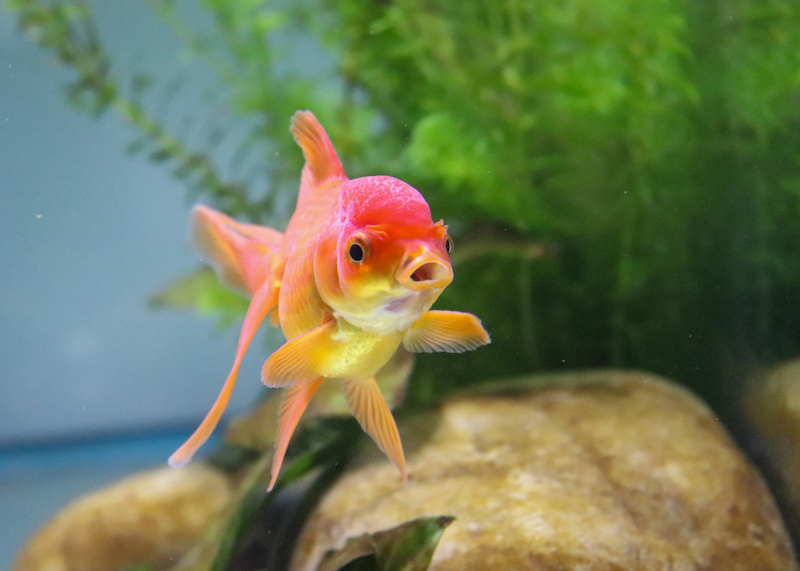
Figure 1. Get ready now to care for pet fish during an accident or natural catastrophe, particularly those events that cause power loss. Photo credit: Figure 1. Get ready now to care for pet fish during an accident or natural catastrophe, particularly those events that cause power loss. Photo credit: Mascha Hesselink/Pexels. Click image to enlarge.
See the scaled-down version of this article, intended to serve as a client education handout. Download the PDF version or modify the DOCX version for your veterinary hospital.
Wildfires
Wildfires are also a serious and expanding threat in many regions of the world that can lead to dangerous changes in water quality by depleting oxygen levels.2,8,10 Wildfires also leave behind ash, black carbon, and many pollutants. Runoff can then deposit these particles into surface waters, further deteriorating water quality and potentially damaging the delicate epithelial surface of the gills 3,4,8,9 Water temperature can also be affected either directly by fire or through shading from heavy smoke causing fish to be temperature stressed.7,8,10
Flooding
Tanks should be moved to higher ground (or a higher floor) when there is risk of flooding.11 Place the relocated tanks away from windows on a solid surface, even the floor will do.11
Flooding is an even more serious concern for ponds. If a pond overflows, fish can escape the confines of their pond and become stranded on dry land when the water recedes.12 Flooding can also push runoff contaminants and debris into pond water, adversely affecting water quality.12
To reduce the runoff that enters a pond, build up the pond’s edge using rocks or bricks.12 A pond at risk of overflowing, can also be drained with a pump beforehand so there is room for rainwater.12 It is also possible to create a drainage outlet so that excess water will flow out of the pond, although it is essential that fish cannot pass through this drainage outlet.12
Storms
Climatic extremes can also adversely water quality. Water exposed to extreme heat cannot hold as much oxygen as it can during the winter months. Therefore as the temperature of water increases, dissolved oxygen levels decrease.12,13 By the same token, if the water surface completely freezes over completely for an extended period, there is no way for harmful gases to escape and under-ice dissolved oxygen levels will begin to fall.12
Power loss
Power loss frequently occurs during disaster events. It is important for pet fish owners to take measures beforehand to mitigate the sudden water-quality changes that can occur during disaster situations.8 Some ornamental species can be quite sensitive to decreases in dissolved oxygen but common pond species, such as koi and goldfish, are more tolerant of poor water quality.8
Power outages that last no more than several hours should not be a major concern.1 Nevertheless, fish should be monitored for signs of stress, such as “gaping” or “surfacing”.1,12 If signs of stress are observed, the short-term solution is to agitate the water’s surface with the use of a portable or battery-powered aerator. The movement of air within the bubbles creates a current that moves water to the surface where dissolved oxygen is absorbed.11 The use of a homemade aerator has also been described:
… fill a milk container with tank water and place it on the corner of the aquarium so it does not fall. [Poke a small hole] in one corner of the milk container…in order to create a small flow of water. This small flow of water will slowly move the water’s surface. Simply scoop more tank water and pour it into the container as needed–From Emergency Fish Care For Power Outages and Natural Disasters 1
BEFORE power loss
If you know that the power will be going out for any length of time, stop feeding your fish to reduce organic waste in the water, which can lead to potentially lethal ammonia levels.1,11 Fish are often fasted for 2-3 days prior to transport to reduce ammonia excretion and improve water quality during shipping.5 Most fish can typically go more than a week without eating in an emergency situation.1
Also perform a large (up to 50%) water change before power loss so pet fish will have the best water quality possible.11 Then stock up on aged water for future water changes using 5-gallon buckets, clean trash cans, or large plastic totes. Municipal water sources contain chlorine and chloramines and will need to be dechlorinated prior to use by adding water conditioners or by allowing chlorine to naturally evaporate in open containers in an “off-gassing” process for 24 hours.6,8 An added benefit of water conditioners is that these pond/tank formulations usually include polymer compounds to support the fish’s mucous layer and reduce external damage during handling and transport.6
It is prudent for pet fish owners to always have a supplemental tank available for quarantine or emergencies. If a temporary tank is not already set up, now is the time to do so in case fish need to be removed from the pond. Obviously an aquarium tank is ideal, but a plastic tub or even a kiddie pool will do in a pinch.12 At minimum, the container should be 30.5 cm (12 in) deep.12 Use nylon netting or mesh covering (not plastic) to put over the container to prevent escape and provide protection from predators.12
Pond owners can potentially prepare for power loss by having a gas-powered generator to run equipment.12 Also have a backup aerator and plug it in separately from other electrical components.11,12 Also ensure “all fail safes to prevent draining are activated” and “brace outdoor filtration components while making sure air can circulate”.11 If possible, also stretch nylon mesh over the entire pond surface to prevent debris from collecting.11
Fish checklist
| Spare aquarium tank, plastic tub, kiddie pool* | Nylon netting or mesh cover (to prevent escape and predation) |
| 5-gallon bucket(s), clean garbage cans, or plastic totes | Fish net** |
| Fish-safe plastic bags | Sharpie to mark bags (species/ date/time) |
| Rubber bands | Plastic aquarium tubing (for siphoning) |
| Battery-operated and/or portable air pumps*** | Backup electrical aerator(s) |
| Power adapter (to charge air pump in vehicle) | Water conditioner (dechlorinator) |
| Powder-free nitrile or neoprene wetsuit gloves**** | Hydrogen peroxide |
| Waterproof thermometer | Waterproof pH meter |
| Surge protector | Turkey baster/pipette/large syringe |
| * The container should be at least 30.5 cm (12 in) deep ** Nonabrasive nylon sock nets are ideal for handling larger fish, such as koi 8 *** Bicycle tire pumps can also be used to aerate large tanks 8 **** When handling is necessary on rare occasions, owners should wear gloves to protect both themselves and the delicate skin of fish 8 |
|
DURING power loss
When the power goes off or if the power flickers on and off, unplug electrical equipment so it will not be damaged by a power surge when it turns back on.12 Equipment can also be plugged into a surge protector strip.12
To ensure fish have adequate water quality, perform more water changes. Oxygen can also be added using a portable or battery-operated aerator as well as hydrogen peroxide, which breaks down to form water and oxygen.11
Gradually mix in 1 ml of hydrogen peroxide per 4 liters (1 gallon) of water to provide additional oxygen for approximately 24 hours.11
If pond fish must be moved to a temporary tank, use water from the home tank or pond if water quality is adequate.8 Ideally provide approximately 4 L (1 gallon) of water for every 2.5 cm (1 in) of fish.12 To reduce acclimation stress, the water in the temporary tank should be closely matched to home pond or tank water, particularly for temperature and pH.8 This smaller container will be more vulnerable to temperature changes when compared to a pond, and direct sunlight will make water temperature rise quickly.12 Therefore this temporary tank should be placed indoors or in a shaded area.12 Never mix fish from different ponds or tanks because of the risk of transmissible diseases.8 Also limit activity around temporary tanks as much as possible, especially for the first 24-48 hours, to reduce stress and prevent fish from injuring themselves.8
If you must evacuate…
Do you have safe transport and a confirmed, suitable destination ready for your fish to inhabit (i.e. NOT a hotel bathtub)? 11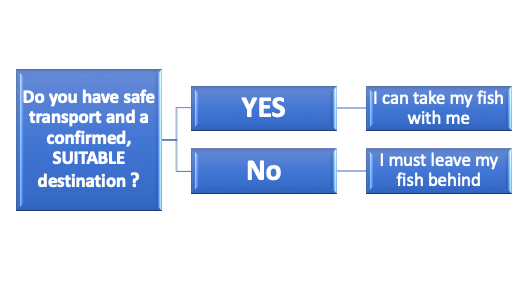
Traveling with fish
Most fish can be transported in large, fish-safe, plastic bags or 5-gallon plastic buckets or some other watertight container.11,12 Large fish, like koi, should ideally be transported in opaque, dark stock tanks with appropriately fitted solid covers to reduce visual stress and the risk of fish jumping from the tank.8 Gently scoop out fish using a fish net and place as few fish as possible in each container.5,8,12
- When using plastic fish bags, fill one-third of the bag with water and two-thirds with air.11 Top off the top of the bag with 100% oxygen, if available11, then secure the bag with rubber bands for easy opening and closure.1 Load bags perpendicular to the forward motion of the vehicle so fish are less likely to suffer facial trauma during transport.11
- Buckets or other water tight containers should have a lid with a hole in it for the portable air pump that is plugged in with a power adapter or a battery-powered aerator.8,11 There should be enough water in the transport container to cover the fish completely.12 Do not add pond or tank furniture to the transport container.11
Keep transport times as short as possible to reduce the risk of a waste accumulation and drastic temperature change.8
Stressed fish will normally not eat, but once the fish are set up in their new, or temporary, home, wait at least 24 hours.8 Then offer small amounts of food gradually until fish are eating a normal amount.8
If you must leave your fish behind
Do NOT leave “extra” food and never use a vacation feeder as this will increase organic waste and reduce water quality.11 Also perform a large (up to 50%) water change.11
After the disaster event
Once the power is back on, confirm all equipment is working properly.11,12 Check the filters to ensure they do not need to be cleaned or replaced.12 Wait briefly, then test water quality.10,12 Pond water may be unbalanced due to runoff.12 Once imbalances have been corrected, fish may be gradually introduced to this new water source in floating bags.11
References
References
- Biotope1. Emergency fish care for power outages and natural disasters. BiotopeOne web site. Sep 24, 2018. Available at https://biotopeone.com/emergency-fish-care-for-power-outages-and-natural-disasters/. Accessed May 4, 2024.
- Boyer EW, Moritz MA, Brown MG, Smoke deposition to water surfaces drives hydrochemical changes. Hydrological Processes. 2022; 36(6): doi: 10.1002/hyp.14626.
- Earl SR, Blinn DW. Effects of wildfire ash on water chemistry and biota in South-Western USA streams. Freshwat Biol. 2003;48(6):1015–1030.
- Gonino Short-term effects of wildfire ash exposure on behaviour and hepatosomatic condition of a potamodromous cyprinid fish, the Iberian barbel Luciobarbus bocagei (Steindachner, 1864). Science of the Total Environment. 2019;665: 226-234. doi: 10.1016/j.scitotenv.2019.02.108.
- Hadfield C, Clayton L. Acquisition and transport. In: Clinical Guide to Fish Medicine. Hoboken, NJ: Wiley Blackwell; 2021. Pp. 287-288.
- Harnish RA, Colotelo AH, Brown RS. A review of polymer-based water conditioners for reduction of handling-related injury. Rev Fish Biol Fisher. 2010;21(1):43–49.
- Hitt NP. Immediate effects of wildfire on stream temperature. J Freshwat Ecol. 2003;18(1):171–173. Available at https://nrm.dfg.ca.gov/FileHandler.ashx?DocumentID=150485&inline. Accessed May 8, 2024.
- Parker-Graham CA, Ang J, QuijanoCardé EM, et al. Fish evacuation and emergency sheltering during wildfire disasters. J Am Vet Med Assoc. 2022;260(7):1-6. doi: 10.2460/javma.21.05.0258. PMID: 35100135.
- Raoelison OD, Valenca R, Lee A, et al. Wildfire impacts on surface water quality parameters: Cause of data variability and reporting needs. Environ Pollut. 2023;317:120713. doi: 10.1016/j.envpol.2022.120713. PMID: 36435284.
- Sanders AM, Coble AA, Swartz AG, et al. Heat and smoke from wildfires influence water temperature and dissolved oxygen levels in headwater stream. Freshwater Science. 2022; 41(4):665-679. doi: 1086/722632.
- Sanders J. Disaster preparedness for fish. Aquatic Veterinary Services web site. Nov 6, 2019. Available at https://cafishvet.com/fish-care/disaster-planning-for-fish/. Accessed on May 4, 2024.
- Caring for your pond fish during an emergency. Smartpond web site. Jan 16, 2024. Available at https://smart-pond.com/blogs/backyard-blog/caring-for-your-pond-fish-during-an-emergency. Accessed May 4, 2024.
- S. Environmental Protection Agency. The effect of climate change on water resources and programs. Watershed Academy web site. Available at https://cfpub.epa.gov/watertrain/moduleFrame.cfm?parent_object_id=2456&object_id=2459. Accessed May 8, 2024.
Further reading
American Veterinary Medical Association. Emergency Preparedness and Response. Revised April 2012. Available at https://ebusiness.avma.org/files/productdownloads/emerg_prep_resp_guide.pdf. Accessed May 8, 2017.
American Veterinary Medical Association. Pets and disasters. American Veterinary Medical Association web site. Available at https://www.avma.org/resources-tools/pet-owners/emergency-care/pets-and-disasters. Accessed May 4, 2024.
Centers for Disease Control and Prevention. Pet Safety in Emergencies. Sep 14, 2022. CDC web site. Available at https://www.cdc.gov/healthypets/keeping-pets-and-people-healthy/emergencies.html. Accessed May 5, 2024.
Paul MJ, LeDuc SD, Lassiter MG, et al. Wildfire induces changes in receiving waters: A review with considerations for water quality management. Water Resources Research. 2022; 58(9): e2021WR030699. doi: 10.1029/2021WR030699.
Richardson C, Montalvo M, Wagner S, et al. Exploring the complex effects of wildfire on stream water chemistry. Water Resources Research. 2024; 60(2): e2023WR034940.
Sanderfoot OV, Bassing SB, Brusa JL, et al. A review of the effects of wildfire smoke on the health and behavior of wildlife. Environ Res Lett. 2021;16:123003.
Serena M, Lyon JP, Tonkin ZD, Lieschke J, Williams GA. Differential impacts of a wildfire and post-fire sedimentation event on platypus and fish populations in a Victorian upland river. Marine and Freshwater Research. 2022; 74(1):86-94. doi: 10.1071/MF22201.
Yanong RPE, Erlacher-Reid C. Biosecurity in aquaculture, part 1: an overview. Texas A&M AgriLife Extension Aquaculture, Fisheries, & Pond Management web site. Available at http://fisheries.tamu.edu/files/2013/09/SRAC-Publication-No.-4707-Biosecurity-in-Aquaculture-Part-1-An-Overview.pdf. Accessed May 5, 2024.
Pollock C. Disaster preparedness plan for fish. LafeberVet web site. May 8, 2024. Available at https://lafeber.com/vet/disaster-preparedness-plan-for-fish/