
Introduction
If you are planning to participate in avian conservation fieldwork, this list should serve as a starting point. Refine your own list by learning what is already available amongst other team members and in the region (Fig 1)
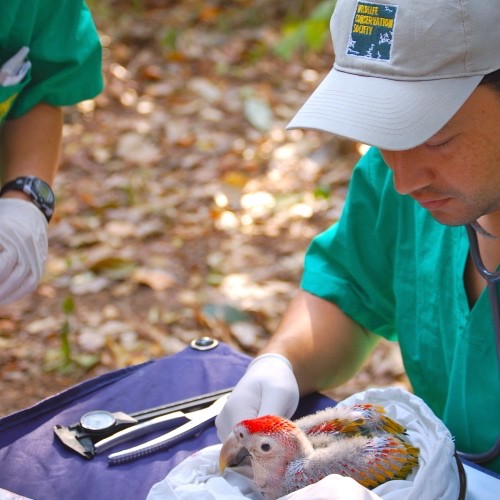
Figure 1. Wildlife Conservation Society veterinarian, Melvin Merida, examines a macaw chick in Guatemala. Click image to enlarge.
Pharmaceuticals vary greatly in other countries and the formulations and availability may not be suitable to your species or time schedule. On the other hand, some supplies are surprisingly inexpensive, and it will pay to wait until you are in country to get these items. Find out as much as possible before you go, and then bring everything that is most essential. It is better to be over-prepared than to be caught unprepared in the field. You can always donate any remaining equipment or supplies to the conservation project. Seek opportunities for donations and funding from colleagues, friends, and granting agencies to defray the costs of supplies. You can also publicize your cause on the Internet through social medium, blogs, and your clinic website. You may also want to work through one of the agencies listed in Ten Things every Avian Veterinarian Should Know About Conservation Medicine (item no. 1).
1. Physical examination equipment
A thorough physical examination is the best diagnostic tool if birds are available and suitable for handling. A quick exam does not take much time or very sophisticated equipment. Lighting conditions can be dim, so a bright light source can be critical. Document physical exam findings in writing and use a digital camera with a zoom feature that also records video and audio.
|
|
2. Emergency drugs
Birds may be inadvertently injured during handling and restraint, and human interference may also exacerbate preexisting medical conditions. You may also come across ill or injured birds in captive propagation or rehabilitation centers, or in the wild. Teach through example as you treat these birds, so other members of the conservation team can learn quickly and comprehend the variety of treatment regimens possible.
|
|
3. Supportive care supplies
Bring supplies for patient care if you are going to be handling birds or will be around nestlings. Diagnostics and sophisticated treatments are usually not an option, so supportive care may be the most that you can provide.
|
4. Antimicrobial drugs
Many free-ranging birds harbor parasites, as well as secondary bacterial and fungal infections. In many cases, it is not possible to treat more than once, as the bird must be released, unless you decide to bring it into captivity. If the bird can be recaptured, this may take up to a week’s time or longer. Therefore assume that you have one opportunity to treat.
|
5. Wound care, surgical, and necropsy supplies
The supplies listed below may be needed when birds are injured in the process of capture and handling or for sample collection antemortem or postmortem. Many of the instruments used for necropsy of eggs or birds, may also be used for field surgery when warranted.
|
6. Optics
Every conservation team needs a strong knowledge base in biology to truly understand the health status of nests, flocks, and species. While working in the field, you can offer support not only as a veterinarian but also by serving as a biologist or ecologist. For instance, with the help of binoculars, changes around a nest cavity, such as the presence of insects or bees, or marks by poachers, will help determine why a nest may not be thriving or has failed.
|
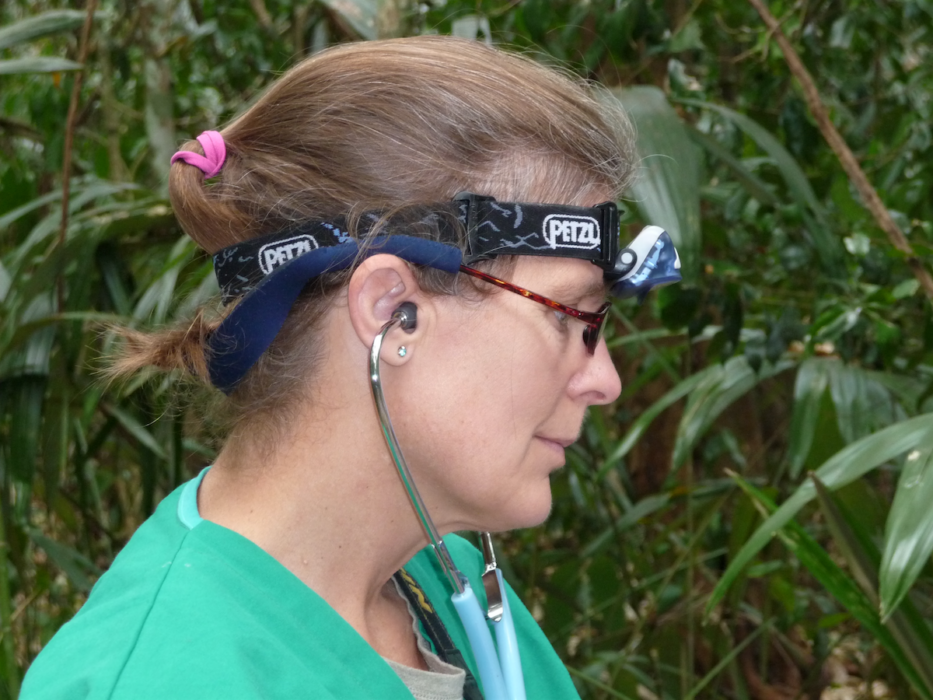
Figure 2. Dr. LoraKim Joyner wears a head loupe during a physical examination. Click image to enlarge.
7. Informational resources
You may face unusual circumstances in the field, therefore plan on being able to consult written, Internet, or telephone resources. Most countries now have Internet cafes in urban areas and even in small towns. Plan on passing these contacts or resources on to team members who might have limited access to such documents or colleagues. Also bring your smartphone as a backup and for general pictures of the process and physical exam.
|
8. Personal supplies
There is often a “macho” aspect to field work. You gain points and respect by withstanding harsh conditions with minimal equipment. It is important to not be an added burden to a field team by carrying extra equipment or pausing to apply this or arrange that. Of course, if you are sick, lost, or exhausted you will be an even greater burden. Seek a balance between being appalled about the extra gear you have brought compared to everyone else and suffering needlessly because you did not think to bring some small, but necessary item.
|
Functional clothing
|
|
9. Diagnostic equipment
Although a complete, portable laboratory in the field or a professional lab located close to the conservation site is ideal, this is also frankly impossible. Compromises revolving around cost, time, and supplies are a constant negotiation. Added data “might be nice” but is it necessary given the working conditions and restrictions? Over time protocols become clearer as data is gathered and the team gains knowledge and experience.
Minimum diagnostic equipment needed includes:
|
If regional diagnostic capabilities exist or if equipping your own field laboratory, add:
|
If time, electricity, or space permits, add:
|
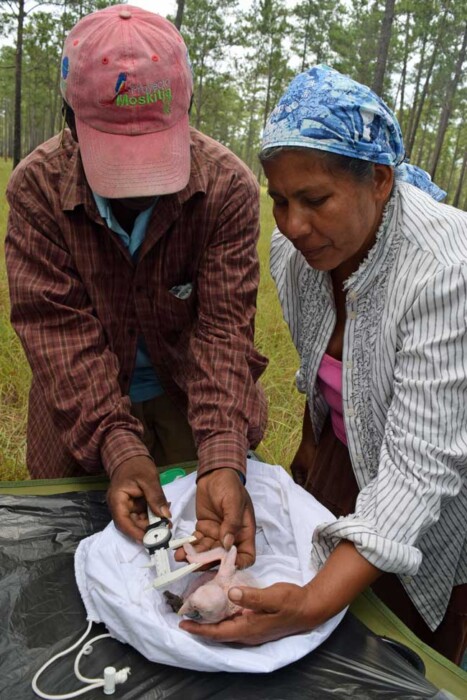
Figure 3. Calipers are used during examination of a wild chick. Photo credit: Dr. LoraKim Joyner. Click image to enlarge.
10. Gifts of gratitude
Your gifts of time, expertise, patience, support, and supplies are a wonderful boon for any conservation project. However you may find once on site that you desire to do more, especially for those not working directly with you such as children and logistical support staff (i.e. food, hotel). One of the most popular items I have used are stickers and removable tattoos for kids. T-shirts also make great gifts.
In an ideal world, care of our avian species would require taking an entire veterinary specialty hospital, library, laboratory, as well as an Internet and communication system into the field. Of course this is impossible, especially when limited by what one or two people can carry in backpacks. This is only a partial list, designed to help you ponder what might be needed in your particular circumstances. I invite you to add or refine this list by contacting me at [email protected]
Joyner L. Supplies for the avian conservation medicine field kit. April 16, 2024. LafeberVet Web site. Available at https://lafeber.com/vet/supplies-for-the-avian-conservation-medicine-field-kit/