Avian Expert Articles

Why Is Avian Medicine So Expensive?

a mostly green feathered conure with gray colored feathers on its chest perches on a branch in a room.
Photo by Nina Zaychenko on Unsplash

It was many years ago in early afternoon, during that wonderful little lull that sometimes happens in a normal day of a busy veterinary practice. I had just finished my lunch, and was sitting at the front desk. When the phone rang, I answered.

“My daughter’s parakeet has been acting funny for a few weeks, and she thinks it’s sick. I got some of that bird medicine from the feed store and I’ve been putting it in his water, but now he’s on the bottom of the cage. I asked my husband’s sister-in-law’s neighbor what I should do — she has a bird — and she suggested I call the new store in town, that maybe since they sell only birds, they would have better medicine. So I called them and they said I should call your hospital right away, ’cause you people treat birds and would be able to tell me what I should do. My daughter’s only 8, and she’s going to be very upset if it dies…” As an aside, she added, “I didn’t know that vets treated birds.” (Like, why would they do such a thing?)

Unfortunately, this sad tale was a familiar one. I wondered briefly just what the odds were that this poor little bird would even live long enough to make it to the hospital. So I explained how dangerously sick the budgie sounded, and told her she should bring the little guy in NOW. Because I’d learned from long experience, I also explained how expensive an office visit was for birds.

“WHAT!?!?! That’s ridiculous! This is only a $10  parakeet!” she cried.

What A Horrible Thing To Say…

In the years that I worked as an avian technician, I cannot count how many times I have heard that line, and I cannot express how depressed it has always made me feel. With those words, the person on the phone has told me volumes — that she doesn’t value this tiny life at all, that it is a disposable pet, as it were. She also told me that little bird wasn’t tame (at least to her), and wasn’t an important member of her family (at least to her). I thought about the fabulous budgies I have known over the years, and I felt very, very bad for that little bird. I also ached for that 8 year old, and wondered what she would have said if she’d been asked how much her budgie was worth. And I pondered the fact that I’d never heard a dog owner say their dog was only a mutt from the pound.

I tried to be patient as I explained that the exam fee isn’t based on the value of the animal — it is based on the value of the veterinarian’s time. After all, veterinarians don’t charge more to see a show dog than they do to examine a mutt. And it takes just as much time and expertise to treat a budgie than it does to treat a hyacinth macaw. The explanation was lost on her. Muttering something about how she could buy several ‘keets for that price, she hung up the phone. Angry and disheartened, I went back to my nursing duties, caring for animals that obviously did have value to their owners.

Time = $$$

Yes, avian medicine is much more expensive than dog and cat medicine. Why is that? There are several reasons, which I will explain, but the main one is TIME.

Simple arithmetic explains a great deal. For example, small animal vets generally see four appointments in an hour, and I’ve even seen some that would see as many as six. At 2006 prices here in the greater Philadelphia area, good small animal hospitals charge about $45 per visit for a dog or cat. At that rate, a small animal vet can bring in about $180-270 per hour in office fees alone — and this doesn’t include the additional income from flea spray and heartworm preventatives.

On the other hand, if a vet sees birds instead of dogs and cats, the timing changes dramatically. Good avian veterinary hospitals schedule bird appointments every 30 minutes. So if the bird vets want to bring in the same income as a dog and cat vet generates, they have to charge 2 to 3 times as much. However, the best bird vets around here only charge $65-95 for an avian exam. Consequently, they are only bringing in $130-190 per hour, or as much as $140 less than a dog and cat vet — so they are actually losing money when they chose to work with birds. (And they don’t get to sell flea spray and heartworm prevention.)

It’s A Dog Eat Dog World

This situation was exemplified by the experience of a local bird vet who was between hospitals. To service her clients, she rented exam room space in a dog and cat hospital, paying a percentage of her daily income. However, that business relationship ended abruptly when the hospital owner got the same offer from a dog and cat vet, and the avian vet found herself without a place to work. When asked why he chose to replace a well-known avian veterinarian with a regular small animal vet, the hospital owner stated bluntly, “A dog and cat vet makes more money.” (One would think this strange, considering that an avian veterinarian has specialized training. Specialists are supposed to make more money than people that are NOT specialists, right?)

Teaching And Time

So why does an avian exam take so long? If all the avian vets had to do was a physical exam on the patient and a test or two, then the length of their office visits would be much more reasonable. However, when it comes to knowledge, many new bird-owning clients have little or no information about their recent acquisition. So a New Bird Check-up takes a long time because the process of education cannot be rushed.

Diet And Nutrition

The first thing new bird owners usually need to learn about is diet. This is because malnutrition is still the underlying cause of approximately 85 to 90% of the medical problems that avian vets see in companion birds. STILL. Amazing, isn’t? After all this time, most people still feed seed and grapes and an occasional piece of apple. (But actually, that isn’t surprising when you consider recent statistics about obesity and diabetes in the United States. Many Americans feed a primarily junk diet to themselves and their kids, too.) Then, after the avian vets have explained the importance of a good diet, they have to teach the new bird owner how to get their little seed junkie to eat better foods like vegetables, or better yet, how to convert them to a formulated or so-called pelleted diet.

On To The Next Subject

Once through discussing all that, they can start on the subjects of proper management, safe caging and bar width, proper cage size, good cage locations, full spectrum lighting, varied perches for foot health, the necessity of toys and how to choose safe ones, and the importance of environmental enrichment. And while they’re at it, they need to warn them about non-stick cookware, toxic houseplants, ceiling fans, aerosol sprays, other pets, small children, uncovered fish tanks, open toilets, etc., etc. One of the avian vets in my area has asked me to work with him on the development of a behavioral pamphlet to give new parrot owners. He’s a great believer in setting proper controls with psittacines, but found when he also tried to explain teaching and training, his new bird office visits lengthened to over an hour!

And The Vet Hasn’t Even Touched The Bird, Yet…

Everything I’ve explained so far completely ignores the unfortunate fact that the average bird owner only seeks veterinary assistance when (s)he recognizes there is a problem. And by the time uneducated bird owners finally understand there is a problem, that means the bird is really in trouble — like that poor budgie I mentioned at the beginning of this article. So avian veterinarians also have to explain about birds masking the signs of disease, that “looking fine” doesn’t mean a bird IS fine, etc. etc. After all, a proper physical exam doesn’t provide sufficient information regarding the health of a bird, no matter how good it looks. Diagnostic testing has to be done to rule out the possibility of latent or asymptomatic disease, which is something regular small animal vets rarely have to worry about. After all, when a dog is sick, it LOOKS sick.

“Sick Bird Syndrome” or SBS

Not only does a sick dog look sick, but its symptoms generally give the vet a clue as to what’s making it sick. Birds are different on this count, too. Birds that are ill with totally different diseases can display the exact same generic set of symptoms. Avian vets fondly call that group of symptoms, Sick Bird Syndrome or SBS. A bird with SBS is fluffed when the room isn’t cold, sleeps more than normal, eats less than normal, quieter than normal, etc. So what might be the symptoms of a terminal renal tumor in a bird? SBS. How about Parrot Fever? SBS. What about liver disease? SBS. Get the point? This lovely birdie trick has many times led to the following phone conversation:

Bird Owner to avian veterinarian: “My parrot is fluffed up and quiet. What is wrong with him?”
Avian Vet: “He’s sick.”
Owner: “I know that, but what is wrong with him?”
Avian vet: “I don’t know, other than he is sick. To find out what is making him sick, I would have to see him, maybe run some tests.”
Owner: “That’s crazy, you’re a vet, and you should be able to tell me more than that. You’re just trying to rip me off.”
CLICK.

STILL More $$$…

So bird vets have to do more testing than dog and cat vets do, and these tests done on birds are often more expensive than the equivalent tests for dogs or cats. Why? Again, because birds are different from mammals. Not only is the handling of the patient different, the collection, handling, processing, and running of the samples themselves is often different, too.

Because they are not like dog and cat samples, avian samples are usually sent to special labs. For example, being experienced doing lab work with mammalian blood does NOT mean one is also competent to deal with avian blood. As a consequence, many avian veterinarians use labs that specialize in exotic animals — and special labs are more expensive than regular labs. The avian vets here in the Philadelphia area send many bird samples to labs as far away as Florida, Texas, or California.

This means the transportation of the samples is different, too. Instead of a messenger stopping by daily to pick up samples to be transported a few miles to a local lab — which is the situation for the dog and cat hospitals in this area — the avian veterinary staff has to package samples to be sent as far as across the country. And since disease can move much faster in a sick bird than a sick mammal, those samples usually need to go FAST. Blood samples, for example, are usually sent Overnight Air. Therefore, shipping the samples to these labs costs even MORE money.

Lastly, one avian vet commented to me that even calling the client with lab results takes longer when the patient is a bird. He said he can deliver 10 dog or cat test results in a few minutes, but the same number of calls to bird owners can take several hours. You know how we birdie-types can be, right? We always have “one more quick question…” but it isn’t the question that takes time, it’s the answer!

And If The Bird IS Sick…

If the bird is sick enough to need medicating while the vet awaits lab results, but not sick enough to hospitalize, then the avian vet or staff has to teach the owner how to safely medicate their pet. And needless to say, it takes longer to properly teach owners how to restrain and medicate a bird, than it takes to teach them to pop a pill into a dog. Suffice it to say, this process tacks another 20+ minutes to an already long office visit. Most bird owners report that a visit with a sick bird lasted well over an hour.

So the next time you take your feathered friend to your avian vet — and that should be once a year, and more often if you think it might be sick — try not to shriek at the receptionist about the size of the bill. (That’s a cheap shot, anyway — the bill isn’t the receptionist’s fault!) From my experience, vets will spend as much of your money as you say they can spend. If you tell them your finances are limited, then they will do what they can to keep expenses down. If you say nothing about money but agree to all the tests the vet recommends, (s)he will assume money is not a problem. After all, you didn’t bring it up, right?

According to the numbers, veterinarians are the lowest paid professionals in this country — if you don’t believe me, look it up. I have worked with a lot of vets over the years, and they are NOT rich people. On the contrary! And statistically speaking, the avian vets would be making more money if they canned the bird stuff, and stuck to dogs and cats.

But we don’t want them to do that, do we?

This article was published first in THE PET BIRD REPORT.

The Heart of Lafeber Company is a Love for Birds

The heart of Lafeber Company really is a true love for birds and is still inspired today by the special passion deep in the soft heart of our founder — Dr. Lafeber, Sr.

Dr. T. J. LafeberDr. Lafeber, Sr., was the grandfather of avian medicine. He pioneered life-saving techniques in the avian field throughout his career, and he became known as one of the world’s foremost authorities of pet bird care. Compassion for the malnutrition of the birds in his veterinary practice pushed him to develop and produce the very first pelleted diet for companion birds and eventually led him to start Lafeber Company.

Dr. Lafeber’s innovative work was rewarded with numerous awards including the Association of Avian Veterinarians Lifetime Achievement Award.

Dr. Lafeber spent most of his life encouraging bird lovers everywhere and is best remembered for his inspirational bird lectures that enriched the lives of so many birds, bird owners, and veterinarians.

After all is said and done — it still comes down to a matter of the heart — a pure and simple love for birds!

Lafeber Company: Premium Pet Bird Food & A Wealth Of Bird Care Resources

Lafeber Company is a strong family company built by a father and son team of veterinarians with a shared love of animals and a special passion for birds. The very first commercial bird food pellet was developed by Dr. Lafeber, Sr., and made in the back room of his veterinary clinic. Dr. Lafeber’s son followed in his footsteps, eventually became his business partner and together they developed many of the favorite Lafeber diets. The business has now passed to the second generation of the Lafeber family, and the legacy of quality continues.

Our recipes are developed by Dr. Lafeber along with top avian veterinarians and nutritionists. Every formula is tested by an independent laboratory to ensure optimum avian health. We also consult leading experts of bird behavior so that our diets provide enrichment and enjoyment for our feathered friends along with the best nutrition possible.

Lafeber Company uses only the finest non-GMO, natural ingredients in every product. Seeds, fruits and vegetables are hand-inspected upon arrival to our plant. Many of the grains are literally grown right outside of our front door.

Our manufacturing facility has always been located on the Lafeber Family farmland, and all of our pet bird food products are mixed, formed, and packaged under one roof with equipment specifically designed for small batches of bird food. Carefully watching our bird food production process from start to finish gives us the best opportunity to maintain our high-quality standards.

Hard work is another key component behind the Lafeber line. Artisans perform in every capacity of our operation and work closely together in our unique setting. Our associates take personal pride in their work, and their dedication has helped Lafeber Company rise to the top of the industry over the years.

At Lafeber Company we personally understand the hearts of our customers and the love they have for their birds. We know our customers expect the best, and we are honored by their trust in our products. Lafeber Company has built a reputation for quality pet bird food, and we strive to hold true to our quest for excellence as we move forward. Our mission to this day revolves around the simple premise Dr. Lafeber established many years ago. Feel free to contact us for further information pet bird care and nutrition.

Lafeber Company — Two Generations of Veterinarians Caring and Working for the Health of Animals

The Real Deal in Macaw Meals: Bird Food by Lafeber

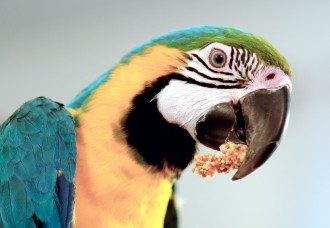
Macaw eating Nutri-BerriesMacaws are a force to be reckoned with. Everything about them is big — from their voices to their attitudes! These beautiful creatures are so colorful that they call attention to themselves even when they are quiet. Macaws may seem formidable to the uninitiated novice, but those who share their lives with these magnificent friends know that they have surprisingly soft, loving hearts and sensitive natures. Macaw people adore their great friends to the very core of their being, and for good reason. It only takes one gentle kiss from their giant beak to open the stoniest of hearts.

Lafeber bird foods are ideal for your lively macaw — a bird that needs good nutrition and appreciates the opportunity to tear food apart!

Lafeber Company is dedicated to making the best bird food possible for your macaw and can offer you the benefit of our years of research. Our non-GMO foods incorporate pellets, seeds, fruits and vegetables, balanced Omega 3 & 6 fatty acids and chelated minerals. We believe that bird food should be nutritious and exciting at the same time, so you will find that our diets are designed to promote healthy foraging and enrichment.

Our balanced bird foods for your Macaw include Classic Nutri-Berries and Gourmet Nutri-Berries. Avi-Cakes, Pellet-Berries, and Premium Daily Diet Pellets round out the list.

A long, happy, healthy life starts with good nutrition, and we invite you to check out our diets.

We offer our best to you so you can offer the best to your macaw!

Meal Appeal for Your Parrot: Bird Food by Lafeber

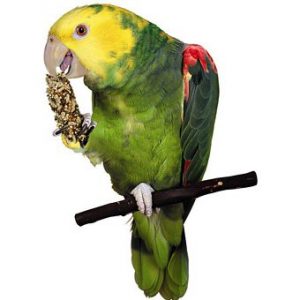
double yellow-headed Amazon on perch eating
Lafeber has developed several non-GMO bird foods that are perfect for encouraging foraging behavior, including Nutri-Berries and Avi-Cakes.

Are you one of those lucky people who share your life with a parrot?

Throughout the ages many cultures have considered these beautiful creatures to be the “messengers of the gods.” Parrots possess a magical quality that easily captures the imagination. Whether you have a rowdy Amazon, an intellectual Grey, an elegant Eclectus, or any special member of the parrot family — the common denominator is that they all possess many endearing, lovable characteristics. When you open your home and your heart to a parrot you are transformed in many ways — all for the better!

Wild parrots are busy all the time foraging for lots of different kinds of food. Lafeber bird foods are made with shapes and textures intended to appeal to your bird’s natural instincts and sense of curiosity. Your parrot never needs to be bored because of the wide variety of nutritious diets and treats available from Lafeber!

We have done all of the hard work for you and can offer you the benefit of our years of research. Our foods incorporate non-GMO seeds, pellets, fruits, vegetables, balanced Omega 3 & 6 fatty acids, and chelated minerals. We believe that bird food should be nutritious and exciting at the same time, so you will find that our diets are designed to promote healthy foraging and enrichment.

Our balanced bird foods for your parrot include Classic Nutri-Berries and Gourmet Nutri-Berries in Tropical Fruit, Sunny Orchard Fruit, Garden Veggie and El Paso varieties. Avi-Cakes, and Premium Daily Pellets round out the list.

Pellet-Berries,the newest addition to this healthy lineup, also comes in a size for parrots.

Popcorn Nutri-Berrie Treats are a treat that is sure to be a hit with your special friend!

A long, happy, healthy life starts with good nutrition, and we invite you to check out our diets.

We offer our best to you so you can offer the best to your parrot!

Serve a Good Meal: Bird Food for Your Cockatiel

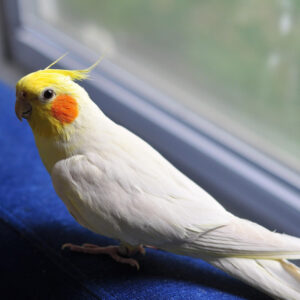
cockatiel standing indoors beside a window
Photo by bluepaints/Pixabay

Cockatiels can just steal your heart away with their sweet personalities!

Highly interactive and personable, cockatiels are wonderful feathered companions. Many are relatively quiet and affectionate making them a favorite for children and newcomers to the world of birds.

Cockatiels are enjoyed in many homes today as a precious lovable family member.

Lafeber pet bird foods offer a variety of nutritious, non-GMO foods for your beloved, top-knotted little friend.

We have done all of the hard work for you and can offer you the benefit our years of research. Our foods incorporate seeds, pellets, fruits and vegetables, balanced Omega 3 & 6 fatty acids and chelated minerals. We believe that bird food should be nutritious and exciting at the same time so you will find that our diets are designed to promote healthy foraging and enrichment.

Our balanced bird foods for your cockatiel include Nutri-Berries in Classic, Tropical Fruit & Sunny Orchard Fruit varieties, Avi-Cakes, and Premium Daily Pellets.

Pellet-Berries – The newest addition to this healthy lineup, it also comes in a size for cockatiels.

Popcorn Nutri-Berrie Treats are a treat that is sure to be a hit with your special friend!

A long, happy, healthy life starts with good nutrition and we invite you to check out our diets.

We offer our best to you so you can offer the best to your cockatiel!

In the Mood for Great Parakeet Food?

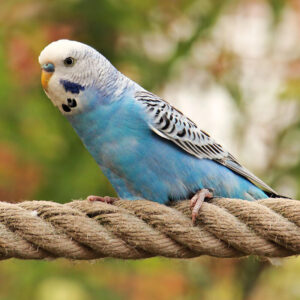
blue parakeet on roper perch
Parakeet. Photo by NoName_13/Pixabay

Everybody loves parakeets! A true favorite all over the world, these small colorful creatures have charmed their way to the top of the popularity charts.

Parakeets easily win your heart with their friendly personalities and playful antics. They are as intelligent as they are cute and as colorful as they are funny!

Do you share your life with one of these lively little guys?

Lafeber bird foods are a simple and healthy way for you to feed your parakeet!

We have done all of the hard work for you and can offer you the benefit our years of research. Our non-GMO foods incorporate seeds, pellets, fruits and vegetables, balanced Omega 3 & 6 fatty acids and chelated minerals. We believe that bird food should be nutritious and exciting at the same time, so you will find that our diets are designed to promote healthy foraging and enrichment.

Our balanced bird foods for your parakeet include Nutri-Berries in Classic, Tropical Fruit & Sunny Orchard Fruit varieties, Avi-Cakes and Premium Daily Pellets.

Pellet-Berries – The newest addition to this healthy lineup, it also comes in a size for parakeets.

Popcorn Nutri-Berrie Treats are a treat that is sure to be a hit with your special friend!

A long, happy, healthy life starts with good nutrition, and we invite you to check out our diets.

We offer our best to you so you can offer the best to your parakeet!

Introducing Pellet-Berries — a New Pet Bird Food from Lafeber Company

Lafeber's Pellet-BerriesWe are thrilled to tell the whole world about our newest product and announce that pelleted diets are no longer boring!

Lafeber’s Pellet-Berries are an exciting result of combining the science of pellets with the natural enrichment of fruits and grains. We have combined our pellets with tasty tidbits of cranberries, dates, apricots, and grains in a round berry shape to create a delicious wholesome meal that promotes healthy foraging.

Pellet-Berries have it all:

* 81% Pellets

* 19% Fruits and Grains

* 100% Enriched Nutrition

* Omega 3 & 6 Balanced

* Excellent Foraging Food

* Non-GMO

* Naturally Preserved

* Naturally Flavored

* Veterinarian Recommended

Pellet-Berries are a step above most pelleted diets because they are nutritious, delicious, and fun for your parakeets, cockatiels, and parrots.

Try Pellet-Berries today!

The Splash About Bird Baths

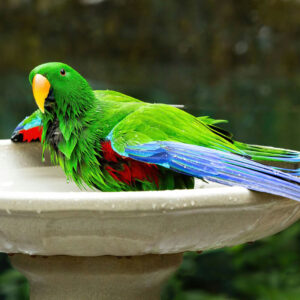
male Eclectus parrot bathing in a bird bath
Photo by David Clode/Unsplash
  • Birds like to get wet! Just watch the wild birds in a mud puddle after a rain!
  • Water stimulates normal preening behavior.
  • Central heat and air conditioning can make indoor environments as dry as a desert even in humid, rainy places.
  • Birds prefer cool water for their bathing pleasure.
  • Many pet birds enjoy a nice misting with a spray bottle. You can also spray the mist upward so it falls on your bird like rain.
  • Give your pet bird a shower with the watering can that you use to water your houseplants.
  • A bathing dish with an inch of water in your bird’s cage or in the kitchen sink is a great way for your bird to get wet.
  • Try putting a mirror at the bottom of the bathing dish for added fun.
  • Let your bird think he is walking through grass that is wet with dew by running water over some carrot greens and placing them on the floor of the cage.
  • Have you thought about taking your bird in the shower with you?
  • How about wetting a cloth and wringing it out over your bird’s head?
  • Add a tablespoon of human-grade, drinkable, aloe vera juice to an 8-ounce spray bottle to help an itchy bird.
  • If your bird doesn’t like getting wet, a humidifier in your home will make some birds more comfortable.
  • Your bird won’t “catch cold” from being wet but avoid bathing if your bird is not in good health.
  • Bathe your birds in the morning or afternoon so they will be completely dried before going to bed.

Things are in Good Shape at Lafeber Company!

Parrot foodCan a round food be a square meal?

YES! Nutri-Berries fit perfectly in your pet bird’s diet with the balanced nutrition essential to good health.  The non-GMO seeds, grains, fruits, and vegetables you find in Nutri-Berries lend to the whole-food goodness and also add lots of tastes and textures for foraging pleasure in every bite.

We don’t cut corners with Nutri-Berries!

Can a square food be a well-rounded diet?

YES! Avi-Cakes are squares that make a straight line to complete nutrition with a combination of non-GMO seeds and pellets bound with the great taste of molasses. Avi-Cakes are called a “work and chew” food because your bird has to exercise lots of muscles to pull them apart.

Avi-Cakes are fun — squared!

Can a cylindrical food have an angle of nutrition?

YES! Lafeber Premium Daily Diet Pellets provide complete, non-GMO nutrition for the good health and long life of your bird. They are made in a wide range of sizes with formulas to fit all of your feathered friends.

Lafeber pellets are great from end to end!

YES! Things are in good shape at Lafeber Company!

Stand Up for Stand Up Bags!

Sunny Orchard Nutri-berries small birdYou will now find all of the Lafeber Gourmet Nutri-Berries in new stand-up packaging!

Your favorites — Tropical Fruit, Sunny Orchard, El Paso and Garden Veggie — are easy to recognize in their familiar bright packages that are now made wider at the bottom to make them stand upright.

The new bags are already a hit with our customers, because they make Nutri-Berries easier to store in cupboards or on shelves, less likely to spill, and more convenient all the way around.

As always, the Lafeber packaging is air-tight and resealable to keep the non-GMO Nutri-Berries fresh for your feathered friend.

The nutrition inside of each package stands up for itself! You can always count on Lafeber’s Gourmet Nutri-Berries to be the the most nutritious bird food available.

Look for Gourmet Nutri-Berries in their new stand-up bags.

They are BRIGHT, AIR-TIGHT, and UPRIGHT!

At Lafeber, New Year’s Resolutions Are For The Birds!

Do You Have a New Year’s Resolution for Your Bird?

Here are some ideas:

• Spend more time enjoying, interacting, and training your feathered friend

• Find out how to enrich your bird’s life with stimulating activities and toys

• Discover nutritious bird foods that also offer excitement and fun

• Learn more about your bird’s behavior and health

Your New Year’s Resolution Solution is LafeberCares.com!

Keeping your resolutions will be easy when you check out all of the info offered on our website! We are your link to learning and the solution to your resolution!

Lafeber Company has an ongoing resolution of excellence and we are looking forward to serving you and your flock in 2011!

Helpful Holiday Hints for Pet Bird Lovers

Home for the Holidays: As family and friends gather in your home for holiday celebrations, the extra commotion can be exciting yet overwhelming for your bird. It might be a great idea to cover half of the cage so your bird can enjoy the festivities and feel protected at the same time. You also may want to consider moving your bird to another room away from high-traffic areas.

Deck the Halls: But not your bird’s cage! Be careful of ribbons and bows that can be shredded by your feathered friend. The threads can entangle a bird and cause injury.

Holly Jolly Christmas: Remember that beautiful traditional favorites like holly, poinsettia, and mistletoe are poisonous to your bird.

O Christmas Tree: It’s natural to assume that your bird would enjoy a tree in your home. Please keep in mind, though, that white flocking on a Christmas tree is toxic to your bird. Tinsel can be dangerous if swallowed and an encounter with twinkling lights could turn out to be a shocking experience!

Chestnuts Roasting on an Open Fire: Scented candles can add a nice fragrance to your holiday atmosphere but should not be used when your bird is in the room. Also, please use caution as you do your holiday baking because fumes from burnt non-stick cookware can pose a serious hazard to your bird.

Jingle Bells: Jingle all the way home this Christmas with a new toy for your bird. Be sure the bells on any toy are the open-ended type since beaks and toes can get caught in the round jingle bells.

We Wish You a Merry Christmas — from your bird’s point of view! Please take a moment to consider these holiday hints to ensure a healthy, happy holiday season.

Are You Looking for High-Quality Bird Food?

photo_yellowheadamazonCome on in — we’re glad you’re here!

If you are looking for great bird food for your parrot, macaw, cockatiel, parakeet, or any feathered friend in between, you have come to the right place!

Lafeber Company knows what your bird needs and takes pride in offering the highest quality, non-GMO nutrition in pet bird food available on the market today. Lafeber Company also knows what your bird likes — that’s why our diets are exciting and fun, as well as nutritious!

We are delighted to introduce this new blog venue to keep you — our valued customers — updated and informed on the intricate world of pet birds and pet bird food. We will be featuring  lots of topics to help you keep your bird healthy and happy. You won’t want to miss stories from some of our long-time customers and perspectives from top avian experts. We hope you will enjoy getting to know us and come to understand our dedication to you and your bird.

We invite you to visit us often!

Subscribe to our newsletter

Click here to subscribe to our newsletter

×

Join our Lafeber Flock

Enjoy our Pet Birds' weekly newsletter, featuring captivating stories, care tips, and more.
Opt for Small Mammals' monthly edition for delightful facts about rabbits, guinea pigs, and more.
Choose our monthly Backyard Chickens newsletter for insightful information to keep your flock happy.
*