

Photo: Erica Mede, CVT
Abstract
Bearded dragons are a semi-arboreal genus of agamid lizards native to Australia. The central bearded dragon (Pogona vitticeps) is the most common species of bearded dragon kept in captivity. The average captive lifespan of bearded dragons is 7 to 12 years and there are numerous color morphs available in the pet trade.
Bearded dragons require access to ultraviolet B radiation for calcium homeostasis. The preferred optimum temperature zone for bearded dragons is 25-40°C (77-104°F), where the low end represents the cool side and the high end the basking area. Bearded dragons are omnivores and should be fed a varied diet of leafy greens and vegetables in addition to gut-loaded prey insects. Calcium and multivitamin powders should be used on a regular schedule. The author typically recommends using a calcium supplement (without vitamin D3 and phosphorus) two to three times per week and a multivitamin supplement two to three times monthly. Live insects should be appropriately gut loaded before being offered to the lizard.
Bearded dragons, like other Agamidae lizards, have acrodont dentition, which predisposes them to dental disease. Therefore, a thorough oral and dental examination should always be performed as part of the physical examination in this species. The salivary viscosity and eye position within the orbit can be used to assess hydration status. Coelomic palpation is helpful in bearded dragons. Symmetrical, caudal coelomic fat pads should be palpable along the lateral body wall in healthy animals.
If aggressive or intolerant, a bearded dragon can be easily physically restrained by holding the forelimbs and pelvic limbs snug against the trunk and tail, respectively. Injectable sedation can be used to facilitate diagnostic imaging (e.g. coelomic ultrasound) and basic surgical procedures with additional analgesia. Neuraxial administration of bupivacaine, lidocaine, and morphine has been described in bearded dragons and can be a useful addition for coeliotomies, cloacal procedures, partial tail amputations, hemipenal amputations, or pelvic limb amputations. Hydromorphone and morphine can be used for systemic analgesia.
Caudal (tail) vein venipuncture is easily performed in adult bearded dragons, using ventral or lateral approaches. Given the generally poor coelomic serosal detail of reptiles, coelomic ultrasound and computed tomography provide significantly more information about the coelomic organs than plain radiography.
Outline
- The basics
- Biology
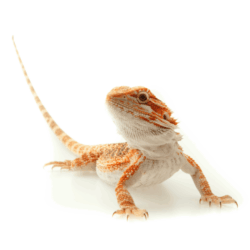
Photo: Lipowski
- Behavior
- Husbandry
- Biology
- Clinical techniques
- Physical examination
- Radiography
- Venipuncture
- Sedation
- Analgesia
- Fluid therapy
- Common conditions
- Constipation
- Periodontal disease
- Nannizziopsis guarroi
- Follicular stasis
About the presenter
Dr. Grayson Doss is a Clinical Associate Professor of Zoological Medicine at the University of Wisconsin-Madison School of Veterinary Medicine. Dr. Doss is a Diplomate of the American College of Zoological Medicine. Grayson earned a Bachelor of Science in 2008 and his Doctorate of Veterinary Medicine in 2013 from Louisiana State University. He completed an internship in small animal medicine and surgery from the University of Tennessee College of Veterinary Medicine in 2014 and a residency in zoological medicine and surgery from the University of Wisconsin, Milwaukee County Zoo, and… [MORE].
Webinar recording
80-104°F = 26.6-40.0°C
Presentation
Download a PDF of Dr. Doss’s PowerPoint presentation.
Post-test
Take the brief post-test to earn 1 hour of continuing education credit. With a passing grade, you will receive a continuing education certificate in jurisdictions that recognize AAVSB RACE approval.
Evaluation form
What did you think? Please complete the evaluation form to provide feedback or to make suggestions for future webinar topics.
Expert Q&A
Although many questions were addressed during the live event, remaining questions were answered by Dr. Doss during a private recorded session. The transcript from this session was then used to answer attendee questions by email. The entire collection of “leftover” questions and answers is posted below.
HUSBANDRY
Since sand is not recommended as a substrate, what would you recommend to allow natural digging behaviours (especially for females)?
Coconut husk and maybe vermiculite…I think [providing this bedding] in a smaller…subsection of the enclosure, particularly for females that you’re trying to breed, gives them an opportunity to dig and potentially lay eggs …It’s not the entire enclosure, so it’s going to be easier to clean and you don’t have to worry as far as ingestion goes…
Do you recommend sand in dig boxes during scheduled/monitored time?
Yeah, so actually not just straight sand. I would probably do a soil:sand mixture…Some people use vermiculite, but I usually aim for some sort of compressed coconut husk (such as Eco Earth by Zoo Med)…There’s a couple of brands out there but…blend with sand within a small tub…that they can climb into. That’s usually what I recommend.
Reptifiles recommends specific bedding (i.e. Reptisand) claiming it is unlikely to cause impaction- are these ok/recommended so they can burrow or best to avoid?
There are mixed opinions on what’s the safest type of sand, like natural, crushed granite sand, which is honestly kind of hard to find in most places versus some people say “play sand” because it’s really small, but it’s just easier not to have them on sand, I think.
What are your thoughts on bioactive enclosures?
I have mixed feelings. I like bioactive enclosures, particularly for small reptiles and amphibians. I think the bioactives are tougher to maintain when you have larger animals that have larger amounts of waste because [it takes] a lot for it to breakdown and they like to explore. So a bioactive enclosure could work for beardies but it would have to be relatively complex, and is therefore not recommended for most clients.
Does “avoid fruits” include things like cucumber, zucchini, bell peppers?
I think those are probably better than the fruits we typically think of because they’re going to be lower in sugar content…Peppers do have some [sugar], but I think [they] are probably fine in small amounts, although we don’t really know for sure. So I think occasionally [offering these food items] as enrichment or increasing water intake is probably okay, but I would not offer them as a large portion of the daily diet.
Any tips to get stubborn beardies to eat vegetables? Or is vegetable refusal actually a sign of a bigger problem?
I don’t think it’s necessarily a sign of a bigger problem. I think [some individuals] get spoiled… It’s kind of like trying to transition a bird on a mixed seed/pellet diet. [This] can be challenging and is really a common question that I get from clients…
- You could try offering insects that they like mixed in with the greens and maybe they get pick up enough to where they start thinking it’s okay.
- Try offering different types of vegetation to see if there’s one that they like. Also, offering [vegetables] in different formats…Larger leaves versus chopped up.
- Sometimes…[you can try] feeding them in a different environment.
- Make sure the client is not overfeeding insects because then they have no real appetite to eat other things…Make sure the proportions are appropriate.
It often [requires] a combination of these things.
For how long can a bearded dragon not be eating without considering it anorexia?
That’s a loaded question. I guess it depends on the patient’s normal diet and frequency of food intake. So if the bearded dragon has been eating every day for most of its life and is now refusing its food for a couple of days–with no change in ambient temperature–then I would probably have it checked out.
I thought black soldier fly larvae had a good Ca:P and weren’t too fat. should we treat those more like mealworms?
Black soldier fly larvae are nutrient dense with respect to calcium, and the dietary fat content is not excessive, however, the bioavailability of calcium can be limited based on how tough their exoskeleton is…If you can disrupt the exoskeleton before they eat it…that really improves the calcium bioavailability.
Boykin KL, Mitchell MA. The value of black soldier fly larvae (Hermetia illucens) as a food source: A review. Journal of Herpetological Medicine and Surgery. 2021;31(1):3-11. doi: 10.5818/JHMS-S-20-00015.
Dierenfeld ES, King J. Digestibility and mineral availability of phoenix worms, Hermetia illucens, when fed to mountain chicken frogs, Leptodactylus fallux. Journal of Herpetological Medicine and Surgery. 2008;18(3/4):100–105.
ANATOMY
Does the bearded dragon have tail autotomy?
I don’t think so…I’ve never seen their tails fall off…and when I’ve done partial tail amputations, I feel like the musculature has been different compared to green iguanas.
Moderator’s note: After checking some references I can confirm that the bearded dragon is a member of the Agamid family, which generally lacks the ability to drop their tails as a defense mechanism.
DIAGNOSTICS
What would normal heart rate/respiratory rates look like range-wise?
Heart rate range 56 to 67 beats per minute and then respiratory rate, eight to 26 breaths per minute.
Moderator’s note: Visit LafeberVet’s Monitoring Vital Signs in Exotic Animal Species for additional information.
Are there any good resources you are aware of for interpreting reptile imaging in general
Mader [is usually] where I usually start.
Divers SJ, Stahl SJ (eds). Mader’s Reptile and Amphibian Medicine and Surgery, 3rd ed. 2019; St. Louis, MO: Elsevier. doi: 10.1016/C2014-0-03734-3.
Is there any lab test for sexing in reptiles? Maybe not in beardies if its obvious but any sample we can send off somewhere if they want to sex a baby?
Not that I know of…I don’t think I’ve ever done that. I feel like I know an avian species sometimes you can sell off egg membrane for hatched, but I don’t know if they have that option for reptiles.
…I know there’s been several studies trying to figure out ways to sex helodermatids and varanids as adults. It’s just really challenging…
Rovatsos M, Rehák I, Velenský P, Kratochvíl L. Shared ancient sex chromosomes in varanids, beaded lizards, and alligator lizards. Mol Biol Evol. 2019;36(6):1113-1120. doi: 10.1093/molbev/msz024. PMID: 30722046.
Johnson Pokorná M, Altmanová M, Rovatsos M, et al. First description of the karyotype and sex chromosomes in the Komodo dragon (Varanus komodoensis). Cytogenet Genome Res. 2016;148(4):284-91. doi: 10.1159/000447340. Epub 2016 Jul 23. PMID: 27450879.
Moderator’s note: Sex determination in reptiles can be chromosomal or temperature dependent while in the egg. With reptiles, they can either have the XY set of sex chromosomes, they can have a ZW set of sex chromosomes, and some still have no recognizable sex chromosomes. Because of this, it is unreliable to use DNA markers as they will likely be unrepresented across all species. There are some DNA markers that have been identified in some endangered or threatened species, but these tests are not commerically available for most companion species.
Zhu ZX, Matsubara K, Shams F, et al. Diversity of reptile sex chromosome evolution revealed by cytogenetic and linked-read sequencing. Zool Res. 2022;43(5):719-733. doi: 10.24272/j.issn.2095-8137.2022.127. PMID: 35927394; PMCID: PMC9486513.
THERAPEUTICS
Electrolytes in beardies? Soak vs oral administration?
I typically don’t mess around with just over the human electrolyte solutions like Gatorade or anything like that. I’m going to use true balanced electrolyte solutions. So the more recent papers from Christoph’s studies have shown that any sort of balanced electrolyte solution should be okay in most situations for rehydrating beardies. So avoid just normal saline because that’s not really balanced at all. But LRS normosol or plasmalyte, those sorts of things should be fine and that’s what I usually go for. I guess I don’t have an absolute favorite between those, but just avoiding regular saline and making weird reptile ringer concoctions, I avoid that.
Parkinson LA, Mans C. Evaluation of subcutaneously administered electrolyte solutions in experimentally dehydrated inland bearded dragons (Pogona vitticeps). Am J Vet Res. 2020;81(5):437-441. doi: 10.2460/ajvr.81.5.437. PMID: 32343174.
Do you use ceftazadime? If not, what is the alternative and why is it not used/ or why is it used over other antibiotics for dragons?
[Keeping the importance of] antibiotic stewardship [in mind]…I do use ceftazidime. It’s not going to be necessarily the only drug I use because [my choice is] going to be mostly based off culture and sensitivity. But I do use it…
Moderator’s note: Learn more about antimicrobial stewardship with the RACE-approved LafeberVet webinar recording “Antimicrobial Stewardship in Exotic Animal Medicine” as well as the Association of Reptile and Amphibian Veterinarians white paper on this topic:
Divers SJ, Burgess BA. ARAV Antimicrobial Stewardship Policy. Journal of Herpetological Medicine and Surgery. 2023;33(1):61-64. doi: 10/5818/JHMS.33.1.61.
What type of skin suture material do you use?
I’ve used nylon. [Depending on] the location, I’ve used absorbable…I really don’t have a strong preference for skin sutures. I’m probably going to use 3-0 or 4-0 size monofilament nylon, or absorbable.
What kind of post-operative care do you have the owners do after a surgery that has skin sutures?
…If it’s located in an area where it could get dirty, [such as] a paramedian incision…I will have [the owner] switch over to an enclosure with paper substrate that keeps sand or soil out of…the incision site. And I’ll have them check the incision site every day to make sure there’s no dehiscence or any changes consistent with infection. But otherwise I leave it alone.
…I have questions about tail amputation?
[Tail amputation] is similar to other species. I do make… closure [of] my incisions…a V shape because I think that [makes] closing a lot easier rather than making a complete circumferential…line. [That is] just a lot harder to close, with a lot more tension. So other than doing a V-shape, which is not unique to bearded dragons, that’s probably my best tip.
ANESTHESIA/ANALGESIA
Do you ever use non-steroidal anti-inflammatory drugs (NSAIDs) (i.e. meloxicom)?
I do use meloxicam. I try and use it by an injectable route because…based on what we know for oral bioavailability for different therapeutics and reptiles, it’s all over the board. I don’t really know what the efficacy of oral would be…So I try and use injectable, which limits…its usefulness as an outpatient drug just because…it takes a specific [type of] owner to be able to do that…
Ting AKY, Tay VSY, Chng HT, Xie S. A critical review on the pharmacodynamics and pharmacokinetics of non-steroidal anti-inflammatory drugs and opioid drugs used in reptiles. Vet Anim Sci. 2022;17:100267. doi: 10.1016/j.vas.2022.100267. PMID: 36043206; PMCID: PMC9420515.
Would using the vasovagal response with gentle pressure on the eyes be an appropriate tactic to facilitate intubation?
During the live event another attendee wrote: There should still be a balanced anesthesia protocol, and with proper sedation we generally find them easy to intubate. Dr. Doss agree and added:
We use [the vasovagal response] mostly for oral exams and then sometimes if we need to get imaging done short term. But no, I would think trying to intubate them with only [the vasovagal response] would be really stressful, so I’d probably avoid it.
Do you have recommended/example sedation and analgesia doses?
Usually when I’m looking for…baseline doses, I either check the anesthesia chapter in Mader or I check the Exotic Animal Formulary.
Carpenter JW, Harms CA (eds). Carpenter’s Exotic Animal Formulary, 6th ed. 2023; St. Louis, MO: Elsevier. doi: 10.1016/B978-0-323-83392-9.00091-5.
Divers SJ, Stahl SJ (eds). Mader’s Reptile and Amphibian Medicine and Surgery, 3rd ed. 2019; St. Louis, MO: Elsevier. doi: 10.1016/C2014-0-03734-3.
Moderator’s note: You can also visit the RACE-approved webinar recording Spotlight on Anesthesia & Analgesia in Reptiles.
Have you experienced a “violent” reaction after ketamine IV idministration? I have seen it in wild iguanas…like a transitory high excitation state.
…I’m not sure if that means straight ketamine, but I haven’t used high doses of ketamine IV probably usually if I’m giving something IV it’s going to be alfaxalone or propofol.
Webb JK, Keller KA, Chinnadurai SK, et al. Use of alfaxalone in bearded dragons (Pogona vitticeps): optimizing pharmacodynamics and evaluating cardiogenic effects via echocardiography. J Am Vet Med Assoc. 2022;261(1):126-131. doi: 10.2460/javma.22.08.0371. PMID: 36355454.
OBSTIPATION
On the topic of enemas, do you recommend use of lubricant and/or soap to help break up and pass stools? Or no, since most constipation is associated with the urate plug?
Usually when I’m doing enemas across species…I usually like to use warm electrolyte solutions, mixed 50:50 with sterile lubricant. Some people don’t use lube at all, but it tends to…makes me feel better…I’ve done it with lactulose too. So, I guess it really depends on the day…
Is lactulose useful as a laxative?
It should be. I’ve used it in reptiles before. I can’t say I’ve compared it to normal enemas, but I do use it. It should work.
Does flushing cloaca with fluids cause contamination in reproductive organs as both openings are connected?
I’m not sure if anyone knows the answer to that for sure, but if the reproductive tract is structurally normal…there should be at least folds that protect these areas. So I would say as long as you’re not holding the vent closed and flushing with a lot of pressure, I would not worry very much about retrograde fluid push.
PERIODONTAL DISEASE
Do you see dental disease more often within mandible versus maxilla?
I see more severe changes in the mandible usually. But…usually in cases that have mandibular involvement, they’re going to have some level of maxillary disease.
Is it necessary to do a computed tomography (CT scan) prior to surgical debridement, in the case of stomatitis with abscess formation/swelling of the lower jaw?
I would say no, [although] some sort of imaging would be ideal just to know the severity…If have a pretty large lesion, where you could risk fracturing the mandible, then I would probably do radiographs–dental radiographs would be even better if you have that option–and you don’t want to do CT. But…some sort of imaging is probably good from a planning aspect.
FOLLICULAR STASIS
Is egg laying seasonal?
Moderator: The Animal Diversity Web (a great natural history resource) states: Wild bearded dragons mate in summer, but captive individuals may be sexually active year round.
How often do they lay eggs?
Per Animal Diversity Web: Females lay anywhere from 10 to 30 eggs per clutch, and they can lay up to nine clutches a year, with up to two clutches from just one copulation event.
How much do you need to be concerned about rupturing follicles during ovariectomy?
I try not to rupture follicles, if at all possible…We did one last week and it was in an iguana where there was terrible coelomitis. And so when you go in there, depending on where it is…if you ovariectimize them early enough, the follicles are pretty intact and they’re not super easy to rupture. So I handle them in a way where I try and minimize that if I can because the yolk is highly inflammatory to the coelomic membrane. But then a lot of times you go in there and they’re already starting to necrose and there’s yolk material everywhere. And in those cases, it’s really hard to handle the follicles without them just turning into mush. And those are the cases where I don’t worry very much about it. I don’t actively squeeze them, but by that point there’s no easy way to handle them without furthering the dissolution of the follicles and producing more yolk material.
Is saline flush post removal recommended to minimize coelomitis?
…definitely I do a saline flush. And oftentimes, even the early ones…where you might have a little bit of leakage somewhere on the ovary as you’re taking them out, I will do a warm saline flush every time. Just to try and pull as much yolk material, particularly in those cases where you go in and there’s definitely yolk material already present free of the follicles. Those absolutely need a flush.
What can we do preventatively to encourage egg laying?
When to provide laying box to prevent this, or have box available all the time?
Unless the pet owner is actively working to breed the dragon, egg laying is not generally encouraged.
However, provision of a nest box is considered a major factor to encourage egg laying.
I’m not sure how you would totally remove that [urge] because it seems like some females never have an issue with this and others do. So I don’t know of any way to discourage it…
When to provide laying box to prevent this, or have box available all the time?
…I’m not sure how you would totally remove that [urge] because it seems like some females never have an issue with this and others do. So I don’t know of any way to discourage it…
Because of the frequency of follicular stasis, do you recommend prophylactic ovariectomy before they develop this condition?
I think it wouldn’t hurt necessarily. I have recommended [this procedure] before, [but] I haven’t had anybody take me up on it… [for] most people [the procedure is] probably cost prohibitive.
NANNIZZIOPSIS
Is Nannizziopsis endemic to North America? Did you hear about cases in other continents…?
Moderator’s note: Although a few attendees from other nations chimed in confirming the presence of this disease in other countries, I asked Dr. Doss if he had any recommendations for resources that recently describe where Nannizziopsis has been seen. He couldn’t think of any off the top of his head, but he recommended that you look at publications by Jean Paré, who has written about this disease quite a bit.
Paré JA, Wellehan J, Perry SM, et al. Onygenalean dermatomycoses (formerly yellow fungus disease, snake fungal disease) in reptiles. 2020;30(4):198-209. doi: 10.5818/19-12-221.1
Also, here is an abstract describing the first report of this disease in bearded dragons outside of North America:
Abarca ML, Martorell J, Castellá G, Ramis A, Cabañes FJ. Dermatomycosis in a pet inland bearded dragon (Pogona vitticeps) caused by a Chrysosporium species related to Nannizziopsis vriesii. Vet Dermatol. 2009 Aug;20(4):295-9. doi: 10.1111/j.1365-3164.2009.00736.x. PMID: 19659541.
When you say can spread, is it zoonotic? or just reptiles?
I don’t think there are any documented zoonotic cases, so it’s just reptiles.
Which part of the lesion is best for sampling in cases of suspected Nannizziopsis…?
Okay, the way I’ve done it, you can submit the crusts for culture or PCR. Sometimes what I’ll do is submit crust and then also swab underneath the crusts that you remove in the ulcerated areas. If they’re small, a lot of times I’ll basically just do a punch biopsy and do an excisional biopsy of the whole lesion and submit that for culture, PCR, whatever, or split it and then submit for both sometimes if I’m really worried.
…which stain or technique is commonly used?
Moderator’s note – Paré et al 2020 states: Cytology is the cheapest, easiest, and fastest way to obtain a diagnosis of suspected N. guarroi. Impression smears can be easily performed in any clinic, and slides can be stained with Diff Quik or modified Wright Giemsa. Cytological impression smears should be performed directly on suspicious lesions or underneath any crusts…
For histology of Nannizziopsis, the key stains are periodic acid-schiff (PAS) and Grocott’s methenamine silver (GMS), which highlight fungal cell wall components (polysaccharides/chitin) and structures like hyphae and arthroconidia, however molecular techniques are sometimes used more commonly.
Wong AD, Adamovicz L, Dalen JP, et al. Multiple diagnostic modalities are appropriate for detectingNannizziopsis guarroi in experimentally infected bearded dragons (Pogona vitticeps). Frontiers in Amphibian and Reptile Science.2025;3. doi: 10.3389/famrs.2025.1607686.
Do you have a preferred lab for sending samples?
I guess I don’t have a preferred lab. There are multiple labs out there…that will do Nannizziopsis cultures and PCRs. So I feel like it’s whatever lab you routinely work with or the client can afford. I know some are more expensive than others.
When treating with systemic antifungal…how often would you check biochem? Every 2 weeks? Every 4 weeks?
I guess it depends on the one you’re using. If you’re using itraconazole, which they have documented significant side effects in beardies with itraconazole, I would be checking it probably once or twice a month.
Van Waeyenberghe L, Baert K, Pasmans F, et al. Voriconazole, a safe alternative for treating infections caused by the Chrysosporium anamorph of Nannizziopsis vriesii in bearded dragons (Pogona vitticeps). Med Mycol. 2010;48(6):880-5. doi: 10.3109/13693781003743122. PMID: 20370369.
Visvanathan N, Lim JYA, Chng HT, Xie S. A critical review on the dosing and safety of antifungals used in exotic avian and reptile species. J Fungi (Basel). 2023;9(8):810. doi: 10.3390/jof9080810. PMID: 37623581; PMCID: PMC10455840.
Does Virkon® S kill the spores?
From Jourdan et al 2023: “…The Lysol product evaluated contained hydrogen peroxide and showed similar disinfecting capabilities to Virkon S, but overall many of the fungal plates still had 25% growth, therefore cannot be recommended...”
So it does work, it just doesn’t work well enough, particularly compared to 10% bleach.
Jourdan B, Hemby C, Allender MC, et al. Effectiveness of common disinfecting agents against isolates of Nannizziopsis guarroi. Journal of Herpetological Medicine and Surgery. 2023;33(1):40-44. doi: 10.5818/JHMS-D-22-0004.
Are there any supplements to add to diet to reduce fungal load?
That’s a great question—I’m not sure, but it would certainly be interesting.
OPHTHALMIC DISEASE
Have you seen frequent eye problems in this species? We’ve seen some microsporidia in some eye infections – any experience with this?
I have seen frequent eye issues with beardies. A lot of times [this involves] conjunctival issues or masses, microsporidial infection. Certainly I mentioned the uveitis. We’ve seen neoplasia, like squamous cell periocularly; we’ve had retroorbital neoplasia. So eye issues seem to be pretty common in at least adnexal [tissues], in my experience. But compared to leopard geckos, there’s also very little information on prevalence…But I do see a lot of eye issues in beardies.
And… there was a paper that came out recently from North Carolina State, a case report where they had that presented with an abnormal eye, but it was also not just in the eye. So sometimes it’s a manifestation of systemic disease too.
Raphtis V, Roeder M, Jimenez-Romero A, et al. An ocular manifestation of a systemic disease with Encephalitozoon pogonae in a juvenile central bearded dragon (Pogona vitticeps). Vet Ophthalmol. 2025 Sep 16. doi: 10.1111/vop.70081. Epub ahead of print. PMID: 40958376.
Or…you could have ocular changes with cardiovascular issues, which seem to be common in beardies. So I would say, unfortunately, not well described, but very common.
I have a client with a beardie with anterior uveitis, bloodwork was No Abnormal Findings, had high oxyurids and ascarids. No other signs of infection. Do you have any info on this in these or any other lizards?
I’ve seen beardies with uveitis that have come back with pretty boring workups outside the eyes. And I’ve just…focused on treating the eyes primarily. I can’t say I’ve had a ton of those cases, but I’ve had a few. And I did actually mention that in the talk…how you can see iridial changes with that, but there’s not really any great information on causes of uveitis in bearded dragons yet. So hopefully we’ll know more, but I would probably focus on treating the eyes from an ophthalmic perspective since everything else seems to be clean.
Raphtis V, Roeder M, Jimenez-Romero A, et al. An ocular manifestation of a systemic disease with Encephalitozoon pogonae in a juvenile central bearded dragon (Pogona vitticeps). Vet Ophthalmol. 2025 Sep 16. doi: 10.1111/vop.70081. Epub ahead of print. PMID: 40958376.
Losada-Medina D, Grahn BH, Desprez I, Leis ML. Unilateral phacoclastic uveitis in a young crested gecko (Correlophus ciliatus). J Exotic Pet Med. 2023;44:53-57. doi: 10.1053/j.jepm.2022.12.006.
RACE approval
This program is approved by the American Association of Veterinary State Boards (AAVSB) Registry of Approved Continuing Education (RACE) for 1 hour of continuing education credit for veterinarians and veterinary technicians in jurisdictions that recognize AAVSB RACE approval.
References
References
…include citations mentioned during the live presentation and question and answer session as well as references utilized when answering remaining questions via email after the live event.
Bold font indicates free, open access citations.
Abarca ML, Martorell J, Castellá G, Ramis A, Cabañes FJ. Dermatomycosis in a pet inland bearded dragon (Pogona vitticeps) caused by a Chrysosporium species related to Nannizziopsis vriesii. Vet Dermatol. 2009 Aug;20(4):295-9. doi: 10.1111/j.1365-3164.2009.00736.x. PMID: 19659541.
Boykin KL, Mitchell MA. The value of black soldier fly larvae (Hermetia illucens) as a food source: A review. Journal of Herpetological Medicine and Surgery. 2021;31(1):3-11. doi: 10.5818/JHMS-S-20-00015.
Carpenter JW, Harms CA (eds). Carpenter’s Exotic Animal Formulary, 6th ed. 2023; St. Louis, MO: Elsevier. doi: 10.1016/B978-0-323-83392-9.00091-5.
Dierenfeld ES, King J. Digestibility and mineral availability of phoenix worms, Hermetia illucens, when fed to mountain chicken frogs, Leptodactylus fallux. Journal of Herpetological Medicine and Surgery. 2008;18(3/4):100–105.
Divers SJ, Burgess BA. ARAV Antimicrobial Stewardship Policy. Journal of Herpetological Medicine and Surgery. 2023;33(1):61-64. doi: 10/5818/JHMS.33.1.61.
Divers SJ, Stahl SJ (eds). Mader’s Reptile and Amphibian Medicine and Surgery, 3rd ed. St. Louis, MO: Elsevier. doi: 10.1016/C2014-0-03734-3.
Evans P. Pogona. Animal Diversity Web. 2025. Available at https://animaldiversity.org/accounts/Pogona/. Accessed December 17, 2025.
Ferreira TH, Fink DM, Mans C. Evaluation of neuraxial administration of bupivacaine in bearded dragons (Pogona vitticeps). Vet Anaesth Analg. 2021;48(5):798-803. doi: 10.1016/j.vaa.2021.06.012. Epub 2021 Jul 2. PMID: 34326001.
Ferreira TH, Mans C. Evaluation of neuraxial anesthesia in bearded dragons (Pogona vitticeps). Vet Anaesth Analg. 2019;46(1):126-134. doi: 10.1016/j.vaa.2018.09.001. Epub 2018 Sep 19. PMID: 30344028.
Fink DM, Ferreira TH, Mans C. Neuraxial administration of morphine combined with lidocaine induces regional antinociception in inland bearded dragons (Pogona vitticeps). Am J Vet Res. 2021;83(3):212-217. doi: 10.2460/ajvr.21.08.0104. PMID: 34968185.
Johnson Pokorná M, Altmanová M, Rovatsos M, et al. First description of the karyotype and sex chromosomes in the Komodo dragon (Varanus komodoensis). Cytogenet Genome Res. 2016;148(4):284-91. doi: 10.1159/000447340. Epub 2016 Jul 23. PMID: 27450879.
Jourdan B, Hemby C, Allender MC, et al. Effectiveness of common disinfecting agents against isolates of Nannizziopsis guarroi. Journal of Herpetological Medicine and Surgery. 2023;33(1):40-44. doi: 10.5818/JHMS-D-22-0004.
Losada-Medina D, Grahn BH, Desprez I, Leis ML. Unilateral phacoclastic uveitis in a young crested gecko (Correlophus ciliatus). J Exotic Pet Med. 2023;44:53-57. doi: 10.1053/j.jepm.2022.12.006.
Oonincx DGAB, van Broekhoven S, van Huis A, van Loon JJA. Feed conversion, survival and development, and composition of four insect species on diets composed of food by-products. PLoS One. 2019;14(10):e0222043. Correction: doi: 10.1371/journal.pone.0222043. Erratum for: PLoS One. 2015 Dec 23;10(12):e0144601. doi: 10.1371/journal.pone.0144601. PMID: 31574091; PMCID: PMC6772071.
Paré JA, Wellehan J, Perry SM, et al. Onygenalean dermatomycoses (formerly yellow fungus disease, snake fungal disease) in reptiles. 2020;30(4):198-209. doi: 10.5818/19-12-221.1.
Parkinson LA, Mans C. Evaluation of subcutaneously administered electrolyte solutions in experimentally dehydrated inland bearded dragons (Pogona vitticeps). Am J Vet Res. 2020;81(5):437-441. doi: 10.2460/ajvr.81.5.437. PMID: 32343174.
Raphtis V, Roeder M, Jimenez-Romero A, et al. An ocular manifestation of a systemic disease with Encephalitozoon pogonae in a juvenile central bearded dragon (Pogona vitticeps). Vet Ophthalmol. 2025 Sep 16. doi: 10.1111/vop.70081. Epub ahead of print. PMID: 40958376.
Rovatsos M, Rehák I, Velenský P, Kratochvíl L. Shared ancient sex chromosomes in varanids, beaded lizards, and alligator lizards. Mol Biol Evol. 2019;36(6):1113-1120. doi: 10.1093/molbev/msz024. PMID: 30722046.
Shippy S, Allgood H, Messenger K, et al. Pharmacokinetics and pharmacodynamics of intramuscular alfaxalone in central bearded dragons (Pogona vitticeps): effect of injection site. Vet Anaesth Analg. 2023;50(3):280-288. doi: 10.1016/j.vaa.2023.02.010. Epub 2023 Feb 24. PMID: 36973133.
Sladky KK, Mans C. Clinical anesthesia in reptiles. J Exotic Pet Med Surg. 2012;21(1):17-31. doi: 10.1053/j.jepm.2011.11.013.
Ting AKY, Tay VSY, Chng HT, Xie S. A critical review on the pharmacodynamics and pharmacokinetics of non-steroidal anti-inflammatory drugs and opioid drugs used in reptiles. Vet Anim Sci. 2022;17:100267. doi: 10.1016/j.vas.2022.100267. PMID: 36043206; PMCID: PMC9420515.
Van Waeyenberghe L, Baert K, Pasmans F, et al. Voriconazole, a safe alternative for treating infections caused by the Chrysosporium anamorph of Nannizziopsis vriesii in bearded dragons (Pogona vitticeps). Med Mycol. 2010;48(6):880-5. doi: 10.3109/13693781003743122. PMID: 20370369.
Visvanathan N, Lim JYA, Chng HT, Xie S. A critical review on the dosing and safety of antifungals used in exotic avian and reptile species. J Fungi (Basel). 2023;9(8):810. doi: 10.3390/jof9080810. PMID: 37623581; PMCID: PMC10455840.
Webb JK, Keller KA, Chinnadurai SK, et al. Use of alfaxalone in bearded dragons (Pogona vitticeps): optimizing pharmacodynamics and evaluating cardiogenic effects via echocardiography. J Am Vet Med Assoc. 2022;261(1):126-131. doi: 10.2460/javma.22.08.0371. PMID: 36355454.
Wong AD, Adamovicz L, Dalen JP, et al. Multiple diagnostic modalities are appropriate for detecting Nannizziopsis guarroi in experimentally infected bearded dragons (Pogona vitticeps). Frontiers in Amphibian and Reptile Science. 2025;3. doi: 10.3389/famrs.2025.1607686.
Zhu ZX, Matsubara K, Shams F, et al. Diversity of reptile sex chromosome evolution revealed by cytogenetic and linked-read sequencing. Zool Res. 2022;43(5):719-733. doi: 10.24272/j.issn.2095-8137.2022.127. PMID: 35927394; PMCID: PMC9486513.
Doss G. Clinical medicine of bearded dragons. October 27, 2025. LafeberVet web site. Available at https://lafeber.com/vet/clin-med-bearded-dragons/