

Photo credit: J. Kelly, USFWS NE region
Abstract
Highly Pathogenic Avian Influenza: What’s different about this strain?
Considerations for wild and captive birds
Since 2021, North America has been responding to an outbreak of highly pathogenic avian influenza (HPAI) (H5N1) clade 2.3.4.4b. This strain has had global spread and implications on both captive and wild bird populations, as well as in a variety of mammalian species. With a large spectrum of clinical presentations, depending on species, HPAI can be particularly deadly to some animals including raptor species. This outbreak has been longer lasting and more geographically widespread than previous outbreaks of other HPAI strains, and thus has created different considerations for management and response.
Since 2022, The Raptor Center (TRC), located at the University of Minnesota, has been in active response for the outbreak. Regularly admitting over 1,000 wild raptors a year for rehabilitation, TRC detected over 200 HPAI positive testing birds in 2022 with active surveillance efforts. All birds were identified through testing immediately upon admission by cloacal and oropharyngeal influenza A matrix RT-PCR testing. Positive samples were referred to the National Veterinary Services Laboratories for further viral characterization. All birds who presented alive on admission received full physical examinations to better understand clinical presentations in different species. Substantial biosecurity and biosafety measures were utilized and validated during the response.
As this strain continues to circulate, it will continue to have important implications to both wild and captive birds. Active surveillance through a variety of routes, including wildlife rehabilitation, will give vital insight into the characteristics of this outbreak and how best to continue to respond, both now and to future strains.
Outline
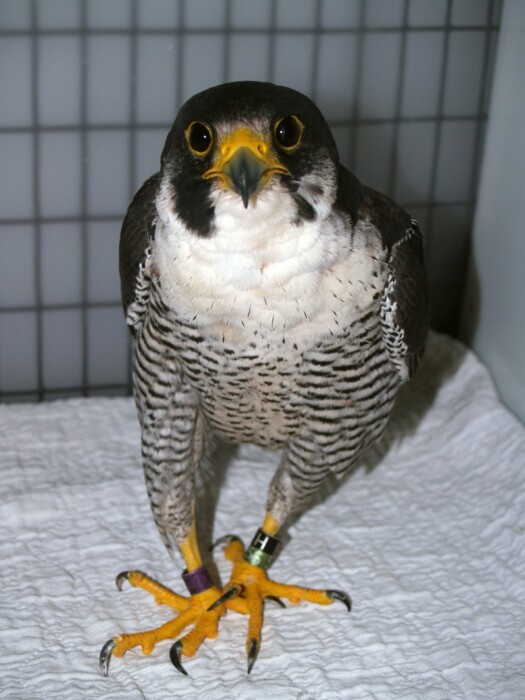
Photo credit: Beka Weiss
|
|
|
About the presenter
Victoria Hall is the Executive Director of The Raptor Center and the Redig Endowed Faculty Chair in Raptor and Ecosystem Health at the University of Minnesota. Dr. Hall earned her Doctorate in 2014 and a Masters of Science (Veterinary Preventive Medicine) in 2015 from Mississippi State University. She is also a Diplomate of the American College of Veterinary Preventive Medicine. Dr. Hall has a strong background in One Health, serving as the first veterinary epidemiologist for the National Zoo. [Learn more].
Webinar recording
Post-test
Complete the brief quiz. With a passing grade of 70% or higher, you can download your continuing education (CE) certificate for 1 hour of CE credit in jurisdictions that recognize American Association of Veterinary State Boards (AAVSB) Registry of Approved Continuing Education (RACE) approval.
Expert Q&A
Although some questions were addressed during the live event, Dr. Hall generously answered the remaining questions. A lightly edited transcript of these questions and answers are posted below:
SIGNALMENT
In mammals is it only carnivore/omnivore or could deer be infected?
There have not been reported positive deer at this time, but broad surveillance is not being conducted. Keep an eye on the USDA HPAI mammal website for the latest information on what has been confirmed in the United States.
I have pet African grey parrots in Texas. What is the relative danger of them being outside?
Everything is a risk assessment, so I would consider multiple factors. First, what is the transmission of AI in your area? This can be hard to determine, but using the USDA website can at least give you some idea. Second would be would the parrot have direct contact with the ground or surfaces wild birds could land on. Third would be if the parrots could have direct contact with wild birds themselves. If you have low transmission in the area and you are taking the birds outside in a manner where they are not having contact with any surfaces that wild birds could have interacted with- then risk would be extremely low. If transmission in your area is high and you are placing them directly on the ground for example, then you would introduce much more risk to the parrots.
CLINICAL PICTURE
What were the primary pathologic lesions noted in the raptors that died of disease?
For full descriptions of lesions, please check out: Wünschmann A, Franzen-Klein D, Torchetti M, Confeld M, Carstensen M, Hall V. Lesions and viral antigen distribution in bald eagles, red-tailed hawks, and great horned owls naturally infected with H5N1 clade 2.3.4.4b highly pathogenic avian influenza virus. Vet Pathol. 2024 Jan 10:3009858231222227. doi: 10.1177/03009858231222227. Epub ahead of print. PMID: 38197395.
Did you see any relationship between viral load, clinical signs, or transmissibility?
We are still diving into that analysis as we match videos of clinical signs to other data including viral load- so stay tuned to some future publications!
DIAGNOSTICS
Did you say how long PCR results took to come back? In that time, did the 16% of asymptomatic birds develop neuro signs?
PCR results can technically come back in a matter of hours if the test is run immediately. Most often though, people need to submit them to a lab and then each lab will have a different window of time that it takes them to return results. At The Raptor Center, we set up our own lab so are fortunately to have very timely results to make decisions based off of. Of the 16% of asymptomatic birds, the majority died overnight, developed clinical signs, or were euthanized for other injury reasons.
Do you think the higher numbers in Minnesota are mainly due to a higher amount of testing?
There is definitely an increase in numbers in Minnesota due to testing. Unfortunately, we do not have robust testing of wildlife in the United States and in the times of a mass die-off of wild birds, if only one bird was tested then only one bird would be reflected on the USDA map (even though many might have died). The Raptor Center itself contributed over 70% of the positive testing raptors to the state of Minnesota Surveillance in 2022, as we felt that having data would help ourselves and others in our state make better risk-based decisions.
Have you identified any different genotypes this year?
We continue to see genotypes that match what USDA is detecting in wild bird surveillance in the flyway.
PREVENTION & CONTROL
How long do you recommend keeping a raptor or other species in quarantine if PCR testing is not available?
We find, for species that are likely to show signs of illness if they get infected (such as raptors), that within 48 hours you are likely to see signs in the majority of infected animals- they tend to get much sicker and/or die. This is based off our experience in 2022/2023, so it is important to note this virus changes over time and that is for the majority (not all) infected raptors seen. Species that are not likely to show signs of illness if infected (i.e. ducks) are much more difficult and might shed for weeks if infected.
Moving out of migration season and into baby season this spring, how do you think your quarantine/isolation procedures may change? What do your quarantine practices look like now?
Our practices change based on risk…The higher the transmission (for example waterfowl are migrating through right now) the more we increase procedures. Right now, we are admitting into a dedicated room in our hospital (versus a separate building) and it is working pretty well.
With babies coming, we actually manage the babies in a separate space and keep biosecurity between babies. That way if they come in just for a day or so, and then we send them back out, we are confident they were not exposed to anything in our care. If we need to foster, we do multiple rounds of HPAI testing on the baby we would like to foster to confirm that we do not accidentally introduce HPAI into a different nest.
Do you have a flow chart/checklist for steps for donning/doffing PPE? Currently seeing both WNV positive and HPAI positive in California.
Check out https://www.cdc.gov/hai/pdfs/ppe/ppe-sequence.pdf and let us know if we can help adjust it for your facility! Having it on the wall is so important to help everyone remember.
Where did you get the blue footbath pads? I’ve been trying to find them online!
We use puppy pads to be honest! Tend to be the cheapest that we find.
Our state [New Mexico] has just sent rehabilitators the first (!) communication about HPAI. They included a chart from USDA which showed the testing process. The conclusion of the chart states that if a bird tested positive, the rehab center would be shuttered- no birds in, no birds out. No mention was made of the biosecurity precautions that might have been in place. Since we are the ones responsible for alerting about a possible case, and for paying for the original testing, that policy seems to be a huge disincentive to reporting. Also, closing rehab centers encourages the public to keep possession of a wild bird that is possibly infected. Both seem to me to be horrible public policy. Also to you?
That is a real problem. When responses are so severe, it makes no sense why anyone would test. And we agree, if rehab centers close, then the public keeps the bird creating other risk. We have been able to advocate in the state of Minnesota that we could safely and responsibly handle potentially positive birds without create risks of it spilling out of our center into other birds, humans, or agricultural systems. We did this with strong biosecurity protocols. [The Raptor Center is] always happy to help join conversations about rehab and biosecurity, so let us know if we can support you!
Do you know if for poultry flock that had a positive HPAI raptor found inside the enclosure, were the owners allowed to test/quarantine flock or were they culled?
I unfortunately cannot speak to the state or federal response for facilities that had positive wildlife found. This would likely vary based by state and situation. Wild birds are considered a different category by the World Organization of Animal Health and can be handled differently based on state/federal response.
Is F10 a good disinfectant…and also can we used as a nebulizer at low concentrations?
Unfortunately, I don’t have experience with that disinfectant. [You could] work …potentially [with] the manufacturer to determine safety and use.
Editor’s note: The U.S. National Science Foundation does briefly mention the use of F10 in Updated Guidance on the Highly Pathogenic Avian Influenza – Environmental Update for USAP Personnel. Also visit the EPA’s Registered Antimicrobial Products Effective Against Avian Influenza.
ZOONOTIC POTENTIAL
Is there any information on the zoonotic potential in beaches and human used bodies of water?
I have not read any studies on the potential of transmission to humans in bodies of water–there is definitely great work with HPAI and water out there and this would be a great topic to explore further!
The following questions were answered by the moderator, Christal Pollock, DVM.
SIGNALMENT
Have any of the penguin colonies in Antarctica been affected by HPAI?
Surveys have confirmed the presence of a low pathogenic H11 avian influenza virus in Antarctica.
Ogrzewalska M, Couto Motta F, Resende PC, Fumian T, Fonseca da Mendonça AC, Appolinario Reis L, Lima Brandao M, Chame M, Arantes Gomes IL, Mendonca Siqueira M. Influenza A(H11N2) Virus Detection in Fecal Samples from Adélie (Pygoscelis adeliae) and Chinstrap (Pygoscelis antarcticus) Penguins, Penguin Island, Antarctica. Microbiol Spectr. 2022 Oct 26;10(5):e0142722. doi: 10.1128/spectrum.01427-22. Epub 2022 Sep 19. PMID: 36121294; PMCID: PMC9603087.
https://www.theguardian.com/environment/2023/dec/08/mass-deaths-elephant-seals-penguins-bird-flu-antarctic-ecological-disaster-aoe. Disease has been seen in skuas in Antarctica and there is fear that disease will reach the penguin colonies.
Addendum: In February 2024, highly pathogenic avian influenza was found on mainland Antarctica.
PATHOGENESIS & TRANSMISSION
Is shedding via respiratory system, fecal also, other eg dander? any info on if vertical as well as horizontal?
The fecal-oral route most commonly transmits the orthomyxovirus causing avian influenza, although virus is also shed in respiratory and ocular secretions. Dander does not play a role in transmission, but water contaminated with virus-laden feces does. Vertical transmission has also been documented, but this mode of transmission is probably limited. Here are the most recent references that I came across in in a quick search:
Yu G, Wang A, Tang Y, Diao Y. Vertical Transmission of H9N2 Avian Influenza Virus in Goose. Front Microbiol. 2017 Aug 15;8:1559. doi: 10.3389/fmicb.2017.01559. PMID: 28861069; PMCID: PMC5559544.
Uchida Y, Takemae N, Tanikawa T, Kanehira K, Saito T. Transmission of an H5N8-Subtype Highly Pathogenic Avian Influenza Virus from Infected Hens to Laid Eggs. Avian Dis. 2016 Jun;60(2):450-3. doi: 10.1637/11312-110315-Reg. PMID: 27309286.
Is it possible that all raptors are infected by eating infected birds/animals?
If this question were part of a quiz, the “ALL” would make it a trick question, as there are rarely absolutes. Carnivorous mammals are at risk of becoming directly infected by feeding on sick or dead wild birds, so it is reasonable to assume the same might be true in raptors. The presence of viral proteins in the GI tract as opposed to the respiratory tract also supports this supposition.
Reperant LA, van Amerongen G, van de Bildt MW, Rimmelzwaan GF, Dobson AP, Osterhaus AD, Kuiken T. Highly pathogenic avian influenza virus (H5N1) infection in red foxes fed infected bird carcasses. Emerg Infect Dis. 2008 Dec;14(12):1835-41. doi: 10.3201/eid1412.080470. PMID: 19046504; PMCID: PMC2634621.
Any information on factors that might affect viral shedding?
Dr. Hall discussed some of these factors: season, geographic location, and host species.
Age at infection (At least in waterfowl, younger birds maintain infection within the population), virulence of the virus strain, and condition of the host would also be important factors. There has also been researching evaluating gene expression in individual birds, as some birds are apparently “super shedders”:
Dolinski AC, Homola JJ, Jankowski MD, Robinson JD, Owen JC. Host gene expression is associated with viral shedding magnitude in blue-winged teals (Spatula discors) infected with low-path avian influenza virus. Comp Immunol Microbiol Infect Dis. 2022 Nov-Dec;90-91:101909. doi: 10.1016/j.cimid.2022.101909. Epub 2022 Nov 7. PMID: 36410069; PMCID: PMC10500253.
Are there any cases where we know that an infected raptor has transmitted the virus to another raptor.
Although transmission was not confirmed, a group of hunting falcons were believed to be infected with HPAI through exposure to free-ranging houbara bustards. I am not aware of any other confirmed cases, but I will ask.
Naguib MM, Kinne J, Chen H, Chan KH, Joseph S, Wong PC, Woo PCY, Wernery R, Beer M, Wernery U, Harder TC. Outbreaks of highly pathogenic avian influenza H5N1 clade 2.3.2.1c in hunting falcons and kept wild birds in Dubai implicate intercontinental virus spread. J Gen Virol. 2015 Nov;96(11):3212-3222. doi: 10.1099/jgv.0.000274. PMID: 26350163.
CLINICAL PICTURE
So clinical signs in raptors look more like poisoning?
Lead toxicity is an important differential diagnosis for birds that present with clinical signs consistent with avian influenza. Other important differentials include West Nile virus and traumatic brain injury.
PREVENTION & CONTROL
What advice should we provide hunters (waterfowl) about the probability and effect of harvesting waterfowl for food?
There are some good resources provided by state and federal sources on this topic. Ducks Unlimited also summarizes these points.
- https://www.aphis.usda.gov/publications/animal_health/fsc_hpai_hunters.pdf
- https://www.ncwildlife.org/Connect-With-Us/waterfowl-hunters-should-take-avian-influenza-precautions
- https://www.ducks.org/conservation/waterfowl-research-science/waterfowl-hunters-and-the-avian-flu-what-you-need-to-know
RACE approval
This program is approved for 1 hour of continuing credit for veterinarians and veterinary technicians in jurisdictions that recognize American Association of Veterinary State Boards (AAVSB) Registry of Approved Continuing Education (RACE) approval.
Hall V. Highly Pathogenic Avian Influenza: What's different about this strain and considerations for wild and captive birds. Lafeber Vet web site. October 31, 2023. Available at https://lafeber.com/vet/highly-pathogenic-avian-influenza/