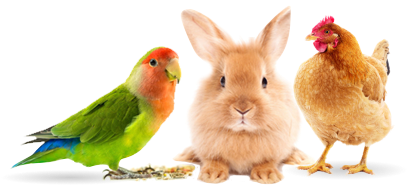
Webinar: Translating Parrot: Hormonal Parrots — Just The Facts!
Join us March 1st when Pamela Clark explains hormonal influences on problematic parrot behaviors and how to minimize triggers sparking seasonal chaos.





Join us March 1st when Pamela Clark explains hormonal influences on problematic parrot behaviors and how to minimize triggers sparking seasonal chaos.

Join our live interactive webinar on Friday, March 22, when Dr. Tom Tully answers questions from our virtual audience about their birds’ health and wellbeing. Even if you don’t have question, you can learn from others’, and Dr. Tully will share his extensive expertise to help bird owners provide the best care.

In her latest blog, Dr. Irene Pepperberg reflects on the upcoming play “Beyond Words,” which dramatizes her remarkable 30-year research relationship with Alex, the infamous African grey parrot who took the world of animal behavior research by storm. Dr. Pepperberg shares how, despite collaborating on early drafts, witnessing such intimate bonds fictionalized before audiences holds surreal emotional weight. As actors emulate private breakthrough moments in her and Alex’s time working together, she talks about feelings of profound vulnerability, yet revels in Alex’s captivating global recognition through art’s lens.
In her latest blog, Dr. Irene Pepperberg speaks to the importance of having a plan, and possibly multiple backup plans, in place to protect our pet birds’ well-being during harsh weather and natural disasters. She cites challenges she and her African grey flock faced during a power outage and how that underscores the critical need to prepare. See how her parrots weathered a recent storm and what she and her colleagues in her cognitive behavior research lab are doing to stay proactive in planning for the unexpected.

Join Dr. Susan Orosz and Ann Brooks for an insider look at the 2024 Phoenix Landing Wellness Retreat – a one-of-a-kind learning summit taking place over two days this April in Asheville, NC, to help bird owners and professionals elevate their bird care. Sign up and tune in February 2!
In her latest blog, Dr. Irene Pepperberg explores the delicate question: What technologies help animals thrive versus the benefits to us and our ability to control them? For example, from the animals’ perspective, do piped-in soundtracks at zoo habitats make the animals feel at home, or are they played to enhance the experience for zoo visitors? Should you leave the radio or TV on when you leave home so your bird doesn’t feel alone? Read on for Dr. Pepperberg’s overview of the tech effect on animals.

Can parrots learn to read and write? Ask Jennifer Cunha, and that answer is a “Yes.” Her 11-year-old Goffin’s cockatoo Ellie continues to astonish by demonstrating literacy equal to a young child. Ellie uses a touchpad and her beak as a “pencil” to communicate by drawing letters. Learn how Cuhna, a property lawyer by trade, became passionate about understanding parrot cognition, how it helped her bond with Ellie, and how it inspired her to launch her “Parrot Kindergarten” online course to help pet bird stewards strengthen their bond with their birds.

Want to get expert advice on bird behavior? Join our free, live webinar on December 1st, and learn pet bird behavior basics from Pamela Clark, IAABC Certified Parrot Behavior Consultant and retired CVT .

Tune in to our free webinar on December 8th with special guest parrot behavior expert Pamela Clark , and learn how to decode and enrich the lives of the spirited yet demanding pint-sized green-cheeked conure.
Journey inside the avian vocal tract as Dr. Irene Pepperberg explains how African grey parrots miraculously produce human speech.
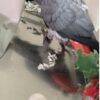
When Athena the African grey parrot laid her very first egg, it took everyone by surprise – including Athena herself! As her caretaker and renowned animal cognition scientist Dr. Irene Pepperberg shares, Athena reacted with apparent shock. Athena’s curious response to suddenly producing her inaugural egg after seeming oblivious beforehand reveals the cognitive complexity of parrots.

Join us October 20 with renowned parrot expert Pamela Clark and learn insider tips for adopting and caring for an older companion bird. Pamela will guide you through the process, from choosing the right age and species to integrating adopted parrots into your flock, using her decades of experience to ensure a smooth transition.
The infamous Marshmallow Test showed that young children who can delay gratification (waiting 15 minutes earned them an extra marshmallow) are more likely to succeed later in life. But can parrots also learn to delay gratification? In her latest blog, Dr. Irene Pepperberg walks us through her study with African grey parrot Griffin and fellow African greys Pepper and Franco in which their patience would pay off with more nut treats if they learned to wait. See how the greys faired and the study’s biggest takeaways.

Join us on August 4 for an exciting new Lafeber webinar series, “Translating Parrot,” which focusses on Parrot Behavior & Wellness with Pamela Clark, a well-known author, speaker, IAABC Certified Parrot Behavior Consultant & retired CVT. In this episode, Pamela will tackle why cockatoos can be such challenging companions as well as address cockatoo myths vs. facts.
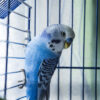
In her latest blog, Dr. Irene Pepperberg offers a look at the first-ever Parrot Awareness Week recently held in the UK, an event that featured daily campaigns on parrot-centric topics, such as nutrition, healthcare, and health insurance coverage for feathered family members. The end goal was to improve parrot health and welfare. Dr. Peppberg notes that despite there being many worthy avian veterinary and companion parrot conferences here in the U.S., a national-wide event model similar to that of the UK’s Parrot Awareness Week could be a game changer to raise awareness of the unique needs of parrots to the masses.
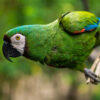
In her latest blog. Dr. Irene Pepperberg shares some of her takeaways after taking part in a Zoom meeting with members of the Earth Species Project, which uses AI to develop ways to understand nonhuman communication. Dr. Pepperberg discusses the potential benefits as well as the risks of using artificial intelligence (AI) to understand animal communication.

Sign up and tune in on Friday, July 14, for our latest webinar episode of Avian Insider with Dr. Stephanie Lamb. Dr. Lamb will discuss how teaching your bird simple behaviors or tricks not only offers enrichment and build trust between you and your bird, but how it encourages exercise and can serve as a distraction from unwanted and hormonal behavior.

Dr. Irene Pepperberg’s research has helped to change the way we think about parrots and their intelligence— that parrots are capable of learning complex concepts and using language in a meaningful way. In her latest blog, she talks about her 1999 media lab project—aptly referred to as “InterPet Explorer—to see how parrots could or would interact with computers; pre Zoom! See what that research entailed and how she helped spark the latest research in which scientists developed a system whereby parrots can interact with one another online!

In this free webinar episode of The Grey Way, Lisa Bono, CPBC, will go over pet bird products and foods that might not be in the best interest of your bird, no matter how much your bird, or you, might like it. Sign up and tune in on June 9 to find out!

A recently published study sheds new light on the pecking order in parrots and factors that might change flock dynamics. Researchers at the University of Cincinnati observed interactions among flocks of captive monk parakeets (also commonly referred to as quaker parrots) in 2021 and 2023 to identify the parrots with the most status; that is, the ones who tended to be the most aggressive. Their study found some surprising outcomes when the more dominant parrots were returned to the flock after a brief stint away compared to their more docile flock mates.
In her latest blog, Dr. Irene Pepperberg dishes on African grey Griffin’s preferences when it comes to foraging toys—or lack thereof. Unlike his flockmate Athena, African grey Griffin isn’t much of a toy lover. He prefers the basics like construction paper, and his preferences change slightly depending on whether it’s inside or outside the cage. Imagine Dr. Pepperberg’s surprise to discover that Griffin has taken to making his own “burrito-style” foraging toy.

In this free webinar episode of The Grey Way, Lisa Bono, CPBC, will offer tips to help bird owners prep their birds for a stress-free visit to the vet. Sign up and tune in Friday, April 21, 2023!
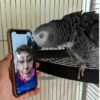
In her latest blog, Dr. Irene Pepperberg describes what it’s like to connect with African grey parrots Griffin and Athena over video call. She recounts that just like many people pivoted from in-person meetings to Zooming during COVID her cognitive behavior research lab had to do the same, including her flock! Learn how the parrots feel about their videoconference calls when she travels, as well as how a parrot’s hearing and vision differs from ours and the ways this might affect their video-calling experience.

Spring will soon be here and along with it, pet bird enthusiasts might start to notice changes in their birds’ behavior. Join us on March 17 to know what might be going on with your bird as Dr. Lamb gives us a rundown of the Top 10 hormone-related questions and concerns she hears from pet bird owners.

In this free webinar episode of The Grey Way—African Grey Hormones Top 10, Lisa Bono, CPBC, will help bird owners navigate their birds’ hormones as we head into spring! Sign up and tune in Friday, March 31, 2023!
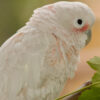
Dr. Irene Pepperberg gives us her take on new research about tool use among Goffin’s cockatoos. She talks about the propensity for tool use among other parrot species and the reasons why cockatoos might be more inclined to use tools compared to others.

We know the voices of friends and family, but how well do parrots recognize each other’s “voices?” Fortunately, a biological survey undertaken by the Max Planck Institute of Animal Behavior in Germany, along with four scientists, gives us some insight into how well parrots recognize exact vocal prints in others of their kind. Specifically, they studied the vocalizations of 229 monk parakeets (also called quaker parrots), for a total of 5,599 recordings over a two-year period.
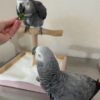
In her latest blog[, Dr. Irene Pepperberg talks about a less scientific category but nonetheless worthwhile one when it comes to wrapping our minds around parrot intelligence. The “by chance category,” is filled primarily with anecdotes as opposed to behavior that can be scientifically reproduced.

Join us on February 10, when Dr. Lamb will discuss feather disorders in pet birds. Dr. Lamb will first explore the various problems that can occur with feathers. She will discuss infectious diseases, nutritional problems, odd disorders, and yes, even that pesky topic—Feather Destructive Behavior(FDB).

In this free webinar episode of The Grey Way—Why Understanding Instinct is the Key, Lisa Bono, CPBC, will help bird owners unravel the mysteries of parrot behavior! Sign up and tune in Friday, February 17, 2023!

A new study fueled by parrot owner responses shows that many companion parrots use words in context and can even build phrases off of their vocabularies. The study conducted using a database of 900 pet parrots’ vocal abilities based on their owners’ reporting.

In the latest study to gauge Corvid intelligence, crows outsmarted monkeys. Researchers discovered that crows are quite adept at the cognitive ability referred to as recursion—that is, they can distinguish paired elements within larger sequences, which was once thought to be a purely human trait.
In her latest blog, Dr. Irene Pepperberg tells us about a study in which African greys Griffin and Athena, along with a few companion greys, were tested to see if they would work for food just for the fun of it. The study centered on the concept of “contrafreeloading” and involves working for food that could simultaneously be obtained for free. Interestingly, the same experiment was done with wild Kea parrots. See the different outcomes, as well as what parrot species is next in line to be put to the contrafreeloading test.
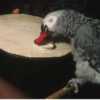
In her latest blog, Dr. Irene Pepperberg talks about individual preferences when it comes to parrots and toys. She gives us a glimpse of African greys Griffin and Athena’s favorite toys and their play styles. From paper and spoons to flannel and softwood, see who likes what. Dr. Pepperberg also reveals how Athena’s play behavior inspired a study on “countrafreeloading,” defined as working for food that can simultaneously be obtained for free.

What do birds look for in a mate? For female budgies, problem-solving ability appears to make males more attractive. From a revolutionary standpoint, it might serve birds well to opt for partners that show good foraging prowess. See the tricky way researchers got female budgies to ditch their preferred mates to those trained to solve puzzles.

In her last installment of “Alex’s Number Series,” Dr. Irene Pepperberg reveals Alex’s numerical abilities that have yet to be demonstrated by any other nonhuman—quite a feat! Read on to find out how Alex the African grey parrot was the first, and so far the only, nonhuman to show that he inferred the cardinal values of new numbers from their ordinal values. In layman’s terms, Alex understood that numbers in order (i.e. “One, two, three…) meant that a number was one more than the preceding number and one less than the number after it.

In this free webinar episode of The Grey Way—Food Can Be Fun, Lisa Bono, CPBC, will give her tips and tricks to get your bird to eat healthy foods! Sign up and tune in Friday, October 14, 2022!
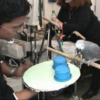
In her latest blog, Dr. Irene Pepperberg takes us back once again to her studies with Alex, her African grey protégé, and his impressive numerical abilities.

In this free webinar episode of The Grey Way, Lisa Bono, CPBC, will offer tips and tricks for managing a multi-bird household. Sign up and tune in Friday, August 12!
In her latest blog, Dr. Irene Pepperberg takes us back to when Alex, her African grey protégé, and his numerical abilities: The challenge this time required that Alex comprehend the auditorially presented symbolic numeral label (e.g. “6”) and use its meaning to direct a search for the exact amount specified by that label (e.g. six things); that is, know exactly what a set of “X” individual items is, even when intermixed with other items representing different numerical sets, and he couldn’t just make approximations like label a set of five objects as “six” or “four.” Read on to see why, compared to young children on a similar task, Alex was more successful, and how this study led to an unexpected additional finding.

The Alex Foundation celebrates a special milestone this week — the 45th anniversary of when Dr. Irene Pepperberg began her groundbreaking collaboration with Alex the African grey! In this very special blog, Dr. Pepperberg takes us back to the early days of convincing others that parrot intelligence was worth studying and redefining the term birdbrained.
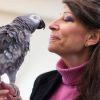
In her latest blog, Dr. Irene Pepperberg talks about how African grey Alex didn’t learn his numbers in the traditional sense, especially when compared to young children. Alex’s number studies were unique in many ways, which also allowed him to outperform some of the other nonhumans on certain tasks. Learn why Dr. Pepperberg started training Alex on the numbers “three” and “four,” first as well as which number posed the biggest phonetic challenge, and more in this Part 1 of a two-part series.
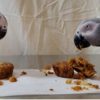
In her latest blog, Dr. Irene Pepperberg emphasizes the mantra “happy lab equals happy parrots!” and the importance of celebrating milestones — both for the humans and the birds. This can be a challenge when working around revolving volunteer schedules. One celebration that can’t be missed is the parrots’ hatchday!
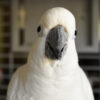
A ground-breaking study undertaken by researchers at the Max Planck Society is the first to demonstrate a direct link between brain size and longevity. By creating a massive database, the research team was able to glean reliable estimates of the average life spans of 217 parrot species — more than half of all known species!

Learn how to set up your bird’s housing with enrichment and foraging opportunities. Our special guest, Ann Brooks, will offer tips for making the cage an active place for your bird to forage and play, as well as ways to make your bird feel safe and comfy inside their environment.
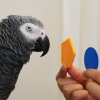
In her latest Lafeber blog, Dr. Irene Pepperberg shares Alex the African grey’s impressive grasp of words and his eagerness to expand his vocabulary. Learn more about Alex’s passion for learning, how his time in the lab differed from that of greys Griffin and Athena, and how he was very particular about his grapes!

A new study by the Goffin Lab at the Messerli Research Institute in Vienna’s University of Veterinary Medicine gives new meaning to the golf term “Birdie” — Goffin’s cockatoos who know how to putt-putt to score a prized cashew reward.

In this free webinar, Dr. Stephanie Lamb, DVM, DABVP (Avian Practice), will revisit a very important topic–hormones! How do you recognize hormonal behavior and what can you do about it? Can you cuddle your bird? Find out the answers to these questions and more on March 4!
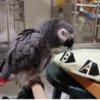
Dr. Irene Pepperberg addresses two questions she is often asked: Do her African grey parrots, Griffin and Athena, enjoy the tasks they are given in her cognitive behavior research lab, and are they afforded time in their day to just “be parrots”?
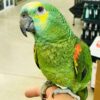
Do you know your bird’s sex? Unlike cats and dogs, many popular parrot companions can be surprisingly hard to tell the difference between males and females by looking at them. Find out why knowing your bird’s sex can positively affect its health and well-being, and help you better understand your bird’s behaviors.

In this webinar episode, Lisa will discuss the steps we can take to create a healthy home environment for our birds, as well as why routine veterinarian exams are essential to maintaining our birds’ optimal health. Sign up and join us February 18.

Don’t miss your chance to ask Dr. Tully a question about your bird’s health, nutrition, care, or behavior problem in this interactive webinar on February 25.

In her latest blog, Dr. Irene Pepperberg talks about the frustration — and amusement — of when the African grey parrots in her cognitive behavior research lab attempt to game the system by purposely withholding answers until they are offered larger treat rewards.

A new study that included an online survey of nearly 1,400 pet parrots representing 50 species shed light on abnormal parrot behaviors like biting cage bars, pacing in the cage, and pulling out feathers. Researchers from the University of Guelph, University of Bristol, and Utrecht University drew on results from a 1990 study that looked at negative parrot behavior, and their results further support what other studies have pointed to — that foraging and other enrichment opportunities are essential to companion parrots’ well-being.
The most common question Dr. Irene Pepperberg encounters is if parrots truly understand what they are saying. In her newest blog, Dr. Pepperberg offers some notable experiences with African greys Alex, Griffin, and Athena that might not hold up to scientific scrutiny but are nonetheless valuable in demonstrating parrots’ impressive cognitive abilities.
In her latest blog, Dr. Irene Pepperberg talks about African greys Griffin and Athena’s recent move into a spacious two-bedroom apartment. Surprisingly, the grey who typically doesn’t like change seems to be adjusting quicker than their flockmate. Dr. Pepperberg gives us the backstory.
Dr. Irene Pepperberg explains the “treat substitution” trick, where a treat is moved from where the test subject assumes it should be or it is switched out with a less favored treat. Learn the reasons why birds and other prey animals form expectations of where food is located, and why they demonstrate a signs of distress when their expectations are challenged.
Parrots, like people, have their individualized tastes in food. This includes their own interpretations of what constitutes fresh produce, as well as the order in which food should be eaten. In her latest blog, Dr. Irene Pepperberg dishes on African greys Athena and Griffin’s specific food preferences.
In her latest blog, Dr. Irene Pepperberg explains the concept of mutual exclusivity—how it pertains to children and how it can be applied to parrots.
In her latest blog, Dr. Irene Pepperberg explains how, when working with parrots, designing and implementing seemingly simple experiments are never as easy as one might assume.