Webinar: Heart To Heart: Pet Bird Behavior Q&A With Chris Davis
In this live webinar, Chris Davis will share a behavior case or problem and then field viewers’ behavior-related questions. Join us June 4!





In this live webinar, Chris Davis will share a behavior case or problem and then field viewers’ behavior-related questions. Join us June 4!
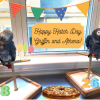
Dr. Pepperberg writes about the changes to hatchday celebrations for the African greys in the lab because of precautions for COVID. Griffin’s 25th hatchday was more subdued that originally planned.

In this live webinar, Chris Davis will share a behavior case or problem and then field viewers’ behavior-related questions.
In her latest blog, Dr. Pepperberg explores parrots’ aptitude for vocal learning, specifically how their propensity to be open-ended vocal learners means that, unlike most animal species, they are capable of learning new utterances their entire lives.

Get the lowdown on avian reproduction and associated health issues in this live webinar with Dr. Stephanie Lamb.

In this live webinar, Chris Davis will share a behavior case or problem and then field viewers’ behavior-related questions.
Join us Friday, February 19 for a free, interactive webinar. Our guest, Lisa Bono, CPBC, owner and operator of The Platinum Parrot and an associate-certified parrot behavior consultant specializing in African grey parrots, will talk about African grey behavior and answer questions from our viewers!

In this live webinar, Chris Davis will share a behavior case or problem and then field viewers’ behavior-related questions.

Stephanie Lamb, DVM, DABVP (Avian Practice), will discuss the signals we send to our birds that can actually be hormonal triggers.
Some birds are inclined to be cautious and wary of new things, while others seem to exhibit an immediate curiosity, and still more land somewhere in between. In her latest blog, Dr. Pepperberg discusses the concept of neophobia (dislike of novelty) and neophilia (attraction to novelty), and the degree of which it can vary among bird species. She also dishes on why our companion parrots tend to like consistent schedules.

In this live webinar, Chris Davis will share a behavior case or problem and then field viewers’ behavior-related questions.

In her latest blog, Dr. Irene Pepperberg dishes on how our feathered companions rely on their humans to not only provide the essentials such as food and water, but, in a broader aspect, a sense of security.
Dr. Irene Pepperberg gives us an update on how she is forging ahead despite that challenges posed by COVID-related social distancing requirements and the shutdown of her cognitive behavior research lab on the Harvard campus.
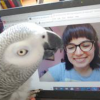
Do parrots dig virtual interactions? Dr. Irene Pepperberg explains why parrots see things a bit different than us when it comes to digital platforms like Zoom, FaceTime and Skype.

Christine Davis, CPBC, and Dr. Ted Lafeber will share their step-by-step method of forming a stronger relationship with pet birds and all animals through loving communication. Tune in Friday!
In her latest blog, Dr. Irene Pepperberg points out the importance of paying attention to African greys Griffin and Athena’s actions outside of formal cognitive behavior experiments. Case in point, Griffin’s seemingly stealth maneuver to score more of a favorite treat.
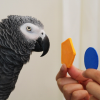
Dr. Pepperberg revisits a study done decades ago with Alex the African grey that has received renewed interest with recent studies done with children — how well do individuals understand the concept of same-different?
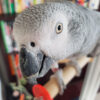
When a prestigious behavior journal welcomed scientists to submit anecdotal observations of nonhuman actions that suggested possible comparisons with those of humans, a recent episode with African grey Griffin sprung to mind. Did Griffin show signs of remorse after delivering an unexpected bite?

A new study on kea parrots, New Zealand’s native alpine parrot species, shows just how smart these famously intelligent birds are. With favored treats at stake, keas demonstrated a keen ability to act on their sense of probability to get treats. They even outperformed primates on some tasks. See how the parrots’ grasp of statistics fared when researchers put them to the test.
Understanding our birds instinctive and their learned behaviors and knowing how to work with them can serve us well in avoiding behavior issues. A “cute” behavior that may have encouraged by the caregiver in the beginning, can become a learned behavior that is adapted by the parrot that leads to negative consequences.
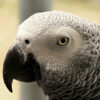
How good are you at the “shell game”… can you follow an object that is shuffled around under shells or cups? Imagine being tested on your ability to track not just one colored object but four! Dr. Irene Pepperberg shares the results of how African grey Griffin’s visual working memory stacks up when compared to adults and children.
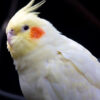
We are hosting a live follow-up webinar this Friday, May 15! Stephanie Lamb, DVM, DABVP (Avian Practice) will offer more tips on dealing with hormonal behavior, and answer viewer questions. Don’t miss “Pet Birds & Hormonal Behavior: Part 2!”
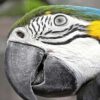
Our special guest Stephanie Lamb, DVM, DABVP (Avian Practice), will discuss hormonal behavior in companion birds and offer tips to help bird owners navigate hormonal surges their feathered companions might display during certain times of the year.

We give our babies names, but do parrots also “name” their young by using distinct chirps specific to an individual chick? One scientist decided to listen more closely to what might really be going on when birds chatter. He constructed nests in Venezuela and recorded the peeps of green-rumped parrotlets. The results suggest that parrot parents give their chicks individual names.

Dr. Irene Pepperberg fills us in on how African greys Griffin and Athena, as well as she and her staff, are handling their “new normal,” albeit hopefully a temporary one. She also dishes on how they found some creative ways to celebrate two big milestones — the birds’ birthdays!
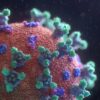
Join us for a live, interactive webinar hosted by Laura Doering, former editor of Bird Talk magazine and Birds USA magazine. Our special guest Stephanie Lamb, DVM, DABVP (Avian Practice) will discuss the COVID-19 pandemic, how it pertains to pet birds, and how we can keep our pets safe and healthy.
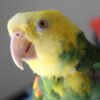
As we hunker down at home to do our part in stopping the spread of the coronavirus, many of us might find ourselves in a conundrum: how exactly to get work done when our birds and other pets beckon nearby?
Webinar discusses the opportunity available because of spending more time at home to take note of the daily habits of your bird or birds.
Many of us are having to stay home from work, school and other social activities to reduce the chances of coming into contact with and spreading the COVID-19 disease. Although this time of self-isolation may be challenging, it can also be thought of as an occasion to spend a little more time with our feathered friends and other pets. As pet owners are at home and observing their birds at times where they may not normally, they may discover that their birds tend to follow routines daily, just like we do!
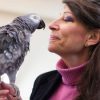
What’s an academic science lab to do when e-mails from the administration start popping up stating in-person instruction was to cease immediately, followed by directives to vacate the campus in light of the ongoing COVID-19 crisis? What if said science lab was home to a flock of parrots known around the world for their contributions to the study of cognitive behavior? Dr. Irene Pepperberg and her research assistants found themselves in a scramble to ensure everyone— birds and humans — found safe places to stay. See where everyone is now.
A lot of planning goes into creating ways to test the parrots’ intelligence to see how they perform on tasks compared to the results of those undertaken by children and primates. But what happens when two hands are required to solve a problem? Dr. Pepperberg describes the challenges and possible solutions to an intelligence test to circumvent the fact that parrots are hands-free.

One Earth Conservation is a 501(c)(3) not-for-profit organization co-founded by Dr. LoraKim Joyner, who has worked in parrot conservation for over three decades. The organization encourages communities in Latin America to support and/or get involved in parrot conservation. Here Dr. Joyner gives us a peek at a recent sun parakeet outreach project in Guyana.
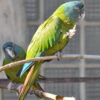
Are parrots willing to help a fellow parrot even though there appears to be nothing in it for them? A team of behavioral scientists put blue-headed macaws and African grey parrots to the test. See which of the two species passes the parrot kindness test.
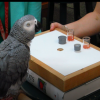
African grey parrots Athena and Griffin are tasked with the challenge of tracking the larger amount of liquid that is poured into various containers to test their grasp of the concept of “overconservation,” where the experimenter starts with different amounts and tests whether the subjects can track the larger amount after various transformations. See where the parrots succeeded as well as what tended to slip them up on this highly challenging task.
Life with a parrot companion can sometimes mean dealing with a situation that you don’t quite understand or that might be causing discord in the home. A certified parrot behavior consultant can help. Learn what it takes to be certified, and how these specialists can assist you.
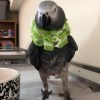
Dr. Pepperberg dishes on a recent health scare she experienced with African grey Athena. She gives us a first-hand account of dealing with Athena’s sudden feather issues to remind us that seemingly minor or temporary changes in a parrot’s environment can affect the bird’s health in unexpected ways.
Do birds take turns when conversing or is this a uniquely human skill? Dr. Irene Pepperberg addresses birds’ use of “countersinging” and “duets” as forms of vocal communication.
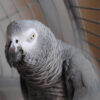
Can birds understand what their people are saying and/or understand what he or she is saying? Dr. Irene Pepperberg says the answer depends on the type of interactions parrots have with their owners. Discover how the way you interact with your feathered companion, as well as flock dynamics, can influence parrot communication.
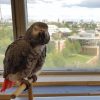
Dr. Pepperberg takes us inside her Harvard lab, where African grey parrots Griffin and Athena call home. We also get a look at their cushy temporary quarters on the building’s eighth floor, complete with a breathtaking view of the Boston skyline. The panoramic view comes with potential visual encounters with a pair of red-tailed hawks—see how the greys react.
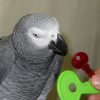
Dr. Pepperberg’s work with parrots revolves around reproducing behaviors using scientific methods to attain statistical significance. Of course, parrots being parrots, there are plenty of incidents where one of her African greys says or does something that perfectly captures their mood or preference, but which cannot be scientifically documented. African grey Griffin, like Alex before him, certainly knows how to get his point across to Pepperberg and her research students. See how these anecdotes provide interesting insights into how the mind of a parrot may work.

If you share your home with companions of both the feathered and furred kind, you might long to see your pets hang out together and be best friends. But before you do, these real-life situations prove that the hazards are real and the consequences potentially tragic.
Studies of nonhuman cognition have made, and continue to make, major contributions to our understanding of the origins and evolution of human cognitive processes, and much more. Parrot cognition studies in particular have a positive impact on pet bird care, conservation, child cognitive therapies, and even artificial intelligence. See what drives Dr. Irene Pepperberg’s passion for parrot research.
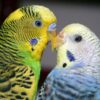
In this bird-centric news roundup, see the tricky way researchers got female budgies to ditch their preferred mates to those trained to solve puzzles, as well as learn as well as who packs a more powerful bite—T-Rex or finch? Also see how the engineering marvels of a birds’ feathers might one day inspire better adhesives and aerospace materials, and meet Alex the honking cockatiel, the viral sensation that saw his fame inexplicably explode across the internet.
How well do parrots remember situations, other parrots, and people over the course of their long lives? Dr. Pepperberg, gives us a rundown on research that points to parrots as having brain areas that function in ways similar to the human cortex, and how their extremely high neural densities enable advanced cognitive processing—which requires good memory.

Chances are, you’ve witnessed a murmuration of starlings. A murmuration is when a mass of starlings fly in a coordinated manner in what appears to be a moving black cloud. Discover how these birds are able to be so in sync.

When her colleagues at Harvard questioned Dr. Irene Pepperberg’s 2-cup test success that showed parrots are capable of inferential knowledge to make decisions, Pepperberg and students at her cognitive behavior research lab upped the ante from the 2-cup test to 3- and 4-cup tests. They once again put African grey Griffin to the test. See how Griffin fared, especially when a coveted Skittle treat reward was at stake.
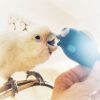
Is it possible for a pet parrot to be as happy in captivity as they would be in the wild? Is parrot ownership more like prison … or could it be like a happy, perpetual childhood experience? As a bird mom to three cockatoos and a parrotlet, it is a question with which I wrestle […]
If you put parrots (specifically, African grey parrots), fish, monkeys and apes to the test on who could figure the fastest way to procure two rewards instead of one, who would come out on top? Dr. Pepperberg and friends of her cognitive behavior research lab recently modeled a test for her flock to see how they would fair in a choice-themed task inspired by wrasse fish, and tested on primates as well.
We like to make our own choices when it comes to what we eat, what we do for entertainment and everything in between. What if we could extend this power to our parrots — give them the ability to communicate what they want and what they don’t want? Here’s a step-by-step approach to teaching your bird to communicate “Yes” or “No.”
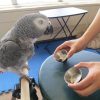
Grey parrots may sometimes be impulsive—think about how often you may have had to give your bird multiple timeouts for the same behavior (like chewing on your sunglasses) in a very short time period. However, my students and I have shown that our parrot, Griffin, can actually exhibit quite a bit of self-control. We found […]
Dr. Pepperberg notes that she and her staff at her cognitive behavior research lab haven’t noticed a one-person tendency among her flock of birds; but she has experienced the avian equivalent of the “cold shoulder” from time to time. Get a glimpse of how flock dynamics can fluctuate in the wild and how parrots’ natural instincts might affect their behavior in the home.
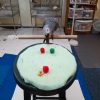
If you are the director of a world-famous animal cognitive behavior research lab, what do you do when your feathered diva doesn’t follow directions? Dr. Irene Pepperberg and her assistants start by having African grey Athena watch her flockmate Griffin perform a requested task with the hope that she’ll be inspired to model his behavior. When that fails, see how Athena has her own way of proving just how smart parrots are.
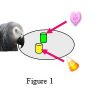
Process of elimination and inference are two powers of reasoning, and Dr. Pepperberg conducted fascinating tests to determine the existence of inference in African greys.
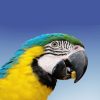
Giving your feathered friend food is essential, but the way that you provide it matters, too! Will parrots work for their food? You would be surprised!

Will African grey parrots share food or ask humans for help? The latest experiments at Dr. Pepperberg’s lab give some interesting answers!
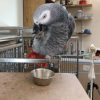
To test a parrot’s ability to understand probability, Dr. Irene Pepperberg’s cognitive behavior research lab recently presented African grey parrot Griffin with a task similar to what a 6-8 year-old child might be tasked to do — using three of one item and one of another, if one item was removed, what was the removed item likely to be? Griffin’s answers might surprise you.
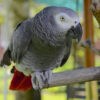
“What’s mine is mine and what’s your is mine.” Does this sum up your feathered friend’s antics? Dr. Irene Pepperberg explains not only how this parrot quirk is based on natural behavior, but she also shares how we can use it to our advantage in the home.
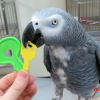
Inviting a film crew into a research lab devoted to the study of cognitive behavior in parrots involves not only prepping the lab, but the parrots and the filmmakers. Dr. Irene Pepperberg shares her account of having a film crew join her in the lab.

The inspirations for topics of Dr. Pepperberg’s African grey studies come from many different sources, and all add up to fascinating information being revealed.
The talkative African grey parrots Dr. Pepperberg works with in her research lab communicate in English, and sometimes they surprise lab staff. See why!