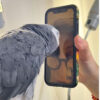
Inside Dr. Pepperberg’s Lab: Video Calling with Griffin
While video calls can’t replace in-person time, Dr. Irene Pepperberg has found they help maintain her bond with Griffin and reduce the “cold wing” treatment when she returns home.





While video calls can’t replace in-person time, Dr. Irene Pepperberg has found they help maintain her bond with Griffin and reduce the “cold wing” treatment when she returns home.
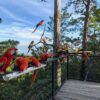
A volunteer-led conservation effort in Guatemala is helping border communities protect scarlet macaws crossing from Honduras.
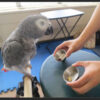
Dr. Irene Pepperberg explores how evolving research on animal cognition is reshaping scientific understanding of consciousness and self-awareness in nonhuman species.
Learn how cutting-edge DNA sequencing is helping scientists expose illegal parrot trafficking and protect endangered species in real time.
A turkey vulture and a red-tailed hawk defy expectations with a decade-long friendship built on shared injury and daily acts of care.
Dr. Pepperberg gives us an update to her previous blog, sharing how a last-minute lifeline turned her Dubai ordeal into a flight home.
Rabbits may get the Easter spotlight, but birds are the true egg artists.
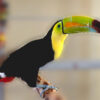
After months on the loose, Toucan Sam’s wild Las Vegas adventure finally comes to a safe and hopeful end.
Indonesia’s Moluccan cockatoo faces threats from habitat loss and cultural practices but a pioneering feather-sharing initiative is helping protect both these iconic birds and the communities that cherish them.
Stranded in Dubai as regional conflict disrupts travel, Dr. Irene Pepperberg shares a candid dispatch from the field; reflecting on the realities of scientific travel and her simple wish to get home.
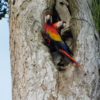
Lafeber’s Global Spotlight highlights a powerful partnership in La Moskitia, where indigenous communities and One Earth Conservation race to protect vulnerable macaw nests during breeding season.
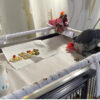
When a African grey parrot Griffin tucks away a favorite snack for later, it sparks a surprisingly serious question about parrot’s ability to plan ahead.

A rocky start between Frank and Amazon parrot Tico evolves into a viral, music-powered partnership that has captured hearts around the world.
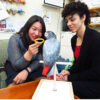
Dr. Pepperberg reveals what daily life in her research lab really looks like—and the support that keeps it going.
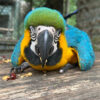
Meet the dedicated team at Peru’s Taricaya EcoReserve working to rehabilitate confiscated parrots and return them to the wild.

Get into the holiday spirit as Lisa Bono unwraps fun, safe bird toys, festive prizes, and gift ideas for you and your flock! Join us Friday, December 19th!
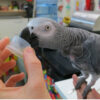
In her heartfelt tribute, Dr. Irene Pepperberg remembers Athena, the extraordinary African grey whose brilliance (and cheeky nature!) leaves a lasting impact both inside and beyond her research lab.
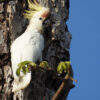
On Indonesia’s Masakambing Island, the Abbotti cockatoo, a subspecies of the sulphur-crested (Cacatua sulphurea abbotti), is slowly rebounding through community-led conservation and protection efforts.
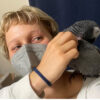
In Dr. Pepperberg’s cognitive behavior research lab, landing the job isn’t just about your résumé; it’s about whether African greys Griffin and Athena think you’re a good fit.
Dr. Pepperberg’s latest blo challenges the derogatory use of “stochastic parrot” in AI discourse and defends the intelligence of real parrots as worthy of respect.
Join us August 8th to celebrate our 200th webinar! Dr. Lamb will help lead the virtual party, along with other special guests. Another reason to join us? Guests will have a chance of scoring one of many giveaways!
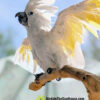
Blinded for years, Boo the 40-year-old cockatoo regained his sight through surgery and is now flying and thriving as a therapy bird.
With support from Lafeber, ACPP is rescuing trafficked parrots, releasing macaws into the wild, and building national momentum for parrot conservation in Paraguay.
When familiar faces leave at semester’s end, Dr. Irene Pepperberg’s parrots feel the shift, reminding us how strongly birds respond to changes in routine and relationships.
Sulphur-crested cockatoos in Sydney have learned to operate public drinking fountains, showcasing remarkable intelligence, adaptability, and social cooperation.
Dr. Irene Pepperberg shares a lighthearted moment from her parrot research, when African grey Griffin’s juice choice leads to an “Aha!” realization that shows his cleverness.

Lafeber spotlights the upcoming Virtual International Psittacine Congress, an accessible, global online event open to all who care about parrot conservation, happening June 12–14, 2025.
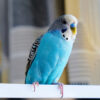
In her latest blog, Dr. Pepperberg talks about a new study that reveals how the brains of budgerigars may hold clues to how we humans learn to speak.
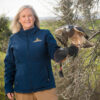
Lafeber has donated $14,000 to support veterinary student training in raptor medical and rehabilitative care at the California Raptor Center, helping to prepare the next generation of wildlife veterinarians.
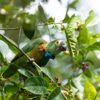
Lafeber’s latest Global Parrot Conservation Spotlight highlights Brazil’s “To Fly Project,” helping rescued Amazon parrots regain survival skills and return to the wild.
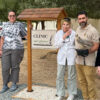
Dr. Pepperberg’s unexpected journey to Dubai has her exploring falcon intelligence and applying her work with parrots to test their problem-solving skills.

To celebrate 5 years of offering FREE webinars, we’re launching a new webinar series with Lisa Bono, CPBC — Parrots, Past & Present: Starting Out in the 70s. Sign up and join us Friday, April 4th!
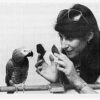
Dr. Pepperberg explores the resurgence of interspecies communication research—are we advancing or repeating past mistakes?
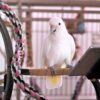
A new documentary on pet birds, “Parrot Kindergarten,” highlights avian learning and human-animal bonds.
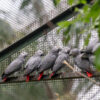
This month’s Lafeber Parrot Conservation Spotlight sheds a light on the World Parrot Trust’s Mobile Vet Unit, which delivers vital care, training, and support across Africa to combat trafficking and safeguard endangered African grey parrots.
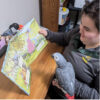
Inspired by her student who decided to see what happened when reading to parrots, Dr. Irene Pepperberg explores how reading might stimulate cognition and shares the surprising preferences of African greys Griffin and Athena.

Dr. Irene Pepperberg reflects on her friend and colleague Chris Davis, highlighting Chris’ pioneering contributions to avian care and their shared efforts to reshape how parrots are understood and treated.
Lafeber’s December Conservation Spotlight supports the Macaw Society and its foster chick program in Peru. Learn how researchers at Texas A&M’s Schubot Center for Avian Health discovered how scarlet macaw chick size and hatch date affected their level of parental care.
This month’s Lafeber Global Spotlight highlights the Indonesian Parrot Project’s inspiring mission to rescue endangered parrots and support local communities.

Don’t miss our annual festive holiday webinar with parrot expert Lisa Bono. Get the lowdown on the latest bird-safe toys, accessories, parrot-themed goodies, and more! Plus, you have a chance to win one of these must-have bird products—we’re giving them away! Join us December 20th!

This month’s Lafeber Global Conservation Spotlight takes us to Ometepe Island, Nicaragua, where One Earth Conservation is working to protect endangered yellow-naped Amazon parrots through community-led conservation efforts.
In this latest blog, Dr. Irene Pepperberg explores how handedness (lateralization) in parrots, specifically Goffin cockatoos, affects their problem-solving abilities and cognitive behavior.
Lafeber’s recent Global Conservation Spotlight highlights the Instituto Arara Azul’s efforts to restore habitats and protect breeding populations of Brazil’s hyacinth macaws, which have faced set backs due to recent fires.
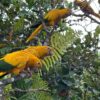
This Month’s Lafeber Conservation Spotlight highlights the efforts to save the endangered Golden Conure through breeding and reintroduction programs that are revitalizing both the species and the Amazon ecosystem.
Hydrating your bird safely is important, because their trachea is in their mouth and opens and closes differently than you might expect, so never drop water into a bird’s mouth or you risk aspiration, even with one drop.
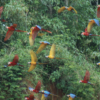
This month’s Lafeber Parrot Conservation Spotlight explores how climate change affects parrots in Tambopata, Peru. Learn how The Macaw Society’s research reveals impacts on breeding success and its efforts to help macaws and other vulnerable parrot species.
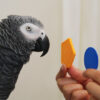
Ever wondered if parrots really understand what they’re saying? Dr. Irene Pepperberg takes us back to her studies with African grey parrot Alex and his ability to use appropriate labels in appropriate contexts, as well as Griffin and Athena’s amusing ways of expressing their opinions.
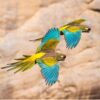
Lafeber’s latest Parrot Conservation Spotlight sheds a light on how One Earth Conservation (OEC) engages local communities in safeguarding endangered parrot species through its Parrot Conservation Corps. Find out how you can be a part of its biodiversity conservation efforts!
Dr. Irene Pepperberg isn’t usually a fan of “citizen science” based studies. One study, however, gets her endorsement, and it’s based on parrot vocalizations!
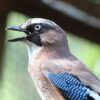
New study shows that Eurasian jays exhibit human-like memory, recalling intricate details, shedding light on avian cognition and episodic memory understanding.
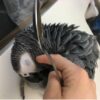
Dr. Irene Pepperberg shares the subtle and not-so-subtle ways African grey parrots Griffin and Athena show their disapproval of her for being gone for too long due to travel and a busier-than-normal schedule.
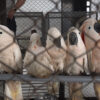
This Lafeber Global Parrot Conservation Spotlight highlights the work of Dr. George Olah of the Australian National University who is pioneering a new DNA database to combat the illegal parrot trade.
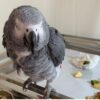
Dr. Irene Pepperberg’s latest blog explores how African grey parrot Griffin cleverly maximized his rewards, prompting a reevaluation of experimental methods in behavioral research.
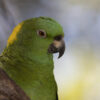
This month’s Lafeber Global Spotlight takes us to Costa Rica, where SINAC leads conservation efforts to save the critically endangered yellow-naped Amazon parrot.
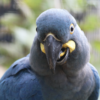
Lafeber’s latest Global Parrot Conservation Spotlight takes us to Paradise Park, a wildlife sanctuary in Cornwall, UK, that has recently become a refuge for a group of endangered Lear’s macaws. Learn more about Paradise Park’s conservation efforts that offer hope for the endangered Lear’s macaw.
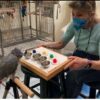
In her latest blog, Dr. Irene Pepperberg shares a fascinating finding from her cognitive behavior research lab, where African grey parrot, Griffin, suddenly struggled with a once-mastered task. After months of testing and frustration, the team discovered the surprising culprit behind Griffin’s diminished performance. Dive into this lesson on the importance of considering our pets’ unique perspectives.
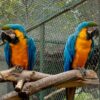
In her latest blog, Dr. Irene Pepperberg explores the delicate question: What technologies help animals thrive versus the benefits to us and our ability to control them? For example, from the animals’ perspective, do piped-in soundtracks at zoo habitats make the animals feel at home, or are they played to enhance the experience for zoo visitors? Should you leave the radio or TV on when you leave home so your bird doesn’t feel alone? Read on for Dr. Pepperberg’s overview of the tech effect on animals.
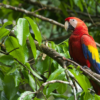
This month’s Lafeber Global Conservation Spotlight focuses on two organizations united to crack sustainable solutions for returning confiscated parrots back into the wild. Learn how the new Parrot Release Network aims to refine releasing protocols through rigorous global collaboration.
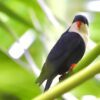
This month’s Lafeber’s Global Parrot Conservation Spotlight takes us to the Cook Islands, where Conservationist Luis Ortiz-Catedral recently conducted field research on the vulnerable Kurāmo’o lorikeet, also referred to as the blue lorikeet, on the tropical Cook Islands paradise of Aitutaki. This royal-blue parrot faces critical threats from invasive predators and devastating cyclones in the South Pacific. Now a coalition of conservation groups aims to study numbers and protect nests to aid in the blue lorikeet’s survival. Discover how research and community stewardship offer hope for vulnerable Pacific parrots like the blue lorikeet.
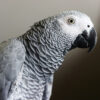
Journey inside the avian vocal tract as Dr. Irene Pepperberg explains how African grey parrots miraculously produce human speech.