Not Your Egg: Birds Warn Each Other of Brood Parasites
Research suggests that birds around the world may share an innate alarm call that helps warn different species about the threat of brood parasites — birds who lay their eggs in others’ nests.





Research suggests that birds around the world may share an innate alarm call that helps warn different species about the threat of brood parasites — birds who lay their eggs in others’ nests.

Dr. Irene Pepperberg reflects on nearly 50 years of parrot research and the remarkable people and birds who helped make her recent lifetime achievement awards possible.
New research reveals how pigeons may use tiny magnetic-sensitive cells in their liver to navigate the world and find their way home.
Join us Friday, July 31st, to learn why stationing may be the single most valuable behavior you ever teach your parrot.

Get your bird summer-ready with expert tips from Dr. Stephanie Lamb on staying cool, preventing heat-related problems, and supporting healthy hydration — join us Friday, July 10th!
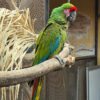
This month’s Lafeber Conservation Spotlight shines on the Txori Foundation, which is preparing a flock of 16 rescued Military Macaws for a historic return to the wild.

Join us Friday, June 12, for the final installment of this three-part series as Dr. Lamb continues the conversation on avian neoplasia.
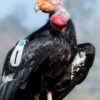
Rescued as a weak, malnourished fledgling, Topa Topa has played a vital role in helping California condor recovery efforts.
Learn how cutting-edge DNA sequencing is helping scientists expose illegal parrot trafficking and protect endangered species in real time.

Found a baby bird? Learn how to assess the situation and when to call a wildlife rehabilitator in this special May 1st webinar!
Celebrate Earth Day with a quick dive into how birds, from hummingbirds to parrots, quietly help keep our planet balanced and thriving.

Lisa Bono, CPBC, returns for a lively Ask Lisa Anything (Almost!) webinar—bring your parrot-care questions, from picky eating to screaming and everything in between…join us Friday, April 24th!
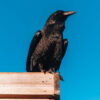
From a rehoming case to a social media star, Loki the Raven’s story shows just how remarkable and resilient birds can be.

Dr. Irene Pepperberg celebrates her Lifetime Achievement Award by honoring the people and parrots who power her work and transform how science understands animal minds.
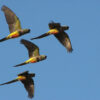
Lafeber Conservation Spotlight shines on the burrowing parrots of Patagonia and the people working to protect the world’s largest parrot colony.
When a African grey parrot Griffin tucks away a favorite snack for later, it sparks a surprisingly serious question about parrot’s ability to plan ahead.
This month’s Lafeber Globak Conservation spotlight supports the community-led conservation in Sierra Leone to protect mangrove habitats critical to the survival of the Endangered Timneh parrot.

Hurricane Melissa drew many migratory birds into its center, where strong winds left them fatigued and disoriented.
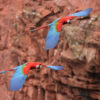
Lafeber’s Global Parrot Conservation spotlight takes us to Brazil, where a former garbage dumpsite has been reborn as a thriving sanctuary for green-winged macaws.
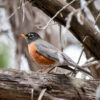
A new study shows urban birds stay awake longer, up to 50 extra minutes, due to light pollution, which raises concerns about their health and survival during migration.
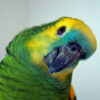
What’s in a name? Check out these fun, fitting group names for parrots to match their charm, chaos, and personality.
Dr. Pepperberg’s latest blo challenges the derogatory use of “stochastic parrot” in AI discourse and defends the intelligence of real parrots as worthy of respect.
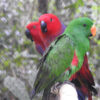
Poaching and habitat loss threaten Seram’s Moluccan Eclectus and other parrot species, sparking urgent conservation efforts.
In this special webinar, Dr. Pilny will dive into why our birds’ mental health is closely linked to physical health; join us on August 15th!
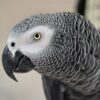
Learn how to safely and easily capture great photos of your feathered family member.
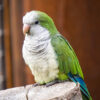
Study of monk parakeets reveals that parrots with richer social lives develop broader vocal repertoires, much like we do.

Lafeber spotlights the upcoming Virtual International Psittacine Congress, an accessible, global online event open to all who care about parrot conservation, happening June 12–14, 2025.
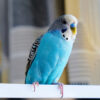
In her latest blog, Dr. Pepperberg talks about a new study that reveals how the brains of budgerigars may hold clues to how we humans learn to speak.
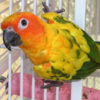
Discover six ways to support your bird, from safety checks to socialization, and ensure they thrive in your care!
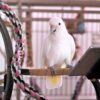
A new documentary on pet birds, “Parrot Kindergarten,” highlights avian learning and human-animal bonds.
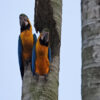
Lafeber’s latest Global Parrot Conservation Spotlight takes us to Suriname, where One Earth Conservation (OEC) works with Indigenous community to protect parrots.
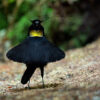
Some birds woo potential mates with dances, elaborate nest-building, and synchronized moves!
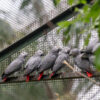
This month’s Lafeber Parrot Conservation Spotlight sheds a light on the World Parrot Trust’s Mobile Vet Unit, which delivers vital care, training, and support across Africa to combat trafficking and safeguard endangered African grey parrots.
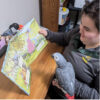
Inspired by her student who decided to see what happened when reading to parrots, Dr. Irene Pepperberg explores how reading might stimulate cognition and shares the surprising preferences of African greys Griffin and Athena.

Lafeber’s December Conservation Spotlight supports the Macaw Society and its foster chick program in Peru. Learn how researchers at Texas A&M’s Schubot Center for Avian Health discovered how scarlet macaw chick size and hatch date affected their level of parental care.
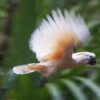
This month’s Lafeber Global Spotlight highlights the Indonesian Parrot Project’s inspiring mission to rescue endangered parrots and support local communities.

Birds symbolize national identity worldwide, with 87 countries designating national birds. Surprisingly, the U.S. hasn’t officially named the bald eagle as its own!

Chris Davis dedicated her life to improving the understanding and care of birds and other animals, touching countless lives with her compassionate approach and belief in the profound bond between humans and animals.
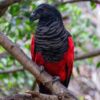
Meet the Dracula parrot, New Guinea’s goth-looking bird with bold black and red feathers and a vulture-like head. Are they anything like their spooky name suggests?
The Western Foundation of Vertebrate Zoology preserves over a million bird eggs and thousands of nests, offering a unique glimpse into avian diversity for science and education.

This month’s Lafeber Global Conservation Spotlight takes us to Ometepe Island, Nicaragua, where One Earth Conservation is working to protect endangered yellow-naped Amazon parrots through community-led conservation efforts.
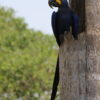
Lafeber’s recent Global Conservation Spotlight highlights the Instituto Arara Azul’s efforts to restore habitats and protect breeding populations of Brazil’s hyacinth macaws, which have faced set backs due to recent fires.
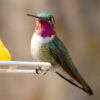
Amy Tan’s “The Backyard Bird Chronicles” inspires bird lovers by celebrating the beauty of birdwatching, encouraging deeper connections with nature through mindful observation and joy.
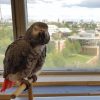
In her latest blog, Dr. Irene Pepperberg dishes on a recently published study that shows African greys, keas, and umbrella cockatoos have quirky personalities when it comes to contrafreeloading — working for food! Results varied based on tasks, housing, and even boredom levels!
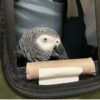
Dr. Irene Pepperberg’s latest blog reveals how African grey parrot Griffin—now 29 years old!— is managing a tough arthritis flare-up with a combination of “birdie bed rest” and dedicated care.
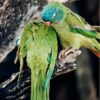
Curious why some birds have iridescent feathers? A recent study reveals how location and climate impact feather coloration in 9,409 bird species.
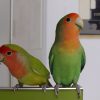
A study on rosy-faced lovebirds takes a closer look at how parrots use their beaks to swing between branches for faster movement.
This month’s Lafeber Parrot Conservation Spotlight explores how climate change affects parrots in Tambopata, Peru. Learn how The Macaw Society’s research reveals impacts on breeding success and its efforts to help macaws and other vulnerable parrot species.

Curious about the American Federation of Aviculture (AFA)? Join our free, live webinar on August 2nd with Jamie Whittaker for a sneak peek of the upcoming AFA Annual Conference in Costa Mesa, CA. Discover expert insights on aviculture, enjoy social events, and have fun with fellow bird enthusiasts!
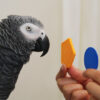
Ever wondered if parrots really understand what they’re saying? Dr. Irene Pepperberg takes us back to her studies with African grey parrot Alex and his ability to use appropriate labels in appropriate contexts, as well as Griffin and Athena’s amusing ways of expressing their opinions.

This Lafeber Global Parrot Conservation Spotlight highlights the work of Dr. George Olah of the Australian National University who is pioneering a new DNA database to combat the illegal parrot trade.
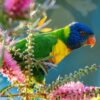
In honor of Earth Day, let’s take a look at the many ways birds, including parrots, play vital roles in maintaining our planet’s healthy ecosystems.
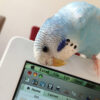
Can digital tools like tablets help parrots become “smarter?” Dive into an intriguing study led by INTERACT Animal Lab’s Rebecca Kleinberger, where 17 birds tested a simple balloon-popping game on computer tablets.
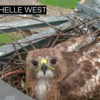
For the past decade, a red-tailed Hawk named Rochelle has captivated the hearts of Texas Department of Transportation employees with her annual nesting ritual on a highway camera pole.
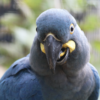
Lafeber’s latest Global Parrot Conservation Spotlight takes us to Paradise Park, a wildlife sanctuary in Cornwall, UK, that has recently become a refuge for a group of endangered Lear’s macaws. Learn more about Paradise Park’s conservation efforts that offer hope for the endangered Lear’s macaw.
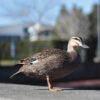
As climate changes, research unveils birds’ remarkable ability to regulate body temperature through their beaks and legs. A study on 14 Australian species using thermal imaging found birds actively adjust blood flow to dissipate or conserve heat, with larger appendages providing greater heat exchange. This adaptation could aid their survival amid rising temperatures.
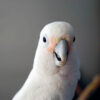
Why do birds dunk their food? It’s a behavior many owners witness daily. In a recent study with cockatoos, researchers tested foods of differing types and consistencies to see which ones the parrots tended to dunk and to theorize what drives this texture preference.
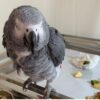
In her latest blog, Dr. Irene Pepperberg speaks to the importance of having a plan, and possibly multiple backup plans, in place to protect our pet birds’ well-being during harsh weather and natural disasters. She cites challenges she and her African grey flock faced during a power outage and how that underscores the critical need to prepare. See how her parrots weathered a recent storm and what she and her colleagues in her cognitive behavior research lab are doing to stay proactive in planning for the unexpected.
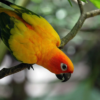
This month’s Lafeber Global Spotlight takes us to the village of Karasabai in Guyana, which is the only place wild sun conures (Aratinga solstitialis) can be studied in their natural habitat. Local rangers, with support through One Earth Conservation, are braving towering heights to study these raucous parakeets to document behaviors that can help shape conservation efforts for these eye-catching birds.
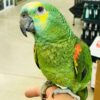
As science continues to evolve, we are learning more and more about the brain’s amazing capabilities. One area of particular interest is how the brain allows animals to learn and communicate. In a recent study, Zhilei Zhao, a Klarman Fellow in neurobiology and behavior at Cornell University, investigated parrots’ vocal learning abilities.