




Since 2010, the Audubon Photography Awards has challenged world-class photographers to search out the most unique and awe-inspiring opportunities to show the rest of the world how beautiful birds are. With a shared lens, the photographs show birds in their natural acts of being. Using high cash incentives and the international stage, these contests are well explored by all types of photographers. What we, the awed, get out of it all is an unmeasured appreciation of the bird world we get to live in.
Audubon Photography Awards’ Categories
The Audubon Photography Awards judges in three division categories. The first is Professional, which is decided if the photographer makes $5,000 or more a year in photography. The second category is Amateur, decided if the photographer makes under $5,000 a year in sales of photos, or nothing at all. And finally, there is Youth for aspiring photographers under the age of 17 (but at least 13 years of age). There is also a Grand Prize Winner for the most incredible shot taken.
In 2017, there were more than 5,500 photos submitted by photographers from 49 U.S. states, and eight Canadian provinces. With only five judges, the task in finding the representative photo for each division is a tough one. As in all years, the criteria for qualification are technical quality, artistic merit and originality. Ethical approaches to the photos are in place, with one of them forbidding the use of drones.
The Audobon Photography Awards’ Winners 2017
For 2017, the winner of the overall Grand Prize slot is Deborah Albert. She traveled to Antarctica and, in her walks, she happened upon a Gentoo penguin in a nest of rocks. Using her newly purchased Nikon D90, and using a Nikon 70-300mm lens, she was able to capture the rare sight of the penguin’s chick walking out to the mother. The selected shot was one of many taken, and was chosen because of its depiction of “the warmest love in the coldest place.”
For the Professional category, the prize went to Steve Mattheis. His photo of a “crash-landing” Great Gray Owl into a sapling with its widespread wings is a fantastic photo capture of the young bird. The shot was taken at Grand Teton National Park in Wyoming using a Nikon D500 outfitted with a Sigma 120-300mm lens atop a stabilizing tripod. The resulting photo is a stunning capture of the reaction and surprise of the owl.
Because sometimes, another possible winning photograph is too good to pass up, an Honorable mention went out to Karen R. Schuenemann for her magnificent capture of the departure of flocks of Sandhill Cranes and Snow Geese. The sun had just broken through a dismal, stormy January day at the Bernardo Waterfowl Management Area in New Mexico, just as the birds lifted to flight. The photo was taken by a Nikon D50 using a Nikon 200-400mm f4 VR lens.
The Amateur category was won by Heather Roskelley, who has submitted a shot of a Varied Thrush interested in the berries of a tree. The bird was found at the Washington Park Arboretum in Seattle, WA. The eye-level photo was taken during a period of four cold days but as the photographer said, “patience and persistence sometimes pay off.” The photographer used a Nikon D7100 camera with a Nikkor AF-S 80-400mm f4.5-5.6 VR lens. Like the category before, there is an Honorable Mention here as well. Christopher Schlaf submitted a beautiful and fortunate photo of a family of Mute Swans. The two parents are positioned on opposite sides of a cygnet (young swan). Both have dipped into the water creating the illusion of a protective wall for the baby. The shot was taken in Washington, MI using a Canon 1D X outfitted with a Canon 600mm II lens.
Finally, the winning Youth category selection went to Zachary Webster. His awesome photo capture of a pair of airspace-competing Southern Carmine Bee-eaters easily won the contest. The two birds are suspended forever in a gorgeous shot of what is normally a “blur of color and beating wings.” The shot was captured at the Zambian riverbank of the Luangwa River in the South Luangwa National Park using a Nikon D5 with a Nikkor 600mm lens and a 1.4 teleconverter. The Honorable Mention went to Will Hillscher. His photo of a balancing Black Vulture atop a dead tree is an extraordinary capture that details the bird magnificently. He used a Canon EOS Rebel T2i with a Canon 100-400mm Mark II lens and a pro-grade filter to create the remarkable photograph. The location was Williamson County in Round Rock, TX.
You can view all the winning photographs at this link. Given the fact that there were over 5,500 submissions — many too beautiful to ignore — you can go here for TOP 100 photos that the judges had to bypass to select the above-mentioned winner.
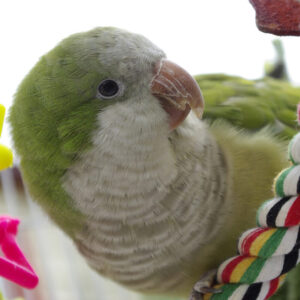
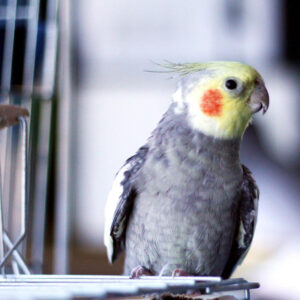
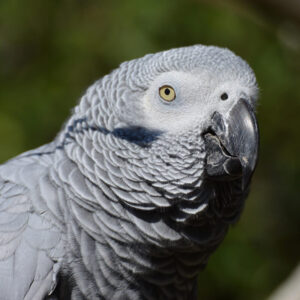
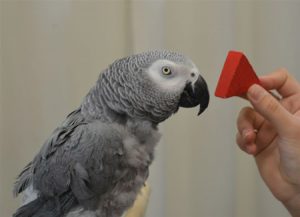
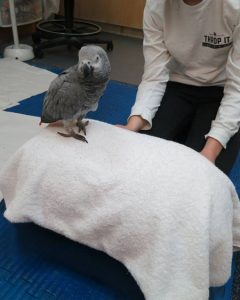

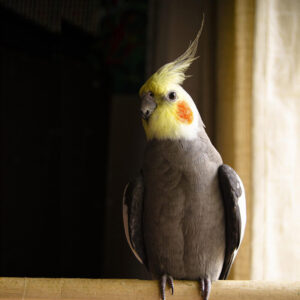
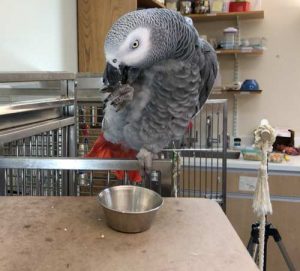
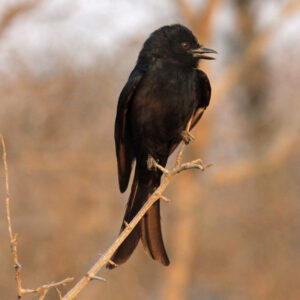
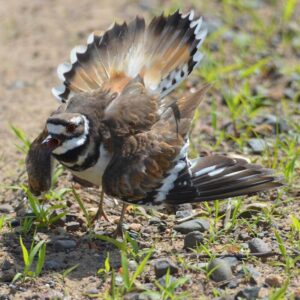
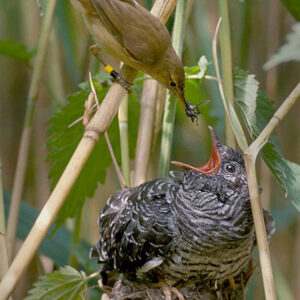
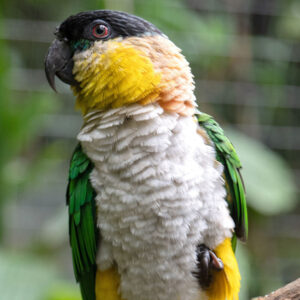
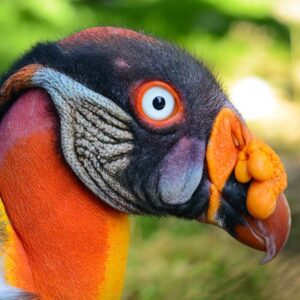
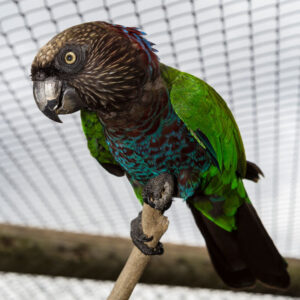
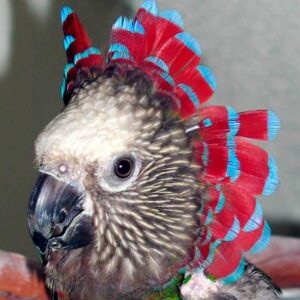
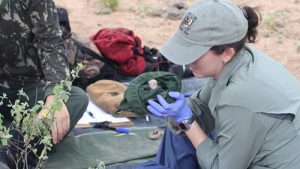
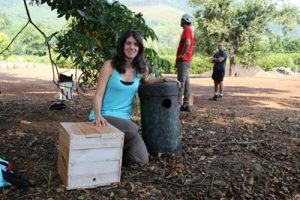 As people were gearing up for the Holidays, I had the great fortune to drive with a dear friend and client to Chicago for The Avicultural Society of Chicagoland — The TASC 2-day learning event. There were a variety of great speakers for the event and I had the good fortune of meeting one of them who was new to me, Dr. Caroline Efstathion. In this column, I would like to share her wonderful and heartwarming work.
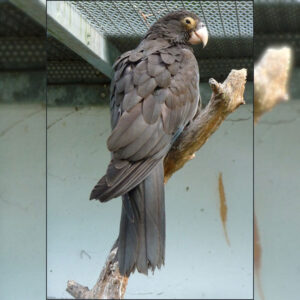
 Cape Parrot
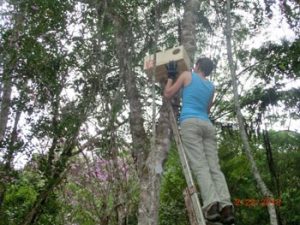 o what to do? Dr. Efstathion introduced a push-pull system to discourage bees from entering the nest while attracting them to traps nearby. A bee repellent could “push” bees away from the nest, and two bee traps with chemical “lure” would attract or “pull” bees. Trapped bees could then be removed and placed in managed hives by beekeepers, as the bees are important to pollination and to agriculture. In this way, nest site competition could be reduced between parrots and honey bees.
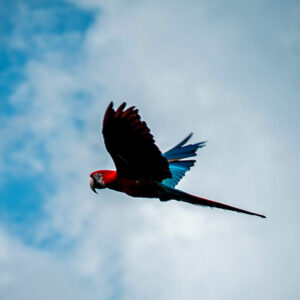
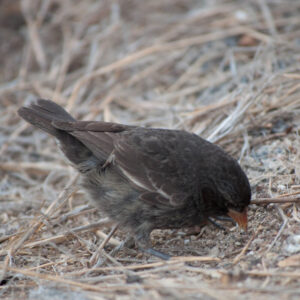
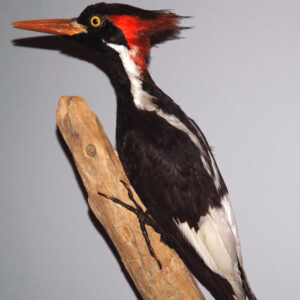
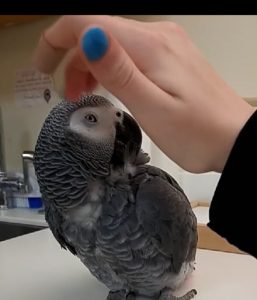

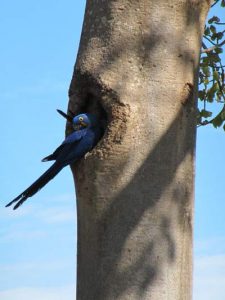 While attention is turned to the athletes competing at the Olympics in Brazil, bird people turn to ask what about birding in Brazil? When consulting the bird guides for Brazil, one learns quickly that the guides are regional. That is because a national guide would be too large for portability in the field because, frankly, there are too many species! In fact, Brazil boasts over 1,825 species with others being discovered or named continually. Brazil is considered one of the planet’s richest centers of biodiversity and represents 60% of the species found on the South American continent! With that comes the flip side — Brazil has the largest number of endemic (234) and threatened (116) species of any nation in the New World — that means it represents over one fourth of all of the species that are in trouble.
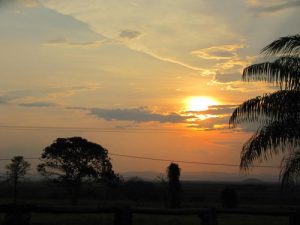 The Pantanal is a vast seasonally flooded wetland comprising about 80,000 square miles! The tropical rains begin in November and end around June. This results in the northern portion of the Pantanal flooding in January, while the southern portion receives the flood waters about two months later with flooding occurring about 2 times during the rainy season. The waters come from an even larger distinctively Brazilian tropical savanna habitat – the Cerrado. This one of the largest biomes of over 740,000 square miles. During the wet season, waters from the Cerrado pour into the large rivers of the Pantanal and there they temporarily flood the grasslands and gallery forests. This produces a large accumulation of water birds as well and contributes to the biodiversity of species. However, as the use of herbicides and fertilizers in the Cerrado increase, this produces a negative impact on the purity of the waters needed for plants and animals of the Pantanal.
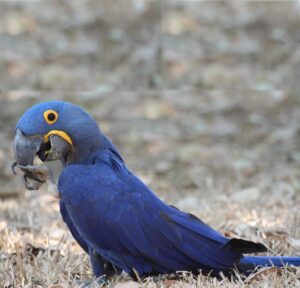
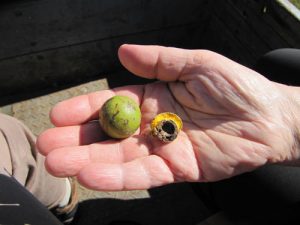 Since the 1990s, the Hyacinth Macaw project or Projeto Arara Azul headed by Neiva Guedes has helped turn the corner for this magnificent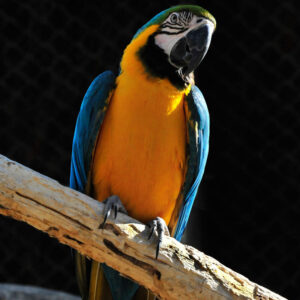



.jpg)

_-_Weltvogelpark_Walsrode_2013-01.jpg)


_male.jpg)
![[ Nimesh M]](https://commons.wikimedia.org/wiki/File:Lophocroa_leadbeateri_-Brookfield_Zoo-6.jpg)
.jpg)


