
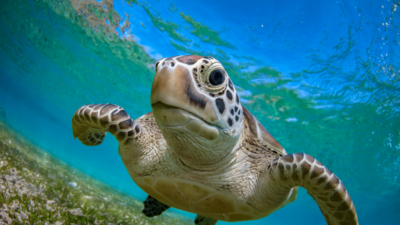
 Photo credit: Colin_Davis/Getty Images
Save the Date
Save the Date for a live webinar co-hosted with the Wildlife Disease Association on “Sea Turtle Medicine” by Heather Barron, DVM, DABVP (Avian Practice), CertAqV
Date: Wednesday, September 16, 2026
Time: 2 pm EDT (New York) (UTC -04:00) What time is this in my time zone?

Abstract
Introduction
In the United States, there are many state and federal regulations which govern sea turtle rehabilitation and practitioners are encouraged to consult with these entities, where appropriate, prior to undertaking any interventions in wild or captive animals. In most cases, special licensure is necessary, even for veterinarians. There are seven species of sea turtles, most of which are listed as threatened or endangered under the Endangered Species Act. Anthropogenic threats are common and many conservation efforts are aimed at reducing these threats, in addition to providing individual patient care.
Anatomy
The dorsal part of the shell is called the carapace and the ventral portion the plastron with the inter-connection between these two being known as the bridge. The shell is comprised of dermal bone covered with either a leathery skin or a tough keratin layer of individual scutes. The scute patterns are particular for a species, but do not correspond with the underlying bony sutures of the shell. Scutes do shed intermittently. Scutes can be named and numbered, and injuries should be described by proper placement terminology. The dermal bone of the shell consists of approximately 60 bones derived from modified pectoral and pelvic limb bones, vertebrae, sacral and costal bones. The internal surface layer of the shell is pleurocoelomic membrane, and it is from here that new bone growth occurs.
Diagnostics
A complete physical examination is the most important diagnostic tool of any clinician dealing with any species. Knowing what constitutes “normal” for the species under examination is important. Measuring core body temperature within 1 hour of rescue, along with obtaining a thorough history, may help to appreciate if the patient has gotten extremely hypo- or hyperthermic and assist in designing a treatment course. Generally, the minimum database should include diagnostic imaging (which may include, ultrasounds, radiographs, endoscopy, or computed tomography), complete blood count, iSTAT +/- chemistry profile, and eventually fecal examination. The preferred blood collection site in most sea turtle species is the external jugular vein (also known as the dorsal cervical sinus). Lithium heparin is the preferred anticoagulant over ethylenediamine tetra-acetic acid (EDTA) in sea turtles, as EDTA markedly lyses their red blood cells. However, any diagnostic testing should not compound the stress or trauma to the patient. Therefore, some tests may have to wait until the patient is more stable. Assess severity of the presenting complaint and prognosis for return to the wild. Reptiles are amazingly resilient creatures and can survive things that would easily kill any other animal. Nonetheless, some presentations carry a grave prognosis for return to normal function and thus return to the ocean. In these cases, euthanasia may be the best choice. Euthanasia and assessing life in reptiles can be challenging as the heart may continue to beat long past the time of clinical brain death.
When performing a gastrointestinal contrast study, the author has had the most success with giving the following: 8 ml/lg total volume given by gavage of 2 ml/kg iohexol + 2 ml/kg water + 4 ml/kg barium (concentration 2.38 g/ml). Take first radiograph and then q24h until study is complete. GI transit time is long and so expect it to take at least several days.
If a sea turtle has pneumonia, as is often the case with hypothermia or “cold-stunning”, the author prefers to get a bronchoalveolar lavage (BAL) as soon as possible to guide therapy.
Critical care
Fluid support and analgesia are a critical part of early intervention in many cases. If the patient is dehydrated or hypothermic, it is important to take a day or more to rehydrate and warm the patient prior to giving any food or medications or metabolism of these substances may be impaired and make the animal worse. Crystalloids, such as Plasmalyte, Normasol-R, LRS or ½ strength LRS + 2.5% dextrose are all acceptable empiric choices prior to obtaining bloodwork, but the author prefers to have iSTAT results prior to initiating fluid therapy. Shock doses of fluids can be as high as 3 ml/kg/hr for up to 3 hrs. Maintenance fluid rate is generally 1-3% of body weight per day, not to exceed 25-35 ml/kg/day for most species. Fluids may be given orally to more stable patients. Parenteral fluids may be given intravenously, intraosseously, subcutaneously, epicoelomically, or intracoelomically (least preferred route), depending on whether colloidal or crystalloid fluids are being utilized. Hypertonic saline may be indicated in head trauma or hypovolemia. Indwelling IV catheters are rarely used. Whole blood transfusions are indicated in cases of acute hemorrhage and life-threatening anemia (5% or less). While blood types in sea turtles have not been determined, transfusion reactions do occur, so cross matching is important. Cold patients should not be warmed too rapidly but should be gradually brought up to preferred body temperature (PBT) over several days. Fluids may help in this regard. Antibiotic selection is often empiric and generally starts with parenteral choices, but oral medications should be used once gastrointestinal motility has been re-established to minimize repeated tissue trauma.
Supportive care
Dehydrated turtles and those covered with excess epibiota (e.g., leeches, barnacles) should initially be placed in fresh water for the first 12-24 hours, which will allow for rehydration and will eventually kill the epibionts. For patients that are not eating, assisted alimentation is often a vital element of supportive care. In most cases, chelonians that are medically stable and have good pain control should begin eating within 1 week of admission. If they do not, consider gavage feeding or placing an indwelling esophagostomy tube. If they have been NPO for a long time, beware of refeeding syndrome. One study in turtles showed a five-times increase in insulin levels after a 30 day fast, increasing the potential for hypokalemia & hypophosphatemia with force feeding. Start at 50% of calculated energy needs. Place patient at upright angle to prevent regurgitation if very debilitated. Indwelling tubes must be placed under general anesthesia. Tubes may be left in place for months and are easily removed at any time. If a stoma is persisting weeks after tube removal, then debridement and primary closure may be performed but the author has rarely found this necessary. Additionally, total parenteral nutrition (TPN) may also be easily utilized in sea turtles. The author uses TPN compounded by Infuserve America (St. Petersburg, FL) at a rate of 2.5-3 ml/kg/h (although the author has given more rapidly on occasion with no apparent ill effects) IV twice daily.
Therapeutics
Anesthesia and analgesia
The author’s preference for sedation in most sea turtles is to pre-medicate with atropine (0.05 mg/kg IM), followed by induction with dexmedetomidine (prefer combination with vatinoxan, like Zenalpha; 0.03-0.05 mg/kg), hydromorphone (0.3-0.8 mg/kg), midazolam (0.3-0.5 mg/kg) +/- ketamine (3 mg/kg) all given IV. Reversal is typically with atipamezole (0.2-0.5mg/kg IM; if given IV nausea and arrythmias may occur), naloxone (0.04-0.08 mg/kg IV) and flumazenil (0.05-0.08mg/kg IV). In the author’s experience, the hydromorphone generally needs to be reversed in order to have a good complete recovery that allows the patient to go back into a tank the same day. Thus, multimodal analgesia is important. Pharmacokinetic studies indicate that meloxicam is not useful in loggerheads, but a dose of 1 mg/kg SQ every 12 hours in Kemp’s ridleys and every 48 hours in greens maintains appropriate plasma levels to potentially reduce pain and provide anti-inflammatory effects. Ketoprofen (2 mg/kg once daily, maximum 5 days consecutively, with 5 days off before resuming if needed) is preferred in loggerheads. The author has also had good success with pregabalin (Lyrica; 4 mg/kg PO q24h), or gabapentin (10-15 mg/kg PO q24h) especially for neurogenic pain (i.e. post-amputation).
Antimicrobials
The author’s preference for empiric antibiotic choice includes: amikacin (5mg/kg q72h IM) usually with ampicillin (20 mg/kg IM q24h), ceftazidime (22 mg/kg IM q72h), azithromycin (5 mg/kg PO q48h), enrofloxacin (20 mg/kg PO or SQ in fluid bolus q72h), oxytetracyline (biomycin; 44 mg/kg q6 days x4 injections, then decrease to 22 mg/kg SQ), piperacillin-tazobactam (50-100 mg/kg IM q24h), metronidazole (25 mg/kg PO q24h), and trimethoprim-sulfamethoxazole (22-48 mg/kg PO q24h). The author has used itraconazole (5 mg/kg PO q25h), voriconazole (10 mg/kg PO or SQ q24h), and other antifungals as indicated. While nebulization has been utilized in cases of respiratory disease, the efficacy is questioned by the author and certainly warrants further study. When doing regional limb perfusion, the author uses the systemic dose of the NSAID, antifungal, and/or antibiotic locally into the regional vein and then removes the tourniquet in 10-15m.
For treatment of Caryospora sp. the author has used ponazuril. (The brandname Marquis seems to work best;100 mg/kg PO q7d x 2 doses and then recheck fecal and repeat treatment as needed).
Common selected presentations
Fibropapillomatosis (FP) is a disease associated with chelonid herpesvirus ChHV5, primarily impacting juvenile green sea turtles living in near-shore waters with predominately skin tumors. Global disease prevalence varies from 0% to 92%. External masses may be removed surgically, ideally with CO2 laser or radiosurgery. Lidocaine, at a maximum dose of 8–10 mg/kg or bupivacaine at 2 mg/kg, is particularly helpful in reducing the level or avoiding gas anesthesia when removing FP tumors. Once surgical sites have healed (typically within 3-4 weeks post-operatively in most cases), the turtle may be released.
For post-hatchlings or “washbacks”, ingestion of plastics is the most common presentation (over 95% at the author’s institution).
Many diseases may lead to buoyancy abnormalities due to gas or air accumulation in the gastrointestinal tract, the coelomic cavity, or the lungs. Free air in the coelom may be aspirated by tilting the turtle on its side and directing the head ventrally to bring the air pocket up to the inguinal space and removing with a 3-way stopcock set up. In larger turtles a vacuum may be helpful. If air keeps refilling, then a lung tear may be responsible, and blood-patch pleurodesis has been successful in alleviating this condition in the author’s experience. In sea turtles with spinal injuries, ileus and subsequent distension and gas trapping in the large intestine may never be resolved and may warrant euthanasia.
Trauma from boat strikes, fishing line entanglements, hook ingestion, and other anthropogenic issues are frequent reasons why sea turtles strand and common enough in the literature that they won’t be addressed here.
Outline
- Sea turtle emergencies
- May vary based on
- Location around the world
- Time of year
- Resource allocation
- Local, state, and federal or regional regulations/laws
- Guidelines established in advance
- May vary based on
- Anatomy
- Carapace, plastron, bridge
- Scute patterns species specific
- Pleurocoelomic membrane: new bone growth
- Diagnostics
- Physical examination
- Body temperature on admit
- MDB: iSTAT, CBC, imaging, +/- chem profile, +/- fecal exam
- Lithium heparin best anticoagulant
- GI contrast: long transit time
- CT and BAL for pneumonia
- Critical care
- Parenteral administration of fluids/medication
- Fluid rate 25 ml/kg/d maintenance
- IV or IO (marginal scute) preferred
- Blood transfusions/crossmatching
- If hypothermic, rewarm over 2-3 days
- Parenteral → oral antimicrobials
- Crystalloids
- LRS, Plasmalyte, Normasol-R, ½ strength LRS + 2.5% dextrose
- Colloids
- Hypertonic saline: Head trauma, hypovolemia
- Blood and plasma transfusions
- Supportive care
- Fresh water bath 12-24h
- Gavage feeding, esophagostomy tubes
- Refeeding syndrome
- Total parenteral nutrition
- Therapeutics
- Anesthesia
- Hydromorphone, Zenalpha, midazolam
- Analgesia
- NSAIDs
- Pregabalin, gabapentin
- Antimicrobials
- Parenteral → oral
- Regional limb perfusion
- Antiparasitics
- Anesthesia
- Common selected presentations
- Fibropapillomatosis
- Plastics ingestion
- Buoyancy abnormalities
About the presenter
Dr. Heather Barron is the Chief Science Officer and Veterinarian for Loggerhead Marinelife Center in Juno, Florida. Dr. Barron has previously served as the Hospital Director of the Clinic for the Rehabilitation of Wildlife as well as the Chair of Veterinary Clinical Sciences and Professor of Small and Exotic Animal Medicine at St. Matthew’s University School of Veterinary Medicine in the Cayman Islands…She has over 30 years of experience practicing in wildlife health and is currently the Chair of the Wildlife Veterinary Section of the Wildlife Disease Association. [MORE]

Webinar FAQ
How do I view the live webinar event?
After registering, you will receive a confirmation email via Zoom. To access the webinar on September 16, simply select the Join Webinar button OR copy and paste your personalized URL link into your browser.
When entering the webinar “room”, you will be prompted to download webinar service software. This software can be downloaded immediately before the webinar or right now to ensure a pleasant, viewing experience.
Do I need special equipment to view and listen to a webinar?
All you need is a computer (or similar device) with an internet connection. Provided your computer has speakers (can you listen to music?) you will be able to view and listen to the webinar.
What web browsers do you recommend?
Recommended browsers include Internet Explorer 8 or greater, Mozilla Firefox 3 or greater, Google Chrome or Safari 4 or later. Adobe® Flash® Player 11.3 or later must be installed.
What if I’d like to view the course on a mobile device?
Apps for viewing the webinar are available for Apple and Android devices.
Will I be able to ask questions?
If you attend the live webinar, you will be able to ask questions by typing into the Q&A field. The speaker will read out and answer as many of these questions as possible. Questions not addressed during the live webinar will be answered by email at a later date, then posted on this webinar page.
What happens if I miss the live webinar?
The live event will be recorded, and the recorded version will be available for viewing on this webinar page several days after the live event.
Additional questions or concerns?
Please contact LafeberVet at [email protected].
RACE approval
This program is approved by the American Association of Veterinary State Boards (AAVSB) Registry of Approved Continuing Education (RACE) for 1 hour of continuing education credit for veterinarians and veterinary technicians in jurisdictions that recognize AAVSB RACE approval.
Barron H. Sea turtle medicine. July 29, 2026. LafeberVet web site. Available at https://lafeber.com/vet/sea-turtle-medicine/