
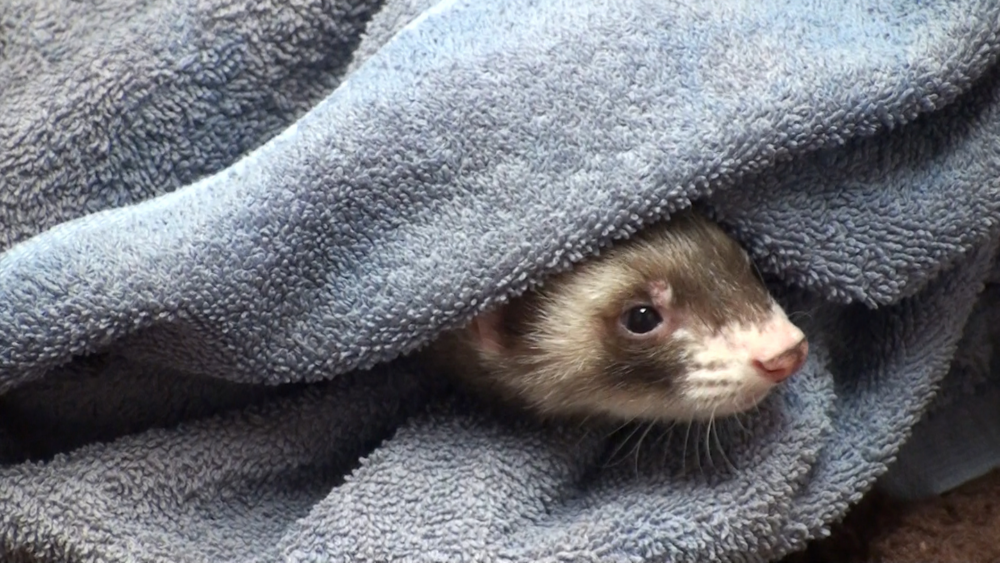
 Photo credit: Dr. Ariana Finkelstein
Abstract
Clinicians are often presented with older ferrets exhibiting ataxia, intermittent collapse, exercise intolerance, changes in appetite, and muscle mass loss. The immediate jump to a diagnosis of insulinoma can unfortunately happen when a quick test with a glucometer measures a blood glucose under 70-90 mg/dL. Although there has been more testing of these glucometers to show that they are often inaccurate, and no consideration is made towards when, what and how much the ferret ate, the ferret may be placed on prednisone and sent home. Sometimes bloodwork is performed, which may yield a more accurate glucose if it was processed quickly, and radiographs were taken which were inconclusive other than noting splenomegaly and possibly cardiomegaly. The ferret does not respond to the prednisone and signs may even worsen.
This lecture will explore the differentials for a collapsing ferret which include further diagnostics and imaging. Additional potential causes of these clinical signs include dental, cardiac, renal, and musculoskeletal disease as well as other types of. Islet cell disease can be correctly diagnosed, but not on one glucometer reading as normal ferret physiology fluctuates blood glucose differently than dogs and cats. Case reports illustrating more common reasons for collapsing geriatric ferret will be discussed.
Download a PDF of Dr. Johnson-Delaney’s abstract and outline.
Outline
- Learning objectives
- Understand basic ferret anatomy and physiology as relates to metabolism and disease
- Develop an appropriate differential diagnoses list
- Identify and obtain appropriate diagnostics, including imaging
- Provide urgent care of the ferret
- Develop a diagnosis-based treatment plan, including client education
- Important anatomy and physiology
- Species considerations
- Domesticated species (Mustela putorius furo)
- Single global blood type
- No true wild “fitch” ferrets
- General characteristics of the gastrointestinal tract
- Simple, relatively short gastrointestinal tract.
- No cecum
- Rapid transit time: 1.75–3 hours
- Nutrition
- High protein, high fat diet
- 40–45% protein
- 30–40% fat
- Limited fiber digestion (<4%)
- Avoid carbohydrate-rich diets
- Feeding considerations
- Feed diets supported by feeding trials (avoid boutique diets)
- Raw diets: risk of pathogens (e.g., Campylobacter, Salmonella)
- Whole prey: domestic prey higher in fat/carbohydrates than wild prey
- Gastrointestinal tract
- Gastric physiology
- Spontaneous acid and proteolytic enzyme secretion
- Stimulated by histamine and vagal input
- Innervation
- Parasympathetic fibers of vagus
- Sympathetic via celiacomesenteric plexus
- Histamine effects
- Stimulates acid secretion
- Low endogenous histamine levels
- Limited histamine-forming enzyme activity (L-histidine decarboxylase)
- Histamine H2 receptor antagonists abolish acid secretion response to exogenous histamine (pentagastrin)
- Atropine only reduces response 30%
- Intestinal anatomy and function
- Small intestine
- Duodenum (3 sections)
- Major duodenal papilla (~3 cm from pylorus)
- Minor papilla may be absent
- Jejunum and ileum indistinguishable (jejunoileum)
- Innervation
- Vagus nerve
- Sympathetic trunk (celiac, cranial mesenteric plexus)
- Duodenum (3 sections)
- Colon
- Tubular glands and goblet cells
- Sulfated mucosubstances (similar to humans)
- Motility
- Similar to canine ileum
- Vagus-dependent
- Mediated by cholinergic and noncholinergic pathways
- Sacral innervation is excitatory
- Retroperistalsis contributes to vomiting
- Ferrets are used as emetic models
- Small intestine
- Pancreas
- Gallbladder and GI integration
- Cholecystokinin (CCK) function
- Stimulates gallbladder contraction
- Inhibits gastric emptying
- Increases intestinal and colonic motility
- Cholecystokinin (CCK) function
- Overall GI function
- Highly motile, secretory system
- Designed for rapid transit
- Requires highly digestible food
- Gastric physiology
- Species considerations
- Differentials for a collapsed ferret
- Hypoglycemia
- Islet cell endocrinopathy (insulinoma)
- Inappetence/anorexia
- Systemic illness
- Dental disease
- Pain
- Gastrointestinal disease (gastroenteritis, malabsorption, inflammatory bowel disease, etc.)
- Neoplasia
- Poor diet or feeding practices
- Inappropriate diet
- Feeding irregularities, competition, stress at the food bowl
- Cardiac disease
- Cardiomyopathy (dilated, hypertrophic, restrictive)
- Arrhythmias
- Heart block
- Congestive heart failure
- Other causes
- L-carnitine deficiency
- Pain
- Orthopedic
- Spinal
- Osteoarthritis
- GI
- Dental
- Neoplasia
- Hypoglycemia
- Clinical evaluation: symptoms versus etiology
- Key history questions
- Diet and feeding schedule
- What diet is the ferret eating?
- When was the last meal?
- Access to food?
- Is food always available?
- Can the ferret get to the food easily?
- Clinical signs?
- Does the ferret paw at its mouth?
- Hypersalivate?
- Show hindquarter weakness prior to going “flat ferret/speed bump”?
- Show any signs of nausea or pain?
- Show inactivity, lack of playing, other limitations?
- Diet and feeding schedule
- Measuring blood glucose
- One low blood sugar result on a collapsed ferret in the exam room should not be a definitive reason to diagnose “insulinoma”
- Ferret normal can be 66–69 mg/dL. Lower than dog/cat
- In clinic blood glucose analyzers – immediate reading
- Greenacre: AEMV 2011
- Considered most ferrets 66–69 mg/dL on regular lab
- Every human glucometer indicated severe hypoglycemia
- Alpha Trac C overestimated by 15% but was closest
- Alpha Trac F, PBGM One Touch, and AccuChek poor correlation
- Alpha Trak 2 – on C was fairly good, at least for trends
- Alpha Trak 3 – so far hard to correlate
- Send out: need to spin immediately, separate serum
- Key history questions
- Islet cell endocrinopathy
- Referrals
- Signalment: most are older ferrets
- History
- Collapsing episodes
- Most not directly related to meals
- Many have pattern, often connected to sleeping or inactivity
- Many have concurrent diseases and medical treatments
- Collapsed or lays around (flat ferret, speed bump, pelt)
- May walk a little, play a little then collapses again
- Sometimes hypersalivation
- Sometimes pawing at the mouth, bruxism
- Sometimes gagging or tremors
- May/may not be progressive – frequency
- True testing
- Feed the ferret
- Time 2 hours, 3 hours, 4 hours
- Glucose and insulin blood draws
- When glucose drops below 60 mg/dL, use serum for insulin – University of Tennessee Endocrinology Laboratory – Validated ferret insulin assay
- NOTE: If the blood glucose is below 50 mg/dL at 2 hrs: high suspicion
- If blood glucose is below 40 mg/dL at 3 hrs – likely
- If blood glucose is over 70 mg/dL at 4 hours – unlikely
- Interpretation
- Insulin
- Elevated or “within normal limits”
- Compare with low blood glucose.
- Normal blood glucose at 2 or 3 hours, but insulin elevated – suspicious
- If BG less than 50 mg/dL at 2 hrs and high insulin – likely
- Insulin
- Full workup: assess other organs
- Many have concurrent gastrointestinal, liver, or kidney disease or other endocrinopathies
- Most have some degree of adrenal disease, should have deslorelin implant
- CBC, chemistries, radiographs, abdominal ultrasound (may find tumors)
- Imaging: large nodules may be seen with ultrasound, sometimes evidence of gastritis/gastroenteritis, gallstones, changes in liver.
- Surgery: If ferret good candidate, remove neoplastic islet cell masses
- Usually peel out unless adherent adjacent organs, invagination, neovascularization, metastasis
- May not be able to find actual nodules
- Removal of part of the pancreas? Diffuse changes can metastasize into the liver.
- Create diabetes mellitus, exocrine pancreas insufficiency
- IV fluids during/post-surgery should contain glucose
- A rebound insulin surge may occur so monitor for several days post-op. May use dexamethasone in fluids post op
- Chemotherapy?
- Doxorubicin 1 mg/kg IV two to three treatments, 2–3 weeks apart has helped slow progression
- In some, virtual elimination of symptoms for months
- May have cardiotoxic effects: closely monitor with ECG and echocardiography. Do not use if there is concurrent cardiac disease
- Supportive care
- Recognize nausea, pain
- Famotidine at 1–2 mg/ferret q 24h
- Maropitant helps with gut pain (?): 1 mg/kg PO q 24h
- Buprenorphine: Ethiqa: 0.6 mg/kg SC q 72h
- Gabapentin: 3–10 mg/kg PO q8–12h prn
- Make sure eats every 4–6 hours
- Subcutaneous (SC) fluids prn
- Medical therapy
- Diazoxide PO
- Published doses seem too low for efficacy in my experience
- Start at 10 mg/kg PO q 12h
- Can increase to 30 mg/kg PO q 12h
- Depends on compounding formulation for absorption?
- Corticosteroid PO
- Dexamethasone 0.5–1 mg/kg PO q12h
- Prednisone 0.25–2 mg/kg PO q12h
- Can be used with diazoxide up to 2 mg/kg/day
- Side effects: fatty liver, iatrogenic Cushing’s disease, GI bleeding, hyperactivity, hypertension, alopecia
- Contraindicated with cardiomyopathy, renal and preexisting liver disease.
- Monitor: CBC, Chems, Imaging, fecal occult blood, cytology, BP, UA with specific gravity
- Apocaps® (large dog size)
- Nutraceutical
- One-half capsule per day per ferret
- Anecdotal action against solid tumors
- Can’t hurt – inhibits neovascularization
- Contains antioxidants
- Available on Amazon
- Diazoxide PO
- Cardiac insufficiency
- Cardiac conditions
- Cardiomyopathy: dilated, hypertrophic, restrictive
- Cardiomegaly
- Hypotension/poor perfusion
- Pulmonary edema
- Ascites
- Arrhythmias – Grade 2 or 3 heart block, atrial fibrillation, etc.
- Cardiomyopathy
- Clinical signs
- Weakness, collapse
- Arrhythmias
- Dyspnea
- Poor perfusion
- Diagnostics
- ECG
- Echocardiography
- Radiographs
- Blood pressure measurement
- Treatment
- Pimobendan
- ACE inhibitors (enalapril, benazepril)
- Diuretics (furosemide)
- Terbutaline for heart block
- Pacemaker for complete heart block
- Emergency cardiac management
- Acute cardiac arrest (CPR may be effective)
- Stabilize before major diagnostics
- Heat
- Oxygen
- Get IV access as soon as possible
- Can do SC fluids while getting IV
- Dobutamine
- 0.01 mg/kg slow bolus IV to increase HR, stabilize rhythm
- May need constant rate infusion for 24–72 hours
- Clinical signs
- Cardiac conditions
- Additional differentials
- L-carnitine deficiency
- Older ferrets
- Metabolism abnormality linked to skeletal muscle weakness
- Hindquarters paresis, collapse
- Supplement with L-carnitine
- Pain
- Orthopedic
- Spinal
- Osteoarthritis
- Dental disease, especially fractured canines, periodontal
- Neoplasia
- Gastrointestinal
- Spleen, splenomegaly
- Chordoma
- Gastrointestinal disease
- Urolithiasis
- Gallstones
- L-carnitine deficiency
- Case-based applications
- Case 1: Misdiagnosed insulinoma → cardiac disease
- Case 2: Dilated cardiomyopathy with arrhythmia
- Case 3: Severe arrhythmia with cardiomyopathy
- Case 4: Cardiac disease misdiagnosed as insulinoma
- Conclusion
- Perform thorough diagnostic evaluations
- Islet cell endocrinopathy
- Confirm with controlled testing
- Recognize limitations of glucometers
- Address concurrent disease
- Consider major differentials
- Insulinoma
- Cardiac disease
- L-carnitine metabolism disruption
- Pain
Download a PDF of Dr. Johnson-Delaney’s abstract and outline.
About the presenter
Currently partially retired, Cathy Johnson-Delaney practiced avian, exotic and laboratory animal medicine in the greater Puget Sound area of Washington State for over 30 years. Dr. Johnson-Delaney was a founding member of the Washington Ferret Rescue & Shelter. She was named the 2003 Exotic DVM of the Year and she received the 2009 Oxbow Exotic Mammal Health Award. Dr. Johnson-Delaney is also a Past President of both the Association of Avian Veterinarians and the Association of Exotic Mammal Veterinarians. Cathy is the principal author and editor of the textbook Ferret Medicine and Surgery, and she has written and lectured extensively [MORE]
Webinar recording
Post-test
Take the brief post-test to earn 1 hour of continuing education credit. With a passing grade, you will receive a continuing education certificate in jurisdictions that recognize AAVSB RACE approval.
Expert Q&A
Most questions were addressed during the live event, however, remaining questions were answered by email. Questions answered in writing by Dr. Johnson-Delaney during intermission are also listed below.
Italicized text represents answers provided by Dr. Johnson-Delaney. Regular font indicates information provided by the moderator, Dr. Christal Pollock.
PANCREATIC BETA CELL TUMORS
What levels of glucose in ferrets with insulinoma are considered as stabilized?
[The goal is to] keep [blood glucose] above 60 after 4 hours and/or [ensure the ferret is] asymptomatic
What are normal values for insulin in blood? What is an elevated value?
The following information on normal insulin levels is taken from Table 7.3 of Schoemaker NJ, van Zeeland YRA. Endocrine diseases of ferrets. In: Quesenberry KE, Orcutt CJ, Mans C, Carpenter JW (eds). Ferrets, Rabbits, and Rodents: Clinical Medicine and Surgery, 4th ed. Elsevier, St. Louis, MO; 2021:85-88.

- (40) Mann F.A, Stockham S.L, Freeman M.B, et al. Reference intervals for insulin concentrations and insulin:glucose ratios in the serum of ferrets. J Small Exot Anim Med . 1993;2:79–83.
- (41) Marini R.P, Ryden E.B, Rosenblad W.D, et al. Functional islet cell tumor in six ferrets. J Am Vet Med Assoc. 1993;202:430–433.
- (a) Clinical Endocrinology Laboratory. College of Veterinary Medicine. University of Tennessee
If you are presented with a collapsed ferret of unknown cause, at what BG reading would you supplement with dextrose if you’re not sure if the low glucose is physiological or pathological?
[If] the ferret just came in; [the] first question is when did it last eat? If it is less than 2-3 hours, take the BG and put dextrose on the gums and retake in 15-30 minutes. It is all dependent on when their last meal was.
CARDIAC DISEASE
Several attendees asked about the Cardiac Formula mentioned during Dr. Johnson-Delaney’s presentation
The Cardiac Formula is referenced in Johnson-Delaney CA (ed). Ferret Medicine and Surgery. Boca Raton, FL: CRC Press Taylor & Francis Group; 2017. Dr. Johnson-Delaney shared:
I researched/developed [the formula], and you make it up for the client. [This formula] is also mentioned in a number of proceedings on nutraceuticals and herbals that Susan Orosz and I have taught, as well as my ferret cardiology lectures. I recommend only using products in the Cardiac Formula that are labeled U.S. Pharmacopeia (USP) or reviewed and approved by ConsumerLab.com.
- 1000 mg L-carnitine
- 1000 mg taurine
- 1000 mg CoQ10
- 400 IU Vitamin E
- +/-160-200 mg Hawthorn if there is no arrythmia or hypertrophic cardiomyopathy
These ingredients are placed in a balanced omega 3-6-9 oil, like VetOmega, which is currently unavailable, so use salmon oil to equal 30 mLs instead.
Keep the mixture refrigerated.
Do not stir or shake as this reportedly breaks fatty acid bonds.
The dose is usually 0.5 ml per ferret per day.
What is the recommended ratio of omega 3:6 fatty acids
The ratio of omega-3 to Omega 6 should be 3:1
…We don’t have dobutamine at our clinic. It would be helpful to know what you suggest if some of the medications are not available.
I don’t [have an] alternative. I’ve used it for years, and the emergency clinics around here have it. It isn’t expensive either.
…In human med [milrinone] is an alternative, but I have no experience with this at all.
MISCELLANEOUS
Any tips for conscious blood sampling? We usually sedate and [use the] cranial vena cava
This attendee was provided with the venipuncture section from Dr. Johnson-Delaney’s Ferret Medicine and Surgery.
The LafeberVet video Blood Collection in Ferrets may also be useful.
Any suggestions to prevent dental problem in ferrets?
Brushing the teeth with a hydrolyzing toothpaste, like we use in cats, [and] dental cleaning under sedation/anesthesia, like we do in other carnivores. [Ferrets fed] kibble diets may have less calculi but more tooth wear.
Book drawing
All live webinar registrants were able to participate in a random book drawing by completing an online survey and providing their name.
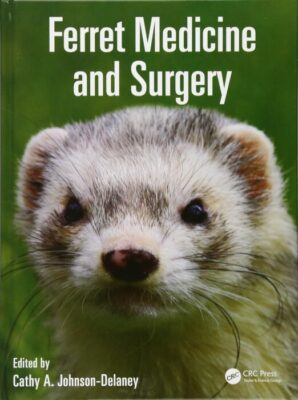
And the winner is…Dr. Joyce Fuchs of Shively Animal Clinic & Hospital of Louisville, Kentucky (USA). Dr. Fuchs won a hardcover copy of Ferret Medicine and Surgery by Dr. Cathy Johnson-Delaney.
RACE approval
This program is approved by the American Association of Veterinary State Boards (AAVSB) Registry of Approved Continuing Education (RACE) for 2 hours of continuing education credit for veterinarians and veterinary technicians in jurisdictions that recognize AAVSB RACE approval.
Acknowledgements
- Clinical collaborators and institutions
- Washington Ferret Rescue & Shelter
- Staff of many clinics I’ve worked with
- Diagnostic equipment providers
- Aloka Trivitron Advanced Ultrasound System, Clarius
- Vetronics Services Ltd, Keith Simpson; Vmed/Vchek
References
References
Johnson-Delaney CA (ed). Ferret Medicine and Surgery. Boca Raton, FL: CRC Press Taylor & Francis Group; 2017.
BLOOD GLUCOSE MEASUREMENTS
Petritz OA, Antinoff N, Chen S, Kass PH, Paul-Murphy JR. Evaluation of portable blood glucose meters for measurement of blood glucose concentration in ferrets (Mustela putorius furo). J Am Vet Med Assoc. 2013;242(3):350-4. doi: 10.2460/javma.242.3.350. PMID: 23327177.
Proulx MP, Vergneau-Grosset C, Hébert J, Bédard C, Maccolini E. Comparison of a portable blood glucose meter analyzer with a benchtop point-of-care chemistry analyzer for measurement of blood glucose concentration in client-owned ferrets (Mustela putorius furo). Journal of Exotic Pet Medicine. 2022;43:22-28. doi: 10.1053/j.jepm.2022.07.004.
Summa NM, Eshar D, Lee-Chow B, Larrat S, Brown DC. Comparison of a human portable glucometer and an automated chemistry analyzer for measurement of blood glucose concentration in pet ferrets (Mustela putorius furo). Can Vet J. 2014;55(9):865-9. PMID: 25183894; PMCID: PMC4137928.
CARDIOLOGY
Wagner RA. Ferret cardiology. Vet Clin North Am Exot Anim Pract. 2009;12(1):115-34, vii. doi: 10.1016/j.cvex.2008.09.001. PMID: 19131034.
CYSTINE UROLITHIASIS
Pacheco RE. Cystine urolithiasis in ferrets. Vet Clin North Am Exot Anim Pract. 2020 May;23(2):309-319. doi: 10.1016/j.cvex.2020.01.015. PMID: 32327038.
ENDOCRINOPATHIES
Marini RP, Ryden EB, Rosenblad WD, et al. Functional islet cell tumor in six ferrets. J Am Vet Med Assoc. 1993;202:430–433.
Schoemaker NJ, van Zeeland YRA. Endocrine diseases of ferrets. In: Quesenberry KE, Orcutt CJ, Mans C, Carpenter JW (eds). Ferrets, Rabbits, and Rodents: Clinical Medicine and Surgery, 4th ed. Elsevier, St. Louis, MO; 2021:85-88.
GRIMACE PAIN SCALE
Evangelista MC, Monteiro BP, Steagall PV. Measurement properties of grimace scales for pain assessment in nonhuman mammals: a systematic review. Pain. 2022;163(6):e697-e714. doi: 10.1097/j.pain.0000000000002474. Epub 2021 Sep 9. PMID: 34510132.
van Zeeland Y, Schoemaker N. Pain recognition in ferrets. Vet Clin North Am Exot Anim Pract. 2023;26(1):229-243. doi: 10.1016/j.cvex.2022.07.011. PMID: 36402483.
INSULIN LEVELS
Mann FA, Stockham SL, Freeman MB, et al. Reference intervals for insulin concentrations and insulin:glucose ratios in the serum of ferrets. J Small Exot Anim Med. 1993;2:79–83.
TAXONOMY
Schoch CL, et al. Mustela putorius furo. NCBI Taxonomy: a comprehensive update on curation, resources and tools. Database (Oxford). 2020: baaa062. PubMed: 32761142 PMC: PMC7408187.
Totikov AA, Tomarovsky AA, Perelman PL, et al. Comparative genomics and phylogenomics of the Mustelinae lineage (Mustelidae, Carnivora). Genome Biol Evol. 2026;18(3):evag014. doi: 10.1093/gbe/evag014. PMID: 41782205; PMCID: PMC12960074.
ADDITIONAL RESOURCES
AlphaTrak Blood Glucose Test Strips. Product information. Available at https://www.zoetisdiagnostics.com/us/point-of-care/handhelds/alphatrak. Accessed May 25, 2026.
Association of Exotic Mammal Veterinarians. Available at https://aemv.org/. Accessed May 25, 2026.
Clinical Endocrinology Laboratory. College of Veterinary Medicine. University of Tennessee
Ethiqa XR (Buprenorphine extended-release injectable suspension). Safety & Efficacy information. Available at https://ethiqaxr.com/efficacy-safety/. Accessed May 24, 2026.
Exotic DVM Veterinary Forum for Companion Exotic Animals. Available at https://groups.io/g/ExoticDVM. Accessed May 25, 2026.
Exotic365 Veterinary Conference. Available at https://exotic365.org/. Accessed May 25, 2026.
Johnson-Delaney C. The collapsed ferret: More than insulinoma. April 5, 2026. LafeberVet web site. Available at https://lafeber.com/vet/collapsed-ferret/