



Irene Pepperberg, Ph.D.
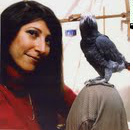
Dr. Irene Pepperberg is a lecturer and research associate at Harvard University in Cambridge, Massachusetts, where her research lab is located. You can help Dr. Pepperberg continue the groundbreaking parrot research she began more than 30 years ago with Alex, the African grey parrot who won admirers from around the world with his cognitive abilities.
If you shop online through sites such as Amazon.com, you can designate the Alex Foundation to receive a percentage of your final sales, or register with the Alex Foundation at iGive.com and a percentage of sales from companies associated with iGive will go to the foundation. The Alex Foundation also has a “Donate” button linked to PayPal. Visit The Alex Foundation and click on the “Support Us” link for more information.
Read more about the lab at The Alex Foundation Facebook page and at The Alex Foundation Twitter account.
Articles by Irene:
Inside Dr. Pepperberg’s Lab: African Greys Griffin And Athena Celebrate Their Hatchdates
Dr. Pepperberg writes about the changes to hatchday celebrations for the African greys in the lab because of precautions for COVID. Griffin’s 25th hatchday was more subdued that originally planned.

Inside Dr. Pepperberg’s Lab: More On Individual Differences In Parrots
Dr. Irene Pepperberg talks about the individual preferences of the African grey parrots in her cognitive research lab. She also shares why personality differences among the flock oftentimes require using different approaches when it comes to training and testing.
Inside Dr. Pepperberg’s Lab: Parrots And Vocal Learning
In her latest blog, Dr. Pepperberg explores parrots’ aptitude for vocal learning, specifically how their propensity to be open-ended vocal learners means that, unlike most animal species, they are capable of learning new utterances their entire lives.
Inside Dr. Pepperberg’s Lab: Some Parrots Dislike Uncertainty And Novelty
Some birds are inclined to be cautious and wary of new things, while others seem to exhibit an immediate curiosity, and still more land somewhere in between. In her latest blog, Dr. Pepperberg discusses the concept of neophobia (dislike of novelty) and neophilia (attraction to novelty), and the degree of which it can vary among bird species. She also dishes on why our companion parrots tend to like consistent schedules.

Inside Dr. Pepperberg’s Lab: Parrots And People—Relationships Built On Trust
In her latest blog, Dr. Irene Pepperberg dishes on how our feathered companions rely on their humans to not only provide the essentials such as food and water, but, in a broader aspect, a sense of security.

Inside Dr. Pepperberg’s Lab: Giving Thanks To The Caretakers
In her latest blog, Dr. Irene Pepperberg shares her thoughts on the past year as 2020 comes to a close. Despite the often daunting challenges many faced due to COVID, she writes about giving thanks to those in the animal community who stay devoted to their work to give to our beloved pets as well as pets in need care and attention in this time of crisis.
Inside Pepperberg’s Lab: Research Under COVID-Optimal Conditions
Dr. Irene Pepperberg gives us an update on how she is forging ahead despite that challenges posed by COVID-related social distancing requirements and the shutdown of her cognitive behavior research lab on the Harvard campus.
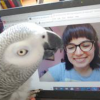
Inside Dr. Pepperberg’s Lab: Virtual Interactions With Our Parrots
Do parrots dig virtual interactions? Dr. Irene Pepperberg explains why parrots see things a bit different than us when it comes to digital platforms like Zoom, FaceTime and Skype.
Inside Dr. Pepperberg’s Lab: Did Griffin Stealthily Steal Banana Slices?
In her latest blog, Dr. Irene Pepperberg points out the importance of paying attention to African greys Griffin and Athena’s actions outside of formal cognitive behavior experiments. Case in point, Griffin’s seemingly stealth maneuver to score more of a favorite treat.
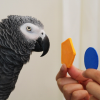
Inside Dr. Pepperberg’s Lab: A Parrot’s Concept Of Same-Different
Dr. Pepperberg revisits a study done decades ago with Alex the African grey that has received renewed interest with recent studies done with children — how well do individuals understand the concept of same-different?
Inside Pepperberg’s Lab: Do Parrots Show Remorse?
When a prestigious behavior journal welcomed scientists to submit anecdotal observations of nonhuman actions that suggested possible comparisons with those of humans, a recent episode with African grey Griffin sprung to mind. Did Griffin show signs of remorse after delivering an unexpected bite?
Inside Dr. Pepperberg’s Lab: Can Parrots Win At The Shell Game?
How good are you at the “shell game”… can you follow an object that is shuffled around under shells or cups? Imagine being tested on your ability to track not just one colored object but four! Dr. Irene Pepperberg shares the results of how African grey Griffin’s visual working memory stacks up when compared to adults and children.

Inside Pepperberg’s Lab: Parrots Adapt During Coronavirus Lockdown
Dr. Irene Pepperberg fills us in on how African greys Griffin and Athena, as well as she and her staff, are handling their “new normal,” albeit hopefully a temporary one. She also dishes on how they found some creative ways to celebrate two big milestones — the birds’ birthdays!
Inside Pepperberg’s Lab: Life In The Time Of Coronavirus
What’s an academic science lab to do when e-mails from the administration start popping up stating in-person instruction was to cease immediately, followed by directives to vacate the campus in light of the ongoing COVID-19 crisis? What if said science lab was home to a flock of parrots known around the world for their contributions to the study of cognitive behavior? Dr. Irene Pepperberg and her research assistants found themselves in a scramble to ensure everyone— birds and humans — found safe places to stay. See where everyone is now.
Comparative Cognition — The Joys And Difficulties
A lot of planning goes into creating ways to test the parrots’ intelligence to see how they perform on tasks compared to the results of those undertaken by children and primates. But what happens when two hands are required to solve a problem? Dr. Pepperberg describes the challenges and possible solutions to an intelligence test to circumvent the fact that parrots are hands-free.
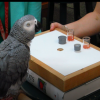
Inside Dr. Pepperberg’s Lab: Can African Greys Spot Which Container Holds More Liquid?
African grey parrots Athena and Griffin are tasked with the challenge of tracking the larger amount of liquid that is poured into various containers to test their grasp of the concept of “overconservation,” where the experimenter starts with different amounts and tests whether the subjects can track the larger amount after various transformations. See where the parrots succeeded as well as what tended to slip them up on this highly challenging task.

Friends Or Frenemies—How Well Do Parrots Interact With Each Other?
For parrots in the wild, flock dynamics include bonded pairs, siblings, and flockmates who forage for food together, play together, or simply co-exist with one another (and, of course, help keep a lookout for predators). What about companion parrots? Will two parrots get along? Dr. Pepperberg dishes on the interactions among her African grey parrots, as well as explains why it can be challenging so to predict how flock dynamics will play out inside the home.
Inside Pepperberg’s Lab: Vet Visits Are Essential
Dr. Pepperberg shares her experiences with taking African greys Griffin and Athena (and Alex before them) to the vet for their well-bird health checkups, which, with their verbal communication prowess, has led to some interesting vet interactions.
Inside Dr. Pepperberg’s Lab: African Grey Athena’s Unexpected Health Issue
Dr. Pepperberg dishes on a recent health scare she experienced with African grey Athena. She gives us a first-hand account of dealing with Athena’s sudden feather issues to remind us that seemingly minor or temporary changes in a parrot’s environment can affect the bird’s health in unexpected ways.
Inside Pepperberg’s Lab: Vocal Turn-Taking In Parrots
Do birds take turns when conversing or is this a uniquely human skill? Dr. Irene Pepperberg addresses birds’ use of “countersinging” and “duets” as forms of vocal communication.
Let’s Talk About The Weather: Parrots And Rainstorms
Dr. Pepperberg dishes on how her birds, African greys Griffin and Athena, and Alex before them, have noticeably different reactions to inclement weather. She also reveals that some wild birds have a special pressure-sensitive organ that makes them particularly in tune with barometric pressure.
Do Parrots Understand What You Are Saying?
Can birds understand what their people are saying and/or understand what he or she is saying? Dr. Irene Pepperberg says the answer depends on the type of interactions parrots have with their owners. Discover how the way you interact with your feathered companion, as well as flock dynamics, can influence parrot communication.
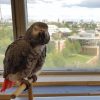
Pepperberg’s Lab: African Greys Get A Skyline View
Dr. Pepperberg takes us inside her Harvard lab, where African grey parrots Griffin and Athena call home. We also get a look at their cushy temporary quarters on the building’s eighth floor, complete with a breathtaking view of the Boston skyline. The panoramic view comes with potential visual encounters with a pair of red-tailed hawks—see how the greys react.
Pepperberg’s Lab: When Parrots Go “Off-Script”
Dr. Pepperberg’s work with parrots revolves around reproducing behaviors using scientific methods to attain statistical significance. Of course, parrots being parrots, there are plenty of incidents where one of her African greys says or does something that perfectly captures their mood or preference, but which cannot be scientifically documented. African grey Griffin, like Alex before him, certainly knows how to get his point across to Pepperberg and her research students. See how these anecdotes provide interesting insights into how the mind of a parrot may work.
Inside Dr. Pepperberg’s Lab: When Favored Treats Aren’t Enough
What happens when a parrot is asked to repeat a task over and over …will the prospect of receiving a favorite treat be enough to keep him going? Or do parrots, even when lavishly rewarded, reach their boiling point? See how African grey parrot Griffin fared when tasked with verbally labeling the same objects repeatedly during the course of several days.
Inside Dr. Pepperberg’s Lab: Why Study Parrot Cognition?
Studies of nonhuman cognition have made, and continue to make, major contributions to our understanding of the origins and evolution of human cognitive processes, and much more. Parrot cognition studies in particular have a positive impact on pet bird care, conservation, child cognitive therapies, and even artificial intelligence. See what drives Dr. Irene Pepperberg’s passion for parrot research.
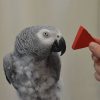
Inside Pepperberg’s Lab: Mutual Exclusivity In Parrots — A Special Case Of Inference
Dr. Irene Pepperberg tests African grey parrot Griffin’s cognitive skills, going beyond the concept of “inference by exclusion” to the trickier concept of mutual exclusivity (ME). Would Griffin understand that an object could, for example, be both “green” and “wool,” or “blue” and “wood?”
How Good Is A Parrot’s Long-Term Memory?
How well do parrots remember situations, other parrots, and people over the course of their long lives? Dr. Pepperberg, gives us a rundown on research that points to parrots as having brain areas that function in ways similar to the human cortex, and how their extremely high neural densities enable advanced cognitive processing—which requires good memory.

Inside Pepperberg’s Lab: Putting Parrots’ Inferential Knowledge To The Test
When her colleagues at Harvard questioned Dr. Irene Pepperberg’s 2-cup test success that showed parrots are capable of inferential knowledge to make decisions, Pepperberg and students at her cognitive behavior research lab upped the ante from the 2-cup test to 3- and 4-cup tests. They once again put African grey Griffin to the test. See how Griffin fared, especially when a coveted Skittle treat reward was at stake.
Inside Pepperberg’s Lab: Fish And Parrots Outperform Apes And Monkeys
If you put parrots (specifically, African grey parrots), fish, monkeys and apes to the test on who could figure the fastest way to procure two rewards instead of one, who would come out on top? Dr. Pepperberg and friends of her cognitive behavior research lab recently modeled a test for her flock to see how they would fair in a choice-themed task inspired by wrasse fish, and tested on primates as well.
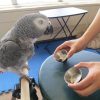
Inside Dr. Pepperberg’s Lab: African Grey Parrots Show Self-Control
Grey parrots may sometimes be impulsive—think about how often you may have had to give your bird multiple timeouts for the same behavior (like chewing on your sunglasses) in a very short time period. However, my students and I have shown that our parrot, Griffin, can actually exhibit quite a bit of self-control. We found […]
Inside Pepperberg’s Lab: Why Parrots Play Favorites
Dr. Pepperberg notes that she and her staff at her cognitive behavior research lab haven’t noticed a one-person tendency among her flock of birds; but she has experienced the avian equivalent of the “cold shoulder” from time to time. Get a glimpse of how flock dynamics can fluctuate in the wild and how parrots’ natural instincts might affect their behavior in the home.
Inside Dr. Pepperberg’s Lab: When Parrots Speak Their Mind…Or Not
If you are the director of a world-famous animal cognitive behavior research lab, what do you do when your feathered diva doesn’t follow directions? Dr. Irene Pepperberg and her assistants start by having African grey Athena watch her flockmate Griffin perform a requested task with the hope that she’ll be inspired to model his behavior. When that fails, see how Athena has her own way of proving just how smart parrots are.

Inside Dr. Pepperberg’s Lab: Fun Fundraising Featuring The Parrots
Devising new ways to test parrots’ cognitive skills is the exciting part of Dr. Irene Pepperberg and her staff’s work. The challenging part is finding the exact words to sum up a study — and the even more challenging part is finding creative ways to inspire people to donate to help fund the lab’s research. Fortunately, the parrots can usually be relied upon to “lend a wing” to the cause. African grey Griffin and his fellow greys have been going on epic “outings” to inspire donors to flock to the lab’s Facebook and Tumbler pages.
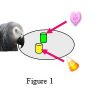
Inside Dr. Pepperberg’s Lab: Do Parrots Understand “Process of Elimination?”
Process of elimination and inference are two powers of reasoning, and Dr. Pepperberg conducted fascinating tests to determine the existence of inference in African greys.
Inside Pepperberg’s Lab: Do Parrots Engage In Cooperative Behavior?
Will African grey parrots share food or ask humans for help? The latest experiments at Dr. Pepperberg’s lab give some interesting answers!

Parrots In Need And War Veterans Bond At Serenity Park
Dr. Irene Pepperberg tells about a visit to Serenity Park, a shelter and rescue for unwanted, abused birds that is staffed almost entirely by war veterans with PTSD.
Inside Dr. Pepperberg’s Lab: Do Parrots Understand Probability?
To test a parrot’s ability to understand probability, Dr. Irene Pepperberg’s cognitive behavior research lab recently presented African grey parrot Griffin with a task similar to what a 6-8 year-old child might be tasked to do — using three of one item and one of another, if one item was removed, what was the removed item likely to be? Griffin’s answers might surprise you.
Inside Dr. Pepperberg’s Research Lab: “What’s Mine Is Mine And What’s Yours Is Mine”
“What’s mine is mine and what’s your is mine.” Does this sum up your feathered friend’s antics? Dr. Irene Pepperberg explains not only how this parrot quirk is based on natural behavior, but she also shares how we can use it to our advantage in the home.
Inside Pepperberg’s Lab: African Grey Griffin Speaks His Mind
As companion animals, parrots are unique in that they can use human language to verbally communicate with us. Dr. Irene Pepperberg knows first-hand the advantages of working with such communicative subjects. African grey Griffin, for example, can verbalize requests to Dr. Pepperberg and her research assistants, such as when he wants to go back to the cage (“Wanna go back”) or sit with them (“Wanna go chair”). But this command of words also creates some interesting dilemmas on how to talk in front of a parrot that understands what you are saying.
Inside Dr. Pepperberg’s Lab: Prepping For A Film Crew Visit
Inviting a film crew into a research lab devoted to the study of cognitive behavior in parrots involves not only prepping the lab, but the parrots and the filmmakers. Dr. Irene Pepperberg shares her account of having a film crew join her in the lab.

How Dr. Pepperberg Chooses What Topics To Study
The inspirations for topics of Dr. Pepperberg’s African grey studies come from many different sources, and all add up to fascinating information being revealed.
Inside Pepperberg’s Lab: Parrots’ Cognitive Abilities Put To The Liquid Test
After a certain age, children are able to understand conservation of amounts. Can birds also understand that a change in shape might not change the amount?
Dr. Pepperberg Dishes: Will Parrots Work For Food?
Studies point to an interesting fact: Working for food rewards parrots with more than just food to eat. Find out what this means.
Inside Pepperberg’s Lab: African Grey Athena’s Antics
Our youngest bird, Athena, can present some interesting challenges to our research. We sometimes joke that she doesn’t have an “off switch.”
Inside Pepperberg’s Lab: Catering To Parrots’ Tastes
Dr. Pepperberg reveals some unconventional, and unsung, activities needed to get data from the African grey parrots in her lab.
Why Parrots Are So Smart
In recent decades, studies are revealing how birds’ brains work. Learn how their brains are similar and different from mammal brains, and how different bird types have different brains.
Pepperberg’s Parrots Surprise With Word Choices
The talkative African grey parrots Dr. Pepperberg works with in her research lab communicate in English, and sometimes they surprise lab staff. See why!
Inside Pepperberg’s Lab: Getting Parrots To Exercise
Exercise is particularly important for our parrots, as most conditions in captivity are extremely different from the lives they live in the wild.
Inside Dr. Pepperberg’s Lab: Parrot Picture Day
Dr. Pepperberg gives a behind-the-scenes look at the challenges of getting parrots to pose during photo shoots, where props and distractions abound.
How Dr. Pepperberg Taught Parrots To Use Speech Appropriately
Early on in her behavioral research with Alex the African grey, Dr. Irene Pepperberg began incorporating what she refers to as the model/rival (M/R) system to teach a parrot how to speak and how to use speech appropriately, which also allows the bird to verbally communicate requests.
Parrots Find Creative Ways To Delay Bedtime
With cognitive abilities matching that of a 5-6 year old, African grey parrots can likewise come up with some creative distractions to delay bedtime. This month, Dr. Pepperberg gives us a look back at the bedtime antics of Alex the African grey, as well as how current greys Griffin and Athena attempt to throw a wrench in attempts at a good night routine.
Parrots Can Play Mind Games
Research with parrots leads to some unexpected results. Some pleasant, like learning words that weren’t trained, and some unpleasant, like acting out.
Day In The Life Of Pepperberg’s Parrots
Curious to know what an average day is like in Dr. Irene Pepperberg’s research lab on the Harvard campus? Here’s a behind-the-scenes look at a day in the life of African greys Griffin and Athena!
Dr. Pepperberg Dishes On Parrots & Preening
Parrots often solicit humans by putting their heads down and rubbing against their humans’ fingers; some will even learn to request “Tickle,” “Scritch,” or “Scratch.” Despite being subjects of scientific study, the birds in my lab are no exception, and they have influenced their trainers’ behavior in some striking ways.
New Pepperberg Parrot Research: Recognizing 2D Objects
Dr. Irene Pepperberg, who famously worked with Alex the African grey parrot on documenting parrot intelligence, recently released new research focused on results of her work with African grey parrot Griffin.
New Pepperberg Research: Can Parrots Share?
Sharing seems to be less common in our nonhuman primate relatives, and appears to occur only under some fairly specific conditions. But what about creatures that are not primates? Our recent studies suggest that African grey parrots also can engage in sharing behavior.
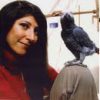
Life After Alex
Five years after Alex’s passing, he is still sorely missed; by me and, I believe, by Griffin and Arthur, the other African grey parrots in my lab. Days still exist, particularly when I return after a long absence, during which I walk into the laboratory, glance at the cage in the far corner of the room, and expect to be greeted by Alex’s familiar, imperious “Come here!”