




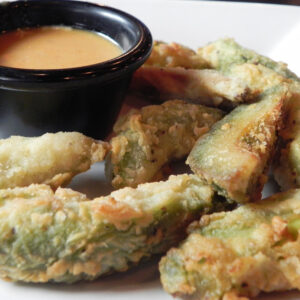
If you’re a bird person, there’s a good chance you already know that feeding avocado to your bird is a no-no. Simply put — pet birds have died after eating sliced avocado and avocado-based foods like guacamole. As a healthy food for people, avocado is more popular than ever, and along with that comes an abundance of avocado recipes. Unfortunately, a recent bird death brings up the question, “Could fumes from frying an avocado be dangerous to pet birds?”
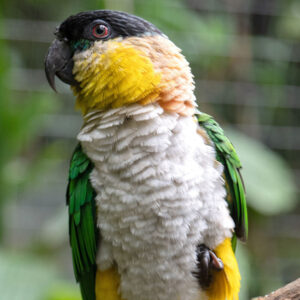
According to Karen Allen, owner of Birds-N- More in Lawndale, California, a woman who shared her home with two caiques Allen had hand-raised called her with some heart-wrenching news. The woman went to a cooking class and was given a recipe to try at home — fried avocado. Within minutes of frying the avocado, the caiques experienced severe respiratory distress and were rushed to Teresa E. Micco, DVM, of Point Vicente Animal Hospital in Rancho Palos Verdes, California.
Here is Dr. Micco’s account of what she encountered upon the caiques’ arrival.
Q. You recently had a client come to your clinic with two caiques in health distress. What were your first thoughts as to what might be wrong?
Both birds were in respiratory distress, one worse than the other. They were immediately placed on oxygen in an incubator. The one that was worse was placed in an oxygen mask to receive a higher concentration of oxygen. Initially, I thought it was Teflon toxicosis because I was told by the staff that the owner had been cooking when the birds collapsed.
Q. What was your client’s account of what led up to the birds becoming ill?
After initial treatment, I went to speak with the owner. I was expecting to hear that she was cooking with nonstick cookware. She insisted that she knew not to cook with anything with a nonstick coating. She owned these birds for four years, and she said that she cooks daily without incident. She said that she keeps a side door open for ventilation. The birds were in the living room, adjacent to the kitchen. This particular day, she was cooking from a Blue Apron recipe of Barramundi and avocado tempura, both in oil.
She had been cooking for an hour and had just finished the fish. She changed the oil and started the avocado tempura. Within 15 minutes, she realized it was very quiet in the living room. She went out to check on the birds, and one was collapsed and the other was inside its little house.
Within an hour of arrival to the hospital, one bird passed away. The other bird improved overnight and was able to go home the next day. The deceased bird was submitted to the UC Davis/California Animal Health and Food Safety Laboratory in San Bernardino.
Q. What did test results reveal?
The bird had pulmonary edema, bilateral and severe, with respiratory epithelium hypertrophy (increase in size of the cells). There was also cerebral congestion with perivascular (occurring around the blood vessel) hemorrhages. These changes are compatible with fume toxicosis (inhaled). All other lab tests performed were negative.
Q. Why is it hard to definitively find the cause?
According to the pathologist, the changes in the lungs are suggestive (although not specific) of fume toxicosis. Although the foremost documented reports of fume toxicosis in parrot species are those caused by gases produced when Teflon/nonstick products are overheated, there are many other airborne toxins, including aerosol sprays, cooking gas, carbon monoxide, tobacco smoke, candles, and fumes from burned foods and cooking oils.
The diagnosis in these cases remains presumptive as there are no tests available to test for the presence of any of these products. The results are essentially the same. Furthermore, as toxicity is dose-dependent, I have had and have avian patients that have been exposed to low levels of inhaled toxins over time and have chronic lower airway disease, which seems to predispose them to recurrent infections and respiratory disease.
Q. What steps can bird stewards take to protect their flock from cooking fumes … what are some lessons learned?
I advise my clients to move their birds to another room in the house away from the kitchen, especially when cooking and cleaning. Make sure the room is well-ventilated. In addition to cooking dangers, I recommend to keep the birds away from any sprays, powders, dusts, and smoke of any kind. Chronic lower airway disease is one of the leading causes of death in humans; perhaps we should heed our own advice for ourselves as well as our birds.
Resources On Avocado Consumption In Birds
Disclaimer: The consumption of avocados has been shown to be highly toxic to budgerigars and less toxic to canaries. The greater the amount consumed, the greater hazard, and the greater potential for death. To our knowledge, no studies have been conducted to assess the risk of frying avocados to nearby birds from cooking odors. The Lafeber Company shares this report on the chance that frying avocados may pose a risk to birds.
J Am Vet Med Assoc. 1989 Jan 1;194(1):64-6.
Avocado (Persea americana) intoxication in caged birds. Hargis AM1, Stauber E, Casteel S, Eitner D.
Author information
Abstract
Avocados of 2 varieties were mashed and administered via feeding cannula to 8 canaries and 8 budgerigars. Two control budgerigars were given water via feeding cannula. Six budgerigars and 1 canary died within 24 to 47 hours after the first administration of avocado. Deaths were associated with administration of both varieties of avocado. Higher dose was associated with greater mortality. The 2 budgerigars given water were normal throughout the observation period. Results indicated that avocados are highly toxic to budgerigars and less toxic to canaries. Postmortem findings observed in some birds included subcutaneous edema in the pectoral area and hydropericardium.
Before You Reach For That Oil …
Karen Allen expressed concern over the increasing popularity in avocado-based products — especially avocado oil, which is touted as a healthier alternative to other cooking oils. She urges those who share their homes with birds to stay away from cooking avocado. “Don’t take any chances.”
 The Work Ethic
 Lafeber Company was honored the last two weeks to be part of something huge: A collection of parrot rescues and third parties sending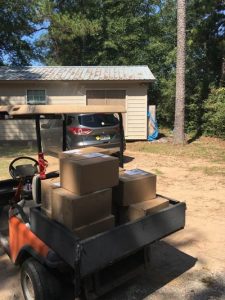
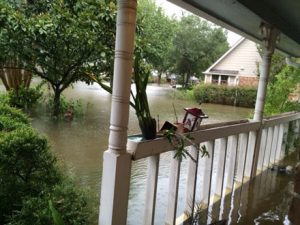
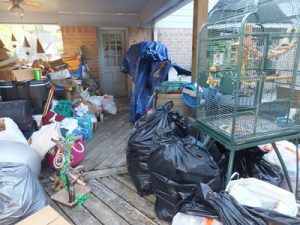 One of our Customer Service associates, Diane, lives in the middle of Houston and her home took on quite a bit of water, just as others did. If you are a regular caller to Lafeber Company, you have more than likely spoken to Diane. She’s the one with the Carolinas accent mixed with that Texas drawl, and she can tell you anything you need to know about birds, and especially baby birds! Diane sent her birds to Magnolia for safekeeping while she and her husband try to rebuild enough to make it safe for the birds and themselves. They are lucky enough that they are able to live in the upstairs still, while so many were not as fortunate.
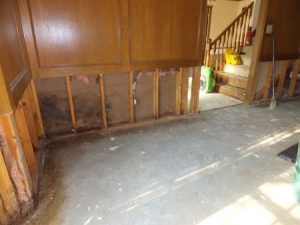 “We did flood and, while not as bad as some people in Houston, it was enough to cover our whole downstairs with water, and the damage is more than I could have imagined. This section of our subdivision is one of the high points in Houston, and while it usually gets stranded like an island with a creek at one end and a creek at the other, we have never flooded in 37 years (so why would we have flood insurance?) and we do not have flood insurance. I couldn’t believe it when I saw water coming down the street; I yelled to my husband to move the car and made a mad dash into the garage to grab carriers for the birds and started getting them out of their cages and upstairs, and before I could finish I was already splashing through water it came up that fast! Nothing but our pets & their food was saved but at least I got that.”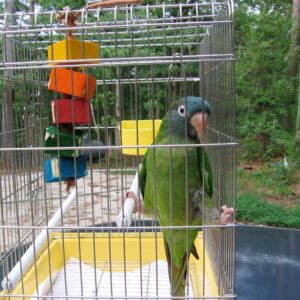


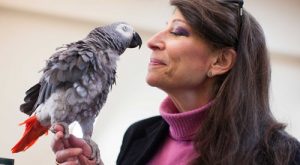
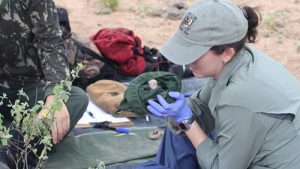
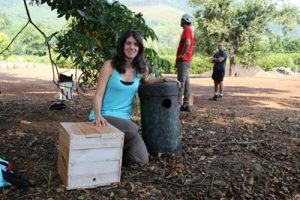 As people were gearing up for the Holidays, I had the great fortune to drive with a dear friend and client to Chicago for The Avicultural Society of Chicagoland — The TASC 2-day learning event. There were a variety of great speakers for the event and I had the good fortune of meeting one of them who was new to me, Dr. Caroline Efstathion. In this column, I would like to share her wonderful and heartwarming work.
 Cape Parrot
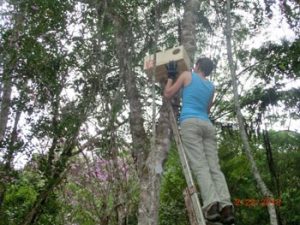 o what to do? Dr. Efstathion introduced a push-pull system to discourage bees from entering the nest while attracting them to traps nearby. A bee repellent could “push” bees away from the nest, and two bee traps with chemical “lure” would attract or “pull” bees. Trapped bees could then be removed and placed in managed hives by beekeepers, as the bees are important to pollination and to agriculture. In this way, nest site competition could be reduced between parrots and honey bees.
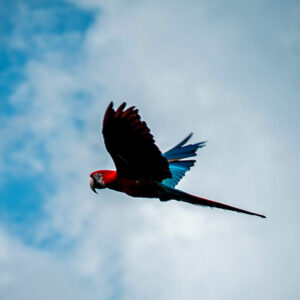
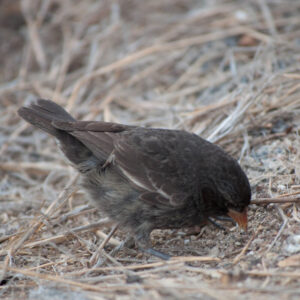
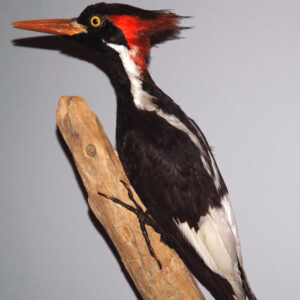
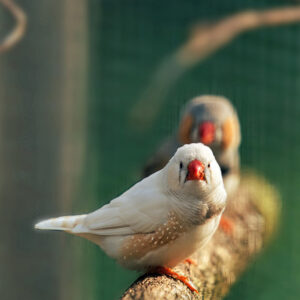
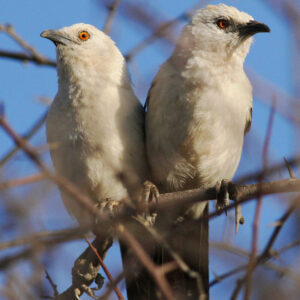
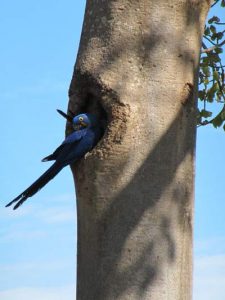 While attention is turned to the athletes competing at the Olympics in Brazil, bird people turn to ask what about birding in Brazil? When consulting the bird guides for Brazil, one learns quickly that the guides are regional. That is because a national guide would be too large for portability in the field because, frankly, there are too many species! In fact, Brazil boasts over 1,825 species with others being discovered or named continually. Brazil is considered one of the planet’s richest centers of biodiversity and represents 60% of the species found on the South American continent! With that comes the flip side — Brazil has the largest number of endemic (234) and threatened (116) species of any nation in the New World — that means it represents over one fourth of all of the species that are in trouble.
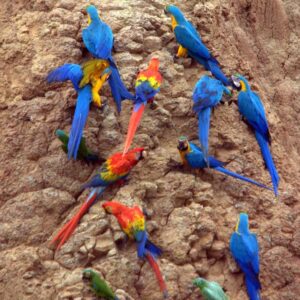
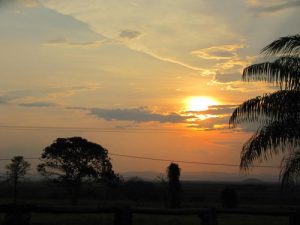 The Pantanal is a vast seasonally flooded wetland comprising about 80,000 square miles! The tropical rains begin in November and end around June. This results in the northern portion of the Pantanal flooding in January, while the southern portion receives the flood waters about two months later with flooding occurring about 2 times during the rainy season. The waters come from an even larger distinctively Brazilian tropical savanna habitat – the Cerrado. This one of the largest biomes of over 740,000 square miles. During the wet season, waters from the Cerrado pour into the large rivers of the Pantanal and there they temporarily flood the grasslands and gallery forests. This produces a large accumulation of water birds as well and contributes to the biodiversity of species. However, as the use of herbicides and fertilizers in the Cerrado increase, this produces a negative impact on the purity of the waters needed for plants and animals of the Pantanal.
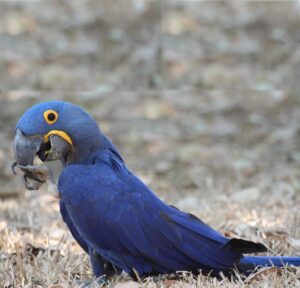
 Since the 1990s, the Hyacinth Macaw project or Projeto Arara Azul headed by Neiva Guedes has helped turn the corner for this magnificent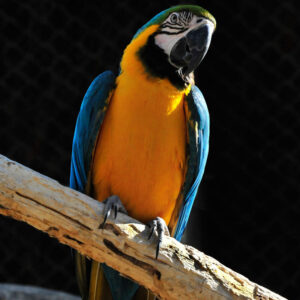



.jpg)

_-_Weltvogelpark_Walsrode_2013-01.jpg)


_male.jpg)
![[ Nimesh M]](https://commons.wikimedia.org/wiki/File:Lophocroa_leadbeateri_-Brookfield_Zoo-6.jpg)
.jpg)