Birds can be addictive. Most people cannot have just one! And if they do, it often does not last for long. You want the best for your birds, and for most that means eating a pellets or Nutri-Berries diet instead of seeds. If you share your life with multiple feathered friends and want to convert your parrots to a healthy diet, different challenges and advantages arise.
Make Flock Mentality Work For You
Flock mentality can emerge when more than one bird lives together in the same environment. RoyBuri/Pixabay
One of the benefits to having multiple birds is that they begin to act like a flock. Flock-like behaviors dictate that the birds within the group will do things around similar times, even if the birds do not necessarily get along. This means feeding time, social hour, and grooming activities often occur among members simultaneously. This behavior evolved in birds because, as prey species, there is strength in numbers. It is more difficult for a predator to pick out one individual in a group if everyone is doing the same thing.
Use this flock mentality when it comes to feeding time and converting birds to a better diet. First, birds like to eat at certain times of day. Early morning is one of the most common periods birds like to get together to do this behavior. Use this to your advantage. Offer the diet that you want your birds to be converted to as the first option of the day.
When a new, healthy diet is offered in the morning, it’s likely that the birds won’t know what to do with it. They may be reluctant to dig in. In a group there are usually some bold individuals and others that are shy. The more adventurous birds will likely investigate the new diet first. When those bold birds explore the new diet and start to consume it, their shy flock mates observe the activity. As they see the food safely consumed without any problems, they will likely become curious and try the new diet. Before you know it, flock mentality takes over. The birds convert quickly to a new diet.
Avoid These Feeding Pitfalls
When too much food is offered, birds may overeat or eat only the bits of food they like best. ErvinGjata/Pixabay
One problem that some people encounter when they have multi-bird households is adding more food than necessary to a shared cage, just in case one bird has a more voracious appetite than another. But overfeeding frequently occurs as a result. A bird that is offered more food in a day than it needs may not select the healthiest food available. This makes the bird more reluctant to convert to a healthier diet. Compare this to a person at a buffet. When a cornucopia of food is provided, it allows for selection of what our taste buds tell us we want. The same problem happens with birds offered too much food. They select what they really enjoy, and leave behind foods they don’t favor. Often, new diets are suspicious to birds and are avoided in favor of familiar items.
In order to avoid this pitfall, only feed the amount of food that is needed for a 24-hour time period. This amount of food varies from one multi-bird flock to the next. Consult with your avian veterinarian to find out exactly how much food everyone in your flock needs. Then, offer only this amount of food daily in the cage and no more.
As a dietary conversion is taking place, mix the old and new diets together so the parrots have some of the familiar diet with the unfamiliar diet. The birds will likely eat the familiar diet first. After this is consumed, they will only have the new diet left. As the day goes on and they get hungry, the new diet will likely be consumed because it is the only option available.
Beware Of Bird Bullies
Observe your birds eating together to be sure none are being bullied. TheOtherKev/Pixabay
If you encounter a “bird bully” that pushes others away to get to the food, then feed the birds in separate cages. You can still take advantage of the flock mentality though. Simply place the cages nearby so that the birds can see what others are doing and be influenced by each other’s behaviors. This way, shy birds are never pushed away from the food. After feeding a meal, the birds can go back together.
If food is left in the cage though, offer only the new diet that you are converting the birds to so that should a parrot pick through the food later in the day, the option is limited to the new diet. If you choose to meal feed (offer food at specific, limited times) instead of free-feed your birds, recognize they will need a few meals a day. The frequency and amount of feeding varies for the bird species that you have.
Make Eating Fun!
Additionally, as recommended for single-bird households when converting to a healthier diet, owners can try other tricks like hiding food in toys for the birds to explore together, or placing new foods around play stands or activity centers. Convert feeding time into playtime by stuffing foraging items full of whatever food you are trying to get your parrots to explore. As one bird starts to play and investigate, the others will likely want to try it out, too!
Getting birds converted to a healthy diet is important whether it is a single bird or a multi-bird home. Use flock mentality to your advantage to substantially improve the conversion process.
Join us for a free interactive webinar hosted by Laura Doering, former editor of Bird Talk magazine and Birds USA magazine. Our guest, Stephanie Lamb, DVM, DABVP (Avian Practice) will discuss common and hidden household dangers and steps to take to keep your bird out of harm’s way. Don’t miss this opportunity to learn how to keep your feathered companion safe from potential home hazards — tune in on Friday, September 18!
Missed our webinar? No problem! You can access the webinar in its entirety here:
Art is a highly expressive medium whereby much of it requires a subjective review. But the beauty of art sometimes lies not in its interpretation, but in its creation. Often, art requires inspiration, something to encourage it forward, to bring it full circle so that it can be displayed for what it is.
Artistic expression comes from all corners of the globe via many artists. One such eclectic artist uses the inspiring separate works of his African grey parrot, Hannah, to help create his beautiful and expressive bronze sculptures. The famed artist is Joseph Havel. In his current display of sculptures, Havel credits Hannah with providing some of the inspiration.
Havel is a noted artist whose works have been exhibited in prestigious galleries around the world. Many of his pieces are also kept in museums. His specialty is designing and sculpting those designs, then casting them in bronze as his favored medium. He is also known for his work in resin, paper, and textile. Based in both Houston and San Francisco, Havel uses the admiration of exquisite ancient Chinese bronze pieces to help provide the springboard for some of his own work but with a current theme and twist.
A Parrot’s Artistic Touch
Havel’s wife brought Hannah home some 23 years ago. Hannah and Havel became inseparable and, over time, the artist began to recognize an interesting thing that Hannah heavily involved herself with — chewing. This sculpting collaboration developed over time when Hannah consistently chewed up all her toys, making it an expensive habit. To help save money, Havel gave Hannah balsa wood from his studio. Eventually, Hannah came to prefer shoeboxes. It wasn’t long before he began to recognize the art in Hannah’s chewed upon pieces. He considered them her personalized architecture as she was working to create and expand her own environment. He soon got the idea to transform some of her architecture into architecture of his own for art purposes.
A Collection Created By Man And Parrot
Havel released a collection of pieces designed to explore the collaborative work between himself and his African grey parrot. The pieces are added to his most recent exhibition referred to as Joss: Works by Joseph Havel. Between August 29 and November 8, 2020, the Asia Society Texas Center in Houston is home to the exhibition. These bronze pieces are originally paper materials, some of them initially created by Hannah. The created paper objects were then merged with joss paper — sheets of paper also called “host” or “spirit” money. Joss paper is primarily used to burn during Chinese funerals and ceremonies as a means of burnt offerings to departed spirits. Havel’s use of joss paper on the paper art, including some by Hannah, are then burned away in the casting process to create a remarkable and expressive bronze sculpture.
Hannah’s pecked shoeboxes still have her created holes fully visible in some of the sculptures on display. In Hannah’s offerings, Havel saw enough intensity to translate them into enduring works of art that will forever become a part of our existence. If you find yourself in Houston during the mentioned time frame, stop off and view the pieces.
Good going, Hannah. You help to further the artistic side of birds everywhere. As art viewers and bird lovers, we appreciate the works of Joseph Havel and Hannah.
The name Iggy Pop has some weight behind it. If you remember rock music from the late ’60s, then you may remember the wild antics of Iggy Pop as vocalist of the rock band The Stooges. The band itself was short-lived, but Iggy Pop went on to good success as a solo artist. He has often been referred to as The Godfather of Punk in relationship to the amount of influence his style of music has had on punk music in general. For well over 50 years, Iggy Pop has entertained his fan-base with legendary performances and with more than 20 released albums. But another thing that Iggy Pop is known for is his feathered pal, Biggy Pop.
Biggy Pop Rocks
Biggy Pop is a Moluccan Cockatoo, a species endemic to the South Moluccas in east Indonesia. With the large bird’s gorgeous retractable salmon-colored crest, and its height approximate of around 2 feet, the bird is a definite but beautiful handful. Since 1989, the Moluccan Cockatoo as a species has been on the endangered list and can only be acquired via captivity breeding. Iggy Pop acquired Biggy Pop around 12 years ago as a companion.
The cockatoo was discovered by Iggy Pop in a small crate crammed in with chickens in a roadside café. Taking concern for the bird’s inevitable future, the singer rescued the cockatoo from a “peril of a bad future.” Not long afterward, Iggy created an Instagram account for Biggy Pop that has now been followed by almost 90,000 Biggy Pop fans. Bolstered by the fame of Iggy Pop, the companion bird has delighted not only fans of the rock star, but also of fans of exotic birds.
“Pop” Duo Helps Animals in Australia
Recently, the tragic Australian fires is estimated to have killed more than three billion living creatures caught in the fiery path of the unrelenting flames. Of those, 180 million were birds from the regions. The Founder and CEO of Byron Bay Wildlife Hospital (and “big Iggy Pop fan”), Dr. Stephen Van Mil became a fan of Biggy Pop and invited the famed cockatoo to become a founding patron of the hospital (Byron Bay Wildlife Hospital is located in New South Wales, a state of southeastern Australia). It is with hope that Biggy Pop brings greater awareness to the Australian plight with his widespread popularity.
Iggy Pop, speaking for his bird, had this to say of the invitation: “I’m a bird, and a real wild one, and I have many cockatoo cousins in Australia. I was so distressed to hear that 180 million birds died in the catastrophic bushfire crisis that killed over 3 billion native animals over the Australian summer. That really horrified me. I heard about the team of Australian veterinarians building Australia’s largest mobile wildlife hospital and I thought, ‘That is such a brilliant idea.’ So when they asked if I would be their founding Patron, I thought ‘Yeah, I’d love to connect with my bird sisters and brothers in the magical land of Oz.”
Here is a a touching video announcement by the Byron Bay Wildlife Hospital that shows Biggy and Iggy Pop in a love-filled home, along with snippets of wildlife. If you wish to help with the efforts of the Byron Bay Wildlife Hospital to support care and prevention, start with the patron page of the Hospital. But donations to help ease this sorrowful event are applicable in many ways in Australia. Let your concern speak to you in the ways that it will.
Biggy Pop closes with, “I hope to get down there one day with Iggy, when it’s safe for humans to travel again. I’d fly down there now, but my dad would really miss me. For now, I’m going to help spread the word via my Instagram page.” You can check out and follow Biggy Pop on his Instagram page.
The world has changed much over the last hundred years. With the addition of large buildings, the need for building materials and new spaces to build within, and a myriad of other “new” requirements to enable humans to live in this timeframe, it’s a wonder that we simply do not take the time to evaluate our needs in contrast to the need of our bird friends – or other creatures. The obvious destructive force is habitat invasion. But there are certainly other issues that we think little of – and if we did, we would likely not recognize the inherent dangers found in them. One of those is light pollution.
Shedding Light On A Problem
What is light pollution? Light pollution, in the simplest terms, is an overabundance of light emanating from all artificial light sources. You see It most in large cities where light at night is a requisite need. In specific areas, the light is so richly distributed that areas can be easily pinpointed from the darkness of space. While lit nights are good for the human experience, it’s a disaster for our flying birds, especially during their migratory periods.
Why is light pollution dangerous? Well, the obvious answers lie within our 24-hour natural cycle. During the day hours, where the sun is shining brightly, we can conveniently maneuver a busy daytime world. Birds (and other creatures) depend on sunlight to help them eat, hunt, and navigate. Their own cyclical patterns encourage them to attend to several things during light, and when the sun sets, to do other things under the cover of night. This is especially true of nocturnal birds and other night-aware creatures. But with the introduction of artificial light, birds with their inherent instincts, can be confused. One of the traits of some birds is to migrate from one place to another annually.
Birds have a natural migratory ability to navigate by the moon and stars. With the relatively new introduction of lights seen at night, many birds can easily be drawn off course, eventually arriving at cities with bright lights. They often fly into buildings and die from the impact. If they do not die from impact, many are unable to fly again from sustained injuries. Vibrant lighting can also have a detrimental impact on migrating birds by arousing a signal to begin migration too early. Lights can also lead migrating flocks far off the course of their intended destinations.
Too Much Light In The Night
Studies have been launched to determine why artificial light has the impact that It does on many bird species. Such studies have discovered more and more birds living near cities with bright lights. It is said that birds can see the light of a city 250 miles over the horizon. Often, this deludes the migrating birds to make incorrect choices within their pathways. All of this is a contributing factor to our ongoing decimation of many bird species. More studies realize even more dangers that light pollution inflict on birds.
Science has been hard at work to discover fixes to the real problem of light pollution on many bird species who instinctively depend on natural navigational tools. Chicago, Houston, and Dallas are cities that have been determined to exhibit the most dangerous levels of nighttime lighting. Their network of lights have seemingly impacted the largest numbers of migratory birds.
How can we contribute to the safety of our flying birds? We can help by reducing or eliminating all unnecessary streams of artificial lighting. This can be done even in the smallest of towns. As a world, we’ve taken for granted the technological wonder of not ever having to be “blind” at night. We have yet to realize on a grand scale the harm such usage can have on nocturnal creatures. To preserve wild species, who unwittingly depend – more and more – upon the good sense and selfless behaviors of mankind, we must look to all areas of our advanced living to fine-tune our existence so that our creature counterparts can exist safely alongside of us.
Light pollution is a topic that many of us might not even think could be a dangerous event. But we learn all the time. Let us help make that learning count for the future. There is much more to learn about the effects of artificial lights on birds and other creatures by exploring knowledge cent
Dr. Tully will field questions from participants, so now’s your chance to ask a question about your pet bird’s health, or tune in to learn more about avian health in general.
Missed our webinar? No problem! You can access the webinar in its entirety here:
Webinar: “The Art of the Bird: An Overview of Small Pet Birds”
Date: Friday, August 21, 2020
Time: 12:00 pm PST (double-check your local time with this time zone converter)
Have a fondness for small birds? Join the small-bird celebration with our free webinar on Friday, August 21! Our special guest Diane Grindol, author of Bird Talk magazine’s popular “Small Birds” column as well as numerous other bird publications, will sketch small bird species such as budgies, cockatiels, lovebirds, kakarikis and more as she discusses the nuances of each. You’ll also have an opportunity to ask a question about your small bird.
Missed our webinar? No problem! You can access the webinar in its entirety here:
Griffin and Athena keep a careful watch of their bowls. Courtesy of Dr. Irene Pepperberg
I’ve written before about Athena engaging in what appeared to be deceptive behavior, but
one of my former research associates, Francesca, recently shared this incident about Griffin. It seems that he may also be acting in interesting ways!
This incident involves Griffin’s attempt to steal banana slices from Athena. Every morning, both Grey parrots are fed breakfast by one of my research assistants. Francesca, who worked at the lab from 2016 to 2019 and observed the following behavior, always placed both birds on the wide sink counter near her while preparing breakfast, so she could monitor and interact with them, and feed them more efficiently.
Griffin’s Possibly Deceptive Behavior?
She always placed Griffin on the countertop along with both birds’ food bowls (which have different patterns — the same bird always eats from the same bowl), while she placed Athena on a short wooden T-stand also placed on the countertop near her own bowl. Francesca’s rationale was that Griffin often prefers to perch on flat surfaces, and placing both birds on the same area without constant supervision can result in minor squabbles; thus, she placed Athena out of Griffin’s direct reach. She placed each bird’s individual food portions inside their respective bowls: Griffin would walk directly to his own to eat, and Francesca would lift Athena’s up to her perch so she could reach it (see below for the current arrangement, which is quite similar). Note that each bird receives about a quarter of a banana per day, cut into three or four thick round slices.
Griffin hardly ever approaches Athena’s bowl, focusing instead on his own portion exclusively. On rare occasions when he does wander toward her bowl, Francesca was always at the counter and either gently admonished him and moved Athena’s bowl out of his reach, or she picked Griffin up and returned him to his own bowl. On one occasion, however, she recalls having to leave the counter for an extended period of time to conduct another part of the morning opening procedure that was not proceeding properly. She does not specifically remember the issue, but common delays could include occasional difficulties with the lab humidifier or steaming of the breakfast vegetables.
Griffin Makes His Move
Normally Athena was left on her T-stand when such chores went quickly. Francesca believes that on this particular occasion the complication was taking longer than usual to resolve and, not being comfortable leaving Athena and Griffin unattended in the same space, she had placed Athena on her shoulder. After a few minutes away from the sink, she noticed, from the corner of her eye, that Griffin was moving along the countertop more than usual, and began to watch his actions carefully (but intentionally without turning toward him or in any way alerting him that she was watching).
She observed Griffin methodically walk over to Athena’s bowl from his (a distance of about 30 to 45 cm), select a piece of banana, and carry it back to his own bowl, placing it with his own banana portion. Shocked, she watched him repeat this action two or three more times before she intervened, walking over to the counter and re-allocating to Athena’s bowl the correct portion of banana.
Notable Actions
This observation is interesting for several reasons. First, Griffin did not simply walk to Athena’s bowl and eat some of her banana portion instead of his own (a situation in which he would have spent more time visibly near Athena’s bowl, and thus been more likely to be noticed before consuming the banana). Rather, he appeared to be methodically moving Athena’s banana slices to his own bowl, with the possible expectation that when each bowl would be placed on top of the correct bird’s cage after breakfast, as is the daily protocol, he would get to keep the extra.
Second, Francesca recalls having, at the time, the distinct impression that Griffin had waited until both she and Athena were neither nearby or paying attention before acting. She recalls being distracted for several minutes before noticing Griffin’s actions, and though she recounts that she cannot be sure Athena was not on her T-stand on the counter, as during a “normal” breakfast procedure (which she had conducted hundreds of times, and thus cannot remember exactly where Athena was in this one memory), she does believe that Athena was with her because she never left both birds unattended in the same space for longer than a few seconds, as would have been the case here.
What About Athena?
Francesca does not recall Athena reacting to Griffin’s actions in any way while he was taking her banana: It is likely, were Griffin indeed taking Athena’s banana while she was watching from her T-stand, that she would have jumped down to intervene, something she is perfectly capable of doing, as they are generally quite possessive of their bowls — but this did not occur. This event suggests that Griffin had some understanding of who was or was not watching him, what they might do in response to his actions, and how he could act so as to keep the stolen banana slices.
Did Griffin Display “Theory Of Mind?
If Griffin were indeed aware of the attentional state of others while attaining his food prize, his behavior would suggest some level of “theory of mind”— of being aware of what others do and do not know. Only one instance exists of Griffin performing this behavior; however, he was clearly attempting to keep more banana for himself for later consumption, rather than just immediately consuming as much of Athena’s banana as possible. Griffin’s actions do appear to fit the behavioral criteria for what is known as “tactical deception”— simply misleading another individual as to the existence of banana in Athena’s bowl. Had it additionally been possible to prove he was truly aware of the attentional state of Athena and Francesca, and using that information to his advantage, the incident could suggest intentional deception and thus “theory of mind.”
It seems as though we will have to wait to find out the extent of Griffin’s understanding, but these kinds of anecdotes are important — they make us aware of what kinds of information the birds might be processing, and thus ensure that we pay a lot more attention to their actions in the laboratory outside of our formal experiments.
What: Fundraising Webinar to Help The Alex Foundation with Special Guest Dr. Irene Pepperberg
Date: Sunday, August 23, 2020
Time: 4:00 pm EST (double-check your local time with this time zone converter)
On August 23rd at 4:00 p.m. EST, Lisa Bono, CPBC, will host an exciting webinar featuring Dr. Irene Pepperberg, researcher and founder of The Alex Foundation. Dr. Pepperberg’s research is centered around determining the cognitive and communicative abilities of African Grey parrots, and using her findings to encourage responsible ownership, conservation efforts, and further research of this incredible species. During Sunday’s webinar, Dr. Pepperberg will briefly speak about her research, and then participants have a chance to ask Dr. Pepperberg some questions of their own, as well as meet the two wonderful birds currently residing in the lab!
Admission into the webinar can be purchased by making a $25 donation to The Alex Foundation through its website. After you’ve made your donation, you will receive a link with a login code to access the webinar. Sign up today and tune-in Sunday!
Webinar: Fun With Foraging — How To Get Started & Fun Toy Ideas!
Date: Friday, August 14, 2020
Time: 12:00 pm PST (double-check your local time with this time zone converter)
Join us for a free interactive webinar hosted by Laura Doering, former editor of Bird Talk magazine and Birds USA magazine. Our guest, Stephanie Lamb, DVM, DABVP (Avian Practice) will discuss why foraging is a great way to stimulate a bird’s intelligent mind and keep them happy and occupied throughout the day. Dr. Lamb will share her tips and tricks to making foraging fun! Tune in on Friday, August 14!
Missed our webinar? No problem! You can access the webinar in its entirety here:
Webinar: “The Grey Way: Understanding The African Grey Parrot”
Date: Friday, August 7, 2020
Time: 12 pm PST (double-check your local time with this time zone converter)
Have a fondness for African greys? Join us this Friday for a free, interactive webinar hosted by Laura Doering, former editor of Bird Talk magazine and Birds USA magazine. Our guest, Lisa Bono, CPBC, owner and operator of The Platinum Parrot and a certified parrot behavior consultant specializing in African grey parrots, will present “The Grey Way: Understanding the African Grey Parrot.” Here’s your chance to learn more about this famously intelligent parrot; join us on August 7 at 12 pm PT!
Missed our webinar? No problem! You can access the webinar in its entirety here:
It’s is a beautiful day in the neighborhood. Your plans are to go outside to enjoy the day, take in the sunshine and feel slight breeze on your skin. You want to take your parrot out with you to get vitamin D and some fresh air. After all, they were not meant to be kept in an indoor environment. Their health needs are much like ours — fresh air and sunshine included.
Sadly, this time of year we see so many ads for lost parrots. Some are escapees due to accidents, but others are caused by a lack of protection while being outside with owners. Many of these scenarios can be avoided by taking simple safety precautions and knowing your environment.
Safe Options To Enjoy The Great Outdoors
There are several options available for pet owners to explore. I have found the safest option is to have a smaller cage if your plans include staying outside for a longer period of time. Some cages are designed to collapse down for storage purposes. If you are using a collapsible cage, please be aware of the connections and the materials they are made from.
This storage feature also makes them more susceptible to falling apart when being lifted up or moving around. Be sure to check the security of the food dishes and doors. I suggest using small zip ties to attach the bottom plastic case to the cage itself. Use these also on the food doors in the event a cage is dropped for some reason, the cage parts will be held together. If you are using the cage option, make sure you place your bird in the cage while INSIDE your residence for safety. Do not open any cages outside for any reason.
Lisa Bono readies the flock for a walk. Photo by Lisa Bono, CPBC
Another option is a backpack-type case designed for parrots. I happen to own a few of them, and they are fantastic for travel. However, not all are created equal. Make sure the product you invest in is made from materials that are, for the most part, chew-resistant. Some carriers are made with a plastic mesh. It can be seconds before your parrot realizes this and chews their way out quickly. Others are made with stainless steel mesh; this is the protection you want. With that said, always inspect the carrier before each use to make sure a curious beak did not find a crevice to work at and open up a hole.
Lately, I am seeing more carriers being made of acrylic. While this is the best option for known destructive beaks, be aware that they can get very hot inside with the sun and heat. I urge you if you have this type of product to make sure enough ventilation gets in the carrier and keep it out of direct sun. Some acrylic carriers offer an optional wire door that can be purchased as an add-on. I highly suggest this option if you plan on using this type of carrier.
Stretch Your Wings With A Harness
Sammy in her harness. Photo by Lisa Bono, CPBC
There are several manufacturers of avian harnesses. Whichever one you choose, take the time to inspect the harness each time you put it on for any signs of weak spots due to a bird chewing while wearing it. Curious beaks can cause damage quickly. Purchase the correct size for your parrot according to weight. You want that product to perform correctly, and it can only do so with proper placement and monitoring. Do not use any products that are made for raptors or tie anything to a bird’s band. This is a common practice overseas and some countries. A raptor’s leg structure is much different than psittacines. Raptor legs are stronger, with more muscle mass, and designed to carry prey. Using an incorrect tether can break or damage a parrot’s leg.
Lost & Found
Do not be fooled with the false sense of security of clipping wings and thinking that will keep your bird safe outside. A bird with clipped wings can and will fly. There are many different factors that can come into play that can help carry your bird away. All parrots still have all their wild, fight-or-flight instincts intact even though they live in our homes. If they are startled while outside, they will take flight. If they are caught in a wind stream or sitting up on higher ground than surrounding property, they will get some height as well as distance and can get into a tree.
Being on social media I see several lost birds each day. A bird with clipped wings does not have the ability or agility to escape predators. It will not know where to find food or where to keep safe. It is our job as stewards to keep them safe, happy, and healthy.
In my years I have personally assisted in retrieving several birds. I’ve been bitten by a dog and dredged through pricker bush swampland. The time out trying to locate them or watching them while they flew from tree to tree was heartbreaking. I have a 50/50 recovery rate, and I still think of the ones that did not make it home.
People say to me time and time again that “my bird has been coming outside free for years,” “his wings are clipped,” “he’s never flown” or “he loves me too much to fly off.” Please do not think this. Your bird depends on you to know better and provide safety.
Dr. Tully will field questions from participants, so now’s your chance to ask a question about your pet bird’s health, or tune in to learn more about avian health in general.
Missed our webinar? No problem! You can access the webinar in its entirety here:
This month I’m writing about a study that was done with Alex decades ago, but that has received some new interest because of recent studies with very young children. It involves how well individuals understand the concept of same-different. The topic is one that would seem, on the surface, pretty straightforward: If you are given two objects, it is pretty simple to state whether they look the same or if they look different from one another. The answer, however, turns out to be pretty complex, because many levels of understanding exist: At the highest level, the response actually involves recognizing degrees of similarity and difference. Not all nonhumans or very young children demonstrate that they understand the most complex levels.
The most basic level of same-different involves identity versus non-identity. You see that the two objects look absolutely the same, or you see that they aren’t absolutely the same — but you don’t have to recognize exactly what is different. Almost every nonhuman tested succeeds on some version of this test, known as “match-to-sample” (or MTS) and “nonmatch-to-sample” (or NMTS). In one common version, the subject is shown a sample item, A, and then A and B together.
Match-To-Sample Vs. Nonmatch-To-Sample
If the task is MTS, and the subject picks A, it gets a reward. Even though the task sounds simple, it can take subjects a few hundred trials to figure out what they are supposed to do. When a subject reaches a certain level of correctness, such as 80 of 100 trials in a given day, it is then given C as the sample, and C and D as the choices. If that subject takes fewer trials to learn to pick C than it took to learn to pick A, it is said to have learned MTS.
Then the subject gets what is known as a reversal trial. It goes back to the A and B choice, but now only gets rewarded when it hits B — NMTS. When the subject figures out that task, it is given C, with a choice of C and D, and is expected to choose D. The problem with these tasks, discovered by some of my colleagues (e.g., Premack, 1983; Zentall & Hogan, 1974), is that subjects may not actually be learning the concept of same-different, but rather learning only “same” in MTS and then learning to avoid “same” in NMTS, or learning to respond on the basis of familiarity. That is, they’ve seen A before, keep it in memory and then just choose what is familiar in MTS and avoid it in NMTS. Recent studies on young children showed they also seemed to have problems with difference, but not sameness (Hochmann et al., 2018), which researchers found a bit surprising.
Premack (1983), after analyzing many such studies with nonhumans involving variations on the task described above, came up with a novel analysis. He argued that full comprehension of same-different actually involves the ability to represent very specific relationships of sameness and difference among sets of objects: the ability to recognize not only that two independent objects — e.g., A1/A2 — share or differ in just one attribute, e.g., the color blue, but also to recognize that only this attribute — in this case, the category color — is what is targeted (i.e., important) in a particular trial, and that the targeted attribute depends upon whether the task involves sameness or difference, because stimuli can simultaneously share some attributes and differ in others.
Subjects must also recognize that this sameness/difference concept can be immediately extrapolated to other novel items — B1/B2 — having no commonality with the original As (e.g., the targeted attribute in that trial is shape). So the subject is not simply marking identity or non-identity, but knows exactly which attributes are identical or non-identical. Interestingly, Premack also proposed that such abilities were limited to primates and that only subjects that understand what he termed “symbolic representation” — where a non-iconic symbol stands for an object, attribute, action, etc. — could demonstrate such comprehension by using symbols for “same” and “different’ to label their presence or absence, or to use labels to indicate the appropriate attributes that were same or different (e.g., “color,” “shape”).
Spot The Difference
To put it another way, to be correct, a subject had to:
(a) attend to multiple aspects of two different objects;
(b) determine, from the specific question posed, whether the response was to be based on sameness or difference (“What’s same?” vs. “What’s different?”);
(c) determine, by looking at the two objects, what was same or different (i.e., what were their colors/shapes/materials?);
(d) produce (either vocally or by manipulating some physical symbol), the label for the appropriate category (“color,” “shape,” “material”), not just the instance of the category (e.g., “blue”).
Thus, the task required a feature analysis of the two objects, recognition that objects could simultaneously share similarities and differences, and the ability to understand which attributes were being targeted.
As it turns out, Alex was probably the only nonhuman (possibly with the exception of Premack’s symbol-trained Sarah) who could succeed (Pepperberg, 1987). If, for example, Alex was given a blue wood triangle and a blue wood square and asked, “What’s different?” he replied “shape.” If asked “What’s same?” he would say “color” or “mah-mah” (his label for matter, or material). He even responded with equivalent accuracy for pairs of objects he had never before seen. He was therefore able to target, and label, the specific attributes that the two items shared or in which they differed.
In sum, full understanding of same-different is much more complex than it may first seem. Many species perceive identity; many can be trained to perceive non-identity or degrees of non-identity. Tasks used in those studies, however, do not enable subjects to demonstrate that they fully understand same-different at the level that Premack specified.
References
Hochmann, J-R, Carey, S., & Mehler, J. (2018). Infants learn a rule predicated on the relation same but fail to simultaneously learn a rule predicated on the relation different. Cognition, 177, 49-57.
Pepperberg, I.M. (1987). Acquisition of the same/different concept by an African Grey parrot (Psittacus erithacus): Learning with respect to categories of color, shape, and material. Animal Learning & Behavior, 15, 423‑432.
Premack, D. (1983). The codes of man and beasts. Behavavioral Brain Sciences, 6, 125-167.
Zentall, T.R., & Hogan, D.E. (1974)/ Abstract concept learning in the pigeon. Journal of Experimental Psychology, 102, 393-398.
You can help Dr. Pepperberg continue the groundbreaking parrot research she began more than 30 years with Alex, the African grey parrot that won admirers from around the world with his cognitive abilities. If you shop online through sites such as Amazon.com, you can designate the Alex Foundation to receive a percentage of your final sales, or register with the Alex Foundation at iGive.com and a percentage of sales from companies associated with iGive will go to the foundation. The Alex Foundation also has a “Donate” button linked to PayPal. Visit http://alexfoundation.org and click on the “Support Us” link for more information.
Webinar: “The Pros & Cons of Alternative Medicine — What You Need To Know For Your Bird”
Date: Friday, July 24, 2020
Time: 12 pm PST (double-check your local time with this time zone converter)
Join us for a live, interactive webinar hosted by Laura Doering, former editor of Bird Talk magazine and Birds USA magazine. Our guest, Dr. Heather Barron, a board-certified avian specialist and a licensed wildlife rehabilitator with over 25 years of experience in practicing and
teaching special-species medicine, will explore what is currently known about the herbal supplement industry, homeopathy, and other forms of alternative medicine that concerned owners and medical caregivers often pursue for birds. She will discuss the pros and cons as presented in a review of the scientific literature. This can be a real eye-opener! So we hope you will join us on July 24 at 12 pm PT.
Missed our webinar? No problem! You can access the webinar in its entirety here:
Several years ago, a story emerged about a kakapo parrot who gained a bit of fame due, in part, to the International Union for Conservation of Nature (IUCN) Red List designation of the flightless bird from New Zealand. The listing delivered an alarming Critically Endangered label, which is literally next door to the near hopeless “Extinct in the Wild” designation.
The parrot of this story is named Sirocco. At the time of his budding notoriety, he was just one of 148 kakapo parrots known to exist in the wild. Sirocco hatched in 1997 and was fitted with a transmitter for scientists to monitor the male parrot in his wanderings of one of several secret islands located in the Marlborough Sounds. In 2016, things got scary when Sirocco’s transmitter quit working. For two years, Sirocco remained “off-line” and undetected.
In 2018, New Zealand Department of Conservation rangers set out on a determined seven-day search to relocate the parrot in the hope he was still healthy. The bird was relocated, and his broken transmitter was refreshed for further observation of the bird. With his re-acquisition, Sirocco has taught observers several things previously unknown about the kakapo parrot. In 2013, an award-winning documentary film was created called Sirocco — How a Dud Became A Stud (by Indian filmmaker, Ashwika Kapur). Now, fast-forward to 2020 for an update on the famous parrot, who is also the official New Zealand advocate for kakapo conservation.
More Of A Spokesbird Than A Romeo
Today, Sirocco is 23 years old. During his time, he has confounded conservation efforts by remaining celibate in his wandering years. Surprisingly, he is also the only kakapo exhibiting this unusual behavior. The reason for this is that Sirocco was raised away from the other parrots, which resulted in him imprinting on humans rather than his own kind. With this, Sirocco has come to have no interest in kakapo females to properly mate.
These days, Sirocco is treated much more like a VIP than just one of the birds. As an assigned advocate, he is actively busy championing the cause of the kakapo parrot and their surging numbers over the years. Because of his station, an insurance policy has been taken out that insures Sirocco the kakapo for an astonishing $79,500. (Arrival at this figure considers food, care, housing, and travel on an annual basis.)
Sirocco’s Facebook page currently enjoys a large number of likes, with more than 235,000 followers. It is the face and persona of Sirocco that is used on anything related to birds (of any kind) in New Zealand. His popularity is high in the country as a visit to his Facebook page reveals.
Today, Sirocco is part of a thriving kakapo community of 210 adults. All adults are spread out through four secret island locations. Each bird is electronically tagged for easy monitoring, and each bird has a name that they are known by. All kakapos are fiercely protected in the hope that one day soon, the species will flourish once again.
African grey Stirling went to the vet to get checked after Lisa Bono noticed he was favoring one foot. Courtesy of Lisa Bono
One of the most important things you can do as a responsible steward for your parrot is to have a good working relationship with an avian veterinarian. Many times, during your years of being a bird owner, you are going to need to rely on this relationship to help keep your bird(s) healthy and happy.
Recently I found myself in this very position. Stirling, my 39-year-old Congo African grey, was favoring one foot. Realizing this behavior was not normal, I made an appointment with my avian vet. Things were a little more stressful for us going to the vet this time due to Covid-19 and knowing I could not be in the exam room with my bird. Thankfully, my husband drove me the 90 miles and sat with me in the car to distract me while Stirling was not in my view.
Find One Before You Need One
I have always emphasized to parrot owners that one of the most important things you can do is find an avian vet prior to needing one. When your bird is not well, the last thing you want to do is scramble to find a qualified veterinarian or, worse, visit one who knows nothing about birds and lose precious time helping your bird to recover.
African grey Sophia gets a checkup from Dr. Speer. Photo courtesy of owner, Oscar Perdomo Rios
Another relevant thing to keep in mind is to be able to find your vet information quickly. I keep a list of qualified local avian veterinarians hanging in a cabinet in the bird room that will inform anyone who would have to care for my birds in my absence where they can go if needed. It contains phone numbers, the hospital name, doctors’ names and directions. When traveling, I also leave a signed check for our bird sitter in case emergency funds are needed for their care. A note should always accompany the check so the vet is aware that this person is allowed to treat your pet and use your payment form.
Prep For The Trip
Another thing to do is get your bird used to the carrier and keep them accustomed to it. Take them on rides other than to the vet so the carrier is not associated with a scary place to be. Be sure the carrier is secure, and make the trips fun. I would often visit my husband at work on the military base with the birds prior to his retirement. The soldiers liked seeing the birds. Offering something like fruit in a food dish works better than water to provide hydration and prevent the bird from getting wet from spills.
Take a dry run to the veterinarian’s office prior to needing them if this is an option. Locate the facility and notice the drive time that it takes you to get there. Get familiar with the parking if you have to travel to a neighboring city. Some clinics do not have onsite parking or have valet parking that you need cash for.
Stirling was found to have slight osteoporosis and arthritis in his left hip joint. He takes tart cherry juice to help with inflammation. Courtesy of Lisa Bono
There are not a lot of board-certified avian vets, so you may even have to travel to a bordering state if you need a specialty. Luckily, some vets have adapted to conducting phone or video conference consultations and are willing to work with your vet locally or internationally if you are not able to secure one near you.
If you have a bird that happens to get car sick, you can offer a little ginger to calm their bellies before the drive. Some will eat ginger root but others, like mine, will not. I have to make a ginger water concoction for Emma Lynn, because our travel time without it is about 45 minutes until she starts to throw up and then every 20 minutes thereafter. Limit food the morning of the visit so there is less to throw up. Should you need to do this, talk to your vet first to confirm that this is something they agree with as well. If any procedure is being done, your avian vet can advise if your bird needs to have an empty stomach.
The Diagnosis
As for Stirling, after X-rays, it was found he has slight osteoporosis and arthritis in his left hip joint. He will be on daily supplements to help ease the pain, tart cherry juice to help with inflammation, as well as additional Lafeber’s Senior Pellet Berries that are designed to aid older parrots lead healthier lives. A big thank you to Dr. Lauren Powers, Dr. Anthony Pilny and staff at the Arizona Exotic Animal Hospital as well as Dr. Scott Echols, for being part of Stirling’s care team and for guiding us through this aging process.
Jörg Mayer, MS, DVM, DABVP (Exotic Companion Mammal Practice), DECZM, DACZM, will share a heartwarming story about Boswell, the longest bird cancer survivor in avian history.
Date: Friday, July 17, 2020
Time: 12:00 pm PST (double-check your local time with this time zone converter)
Don’t miss our live, interactive webinar hosted by Laura Doering, former editor of Bird Talk magazine and Birds USA magazine. Our special guest Jörg Mayer, MS, DVM, DABVP (Exotic Companion Mammal Practice), DECZM, DACZM, will share a heartwarming story about Boswell, the longest bird cancer survivor in avian history. Dr. Mayer will discuss his tailored treatment for Boswell, who was diagnosed with bone cancer. Dr. Mayer will also discuss avian cancer and treatments in general and answer viewer questions.
Missed our webinar? No problem! You can access the webinar in its entirety here:
Webinar: “To Board or Not to Board: What is Best for Your Parrot When you Travel?”
Date: Friday, July 10, 2020
Time: 12:00 pm PST (double-check your local time with this time zone converter)
Join us for a live, interactive webinar hosted by Laura Doering, former editor of Bird Talk magazine and Birds USA magazine. Our guest, Stephanie Lamb, DVM, DABVP (Avian Practice) will discuss boarding vs. home care and traveling with your bird. What are the benefits of boarding your bird, and what are the benefits of opting for home care when you need to be away from home? Dr. Lamb will also offer tips for safe travels with your bird and how to make your feathered friend feel at home while on the road. Tune in on Friday, July 10!
Missed our webinar? No problem! You can access the webinar in its entirety here:
An important and controversial issue in the world of scientists who study animal behavior and animal cognition is whether we err in our analyses by anthropomorphizing our subjects or go too far in the opposite direction — when we actively avoid drawing parallels so as to be considered completely dispassionate in our explanations of what we describe. A good discussion of this issue is in the book Mama’s Last Hug by Frans de Waal. He evaluates in detail the behavior patterns he has seen over a lifetime of research on social interactions among nonhuman primates, and argues that the emotions of nonhumans do not really differ from those of humans.
Unlike de Waal, I study cognitive processes rather than behavioral interactions between individuals and among groups. I’ve also studied only a single species and only a few individuals of that species. Recently, however, the well-respected journal Behaviour asked scientists to submit anecdotal observations of nonhuman actions that suggested possible comparisons with those of humans — instances that would suggest that nonhumans could engage, for example, in deception. My students and I came up with a few of these anecdotes, and that led me to think about other human-like behaviors I had witnessed.
One such incident, just this week, led me to think about remorse, and when I shared the incident with a former student, she shared one with me. Again, these are single anecdotes, but maybe with enough such anecdotal evidence a case could be built for further study.
The Big, Bad Bite
Here’s the background for my incident. At the moment, Griffin’s arthritis is really acting up. Even the laser treatments we provide don’t seem to be helping all that much. (NB: Our vet is exploring other possibilities.) I was sitting next to his cage, watching him eat from his bowl, when I saw him slip. He was hanging by one foot and couldn’t right himself no matter what he tried. So I stuck my hands into the cage to support him, lifting him so he could perch properly. He did. As I moved away, he struck out, biting deeply into my hand. I don’t know if he was startled, thought my hand was the perch, or angry because I hadn’t helped immediately.
I’ve been working with parrots for over 40 years, and have been bitten many times, but this was the deepest puncture wound I’ve ever received. It wasn’t even bleeding that much — no slicing, just deep. All I could do at the time was rub in hand sanitizer. (I am now on antibiotics, so it was indeed serious.) I showed it to Griffin, and he raised his foot in his “pick-me-up gesture”— and then he sat with me for the next hour. He didn’t even preen, just alternately looked at my face and the small drops of blood coming from the wound. I have to say his expression appeared very sad. All the time, he was favoring his sore foot, but he didn’t ask to go back to his cage. He wasn’t preening the way he usually does when on my hand. He just sat with me until it was time to make dinner.
Comparing Griffin To Other Greys
Now, not all of my parrots act remorseful. If Athena bites, it is because you’ve done something she thinks is unacceptable, and she actually looks quite satisfied with herself afterward. Alex knew to say “I’m sorry” when he did something to upset the humans in his life. He had learned that the phrase would quickly defuse our anger or annoyance. I don’t think he really understood the meaning of the phrase. He rarely if ever exhibited contrition, often repeating the behavior that had triggered our displeasure in the first place. Sometimes he did behave properly afterward. Either way, he really knew that the phrase worked to calm his human companions. Griffin doesn’t know to say “I’m sorry” — but I think he really was remorseful.
One of my students shared a similar incident about Griffin. He takes a long time to warm up to new students, and only a very few of them earn his trust enough to be allowed to pop his quills and give him tickles with their fingers. Sometimes, however, he’ll show that he’s beginning to like them by giving them a “kiss”— a gentle nibble on their nose at the end of their shift. Once, early on in this student’s tenure in the lab, he slipped off his cage while trying to give her a kiss, and grabbed onto what he could — her nose. He didn’t bite through (thankfully!), but it was a definite wound. However, as soon as she got the bleeding to stop, he requested, for the first time ever, to “Go chair” (to sit alone with her) and also for the first time he let her give him finger tickles. She said it did seem to be his way of apologizing, and that it was worth missing her next appointment to stay longer!
These incidents may simply be anecdotes, or maybe they provide real insight into the mind of a Grey parrot. I’ll let you decide!
It is recognized universally that music and other forms of art can deliver a breezy step to the heart of matters. Just ask any parrot owner. They will be quick to tell you that their bird(s) get animated by music. And judging by a recent viral video on Facebook, wild parrots seemingly are just as adoring of music and will go to it.
Recently, a guitarist from Mumbai by the name of Jatin Talukdar sat by an open window to play his acoustic guitar. As he played, he whistled along with the music he made. Shortly after his start, two wild parrots flew to the windowsill, alighted, and spent some time grooving with the young guitarist. Jatin thinks the birds were drawn to him by his whistling. Nevertheless, the birds put aside their inherent natural concern to move closer to the soundhole from where the enhanced sound echoed from. They danced, and even “sang” along to his guitar performances.
Encore Performances
At last report, the birds still come back to the window for more guitar and, of course, some food. Jatin has come to see the birds as his audience and that he is “gigging” for them. He even calls them family now, giving them names. He calls one Jim and the other Kairi. Their visits have made the Covid lockdown in India much more tolerable for Jatin. He wanted to share that experience, and thus posted the video for all to see.
The viral response to the posted video has been heartwarming for most who have invested the few short minutes to watch the YouTube video. But beware — it is heart-touching and beyond an adorable way to make friends. You can also click over to the Facebook page of Jatin Talukdar, and follow his times with the two birds in new posts.
Of course, this is an isolated incident that we read stories about from time to time. But the star here is not necessarily Jatin – the guitarist, or Jim and Kairi, who have set aside personal concerns to spend some time listening to magical sounds. It is the connect that we have with something that is beyond us, something that can be created by one and enjoyed by another. We are often fueled by the discovery of intelligence within the biological makeup of our creatures and not just in birds. But birds often surprise us by what they do display. We know they love music. Hey — just ask Jatin. He will tell you a personal story about two birds who came to visit him and his guitar — and became family.
As time passes, we come to discover more about a parrot’s intelligence. Not that we were in any doubt of their brainpower, of course. But with a restless science community intent on validation of what we already believe to be so, countless studies are beginning to verify reality in startling episodes of discovery.
In previous studies, we have learned that birds can create tools to benefit their immediate needs. We have seen studies that show some birds to enlist the help of other birds to achieve a desired end. Now, as we advance in scientific studies on birds, we are discovering that kea parrots (for this study) can use their intelligence to contemplate several examples of potential outcomes before selecting a path of best execution. Simply put, these parrots are evaluating, and reasoning based on probable assumption. Amazing! This is the first time science has witnessed this behavior apart from the great apes.
Keas And Complex Intelligence
In early March, doctoral candidate and biologist Amalia P. M. Bastos, and Alex H. Taylor, an associate professor at the University of Auckland, published their advanced findings in Nature. Previously (December 2019), the two scientists published the findings of a similar study with the kea parrot that found the birds could envision hidden objects after the objects left their view and determine where they would end up. This indicates a distinct reasoning capability using two factors simultaneously and combining them to arrive at a predicted conclusion. Humans enjoy this seemingly unique capability of intelligence as do gorillas and chimpanzees.
An example is watching a person move from sight and into another room and knowing the probable location of the person. Or seeing a bird fly behind a tree and expecting to see the same bird fly from the other side of the tree. These examples are referred to as object trajectory.
In the March issue of Nature, the two scientists discovered further that kea parrots use even more advanced reasoning and predictive skills. Essentially, it was determined that the New Zealand kea could utilize their brain using multiple sources of information crossing paths at the same time to come up with a viable prediction. That is to say, a physical view coupled with two levels of probability could generate a predictive outcome with which to act upon. This finding gave scientists more information on the developing evolution of complex intelligence. The realized fact that a non-primate could use intelligence to make a complex assessment is exciting.
Using Probability To Get The Best Reward
In the second study, three experiments were given to six kea parrots. After several presentations of facts under the controlled experiments, the parrots often chose the solution with the most probable collection of rewards. The tests were jars of tokens, some of which yielded rewards and some which did not. After being presented with certain facts and after a time, the kea parrots soon showed remarkable intelligence in the selection of better rewards based on probability factors.
One of the likely benefits of these remarkable studies is the advancement of artificial intelligence (AI) in its coded understanding of human thinking and reasoning. To get a more scientific but fuller understanding of this set of studies, you can begin with the December issue of Nature (here), and the subsequent March issue (here). One thing is certain: we’re about to learn and validate much more about our birds and their intelligence.
Dr. Tully will field questions from participants, so now’s your chance to ask a question about your pet bird’s health, or tune in to learn more about avian health in general.
Missed our webinar? No problem! You can access the webinar in its entirety here:
Join us for a live, interactive webinar hosted by Laura Doering, former editor of Bird Talk magazine and Birds USA magazine. Our guest, Stephanie Lamb, DVM, DABVP (Avian Practice) will talk about taking pet birds outdoors. What are the benefits and the potential risks to pet birds? Find the answers to these important questions and more by tuning in on Friday, June 12!
Missed our webinar? No problem! You can access the webinar in its entirety here:
Many of you may know me by having a parrot supply store over the past decade. I was fortunate that I made my love, my job. I made my mark on a sleepy little Jersey Shore town but like all good things, they come to an end. After a 40-year career with the military for my husband, retirement was calling. We had talked about moving for years. I was in no hurry, but that didn’t slow him down. In order to convince me to leave my home and business behind, he promised me the bird room of my dreams.
When looking for a house, my only requirement was a room with a lot of windows for the birds or a good spot to build one. I did not want one on ground level if possible. I wanted them up in the air, safe from prying eyes or predators of any kind. I also required that we lived within 100 miles of a board-certified avian vet. I placed a push pin on a map and drew a circle around Charlotte, North Carolina. We settled in a little community not far over the North Carolina border in South Carolina.
A Bird Addition
Workstation/storage cabinets for the birds’ accessories. Image courtesy Lisa Bono
We were very fortunate that we found a decent house in a very hot market. Unfortunately, it did not have an area for the birds, and we needed to build an aviary of sorts onto the house. The house did have a back porch that would make the addition easier because the footings were already there. We downsized from our place in New Jersey, but moved my mother. This added to our household of two adults and six parrots. It was very congested with all the cages and trees with nowhere to go. We stored our dining room set as well as some furniture just so we could have a path to walk for our adjusted and larger family.
I was concerned about having an area under construction, because and birds have a more delicate respiratory system than humans do. When I was younger, a family member was removing walls in their house and did not remove their birds out of the house. All the birds died.
Keeping The Birds Safe
I wanted to make sure I did a lot of research on what products to use, learn about volatile organic compounds (VOCs) and how to handle everything that was airborne. Some extra research was involved with calling companies to talk about green products and what would work best in my home.
We had a lot of work done to the house prior to us moving in because of the birds, but this was something I needed to be here for. I could not move the birds out because we were brand new to the area. We did not know anyone to help
All the birds were kept away from any construction that was done by being isolated in their own room that was located at the other end of the house. There was constant cleaning each day of the area, and only access to the room as needed by the workers to minimize dust. Most of the work was done prior to the French doors being installed to adjoin the new sunroom to the rest of the house. From the window spacing to the angle of the ceilings, I was involved in every aspect of the construction.
Image courtesy Lisa Bono
A “Green Floor”
I was able to find a wonderful waterproof green product (low VOCs) called Coretec Plus to use on the floor. I honestly wish I had it installed throughout my entire house instead of the hardwood floors. It was installed in the “floating” fashion and not glued to avoid fumes. Coretec has earned the GREENGUARD Gold Certification. This means this flooring has passed the Environmental Institute’s most stringent testing requirement for emissions of formaldehyde, aldehydes, phenols, and other VOCs.
I needed a work space and storage in the new room, so I researched cabinets as well as countertops. Unless I had cabinets custom made, they were not going to be low-VOC, so they were purchased early and aired out outside on the covered porch prior to use. The countertop I chose was made by Livingstone. The materials were also GREENGUARD gold certified for low/no VOC emissions and are safe for children and schools.
The walls, trim, and ceiling were painted with Natura by Benjamin Moore. Another low-VOC product that is easily washed once food is flung. Natura is certified asthma & allergy friendly. The asthma & allergy friendly® certification program independently tests and identifies consumer products that are more suitable for those living with asthma and allergies. Natura has earned the Certification Mark by achieving the Program’s strict criteria for VOC emissions and performance.
We had outlets installed near the ceiling on a timer in the event I chose to hang full spectrum lighting up for them down the road. Right now, they are currently used by nightlights. We installed room darkening shades for privacy and to regulate the temperature in colder weather since there are more windows than wall space.
A hidden special touch I made was to enclose a St. Francis metal and prayer card within the walls on each side of the room. The air ducts and vents were one of the last things to be tied in to the conditioning system to reduce any dust that may have been distributed throughout the rest of house when it kicked on.
A Room Of Their Own
A screened-in porch makes for a great place to relax with the flock. Image courtesy Lisa Bono
Once the bird room was completed, I had air purification systems running 24/7 to get any of the lingering VOCs that may have found their way in there, out. Little-by-little I started introducing them to their new room and the environment. They seemed to really pick up with all the natural lighting and enrichment right outside their window watching the wild birds and nature abound. Our property backs up to a river, and there are always little animals running or flying for entertainment. The birds finally had their own designated space, and I was able to get my belongings out of storage.
We also had a screened-in room added adjoining the bird room and a second set of doors added that can be opened on nice days. It doubles the size of their room. I often sit out there to do work and watch them. The last part of the addition was a deck. I am able to roll cages and trees out to the deck by myself to power wash everything when needed.
The birds still have their second smaller room with their sleep cages for night. It is easier for me to control the amount of artificial light to help with hormones as well as colder winter temperatures with having a rug on the floor. They are able to get uninterrupted sleep in a quieter place in the house at night, yet have the sun and best view from the house during the day.
While I miss a lot about the life I left behind in New Jersey, I am happy that I am able to give the birds the best life possible. I’ve dreamt about this room since I was a child.
Join us for a live, interactive webinar hosted by Laura Doering, former editor of Bird Talk magazine and Birds USA magazine. Our guest, Dr. Heather Barron, a board-certified avian specialist and a licensed wildlife rehabilitator with over 25 years of experience in practicing and
teaching special species medicine, will do a special presentation on what to do if you find a baby bird. Should you leave it alone? Is it safe to bring it home? What are the risks to your pet birds? Find the answers to these important questions and more by tuning in on Friday, June 5!
Missed our webinar? No problem! You can access the webinar in its entirety here:
Webinar: Ask The Vet: Q&A with Tom Tully, DVM, DABVP (Avian Practice), DECZM (Avian)
Date: Friday, May 29, 2020
Time: 12 pm PST (double-check your local time with this time zone converter)
Good news! We are making our “Ask the Vet Webinar with Tom Tully, DVM, DABVP (Avian Practice), DECZM (Avian)” a regular feature, which you can catch the last Friday of each month. If you have a question about your bird’s health or want to learn more about avian health in general, mark your calendar for this free webinar series. Dr. Tully will talk about basic bird care and nutrition, and he will field questions from participants!
Missed our webinar? No problem! You can access the webinar in its entirety here:
Don’t miss this opportunity to attend a very special webinar hosted by our sister website, LafeberVet. Webinars hosted by LafeberVet are normally available only to licensed veterinarians; however, we’re excited to open this topic to pet bird owners as well. This free webinar will cover:
Avian Welfare
Definitions
Scientific approaches
Flight Mechanics
Definitions
Feather anatomy
Down/upstroke
The Ethics of Wing-feather Trims
Flight & brain development
Communication and education
Informed consent
Wing-feather Trim Techniques
Dr. Todd Driggers will share this live, interactive webinar on flight in companion birds. Dr. Driggers has spent 25 years in practice evolving his understanding of flight and how and why we are influenced to remove the flight abilities of birds. Feather trimming birds in captivity has been a common practice performed for many reasons, including fear of loss, safety, and the ability to control and tame.
If the gold standard for animal welfare is freedom and feather destructive behavior is a reliable indicator of scientifically studied animal welfare, feather trimming impacts how the animal feels, functions, and prohibits natural responses to positive or aversive stimuli. Perhaps it is time to reflect on the benefits and risks of feather trims through the lens of animal welfare. At a minimum, the degrees of severity of the current techniques need redressing when we consider the experience of the bird.
Missed our webinar? No problem! You can access the webinar in its entirety here:
Damage from a roaming parrot can be quite extensive. Photo courtesy of Kim Hannah
We have heard it said many times, “behavior has a reason.” This is the case for every species that breaths. Some behaviors are innate, meaning they are performed for survival and do not need to be taught. It is a behavior that is instinctual and passed down through genes. Innate behavior is fully developed at the time of the animals’ birth. An example with a parrot is flight.
Learned behavior is a taught behavior starting in the nest. It is something an animal discovers to be beneficial through observation, trial, and error. Learned behavior can adapt over time to suit changing conditions. An example is a parrot playing with a foraging toy.
Know The Behavior Types And Consequences
As good stewards of our parrots, we need to understand both types of behavior and how to work with them. Many people I talk with through my consulting business have a difficult time distinguishing the different behaviors and how to make it work so they can coexist peacefully together.
A “cute” behavior that a caregiver may have encouraged in the beginning, became a learned behavior that was adapted and perfected by the parrot to suit his/her needs. An example of this would be the bird walking the floor, and the end result is chasing and biting feet. Lesser sulfur-crested cockatoos are often known for this particular behavior. I grew up in a house with one. No one could walk in the house without slippers and, during mating season, we switched to sneakers. Sadly, no one would take my advice and try to change this behavior and make it safer for all involved. After all, what did some young kid know?
After I got married and moved out, this cockatoo was gravely injured by a visitor who did not know there was a white thing on the floor that was going to attack. Who paid the ultimate price for bad stewardship? The bird.
A Not-So-Good Walk
Watch those walls and wall boards–they are no match for a determined parrot! Photo courtesy Kim Hannah
Foot chasing could easily have been extinguished early on by not ever allowing this cockatoo on the floor. That experience has probably shaped me into not welcoming any of mine on the floor. There have been very few times in my life that my birds have been on the floor and given any opportunity to explore. To this day, should they fly or fall to the floor they stand there and look for someone to pick them up. It never mattered the species. I just did not want any bird chasing anyone or getting into other trouble, such as chewing things they should not.
The Need To Nest
That brings us to another reason a bird should be kept up off the floor. If anyone has recently watched the Lafeber’s webinar with Dr. Lamb, DABVP (avian practice) from Arizona, the subject of hormones and nest making was discussed. A lot of people who reach out to me have this issue.
Birds of all species will search out a spot to do what comes natural during hormone season, and that is to seek out a safe place to make a nest and redecorate the area to suit their needs. That may be under your great grandmother’s Queen Victoria hutch, your new kitchen cabinets, in your bathroom behind your toilet, or any other safe, darker spot.
This behavior of nest building and raising babies is an innate behavior. It is survival; it does not need to be taught. It is something that all parrots eventually show interest in. People often then get upset that their furniture or wall was destroyed in the process. This is not the bird’s fault, and it is harder to change this behavior once it has been welcomed by the caregiver.
Being in a perpetual state of wanting to nest and raise chicks can have devastating results on the parrot. Both emotional and medical. How do we prevent this? One way is to keep the bird off the floor. Work on behaviors and deter unacceptable ones.
Preventing Hormonal Walks
So, what happens if you already have a bird that is used to being on the floor? How can you change that? Be aware of how your bird is getting to the floor. Are you the vector or are they shimmying down the leg of the cage? Often, people who just open the door to the cage and let the bird roam have issues of the bird going on the floor to look for things to do.
A simple way to deter that behavior is to give your bird something else to do in an area that is not as easy to get to the floor. Many play stands are designed that a bird can easily get down via a leg. Keep that in mind when purchasing such an item if you have issues. An actual tree stand is harder to get off of. The trunk of the tree makes it near impossible to climb down.
Other gym products can be hung from the ceiling to keep your bird entertained. Look at every design detail of play areas you have or are thinking of buying. Once you have a designated parrot stand/area in your home, make sure that area is fun. Don’t expect a parrot to just sit there and be good, because they won’t.
Some people will say they enjoy the interactive time the bird and they have on the floor playing with toys. That interaction does not need to stop, but move it to another area. Place a sheet on your bed or couch and play there.
As stewards we can prevent bad behavior if we try. We just need to keep up the training and not get lax, as so many do. We can get positive outcomes, shape desirable behavior, and keep those learned behaviors in check.
We live in a world that rapidly evolves in every direction imaginable. As humans grow in population, the need for various and accessible goods increase. Often, that translates into disruptions within our sphere of natural resources.
When needs require incredible amounts of lumber and land, it’s the animals who live within those dependable habitats found in the vast network of forestry that suffer. Hundreds of years of adaptation created animal and avian dependency. Just a few years of depletion disrupts all of that. Add to that the element of human greed in illegal trade, and the threat of extinction increases even further — and faster. For the avian population that means danger. Such immediate danger requires human intervention if survival is to continue.
Large Flocks Diminished To Small Populations
Consider the grey-breasted parakeet. This beautiful bird once flew the airs of Brazil in large numbers. But poaching and land deforestation whittled their numbers down over the years. By 2010, the determined population was so low that the species was listed as critically endangered. This concern was held close to the heart of a small group of conservation-minded individuals led by Fábio Nunes. The established teams went to work to accurately determine the approximate number of these birds left in the wild. Their findings were sobering — few actual birds were left. To not jump in right away would be devastating to the species and to the world.
Grey-breasted parakeets were victims primarily of too little usable habitat locations and nesting opportunities. A government effort to help re-establish a protected space was necessary to jump-start the newly formed project in 2012. In short order, a series of partners were secured to help fund the project to bring back the near-extinct bird.
A Simple Yet Effective Fix
The first reaction was to create necessary nest boxes that the birds would use. The boxes were adopted by the parakeets, and they began to use them to great and increasing success. With this in motion, the team enlisted the help of the native insiders. They asked them to help protect the birds and their newly hatched chicks from the hands of poachers. With these efforts in place, the hope was that the birds could be able to naturally increase their numbers in the wild.
The efforts led to an amazing resurgence of this species in the wild. Over the years since the beginning of the project, approximately 130 fledgling birds were added per year. The most recent count of the grey-breasted parakeet has the current total at a whopping 1,165 fledglings. More exciting was the upgrade on the Conservation List for the bird from critically endangered to endangered. For many of us, this positive increase means that the bird once thought to become extinct might become a normal population once again.
None of this kind of conservation begins without devoted conservationists willing to upend their own lives in favor of bringing back a species that is almost gone. It takes love, dedication, and a combined effort by interested government to create a fertile plan for birds (and other animals, plants, and insects) to adapt and to proliferate fast enough. Ingenuity and technology work hand in hand to develop ways for endangered species to beat the odds. Our hearts are always happy for those who work hard to stabilize a disappearing life force.
In a previous blog, I discussed my parrots’ long-term memory. Could they, for example, remember a student who had been gone for several years? However, another type of memory — what scientists call “visual working memory,” or VWM, is also of interest. It is a very important ability that enables living creatures to survive in their world. For example, VWM is what allows a prey animal (including our human ancestors) to remember that just because a predator has ducked behind a bush, it probably hasn’t disappeared!
VWM similarly functions for predators, who know to keep searching for prey that seems to have vanished. What I’ve just described is only one aspect of VWM, and is formally known as “object permanence.” It involves storage of information and the formation of some kind of mental representation of objects that are no longer directly in view. As it turns out, most humans and a large number of nonhuman species can remember the placement of up to four hidden items at any one time; add a fifth, and accuracy drops. That number is what is known as “storage capacity.”
VWM Manipulation
Recently, I’ve collaborated with colleagues to study another aspect of VWM, involving the ability to update these memories based on additional information. This ability is called VWM manipulation, or VWMM, because we are manipulating the memories in our mind. For example, if we know that a path exists, leading from the bush behind which the predator has ducked, we can imagine the predator moving along that path and thus know to avoid all the other bushes alongside it. The problem for scientists has been finding an appropriate way to study VWMM capacity in order to compare it to storage capacity.
A New Test Is Born
Dr. Pepperberg gives Griffin a peek before covering the color pom-poms. Courtesy of Dr. Irene Pepperberg
One of my colleagues, Hrag Pailian, came up with a brilliant idea based on the classic “shell game” — the one where a person hides a bean under one of four cups, moves the cups around really quickly, and asks you to bet on where you will find the bean. You usually lose because the game is rigged. Even if it isn’t, the task is rather difficult. Not impossible, but difficult because you must track the bean through many different movements.
Now, imagine if instead of one bean, you had to track four differently colored pom-poms through multiple moves. Only after all the moves are completed are you asked to “find the yellow one.” That task is really difficult, although, as you will see, not impossible.
Parrots Win The Shell Game
Using that exact task, we tested adult humans, 6- to 8-year-old children, and our African grey parrot, Griffin (Pailian et al., 2020). We chose the age range of the children for two reasons. First, we knew from other studies that their storage capacity for four items is very close to that of adults. Second, we also knew that on several tasks (Piagetian liquid conservation and probability, inference by exclusion), Griffin performed at the level of 6- to 8-year-olds. Thus, we could compare Griffin to humans on a developmental scale, as well as see how a “bird brain” compared to that of humans overall — something we have been doing for quite some time!
We also specifically wanted to examine how our subjects fared as the task’s difficulty increased. Thus, we started with two pom-poms that we hid under two cups, and tested how well the adults, children, and Griffin did when there were zero, one, two, three, or four moves. Unfortunately, the children stopped paying attention after three moves, so we had to stop there for all their tasks. We then increased the number of pom-poms and cups to three and then four, again looking at the different numbers of moves, zero to three for the children and zero to four for Griffin and the adults. We also gave Griffin a set of five pom-poms and five cups with no moves to see how he compared with the other species on storage capacity — and he was 100% on those trials, besting most humans!
The Test Data
We were not very surprised when we found that all of our subjects were pretty much at 100% for two cups and up to four swaps. All that is necessary is to track one pom-pom and, as there are only two possible places, even if the subject is tracking, say, the blue one and is asked about the white one, all that subject has to do is point to the cup that it knows doesn’t have the blue one.
The data were a lot more interesting once we got to three pom-poms. Again, as expected, everyone was correct for zero moves, but then the results changed dramatically, particularly for the children. With just one move, the children dropped to 80% correct, and for two and three moves, plateaued at 70% correct. That’s still above chance, but quite a decrease. The adult humans also dropped in accuracy with more moves, but only by a few percent each time as we added one, two, and three moves. They then had a greater drop for four, though they were still at 80%. The big surprise was Griffin, who was still 100% at four moves. He did make one mistake at two moves, which we think was just a lapse of attention, because he improved at three and four.
When we got to four pom-poms, the results were again extremely interesting. After just one move, children dropped to 70%, and then plateaued at 50% for two and three moves. That level of accuracy was still well above chance, but clearly the children found the task difficult. Adult humans had a fairly steady, slow drop for each additional move and ended a bit above 70%. Griffin’s results were distinctly different: He stayed at 100% for one move (and thus was above adults), matched adult humans at two moves (~75%), fell below the adults at three moves (60%) and then dropped even further at four moves (50%).
At first, we thought that Griffin was just bored with the task. As we got toward the end, we had more mistrials in which he stopped attending before we had finished the moves. So we gave him an almost year-long break, and then retested him on the four pom-pom/four move task. This time paying close attention to the actual types of moves that were performed. Just because four moves were made didn’t mean that all four objects always moved. For example, sometimes only two objects moved multiple times and the question could even be about one that did not. As it turned out, Griffin’s accuracy decreased as the number of moves in which the target was involved increased. Thus, it was clear that tracking multiple moves of any one pom-pom was difficult.
What It Means
Nevertheless, the overall result was that VWMM is not a uniquely human ability, and one that does seem to improve in humans with age. That nonhumans need this capacity makes sense. Think about tracking fledgling birds to ensure that all are fed even though they are in constant motion, or trying to chase down one antelope in a moving herd.
Of course, we need to find out about the abilities of other avian species. We now need to test other birds like crows that cache food in multiple places and have really good memories overall, and also parrots that do not have color labels. We could not be sure that Griffin wasn’t mentally rehearsing the order of the moves by using color labels (e.g., thinking “red, green, yellow, blue; red, green, blue, yellow; green, red, blue yellow”…and so forth). In any case, we have shown that, yet again, Grey parrots are at least as intelligent as 6-8 year old children, and on certain parts of the task, can outperform even adult humans!
Reference
Pailin, H., Carey, S., Halberta, J, Feigenson, L., & Pepperberg, I.M. (2020). Age and species comparisons of visual mental manipulation ability as evidence for its development and evolution. Special issue of Scientific Reports,10, Article number: 7689, doi:10.1038/s41598-020-64666-1
Hormonal behavior in companion birds can be perplexing and sometimes even downright challenging. If you missed our May 8 Webinar: “Spring Is in the Air: How to Deal With Your Pet Bird’s Hormonal Behavior!” or have a question about your bird’s hormonal behavior, we are hosting a live follow-up webinar this Friday, May 15! Stephanie Lamb, DVM, DABVP (Avian Practice) will once again be discussing hormones and pet birds and answering viewer questions. Don’t miss “Pet Birds & Hormonal Behavior: Part 2!”
Date: Friday, May 15, 2020
Time: 12:30 pm PST (double-check your local time with this time zone converter) *Note: New start time for this webinar
Missed our webinar? No problem! You can access the webinar in its entirety here:
Over weeks, we have learned to be all of the things that we never thought we’d ever have to deal with due to lockdowns, selective shopping for necessities, and staying at home 24/7. The first few weeks were easy. We cleaned, we read, we Netflix binged, and we bonded further with our children, pets, and significant others. But then came further responsibilities in a time of unrelenting increase of potential danger to us and to others. Social distancing became a buzzword, and the clarion call for the event created by COVID-19. Now, we have begun to weary of our isolation and have begun to seek ways to reintegrate in useful and entertaining ways. In fact, this effort is now important to many of us as we wait for the end of the viral assault on the world at large.
During this trying event, many have come together to create ease and respite from the isolation that is in place to help end the forward advances of COVID-19. Musicians have provided free streams of impromptu and personal concerts, often from their living rooms. Free books have been offered by authors. Even Sirius XM Radio has provided their pay service for free to anyone to stream from a browser or a downloadable Sirius XM app until May 15, 2020. We are beleaguered, but we’re not without a community of support. Bird lovers are also being offered and provided extraordinary services for free that were usually associated with a fee. Here are two:
Garden Watch Bird Program
The British Trust for Ornithology (BTO) offers a Garden BirdWatch program, usually for the sum of £17 BP ($21 US). This program is designed to not only entertain but to educate as well by providing a packet of tools and access to information. With these tools, you can watch birds from your backyard, learn about them, and even help by contributing your own findings. Normally, a purchased packet includes a 220-page guidebook that helps in identifying British backyard birds, a magazine that is published four times a year, access to the BTO databases with a wealth of expert information, and a regular e-newsletter. BTO has offered everyone free access to this year-round service, but without the book and magazine. Nevertheless, the invaluable access to the service is offered for free for an entire year.
Cornell Lab Of Ornithology
The Cornell Lab Of Ornithology has a program called Science and Nature Ideas for Cooped up Kids. Currently there are already several full-scale weeks available, so readers here will be playing catch-up if you find this a useful and educational subject of exploration for your children. But during school closures and “same-old, same old” routines, these weekly directed activities can be just what your kids (or you) need to help break up an increasingly boring day. They provide videos, extensive step-by-step processes, and fun activities that include outdoor explorations, and assignments. Currently, there are two weeks of posted activities. Week 1 teaches “Diversity,” exploring birds and their dinosaur ancestors, and Week 2 teaches on “Courtship”, explaining sound and nesting. Get started with The Science and Nature Ideas for Cooped Up Kids start page. This program is further enhanced by a robust and well-attended Facebook community page that furthers discovery and learning.
Dust Off The Camera For Free Classes
For budding photographers who enjoy taking photos of wildlife in the backyard, Nikon is currently offering its entire set of online photography classes for free. Normally, the ten offered classes cost between $15 and $50 each depending on the complexity of the class. The classes are taught by professional photographers.
We wish everyone a safe journey through this global pandemic that we are all going through together. We appreciate the global efforts by businesses like BTO, Cornell Labs, Sirius XM, and Nikon to provide free access to their paid services during this crisis. We will get through this together.
Join us for a live, interactive webinar hosted by Laura Doering, former editor of Bird Talk magazine and Birds USA magazine. Our special guest Stephanie Lamb, DVM, DABVP (Avian Practice), will discuss hormonal behavior in companion birds and offer tips to help bird owners navigate hormonal surges their feathered companions might display during certain times of the year.
Missed our webinar? No problem! You can access the webinar in its entirety here:
Female and male green-rumped parrotlets in Venezuela. Photo by Ninoska Zamora,CC BY 2.0 via Wikimedia Commons
We lovingly name each other with a personal moniker. But what about animals and other living things? We know too well that birthed and hatched creatures are well-attended to by their parents. Do the parents apply names to their young in specific ways just like we do? Although the animal kingdom is huge, and this idea can be explored with all creatures, let’s look at the mounting evidence supplied by one-time Cornell University ornithologist Dr. Karl Berg (currently with the University of Texas at Rio Grande Valley).
Since 1987, Dr. Berg has intently studied the individual sounds made by parrots to seemingly identify the young nestlings individually. By 2011, Dr. Berg had come a long way to believe that parents and surrogate parents were able to call a certain bird “by name.” The naming convention allowed the parrots to properly respond to their surrounding others. The process is referred to as “pattern recognition,” a process we fully recognize as being within the growth scope of a young child. It is, nevertheless, quite surprising to us to learn that our animal world likely does the exact same thing.
Through a series of tests, Dr. Berg recognized that parrots learned to communicate individually by “name” from a young age. One test in the study involved switching eggs to prove that the response to calls and names were not specifically inherent by genetics. The young birds responded to the new parents’ specific call. In the wild, Dr. Berg utilized well-placed cameras to watch — and listen — to the developing communication between the parents and the young birds. Over time, and in the wild, the birds were found to be specifically communicative, often in personal ways. In the nests, the chicks were aware of the “voice” of their parents and responded in expected excitement.
Dr. Berg’s study was vast and has naturally led to several offshoots of learned communications skills exhibited by the parrots of study and how they might help us to understand communications better in all species. Here is a brief video to further highlight the communication depth displayed by parrots in the wild.
Dr. Berg’s current work is focused on parrot vocalization in the nest and in their natural habitats to determine their ongoing physical and social development, as well as the increase of their intelligence. Dr. Berg is also working to learn how baby parrots learn their communicative skills, in part, maybe apart from their parents and how that knowledge could be used to further understand human cognitive skills develop in young children. The main component of the study investigates the possibility of sibling interactivity as a learning process for parrots, and possibly for children as well.
The animal kingdom continues to reveal that we’re not the only “sophisticated” species out there in this big world. With new knowledge, we’re finding that birds are much more intelligent than we had originally thought. For bird caregivers, that’s a concept not lost on them.
Webinar: Ask The Vet: Q&A with Tom Tully, DVM, DABVP (Avian Practice), DECZM (Avian)
Date: Friday, May 1, 2020
Time: 12 pm PST (double-check your local time with this time zone converter)
Join us for a live, interactive webinar hosted by Laura Doering, former editor of Bird Talk magazine and Birds USA magazine. Our special guest Tom Tully, DVM, DABVP (Avian Practice), DECZM (Avian) will talk about basic bird care and nutrition, and he will field questions from participants!
Missed our webinar? No problem! You can access the webinar in its entirety here:
Athena and Griffin celebrate their birthdays with some homemade banana bread. Courtesy of Dr. Irene Pepperberg
I’m sure everyone is wondering how we are functioning since my last blog, and the answer is “very well, though not optimally.” As I mentioned last time, we are extremely fortunate that one of my research assistants, Diana, offered to take the birds. They are living in a beautiful, sunny third-floor bedroom, with views of budding trees and sky. They have settled in and are adjusting to the new schedule. My senior lab manager, one of my students, and I split shifts with Diana so that the birds have their full 11 hours day of human companionship.
We can’t do much research, because only one person is with them at any one time. We continue with some training, so that they don’t forget their labels and will continue to learn a behavior that we will need for an eventual experiment. At least when I am with them, they are rather “needy.” Griffin wants to spend almost all of my shift on my hand, preening and demanding tickles. Athena likes to sit on a perch within close reach so that she can also ask for “tick-tick.”
I’ve learned to type efficiently with one hand (in between tickles) and can keep up with emails, though nothing else. Once or twice a shift, Griffin will pause from preening to say “Wanna nut”— his request to do some work. However, once I set up a task that I can do solo (e.g., training on bigger/smaller), he usually decides to give random answers so that I’ll quit. Athena will occasionally identify the material of a toy that she doesn’t have in her cage so that I’ll give it to her to tear apart — but, again, only if she’s had enough tickles for the time being. As I said, it’s not optimal, but I’m thankful that all is well.
Birthdays Not The Same But Not Forgotten
One event that was definitely a casualty of the shutdown is the birds’ annual hatch-day celebration. Griffin’s hatch-day was on April 14th and Athena’s was on April 17th; we generally pick a day in-between to commemorate their entrances into the world. There are always some treats. Several years ago my senior lab manager, Suzanne, found a recipe for a ‘banerry-corknut’ cake — an apple cake made with ground almonds and almond flour, some of the birds’ favorite foods. It has become the traditional “yummy bread” (the label Alex used the first time he ever had cake).
We post pictures of the parrots as they chow down, and whoever is in lab that day also gets to share the dessert. It is fun, even though normally it isn’t a huge party. This year, however, would have been of particular note — Grif turned 25! — and I was planning to get a separate sheet cake for the humans, put it in one of the common areas in the Psych Department at Harvard, and invite various folks who have helped us through the years to make sure they got a slice. I was also hoping to do some extra fundraising in honor of this milestone.
Instead, things were quite low-key. Suzanne made a simple banana bread for them. Preparation of that banerry-corknut cake is extremely time-consuming, and time is something in very short supply for us these days. She took some pictures of them enjoying their treat that my associate lab manager, Roni, by now should have posted on Facebook (one of them below). A research assistant in the lab, Christian Liu — who has been responsible for all our artwork for the past few years, is working on a card to post, too. The main message is to find something joyous in all the insanity that surrounds us!
Maybe in a few months we’ll be able to celebrate Griffin’s “homecoming day,” when we first brought him into the lab as a 7-1/2-week-old chick in June 1995. [NB—I do NOT support adopting unweaned babies. I was terrified at the prospect of hand-feeding and weaning, but had expert help from a vet-tech friend and for a number of reasons had little choice in the matter. Athena, in contrast, was a fledged, weaned 4-month old on her arrival…] If so, it will also be a very exciting celebration of a return to normal life!
You can help Dr. Pepperberg continue the groundbreaking parrot research she began more than 30 years ago with Alex, the African grey parrot that won admirers from around the world with his cognitive abilities. If you shop online through sites such as Amazon.com, you can designate the Alex Foundation to receive a percentage of your final sales, or register with the Alex Foundation at iGive.com and a percentage of sales from companies associated with iGive will go to the foundation. The Alex Foundation also has a “Donate” button linked to PayPal. Visit http://alexfoundation.org and click on the “Support Us” link for more information.
Webinar: Inside Dr. Pepperberg’s Lab: Life in the Time of Coronavirus
Date: Friday, April 24, 2020
Time: 12 pm PST (double-check your local time with this time zone converter)
Join us for a live, interactive webinar hosted by Laura Doering, former editor of Bird Talk magazine and Birds USA magazine. Our special guest, Dr. Irene Pepperberg, will give us an update on her cognitive behavior research lab on the Harvard campus and how African greys Griffin and Athena are spending their days while many states follow stay-at-home directives during the COVID-19 pandemic.
Missed our webinar? No problem! You can access the webinar in its entirety here:
I am fortunate to have lived with various species of parrots for over four decades. As a child, with my first parakeet, Tweety, I was taught responsibility, unconditional love, and acceptance of something different. I learned that your best friend did not need to be a human.
Tweety was my constant companion for 10 years. She was the same age I was when she came to live with me from a pet store. We were both 8 years old and had many years to learn about each other. I told Tweety all my hopes, dreams, and fears. She came to school with me as part of my science projects, went on vacations with me and watched as I graduated high school and beauty school. The night she passed away, she also taught me heartbreak and pain like I had never known. Something I will never forget.
Tweety fueled my passion about birds. As I got older, I branched out to other species and shared wonderful relationships with them as well. I am proud to say that almost all of my birds have lived out their natural lives in my home. I’ve grown, evolved, and never passed on an opportunity to learn.
A Time For Sharing
I run a rather large social group for African grey caregivers on social media. I’ve observed members share their proudest moments, cutest pictures and medical dilemmas where they found comfort from others who understood their fears. Watching the members interact prompted me one day to ask them, “What do you wish you had known before getting a parrot?” Many people responded about traveling when you have pet birds and the hardships it may cause.
Katrina Miller wrote: “Finding a bird sitter, you trust is one of the hardest things to do explanation point there is not like you can just drop them off at the kennel or boarder while you take a break. You truly have to have someone you trust and who loves her birds as much as you do. That has a relationship with them to temporarily step off as caregiver mom and dad and make ridiculous baby talk and scratches and all that jazz.”
Claudia Lamp added: “I wish I knew that when I needed to travel for work or even vacation how hard it is to find someone who will watch my birds while I am away. Many people are afraid of birds and don’t want to let them out or even put their hands near them to feed. I worry when I leave them if they are OK.”
Life With Parrots
Julia Patterson said: “As someone who never wanted children, I had no idea how much getting a grey would basically be the same thing. From now on I can only accept people into my life that will accept my bird and our relationship. I have to put her needs above my own at all times as well as finances, travel and relationships.”
Janet Charbula wrote: “That my life would be forever changed for the better! Who knew a bird could be so special?”
Siobhan McHale commented about: “How wonderful it would be and how our world would be [enriched] by a tiny little being who is so clever and funny and chooses to love us in return.”
Ellen Scheidt added: “That I will never sleep later then 7:30 am! My grey is an alarm clock.”
Robin Lawson made sure to mention: “That when you get a bird your life will change. No one told me how I would change my way of living just to make sure my birds are happy and healthy.”
Christine Carter’s sentiments about her birds is one many share: “My pet birds have changed my world for the better. They are smart and empathetic, more than any human I have encountered. Mine ‘know’ me and make me laugh every day, even the days I thought I couldn’t.”
Parrot Medical Needs
Colleen Fresco wrote: “Your bird needs to see an avian veterinarian (board -certified avian vet). Office visits for pet birds are usually more expensive than other types of pets. Wellness visits, checkups and emergencies can be costly. Items such as good quality cages, accessories, lighting, air purification systems, toys, perches, scales and such can be expensive, but good quality is a must.”
Kay Darnell added: “How new avian vet science actually is, how much experience varies among vets and how I much I would become my girl’s best advocate to survive.”
As for my own thoughts? It is difficult to find a qualified vet to help us with our pet birds because there is a limited amount of board-certified avian veterinarians worldwide.
Final Thought
With all the responses within the conversation on ““What do you wish you had known before getting a parrot?” Kathleen Sullivan summed up the hardest reality in one sentence that none of us want to know. “They break your heart more than anything I know when they die and leave an empty cage behind.”
What do you wish you knew before welcoming a pet bird into your life and home? Do share in the comment section!
Join us for a live, interactive webinar hosted by Laura Doering, former editor of Bird Talk magazine and Birds USA magazine. Our special guest Stephanie Lamb, DVM, DABVP (Avian Practice) will discuss the COVID-19 pandemic, how it pertains to pet birds, and how we can keep our pets safe and healthy.
Missed our webinar? No problem! You can access the webinar in its entirety here:
Keeping our pet birds happy and healthy should be a top priority and when we can combine the two, that’s when things can get really fun! Providing a healthy diet is one of the best ways that pet owners can prevent certain disorders and keep their birds in top shape. Foraging is a great way to stimulate a bird’s intelligent mind and keep them happy and occupied throughout the day. Combining the two can be an excellent way to allow your bird to thrive.
Although many people talk about foraging with pellets, Nutri-Berries, and snacks, another great thing birds can forage with is fresh foods and non-toxic plants. After all, in the wild, a bird must search for its food every day if it wants to eat. Part of this search for food means the bird needs to tear through some less edible components of plants to get to the more desirable food item they are searching for. This act of tearing apart plant parts may be missed with more traditional modes of foraging. Therefore, one fun way to provide another unique angle to foraging is to provide whole, healthy plants for birds to forage with.
The following are a few examples of safe plants for your birds that you can grow, harvest, and use for fresh foraging fun.
Cilantro
Courtesy of Dr. Stephanie Lamb
Cilantro is an herb that is easily grown in many home gardens or even in small window boxes. The entire plant is edible though most people use the leaves in things like salads or salsa and the seeds (also known as coriander) in cooking. The plant also is a great source of antioxidants, vitamin C, beta-carotene (a precursor to vitamin A), several B vitamins, and potassium. Pet birds can be given the entire plant, whether it is young or mature with seeds and flowers, to play with.
Millet
Courtesy of Dr. Stephanie Lamb
It’s easy to purchase millet from the pet store but what you will get there is just the dried stalk with seeds. If you plant millet seeds at home though then you can grow the plant yourself and once the seeds start to emerge you can pull the entire plant and give it to your bird. Some birds enjoy pulling the stemmy leaves off the plant before they get to the delicious seed snack inside. The plant does not need to be dried before giving it to your bird as it would be with what you purchase from the store. Rather you can give it to them when the seeds are still ripe and green. This food item has some important minerals like calcium, iron, and magnesium.
Citrus Trees
Courtesy of Dr. Stephanie Lamb
Those people who have access to citrus trees can give trimmings to their birds. Lemon, orange, grapefruit and lime trees are all safe for pet birds. They can chew the branches, stems, bark and leaves. The flowers are edible as well as the fruits. As long as a tree has not been treated with any herbicides or pesticides it can be safe.
Courtesy of Dr. Stephanie Lamb
When given the chance to explore these, birds can find delight in ripping apart the leaves, chewing through the branches, and nibbling a tasty flower. Make sure to be cautious of those trees that have thorns though and consider clipping these off before giving branches to your bird.
Broccoli
The part of the plant that most people like to eat is the flowerets and if you give the plant a little more time to grow in the garden or accidentally miss the harvesting time these will bloom into small edible flowers. Parrots can eat these as flowers or flowerets but also consider giving them the stalk. It has a great crunchy texture that can help satisfy a birds natural chewing desire. This plant is also another great source of vitamin C, vitamin K, and iron.
Others
There are many other healthy foods that we can grow at home and take from our gardens for our birds to forage with. Parsley, cauliflower, basil and sage are very common items found in our vegetable gardens where the entire plant is safe for pet birds. Other branches and leaves from trees that are safe for birds include apple, apricot, peach, pear, weeping willow and almond.
(Photo comment: Small birds love foraging too and providing fresh plants is a great way to stimulate this behavior)
Presentation
Consider weaving branches and stems of plants through the bars of a pet birds cage so they have something fun to explore while you are away for the day. Clipping plants to other toys, swings or ladders can also be engaging ways to get a bird interested in them. Additionally, consider going outdoors and foraging together! It can be lots of fun to interact with your bird picking through safe plants and doing what is a completely natural behavior for your bird in the wild. Of course, if you go outside together, make sure to be safe and take appropriate precautions to keep your bird from flying away or being injured by any predators.
Safety Tips
There are a few safety tips pet bird owners should keep in mind when offering fresh plant items to their birds. First off, only take plants from places you know and that do not use herbicides or pesticides. Rinse of plants before giving them to your birds so that no contaminants from wild animals can be present on them. If a plant has sharp spines, cut these off. Lastly, understand that these are just fun and safe additions to a parrot’s diet and activities for the day but they should not be the only part of the diet. Providing a balanced, diet is essential to making sure you have a good base to provide a healthy life for your pet bird.
Your bird might be thinking “What are we going to do today?” when the reality is, you have work to do. Photo by Greg Valentini/Unsplash
As we hunker down at home to do our part in stopping the spread of coronavirus, many of us might find ourselves in a conundrum: how exactly to get work done when our birds and other pets beckon nearby?
While one positive to self-isolation is the extra time we get to spend with the flock, we should keep in mind that our birds don’t need to be handled all day. Companion birds should still know how to keep themselves entertained during certain times of the day. After all, tapping the computer keyboard, scrolling through reports, or attempting to log in to an online meeting can prove quite challenging with a parrot on your hand or shoulder. And a parrot on your shoulder during a meeting might leave some bosses and co-workers distracted, if not bemused and amused!
With You, Not On You
Let your feathered friend spend time with you, but not on you, so you can get work done. Ursula Gamez/Unsplash
You can hang out with your bird without having your bird hang on you. Most pet birds, just like most dogs (and some cats!) are content with simply being in the same room as their people. So instead of being subjected to incessant contact-calling from your parrot in another room, try wheeling the cage or play gym in the room you’re in so your feathered companion can keep a relatively quiet eye on you as you get work done.
But, if you find yourself trying to dissuade your bird from snagging your pen/pencil, attempting to shred up your paper report, or competing with you when you answer a phone call, it’s time to bring out some tried-and-true solutions in regard to healthy distractions.
Bath Time Leads To Preen Time
Parrots love to preen after a bath, giving you some time to make that phone call. Photo by Diego Marin/Unsplash
Have a scheduled conference call or online meeting and worried about your parrot competing with you? If your bird has a habit of mimicking your intonations or screeching a reply to every word he/she hears you utter, it’s good to have a game plan in the minutes leading up to when you have to hop on that call or answer that Skype call. Give your bird a spray bath or let your friend jump around in a bowl of water first. He or she will forget all about what you’re up to while fluttering out feathers and devoting a good amount of time preening them.
Amp Up The Foraging Fun
Busy beaks are often quieter beaks. A lot of parrots are up to the challenge when it comes to the pursuit of a favorite treat. Instead of dropping your bird’s favorites in the bowl, wrap them in pieces of paper or cover with a layer of shredded paper. Place Nutri-Berries in a paper cup and fold the sides so they’re hidden or place in a favorite toy for your bird to find. Need more ideas? Check our foraging fun videos.
A Window To Distraction
See if your bird enjoys seeing what’s going on outside by offering him a window view. Photo by Vivek Doshi/Unsplash
Roll your bird’s cage in front of a window so your buddy can see what’s going on outside. If your bird isn’t used to being in front of a window, cover part of the cage or gym in case he wants to temporarily retreat from something that might spook him, such as a wild bird or a car passing by.
It works with children and it should work with parrots. Before you have to settle down into your work, have a dance session, song duet, or exercise session to get all the energy out. Encourage your bird to flap her wings. Have her climb up a ladder and then place her back on the bottom of it for her to traverse again. Let her feel like she earned the down time. (Use common sense of course. Don’t send your bird into a state where it’s difficult to catch a breath. Always stop if the activity appears to be stressing out your bird.)
Bring The Energy Down
Keep your bird engaged (and quiet so you can get work done) with some ambient noise like mellow music or an ambient visual like TV. Photo by Hannah Dickens/Unsplash
Offer some indirect entertainment, such as leaving the TV or radio on in your bird’s room. A little background noise and/or visual distraction from the small screen can help put your bird in a state of quiet contentment while you get work done.
Got any tips or tricks to get your bird to chill so you can get work done? Do share in the comment section!
Webinar: “Tune In To Your Birds Daily Habits”
Date: Friday, April 3, 2020
Time: 12:00 – 12:30pm PST (double-check your local time with this time zone converter)
Join us for a live, interactive webinar hosted by Laura Doering, former editor of Bird Talk magazine and Birds USA magazine. Our special guest Stephanie Lamb, DVM, DABVP (Avian Practice) will talk about why we should use this time of self-isolation and work-at-home schedules to really tune in to our birds’ routines. You might be surprised to learn that your bird tends to follow a daily routine, just like we do!
Missed our webinar? No problem! You can access the webinar in its entirety here:
Due to the recent pandemic many people are having to stay home from work, school and other social activities in order to reduce the chances of coming into contact with and spreading the COVID-19 disease. Although this social distancing from other people may be difficult it can also be thought of as an occasion to spend a little more time with our feathered friends and other pets.
As pet owners are at home and observing their birds at times where they may not normally, they may discover that their birds tend to follow routines daily, just like we do! In the morning when we get up many of us follow the same tasks right on a schedule without even meaning to. Stretching, showering, eating breakfast, drinking coffee, reading the newspaper or online news sites. All these behaviors we do are almost ritualistic! We often don’t stop to think that a lot of the things we do are routine and happen at certain times, but they do.
Birds Have Routines Too!
During a typical work week, when people are rushing to get out of their homes, they may not recognize that their animals actually maintain habits and rituals as well. They too will do things at certain times or in a particular order routinely.
This behavior of birds sticking to routines and habits is actually an innate behavior that can be observed in wild birds. Naturalists know that there are certain times of day to see birds doing activities and behaviors. Guides for visitors of the rainforest understand that in order to observe wild parrots at clay licks they need to be there first thing in the morning. If the weather is good, birds will fly in like clockwork to be at the clay licks early. Going later in the day is not going to guarantee any parrots will be seen. Equally as routine, birds can be observed to be roosting or foraging at certain times. Social times are also restricted to particular parts of the day. This type of habitual behavior is important for birds to maximize their daily tasks and its something that pet birds want to innately abide by as well.
For my own flock, my Amazon parrot comes with me to work so I get to watch his daily habits and I know his routine well. He wakes up at about 6:15 a.m., stretches his wings, then likes to come out on his tree stand. He relaxes and grooms a little as I get ready. Then we head off to work and as he sits in his car seat he sings and dances to the music on the radio. Next, we get to work and he is ready for breakfast! As the day goes along, he greets clients that come into the hospital, forages in his cage, and plays with toys.
When lunch time rolls around he knows he is due for another treat. Following lunch, he is often napping for a couple hours but once 3:00 p.m. hits watch out! It’s time to sing, scream, and party! This goes on for an hour or two depending upon how he feels. Then once the workday comes to an end and it’s time for us to go home he loves to play a little game I like to call, “Hard to get.” He fluffs up his head feathers and slowly walks away from me as I ask him to step up. Then he may offer one foot, touch my hand, then rapidly pull it back and run away. He is flashing his eyes and really enjoying it. Eventually he steps up (sometimes with me encouraging him with a treat) and we get to go home. By 7 p.m. he is ready for bed. If he isn’t in bed by this time he gets cranky!
Your Bird’s Daily Do
Does your bird have a favorite spot he/she likes to spend time in during the day? Photo by bluepaints/Pixabay
What does your bird do throughout the day? Does he get up and immediately want to eat? Or does he like to relax and watch the sun rise? Is she vocal in the morning or maybe at other parts of the day? Is there a certain toy that she may want to interact with first or does she seem to have a more random pattern of playing? Watch your bird closely. You will likely be able to quickly identify a routine they tend to stick to with their tasks. It can even be fun to keep a small diary of their behaviors at certain times in the day and refer to it to see if you notice any trends.
This may all sound very mundane but there is a lot of value to knowing your pet bird’s habits. Their social nature and intelligent minds are primed to follow routines and if they don’t, it can be an indication there is something wrong.
For example, one day, one of my African greys was sitting in her cage and resting. She normally is very active and a little busy body, climbing around and exploring the floor. But not this day. At first, I didn’t think much about it because I was busy but by mid-day I happened to look into her cage and saw she had not touched her foraging toys. Now, I knew something was wrong. Not only was she not running around like typical, but she hadn’t foraged like she routinely would. I took her out of her cage and got a closer look only to find that she had fractured the tip of her beak! It was just a small break, but she was painful and it was throwing her whole day off. I quickly addressed the problem and got her feeling comfortable again. And wouldn’t you know it but within an hour she was back to her regular routines! Had I have not picked up on the change in her habits she could have been uncomfortable for longer.
What can you say about your bird’s routine behaviors? Do you know what times they eat, groom, nap and vocalize? Pay attention. Keying into your bird’s routines can allow you to be able to tell something is off sooner than a bird may want to truly show signs of a problem. Birds are masters of disguise and love to hide signs that they don’t feel great. They will often try to act normal until they just can’t compensate anymore and then start to act ill. By this time though problems may be much more advanced.
So, watch your bird’s behaviors. Take note of their routines and be observant of changes from normal. Picking up on very subtle alterations in customary habits can allow you to get any necessary care your bird needs sooner than if you wait till they start to really act ill. Sometimes, just taking your bird in to the vet because it seems “off” with its routines can help reveal problems early and allow for a much more rapid resolution of a problem. You can help get birds back to their happy, healthy, routine behaviors quicker by tuning into their habits and knowing when to reach out for help when things seem off.
Dr. Irene Pepperberg and African grey Griffin. Courtesy of Dr. Irene Pepperberg
Life at the moment is incredibly confusing. As I write (03-19-2020), my computer is filled with horrible news reports of all sorts, and the thought of writing a lightweight, chatty piece as a distraction doesn’t seem reasonable. So, I’m going to provide a report about life in a “non-essential” research lab (i.e., one not working on coronavirus) at this particular moment.
The first inkling that life was about to change was not an “inkling”— it was more like a bolt from the blue. With no prior warning other than “we are carefully following the developing situation,” everyone here at Harvard received e-mails last Tuesday from the administration, stating that the College (the undergraduate part of the university) would cease in-person instruction for the rest of the semester beginning with the start of Spring Break (Friday afternoon), and that all undergraduate students had to leave their housing by Sunday night. You can imagine the panic: All of a sudden, everyone was being evicted! And everyone, students and faculty alike, would have to figure out how to teach and learn through online instruction.
Many students had absolutely no idea what to do, and the ones in my lab were no exception. Instead of doing a lot of research, I listened to tales of woe. Thankfully, the parrots seemed to calm everyone with their antics. Notably, Harvard has quite a number of foreign students, plus students who need expensive domestic airline tickets to return home. For students on scholarship, the cost of shipping home their worldly goods on short notice was more than they could handle.
Think how you would feel if you were told you had less than a week to get yourself and your belongings back to Australia! And aside from the financial hardship, the imminent loss of contact with close friends triggered considerable sadness and depression, particularly among seniors, who probably will not have a traditional graduation and farewell. After a day or so, Harvard realized the full effects of their demands and devised specific plans to help all the students, financially and emotionally, so that — hopefully — no one would suffer undue hardship.But the rules were still in place.
Over the course of the week other local schools, whose students also work in my lab, experienced variations on the same theme. MIT, Boston University, Tufts, Northeastern — the story was the same. Some schools planned to close for shorter times and re-evaluate the possibility of students returning to campus; others, like Harvard, just shut down.
Our lab is run almost entirely with undergraduate assistance — students on paid and unpaid internships, students working on theses, students who work for an hourly wage, students working in the lab for class credit— and almost all would be gone! My lab managers and I started checking in with everyone local, and even reaching out to former research assistants, to see what we could cobble together to keep us going. It looked as though we would manage. Not well, but we would have enough help in the lab to keep at least a few projects going.
What About The Parrots?
Courtesy of Dr. Irene Pepperberg
Then came the next blow. Harvard decided toward the end of the week that all faculty should work from home — that we would teach online, and spend our time writing, planning lectures, etc. At this point, there was no explicit rule that anyone running a lab couldn’t come in, as long as the now-common safety precautions were being taken: frequent hand washing, staying home at the first sign of any illness, covering mouths and noses when necessary, etc. I figured we would be OK. My lab must maintain a level of cleanliness that would drive anyone else who has parrots insane. We have passed every extremely rigorous sanitation inspection for the past seven years. Thus, we weren’t unduly worried and there seemed to be some understanding that everyone would do their best to stay home if necessary, but staff the lab within reason.
However, things changed very quickly. By Friday night, research labs were told they needed to “power down”: to choose only two or three people who could come in to ensure that essential equipment would be managed and lab animals fed and their cages cleaned, nothing more. I’m not even sure that mice, rats, and pigeons would survive on this regime — and Griffin and Athena are used to interaction with people 11 hours a day, 7 days a week, 365 days a year! Without such stimulation, we run the risk of feather-plucking, depression, and, of course, not being able to restart experiments after a long hiatus — what was the likelihood they would remember how to do the various tasks?
We figured that maybe we would be OK, nonetheless. We are in what is known as a satellite facility. We do all the animal care work, the birds live in an area that looks like a cross between a living room and a daycare center, but with equipment like an industrial-strength air filter, a special humidifier, full-spectrum lights, etc. The rest of our building would be completely empty. At that point, my department head said that as long as I had no more than two people at any one time, we could continue. By that time, so many people had completely freaked out that I figured we would be lucky to have even two people at once. But merely three people could not keep up the pace for at least 8 weeks without total exhaustion. We were freaking, but in a controlled manner.
The Flock On Lockdown
And then came Sunday. We were told that every lab now had to fill out a petition to explain why it had to remain open, who would be working, all the precautions that would be taken. If the petition was not granted, the labs could be put on that minimum basis by Wednesday. Of course, the petition had an 800 character limit for each of the declarations (that’s letters and spaces, not words!). By then some more students had bailed, but we did have a total of six or seven folks (including myself and my lab managers) who would be available. A new e-mail seemed to imply that animal care helpers would be treated somewhat differently, but it did not explicitly say so.
Then on Tuesday, the department head rejected my petition. He said that we would have to close completely by Wednesday. He couldn’t put my staff at risk. I wrote detailed notes to him, explaining all the reasons that we had to stay put. Trying to make it clear that if there was only one person in at a time, and the rest of the building was empty, what was the risk? Trying to explain that moving them to an animal care facility where they would be allowed a visitor for one hour a day would destroy their mental health, could result in severe feather picking (to which they both are prone) and, in Athena’s case, possibly even self-mutilation. I explained that I couldn’t take them home with me — that they weren’t pets, and at 71 years old (with two artificial hips, a bum shoulder, and several wonky lumbar disks), I’d have to have lots of people traipsing in and out of my home to help — a huge risk in my age category.
A Compromise
He relented enough to give us until Thursday. I appealed to one of the Deans, whose admin said that I had to petition another Dean — who has not answered me as of this a.m.. Everyone involved insisted that they were “just carrying out orders” Need I remind you of where that led in the past?
You can imagine my panic. Thankfully, one of my research assistants, who lives nearby in her own house, volunteered to take them. Her only restriction — reasonable — was that my staff move the birds and their equipment, so that no strangers were coming into her house. So, I told my department head in no uncertain terms that would be the case, even though he had explicitly prohibited anyone other than me from returning to the lab today.
I take some solace in knowing that the birds will at least be with someone whom they know, who can care for them properly, who will give them as much time as possible (although obviously she can’t replicate the lab experience). The space they are in at her house is absolutely perfect, and when I brought them over, they were alert and a bit wary, but neither bird seemed freaked out. Fingers crossed! One of my lab managers will come by to help out, and I’ll visit, probably once a week, to let the birds know I haven’t abandoned them.
For obvious reasons, the woman who is taking them wants to limit visitors to her house. It’s clearly not at all optimal. It’s quite possible that the birds will not adjust to this situation, or never re-adjust to the lab when they are brought back. We are all hoping that this craziness continues for no more than 6 to 8 weeks. No one has signed up for this long-term, but absolutely no one knows what is going to happen.
The New Reality
I do understand the seriousness of this pandemic. I was not doing anything outside my house other than going to the lab. If not for the parrots, I would have stayed home all the time. Yes, I certainly understand the potential perils of traveling on buses and trains, and understand why no one wants to commute that way. I respect the fears of the students who did not want to take that risk. But some of us, who had volunteered to drive in and spend the necessary time with the birds so they would be OK, who had figured out a way to perform our duties without putting any of us at risk — why couldn’t we have had the option?
Coming to our sanitized lab is thousands of times safer than going grocery shopping! How can people still hide behind “I’m just following orders”? Why can’t people be trusted to make their own decision about the risks they are willing to take for the well-being of the nonhumans who keep our scientific labs functioning? We ask a lot of our avian colleagues. I am completely heartbroken that I can only do so much for Griffin and Athena at their time of need. They won’t understand that I spent hours on the phone and days crafting e-mails to avert the situation. All they will know is that their world has been turned upside down.
With hopes that these insane times are short-lived.
You can help Dr. Pepperberg continue the groundbreaking parrot research she began more than 30 years with Alex, the African grey parrot that won admirers from around the world with his cognitive abilities. If you shop online through sites such as Amazon.com, you can designate the Alex Foundation to receive a percentage of your final sales, or register with the Alex Foundation at iGive.com and a percentage of sales from companies associated with iGive will go to the foundation. The Alex Foundation also has a “Donate” button linked to PayPal. Visit http://alexfoundation.org and click on the “Support Us” link for more information.
With schools shutting down, businesses shifting to work-at-home-type of employment and self-isolation as the new normal, we now find ourselves wondering what to do to positively pass the time at home. Let’s strive to find a silver lining to make the most of this unexpected situation and have some fun with the flock. Use the following ideas to get your creative juices flowing.
Turn Yourself Into A Bird Playground
A piece of paper can be transformed into a fun play item for a parrot! A crumpled up piece can become a “ball” for your bird to hold or to push around. Photo by TanteTati/Pixabay
Create an edible necklace by stringing together some blueberries, raspberries, Popcorn Nutri-Berries, and other bird-safe edibles. If you’ve got a paper-chewing-loving bird, tuck a long piece of paper in your collar to make a fast and easy destructible bib for your bird to chew and destroy. Make a paper bracelet by twisting the ends of rolled-up paper together (no tape or staples needed!) for the same effect. Don’t be afraid to look silly — most people you know are probably staying at home just like you, so your doorbell won’t be ringing anytime soon.
Take play a level further and create a “dig pit” by placing some of your bird’s foot toys or foraging foods on a tray table or a serving dish, covering with shredded paper, and placing in your lap. Show your bird how the game is played by pulling out the hidden treasures and then re-covering them for your pal to find.
Turn yourself into a climbing gym by holding your bird’s rope perch or ladder and having your parrot climb up and down it. You can also create a playground swing set by simply holding your bird’s swing perch and swaying it back and forth. Do this while you are seated on a chair or couch to provide a soft landing in case your bird loses balance.
The goal here is to spend some fun, silly moments with your bird during this otherwise stressful time. As a bonus, you might be pleasantly surprised to find that your bird takes a sudden interest in toys, swings, ladders, etc. that he or she previously ignored. Why would this happen? Because you took time to showcase them in a new manner.
Play Chess Or Checkers With Your Parrot
By now, we are all learning to practice patience to some degree. Be it needed for waiting to buy toilet paper or wondering if and when we can dine out in our favorite restaurant again. What better way to train ourselves in the art of patience than a game of chess?
Ditch traditional play, and try a game of chess with your bird. Break out your gameboard, but take away the game pieces. Instead, use Nutri-Berries as the chess pieces. That will capture your feathered buddy’s attention! Chess is a game of patience, which you get a healthy dose of as your bird takes his or her sweet time to consume the next move on the board. You can also see if your bird takes to playing a game with actual chess pieces—check out the video below of a cockatiel making moves on the chess board!
Don’t know chess? No problem; try a game of checkers (you can even use the same board!). Traditional checkers is generally a quicker game to play, but playing with a parrot and edible pieces changes that. The game will likely have the same slow pace as parrot chess. But this game isn’t so much about following rules as it is about enjoying time with your bird. Encourage your bird to roll/push/toss a Nutri-Berrie across the board for their moves.
Introduce Your Pet Bird To The World Of Virtual Meetings
Stay in touch with family and friends with Skype and other video chat sites; your bird might get a kick out of seeing a familiar face on the screen. Photo by secondfromthesun0/Pixabay
Who says your feathered friend can’t have visitors during this time of self-isolation? “Invite” friends and family over via Facetime, Skype, or some other video chat so he or she can enjoy the company of friends virtually, including other birds.
If working from home is new to you, you might be learning how to log onto virtual meetings. Take advantage of your new familiarity with this technology. Even if you don’t have to partake in virtual meetings as part of your new work-from-home routine, Zoom and other online meeting sites offer free accounts. Go ahead and make your bird feel like a co-worker by scheduling weekly (or daily!) online meetings with your bird -loving friends.
Challenge Your Bird’s Destructive Powers With A Reverse Puzzle
Puzzle pieces offer a fun texture for your bird to explore. Photo via Pixabay
This activity involves a little pre-planning on your part. Instead of having your feathered friend help you complete a puzzle, he or she helps you take apart a puzzle by picking up the puzzle pieces. Use a puzzle set you don’t mind your bird accidentally (or purposely) destroying. (As with any non-edible item, make sure your bird is shredding it, not consuming it.) Choose a puzzle in the 100-pieces or less range so you can rebuild and take down with your bird again and again — unless you don’t mind your bird helping you wipe out days or weeks’ worth of puzzle work in a matter of minutes.
Do share! What are you and your bird doing to pass the time? Post your idea in our comment section and/or share your photos on our Facebook page.
Is COVID-19 a concern for our parrots? suju/Pixabay
UPDATE, March 19, 2020: Since this article first published, the Pomeranian dog mentioned in it has died of unknown causes, although it is not likely coronavirus. See Forbes for more information.
It’s all over the news. The COVID-19 pandemic is spreading and affecting lives everywhere. However, it’s not only causing illness, it’s causing confusion and fear. It is an emerging disease, so there is still a lot we don’t know or understand. This uncertainty can be perplexing. It even has pet owners questioning how this could affect their companions. Although there is still a lot to discover about how this virus will act, that doesn’t mean we should be fearful for our pets. Rather, there are things people can do to keep their pets safe and healthy.
Knowledge Is Power
The first place to start is by focusing on what we do know about the disease. COVID-19 is caused by a coronavirus. Viruses are microscopic agents that contain genetic material. They get inside the cells of other organisms and essentially hijack the cells’ operating system in order to replicate more of themselves. The new little viruses then leave the cell and move on to another one to repeat the cycle. Viruses infect all sorts of life, including animals, plants, and even bacteria. Some viruses are very benign to the host cell they take over. Others viruses can cause severe damage and death to the cell and the larger host organism.
Coronaviruses are a group of well-known viruses that have been studied for years. They consist of many different types and have been identified in humans, cats, dogs, pigs, and birds. Bird species found to have coronavirus include pigeons, pheasants, chickens, and turkeys. Typically, coronaviruses are problematic in young animals but mild or asymptomatic in adults. The virus mostly is found in respiratory and gastrointestinal tracts, causing problems in these organ systems. Coronaviruses are generally species-specific and infect only one group of animals. For example, coronavirus that infects chickens usually won’t cause problems for humans.
How COVID-19 Likely Developed
COVID-19 is new though, so how did it develop? One of the interesting things about viruses is that they mutate. This means that their genetic material can change accidentally as the virus replicates in a host cell. These changes can make it so the virus can now infect a new host. Or it can make it so that the virus is now more virulent — stronger and able to cause more damage. Research is showing that COVID-19 is likely to have jumped from bats to humans in a live animal and seafood market in China. It then spread from human to human, likely through respiratory secretions like saliva and mucous when people cough and sneeze.
Is COVID-19 A Danger To Pets?
The question pet owners have on their minds is if the virus could pass from people to their companion animals. The risk of this occurring seemed to be low. However, at the end of February, a Pomeranian owned by a person who was sick with COVID-19 was found to test weakly positive for the virus. The dog was rechecked and continued to test positive for the RNA of the virus. The dog remains free of symptoms though and is negative for antibodies to the virus. This means that its immune system, as of yet, has not recognized or reacted to the virus. The dog is still under quarantine and being monitored.*
Testing by one of the large veterinary laboratories has, so far, found no positive dogs or cats in samples they have analyzed. Testing is still ongoing, so things could change regarding what we know about how COVID-19 affects pets. At this time, COVID-19 appears to be a low risk of disease transmission to pets.
Are Pet Birds At Risk?
When it comes to pet birds, at this time, there is no evidence to support that it could transfer to them. Given that birds and mammals are two largely different groups and the virus is not even transferring well between mammal species at this time, it is unlikely to be a problem for birds. As previously mentioned, coronaviruses are usually species-specific. This makes it more likely that the virus cannot spread from humans to pet birds.
Recommendations From The AVMA
Although the likelihood of transmission is low it never hurts to be cautious, and times like these remind us about the importance of biosecurity. The American Veterinary Medical Association recommends that people infected with COVID-19 have limited contact with their pets and allow others to care for them until we better understand the virus. The AVMA also recommends against kissing, hugging, and sharing food with pets. This prevents respiratory secretions of infected people being spread to animals.
What Should Pet Bird Owners Do?
Previous viral outbreaks in birds have taught people how to practice good biosecurity. The following are ways pet owners can implement biosecurity in their homes.
Quarantine: Any sick humans in the home should have limited contact with their pet birds until they are healthy again. Likewise, any sick birds should be isolated from healthy individuals. Any new birds coming into a home should have a 30-day minimum period where they are not around other birds in the house. This recommendation is not specific to COVID-19 and is a good rule to live by to minimize the risk of all infectious diseases.
Hand Washing: Make sure to wash your hands before and after handling and interacting with your bird and their accessories, such as their cage items or food. We can easily spread bacteria, viruses, and other infectious agents on our hands without knowing it. Simply washing your hands with soap and water for a minimum of 20 seconds can go a long way to preventing problems.
Monitor for illness and seek professional care when necessary: If you notice your bird is not feeling well, have him or her checked out by a veterinarian skilled in avian care. Even the smallest of changes in their behavior can sometimes be an indication something is wrong. Don’t wait until they are really acting ill. If you yourself are ill with COVID-19, ask a friend to bring your bird to the vet for you.
“It may be possible that a person can get COVID-19 by touching a surface or object that has the virus on it and then touching their own mouth, nose, or possibly their eyes, but this is not thought to be the main way the virus spreads.” – CDC Photo by ClickerHappy/Pixabay
Cleaning and Disinfecting: Make sure to clean surfaces, cages, and items that have been soiled or have come in contact with biologic items (i.e., feces, respiratory secretions). Many common disinfectants have been shown to be effective against coronaviruses. The CDC lists numerous disinfectants that are useful, including bleach, hydrogen peroxide, and quaternary ammoniums. Read product labels and instructions in order to use them correctly. Bleach and hydrogen peroxide are safe for use around birds, but note that all animals must be kept away from the fumes of products while in use.
Be Prepared
During times of uncertainty, whether it’s a natural disaster, an economic crisis, or a disease outbreak, it’s good for pet owners to be prepared for both their needs and their birds’ needs. Have stocks of emergency supplies on hand, and at least a two week’s supply of food for all pets. For birds on medications, have at least two week’s medication available, if not more. Have an emergency pet first-aid kit available that includes items like antiseptic cleansing agent, bandaging material, styptic powder, and copies of health records.
In conclusion, COVID-19 may be a pandemic but that doesn’t mean pet owners should panic. Take more control of the situation by understanding how the virus is likely to behave and taking the appropriate measures to be prepared with supplies at home. Also, learn how infected people should interact with their pets. Implementing appropriate biosecurity measures, as is recommended with birds anyway, can help to reduce the chances of serious illness entering our flocks.
*Addendum March 19, 2020: The 17-year old Pomeranian dog died 2 days after being released from quarantine. The cause of death is unknown and the owner declined a necropsy, but sources close to the case told the South China Morning Post “It is very unlikely the virus had any contribution to the death of the dog”. Hong Kong veterinarians speculated that the dog’s death could have been related to stress and anxiety in this geriatric animal with underlying health problems. Visit Forbes.com for additional information.
Heroes come in all shapes, sizes, and species. Usually, humans get all of the attention. But once in a while, an obvious case of strange and selfless reality appears that’s not from a human. This is the story of Louie the parrot, who on a fateful early morning when his family was sound asleep, screeched “FIRE” repeatedly and frantically. His screeches alerted the family of three to a fiery danger.
The amazing thing about Louie is that the family says, to their knowledge, the parrot had never learned or uttered the word before. Regardless of how he learned to use it in a time absolutely necessary for the family’s survival, Louie’s intervention saved their lives even as he lost his in the blaze.
The Deadly Fire
On February 3, 2020, Larry and Barbara Klein of Lebanon, Tennessee, and their young granddaughter were asleep when Louie woke them. A fire started in the kitchen and spread to the living room. Mr. Klein attempted to extinguish the fire but was unsuccessful. With his wife and granddaughter evacuated, Larry Klein returned to save his four dogs and two birds but was too late. The animals were tragically lost in the blaze.
As a result of returning to the house in his attempt to save the animals, Mr. Klein suffered severe smoke inhalation and incurred minor burns. He was put into a medical coma to be treated. The house was completely engulfed by the blaze with all belongings destroyed.
The community came together for the family. Many offered clothing while one person rented an apartment for three months as a base to help the family get back on their feet. The person who rented the apartment also gifted the Kleins with a new 2-month-old baby parrot. The Kleins named the parrot Louie Jr. in memory of the bird that literally saved their lives.
A Hero Parrot
Louie is hailed as “a true hero” by Barbara Klein. She states that it’s likely they would not have awoken to the dangers of the rapidly spreading fire if it were not for the repeated warnings squawked by Louie. For the rest of us, Louie is definitely a hero. We will never know the circumstance surrounding his acquisition of the word “fire,” but it matters not. The fact is that Louie saved his caretakers from likely death. For that, Louie deserves every headline that hailed his heroic action for the family.
A GoFundMe page was set up for the Kleins. As of this writing, the fund is at $6,800 of a $7,500 goal. As a warning, all homes should be equipped with a smoke alarm and a fire extinguisher, with each member of the house familiar with its proper use.
As those of you who have been following this blog know, many entries describe the research studies in my laboratory, which usually involve comparisons between African grey parrots and other nonhuman subjects, or between African grey parrots and young children. Most of the time, the methodology of a study needs very little adaptation from the original work with humans or other primates, as the tasks are generally designed for children with limited vocabularies or require simple actions, such as pointing, where a beak works just as well as a finger. Sometimes, however, there are studies we just can’t seem to adapt.
Some Successful Studies
On the plus side, we’ve been able to examine how the birds compare with children and nonhuman primates on many Piagetian and related tasks. The birds score exceedingly well on tasks such as object permanence (remembering the placement of a hidden object; Pepperberg & Kozak, 1986; Pepperberg et al., 1997), on liquid conservation (knowing that the amount remains the same whatever container is used; Pepperberg et al., 2017; Cornero et al., 2019), and probability studies (figuring out the likelihood of a specific event; Clements et al., 2017). They also do well on inference by exclusion (figuring out where something is hidden after being given some information on where it can’t be; Pepperberg et al., 2013, 2019). Overall, the parrots match or outperform nonhuman primates and children up to about 6 or 8 years old, depending on the task.
We’ve also been able to compare the parrots to adult humans on tasks examining how they literally see the world and evaluate actions in the world. By asking them to label what they are perceiving, we find that, despite having visual systems that are quite different from those of humans, they evaluate common optical illusions just like human adults (Pepperberg et al., 2008; Pepperberg & Nakayama, 2016). By asking them to track the motion of hidden objects, we find that they are also very similar to adults with respect to what is known as visual working memory (Pailian et al., submitted).
Task given to children.
For Parrots, How To Catch Without Hands?
But what happens when a subject needs two hands to solve a problem? My colleagues have designed a fascinating study to examine the age at which young children and nonhuman primates figure out how to simultaneously prepare for two mutually exclusive versions of a single future event — specifically, how to catch a reward that is dropped into an inverted Y-shaped tube with one opening at the top and two possible exits at the bottom (see above). The task is important because it demonstrates the ability to plan for the future and thus solve a problem that cannot be figured out by physical trial-and-error.
Adults look at the system and immediately put one hand under each of the two bottom openings. It turns out that children must be about 4 years old to figure this out on the first trial; chimpanzees and younger children need many, many trials before they come up with a solution, and often still do not use the two-handed solution consistently. The children and the apes are, of course, first shown how a reward falls down a single tube to make sure that they understand how gravity works and how to place their hand under the opening to get the reward.
To ensure that the 4-year-olds are not merely making an association between a hand under a tube and getting a reward without understanding the actual task, they are also given a three tube system and shown that one of those tubes doesn’t have a hole at the top; they still pretty much figure out where to place their hands. Given how well our parrots do on all sorts of tasks that stymie children well beyond the age of 4, this task really intrigued us. But how could a parrot possibly come up with a solution? They can’t do the two-handed trick….
Possible task for the parrots.
Thinking Of Possible Solutions For Parrots
We’ve thought about some kind of system where the birds learn to peck at a button in the single tube system that triggers a mechanism to catch the reward; if they didn’t press within, say 10 seconds, the reward would fall down into an inaccessible trough…Once they figured that out, we would then use a slightly longer delay for the forked tube before the treat dropped into one side or the other — a delay long enough for the bird to have a chance to peck at buttons on both sides.
The birds could the also be given the three-tube task as a control with three buttons. If they understood the game, they would peck at only two of three buttons. But would this system really be testing the same level of intelligence? It isn’t really clear. The children actually talk through and even demonstrate the actions that they expect to happen. They can be seen to simulate the variations in the task, by using their fingers to track the paths that they think the reward will take. The birds can’t do this. And, even if the parrots are correct on the very first trial, one can argue that they are simply making associations between buttons and functional tubes.
We would probably have to give apes and/or 3-year-old children the same task as the parrots. If the subjects that had failed on the original apparatus now succeed on this apparatus, then clearly a difference exists between the apparati that makes one simpler than the other. If the apes and younger children still failed, but the parrots succeeded, then we might be able to claim at least that the parrots had performed better, even if we still didn’t really know what they did or did not understand.
Whether or not we actually ever do this task as I propose — or figure out a better system — you can see the challenges that we face when trying to design various studies for our parrots!
References
Clements, K., Gray, S.L., Gross, B., & Pepperberg, I.M. (2018). Initial evidence for probabilistic learning by a Grey parrot (Psittacus erithacus). Journal of Comparative Psychology. 132:166-177.
A developing illness or a problematic health issue begins with telltale signs that can alert you that something isn’t quite right. Whether that body belongs to a person, animal, reptile, bird, or even plant or insect, all maladies that afflict our highly complex system of existence start out with usually unnoticeable detail — like a cough. Learning to pay attention to these small signs can go a long way in treating and hopefully averting something that could be dangerous and maybe even fatal.
Birds can exhibit similar symptoms of developing health issues that we do, but sometimes in different ways. The cough can signal the arrival or worsening of a developing respiratory problem. Typically, a cough is the body’s attempt to clear a pathway. For humans, that is a completely different method. The respiratory system of a bird consists of two lungs, and connected air sacs. It is said that this avian system is an efficient one, more so than that of a mammal. The explanation for this is a complex one and deserves further investigation for you to fully understand the working of your bird’s breathing rhythms. (Start here.) It is equally important to recognize when that system is not working properly for the sake of the bird’s health and comfort. So, what should you recognize?
What’s Behind The “Cough?”
Infections that affect a bird’s lower respiratory tract (lungs, air sacs) can cause a bird to make sounds similar to coughing. A bird’s “cough” may not be immediately recognized for what it is. A bird’s cough can sound like another chirp. Birds lack a diaphragm, so a bird’s cough does not sound like ours. There are many, many illnesses that can afflict a bird’s respiratory system. Many of these can be alerted to by a cough. However, your avian vet should be able to recognize the cough of a bird as well as other symptoms that might make it past your own inspection.
Other Signs Of Trouble
Even if there are no telltale sounds or other alerts of developing sickness, it is always a good thing to be proactive in watching for declines. Weight loss is subtle at first. It is suggested to use a scale to monitor your bird’s daily weight. A 10% reduction could be a sign of concern and warrants a visit to your vet for evaluation. Monitor their excrement for unusual signs like green or red colors, and consistency. Breathing should not be labored and nostrils should be free of discharge. An additional sign of labored breathing is movement of the tail up and down (tail bobbing). The bird’s feathers should not be dull. A notable departure of behavior could also signal the onset of sickness.
In all of these cases, take the bird to your avian vet. Remember, birds hide their illness for as long as possible, so a display of sickness means that the cause of it is already advanced. Be alert and watch out for your bird.
Bear in mind that a bird might cough as an allergic reaction to items in the house. Things like air fresheners, cooking items, candles, and a collection of numerous other things could create a bad situation for your beloved bird. Your bird is a complex creature that has a very different internal setup than we do. It does well for you to understand the signs — like recognizing what a cough in a bird sounds and looks like.
Parrots can be colorful, both in physical appearance and personality. One particular family of parrots that can be described as ultra-vibrant are lories and lorikeets. Their feather coloration is quite stunning. If you were to print out a photocopy of a lory or lorikeet, you might use up a good portion of your printer’s color ink! In fact, one species boasts such an array of colors that it is referred to as the rainbow lorikeet. Other lories and lorikeets include the black-capped lory, dusky lory, red lory, chattering lory, and Goldie’s lorikeet.
Lories and lorikeets are a mesmerizing group of parrots. In addition to their bright and vibrant feathers, these birds from the family Loriinae are characterized by their brush-tipped tongue, which you won’t find in other parrots. This specialized tongue serves an important function, as it allows them to remove pollen and nectar from flower blossoms.
Lories and lorikeets require a different diet than that of other parrots because their gizzard is unable to crush seeds.
A lory or lorikeet companion requires a diet comprised of nectar made from juice with specially formulated lory-diet powder mixed into it.
Their main diet of nectar/lory powder can be supplemented with fruit, such as bananas, oranges, melon, and apples.
Lories and lorikeets also might enjoy nibbling on hibiscus and other bird-safe flowers.
Their liquid diet means that their droppings are quite different than that of other parrots. These birds have watery droppings that tend to be sprayed, both in and outside the cage.
Some zoos and aviaries have walk-through lory/lorikeet exhibits, where visitors can feed the birds nectar from cups.
Visitors are sometimes caught off guard when they receive a “squirt” from a lory/lorikeet!
In the home, a lory/lorikeet enthusiast might want to opt for cages with acrylic features or add acrylic panels to the cage as a way of creating a splash barrier.
High Energy
The red lory is the second most common lory kept as a companion; the rainbow lory being the most common. Photo by edmondlafoto/Pixabay
Since lories and lorikeets are fueled by a high-energy, nectar-based diet, they tend to be at the top of the scale in terms of energetic feathered companions.
Their people often describe them as always on the go — hanging upside-down, swinging, climbing, jumping in the water bowl, beating up their toys, and even rolling around.
What’s In A Name?
The Goldies lorikeet is one of smaller lory species at 7 1/2 inches long. Photo Ltshears, CC BY-SA 3.0, via Wikimedia Commons
Lory or lorikeet — what’s the difference? The variation between the two names is similar to the distinction between parrot and parakeet — the latter of which describes a small parrot with long tail feathers.
Lory and lorikeet both refer to birds of the same subfamily, Loriinae. Lorikeet describes a bird with a longer, more slender tail and are smaller compared to the short, blunt tail of the larger lories.
The dusky lory is short-tailed parrot about 10 inches long that is mainly brown and has a whitish back and rump. It has two color phases; the band across the upper chest together with its abdomen are either yellow or orange. Tim Felce (Airwolfhound), CC BY-SA 2.0, via Wikimedia Commons
Fun Lory Fact
Alice has a sassy conversation with a lory parrot in the classic novel “Alice’s Adventures in Wonderland.” Illustration by Charles Robinson, Public domain, via Wikimedia Commons
The classic children’s book “Alice’s Adventures in Wonderland” includes a chapter (Chapter III, A Caucus-Race and a Long Tale) in which Alice has an argument with a lory:
They were indeed a queer-looking party that assembled on the bank — the birds with draggled feathers, the animals with their fur clinging close to them, and all dripping wet, cross, and uncomfortable.
The first question of course was, how to get dry again: they had a consultation about this, and after a few minutes it seemed quite natural to Alice to find herself talking familiarly with them, as if she had known them all her life. Indeed, she had quite a long argument with the Lory, who at last turned sulky, and would only say, `I am older than you, and must know better’; and this Alice would not allow without knowing how old it was, and, as the Lory positively refused to tell its age, there was no more to be said.
In sports, one of the more fun ways to participate in a season is by way of online fantasy sports. You get together, choose real players from a professional sport, such as baseball or football, and then integrate their daily stats into your “virtual team.” At the end of the season, and without too many injuries, one hopes that their chosen players have accumulated a winning collection of stats. The end is celebrated, of course, by the best team. Season winds down, and it’s on to the next sport, and the next fantasy team. Now it appears that birding fans have a similar fantasy game.
Beginning Of The “Birding Games”
There are a wide variety of fantasy games available to players. The largest and simplest available “game” is known as The North American Big Year. It was loosely started back in 1939 by a salesman who, as an avid bird-watcher, timed his movements across the United States in order to maximize his viewings. By 1952, he had recorded a personal-best viewing of 497 species of birds. In just a year, a 30,000-mile trek by others across the United States turned up 572 species and was detailed in a book and documentary in 1955. The game was on.
By 1969, the American Birding Association had begun to create a set of rules keeping the contest restricted to the 49 continental states. By 2008, a Texas woman broke a species-spotted record by recording 723 species. In 2016, the current record holder had spotted 836 species, and broke his own record in 2019 with 839.
Today, this Big Year fantasy birding contest is at the top of its game with many new participants. Each one trying to top the best record. The absolute goal? To spot as many species within the allowable new set borders, all inside the time span of a calendar year. The work is cut out for anyone game enough to tackle this extraordinary challenge. But as with sports, fantasy birding isn’t held under only one set of rules. What about the rest of us participants who can’t travel?
Game On!
Fortunately, there are database-driven fantasy scenarios that tag onto locations for spotting. In one particular game, the work is done for you. Essentially, assembled teams select landmark region spots at the beginning of the day’s game. They are then dependent on actual birders finding a species. When that happens, the remote player is credited with having found species as they are actually located. This established software was developed by Matt Smith, who uses the integrated database popularly referred to as Ebird, operated by Cornell Ornithology.
If this is something that sounds interesting to you, then pop over to the Fantasy Birding front, and begin your own profile and composite. Once you have that in working order, it then is up to you to check in every day to see your results. Unless you’re prepared to take on the BIG numbers in actual sightings, this fun online game can be a great way to learn and to help pack in a great slate of excitement for 2020.
Or…start your own league of fantasy bird-watchers using your own sets of rules.
How far would you travel for love? If you were a male kakapo parrot, you’d walk the equivalent of a local 5K, as in, over three miles (and that’s not counting the walk back)! A lovesick, male kakapo parrot embarks on his long stroll each night during breeding season as he tries to beat out the competition for a female’s attention. Let’s take a look at the adorable, rotund, and flightless parrot with peculiar ways.
The kakapo (Strigops habroptilus) is the heaviest living species of parrot (up to 9 pounds). Its weight and relatively short wings render the parrot flightless. But what kakapos lack in feats of flight they make up for in the ability to adeptly climb tall trees using their big feet and beaks. Their sturdy legs also allow them to safely “parachute down” from trees.
When most parrots walk, they look like they are moving on stilted legs. The kakapo, on the other hand, has a jog like stride. Such an efficient gait comes in handy. Lovelorn kakapo male parrots “jog” a daily 5K up a hilltop during the breeding season, which can last between two to four months. And they do so in the cover of night because kakapos are nocturnal. This is another unusual trait that breaks the typical parrot mold. Kakapos follow what is called a “track and bowl system” during breeding season. They undertake what is akin to a parrot dating game. A small group of male kakapos clears an area of foliage, and then each male digs his own shallow bowl in this designated area.
Once a male kakapo arrives at his bowl, he’ll puff out his body and make a deep, “booming” call, followed by what is described as a loud, wheeze-like call for good measure. All of this is to attract the attention of a nearby female. If no females show up, he makes the long, lonely journey back home and tries again the next evening. His dedication is impressive — he performs this walk-to-the-bowl ritual nightly for the next two to four months.
Kakapo Fast Facts
Kakapos feed their offspring rimu fruit and only breed when these trees are mass fruiting, which between every two to six years. They currently only successfully breed and survive with the support of the Department of Conservation’s (DOC) Kākāpō Recovery Programme and Auckland Zoo’s veterinary services. Photo “Stephen Bragg with kakapo chicks” by Alastair Morrison/Department of Conservation, CC BY 2.0
The word “kakapo” in Eastern Polynesian language means “night parrot.” The bird is also referred to as the “owl parrot.”
Kakapos are critically endangered, with a total known population of 211.
The kakapo’s rapid decline started when the parrot’s native habitat began being cleared and predators like cats, rats, and stoats were introduced to the region. Being flightless made the kakapo easy prey.
All kakapo alive today reside on small, predator-free islands in New Zealand, where they are closely monitored.
The kakapo has a more developed sense of smell compared to other parrots, which helps the bird distinguish odors while foraging, especially at night.
Kakapos have their own unique odor, which is described as sweet and musty. Unfortunately, their odor might help predators find them.
Kakapos are solitary, and males do not help females rear young.
Kakapos were once kept as pets by the indigenous Polynesian people of New Zealand, as well as by European settlers.
Kakapos consume an herbivorous diet comprised of native fruits, plants, seed, and pollen.
The researchers and conservationists who monitor them have found kakapos to be curious and friendly. Check out this video of a kakapo getting up close and personal.
The glossy black cockatoo has lost half of their habitat. Photo by Budgme/Pixabay
In what has already become one of the most catastrophic events in recent history, the fires ravaging Australia are responsible for losses in many areas. Every year, the threat and arrival of Australian wildfires create havoc within the country. With elevated risks occurring largely due to several contributing factors (extended drought, record heat wave), the wildfires of 2019-2020 have been particularly brutal in their devastation. Thus far, the losses extend to human lives, structures and homes, and a questioned figure of approximately one billion animals of all kinds. More than an accumulated 46,000,000 acres of land has been destroyed in this historic collection of blazes. Most of the damages have occurred in New South Wales areas.
Extinction Is Possible
Of the animals, the deaths have impacted fish, reptiles, kangaroos, koalas, birds, and other lifeforms that existed within the regions affected by the fires. The impact is so terrible that it is surmised that some creatures are likely to become extinct from the wildfires. Not only animals and human lives have been impacted, but also the lives of several hundred plant species, many of which now face extinction.
The Toll On Native Birds
An estimated 70 species of birds have been affected. These include the red-lored whistler, the red-tailed black cockatoo, the lyrebird (which now mimic the sounds of sirens), the glossy black cockatoo (which have lost more than half of their habitat), and the Southern emu wren. Early assessment studies have discovered that 19 bird species have lost more than 50% of their respective essential habitats. An additional 57 bird species have lost around one-third of their habitat. Birds impacted might even become considered critically endangered and added to an already disturbing and growing list.
Effects Of Habitat Loss
The large-scale deaths of creatures within the ranges affected is catastrophic, but so is the decimation of the habitats where they lived. Loss of habitat affects their abilities to recreate and repopulate their species. With millions of acres destroyed, no trees and grasses exist to protect the animals from other threats and to provide a hospitable place to live. It will take a long time for the lands to heal and the ecological habitats to be restored to properly sustain life.
Assessing The Damage And Looking To The Future
The full scope of the devastation is not yet completely known. Eventually, after the current blazes have been extinguished and the fire season has ended, a complete and sobering evaluation will emerge with terrible facts. Those facts will definitely become a clarion call for a strong effort to help avoid future fiery catastrophes that result in the potential reduction or obliteration of species.
More needed than ever before are the donations of many to help restore the damage that this season’s wildfires have wreaked. If you’re interested in helping, please give this link a start. But there are many that you could research and donate to as you feel you should.
Volumes of records and pages will be produced for the destruction of species from the 2019-2020 wildfires. Their words and heartbreaking photographs warning of the uncontained destruction of areas due to long droughts and more frequent heat waves.
Let us hope for the best humanity has to offer in the protection, conservation, and restoration of our precious resources and the life within our world.
Converting a pet bird to a balanced diet is a task that many owners have had to take on. Whether it’s because a bird came into the home already eating a poor diet, the bird’s health changed and thus its dietary needs changed, or because the owners just didn’t know that certain foods in excess were not ideal, thousands of pet bird owners have had to work on making changes.
As a veterinarian I have personally counselled many owners on the importance of a healthy and balanced diet and how they should go about instituting a dietary change. And don’t worry, my advice has not come without personal experiences! I, too, have had to work on making dietary changes in my own pet birds’ diets at different times. So, I know firsthand the frustrations that can sometimes come along with asking our beloved pets to eat something they are unfamiliar with and maybe not too interested in.
Let me tell you about a few pet bird patients I know about or I have had to help make the all-important transition to a more balanced diet. I hope this also helps people see that they have comrades when it comes to the frustrations and fears of being a bird parent making our beloved feathered companions go through a dietary transition.
Conures come in a surprising range of sizes — from the diminutive painted conure (Pyrrhura picta) at 8 ½ to 9 inches to the much larger Patagonian conure (Cyanoliseus patagonus) at nearly 20 inches in length. They can also be a fiery orange, bright yellow, iridescent green, red-headed, black-hooded and many shades in-between. Check out the answers to some common conure questions.
Is A Conure A Parrot?
Yes! Conures, like all parrots, have a strong, curved bill (beak) and zygodactyl feet (two toes facing forward and two back). Depending on the species, a conure will fall into the Aratinga, Pyrrhura, Nandayus, Enicognathus or Cyanoliseus genus of parrot. They mostly have slender bodies and long, slender tail feathers.
Conures can certainly be vocal with an array of contact calls and other sounds, but they are not among the most talkative companion parrot species. Some might have five or more words in their repertoire of mimicking human speech. (Keep in mind, there are always exceptions!) Sun conures, nanday conures and blue-crowned conures have reputations as being among the chattier of the conure family.
How Can I Tell If My Conure Is Male Or Female?
Like most parrot species, conures are not sexually dimorphic. This means that males and females cannot be visibly distinguishable. Simply put, you can’t tell a conure’s gender by looking at it. To affirmatively know the sex of a conure, you can order a DNA test kit, which involves sending in a couple drops of blood or a few molted feathers. Of course, if the conure lays an egg you can be sure that she is female.
Conures can be energetic and busy birds. They need generous cage space to spread their wings and climb around. A minimum cage size would be 24 inches high and wide, with ½ bar spacing. A Patagonian conure (the biggest of the species) would need a cage on-par for what you would house an Amazon or African grey parrot.
What Types Of Toys/Enrichment Should I Give My Conure?
Conures are a playful bunch that enjoy foraging for items to chew and eat. Toys designed to promote exercise should definitely be on the shopping list. These include swings, boings, ladders, bells, and foot toys. Their need to chew also means you need to provide an everlasting supply of bird-appropriate chew and destroy toys, such as those made of softwood and cardboard or with paper elements.
Get your conure off to a good start by consulting with your avian veterinarian for a diet that will help ensure that your feathered companion has good nutrition. Conures can be “foodies” that enjoy a variety of healthy foods. They can also be social eaters that appreciate sharing in some of your healthy table selections, such as steamed vegetables, whole-wheat pasta, or rice and legumes.
A nutritionally complete base diet, such as a parrot pellet mix, should be a staple in your conure’s diet. Since conures have “busy beaks” (they need to pick and chew their food) one way to offer them optimum nutrition that is also fun to eat is with Lafeber’s conure-size diets like Nutri-Berries or Avi-Cakes.
At the end of 2019, One Earth Conservation finished seven days of surveying the endangered sun parakeet (Aratinga solstitialis), also referred to as the sun conure, in the Karasabai Village. I had joined up with the parakeet rangers of this region to determine how many sun parakeets there actually were. A full survey had never been undertaken before, and for good reason. To cover the entire area means a lot of hiking, hammock camping, and getting around by boats, All Terrain Vehicles, bikes, motorcycles, and trucks.
This amazing group of rangers was up for it. We were spread thin over a large area, but we learned a lot more about this species than we knew before: where they roost (in communal or family cavities), where they nest, and where they forage. We were grateful to realize that there were more of them than the 200 we had thought previously existed. And there were juveniles accompanying the adults, meaning that the work of these rangers and this village is bearing fruit, or rather, parrots. Their efforts over the last years to stop poaching were having a positive impact, though the project has just really begun.
Courtesy of LoraKim Joyner, DVM, MPVM, M.Div
A Song Of Peace
To celebrate the week’s hard work, we had a gathering where the rangers wrote a song about their work, and performed it.
We are the peaceful Rangers
From the Pakaraimas
Protecting our parrots
Flying all around
Educating our people
About conservation
Not to trap any parrots
We have that right
Stop burning up the mountains
Stop burning up the trees
Stop polluting the rivers
That belong to you
Stop trapping all the parrots
Stop trapping parakeets
Stop trapping all the macaws
That belong to you
Courtesy of LoraKim Joyner, DVM, MPVM, M.Div
They described themselves not just as rangers, but as peaceful rangers. The work of conservation is a work of peace. Though it feels like war at times due to the overwhelming challenges and frequent threats and actualities of violence, we must live and breathe peace in all we do. There is no ultimate liberation unless we change the dominating culture where others are systematically oppressed and societal and environmental violence is heaped upon them.
We must be the change we wish.
We must be the peace we long for.
We must protect and liberate ourselves and others.
Let us sing. We are the peaceful rangers!
We change, protect, liberate, and sing so that we can feel welcome on this planet, and so that we are welcoming to the man others to Earth, our sweet home.
African greys were one of the species used in the study. Photo by nicoleGOR/Pixabay
The awesome and intricate tapestry of humanity is made up of variable thread types. Those threads represent a myriad of personal and worldwide outlooks and approaches to our interaction with others. There are multiple shades of colors and thicknesses that showcase just how variable humanity is in its dealings in a big world. These things most of us already know. We see the news. We read human interest stories. And we know our own hearts as it reaches out (or not) to others. By and large, we are a beautiful collection of people who want the best for others.
But what about animals? Do they exhibit displays of kindness and putting others before themselves, sometimes at their own deprivation? Of course, they do. We’ve seen countless videos and read many accounts of dogs, dolphins, and other creatures that go to incredible lengths to help others.
Will Parrots Help With No Expectation Of A Return Assist?
Photo of blue-headed macaws by Quartl, CC BY-SA 3.0, via Wikimedia Commons
In a recent study undertaken in conjunction with the Max Planck Institute for Ornithology by Dr. Désirée Brucks (Animal Physiology Group – Switzerland), and Dr. Auguste M.P. von Bayern (Behavioral Ecology Research Group – University of Oxford), the two scientists set out to determine whether parrots would help each other with no expectation of a return assist. Dr. von Bayern has made it her life’s work (to date) to understand the thinking minds of animals and their deliberate choices to help others, especially in pair-bonded sets.
For this groundbreaking study, the two observers chose two species of parrots that included six blue-headed macaws, and eight African grey parrots. Both species display amazing intelligence. Both have displayed “token transfers” tendencies in a controlled environment. This means that both parrots were willing to exchange something to gain a food reward. Previous to the study, it was unknown if avian species were willing to “think” and to evaluate the needs of another of its kind simply to help the other. With this study, it was discovered that the African grey parrot indeed was willing to help another without the reward of reciprocity. However, the blue-headed macaw parrot was not.
Two Different Bird Species, Two Different Results
For the tests, the birds were specially housed in such a way that one parrot could receive a nut but had no exchange token (think of the exchange of cash for a product) with which to “pay” or to get the nut. The other of the pair had tokens but no way to exchange for the nut. The African grey without the token let its partner know that one was needed. The partner willingly provided one to the other to acquire the nut. Additionally, the one to get the nut willingly provided one to the other unable to get one. This kind of help was not evident with the blue-headed macaws. They simply ignored each other’s need in all instances.
Currently, the need is to understand why the blue-headed macaw displayed selfishness and a stubborn need to not assist its partner, and why the African grey was more than happy to help another of its kind even if they were not paired. It is a necessary evolution to understanding the nature of our co-inhabitants on the earth.
This study is far more detailed than is recounted here. The findings are published in Current Biology at Cell.com.
It’s magnificent to discover that many creatures have a kind side to them, even at their own loss.
Caring for multiple parrots can be a daunting yet rewarding task. At this point in my life, I live with five African grey parrots as well as a caique. At one point I was caring for 23 birds. Many of them were cockatiels, which was easier because they were able to flock together in a huge cage, while my specially abled cockatiels had an adapted cage with horizontal bars and ramps to make things easier for them. Now with larger birds, it means individual cages, play stands, night cages, and some days even carriers. That equates to a lot of cleaning.
African greys Emma, Abby, and Sam enjoy hangtime on their play gyms. Courtesy of Lisa Bono, CPBC
Benefits Of A Flexible Routine
March 2020 marks my 44th year of living with various species of parrots. I have always had a daily routine. This routine has kept me sane and has helped to maintain a healthy lifestyle for both myself and the birds in my care. They know what to expect from me, and I know what to expect from them. If their typical behavior is off, I know to monitor them a bit more closely to make sure all is well or if I should contact my avian vet.
I know a lot of people do not like the word routine and advise against it. I do not mean a strict routine of exactly 1 or 3 p.m., but I do mean a soft routine of somewhere between 1 and 3 the birds know what is going to happen. It’s less stressful on them, and it gives me time to be a little slower when I need to be. It has also allowed us to adjust to lifestyle changes that have happened over the years with ease, such as moving, job changes, and even deployments.
Birds in their night cages. Courtesy of Lisa Bono, CPBC
Starting The Day
Our daily routine starts with retrieving them from their sleep room. This room is in a quieter part of the house where I can control noise, temperature, and light to provide the hours of uninterrupted sleep they need to maintain good health. They have smaller cages that are equipped with a favored toy, appropriate perch, pellets or Senior Nutri-Berries, water and have their own cover.
Each morning, the blinds are raised and covers removed. The birds have a few moments in the cage to wake up, stretch, move around and let loose that mega-poop that we are all too familiar with.
The flock enjoys relaxing in their sunroom/birdroom. Courtesy of Lisa Bono, CPBCSammy takes in the sun. Courtesy of Lisa Bono, CPBC
One by one they are taken out into their sunroom. Once Abby and Sam have a clear view of where they’re going, they actually take flight and go to their cages or trees themselves. Emma, Stirling, Sydney, and Ollie tend to be a little bit lazier and wait to be carried in to be put on the trees. While they relax on their trees, I am busy putting food in their bowls, giving fresh water, checking old toys for safety, and adding new toys in if needed. Once I am done, each parrot gets transported to their cage to go in, eat, and start their day. The radio is turned on, and I return back to their night room to clean cages and set up for the next night.
The birds are content for a bit in their cages while eating and throwing food. I get the chance to finally make myself a cup of coffee and get their bowls in the dishwasher. By the time I am done, so are they. Abby makes a contact call to let me know they are ready to come out to their trees again.
Activities After Breakfast And Into The Afternoon
Abby is the ringleader here. Everyone else is quiet, sitting on their door perches, waiting for me as Abby sounds off. They remain on their trees playing with toys, preening and talking while I am busy with emails, orders, and clients.
Somewhere around 1 p.m., they start to snooze off and the bird room falls silent. Just about an hour later, the room starts to come alive with robust calls and screams of life. Shortly thereafter, the birds are moved back to their cages to carry on their day as I carry on with mine.
Weather permitting, sometimes we have added activities, including going outside to sit by the pool in their carriers, riding on the golf cart to interact with neighbors, or open the French doors to the enclosed porch and sit out there to get some fresh air.
Sydney enjoys a healthy meal. Courtesy of Lisa Bono, CPBC
Prepping For The Night
As night starts to fall, the birds are once again on their trees, and I start my nightly routine of removing food, water, and changing papers in the cages for the next day.
Each night the birds are offered a nice selection of vegetables, grains, nuts, and some fruit. I refer to it as mash. The ingredients for mash has been discussed and varied over the past few decades. This is offered on their trees versus in the cages, because it is easier to clean the tree than cage bars.
Once they are done eating, one by one, they spend a little time with me on my chaise lounge as the others play on their trees. As we finish up our time together, they are then transported back to the sleep room where they are given a once-over to make sure they healthy. I gently check nares, ears, eyes, bellies, feet, and feathers. Once cleared, they get to snuggle back up on their roosting perch and tuck in for the night. As I can hear beak grinding from the sleep cages, I wind up a little snow globe that plays “Twinkle, Twinkle Little Star,” tell them, “Love you. Have good birdie dreams, and I will see you in the morning,” then exit the room. Stirling will say, “good night,” and every once in awhile, I will hear, “love you,” back.
Nothing To Change
Even though the parrot’s day is over, I still have some cleaning to do. I return to the sunroom to sweep floors or vacuum, depending on how much fun they had during the day throwing food and destroying things.
With our routine the birds never have to fear that they will not be fed, stuck in their cages, or ignored. Sydney, Emma, Stirling, Abby, Sam, and Ollie are allowed to be parrots; be messy, be loud. They are kept clean, well-fed and taken care of.
I, on the other hand, sometimes need a spa day after taking care of my flock. I need to be reminded I am, indeed, human — not some giant grey bird walking around. With that said, I would not change a thing. My parrots have always been and always will be, my world.
Athena in Experiment 2 in a clear transfer. Courtesy of Dr. Irene Pepperberg
Understanding Piagetian liquid conservation — that the amount of a liquid is the same (is conserved) even after it is transferred to a different type of container — is a difficult task for children because it not only requires them to recognize this consistency, but also to ignore perceptual information to the contrary; that is, that after manipulation, the amount of liquid may look like more or less. Some children do not understand the concept until they are about 8 years old (Piaget & Inhelder, 1966/1969). In a previous blog, I described how we gave this test to four African grey parrots — my own Griffin and Athena, plus Pepper and Franco, owned by the Hartsfields, who had worked in our lab. All four birds succeeded, showing that they understood this difficult concept (Pepperberg et al., 2017).
My colleagues who read the paper, however, wondered how the parrots would fare when compared to various species of great apes on a related task — that of ‘”overconservation.” Here, instead of starting with equal quantities in two glasses that are then poured into new containers that are differently shaped from one another, the experimenter starts with different amounts and tests whether the subjects can track the larger amount after various transformations. Piaget didn’t like this test very much; he argued that a subject could simply track more versus less and that it is the act of being confronted with a confusing perceptual change that causes nonconservers to fail. However, several researchers (Muncer, 1983; Suda & Call, 2004) came up with variations that they claimed would counter these objections. We, therefore, thought it would be interesting to give their tests to our birds (Cornero et al., 2019).
Tracking Liquid Transfers
Griffin in Experiment 3 in a clear transfer. Courtesy of Dr. Irene Pepperberg
Our Experiment 1 had four different types of trials, just to test how well the birds could track transfers; the order in which birds were given the trials was random.
In one-quarter of the trials, initial and destination containers — small plastic tattoo cups — were identical for what we called “clear” transfers; we simultaneously transferred the juices directly, so that what was on the right side initially stayed on the right side. These trials simply tested whether the birds would reliably choose the greater amount of liquid — organic juices that they really adored.
In another quarter of the trials, we performed direct transfers but covered the sides of the destination containers in duct tape — what we called “opaque” transfers; these trials tested whether the birds could track the transfer even when they couldn’t see the final amounts.
In the remaining trials, we repeated the direct and opaque conditions, but here we performed diagonal transfers — the experimenter crossed her hands as she simultaneously poured the juices, so that the quantity on the right ended up on the left. These trials really tested how well the birds could track the transfers, by controlling for the birds simply choosing the same side that had initially had the most juice.
All four parrots chose the larger quantity of juice with very high accuracy on all task permutations, and on the simplest trials they were usually at 100%. All ape species tested (bonobo, chimpanzee, orangutan) by Suda and Call (2004) also chose the larger quantity statistically more often than expected by chance when transfers were direct. And all apes scored at the same levels as parrots on the clear transfers (90 to 100%); however, only the orangutans matched the parrots’ accuracy on the opaque trials (80 to 100%). What was really surprising, however, was that only the orangutans were challenged with diagonal transfers, and only one of four given that task succeeded (Call & Rochat, 1997); in contrast, all the parrots did well (80 to 100%).
Tracking Liquid Conservation
Experiment 1, of course, did not even test anything about conservation; to do that we needed a more complicated task — hence Experiment 2. We adapted our procedure from a task used by Muncer (1983), in which destination cups were rigged such that different initial quantities appeared the same after a transformation. Here we placed small disks into the bottom of one of the destination cups, so that both cups appeared full, even though one was not. The bottom halves of both cups were covered in tape to disguise our duplicity. In some trials, the initial cups were clear and in some trials they were opaque, and we again performed direct and diagonal transfers. If the birds were tracking the quantities, they would not be fooled by the perceptual equivalence in destination cups when the initial cups were clear, but should choose randomly when the initial cups were opaque and they didn’t know which cup held more. The opaque trials were a control for any possible cuing on our part. And, again the diagonal trials forced the birds to track the transfer, not simply stick to one side. As before, we intermixed all the trials so that birds had to carefully attend to what was happening.
The parrots’ results were exciting, particularly when compared with the apes’. Only one of two of Muncer’s chimpanzees, Jane, chose the larger quantity at a statistically significant level when she could see — and presumably track — initial quantities but was appropriately at chance when transformations were hidden. Jane, however, was not given diagonal transfers. When the parrots could see transfers, all performed at 90 to 100%. Successful performance could be based only on the inference that quantities do not change during transfer, that the larger amount would still be the larger amount although now no perceptual difference existed, and that the appropriate strategy would be to track that amount. Again, crossed transfers increased the difficulty of that tracking, but did not cause any parrot to fail. In contrast, all birds were appropriately at chance when initial quantities were in opaque cups, a condition that provided no knowledge that an initial difference in quantity existed. These data suggest that Grey parrots’ concept of conservation is at least as strong as that of Muncer’s ape and may, in fact, be stronger because of their success on the diagonal trials (NB: Suda and Call’s subjects were not given these types of trials).
Tracking Liquid Despite Perceptual Confusion
This task, however, did not place perceptual information in strong contrast to inferential information — that is, make what had been a smaller quantity look bigger than the larger quantity. This trick was the basis for Experiment 3. Our procedure was adapted from both Muncer’s (1983) and Suda and Call’s (2004) studies, in that the initial amounts were transferred to differently shaped containers that would present strong perceptual confusion. Here we used two differently sized destination containers and rigged them with various numbers of disks so that although the levels were the same after transfer (they both looked full), the physically larger container could sometimes actually have the lesser amount of juice. We again used clear and opaque initial cups and direct and diagonal transfers.
In clear trials, birds should still track initial quantities and choose the cup with the actual greater amount, whatever the perceptual information, overcoming a possible strong bias for what might look like “more.” In the opaque trials, lacking knowledge of which cup really has more, they should be duped into choosing the cup that appears to have more, or, knowing they did not have adequate information to make a valid choice, choose randomly or demonstrate a side bias (i.e., just grab a favorite side because the choice doesn’t matter and that’s the quickest way to get some juice). Due to circumstances beyond our control, only the Harvard birds were able to participate in Experiment 3. We thus studied one older, more task-experienced male, Griffin, and a younger, more task-inexperienced female, Athena. This time, the two birds performed at somewhat different levels of accuracy; their abilities can be compared with those of some of the apes’.
Griffin’s Experiment 3 Results
Griffin clearly understood conservation. He was not confused by anything he saw in visible transfers. Whether larger amounts appeared smaller or larger after transformation and whether transformations were direct or diagonal, he chose the larger quantity (90% for all tasks). In contrast, when he had no information as to relative sizes of initial quantities, he chose at chance with a significant right-side preference on all trials. Muncer’s subject Jane performed at a similar level on related trials, but she did not have crossed-trial transfers. In Suda and Call’s experiments, none of the apes had a task that rigged destination containers as we did, such that smaller amounts could appear greater overall after transformation. On the tasks they did perform, individual subjects seemingly either preferred one or the other container itself in all types of trials. Interestingly, orangutans were significantly above chance even when they did not see the transformation; here the fuller container always had the larger amount, suggesting that, unlike Griffin, orangutans consistently chose based on perceptual information rather than inference.
Athena’s Experiment 3 Results
Athena’s data are not as straightforward. Notably, in visible transfers, she made only one error when the larger amount of juice was directly transferred to a smaller cup (if she were basing her answer on perceptual information — choosing the apparently larger amount — she could not have succeeded at that level), but she made five mistakes when this transfer involved a diagonal transfer. She even made three mistakes in a diagonal transfer when choice of the larger container would have been correct (i.e., when perceptual and inferential information were consistent with each other). Her likely problem, unlike the apes, was not an issue of being distracted by perceptual information but rather one of having difficulty following transformations when, in this experiment, they involved a diagonal transfer. She did not have any issues with diagonal transfers in Experiments 1 and 2; thus, only the combination of diagonal transfers and the most difficult perceptual distractions appeared to confuse her. Importantly, her data on direct transfers — which were the only types given apes — place her understanding above that of apes. Had we not added the diagonal transfer condition, she would have been considered equally as competent on overconservation tasks as Griffin.
In sum, Grey parrots seem to do as well as children in the 6- to 8-year-old range, and, to some extent, do as well as or outperform the great apes on tasks meant to test Piagetian concepts of conservation. Would the birds be just as accurate if the stimuli involved something like a lump of food that could be squished or shaped? The problem is finding the right food that they could eat in appropriate quantities!
References
Call, J., & Rochat, P. (1997). Perceptual strategies in the estimation of physical quantities by orangutans (Pongo pygmaeus). Journal of Comparative Psychology, 111, 315–329.
Cornero, F. M., Hartsfield, L. A., & Pepperberg, I. M. (2019, December 19). Piagetian liquid overconservation in Grey parrots (Psittacus erithacus). Journal of Comparative Psychology. Advance online publication. http://dx.doi.org/10.1037/com0000209
Muncer, S. J. (1983). “Conservations” with a chimpanzee. Developmental Psychobiology, 16, 1–11.
Pepperberg, I. M., Gray, S. L., Lesser, J. S., & Hartsfield, L. A. (2017). Piagetian liquid conservation in Grey parrots (Psittacus erithacus). Journal of Comparative Psychology, 131, 370–383.
Piaget, J. & Inhelder, B. (1966/1969). The psychology of the child. London: Routledge and Kegan Paul.
Suda, C., & Call, J. (2004). Piagetian liquid conservation in the great apes (Pan paniscus, Pan troglodytes, and Pongo pygmaeus). Journal of Comparative Psychology, 118, 265–279.





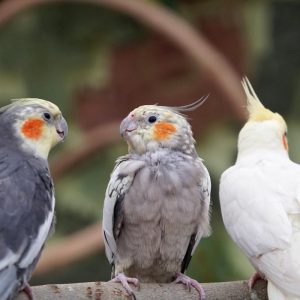
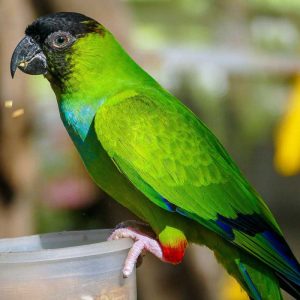
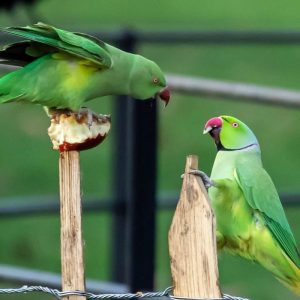
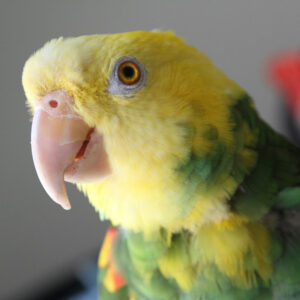

 Webinar: Ask The Vet: Q&A with Tom Tully, DVM, DABVP (Avian Practice), DECZM (Avian)
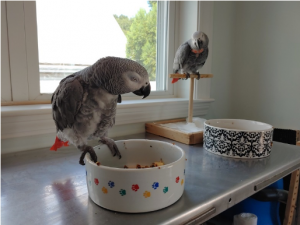
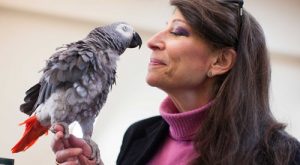 What: Fundraising Webinar to Help The Alex Foundation with Special Guest Dr. Irene Pepperberg
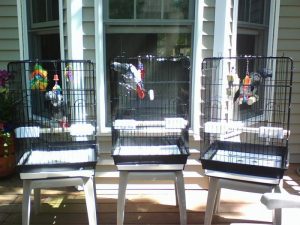
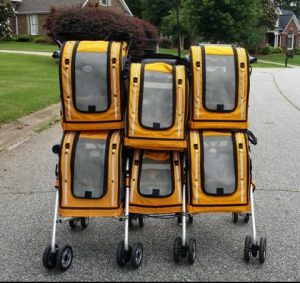
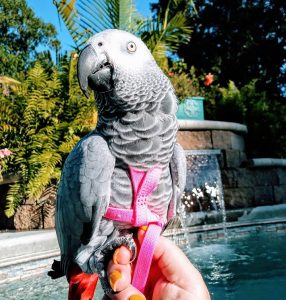
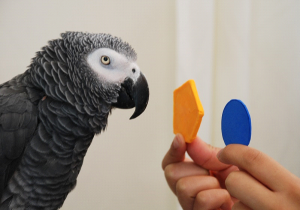
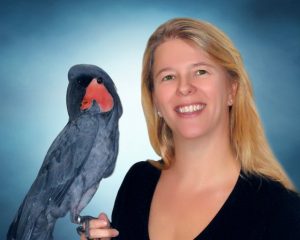
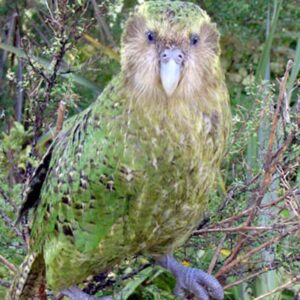
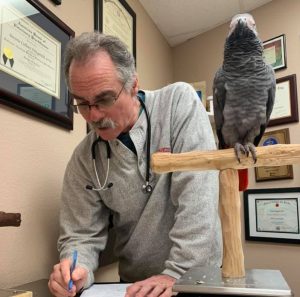
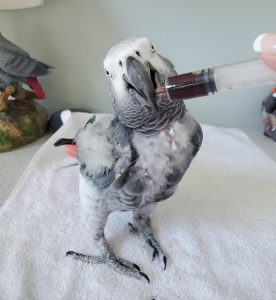

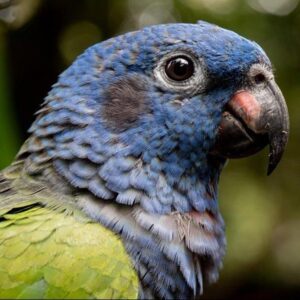
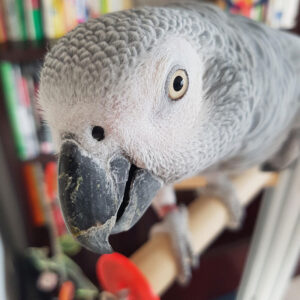
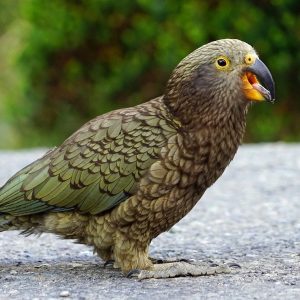
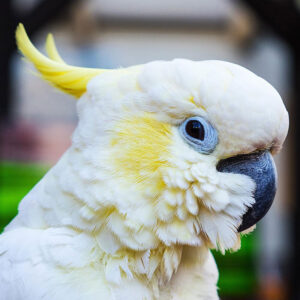

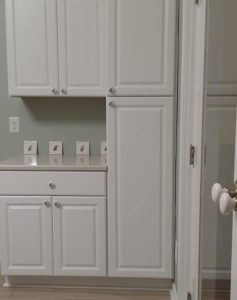

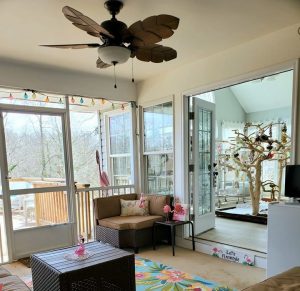
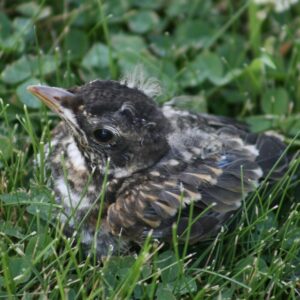
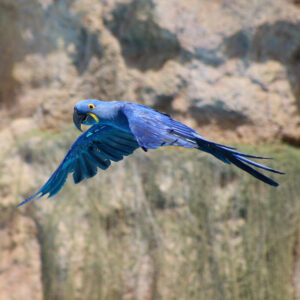

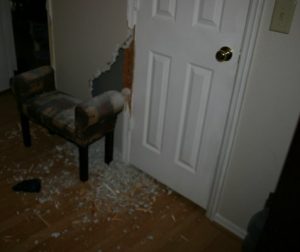
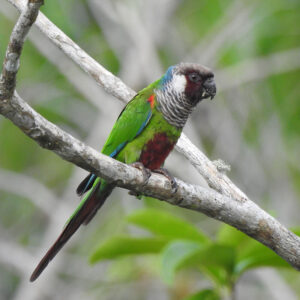
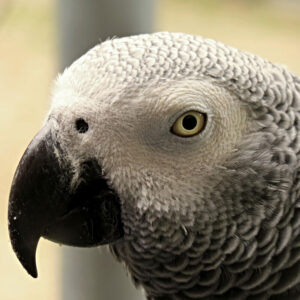
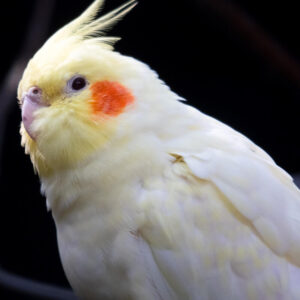
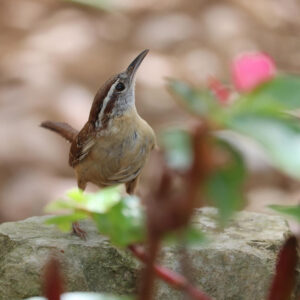
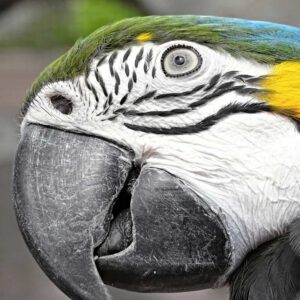
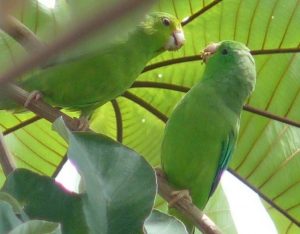
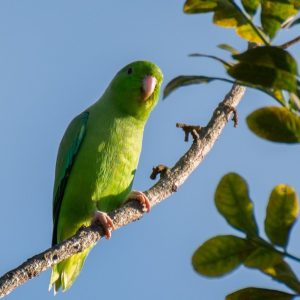
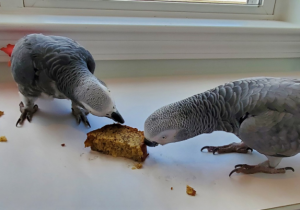
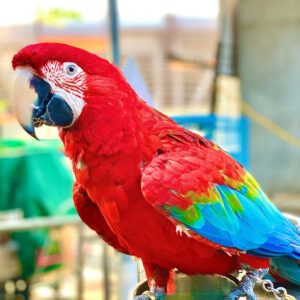
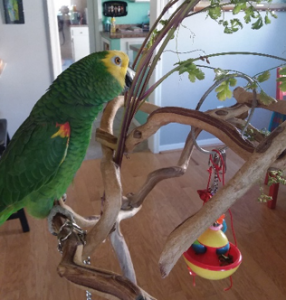
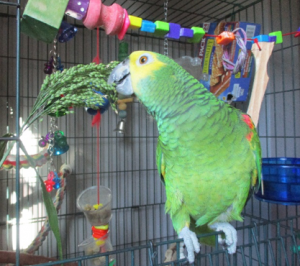

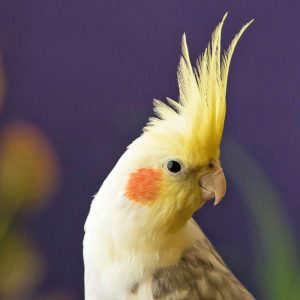
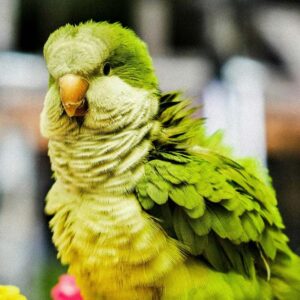
 Amp Up The Foraging Fun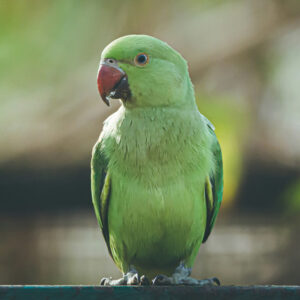
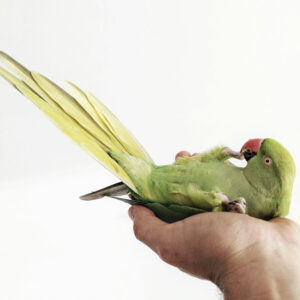
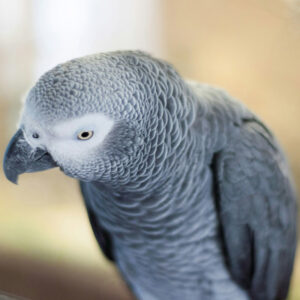
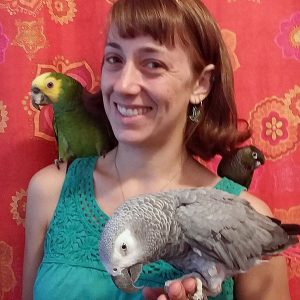
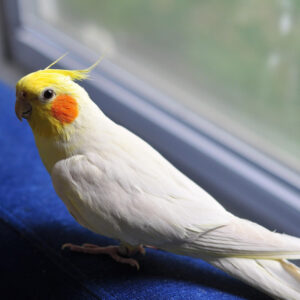
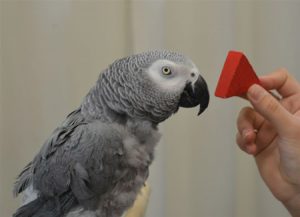
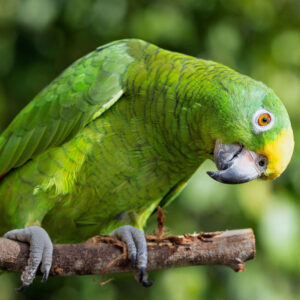



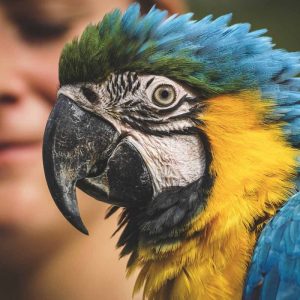



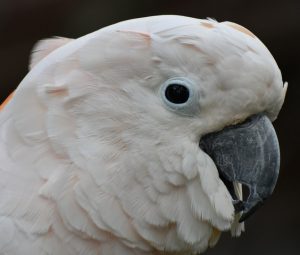
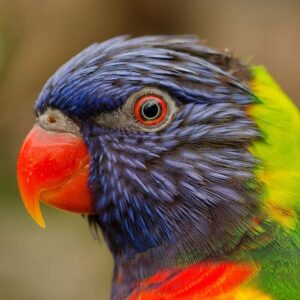
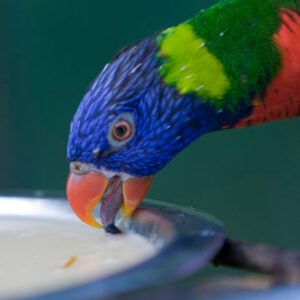

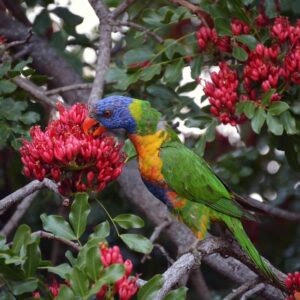
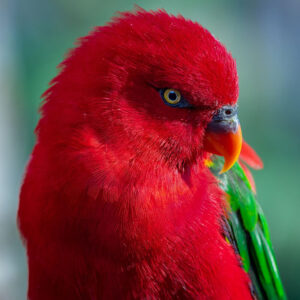
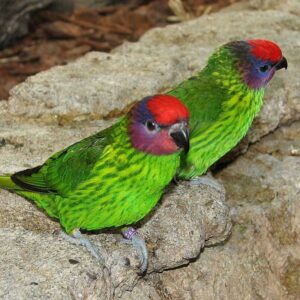
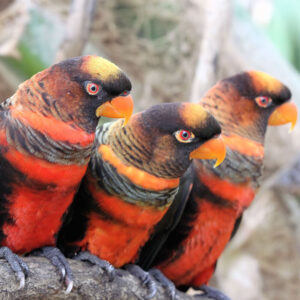
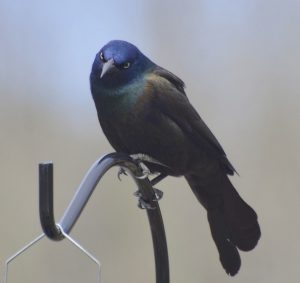
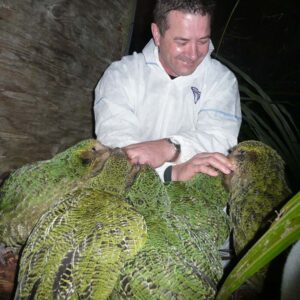
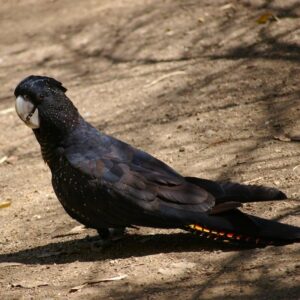
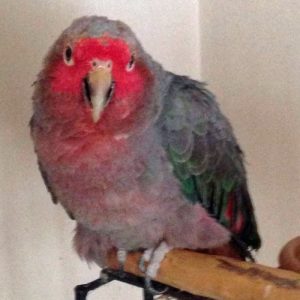
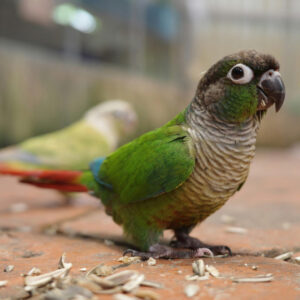
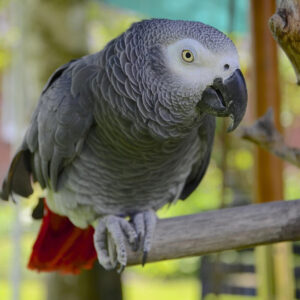
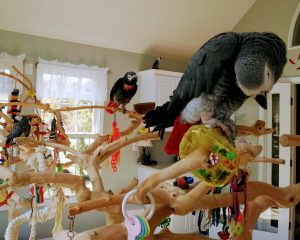
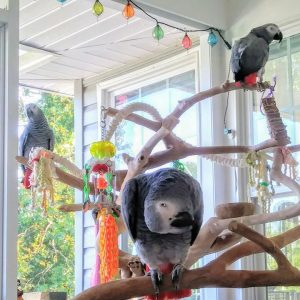
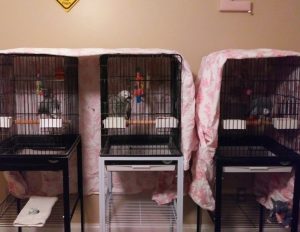
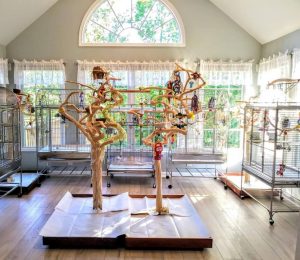
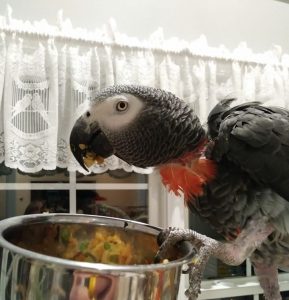
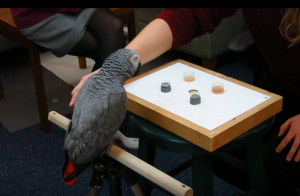
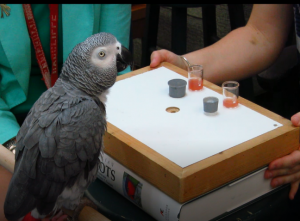
_-drinking.jpg)

.jpg)
.png)
_RWD2.jpg)
