If you are new to sharing your life with a feathered friend, get ready for a pet companion like no other. Not only can parrots fly and have the ability to mimic human speech and sounds, but they are also capable of some seemingly perplexing behaviors that don’t fit the typical dog or cat pet mold. Here are four parrot behaviors that bird stewards are likely to encounter that might seem baffling at first.
Birds make a variety of sounds — from chirps and whistles to squawks and, occasionally, ear-piercing screeches. There is one sound that stands out from the rest because it doesn’t sound quite like any other noise a bird makes. It is also the sound you should hope to hear — a soft grinding as your bird slides his/her upper jaw (maxilla) against his/her lower jaw (mandible). Beak grinding can sound like a repetitive scratching sound, similar to if you gently drag your fingernail back and forth across a tabletop.
Beak grinding is the parrot equivalent of a cat contently purring, and it goes hand-in-hand with the bird striking his/her most cozy pose: feathers slightly puffed in a relaxed state (or in the case of a cockatoo or cockatiel, feathers also fluffed partially over the beak). When might you hear your bird grinding his/her beak? Perhaps as a lead-in to taking a midday nap when all is quiet around the house or around bedtime as the bird starts to get sleepy.
You might spy your bird head bobbing and stretching out the neck, with the final result being some food (usually only partially digested) brought up into the beak and pushed onto a favorite toy or pumped into another bird’s beak. You might also find yourself the recipient of your bird’s special offering. Normal regurgitation is a bird’s way of saying, “You are special to me.” Birds feed their offspring by regurgitating food into their mouths, and a pair of birds will often show this behavior toward each other as a way of bonding. Since you and your bird can’t be mates, your best bet is to politely turn away from your bird’s attempts to woo you, as it can potentially lead to hormonal frustration in your bird.
The perfect playlist for a parrot strutting his stuff would include “Macho Man” by the Village People (just substitute “Bird” for “Man”). A parrot strutting is a sight to behold. The bird might waddle around with flared tail feathers and/or flip his wings dramatically, accompanied by eye pinning. When my double yellow-headed parrot displayed this behavior during his hormonal times of the year, I knew to move with caution. If I failed to heed his claim to the space around him, his strut could quickly turn into a sudden scurry with his beak ready to bite. Not all strutting parrots are being territorial. Some strut to woo a potential mate. Because the strut can also be a means to drive off a perceived rival, proceed with caution.
Some birds, especially cockatiels, have the peculiar habit of banging their beak against the floor, a mirror, or another object. This can be a rapid, tap, tap, tap or a hard thump. Don’t worry, your bird’s beak can take the beating. This is typically attributed to courtship behavior. Your bird might be showing off to another bird, to a favorite toy/object, or to you. He might also be practicing his moves.
The loss of an Eclectus parrot similar to this one was the inspiration to start the sanctuary. Photo Crisco 1492, CC BY-SA 4.0, via Wikimedia Commons
There are many interesting stories about proud owners of exotic birds who have lost a feathered friend for one sad reason or another. The stories intensify when we learn that because of a loss, a caregiver seeks to become a solution and a safe haven for other unfortunate large birds. Often this turns into lifelong commitments. These ideas generally turn into small but essential sanctuaries and proper care facilities for one of our most misunderstood realities when seeking exotic pets — a bird who could actually outlive their caregivers.
The Beginning Of PDS
In 2012, Monika Sangar purchased an Eclectus parrot. As a first-time caregiver, she learned how to care for her new parrot like most new owners do — by experience and by acquired help. Within six months the parrot, now named Prego, died from a neurological disorder. Sangar believed the parrot to be much younger than it likely was, but the bird’s age was likely misrepresented. With a wealth of accumulated knowledge sought out during the ordeal with Prego, Sangar decided to apply that knowledge in an effort to assist and help other parrots. In 2014, she opened the Prego Dalliance Sanctuary (PDS) with the acquisition of a rescued parrot named Pepper, who was completely plucked.
During the first year, PDS’ services researched more fully the plight of plucked birds. They examined and studied the diet, environment, and medical care that the troubled parrots received. They also explored holistic medical approaches in an effort to improve upon the health of afflicted parrots.
The Prego Dalliance Sanctuary Helps Parrots And Parronts
During the existence of Prego Dalliance Sanctuary, Sangar and her family have intervened and helped over 100 parrots from lives that might have been mired in pain and disruption. Instead, they’ve provided a loving home, good food, and medical care, all of which are largely dependent upon charitable donations to the service. Additionally, the family creates and sells a collection of enrichment and play toys via Etsy that also help in the needed payments for essential resources that look after the birds in their care.
Prego Dalliance Sanctuary is heavily involved in rescue and adoption, and even fostering services for their birds. They act as a center of information for “parronts” who adopt birds so people are never in the dark about any issues surrounding the bird in their care. Sangar offers this wise advice to potential bird owners: “I will never say, ‘Yes, adopt a parrot.’ They are exotic animals and, as such, need a lot of care. They are loud, destructive, emotional, and highly intelligent animals. You need to be a special type of person to be able to deal with all of that.”
Today, the Prego Dalliance Sanctuary, a small non-profit service located in Los Angeles, is a thriving sanctuary with about 20 birds within its walls. Those birds include Eclectus parrots, ring-necked parrots, and Alexandrine parrots.
In addition to its website, you can learn more about Prego Dalliance Sanctuary at their Facebook page, and their social bases on Instagram, Twitter, Pinterest, and a YouTube channel.
In today’s technological fields, advancements are being made faster than at any time during the history our species. Advancements in medicine, all forms of communications, and even gene-editing to move away from naturally occurring genetic defects have leap-frog events recorded in months and years rather than generational. These advancements not only benefit the human race, but can also be applied toward our fellow creatures on the earth. Some of these new discoveries include the possibility of bringing back extinct animals. With the right set of tools, such an ambitious endeavor could be realized in the near future. But first, a little history.
The Carolina Parakeet
The last verified Carolina parakeet died in February 1918 in the Cincinnati Zoo. Here is a Carolina parakeet (Conuropsis carolinensis ) on public display at the Field Museum of Natural History, Chicago. Photo by James St. John, CC BY 2.0 via Flickr
Parrots and other exotic birds are found in many locales. At one time, the United States was home to its own parrot species — one of two — that thrived within its borders. That bird was known as the Carolina parakeet. This bird was found as far north as New York, as far south as Florida, and as far west as Colorado. These beautiful birds eventually died out in captivity in 1918. For over a hundred years, America has been deprived of its own exotic bird species.
The Carolina parakeet was a small bird with a green body, a yellow head, and a red/orange face. For millions of years, these birds flocked throughout their adopted regions. As people began to colonize these regions, their interference in the habitats required for the Carolina parakeet began to contribute to the birds’ decline in population. Eventually, and for a variety of reasons, the bird was soon extinct, never to grace the skies of America again.
Recently, scientists involved in gene-mapping visited the closest living relative of the Carolina parakeet, the sun parakeet. The sun parakeet is found in the South American tropical regions. They are themselves considered a threatened species. More sun parakeets live in homes rather than the wild. Also known as the sun conure, this bird is the one that has yielded up its genome as a guide for the evolutionary biologists in mapping the genome of the extinct Carolina parakeet. With DNA extracted from a stuffed bird, the scientists completed their studies to learn how the US-based parakeet actually declined and died off.
Their studies showed that expected warning indicators in the constantly developing DNA of these birds did not create a pointing finger to the suspected cause. Instead, it only proved that the decimation was probably our fault. However, a good thing that came from this mapping is what it could mean for other bird populations that are declining. Biologists could test DNA of living birds in an attempt to detect possible warning signs of the reason for their declines. This could go a long way in trying to help the bird adapt, and thus prevent more extinction events.
In time, DNA extraction and genome mapping could become a boon. For now, such technology is a tool for better discoveries as we move toward a better tomorrow. Interestingly, the Carolina parakeet had an appetite for cockleburs. The common cocklebur is a plant that is toxic to animals — except for the Carolina parakeet, once upon a time. The consumption of the plant left the bird a toxic meal for predators. And yet, the native parakeet was immune. This same study provided the answer to the bird’s safe eating of the plant — two proteins that interacted with the poison to make the deadly plant safe.
Eventually, science might be able to create extraordinary avenues of protection from extinction, as well as the possible return of some desired creatures. Time will tell.
Dr. Pepperberg’s African greys Athena and Griffin. Courtesy of Dr. Irene Pepperberg
Parrots live in flocks—sometimes of several hundred birds, sometimes far fewer. As a prey animal, living in a flock provides protection. Partly, it is simply a matter of numbers—that is, the chance that any one bird has of being taken by a predator. It is also the case that one parrot in the wild is literally a dead bird—it cannot forage and look for predators simultaneously. Usually, one member of a flock acts as a sentinel while the others forage, and then they trade places. In nature, before mating, parrots have ‘buddies’, usually of the same sex, sometimes siblings, with whom they forage and engage in allopreening. The extent to which these non-breeding associations continue after birds form pair-bonds is unclear. So what is the importance of such behavior for a parrot in someone’s home?
Most parrots will try to adopt their human family as their flock, and that is why I tell people who have extremely busy lives, who are rarely home, that parrot ownership isn’t always a good idea. The analogy I give them is to think about putting an intelligent 5-yr-old child alone in a playpen for 8-10 hrs/day with a few snacks and some toys…it would be totally unacceptable. Many people then tell me that they will simply buy two parrots to keep each other company…which brings me to the topic of this entry…I then ask, “How close are you now to your college freshman roommate, a person who was picked for you?” And when someone says that the answer is to buy two birds from the same clutch, birds that are already familiar with one another, I ask “How happy would you be to share a house with one of your siblings in your face 24/7, 365?
I do know of many cases where parrots (of either the same or different species) have become good friends—they preen one another, they share food, they actively choose to be with one another. The opposite can also be true, however—two birds that truly don’t want to be near each other at all. The problem for human parrot owners is that we don’t know what is going to happen!
“The Best of Frenemies”
From my own experience, my Greys tend to be “frenemies”…they tolerate each other, but are hardly buddies. Alex didn’t much like Griffin from the start—the first time we introduced them, when Griffin was only a few weeks old and we thought that maybe Griffin would engender some parental behavior, Alex went for the jugular (literally)…we were quick to separate them. Over the years, Alex mercilessly dominated Griffin, constantly telling him to “Talk clearly!” or “Say better!”. If we asked Griffin to label a color, Alex would butt in and ask “What shape?” If Griffin didn’t answer a question immediately, Alex would answer and then demand a nut. They both completely ignored Kyaaro, who was perfectly ok with that arrangement. Kyaaro was ADHD, really was not doing well as a research bird, and we eventually arranged for him to live with a friend who already had two females Greys. (He is still there and seems quite content.)
When we moved the lab from Arizona to MIT, where Arthur was already in residence, the dynamics changed a bit. Although Griffin and Alex never began to like each other, they seemed to bond a bit over their mutual dislike of Arthur, whom they considered an interloper—a kind of “the enemy of my enemy is my friend” attitude. Interestingly, after Alex passed away, Griffin seemed quite depressed for months—it was very difficult to get him to do any research, or even talk. Arthur, in contrast, seemed to perk up a bit, and tried—totally unsuccessfully—to challenge Griffin for the dominant position.
When Arthur passed away, Griffin really seemed at a loss…he may not have liked Arthur very much, but now there was no feathered flock, only humans. Thus we had a lot of hope when we brought Athena into the lab. She was four months old and had been interacting a lot with the other baby Greys with whom she had been living. Athena definitely wanted to be with Griffin—she’d present her head for preening, she’d try to get as close to him as possible. He tolerated her, but mostly like a teenage boy whose mom had just brought home a new baby. If she got too close, Griffin would—very gently—whack her beak to push her away. At first, they seemed to want to share a food bowl when eating their cooked grains, but soon it became clear that Griffin was not happy with the arrangement. We then tried placing their bowls next to one another, which worked for a few months…Until we realized that Athena would eat for a few minutes, then drive Griffin off of his bowl. He’d move to hers. After another few minutes, she’d repeat the maneuver. Again Griff would accommodate her. And again and again she’d keep moving him around. After a few months, he refused to move, and that was the end of their sharing.
It’s very clear that the two of them now have figured out some kind of détente or maybe a frenemies situation. As long as they aren’t in beak range, they are very happy to sit on adjacent perches, preening themselves rather than each other. If one of them is removed from the lab for whatever reason, the other is visibly upset and calls. Their cages are close but not touching, and they spend some time, but not a lot, near each other. Maybe the fact that there is no male-male competition for dominance helps. I am not sure. But recently, Griffin seems to have started a bit of teasing. Last week, he picked up a piece of pasta from his bowl, and deliberately walked over to the edge of his cage that is nearest to Athena’s; to us it looked as though he wanted to give it to her. She looked up from her food bowl and quickly came over, reaching out to him—and then he deliberately ate the pasta while she watched!
My basic point is that one can never know what kind of dynamics will occur among or between parrots in a home. One cannot guarantee that any two parrots—much like any two randomly paired humans—will tolerate one another in close quarters, much less become good friends. We do, however, need to accommodate, in some way, our birds’ need for companionship, whether human or feathered, and thus think seriously about our choices with respect to pet ownership.
The hummingbird is a small bird, the smallest in the bird world. Contrast that with the usual size of an exotic bird and the difference is remarkable to say the least. Any investigation will promptly confirm the comparable sizes of the two. Most of us who visit any pet store with regularity can verify that the budgie, more commonly known as a parakeet, is an easily managed small bird from the parrot family. But amazingly, there is actually a parrot that is near the size of a hummingbird. This parrot is known as the buff-faced pygmy parrot.
The buff-faced pygmy parrot is approximately 3 inches long. With the more familiar parakeet (budgie) at around 7 inches long, this particular pygmy parrot is less than a parakeet’s average size by more than double. The pygmy parrot is found in the moist forested lowlands of New Guinea, located off the northeast tip of Australia. A little farther northeast is a large island known as New Britain that is also home to this small parrot. They are found nowhere else. These small but completely adorable birds are largely green but with some yellow in their plumage. The bird gets its name from the buff-coloration in the face and crown regions. Male and female parrots of this species differ only by the female possessing a more pale buff coloration. Amusingly, this bird is classified as Micropsitta, while its species name is Pusio, which translated from the Latin, means “little boy.” They weigh no more than a half-ounce.
Fortunately, these birds are listed by the IUCN (International Union for Conservation of Nature) with a Conservation Status of Least Concern. They are plentiful in their areas of the two islands they call home. Captivity does not seem to work well for pygmy parrots. Interestingly, they make for poor pets largely due to their unusual diet of fungi and lichens found in bark. They also feed on seeds, fruits, and insects. Past attempts to domesticate them have resulted in early deaths of the birds. Breeding efforts have met with equal results. The lifespan of the bird has not been determined. The buff-faced pygmy parrot is a fast bird and enjoys hanging out with others of their kind.
Getting back to the smaller hummingbird, the smallest of those is called the bee hummingbird. They are found only in Cuba and measure in at approximately two and a quarter-inch in height, with a weight of only 0.056 ounces. This bird is the reigning champ in the uncontestable Guinness Book of World Records as the World’s smallest bird in existence. According to the Records book, this weight is considered the lowest for any warm-blooded animal.
You’ve always wanted a parrot, and sometime during your life together you are confronted with something that you don’t quite understand or may be causing a problem. You want to get to the bottom of the behavior and work on it so it does not become a larger issue that can affect everyone around. But where do you turn? How do you know you are getting sound advice? Do you know if the advice you are given will help and not hurt your relationship? In case you have not heard, there are people who can help — we are called certified parrot behavior consultants.
Understanding The Roots Of Bird Behavior
For nearly 30 years, I have been helping people and their parrots to live in harmony. I first started to work with behavior and be cognitive of birds’ body language when I was helping find homes for parrots back in the early ’90s with my bird club. The birds needing homes back then were often wild-caught, imported adults that were scared, confused, and rightfully afraid of humans. It’s was a completely different scenario and level of fear than what we see today.
Fast forward to now. We see many adolescent birds that were purchased on impulse or an older bird that has reached sexual maturity and owners who were unaware that mating behavior could even happen in their single-bird home. Just because we chose to take a bird out of the wild, does not mean we have extinguished the bird’s natural behaviors. For the most part, we should not try to.
A pet parrot should be able to vocalize, destroy things, forage, and, with diligent supervision, fly. These all are natural behaviors for a parrot.
Being denied these natural behaviors can lead to undesirable behaviors such as screaming, feather plucking, and biting. What we need to do as bird stewards is learn how to incorporate (and make safe) these behaviors in order to live in harmony with our feathered companions.
My Path To Greater Knowledge About Birds
As the need for help grew due to the popularity of parrots as pets, I wanted to become part of an organization that would foster my growth as a consultant and elevate my education. I wanted more than to take a quick course and be handed a certificate of completion. I wanted to be able to learn and consult with those who came before me in the field of behavior. I welcomed the mentorship and took my role as a student seriously. I applied to join the International Association of Animal Behavior Consultants (IAABC).
My application was not simply a pay and join. I wanted to prove my knowledge and work my way up that certified ladder. The application was extensive in regard to my history and also required recommendations from a colleague, a client, and a veterinarian. I had three of each. Accompanying the application was every class, lecture, and continuing education event I had attended since 1991. My application packet was close to 20 pages long. Once submitted, it was peer-reviewed, and I was accepted to join in 2009. I was thrilled to be mentored by many of the great people whom I had grown to know through books, magazines, and lectures from my younger days.
Through the years I have been fortunate to live with various species of parrots. They have been great teachers, and I have learned a tremendous amount from them. Besides the science of behavior, I also believe that personal familiarization of caring for a species can guide you to help a client even more. I am known for my knowledge (and love) of the African grey parrot, but I have also lived with Amazons and cockatiels for over two and a half decades. Three very different species with specific behaviors from their parts of the world.
Which Consultant Is Best For You?
Every associate/certified consultant with the IAABC wants your relationship with your parrot to succeed. We have studied tirelessly, some for decades, to help you with your specific needs. We want you to understand your bird, diminish any problems and keep them in your home. We all want you to be able to live in harmony. Your first steps, should you need them, to achieve this is to:
Acknowledge the problem.
Begin your research.
Consult with a certified behaviorist at the IAABC who can help you.
1. Assessment Skills
2. General Knowledge and Application of Learning Science
3. Species-Specific Knowledge
4. Consulting Skills
5. General Knowledge of Animal Behavior
6. Biological Sciences as Related to Animal Behavior
7. Ethics
Core competency is defined by Dictionary.com as “a skill needed in order to be successful at a job or other activity.” Success as an animal behavior consultant depends on the ability of the consultant to accurately assess the function of an animal’s behavior, and implement effective behavior modification strategies in agreement with a Least-Intrusive, Minimally Aversive approach. Animal behavior consultants also should maintain a working knowledge of biology as it relates to animal behavior, an understanding of consulting and behavior change program management, and ethics as it relates to both animal behavior and human learning.
1) ASSESSMENT SKILLS
A. History taking skills and history assessment
1. Eliciting accurate information
2. Interpretation of information provided
3. Assessing owner interpretation of behavioral issues
B. Behavioral observation skills
1. Accurate observation and interpretation of behaviors demonstrated by the animal
2. Ability to integrate information obtained by direct observation of the animal and the humans involved
C. Apply and integrate any additional behavioral, historical, medical, and physiologic information.
1. Critically evaluate the quality of this information.
2. Act appropriately to remedy any areas of concern
2) GENERAL KNOWLEDGE AND APPLICATION OF LEARNING SCIENCE
C. Evaluation of scientific information and data analysis
• Ability to apply scientific data to behavior modification plans
• Ability to collect and utilize related data to monitor progress and improve outcome
• Ability to apply fundamental concepts of applied behavior analysis in developing and implementing a behavior modification/training plans.
D. Intervention Strategies
• Management and safety interventions
• Behavior modification strategies
• Knowledge and appropriate use of training equipment
• Ability to apply scientific data and learning theory principles to treatment strategies
3) SPECIES-SPECIFIC KNOWLEDGE
• Exercise and housing requirements
• Nutrition and diet fundamentals for the species
• Common health issues
• Species- and breed-specific anatomy, behavior, nutritional requirements
• Developmental stages
• Basic neuroscience and endocrinology as they relate to behavior
• Communication behaviors
• Interpretation of body language
• Environmental enrichment
• Behavior issues:
A. Awareness and evaluation of environment, and awareness of effect on animal and human client behavior
B. Ability to assess human interactions with and emotional sensitivities about the animal without judgment
C. Ability to assess how these impact the animal’s behavior
D. Ability to assess family’s goals
E. Observation and interpretation: Understanding of human behaviors
F. Awareness and ability to adapt to human learning needs and styles
G. Ability to develop solutions that function for all members of the animal’s community
H. Ability to assist family members in resolution of conflict to arrive at a common goal
I. Awareness of ancillary support services
J. Critically evaluate issues concerning complementary and alternative approaches or products
K. Understand important principles in cognitive psychology, including education, learning styles, perception, and attention
5) GENERAL KNOWLEDGE OF ANIMAL BEHAVIOR
A. Ethology
B. Communication behaviors
C. Genetics
D. The key ethological, psychological, and physiological concepts that underpin animal welfare.
6) BIOLOGICAL SCIENCES AS RELATED TO ANIMAL BEHAVIOR CONSULTING
A. Basic gross anatomy and organ systems
B. Basic neuroanatomy and neurobiology (as relates to behavioral assessments)
C. The functional anatomy and physiology of the vertebrate nervous and endocrine systems and their role in mediating behavior
D. The concept of neural plasticity, and how a learner’s genetic makeup and environment can affect their brain’s ability to learn
E. Psychopharmacology and the mode of action of the major classes of drugs used in clinical animal behavior
7) ETHICS
A. Understand the key ethical and legal issues and responsibilities related to working with human clients and their animals
B. Understand and abide by the Code of Ethics laid out in the Joint Standards of Practice; keep up to date with any updates and changes to these.
C. Understand the process of filing ethics complaints and the scope of sanctions that certifying organizations can use
Humans are faced with a long list of everyday things that can lead to an overstimulated state of being. Often, these events result in a wide variety of unwanted feelings and anxieties. We are complex beings and, therefore, fall into complex situations. Our bird companions can become overstimulated, too. And as with people, a collection of unwanted and stressful results can lead to lead to overstimulation in our exotic birds and other pets.
Defining Overstimulation
What is overstimulation? In essence, it is the aftereffect of outside, often unavoidable, contact with sounds, experiences, and unnecessary contact. For human adults, that can be something simple like a loud party with a lot of people, tense moments from work situations, the inability to accomplish something, and many other issues too numerous to list. For babies, it’s over-handling, or an abundance of noise and unfamiliarity. Birds are just as easily impacted by overstimulation. Some handle it well, but others exhibit variable reactions to an environment that is stressful to them.
Overstimulation of birds can be brought on by over-activity in the home. As with children and adults, noise sensitivity can be bothersome to a bird. This might include loud music, children roughhousing near a cage or in the general proximity, or television. Shows with loud, disrupting sounds like gunfire, screaming, etc. that might not bother you could be a source of disquiet for your bird. In fact, if your home is typically quiet, any extreme sound could be upsetting.
Disrupted routines can also be a source of disturbance for a bird. If a bird is cared for by someone else while the usual caregiver vacations or a bird is rehomed for any reason, the change can be terribly upsetting for a bird and lead directly to potentially problematic behavior.
Recognizing Overstimulation
The results of overstimulation in birds can be recognized in many ways. Plucking their feathers, sometimes to concerning levels, hard biting, excessive wing flapping, and screeching for what seems like no reason are all visual and auditory signs that a bird might be feeling stressed. Plucking is an extreme behavior and could be a result of more than just overstimulation. In cases of feather picking/feather plucking, a veterinarian must be consulted to rule out disease, parasites, allergies, infections, and other potential underlying health issues.
Get To The Bottom Of It
Should your bird begin to show results of overstimulation, a checklist can help you to begin to resolve problems. If the stimulation came by way of children being too curious around the bird or too noisy in general, and the bird quiets down after company leaves, then the solution was easily discovered and should be noted. If a bird is in normal conditions and develops overstimulated behavior, then the best thing to do is begin a systematic approach in attempts to arrive at a conclusion. While not all occurrences arrive at fast and sure solutions, it is important that you attend to your bird’s discomfort in a quick manner.
Our exotic bird pets live extraordinarily long lives. They feel life intensely, just like we do.
In a previous blog, I mentioned all of our visits to the vet for Athena. Just to let everyone know, she’s doing really well. The dermatitis on her wing has healed and the feathers are growing back, though she’ll have her collar on for a bit longer to ensure that she doesn’t inflict any damage by over-preening the still-sensitive tissue. The events of the past month, however, have made me think in general about our trips for medical services.
I want to make it very clear that I believe that every parrot needs an annual “well-birdie” checkup, just as humans need their annual physical. In the case of elderly birds, one might even think about semi-annual visits. The reason is simple: Parrots try to hide any evidence of illness, and by the time we see the signs, the bird is likely very ill. Checkups can catch problems early when they are much more easily and successfully treated.
But why do our parrots act to hide disease? In nature, a sick parrot is shunned by the rest of the flock — it could infect the others, could attract a predator, or not be able to do a good job when it is time to take its turn as a sentinel for danger. And a shunned bird, separated from the protection of the flock, does not have much of a chance at survival. Hence their actions. It’s important for owners to understand that this ingrained behavior pattern of hiding sickness doesn’t change just because our birds are in captivity. (Remember, they are only one or two generations removed from the wild!)
Of course, our birds enjoy their vet visits about as much as we enjoy our checkups — who likes to be poked, prodded, have blood drawn, and intimate cavities explored? And despite their great intelligence, our birds are like pediatric patients. We can talk to them in soothing voices, and veterinarians can learn many techniques to make the visits less stressful, but there really is no way to explain to a parrot that what is happening is just a brief nasty interlude and that life will return to normal very soon. No matter what I’ve tried, none of my birds have ever been very happy about their visits.
Greys “Vocal” About Their Vet Visits
Alex developed a particularly strong dislike of anything having to do with medical procedures. This was because his bout of aspergillosis was so severe it required extended boarding while he was being treated. One of the vets treating Alex at the time said that he was the most difficult patient they had ever had in terms of his ability to squirm free of any attempts at restraint! He was more of a growler than a shrieker when being treated, but definitely was not a model patient.
For example, he’d spend the entire time he was confined to a nebulizer chamber demanding that someone “Come here!” or “Pay attention” or requesting to “Go shoulder!” or “Go gym!” This was better than shrieking, but not by much. My current veterinarian would look forward to the end of Alex’s visits. She’d put his carrier on the examination table and wait to be amused by his actions: He’d strut into the carrier, turn, slam the door tightly behind him, then in a very loud voice exclaim, “WANNA GO BACK!”
Griffin isn’t much better. His shrieks are so intense that one time Athena, who was waiting for her turn, was so stressed that she had a seizure. [Of course, if that occurs, the vet’s office is the best place for it to happen!] Not fun. My vet likes to give the birds a treat after their checkup — like the doctor who gives lollipops after an injection. But Griffin will not be bought off. He takes whatever she hands out and very deftly throws it back at her! Griffin’s visits are also complicated by the fact that he often gets car sick — particularly if we are in stop-and-go traffic, which in Boston is almost a given.
In fact, Griffin is so unnerved by his veterinary visits that he has made the association between the words “vet” and “veterinarian” and what happens to him to the extent that he starts acting really nervous whenever he hears those words. He even learned to add our veterinarian’s name into that mix! We now have to call her “she who must not be named.” We think that the string of sounds is too complicated for him to make the necessary association — at least for now!
Athena hadn’t been too difficult until this last round. She wasn’t happy, but standard examinations didn’t upset her all that much, as they were part of her life from the time she was a chick. [Another reason to start early and keep those visits on schedule!] The frequency and intensity of visits these past few weeks has, however, made her much less amenable. Fingers crossed that she eventually reverts to her earlier behavior.
Hopefully, sharing my experiences will make owners realize that although a visit to the vet might be a somewhat trying time, these visits are critical for a parrot’s health and well-being, and must be scheduled with appropriate frequency. Although the hope is that a parrot won’t be all that stressed by the appointment, owners should NOT be discouraged if there is a certain amount of negative behavior. Just remember how a toddler reacts to being at the pediatrician’s office (particularly if a shot is involved!), and that even birds who can express their needs and wants in plain English often use that ability complain loudly!
With so many birds falling prey to a variety of external threats that make it difficult to nest and breed, it’s no wonder that many of them inevitably end up on an endangered list. A sobering fact hit the news not long ago about a near 30% loss of North American birds since 1970. However, with every bird that makes an endangered list, there is a multitude of conservation efforts to save such birds from going extinct. Some have been successful. The California condor is having a resurgence of population that promises to delist the bird in the future if it continues to positively respond to efforts. The Kakapo parrot has rebounded from near extinction. Another developing success story is that of the Kirtland’s warbler.
The Kirtland’s warbler is so named because of its identification by Dr. Jared Kirtland in 1851. Eventually, more was discovered about the elusive bird and where it nested after the turn of the 20th century. However, by 1967, due to ongoing destruction of the bird’s forest habitats and the unfortunate interaction with the brown-headed cowbird, the Kirtland’s warbler population declined seriously. By 1973, the bird was designated as an endangered species, with only about 200 pairs left. Today, there are more than 2,300 pairs, made possible by the combined efforts of the Endangered Species List and efforts by conservation teams.
An Ally In Nest Wars
The U.S. Fish and Wildlife Service, and the Michigan Audubon Society (and other important and noteworthy agencies) worked to help eliminate an overwhelming cowbird threat by controlling all cowbird actions from the areas needed to sustain and encourage the Kirtland’s warbler’s continued existence. It was the female cowbird’s innate intent to steal established nesting from the warbler by laying their own eggs in the warbler’s nest and destroying warbler eggs in the process. The Kirtland’s warbler was unable to develop defenses to this “nest parasitism” as had other species, and consistently lost young hatchlings to the aggressive practice.
The conservation effort, termed the Kirtland’s Warbler Recovery Team, set aside a massive 190,000 acres of Michigan forestry specifically for the bird. Of that number, a total of 38,000 acres must be consistently recreated to appeal to the bird. The warbler cannot nest in forests older than 22 years, which necessitates that departments clear out 4,000 acres yearly and replace with 2-year-old jack pine trees to eventually become home to the bird.
The Kirtland’s warbler is a migratory bird (considered one of America’s rarest migratory birds still). They are found in the Upper and Lower Peninsula areas, with some now found in Wisconsin and Canada. In migration, the birds (sensibly) fly to the Bahamas to winter. The bird is even properly observed and cared for in the Bahamas during their stay. These beautifully colored birds are approximately 6 inches in height.
Today, the Kirtland’s warbler is now delisted as endangered but is cautiously listed as Near Threatened. If left alone, the cowbird could regain control of warbler nests and once again encourage the reduction in warbler population leading to probable extinction.
This is positive news in a world often beset by declining populations in all things. It shows that with proper dedication, we as conservators can help to retain the world as we know it for future generations.
When we think of parrots foraging for food in the wild, we imagine them flying or walking about to feast on seeds, buds, seedlings, berries, flower blossoms, and perhaps consuming the occasional insect. What doesn’t usually come to mind is a bird supplementing its diet by feasting on mammals (unless, of course, it is a bird of prey, such as an owl, hawk or eagle). Then again, Kea parrots are unique among parrots in many ways.
Their nickname as the “naughty alpine parrot” is quite telling. The “alpine” part is in reference to the Kea’s native range of the forested and alpine region of New Zealand’s South Island, which makes the Kea the only mountain parrot. The “naughty” part references the Kea’s well-documented explorative nature, that often includes fearless encounters with people. The bird is also referred to as the “clown of the mountains,” and has become its own tourist attraction.
These mostly olive-green parrots with splashes of bright orange feathers under the wings, have long, narrow, curved beaks that seems ideal for picking things apart. Videos and photos abound online that show Keas rummaging through tourists’ backpacks, bags, coolers, shoes, and ski equipment. They also appear to have a penchant for picking apart and stripping off the rubber areas of cars, such as around the windows, and antennas as if cars were chew toys.
Parrots that Prey on Sheep!
The Kea has been part of local lore since the mid-1860s when sheep farmers began inhabiting the area. Stories of farmers finding sheep with wounds on their sides began to emerge. Some told of seeing keas on sheeps’ backs and attacking them. Whether or not Keas were actually attacking sheep was up for debate, that is, until 1992. That’s when Keas’ nocturnal assaults were captured on video. Scientists believe that, some but not all, Kea parrots use their long, curved beaks and claws to tear through the wool and eat fat from a sheep’s back. The kea might be inclined to seek sources of fat to help them survive their cold climate. The bird doesn’t kill the sheep but there is the possibility that the sheep could succumb infection as a result of its injury.
Keas are a protected species, but it is said that they were rarely captured in the wild for the pet trade—they tended to be highly destructive when in captivity.
I’ve already written about the move to our temporary summer quarters in 2019, high up in a building with amazing views of the Boston skyline. But it also offers views of less positive items — that is, hawk fly-bys and thunderstorms that initially caused Griffin and Athena some stress. Happily, they adjusted quite well over time. By the end of the summer, they actively wanted to be by the windows. We didn’t expect any other consequences of the move, but, well, sometimes things just happen.
The Normal Environment For Good Health
To explain what transpired, I first have to describe a bit more about our permanent basement quarters. In addition to the full-spectrum lights that provide an appropriate visual environment, we’ve invested in some other fancy equipment to keep the birds healthy. Having dealt with aspergillosis in the past, we have an extremely high-grade air filtration system. It removes most of the impurities and allergens that could be harmful to our birds’ respiratory system. We also monitor the humidity. African grey parrots live in equatorial Africa, and thus are used to moderately moist conditions. We, therefore, have a very elaborate cold-mist humidifier that uses water that we purify ourselves so that there are no particulates that could be sent into the air. (NB: We don’t use that water for drinking, as it lacks things such as calcium and fluoride that are important for the birds’ health.)
The humidifier is disinfected on a regular basis. We also shower the birds each day, and occasionally they decide to soak themselves in their water dishes (these are big dog bowls, so there’s lots of room), which also helps with humidity. We remove our outdoor shoes and use liberal amounts of hand sanitizer when we enter the premises. Cages are constantly being scrubbed and cage liners are changed twice per day, and our vacuum cleaner has a HEPA filter. The lab isn’t a germ-free environment by any means, but we do try to keep it as clean and healthful as possible.
A Reaction To Humidity Change?
We maintained our protocols during the move, but the temporary summer quarters lacked much of our fancy equipment. It was at least twice the size of our permanent space. Neither our air filter nor our humidifier would have done an adequate job, as they simply were not designed for that amount of square footage. Plus, we were supposed to be in place only for about two-and-a-half months. Nothing untoward had happened the last time we spent that much amount of time upstairs, so we weren’t overly concerned.
This time, however, the two-and-a-half months stretched to four. September was an unusually dry month. We weren’t back in place before classes started. In the schedule upheaval that always occurs during turnover between summer and fall research assistants and the confusion about exactly when we were to move, somehow the daily showers decreased to just a few per week with no one quite realizing what had happened. Then, one morning, my lab manager began the day to find that Athena had some blood on one side of her body. Close inspection showed that she had removed all her small underwing feathers, breaking a blood feather in the process. We were really concerned.
An emergency trip to the veterinarian resulted in a diagnosis of dermatitis and an infection. Argh! We were assured that what had happened was actually not that uncommon in African greys when humidity levels change, and that a course of antibiotics and the application of some special cream would do the trick. Unfortunately, Athena reacted poorly to the cream and plucked out all the feathers on the side of her body just under that wing. This led to another emergency trip to the veterinarian.
The Challenges Of Athena’s Treatment
We were told to extend the course of antibiotics, a different cream was suggested, and Athena came back with a soft white collar that was supposed to keep her from plucking. The collar barely stayed intact through the hour-long ride back to the lab. For a while, we were able to keep her distracted during the day, but she seemed to be spending nights messing with her wing instead of sleeping. Thus, our young bird, who never seemed to have an “off-switch,” was napping a lot during sessions. The area under her wing wasn’t improving.
So, we purchased a sturdier collar — a rather attractive, small felt one. Athena did look rather cute (see image), and seemed to tolerate it. But the wing area, although not looking worse, was still not looking better. And she figured out how to remove the collar. Another trip to the veterinarian, and Athena came back with a bandaged wing and some serious neckware. She will have bi-weekly trips to the veterinarian until she is healed. Interestingly, she still seems interested in sessions…maybe they are a pleasant distraction? We have our fingers crossed that all will be well before too long.
Stay Alert For Health Issues When Any Changes Occur
Thankfully, this problem isn’t among the most serious, but it has increased our awareness of just how sensitive these birds can be. The moral of the story, therefore, is to be aware of how any changes in a parrot’s environment can affect its health. In our case, it was a confluence of several small things that added up, none of which by themselves would have been of note or likely have caused the problem. And whatever happened affected only one bird. Griffin took all these changes in stride, so possibly Athena was just super-sensitive. Be that as it may, whenever you make ANY change — or are forced to make one — keep an eye out for all possible effects and check every bird in your aviary — and keep checking! Sometimes things just happen.
Nothing brightens a face more than to watch a brilliantly colored bird of any kind do what beautiful birds naturally do — flying, flexing wingspans, singing and talking, feeding, and a myriad of other bird-centric things. Birds of all kinds are fascinating in so many different ways. But what makes each species stand out from other birds is their uniqueness in both looks and colors.
Often, birds have splashes of coloration that draw your attention. Sometimes, however, it is their reduction of many colors into those of just a few brilliant ones that give them a special appeal. One bird known to be mostly white is a cockatoo, but they are not always white. Some are typified by their standout, singular colors. One such bird is the rose-breasted cockatoo, or galah. With their vibrant pink and gray colors, they are easily “ooh”-inspiring and appealing to the first-time viewer.
Galah Cockatoo Facts
The galah (Eolophus roseicapilla) is found in most of Australia. In conservation status designation, they are considered to be of “least concern.” And as any inhabitant of Australia could tell you — or any visitor for that matter — the galah cockatoo in the wild is a sight never too far away. It is a bird that weighs approximately 12 ounces, and about 12 inches or slightly more in height. Interestingly, not only are these birds found in exotic Australian locations, they seem to be just as comfortable in urbanized areas. The aboriginal term “galah” was supplied to the bird with the meaning of “clown” and “fool,” even “idiot.” But a pink cockatoo is far from an “idiot.”
Intelligent, Social, And Hardy
The stunningly beautiful galah is considered quite intelligent and can learn to mimic a wide range of sounds and vocabulary. In captivity, they are in need of constant attention as they are a highly socialized bird that thrives in flocks. With that, they require a steward who is wholly dedicated and understanding of their nature. As discovered by their easy interaction in urban settings, a galah is not afraid of humans. They are also considered a parrot with strong resistance to things that might normally impact another kind of exotic bird. This hardy nature contributes to their natural ability to survive in many settings. The general life span of a rose-breasted cockatoo is around 40 years. In captivity, they could live to 70.
Dangers In The Wild
Not every person is fond of these gorgeous birds. There are actually some who term the galah cockatoo in the wild as a pest. They are attracted to crops and will choose them as a source of food. Farmers become frustrated and find it difficult to deal properly with galahs in the wild. They have a tendency to claim ownership of things like livestock watering containers. Often, hundreds can descend on important crops and create terrible losses for farmers. This can have catastrophic effect on not only the crops but the birds as well. Farmers will, and often do, resort to many inhumane means to protect their crops.
With their beautiful pink crests and their vibrant pink chests and faces accenting their gray wings, the galah makes a beautiful pet with a world of possibilities for friendship, adopted tricks, a full vocabulary, and love. If given the proper settings, a pink cockatoo can become a lifelong companion.
Consider adding “birds” to your Google News alert topics. Doing so might just lead you to some fascinating finds. Here are some recent “birds in the news” stories worth checking out:
The myth that male birds have the most to gain by seeking out as many mates as possible is debunked. Learn why they instead opt to impress the bird they’re with.
Think beak shape has everything to do with what a bird eats? See why that might not exactly be the case.
Patches rich in plant life dot the otherwise arid landscape of Peru. See how scientists were able to connect these little oases to burrowing birds.
For birds such as zebra finches, the male’s “wining and dining” of the female carries on after mating. A new study shows that the males of species that form long-lasting pair-bonds often continue to make elaborate displays of plumage, colors, and dances after mating with a female. Some might think that their time and energy could be better spent taking care of the resulting offspring, but it turns out that these displays encourage the female to invest more of her energy into the brood. Here’s the study that debunks theories of sexual selection that predict males have the most to gain by seeking out as many mates as possible. Many male birds, in fact, continue to “woo’ their mates well after the honeymoon period is over.
Think a bird’s beak shape is strictly influenced by the types of food it consumes? A main theory of evolution by natural selection was previously based on the observation that Galapagos finch species had different beak shapes to obtain different foods, and so it was assumed that this form-meets-function relationship held true for all bird species. New research suggests that the connection between beak shapes and eating is more complex than previously thought. An international team of scientists from the United Kingdom, Spain and the United States used computational and mathematical techniques to better understand the connection between beak shapes and functions in living birds.
There’s a reason birds are messy eaters. Case in point is the arid deserts of coastal Peru, where tiny patches rich in plant life dot the landscape. A study on nest-digging birds shows that mounds of sand they dig out can create a micro-habitat for seeds to germinate.
Sulphur-crested cockatoos are native to Australia and can be seen in the wild. Photo by Kelli McClintock/Unsplash
Violence is never a welcome topic of discussion. However, when one of our great birds survives nearly impossible odds after experiencing violence, then someone has to tip a hat to the survivor. In this case, it is a sulphur-crested cockatoo now named Mr. Cocky due to his survival strength and resilience after being shot five times with an air rifle. And not just one rifle — Mr. Cocky was attacked by two different rifles and lived to tell us about it.
Mr. Cocky, who lives in Sydney, Australia, was taken to a local Avian, Reptile, & Exotic Pet Hospital (AREPH) in the city by a good person who found the injured bird in a backyard. (Sulphur-crested cockatoos are native to Australia and can be found in large numbers in some areas in the wild.) The exotic bird was experiencing extreme difficulty moving his wing.
Radiographs were taken, and the hospital surgeons were surprised to find five lead bullets lodged deeply within the bird. One was a horrifying head shot lodged about a tenth of an inch from the cockatoo’s eye. Mr. Cocky was also shot in the shoulder of his left wing. The other three bullets lodged within the bird’s chest. After extensive tests, it was determined to not attempt any removal of the bullets as the trauma might be detrimental to the bird’s already reduced health. It was determined that the bullets would not impact his quality of life.
The hospital’s medical staff opted to use physiotherapy to rehabilitate and bring full movement back to the bird’s left wing. The hope is that Mr. Cocky responds positively to the non-surgical therapy and will be able to return to the wild without complications.
‘Too Tough
The staff at the hospital mentioned that Mr. Cocky is a rare creature who would otherwise have died from the assault. Not only did Mr. Cocky survive five pellets, with one to the head, but he did it with such verve that he even survived an evaluation by the hospital that decides the course of medical action by a “triage.” This triage decides the possibility of a creature’s ability to safely return to the wild. If the injuries are found to be such that a return is impossible, then it is euthanized. Mr. Cocky defied all the cards that were dealt to him and should be able to resume a normal life.
Fortunately, this hostility is a crime under the Biodiversity Conservation Act of 2016. Under the important multi-part protection, this shooting could net the perpetrators of this vicious and terrible crime a jail sentence of up to 2 to 5 years and a hefty fine of up to $22,000 dollars, and potentially more. It is hoped they become identified and face the full penalty of the law.
We’re immensely proud of Mr. Cocky and his will to live. Hang in there, big guy!
I have had the pleasure of caring for different species of parrots from a young age. Some, as society would call them, perfect and some with special needs. The best way to learn how to care for a special-needs bird is to surround yourself with people who also care for these perfect creatures to learn and share with each other. While some may not be up to the task, others have opened their hearts and homes to birds who have needed it.
Cricket And Oscar
I was fortunate to be one of the first people in New Jersey to care for a white-faced cockatiel (a unique color mutation back then). A friend of mine owned a store that I would frequent and knew that they were ready to get some babies in. I put a deposit down on an egg. I would go in and check on chick regularly. We noticed that the chick did not seem to use her feet correctly. On further inspection, we discovered that her legs seemed to be fused and she did not have use of her toes. She scooted around on her ankles. The pet store asked me if I wanted to pick out another bird, and I said absolutely not and I took little Cricket home. She started me on the road to helping other birds that might otherwise be considered society’s castaways.
Cricket used a smaller cage with horizontal bars to make it easier for her to climb. I set up ramps and wider flat perches to reduce her falls. Her toys were smaller so she could move around them with ease.
A few years later, Cricket was joined by Oscar-the-Grouch, a lutino cockatiel, who I got after visiting another store. I noticed in one of the flight cages that contained parakeets, all of the birds were gathered on the floor in the corner. I tapped on the cage and the parakeets took flight. What was left was cockatiel, who was obviously not normal, without wing feathers and tail feathers.
When I walked away for a second, the parakeets went back down in the corner and were picking on him. I knocked on the cage again and parakeets scattered.
Oscar immediately went to a vet before coming home, only to find out that he also did not have any bones in his toes and he was visually compromised. He shared Cricket’s cage for many years before passing away.
Emma Lynn
African Grey Emma has a crooked neck and spine, but that doesn’t stop her from flying or using her body language to communicate. Courtesy of Lisa A. Bono CPBC
After my Sampson Bell (“Sam”) passed on of Aspergillosis I was looking online and saw a picture of a little bird who had the same neck collar and red leg band as my Sam was wearing when he died. She was for sale. A lot of circumstances beyond my control kept Emma at the breeder for a very long time. Once I had saved up some money, I was able to go down and purchase little Emma and bring her home.
In my first face-to-face meeting with her, she was sitting on top of a little cage. I foolishly walked up to her and, at that moment, I realized my face was the same height as she was. This little bird with a twisted neck and spine came running over to me across the top of her cage and planted a big kiss on my nose. I would never think to do that with any other bird I have met, but my guard was down with this little broken bird. That was the beginning of our wonderful relationship.
Emma Lynn does not know she is special. Her cage set-up is a little lower than the other greys in the event of a fall. She can fly, but not in a straight line. Due to her curvature, she flies like a boomerang. Over the years she has figured out to fly to the right, to end up at a target that is straight ahead. Emma has never mastered talking, which is probably due to a misaligned syrinx, but she doesn’t have to utter a word for us to know what she wants. Her body language is a clear indicator of her communication.
Igor And Ren
African Grey Igor was born with a crooked neck. Courtesy of Lisa A. Bono CPBC
Shari is also a caregiver to some special-abled twisted-neck birds. Recently she posted online that she wanted people to know that, “Giving a home to a special-needs parrot isn’t necessarily a difficult thing.”
Shari wrote “My Igor has a crooked neck. I was advised not to adopt him when he was a baby, because it was thought he would have a short, uncomfortable life. I can’t say how comfortable he is (it’s all he knows), but he will be 25 years old in a few months and is medically healthy. I have another grey, Ren, who also has a crooked neck (and a bowed leg) and he’s around the same age. They act just like any other greys.”
Thumper And Sammy
African Grey Sammy. Courtesy of Lisa A. Bono CPBC
Thumper and Sammy are African grey parrots who do not have feet and are cared for by Jennifer. She says, “We have come to understand that some parent birds are a little overzealous when cleaning babies and snip little toes or even feet off. Because this happens early on during rearing, the chicks don’t know any different and adapt very well. It does take a little more care on the owner’s part to make sure the birds are in clean environments so they stay healthy.
“The cages have been modified so if they lose balance, they do not have a far fall. The grate at the cage bottom was removed, and their cages layered with fleece and either newspaper or paper towels on top. This makes cleaning up is a little bit easier. The fleece will break their fall, and they keep their feet clean on the paper towels.”
African Grey Thumper. Courtesy of Lisa A. Bono CPBC
Jennifer says “the boys,” as she likes to call them, are acrobatic and do some pretty funny and unexpected things, such as hanging by one foot, sliding down the cage legs like a fireman on a fireman’s pole, balancing on a thin bar with a ballerina foot, swinging on their toys while hanging from one foot, and flapping like crazy. She also mentions that the boys can keep a very good beat. They dance, bop, and zigzag their heads to music. Thumper is the ham of the two and loves doing funny things to get attention. They both have a good disposition and seem to always look on the bright side of life.
Never discount a bird that is less than perfect and may need your help. There are many disabled birds needing a good place to land. All my relationships with my special-abled birds have been very rewarding, and I think I’ve bonded just a little more with them as a result. Looking at all the love and joy I’ve shared with them; I would not change a thing.
In a world of constant change, it’s often disheartening to read of the downward decline of so many species of our animals, plants, and other lesser life-forms. The culprits are easy to point fingers at. It’s often poaching, climate changes, and habitat disruption that will reduce the population of not just birds but also many other living things dependent on nature to deliver proper homes without detrimental impact. But as the human factor increases in a rapidly developing world, it’s simply inevitable that a series of decisive occurrences can destroy a thriving ecosystem. These often planned and executed events then begin to deprive the world of so many forms of existing life. With many species now endangered, it’s not hard to realize that a world void of most life could eventually happen. Unless, of course, we collectively take appropriate actions to curtail such declines.
One of the birds in our long, long list of endangered birds is the California Condor. The California Condor is North America’s largest bird. With a massive wingspan of 9 1/2 feet, these birds are impressive to see. They have an estimated life span of approximately 60 to 70 years. It is also a species that once had only 22 known to exist in the wild. That’s frighteningly low. It’s not outside the immediate realm of possibility that the California Condor could be lost to us forever. One devastating event back then when numbers were low could have wiped out all of them in a single sweep.
Saving North America’s Largest Bird
Since 1982, an ambitious program was initiated to help save the California Condor from extinction. Conservationists within the new California Condor Recovery Program gathered up the 22 birds and worked hard to increase their numbers by careful and methodical scientific plan. The Peregrine Fund has taken an active and important interest in the preservation of these magnificent birds. With their active involvement, along with other efforts, the California Condor has reached a magnificent milestone — the hatching of the species’ one thousandth chick. That number has caused the community of conservationists to rejoice that their long-term efforts are effectively paying off.
Today, the range of wild condors in existence are thought to be around 300. Counting the safety numbers in captivity, there are around 500 California Condors in all. Those in the wild are found in the regions of California, Arizona, Utah, and landscapes of Baja California (Mexico). Ninety-two of these birds are found in Northern Arizona and Southern Utah, all living within canyon terrain.
On September 28, an annual condor release is planned for the public to come and enjoy. A few young captivity-bred condors will join their kind in Northern Arizona at the Vermillion Cliffs National Monument. With luck, they will absorb into the existing flocks and start families of their own, thus improving on the revitalization efforts. These young birds are from the Peregrine Fund’s World Center for Birds of Prey (Boise, Idaho), LA Zoo, San Diego Zoo’s Safari Park, and the Oregon Zoo.
The Peregrine Fund is a nonprofit organization dependent on the generosity of donations and grants. If this conservation effort speaks to you, consider contributing to a historic trend of growth. Explore the Peregrine Fund at its informative website, and learn how you can contribute and help.
Dr. Pepperberg’s parrots would respond flexibly to various human queries (e.g., “What’s this?”, “What color?”, “What shape?”, “How many?”, “What’s same/different?” etc.) Courtesy of Dr. Irene Pepperberg
Although some researchers argue that turn-taking — in all forms, but particularly with respect to communication — is a uniquely human skill (Melis et al., 2016), elements of such behavior are common in many birds. For example, almost all songbirds use what is termed “countersinging” to defend their territories, their mates, and/or their nests.
Countersinging, depending on the species, shows an extreme range of flexibility — from exactly matching the song of the intruding bird to evaluating and singing one of several different songs in a neighbor’s repertoire, with each response having a different meaning (see chapters in Marler & Slabbekoorn, 2004). If the species has a number of songs that are commonly sung, simply singing a song in the neighbor’s repertoire acts as a somewhat gentle reminder for the neighbor to remain “neighborly”; matching exactly is reserved for times when the neighbor crosses the territorial boundary and is perceived as a threat.
Somewhat more specialized are duets, which are generally used between mated pairs, and have been found in species from wrens to parrots. The flexibility again varies, depending on the species, and the functions can be manifold (Dahlin & Benedict, 2014) — from a mated pair using their duet to countersing with a pair of invaders in order to defend their territory, to a pair mutually singing to cement their bond. Duets often contain elements that are used exclusively with a mate so that pairs can locate each other aurally in dense foliage.
My own research has been based on Todt’s (1975) initial finding that Grey parrots will adapt their species-specific turn-taking interactions to interspecies communication. He started by training birds, using the modeling technique I’ve described previously, to interact with humans in short dialogues. For example, the human would say “You are my…” and the parrot would respond “…good little parrot.” My students and I adapted and expanded his technique, and over the course of 40 years of study, I found that I could use interspecies turn-taking to examine Grey parrot intelligence.
My parrots would indeed respond flexibly to various human queries (e.g., “What’s this?”, “What color?”, “What shape?”, “How many?”, “What’s same/different?” etc.), often with respect to the same pair of stimuli (see photo), providing evidence that they processed each question, determined the meaning of the question and the category involved, and then chose the appropriate, specific response (e.g., Pepperberg, 1999).
Although my students and I did not directly focus on the issue of turn-taking dialogues or instances in which the birds initiated vocal interactions, and thus did not consistently record occurrences of such behavior, several anecdotes were documented. Birds questioned experimenters for information about novel items (e.g., asking about colors, shapes, and object labels); the birds expected answers and repeated their requests if no responses were forthcoming. Alex, for example, learned the label “carrot” by asking what we were eating, the color “orange” by asking the color of the carrot, and “gray” by asking “What color?” when he saw himself in a mirror.
“Duets”
Some interactions more closely resembled their species-specific duets. So, for example, we never were really sure if Alex understood exactly what all the sentences meant in our “good night routine,” where the elements and roles of the speakers varied nightly (either one of us could say, “I’m gonna go eat dinner,” “You be good,” “I’ll see you tomorrow,” “I love you,” etc.) , but the dialogue definitely was something that reassured him that our leave-taking was a normal part of the daily routine.
On occasion, Alex used turn-taking to further clarify interactions, so as not only to request a particular food, but also something very specific about that food. One time he kept stating “Want grape!” but then consistently tossed the fruit we gave him to the floor. Finally, he looked at us (in a parrot version of what could very easily have be interpreted as disgust) and said “PURPLE!” We had been giving him green grapes that day.
Interestingly, turn-taking was also demonstrated with humans in a physical task to test for cooperation, where Griffin and a student took turns choosing cups as “tokens” (Péron et al., 2014). Choice of a purple cup meant no one got anything, choice of a pink cup meant the chooser kept the nut, choice of an orange cup meant the other individual got the nut, and choice of green meant both got nuts. The human was told to replicate whatever Griffin did, and Griffin very quickly learned that the green cup was the best choice so that everyone got fed on every turn!
As I’ve said many times before, my parrots could not be said to have acquired a complexity of interaction in any way comparable to the richness of human language. Nonetheless, they did use what speech they had acquired in order to demonstrate that they understood and could referentially use certain elements of communication once thought beyond the reach of nonhumans.
References
Dahlin, C.R., & Benedict L. (2014). Angry birds need not apply: a perspective on the flexible form and multifunctionality of avian vocal duets. Ethology, 120, 1–10.
Marler, P., & Slabbekoorn, H. (2004). Nature’s music. London, UK: Elsevier
Melis, A. P., Grocke, P., Kalbitz, J. & Tomasello, M. (2016). One for you, one for me: humans’ unique turn-taking skills. Psychological Science, 27, 987-996.
Pepperberg, I.M. (1999). The Alex studies. Cambridge, MA: Harvard University Press.
Péron, F., Thornburg, L., Gross, B., Gray, S., & Pepperberg, I.M. (2014) Further studies on Grey parrot reciprocity. Animal Cognition, 17, 937-944.
Todt, D. (1975). Social learning of vocal patterns and models of their application in Grey parrots. Zeitschrift für Tierpsychologie, 39, 178-188.
Yes, you can do bird-watching at the Center. Mallard ducks are a species commonly seen throughout the year. Photo by Sinason/Pixabay
For almost 200 years, James Audubon’s magnificent and defining art book, The Birds of America, has been an ongoing inspiration for many lovers of birds in many ways. Little did John James Audubon realize that, generations later, his name would become synonymous with birds of all species and the efforts of conservation. From his extensive work, an organization arose that exemplified an intense focus on birds. The Audubon Society became a force for conservation beginning in 1905. Since, it has stood tall as a beacon for bird lovers worldwide.
Audubon Comes To Life
Recently, the newly constructed John James Audubon Center for Art and Conservation opened to the public. Constructed at Mill Grove in Audubon, Pennsylvania, the landscape historically represents the John James Audubon-owned farm. This facility and its surrounding properties has a mission to provide a learning experience for all ages of bird lovers.
The new Center for Art and Conservation has much going for it with a continuing dream for expressive and educational expansion. Housed within the Center is a gallery that approaches the many ways birds are experienced in our world. With heavy attention to their histories, their migrations, how and what they eat , where they live, how they nest, fly, and even why not all eggs are shaped the same, birds and their diversities are explored extensively via art and science.
An installed theater showcases a short film on the life of Mr. Audubon. In addition, other bird-specific films are interspersed to provide a depth of variety for the theater. The art gallery is host to original Audubon prints as well as a large, digitally displayed and interactive version of the previously mentioned The Birds of America book.
An Indoor And Outdoor Experience
The John James Audubon Center for Art and Conservation isn’t just an inside experience. There are a whole lot of outdoor experiences and involvement as well. The Pawlings Porch allows for a unique ability to gaze out over a beautiful wildflower field and birdwatch to your heart’s content. The Fledgling Trail provides an interactive collection of bird life via enlarged nests for knowledge-absorbing children to sit in and feel what the birds feel. There are beautiful gardens to explore and relax within.
Throughout the summer months, a variety of things to do include canoe rides on the Perkiomen Creek, refreshing and calm Saturday morning bird walks, Feathered Friends ‘meet and greet’ events, evening hikes, art shows, and many other exciting events.
The John James Audubon Center for Art and Conservation promises to be a long-standing thrill for the visiting bird-lover capable of generations’ worth of learning and experience. The outdoor areas are open year-round from dusk to dawn to facilitate the natural times of birds inside your schedule. The galleries, theater, and museum indoor features are open every day from 9:30 am to 4:30 pm. Costs range from $14 for adults, $12 for seniors, $10 for youth from 6 to 17 years of age, and it’s free for military and children 5 years or less. Annual passes are offered for the hardcore lovers of birds. You can peruse the many events and fun postings on their Facebook page.
We’re immeasurably proud of the Audubon legacy and everything that extends from it. Anything that increases our respect of our wild birds (and the birds we house and love) is a plus for the world and our ever-increasing need to watch out for our winged co-inhabitants.
The hyacinth macaw is one of the many species potentially affected by fires burning in Brazil’s Amazon region. Photo by jitkakrasova/Pixabay
You have seen hundreds of films and photos that have shown the Amazon Rainforest as a lush, deep, and life-supporting habitat for a variety of wild creatures, including our beloved exotic birds. In almost all of those media bits, it portrays a beautiful, if foreboding, expanse of landscape filled with thousands of unimaginable hierarchies that include insects, animals, and birds; creatures that co-habit an ecosystem that exists under its own set of natural rules.
The Amazon Rainforest is a massive place that exists within the span of nine countries in South America. Those countries include Brazil, Colombia, Venezuela, Bolivia, Peru, Ecuador, Guyana, Suriname, and French Guiana. Although it covers parts of nine countries, about 60% is in Brazil alone. Overall, this landscape occupies well over a billion acres of forbidding land. It is home to not only a million indigenous people, but is also home to approximately three million species of plants and animals. Moreover, it produces around 20% of our world’s oxygen, making it a valuable resource for all.
During the dry season, it isn’t uncommon for set fires to destroy parts of the forest. With allowable deforestation to make room for other projects, burn-off of the land often leads to uncontrolled fires. In 2019, those fires have gone too far out of control; the result is an aftermath that can be seen from outer space via the orbiting International Space Station. What’s more horrifying concerning these fires is the forced departures of the many animals that live there, including the exotic birds that make this rainforest their home.
Birds Threatened By Fires
There are approximately 1,500 bird species living within the rainforest. The toucan lives in the areas beset by fires. Its dependency on fruit is threatened as the fires destroy the trees that contain those sources of food. Worse, birds (and other creatures) currently deemed officially threatened could become completely wiped out by the fires and create widespread destruction of birds’ long-lived habitats. Some birds can abandon their habitats without terrible consequences but many are unable. Some birds are insectivorous and with these blazing fires, may find their diet severely compromised. With such deprivation, these birds could disappear from the rainforest, never to return.
Well-known bird residents of the Amazon Rainforest include macaw parrots of all kinds. Those that live there include scarlet, blue-and-gold, and hyacinth macaws. The beautiful hoatzin, whose main diet is tree leaves, is severely threatened as its home and food source burn. The gorgeous King vulture is carnivorous and could have trouble finding its own usual sources of food. The colorful jenday conure lives within the Brazilian canopies and is considered highly intelligent. The yellow-faced Amazon parrot is dependent on termite mounds for its nests within the forest, and lives off seeds and fruits. All of these magnificent birds and more are threatened by the uncontained and currently spreading wildfires that have decimated many hundreds of miles.
The eventual outcome of the fires of 2019 is widely speculated. The actual effects of this particular collection of wildfires will likely not be known for some time. But along with increasingly allowable deforestation, and many accompanying burn-offs, the overall effects could be forever devastating in a multitude of ways. Some of those could lead to a point of no return.
Want to help? Check out these links for ways you can make a difference globally:
Get your bird(s) used to a smaller travel cage for a few days at a time prior to any move. Courtesy of Lisa A. Bono, CPBC
I have had the privilege of being a caretaker to various species of birds over the past 43 years. I started at the age of 8 with my first little yellow parakeet named Tweety, and that quickly grew to include many flockmates. My parents divorced when I was young, which resulted in many moves with my flock. Later in life, marrying a military man ensured several transfers in my adult years.
As I grew older, the moves became easier. I knew just what was needed to make a smooth transition and what could be packed away and not missed for a while, while in boxes. I became more in tune with my flock and kept in mind their specific needs.
Most of my moves have been within one state, which made it easier to plan. This probably made me more of a pro when it came to our long-distance move last year with our five African greys and caique. Our last move to South Carolina after my husband’s retirement from the Army counted as the 14th move with my flock. Needless to say, I plan on being here for a long time.
Prior to a move, make an appointment with your current veterinarian for a well-bird check, grooming if needed, as well as an up-to-date health certificate. You may need this along the way. Make sure you keep the health certificate along with a picture of your bird, leg band numbers or microchip information with you. Place them in a ziplock bag and keep with your own important documents. Never place these things on a moving truck because things can and will get lost.
The flock is readied for the big move. Courtesy of Lisa A. Bono, CPBC
Tips For Happy Traveling With Birds
Invest in a smaller travel cage and a carrier. Very often the bird’s big cages and play stands are going to be on a moving truck, so it is very important to get them used to a smaller travel cage for a few days at a time prior to any move.
Get your bird used to a carrier that you can use securely in your car during travel. Take the same precautions you would with a person, and make sure they are seat-belted-in. You do not want the carrier taking a tumble with a short stop.
Make sure the carrier is roomy enough that they can stand on a perch if they want or be on the floor if the ride gets bumpy. Make sure the perch in the carrier is not too big and they can get their toes ¾ of the way around the perch. Larger and slippery perches make travel difficult. Line the bottom of the carrier in the event they fall during travel.
Take your parrot on small trips to make sure they do not get car sick. You will notice if there is any stress in the bird and can adjust things prior to a longer drive. Do this several times so the bird is used to road noise and movement. Each bird is an individual. One bird may like the carrier with an open view to what is going on and respond positively to the whirlwind around them with singing and dancing. Others may respond better to the carrier being covered on three sides with just a view of you to help keep them calm.
Take breaks and monitor your bird. Make sure there is food and clean water and something for the bird to do to keep them busy. Make sure the carrier is clean and the bird not soiled. The simple reassurance of seeing you will reduce stress. Make sure you are in the car anytime you are working with the carrier to prevent accidental escape. Do not have open windows or air vents causing a breeze on the carrier during your trip.
If you need to stop overnight, make sure the hotel is animal friendly. Bring a small stand where the bird can come out and stretch. Bring in a towel or sheet so the bird can exercise a bit but not run on a dirty floor or unchanged bedspread.
Locate a vet prior to your move so in the event you need one, you know exactly where to go without hesitation and keep that information with you at all times. In fact, our last two homes were chosen due to the close proximity of a board-certified avian vet.
Bring plenty of foods, treats, and bottled water in the event something happens. We all know about Murphy’s Law.
I always made sure that I was with my birds during all travel. All the birds traveled well until Miss Emma came along. Emma Lynn has a twisted neck and spine, so, for whatever reason, she does not do well during car rides. We would get about 45 minutes into a trip and then she would start violently throwing up. I would have to stop and calm her down. After each stop, we would get an additional 20 minutes of road time until we had to stop again.
Prior to our last move I got a little tip from my vet that ginger should help calm her stomach. I purchased fresh ginger at the store and gave her a slice before a trip to a vet. Emma took one bite and threw it. She looked at me as if I was trying to kill her. I tasted the ginger myself and understood why she would not eat it. It was nasty! In desperation, I made a small batch of ginger water and replaced her regular water the night before as well as during our travels. This little trick has helped Emma travel easier and came in handy with our last 700-mile adventure. I have also noticed that Emma travels better in our Motor coach than in a car.
We Have Arrived!
Once at your destination, try to keep your bird’s routine as familiar as possible. After each of our moves, the first few nights I would sleep closer to their room in case they were spooked by some new noise or shadow. Once settled, I set up a baby monitor so that I could still monitor them during the night.
Our birds are pretty resilient and offering reassurance and some sort of normalcy will help them adjust into their new home. The stress is usually worse on us than it is on them. We have the ability to soothe them and keep them calm when we often can’t do that for ourselves.
As you get ready for your travels and land at your new destination, remember to take a deep breath, remain calm and before you know it, you will all be settling into your new routine.
Over the years, we have been systematically schooled in the reality of dinosaurs and larger-than-life creatures that once existed. These creatures have long died off, leaving only bones and fossils to detail to us of their existence. For reference points, we’re used to huge Tyrannosaurus Rex, Stegosaurus, and Brontosaurus species. For birds, we are quite aware of the large Pterodactyl.
These days, while we still have some giants in our midst (think whales and elephants), many of creatures alive today are smaller than the size of a person. Bird lovers are amazed at the size of an exotic bird like the hyacinth macaw. We even know, although we may have never seen one, of the critically endangered and large but flightless Kakapo parrot of New Zealand. But New Zealand has the history of another exotic bird that is considered the largest in the parrot family to have existed.
Unearthing Mega Bird Bones
Recently, the previously extracted leg bones of such a parrot have been revisited for a closer look. Interestingly, what was once thought to be the remaining bones of an eagle from long ago has taken on greater meaning. The bones, which were discovered in 2008, are now realized to have been those of a massive parrot. Surprisingly, it was also a relative of the cautious Kakapo parrot. In size, the bones reveal a parrot that stood around 3 feet 3 inches in height, and weighed an approximate 15 pounds. The new parrot discovery has been scientifically named Heracles inexpectatus.
Getting To Know The “Hercules Parrot”
The Heracles inexpectatus lived millions of years ago and is assumed to have lived within the time framework of the Lower (or Early) Miocene period. As a nickname, this newfound parrot is being called the Hercules Parrot, and nicknamed Squawkzilla by an involved paleontologist. Like the Kakapo, the Hercules Parrot was likely flightless. Its diet was probably fruits and plants, although given the bird’s size it is also possible that it was carnivorous. It might even have fed on parrots smaller than itself. Closer study of the unearthed evidence that yielded the bones may eventually disclose what the giant bird may have feasted on.
To fully understand this new discovery, scientists and other studies will need to further explore the regions from where the bone fossils were extracted. The hope would be that other possible yields will be rich with more information, thus completing a new discovery in more satisfying detail. Further, it’s possible to discover more bird species that we are unaware of.
Imagine a parrot that stands as high as your hip. Then imagine its needs, both dietary and environmentally. That should easily give you an idea about how large Squawkzilla was.
African grey Griffin hides out from a storm. Courtesy of Dr. Irene Pepperberg
Most companion birds spend the majority of their lives indoors, but may still show considerable sensitivity to outdoor weather, particularly as it relates to changes in barometric pressure. At least one scientific study — even though the subjects were sparrows rather than parrots (e.g., Metcalfe et al., 2013) — provides good evidence for such sensitivity. Interestingly, the sparrows reacted by eating more than usual; they probably did so to make up for time they would lose foraging because of a storm. Researchers found that these birds have special pressure-sensitive organs in their ears that help them track relevant fluctuations (see review in Breuner et al., 2013). It makes sense that creatures that can be affected by severe storms would have evolved some kind of early warning system to help them prepare for what could be dangerous or difficult conditions.
Alex And Midwest Weather
My knowledge of parrots’ reactions to weather is not based on scientific research, but rather anecdotal experience, and pre-dates those papers by decades. When Alex and I were in a basement lab at Purdue in the late 1970s, my students always said that he was the best predictor of severe thunderstorms and possible tornadoes, well ahead of the local weather forecasters. Unlike the sparrows, Alex did not reach for his food dish. Parrots are much bigger birds with a lot more energy reserves — they wouldn’t need to react the same way — and whether parrots have the same ear structure as sparrows is unknown.
Nevertheless, Alex somehow always sensed the incipient abrupt changes in atmospheric pressure, and would become very “edgy.” He would ask to go back to his cage, or to his gym, or to our knees, or to our shoulders, over and over. It appeared to us that he was searching for, but couldn’t find, a place in which he would feel safe. We learned by chance that, for some unknown reason, playing one of Hayden’s cello concertos would calm him down, and we all got very familiar with that piece of classical music during summers, when such weather was most common!
Location Seems Critical
Alex may have been somewhat special with regard to storms, or maybe it was just being in a place where severe storms were common. Griffin was a bit different. Although Griffin and Alex shared lab space for many years, again in basement laboratories, all of that time was in Arizona and Massachusetts, where storm ferocity (despite Arizona’s summer monsoon season) just isn’t the same as in the Midwest’s “tornado alley,” and in those spaces we really didn’t observe much reaction in either bird to the storms that passed through. Occasionally, we would notice some restlessness that we could correlate to outside weather, but never the really edgy behavior that Alex had shown in Indiana.
We also have never observed any real distress from either Griffin or Athena in our basement lab at Harvard, except for one storm where the thunderclaps were so loud that they could be easily heard by everyone in the entire building. Not only the birds but also all the humans, more or less, levitated in place. But that was an exception. However, we have noticed some differences in their behavior in the temporary space that we have this summer, with its bank of large windows across one wall.
Both African greys, but particularly Griffin, have reacted to the severe thunderstorms we have experienced this year, and even to some of the milder ones. Athena seems to want to be as close to her favorite humans as possible, even if they are near those windows. But, given that she always likes to be close to her favorite humans, her behavior doesn’t seem to change much. Griffin, in contrast, wants to be as far inside the lab as possible. The birds’ cages are in an alcove area along the wall opposite the windows, and Griff insists that he wants to “go back”; he crawls into his cage and sits on the perch farthest away from the lightning and thunder display! Just rain — even hard rain — doesn’t seem to bother either of them at all; it has to be quite a show to get them to react.
Rain Means Different Things To Different Parrots
For many species, the beginning of just a lot of rain signifies that more food will be available in the near future, and thus triggers the start of a breeding season — and therefore not danger. So maybe it is the unpredictability and novelty of the light and very loud noise that gets to Griffin; he’s had very little prior experience with storms in his 24-year life: He came to me as a 7.5-week-old chick and went right into those basement labs. Athena, in contrast, was 4 months old when she arrived in the lab, may have experienced some spring storms before her arrival, and consequently might just accept them as the norm.
I suspect that parrots may also react very differently depending on where their species originate. Friends tell me that their smaller birds —cockatiels and parakeets — seem to like to bathe when it rains outside. That behavior makes a lot of sense given that these species originate in semi-arid areas in Australia and move around to be near water. To them, the sound of rain means that fresh water will be in abundance, at least momentarily, and that they should take advantage of the opportunities it confers.
For the larger parrots that may live in rainforest areas, water scarcity is usually less of an issue, and rain and mist may be more of a constant part of life. Thus, they may be less likely to react, or at most simply become a bit nervous at the approach of an especially big storm. In any case, if your bird begins to act a bit strangely for what seems to be no reason at all — take a look at the weather forecast and see if that might correlate with this behavioral change!
References
Breuner, C.W., Sprague, R.S., Patterson, D.H., & Woods, H.A. (2013). Environment, behavior and physiology: do birds use barometric pressure to predict storms? Journal of Experimental Biology, 216,1982-1990.
Metcalfe, J., Schmidt, K.L, Kerr, W.B., Guglielmo, C.G., & MacDougall-Shackleton, S.A. (2013). White-throated sparrows adjust behaviour in response to manipulations of barometric pressure and temperature. Animal Behaviour, 86, 1285-1290.
Nature is a “by the books” creator of life. In what is a high percentage of the time, it’s business as usual for the world that constantly speeds past us. But once in a while, nature seemingly looks away and a slight DNA “programming” shift occurs due to a myriad of reasons in the physiology of living things.
When that happens, an anomaly appears. Those “glitches” are often quite fascinating and, in some cases, are picturesque in appearance. Of course, in all cases, such unusual occurrences are definitely worth studying to help determine why they do occur. This is true of birds especially when the bird is quite different in appearance from its kind.
Albino Magpie Found In Tasmania
Recently, an albino magpie was discovered in Tasmania, an island off the coast of Australia that encompasses approximately 26,000 square miles. It is vastly wilderness that is home to many protected areas like the Trowunna Wildlife Sanctuary, which, coincidentally, is where the young albino magpie was surrendered to. The magpie was discovered at the base of a tree where it was lost from its nest. As is the case with most albino birds, because of their unusual coloration, they are often targeted by their own or easily tracked and killed by predators. These unfortunate scenarios make it virtually impossible for a bird of this condition to exist safely in the wild. When such birds come into being, they are typically alone to fend for themselves.
This rare albino magpie is cared for by the Trowunna Wildlife Sanctuary, and is often found living near a resident yellow-tailed black cockatoo. It’s said that this magpie has an interesting and unique character as it enjoys being around people. It definitely enjoys being hand-fed, although it is perfectly capable of getting its own foods. It has a tendency to “converse” with people who find themselves near him. This magpie just enjoys being around people. Maybe it’s the attention it gets. Who doesn’t love a lot of attention?
Leucism Vs. Albinism
Albinism in magpies is unrelated to another coloration issue for birds and other creatures called leucism. Magpie albinism is considered a “one in a million” occurrence. Leucism is a more common condition that creates different color combinations while maintaining many of nature’s intended physical characteristics for the bird. Albinism, by contrast, is a distinct pigmentation issue that creates an all-white appearance and also adds in such quirks like pink eyes. The problem is caused by a complete lack of melatonin.
The Trowunna Wildlife Sanctuary is a privately controlled park with 65 acres of safe territory for many creatures, including the endangered Tasmanian devils, marsupials, birds, and reptiles. It is also a sanctuary for many native plants. The sanctuary offers a variety of daily tours as well as educational workshops. In addition, the park is vested in conservation efforts with housing and fenced care for some of the Tasmanian devils the park is active with. For the magpie of this story, we wish him a long, long life, and continued happiness among those who come to see him.
In the ’60s, a Chicago-based photographer by the name of Owen Deutsch worked in the fashion industry before retiring 20 years later in 1986 to pursue other successful endeavors. In 2002, Mr. Deutsch discovered birding as a hobby, and soon was deeply entrenched in the business of photographing birds, and other living things. From butterflies to birds, Deutsch applied his highly developed and much adored photography skills to create timeless works of art. Those works are now celebrated worldwide via his many accounts that include Instagram, Facebook, Twitter, and his own, high-traffic website. Needless to say, Deutsch has captured the imagination of birding enthusiasts everywhere.
For much of his time, Owen has traveled the world to capture via camera as many birds as he could. It is an expressed recognition of his that conservation is increasingly important to the preservation of many species. His stated goal has long been to photograph as many birds (and other creatures) in their native habitat before the unfortunate and demanding needs of mankind eliminates many of them, never to be seen again other than by photographs and film/video.
A Book Celebrating Birds
Recently, Owen Deutsch designed and released a rich display of his photography where birds are concerned in a beautiful, coffee table-styled book. The book is called “Bringing Back The Birds: Exploring Migration And Preserving Birdscapes Throughout The Americas.” In this specialty book, 225 of his best photos are laid out in gorgeous full-color on high-quality paper stock. In addition to an already stunning display of birds, expansive text is supplied to each photo to not only describe the photo itself but to teach. The book is introduced by a poem by the great author Margaret Atwood (whose “The Handmaid’s Tale” is a classic story that is also a successful series for Hulu, three seasons deep as of this writing). Throughout the book are contributed essays written by luminaries like author, Jonathan Franzen (who wrote the foreword for this book), the Director of the Smithsonian Migratory Bird Center, Dr. Pete Marra, and Director of the world-renowned Cornell Laboratory of Ornithology, ornithologist John Fitzpatrick.
Helping Birds In The Wild
What stands out most about this collectible 208-page book of exquisite bird photography is the fact that Deutsch has donated 100% of the profits from the sales of this book to the American Bird Conservancy. The royalties are ear-marked for the American Bird Conservancy conservation efforts in their Americas quest to preserve the species of our world’s birds before they disappear. It is Owen Deutsch’s shared concern that our world has become far too dangerous to the birds at large. The publication of “Bringing Back the Birds” was expressly brought to fruition to readily assist in helping remedy this increasing reality of possible extinction.
Reviews for this wonderfully priced book have been five-star. With its informative content, its great collection of pictures from a world-celebrated photographer, and choice endorsements and contributions from world-class authors and ornithology professionals, “Bringing Back The Birds” is likely an important and enjoyable book for many bird fan libraries.
As the human race progresses, our art becomes more and more defining of us. Art is immeasurably appreciable across so many formats and eloquently expresses many thought processes. Without it, we might be unable to move forward properly. With all of its properties, the variance of art tells so many tales. Thus far, we are primarily focused on art made by the species of humankind. But never let it be said that our species is the only one capable of producing art. If you wonder why I’d say that, then ask Picasso…Picasso, the parrot, that is.
Picasso The Feathered Painter
Picasso is a 12-year-old, female, blue & gold macaw who arrived at the Tracy Aviary back in 2009 as a surrendered pet. While, typically, this aviary does not take in abandoned birds, an exception was made for Picasso as space was available. With a previous life as a large bird housed within a small cage and kept in a basement, usually alone, Picasso had developed a shyness and obvious discomfort around large crowds that would take time to rectify. Fortunately, the fine people that make up Tracy Aviary allowed Picasso the time needed to warm up, a rule that they apply to all of their birds. One of the projects applied to Picasso to help her use up time and create a positive approach was painting. What happened afterward became a tale worth recounting.
Picasso — so named after her newfound love — learned to paint by holding a sponge in her beak, dipping the sponge into paint, and then creating her unique art on a canvas. She immediately found the practice to be comforting, and her nervousness around crowds dissipated. Picasso became an ambassador bird and while she does paint in front of crowds at times, it is her ability to easily engage in one-on-one painting events with people that revealed her best side. As a result, Tracy Aviary introduced a new program whereby people were able to book a private session with Picasso for a set fee and keep the finished canvas afterward.
The program is called Paint With Picasso. The event allows for one or two participants to select the colors that they want on the 11” by 14”canvas, and let Picasso do her thing. The unique painting is accompanied by a certificate of authenticity, plus the participants get a personal picture of Picasso. Trainers are on hand to provide a richer experience during the session. Picasso has become a happy bird and contributes to not only her own well-being via her painting skills, but also gives an unusual personal perspective of her “thought processes” immortalized on canvas. If you were to view any of the world’s fascination with abstract art, you’d find that the art created by Picasso has something to say…at least from Picasso’s perspective. Currently, Picasso is being worked with to identify the base colors of the paints she uses. This should go a long way in further directing Picasso’s personal brush strokes.
DaVinci’s Parrot Style
Picasso isn’t the only bird at Tracy Aviary that has undertaken the bohemian life of an artist. She’s joined by a great green macaw known as DaVinci. DaVinci is 8 years old and was brought to the Aviary (along with his sister, Dali) to be an ambassador bird. Difficulties with flying encouraged the caretakers to involve DaVinci in painting, something that he took to with relish. Interestingly, the art produced by DaVinci has no comparison to the art created by Picasso, which should tell you something. As it is, Picasso is quite accomplished with precision strokes, while DaVinci utilizes a broader, more intense approach to his artwork. In fact, one of DaVinci’s works now hangs in the Ara Project Visitor Center located in Costa Rica. (Tracy Aviary helps to financially support the efforts of the Ara Project’s Great Green Macaw reintroduction program in Costa Rica. Being Great Green Macaws, DaVinci, and his sister, Dali, help in this effort for the endangered bird species they are a part of.) Tracy Aviary also offers a Paint With DaVinci one-on-one experience.
Should you find yourself in Salt Lake City, and are interested in booking a private session with Picasso, navigate here to their site. Tracy Aviary engages in a wide variety of bird-centric events that allow people of all ages to become more aware and appreciative of the birds they engage with. You can join their Facebook page to keep tabs on things.
Thanks to Helen Dishaw of Tracy Aviary for her contributions to this article.
In what is an anticipated tradition, the Audubon Society, in conjunction with Canon, sponsors an annual photography contest awarding the most talented of photo captures in three categories (Professional, Amateur, and Youth). This year, there were a whopping 2,253 entrants from every state in the Unites States, and from 10 Canadian provinces. In every year since the Awards’ 2010 beginning, a wealth of stunning and beautiful images has been recognized. For us, it’s always a pleasure to see what new and powerful images come to our attention as a result of the winning bird photos in the Audubon Photography Awards.
The Professional and Amateur groups are eligible for a $5,000 Grand Prize winner for the most captivating shot. Individually, both categories are eligible for prizes of $2,500. For the Youth category (13-17), there are no cash prizes awarded. Instead, six days at the Audubon Hog Island Photography Camp is awarded to the winner and an accompanying parent/guardian. That prize includes all expenses (airfare, transportation, hotel, food).
There are two brand new awards for 2019. The Plants for Birds prize is awarded for the most entrancing photo capture of a bird subject along with clearly identifiable plants that are native to the location the photo was taken from. The Fisher Prize recognizes photography with the highest score in Originality, and Artistic Merit.
As always, all photos judged must not be exploitative in any manner whatsoever. They must be shot in the wild. All birds photos must not be indicative of any disturbances (use of drones, no luring, no pre-set nest boxes, etc.) The Audubon Society Photography Contest is the granddaddy of bird-related photography for everyone to enjoy.
Grand Prize Winner
For this year’s contest, the Grand Prize was awarded to Kathrin Swoboda. Selected from the Amateur batch of photos, her early morning photo capture of a Red-Winged Blackbird shows the frosty exhalations of the bird as it heartily sang its morning tune. Using the dark background of a forest, the “breath-taking” shot created a bit of timeless magic. Kathrin Swoboda used a Nikon D500 camera with a 200-500mm f/5.6E ED VR lens.
Professional Winner
The Professional category (for photographers that earned $5,000 or more annually from sales of their photos) yielded a strong winner in Elizabeth Boehm. Her photograph of a pair of fighting Greater Sage-Grouse against a stark white snowpack created an artistic display of dominance as the two males battled for the attention of a mate. For this extraordinary shot, Elizabeth Boehm used a Canon EOS 6D outfitted with a powerful Canon 500mm EF f/4 L IS USM lens.
Amateur Winner
The Amateur category produces a winner in Mariam Kamal. Her stunning photo shot of a White-Necked Jacobin, a southern region hummingbird, as it extracted nectar from a heliconia plant, was too good to ignore. The location was a nature park from Costa Rica. Mariam Kamal used a Nikon D3300 with a Tamron SP AF 150-600mm f/5-6.3 Di VC USD lens. It was taken in strong, forceful winds making the photo capture all the more impressive.
Youth Winner
The Youth category provided a winner in Sebastian Velasquez. This winning photograph shows an artistic view of a Horned Puffin as it delicately preened its feathers. The dark background adds to the capture providing a portrait-like photo for the moment. Sebastian Velasquez acquired this winning photograph using a Canon EOS Rebel t7i with a Tamron SP 150-600mm f/5-6.3 lens.
Honorable Mention Bird Photos
The Amateur Honorable Mention was awarded to Melissa Rowell. Her photograph of a pair of dueling Great Blue Heron birds displayed a magnificent show of expression during the battle.
The Honorable Mention in the Professional category went to Kevin Ebi, whose capture of a Bald Eagle attempting to wrest control of a rabbit previously snared by a fox won the moment. For the photo, the eagle actually has the not only the rabbit in the air, it also has the fox. With the fox unwilling to dismissively part with its dinner, the eagle carried both creatures about 20 feet into the air before the fox let go. (The fox landed unharmed.) The winning photo is a rare ‘right place, right time’ moment.
For the Youth Honorable Mention, the win went to Garrett Sheets, whose outstanding photo of a Black-White Bobolink against a strong golden background of grasses was a beautiful cap to the category.
New Category Winners
For 2019, as noted above, there were two new categories instituted. The first new category, Plants for Birds was easily won by Michael Schulte. His shot of a Hooded Oriole gathering nesting fibers from a palm branch in San Diego, thereby celebrating both the bird and the indigenous plant of the area. Michael Schulte used a Canon 7D Mark II camera with a Tamron SP 150-600mm f/5-6.3 Di VC lens. The Honorable Mention for this new category went to Joseph Przybyla. He snapped a frontal picture of a Purple Gallinule as it moved from branch to branch.
The other category is the Fisher Prize, so named for Audubon’s longtime Creative Director Kevin Fisher to honor his legacy. This photo win was awarded to Ly Dang, who used a Nikon D850 with a Nikon 70-200mm f/2.8E FL ED AF-S VR lens for the deep shot. This artistic photo features the gazing eye of a beautiful Black-Browed Albatross in the Falkland Islands against the vibrant white color of its head.
See The Other Winning Bird Photos
You can view all nine of the amazing 2019 Audubon Photography Awards’ winning images at this link. The six judges employed for the tough work that lay before them are to be congratulated for their sharp and discerning eyes. The difficulty in selecting these few works of photographic art from among many works of camera art had to be one of their most challenging moments
Those with companion birds like to think that their birds can understand what both the owner and the birds themselves are saying, and often ask me if that is possible. My answer is that it is definitely “possible,” but that the answer depends on the type of interactions the parrots have with their owners. A bit of background will help explain my response.
1. Flock Safety
The first, most important, issue is that parrots are flock animals. A parrot alone in the wild has almost zero chance of surviving — it cannot both watch for predators and forage successfully. Thus, parrots are almost always in groups — often small subsets of the entire flock — where they rotate the job of “sentinel”: the bird that keeps watch while the others feed. While in Australia, I saw a juvenile rosella, all alone at the top of a tree, screaming loudly. It was clearly in distress, and being so noticeable would make it a target for any predator in range. The bird knew, however, that its only chance of surviving was to find the rest of its flock; it would not last long by itself.
2. Contact Calling
The second issue is that one of the main ways that parrots maintain their bonds with one another, often while hidden in foliage, is by vocalizing. We know that these vocalization are so important for identifying who is a flock member that some parrot species have flock dialects to ensure group cohesion. Interestingly, juveniles may learn a novel dialect if they find themselves in a new flock, but older birds are willing to fly long distances to return to their natal flock if they have been displaced by researchers (see Salinas-Melgoza & Wright, 2012). These data provide additional evidence for the importance of being in a flock, particularly for the use of specific “contact calls” to keep in touch with flock-mates.
3. Single Bird Or A Flock Member?
The third issue, that is relevant for bird stewards, is whether their bird is part of a group of parrots or a singleton. A bird that is part of a flock (in captivity, even a mixed-species flock) may or may not care to learn human speech or other human-related noises, as it has natural compatriots with whom it can whistle, call, and interact. The bird’s willingness to learn a human system, therefore, depends on how much it wants to connect with the humans in its life compared to the other birds. A bird that is a singleton, however, will try extremely hard to become integrated into its human “flock.”
4. Learning the Human’s “Contact Call”
And that brings up the fourth issue: What happens in the singleton case depends almost entirely on human behavior. If the parrot is not given much input, it will use what it observes in its environment in order to develop what it thinks are contact calls. It will see its human run to the microwave when the machine beeps — and figure that maybe a human will pay attention and come to it if it “beeps.” Ditto for the ring tone on a mobile phone, or the routine calls amongst family members, or other sorts of noises that attract humans. Too, if the only thing the bird hears in one-to-one conversation during the day from its human companions is something like “Who’s a pretty boy?” when its cage cover is lifted in the morning, that is what it will learn for a contact call. And that is all it will learn, and obviously it will not understand the meaning of the phrase.
In contrast, if an owner takes the time and energy to work with the bird, the parrot can learn the meaning of the speech it hears and produces. The most effective way to achieve such understanding involves the model/rival technique that I described in a previous blog, in which two humans demonstrate for the bird the use of relevant labels. As many people already know, I’ve shown that African grey parrots can, for example, learn labels for objects, colors, shapes, numbers, categories, and concepts in this manner. What we try to do in my lab is demonstrate the full extent of possible learning, and, not surprisingly, few owners can invest the same level of time and energy into training as does my research team.
Alex could respond to “What toy?”, “How many?”, “What’s same/different?” and “What color bigger/smaller?”
However, birds can learn some labels simply by association, if the labels represent things that are important in their lives. If an owner consistently labels each food upon presentation, and labels the various toys upon presentation, the colors and shapes of the toys along with the relevant category (“Here’s your BALL! The color is GREEN!”); if the owner consistently labels the site where the bird is being placed (“We’re going to the CAGE”) and various frequently occurring actions (“Want SHOWER?”), the bird will very often learn these labels so that it can request objects, actions, and to be placed at sites. Different birds will have different levels of motivation, different levels of learning, and different levels of speech clarity, so results are sure to vary. However, parrots are NOT simply mindless mimics — unless their owners treat them as such!
It is therefore up to the human caretaker to decide whether its parrot companion will have the chance to learn to engage in some form of meaningful communication, or simply learn a few party tricks. Given that these birds have the intelligence of about an 8-year-old child(e.g., Pepperberg et al., 2017, 2018), I for one believe that we certainly should give them the chance to develop to their full potential. We humans have to invest our time and energy, but the parrots will very likely try to reward our efforts.
References
Clements, K., Gray, S.L., Gross, B., & Pepperberg, I.M. (2018). Initial evidence for probabilistic learning by a Grey parrot (Psittacus erithacus). Journal of Comparative Psychology. 132:166-177.
Salinsas-Melgoza, A., & Wright, T.F. (2012). Evidence for vocal learning and limited dispersal as dual mechanisms for dialect maintenance in a parrot. PLoS ONE 7(11):e48667.
In our world, the adherence to time as a measurement to determine what we do and what we choose not to do is an adopted standard. Simply put, there are only so many hours in a day, so many days in a life. With this reality, we make choices. Some choices work out good endings, others produce unfortunate results. It’s not that humanity is inherently bad or selfish, it’s that time is an essence that requires thought and effort. When one goes against the usually accepted process to terminate what might become a wasted effort, then we have someone who has decided to dedicate precious resources of valuable time to create change to what might be thought of as unchangeable. With that, we look at the immense dedication of Lara Joseph.
Lara Joseph is an animal behavior consultant and trainer at a life-choice she owns, The Animal Behavior Center. Located in Sylvania, Ohio, this center was established in 2013 to provide intensive training, a series of workshops and enrichment projects, along with plenty of patience and love to those creatures deemed needful in the behavioral process.
With these selections of helpful services available to people with problematic creatures, The Animal Behavior Center actively seeks to restore a social aspect that has been neglected, as well as dealing with a myriad of pet anxieties. In addition, there are unfortunate physical problems that need to be attended to, abnormalities like blindness, deafness, and other life-defying disabilities. Lara Joseph has made it her life’s work to restore normality as best as can be achieved for the creatures she comes into contact with…like Rocky.
In 2006, Lara acquired a cockatoo that had been scheduled to be euthanized because of his unsocial behavior. He would bite frequently, fly at people aggressively, and exhibit other adverse behaviors. The bird, a Moluccan cockatoo, was 8 years old when he came to the attention of Lara, who, having undertaken extensive training in behavioral sciences felt that she could change the bird’s unwanted behavior patterns. She adopted the bird, thereby saving it from being euthanized.
Helping Rocky
It was determined that Rocky did not understand human intentions because of improper handling. Lara revealed that Rocky was screaming for attention, something that he likely had with a previous owner. With her skilled observance, she noted that Rocky was reacting in ways that indicated he was being forced to do things, like “Step up,” or “Go back to the cage,” all resulting in lunging and biting. With that knowledge, she was able to show Rocky other ways to communicate and to react in ways that wasn’t aggressive. Over the years, she has effectively changed Rocky Valentine’s (as he is now named) conduct to that of what is considered highly socialized. His displays of love and acceptance are a grand testament to the dedication of Lara Joseph. And this has led to his becoming a commercial star.
Recently, Rocky Valentine was chosen by Stanley Steemer to star in a series of “That’s Gross…but it happens” commercials with a dog named Toby. Toby’s untidy behavior prompts hilarious reactions by Rocky. You can see a collection of four of those Stanley Steemer commercials here.
Rocky Valentine is but one of the fortunate creatures being helped by Lara Joseph. A quick trip to her well-designed website will underline all of her experiences with certain pets in a blog, as well as offer a series of highly effectual classes and services that will bring new life to creatures in need of help. She has a weekly live-streamed video called Coffee With The Critters. Overall, she offers her extensive knowledge to zoos, aviaries, shelters, sanctuaries, and individuals the world around. You can access her Facebook page here, and her website here.
This article is more about Lara Joseph and her willingness to step outside the constraints of time to effect change, as it is about Rocky Valentine. She is a part of a growing collection of people who willingly place their personal lives on hold to make the lives of creatures a positive one.
Our vast world is quite a splash of natural design and color. From the uniqueness of a raindrop splatter, the individual characteristics of an iris, the shape and form of a flower or plant, and the genetic coding of anything that lives, nature has created awe-inspiring blueprints for everything that we can see and hold. With birds, the design and coloring of any species can be delighted in.
Exotic birds often contain amazing displays of colors and patterns that send our hearts fluttering. Given their size and the opportunity to be more detailed over larger areas of their bodies, exotic birds are nature’s expression of beautiful artwork. One such work of art is the Nicobar pigeon (Caloenas nicobarica).
The Nicobar Pigeon is a resplendent bird with a distinct and vibrant collection of hackles, which are long and narrow black/purple feathers extending from their neck. These long feathers adorn a green and blue iridescent back, and complement their wings of green, rust red, blue, and copper colors.
These unique birds are the only bird alive of a subfamily that once included the extinct Dodo bird. They can be found primarily in the tropical island areas of Southeast Asia including Vietnam, the Philippines, the Solomon Islands, as well as the Andaman and Nicobar Islands from where the bird acquired its name. The pigeon is about one and a half feet in size, with the female slightly smaller. The Nicobar pigeon is a monogamous bird, mating for life with a single female.
Near Threatened
Unfortunately, the Nicobar Pigeon is listed as Near Threatened. They are rapidly disappearing at a rate that could soon have them on the IUCN (International Union for Conservation of Nature) scale for a Threatened species. The bird’s natural diet consists of seed, fruit, and buds. In order to grind hard to digest foods, this pigeon has a gizzard stone (or stomach stone). These birds are often hunted and killed for their stones, which are used in jewelry and sold. This pigeon is also sought after as a food source, which contributes to their advancing decimation.
The Nicobar pigeon is also sought after as an exotic pet. Currently, being threatened, they are not available in the United State or other locations as an easily acquired bird as a pet. Being on the CITES (Convention on International Trade in Endangered Species) list makes it illegal for them to be traded at all. Legal captive-breeding is allowed primarily for zoos.
Saving The Nicobar
Many zoos around the world have formed a coalition known as the Nicobar Pigeon Species Survival Plan. A population of approximately 450 to 500 birds are housed in 55 institutions and are kept as “insurance” against possible extinction. The plan is also a formal breeding and transfer activity to train these birds to adapt and proliferate in protected areas. While the Nicobar pigeon population can be trusted to grow, it is the declining availability of suitable habitats for nesting that is a formidable problem. It is one that is being taken into account as training for the plan birds.
The Nicobar pigeon is quite a beautiful bird. With its unique appearance, its gentle demeanor, and typical fearlessness among humans, they can be enjoyed for what they are in protected areas and zoos. Nature has gifted us with a wide variety of colorful creations. It’s our established responsibility to protect their livelihood, their existence, and their habitats from destruction and extinction.
My lab space at Harvard is perfect for both my birds and my students. Some folks may object to the fact that it is in the basement, but we have panels of full-spectrum lights in the ceiling and full-spectrum floor lamps under which the birds can choose to sun themselves. We are in a back corner of the building, so that there is very little extraneous noise and few distractions. The space itself is designed to look a bit like a studio apartment. We have a “kitchen” corner, with shelving, a sink (even with a special hot water spigot for students’ tea; they also get to use a Keurig if they prefer coffee), undersink storage, and a workspace. Next to it is our apartment-sized fridge, atop of which sits a microwave to cook the birds’ grains, and a dispenser for fluoridated spring water.
We have a “living room” corner, with two comfy armchairs and a coffee table, where students and birds can just hang out in between sessions. One wall above the chairs is lined with bookshelves for more storage, with cabinets below. On the opposite wall is another bookcase for the birds’ exemplars and treats, next to which sit their large cages. The final wall has a table with underneath storage, the lab manager’s desk, and yet another bookcase—this one has our printer and mostly storage for Alex Foundation materials. We use the middle of the room for sessions, and the birds definitely understand the difference between work and play areas. It’s really cozy. And for those of you who understand university politics, it’s also an area that would not have much appeal for any other laboratory, so that it is easier for us to keep the area long-term.
Room With A View
Occasionally, however, we have to move. This summer, the university is replacing the building’s air-handler (equipment that is about 50 years old and definitely on its last legs), which means lots of jack-hammering and loud construction noise pretty much right next door to us. Without my having to say anything, my colleagues began searching for temporary quarters, and in late May we moved into what had been the office of a full professor who left for a different position. The space abuts my own office, so I’m the only one who could be disturbed if the birds become raucous—a very important issue. Thankfully, the move occurred without a hitch, and the birds are adjusting very well.
Probably one reason for their adjustment is that we had been in this space before. A few years ago, the university performed major renovations in the entire basement area, and we had to relocate then as well. This year’s move brought back memories of the earlier move, that also went quite well but did have a few disconcerting moments, primarily because the space is on the 8th floor.
Let me explain. The beauty of our temporary above-ground space is a wall of windows looking out toward the Boston skyline. It’s the same view I have from my office, and it is absolutely breath-taking, particularly at sunset, when the light bounces off the skyscrapers across the river, and the sky is full of streaks of orange, pink, mauve, and gold. During the day, the room has an abundance of natural light, and both Griffin and Athena enjoy sitting on perches on the windowsills and sunning themselves. The problem with this space, however, is also these gorgeous windows.
Hawk Encounters
The issue is the pair of red-tailed hawks that have nested nearby for years. The hawks (dubbed Henry and Henrietta by the psychology graduate students) and their offspring prosper exceedingly well, likely a consequence of the squirrel and pigeon populations in nearby Harvard Square and Harvard Yard. Henry and Henrietta definitely appear to understand something about the windows in my fifteen-story building, because they know to fly carefully along its sides and otherwise never seemed to pay much attention to the structure.
When we were in the same temporary space a few years ago, however, the hawks were clearly intrigued by the gray, sort of pigeon-like, birds sitting in the windows. They would fly close enough that Griffin and Athena would undeniably take note. Surprisingly, the parrots didn’t give their danger calls, didn’t ask to be moved, or try to get away, but they would stop preening, go on alert, and very intently stare out the window. Neither bird had had much experience with windows, but both had had some experience with mirrors, and thus probably knew something about the impenetrable properties of glass. Whether it was the fact that the hawks were flying in parallel rather than approaching the window, or the parrots’ understanding of the barrier, something kept them from truly alarming.
The parrots did, nevertheless, seem to understand the difference between the hawks and the pigeons, sparrows, and other avian species that flew by; they would totally ignore the latter. Just like Alex, who had become alarmed at his first sight of an owl even though he had had no previous experience with any predator, Griffin and Athena seemed to have some ingrained notion of what was and was not dangerous. However, unlike Alex, they didn’t seem to be overly alarmed. I know that Alex was the offspring of wild-caught parents; all I know about Griff and Athena was that they were hatched in the US—maybe with respect to wild-caught parents they are second- rather than first-generation offspring and their ingrained responses are muted? Or maybe, as I noted above, the hawks just weren’t acting in a very threatening manner.
Thankfully, so far (at least as I write this in mid-June), the hawks have not yet made an appearance at our windows. Maybe they haven’t yet discovered our return, maybe they’ve moved their nest a bit further away. In any case, as much as I love all wildlife, I’m very thankful that my parrots can get their dose of sunlight in peace!
Birds are everywhere. Of course they are. Look up to the skies and see flocks of them on their way to a better place. They’re in your yards and gardens, giving you heart-fluttering moments as you find a favorite that comes visiting. They’re in books, artwork, jewelry, action photos, and movies. And the serious exotic bird enthusiast gets to personally interact with a beautiful parrot as an integral part of a family. Now you get an extra opportunity to expand and test your already incredible bird knowledge with a bird-centric board game. Check out Wingspan!
Wingspan is a board game that wants you to become an avid bird enthusiast (as if you’re not already!) and strive to attract a wide, co-habiting array of birds to your wildlife preserve. Since it’s a game, you are in competition with the other players in Wingspan, who are also trying to do the same — getting the birds to go to THEIR wildlife preserve and aviary instead of yours. The end goal is to gain the top number of accumulated points, acquired by shrewd playing skills. The typical length of a game is four competitive rounds, played in approximately an hour’s worth of time.
Birds Are In The Cards
Wingspan itself is a beautiful collection of 170 detailed cards of selected birds, 42 playable extra cards to assist you in your advancement, assorted games pieces like colorful bird eggs, food tokens, five painted wooden player dice and a bird house dice tower to help randomize the dice in play, five player mats, a goal mat, scorepads with two degrees of difficulty (front and back), and more.
Each of the cards portrays a bird in beautiful drawn artwork, with statistics, point values, and advantages listed. The game is played by drawing and discarding cards as you advance through the world as ornithologists, researchers, collectors, and bird-watchers. Correct and well-thought out use of food tokens helps to improve the chances of getting birds to become attracted to your aviary and preserve with the hope of higher numbers. You use the miniature egg pieces as an indication of eggs laid for your attracted birds.
More To Explore In Wingspan
Of course, the game play is much more complex than mere bird selection. You want them to choose your preserve. This write-up is intended as an alert to something that might appeal to the dedicated bird fan, especially those who are fans of an intricate and busy gaming environment. Explicit details of gameplay are for you to discover and to enjoy.
Since its release in March of 2019, sales have been above expectations. Currently, the game publisher is on its third run of Wingspan. Wingspan is a published game by Stonemaier Games. It was pitched to them by Elizabeth Hargrave, a “geeky” birding enthusiast who uses a strong system of evolving gameplay with accuracy drawn from the Cornell Lab of Ornithology’s eBird databases as well as other intensive resources. There are available card updates for previous releases that add to and correct mistakes found.
Facebook has a burgeoning community of Wingspan players, over 5,000 enthusiasts of the game thus far. There, you can find help with gameplay, provide unique strategies, or otherwise communicate with a range of fans. If you’re interested in Wingspan, go to its website for a clearer look, especially if you want a copy of the game for yourself. There’s even a YouTube video of actual Wingspan gameplay.
For many companion bird enthusiasts, one of the extreme thrills they experience is the fact that small groups of birds talk (or mimic). It doesn’t take long for some species to pick up on a word, sound, or phrase. After it has learned, well…it is something you are likely to hear often. It’s quite fun to not only amuse yourself with their innate ability to mimic words with amazing precision, but it’s more likely enjoyable to show off what your pet bird can say. In today’s world, that often translates to the myriad of YouTube videos seen across the popular platform. But exactly, how does the able bird talk? What’s the science of it?
No Lips, No Problem
Birds do not possess lips to help them form words properly. They depend on a different ability to produce proper formation, the use of vibrating independent membranes. While birds have a larynx, its use is different in a bird than a human. We use our larynx as tool that allow for the pitch and volume of words being formed. Birds, however, do not have their vocal folds in their larynx. Instead, the vocal folds used to vocalize are found in what is known as the syrinx. The syrinx is located below the larynx, at the lower end of the trachea (wind pipe). With this internal part, birds can produce a range of sounds much as we do. They produce pitch and volume by changing the pressure of the forced air from lungs into the syrinx, and exercising the muscles of the syrinx.
While all birds use the syrinx to create wide varieties of bird songs, the parrots, including parakeets (budgies) ravens, mynah birds, and crows are able to produce exact sounds – like phrases and words. In fact, birds can vibrate the outer membranes of their syrinx to produce more than one sound at the same time. Why? Because the two sides of the syrinx in a bird can be controlled independently.
The lyrebird is so good at recreating source sounds that it can mimic the motorized sound of a camera shutter. People with birds that “talk” often observe their own birds to change some things up when repeating learned words and phrases. Not long ago, a parrot was able to recreate the exchanges between a victim and perpetrator at a domestic murder scene that helped to implicate the responsible individual. Amazingly, dialect and enunciations of words can be flawlessly mimicked by a bird able to do the trick.
According to Irene Pepperberg, a prominent and well-respected avian expert, the reasoning behind parrots willingly learning to vocalize words and phrases is the need to become a part of the “flock,” or, in a more proper sense, a part of the family that is forming around it. People become an integral part of the bird’s “flock.” The mimicked speech is an important form of interaction between the bird and the human elements of its flock. However, birds likely have zero idea of any of what they’re mimicking actually means. They’re just simply doing what nature has equipped them to do, and that is to stay focused and alert. To do that, they need to become a strong member of the flock, whatever that is to them.
This ability to mimic speech makes us feel close to a pet parrot as it feels like they have complete understanding, and are, therefore, communicating with us. And while the differences are night and day between the human and the parrot (or other mimicking-able bird) as to what is going on, the shared experiences are quite endearing. As a result, bird owners have a unique bond with their birds. All in all, it’s a beautiful part of the experience.
Tobacco is bad for birds (and humans and dogs and cats and … well, everyone!). I thought I would take this opportunity to point out some specifics, though, so those who do smoke can do their best to keep their feathered friends safe.
Please keep in mind that other inhaled substances, such as marijuana and vaping products, are equally bad for birds.
3 Dangers Of Tobacco Cigarettes
First, there is the smoke itself. Birds have very sensitive respiratory systems because their system of lung sacs does not filter toxins the way our lungs do. We know how deadly nonstick coatings are for birds, for this very reason. Birds also breathe much faster than we do, so their exposure to smoke can be greater. There was a reason miners took canaries into the coalmines! If you must smoke, it is best to smoke outside and away from any air intake that could bring the smoke indoors.
Another big concern with smoking is the nicotine that gets on the furniture, walls, and every surface exposed to the smoke, including companion animals. Even if you smoke outdoors, nicotine gets on your hands and clothing. Birds exposed to nicotine can develop dingy, dirty, greasy feathers, whether directly from smoke or from handling by someone with nicotine on their hands. When the bird preens its feathers, it ingests nicotine, which is poisonous. Because nicotine cannot be easily removed from feathers, some birds resort to plucking. Nicotine on the feet causes dermatitis. If you have to smoke, be sure to scrub your hands and any exposed skin with soap and water prior to handling your birds.
Make sure you dispose of all cigarette butts far away from where a curious beak can get at them. Even a small butt can contain up to 25% of the nicotine in a whole cigarette, and birds that swallow nicotine often die rapidly, within 15 to 30 minutes. Signs of nicotine poisoning include twitching, excitability, salivating, vomiting, seizures, collapse, and death.
Never Use Electronic-Cigarettes Around Birds
The newest tobacco product danger is e-cigarettes, which are used for vaping. Liquid-containing nicotine and an assortment of other chemicals is put in a chamber that is heated, giving off a vapor that is inhaled. Touted as safer than smoking cigarettes, the jury is still out on this. In addition to the direct toxicity of nicotine, vaping solutions may also contain antifreeze components, formaldehyde, and at least two dozen other toxic chemicals. Vaping around your birds can be just as dangerous as smoking around them. In addition, the nicotine solution is far more concentrated than the nicotine in cigarettes, so if your bird were to swallow any of it, there is a high risk of rapid death. Simply put, do not vape around your birds.
Keep Matches Out Of Reach
Finally, a word about matches. Modern safety matches have tips coated with potassium chlorate, sulfur, starch, and a few other ingredients. The striking surface has red phosphorus, which causes a small explosion when the match head is struck on it. We all know birds love to chew on wood, so a match laying around, either before or after being ignited, can look just like a toy to a bird. Ingestion can cause acute poisoning and death, so be sure to store unused matches out of birds’ reach, and keep used matches far away from birds. Better yet, run them under cold water and then throw them in the garbage.
People use matches for many reasons, not just smoking, so all you nonsmokers out there take care also! Some people leave matches out in bathrooms (no, they do not neutralize the smell, they just mask it) and forget the matches are there and easily accessible to a wandering bird, so be sure to keep them safely contained.
If you have friends or family that smoke, these rules apply to them too. Make sure people who smoke do not handle your birds until they are thoroughly scrubbed up!
“Does your parrot smoke? If you do, the answer is yes.” — Elizabeth Opperman, Parrot Examiner (8/6/2011)
As we breathe and roam this vast planet, many of us contemplate our sense of purpose. Many books have been written, many lectures and speeches have been spoken, and many dreams have been dreamt, all to help us achieve an acceptable reason in our varied existence on Earth. Some of us never really find our reasons but nonetheless live out satisfying lives filled with laughter, enjoyment, and yes, sometimes sadness. But sometimes, some people take extraordinary steps to validate a life that many of us might consider a beautiful gift. Many of those extraordinary works end up being celebrated long after they’ve been performed, sometimes for an eternity. With those inspiring acts of beauty and intent, we as a communal world of hope find our collective existence wonderfully improved upon. The following story of Al Larson, AKA “Bluebird Man,” underscores a successful attempt to help stem a declining bluebird population in his home state of Idaho.
Birth Of The Bluebird Nest Box Plan
Larson read a copy of “National Geographic” magazine with one particular article standing out. The article described how building nest houses could have a positive impact on the rapidly disappearing bluebird population. With a dependency on dead or near dead trees for nests due to easy access to previously made cavities in such trees, the bluebirds were finding that their nest locations of choice were disappearing for several reasons. With Larson’s fateful read of the article, he began to put together a plan of building nest boxes for the struggling species, at least in southern Idaho.
Bluebirds Benefit From Decades Of Nest Boxes
Almost 40 years ago, at the age of 60, Larson decided to help the bluebirds in his region by making and installing a small collection of basic, easy-to-produce, plain rectangular boxes on fence posts, trees, and other spots along travels routes he knew. Larson had already had a keen interest in birds, which only served to fuel his desire to help the bluebird thrive. The rest of his endeavors led to an expansion of his plan, and an historical interaction that deserved to be chronicled and remembered for ages.
Larson, now 97, is a tireless full-time protector and advocate of the bluebird. He admits to monitoring well over 300 assembled and installed nest boxes along what is known as miles and miles of “bluebird trails” that span five counties. In his summer travels to each box, he checks on the state of each box as well as checking each box for an actual nesting and eggs. The birds begin their mating and nesting rituals in April, and the summer months are relegated to the nurturing growth of baby birds essentially adding to the population.
The Bluebird Man Legacy
In the almost 40 years that Al Larson has been building, placing, replacing, and monitoring his boxes, he has become somewhat of a bluebird expert, all by personal observation and data collection. As a result of Larson’s heavily involved participation, it is said that the population of the bluebirds has noticeably increased. But as time is a consumer, it’s easily recognized that this project is one that will need to be carried forward into the next generation — and other generations to follow — if the appreciable gains made by Larson are to be built upon and extended. To that end, Larson personally conducts small “hands-on” classes to entice possible future torch bearers.
An award-winning short documentary called “The Bluebird Man” was filmed in 2014 and details Larson’s commitment. You can follow the film’s Facebook page here.
For many, music is as necessary part of the day as the air is to breathe. It has many intended effects but is usually sought after for a calming effect. Much has been written on the quality of music for pets. But birds especially seem to take to it with a similar zest that humans do. And although the intents and purposes of such bird attraction to music can be reflected by birdsong for pairing and communication, it’s evident that birds do respond to music, perhaps appreciably. If you, as a bird owner, or as a backyard bird enthusiast, find that your birds are positively responding to music, then this article is definitely for you.
In a recent study, two parrots were given access to designed selectable jukeboxes allowing for the playback of songs. The purpose was to discover if a bird had a preference that they’d return to if given opportunities. For this study, the two parrots used touch screens to choose songs that they preferred. As a result, the birds chose their own favorites some 1,400 times between them within the span of a month. (After writing this information within a previous article, I received responses asking where such a jukebox might be available, hence the motivation to write this article.)
Some owners have Echo (and the cheaper Echo Dot), which are now called Alexa, from Amazon as a service device designed to do a variety of informational and enabled chores. Others have Google Home devices. Both Apple and Microsoft have AI assistants via software that have yet to be ported to a device like Alexa or Home, but they’re likely coming in the near future. Owners of birds with an ability to mimic human voices have found a few of these magnificent and intelligent birds developing a knack to use these devices. And stories are abounding. In fact, one parrot can call his owner, while others have ordered items from Amazon. One of the interesting uses of Alexa that some birds have accustomed to is the ability to playback music at their whim.
The nice thing about the newer and more versatile Alexa and Home devices are their ability to playback a requested track. If you already know your bird has a favorite song (or ten), then a set of simple training exercises could encourage your bird to “ask” Alexa or Home to playback their favorites by request. Of course, you’d have to subscribe to one of the music streaming services (Amazon Music, YouTube Music, Tidal, Spotify, Apple Music, Google Play, and Pandora Premium). But in time, your bird could possess the ability to musically entertain themselves by music for as long as they wish with what songs they seem to prefer. (For those concerned that their birds might order products, there are safeguards that can be accessed to prevent unauthorized purchases by your ornery loved one(s).)
With a little research and exploration, you should be able to find more than enough information and resources to set up a parrot-friendly music service that — with some training — could provide your bird with enjoyable music preferences for as long as he or she remains interested in the ability to select music. As technology advances, it’s probable that some enterprising entrepreneur might even create a specific unit just for this purpose. Rocco, the UK African Grey Parrot has famously learned how to use Alexa to his advantages. He’s ordered food items, a kettle, and light bulbs, among other things. But Rocco has also used Alexa to playback some of his favorite songs, especially those by the Foo Fighters, and Kings of Leon. Rocco likes his tunes fast and rockin’!
For backyard birders who prefer to cultivate a sustainable habitat for birds, experimentation and well-placed weather-proof Bluetooth speakers can provide a stream of soothing selections at low-sound levels. Of course, you wouldn’t want to disrupt neighbors with blaring “We Will Rock You”-like tunes. But calming classical music played very low might be a good thing. Experimentation is a key to success in this endeavor.
Griffin put to the test in Dr. Pepperberg’s lab. Courtesy of Dr. Irene Pepperberg
I’m often asked in interviews if my parrots really know what they are saying. My usual response is to provide solid scientific evidence that they couldn’t answer correctly otherwise. I might describe how I used to show Alex, and now can show Griffin, a particular object, and how each bird would correctly respond to several questions about it—for example, “Blue” to “What color?”, “Four-corner” to “What shape?”, “Wood” to “What matter?” and “Block” to “What toy?”
Or, for Alex, who also knew concepts of same/different, I would relate how I could show him, for example, two keys, one green and one red, and ask, “What’s different?” to which he’d reply, “Color”, then “What color bigger?” and he’d give the correct color, and finally I could ask “How many?” and he would state “Two.” Both birds had to be able to recognize the correspondence between each label and each of the separate questions in order to make each appropriate response, even though all their responses were to the same objects—the objects themselves obviously could not be a simple cue to say one particular thing. Sometimes, however, I wish I could have used some anecdotal evidence instead, because the anecdotes, although not very scientific, are a lot more fun to relate.
When A Parrot’s Use of Words Is Very Clever, But….
One example occurred awhile back when Griffin did not want to climb [get on a human hand] for one of the students. This particular student is terrific; however, he happens to be working on a project that Griffin does not like very much. Thus, whenever the student asks Griffin to “Climb,” Griffin figures that he’s going to be made to work on this difficult task. The other day, the student asked several times, and each time Griffin put his head down, gave the student the famous Grey parrot slitty-eye’ look, and refused with his squeaky “Nuh.” The student persisted. Finally, Griffin walked to the other side of his cage, looked directly at a different student, put his foot up, and very, very clearly said “Come here!”
Then there was the time that Alex kept stating “Want grape,” but then also kept refusing the lovely green one that the student was offering. Finally, he gave her a look that could only be interpreted as frustrated, and belted out “urp-ul”…the utterance that, at the time, he was using for the label purple. She got the message, and I had to go to the grocery store the next morning for the appropriate item.
Another time, Alex stated “Want corn,” and this time the student wanted him to give the color. She kept asking “What color?” and he kept stating, over and over, “Want corn!” Finally, he looked her right in the eye and told her “I’m gonna go away”… and turned around and walked to the back top of his cage! That particular incident was caught on tape, as the BBC was filming the whole interaction.
Courtesy of Dr. Irene Pepperberg
Recently, Griffin very deliberately misunderstood a student. The student was working on a task in which Griffin had to respond with the color of either the bigger or smaller of two cups, depending on the question the student posed. The answer in this case was “Rose,” and Griffin mumbled it pretty badly. He, however, figured he was correct, and immediately said “Wanna nut” to get his reward. The student wasn’t going to let him get away with a mumbled answer, so she said “You’re right, but talk clearly…say better.” To which Griffin replied “Want.a.nut!” with perfect diction! It was quite difficult not to reward this behavior with a laugh.
Clearly, the anecdotes represent single incidents, incidents that we can’t reproduce in order to get statistical significance—the gold standard of any scientific research. I can’t present these anecdotes in a scientific report or a conference presentation; my colleagues would—rightfully—argue that these instances could have happened by chance, given all the hours of interactions between humans and birds in my laboratory. I believe, however, that these anecdotes provide interesting insights into how the mind of a parrot may work. And, sometimes, anecdotes can inspire the design of our scientific studies, as when we decided to study addition after Alex gave some evidence that he was summing the number of clicks that we were using to train Griffin on numerical concepts (see Pepperberg, 2006).
Pepperberg, I.M. (2006a) Grey parrot (Psittacus erithacus) numerical abilities: addition and further experiments on a zero-like concept. Journal of Comparative Psychology, 120, 1–11.
Science and medical technology have made vast improvements over the last decade. Human lives have been changed for the better as our understanding of how the body works increases and better tools are developed to help implement new and innovative discoveries. There is no doubt that advancing medical technology increases our own life spans immeasurably. As we come to greater knowledge, we’re also beginning to translate that better care to our animal kingdom. We’ve seen birds and other creatures benefit from new 3D printing technologies, as well as a number of procedural improvements. Recently, a medical first for an ailing parrot was performed by performing risky but necessary brain surgery. This procedure is currently the first ever performed on a bird.
The kakapo parrot is already classified as a critically endangered species, with a 2018 population assessment of only 149 birds. However, new survival technology employed by conservationists has resulted in 2019 being a banner year for the bird. It is said that 200 eggs were laid and of those, more than 50 chicks have already hatched as of March. One of those chicks was found to have a life-threatening skull deformity when a lump was discovered on the skull. The team that closely monitors these birds in their wild habitats acquired the baby bird when it became old enough to separate it and flew it to a New Zealand hospital for a groundbreaking brain surgery.
Life-Saving Operation
Veterinarians from Massey University discovered that the lump was, in fact, the bird’s brain as it herniated against a thin layer of tissue as its only protection. Using known medical procedures, the veterinarian team from several institutions determined that the skull had not fused properly and immediate surgery was essential to the bird living beyond a young age. The team encountered a problem when they were unable to get the herniated tissue back into the skull. A mesh was then applied and fixed to the skull, which served the purpose of reducing the swell. After a time, the team sutured the bird’s skin over the mesh to complete the procedure. The operation was deemed a success and baby Espy was saved by an alert team and a highly skilled staff of veterinarians.
As with all new medical procedures, this surgery will become the precedent for new and future technologies and studies. This is a thrilling and wondrous moment for all birds that might require such brain surgeries even if the issue might be a different one than Espy’s event. As we moved through this still fairly young century, an enlightened and brave world of avian science can move toward providing much needed and urgent care for our birds that might require them. Espy’s successful surgery might even open doors for other animals in the event a potentially life-threatening event might arise. With necessary support and encouragement, every living thing has an equal chance at a new lease on life.
We have every hope and expectation that Espy will grow to be a full adult and produce generations of new kakapo parrots. If the kakapo population expands further, some thanks to the brave teams that healed Espy will be in order.
You can read the Massey University press statement and catch a glimpse of Espy here.
Word went out from a bird club about a tragic case of dog vs. bird. A 30-year-old, double yellow-headed Amazon had played regularly with the family dog, without incident. The bird was allowed to roam the floors freely and walked up to the dog’s food dish. The bird, being a bird, nipped the dog on the nose. The dog, being a dog, instinctively responded by grabbing the bird by the wing and ripping it off in front of the owner. The bird was rushed to the vet, but had to be euthanized. Now the owner will have to live with the horror of watching her beloved bird being killed by her dog. She said they had always played together fine without incident before.
Avian veterinarian Dr. Clare Fahy reported a similar incident with a cockatiel that was rushed to them after having its wing torn off by a dog. Amazingly that bird survived, albeit wingless, with the chest cavity sewn shut. A letter posted to George Sommers’ column, “From the parrot’s beak” tells of how they lost their “dear sweet” white-capped Pionus. A friend was watching their birds while they were away. The friend has dogs and was asked not to have the birds out of their cages when the dogs were in the house. The friend thought she could just run through the kitchen to upstairs with her shepherd mix. The Pionus was startled and took flight. The dog snatched the bird out of the air and killed her instantly.
Avian veterinarian Dr. Stephanie Lamb tells the story of a yellow-naped Amazon that lived in a home with four other birds and three rescue dogs of various breeds. The dogs normally did not have contact with the birds, but one night the owner let the birds out to play on their cages. The phone rang, and she left the birds “for just a second.”One dog snuck into the room and grabbed the Amazon right off of the cage.The owner rushed him to the vet, but he had died by the time they got there. There was a huge hole punctured in his stomach.
Dr. Lamb reports another case of an African grey parrot who lived with a chow chow breed of dog. The chow chow was always trying to get to the bird, and one year earlier had grabbed the bird through the cage and punctured the bird’s eye, blinding it in that eye. This time, the bird was walking around the floor and got grabbed by the dog again.The bird suffered multiple puncture wounds on the face and into the sinus cavities. The beak had a severe, lengthwise fracture down the center.The bird had to have a prosthesis placed on the beak and stayed in the hospital in intensive care for five days on numerous medications and oxygen support. The bird did survive and went home, but the recovery time was greater than two months. No word on whether the owner still allows the dog to be around the bird.
Dr. Lamb described a third case of an Eclectus that had had numerous encounters with a medium-sized dog. They “played” together, but it had escalated numerous times, causing puncture wounds, beak fractures, internal bleeding, and nerve damage. Dr. Lamb has advised the owners time and time again not to let them “play.” She said that she fears that one day the bird is going to get killed
Dangers Of Complacency
Maybe you’re sitting there reading this and horrified. Maybe you’re telling yourself that those cases are exceptions, and that your dog/cat would never harm your bird. They’ve “grown up” together. Your dog/cat is very docile and wouldn’t hurt a flea. Your bird has a beak and it can defend itself. Your bird is fully flighted and can always fly away. Your dog/cat is afraid of your bird. The list of why it’s OK for your dog/cat (or other animal) to play with your bird goes on and on. Except it’s not OK.It’s never OK.
The Internet abounds with videos of birds playing with dogs and cats. We’ve all seen them. We’ve probably thought how adorable they looked together, all the while telling ourselves that it was dangerous. But how dangerous is it? The stories above are not exceptions to a rule. They are the rule. Dogs and cats (and some other family pets, especially ferrets) are predators. They may be domesticated, but their predatory instinct is always there, either overtly or lurking just below the surface. If an otherwise friendly dog or cat is annoyed by a bird, such as by a nip on the nose (and what bird doesn’t occasionally nip?), it might lash out. It’s not going to stop and think, “Oh yeah, this is my buddy. I’d better not hurt him.”
In dog/cat vs. bird, the bird usually loses. Yes, the bird has a beak, but it’s not like they’ve set out to have a fight with their “weapons” at the ready. Once the dog or cat has struck, it can be game over for the bird. Even friendly dogs and cats can injure birds by overexuberant play or even stepping on a bird, so injury doesn’t just result from hostile behavior.
Also keep in mind that something as simple as a scratch from a dog or especially a cat can be fatal to a bird. Dog and cat bites, licks, and scratches can transmit a deadly organism called Pasteurella multocida. Not just to birds, but to you too! When outdoor cats “play” with a bird (or other animal) outside and the animal escapes, it frequently dies of this infection. So even if your docile cat just licks your bird, it can have deadly consequences.
But, you’re thinking, my dog/cat has never harmed my bird in all the years they’ve been together. That’s what the owner of the Amazon was saying too. Just because something has never happened before is no guarantee that it will never happen in the future. You’ve cooked with Teflon all these years and your bird is still alive (until Aunt Mabel calls you and you lose all track of time as the pan slowly burns on the stove, killing your birds). That stock has risen every year since you’ve owned it (until the CFO gets caught embezzling funds and the stock crashes).You don’t need to put ID tags on your dog because she’s never run out of the house before (until you open the door for the mail carrier and a squirrel runs by outside).
It’s called an accident. It’s unpredictable. You never meant for it to happen. Supervising your animals while they’re out isn’t good enough.The woman whose Amazon got its wing ripped off was in the room when it happened. Unless you can move faster than the speed of light, you won’t be able to stop it from happening. The only way to keep your bird from being injured or worse by your other family pets is to make sure they’re never out together and that the other animals can’t access the cages. A friend of mine with an outdoor aviary lost his cockatiel when a neighbor’s cat pulled the bird’s leg through the bars and ripped it off. The bird had to be euthanized as it slowly bled out.
Some people advocate “training” the dog/cat to be with the bird. It’s fine to let the dog/cat know that there are birds in the house and that they shouldn’t touch them. But that’s not the same thing as letting them play together. That is never acceptable. And size doesn’t matter. Ferrets are small, but deadly to birds.
With proper precautions, extended families of humans, dogs, cats, birds, and other animals can all live happily together. Remember that the lives of these precious little creatures are in your hands. Let’s be safe out there!
Life with companion parrots is a unique pet parent experience. While most people understand how to “go the extra mile” when caring for a dog or cat, we are often mystified on how to truly make our homes a sanctuary for our parrots. Certainly, a spacious cage with plenty of toys and nutritious food is a start; but, where do we go from there? Our parrots want to have fun, stretch their wings, and constantly be entertained – and you can provide it all with a parrot play gym.
A typical day for a wild parrot consists of flying for miles, vocalizing for hours, playing with their flock, and eating lots of tasty food. While we can’t supply all of the wonders of their natural habitat, having a complex indoor environment for your parrots keeps their clever brains busy so they can burn off their extra energy safely.
Providing a play gym for your parrot enables you to have a defined space where your parrot can explore, play with toys, or just stretch their wings and exercise without being confined to their cage. Using a play gym daily gives your bird a little independence and may have other health benefits, like reducing stress from boredom or burning extra calories to reduce the risk of obesity.
Gym Styles
Parrot play gyms come in many shapes and sizes to suit all types of parrots, and are commonly made from high-quality wood, like Java, a durable plastic, or bird-safe metal. These materials are made into tabletop, free-standing, or hanging gyms; to choose the best stand for your parrot, you’ll also want to consider her activity level, size, and age. All gyms can be customized with the addition of your bird’s favorite types of toys.
A good place to start when researching play gym options is to consider the amount of space you’d like to dedicate to your parrot’s play area. For a smaller space, or maximum portability, a tabletop gym or branch stand is a great option that enables you bring your parrot to any room in the house or put the gym away when not in use. Tabletop gyms equipped with ladders, swings, and other types of exercise toys are common for small parrots like parakeets or cockatiels, while stands for larger birds typically have a thick wooden branch with a hook to add a toy of your choice, and a cup for treats or water.
For a more permanent and stationary option, hanging play gyms are whimsical, fun, and can be placed just about anywhere with the right equipment. For a particularly adventurous bird, you may consider both a free-standing java branch stand below a hanging gym for a floor-to-ceiling parrot exploration experience. Hanging gyms are particularly great for fully flighted parrots, and those that consider climbing to be an extreme sport. Make sure that any hanging gyms are appropriately anchored in the ceiling to reduce the risk of damage or collapse, especially for heavier parrots like a macaw or cockatoo! For an option that is still mobile, yet not quite raising the roof, free-standing parrot gyms come in many different styles that may consist of a single java branch, or an array of metal ladders, swings, and bridges. Any parrot play gym is sure to please when equipped with plenty of appropriate toys to shred, chunk, forage, and destroy!
Go Slow
Young and active birds are best kept busy with variety and daily excitement, while older and shyer birds tend to rely on predictability; take your bird’s personality into consideration when changing their environment to make sure they adjust appropriately and aren’t afraid of their new surroundings. Not all parrots will accept their new play gym on Day 1 – and that’s ok! Introduce slowly with plenty of praise and rewards at a pace that makes sense for your particular bird.
In addition to a smooth introductory period, you’ll also want to make sure your parrot stays safe while using their new play gym. When deciding where to place the new gym, you’ll want to make sure that your parrot cannot easily access items that you don’t want chewed; this may include electrical wires, outlets, painted wood, curtains, wooden molding, ceiling tiles, ceiling fans, or any number of possibilities. Speaking of ceiling fans, make sure all are turned off and stay off while your bird is out of their cage.
If you have a particularly busy household, it may be a good idea to lock the front door if the play gym is within reach – it’s better safe than sorry! It’s also important to always be present while your parrot is free to explore their gym. Some parrots, despite having two wings, enjoy climbing down off their gyms to take a walk. You can train your bird to stay put by repeatedly placing them back on the stand and rewarding them with a treat after a few seconds of them staying put! You’ll also want to monitor the condition of toys and gym daily – what was once a smooth piece of wood can quickly become a jagged hazard at the mercy of an overactive parrot beak.
Also, consider the other pets that may share your home and how they will react to the new furniture. Cats, in particular, enjoy jumping up onto high-rising places. It is ok to allow other pets to become familiar with the play gym, however it is not recommended to do this while your bird is using the gym. Rather, keep your parrot safely in their cage while other pets take a good sniff. Living with parrots, we know they truly enjoy being mischievous and getting themselves into sticky situations. Make sure your parrot is safe by moving unsafe items out of reach or choosing a different location for the play gym.
Living with parrots is a wild ride, and one that we enjoy every day! Making sure to keep our parrots busy is so important, and made much easier by having one or more parrot play gyms at your disposal. With their endless energy, your parrots are bound to appreciate every day as they stretch their wings, shred a toy, or just hang out just a closer to you thanks to their play gym.
In a world where we all like to stand out noticeably, a newly born penguin in a zoo environment unintentionally did just that. In Poland’s Gdańsk Zoo, located in the Oliwa forest district of Northern Poland, a pair of African penguins carrying the recessive gene mutation of albinism contributed to the hatching of what is considered to be the only albino penguin chick in current captivity. Previously, an albino penguin was hatched in UK’s Bristol Zoo back in 2002. Named Snowdrop for the obvious reasons, the bird lived for only two years before succumbing to an unfortunate sudden and mysterious death.
African penguins are often called “jackass” penguins due to the loud braying sound they produce, or, more professionally, the Black-footed penguin. These penguins are found in the wild in the southern coastal regions of Africa particularly on several islands. The bird weighs in between five and eight pounds, and stand approximately two feet tall. They are naturally black and white, with predominate black coloring on their back, and white with black stripes and spots on their chest and belly areas. The African penguin is a flightless bird. Also unfortunate is the fact that the African penguin is listed as an endangered species. With approximately 40,000 birds left due to habitat pollution and increasing depletion of food sources, the scarcity of the birds is of great concern.
Albinism is a rare genetic disorder in many species that fails to produce the requisite melanin required for dark pigmentation in animals (and in humans) resulting in white feathers, white skin, or white fur, dependent upon the afflicted. In addition, pink-colored eyes are often a part of the genetic results for the disorder.
Rare Chick
The Gdańsk Zoo recently reported that on December 12 of 2018, a routine check revealed the unique albino chick. Thus far, it is unknown whether the new five-month old arrival is male or female. Of course, the excitement is rampant at the zoo. The young bird is currently housed with its parents, and four other birds, who, thus far, consider the chick a part of the crew. In the wild, such a bird is typically rejected and falls prey to neglect and attack.
The albino chick is being carefully monitored to help it survive beyond the short time of life of Bristol Zoo’s famous albino penguin, Snowdrop. Professionals are watching carefully for various skin diseases and malfunctions typically found in albino creatures. The proud and excited Director of the Zoo has assured the public the new baby chick is in excellent health, eats well, and has doting parents as well as a wealth of fond caregivers. With that, it is hoped that this as yet unnamed baby bird will grow to be a healthy and adored adult. It is also hoped that the bird will be accepted by flock of African penguins currently within the zoo environment.
You can follow the developments of this unique albino penguin chick by checking out the Gdańsk Zoo Facebook page (here).
As I’ve noted previously, we always try to give our birds specific, task-related items as rewards when they respond correctly to our queries. So, for example, if they identify a piece of wood, they get to chew it up. Same for pieces of paper and such. Ditto if they give the correct color or shape — they get to chew on the green ring or the four-corner piece of wool. The point of such rewards is to ensure that the birds understand the one-to-one correspondence between the label they are using and the object that they receive. With this procedure, they quickly see that their labels are meaningful and can be used to obtain objects and alter their environment.
Sometimes, however, we just can’t give them these so-called “referential” rewards. Maybe the birds are so bored with the toys from extended play, or the objects are too expensive to replace. In those instances, we train them to use the label “want,” so that they can request something else as a reward. In that case, we are still maintaining some reference, as we say things like “You’re right! It’s an X! Now, what do you want?”— and then, within reason, we give them exactly what they request. Again, they see that their vocalizations are meaningful.
Occasionally, the birds are actually directly working for a very desirable reward (e.g., finding a hidden nut) rather than labeling something. In those instances, we try to keep the rewards small enough so that we can fit plenty of trials into a given session before they stop working. Usually, treats like bits of raw cashews or organic crackers are such valued items for them, and they seem like bottomless pits in terms of consumption, that we don’t have any problems getting through the tasks.
Griffin Reaches His Limit
Every once in a while, however, the system breaks down, and if the resulting standoff between bird and humans weren’t so frustrating, it would actually be amusing. We had one such instance when a colleague was visiting and needed to record Griffin saying similar labels (e.g., “cork” versus “corner”) in order to analyze how these utterances differed in terms of various frequency patterns called “formants.” (Each human sound that we — and the parrots — produce is made up of energy bands, called formants, and the relative positioning of the bands, particularly the first and second, can be used to identify that specific sound…such as the vowel in the word “hat” versus that in “hit.”)
A long time ago, my students and I did a similar analysis of Alex’s vocalizations (Patterson & Pepperberg, 1994, 1998), in that case looking at labels that were even more closely related — so-called “minimal pairs” like tea and pea that differed by only one phoneme (a basic or “minimal” unit of speech). The idea for the current study is to see whether Griffin uses the same types of strategies to produce his labels as Alex had used, and whether the more advanced types of analyses now available will provide additional information. The problem was that we needed at least 20 instances of each of the labels that my colleague wanted to study, which meant that we were asking Griffin to say the same things, over and over and over, for several days in a row.
Initially, Griffin was fine. The several microphones in his face didn’t faze him, and he labeled the objects and took them as his reward. Then he began to balk. Understandably — he wasn’t making mistakes, and yet we kept asking the same questions! So, we started bribing him with nuts…either very small pieces after every response, or somewhat bigger pieces after several responses. That worked for a while. Then we had to go to the bigger pieces for every answer. Finally, by Friday evening, he had absolutely had enough: Every time we brought out a new object, even if we showed him a nice big piece of cashew, he would turn away from us and start to preen…or he would state “Wanna go back!” (i.e., to his cage). Clearly, at some point, even his favorite treats just weren’t enough to keep him working at what he viewed as a totally boring task. We didn’t take his picture, but anyone with parrot would have recognized the equivalent of the teenager’s eye-roll that tells a parent, REALLY!!?!?! You’ve GOTTA be kidding!
We really couldn’t blame Griffin — he’s a living organism with his own wants and desires, and we had to respect his wishes. In the normal course of events, we would never push our birds to work when it is clear that their interest in a task has waned. This time, however, because my colleague had only a few days to get all the necessary recordings, we were just hoping that bribes would keep Griffin happy. And they did, but only to a certain extent. I guess that all creatures have their limits.
Patterson, D.K. & Pepperberg, I.M. (1994). A comparative study of human and parrot phonation: I. Acoustic and articulatory correlates of vowels. Journal of the Acoustical Society of America, 96:634‑648.
Patterson, D.K. & Pepperberg, I.M. (1998). A comparative study of human and Grey parrot phonation: Acoustic and articulatory correlates of stop consonant
When springtime hits, we see increased activity not only on the human side of the world, but also in the creature, plant, and insect side. Everyone and everything bustles to take in the advantages that warmer weather brings. Things grow beautifully. That’s the wonder of the life we’re blessed with. Grasses and flowers awaken and provide splashes of colors for us to enjoy. Increased activities deliver fresh sights and sounds that those of us who experience weather distinctions welcome emphatically. Of most importance is the rush of new life. And while there are no ends to the new life that emerges, it’s important to take special care to the arrival of nests and the babies that experience their initial growth in them.
I’ve personally have had nests made in interesting places. I’ve had birds form nests in my air vents, inside the lids of grills (sneaking in through the rotisserie holes), under busy decks, and on hose racks alongside houses where I’m dived at by parent birds if I even get too close for their comfort. I’ve even had a nest resting on the hinge of an open window in between the screen and the window. With that, let’s run through a reasonable list of preparatory ideas for the arrival of birds and nests during the busy nesting season.
Help Building The Nest
Some bird lovers want to attract nests to their back yards. For those, some want specific types for various reasons. For people who have Purple Martins in their hopes, it may be because of the insect controls they bring. For others it’s the beauty of Blue Jays, or the comfort and familiarity of Robins. And others simply love the interaction and shared spaces with one of nature’s great marvels of flight.
It’s important to provide easy access to food. That could be a collection of natural food sources like berries, nuts, and seeds. Additionally, a well-placed feeder can be essential to supplement the diets that you attend to with natural plants. Sources of non-stagnant water are necessary to provide places of refreshment and cleaning.
To create safer locations for nesting birds, it’s perfect to set up manufactured, clean, and roomy bird houses for them. This will help to deter birds from nesting in unwanted places (like air vents and grill lids). If you provide nesting boxes, it’s important to learn simple rules. Various birds prefer their nest boxes facing in different directions. Some of them like the bird houses in shrubs and small trees, while other likes them high. Typically, this is because of the types of insects they eat. Some – like Purple Martins – can build nests in large, multi-celled boxes, while others prefer the single room box. It’s up to you to determine the kind of bird(s) you want in those boxes, and which kind of boxes to provide. When Spring approaches and before you have birds in nests, make sure your houses are clean in every way. If you want to help further, leave the expected materials they use to build their nests in a nearby location. Again, proper research will give you tons of ideas.
Once birds have fallen in love with your back yard accommodations, and have settled in for the nesting seasons, it’s important to keep your natural interest in check. As with us, birds are incredibly focused on the safety of their young ones. If you become too invasive, you may disrupt the process, and worse, encourage the birds to stay away from your yard in the future. That’s no fun.
With all of this preparatory information– and this is by no means a complete guide – you can also help in scientific studies with NestWatch. NestWatch is a data-gathering site hosted by the famed Cornell Lab of Ornithology (accessed here). With it, you can use essential online data tools to provide needed information of what’s happening in your backyard habitats that you have carefully created. Birds and their nesting patterns are always in a state of flux. With new climate issues unfolding, we begin to see changing habits of birds in attempts to maintain the same type of environment they’re historically accustomed to. NestWatch monitors all incoming data to determine changes in the migration and active choices of birds. If a climate change has created a non-effective habitat for a kind of bird (for any reason), their nesting processes begin to fail, which has long-term catastrophic results.
NestWatch is also a deep well of information in regards to types of houses, habitat and habitat preparation, natural and assistive food sources, and many other things. Don’t hesitate to use its wealth of information to help create one of the most exciting backyard thrills that you can sit at, watch, and enjoy for years to come.
Today is National Pet Day — an unofficial holiday celebrated annually on April 11th that encourages all of us to pay our pets some extra attention. It is also a day to commemorate everything that our pets do for us on a daily basis. If you share your home with a feathered pet, companionship can be filled with vocal duets, conversations that loop back over and over (i.g., you find yourself answering, “How are you?” over and over), and adventures in buying the right toy or creating the perfect item for your bird to destroy. Your bird might be your shower buddy, fellow foodie, dance partner or cuddle bug, etc. Take time today to do something extra special for you bird. Buy or make them a special treat or spend some extra time with them. Here are some ideas to get you started:
Buy or build your bird a new toy or treat
Take some silly pictures of your pet (or with your pet) and share with friends and family, or update your phone screen
Don’t let dogs and cats steal the spotlight — share photos of your bird on social media and use the hashtag #NationalPetDay
Help someone in need buy pet food or other items for their pet bird(s)
There are many reasons why you might take your bird with you in the car, including to the vet, to a pet sitter’s house, to a bird club meeting, or even just for an outing. It’s important to know how to transport a bird so both you and your bird arrive safely at your destination.
Noise distraction can be a big issue with some birds (nothing like stating the obvious!). An ear-piercing shriek can startle the best of drivers, potentially causing an accident. Plan ahead by providing your bird with tasty treats or a favorite toy to distract her. Playing music your bird likes might also help to keep the noise to a minimum. Be aware that a hawk flying overhead or anything else that resembles a predator, such as those orange balls suspended on high wires, can precipitate screaming, so try to block all overhead views.
Physical distraction is a major issue with transporting a loose bird. Many people enjoy having their bird on their shoulder or seat while driving, but this is highly dangerous for you, your bird and other drivers for many reasons. A bird screaming from the back seat can be startling enough. A bird sticking its beak in your ear and shrieking at the top of its lungs is a sure-fire way to drive into a pole or worse!
Any animal moving around in a vehicle can distract the driver, especially one which can get itself into a lot of trouble, like a bird! The AAA Foundation for Traffic Safety found that your risk of being in a crash doubles with looking away from the road for only two seconds. Several states, including Hawaii, Maine, Massachusetts, Rhode Island, and Connecticut, have already passed and are enforcing distracted-driving laws aimed at preventing drivers from having animals on their laps or outside of carriers while driving.
Here are two more reasons a bird loose in a car is dangerous.
1. Car stops suddenly. An object in motion tends to stay in motion. If you hit the brakes (or another object) at high speed, your bird will hurtle forward and hit the windshield. Bird dead. Remember that we wear seatbelts to keep from hitting the windshield! The bird will not have time to spread its wings to slow its forward momentum if you brake suddenly.
2. Airbag hits bird. Airbags exist to cushion us firmly in our seat in case of sudden deceleration. Airbags expand at up to 200 mph when they sense a crash. Sitting within 10 inches of an airbag is considered dangerous to an adult human. Even humans sitting properly often sustain skin burns or even cracked ribs when an airbag goes off, though this is obviously better than crushing the chest on a steering wheel or going through a windshield. Any bird on a person’s chest or lap when an airbag goes off will be crushed to death against their person. Simple as that. Most cars also have side airbags now, as well, so there are multiple sources of danger for a loose bird. Airbags have been known to injure small children who are not properly restrained. Imagine what they can do to a bird. Also be aware that airbags give off a considerable amount of corn starch or talcum powder when they inflate, which could choke a bird in close proximity.
After An Accident
There are many ways a bird can be injured or escape after an accident. A disoriented driver may forget that their bird is loose in the car and open the door, releasing the bird. Bystanders or emergency personnel who open the car door may also startle the bird, causing the bird to fly away. A bird can escape through a broken window. In a serious accident, the bird may get injured in the rescue operation if not already injured by the accident itself. There may even be opportunity for someone to steal the bird. Remember that even the tamest of birds may not react as expected in the chaos of an accident. If you are injured or unconscious, you may not even be aware at the time that your bird is gone. If you need to be transported to the hospital, rescue workers are not likely going to take a free flying bird, but they may stop to take an animal carrier.
Now that you’ve learned why your precious parrot shouldn’t be loose in the car while you drive, let’s learn the best ways to safely restrain her.
Carriers
The best carriers are sturdy so they don’t collapse easily in case of an accident. Wire cages are generally too flimsy for safe transport. There are a variety of safe carriers available. Unlike cage recommendations at home, you should get the smallest carrier that comfortably houses your bird since in case of rapid deceleration, your bird could get tossed about inside the carrier. The cage should have either no perch or a low perch so your bird doesn’t fall off easily while you’re careening around corners (which you would never do, of course…). The carrier should have a sturdy handle through which a seat belt can be attached. If you need to stop suddenly, an unrestrained carrier could fly through the air, injuring your bird, so the carrier should always be belted in.
Standard kennel carriers are readily available, inexpensive, and airplane-approved. The seatbelt can go through the top handle. Aluminum travel cages are lightweight, but sturdy, and can sometimes be completely knocked down, if need be. Acrylic carriers come in various sizes and shapes, including macaw size. Some carriers will have built-in feed cups and others allow cups to be clipped on.
If you choose a clear carrier, keep in mind that your bird may feel vulnerable while you drive, especially if he or she sees another bird flying overhead, such as a hawk flying or crow. Bring along a blanket or cloth to drape over the top of the carrier, which will not only block both the view but afford your bird some sun protection so he or she doesn’t become overheated.
The carrier should always be belted into the back seat, as with a child’s car seat. If the carrier is in the front seat, it could potentially be squashed by an airbag. The second row or back seat of a vehicle is also the safest place to be in case of an accident. All carriers should be labeled with your contact information. Covering the label with clear packing tape will help preserve it. If the carrier is dedicated to one bird, put the bird’s species and name on the carrier in case you get separated.
We’ll finish with two more car safety tips for traveling with birds. First, do not use air fresheners when traveling with birds. They are soaked with essential oils and are toxic to birds. Second, NEVER leave your birds unattended in the car! In addition to the usual warnings about animals overheating in cars, it only takes a moment for someone to break into the car and steal your bird. A pretty bird sitting in a car is a sitting duck. Even if you cover the carrier, your bird may scream out, alerting a potential thief, so either someone should stay in the car or the bird should come with you.
As humans, we display a wide array of emotions that reveal our states of mind. It’s quite a sight to witness happiness in full bloom, and equally dismaying to see sadness in action. Of course, those are only two in the wide spectrum of emotions.
Some emotions can be destructive, and some simply annoying. Take jealousy as an example. It’s an emotion that demands attention, can be destructive to both the one who experiences it and the receiving party. But as emotions go, they’re exclusive to the mapping of each individual being. They’re like fingerprint and retinal accuracy unique to the individual. Everyone has retinas, but no one has the exact same one.
The science of jealousy is simple enough. Its inherent basis is in how we feel about people and their actions, our jobs and how we do them, something we own that is special to us, and those we closely love. It is an expression of established relationships and an overstepped imaginary line drawn by ourselves. As a result of instinctive jealousy, a collection of other emotions arises that includes anger, sadness, even depression. For birds, a display of any of these can have terrible results.
Emotional Ranges
Birds (and other living sentient beings) are as capable of emotional range as we are. We accept happiness in birds, and tolerate their occasional bursts of anger. After all, such things are indicative of an existing state of reality that is either pleasing – or not – to the bird. You strive to fix it. So, what happens if your bird is displaying jealousy? Such an emotion requires strong courses of action to alleviate or altogether eliminate the emotion so that all parties can live peacefully.
For exotic birds in your home, an introduction of a new bird, or even another type of pet, that will occupy a bit more of your immediate attention can set off the protective mode of jealousy. Visible results of jealousy could involve a range of aggression toward you or the new animal – or both. This can lead to biting, incessant screeching, and even full frontal attacks. Worse, the bird could internalize and begin to engage in self-destructive behavior such as plucking its feathers (often referred to as FDB, or “feather damaging behavior”), or worse, skin mutilation. Once behaviors get this far, preventing it becomes more difficult. Therefore, it becomes important to address jealousy in birds long before unnerving behavior degrades beyond help.
Of course, not all birds display jealousy. Some rely on their naturally social instincts to adapt to the introduction of another bird. But should your beautiful bird begin to become despondent over a new addition in your house, any displayed jealousy should be immediately attended to by a practiced set of attempts to help ease the original bird’s disrupted rhythm.
If the new arrival is a love interest, it is important that the new person immediately step in and gain the bird’s attention and trust by lovingly caring, handling, and feeding it. This will go far in helping to alleviate any sense of jealousy in a bird. (Guys and gals, be decidedly careful not to reverse this problem where you spend more time with the bird than with your significant other.) Never punish a bird during any displays of jealousy. You will lose important ground that you and others have worked hard to achieve, all within minutes. Anger is not deterred and thwarted by anger.
With the introduction of a new bird, it’s wise to not house them together. Instead, selected time periods of merging and bonding along with close monitoring will go far in helping the birds to accept each other for the long term-relationship. Once it seems both birds get along, and you wish to house them together, consider acquiring a new, larger cage for the both of them. Another reason to get a new cage? If you place a bird in the other’s original cage, a sense of territorial invasion might erupt, thus undoing all of the hard work in getting them to accept each other. More extreme care in jealousy displays must be employed if dealing with multiple birds (more than two), as two or more might be inclined to vie for the attention of another.
Dissuading jealous behavior among your birds is a tough project. It’s often difficult enough among people; and twice as difficult among our pets as they cannot reason as a human has the ability to do. The internet is filled with resources and hard-gained advice on how to discourage bird jealousy. With a lot of patience, you can help your birds to feel loved and individually special. The fact that you have a bird in the first place already indicates your special qualifications in patience and love.
Many parrot species are endangered in the wild, and because most humans are more likely to want to conserve species with whom they share some commonalities, demonstrating avian intelligence can be incredibly helpful. Photo by Chris Charles/Unsplash
When I’m being interviewed by the media, I’m often asked why I study parrot cognition…What is the point? After all, my work doesn’t help to cure or prevent some dreadful disease, or provide the world with some new important invention.
My response, given many times, is that there are other very good reasons to do this work. One reason is to educate owners as to the intelligence of their avian companions, so that the birds can be given the appropriate mental stimulation to keep them happy and healthy. These birds are as smart as at least a 6-year-old child — one wouldn’t lock such a child alone in a playpen with only a few toys and snacks for over eight hours a day and expect the child to be a well-balanced individual!
Another reason is to assist with conservation efforts — many parrot species are endangered in the wild, and because most humans are more likely to want to conserve species with whom they share some commonalities, demonstrating avian intelligence can be incredibly helpful. I’ve also collaborated with therapists to adapt our training techniques to engender communication skills in children on the autistic spectrum. And I often talk with colleagues who are involved in designing various forms of artificial intelligence — who think birds might be good models for teaching AI systems how to learn. However, I also have a somewhat selfish reason — I want to find out just how clever these birds actually are, and more about the continuum between human and nonhuman intelligence. A little history helps to understand my point.
Animals Teach Us
Although Darwin’s concept of continuity was accepted by many biologically oriented scientists during his lifetime, it has taken almost a century for his proposal about the logical sequel to anatomical continuity — i.e., neurological, behavioral, psychological, and mental continuity — to be considered with comparable interest. Only in the late 1960s did scientists begin to accept that many cognitive processes observed and studied in humans might be found in nonhumans (see Hulse, Fowler, & Honig, 1968).
Only more recently has the scientific community accepted that many such processes can be found in non-primates, non-mammals, and even invertebrates. As a consequence of this acceptance, studies of nonhuman cognition have made, and continue to make, major contributions to our understanding of the origins and evolution of human cognitive processes. Specifically, insight into what are likely basic abilities are provided by the comparative study of how widely divergent, existent species — living in ecological habitats and social environment both similar to and different from those of our human ancestors — solve what are nevertheless often comparable problems. Notably, the wider the scope of research, the more species that we find capable of such intelligent action. At a recent international conference for psychological science (ICPS, Paris, March 2019), several symposia, my own included, compared nonhuman primates, cetaceans, dogs, wolves, parrots, turtles, and fish.
Parrots: Similar Smarts
My interest, of course, is in parrots — whose last common ancestor with humans dates from the time of the dinosaurs (Hedges et al., 1996)! Various arguments exist over the extent to which the avian and mammalian lines diverged and how similar evolutionary pressures resulted in what we call “convergent evolution.” For example, in a previous blog, I described the avian brain and why and how it is capable of all sorts of advanced cognition. I emphasized that although the avian brain looks very different from that of mammals, it functions in very similar ways.
Well, we know that the very different-looking but similar-functioning bits of brain that are found in mammals and birds — those bits that are responsible for intelligence — clearly derived from the same dinosaur brain. But did they evolve from the samepiece of brain and evolutionary pressures were exerted that made them look different while retaining the same function? Or did they evolve from slightly different pieces, and evolutionary pressures were exerted that make them now function similarly? The real issue for me is the extent to which the abilities these bits subserve actually converge when we look at how well various different species solve similar tasks.
Let’s look at how evolutionary pressures might work to make or keep these functional similarities, whether they derived from the same or different bits. For example, if we look at African grey parrots and chimpanzees, we find the many similarities in intelligence that I have often described — both tend to solve problems at the level of young children (e.g., see figure below). Many similarities also exist in their ecological and ethological environments (Pepperberg, 2018).
They are both what are described as “K-selected”— both species are long-lived. Both have few offspring at any one time that have a relatively long juvenile period during which they continue to learn important physical and social skills from adults or peers. Both species have complex social environments — that is, interact with fairly large numbers of individuals over their lifetimes whom they have to recognize as friend or foe. Both have dominance hierarchies so that they need to learn complex skills such as transitive inference (i.e., “Sam beat up Joe, Joe beat up me — I should therefore infer that I’d better not challenge Sam!).
Both forage long distances each day so that they must have very reliable, rather large cognitive maps of their environment (i.e., information about where to find different sources of food and water and the capacity to update the information about these sources on a regular basis). It’s not too far-fetched to believe that the need to develop abilities to deal with these similar environments exerted similar evolutionary pressures on the ancestors of both of these species — and maybe our own — and that the results were the similarities in intelligence we now observe.
So, even though the study of parrot cognition may not seem as though it is of great use, the results of such studies may have considerable importance: Overall, the field of nonhuman cognition could provide essential knowledge crucial to the overall study of human cognitive processing!
Hedges, S. B., Parker, P. H., Sibley, C. G., & Kumar, S. (1996). Continental breakup and the ordinal diversification of birds and mammals. Nature, 381, 226–229.
Pepperberg, I.M. & Shive, H.A. (2001). Simultaneous development of vocal and physical object combinations by a Grey Parrot (Psittacus erithacus): Bottle caps, lids, and labels. Journal of Comparative Psychology,115,376-384.
Pepperberg, I.M. (2018). Grey parrots: Cognitive and communicative abilities. In N. Bueno & F. Amici (Eds.), A Practical Guide to Animal Cognition, Cambridge, UK: Cambridge University Press.
You might have a cockatoo in your home without even knowing it! Yes, your diminutive cockatiel—the most popular pet bird in the US—is related to the much larger cockatoo. Seriously; there are 21 species of cockatoo and the cockatiel, also referred to simply as the ‘tiel, is one of them. The cockatiel is thought to be one of the earliest offshoots of the cockatoo lineage, and, when you take a closer look at the cockatiel, you’ll start to see the cockatoo connection.
Crest feathers that they can raise up or down? Cockatiels and cockatoos both have them. That adorable way your cockatiel’s cheek feathers cover the side of the beak when he or she is relaxed? That’s a classic cockatoo pose. Cockatiels and cockatoos are also known for their powdery down feathers. If you share your home with a ’tiel or a ’too, you might notice that they leave an “imprint” of themselves if they bump into a mirror or window, or that housing them anywhere near electronics might mean extra dusting.
After a bit of debate among taxonomists, the cockatiel was ultimately placed in the monotypic subfamily Nymphicinae (a monotypic species is one that doesn’t not include a subspecies). The cockatiel is now classified as the smallest of the Cacatuidae (cockatoo family). The ‘tiel also falls under the definition of parakeet. But before you start thinking of the smaller, commonly colored blue or green little bird—more accurately referred to as a budgerigar, or budgie for short,—know that parakeet simply means “long-tailed, small- to medium-sized parrot.” Interestingly, it is believed that the cockatiel’s decrease in size, compared to others in the cockatoo family, is a morphological consequence and accompanying change of ecological niche, which is the scientific way of saying that a species evolved to match a specific environmental condition.
All said, there are 21 species of cockatoo. They differ from other parrots not only because of their crest, but also because of their colors. The most popular pet cockatoo species are mostly white, and include the umbrella cockatoo (Cacatua alba), Sulphur-crested cockatoo (Cacatuagalerita), and Goffin’s cockatoo (Cacatua goffini). There are also black cockatoos, such as the palm cockatoo ((Probosciger aterrimus), and red-tailed black cockatoo (Calyptorhynchusbanksii), as well as gray ‘toos, of which the cockatiel (Nymphicus hollandicus) is one, along with the gang-gang cockatoo (Callocephalon fimbriatum), even pink cockatoos like the Major Mitchell’s cockatoo (Lophochroa leadbeateri) and Galah cockatoo (Eolophus roseicapilla).
Our response to music is seen in many different ways and on many different levels. Music can induce happiness, sadness, and a multitude of other emotions. It’s why we listen to it. But do animals experience the same type of emotions that we do? The internet is awash with YouTube videos of parrots and other birds bopping along to a song. Of course, a song lyric’s meaning is presumably lost on a parrot, but certainly the music, with its varied sets of beats, harmonies, vocal patterns and other elements, can invoke a behavior in a bird that is often relatable. Plus, it’s easy to recognize that birds themselves employ their own birdsong with which to communicate and to infatuate others of their kind.
Since Darwin, birdsong has been pored over to determine if it is a musically rewarding trait. Over time, the many neural responses to music has been studied to determine just what the intents actually are, or if birds receive a pleasurable “reward” moment. Without getting into the incredibly complicated testing phases created for a 2012 Emory University study, scientists determined that female birds, when hearing birdsong, responded to the music in much the same way as people do. In short, the same neural pathways that the human brain employs are the same pathways in use with female birds. For male birds, they revealed a different acceptance, which was not as easily determined to be positive, negative, or indifferent. In fact, some songs appeared to make male birds angry.
Birds Dig Music
As to human created music to the ears of a bird, many bird owners are convinced that there is an appreciation to what is being heard and that it is at times displayed in a dance. Common parrot dances consist of pumping and bobbing motions; back and forth movement between spaces, and other various forms of what could be considered a physical response to the music being heard. We can acknowledge that some birds learn to move during a “favored” song because the bird was taught to do so. Many owners simply start a song, begin dancing, which triggers a mimicking response in the bird. Eventually, the same song will “jump start” the bird to “dance” just as the bird was taught to.
Ultimately, there are many stories of birds responding to a particular style of music, even to the point of rejecting a song by behavior recognizable to the owner as a dislike response. Other studies have supported that parrots can be choosy as to the type of music they prefer. Some seem to prefer calm and complex classical music, some calm Pop, while others appreciate louder, more raucous tunes. But it was determined that most, if not all, of the birds disliked the popular electronic dance music. Given human and creature individuality, it’s not surprising that birds exhibited a unique preference to what they were willing to hear.
Another unique but small study gave several parrots an ability to self-select songs. A touch screen was installed in cages that gave the birds easy access to several types of music, which revealed unique preferences. In the course of a month’s time, both parrots selected their personal favorites no less than 1,400 times between them. This study encourages the use of selectable jukeboxes for parrots within their cages to afford them yet another method of self-entertainment.
Much is still unknown about how birds appreciate music. But one thing is sure among owners: their birds seem to like music of some kind – just not harsh ambient electronica.
In nature, things happen in unexpected ways. As change moves forward, one of the unfortunate results is that all manner of biological beings inevitably face extraordinary circumstances against that which have served them well for so long. So long, in fact, that we don’t even have proper history of much of it. As historical data began to accumulate, thanks to the extraordinary interests and feats of a few scientists, we have come to vitally recognize what was — and still is — important to many species in terms of habitat, food, predator safety, and climate. Many once vibrant creatures became extinct due to overwhelming changes that did not allow for the sustaining of that species’ kind. With science, however, extinction could now become a reversible event.
In recent years, a science referred to as de-extinction has become more than a flight of fancy in the minds of scientists, especially biologists. To date, science have produced remarkable tools — all still in their infancy, and all looked upon in various degrees of ethics. “Jurassic Park,” the popular novel and movie series, entertained the concept of reintroducing age-old dinosaurs using DNA extracted from fossils of these ancient creatures and merging them with existing animals likely extended from the lineage of the dinosaurs. However, in actual science, it’s been realized that DNA ages to the point it becomes unusable. That keeps challenging storylines like “Jurassic Park” from becoming reality.
The Great Passenger Pigeon’s Comeback?
In 1914, the last passenger pigeon, named Martha, died in the Cincinnati Zoo. Martha, made it to 29 years of age before her unfortunate death. She had never laid a fertile egg and, therefore, the reality of the passenger pigeon died with her. But now, some 105 years later, the technology of CRISPR (Clustered Regularly Interspaced Short Palindromic Repeats…say that fast!) has single-handedly promised a new era of gene-editing that has a wide array of applications and potential solutions — including human disease management — that could play a large role in what is being referred to as “resurrection biology” or, more to the point — “species revivalism.”
A project known as The Great Passenger Pigeon Comeback is in the oversight of Ben Novak, a scientist with an interest in ancient DNA. At the McMaster Ancient DNA Centre, Novak learned the process of DNA extraction as well as properly sequencing Mastodon fossils. With his current work at the Long Now Foundation, where he has been employed since 2012, he has helped to further establish the core intent of Revive and Restore the extinct passenger pigeon.
The five stages of the de-extinction program for the passenger pigeon include:
Comparing the genome of the extinct passenger pigeon (Ectopistes migratorius) with that of the band-tailed pigeon (Patagioenas fasciata) to assure compatibility.
Identifying the right areas of the band-tailed pigeon genome to edit with CRISPR
Editing the germ-line of the Band-tailed pigeons
Successfully breeding a new generation of passenger pigeons in captivity
Reintroducing the new species of passenger pigeons into the wild, with extensive conditioning to help them survive in the wild and close monitoring
A studied approach to the Passenger Pigeon Project will give you a greater realization of the entire project. In addition, the noble purpose of the necessary revitalization of the ecology of North America’s eastern forests, of which the passenger pigeon is thought to be a vital part, is a sought after effect. You can further explore that here.
In addition to Novak’s active work on the de-extinction of the passenger pigeon, he is equally interested in producing a widely shared and available database of extinct species with complete genome information and genetic mapping, all in the hopes of the de-extinction of other species.
With this new science and its upcoming potential successes, the possibilities for the de-extinction of many birds, including those who most recently became extinct — like the Spix’s macaw, or blue macaw, (Cyanopsitta spixii) — can be realized.
What Is CRISPR?
CRISPR technology was adapted from the natural defense mechanisms of bacteria and archaea (the domain of single-celled microorganisms). These organisms use CRISPR-derived RNA and various Cas proteins, including Cas9, to foil attacks by viruses and other foreign bodies. They do so primarily by chopping up and destroying the DNA of a foreign invader. When these components are transferred into other, more complex, organisms, it allows for the manipulation of genes, or “editing.” Here’s an example of a CRISPR research in action to save the Northern white rhino here.
African grey Griffin in Dr. Irene Pepperberg’s cognitive behavior research lab. Courtesy of Dr. Irene Pepperberg
In previous blogs I’ve talked about the importance of using “inference by exclusion” (inferring where something can be found after being given information about where it is absent) for examining nonhuman cognition. Many species succeed at the task at some level, but only a few exhibit a very special case of this behavior involving symbolic communication — something called mutual exclusivity (ME). Interestingly, African grey Griffin demonstrated something very much like ME when initially learning his labels.
Some History On Mutual Exclusivity
The term was first coined by Markman (Markman & Wachtel, 1988), but was previously studied by Carey (1978) under the term fast mapping, in experiments to determine how children acquired their early labels. The task is something like the following: A child is shown two toys that s/he can label (e.g., a ball and a block) along with one novel object (e.g., a cherry pitter). The child is asked to give the experimenter the “dax.” Now, the child knows that neither the ball nor the block is ever called a “dax,” so, by exclusion, s/he picks up the novel item, and thereby maps the novel label to the novel object. Shusterman (Shusterman & Krieger, 1984) used a similar strategy to teach sea lions new labels for new objects.
Of course, the extent of mapping is dependent upon context — if a subject is given several of these trials at once, with several new labels (e.g., “dax,”, “glif,” “nep”), and then given all of the novel objects at once and then asked to choose the “dax,” the mapping often isn’t as good as if the original trial is repeated several times; that is, with only one novel object-novel label connection. However, learning with exclusion is often faster than simple pairing of label and object, and is therefore thought to help children expand their vocabulary.
More About How Mutual Exclusivity Works
ME also seems to help children eventually learn category labels and labels for attributes of objects — but not in their early stages of acquisition. Interestingly, children often have a very difficult time learning that a specific object can have two labels — here, they initially take ME too far, believing not only that every object has a name, but also only one name. So, for example, they happily label the family pet as a “doggie,” but will vehemently state “No animal…doggie!”, excluding the second novel label. Obviously, at some point, they override this aspect of ME, because all normal children learn lots of labels for each of their objects. And, at that point, ME will then help them learn new attribute labels — e.g., novel colors.
So, when given a yellow block, a blue block, and a vibrant pink block, and asked to give the experimenter the “fuschia” one, few of them hesitate in their choice…not only do they know that all the objects are blocks; they also know the referents for yellow and blue, and thus use ME to infer that the novel vocalization had to refer to the color label for the novel attribute. Furthermore, if later asked if “fuschia” is a color, shape or a material, they say it is a color.
Label Training In Parrots
So, how does Griffin fit into all this? Well, his label training differed a bit from that of Alex the African grey. When I started working with Alex in 1977, I didn’t know anything about ME (it was just beginning to be studied in children), but I figured that if I wanted him to learn object labels, I’d best start with items that had very few other attributes, such as color and shape. So, for example, “paper” referred to pieces of a white index card, “wood” to uncolored tongue depressors, and “hide” to amorphously shaped pieces of rawhide. He had no problem learning these labels (Pepperberg, 1981).
When it came time to teach color labels, I dyed several objects with one shade of food color, and then we modeled “What color?” with responses of “green paper,” “green wood,” so that the attribute — the color green — was an additional label rather than a second, separate label, and that two items with different object labels had only that one particular novel attribute in common. Again, Alex had no trouble learning color labels and, in the same way, shape labels (Pepperberg, 1981, 1983). By the time Griffin came on the scene, however, all the various objects in the lab came in all sorts of colors and shapes, and we decided to see if that made any difference when teaching him his labels.
Griffin Tackles ME
Therefore, Griffin learned labels for objects by seeing several differently colored versions of the same item — e.g., green, blue, yellow wooden sticks or pompons — and humans responding to the questions “What matter?” appropriately. He was able to infer that, because the various groups of wood or wool had different color, but common material, attributes — those materials were called “wood” or “wool.” And when we taught him color labels for a group of variously colored but otherwise identical cups, he also learned to respond to “What color?” with those color labels. So far, no problem. But what would happen when we tried to get him to learn attribute labels not as additional, but as alternate labels, for the various items he could already label? Specifically, what would happen if we showed him a woolen pompon and asked, “What color?” instead of the usual “What matter?”
ME then came into play: Indeed, when asked “What color?” for an item for which he already had a label (“wool”), he at first ignored the query, rejected the color label, and responded “wool” (Pepperberg & Wilcox, 2001) even though he knew the appropriate color label! And he simply wouldn’t learn the label “cup!” Just like the young children who initially used ME to exclude “animal” for a dog, it took months of training to get Griffin to understand that an object could be both “green” and “wool,” or “blue” and “wood”— and likewise with shape and novel object labels.
Eventually, of course, Griffin, again like children, fully understood how objects could be categorized with respect to various different attributes, and now is as competent as was Alex with respect to labeling all these attributes (Pepperberg & Nakayama, 2016), and better than even 5-year-old children on physical tasks of inference by exclusion (Pepperberg et al., 2018). However, it was quite exciting to find that the path of label acquisition, including ME, could be so similar for species that are so evolutionarily distant!
References
Carey, S. The child as word learner. In M. Halle, G. Miller, and J. Bresnan (Eds), Linguistic Theory and Psychological Reality. Cambridge: MIT Press.
Markman, E.M., & Wachtel, G.F. (1988). Children’s use of mutual exclusivity to constrain the meanings of words. Cognitive Psychology, 20, 121-157.
Pepperberg, I.M. (1981). Functional vocalizations by an African Grey Parrot (Psittacus erithacus). Zeitschrift fiir Tierpsychologie, 55, 139-160.
Pepperberg, I.M. (1983). Cognition in the African Grey parrot: Preliminary evidence for auditory/vocal comprehension of the class concept. Animal Learning & Behavior, 11, 179-185.
Pepperberg, I.M., Gray, S.L., Cornero, F.M., Mody, S., & Carey, S. (2018). Logical reasoning by a Grey parrot (Psittacus erithacus)? A case study of the disjunctive syllogism. Behaviour DOI:10.1163/1568539X-00003528.
Pepperberg, I. M., & Nakayama, K. (2016). Robust representation of shape in a Grey parrot (Psittacus erithacus). Cognition, 153, 146–160.
Pepperberg, I. M., & Wilcox, S. E. (2000). Evidence for a form of mutual exclusivity during label acquisition by Grey parrots (Psittacus erithacus)? Journal of Comparative Psychology, 114, 219–231.
Schusterman, R.J., & Krieger, K. (1984). California sea lions are capable of semantic comprehension. Psychological Record, 34, 3-24.
A definite chill is in air — temperatures are estimated to be as low as 40 degrees below zero this week in the Midwest. In fact, Chicago and other cities will be colder than parts of Antarctica, Alaska, and the North Pole!
In these weather extremes, staying warm indoors is a must, and we must make sure we take our pet birds into consideration when seeking relief from the cold so that everyone can be safe and comfortable at home.
Keep The Warm Air In
If your bird is accustomed to a room with a view, he/she might have to forgo watching the great outdoors until the weather warms up. Home experts recommend closing the curtains and blinds to keep heat from escaping through the window. And locking windows can further seal out cold air. Offer your bird something else to gaze upon in the interim — draw or paint a picture for your bird to admire (or scrutinize!) or let him/her watch an animated feature or nature documentary on TV.
Another trick from home designers is to reverse the direction of ceiling fans, so that the blades turn clockwise and circulate warm air from the ceiling area down into the room. Here’s a handy link on how to set your ceiling fan to a “winter” setting. Keep in mind that having a bird in the home, even one with a winger-feather trim, means being extra diligent in making sure your bird doesn’t collide with a ceiling fan while it is in use. Even when not in use, play it safe and deter your bird from becoming accustomed to hanging out on a ceiling fan. (Check out this detailed guide on ceiling fans: https://topwindowfans.com/ceiling-fan-guide/)
Know Your Heat Source
When faced with frigid weather, experts recommend having an alternative heat source other than using a home’s electric heater in case the heater goes out. From space heaters, oil heaters, to traditional furnaces, make sure the heat source you use is bird-safe. Here’s a detailed guide of heating options from Amy Hopkins of The Parrot Club that will help you navigate heating your home. And while your bird will appreciate a little warmth, don’t blast your bird with direct heat, and keep heating cords well away from beak’s reach.
Offer Immune Supportive Foods
Staying warm can also mean offering a little more food than usual, because the cold makes us burn calories faster. Opt for healthy selections , and keep in mind that this is also a good time to up your bird’s Omega 3 fatty acids food intake. Omega 3 fatty acids are important for immune health as well as cardiovascular and musculoskeletal health.
Take Advantage Of The Downtime
If the weather is severe enough in your area, you’re likely not going anywhere until the polar vortex blows over. Make the most of this extra downtime by playing and interacting with your bird. Enjoy a karaoke morning; a lunch date with your bird (share healthy foods like whole-wheat pasta, blueberries, quinoa, etc.); or create a foraging playground for your bird.
Snuggle with your feathered friend, pop some popcorn for you, break open a bag of Popcorn Nutri-Berries for your bird, and check out a bird-themed series on Netflix. Beak & Brain: Genius Birds From Down Under (2013); and David Attenborough’s Life series: episode 5. (2009) are two that come to mind. Online rentals that are worth the download are Winged Migration (2003), a critically acclaimed and award-winning documentary about birds in flight in their natural world; and Lifeof Birds (1998) — David Attenborough looks to the skies for this series, watching 300 different species of birds as he uncovers the private lives of these clever, engaging conquerors of the air.
Survival is a broad spectrum concept that occupies the minds of many. It’s found in our daily worries like matters of politics, finances, personal health, social status, and mental stability. Needless to say, it likely crosses someone’s mind at least once a day. But survival isn’t an exclusive part of the human kingdom. Survival is also found throughout nature. There are uncountable studies and realizations of survival as it sweeps through the kingdoms of animals, plants, and even our microscopic but vast world of microorganisms. Humans spend a large amount of time and energy developing extraordinary plans to avoid the threats of extinction even though we may never understand the eventual results of such plans. Survival is that important to us.
In the world of animals, many scientists are striving to help preserve the rapidly diminishing populations of endangered creatures. Far too many animals have already disappeared from our planet never to be seen again. Biologists have investigated and developed detailed plans. These plans are formulated to help ease the threat of any extinction. They are crafted to give disappearing animals a decent fighting chance to overcome the challenges of a fast-changing world that often does not consider the destruction of necessary habitats. In the world of birds, many of our beautiful exotic birds have become endangered to the point of probable extinction. In 2018 alone, some have gone forever from us.
At Home In LA
Conservation ecologists at UCLA have discovered a healthy increase of the red-crowned parrot. This bird is native to Mexico and is considered to be endangered there with an estimated population of 1,000-2,000 birds. However, in Los Angeles a population of feral red-crowned parrots estimated at between 2,000-3,000 is actually considered to be growing. With a habitat as far away in kind as that of their familiar Mexico habitats, these non-native birds don’t seem to mind. They’ve adapted and seem to proliferate as a result. But California is not the only place these birds have adopted as home. Some of these beautiful and determined birds have also been found in Florida and in Texas.
The ecological scientists at UCLA have created a project called Urban Ark with the realization that there’s something about the urban locale that effectively encourages these birds to adapt and to thrive. In their project, they are working to encourage the introduction of other endangered bird species into the cities hoping that newly introduced birds can rediscover a purpose to exist and to thrive, much like the Red-crowned Parrot has.
There are nay-sayers to the Urban Ark concept. In every situation, sometimes the proliferation of a species can bring new and unsuspected havoc upon the native ecological balance in place. For instance, the Northern Pike, a predator fish often found in the freshwater lakes of the northern regions of the United States, and Canada, had been maliciously introduced into a California lake. The Northern Pike proceeded to rapidly decimate the lake’s inhabitants of natural fish, as is its nature. Efforts were eventually successful in eradicating the fish thus restoring the lake’s original balance. This is but one warning against the introduction of non-native species into a strange ecology.
A Blueprint For Conservation
Regardless, the concept of preservation is a noble one and needs to be fully researched. If it works well for the red-crowned parrot, it could help preserve the unnatural decline of some of our other species. Of course, animals and birds are not the only living things that could be helped by an “Urban Ark” design. There are also plants, fish, and every manner of species in decline. Some of them can be given new opportunity, particularly if they pose no threat to the carefully engineered ecology of the region. The valid argument is that a city itself is a created habitat. It then becomes home to a varied collection of people, who require a varied collection of interests. With that argument, it makes sense that life of all kinds can be made to exist in a region designed to encourage just that. They only have to be able to properly co-exist.
There are many species of exotic birds. Many of them have their homes in jungles, and warmer regions like the Amazon rainforests, where the highest quantities of exotic bird species reside. However, there is one exotic bird, a parrot, that lives in the cold and challenging Alpine region of New Zealand. The Kea is its name, given it due to the “keeeaaa” sound of its call and cry. The Kea is a bird that is set apart from others in not only that it’s a cold weather parrot, but also that it’s quite intelligent.
Get To Know The Kea
The Kea is an olive-green colored bird, making it not as flashy as its cousins in warmer climes. Typically, they weigh in around 2 pounds, more or less. They are approximately 19 inches in length. The underparts of their wings are colored a brilliant, dark orange. As to their diet, they are considered omnivorous with a diet of berries, grasses, roots, insects, and the occasional mammal or bird. It is their affinity for sheep that puts the bird at odds with the shepherds that reside in their regions. In fact, the Kea can be brutal in its attack on any unattended sheep. It is this preference that helped to lead the bird into an endangered situation, as farmers and shepherds had made it a point to kill them in large numbers.
Currently, the Kea is listed as Threatened, with an estimated but cautious approximation of 3,000 to 7,000 remaining in the wild. In 1986, the New Zealand government had granted the Kea full protection, making it illegal to harm these unusual parrots.
Kea Brain Power And Status
Many of these parrots have been witnessed creating tools with which to forage and extract their food. They have been filmed moving objects in efforts to reach food, often working together for the common good. In studies, scientists have been consistently wowed by these birds, prompting the scientific communities to label them one of the more intelligent bird species in the world. Due to the bird’s protected status, in order to have a Kea in captivity, a stringent permit system is in place. Today, there are only 65 birds held captive by around 20 permit holders, primarily as insurance against the sudden disappearance of the species in their natural habitat of the mountainous regions.
A Kea Documentary
In 1993, the Natural History New Zealand commissioned the filming of a documentary featuring the extraordinary parrot. Written and narrated by Barry Paine, and directed by Rod Morris, the documentary, Kea – Mountain Parrot, has won several awards for its thorough exploration of the beautiful bird. The full-length video can be viewed on the website NZOnScreen in four parts that seamlessly play through without the need to click through to the next part. You can watch it from here.
Saving The Kea
In 2006, the Kea Conservation Trust was set up to help educate and assist the inhabitants of the regions where the Kea makes its natural home. They also help to acquire funding for research and to assist in the needed conservation efforts designed to keep the bird safe and with us indefinitely. You can read more on the organization here.
The world is an amazing place. Sometimes, we’re quite surprised to learn of the existence of an unusual bird that is as similar in appearance as its warmer climes cousins, but as different in its living arrangements. For a variety of reasons, the Kea is called “the Clown of the Alps.”
What do birds look for in a mate? For female budgies, problem-solving ability appears to make males more attractive. From a revolutionary stand point, it might serve birds well to opt for partners that show good foraging prowess.
See the tricky way researchers got female budgies to ditch their preferred mates to those trained to solve puzzles.
Bird aficionados know that even small birds can pack a powerful pinch when they don’t wish to interact. Researchers at the University of Lincoln and the University of Reading studied “bite-force data” from hundreds of animals species, including reptiles, birds and mammals, and concluded that the Galapagos ground finch’s bite is more than 300 times more powerful than a Tyrannosaurus Rex in relation to its size.
Ever take a close look at one of your bird’s molted flight feathers? If you gently tug at it, you might notice the little barbs that keep the feather together can be unzipped and effortlessly zipped back together, even to point where it will still repel water. For scientists, the feather’s engineering marvel could potentially lead to better adhesives and aerospace materials. Check out this up-close look[l] at the feather’s impressive construction.
Need a little inspiration to film your bird’s cute antics or simply love watching birds do adorable things? Meet Alex the honking cockatiel, who, according to his person, saw his internet fame suddenly explode when his 43-second YouTube video, posted a year earlier, suddenly garnered a million views.
For birds and humans alike, bathing is one of the essential elements of day-to-day living. And like us, some birds like it, and some tolerate it—some even hate it. If you peruse YouTube, you’ll find more than a few videos of owners and their exotic birds bathing in a variety of ways. Some take showers; some use the running water from faucets in sinks. Still other smaller birds, like parakeets, can find use from clean water bowls.
In the wild, exotic birds typically experience a lot of rain in which to bathe. In a home environment, alternative methods have to be employed to keep companion birds as clean as if they were in the wild getting a natural bath.
There are numerous online articles and videos addressing how to properly tailor the bathing procedures that works for household bird(s). Some may suggest improper methods of bathing, so again, research heavily before adopting any of them. A warm inside ambient temperature is ideal for birds when giving baths. You can use bowls, spray bottles (with lukewarm water), or even your own shower space.
Kim Hannah, owner and caretaker of Exotic Avian Sanctuary of Tennessee (EAST), says that her exotic birds have several ways of keeping clean. Tori, her Moluccan Cockatoo, prefers the use of a fountain. Wizard, her Macaw, enjoys a spray bottle bath. Kim has a Red-Fronted Macaw who likes to bathe in moistened plants, using the moisture to clean her body and feathers. A close friend of Kim has photographed a juvenile Cooper’s Hawk using her outdoor fountain to bathe. You can view her collection of beautiful bird photos at EAST’s Facebook page.
Across the world and within many types of climate, smaller wild birds like cardinals, sparrows, robins, blackbirds, crows, hawks, finches, and others of similar habitats, bathing is an important part of their daily routines. If you’re one who places a birdbath in the yard to accent your landscape, and to provide a nice place for birds to clean themselves, then you’ll often see robust activity at these on days where there is no rain. A few tips should accompany these placements.
First, always be sure to keep the water inside the basin fresh and clean. It’s important given the high probability of transmittable diseases amongst birds. In common gathering places, such as these bird baths, sick birds also perform the same grooming habits as their well counterparts. In so doing, they potentially leave behind the germs that plague birds, germs like pink eye (conjunctivitis), avian pox, and other virulent activity. The basin should be flushed out daily to dispose of dirtied water. Additionally, and, of benefit to you, insect infestations can occur in standing stagnant water. Dirty water can even impact the integrity of the construction of a basin.
You should try to place any baths in shady regions to avoid beginning growths of algae. That’s why daily power flushes are important for the birds in your area. It’s good practice for their well-being. At least once a week, the bird bath bowl should be scrubbed with a mix of bleach and water (1 part bleach to nine parts water). This will return the basin to a pristine state of cleanliness free from bacterial invaders. Remember, there are also likely other animals in your general area that might find the accessibility of water to be welcome. They can bring a share of unwanted bacteria to a place intended for birds only. The continual cleanliness of these baths will not only bring a pleasing visual aesthetic to your yard, but will go a long, long way in providing a safe place for your neighborhood birds to bathe.
It’s good to know that outdoor basins need only be one to 3 inches in depth. Deeper bowls can be difficult for many birds to properly bathe in. Alternatively, you could even employ other methods like waterfalls, misters, drippers and fountains, and other sources of moving water. Nevertheless, you should always investigate and keep clean any area with water (standing and moving), and bird gatherings (feeders and baths). If you’re diligent, you can even provide water during wintry conditions by keeping melted water available for wild birds (with electrically-heated, thermostat-controlled bird baths that keeps water from freezing).
I’m often asked that question, particularly in regards to parrots that have been or are being re-homed….will they forget previous situations or will their behavior be a constant challenge to a new owner? The answer is not at all simple, and no controlled scientific experiments have actually studied long-term memory in parrots.
In the laboratory, few studies examine avian memory beyond that of a few days’ time, at the most; the majority examine delays of only seconds or minutes. Some research on ravens, however, suggest they can remember the calls of various individuals for at least three years (Boeckle & Bugnyar, 2012); pigeons have been tested foronly up to about six months on memory for objects (Cook et al., 2005)—but no one knows how long their memories might really last.
Certainly, there are plenty of reasons to believe that parrots’ memories are as good as ours. A number of research papers now demonstrate that these birds have brain areas that function in ways very similar to the human cortex (Chakroborty et al., 2015; Jarvis et al. 2005, 2013; Olkawiciz et al, 2016; Gutiérrez-Ibáñez et al., 2018), that they have extremely high neural densities that enable advanced cognitive processing (which requires good memory; Olkawicz et al., 2016), and that even genomic similarities exist between parrot and human brains (Wirthlin et al., 2018). An ongoing study in my lab suggests that a Grey parrot has a visual working memory that outperforms that of young children and is mostly equivalent to that of adult humans (Pepperberg & Pailian, 2017).
Furthermore, many anecdotes exist that claim that parrots can remember situations, other parrots, and people over the course of their long lives. If you do an internet search, you will find many such instances. These instances can, just as for humans, be positive or negative. Thus there are heart-warming stories of parrots that have been reunited with owners after long-term separations.
Why Parrots Need to Remember
In the wild, parrots need to remember the location and navigational paths to food sources that may be available only once a year; thus the need for some form of long-term memory is clear. We also know that parrots that have been abused suffer from PTSD-like symptoms, and respond negatively to whatever situations or objects remind them of the abusive instances. Like humans, these birds can be de-sensitized with appropriate training and care over time. In the wild, memories for triggers such as rare predators could be life-saving; thus the evolutionary reasons for this form of memory are obvious.
What Do Pepperberg’s Parrots Remember?
My own experiences are limited to anecdotes, but support the ideas raised above. For example, fresh organic cherries are available for only a short period once a year, but their appearance would elicit an extremely clear “CHERRY” from Alex. As I’ve noted in a previous blog, Griffin and Athena sometimes produce what we call “hidden labels”—ones we’ve thought they either didn’t have or had forgotten—in similar appropriate situations. Notably, although we rarely mention anything about avian doctors in the day-to-day chatter in the lab, the words “veterinarian,” “vet,” or even my veterinarian’s name triggers anxiety behavior in Griffin and Athena; we have to refer to her as “she who must not be named.”
Griffin, and Alex before him, also seem to remember previous students over decades. Alex, who didn’t like strangers, always made exceptions for tall, blond men; we always wondered if a tall blond male had been involved in his hand-feeding. Griffin makes exceptions only for strangers who somehow demonstrate to him that they have lots of animal experience…so although he happily climbed onto the hands of my colleagues Frans de Waal and Thomas Bugnyar, new students may wait many weeks before he’ll accept them—but he remembers returning students without fail. [Athena, in contrast, likes everyone, probably because she has learned that new people will let her get away with things like chewing on their glasses or jewelry—behaviors that would trigger an immediate time-out from lab regulars.]
What I find of particular interest is how Griffin—and, again, Alex before him—seem to distinguish between student absences that are short versus long—the break point seems to be about six months. Thus students who have left for a long summer vacation will definitely get the “cold wing” upon their return, as I noted in an earlier entry. However, a student who has graduated and then returned after a prolonged absence will immediately be heartily and happily greeted! Last year, a student returned after a five-year absence, and Griffin acted as though it had been about five minutes.
We don’t know any logical reasons for these differences but of course we can anthropomorphize—maybe the “anger” at being abandoned lessens over time, to be replaced with “relief” at the re-appearance of a long-lost friend. In any case, it seems that we should assume that parrot memories are similar to ours, and expect that they will remember people, events, and objects that play important roles in their lives.
Boeckle, M, & Bugnyar, T. (2012). Long-term memory for affiliates in ravens. Current Biology, doi: 10.1016/j.cub.2012.03.023
Chakraborty, M., Walløe, S., Nedergaard, S., Fridel, E.E., et al., (2015). Core and shell song systems unique to the parrot brain. PLoS ONE 10(6): e0118496. doi:10.1371/journal.pone.0118496
Cook, R.G., Levison, D.G., Gillett, S.R., & Blaisdell, A.P. (2005). Capacity and limits of associative memory in pigeons. Psychonomic Bulletin & Review, 12, 350-358.
Jarvis, E.D., Güntürkün, O., Bruce, L., Csillag, A., Karten, H., Kuenzel, W., Medina, L., et al. (2005). Avian brains and a new understanding of vertebrate evolution. Nature Reviews Neuroscience, 6, 151-159.
Jarvis, E.D., Yu, J., Rivas, M.V., Horita, H., Feenders, G., Whitney, O., Jarvis, S.C., Jarvis, E.R., et al. (2013). Global view of the functional molecular organization of the avian cerebrum: mirror images and functional columns. Journal of Comparative Neurology, 521, 3614–3665
Gutiérrez-Ibáñez, C., Iwaniuk, A.N., & Wylie, D.R. (2018). Parrots have evolved a primate-like telencephalic-midbrain-cerebellar circuit. Scientific Reports (2018) 8:9960. doi:10.1038/s41598-018-28301-4
Olkowicz, S., Kocourek, M., Lučan, R.K., Porteš, M., Fitch, W.T., Herculano-Houzel, S., Němec, P. et al. (2016). Birds have primate-like numbers of neurons in the forebrain. Proceeding of the National Academy of Sciences, USA, 113, 7255–7260.
Pepperberg, I.M., & Pailian, H. (May 24, 2017). Evolution of mechanisms underlying visual working memory manipulation: when “bird-brain” is a compliment. Vision Science Society, FL
Wirthlin, M., Lima, N.C.B., Guedes, R.L.M., Soares, A.E.R., et al. (2018). Parrot genomes and the evolution of heightened longevity and cognition. Current Biology, doi:10.1016/j.cub.2018.10.050.
What is a murmuration?” Chances are, you’ve witnessed the startling grace and beauty of a murmuration of starlings. A murmuration is when a mass of starlings fly in a coordinated manner in what appears to be a moving black cloud. But how is it possible that these birds can be so in tune with each other to know the exact patterns that they fly in? Let’s explore.
The starling is officially referenced as the European Starling, so named after their place of origin. Currently, the starling is well-spread around the globe with enough physical changes to create more than 10 sub-species of the bird. Typically, a common starling is about 7.5” to 9” long, weighs about 2 to 3 ounces, all with a wingspan of approximately 12” to 17”. They are a noisy bird, and hang in fairly large flocks (murmurations). In the US, the starling populatio is thought to be approximately 200 million. Their current conservation status is Least Concern, indicating that there is little risk of their extinction. They appear to be resourceful and fully adaptable.
The stand-apart beauty of these birds is in their majestic display of flying in concert as a flock. If you have seen this, then you know full well how mesmerizing it can be. Just how they are able to attain such symmetry in flight is the wonder. Fortunately, science has studied just how the starlings achieve such perfection in flight by studying video and photo shots from those videos.
The Science Behind Their Synchronicity
In 2012, a science paper published in 2012 concluded that any individual bird within the flying murmuration is perfectly in sync with only seven of its closest birds. With that, they are able to maintain a perfect flight pattern along with the entire flock. The scientist, George F. Young, evaluated photos and videos from flocks of 440 to around 2,600 in size. For any bird, if uncertainty arose as to direction, it immediately adjusted to the pattern of its closet seven pals in flight. The science is simple and demystifies the stunning vision of perfect flight.
In actuality, this is not a unique display of cohesion. In fact, if you have seen a school of fish, you would find that they exhibit the same manner of grace in swimming that the starlings produce in flight. Also, if you notice many birds of other species that are gathered in small flocks, you will see that when they fly, they have an interesting control of their combined flight patterns. It might not be as graceful as a starling murmuration (or a large school of fish), but you can see the same science at work.
Nature is full of immeasurable and uncountable art not attainable by human means. And for that, we come to love it more deeply, and to amaze at the science of it all.
Studies to determine how nonhumans use inferential knowledge to make decisions commonly involve something call the “2-cup task.” The basic idea is to give the subjects two cups, A and B, let them know that nothing is in A, and see if they will infer that a treat is in B (“A or B? Not A, therefore B”).
In the simplest version, a subject sees the cups, a barrier is erected in front of the cups, the experimenter shows the subject that he or she is hiding a treat behind the barrier, then removes the barrier, shows that A is empty and asks the subject to find the treat. In a slightly more complicated version, a subject sees the experimenter hide two treats of equal value, one in A and one in B. The experimenter then erects the barrier, stealthily removes the treat from A, lifts the barrier, shows she is eating the treat herself, and then asks the subject to find the other treat.
One or both of these tasks, with appropriate controls for various types of cuing or to rule out non-inferential (i.e., associative) ways of achieving the correct result, have been given to various species—including children—and all species that have been tested succeed at least to some extent (reviewed in Voelter & Call, 2017). African grey parrots actually perform exceedingly well (Pepperberg et al., 2013). However, as is often the case in studies on cognition, someone thinks the task through in bit more detail, and argues that the task doesn’t really fully test the concept or concepts under study—here, the understanding of the combination of the logical “or” and “not” as well as the difference between certainty and mere possibility.
2 Cups
Researchers arguing against the 2-cup task were my colleagues at Harvard—Susan Carey and her graduate student, Shilpa Mody (Mody & Carey, 2016). They claimed that in the 2-cup task, subjects might not be thinking “Definitely A or B. Not A, definitely B!” but something more like “Maybe A, maybe B? Not A, still maybe B?” and choosing B by default. They set out to test this possibility in children; I and my students decided to see how our parrot, Griffin (who had aced the 2-cup task) would perform (Pepperberg et al., 2018). Carey and Mody designed two tasks—a 3-cup task to examine the difference between certainty and possibility, and a 4-cup task to examine inferential reasoning.
3 Cups
In the 3-cup task, subjects see one cup on one side (A) and two cups on the other side (B, C) and are shown that they are all empty. A barrier is erected, and two treats are hidden—one on each side. The barrier is removed, and the subjects are asked to find a treat. If they understand the task, they should go to A on every trial, because a treat must be in A, and there is only a 50-50 chance of finding the treat in the other side (B or C). Several trials are given each subject. If a subject could respond merely by chance at 33% (all cups being equally valid), all the children tested (2½-, 3-, 4-, and 5-year-olds) succeeded. However, if chance is considered 50%—the choice between the certain side and the uncertain side—the 2½-year-olds failed and the other children scored only between ~60-70%. Interestingly, Griffin was at about 90%! Also interesting was that on a very similar task, chimpanzees scored at the same level as the 2-½-year-olds (Hanus & Call, 2014). Although the 3-cup task didn’t test inferential abilities, the data suggested that subjects that succeeded on the 2-cup task didn’t truly understand the difference between “definitely” and “probably”.
4 Cups
In the 4-cup task designed to test inference (see figure below), subjects see two cups on one side (A,B) and two cups on the other side (C,D) and, again, are shown that they are all empty. A barrier is erected, and, again two treats are hidden, one on each side. The barrier is removed and the subjects are shown that one cup on one side is empty (e.g., A). If they understand the task, they should infer that a treat has 100% chance of being in B, only a 50-50 chance of being in C or D, and choose B. As before, several trials are given each subject. With chance set at 33% (no child chose the cup that had been shown to be empty), 2-½-year-olds failed and the older children chose the correct cup only ~60-75% of the time. Our parrot Griffin again outperformed the children, scoring close to 85%. This task has not been given to chimpanzees, and we don’t know how they might score. However, given their scores on the 3-cup task, they might again score like the 2½-yr-old children and fail. So, it looked as though Griffin was even better than children (and possibly apes) and that he truly understood inference.
However, there was one not-so-small problem. The very many children tested had each been given only four trials each, too few for them to learn the task. Griffin, though, had been given several dozen trials in order for us to acquire the same statistical power. Although Griffin didn’t appear to do better as the test proceeded, it was possible that he had somehow learned simply to go to the cup next to the one that had been shown to be empty—that is, that he had ignored one set of cups (C,D) and just focused on the two most relevant ones (A,B). To determine if that were the case, we had to perform two more experiments, which for reasons that will soon become evident, we called “gambling” trials.
A Gamble With Skittles
In the first experiment, we repeated the 4-cup task, but now included eight trials in which we hid nothing on one side (e.g., the A-B side). We then showed Griffin that nothing was in one of the cups on that side (A). If he understood the task, wanted a reward, and wasn’t simply going to the cup next to the one that was empty, he would have to gamble and choose one cup from the other side at random (C or D). And that’s exactly what he did on the gambling trials. He wasn’t very happy, because he often didn’t get a reward, but he understood the task. (On one trial, he actually chose the empty cup—we think he did so out of frustration, so that the trial would end and he could be given a regular trial where he knew he could get his reward by inferring, rather than guessing, where his treat would be!) Of course, one could still argue that he was simply avoiding the empty side.
So, our findings have two conclusions. First, the 2-cup task demonstrates capacities that are necessary for inference, but not sufficient for full understanding. Second, an African grey parrot understands the task at levels somewhat above those of 5-year-old children. We can’t claim that Griffin has complete understanding of the logical “or” and “not”—our data are consistent with that claim, but cannot prove it for various other reasons. We are, however, engaging in some additional studies to see how far Griffin’s understanding extends.
Hanus, D. & Call, J. (2014). When maths trumps logic: probabilistic judgements in chimpanzees. Biol. Lett. 10: 20140892
Mody, S. & Carey, S. (2016). The emergence of reasoning by the disjunctive syllogism in early childhood. Cognition 154: 40-48.
Pepperberg, I.M., Gray, S.L., Cornero, F.M., Mody, S., & Carey, S. (2018). Logical reasoning by a Grey parrot (Psittacus erithacus)? A case study of the disjunctive syllogism. Behaviour DOI:10.1163/1568539X-00003528.
Pepperberg, I.M., Koepke, A., Livingson, P., Girard, M. & Hartsfied, L.A. (2013). Reasoning by inference: further studies on exclusion in Grey parrots (Psittacus erithacus). J. Comp. Psychol. 127: 272-281.
Voelter, C.J. & Call, J. (2017). Causal and inferential reasoning in animals. In: APA handbook of comparative psychology (Call, J., Burghardt, G., Pepperberg, I.M. & Zentall, T.R., eds). American Psychological Association Press, Washington, DC, p. 643-671.
It’s always a treat to discover news stories revolving around the feathered kind, and there certainly some fascinating findings to share.
Here’s a must-read compilation of “birds in the news.”
We who share our homes with parrots can see firsthand what research consistently points to — parrots are smart! Now science helps explain how parrots have set themselves apart from other birds. A new study of the blue-fronted Amazon parrot’s genome suggests that parrots are as genetically distant from other birds as humans are from other primates. In fact, one neuroscientist goes so far as to conclude that “parrots are [human’s] parallel in the avian world.”
See how similar to the way humans evolved away from primates, parrots evolved away from other bird species.
Hiding In Trees Leads to Evolutionary Spark in Birds’ Shiny Feathers
Recent research links birds’ pretty feathers to their evolutionary move to roosting in trees. This fascinating article reveals that birds’ iridescent feathers evolved after they began to live in trees around 150 million years ago. In essence, trees afforded them refuge from predators and having that “evolutionary peace of mind,” evidently afforded birds the opportunity to develop pretty feathers to catch the eye of potential mates.
Laughter can become contagious among people, and now research on New Zealand’s Kea parrot (the only parrot to inhabit mountainous regions) shows that these gregarious parrots also like to get in on a good chuckle.
See how this makes Kea parrots the first non-mammals known to experience “contagious” merriment.
Humans Copied Birds to Make Drones; Now Birds Are Defending Their Airspace
Google “parrot” and your search engine will likely display results for a popular brand of camera drone; essentially a flying, remote-controlled camera. Birds’ biomechanics helped inspire drone innovators, but there are also increasing incidents of birds clashing with drones.
See how drone operators are meeting resistance from the birds who don’t wish to share their airspace.
Throughout history, there has been no lack of extraordinary tales of extreme determination against overwhelming odds. Some of them are history book worthy. And while there are many more stories of bravery that fill the all the pages of life’s book, none of them are less memorable than the other. This particularly heartwarming tale involves the tale of the aptly named Lazarus the Cockatoo.
A wild and devastating thunderstorm swept through the region of Queensland, Australia, back in early October 2018. This cell of storms produced strong winds, large hail, and even a tornado that caused extensive damage to the town it touched down in. One of the damages assessed belonged to a dairy farm in the rural location of Coolabunia. After the storm had passed, the owner of the dairy farm, Damien Tessman, had gone out to look over the property. Sustained damages included the loss of the roof on his dairy barn, broken windows, and dents to the building.
As Tessman was surveying the damage, he came across what he assumed was a dead cockatoo, which was discovered lying among hail with its head on a concrete structure. The farmer nudged the bird with his foot. Surprisingly, the bird leapt up and left no uncertainly that it was indeed alive. After a few attempts to fly, Tessman determined that the bird may have a broken wing due to the violence of the weather.
Cockatoo’s Amazing Recovery
Tessman covered the bird with a towel and placed it in a metal bin with corn to feed it. The farmer promised to take the bird to a vet to help it heal. Despite the fact that the powerful storm killed many birds at the farm, this cockatoo was not only a survivor, but also a surprisingly active and noisy one. As each new day arrived, Tessman would open the door of the bird’s newfound safe haven to see what the bird would do. He would take the cockatoo out onto the lawn and give it time to make a decision. Five days later, the bird took flight and flew away.
The name of Lazarus was bestowed upon the cockatoo by fans after Tessman posted his find and the plight of the bird on social media. The post went viral and was soon followed by people all over the world prompting many to inquire after the bird on a frequent basis. Perhaps no followers were more pleased to see the resurrection of the cockatoo named Lazarus regain flight and move on than the farmer himself.
More often than not, the story of a particular bird will stretch into months of recovery, sometimes ending in a sad reversal of fortunes. With Lazarus, the story begins and ends with a flash of activity much like the storm that created the incident. And that story, fortunately, ends on a high note. Lazarus the cockatoo’s plight was a short one. But the determination to pull through along with the help of benevolent farmer gave Lazarus his/her (the sex of the bird is unknown) a second chance at life. We applaud not only Lazarus and its spirit to survive, but also Mr. Tessman, who made it possible for the bird to recuperate in peace.





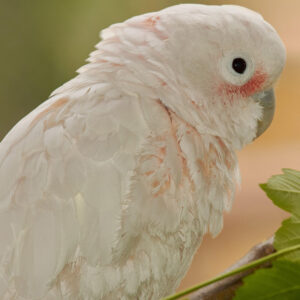
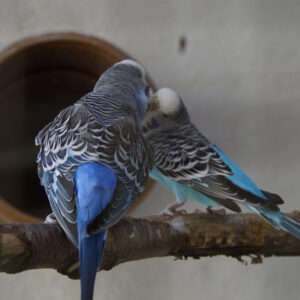
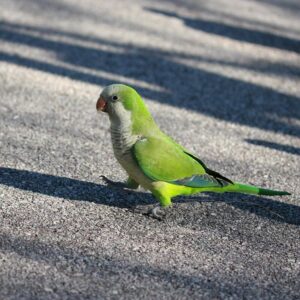
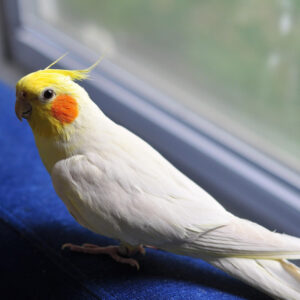
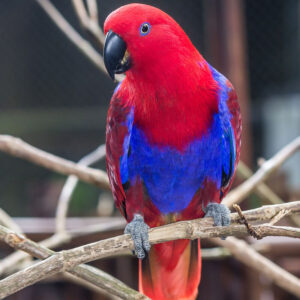
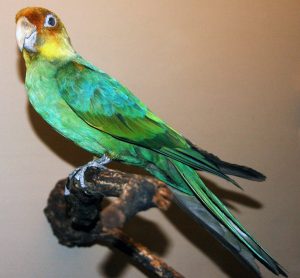
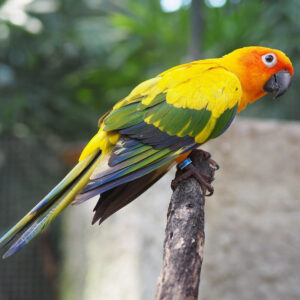
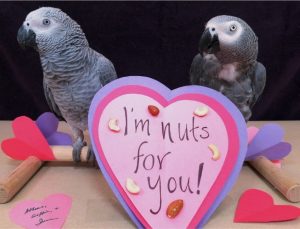
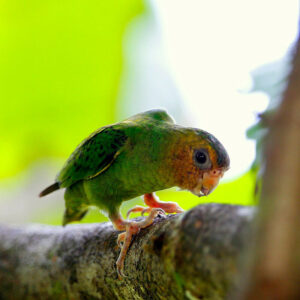
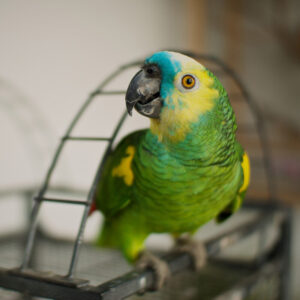
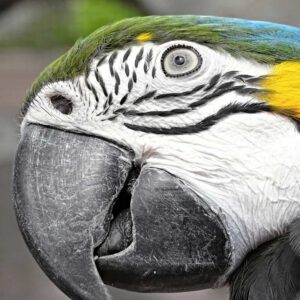
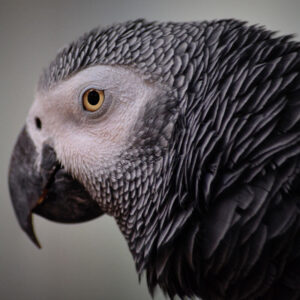
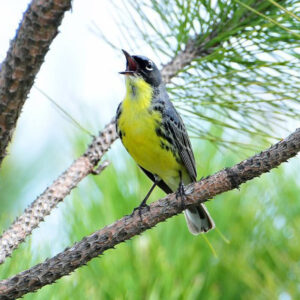
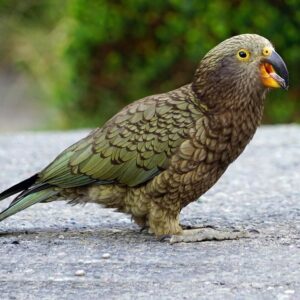
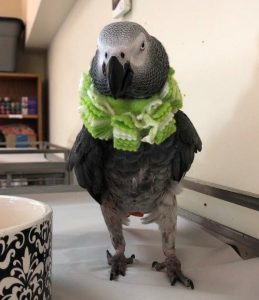
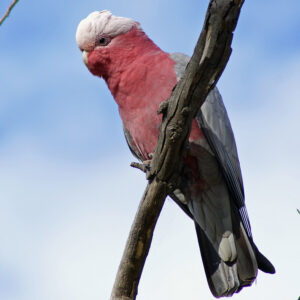
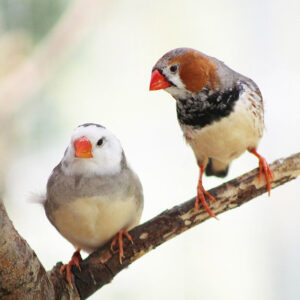
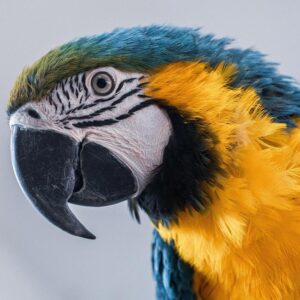
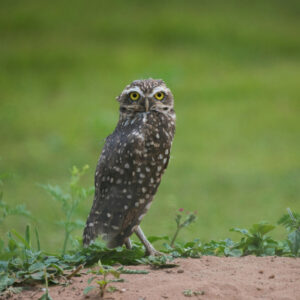
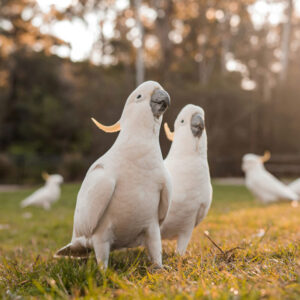
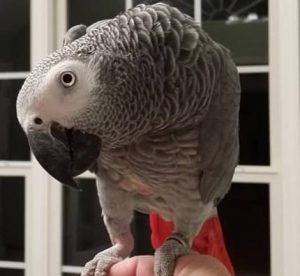
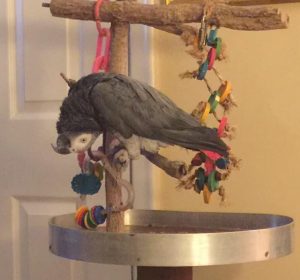
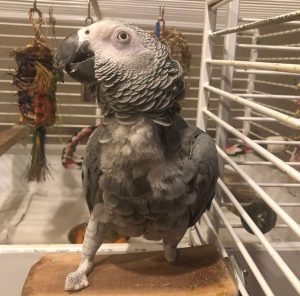
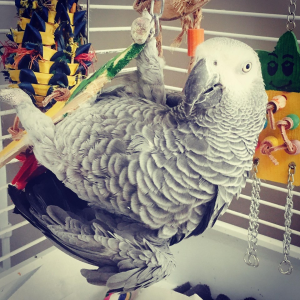
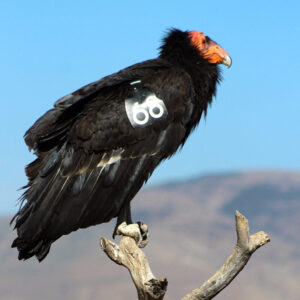
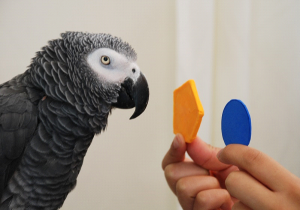
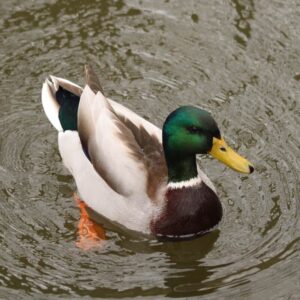
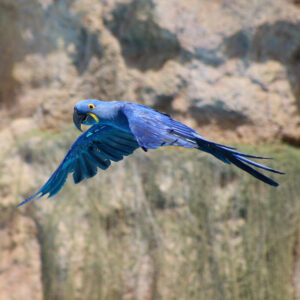
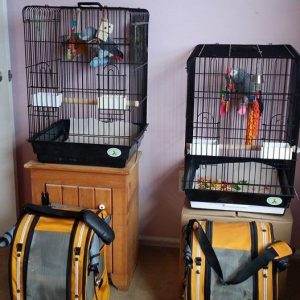

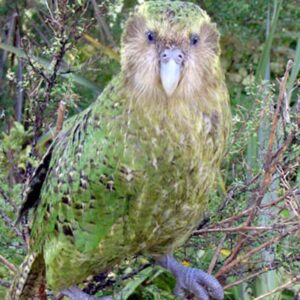
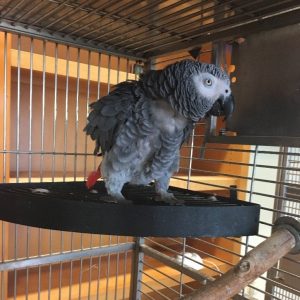
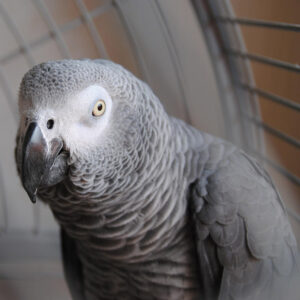
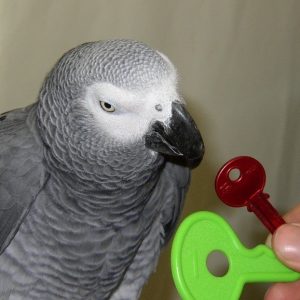
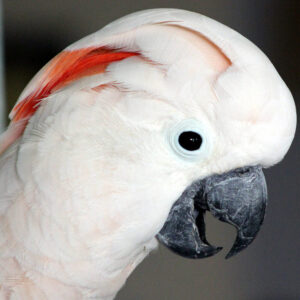
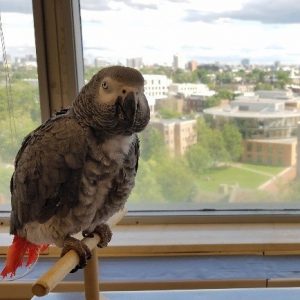
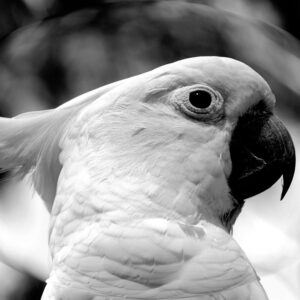
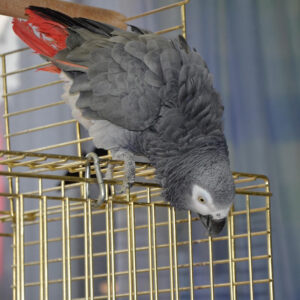
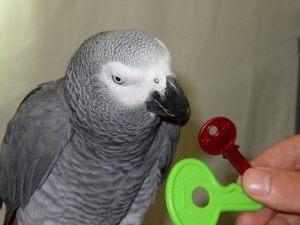
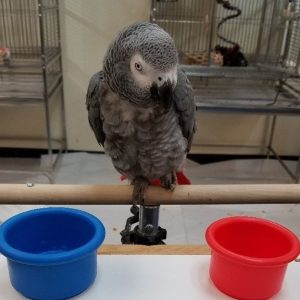
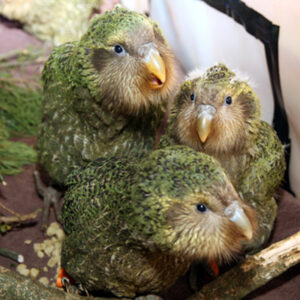
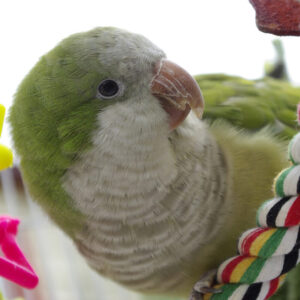
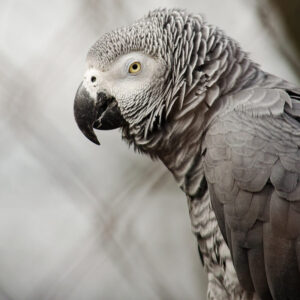
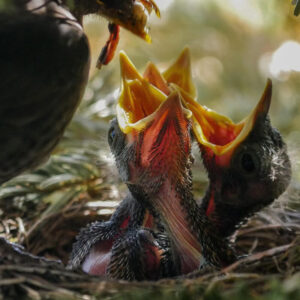
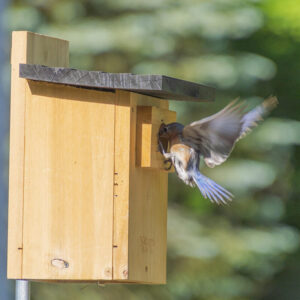
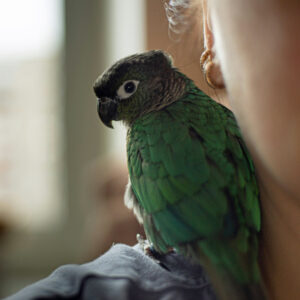
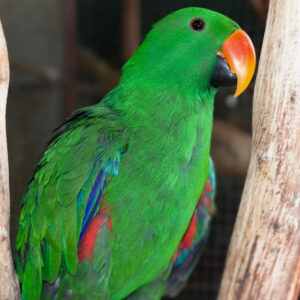
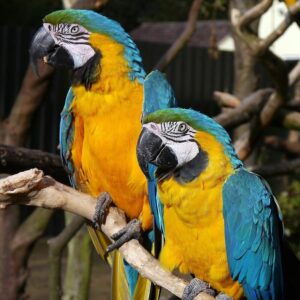
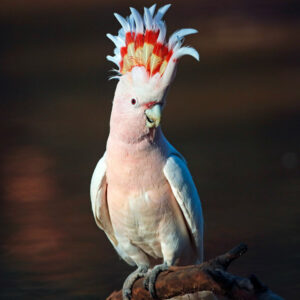
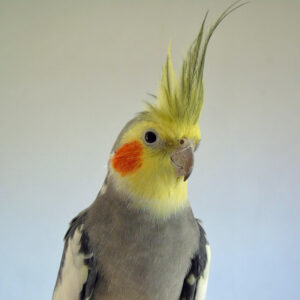
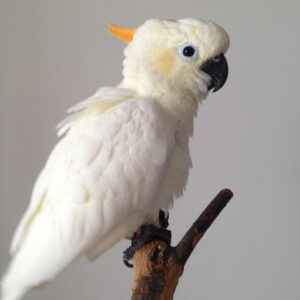
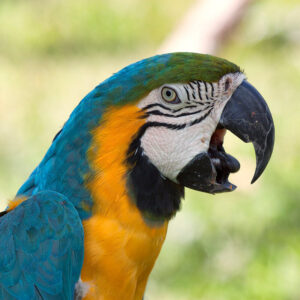
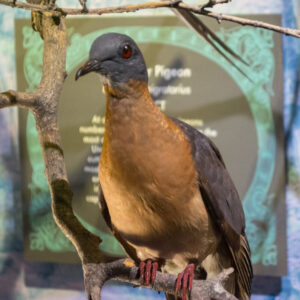
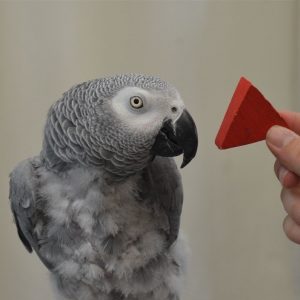
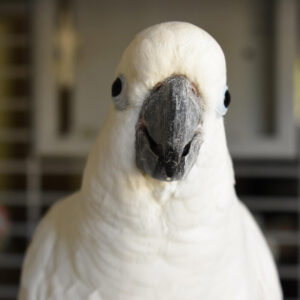
 Snuggle with your feathered friend, pop some popcorn for you, break open a bag of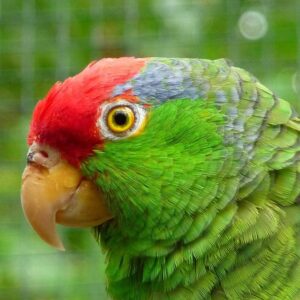
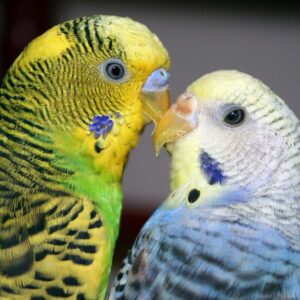
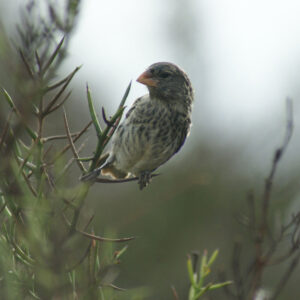
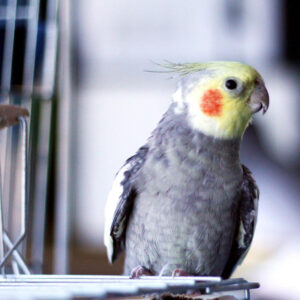
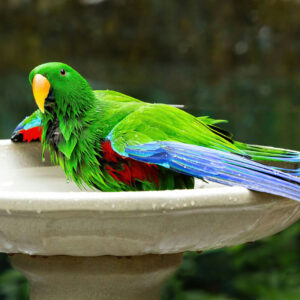
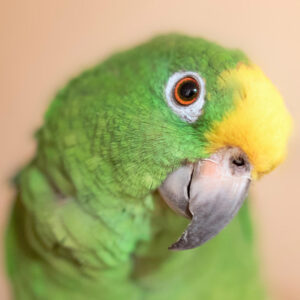
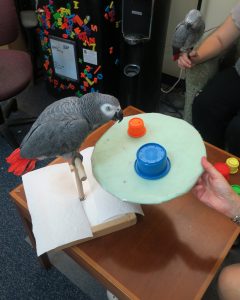
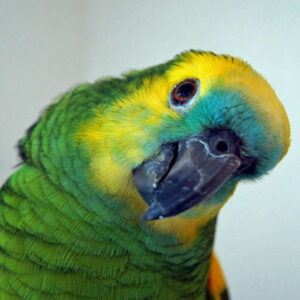

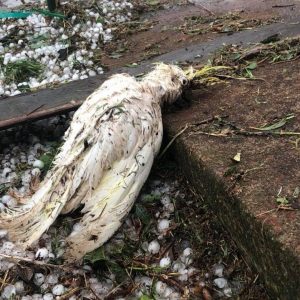 Throughout history, there has been no lack of extraordinary tales of extreme determination against overwhelming odds. Some of them are history book worthy. And while there are many more stories of bravery that fill the all the pages of life’s book, none of them are less memorable than the other. This particularly heartwarming tale involves the tale of the aptly named Lazarus the Cockatoo.
_female,_Gembira_Loka_Zoo,_Yogyakarta,_2015-03-15_01.jpg)

.jpg)


