

Avian Expert Articles

Posts

Could A Pet Parrot Be Happy In Captivity?

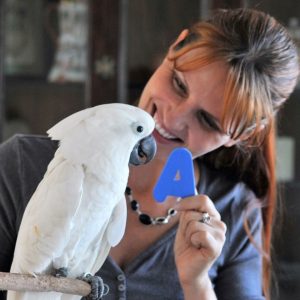
umbrella cockatoo
Courtesy of Jennifer Cunha

Is it possible for a pet parrot to be as happy in captivity as they would be in the wild? Is parrot ownership more like prison … or could it be like a happy, perpetual childhood experience?

As a bird mom to three cockatoos and a parrotlet, it is a question with which I wrestle day-by-day, and even moment-by-moment—and over which I’ve lost sleep, plagued with guilt.

It’s a feeling that never goes away, really, this nagging in my heart and stomach. Would my genius and high-energy Goffin’s cockatoo, Ellie, have been happier if she were wild? Is she her happiest self, here with me?

Here are my thoughts about the question, “Is it possible for a parrot to be as happy in captivity as in the wild?”

The first bit of my research was practical. A survey of baby songbirds showed that 83% of them die within the first year. I know Ellie isn’t a songbird, but research is limited on wild Goffin’s so … I’m going to go with these parameters.

If Ellie were wild, she’d probably also be dead in some horrific way.

If she’d made it past the first year, about half of the adult (songbirds) die per year. The average life expectancy of a tit bird is 2.6 years, for instance, although their actual life span is 21 years. You can read more about that in this interesting article. I had no idea life-expectancy of wild birds was so short.

The next thing she’d have to deal with are the elements. Many animals pass away in the harsh weather and winter, and dehydration is actually more likely than starvation. The beautiful wild is also really, really harsh.

(Stay with me! I promise there’s a happy ending here!)

Drought, injury, disease, infestation and predation also kind of suck for wild birds.

When I was desperate with owner-guilt, I googled and read a bunch of articles. Christine Wilcox also wrote an interesting piece about this very thing called “Bambi or Bessie: Are Wild Animals Happier?” in Scientific American. It’s an excellent essay, and worth reading.

In a nutshell, Christine believes that animals that are relieved from exposure, given basic care AND are allowed to express themselves naturally (with socialization and enrichment) are a lot happier than their wild counterparts and she’s got some good data for that idea too.

So here are my humble bird-mom thoughts on it.

Florida Atlantic University student, Jolie Reisner, is our brilliant research assistant on the literacy work we’re doing with cockatoos. She sent me an interesting article about whether animal captivity could be considered incarceration.

The thought—and, yes, I think it sometimes some animal captivity could be likened to prison—makes me nauseous with sadness. Certainly the analogy sticks when animals lack love, nurturing, freedom of choice, and especially enrichment.

This is particularly an absolute concern for birds. It’s so easy to drown their voices, to shut them away. To keep them as decoration. To force them here or there, to hurt them. To ignore them as they numb away…

AND YET.
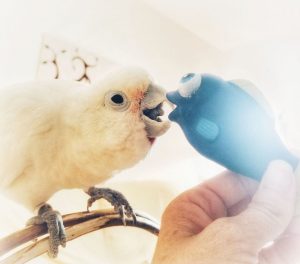
Goffin's cockatoo
Courtesy of Jennifer Cunha

I don’t think it’s always, or often necessarily, that way at all. My friend, Dr. Clubb of Rainforest Clinic and Exotics, an avian veterinarian with a career spanning over 30 years, says avian care and enrichment is getting better and better.

I think parrot captivity could also be likened to childhood, in a sense. Humans can have very, very happy childhoods, notwithstanding limited major life choices and some of the bumps that come along the journey when someone else is in charge of your life.

Children have toys and activities, they have enrichment and experiences, they can be so very deeply loved, and I think absolutely deeply happy too.

Is a trade-off of wildlife living for something akin to a beloved childhood experience worth it?

When it comes to Ellie (and so many of your birds, too), I’ve come to believe that it is possible for her to be very happy in captivity, in a world free of predation and pestilence, free of winter chills and starvation.

She lives an existence of profound love, a home with sisters and toys, friends who care about her, a mother who loves her fiercely. I think parrot “captivity” really could be very much compared to a perpetual happy childhood—perhaps a few challenges along the way—but filled even with the kinds of choices children make: their friends, their favorite foods, games, learning, and activities.

When bird parronts are sensitive to their little charges’ preferences and fill their lives with a rotating assortment of enrichment, a variety of things to taste, experiences to be had, training and guidance for those bumps. When I look around at so many of you bird mom and dad friends who absolutely adore your little bird kids…I still struggle so much with guilt (don’t all mothers?), but I do actually think a life in captivity can be a very worthwhile life indeed.

Cheers to all you awesome moms and dads!
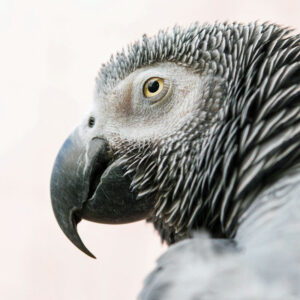
 

Inside Pepperberg’s Lab: Fish And  Parrots  Outperform Apes And Monkeys

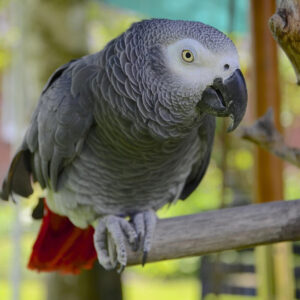
close up profile on head of an African grey parrot
Photo by Bro Takes Photos/Unsplash

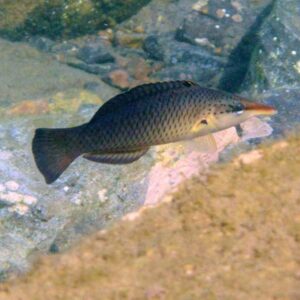
If the title seems a bit odd, the results of the study most definitely were, and surprised almost everyone involved. The task itself was based on the behavior of wrasse fish—species that live near reefs, and are known as “cleaner” fish. They obtain their food by removing parasites, dead tissue, and scales from larger fish. They sometimes also consume healthy tissue and mucus, but they don’t that too often, so as not to lose their clients. They generally service the same fish over and over, but occasionally ignore their steady clientele to service fish that are not common residents but swim by the reef randomly—an ephemeral source of food. Supposedly, it is worth their time to do so, as their regular clientele will still be around and thus remain a steady source.

So, the experiment was set up as follows: subjects are given two alternatives, A and B, with identical reward provided for each; however, if they choose A, they also receive the reward associated with B, whereas if they choose B, the reward for A is removed. Thus, choosing A gives them two rewards, whereas choosing B gives them only one. The idea is to give them a situation like the reef: if they choose their standard clientele, they get a single reward; if they choose the ephemeral clientele, they can still go back to their steady clientele and get double payday.

Fish Pick The Right Dish

wrasse in water swimming above sand and rock
Photo by duncan/Pixabay

The fish were graded on how quickly they learned to choose A over B—in this case, a black dish versus a white one in a laboratory setting. Some of the fish solved the problem in about 30 trials, thought the majority needed 50. The experimenters also examined how quickly the fish learned to reverse their learning to choose B—a standard way of testing flexible understanding. The average needed for reversal was about 80 trials.

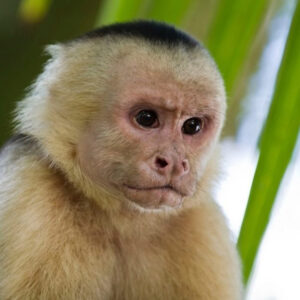
The striking aspect of the study was that the researchers also tested apes and capuchin monkeys. None of the monkeys and only two of seven apes solved the original task at all, but those needed well over the fishes’ 50 trials, and only one primate could do the reversal in under 100 trials. Only after the researchers tried some very different initial conditions could the apes and monkeys perform more like the fish (Salzwiczek et al., 2012).

Parrots Succeed Where Monkeys And Apes Fail

closeup on face of capuchin monkey
Photo by Nicman/Pixabay

We came across this paper because a referee of one of our journal manuscripts thought it was relevant for the study being reviewed. We didn’t see the connection to that line of research at all, but thought it would be a fun experiment to try. So we tested African grey Griffin in our lab, as well as Pepper and Franco—two Greys owned by a couple who used to work in our lab and who understood all the procedural issues that would be necessary to replicate the study in their home.

It turns out that African grey parrots outperform apes and even most of the fish, succeeding on the task in fewer than 30 trials and in the reversal of the conditions in fewer than 50 trials (Pepperberg & Hartsfield, 2014). The issue is really interesting, because in most aspects of behavior (long lives, extended childhood, extensive foraging, dominance hierarchies, large complex brains, advanced cognitive processing, etc.), parrots are much more like apes than fish. So why are the parrots so good?

Some researchers (e.g., Zentall & Case, 2018) argue that optimal performance on this task depends on reducing impulsive choice, as well as the impossibility of grabbing two things at once—something the apes often tried to do, but an action that is impossible for the parrots and fish. This explanation does make some sense, given that research I described last month that demonstrated parrots are quite good at a delayed gratification task!

Pepperberg, I. M., & Hartsfield, L. A. (2014). Can grey parrots (Psittacus erithacus) succeed on a “complex” foraging task failed by nonhuman primates (Pan troglodytes, Pongo abelii, Sapajus apella) but solved by wrasse fish (Labroides dimidiatus)? — J. Comp. Psychol. 128:298–306.

Salwiczek, L. H., Prétôt, L., Demarta, L., Proctor, D., Essler, J., Pinto, A. I., Wismer, S., Stoinski, T., Brosnan, S. F., & Bshary, R. (2012). Adult cleaner wrasse outperform capuchin monkeys, chimpanzees, and orang-utans in a complex foraging task derived from cleaner-client reef fish cooperation. PLoS One, 7, e49068. doi:10.1371/journal.pone.0049068

Zentall, T.R., & Case, J. (2018). The ephemeral-rewards task: Optimal performance depends on reducing impulsive choice. Curr. Dir. Psych. Sci. 27:103-109.

Cockatoo “Retires” From The Limelight At Age 82

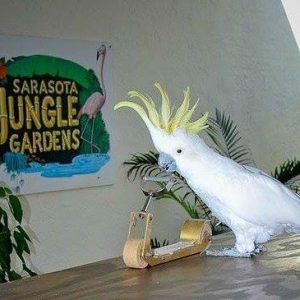
sulphur-crested cockatoo
Photo courtesy Sarasota Jungle Gardens

In our world of entertainment, we enjoy watching special people with special talents. Musicians, actors and actresses, writers, comedians, athletes, and others whose occupations hold various degrees of respect and awe in our lives. Some hold a thrall over different audiences at different age levels. Nevertheless, it’s easy to recognize that we all like to be distanced from our daily lives by a collection of things, often championed by those talented performers. And while we often tend to think along the lines of human entertainers, creatures are not out of the picture.

One such entertainer is Frosty, a sulphur-crested cockatoo, who, at the age of 82, has wowed audiences at the Sarasota Jungle Gardens for well over 40 years of his well-lived life. The Sarasota Jungle Gardens, located in the attraction-rich area of Central Florida on the Gulf side, began in 1939. Since, it has developed into a premier location of 11 acres of beautiful and exotic landscaping highlighted by such exotic creatures as snakes, alligators, primates, fish, pink flamingos, and, of course, exotic birds as well as extraordinary displays of exotic trees.

One of the Original “Jail Birds”

The exotic birds were introduced in 1972. An Exotic Bird Show was started to help increase the visibility of the location. The birds for the show were acquired from the Folsom State Prison, a California combination minimum-medium security prison site where birds had been trained by prison inmates at the facility. (Some sources state Chino Prison and San Quentin as the origination place for the Jail Birds.)  The birds were trained to ride bicycles, to paint, and, a myriad of other tricks providing an avenue of positive psychological diversion for the prisoners. The acquired birds for the new show were cleverly called the Jail Birds. One of those “jail birds” was Frosty the sulphur-crested cockatoo.

Frosty has entertained tens of thousands of visitors to the park since his arrival in 1972. His tricks included the ability to ride a unicycle on the high wire, and other assorted skillful maneuvers. But, as age will have it, Frosty’s ability to see clearly has diminished, and he has been officially “retired” from all trick exhibits. His retirement was celebrated with a special weekend at Sarasota Jungle Gardens on the days of October 20 and 21, 2018, before letting him enjoy life as a “view only” exotic bird within the park’s exotic bird exhibit.

In addition to having been a part of the Folsom Prison rehabilitation program, and a long-time resident of the Exotic Bird Show, Frosty also appeared on the Ed Sullivan Show back in the ‘60s during the variety show’s peak years.

Frosty still enjoys an open-air perch for daily interaction with visitors. It’s just that he no longer rides a unicycle and scooter on a high wire to gain his shares of “Oohs” and “Ahhs” from the adoring crowd.

Frosty is now known as Frosty Senior. And he certainly deserves the retirement years ahead of him.

New Bird? 5 Ways To Get Off To A Great Start

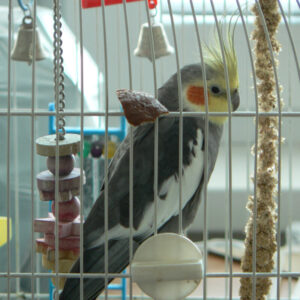
side view of cockatiel on perch in cage
Photo by Vikino/Pixabay

Make the most of the First Few Weeks with a New Bird

It’s so exciting to have a new parrot, isn’t it? When you bring a bird home, you have a wonderful opportunity to establish a positive relationship from the start, set realistic expectations, and get ahead of problem behaviors.

When working with a new bird, strive to learn two things that will help you build trust: motivators and body language.

1. See What Motivates Your Bird

A motivator is what a bird will work for, and it is usually, but not always, food. Some birds prefer praise, petting, access to a mirror, or a favorite toy. To determine your bird’s motivators, offer a wide variety of nuts, seeds, and fresh food in a bowl, and watch which one your parrot picks out first, second, and third. Do this over the course of a few meals. Remove these foods from the diet, and use them only when rewarding her when she does something you want her to do.

2. Get To Know Your Bird’s Body Language

Birds communicate through body language, whether the bird is content or stressed, agitated, or sexually stimulated. Learning your bird’s body language dictionary should be a primary goal. Observe how the bird holds feathers all over the body, the shape of her eye, how her feet are placed, whether the beak is open or closed, and the overall stance.

Each bird is unique. She may be very quiet and still as she checks out her new environment, or she may be immediately comfortable. Watch her body language for clues. Move at your bird’s pace. Let the bird choose to come out to you and interact with you. Stepping-up is a very sophisticated behavior for a bird. It requires maximum trust. Please do not expect a bird to step up on your hand immediately, or try to force this behavior. It can break trust.

This initial non-confrontational approach will speed the parrot’s adjustment time to her new surroundings and will allow her to integrate into your family sooner.

3. Set Real Expectations

Along with learning motivators and body language, set realistic expectations. During the first few weeks, set the standard for the pattern of behavior the bird will expect from you. During this time, pay as much attention to the new parrot as you will, on average, be able to spend with her in the long term. For example, if you spend 8 hours a day snuggling with your new cockatoo (not a good idea for many reasons!), the cockatoo will be used to that level of attention and may develop negative behaviors, such as screaming, biting and even feather plucking, when you cannot devote a day to her.

Instead, plan time during the day or evening for one-on-one interaction, such as training time or play time, and provide a few hours of ambient attention, when the bird shares time with the family, preferably away from the cage, perhaps on a play gym or stand. The bird is simply “hanging out” and not necessarily the center of attention. Birds love to be included in family activity.

4. Ignore Negative Behavior

Now is also the time to get ahead of problem behaviors. Do not respond to any behavior that you cannot live with for 50 years. In other words, if the bird does something you don’t like (scream, for example) ignore the behavior. Do not look at the bird, do not talk to the bird, and do not put the bird back in her cage. Ensure everyone in the family agrees to ignore bad behavior whether they interact with the bird or not. Be consistent.

5. Praise Good Behavior

Instead, increase the likelihood of positive behaviors by praising and giving attention to the behaviors that you like. Use her motivators, and praise her, for example, when she whistles, instead of screams.

Above all, please be patient with the new family member. Understand that the first few weeks is often called the “honeymoon period” for a reason: The parrot is on high alert in a new situation and may behave with extreme caution. Your bird will reveal her true personality slowly over time, so the patterns you establish during the first few weeks will help you lay the groundwork for a great relationship.

Simple rules to follow when interacting with any parrot:

  • Never react to behavior you do not like, and praise and reward behavior you do like, or, simply put, accentuate the positive and eliminate the negative.
  • Respect her space, have patience when working with her, and let her choose to learn at her pace.
  • If you get a bite, stop what you are doing, and try a different approach. A bite always means that your parrot is uncomfortable (and probably threatened) by what you are doing.

Make Your Love Of Birds Count

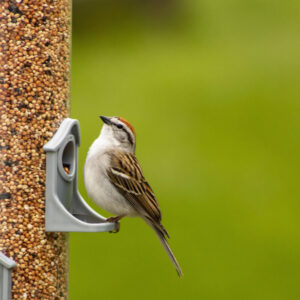
sparrow perched on feeder to eat
Photo by GabrielDouglas/Pixabay

As years draw to a close, it’s a feeling of reflections on the past and thoughts for the upcoming future that begin to take hold of us. October/November usually provide a cushion of time before the realities of the New Year come to fruition. But once that happens, we’re on a pathway, like it or not. And it always goes forward.

For our fellow creatures, a dependence on the goodwill of mankind is essential. As we choose to be destructive — whether by necessity or by deliberate action — our actions can adversely impact the existence of our living creatures that are unable to affect their own surroundings in a manner suitable and sustainable for them. That’s where we come in. That’s where we need to come in.

During the course of the year, either at the beginning or near the end, trends and observance rituals begin to take shape that help us to understand our birds better. The higher profile Big Bird Count, which takes place in February (22 years in 2019!), the massive Global Big Day Count, which occurs in May, and other smaller events are designed to bring us to a closer understanding of migration, weather disruptions, unusual movements, and other things. But we have an end-of-the-year event designed to pay close attention to the winter season movement and gathering of birds.

For the end of the year, there is the annual, five-month long Project FeederWatch program that concentrates on location, types of birds available, the count of birds, their behavior patterns, the types of weather they show up during, and any unusual observances worth noting. Other interests for this data-gathering exercise include unusually high gatherings and rare bird sightings.

The FeederWatch program is a joint project of the famed Cornell Lab of Ornithology, and Bird Studies Canada. It runs November through April each year. Project FeederWatch always begins on the second Saturday of November, and ends on the first Friday after 21 weeks. Essentially, it’s asked that bird fans, especially outside bird watchers, designate an area that’s easy to observe on an extended basis. Within the sphere of the area, there should be feeders, water features, and plants designed to attract birds. The idea is simply to count, categorize, and observe, taking notes whenever necessary to create a journal of useable data.

During this period, you are asked to select two consecutive days of watch per week. You are asked to count and observe only within these two days. Therefore, even if you see more birds than usual on an “off day,” these are not counted as it would distort the ordinary data you’re accumulating. You’re asked to place each period of observation five days apart.  Tally sheets, which can be downloaded, are used for observation data. From here, the rules and suggestions become somewhat specific and detailed, and thus should be consulted to make the exercise a useful one.

There is a place to join Project FeederWatch and learn much more (here). You’ll be assigned a unique ID (needed to factor in with the official counts and observations). There are two sign-up procedures, one for the United States and one for Canada. The cost is $18 per season ($15, if you’re a Cornell Lab member). You’ll be supplied with a wealth of things such as poster, complete access to the Project FeederWatch website, tally sheets, and other tools and fun things.

If you find an urge to participate, we sincerely hope you enjoy your experience during the FeederWatch period. Your help is greatly needed and extremely helpful. But most of all, just enjoy watching your birds!
A Fun Look At “Spooktacular Parrots” This Halloween

It’s that spooky time of the year! Some parrot species seem to especially mesh with a Halloween theme. Here is a lighthearted look at parrot species that bring “trick or treat” up a notch.

African Greys

African grey parrot leaning forward on perch on playstand
Photo by nicoleGOR/Pixabay

If there was one parrot that could put together their own “haunted house,” it would be an African grey parrot. Beyond the notoriety of being extremely intelligent birds, greys are also known to be insanely good at mimicking human speech, as well as a plethora of sounds — usually those they know will get their people’s attention. If you really want to “trick” someone, have them spend time unaware that an African grey is in the house. They might be reaching for a phone that isn’t really ringing, answering a knock on the door or doorbell ring with no one on the doorstep, and, no, there’s no food in the microwave that just finished cooking! Of course, greys and many other parrots with the gift of gab, might also try to trick people with spot-on imitations of their people or people they’ve met. Will your guest fall for that “Hello sweetie,” that sounds just like grandma is in the house?

Budgies (aka Parakeets)

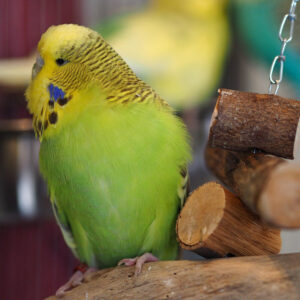
green and yellow budgie standing on perch by wood toy
Photo by UweMini/Pixabay

One of the more interesting sounds you are likely to hear in the pet bird world is a budgie that can talk. A budgie’s voice is similar in size to the bird itself — small, and it can sound quite whispery or chirpy. Some have gone so far as to describe a budgie’s mimicry of human speech as “slightly demonic” sounding — like an old vinyl record sped up and played backwards. Hearing a budgie say, “Give me a kiss” — if you don’t know it’s coming from a small feathered being — can certainly induce goosebumps.

Cockatoos

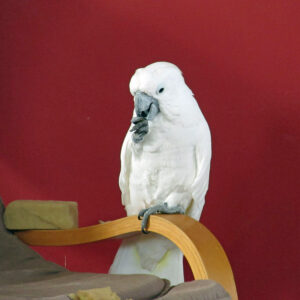
cockatoo perched on wood arm of chair
Photo by Jack Irving/Unsplash

Something about cockatoos is wizard-like. Perhaps it’s the way they play with their food and toys — twirling it in the air much like a magician waving a wand. Their bold, expressive eyes also seem to exude a higher power looking at you, or through you…and before you know it, you are under their spell. “Another Nutri-Berrie treat? You’ve got it master!”

Caiques

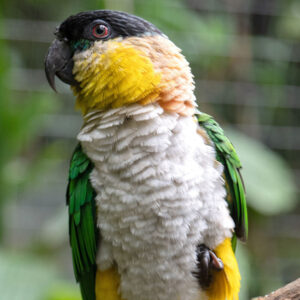
black-headed caique standing on branch with head turned to side
Photo by hbeiser/Pixabay

If caiques dressed up for Halloween, of course they’d be clowns. And these frolic-prone parrots won’t need much cajoling to get into character. Just give them a foot toy, and behold the on-their-back circus antics, or play with them long enough to literally get them hopping. A happy caique can be as giddy as a child dressed up for Halloween!

…And Let’s Not Forget Eclectus Parrots

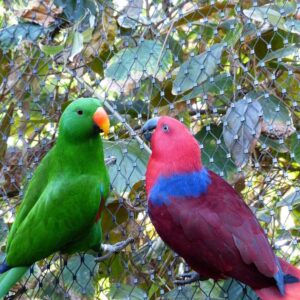
green male eclectus and red female eclectus outside
Photo by Hans/Pixabay

You can’t look at a male Eclectus parrot’s beak and not think “Candy corn!” That colorful orange beak is quite a stunner no matter what time of the year it is!
Teach Your Bird To Communicate “Yes” And “No”


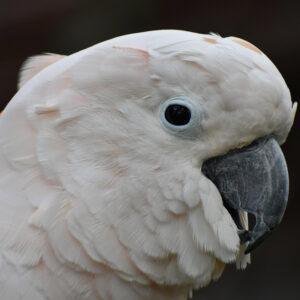
closeup on head in profile of Moluccan cockatoo
Photo by dansleboby/Pixabay

Sometimes I think about the kinds of choices adults make. We choose where we work, who we marry, what and where to eat. We choose practical things like our homes and vehicles and fun things, like which books to read, what hobbies to pursue. We choose our vacations. We browse the internet for hours, or read the Sunday paper. We choose to spend time with friends we enjoy.

While a little more limited, children have lots of choice in their lives, too. They can choose to play sports, like soccer, or to learn piano. They choose which books they want to read, and they remind their parents what they want for lunch. Children choose their favorite cartoons to watch, and choose the games they want to play outside.

When my Goffin’s cockatoo, Ellie, came home to me as a baby, I provided for her the most enriched environment I could imagine. I chose fantastic toys for her, and rotated them every day. I made foraging toys for her. I taught her tricks I thought she’d like, and ensured she had four hours of out-of-cage playtime every day. I chose her playtime and her bedtime. I chose her treats.

I also realized that because I chose pretty much everything in her life, her daily options were: whether to eat the chop and pellets I provided, whether to snub my toys, and which houseplant to destroy when I wasn’t looking.

I so deeply value my freedom, my ability to choose. I wanted that for her, too. I wanted my cockatoo, a brilliant parrot who could potentially live for 60 years, to be able to tell me YES and NO.

The Power of  “Yes”/ “No” Communication

This desire drove me to tinker with methods to teach Ellie yes/no communication, without much luck. For years, I bit my lip, staring at her and wondering how to break the language barrier that kept us from communicating.

In August, 2016 I began to teach her phonics as an enrichment activity. Within several months she’d learned all of her letter sounds, and started blending the sounds into reading words, ultimately learning words like “Yes” and “No.”

And then, with a little training, she started communicating “Yes” and “No” easily, fluently, and a whole world of understanding opened up between us.

She began choosing the music we listened to, and the activities we did during the day. She chose her toys and what she wanted me to cook for breakfast. She chose her learning activities, and even her favorite friends.

Communicating with an animal so easily, so clearly, felt magical. It still feels magical. It’s not magic, of course. It’s just training. But it has brought indescribable joy to our lives.

These days I train parrot owners through online classes how to communicate with their birds in a very simple way, using red and green objects and a few vocabulary words. The magic begins within even just a few short lessons — and below are the steps you can take to teach your parrot to communicate with you!
“Yes” and “No” communication is composed of three processes:

1. Target training

2. “Yes”/“No” training

3. Simple vocabulary development

Selecting “Yes”/”No” objects

The bird is going to be taught to associate “Yes” with a touch to one object, and “No” with a touch to a different object. For parrots I am training, I often use a green object to indicate “Yes” and a red one for “No.” I recommend objects such as index cards or wood. Green and red are easy colors for parrots to discriminate, and they are also easily remembered: Green means “Go” and red means “Stop.” If preferred, you could use alternative communication objects, such as two different shapes.

Select Two Vocabulary Objects

After selecting the yes/no objects, you will need two more objects: something your bird wants, and something (non-aversive) that your bird does not want, like a bowl of cold water. I often teach “treat” as the first vocabulary object and “water” as the second.

Most birds will want a treat, and (if they aren’t thirsty) probably won’t have much interest in the water. We call these “neutral no’s.” They are things the bird doesn’t particularly want, but items that are not at all aversive. Some other ideas include broccoli, a spoon, or something similar.

Training materials needed:

  • An object to indicate “Yes” and an object for “No.”
  • An object your bird wants (treat?) and a “neutral no” object.
  • Reinforcers

Step 1: Teach “Yes” and “No”:

  1. Target train “Yes.” Present your pre-conditioned “Yes” object (i.e., the green index card) near the bird, and say “Touch yes!” As soon as they touch “Yes,” click, reinforce, and repeat for several repetitions.
    1. I do this repetitively for a minute or two, holding it in different locations near the parrot, so they have to move to the left, move to the right, take a few steps, to touch “Yes.”
  2. Target train “No.” Repeat Step 1 until the bird has spent a few minutes learning the “No” object.
  3. Offer both “Yes” and “No” objects. Using errorless learning, place the “Yes” one nearby and the “No” one further away. Say “Touch yes!” The goal is for the parrot to easily select “Yes,” because it is the nearer one. Repeat this step, bringing the “No” object nearer and nearer, while the parrot grows used to selecting “yes.” Ultimately, both objects should be presented at equal distances to the parrot. The training is complete when they select “Yes” with 70% or better accuracy.
    1. If the bird is repeatedly inaccurate or random, move the “no” object farther away again, and retrain, slowly bringing the “no” object closer.
    2. Then swap, and do the same with the “no” object.
    3. If the bird is still inaccurate after a few presentations, go back to Steps 1 and 2. Two of my three cockatoos caught on quickly; the third took a few days of training.

Step 2: Teach two vocabulary objects

  1. Once the parrot has mastered “Yes” and “No,” they are ready to learn two new vocabulary words. Use the same technique to teach them to touch your two chosen objects—one desired and the other a “neutral no.”

Repeat Step 1a for each of the two items independently, and give the parrot reinforcers for touching the treat as you teach the word “Treat,” and the cold water bowl as you teach “Water,” upon verbal prompt. Then repeat Step 3 above, discriminating between the two objects, to ensure they have learned the vocabulary words fluently.

Step 3: Teach “Yes” and “No” meanings:

  1. Teach “Yes.” Pair their desired object (like a treat) to “Yes.” Ask: “Do you want a treat?” and present the “Yes” and “No” objects.
    1. If they pick “yes,” give them what they’ve requested (a treat). Do this several times so that they understand picking “yes” results in them getting the object desired.
    2. If they pick “no,” remove the “yes”/“no” objects briefly and then recue, presenting “yes” and “no” again. They may pick “no” several times—each time, remove the “yes”/“no” and then recue. If needed, hold “yes” closer, so that they pick “yes” and are reinforced. Then repeat, until they choose “yes” fluently, when asked if they want a treat.
  2. Teach “no.” Pair a “neutral no” object to “no.” Ask “Do you want [water]?” and present the “yes” and “no” objects.
    1. If they pick “yes,” offer the water for a few seconds, observing their “Meh” response.
    2. If they pick “no,” remove the water and reinforce with a treat. “You’re right. No, you don’t want water.” Repeat until the behavior is fluent.

Parrots can be taught new vocabulary objects through Step 2 in this process. You can also find nine pages of vocabulary ideas and enrichment—as well as video tutorials and pictures for teaching birds to communicate and learn phonics—in our downloadable manuals. www.myreadingpets.com.

Inside Dr. Pepperberg’s Lab: African Grey Parrots Show Self-Control

Courtesy of Dr. Irene Pepperberg
African Grey Sitting
Courtesy of Dr. Irene Pepperberg
African grey sitting
Courtesy of Dr. Irene Pepperberg

Grey parrots may sometimes be impulsive—think about how often you may have had to give your bird multiple timeouts for the same behavior (like chewing on your sunglasses) in a very short time period. However, my students and I have shown that our parrot, Griffin, can actually exhibit quite a bit of self-control. We found that out by giving him a classic task used to test children.

The task is informally called the “marshmallow test,” and was designed by the psychologist Walter Mischel in the 1970s. He examined about 60 children, all approximately 4 years old, in a laboratory setting. He used several versions of the task, but in the most common version, he sat each child down behind a table, on which he placed a plate with one marshmallow.

He told the child that he was going to run an errand, and that he would be back in about 15 minutes. He told the child, “If you can keep from eating the marshmallow on the plate in my absence, I’ll give you a second marshmallow when I return.” He also told the children that they could eat the first marshmallow at any time, but that if they didn’t wait for his return, they could not have the second one. And then he left the room (Mischel, 1974).

Now, if you know anything about 4-year-olds, for them 15 minutes is a lifetime. Many children gave up and ate the first marshmallow. But a number of children were able to wait, and almost all of them managed the task by figuring out how to distract themselves. They got up from the table and danced around; they sat at the table and sang to themselves. Sometimes they licked the marshmallow but didn’t eat it. They played with their hair or their clothes. Some even tried to nap.

Mischel argued that those who waited had more self-control, a form of executive function. He surmised that the children with more self-control would be more successful in certain situations, such as being able to finish their homework before going out to play. It wasn’t until he went back and interviewed these children some 30 years later that he found out that his hypothesis was correct: The children who had waited the longest had, for the most part, done better in school, had gone to higher-ranked colleges, had better jobs and fewer divorces! [One note: All of the children he tested had come from middle-class families.

When experimenters subsequently tested children from impoverished communities, these children often didn’t wait, and gave reasons such as not trusting the experimenter to return, or said that they feared that someone else would eat the second marshmallow or even that someone would come and steal the first one…a sad commentary, for sure.]

Nonhumans Put To The Test

My students and I had read a few papers in which researchers used this delayed gratification task on nonhuman subjects. Many papers involved experiments on nonhuman primates, but none of those studies had actually tested the animals in exactly the same way as Mischel had tested the children. In fact, we felt that some of the tests on the nonhuman primates probably had some design flaws. However, on tests very similar to those used by Mischel, cockatoos and some corvids seemed to be able to wait for a better reward, although not for more of a reward (see Auersperg et al., 2014; Hilleman et al., 2014).

The cockatoos waited for many seconds; the corvids for up to about 10 minutes. Interestingly, the corvids, who often cache food in nature, sometimes cached the first reward while waiting—possibly a case of “out of sight, out of mind?” These studies made us wonder whether an African grey parrot might do as well as the children, or maybe even better than the cockatoos and corvids. We knew that our grey parrot, Griffin, understood the word “wait”—although he had no choice in the matter, he heard the word every day when we told him to wait for his cooked luncheon grains to cool, and to wait while people entering into the lab used hand sanitizer and took off their outdoor shoes before going over to greet him. So we proceeded to test him, using Mischel’s exact task (Koepke et al., 2015).

We noted that in almost all the other tests with nonhumans, researchers tweaked Mischel’s procedure. For example, they slowly increased the waiting time—so if their subjects could refrain from eating a peanut for 10 seconds, on the next trial they would try making the subject wait 20 seconds, and so forth, until the subjects failed. Such a procedure could actually be training the subjects to wait, rather than testing their basic behavior.

To control for this possibility, we mixed up all the waiting times. Other researchers sometimes used only one pair of treats; we wanted to ensure that one treat wasn’t some kind of signal for another treat, so we used several different pairs of treats. And we also wanted to ensure that Griffin didn’t interpret the word “wait” as a trained command (like that given a dog who has a biscuit placed on his nose and has to wait for a command to flip it and eat it). So on some trials, we presented the more-favored reward and asked Griffin to wait for the less-favored one.

African Grey Griffin Plays The Waiting Game

Griffin succeeded on the task—he waited in 108 out of 120 trials. He was as successful on the 15-minute delays as on the 10-second delays. He didn’t learn to wait…he made as many errors at the end of testing as at the beginning, and there were as many long delays at the beginning as at the end of the experiment. The different types of treat pairing mostly didn’t matter, although on two of his failures, the rewards were very close in desirability (a cashew and a candy), and he decided to eat the slightly less-favored reward almost immediately.

On the trials in which we asked him to wait for something less favorable, he barely waited at all—he spent a second or two looking up at us as though we were demented and then immediately ate the reward, showing that he was very aware of when he should and shouldn’t wait. And he wasn’t simply losing interest in the reward—on a few of his failures, he waited until almost the end of the delay period—in one case, over 14 minutes—before succumbing to the lure of the reward that was present.

What was particularly interesting, however, were the behavior patterns he exhibited while waiting: He did almost the same things as the young children! He talked to himself, he tried to nap, he preened, he turned his head away. Like the children, he sometimes licked the reward, but didn’t eat it. We actually made a split-screen video of the children (from YouTube) and Griffin to use for a presentation at a conference, although we couldn’t use it in our published paper.

Clearly, Grey parrots can sometimes act quite rashly. However, when it is worthwhile, they are definitely willing to wait, particularly for a better reward. In the wild that makes a lot of sense: If foraging birds come across some fruit, but know that more calorically dense nuts are a bit further along, it’s far better for them to wait for the nuts than to fill up on the fruit. The next step, of course, is to see if Griffin will wait for more of a reward…and that might not be so easy, as it makes less ecological sense: There is no reason not to stop at a small patch of nuts and eat them while en route to a larger patch. Keep tuned to see what Griffin will do!

Auersperg, A. M. I., Laumer, I. B., & Bugnyar, T. (2013). Goffin cockatoos wait for qualitative and quantitative gains but prefer ‘better’ to ‘more’. The Royal Society: Biology Letters, 9, Article 20121092.

Hillemann, F., Bugnyar, T., Kotrschal, K., & Wascher, C. A. F. (2014). Waiting for better, not for more: Corvids respond to quality in two delay maintenance tasks. Animal Behaviour, 90, 1–10.

Mischel, W. (1974). Processes in delay of gratification. In L. Berkowitz (Ed.), Advances in experimental social psychology, Vol. 7 (pp. 249–292). New York, NY: Academic Press.

Bird-Watching And Conservation Go Hand-In-Hand

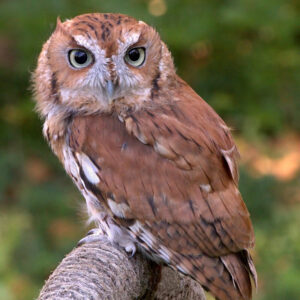
Eastern Screech Owl perched on branch outside
Photo by Greg Hume, CC BY-SA 3.0, via Wikimedia Commons

The experience of bird-watching has become a social phenomenon. Although many of us have always loved the sight of birds in our yards, or in wildly exotic vacation locales, an increased emphasis on conservation, protection, and the sheer joy of experiencing birds in natural settings has upped the interest levels of the public to historic proportions. And, of course, that’s always a good thing. With our populations of exotic birds in rapid decline, the more interested parties become involved in the birds’ well-being, the better chance all of them, even endangered breeds, have in surviving the next 80 years leading into the next Millennium.

Long Tradition Of Counting Birds

Organizations like Audubon (established in 1905), National Geographic (established in 1888), and a host of smaller but equally dedicated establishments throughout the last 100 years, have contributed greatly to the understanding and observation of our birds in their natural habitats. With an avalanche of detrimental conditions (tree-clearing, introduction of predators, and diseases), many of our natural birds have become endangered, some to the point of extinction.

Much has been written about annual bird counting events like National Bird Day (January 5), October Big Day (October 6) and other important and activity-rich, calendar-driven undertakings. Nevertheless, it’s great to become aware of individual location-based events that are created specifically to bring delight to viewers, and to encourage the understanding of our birds and their need to live alongside us and other creatures in our rapidly changing world that even humans find unsettling for our own purposes.

The Cape May Fall Festival

One such happening is the upcoming 72nd Annual Cape May Fall Festival in Cape May, New Jersey, on October 18 to 21, 2018. The Cape May Bird Observatory and the New Jersey chapter of The Audubon Society host a collection of fun with 31 separate bird walks, nine boat trips, 11 exclusive indoor programs, a varied collection of vendor booths, and multiple social events. Evening programs include talks by ornithologists, and a lavish buffet spread for diners. All in all, this singular event is representative of an intensified attempt by many such organizations to involve and educate interested people and families. (If you miss this particular New Jersey event, remember that it occurs every year.) For a nominal fee, a group of fascinated enthusiasts can engage in a potentially unforgettable, possibly life-changing event that could help to change our world for the better. (For more information of the Cape May Fall Festival, explore here.)

With well-organized events like the Cape May Fall Festival, the world is increasingly richer with bird-centric (and other creature-centric) awareness. With a bit of properly phrased Googling, one can essentially come up with a wealth of things to take part in over the course of an entire year.

Young Photographer’s Impressive Win At Audubon’s Bird Photo Contest

The art of photography is a combination of a gifted view of beauty and a practiced patience that is necessary for capturing shots and allowing them to be enjoyed by many. Those with such an eye are often rewarded by the ability to make a nice living from the photographs they take. For the rest of us, we’re content with viewing their quiet captures in awe, even collecting them on prints for display in our homes and businesses. Recently, a young photographer entered Audubon’s prestigious annual photography contest  with big results. That photographer is Liron Gertsmen.

Liron was given a camera at a young age, and he developed love of being able to eternally capture a single moment with a camera lens provided a prerequisite sense of awe that creates extraordinary artists. With a similar sense of wonder for wildlife, it was only natural that Liron would turn to nature for his pictures. Previous to Liron’s entries into Audubon’s photography contest, he had already established himself as a serious photographer capturing extraordinary shots, images attributed to patient professionals.

Young Talent

For a first in the annual Audubon contest, Liron had three of his photographs blindly selected by judges, leading to an unprecedented sweep in the Youth category for 2018. Not only was this a stunning effect on the contest, it was also a testament to the majesty of the photos he submitted. Ultimately, the photos say much about the young man who is poised to become one of nature’s great photographers.

Liron Gertsmen, a Canadian citizen living in Vancouver, British Columbia, is often out on trips to photograph birds of all kinds in the wild. Previous to any outing, Liren researches the birds he hopes to capture in photographs. He attempts to learn as much as he can about their behaviors, and their habitats. Most importantly, his concern for their undisturbed lives helps him to get the best shots.

Liron Gertsmen is determined to become the best he can be. When he’s not in the wild taking rare photographs of the natural world, he’s setting up for several business additions that keep him equally as busy. Liren offers himself as a bird guide, and that varies from a few hours for the casual photographer to days in the wild to find that perfect shot. This service is provided for the Vancouver area and its surrounding locations.

In addition to his bird guiding services, he also teaches conservation and respect for birds with a variety of workshops. Packages and discussions range from the art of photography to Bald Eagles, and on British Columbia’s Pacific Rim. Private workshops are offered to individuals and small groups. There’s even basic instruction offered on the growing art of astrophotography.

On his website Liron sells his prints, takes reservations for bird-guiding and his various classes. A quick perusal of the photographs found on his site reveals a well-determined star in the making.


Inside Pepperberg’s Lab: Why Parrots Play Favorites

How Our Parrots Adjust to Changes In Personnel

African grey parrot sitting in cage
Photo by Graphicbirdie/Pixabay

I’ve been told that many parrots may “glom” onto one person in a family, and then act aggressively toward most of the other humans they encounter. Fortunately, I haven’t had that experience with my birds. Each may have his or her favorites among the various research assistants, but my birds don’t act aggressively toward their non-favorites.

An explanation for their behavior may be that, from the time, they enter my lab — usually as chicks — and they have to deal with being handled by at least six or seven people and most often closer to a dozen at any one time. During the school year, each student can work only a limited number of hours/week, and so we have to hire many of them; in the summer, when students can work many more hours, we have a smaller contingent. Our birds learn that people come and go. Such an environment is very different from what a parrot experiences in a private home, where the “flock” is usually very small and consistent. But the experiences in a private home are not normal for a parrot.

Flock Dynamics Constantly Change In The Wild

In the wild, the flock groupings likely change quite a bit on a daily basis and maybe change a lot even throughout the day, with what is technically known as “fission-fusion” behavior — birds travel in small groups of four or five, foraging together, often joining many other small groups at watering holes or particularly rich food sources for parts of the day, then split up again into the smaller groups. Interestingly, we don’t know if the same birds come and leave together. The entire flock, however, does always seem to gather back at the nightly roost.

Some researchers posit that all the evening squawking results from birds “checking in” with one another at dusk. (Ditto for the morning chorus, checking on who made it through the night.) A bird that doesn’t come back to the roost at night is one that has either been the object of predation or has decided to join a separate roost — it isn’t ever coming back. Does this information have any relevance for the home situation and for my lab?

Why Pet Parrots Might Choose Favorites

Although it is not at all clear why, given the usual daily experiences of a wild bird — and our companion birds are only one or two generations away from their wild cousins — a parrot in a family may choose favorites. Maybe, given the abundance of food and water and a permanent roost (their cage), they get “locked” into mating stance, which disrupt some of the behavior described above—the bird that is brooding eggs on a nest clearly doesn’t forage or join the flock at night, but gets fed by its mate, and both birds actively defend the nest site and their mates.

Giving The “Cold Wing”

Usual wild behavior, however may explain why those of my students who leave for summer vacations often get the “cold wing” on their return—the avian equivalent of the “cold shoulder.” One might suppose that our birds have decided that after failing to show up for multiple days, these students are gone for good; our birds definitely are somewhat subdued at the end of the academic year when their human companions disappear, generally never to return.

Maybe the birds go through a bit of a mourning period — all we know is that they tend not to want to work for several days. So, one might then expect them to be overjoyed at the return of a student whom they liked and had thought they had lost forever. And they generally are — but NOT until the student has experienced the “cold wing.”

Sometimes I get the “cold wing” myself when I’ve been gone for more than a few days. The birds do not get all excited and act eager to greet the returning person — they’ll simply look up briefly then IMMEDIATELY go back to what they were doing! That behavior doesn’t last very long — sometimes only a few minutes — but it does seem that the birds want the returning human to understand that something about his or her behavior just was NOT acceptable! Sometimes the birds refuse to work for the returning student for a week or so…giving all the wrong answers, or simply refusing to cooperate.

Although we may be anthropomorphizing our birds’ behavior, that behavior is quite consistent and definitely something we have to take into account when designing experiments and planning our research. Specifically, whether their emotions do indeed mirror ours still needs to be examined, and correlation between events is never good enough to claim causation, but that doesn’t mean that their behavior can be ignored. And I suspect that having this information might be helpful for parrot owners planning on long vacations!

Spix’s Macaw Among The Many Bird Species Now Extinct In The Wild

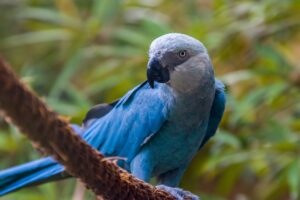
A Spix's macaw sits on a branch outdoors
Spix’s macaw (Cyanopsitta spixii) Danny Ye / Shutterstock

As the world changes, it’s not a pleasant thought that some things will go out of existence. For decades, science and biologists have combined to try to encourage the proliferation of our declining bird populations, many times with little luck. Unfortunately, the prolonged efforts simply aren’t enough to prevent the disappearance of many of our bird species. In 2018, we’ve had the sad task of adding eight additional birds to an “extinct in the wild” list. One of them is the highly recognizable Spix’s macaw (or blue macaw).

The Brazilian Spix’s Macaw was popularized by the animated film, Rio, and its follow-up, Rio 2. The first movie followed the exploits of blue macaws Blu as he and Jewel escape the clutches of a wildlife trafficker. Rio 2, follows Blu and Jewel with their three chicks in an effort to change their familiarization of city life. In reality, the last sighting of an actual Spix’s macaw in the wild was at in 2000.

Diminishing Habitats

This Birdlife International study of potentially extinct (or nearing extinction) birds was conducted in light of unendurable changing habitats due to rapid deforestation, and often avoidable human intervention. Birdlife International tracked an accumulated list of 51 critically endangered bird species from over the last decade. For the study, it utilized newer methods of assessment to more accurately determine probabilities. It is stated that good record-keeping, the timing of those records, use of surveys, and the extent and intensity of ongoing threats were necessary for proper assessment of actual extinction declarations.

Four of the eight birds now considered extinct in the wild are the Brazilian Spix’s Macaw, the Brazilian Cryptic Treehunter (last seen in 2007), the Brazilian Alagoas Foliage-Gleaner (last seen in 2011), and the Hawaiian Black-faced Honeycreeper , also known as the Poo-uli (last seen in 2004). The other four birds in this list have been reclassified as critically endangered, or possibly extinct. They are the Glaucous Macaw, the Pernambuco Pygmy Owl, the New Caledonian Lorikeet, and the Javan Lapwing. None of last four birds have been seen since 2001.

More Species At Risk

According to an assembled “Red List” that monitors the endangerment of more than 26,000 species of the world’s creatures, it is feared that a new wave of human-driven rapid extinction is upon us. The persistent illegal logging activities and other destructive actions by man to important living spaces of endangered birds have not only greatly helped cause the extinction of the remaining birds of concern in the wild, it has elevated concern levels of other birds still in the area as well as many other creatures.

The concerns of continued and potential extinctions are being addressed at an Egypt gathering scheduled in November of 2018, with another planned in Beijing in 2020. It is important to recognize that although these birds have been considered extinct, caution is used in the possible event that any future observation efforts, funding, and necessary continued studies might be stopped for these birds. That could be catastrophic if any of these birds show up in a potential sighting that could bring immediate new hope for their survival.

Parrots Blush To Communicate


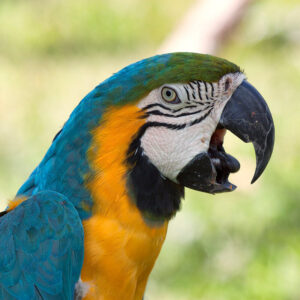
close up on head of blue-and-gold macaw with beak open
Photo by TomFawls, CC BY-SA 3.0, via Wikimedia Commons

With people, communication is a vast array of typical facial manipulations. We employ raised or downturned eyebrows, variably curved smiles, frowns, and other signs of emotional reaction. There’s also a variety of hand gestures, feigned body movements, and unquestionable intents with raised fists and outstretched arms reaching for hugs. Needless to say, the range of human communications extends far beyond that of normal speech. It’s easy to convey feelings with a simple twist of certain facial muscles to acquire a unique but well-understood look.

It should surprise no one that creatures are potentially not much different. We tend to think of humans as the peak of communications with our many, many methods of getting something across. As such, we rarely see birds and other animals move beyond what we’re used to hearing. Squawks and agitated behavior convince us that a bird is up in arms. Soft sounds indicate peaceful behavior. But we’re learning that birds have a range of displays that reveal communication with each other — and us — in ways we’re typically not seeing.

Feather Placement And Skin Coloration As Communication

Recently, researchers at the INRA Centre Val de Loire, a French facility with scientists involved in European agronomic research (soil and plant), worked with ZooParc de Beauval, a 99-acre zoo located in Saint-Aignan, France. (This popular zoo is located about a two and a half hour drive southwest of Paris.) The zoo has a collection of Blue and Yellow Macaws that are used in their free-flight shows. There were recognized facial displays on the parrots as they interacted with their trainers that were deemed interesting thus initiating this study. Obviously, some visual reactionary displays of plumage have been long noticed. But with closer head and face observation on birds that were not mate-seeking or showing signs of fighting superiority or defense, it was discovered that these parrots blushed as a means of communications. With the coloration of the visible parts of the Macaw’s head, it was found that their skin changed from white to red. For this initial study, five Macaws were closely watched in daily routine activity.

As the parrot bonds well with their human companions and trainers, it was thought to watch and gauge their emotional displays in the coloration of the skin as well as feather movement during their time with familiar people. Each bird was watched for periods of twenty minutes each with a standard routine as well as a controlled situation, that is, to create a possible response on purpose versus just observing feather placement (ruffled/sleeked) and skin coloration (white/red) reactions during normal interaction with familiar trainers. Often, as long as the mutual interaction was in effect, the birds were more apt to blush with varied feather movements suggesting that these reactions might be a visual indicator of feeling at ease. But when a caretaker was not paying attention, the birds would seek to regain eye contact and other modes of more concentrated interaction, again displaying a visible sign of a bird’s emotion with specific coloration and feather movements.

This shared study is hoping to more fully realize the visible signs of comfort and ease, and discomfort and distress as communicative tools for birds. With such intense knowledge of facial, skin, and head displays, we can better learn to attend properly to our own companion birds. With humans, there is already a vast understanding of every display of facial movement and coloration. For birds, who do not have many of the communicative displays that we produce, but who utilize a complex array of their own displays, the eventual results and understanding of this study will be essential to our better understanding of them. This study is at its infancy and is now expected to become more intensive as we discover more along the way. You can read the in-depth journal report at the PLOS (Public Library of Science) site here.

A Buried Mystery: Researchers Discover An Ancient Macaw Breeding Facility

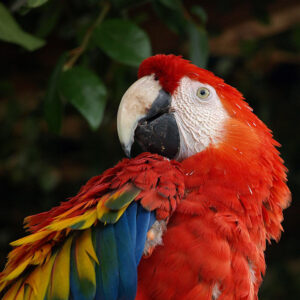
profile image of head and shoulders of scarlet macaw
Photo by© Ben Lunsford, CC BY-SA 3.0 US, via Wikimedia Commons

An exciting archeological effort is underway to uncover elusive physical proof of an ancient U.S. or northern Mexico-based macaw breeding facility (or facilities). Existing within the probable time frame of 900 and 1200 CE, the discovery of hundreds of ancient scarlet macaw skeletons have — through DNA testing — alluded to the reality that they were likely bred from a location that pre-dates the known settlement of Paquimé, now known as Chihuahua in northwest Mexico.

Previously, the region that was home to the Paquimé settlement as early as the period of 1250 CE shows evidence of a breeding facility complete with an extensive array of cages, and small adobe structures to indicate hatcheries. There were other proofs of an established settlement as well. A cave discovered in 2016 housed a collection of cloths, tools, and pottery. In addition to those items, a mummified scarlet macaw was also discovered. Its body indicated that there was likely an earlier established trade system in place. This created a curiosity for scientists, who have already assumed that desirable earlier trade existed within the regions surrounding the discovered settlement.

Testing Gives A Timeline And Confirms Macaws Are Linked

With the recovery of hundreds of scarlet macaw bones, a detailed carbon-dated process was undertaken, along with detailed DNA testing. The finding was that the bones exhibited the same DNA structure, indicating the existence of a breeding facility that pre-dates that of Paquimé. The carbon dating put the bones at a time of around 900 CE to upward of 1200 CE. Technically, there are five groupings of mitochondrial DNA that easily decide the type of scarlet macaw in question. Of the hundreds of bones tested, they all fit into that single group that pretty much assured they derived from the same collection of birds.

Many of the macaw skeletons have been recovered from the southwest territories of the United States as well as the northwest of Mexico. Applied scientific testing with the fact that the macaws were more than a thousand miles from their typical habitat lends credence to the theory that a robust trade existed in the southwest area of the United States previous to Paquimé. Yet, no evidence at all has been discovered of the existence of such a facility this close to the U.S. region.

Efforts are currently underway to pinpoint the possible location of the assumed hatchery. This important and fascinating discovery that is still unraveling is being undertaken by a joint effort of several colleges and museums. Researchers from Penn State are the primary researchers on this ongoing project. The findings were submitted in mid-August and supplied to professional scientific journals for establishment of facts and for review purposes.

With continued efforts, we shall all likely soon learn of the discovery of the assumed ancient breeding facility that is currently a buried mystery. With the discovery, more of our history, and that of the scarlet macaw, will become known to us.

Inside Dr. Pepperberg’s Lab: When Parrots Speak Their Mind…Or Not

African grey
Courtesy of Dr. Irene Pepperberg

From previous blogs, you can probably figure out that our youngest bird, Athena, while quite smart, absolutely has a mind of her own. She definitely can use English speech, but only when she wants to do so. Thus, she’ll gladly produce, “Yam” in the morning to get the research assistants to feed her before they feed Griffin, and likewise will label some of her other favorite foods when it is in her best interest. Similarly, although she hasn’t quite perfected “Shoulder” or “Back” (to the cage), given that those are two of her preferred locations, she works hard to produce something we can understand.

Athena—So Smart but Soooo Difficult!

Athena’s modus operandi, however, seems to be to say something almost perfectly, assume “Been there, done that,” and then decide that she doesn’t need to utter it again any time soon. Needless to say, such behavior is not only frustrating to observe, but makes our research quite difficult. We’ve attempted to cope by working on tasks with Athena that involve comprehension rather than production. We are doing several of these at the moment; in each case the task involves a two-choice procedure. We are also doing some of the same tasks with Griffin, so she can initially watch what he is doing and model her behavior on his. (Eventually, when he gets to the testing phase on those tasks, we won’t let her watch so that she’ll have to figure things out on her own.)

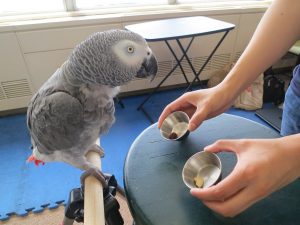
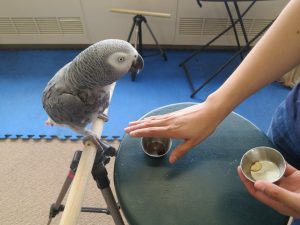
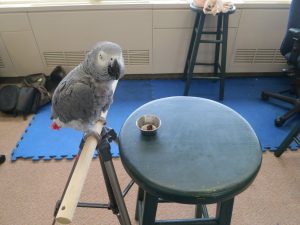
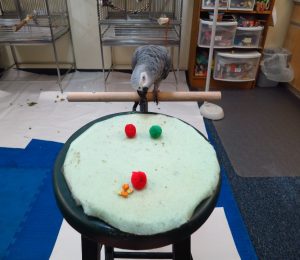
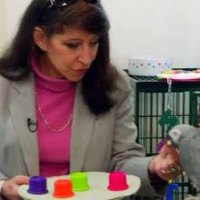
Right now, for example, we are giving her a simple “match-to-sample” problem. (Griffin already knows match-to-sample, so his tasks are a bit different and more difficult, but the idea is the same; see picture of him working on bigger-smaller below.) We put her on a T-stand in front of a wooden stool, place two woolen pompons of two different colors on a tray that is resting on the stool, make sure she can see them both, show her a third pompon that is the same color as one of the two existent ones, and ask her to “Match color-X” (see photo).

She can attend to either the vocal or the visual cue—for now, it doesn’t matter—we just want her to learn to match on command. If she’s correct, she gets a small treat, like a quarter of a piece of slightly sweetened cereal—something that is not part of her normal diet. If she makes a mistake, the tray is pulled back and shown to a student who is correct and who then gets the treat. In most laboratories, subjects will do a minimum of 20 such trials in one session. Notably, we’ve learned that with both Griffin and Athena, we can’t do more than three or four trials at once. If we do even 10 trials, their approach is just to choose at random and figure that they’ll get enough treats by chance to make them happy without even thinking!

A Mind Of Her Own

Of course, in the other laboratories, the subjects are actually working for at least part of their daily rations, so they are definitely more motivated; our birds work for these special treats instead. Griffin is doing quite well on all his tasks, but Athena is more erratic. Some days she’s almost perfect; other days she acts as though she’s never seen the task before in her life. She seems to be having fun either way—as though she enjoys both getting her treats and watching us get more and more frustrated.

Recently, she’s taken the “game” to an entirely different level. She can say some color labels although, again, only when she wants to. So if she has to say “yellow” to get some corn, you can bet that she is going to do so! Her favorite trick now is to watch us show her color-x and say “Match color-x”—and then she says color-y and grabs at the y-colored pompon! We don’t want to discipline her, because we do want to encourage her to label the various colors—and she is being quite clever!

As her behavior is not very good for the bottom line of our data sheet, we don’t give her a treat, but we do praise her and tell her that, yes, that is color-y, but then ask if she can now match color-x. Many times, she is happy simply to have grabbed a pompon and can care less about the treat; other times, she is willing to choose appropriately the second time she’s asked. We are hoping that by watching Griffin she will become more motivated to work appropriately. We’ll see where this all goes, but the bottom line is that we know we have a smart bird—just definitely not one who cares to follow directions!

Inside Dr. Pepperberg’s Lab: Fun Fundraising Featuring The Parrots

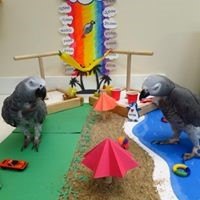
African greys on beach set
Courtesy of Dr. Irene Pepperberg

I enjoy almost every aspect of doing research. Although getting data is sometimes as frustrating as I’ve described in previous blogs, once we convince our birds that the tasks are fun, everything usually proceeds nicely. Of course, we sometimes over- or underestimate the birds’ abilities, and thus realize that we haven’t designed an experiment properly and have to go back to the “drawing board,” but the human brain-storming needed is always a good learning experience for everyone involved. And when we’ve finished collecting data, sometimes as we are writing up our results, finding exactly the right words to describe a study is difficult; we have to revise paragraphs over and over.

Sometimes figuring out appropriate statistics takes more time that we would like, but, again, the finished project—a paper ready to be submitted for peer review—is always an exciting event. Sometimes those reviews aren’t as positive as we would have hoped they would be, but we realize that the problem is usually that we are so familiar with the work that we haven’t explained it clearly enough to readers who are naïve. We then have to spend more time rewriting and revising, but the final version is then one that all our colleagues can appreciate.

Creative Fundraising

African greys Pepperberg Fundraiser
Courtesy of Dr. Irene Pepperberg

The one aspect of research that I truly do not enjoy, however, is fundraising. Unfortunately, doing research takes a lot of money, and thus fundraising is an absolute necessity. Whether we are writing grant proposals to federal agencies (which now no longer have any significant money for research in animal behavior) or asking private donors for assistance, I find the process extremely stressful. But…the birds need to have their toys, apparati for experiments, and organic food; students and lab managers need their salaries; bills for veterinarian services need to be paid, etc., etc.,…so we persist. And fundraising is a constant background activity: my students, lab managers and I are pretty much always trying to figure out novel ways of fundraising.

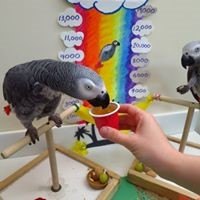
We have special events like our semi-annual major campaigns and try to come up with different themes each time. It isn’t always easy, but for the most recent summer campaign my lab manager and students had a terrific idea to make the process at least a bit more entertaining for everyone involved…by very actively including the parrots. Of course, we always involve them to some extent: Every time we have a big fundraising event like the Sterner Family Challenge (where all donations are doubled up to $15K if we can raise a minimum of $10K within a certain time period), we always have some kind of special artwork to show our progress—like the thermometer memes that a lot of fundraisers use—and we take weekly pictures of the birds with those illustrations.

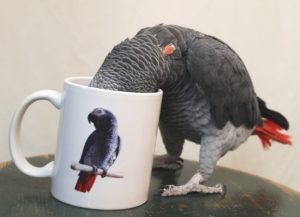
African grey with cup
Courtesy of Dr. Irene Pepperberg

My students have been really inventive and those of you who follow us on Facebook, for example, have seen the results. All have been extremely cute, but did not actually immerse the birds in the scheme. The plan this time, however, was to design individual, really cool backdrops and props for some of the photo shoots, showing our birds in somewhat silly situations, with the idea that our donors would keep coming back to see the latest “scene”…and maybe be inspired to contribute a few more dollars.

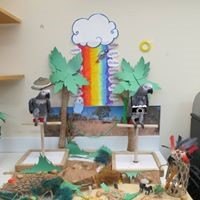
So, at the time that I’m writing this piece, the birds have had two fictional outings: “a day at the beach” and “gone on safari.” Some of the pictures are below. For the beach picture (left side), I’m not sure what they actually thought about the fake water (the sand was real, taken from one of their physical therapy exercises), but they definitely enjoyed having some extra juice as a treat in exchange for sitting for the photograph. The did seem more interested in the safari (by the way, we obviously photo-shopped the mini-camera and safari hat), particularly the fake water hole filled with toy animals—Griffin actually got off the perch and went to explore that bit of the site on his own.

Have to say that the collection of toy animals was not limited to those that would actually be seen in Africa, but then what’s the fun of fantasy if you can’t be totally innovative! By the time this blog is published, you will be able to see a few more such scenes on our Facebook and Tumblr pages. We even did a bunch of pictures related to movie themes. Meanwhile, have fun seeing how many relevant details you can spot in the pix!

Secret to Birds’ Amazing “GPS” Abilities

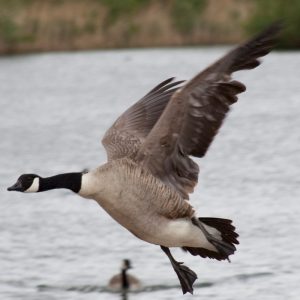
Canada Goose above a lake
Migratory birds like the Canada Goose can see the Earth’s magnetic field. Tony Hisgett/Flickr CC BY 4.0

Amazingly, science has discovered much about the unique structure and abilities of many of our birds. From intelligence factors that aid some birds in working outside the expected box of survival, the ability to participate in mathematics and physics to achieve certain ends, reasoning behind flying in certain patterns, and a myriad of other incredible findings that are consistently being discovered, we are constantly being surprised. The newest discovery is that birds are built to not only detect the magnetic fields, but to also see them.

Science has long wondered how birds navigate. Essential to their successful navigation is their ability to make sense of their internal compass. Earlier this year, it was revealed that researchers from several universities (Lund University in Sweden studied zebra finches; the University of Oldenburg, Germany, studied the European Robin) found the existence of a core protein in the eyes of birds that continues to be functional in variable lighting conditions. In the past, a professor from the University of Illinois during the ‘60s determined (without proof) that birds could respond to the magnetic field via their eyes due to a certain undetermined molecule within the eyes. It is from that assumption that further studies were undertaken.

Birds “See” Their Routes

The process used for these recent discoveries was a complicated one that essentially required an injection of a dye into parts of the eyes and the part of the brain that involves orientation. It was found that the two injected dyes traveled pathways that met in the area of the brain that involves vision. This gave credence to the thought that birds could “see” their travel using the visual aspects of the magnetic field of the Earth.

Lund University published their findings in the Journal of The Royal Society Interface(here). They stated that the magnetic compass of the birds were light dependent and delivered orientation information to the flying bird about the alignment of the magnetic field. Not only did the birds use the visual sighting of the magnetic field for their migratory travels, but that they also used them for day to day spatial orientation.

The University of Oldenburg published their findings on the European Robin in Current Biology(here). As with the researchers of Lund University, their findings were identical in scope. Both share that the isolated protein is Cryptochrome 4, or Cry4, as it is used in scientific phrasing. The interest is that the protein is found only in vertebrates that utilize an internalized magnetic compass. Cry4 is sensitive to blue light, a light given off by the Earth’s magnetic field.

Just as interesting is the additional discovery that nocturnal insects move from place to place using the same internal magnetic detection as the birds. As we move through the span of time, the more we discover about our birds and other creatures, the easier it becomes to help them in any time of crisis. In time, we will have a complete blueprint for how animals live their lives on this shared planet we all call home.

Scarlet Macaws Soar Once Again In Mexico


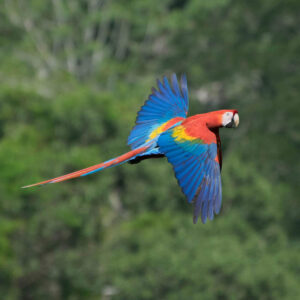
scarlet macaw in flight over trees
Photo by Nana Lepre/Pexels

Biodiversity dictates unique living conditions for the world’s population of animals and plants. As a result of many issues that include deforestation, climate change, predator introduction, and human interaction and interference, our world of uniqueness gets smaller and smaller every year. Over time, the loss of various essential elements eliminates hospitable environs for our once flourishing nature. In time, it stands to reason that changing environments deliver catastrophic results where nature is concerned. For bird lovers, this means the extinction of beautiful exotic birds in the wild.

One of the changes that help greatly where conservation is concerned is the establishment of reserves and protected areas. Of Mexico’s more than 40 protected biosphere reserves, one has recently begun to fulfill an intent that re-introduces scarlet macaws back into their original habitat. It is the hope of the responsible parties that the area of the Tuxlas region of Veracruz will once again thrive with scores of scarlet macaws.

A Place For Macaws

The privately owned Xcaret Park has bred scarlet macaws for the last two decades with the intent to return them to the wild. Working with the National Autonomous University of México (UNAM) within their maintained bird sanctuary, both have released 130 scarlet macaws back into the region of the Tuxlas Biosphere Reserve over a period of four years. Because of this, the birds have started to flourish after having completely disappeared from the region more than 40 years ago. Using the necessary combined effort of re-educating the people of the region to learn respect and care for the nests as they appear, the project is succeeding.

Recently, another 26 birds were released into the Tuxlas Biosphere Reserve in two specific areas. With the conclusion of the project, it is hoped that a total of 500 well-cared and trained scarlet macaws will be released into an area that once painted the skies with the art of colorful birds in flight.

The release program is heavily dependent upon the birds’ ability to adjust to the wild, learning to take care of themselves, foraging and setting up useful living spots. The initial and later scarlet macaw releases have brought hope, as the birds have shown great ability to adapt and forego human assistance.

Within the Tuxlas Biosphere Reserve there are amazing things to note. Most importantly, it is the most northern point of a rainforest and home to 2,698 species of plant life, 877 species of vertebrates that include amphibians, reptiles, mammals, and 569 species of birds. In addition, there is a remarkable population of 860 species of butterflies found in this rainy locale. For migratory birds, this region is a key spot for many North American birds. In all, 223 of the migratory birds found within this region in one time or another are of the overall 569 species that are registered to this area. For lovers of nature and the beauty of it, this region is a desired travel location for many who want to see nature as it should be enjoyed. Other native exotic birds here include the keel-billed Toucan and various species of hummingbirds.

Let’s hope that the reintroduction of the scarlet macaw will be overwhelmingly successful in the end, thus returning a majestic bird back to the wild. Time, help, support, and interaction will bring this to fruition.

Inside Dr. Pepperberg’s Lab: Do Parrots Understand “Process of Elimination?”

Grey Parrots’ Deductive Reasoning — Part I

Studies of deductive reasoning have allowed researchers to compare the intelligence of many nonhuman species with one another and with humans (see review in Völter & Call, 2017). The most common study involves what is technically called “inference by exclusion” or, in layman’s terms, “process of elimination.” Here a reward is hidden in one of two cups: A, B. One cup is shown to be empty, and the successful subject searches for the reward in the other cup: the assumed logic is “A or B; not A, therefore B”; which is also known as a “disjunctive syllogism.” It turns out, however, that a successful subject may be using something other than deductive reasoning to succeed — some logic that is actually much simpler — and that’s the subject of this posting.

Courtesy of Dr. Irene Pepperberg

The first problem is one of avoidance — the subject might just be avoiding the empty cup, or the cup that was most recently touched by the experimenter. Such a strategy has nothing to do with inference, which is what we are trying to test. One way around this is to give several trials in which two equally desirable different foods are shown to be hidden in the A and B cups (see Figure 1).

Then the experimenter engages in two different actions: in one, the researcher places a screen between the cups and the subject, removes one of the foods (say from cup A) so that the subject doesn’t see the cup being emptied, removes the screen, and then eats that food while the subject watches; in the other, the experimenter simply eats a replica of one of the foods in front of the subject, with no removal or manipulation taking place. In both cases, the experimenter touches both cups and then presents them to the subject.

Good Choices

African grey parrot given choice of cups with only one reward
Courtesy of Dr. Irene Pepperberg

In the first case, the subject should infer that the food in cup A was eaten and choose cup B in order to get some kind of reward (see Figure 2). In the second case, the subject should choose at random, because there is no reason to expect that anything has been removed or that any reason exists to choose one cup over another if the treats are equally desired. Grey parrots succeeded very nicely (Pepperberg et al., 2013; see also Mikolasch et al., 2011).

These tests solve the problem of avoiding “empty” or the most recently touched cup, and suggest some level of inference, but do not address the problem of avoiding a cup from which a particular item has been removed. To deal with that possibility, we did the following experiment.

African grey parrot given choice of cups with different rewards
Courtesy of Dr. Irene Pepperberg

On some trials, we placed two treats, of differing value, under each cup in full sight of the birds…e.g., two hearts versus two pieces of chow (see Figure 3). Then we would, behind the screen, remove either one piece of chow or one piece of candy, and show them what we had removed. If they understood the task, in either case they should choose the candy side, as even one piece of candy is worth more than two pieces of chow — and they succeeded (Pepperberg et al., 2013).

We also, of course, had to perform control trials for odor (showing them pairs of cups with food in only one side and making sure they would choose randomly), check for interobserver reliability by having multiple people score the birds’ behavior, and making sure that humans weren’t cuing the birds by some inadvertent movement. All the birds also did well on all these trials.

Although it would seem that these studies clearly showed that the birds were inferring the placement of the rewards by exclusion, it turns out that there are actually additional explanations that refute the “A or B; not A, therefore B” rationale. We’ve recently done several experiments to eliminate some of those possibilities, but that will be the subject for “Part II” in a few months!

Mikolasch, S., Kotrschal, K., & Schloegl, C. (2011). African grey parrots (Psittacus erithacus) use inference by exclusion to find hidden food. Biology Letters, 7, 875–877. doi:10.1098/rsbl.2011.0500

Pepperberg, I.M., Koepke, A., Livingston, P., Girard, M., & Hartsfield, LA.  (2013). Reasoning by inference: Further studies on exclusion in Grey parrots (Psittacus erithacus). Journal of Comparative Psychology, 127, 272-281  doi: 10.1037/a0031641

Völter, C.J., & Call, J. (2017). Causal and inferential reasoning in animals. In: APA Handbook of 766 Comparative Psychology (Call, J., Burghardt, G., Pepperberg, I.M. & Zentall, T.R., eds.). American Psychological Association Press, Washington, DC, pp. 643-67

Wild Birds Become Each Others “Wingmen” To Survive


superb fairy-wren perched on twig outside
Photo “Superb Fairy-wren (Malurus cyaneus)” by patrickkavanagh, CC BY-NC-SA 2.0

Life is hard enough having to carve out a means to co-exist among our fellow beings. With every inch gained, it seems that we fall a few back from one instance to another. It’s easy to see cooperation among many species of creatures. You can readily see it if you’re a multi-species owner, i.e., you have cats, dogs, birds, and other creatures within the same household. And while some separation is necessary due to natural aggression, some species do co-exist quite well. It appears that humans, animals, and perhaps every living thing within our biosphere, must defend territories against invasive threats.

A recent study by the University of Chicago and the University of Nebraska shows that birds in the wild recognize other species and choose to form a bond of sorts that helps provide exclusivity to territory and the food within, as well as the element of safety in numbers.

From 2012 through 2015, two graduate students and their professor from the University of Chicago studied the routines of two species of fairy wrens within the Brookfield Conservation Park in South Australia. They discovered through a variety of means that not only do the birds cooperate with each other; they did so in such a way as to enhance the safety of their families over long periods of time. This proved beneficial in many ways. Often, these two species overlapped in territories, which generated a strong need to co-defend those territories against predators that are more aggressive and other unrecognized members of their own species. Recognition is important and governs the space the birds occupy.

“Locals Only”

During the study, the group observed that the dominant males were more aggressive toward songbirds outside of their mutually shared territories than they were to their fellow inhabitants. They used recordings of other birds and watched as the birds within the territory flew in to investigate the unrecognized sounds. Different times were utilized to determine the birds’ level of aggression and investigation; the dark of the night as well in the light of the day. It would appear that the song of co-habituating species bear some resemblance or marker to effect familiarity versus the tones of a bird several territories away.

These sets of exciting and interesting findings were recently published in the Behavioral Ecology journal of the International Society of Behavioural Ecology, a part of the UK’s University of Oxford. (An abstract of the study can be found here.)

As with people, the animals that surround us exhibit the same kind of group law and protections that prove safe to them. It encourages a comfort derived from having a patrolled and closely protected territory. I have watched black birds group up to pursue and nip at an invading hawk as it flew through the airspace of their homes. Their relentless attacks caused enough consternation of the hawk that it decided that this wasn’t worth the trouble, and so it flew out of range. I also know that this location is home to cardinals, blue jays, woodpeckers, robins, sparrows, and a few other species. In fact, I can recognize some of them as repeat visitors to backyard feeding places.

Foraging For Food Satisfies Parrots’ Appetites And Minds

face of blue and gold macaw eating
Blue and gold macaws enjoy their food!

Feeding ourselves has never been easier. We can hit the drive-through, order delivery, buy pre-made meals, or dine out. We don’t even need to wash or chop produce — we can buy a pre-made salad complete with dressing and toppings. Why then do we sometimes choose to go out of our way to download a recipe, shop for the ingredients, and then spend a couple hours preparing it in the kitchen? It boils down to satisfaction. A homemade meal, even one where the dish might not come out “Pinterest perfect,” is immensely satisfying because of the effort put into it — literally allowing us to eat the “fruits of our labor.” In this example, you might say we are exhibiting signs of contrafreeloading behavior. Contra-what?

“Working” To Get Food

double yellow-headed Amazon on perch eating
Lafeber has developed several non-GMO bird foods that are perfect for encouraging foraging behavior, including Nutri-Berries and Avi-Cakes.

Contrafreeloading is an observed behavior in which an animal, when offered a choice between provided food or food that requires effort to obtain, prefers the food that requires effort. Animal psychologist Glen Jensen is credited as coining the term in 1963, and it is based on his study of rats that were given a choice to eat either straight from a food bowl or from a food dispenser that required stepping on a pedal to release the food. Jensen discovered that the rats went for the pedal more than the bowl. Over the years, similar studies have been done on a plethora of animals, including birds, and the results were similar to that of the rats — most animals prefer to “work for food.” Dr. Irene Pepperberg devoted a blog to the topic, which is worth checking out.

Armed with this knowledge, it might be time to assess not just what you feed your bird, but the way you feed your bird. Is your bird’s food, including treats, always offered in the bowl, conveniently located within beak’s reach? If the answer is yes, consider switching up the way you feed. To get you started, here are some ground foraging ideas to try with your bird.

Saving The Cape Parrot

cape parrot side view with wings outstretched against blue background
Cape parrot (Poicephalus robustus). Photo Dave Brown, CC0, via Wikimedia Commons

The exotic birds of Africa are estimated to number around 2,500 species. From steppe eagles to the colorful lilac-breasted roller, and the beautiful little bee eaters, native African birds are engaging and wonderful to look at. But as with the rest of the world, changing climates, modifying habitats, new introduction of predators, viruses, and a host of other challenges have proven to be just as devastating to all manner of creatures in this continent. One of those creatures being edged out is the rare Cape parrot.

Diminishing Habitats

The Cape parrot is a large bird with a distinct coloration of the head and body. The body is green and the head is yellow. Females have an orange patch on their foreheads. Native to just a few forests of South Africa, there are now estimated to be fewer than 2,000 of these magnificent birds left. The tree of choice for the Cape parrot is the forest’s yellowwood tree, a tall evergreen that supplies both nests and food for the parrots. With this favored tree being systematically harvested, the Cape parrot  is now without a dependable and trusted  resource, thus dwindling its fragile numbers to even more frightening levels. With the additional threat of a viral outbreak known as psittacine beak and feather disease (PBFD), little is on the birds’ side in the ability to help them survive the ecological and man-made assaults that could mean their eventual extinction in the wild.

Deforestation is guilty. But nature is as well. The Cape parrot has a natural predator in the sparrow hawk. Of course, we cannot deflect the instincts of the hawk to prevent the killing of the parrot, we can help to avoid man-created faults like curtailing, if not completely eliminating the deforestation of the yellowwood tree, coveted for its use to create furniture. Additionally, poaching these birds for easy money on the trade routes contribute to their near-extinct status. Unfortunately, education and a healthy dose of respect for the Cape parrot is in short supply among the poor of the region, where it’s said that even the children will bring down the birds to sell.

There are goals being set by conservationists and those who are especially aware of the plight of the Cape parrot. It is necessary to conserve some of the country’s native yellowwood trees for these birds. The hope is that soon, a government-protected reserve can be established to assist the Cape parrot in its need to breed and strengthen its numbers enough to give the bird a fighting chance at survival. The one agency established to assist the Cape parrot is the Cape Parrot Project.

As the name of the organization suggests, the protection of the Cape parrot is the project’s sole cause of existence. Administered by the Wild Bird Trust, this organization hopes to help reforest areas of the habitat for the bird, as well as to act as a forum for public awareness. The CCP actively oversees the development and upkeep of yellowwood nurseries to assist toward reforestation.

The Facebook page of the CPP posts photos of the birds as they’re photographed in the wild. You will also find a lively engagement of discussion as well. For readers, you can help in this cause by donating to the Cape Parrot Project by way of the Wild Bird Trust website (here). As with hope, every little bit helps to bring our world closer to a self-sustaining arboretum of safety.

Everyone Counts On This Birding Day

yellow and blue great tit perched on a twig
How many birds can be seen in one day? That’s the question that drives a ‘big day,’ a 24-hour birding binge that is a fond tradition among birders taking part in the Cornell Lab of Ornithology annual count day. Photo by ChiemSeherin/Pixabay

Global Big Day is a designated 24-hour period of intense bird counting and bird watching. Established in 2015 by the juggernaut of bird oversight, the Cornell Lab of Ornithology (Cornell University, Ithaca, NY), this day was intended to create an unmatched worldwide database of birds with useable data provided by everyday people. To date, that database is the home of one of the world’s most complete list of geographical locations of birds in the wild. The date for the 2018 event was May 5th. This real-time accumulated database is then effectively used by scientists, educators, and other professionals in their efforts to teach and to advance protection for the many bird species of the world.

Participants registered through the eBird website in order to take part in the 24-hour binge watch of native birds. With a downloadable eBird mobile app, birders — amateur and professional — were able to tally up the species spotted and/or heard in locations of their choice. The locations could be from your porch or deck, or during a strategic walk through a forest of woods pathway or park. And while the Global Big Day is set for a 24-hour period, participants did not have to maintain all 24 hours (they could, but it isn’t required) in vigilant stand-by. In fact, some of the watchers joined for periods of less than an hour.

People Flock To Be Part Of The Count

Over the few years since the event was created, the amount of participants has escalated dramatically. For 2018, almost 30,000 participants were involved. That’s up from almost 20,000 participants officially registered in 2017, who spotted 6,564 species from over 50,000 submitted checklists. 2018 generated a whopping new record of 6,916 species from over 75,000 submitted checklists. At the start of Global Big Day (in 2015), there were slightly over 12,500 participants, who recorded a total of 5, 827 species. The goal of 4,000 species was initially set so the end tally was a pleasant and much welcomed surprise.

You can peruse the eBird database for 2018 here. You’ll find a breakdown of leaders from country participation, group participation, species listing, and checklist submissions. While it was difficult to beat the large number of watchers based in the lower 48 states of the United States, there were even two submitted checklists from the Antarctica region with 9 species sightings. The page supplies a real-time checklist submission hot map where (at the time of this writing), checklists were still being submitted and tallied. For more fun and exclusivity, you can input a state, country, and even narrowed down to a county to find the exact species located and recorded with a precise number of submissions (my county submitted 59 checklists with sightings of 153 species).

The big winner in 2018 for the sheer amount of species sightings was Colombia, who topped the list for the second year in a row. Previous to that, Peru held the honor of top species count for the first two years. In fact, South America is home to around 20% of the all known bird species in the world. Ecuador and Brazil are two countries that follow close behind.

To keep the momentum of bird awareness and expanded conservation efforts at a high, we hope that you’ll participate in 2019 and beyond.

How many birds can be seen in one day? Global Big Day says, “a lot!”

Inside Pepperberg’s Lab: Do Parrots Engage In Cooperative Behavior?

Dr Pepperberg and African grey parrot
Which cup will the African grey choose? Courtesy of Dr. Irene Pepperberg

In an earlier post, I wrote about how parrots like to think that everything is theirs — or that everything should be theirs. We have found, however, that African grey parrots will act cooperatively and share under some circumstances — or at least they will do so when they realize it is to their best advantage.

A few years ago, colleagues and I set up an experiment to test whether grey parrots Griffin and Arthur would cooperate in order to maximize their rewards (Péron et al., 2013). A trial consisted of each bird acting in turn; in each turn they were given four cups from which to choose, with each cup indicating a different reward contingency and numbers of nuts. The resulting reward would be given out by the human experimenter.

The Sharing Game

If the first bird to choose picked the green cup, he found two nuts, but one nut went to the other bird. If he picked the orange cup, he found one nut, and the other bird got the nut. If he picked the pink cup, he again found one nut, but he got the nut. If he picked the purple cup, which was empty, no one got anything. The second bird then got a chance to choose from a replenished set of cups. On different days, different birds got to go first.

The parrots could potentially maximize their overall number of nuts by reciprocating in sharing — that is, get a nut on each trial if they each picked green. Only Griffin, the dominant bird, was willing to do so — to share — and then only reliably when he was a follower. Arthur, the subordinate, always took the opportunity to take whatever he could for himself! In a second experiment, each bird alternated with three humans with different specific intentions (selfish, giving, or copying the bird’s behavior). Here, the birds’ responses tended towards consistency with the human behavior. Griffin was willing to share a reward with a human who was willing to give up her reward, was selfish with the selfish human, and tended toward sharing with the copycat human; note that he did not exactly copy the human who gave up her reward! Arthur tended slightly toward increased sharing with the generous human and selfishness with the selfish human, but did not change his behavior to affect that of the copycat. So it appeared that Griffin, at least, had some idea that by sharing he could get the highest number of rewards.

Although Griffin seemed to get the idea, he wasn’t absolutely consistent in his behavior, and we realized that he might have thought that the humans were acting erratically because all the different types of trials with his trainers were intermixed. We thought he might do better if we just gave him the copycat trials alone (Péron et al., 2014). That indeed was the case! This time, he fairly quickly figured out that by choosing green, he could get the most rewards. Of course, his behavior wasn’t exactly totally altruistic, but did show that a parrot could learn to share when his partner would reciprocate and if the overall outcome would be favorable.

Athena Asks For A Helping Hand

More recently, we saw evidence of a somewhat different, but related, type of behavior — one of our parrots possibly asking a student for help! The background for the incident was as follows. Every evening, about 15 minutes before bedtime, our birds are given a favorite treat — a whole almond in the shell (what Alex and now Griffin call “cork nut”) — as a reward for going back into their cages so that the students can put them away for the night. As I’ve written previously, they are about as eager to go to “bed” as is a human toddler, so this is one way we encourage their cooperation. Usually, they eat the nut immediately; sometimes they leave a bit for breakfast; they never ignore it completely.

One morning, however, a student came in to find that Athena had seemingly not touched her nut at all. When the student opened the cage, Athena came out with the nut in her beak — definitely an odd occurrence. Athena transferred the nut to her foot, and then held it out to the student. Even odder! Intrigued, the student held out her hand, into which Athena promptly dropped the nut. Upon inspection, the student saw that this was a particularly smooth almond, with no edge that would provide a starting point for cracking. When the student cracked the nut and returned it, Athena quickly ate it — so there was nothing wrong with the innards. Now, whether Athena was actually asking for help or simply making her displeasure known is unclear, but she certainly knew that the human was somehow responsible for fixing the problem.

It may simply be a matter of our parrots learning how to manipulate their human trainers in order to get what they want, but these findings suggest that Grey parrots certainly can at least do that, even if it means giving up something in the process!

Péron, F., Johns, M., Sapowicz, S., Bovet, D., & Pepperberg, I.M. (2013). A study of reciprocity in Grey
parrots (Psittacus erithacus) Animal Cognition, 16:197-210.
Péron, F., Thornburg, L., Gross, B., Gray, S., & Pepperberg, I.M. (2014) Further studies on Grey parrot
reciprocity. Animal Cognition, 17: 937-944.

The Birdman Of Chennai

three Indian ring-necked parakeets on the ground foraging
Photo Anshulmahoba, CC BY-SA 4.0, via Wikimedia Commons

Anyone who has taken an active interest in feeding neighborhood birds will know that it isn’t long before a group of birds become regulars. In fact, anyone who feeds birds in their backyards will immediately tell you that they’ve graduated from a simple small bag of mix to larger bags as well as more complex mixes to accommodate the various types that can be attracted to a ready meal. There’s a sense of satisfaction and awe when watching birds group around feeders. This is a world-wide trend. And there are some that feed birds on quite large scales.

In India, there are several people who have tended to exotic birds and have attracted thousands on a daily basis. One of those individuals is Joseph Sekar, who lives in Chennai, the capital of Tamil Nadu, a southern state of India. Chennai is considered an extraordinary tourist attraction, and is considered a ‘must visit’ location should you find yourself in India. Joseph Sekar is a resident who has taken upon himself the incredible responsibility in feeding thousands of parakeets. Here is that story:

For The Love Of Birds

In 2004, Chennai was one of many coastal cities hit by a tsunami triggered by a record 9.0 earthquake centered in the Indian Ocean. That quake resulted in the deaths of over 250,000 people by way of those devastating tsunamis. With waves as high as 100 feet, the destruction was immense and immeasurable.

In the days following that disaster, Joseph Sekar discovered two ring-necked parakeets on his doorstep and fed them. They returned on a daily basis and eventually were bringing their friends to be fed. First ten, then fifty, and then a hundred became friendly for the food and water offered. Over time, Sekar found himself feeding thousands of arriving parakeets. To do this, he fed them cooked rice. Using his terrace as a feeding place, he constructed wooden planks upon which he placed the mounds of rice. He would supply the food both morning and evening. Soon, the “Birdman of Chennai” gained notoriety as the man who cared for the birds.

In 2015, Chennai would be hit with floods that damaged the city far worse than the tsunami did a decade earlier. Because of this, Sekar found the arriving bird population to have risen dramatically. It is said that over five thousand arrived daily for feeding. Sekar’s house was filled with water and still he found the way to feed his adopted fleet of parakeets. He would meticulously clean the terrace after each feeding to avoid rice waste from dropped grains.

Joseph Sekar estimates that it takes about 60 kg (a little over 132 pounds) of rice to feed the birds daily. This requires about 40% of his income from his camera repair service. Visitors to Chennai often come and stand outside to watch the magnificent arrivals and departures of the parakeets to the roof of his residence.

You can watch a beautiful YouTube video (here) of Joseph Sekar as he recounts that he doesn’t “have anything other than these birds. My life revolves around these birds.” People who dedicate themselves to the feeding of birds are special people indeed.

Backyard Birds Help Boost Mood

sparrow perched on a decorative pot outside
Wild birds bring joy into people’s backyards. Photo by Oldiefan/Pixabay

How often are you soothed and comforted by watching birds arrive in your backyard? You work to create a network of attracting feeders and stands, all designed to bring as many species of birds possible into your view. The prize is your endless fascination by the comings and goings of each creature as they visit your setup to acquire their sustenance. Interestingly, you’ll discover many things about your creatures. You’ll find that some are aggressive in their gathering and eating. You’ll also find varying reasons for how and why birds react the way they do. The bottom line reasoning for many of our back yard developments of feeding systems is to make our lives a little more connected to our flying neighbors (and sometimes, our four-legged arrivals like squirrels and rabbits).

Birds Bring Happiness

In a recent University of Exeter study, it was determined that people who lived in tree and shrubbery-rich areas filled with birds and wandering creatures suffered less depression than their urban counterparts who see much less of those. However, if urban dwellers were surrounded by more trees and shrubberies along with a fair sampling of birds, they too enjoyed less depressed lives. Additionally, the anxiety and stress levels were significantly reduced with access to more natural day to day occurrences of bird watching capability.

In the previously mentioned study, with over 270 participants from a variety of social stances using income, ethnicity, and age as markers, it was determined that people with afternoon viewing of birds were more often the ones that were less depressed or filled with anxieties. Although the study included morning viewings of birds, the afternoon viewings were indicative of the average for people in bird viewing count and ability. Typically, there are less afternoon birds than morning as the daily necessities of birds are concluding rather than beginning.

The types of birds seen were of the common variety — crows, robins, blackbirds. Of course, less common birds were viewed; however the study maintained that there was no correlation of improvement in depression if such birds were noticed over more common ones, only that viewing birds in areas of plant growth alone made the improvements.

The take-away from this study easily indicates that if you spend time in more natural settings the reality is that you might find yourself happier. It’s figured that we spend almost 90% of our times indoors. Factor in eight or more hours at work, eight hours in sleep mode, and a few hours inside houses, stores, theaters, and other sources of activities, it’s easy to see that we isolate indoors more frequently than we might realize. With the University of Exeter study, we’re reminded that our mental health could use a period of time watching birds. Whether that’s in beautiful gardens, on a chair or swing in the yard or deck, or on a walk in a park setting, the means to lessen the daily toll on our mental health is clearly within our grasp. And linked to birds!


Parrots In Need And War Veterans Bond At Serenity Park


Left to right: Country singer Laura Bryna, Dr. Irene Pepperberg, and Doc Lindner. Courtesy of Dr. Irene Pepperberg

My topic this month is quite a bit different than usual. Rather than a report of the activities of the parrots in the Pepperberg Lab, it revolves around a visit I took to a very interesting place just about two years ago. The place is called Serenity Park, and it is the subject of a brand new book, Birds of a Feather, by the woman who runs it, Dr. Lorin Linder.

Serenity Park is a shelter for unwanted, abused birds, and I first learned about it when I was interviewed for a story for the New York Times magazine section. Only parts my interview made it into the final piece (much was used as background), and I was curious about the basis for the story. I found out that Serenity Park is a very special shelter, because it is staffed almost exclusively by war veterans with PTSD.

A Place For Parrots And People In Need

Severely abused and abandoned parrots can exhibit the same symptoms as these veterans, and it turns out the birds and the veterans, sensing the commonality of their issues, form amazing bonds and actually help to heal each other. Animal assisted therapy is hardly new, but this was different — the healing was mutual. I had to see this for myself.

I contacted Doc Linder, as she is called, and offered to help her with a fundraiser. Anders Sterner, one of the donors to The Alex Foundation, also intrigued, offered to help pay for my airfare, and I had several friends in the LA area with whom I could stay. I sometimes visit shelters, usually to teach the staff about the intelligence of the creatures for whom they are caring, but that wasn’t needed here. What they needed was publicity to gain more support for their efforts.

As I expected, the “serenity” in the name had nothing to do with relaxation and quiet; any time a group of parrots are housed together the noise level can be deafening and the energies of the birds are always astounding. “Serenity” here came from the inner peace that both birds and veterans gained over time.

What was particularly noticeable was that, although the veterans worked at pretty much any job that needing doing, many of the birds and veterans had developed specific pairings, somehow finding each other within the overall groupings. The birds seem to recognize some emotional similarity with a particular person — the large bird who previously had lived in isolation in a cage too small even to stretch its wings seemed to understand the veteran who felt isolated from other humans.

Both began to engage in social interactions, first with one another, and then with other beings. The parrot with epilepsy bonded with the veteran with injury-induced seizures. I met several of the veterans who explained how working at the Park had turned their life around. One young man barely nodded to me on his way to feed the birds; I was told later that I was the first non-Serenity Park human he had ever even acknowledged. I came away with my own bit of serenity, cheered by the good that was being accomplished.

In her book, Doc Linder describes how Serenity Park came about, what it has accomplished, and what she hopes it will accomplish in the future. I fully support her work and her aims, and that is why I encourage you to read her book, and learn her story and the stories of the veterans and the birds who have had their lives changed for the better. Again, I realize this blog is quite a departure — and I promise a return to the activities of Griffin and Athena and my students next month! — but really feel strongly about letting as many people as possible know about Serenity Park and its inhabitants.

Birds’ Amazing Physical Powers

Imagine how your life would be if you had a smidgen of your bird’s physical capabilities. The ability to fly would certainly be a life changer, and being able to see both sides of a room without turning your head could prove to be quite convenient. If you’re a bird lover, you’ll especially find these bird-focused articles worth a read, as they showcase more bird superpowers!

Birds Have Their Own GPS

zebra finch perched on branch
Photo by Jeannette1980/Pixabay

Birds are known for their incredible sense of direction. Researchers are now finding that a specialized protein in birds’ eyes might allow them to sense the Earth’s magnet field to help navigate home from unfamiliar places or over long migratory routes.

See how scientists at Lund University in Sweden made a key discovery about the internal magnetic compass in their study of zebra finches.

Birds’ Colors “Morph”

We know that birds are a colorful bunch — especially parrots, with their hyacinth blues, emerald greens, sunburst yellow and everything in between. But you haven’t seen birds’ true colors — the way they might see each — until you’ve seen this!

Some Birds Are Fast As A Race Car!

Peregrine falcons use a dive, called a stoop, to catch other birds.  Unlike parrots, they are apex predators meaning that they are at the top of the food chain. The birds fly to great heights, then tuck their wings and plummet as they target their prey. Mid nose-dive, falcons have been clocked at 220 mph, equal to the top speed of a Formula One race car.

A Look Inside The Egg

Just how do birds develop in the egg? When exactly do they take their first breath? Here’s a fascinating look at how chicks “breathe” inside the egg, and why it’s more similar to human development than you might think.

Cyclone’s Affect On Migratory Birds

satellite image of cyclone marcus
Cyclone Marcus reached Category 5 strength. Satellite image by NASA’s Earth Observatory

Bad weather can detrimentally impact many things. Among them, lives of people and creatures unfortunate to not be able to escape the pathways of such storms — homes and businesses, and a host of other things. One of the “other things” is something that many of us may not think of as being impacted is the ability to properly follow a path of migration for birds in flight.

Fortunately, there are those who keep that very thing in mind if a storm of great strength should arise. A storm could heavily disrupt the migration of birds leading them off course and potentially create a situation that could be catastrophic to a flock.

On March 15, 2018, a tropical storm began forming in the Northern Territories of Australia. By March 1, it was designated a Category 2 tropical cyclone, and by March 21, the storm was a full-blown Category 5. It was named Cyclone Marcus. For the Northern Territories, this cyclone was the worst experienced since 1974, when Cyclone Tracy wreaked extreme havoc in the area as a Category 4. Currently, Cyclone Marcus is ranked as the ninth worst Australian cyclone in record keeping history. At its peak, Cyclone Marcus generated wind speeds of 185 MPH. That will disrupt many things, including an important path of migration.

Storm Brings Unusual Arrivals

After the storm subsided, a dedicated collection of birdwatchers and enthusiasts set up in areas where sightings of unusual arrivals can alert scientists to migratory disruptions due to Marcus. The main focus of these enthusiasts is to be mindful of rare birds that are seen. In the aftermath of Cyclone Marcus, there have been sightings of birds that should not be seen. Birds like the white-throated needletail have been spotted although none have previously been seen in the Northern Territories since 2005. Broome Bird Observatory is listing daily sightings of birds on a page (here) within their website until such sightings eventually stop.

There is also a threat of danger to the lives of some birds as they become fatigued, starved, and otherwise hurt by the storm during their migratory flights. As they are disabled, bird watchers capture them to turn them into the hands of able caregivers. The distressed birds are then nurtured back to health, and then released to return to the path it originally intended to follow.

As time progresses, the increase of dedicated people with the interest of healthy and sustained birds — and other creatures — have become essential to the well-being of our wildlife who we share our small world with. When potential catastrophic events like Cyclone Marcus forms requiring our immediate attention, it’s wonderful to realize that we have such humanity capable of good things to help maintain ecological order.

I am thankful for the many involved people who have helped (and still are actively involved) during the aftermath of this storm.

Inside Dr. Pepperberg’s Lab: Do Parrots Understand Probability?

African grey parrot on a perch
Courtesy of Dr. Irene Pepperberg

 A few months ago, I wrote about Piagetian liquid conservation, noting that, in order to create experiments for our parrots, I often adapt tasks that were initially designed to examine how children develop various cognitive skills. Sometimes I’m not the one who does the adaptation. As a final paper in one of my courses, a student presented a draft of how we could examine another Piagetian task, one involving understanding of probability. The paper was so good that I asked her to join the lab and carry out the experiment. She—and the birds and other students involved—obtained excellent results, and the paper has recently been accepted for publication (Pepperberg et al., 2018). I’ll provide a brief summary here.

It turns out that probability is one of the most difficult concepts for humans to understand fully. Children have to be about twelve years old before they succeed on some of Piaget’s probability tasks, and even some adults never quite understand probability. (Think about how few people can appropriately solve the “Monty Hall” problem—look it up on the Internet!) We didn’t test Griffin on tasks designed for the oldest children, but rather used those for the 6-8 year olds, given that he matched that age group on the previous conservation task.

Courtesy of Dr. Irene Pepperberg

Piagetian Probabilistic Inference

The task seems pretty simple: If I put three blue balls and one red one in a bucket, mix them around, grab one in my hand and, while my hand is still closed, ask you what color do you think I have, you’d probably say “blue”. Your reasoning is basically “more is more likely.” But until children are over 6 years old, they say things like “Red, because it’s my favorite color,” or “OK, you put one red one in and took one out, so it has to be red.”

Only later do they say things like “Blue, ‘cause it’s the mostest.” However, if I repeated the task over and over and over and asked the same question again and again, once in a while you’d also say “red”, figuring the draw can’t always be blue. At some level, you’d be correct, in that even though there are more blue than red balls, you have no guarantee that blue will be drawn, only that it will be drawn more times than red. But how do you actually decide what to do?

Well, it depends on the number of trials you are given, how well you understand statistics, and what are your goals. For a very small number of trials, most people stick with the majority … “more” definitely is “more likely.” And, if you fully understand statistics, and are betting to win over the course of lots of trials, you should again stick with the majority … in 100 trials, for example, if you stick with the majority, you will be correct ~75% of the time, and that’s as good as it gets.

If you are a typical adult human, however, you are likely to try probability matching, or sampling: you guess blue most of the time but try red about 25% of the time, based on the knowledge that red will come up at that percentage (i.e., has to come up some of the time if the draw is not fixed)—but, because you really can’t correctly guess when red actually will come up, you won’t do as well as if you stuck with the majority. Still, probability matching is not an awful strategy; it’s a lot better than guessing randomly and makes intuitive, if not statistical, sense.

Griffin Put To The Test

The question was what would Griffin do? Because he could label objects, we gave him essentially the same task as the children, using three of one item and one of another, and asked what the removed, hidden item was likely to be. The picture below shows how we performed the task. We used several different sets of objects (e.g., pieces of cork and pieces of wood, pieces of paper and woolen pompons), and randomly switched the sets and what would be the majority and minority items. We put in lots of controls to ensure that we weren’t cuing him, and gave him 96 trials (the number needed to balance all the different sets and majority/minority switches).

He could have used one of three different strategies: (a) choose at random because he had no idea what was drawn (the least intelligent and simplest strategy); (b) choose the majority item 100% of the time (showing that he understood statistics, but in a sense a fairly simple strategy in that he would have just stayed with “more” is “more likely”); or (c) try to match the probability, choosing the majority 75% and the minority 25% of the time (not very good statistically, but ecologically sound in that “more” does not guarantee “more likely”).

Griffin’s Guesses

Interestingly, like most adult humans, and like children about 8 years old, he used (c). He chose the majority 76% and the minority 24% of the time. He updated answers based on the information he acquired from the previous trials, predicting the identity of a sample drawn from a population of a known composition. Such behavior reflects an intriguing form of probabilistic reasoning: He gave more consideration to the hypothesis that the most prevalent object is most likely but also some consideration to the least prevalent.

Griffin both estimated the distribution of items in the environment and—critically, with respect to full probabilistic reasoning as described by Piaget and Inhelder (1975)—recognized that even a favorable proportion does not guarantee a particular outcome (demonstrating Piaget and Inhelder’s Stage II abilities). Of course, one can argue that (b) is the optimal strategy…but it generally takes a formal course in statistics in order to figure that out!

Clements, K., Gray, S.L., Gross, B., & Pepperberg, I.M. (2018). Initial evidence for probabilistic learning by a Grey parrot (Psittacus erithacus). Journal of Comparative Psychology. .doi: 10.1037/com0000106

Piaget, J., & Inhelder, B. (1975). The origin of the idea of chance in children (L. Leake, Trans.). New York, NY: Norton.

Meet The Silkie Chicken

white Silkie chicken standing on ground in front of wire fence
Photo by RJA1988/Pixabay

Not too long ago, we found an unusual parakeet with a fluffy plumage. They are called Feather Dusters. The overgrowth of feathers is caused by a mutation that is rare but it does occur frequently enough to be notable. Overgrowth of feathers and plumage is not unique to the parakeet, however. There is a chicken that shares that overabundant trait as well — the Silkie.

The Silkie chicken has a plumage that is characterized as silky soft and furry to the touch with an extreme amount of feathers that might throw you off if you were to see one. It’s uncommon for farmers to raise these creatures, although a role is often employed as a main focus for their being in a farmyard. This bird is labeled by professional designation as ornamental. Little is known about the origin of the Silkie chicken, but they are thought to have originated in China many centuries ago. There is documentation of mention concerning “furry chickens” as early as the 14 the century.

Distinguishing Features

Their physical makeup is an incredible mix of odd. Not only do they possess the fluffy feather covering all the way to their feet, they also sport black combs, have fluffy crests (like pom-poms), and, amazingly, have black skin (and it’s said, black bones), as well as striking blue ear lobes. But there are other anomalies present. The Silkie chicken has five toes as opposed to the four toes typical of most chickens.

Weight-wise, the male Silkie often weighs in at 4 pounds, while the female is just 3 pounds. Silkies are found in a variety of visually pleasing colors, even orange-red.

Silkie Behavior

Silkie chickens have a soft demeanor that distinguishes them from other chickens. They are noted as being lovable, calm, and friendly, both male and female. For this reason, although not advised, the Silkie chicken has been adopted as an inside pet by some. Because they thrive in flocks, this practice is often discouraged by many pet proponents.

Unfortunately, along with a unique appearance, the Silkie chicken is susceptible to a malady called Marek’s Disease, a viral attack that affects the chicken in multiple ways, including neurological impacting. It’s so contagious that if one in the flock contracts the disease, it can be assumed that the entire flock has been infected by the untreatable virus. Diseases and abrupt deaths aside, the average life-span of Silkie chickens is seven to nine years.

Backyard keepers like to have these beautiful and unusual creatures walking about as they easily add a visual touch of class to otherwise common chicken. The female of these beautiful chickens are considered brood friendly. They often fawn over eggs that are not their own and bring

Inside Dr. Pepperberg’s Research Lab: “What’s Mine Is Mine And What’s Yours Is Mine”

African grey parrot leaning forward on perch on playstand
Photo by nicoleGOR/Pixabay

The phrase in the title is often considered a parrot’s mantra and an inside joke for those of us who share our lives with feathered companions — “What’s mine is mine and what’s yours is mine.” A parrot always wants the one pen we are using, or decides that the one sheet of paper we are perusing is critical for its well-being. That trait — endearing or frustrating depending upon one’s point of view — actually has its roots in natural behavior in the wild, and can, in fact, be used to our advantage.

Let’s start with the behavior in the wild. Many animal species live in social groups — flocks, pods, troops, herds. Parrots, like all such group-living species, use their social community as a source of information, and engage in large amounts of social learning. A young bird needs to learn what is good to eat and what to avoid, how to behave when it hears an alarm call, how to distinguish a predator from a nonthreatening species so it doesn’t spend all of its time hiding and has time to eat and rest. It has to learn to comprehend, to produce, and the appropriate context in which to use various affiliative and aggressive calls, and how to attract a mate. It learns all these behavior patterns — and many more — from watching and listening to the behavior of older individuals.

Our Parrots Role Models

African grey
Alex the African grey investigates Dr. Pepperberg’s mug.

So, what does this mean for a companion animal? Well, clearly, we humans are now its flock and the models for its behavior. That pen you are using…by interacting with it, you are showing the bird that it is something that is fun to handle, that it is an important part of your routine—the way an older bird might interact with an object in nature that it will use in some manner—even though that is not your intention. That piece of pizza you are eating or the iced tea you are drinking…you are showing the bird that these items are safe and good to ingest—the way a parent might introduce a novel food item—even though you really do NOT want your birds to eat these things!

When your phone rings and you quickly bring it up to your face…you are showing that a particular sound made by this weird object is extremely attractive and quickly gets your attention—the way a flock member might use a contact call to bring other birds near, or the way a mate might use part of a duet to call to its significant other. So it really isn’t any surprise that our birds are curious about these aspects of their environment, wish to emulate our actions, and investigate the objects that hold our attention.

Using Modeling To Our Advantage

We can now see how we can use this trait to our advantage. It’s a bit like “reverse psychology,” in the sense that we can pique a bird’s interest in an object if we make believe that the item is something that we cherish and maybe initially don’t wish to share. So, you want your bird to eat its vegetables Maybe you need to eat more veggies in front of them! Doesn’t mean that they will automatically like that carrot (each of our birds has specific likes and dislikes, and we accept that some things might just really taste terrible to them), but at least they are a lot more likely to try it. Want to introduce a new toy? Couldn’t hurt to put it on your desk and have the bird watch you fiddle with it for awhile. Again, it may not turn out to be their favorite plaything, but they are likely to investigate it much more quickly.

Parrot behavior really isn’t a mystery. You just have to think about how evolutionary pressures have shaped a creature that is only one or two generations out of the rain forest. Unlike dogs, they haven’t been domesticated; they’ve only been tamed.

Did Avocado Fumes Cause Bird’s Death?

plate of fried avocado slices with dipping sauce
Photo by Tom Britt, CC BY 2.0, via Wikimedia Commons

If you’re a bird person, there’s a good chance you already know that feeding avocado to your bird is a no-no. Simply put — pet birds have died after eating sliced avocado and avocado-based foods like guacamole. As a healthy food for people, avocado is more popular than ever, and along with that comes an abundance of avocado recipes. Unfortunately, a recent bird death brings up the question, “Could fumes from frying an avocado be dangerous to pet birds?”

According to Karen Allen, owner of Birds-N- More in Lawndale, California, a woman who shared her home with two caiques Allen had hand-raised called her with some heart-wrenching news. The woman went to a cooking class and was given a recipe to try at home — fried avocado. Within minutes of frying the avocado, the caiques experienced severe respiratory distress and were rushed to Teresa E. Micco, DVM, of Point Vicente Animal Hospital in Rancho Palos Verdes, California.

Here is Dr. Micco’s account of what she encountered upon the caiques’ arrival.

Q. You recently had a client come to your clinic with two caiques in health distress. What were your first thoughts as to what might be wrong?

Both birds were in respiratory distress, one worse than the other. They were immediately placed on oxygen in an incubator. The one that was worse was placed in an oxygen mask to receive a higher concentration of oxygen. Initially, I thought it was Teflon toxicosis because I was told by the staff that the owner had been cooking when the birds collapsed.

Q. What was your client’s account of what led up to the birds becoming ill?

After initial treatment, I went to speak with the owner. I was expecting to hear that she was cooking with nonstick cookware. She insisted that she knew not to cook with anything with a nonstick coating. She owned these birds for four years, and she said that she cooks daily without incident.  She said that she keeps a side door open for ventilation. The birds were in the living room, adjacent to the kitchen. This particular day, she was cooking from a Blue Apron recipe of Barramundi and avocado tempura, both in oil.

She had been cooking for an hour and had just finished the fish. She changed the oil and started the avocado tempura. Within 15 minutes, she realized it was very quiet in the living room. She went out to check on the birds, and one was collapsed and the other was inside its little house.

Within an hour of arrival to the hospital, one bird passed away. The other bird improved overnight and was able to go home the next day. The deceased bird was submitted to the UC Davis/California Animal Health and Food Safety Laboratory in San Bernardino.

Q. What did test results reveal?

The bird had pulmonary edema, bilateral and severe, with respiratory epithelium hypertrophy (increase in size of the cells). There was also cerebral congestion with perivascular (occurring around the blood vessel) hemorrhages. These changes are compatible with fume toxicosis (inhaled). All other lab tests performed were negative.

Q. Why is it hard to definitively find the cause?

According to the pathologist, the changes in the lungs are suggestive (although not specific) of fume toxicosis. Although the foremost documented reports of fume toxicosis in parrot species are those caused by gases produced when Teflon/nonstick products are overheated, there are many other airborne toxins, including aerosol sprays, cooking gas, carbon monoxide, tobacco smoke, candles, and fumes from burned foods and cooking oils.

The diagnosis in these cases remains presumptive as there are no tests available to test for the presence of any of these products. The results are essentially the same. Furthermore, as toxicity is dose-dependent, I have had and have avian patients that have been exposed to low levels of inhaled toxins over time and have chronic lower airway disease, which seems to predispose them to recurrent infections and respiratory disease.

Q. What steps can bird stewards take to protect their flock from cooking fumes … what are some lessons learned?

I advise my clients to move their birds to another room in the house away from the kitchen, especially when cooking and cleaning. Make sure the room is well-ventilated. In addition to cooking dangers, I recommend to keep the birds away from any sprays, powders, dusts, and smoke of any kind. Chronic lower airway disease is one of the leading causes of death in humans; perhaps we should heed our own advice for ourselves as well as our birds.

Resources On Avocado Consumption In Birds

Disclaimer: The consumption of avocados has been shown to be highly toxic to budgerigars and less toxic to canaries. The greater the amount consumed, the greater hazard, and the greater potential for death. To our knowledge, no studies have been conducted to assess the risk of frying avocados to nearby birds from cooking odors. The Lafeber Company shares this report on the chance that frying avocados may pose a risk to birds.

J Am Vet Med Assoc. 1989 Jan 1;194(1):64-6.

Avocado (Persea americana) intoxication in caged birds. Hargis AM1, Stauber E, Casteel S, Eitner D.

Author information

Abstract

Avocados of 2 varieties were mashed and administered via feeding cannula to 8 canaries and 8 budgerigars. Two control budgerigars were given water via feeding cannula. Six budgerigars and 1 canary died within 24 to 47 hours after the first administration of avocado. Deaths were associated with administration of both varieties of avocado. Higher dose was associated with greater mortality. The 2 budgerigars given water were normal throughout the observation period. Results indicated that avocados are highly toxic to budgerigars and less toxic to canaries. Postmortem findings observed in some birds included subcutaneous edema in the pectoral area and hydropericardium.

Before You Reach For That Oil …
Karen Allen expressed concern over the increasing popularity in avocado-based products — especially avocado oil, which is touted as a healthier alternative to other cooking oils. She urges those who share their homes with birds to stay away from cooking avocado. “Don’t take any chances.”

Inside Pepperberg’s Lab: African Grey Griffin Speaks His Mind

African grey
Courtesy of Dr. Irene Pepperberg

Sharing one’s life with a parrot who not only means what he says but also understands human speech has definite advantages. African grey Griffin can tell us when he wants to go back to the cage (“Wanna go back”), to sit with us during down-time (“Wanna go chair”), or hang out during clean up (“go s—ink”). He often lets us know when he wants to work by his a request for a treat (“Wanna nut”) and is learning to ask for juice, which we are using for additional studies on Piagetian liquid conservation.

Griffin occasionally asks for apples or almonds (“banerry” and “corknut”—he learned Alex’s terms), sometimes for his cooked “grain” or other fruits and vegetables. Unlike most parrots, he doesn’t like typical toys so, although he’ll identify various materials and objects, he rarely asks for them. Still, his ability to communicate does make both of our lives easier. He can make his wants and needs known, and we don’t have to guess at his desires.

Griffin And Referential Communication: The Upside And The Downside

He understands a lot more, however. We can tell him and he understands that he has to “wait” for us to use hand sanitizer before picking him up, to take off our outdoor shoes to avoid tracking in outside dirt, or for his cooked grains to cool before eating. He doesn’t like to be left alone, and usually protests with squawks or “come here!” when we start to head out of the lab, but if we say we’ll be “right back”, or “back in an hour”, or even “I’ll see you tomorrow”, he calms down fairly quickly. Sometimes, however, his understanding of human speech causes problems.

Understanding Words, Not Just “Parroting”

Like most companion animals, he really does not like trips to the veterinarian. We can’t blame him—getting poked and prodded and having blood drawn, or occasionally getting a shot, is hardly fun. In fact, he finds just the mention of medical care stressful. Griffin has learned the terms “vet”, “veterinarian”, and even her name (“Marge”); he’s also learned a bit of spelling, so we can’t use “v-e-t”, even if we are talking about an appointment in the future: He begins to shake and will likely chew off some feathers overnight. We now are very careful to speak about “she who must not be named”…the phrase seems long enough that he can’t make the association!

We also learned recently that he understands more about numbers than we thought. For many years, he’s been able to identify shapes, using “one-, two-, three-, four-, six- and eight-corner” (a seven-sided object is kind of weird, so we never use it, and for some reason—probably the difficult consonant structure—he refuses to say “five”). He can also identify numbers of “clicks”, and sometimes practices on his own, clicking and then reporting on the number of clicks he’s produced. We’ve used this understanding to let him know when we’ll be back if we are gone longer than overnight. So, on Friday evenings, I’ll usually say something like “I’ll be gone for two days; I’ll be back on day three.”  He seems to understand. In December, I had a long trip to Europe, and I told him I’d be back on “the eighth day.” I wasn’t really sure he could associate that many days with the actual number label but figured that he knew that “eight” referred to a large amount and that he’d understand that I’d be gone awhile. Well, he definitely understood more than I expected!

My flight home from Amsterdam was horribly delayed (we even had to layover in Canada to refuel!), I missed my scheduled connection in Philadelphia, and by the time I got home and got to bed, after being up for most of 27 hours (naps on planes don’t really count!), there was no way I was getting up early the next morning to go into lab. I texted my lab manager and students, made sure that the birds would have adequate care, and tried to catch up on sleep.

I wasn’t totally surprised when I got the “cold wing” upon my eventual entrance a day late—Griffin often does that when I’ve been away for any length of time. I was, however, taken aback when the students told me that he had been completely, totally, uncooperative the day that I was supposed to have returned: that he wouldn’t come out of his cage, that he bit a student who tried to get him out (one of his favorite students, no less), and just glared at everyone all day! See a picture.

He clearly had connected the label “eight” and a specific number of days. He expected me to arrive, I wasn’t there, and he knew something was amiss. Remember, in the wild, if a flock member doesn’t return when he or she should, such an absence usually means the bird has been eaten by a predator or has permanently left for another flock. I suppose I shouldn’t have been surprised, given all that I know about parrot intelligence, but … I guess I’ll have to try out something else the next time I travel!

Healthy Habits We Can Learn From Our Birds

Amazon and African grey parrots perched on metal food bowls
Photo by Gamaliel Troubleson/Unsplash

Looking for some healthy habits to try in the year ahead? Good news! Chances are you have your very own health coach living with you right now — look no further than your feathered friend! Here are a few of your bird’s healthy habits that you should follow, too.

Eat the rainbow. This trending phrase is a simple way to remind us to eat a variety of fruits and vegetables to help get the vitamins and minerals our bodies need. The same goes for our pet birds. Parrots cannot live on seed alone — they thrive when fed a healthy diet that is supplemented by a variety of fruits and veggies. Likewise, their human stewards cannot and should not consume a diet devoid of healthy selections. In the wild, parrots are natural-born foragers — they eat what’s in season, which adds variety; we can reap health benefits by doing the same. Try some of these winter fruits and veggies.

Eat slow, and enjoy your food. Ever noticed that your bird takes his/her time to thoroughly enjoy a favorite food? Birds eat differently than our canine companions. A dog is more inclined to gulp down a prized treat, while a parrot might very well take a good five minutes to eat a single blueberry. We humans can take a cue from our birds and take the time to enjoy our food. Research shows that chewing until “no lumps remain” increases the number of calories the human body burns during digestion: about 10 extra calories for a 300-calorie meal. Extra chewing also slows the pace of eating, which may be another reason why it’s a healthier way to eat. Slow eating may also help people eat more mindfully and tune in to their feelings of fullness.

Eat breakfast. Imagine your bird starting the day without breakfast. In the wild, the flock’s foraging begins soon after the sun rises. Chances are your bird wakes in the morning waiting patiently (or impatiently) for their food. Birds are breakfast eaters for sure; if you asked your bird, they probably couldn’t fathom why their favorite humans would forgo breakfast.

Birds don’t need a doctor to tell them that breakfast does a body good, but we silly humans sometimes need a little reminding. So here are some good reasons to eat breakfast, according to WebMD: Breakfast kick-starts the metabolism, helping us burn calories throughout the day, which can help us focus at work or at school. Many studies link eating breakfast to better memory and concentration, lower levels of “bad” LDL cholesterol, and lower chances of getting diabetes, and heart disease — no wonder breakfast is often referred to as the most important meal of the day.


Inside Dr. Pepperberg’s Lab: Prepping For A Film Crew Visit

Lights, Camera, Action!

African grey parrot Griffin does the bigger/smaller task with the keys in Dr. Pepperberg’s lab. Courtesy of Dr. Irene Pepperberg

I’ve written previously about doing publicity photo shoots with my parrots in the laboratory and how much work is involved in the procedure. A photo shoot, however, is an extremely easy event compared to having a film crew in residence for a day or two. Although the finished production always looks effortless, the process is anything but.

Preparing For A Film Crew

First, of course, comes the preparation. We always keep our lab extremely clean for the health of the birds, but we aren’t always neat. The desk is often piled with papers and notes; boxes of paper towels, bottles of spring water, and other items are arranged for convenience, not aesthetics. That all has to change the day before a crew arrives. We have to think about how everything will look through the lens of a camera. We also try to make sure that all the materials that will be needed for whatever experiments we plan to demonstrate will be immediately available; during filming, we can’t waste time hunting for various exemplars.

Making Our Parrots And The Film Crew Comfortable

When the film crew arrives, we have to educate them about lab procedure and introduce them to the parrots. Shoes have to come off, hands have to be sanitized. Athena is happy to climb on whatever hand is presented to her, but Griffin is a lot more reticent. We actually formally introduce everyone so that the birds understand that these new people are safe to be around. When the parrots see us talking calmly to these strangers, shaking hands and acting friendly, they know not to be afraid. And the crew needs to learn to move slowly and deliberately, to avoid fast actions so as not to startle the parrots.

Of course, not being afraid of people is very different from not being afraid of equipment. Most crews bring in large, bulky black, scary items— cameras, sound boxes, special lighting, etc. Griffin is now an old pro, and acts quite disinterested. Athena, however, wants to be as far away as possible from the offending objects, and to cower on the shoulder of her favorite human! We have to go over to every single piece of equipment, stand next to it, handle it, stroke it, and slowly bring her toward it. She has been trained to “touch” unfamiliar objects, and reluctantly does so, but that doesn’t mean she likes the procedure. Seeing Griffin initiate the beak tap to these items sometimes helps. It’s a slow process, and we always warn the crew that it may take some time for the birds to adjust to the new situation.

Repetition: Good For Filming, Not So Good For Parrots

The filming process itself is quite arduous and the parrots really do not understand why they have to do the same things again and again just so the crew can get different angles and views. On a regular day, if my birds perform a task correctly they get a reward and get to move on to something else. They have to repeat a trial only if they have erred — and after the first film shots, they know they were correct because they were praised and rewarded. Repetition thus makes no sense to them.

During a recent filming, Griffin was very happy to identify all his toys immediately, and was even willing to do so a second time. The third time was not a charm. He definitely had issues. He began to do exactly what Alex used to do when he didn’t want to work, was bored, and wanted to mess with our heads: When asked to give the color of a woolen pompom, Griffin said every color except the correct one. Statistically, he couldn’t have done that by chance — he could only have avoided the correct answer five times in a row if he indeed knew the proper answer and didn’t want to produce it. Fortunately, the crew thought Griffin’s behavior was quite clever and said that they would make sure that their viewers understood what had happened!

Griffin’s Big Screen Moment

Later in the day, something similar occurred. We were trying to get Griffin to demonstrate his knowledge of relative size — to label the color of the cup that was either the bigger or smaller of two on a tray. Understanding such relational concepts is a hallmark of advanced cognition, because a subject needs to recognize not only that a tennis ball is “big,” but that it is “big” compared to a golf ball yet also “small” compared to a soccer ball; that is, that context is crucial. Demonstrating this behavior on camera would be really important.

During our experimental trials, Griffin is usually correct about 80% of the time, a significant score. But when we set up for filming, he just sat there — beak tightly shut. No matter what colored cups we used, no matter what enticing morsel we offered as a reward, Griffin refused to speak. It felt as though we were filming for an hour, although it probably wasn’t that long. I teasingly said I would use some old footage we had of Alex, who had performed this task quite nicely. And that gave me an idea … maybe Griffin was again bored. So I had a student find the differently sized and colored keys that we had used with Alex.

Now, Griffin had never before been questioned about bigger-smaller with anything other than toy plastic cups. What I was proposing to do was what is formally known in psychology as a “transfer test,” to see if a subject can transfer a concept from training materials to totally novel items. It’s a very rigorous test. It was also pretty risky: If Griffin failed, he would fail for all the world to see. If, however, he succeeded, we would have officially documented a very important event. At that point, however, I wasn’t thinking of risk; I was just trying to figure out what might make Griffin talk on camera. So I placed the keys in Griffin’s line of sight, asking “What color smaller?” Griffin looked closely, hesitated only briefly, and came out with a clear — and correct — “YELLOW!” Phew.

Athena’s Performance

Nothing we could do would get Athena to talk on camera, but it occurred to me that we could at least demonstrate how we were training her. If she talked that would be terrific, but even if she didn’t, the audience would see something of interest. Thankfully, the familiarity of that situation worked nicely, and she produced a very soft “nylon” after a student and I modeled the appropriate question-and-answer system.

Unseen Efforts

The film crew spent most of a day with us, with only a break for lunch. We filmed and re-filmed, and that didn’t even include my on-camera interview which took up a few hours on a second day. The actual edited piece will only take up a few minutes in a program broadly devoted to animal communication; the show will seamlessly glide from one task to another, covering a multitude of species.

Much of what we filmed will likely end up on the cutting room floor. Was it worth it? If it helps people appreciate the intelligence of these amazing birds, definitely! But, the next time you watch an hour-long documentary about various clever animals, please try to appreciate all the days, weeks, and likely months of effort and energy that went into the overall filming and editing process!

Darwin’s Finches Continue To Evolve

galapagos finch perched on twig in tree
Darwin Finch” by Tim Ellis, CC BY-NC 2.0

Charles Darwin is significant in our history for his studies and subsequent theory on the processes of evolution. As a result of this long and detailed work, which was eventually distilled within the texts of The Origin of The Species, his name became forever tied to any earnest discussion involving evolutionary theories of any kind. During his travels and studies, he spent some time in the Galápagos Islands. It was this visit to the Islands that helped to more fully shape his thoughts on species and the stability of species. On the Islands, Darwin, although not an ornithologist, collected finches that he soon discovered to be uniquely separated from finches found elsewhere.

The finches, now called Darwin’s Finches, are a collection of 13 species of birds that were considered vastly different in makeup from the finches in other parts of the world, even among themselves. This made the finches on the Galápagos Islands incredibly unique in appearance. After close evaluation by a well-respected ornithologist of the time, John Gould, the finches were determined to be separate species rather than varieties of the other finches of the world. Some of the differences included variable beak sizes, color, plumage, tail sizes, and behavior patterns. As a result of these studies, Darwin’s Finches became well known as representative of the divergence of species. Their existence helped Darwin advance his studies of evolution by natural selection.

New Species Of Finch

Back in 1981, a non-native male cactus finch likely from Isla Española, a small Galápagos island located some 60 miles south, arrived on the northwestern island of Daphne Major, and mated with two native female ground finches. New variations of the divergent species of finches were hatched. Since that time, approximately 30 birds of that “new” species of finch are now native to the island of Daphne Major. This process of evolution is called speciation, and it’s going on right before the eyes of surprised scientists who actively monitor the birds of Galápagos Islands.

The new species of finch is currently called Big Bird by the scientists that are following this remarkable and unlikely event. Their successful existence has already begun to challenge and change what is known about how birds evolve. What was once thought to be a constructive result of necessary mutation effects over millennia can now also be realized as a fast route of evolution via a process called hybridization. This occurs by the introduction of two unique species in a successful mating and hatching process.

This hybridization has created distinct — and unique — changes in the offspring of the two finch species that resulted in a different beak shape, a bigger overall size, and even a new vocal pitch that clearly separates its birdsong from that of its parents. The new finches mated with each other, which helped to account for proliferation and purity of the thirty in existence today on the island of Daphne Major.

This newly evolving species could eventually mate with other species of finches on the island to create even more unique species, although such an occurrence is unlikely. But if it does, the Darwin evolutionary theory by natural selection is not only getting a new and important study, but is a rare chance to watch and be amazed at how nature works. And science was gifted with a fast track view of this concept within a single lifetime.

How Dr. Pepperberg Chooses What Topics To Study

African grey parrot
Courtesy of Dr. Irene Pepperberg

One of the many questions I’m often asked is how we choose topics to study. Specifically, where do we get our inspiration? Our choice of studies is actually influenced by several different issues, and I’ll discuss a few of them in some detail.

Will Others Like It?

The first issue is, not surprisingly, whether the topic would be of interest to my colleagues. If no one would want to read the eventually published paper, we have very little incentive to perform the study. Thankfully, both colleagues and owners of companion birds do seem to want to know how a bird with a brain the size of a shelled walnut stacks up against species as disparate as, for example, children, adult humans, apes, cetaceans, and monkeys.

We therefore often compare the abilities of our birds to those of other species, replicating existing research to provide a comparative approach. So, after attending a seminar or a conference and learning about studies in different laboratories, we often choose to examine how African grey parrots fare on various cognitive tasks. We may or may not have to adapt other labs’ procedures based on our parrots’ abilities. If, for example, a study involves young children’s vocal responses, and our parrots have similar labels in their repertoire, we generally use almost identical procedures.

Interestingly, however, we often have to perform additional controls that researchers studying children will ignore — for example, making sure that there are no olfactory cues, or that the students are not cuing the birds with body/head/eye gestures. Thus our protocol is often more exacting than those used for humans! If the human or nonhuman primate study involves pointing, we have to adapt the protocol so that our African greys can indicate the correct response by tapping with their beaks. We therefore spend a lot of time reading about research on many different species.

Student Inspiration

Another source of inspiration comes from my students. The final exam in every course I teach is always the assignment to design an experiment on animal cognition. If students design a really cool study, I’ll ask them if they want to become a research assistant in my lab to try out their idea on our parrots. Of course, an undergraduate usually doesn’t present a project that is completely ready to administer to the birds, but we work together to design the appropriate controls and refine the methodology. A paper based on one such exam paper (looking at probabilistic reasoning) has just been accepted for publication, and I’ll describe the results in detail in a forthcoming blog.

The bases for the experiments described above often originate with classic studies on children, like those designed by Jean Piaget (1936), or on chimpanzees, like those designed by David Premack (1983). Examples of the former involve our studies on object permanence (knowing that an object still exists even after it is hidden, e.g., Pepperberg, Willner & Gravitz, 1997) and liquid conservation (knowing that changes in shape do not affect changes in volume; Pepperberg et al., 2017); examples of the latter involve our studies on concepts of same/different (knowing not just that two objects are either identical or totally different, but that they can share some attributes and differ on others, Pepperberg, 1987).

Sometimes the experiments involve examining phenomena such as how our birds respond to classic optical illusions, often because another avian species does not process the illusion as do humans, and we want to see if African greys are more like humans or pigeons (more like humans: Pepperberg & Nakayama, 2016; Pepperberg, Vicinay, & Cavanagh, 2008).

Collaboration

Occasionally, however, colleagues design novel experiments to test a previously unstudied or understudied concept in another species and we decide to collaborate — either adapting their proposed protocols for our birds or designing protocols that are identical for the birds and humans. That has been the case with an ongoing study on visual working memory manipulation — determining if Griffin can process as much, more, or less information than adult humans or children. (Hint: He’s pretty good!)

It would be fun to figure out a task that no one has ever given any other subject, to see how our birds perform, and then have everyone else replicate our work … but right now, so many studies already exist that are just waiting for a comparative perspective; we have our work cut out for us for many years!

Piaget, J. (1936). La naissance de l’intelligence (The origins of intelligence). Neuchatel, Switzerland: Delachaux et Niestle.

Pepperberg, I.M. (1987b). Acquisition of the same/different concept by an African Grey parrot (Psittacus erithacus): Learning with respect to categories of color, shape, and material. Animal Learning & Behavior, 15, 423 432.

Pepperberg, I.M., Gray, S., Lesser, J.S., & Hartsfield, L.A. (2017). Piagetian liquid conservation in Grey parrots (Psittacus erithacus). Journal of Comparative Psychology. 10.1037/com0000085

Pepperberg, I.M., & Nakayama, K. (2016). Robust representation of shape by a Grey parrot (Psittacus erithacus). Cognition, 153, 146-160.

Pepperberg, I.M., Vicinay, J., Cavanagh, P. (2008) The Müller-Lyer illusion is processed by a Grey Parrot (Psittacus erithacus). Perception, 37, 765-781.

Pepperberg, I.M., Willner, M.R., & Gravitz, L.B. (1997). Development of Piagetian object permanence in a Grey parrot (Psittacus erithacus). Journal of Comparative Psychology, 111, 63-75.

Premack, D. (1983). The codes of man and beast. Behavioral & Brain Sciences, 6, 125–167.

Meet Hawaii’s Crow

Alala (aka Hawaiian Crow) perched on branch among leaves
Alala” by USFWS – Pacific Region, CC BY-NC 2.0

The world around us changes so fast. That’s an inescapable condition. Some of the more frightening aspects of change occur when creatures that are a part of our biosphere become challenged with adaptability and ecological differences. Over time, we have lost many animals and other important species because of reasons that might simply be too complex for us to properly deal with. Apart from reprehensible and immoral deliberate interaction by poachers and hunters that know better and destructive land terraforming efforts, the environment has swirled and eddied enough of its own to introduce dangerous predators into areas where they may not have existed before. Additionally, climate changes destroy previously depended on resources for birds and other animals needed for sustained existence.

Meet the Alalā, Hawaii’s Endangered Crow

One of the birds that have gone extinct in the wild is the ‘Alalā, or the Hawaiian crow. The bird had long been settled on the big island of Hawaii even before the islands were settled by human populations. Since then, the bird has adapted to the unique environs of the island. But by 2002, the final two known ‘Alalā birds in the wild were gone, victims of the overwhelming influx of humans, predators like the mongoose and tree-climbing rats, as well as a large, growing  population of feral cats, and the ever-present threat of avian disease and viruses.  The ‘Alalā had gained legalized protection by Hawaii in 1931, and were federally protected in 1967.

The ‘Alalā is a beautiful bird unique to Hawaii. In appearance, the bird is about 1.5 feet tall from bill to tail, with deep black feathers and a large bill. The ‘Alalā is known to be quite intelligent. They use tools like sticks to achieve results they cannot with their beaks, sometimes shortening them if needed. It should be clearly understood that tool use among birds is a rare trait. To the respectful people of the big island, the bird is revered.

Saving the Alalā, The Hawaiian Crow

In the ’70s, after a sharp drop in the ‘Alalā population, a collected batch of these birds were taken into captivity by the Hawaii Endangered Bird Conservation Program  in the hopes that they could be properly expanded by breeding and protected for future reintroduction into the wild. This brought into being the ‘Alalā Project, which has carefully bred and now houses and cares for over 100 of these rare birds. There are two facilities that currently breed the Hawaiian crow. They are administered by the San Diego Zoo Global. With inherent difficulties in breeding (necessity of contained breeding aviaries, mate incompatibilities, inbreeding probability, etc.), the birds are carefully and patiently dealt with to ensure successes. After their birth, the birds are properly housed in conservation centers to give them the best possible growth assistance in diet and veterinary care. They are also given extensive training in survival skills in preparation for eventual release.

The governmental agencies have worked hard on two habitats in order to help give the ‘Alalā a fighting chance to regain its rightful place in the wild. The first is Pu’u Maka’ala Natural Area Preserve. It was designed to be rich in foods desired by the ‘Alalā, and to contain a dense plant life. The area is fenced in to help prevent unwanted animals within its borders. The second choice, to be used perhaps in 10 years, is the Ka’ū Forest Preserve.

In late September of 2017, the ‘Alalā Project released six young birds into the favored habitat (four males, two females). A second group of five birds (three males, two females) were released to the habitat in mid-October. The hope is in that the first release established themselves and can “assist” the second batch.

We are ever hopeful that this long-planned and carefully maintained work finds complete success, starting a new era of self-sustaining birds. And not only for the ‘Alalā bird, but for every creature groomed for such preservation.

Inside Pepperberg’s Lab: Parrots’ Cognitive Abilities Put To The Liquid Test

Piagetian Liquid Conservation: Parrots Match Older Children’s Expertise

Athena drinking grape juice
Courtesy of Dr. Irene Pepperberg

If you’ve been reading this blog for awhile, you’ll know that my studies often involve comparing the abilities of my parrots to those of young children. Many of the tasks we use were originally created by the Swiss child developmental psychologist Jean Piaget. Piaget was fascinated by the ways in which children’s cognitive capacities changed as they interacted with, and learned more about, their world. One of his interests centered around how children learned that a specific amount of material, be it liquid or solid, would be unaffected by transformations of its shape. This concept was formally called “conservation” because the amount was conserved during the change.

Understanding conservation would seem to be fairly a straightforward proposition, but it isn’t grasped by children until they are at least 5 years old. In fact, most children do not acquire the concept until they are older, around 6. The problem for these children is understanding that changes in one dimension (e.g., height) can be compensated by changes in another (e.g., width).

How Children React To The Conservation Task

One part of the classic task involves liquids (Piaget & Inhelder, 1966/1969). Here, children are shown two glasses of juice, both having the exact same quantity, and asked which they’d prefer. The children mostly giggle and say something to the effect that it doesn’t matter, they are the same. Then the experimenter pours one glass of juice into a tall, thin transparent container and contents of the other glass into a short, fat one. The experimenter then again asks the children which they’d like. If the children are 5 years old or younger, they choose the tall, thin container. If asked why, they say that there’s more in that container. They don’t seem to understand that the quantities remain the same.

Older children, usually by around their sixth birthday, might make the same choice, but when asked why, they say something about one container being easier to handle, or more fun to use — because they understand that nothing has really changed. If, however, the older children do not see the experimenter transfer the juice, but just see the two filled differently shaped containers, they make the same mistake as the younger children. That result is expected, because those so-called “invisible transfer” trials show that if the children have no reason to think the amounts are the same, they can’t make the correct inference. The tall, thin one definitely looks like it has more, and the children choose based what they perceive is true.

Why Birds Need The Conservation Skill

My students and I were interested in whether our African grey parrots would understand conservation. In the wild, it would come in quite handy: Birds likely would need to know that a squished piece of fruit had the same nutritional value as one that hadn’t been deformed, or, when trying to decide where to get the most food, that it is the comparison of relative quantities of other creatures foraging in specific areas rather than of their apparent densities that is the appropriate criterion upon which a decision should be made as to whether to join or move on. But would bird that never actually had to forage still develop this understanding?

Testing Whether Birds Understand Conservation

We decided to test this on our Griffin, who was then 18 years old, and also on Athena, who at the time was only 6 months old. Would Griffin understand conservation? Would Athena develop this concept over time? We also tested two companion birds, Pepper and Franco, who belonged to the Hartsfields, who had worked in our lab; their birds had already taken part in a few experiments, but had had nowhere near the laboratory experience of Griffin. Using Pepper and Franco allowed to determine if having lots of lab experience was important: Would it make up for lack of interaction with the natural world, or did this concept develop through any sort of daily interactions?

We started with Griffin, to see how he would perform on the classic test. We used U.S. standard measuring spoons, showed him two half-teaspoons filled with juice, and then emptied them into a teaspoon and a tablespoon. One container was thus half full and the other was one-sixth full. We also gave him trials starting with a full teaspoon. We needed to determine if he could perform the task at all, particularly on his first trials — before he had significant experience in drinking from the containers and possibly learning that differently sized spoons provided an identical sense of satiation or even that emptying them took the same amount of time (another possible indication of equivalence). If an adult, laboratory-trained African grey succeeded, as did the older children, it would make sense to go forward, testing him on other variations and testing the other birds for comparison. We found that Griffin did succeed on all trials, choosing randomly — which showed he knew that there was no difference between the destination spoons.

We then had to make sure that he actually cared about getting more juice: Maybe his random choice meant he didn’t actually want more. We therefore gave him a choice between spoons containing more versus less juice. He always chose more, showing that he really did care about the quantities. When we tested Pepper and Franco on more versus less, they also always chose more. Athena, however, was another story. At 6 months of age, she was so excited by getting juice that she just grabbed at the spoons randomly. It wasn’t until she was about 10 months old that she started calming down and choosing rationally, and we could then start her tests.

How The Birds Performed In Conservation Tests

We decided to give Pepper, Franco, and Athena invisible transfers first, during which they would see only the result of the transfers, and similarly test Griffin, to see if they would all respond like the children. Pepper, Franco, and Athena did — they all chose the spoons that looked as though there was more juice. Griffin, however, couldn’t be fooled…after having experienced the visible transfers, he probably remembered the levels and again chose randomly.

The important tests for Pepper, Franco, and Athena now were to see if they would not be fooled when they saw the transfers from the original same-sized spoons to the differently sized destination spoons. They all succeeded, although Franco was occasionally distracted by seeing a full teaspoon in some trials. Nevertheless, all three birds were correct (as was Griffin earlier) at statistically significant levels. Even Athena, who was less than 2 years old when we completed the study, performed at a level equivalent to about a 6-year-old child! We did a few more tests to make sure that our results held under different conditions, and the birds succeeded on those as well. (See Pepperberg et al., 2017 if you want all the details). Thus, another study has shown the intelligence of our feathered friends!

Pepperberg, I. M., Gray, S. L., Lesser, J. S., & Hartsfield, L. A. (2017, August 31). Piagetian liquid conservation in Grey Parrots (Psittacus erithacus). Journal of Comparative Psychology. Advance online publication. http://dx.doi.org/10.1037/com0000085.

Piaget, J., & Inhelder, B. (1966/1969). The psychology of the child (H. Weaver, Trans.). London, England: Routledge and Kegan Paul. (Original work published 1966).

Hummingbirds Inspire

hummingbird hovering beside red feeder
Photo by GeorgeB2/Pixabay

We are all already cognizant of the fact that some people are tuned in to the wavelength of a bird. There just seems to be an attraction that cannot be explained (nor do we want to explain it). It’s a wonder to be able to communicate in some mysterious way with birds. That’s why exotic birds are so high up on the list of favored creatures when it comes to befriending one. But sometimes, that wavelength even extends out to the world of the wild bird, the bird that cannot be housed inside a cage.

Consider the hummingbird. And then consider the connection of hummingbirds to an assistant researcher who works within UCLA in its Earth, Planetary, and Space Sciences Department. That would be Dr. Mélanie Barboni, whose connection with hummingbirds is a passionate one.

Upon her arrival to UCLA as a postdoctoral research fellow, Mélanie placed a hummingbird feeder outside her window. Shortly, she was greeted by her first hummingbird. Over time, the research assistant found the population of thankful hummingbirds growing, where it now stands at around 200 or more. During the three years of attending to the hummingbirds outside her office, she has increased the feeders to four. The birds are so aware of her presence that they are completely unafraid of her. They will even land on her hand if she puts it outside the window.

Her familiarity with the hummingbirds extends even further with a large group of recognizable individual birds. She has given some of them names. The birds are so comfortable with Mélanie that they easily fly within the window to perch near her as she works, often resting and sleeping inside. Around the campus, Mélanie is often referred to as “the hummingbird whisperer” for her abilities to effortlessly bond closely with them.

Tips For Wild Hummingbird Care

In a brief e-mail exchange with Mélanie, she asked that we add to this article the importance of how and what you feed hummingbirds in your own backyard explorations. In her own words:

“Food: The nectar recipe should be 1 part white granulated sugar for 4 parts boiled water. No honey, no brown sugar, no worm blood or any other proteins (the hummers get their proteins by chasing bugs). It is important to use white granulated sugar only. That recipe reproduces very well what they find in flowers. If you use brown sugar or anything else, those contain elements their metabolism cannot process and that will hurt them (especially considering they drink up to 8 times their body weight in nectar per day). NEVER use the red-dyed nectar that you can buy in the stores. This actually hurts the birds badly as it contains traces of metals that they cannot process. Rehabbers around the country and other people studying hummingbirds have been trying to prevent the production of that red-dyed nectar, but unfortunately without success.  I have seen firsthand the damage it does to the hummingbirds, and it is really awful.  Also, those are expensive, so I like telling people that mixing their own nectar is not only the only way to properly feed the hummers, but also the friendliest way for their wallet.

“Feeder maintenance: Once the nectar is mixed, it can be stored up to 2 weeks in the fridge. I advise to select a feeder that is easy to take apart and clean. Once in the feeder, nectar has to be changed daily if temperature is above 80° F of if the feeder is in direct sun and/or the humidity is very high. Otherwise it needs to be changed every 2-3 days. If the nectar looks cloudy, it has to be changed immediately. Nectar turns bad quickly, and when it does, it will be poison for the birds. Every time the nectar is changed, the feeder needs to be taken apart and cleaned with hot water. I recommend using brushes too (including little ones that fit inside the ports. They are easy to find in stores or online). Every month (or as soon as black mold spots appears), the feeder needs to be cleaned in a 1-part bleach/ 9-parts hot water solution to kill any bacteria. I usually let it soak 20 minutes within the solution, then rinsing a lot until it doesn’t smell like bleach anymore.  Similar to bad nectar, dirty feeders will also kill birds (and in a very painful way), so hygiene has to be perfect.

“It might sound like a lot, but it is actually only 10 minutes a day on average to properly care for the hummingbirds. The reward of having them around — heathy and happy — is so worth it!”

If you have hummingbird feeders in your yard, please consider Mélanie’s expert advice on feeding them. Her recipe is a healthful one.

Helping Hummingbirds

Mélanie is also involved with hummingbird rehabbers. Essentially, rehabbers take care of injured or sick hummingbirds. They also help babies that have been orphaned for whatever reasons. With a planned move to another state, Mélanie is planning to take a permit (as one is needed) test when she has settled. She finds great joy in helping the hummingbirds become healthy to pursue their life’s course. And while sometimes not all birds can be saved, it is a beautiful thing to be able to save the ones that can be saved. It makes everything worth it.

Dr. Mélanie Barboni is part of the UCLA team that has determined that our moon’s age is far older than we previously thought. She is also involved in many levels of earth science. It can be easily understood that Mélanie has a great appreciation of all things belonging to our great, vast universe of things, including the Earth’s beautiful hummingbird inhabitants.

Dr. Pepperberg Dishes: Will Parrots Work For Food?

The Work Ethic

You have a choice between toiling hard for your living or receiving everything you need for free. Sounds like a no-brainer, right? Who wouldn’t want life to be as easy as possible? Why spend resources (such as energy) if one doesn’t have to do so? Well, that’s actually not what researchers find for almost every subject tested when the choice involves food — except, interestingly, domestic cats!

Work For Food?

The technical term for choosing to work for a reward rather than getting it for free is called “contra-freeloading.” The first study of this behavior was in in rats, by Glen Jensen (1963). He found that rats would work for about 50% of their daily ration even if they could receive 100% for free. Initially, the scientific community believed that the finding was specific to rats: That, because of their feeding strategies in nature, they might figure that the food for which they had to work was an ephemeral source that they had to exploit for as long as possible and that the free food would be around as backup. Whether this explanation is valid or not, subsequent studies, on creatures from pigeons (Neuringer, 1969) to grizzly bears (McGowan et al., 2010) and apes (Menzel, 1991) showed that the phenomenon was widespread. It’s even been shown in humans (Tarte, 1981).

As someone who studies parrot cognition, most interesting to me was a study recently presented at the International Ethological Congress in Portugal. The experiment involved an exchange paradigm, in which parrots could choose either a token they could trade for a particular food or some food itself. If the token represented a lesser-quality food than the food choice, the birds chose the food item; if the token represented a higher quality food, the birds chose the token and traded up. The critical trials were where the token represented the same quality food as the food item presented, as that would actually test for contra-freeloading.

The researcher tested four species: great green macaws, blue-throated macaws, blue-headed macaws, and Grey parrots. Although the great green macaws seemed to prefer the food, the other three macaw species and grey parrots all chose the token. So, where am I going with this?

Foraging Caters To A Parrot’s Wild Instincts 

Although I can’t figure out why the one species of macaw would act more like domestic cats than any of the other species, it was clear that the other parrots really wanted to play the game. And that finding suggests the real importance of providing foraging opportunities for our parrots. In the wild, most parrot species (including those great green macaws) travel long distances every day and have to work fairly hard to get their nourishment. For example, African greys crack nuts, eviscerate fruits, and juice bark (May, 2004). Such behavior is part and parcel of their lives. They are not made to be “perch-potatoes,” simply sitting around and eating out of a dish.

In captivity, having the chance to figure out a new foraging toy is probably one of the most interesting parts of their day. They really seem to enjoy the challenge of learning about the affordances of such toys. And as I wrote in last month’s blog, one of our Greys, Athena, was most annoyed when we failed to fill her foraging toy, even when she could eat the same food from her bowl. Sometimes, too, I think my birds like to ask for specific treats not because they really want the foods, but because they want the social interactions with the students who are providing the items!

In sum, when owners provide foraging toys — particularly if several are provided at once — our birds aren’t merely being provided with a distraction. They are being given a choice as to how they wish to spend their time, and also some control over how they choose to live their lives. And they are telling us, very clearly, that at least some of the time, they would rather work than not!

Jensen, G.D. (1963) Preference for bar pressing over freeloading as a function of number of rewarded presses. Journal of Experimental Psychology, 65, 451–454.

May, D.L. (2004). The vocal repertoire of Grey Parrots (Psittacus erithacus) living in the Congo Basin (Central African Republic, Cameroon). PhD Thesis, University of Arizona, Tucson.

Menzel EW (1991) Chimpanzees (Pan troglodytes)—problem seeking versus the bird-in-hand, least-effort strategy. Primates, 32, 497–508.

McGowan, R.T.S., Robbins, C.T., Alldredge, J.R., Newberry, R.C. (2010) Contrafreeloading in grizzly bears: implications for captive foraging enrichment. Zoo Biology, 29, 484–502.

Neuringer, A.J. (1969). Animals respond for food in the presence of free food. Science, 166, 399-401.

Tarte, R. (1981). Contrafreeloading in humans. Psychological Reports, 49, 859-866.

Newsworthy Bird Stories

four Puerto Rican parrots in cage
Four Puerto Rican parrots, days before their release into the wild population. Photo by Jan Paul Zegarra/USFWS National Digital Library

The next time you have some downtime, pull up a perch or T-stand, settle in with your feathered friend and do a Google news search with the key words “parrot” or “bird.” You might be treated to some fascinating and downright entertaining bird stories — perfect topics to read aloud to your pet bird!

In this sampling of bird news from around the globe, see what an African grey parrot ordered off Amazon.com using Alexa, why parrots in the wild eat clay and how the dedicated staff at the Caribbean Ecological Services Office of the U.S. Fish and Wildlife Service (FWS) helped 250 endangered Puerto Rican Amazon parrots ride out Hurricane Irma.

Endangered Puerto Rican Amazons Ride Out Hurricane Irma

By the time Hurricane Irma began barreling toward Puerto Rico, the island was in full storm preparation mode to protect its citizens. Likewise, Edwin Muniz and Tom White of the Caribbean Ecological Services Office of the U.S. Fish and Wildlife Service (FWS) were busy making preparations for some very important psittacines — the island’s population of endangered Puerto Rican Amazons — all 230 of them! You and your bird will no doubt appreciate this tender story of dedicated stewards ensuring that their feathered friends rode out the storm without losing a feather. 

African Grey Orders Gift Boxes

Surely this is a scenario many of our birds dream of … taking charge of the household shopping. A woman in southeast London couldn’t figure out how an order for gift boxes arrived at her home. Turns out her African parrot, Buddy, managed to fool Amazon’s Alexa by imitating his owner’s voice and ordered a fancy gift box set. If you see your birds giving each other celebratory “foot pumps,” it might be them paying homage to Buddy’s ability to outsmart his humans.

And not to be outdone, here’s a story of a budgie who knows how to activate Siri on his owner’s iPhone. Proof that little birds are not little brained

Why Do Wild Parrots Eat Clay?

Blue-and-gold macaws, scarlet macaws, chestnut-fronted Macaw and a mealy parrot at the Tambopata clay lick
Photo from “DSC_8774.NEF” by Brian Ralphs, CC BY 2.0

If you’re like me, you’ve caught your bird chewing on items that don’t fall anywhere near or on the food spectrum — my recent experience has been my shower curtain and the cardboard sleeve on my coffee-to-go cup. Of course, that type of chomping is more of a way to explore textures than to satisfy taste buds — parrots do like to explore with their beaks just for fun. Before you go thinking that the parrots on the cliff in the photo to the right are simply playing around, know that researchers theorize that these parrots are chewing on the clay cliffs to benefit their health.

A recent article on NPR.org tells how biologist Donald Brightsmith of Texas A&M University and his team of researchers have been studying a group of parrots in southeastern Peru that frequent a clay lick cliff near the Tambopato River. Brightsmith and fellow researchers have set out to answer the question as to why parrots eat clay — does it function as a natural “detox” cleanse for them, or does it play an important role in supplementing their diet? See what the researchers have concluded. 


San Francisco Bird Hotel Caters To Feathered Clientele

When we vacation, with dogs and cats, it’s quite easy to find respectable boarding services. Of course, there are plenty of pet boarding centers that will care for birds, but not many cater specifically to the feathered kind. Enter The San Francisco Bird Hotel.

Located in south San Francisco, this bird hotel is much more than a place to keep your bird for a day or a week. It is also known as a bird spa that includes grooming services like beak care, wing-feather trimming, and pedicures. And it all started back in 2006 by bird lover Birgit Soyka.

Birgit Soyka got her start in the pet business as a bird-sitter for friends and their friends. From word of mouth, requests for her services began to increase. She expanded to a basement with three parrots. Eventually, she realized that she could start a much larger business with the amount of time she was spending and birds she was caring for. She soon located a warehouse where the Bird Hotel now exists. And business is booming.

Accommodations For The Feathered Kind

The hotel offers a wide variety of perks and services. In addition to the previously mentioned grooming services, there is a daycare service that is second to none in the quality of the offerings. Some cages are referred to as “castles.” There are two “Ice Castles,” the “Prague Castle” themed to the Czech Republic, the “Buda Castle” themed to Budapest, and many other quality set-ups, each priced for their use. In total, there are 60 types of cages in use with no cages stacked.

Should an owner want to spoil their birds further (or simply does not have the time or resources to properly deliver the bird), a Parrot Limo service is offered. The Parrot Limo is properly decked out to deliver the bird in comfort and style to the hotel. Once at the hotel, the birds are treated as royalty.

During their stay, each bird is offered out-of-the-cage time to allow for free flight. Additionally, there are various-sized playrooms filled with toys and interesting items for the birds to engage in. The birds are provided plenty of food as well as fresh water twice daily. Each cage is thoroughly cleaned and disinfected between uses. And just as hotels for humans change the sheets daily, each bird’s accommodation comes with fresh liners placed every day. To ensure a disease-free environment, each bird is required to come with documented proof of test results from a licensed veterinarian.

For nutrition, birds are provided a wide assortment of nuts, vegetables, fruits, seeds and pellets, as well as specialized plates of protein that include omelets, eggs, potatoes, and pasta. There are even popcorn nights as special treats for the birds.

The San Francisco Bird Hotel runs a Hotel Shop that sells packaged bird foods, toys of all kinds, and specialized bird carriers.

It may only be a matter of time before this highly successful boarding and spa model is replicated in many other cities, if not by Birgit Soyka, then certainly by others.

Lafeber Helps Birds Displaced By Recent Hurricanes

Lafeber Company was honored the last two weeks to be part of something huge: A collection of parrot rescues and third parties sending Nutri-Berries from Illinois to Texas in the wake of Hurricane Harvey.
Gulf Coast Exotic Bird Rescue was not only holding their already-surrendered parrots, but also boarding parrots from families who had to flee their homes when water came flowing in there, too.

Helping From Many Hands

Boxes of Nutri-Berries arrive in flood-damaged areas of Texas.

Lafeber worked hand-in-hand with The Parrot Posse of North Carolina to ship nearly 250 pounds of Nutri-Berries, Avi-Cakes, and our Premium Daily Diet to these birds when they were displaced yet again when their facility flooded, too!

Gulf Coast moved all birds to a storage unit — the only safe and dry place available! Volunteers were working to clear the area out once flooding minimized, and volunteers are still needed.

We also sent nearly 250 pounds to Gulf Coast with help of Julie M. of Texas, and Michelle D. helped us get nearly 250 pounds to Wings of Love Bird Haven in Rowlett, and Dee from that group was on her way to Gulf Coast to give a hand and deliver that food. (Photos attached for this group).

Magnolia Exotic Bird Sanctuary was largely left unharmed as far as we know. The Parrot Posse and Lafeber Company sent another 250 pounds of nutritionally balanced food to Magnolia as well.

One of our Customer Service associates, Diane, lives in the middle of Houston and her home took on quite a bit of water, just as others did. If you are a regular caller to Lafeber Company, you have more than likely spoken to Diane. She’s the one with the Carolinas accent mixed with that Texas drawl, and she can tell you anything you need to know about birds, and especially baby birds! Diane sent her birds to Magnolia for safekeeping while she and her husband try to rebuild enough to make it safe for the birds and themselves. They are lucky enough that they are able to live in the upstairs still, while so many were not as fortunate.
Diane’s First-Hand Account

“We did flood and, while not as bad as some people in Houston, it was enough to cover our whole downstairs with water, and the damage is more than I could have imagined. This section of our subdivision is one of the high points in Houston, and while it usually gets stranded like an island with a creek at one end and a creek at the other, we have never flooded in 37 years (so why would we have flood insurance?) and we do not have flood insurance. I couldn’t believe it when I saw water coming down the street; I yelled to my husband to move the car and made a mad dash into the garage to grab carriers for the birds and started getting them out of their cages and upstairs, and before I could finish I was already splashing through water it came up that fast! Nothing but our pets & their food was saved but at least I got that.”
Rescues And Individuals Lending A Helping Hand

Bird rescues in need off help can contact Lafeber Monday through Friday, 8 am to 5 pm CST, at 800-842-6445 or email: [email protected]. We will also ship to individuals in hurricane affected areas at no cost.

Reap The Benefits Of Joining A Bird Club

blue-crowned conure in temporary cage outside
Photo “Caged in the great outdoors!” by The_Gut, CC BY 2.0

There isn’t far you’d have to travel to find a club for just about anything that interests people. If there is a common bond, someone will form a club for it. People will meet to discuss all different kinds of things directly or indirectly related to the common thread. And since there are bird-watching clubs throughout the world, there is little surprise there are also clubs devoted to just the kinds of exotic bird you have.

The share value you would easily gain is spread across many experiential platforms. It could be the veterinarian you use, the types of foods you have experimented with and have had success with, cage materials, toys, perhaps even suggested ways to ease any anxieties the birds may be feeling. Clubs become essential landing areas after you have acquired a bird largely because the networking footprint has a vast potential to impact the way that your bird thrives. And if your bird ever develops strange maladies that you simply cannot explain, a contact or two within the club can be just the thing you need to provide immediate and proper care in the event an emergency arises.

Clubs Of All Sizes

If you live in a large population center like Los Angeles, Chicago, or New York City then there are likely to be plenty of well-established clubs with centralized meeting locations. Often, an established club can be so large that the dues can pay for extraordinary benefits, or monthly dinner get-togethers with guest speakers providing new and amazing insights. There are some that become forums for all things including localized bird adoptions, and special projects that can help raise money for other aviaries and sanctuaries dedicated to the preservation of long-living birds. As many of these services can take huge sums of money to maintain, large clubs can be quite helpful in providing support.

But large clubs are not the only ones able to make a difference in the lives of the members’ birds. More often than not, small areas have established clubs that meet out of homes or nearby community centers. Their means of assistance to the larger picture may not be as rich as larger clubs but they are in no way less essential. In fact, smaller clubs may be the only way that a bird owner in a rural setting may get the attention and information they need to sustain their birds. Bird ownership is certainly not exclusive to a large population number on a town sign. Owners come from all walks of life, and places.

A quick search on the internet can yield a list of clubs no matter where you live. There is a great resource in The Parrot Pages, which posts a nice listing of clubs throughout the world. A simple click will take you to a nearby club that could easily mean the difference in your bird’s life, especially if you’re a new bird owner. Lafeber.com also hosts a Find a Bird Club listing.

At Home In The Bird Community

Exotic bird clubs can help to provide a sense of comfort and warmth. That’s especially true when your bird’s behavior needs a tip or two that can make the difference between uncertainty and confusion. They will provide invaluable streams of resources that will serve you for many decades. You may even find yourself starting one in the event one doesn’t exist within your area. And that could mean the difference to other birds’ well-being.

Back-To-School Shopping For Your Pet Bird

budgie on perch in cage beside cuttlebone
Photo by Anita Bozic/Pixabay

End of summer means school is back in session; a time when stores are full of back to school supplies. If you share your home with a pet bird, this can also be an opportunity to take inventory of items that can help you better care for your feathered friend.

See how some basic school supplies can help up your game when it comes to caring for your pet bird

Ruler

Let this be a reminder to take a good look at the size of your bird’s cage. Those new to birds often make the mistake of buying too small a cage for their species of bird or they opt for a “starter cage” with the intent of upsizing in the near future. After a while that smaller temporary cage might become the one and only cage. So go ahead and take out the ruler or tape measure and see if your bird’s cage is up to minimum standards.

Notebook And Pen

Another basic, yet useful item, and there are plenty of 25-cent spiral notebooks and 10-cent pens for sale in the bargain bin. For less than half a dollar, you can keep track of all sorts of things in regard to your bird’s health. You can mark down when your bird starts to molt and for how long. Molting can be taxing on a bird’s body so you’ll know to offer extra nourishment during this time.

We have Fit Bits to keep track of the amount of exercise we do and to nudge us to exercise in the first place; your bird has you. When was the last time you took inventory of how much exercise your bird is getting? Reach for the notebook and pen and start jotting down. And while you’re at it, take note of everything your bird eats in a week to see if you’re hitting all the nutrition categories.

Flash Cards

Looking for a fun way to expand your bird’s vocabulary? Try a deck of kindergarten prep flash cards! Even if your bird isn’t a talker, he/she will certainly enjoy spending time with you as you point to a new word and say, “Bird!’

Post-It Notes

There’s nothing like a good ‘ol Post-It Note to reminder on the fridge or door that it’s time to clean the bird’s cage or that you’re running low on pet bird essentials.

Inside Pepperberg’s Lab: African Grey Athena’s Antics

African grey parrot being shown a red-colored, wood triangle
Courtesy of Dr. Irene Pepperberg

If you read last month’s blog, you know that our youngest African grey, Athena, can present some interesting challenges to our research. She’s quite a handful, and we sometimes joke that she doesn’t have an “off switch.”

Athena’s Exploits

For example — during our birds’ lunch break, after eating, when Griffin usually takes a short nap or quietly preens, Athena spends her time playing with toys and squawking at the top of her lungs. She’s not just super-active; she’s also really smart. The first paper to which she contributed, when only about a year old, has recently been accepted for publication. I’ll write about that in a future blog. Sometimes, she uses her intelligence in ways that are pretty challenging in terms of acceptable behavior.

Could This Be Deception?

In one instance, she acted in way that could be interpreted as deceptive. She knows she is not allowed to chew buttons off of human shirts, but she always tries to do so when a new student enters the lab. We assume that she figures that the new student might not know the rules and would let her get away with such behavior. In one such instance, she had been thwarted several times, receiving brief “time outs” for her attempts at this destructive activity.

When we again brought her back to the student, she sweetly asked for a “ring,” pronouncing the label quite clearly. We were thrilled, and quickly gave her one of her favorite nylon toys. She happily started to work on it and the student became engrossed in her reading, probably the detailed description of an upcoming experiment. Human and bird both seemed fine. We were just about to praise Athena for her good behavior when we noticed that she actually wasn’t chewing on the ring any longer. She had carefully positioned it, centered on a button, so that it looked like she was playing with the ring…but had gone to work on her more favored button target!

A New Way To Gain Attention

This week she wasn’t deceptive, but rather seemed to be using her intelligence to throw a tantrum. The background to the story is that she has several foraging toys. We usually fill these each day with bits of dried pasta, shredded wheat, or sometimes oat cereals. She has learned to twist, turn, pull, push, etc. whatever is needed in order to get these treats. Interestingly, the same treats are mixed with her other dry food in bowls attached to her cage, but she seems to prefer to “work” in order to get them. The technical term for such behavior is “contra-freeloading,” and I may write about that sometime soon, too.

This week was the end of summer session at Harvard, and the students were completely preoccupied with their final class presentations; no one had had time to fill the foraging toys. For awhile, Athena seemed content simply to eat out of her bowls. Then, all of a sudden, the contents of a food bowl came crashing onto the floor. Athena had finished all the treats and, frustrated that we weren’t attending to her squawks (she hasn’t yet learned English labels for her treats), she obviously decided that actions would speak louder than (non) words. She surprised us by figuring out how to reach under the cup and unscrew its moorings. This allowed her to rotate the cup in order to dump its remaining contents! That certainly got our attention.

All I can say is that there is never a dull moment, even when we are not actively engaged in research.

Inside Pepperberg’s Lab: Catering To Parrots’ Tastes

Courtesy of Dr. Irene Pepperberg

What We Do for Science…and for Our Birds!

The story starts out with a paper on Piagetian liquid conservation that was just accepted for publication (more on that study in an upcoming blog). The success of the experiment relied on the ability of our parrots to choose and drink from the one container of two that held a bit more juice than the other. For example, the equivalent of a choice between about less than a fourth versus a half of a teaspoon of liquid. Given that our birds value juice as a major treat, to which we limit access (we joke that it is like “crack cocaine” for them — a concentrated sugar source they can access without any real work), it wasn’t all that surprising that they eagerly looked forward to these sessions.

We would even switch around flavors of the organic juices that we used, so that they wouldn’t get bored by any one type. Griffin, Athena, Pepper, and Franco (two other African Greys who sometimes participate in our studies) all succeeded, comparing very favorably with young children. However, one of my colleagues, despite liking the paper as it was, suggested that we do a second, related experiment, comparing the birds with a number of different great ape species who have also been tested. It seemed like a terrific idea, and we recently began the second study.

Courtesy of Dr. Irene Pepperberg

A Parrot With an Unexpected Problem

Griffin was happy to participate; Athena, however, was another matter. In the intervening months since we had finished the first experiment, we’ve had to give her a supplement to regulate her hormones. The supplement tastes pretty awful, so we decided to give her some yummy juice after each dose both as a reward for taking her meds and to give her a more pleasant aftertaste. Unfortunately, our ploy backfired: What happened was that she started to associate juice with the nasty-flavored supplement, and began to refuse to drink any of the organic commercial juices we provided. What could we do?

A Student Finds An Unconventional Solution

Fortunately, one of my students, Francesca, noticed that Athena still likes to eat the fresh organic grapes we obtain from a local farmers’ market, and suggested that we try squeezing them for their juice. We teased Francesca about how we’d all get into trouble for starting a winery, but decided her idea was worth a try. Lo and behold, Athena slurped up that first batch! So, Francesca now spends a certain amount of time every other day, peeling and squeezing organic grapes, and filtering the resultant juice.

Courtesy of Dr. Irene Pepperberg

I’m sure that wasn’t what she had in mind when she applied for a fellowship to work in the lab this summer…and thankfully it really doesn’t take all that much of her time, allowing her actually to perform this and other experiments with the birds. But the experience does indeed demonstrate that, on occasion, what we have to do to get data from our birds can involve somewhat unconventional activities — and that work of this type doesn’t ever get the appropriate credit in those published papers!

Audubon Celebrates Birds

Since 2010, the Audubon Photography Awards has challenged world-class photographers to search out the most unique and awe-inspiring opportunities to show the rest of the world how beautiful birds are. With a shared lens, the photographs show birds in their natural acts of being. Using high cash incentives and the international stage, these contests are well explored by all types of photographers. What we, the awed, get out of it all is an unmeasured appreciation of the bird world we get to live in.

Audubon Photography Awards’ Categories

The Audubon Photography Awards judges in three division categories. The first is Professional, which is decided if the photographer makes $5,000 or more a year in photography. The second category is Amateur, decided if the photographer makes under $5,000 a year in sales of photos, or nothing at all. And finally, there is Youth for aspiring photographers under the age of 17 (but at least 13 years of age). There is also a Grand Prize Winner for the most incredible shot taken.

In 2017, there were more than 5,500 photos submitted by photographers from 49 U.S. states, and eight Canadian provinces. With only five judges, the task in finding the representative photo for each division is a tough one. As in all years, the criteria for qualification are technical quality, artistic merit and originality. Ethical approaches to the photos are in place, with one of them forbidding the use of drones.

The Audobon Photography Awards’ Winners 2017

For 2017, the winner of the overall Grand Prize slot is Deborah Albert. She traveled to Antarctica and, in her walks, she happened upon a Gentoo penguin in a nest of rocks. Using her newly purchased Nikon D90, and using a Nikon 70-300mm lens, she was able to capture the rare sight of the penguin’s chick walking out to the mother. The selected shot was one of many taken, and was chosen because of its depiction of “the warmest love in the coldest place.”

For the Professional category, the prize went to Steve Mattheis. His photo of a “crash-landing” Great Gray Owl into a sapling with its widespread wings is a fantastic photo capture of the young bird. The shot was taken at Grand Teton National Park in Wyoming using a Nikon D500 outfitted with a Sigma 120-300mm lens atop a stabilizing tripod. The resulting photo is a stunning capture of the reaction and surprise of the owl.

Because sometimes, another possible winning photograph is too good to pass up, an Honorable mention went out to Karen R. Schuenemann for her magnificent capture of the departure of flocks of Sandhill Cranes and Snow Geese. The sun had just broken through a dismal, stormy January day at the Bernardo Waterfowl Management Area in New Mexico, just as the birds lifted to flight. The photo was taken by a Nikon D50 using a Nikon 200-400mm f4 VR lens.

The Amateur category was won by Heather Roskelley, who has submitted a shot of a Varied Thrush interested in the berries of a tree. The bird was found at the Washington Park Arboretum in Seattle, WA. The eye-level photo was taken during a period of four cold days but as the photographer said, “patience and persistence sometimes pay off.” The photographer used a Nikon D7100 camera with a Nikkor AF-S 80-400mm f4.5-5.6 VR lens. Like the category before, there is an Honorable Mention here as well. Christopher Schlaf submitted a beautiful and fortunate photo of a family of Mute Swans. The two parents are positioned on opposite sides of a cygnet (young swan). Both have dipped into the water creating the illusion of a protective wall for the baby. The shot was taken in Washington, MI using a Canon 1D X outfitted with a Canon 600mm II lens.

Finally, the winning Youth category selection went to Zachary Webster. His awesome photo capture of a pair of airspace-competing Southern Carmine Bee-eaters easily won the contest. The two birds are suspended forever in a gorgeous shot of what is normally a “blur of color and beating wings.” The shot was captured at the Zambian riverbank of the Luangwa River in the South Luangwa National Park using a Nikon D5 with a Nikkor 600mm lens and a 1.4 teleconverter. The Honorable Mention went to Will Hillscher. His photo of a balancing Black Vulture atop a dead tree is an extraordinary capture that details the bird magnificently. He used a Canon EOS Rebel T2i with a Canon 100-400mm Mark II lens and a pro-grade filter to create the remarkable photograph. The location was Williamson County in Round Rock, TX.

You can view all the winning photographs at this link. Given the fact that there were over 5,500 submissions — many too beautiful to ignore — you can go here for TOP 100 photos that the judges had to bypass to select the above-mentioned winner.

Four Things You Should Never Do In Front Of Your Pet Bird

Four things you should never do in front of your bird (and one thing you should do!)

1. Eat Food Your Bird Shouldn’t Eat

quaker (aka Monk) parakeet on a rope toy
Yolanda from Saskatoon, Canada, CC BY 2.0, via Wikimedia Commons

Some birds are real foodies who want to taste a little (or a lot!) of what their people are having. If you’re eating a dishful of healthfulness like whole-wheat pasta or steamed veggies sans butter or sauce, go ahead and give your bird a nibble. If you’re eating takeout, sweets, or anything high in fat, salt or sugar, eat it away from your bird so you’re not tempted to give in and offer a little taste if/when your feathered friend strikes a “What about me pose?” or flat out asks your for a bite (parrots are, after all, the only companion pet that can talk!). You wouldn’t eat cake and ice cream in front of your friend on a diet would you? It’s best not to make your bird feel like he’s missing out when the food is something he can’t eat.

2. Cook With Your Bird In The Kitchen

Unfortunately, there are too many dangers in the kitchen to warrant your feathered companion being in the kitchen with you while you cook. Pet birds have fallen in pots of boiling water and landed on hot skillets. In a place where sharp knives, heavy pots, and toe-pinching utensils are kept, unforeseen accidents certainly can happen. Another hazard is nonstick cookware, which when heated, may release fumes that can kill a bird.

3. Clean With Your Bird Nearby

cockatiel perched on cage
Photo by giovannistrapazzon/Pixabay

While keeping your home and bird’s area clean is generally a good thing, consider moving your bird to another location when cleaning in and around the cage. Birds have a sensitive respiratory system, so it’s best to avoid spraying most common household cleaners in their air space. And moving furniture, sweeping, or vacuuming can certainly send some birds into panic mode. If your bird flies off the perch during your cleaning routine, consider moving him to a safe place until you’re done making his space sparkly.

4. Expose Your Bird To Words, Phrases, Or Noises You Don’t Want Mimicked

The web is full of stories and videos of birds repeating embarrassing things their people would rather not be aired to others. And do you really want your bird swearing like a sailor when guests are over?

There are some things you should  do in front of your bird. Go ahead and …

Interact With Your Bird!

It’s easy to fall into a routine where you offer your bird pleasantries. You might say “Good morning” when you pass by the cage or “Hello” when you arrive home, but how much are you actually interacting?

One thing you should definitely do in front of your bird is stop and offer your full attention. Give your bird a good head-scratch, let him snuggle with you while you watch your show or surf the web, grab his foot toys and play with him on the ground, or do whatever else your bird might enjoy. Think of this interaction as a highlight of your bird’s day.

Guinness World Record For Aviary With Most Bird Species

In 2017, an Indian aviary achieved a Guinness World Records award by becoming the one aviary in the world with the most bird species within a single location. The aviary awarded is Shuka Vana Bird Home, which is located in Mysuru, India.

Mysuru is a populous city — the third most populous — within the state of Karnataka. This city is not without note as it is home to a wealth of successes in science, art, and politics. One of the great things about this city is the garden aviary owned and tended to by Sri Ganapathy Sachchidananda Swamiji.

A Massive Aviary

Guinness World Records have officially confirmed the existence of 468 species of birds within a collection of 2,000 birds. The birds are housed in a one-acre, 50-meter high, free-flight enclosure. Started in 2012, the aviary is used not only to house birds, but was also established to be a rehabilitation center.

Sri Ganapathy Sachchidananda Swamiji is known as a passionate healer of birds dedicated to the rescue of endangered and injured exotic birds. The aviary houses a hospital to assist him in this purpose. There are no abandoned birds without a home where this man is concerned. His main passion was as a collector of rare exotic birds. But as he collected, he found that there is more to life than just collecting. Preservation soon became a strong focal point of the work of Sri Ganapathy Sachchidananda Swamiji’s aviary home.

Bird Care Above And Beyond

The Shuka Vana Bird Home is second to none in its care of exotic birds. Not only does it provide essential medical care, and a nurturing environment for continuous health, it also blends in a spiritual aspect. When helping to provide birds in adoption proceedings, the strongly held belief that zodiacal assignations play a crucial role in pairing birds to potential owners figures in.

Sri Ganapathy Sachchidananda Swamiji has a strong belief that parrots possess an innate ability to travel into invisible dimensions of spirit in order to commune and feed human souls on “the other side.” He has researched and provided ancient texts that help to support these beliefs. He is dismayed at the rapid decline of birds and is against all manner of deforestation and disruption of any natural settings of the world that contribute to the well-being of the population of exotic birds.

More About Shuka Vana

Check out the Shuka Vana website, where you are greeted with bird whistles and music. You will also find fun things to indulge in like finding your matched parrot to your date of birth, the signs of the zodiac, and planets. There are a collection of videos to watch, including one for Kali — a loved African grey parrot with an amazing Indian vocabulary — and much more.

Interestingly, Sri Ganapathy Sachchidananda Swamiji, who turned 75 in 2017, does not hold just one Guinness World Record. He holds seven (see here)! This includes his massive Bonsai tree collection with 2,649 trees on display.

Why Parrots Are So Smart

closeup on head and shoulders of African grey parrot
African Grey parrots have large brains compared to other birds. Photo by congerdesign/Pixabay

When I began research with Alex, my first grant proposal was rejected not only with the flippant remark “What is this woman smoking?” but also with more serious criticisms, arguing that the studies I proposed were unlikely to succeed, given that birds lacked anything that looked like the primate cerebral cortex — the part of the brain in mammals that is responsible for intelligent behavior. Even after I started giving lectures in the 1980s with the data I had collected, my colleagues argued that no “mere bird” could possibly do what I was claiming.

Examining Bird Brains

Many of these naysayers, however, hadn’t done their homework. As far back as the beginning of the 20th century, researchers such as Kalischer (1901) suggested that for birds and mammals, different-looking brain areas might be responsible for the same types of intelligent behavior, and that just as for mammals, parallels could be made between the relative sizes of these areas and the extent of avian learning (see also Cobb, 1960; Portmann, 1950; Portmann & Stingelin, 1961; note Stettner, 1974; for a detailed review, see Pepperberg, 1999).

But it was not until the 21st century that the leading avian neurobiologists (Jarvis et al., 2005) published a paper clearly demonstrating that portions of the avian brain and the mammalian cerebral cortex actually functioned in the same ways, even though they looked completely different. [For those of you who want an example using specific neurobiological terms, the avian nidopallium caudolaterale (NCL) and the dorsolateral corticoid (CDL) areas, respectively, are likely homologues of the posterior parietal cortex and parts of the prefrontal cortex (Butler et al., 2005)]. Other research (Jarvis et al., 2013) clarifies additional correspondences between avian and mammalian brain areas.

Vocal Learning Differences In Birds

Of particular interest, however, are two very recent studies. One study, by Olkowicz et al. (2016), demonstrates that large-brained parrots such as Greys (as well as several corvids) have neuron counts in an area crucial for cognitive processing that are equal to or greater than primates with much larger overall brains; these authors suggest that the large numbers of neurons concentrated in high densities in this forebrain region are substantially responsible for advanced avian intelligence. The second study, by Chakraborty et al. (2015), examines brain structures involved in vocal learning.

Many avian species (sub-oscine birds such as North American flycatchers, members of the pigeon and chicken families) develop innately specified species-specific vocalizations, but are incapable of true vocal learning, and lack specific neural structures responsible for such learning. Vocal learning, and the requisite neural structures, characterizes the oscines, or songbirds (e.g., robins, wrens, warblers). Parrots also engage in vocal learning, and have a brain structure somewhat like that of songbirds. Unlike many (but not all) songbirds, however, parrots are open-ended vocal learners.

Consequently, unlike those songbirds that tend to learn the majority of their repertoire early in life (including aspects such as dialects common to the territories where they hatched) and make few, if any, changes in this repertoire over time, parrots are capable of learning new vocalizations throughout their lives.

The Brainpower Of African Greys And Similar Birds

Interestingly, Chakraborty et al. (2015) found that parrots such as the Grey have not only a neural system comparable to that of songbirds and hummingbirds for the learning of their species-specific vocalizations, but also a unique, separate “shell” system that may be responsible for their open-ended abilities to learn and acquire utterances of different species, including human speech. These authors also suggest that, because this shell system is larger in psittacine species like Greys that have shown advanced cognitive capacities, that this region may also be involved in nonvocal as well as vocal learning.

The moral of this story is that when anyone calls you a “bird brain,” take it as a compliment!

Resource List

Butler, A.B., Manger, P.R., Lindahl, B.I.B., & Århem, P. (2005). Evolution of the neural basis of consciousness: A bird-mammal comparison. BioEssays, 27, 923-936.

Chakraborty, M., Walløe, S., Nedergaard, S., Fridel, E.E., et al., (2015). Core and shell song systems unique to the parrot brain. PLoS ONE 10(6): e0118496. doi:10.1371/ journal.pone.0118496

Cobb, S. (1960). Observations on the comparative anatomy of the avian brain. In D.I. Ingle & S.O. Waife, eds., Perspectives in Biology and Medicine, vol. 3. Chicago: University of Chicago Press, pp. 383-408.

Jarvis, E.D., Güntürkün, O., Bruce, L., Csillag, A., Karten, H., Kuenzel, W., Medina, L., et al. (2005). Avian brains and a new understanding of vertebrate evolution. Nature Reviews Neuroscience, 6, 151-159.

Jarvis, E.D., Yu, J., Rivas, M.V., Horita, H., Feenders, G., Whitney, O., Jarvis, S.C., Jarvis, E.R., et al. (2013). Global view of the functional molecular organization of the avian cerebrum: mirror images and functional columns. Journal of Comparative Neurology, 521, 3614–3665.

Kalischer, O. (1901). Weitere Mittheilung zur Grosshirnlocalisation bei den Vogeln (Further information on cerebral lesions in birds). Preussian Akademie der Wissenschaften, Berlin, 1, 428-439.

Pepperberg, I.M. (1999). The Alex Studies. Cambridge, MA: Harvard University Press.

Portmann, A. (1950). Système nerveux. In P.P. Grassé, ed., Traité de Zoologie, Paris: Masson, pp. 185-203.

Portmann, A., & Stingelin, W. (1961). The central nervous system. In A.J. Marshall, ed., Biology and Comparative Physiology of Birds, Vol. 2. New York: Academic Press, pp. 1-36.

Stettner, L.J. (1967). Brain lesions in birds: Effects on discrimination acquisition and reversal. Science, 155, 1689-1692.

Bird Art On The Auction Block

In the past, I’ve written about various art forms that use the exotic bird as their platform. There are films, prose, drawings on walls and canvases, and musical expression. As with all things, the forms of expression are limitless. Another one to look at now is the hand-designed craft of sculpture.

Parrot Figurines

Sculpture comes in many forms. One is the meticulous and purposeful art of figurines. In 2017, Barnebys, an auction house and dealer of antiquities located in seven countries, put up for auction two delightful pieces of resin creations. Created in 1985 and 1988, these are carefully painted and beautiful replications of a Moluccan Cockatoo (1988), and a Grey African Congo Parrot (1985). Both are depicted as being on tree trunks. The Parrot is looking downward while the Cockatoo is standing proud and tall. These items were recently on bid and (by the time you read this) are being displayed in someone’s home. And while these pieces were not rare or likely sold for much, they are a part of a world’s fascination with our bird treasures.

Barnebys also had an older Art Deco piece available from the 1930s. The ceramic piece is a pitcher designed to look like a toucan. The liquid poured from the beak of the bird. This interesting piece was designed and created by a Czech artist, Ditmar Urbach, who hand-painted the artfully inspired pitcher.

High-End Bird Figurines

Art has a tendency to extend from the lower and more accessible ends to higher, least affordable heights. As with all art, the design, the creator, the materials used, and the time frame in which they were created all play a part in the way the pieces are accepted and the price that is attached.

There are pieces that are crafted out of fine and extremely beautiful crystal. Swarovski is a creator of exquisite pieces that include stunning bird artwork. For a “mere” $1,700, a gorgeous and desirable crystal of a Blue Parrot can be had. Others include a Cockatoo Pair ($265), Paradise Pink Cockatoos ($869), a pastel yellow and lavender colored Budgie pair ($239), and a clear crystal sculpture of Turtledoves ($629).

In porcelain art, the prices soar even higher. Like fragile crystal, the artwork must be carefully attended to in order to avoid breakage that would render the piece unsellable. One such beautiful piece is that of Lladro Swans taking flight. Priced at a breath-catching $4,300, this comes with insurance in case of breakage. The insurance ends when the piece is officially retired and begins to assume a rare status as no more will be made. Another Lladro porcelain piece is a Macaw Bird that is being sold for $1,650.

If you want rarities, these can be had at a premium price. In fact, the tax alone on such a piece is more than enough to make you gasp. An authentic metal and crystal figurine of Golden Peacock, handcrafted by world-famous artist Jay Strongwater, demands a price of $28,000 (tax assessment of $1,750!).

One of the more pricey — and ultra-rare — pieces is a wood-carved eagle by noted wood-carver, Wilhelm Schimmel. Schimmel lived in Pennsylvania in the mid- to late 1800s, carving magnificent works out of soft pine, and selling them for pennies. Today, many of those carvings are housed in high-end museums and carry high worth. The previously mentioned eagle carving by Schimmel is 26 inches high and 32 inches wide. This piece carries a realized value of $427,500 in U.S. currency.

There are many art forms of birds available in all price ranges and for many, many purposes. Whether to simply complement a table arrangement, display in a cabinet or shelf, or to treasure as a genuine work of art, bird sculpture not only showcases these beautiful birds in an artful setting, but also underscores the many ways in which we can immortalize a vision of these fine-looking birds from the perspective of an artist.

Pepperberg’s Parrots Surprise With Word Choices

“Hidden” Words

Griffin being trained on “3-corner wood.” Courtesy of Dr. Irene Pepperberg

My parrots are trained to communicate with humans using English speech, and most of the time they do pretty well. Not only do they respond to our questions asking them to label colors, shapes, materials, and toys, but they also ask us for various items or to be moved to different locations. So it’s quite common to hear Griffin saying something like “Wanna nut” (a treat available only during training or testing sessions) and “Wanna go back” (to his cage), or Athena trying to produce a clear version of “chair” so that she can join her human companions on the armchairs in the lab.

Sometimes, however, the birds simply stop producing certain vocalizations; these labels just seem to disappear. We think it is because the items to which the labels refer (usually healthy foods or familiar toys) are always available, and as a consequence the parrots do not often need to request these things. Alex kept most of his labels active because he would frequently comment on what he was eating or chewing apart (e.g., respectively, “yellow corn” or “wood”), even when we didn’t require him to do so. However, neither Griffin nor Athena seem to think that kind of chatter is important and don’t engage in such behavior. But we’ve learned that labels that aren’t commonly used haven’t entirely gone away; rather, they are “hidden.”

Proof That Parrots Do Not Forget Words

For example: We recently had a film crew in the lab, and thus the parrots’ lunch was not on time. Too, their breakfast food bowls were not in the usual spot atop their cages because of a particular shot that the crew wanted. All of a sudden (and, of course, after the camera was turned off!), we heard Griffin’s very plaintiff “want banerry!” (Alex’s and Griffin’s label for apple). One of my students, who had been in the lab for over a year, was totally taken aback…this was the first time she had heard the label!

We sometimes joke about Griffin’s roughly once-a-year request for “grain” (cooked grains), because this food appears like clockwork twice a day and only rarely does he decide that he wants it at an unusual time. We even saw a related behavior with Alex. He really liked fresh cherries that we pitted for him, but they are a seasonal fruit and thus were rarely available. However, each year, as soon as we could access a new crop from the grocery store, he quickly identified this favored food, using a label that he hadn’t uttered for many months.

Parrot Surprise Words

Other times, we have no idea that a bird has learned a label until it is used in a novel situation. One day, the students forgot to replace Athena’s water bowl after the noon-time cleaning of her cage. About an hour later, we heard her saying something that sounded very much like “wa-er”… unlike anything she had previously uttered … and realized our mistake. We wouldn’t replicate the circumstances by choice, but do wonder if it would happen again.

And then there was the time that we were trying very hard to teach Alex “seven”… Saying “v” without lips is difficult, and training was going slowly; he was approximating the label by saying “s…none” or “s…one” (Pepperberg, 2007). Everyone in the lab was quite surprised one day to hear that vocalization coming from a different cage…Griffin had clearly been attending to Alex’s training and decided he could get some attention if he produced this approximation…and, of course, he was correct.

Parrots Getting Words Right

Finally, we know from an earlier study (Pepperberg, Brese, & Harris, 1991), that Alex would sometimes practice a label in our absence until he got it right…we learned, but only after we set up a tape-recorder to track his behavior when he was alone, that he was actually trying to say a new label weeks before he produced it clearly in our presence. We still aren’t sure why he engaged in such behavior, but maybe he just wanted to avoid the somewhat negative feedback (“Alex, you’re close…say better!”) he received when he practiced during training.

The take-home message is that even with birds that live in a laboratory and are being trained to talk — we never know quite what we will — or will not — hear!

Pepperberg, I.M. (2007a). Grey parrots do not always ‘parrot’: Phonological awareness and the creation of new labels from existing vocalizations. Language Sciences 29: 1-13.

Pepperberg, I.M., Brese, K.J., & Harris, B.J. (1991). Solitary sound play during acqui­sition of English vocalizations by an African Grey parrot (Psittacus erithacus): Possible parallels with children’s mono­logue speech. Applied Psycholinguistics, 12:151‑177.

Fictitious Birds Should Eat Healthy Too

If you haven’t heard of the online game Minecraft, you must have been scratching your head wondering about those block-like characters dominating the toy and children’s apparel aisles for the past few years. Minecraft is a seriously popular online game (much like a Lego’s animation game), where players need to secure certain items like iron or ore to build imaginary block-like landscapes.

Minecraft also includes animal characters (imagine square-looking pigs and sheep!) that players need to woo with the right item in order to tame them; for example to tame a cat, you need to catch a virtual fish and feed it to the cat.

Parrots In Minecraft

More recently, Minecraft added four types of tameable parrot characters. To get a parrot, the player feeds the bird a chocolate chip cookie. Some parrot-knowledgeable user pointed out that chocolate can be toxic to parrots. “You can’t tell me some 6-year-old is going to play Minecraft and then try to feed their Mom’s 45-year-old Macaw chocolate chips or a chocolate chip cookie,” someone wrote under the user name 1jl.

Mojang AB, the company that owns Minecraft, issued a response to the online chatter, stating that it will change out the cookie with a more healthy option. I vote for a Nutri-Berrie! Let’s let out a collective “Hooray!” for Mojang correcting this oversight.

Watch Out For Bad Pet Food In Movies

I cringe when I see a movie or advertisement that depicts the wrong food being fed to birds and other pets, especially in regard to kid movies. Take, for example, the animated movie “Up” (Pixar Animation Studios, 2009), which deservedly won Oscars for Best Animated Feature and Best Original Score.

It’s hard to criticize this touching and uplifting movie, but if there were one thing I wish they had changed in the script, it would be the chocolate bar one of the main characters uses to befriend the lovable, fictitious, “snipe” bird, named Kevin. I cringed at the thought of young audience members going home and breaking off chunks of chocolate to feed their pets.

Similarly, I’m sure some bird enthusiasts were a little taken aback by the fact that Blu, the main parrot character in the movie “Rio” (20th Century Fox, 2011) loves a mug of hot chocolate to start his day. Again, how about a Nutri-Berrie and a bowl of fresh water to dunk it in instead?

Bird Mural Depicts Avian History

Throughout the ages of human existence, art has been an important way to communicate. What’s communicated often runs the gamut of thought, appreciation, and visual display. From early man to the modern age, the methods and canvases have changed. From caves walls to paper, to elaborately constructed paint platforms, the beauty of art has evolved to become a richly intertwined part of our human nature. And of course, one of life’s beautiful subjects is the bird.

Our birds show off a rich palette of colors that can easily challenge any person artistically. In wanting to showcase the bird in as many as a million displays with more than a million colors, much magnificent art has been created featuring birds of all kinds. One of those artists is using her talent in a beautiful way by painting a mural that visually portrays 375 million years of avian evolution.

Birth Of A Bird Mural

Meet Jane Kim. She is part of a collective of artists known as Ink Dwell. Ink Dwell was also co-founded by Thayer Walker, a writer who has chronicled this massive undertaking of art that not only celebrates the history of our birds, but is also a creation of enduring art. Donors have helped to finance the ongoing work. Some of the birds painted even have the signatures of the mural donors artistically incorporated.

The mural is engagingly called “From So Simple a Beginning.” Over its projected 2,800 square feet of wall space at the Cornell University’s Lab of Ornithology, this massive painting depicts 270 species of birds. It also includes larger than life dinosaur birds that were present so many ages ago but are now extinct. The project was begun in 2014 with an expected finish goal date of 2016. Jane Kim and her assistants had to literally paint whole birds in short periods of time in order to be able to meet the goal time frame.

Bringing Realism And Interaction To The Bird Mural

All of the birds within this magnificent piece are painted in actual life sizes. If the bird was more than 5 feet in height, it was painted as such. The hummingbird was painted as small as it is. This was done to lovingly provide as realistic a representation of all birds. And being historically immortalized on the walls of the Cornell University’s famed Lab of Ornithology makes it a fitting location to be enjoyed for long into the future.

As an added bonus to the exquisite Wall of Birds mural, the Cornell Lab has prepared an online presentation of the wall as an interactive experience. With high-resolution photos of each bird from the painting, online visitors will be able to not only learn about each depicted bird, but will also be able to marvel at the work and dedication that went into this 2-plus years of beauty on a unique canvas. The interactive aspect of this artistic painting and its intent to educate and amaze is active for you to enjoy.

For lovers of art and birds, visit the online Wall of Birds to enjoy a zoomable, shareable slideshow of photos. Click a bird image and you get  short description of the sketch and painting to learn more about each subject. Additionally, you can view a short 8-minute behind-the-scenes video of this undertaking.

Awe-Inspiring Online And In Person

Juxtapoz Magazine calls the “From So Simple A Beginning” wall mural “one of the world’s most ambitious natural history murals.” You are certainly encouraged — and invited — to see this work of historic art at its location at Cornell University. You will no doubt be awed by its immensity and extraordinary complexity.

“There is grandeur in this view of life, with its several powers, having been originally breathed into a few forms or into one; and that, whilst this planet has gone cycling on according to the fixed law of gravity, from so simple a beginning endless forms most beautiful and most wonderful have been, and are being, evolved.”
— Charles Darwin, “The Origin of Species,” 1859

Inside Pepperberg’s Lab: Getting Parrots To Exercise

Courtesy of Dr. Irene Pepperberg

The Morning Workout

We all know that exercise is important for good health … for all species. Exercise is particularly important for our parrots, as most conditions in captivity are extremely different from the lives they live in the wild. For example, my students found that Grey parrots in Africa can fly up to 60 kilometers (that’s over 37 miles) in a single day as they go from their night roosts to various foraging areas and back again (May, 2004).

In the wild, they sit on tree branches that sway in the wind and thus are forced to shift their weight around to keep their balance. They climb up and down tree trunks, “juicing” the bark (May, 2004). Our birds do climb around a lot on their cages and have perches that vary in size and shape, but, like most companion animals, they encounter little of what they would experience on a daily basis in the wild. What could be done to recreate something like a natural exercise pattern?

Courtesy of Dr. Irene Pepperberg

Developing A Bird Exercise Routine

We decided to consult with our veterinarian and her colleagues who specialize in nonhuman physical therapy. These professionals came up with a few exercises for our birds to help with strength and balance, and I thought it might be fun to share some of them.

The two main exercises use a balance ball and a contraption we had to build that involves a ramp with adjustable angles. I’ll talk only about the ball because it is available commercially. The balance ball is a somewhat peanut-shaped inflated exercise ball (see photo). We place a towel on top to give the birds some purchase for their toes and to protect the ball from their nails.

Exercises For Birds

Once our parrot is perched, we then go through four different actions. Just as with our own attempts to get into shape, you don’t want to make a bird do all of these in a single session at first, or do all the “reps” the first time, either. Instead, work up slowly to the entire set.

1) Rolls: The first action involves “rolls.” With the bird in position, we roll the ball slowly forward and backward (alternating for a total of four rolls, twice in each direction) so the bird walks on top of it. We guide them so they have to walk backward, and don’t immediately turn around.

2) Hills: Next are “hills.” We slowly lift one side of the ball so that it tips up at a shallow angle (never completely vertical!). We ask the parrot to walk to the top. When the bird reaches the top, we lower the ball back to the mat. We repeat in the other direction, twice for each side.

3) Bounces: Then come the “bounces” that are particularly important for stability. We lightly push up and down on the ball so that the bird is gently bounced. We want them to crouch and engage their leg muscles. Be careful — the bird’s feet should never bounce off the ball.

4) Combo: Finally, we combine these three into one set of “random movements,” alternating among rolls, bounces and hills randomly. This is done at a comfortable speed for each bird.

How The Birds Like Exercise

I have to say that our birds, like most humans, seem to have a love/hate relationship with exercise. We get that “slitty-eyed” look when we take out the equipment, but once they are actually on the ball or the ramp, they so seem to get into the spirit of things! (See photo.)

May, D.L. (2004). The vocal repertoire of Grey Parrots (Psittacus erithacus) living in the Congo Basin (Central African Republic, Cameroon). PhD Thesis, University of Arizona, Tucson.

Psittacosis: What Bird Owners Need To Know

cockatiel on perch in front of curtains in semi-dark room
Photo by Mustafa_Fahd/Pixabay

Psittacosis is a disease caused by the intracellular bacterium Chlamydia psittaci. This bacterium is zoonotic, which means that it can be transmitted to people from birds and vice versa. This is why it is important for all bird owners to know about this disease and how to keep your birds and yourself safe.

Spreading Psittacosis

So how do birds get the disease? This organism can be shed in large numbers in the feces, urine, and from the oral cavity and/or from respiratory secretions of affected birds. It can also be found in the crop milk of pigeons and doves. The particles can be aerosolized when the birds beat their wings. This infects others, which includes birds and people who breathe in the dander. Infection then takes place quickly as the organisms replicate rapidly in the lungs, air sacs, and pericardium about 24 hours after inhaling or ingesting them. Within 48 hours, the organisms can be detected in the blood and they are able to shed or release the organism at about 72 hours post-infection. This means that disease spreads quickly in a flock.

It appears that when the organisms enter the respiratory tract, the infection spreads to other adjacent organs like the liver and spleen. When the organisms enter by the oral route, the signs are often less and can lead to a chronic non-symptomatic form of the disease. There has been transmission through the egg in some species of birds including the budgie. Cockatiels can be frequent carriers of the disease and can shed C. psittaci in their feces for more than a year.

Psittacosis Symptoms

What are the symptoms of the disease in birds? The disease varies based on the strain of the organism; some produce severe symptoms while others cause very mild symptoms. They also vary based on the species of birds affected. Often, birds have respiratory signs along with GI signs. Psittacines can have signs ranging from dyspnea (trouble breathing) to oculonasal discharge to anorexia to bright green feces to regurgitation and/or vomiting. The bird may also have neurologic signs, especially in cockatiels, which may suffer tremors or twisting of the head, body, and neck. In other situations, particularly in lovebirds, there may be no signs previous to the bird being found dead.

In birds, the incubation time or the time from infection to development of signs is about 3 days to several weeks up to a month. However, birds can develop signs without an identifiable risk factor. This is most likely the consequence of being in a carrier state.

Detecting Psittacosis

How do you know if your bird is free of this disease? The quickest and preferred method of detecting the Chlamydia organism is a PCR, polymerase chain reaction, test. This reliable, sensitive test does not rely on the organism being viable, as with a culture. Chlamydia is very difficult to grow. Because it is zoonotic, not all labs will attempt to grow the organism. There are some serologic tests of the blood available, but those tests can have more interpretive problems.

Clinicians may determine that an avian patient has the disease if the bird fits the clinical picture based on CBC (Complete Blood Count) and profile blood tests along with X-rays. On X-rays there may be an enlarged liver and/or spleen with changes in the lungs (pneumonia) and air sacs (air sacculitis, or inflammation of the air sacs). These may then be part of the diagnostic plan.  The clinician may then take swabs of the oropharynx, fresh feces of the cloaca, and blood for testing by PCR. These testing sites can also be used by PCR to test a well bird to make sure that the bird does not carry the disease; such tests are often recommended during the first visit to the avian veterinarian.

From this information, you as a good bird owner then know that you should not take your bird to functions with other birds unless all are tested and negative for C. psittaci. Also because the organism can be aerosolized, I recommend against purchasing food from bulk bins.

Treatment For Psittacosis

The traditional treatment of this bacterium is the use of doxycycline for 45 days. The reason that the course of therapy is so long is that the C. psittaci organism can hide out in the macrophage — a type of white blood cell in the bloodstream. Unfortunately, doxycycline cannot reach the organism in the macrophage when it is in its non-replicative cycle. But during its cellular division, which occurs at least two times during a 45-day treatment period, the organisms are released from the macrophage, which provides a time that the doxycycline can kill them. For this reason, the bird or birds must be retested after the end of the treatment period to make sure that the birds are free from disease and are not clinical carriers.

Several forms of the drug can be administered, so options should be discussed with your veterinarian. Doxycycline can be administered in the water, and the dose depends on the species of bird. It can also be coated on specified seeds with oil or administered directly by mouth. The doses vary based on the species of birds.

Dangers of Psittacosis

Psittacosis is a zoonotic disease that can affect people, so it receives a higher level of attention than other diseases. How it is reported and treated varies among countries and even among U.S. states. In humans, the signs occur about 5 to 14 days after incubation but can take up to a month to appear. Typically, the symptoms are non-specific and include headache and muscle aches, and flu-like symptoms with upper respiratory signs. People tend to have swollen lymph nodes with high fevers, particularly at night. The symptoms worsen without proper treatment of the organism. Azithromycin is commonly used for humans and is an effective form of treatment.

Since the disease can be deadly for birds as well as humans, we as bird owners need to understand this disease so that we can all be safe!

The Desert Cardinal: Beauty In The Desert

desert cardinal perched on dead chollo cactus branch
Photo “Pyrrhuloxia” by Mick Thompson, CC BY-NC 2.0

We live in a unique world. Not only are we unique as humans, our companions on this Earth are also unique, and uniquely varied. You can take many types of birds and find something incredibly different about them in another part of the world.

Already, we enjoy a fascination with the brightly colored Cardinal. There are multiple differences from many of the Cardinal species, but the best know is the red-colored male and the green-colored female. But there are two other, lesser known, but very distinct Cardinals from the same genus known as Cardinalis. One is the Vermilion Cardinal, who is found in the warmer climes of South America, primarily Colombia and Venezuela. The other is the Desert Cardinal, which we’ll spend time with in this article.

Where Desert Cardinals Live

The Desert Cardinal (C. sinuatus) dwells in the more arid parts of North America. Primarily, they are found in the southern regions of Arizona, the south reaches of New Mexico, and in parts of Texas. They have even been spotted in parts of Mexico. Like their cousins, they are songbirds. With song, they defend their territories, and lure potential mates. Once mated, they typically stay attached for their life span. They are considered outside the range of danger in terms of extreme lessening of their overall population. However, a decline in population is occurring due to habitat changes that often seem to be a culprit in many severely endangered species reductions.

The Look Of Desert Cardinals

desert cardinal perched on dead chollo branch leaning to their right
Photo “Pyrrhuloxia” by Andrej Chudý, CC BY-NC-SA 2.0

As with their more common Northern Cardinal counterpart, the male and female differ in color. The male is a gray-colored bird with a distinct reddish chest and red splotches within his wings. The red also climbs onto the face regions, appearing as a mask and surrounding his crooked beak. This is in contrast to the Northern Cardinal, whose beak is not crooked. The female Desert Cardinal is often gray-colored with splotches of other colors found, but still maintaining a fundamental difference in appearance to the female Northern Cardinal. As a species, they are beautiful to note as two distinct parts of the same bird.

Of particular interest is the crest of the bird. It’s intrinsically what makes them stand out, quickly catching the eye of bird fans. For the Desert Cardinal, the crest stands up like its counterparts within the genus, but carries it to a higher point.

Desert Cardinal Eating Habits

Cardinals are generally ground foragers. The seeds they take to most readily are those found in plants and grains, making them granivorous in nature. If you plant or seed with intent to draw specific birds to your view, then it helps to recognize that these Cardinals are particular in their diet. With the addition of some insects, they are right at home.

Striking To Behold

As in many species of creatures, the Desert Cardinal is not immune to albinism. And because of that rare deficiency, the White Desert Cardinal is especially striking in appearance. They typically offset their white bodies with red in their wings and crest.

The Desert Cardinal is a gorgeous bird to draw to your attention and, ultimately, your viewing pleasure if you live within the borders of their natural habitat. It would be unfair to them to let the “stunning in their own right” Northern Cardinal have all the appreciative attention.

Subscribe to our newsletter

Click here to subscribe to our newsletter

×

Join our Lafeber Flock

Enjoy our Pet Birds' weekly newsletter, featuring captivating stories, care tips, and more.
Opt for Small Mammals' monthly edition for delightful facts about rabbits, guinea pigs, and more.
Choose our monthly Backyard Chickens newsletter for insightful information to keep your flock happy.
*